

MIMIC-IV, a freely accessible electronic health record dataset
Open accessThe DOI matches its Crossref record; 28 of the 28 references it cites were found in a registry or an index; 15 of the 20 sources its claims cite were checked for support.
Abstract
Digital data collection during routine clinical practice is now ubiquitous within hospitals. The data contains valuable information on the care of patients and their response to treatments, offering exciting opportunities for research. Typically, data are stored within archival systems that are not intended to support research. These systems are often inaccessible to researchers and structured for optimal storage, rather than interpretability and analysis. Here we present MIMIC-IV, a publicly available database sourced from the electronic health record of the Beth Israel Deaconess Medical Center. Information available includes patient measurements, orders, diagnoses, procedures, treatments, and deidentified free-text clinical notes. MIMIC-IV is intended to support a wide array of research studies and educational material, helping to reduce barriers to conducting clinical research.
Overview
CoChat Summary
## TL;DR
MIMIC-IV is a publicly available, deidentified electronic health record database from Beth Israel Deaconess Medical Center designed to support research, education, and technology development. It covers hospital and ICU care from 2008–2019 and adds modular structured data plus free-text clinical notes.
## Key findings
- The database includes patient measurements, orders, diagnoses, procedures, treatments, and deidentified free-text clinical notes, and is available through PhysioNet.
- The clinical cohort includes patients admitted to the emergency department or an ICU between 2008–2019; after exclusions, the authors linked 65,805 of 150,832 unique individuals (43.6%) to Massachusetts state death records.
- The paper reports that 51,022/65,803 (77.5%) of the successful death-record links were exact matches on last name, date of birth, and social security number; 11,634/65,803 (17.7%) were exact last name and date of birth plus approximate first name.
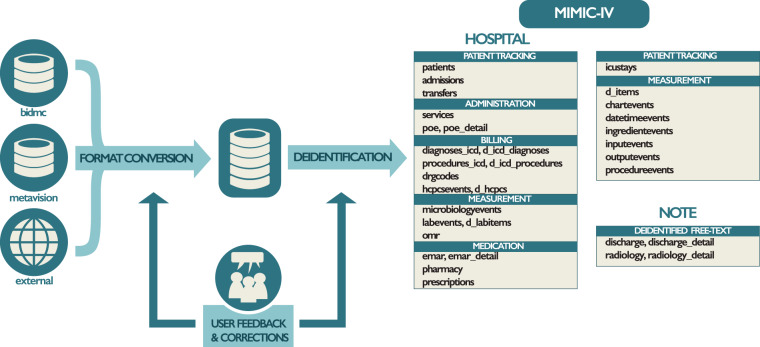
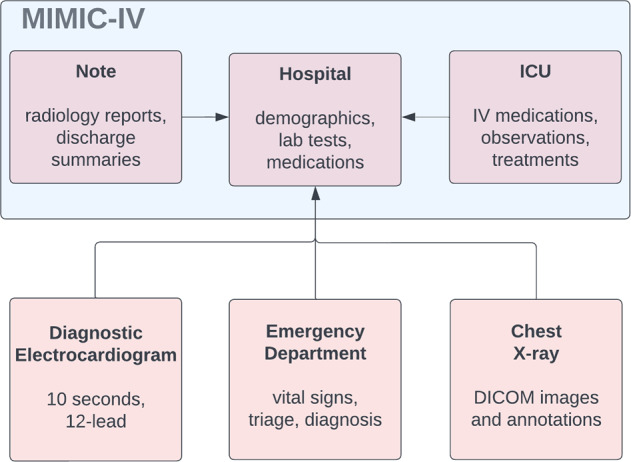
- MIMIC-IV was designed to be backward compatible with MIMIC-III while minimizing processing and organizing data into three modules: hosp, icu, and note.
## Methods
- Collaborative database construction from BIDMC clinical data, transformed and deidentified for release under IRB waiver and data use agreement; the process had three steps: acquisition, transformation, and deidentification.
- Sample/data: all patients admitted to the emergency department or an ICU at BIDMC between 2008–2019, excluding patients younger than 18 at first visit or on a protected list; external coding systems and Massachusetts death records were added.
- Main analysis/workflow: custom SQL scripts to restructure data into relational modules, plus custom linkage algorithms for out-of-hospital mortality and deidentification algorithms for HIPAA identifiers and free text; validation used integrity, consistency, and deidentification checks.
## Limitations
- The paper states that out-of-hospital mortality is only available through linkage to state death records, and deaths are censored at one year from last hospital discharge, so null death dates only indicate survival up to that point.
- The text makes evident that some data are incomplete or unevenly available across modules and time periods (for example, eMAR was deployed hospital-wide only by 2016, and the note module contains only discharge summaries and radiology reports); this is an evident coverage limitation from the text.
- The paper notes that clinical data are “sporadic and noisy,” reflecting routine care rather than research collection; this is a general data-quality limitation stated in the background.
Model-written summary. Check it against the paper before relying on it.
Integrity signals
Registry
Cites
Statistics
Figures
Verification
Claims the paper makes
13 Valid · 3 Not valid · 3 Not checked · 110 Own results and interpretations
Every source the paper cites for this claim was checked and supports it.
In the paper
“Finally, we combined two published algorithms for removing PHI from free-text17,18.”
§ MIMIC-IV, a freely accessible electronic health record dataset > Methods > Deidentification
What the sources say
- Supportedcites [17] Neamatullah I Automated de-identification of free-text medical records BMC medical informatics and decision making 2008 8 1 17 10.1186/1472-6947-8-32 18652655 PMC2526997 source
The Methods sections describe this paper's published algorithm for identifying and removing PHI from free-text medical records. The citing authors' statement that they combined two algorithms describes their own method; this citation identifies one of the algorithms. (LLM, conf=0.92)
- Supportedcites [18] Johnson, A. E. W., Bulgarelli, L. & Pollard, T. J. Deidentification of free-text medical records using pre-trained bidirectional transformers. In Proceedings of the ACM Conference on Health, Inference, and Learning, 214–221 (2020). PMC8330601 34350426 source
The Introduction (page not available in our copy) presents this paper’s BERT model for deidentifying free-text health records and describes measuring how much PHI it removes. The citation can therefore identify one of the two published algorithms; this source need not establish that the citing authors combined them. (LLM, conf=0.91)
plain- Asserted: passes — The authors put it forward as true.
- Checkable: passes — It can be checked against evidence.
- Load-bearing: passes — The paper’s conclusions depend on it.
- Based: passes — The paper gives a reason why it holds.
- Supported
Every source the paper cites for this claim was checked and supports it.
In the paper
“Due to data quality concerns regarding the Social Security Death Master File (SSDMF)13, we did not attempt to link patients to the SSDMF for determining out-of-hospital mortality.”
§ MIMIC-IV, a freely accessible electronic health record dataset > Methods > Acquisition
What the sources say
- Supportedcites [13] Levin MA Lin H-M Prabhakar G McCormick PJ Egorova NN Alive or dead: Validity of the social security administration death master file after 2011 Health Serv Res 2019 51 24 33 10.1111/1475-6773.13069 PMC6338290 30520023 source
The Discussion states that the Death Master File is no longer a reliable single source for mortality data, including out-of-hospital deaths. The decision not to link patients is the citing authors’ own methodological choice; the citation supports the data-quality concern motivating it. (LLM, conf=0.93)
plainstates a cause- Asserted: passes — The authors put it forward as true.
- Checkable: passes — It can be checked against evidence.
- Load-bearing: passes — The paper’s conclusions depend on it.
- Based: passes — The paper gives a reason why it holds.
- Supported
The cited sources support only part of this claim — read each source’s verdict below.
In the paper
“To support research that spans the periods of MIMIC-III (2002–2008) and MIMIC-IV (2008–2019), we have published the MIMIC-III Clinical Database CareVue subset22.”
§ MIMIC-IV, a freely accessible electronic health record dataset > Data Records > Building on earlier versions of MIMIC
What the sources say
- Partly supportedcites [22] Johnson AEW Pollard TJ Mark RG 2022 R. G. Mimic-iii clinical database carevue subset (version 1.4) PhysioNet 10.13026/8a4q-w170 sourceExperimental — accuracy not yet measured
The Abstract says the subset was provided to simplify combining MIMIC-III with MIMIC-IV, and the publication record identifies the released dataset. However, the Background and Methods give the CareVue period as 2001–2008, not the claim’s 2002–2008; the Background confirms MIMIC-IV’s 2008–2019 period. (LLM, conf=0.84)
plainstates a cause- Asserted: passes — The authors put it forward as true.
- Checkable: passes — It can be checked against evidence.
- Load-bearing: passes — The paper’s conclusions depend on it.
- Based: passes — The paper gives a reason why it holds.
- Partly supported
In the paper
“Access to MIMIC-IV is provided via PhysioNet19.”
§ MIMIC-IV, a freely accessible electronic health record dataset > Data Records
What the sources say
- Not checked — no full text of the sourcecites [19] Goldberger AL Physiobank, physiotoolkit, and physionet: components of a new research resource for complex physiologic signals circulation 2000 101 e215 e220 10.1161/01.CIR.101.23.e215 10851218 source
- Asserted: passes — The authors put it forward as true.
- Checkable: passes — It can be checked against evidence.
- Load-bearing: unclear — It is unclear whether the paper’s conclusions depend on it.
- Based: passes — The paper gives a reason why it holds.
A result the paper states — it cites no source for it, so there is none to check. The quote shows it is in the paper.
In the paper
“the d_icd_diagnoses and d_icd_procedures tables contain all codes which were valid at any point during the 2008–2019 time period.”
§ MIMIC-IV, a freely accessible electronic health record dataset > Data Records > Hospital module (hosp)
plain- Asserted: passes — The authors put it forward as true.
- Checkable: passes — It can be checked against evidence.
- Load-bearing: unclear — It is unclear whether the paper’s conclusions depend on it.
- Based: passes — The paper gives a reason why it holds.
29 more claims
Create a free account to see all 129 claims and every source verdict.
- Probably not a substantial claim. 84
- It may state two separate claims as one. 30
Claims other papers make about this one
Each is checked against this paper’s own text: does it say what the citing paper says it does?
The source backs part of the claim, not all of it — or backs it for a different population, condition or comparison.
In the citing paper
“We conducted a study using the publicly available MIMIC-IV dataset, which comprises 431,231 unique hospital admissions from 299,712 patients admitted to an ICU or the ED of the Beth Israel Deaconess Medical Center in Boston, Massachusetts27.”
From DRG-LLaMA : tuning LLaMA model to predict diagnosis-related group for hospitalized patients (2024) · cites this paper as [27]
Experimental — accuracy not yet measuredThe source backs part of the claim, not all of it — or backs it for a different population, condition or comparison.
In the citing paper
“For instance, the MIMIC-IV [148] includes a limited range of modalities, including clinical notes, medical images (chest x-ray Digital Imaging and Communications in Medicine [DICM] images), and time series (diagnostic electrocardiogram and patient records), making it a valuable but constrained resource for training medical M-LLMs.”
From Multimodal Large Language Models in Health Care: Applications, Challenges, and Future Outlook. (2024) · cites this paper as [148]
Experimental — accuracy not yet measuredThe source backs part of the claim, not all of it — or backs it for a different population, condition or comparison.
In the citing paper
“Existing multimodal medical data sets available for public use [84,85,148] are often relatively small in scale and demand the consolidation of numerous resources.”
From Multimodal Large Language Models in Health Care: Applications, Challenges, and Future Outlook. (2024) · cites this paper as [148]
Experimental — accuracy not yet measuredThe source backs part of the claim, not all of it — or backs it for a different population, condition or comparison.
In the citing paper
“- MIMIC-IV: A comprehensive, de-identified EHR dataset supporting tasks such as summarization, question answering, and document retrieval [17].”
From Retrieval-Augmented Generation (RAG) in Healthcare: A Comprehensive Review (2025) · cites this paper as [17]
Experimental — accuracy not yet measuredThe cited source says what the claim attributes to it.
In the citing paper
“In order to build agents that are grounded in medically relevant situations, we use a random sample of diagnostic questions from the US Medical Licensing Exam (USMLE), from deidentified electronic health records (MIMIC-IV)16, and from the New England Journal of Medicine (NEJM) case challenges.”
From AgentClinic: a multimodal benchmark for tool-using clinical AI agents (2026) · cites this paper as [16]
4 more claims about this paper
Create a free account to see every claim other papers make about this one.
Citations
Cites
Goldberger, A. L., Amaral, L. A. N., Glass, L., Hausdorff, J. M., Ivanov, P. C., Mark, R. G., Mietus, J. E., Moody, G. B., Peng, C.-K., & Stanley, H. E. (2000) · Circulation · doi:10.1161/01.cir.101.23.e215 · Cited by 14,809
Self-citationMIMIC-III, a freely accessible critical care database
Johnson, A. E. W., Pollard, T. J., Shen, L., Lehman, L.-W. H., Feng, M., Ghassemi, M., Moody, B., Szolovits, P., Anthony Celi, L., & Mark, R. G. (2016) · Scientific Data · doi:10.1038/sdata.2016.35 · Cited by 8,141 · cited 1×
“More recently, MIMIC-III was published in 2015 and significantly expanded MIMIC-II, containing data for over 40,000 patients 3 .”
MethodSelf-citationPollard, T. J., Johnson, A. E. W., Raffa, J. D., Celi, L. A., Mark, R. G., & Badawi, O. (2018) · Scientific Data · doi:10.1038/sdata.2018.178 · Cited by 1,993 · cited 2×
“0 comprises of 200,859 stays at ICUs and step-down units across 208 hospitals in the continental United States 4 .”
BackgroundSelf-citationSaeed, M., Villarroel, M., Reisner, A. T., Clifford, G., Lehman, L.-W., Moody, G., Heldt, T., Kyaw, T. H., Moody, B., & Mark, R. G. (2011) · Critical Care Medicine · doi:10.1097/ccm.0b013e31820a92c6 · Cited by 1,162
Self-citationBest Practices for Scientific Computing
Wilson, G., Aruliah, D. A., Brown, C. T., Chue Hong, N. P., Davis, M., Guy, R. T., Haddock, S. H. D., Huff, K. D., Mitchell, I. M., Plumbley, M. D., et al. (2014) · PLoS Biology · doi:10.1371/journal.pbio.1001745 · Cited by 723 · cited 1×
“The creation of MIMIC-IV followed best practices in scientific computing 23 .”
MethodJohnson, A., Bulgarelli, L., Pollard, T., Gow, B., Moody, B., Horng, S., Celi, L. A., & Mark, R. (2024) · PhysioNet · doi:10.13026/07hj-2a80 · Cited by 524
Self-citationJohnson, A., Bulgarelli, L., Pollard, T., Horng, S., Celi, L. A., & Mark, R. (2023) · PhysioNet · doi:10.13026/s6n6-xd98 · Cited by 524
Self-citationEarly prediction of circulatory failure in the intensive care unit using machine learning
Hyland, S. L., Faltys, M., Hüser, M., Lyu, X., Gumbsch, T., Esteban, C., Bock, C., Horn, M., Moor, M., Rieck, B., et al. (2020) · Nature Medicine · doi:10.1038/s41591-020-0789-4 · Cited by 477 · cited 1×
“The HiRID database contains high-resolution data for almost 34,000 admissions between 2008–2016 at Bern University Hospital in Switzerland 6,7 .”
BackgroundThe MIMIC Code Repository: enabling reproducibility in critical care research
Johnson, A. E. W., Stone, D. J., Celi, L. A., & Pollard, T. J. (2018) · Journal of the American Medical Informatics Association · doi:10.1093/jamia/ocx084 · Cited by 442 · cited 1×
“The MIMIC Code Repository was originally created for MIMIC-III to enable researchers to share and reuse code 24 .”
MethodSelf-citationAutomated de-identification of free-text medical records
Neamatullah, I., Douglass, M. M., Lehman, L.-W. H., Reisner, A., Villarroel, M., Long, W. J., Szolovits, P., Moody, G. B., Mark, R. G., & Clifford, G. D. (2008) · BMC Medical Informatics and Decision Making · doi:10.1186/1472-6947-8-32 · Cited by 413
Self-citation
Cited by
Items 1,601–1,700 of 3,269
Xu, Z., Li, C., Guan, C., Xu, L. H., Wang, X., Jiang, S., Zhang, N., Gu, M., Xin, Y., & Xu, Y. (2026) · BMC Medical Informatics and Decision Making · doi:10.1186/s12911-026-03561-7 · Cited by 3
Huang, Z., Xu, L., Zhang, J., Lu, K., Xu, J., Fang, Y., Wei Min, N. I., Zhang, P., & Feng, T. (2026) · Frontiers in Nutrition · doi:10.3389/fnut.2026.1805016 · Cited by 2
Schmiegel, S., Marchi, H., Hege, P., Elkenkamp, S., Düvel, J. A., Düsing, C., Greiner, W., Scholz, S. S., Witzke, D., Tebbe, J. J., et al. (2026) · JMIR Medical Informatics · doi:10.2196/79929 · Cited by 6
Utility of Repeating Blood Cultures in Candidemia: Insights From 2 Large Clinical Data Repositories
Yoshida, H., Adelman, M. W., Ifiora, F., Pérez, M. A., Niravath, M., Yoshimura, H., Jones, S. L., Arias, C. A., & Nigo, M. (2026) · Clinical Infectious Diseases · doi:10.1093/cid/ciag216 · Cited by 1
Amiri, M., & Shariatrad, P. (2026) · Biomedical Signal Processing and Control · doi:10.1016/j.bspc.2026.110605 · Cited by 2
Zhang, Y., Song, X., Chu, J., et al. (2026) · International Journal of Surgery · doi:10.1097/js9.0000000000005403 · Cited by 1
Zhao, S. P., Wang, Q., Li, X., et al. (2026) · Cardiovascular Diabetology · doi:10.1186/s12933-026-03212-1 · Cited by 1
“Developed by the Computational Physiology Laboratory of the Massachusetts Institute of Technology (MIT), MIMIC-IV contains comprehensive de-identified clinical records from Beth Israel Deaconess Medical Center covering 2008 to 2019 [18].”
Huang, J., Xu, J., Zhai, Y., Liu, S., Duan, P., Liang, J., Tian, Y., Lu, M., Liu, X., & Yu, H. (2026) · PLoS ONE · doi:10.1371/journal.pone.0339707 · Cited by 2
Boundary-Aware Adversarial Filtering for Reliable Diagnosis Under Extreme Class Imbalance
Yu, Y., Hughes, M. S., Lee, J., Zhou, J., & Laine, A. F. (2026) · IEEE International Symposium on Biomedical Imaging (ISBI) · doi:10.1109/isbi61048.2026.11515910 · Cited by 1
Identifying Pre-Existing Diabetes at ICU Admission with Machine Learning on Public GOSSIS Data
Zhuhadar, L. (2026) · Diabetology · doi:10.3390/diabetology7050100 · Cited by 1
Comparative prognostic performance of SOFA-1 and SOFA-2 in patients with sepsis at ICU admission
林丽芳, Fu, Z., Sun, H., Wang, Y., Zhang, S., Bai, S., & Wen, X. (2026) · Clinical Medicine · doi:10.1016/j.clinme.2026.100601 · Cited by 2
Fanning, C., Verkouteren, C., Sawadogo, D., & Aktas, M. E. (2026) · Studies in computational intelligence · doi:10.1007/978-3-032-16649-4_12 · Cited by 1
The new SOFA for sepsis identification and mortality prediction: a multicenter cohort study
Zhao, L., Cui, Q., Liu, J., Dong, S., Zong, L., Yang, F., Shi, H., Wang, Y., Zhao, X., Li, H., et al. (2026) · Journal of Intensive Care · doi:10.1186/s40560-026-00891-6 · Cited by 3
“An external validation cohort was derived from 29,811 ICU patients in the publicly available Medical Information Mart for Intensive Care IV (MIMIC-IV) [9].”
Performance of Local Large Language Models for Adjudicating Heart Failure Hospitalizations
Aggarwal, R., Oseran, A. S., Manrai, A. K., et al. (2026) · Circulation · doi:10.1161/circulationaha.126.079166 · Cited by 1
Tian, G., Lin, Z., Chen, Z., Qiu, Z., Zheng, Z., Lin, Y., Chen, T., Xu, Z., Cai, Y., Wu, K., et al. (2026) · BMC Urology · doi:10.1186/s12894-026-02206-1 · Cited by 1
“The MIMIC-IV database contains comprehensive clinical records from over 50,000 ICU admissions at Beth Israel Deaconess Medical Center spanning 2008 to 2019, representing one of the largest publicly accessible electronic health record datasets currently available [20, 21].”
InfluentialMachine learning prediction of sepsis in paralytic ileus using interpretable clinical models
Song, Q. Y., Wu, X., Taheri, F., Meng, L., Wang, W., & Mo, X. (2026) · Frontiers in Cellular and Infection Microbiology · doi:10.3389/fcimb.2026.1705126 · Cited by 1
“The Medical Information Mart for Intensive Care IV (MIMIC-IV) database, with its extensive and well-structured data on critically ill patients, provides an ideal foundation for developing and validating ML-based risk prediction models (Johnson et al., 2023).”
(49484), X. Z., Fang, A., Lou, P., Yao, K., Huang, T., & Hu, J. (2026) · JMIR Medical Informatics · doi:10.2196/77872 · Cited by 1
Ye, X., Chen, S., Guo, L., et al. (2026) · PLoS ONE · doi:10.1371/journal.pone.0350811 · Cited by 1
“…retrospective cohort study used extensive data derived from two highly reputable and extensively utilized medical databases in the field of critical care research, namely the Medical Information Mart for Intensive Care (MIMIC – IV) and eICU Collaborative Research Database (eICU - CRD) [12,13].”
Căliman-Sturdza, O. A., Gheorghita, R. E., Filip, R., & Lobiuc, A. (2026) · Diagnostics · doi:10.3390/diagnostics16121827 · Cited by 5
“On the same note, the eICU Collaborative Research Database offers high granularity and large sample size multicenter ICU data, which is useful in external validation and heterogeneity studies [60].”
Guo, D., Bai, J., Zhang, J., Xi, X., Chen, Y., Luo, Z., Feng, K., Zeng, J., Zhang, M., Dong, W., et al. (2026) · Digital Health · doi:10.1177/20552076261461368 · Cited by 1
Chorney, W., & Lisi, M. (2026) · Surgery in Practice and Science · doi:10.1016/j.sipas.2026.100351 · Cited by 1
Tran, B. V., Huynh, P. Y., Hoang, B. B., et al. (2026) · Blood Purification · doi:10.1159/000552963 · Cited by 1
Liu, P., Shen, Q., Liu, Y., & Hong, K. (2026) · Renal Failure · doi:10.1080/0886022x.2026.2685354 · Cited by 1
“this retrospective study was conducted using data from the MiMiC-iV database (version 3.1) [13]. the MiMiC-iV database contains comprehensive clinical data from patients admitted to the emergency department and intensive care unit (iCu) at Beth israel deaconess Medical Center (BidMC) from 2008 to…”
InfluentialA survey on medical multimodal retrieval-augmented generation (RAG)
Wang, R., Wang, J., Huang, Y., Guo, H., & Pang, J. (2026) · High-Confidence Computing · doi:10.1016/j.hcc.2026.100415 · Cited by 3
Beloualid, S., Sahl, S., Bouali, K., Benzzine, H., Essamri, H., Semako, E., Morino, I., Bouayyadi, R. E., & Bajit, A. (2026) · Array · doi:10.1016/j.array.2026.101022 · Cited by 1
Reddy, S. R. H., Krishna, Y. S., Garg, S., & Shukla, V. (2026) · International Symposium of Systems, Advanced Technologies and Knowledge (ISSATK) · doi:10.1109/issatk69667.2026.11566932 · Cited by 1
“Three complementary datasets are employed: MIMIC-IV [19] sourced from PhysioNet [20], CMS coverage decision criteria [21], and Synthea-generated synthetic patient encounters [22].”
Tan, X., Xie, Z., Yin, P., Wang, J., Liang, W., Chen, X., He, Y., Jian, H., Huang, Q., Lin, J., et al. (2026) · Science Progress · doi:10.1177/00368504261463037 · Cited by 2
Zhou, H., Chen, C., Zheng, H., Wu, Y., Zhu, L., & Zhou, C. (2026) · Frontiers in Neurology · doi:10.3389/fneur.2026.1783194 · Cited by 1
“This single-center database encompasses records from 383,220 unique hospital admissions (14).”
Nguyen, T. L., Nguyen, T. B. Y., Nguyen, N. T., Huynh, P. N. A., Bui, T. P., Nguyen, T. D. K., Ho, V. H., Tran, C. D., Hoàng, T. O., Le, V. T., et al. (2026) · Medicine · doi:10.1097/md.0000000000049526 · Cited by 2
“[27] MIMIC-IV is a large, publicly available critical care database that includes adult patients admitted to ICUs at Beth Israel Deaconess Medical Center in Boston, United States, between 2008 and 2022.”
Yadav, A. K., & Deshmukh, M. (2026) · International Journal of Medical Informatics · doi:10.1016/j.ijmedinf.2026.106574 · Cited by 1
Zhang, Q., Song, D., Wu, C. D., Hu, Z. Y., Xue, Y., Ji, K., & 陈延茹 (2026) · BMC Cardiovascular Disorders · doi:10.1186/s12872-026-06202-z · Cited by 1
“The MIMIC-IV is a comprehensive and publicly available repository of records from patients in the intensive care unit at a renowned tertiary care hospital in Boston for the period from 2008 to 2019 [15].”
Kim, Y., Kim, J., Cho, Y., & Choi, M. (2026) · BMC Nursing · doi:10.1186/s12912-026-04949-6 · Cited by 1
“This evaluation study utilized secondary data from the Medical Information Mart for Intensive Care (MIMIC) IV version 2.2 [15].”
InfluentialEmpowering clinical trial design with agentic intelligence and real-world data
Li, H., Pan, W., Rajendran, S., Zang, C., & Wang, F. (2026) · Nature Communications · doi:10.1038/s41467-026-74501-2 · Cited by 20
“We applied EmulatRx on the CTD process for both acute diseases (e.g., septic shock, acute heart failure, acute pulmonary edema, and acute kidney injury) using the MIMIC-IV data and chronic diseases (e.g., Alz-heimer ’ s disease and Parkinson ’ s disease) using the INSIGHT Network across fi ve New York City health syste…”
InfluentialRES-MR: Risk-Aware Reasoning for Explainable and Safe Medication Recommendation
Wang, C., Li, J., Wang, S., Li, Y. W., Gu, H., & Lü, W. (2026) · International ACM SIGIR Conference on Research and Development in Information Retrieval (SIGIR) · doi:10.1145/3805712.3809604 · Cited by 3
Wang, X., Wang, X., Liu, Y., Ma, J., & Wu, S. (2026) · Frontiers in Nutrition · doi:10.3389/fnut.2026.1858343 · Cited by 1
“1, https://physionet.org/content/mimiciv/) (17), which contains records of intensive care unit (ICU) admissions at Beth Israel Deaconess Medical Center in Boston, Massachusetts, from 2008 to 2019.”
Recent Advances in AI for Automated ICD Coding: A Systematic Literature Review
Khalid, A. R., Ali, H., Fathima, K., Carole, K. S., & Kim, H.-C. (2026) · Journal of Medical Systems · doi:10.1007/s10916-026-02429-7 · Cited by 6
“More recent resources, such as MIMIC-IV [ 40], extend this benchmark with updated electronic health records and ICD-10 coding, while annotation-focused datasets such as MDACE [41] provide explicit code evidence spans that support explainable and auditable automated coding.”
Zhang, Y., Han, M., Liu, X., Chen, G., & Zhang, L. (2026) · Frontiers in Pharmacology · doi:10.3389/fphar.2026.1876555 · Cited by 1
“1 (Johnson et al., 2023) and eICU-CRD v2.”
Chen, L., Jiang, W., Zhang, G., et al. (2026) · Mediators of Inflammation · doi:10.1155/mi/9984409 · Cited by 1
Matsuo, T., Nigo, M., Borgonovo, F., Yoshida, H., Tande, A. J., & Berbari, E. F. (2026) · Clinical Microbiology and Infection · doi:10.1016/j.cmi.2026.07.032 · Cited by 5
Olivier, L. S., Oprea, C. L., Stollenwerk, A., Orlikowsky, T. W., & Schoberer, M. (2026) · JMIR Pediatrics and Parenting · doi:10.2196/94280 · Cited by 2
“The most commonly used datasets are the Medical Information Mart for Intensive Care-III (MIMIC-III) and MIMIC-IV databases [38,39].”
Weng, M., Cao, D., Yang, W., Sharma, Y., & Liu, Y. (2026) · ACM SIGKDD Conference on Knowledge Discovery and Data Mining (KDD) · doi:10.1145/3770855.3817485 · Cited by 25
“More recent efforts begin to incorporate contextual cues into time-series settings, including CiK [52] and TGTSF [54], but they still frame evaluation largely as single-task numerical analysis without explicit reasoning-oriented objectives.”
van der Meijden, S. L., Wang, Y., Ng, M. Y., Arbous, M. S., Geerts, B. F., Steyerberg, E. W., & Hernandez‐Boussard, T. (2026) · The Lancet Digital Health · doi:10.1016/j.landig.2026.101035 · Cited by 14
Wu, Y., & Wang, K. (2026) · Frontiers in Endocrinology · doi:10.3389/fendo.2026.1909554 · Cited by 1
Shang, W., Shi, T., Ma, Q., & Kong, G. (2026) · Cell Reports Medicine · doi:10.1016/j.xcrm.2026.102986 · Cited by 4
“31 The MedEvidenceAgent was implemented using a retrieval-augmented generation (RAG) approach.”
Yu, Z., Zhang, Y., Xiao, B., Zhao, J., Wei, L., Gao, J., Wu, H., Ma, R., Ning, X., & Sun, S. (2026) · Molecular Biomedicine · doi:10.1186/s43556-026-00555-9 · Cited by 1
“The MIMIC-IV database was established in 2003 with funding from Beth Israel Deaconess Medical Center, the Massachusetts Institute of Technology, and the National Institutes of Health [43].”
Wang, Y.-M., Zhao, F., Ou-Yang, C.-H., et al. (2026) · Frontiers in Pharmacology · doi:10.3389/fphar.2026.1886455 · Cited by 1
“The database contains de-identified clinical data from critically ill patients admitted between 2008 and 2019 (Johnson et al., 2023).”
Machine Learning on the Pediatric Intensive Care (PIC) Database: PIC-Powered Prediction
Ganatra, H. A., Shamim, D., Sood, S., & Ali, A. M. (2026) · Bioengineering · doi:10.3390/bioengineering13090978 · Cited by 1
Moheb, M. E., Bitar, E. R., Putman, K., Lain, W., Weber, M., Noona, S. W. W., Young, S., Kern, J., Beller, J., Teman, N. R., et al. (2026) · Journal of Thoracic and Cardiovascular Surgery · doi:10.1016/j.jtcvs.2026.08.015 · Cited by 1
Zhao, Y., Liu, W., Jiang, H., Zhao, Y., Wang, S., Yu, Q., Zeng, J., Xie, S., Li, J., & Liu, Z. (2026) · Journal of Clinical Medicine · doi:10.3390/jcm15176820 · Cited by 1
“The primary cohort represented a broad hospital AMI population, whereas MIMIC-IV included patients requiring intensive care and early laboratory testing [12].”
Benchmarking biomedical foundation models
Sáez-Rodríguez, J., Schäfer, P. S. L., Kalavros, N., & Stolovitzky, G. A. (2026) · Nature Methods · doi:10.1038/s41592-026-03182-y · Cited by 7
“More recent large language models (LLM)-oriented benchmarks (for example, EHR-Bench 31 ) extend evaluation to reasoning over structured and hybrid-structured text data, and multimodal studies using datasets like MIMIC 32 incorporate unstructured clinical notes, enabling assessments of interpretability, fairness and cr…”
Rao, B. G., Srinivas, P. T., & Naik, M. H. (2012) · The Journal of Research ANGRAU · Cited by 1
Gottlieb, E. R., & Gottlieb, S. S. (2023) · Cureus · doi:10.7759/cureus.46237 · Cited by 1
Guo, T., Zheng, R., Yi, H., & Yang, Y. (2023) · Medicine · doi:10.1097/md.0000000000035500 · Cited by 1
Liao, R., Beskin, C., Harzand, A., et al. (2024) · JACC Advances · doi:10.1016/j.jacadv.2023.100806 · Cited by 1
ParaMET: A Parallel Framework for Efficient Medical Data Extraction on Tianhe-NG Supercomputer
Dou, Y., Zheng, Y., Liu, D., Li, K., Xiao, S., & Peng, S. (2023) · IEEE International Conference on Bioinformatics and Biomedicine (BIBM) · doi:10.1109/bibm58861.2023.10385904 · Cited by 1
Ding, Z., Li, Z., Li, X., & Li, H. (2024) · Mathematics · doi:10.3390/math12030488 · Cited by 1
Liu, H., Liang, Q., Yang, Y., Liu, M., Zheng, B., & Sun, S. (2024) · Frontiers in Public Health · doi:10.3389/fpubh.2024.1368508 · Cited by 4
Investigating an Ontology-Informed Approach to Event Log Generation in Healthcare
Dwyer, O. P., Chammas, L., Sallinger, E., & Davies, J. (2024) · Lecture notes in business information processing · doi:10.1007/978-3-031-56107-8_18 · Cited by 1
Liu, L., Hang, Y., Chen, R., He, X., Jin, X., Wu, D., & Li, Y. (2024) · Physiological Measurement · doi:10.1088/1361-6579/ad4e92 · Cited by 1
Counterfactual Sepsis Outcome Prediction Under Dynamic and Time-Varying Treatment Regimes.
Su, M., Hu, S. M., Xiong, H., Kassis, E. B., & Lehman, L.-W. H. (2024) · PubMed Central · Cited by 5
Self-citationHuang, J., Ji, J., Zhao, Y., & Liu, J. (2024) · Scientific Reports · doi:10.1038/s41598-024-66641-6 · Cited by 1
“We included all adult patients admitted to the ICU following major abdominal surgeries, such as colorectal, pancreatic, gastric, liver, and splenic resection.”
Joint effect of atrial fibrillation and obesity on mortality in critically ill patients
Zhang, H., Ding, L., Mi, L., Zhang, A.-K., Liu, Y., Peng, F.-H., Yan, X.-X., Shen, Y.-J., & Tang, M. (2024) · Diabetology & Metabolic Syndrome · doi:10.1186/s13098-024-01407-8 · Cited by 1
“The database included 431,231 hospitalizations, and 73,181 ICU stays between 2008 and 2019 [8–10].”
BackgroundMethodShimizu, G. Y., Romão, E. A., da Costa, J. A. C., Marques, J. M. D. A., Scarpelini, S., Suzuki, K. M. F., César, H. V., & de Azevedo‐Marques, P. M. (2024) · Proceedings - IEEE Symposium on Computer-Based Medical Systems · doi:10.1109/cbms61543.2024.00031 · Cited by 2
“MIMIC IV dataset [18] with EHRs of more than 299,000 patients from Beth Israel Deaconess Medical Center (BIDMC), USA, were used for external validation of the models trained with HCFMRP data.”
MethodPowla, P. P., Fakhri, F., Jankowski, S., Mansour, A. R., & Polley, E. C. (2024) · Neurocritical Care · doi:10.1007/s12028-024-02083-2 · Cited by 2
“2, an open source deidentified database of > 40,000 critical care patients at Beth Israel Deacon-ess Medical Center [7, 8].”
Zhu, J.-D., Yang, L., Zhao, J., Wang, P., Li, Y., Zhang, X., Pan, J., Jiang, M.-H., Yang, H., Yin, S., et al. (2024) · European Journal of Clinical Pharmacology · doi:10.1007/s00228-024-03737-y · Cited by 1
“2 database, which recorded a total of 523,740 admissions between 2008 and 2019 at Beth Israel Deaconess Medical Center [16].”
Soares, M., Borges, L. P., Bastos, L. D. S. L., Zampieri, F. G., Miranda, G. A., Kurtz, P., Lobo, S. M., de Mello, L. R. G., Burghi, G., Rezende, E. A. D. C., et al. (2024) · Critical Care Science · doi:10.62675/2965-2774.20240150-pt · Cited by 1
Insights and recommendations for optimizing the ARDS prone ventilation model – Letter on Yan et al.
Liang, C., Zhou, C., & Pan, J. (2024) · Intensive and Critical Care Nursing · doi:10.1016/j.iccn.2024.103851 · Cited by 1
Coutinho, N. F. R., & Libório, A. B. (2024) · BMC Nephrology · doi:10.1186/s12882-024-03766-w · Cited by 1
Gong, L., Chen, S., Yang, Y., Hu, W., Cai, J., Liu, S., Zhao, Y., Pei, L., Ma, J., & Chen, F. (2024) · Digital Health · doi:10.1177/20552076241288833 · Cited by 1
Health disparities in the risk of severe acidosis: real-world evidence from the All of Us cohort
Gatz, A. E., Xiong, C., Chen, Y., Jiang, S., Nguyen, C. M., Song, Q., Li, X., Zhang, P., Eadon, M. T., & Su, J. (2024) · Journal of the American Medical Informatics Association · doi:10.1093/jamia/ocae256 · Cited by 1
Mohamed, A. A., Saleh, Y. N. M., & Abdel-Hamid, A. (2024) · IEEE Access · doi:10.1109/access.2024.3502909 · Cited by 2
“Along with mortality labels [62], MIMIC-IV includes a broad spectrum of medical information including patient diagnosis, procedures, therapies, measurements, and clinical notes.”
Data Preprocessing on Triage Data for Predicting ICU Transfer within 24 Hours
Crispin, A. R., Candra, A., & Sitompul, O. S. (2024) · International Conference on Technology Innovation and Its Applications (ICTIIA) · doi:10.1109/ictiia61827.2024.10761765 · Cited by 1
Zhou, Y., Tao, L., Yang, S., Li, J., & Liu, J. (2024) · Frontiers in Medicine · doi:10.3389/fmed.2024.1465397 · Cited by 1
Improving Prediction of Need for Mechanical Ventilation using Cross-Attention
Mohanty, A., Shashikumar, S. P., Lam, J. Y., et al. (2024) · doi:10.1109/embc53108.2024.10782769 · Cited by 1
“An observational, multicenter cohort consisting of all adult patients of at least 18 years of age admitted to the ICU was considered in this study from the freely accessible MIMIC-IV dataset [14].”
Zhang, C., Hu, Y., Meng, Z., et al. (2024) · Scientific Reports · doi:10.1038/s41598-024-83139-3 · Cited by 1
Hou, P., Xia, L., Xin, F., Sun, B., Zhang, G., Yu, L., & Wang, H. (2025) · Frontiers in Cardiovascular Medicine · doi:10.3389/fcvm.2024.1444498 · Cited by 3
Grolleau, F., Tibshirani, R. J., & Chen, J. H. (2025) · Europe PMC (PubMed Central) · doi:10.48550/arxiv.2501.03155 · Cited by 8
“We then use patients from the MIMIC-IV database [24] admitted after 2013 (and therefore not included in the MIMIC-III data used for training) as a pilot test set.”
Rastogi, A., & Mentor, D. S. (2024) · IEEE International Conference on Big Data (BigData) · doi:10.1109/bigdata62323.2024.10825148 · Cited by 3
Xu, H., Shu, M., Wu, J., et al. (2025) · Nursing in Critical Care · doi:10.1111/nicc.13240 · Cited by 1
Bassegoda, O., & Cárdenas, A. (2025) · Clinics in Liver Disease · doi:10.1016/j.cld.2024.12.002 · Cited by 3
Wu, Q., Liao, L., & Deng, Q. (2025) · Journal of Intensive Care Medicine · doi:10.1177/08850666251315718 · Cited by 2
Hu, J., Min, J., & Zong, D. (2025) · The American Journal of the Medical Sciences · doi:10.1016/j.amjms.2025.03.009 · Cited by 1
Wang, Y., & Lou, K. (2025) · BMC Cardiovascular Disorders · doi:10.1186/s12872-025-04697-6 · Cited by 2
Xie, Y., Yan, Y., Hong, Q., Zheng, H., Cao, L., Li, X., Liu, S., & Chen, H. (2025) · BMC Medicine · doi:10.1186/s12916-025-04038-6 · Cited by 1
“2) [14], a comprehensive database containing detailed, high-quality data on ICU patients admitted to Beth Israel Deaconess Medical Center, Boston, from 2008 to 2019.”
Krychtiuk, K. A., & Sionís, A. (2025) · European Heart Journal Acute Cardiovascular Care · doi:10.1093/ehjacc/zuaf058 · Cited by 1
Korolkov, L., Robinson, H. A., & Mouratis, K. (2025) · Digital Health · doi:10.1177/20552076251326021 · Cited by 1
An explicable machine learning approach for predicting 30-day septic mortality for ICU patients
Zhou, L., Wu, R., Wang, S., Komolafe, T. E., Guo, J., Fan, Z., & Zhang, Z. (2025) · International Journal of Information and Communication Technology · doi:10.1504/ijict.2025.145831 · Cited by 3
Zhang, H., Li, J., Wang, D., et al. (2025) · BMC Gastroenterology · doi:10.1186/s12876-025-03895-y · Cited by 1
Schoeler, L. M., Graf, L., Airola, A., Ritzi, A., Simon, M., & Peltonen, L.-M. (2025) · JAMIA Open · doi:10.1093/jamiaopen/ooaf037 · Cited by 2
Wang, J., Huang, C., Chen, Y., Huang, Y., & Wu, Z. (2025) · Frontiers in Pharmacology · doi:10.3389/fphar.2025.1613681 · Cited by 2
Riaz, I. B., Naqvi, S. A. A., Ashraf, N., Harris, G. J., & Kehl, K. L. (2025) · npj Digital Medicine · doi:10.1038/s41746-025-01646-7 · Cited by 2
Yang, H., Jiang, M.-H., Yu, F., Yang, L.-J., Zhang, X., Li, D.-M., Guo, Y., Zhu, J.-D., Yin, S., & He, G. (2025) · Technology and Health Care · doi:10.1177/09287329251346284 · Cited by 2
“11,12 MIMIC-III contains data on over 40,000 critically ill patients from BIDMC, while MIMIC-IV, an update to MIMIC-III, includes data on more than 50,000 patients.”
SeFNet: Linking tabular datasets with semantic feature nets
Woźnica, K., Wilczyński, P., & Biecek, P. (2025) · Information Fusion · doi:10.1016/j.inffus.2025.103436 · Cited by 5
Zhang, L., Li, M., Liu, J., et al. (2025) · Scientific Reports · doi:10.1038/s41598-025-08713-9 · Cited by 1
Luo, L., Chen, Y., Zhao, H., Dong, R., & Long, Y. (2025) · Frontiers in Neurology · doi:10.3389/fneur.2025.1545126 · Cited by 2
Peng, J., Zhang, X., Mai, Y., Chen, H., Liang, D., Li, S., Wu, H., Li, C., Ge, Y., Wang, G., et al. (2025) · Frontiers in Endocrinology · doi:10.3389/fendo.2025.1620762 · Cited by 1
Baskett, W. I., Black, B. T., Qureshi, A. I., & Shyu, C. (2025) · Journal of Biomedical Informatics · doi:10.1016/j.jbi.2025.104878 · Cited by 3
Tan, W., Duan, R., Zeng, C., Yang, Z., Li, D., Tingting, X., Zhu, L., & Sun, D. (2025) · Nursing in Critical Care · doi:10.1111/nicc.70116 · Cited by 1
Cheng, X., Chen, R., Zhang, X., et al. (2025) · Resuscitation Plus · doi:10.1016/j.resplu.2025.101040 · Cited by 1
Hong, Q., Yang, X., Yang, H., Zhou, X., Tang, J., & Wen, Z. (2025) · Frontiers in Medicine · doi:10.3389/fmed.2025.1601565 · Cited by 1
“Diseases were summarized and extracted according to the ninth (ICD-9) and tenth (ICD-10) codes of the International Classification of Diseases (19).”
Metadata
- Authors
- Johnson, A. E. W., Bulgarelli, L., Shen, L., Gayles, A., Shammout, A., Horng, S., Pollard, T. J., Hao, S., Moody, B., Gow, B., Lehman, L.-W. H., Celi, L. A., & Mark, R. G.
- Affiliations
- Hospital for Sick Children (CA)
- Massachusetts Institute of Technology (US)
- Beth Israel Deaconess Medical Center (US)
- Corresponding author
- Johnson, Alistair E. W.
- ORCID
- Venue
- Scientific Data
- Published
- 2023-01-03
- Volume
- 10
- Issue
- 1
- Pages
- 1-1
- ISSN
- 2052-4463 (ISSN-L)
- PMC
- PMC9810617
- OpenAlex
- W4313439128
- Semantic Scholar
- 5425de16356015c2f26d2a50684c6c46d6998f51
- Cited by
- 3,401
- References
- 25
- Citations by year
- 2026: 1421 · 2025: 1175 · 2024: 649 · 2023: 154
- Type
- data paper
- Language
- en
- Update notices
- Open access
- gold
- doi.org
- Licence
- cc-by
- creativecommons.org/licenses/by/4.0 (tdm)
- creativecommons.org/licenses/by/4.0 (vor)
- Locations
- Scientific Data (publishedVersion, cc-by)
- PubMed Central (publishedVersion, cc-by)
- PubMed (publishedVersion)
- DOAJ (DOAJ: Directory of Open Access Journals) (submittedVersion, cc-by-sa)
- Funders
- U.S. Department of Health & Human Services | National Institutes of Health (NIH-R01-EB017205)
- Topics
- Physical Sciences › Computer Science › Artificial Intelligence › Machine Learning in Healthcare
- Health Sciences › Health Professions › Health Information Management › Electronic Health Records Systems
- Health Sciences › Health Professions › Health Information Management › Medical Coding and Health Information
- Keywords
- MIMIC-IV, electronic health records, clinical research data, hospital patient data, open data access, Beth Israel Deaconess Medical Center
- MeSH terms
- Hospitals, Humans, Databases, Factual, Electronic Health Records
About these checks
Registry, retraction, Cites and statistics results are computed, not judged, with one exception: a printed reference that no index lists is read once by a model before it counts as a citation error. Claims are extracted by a model and kept only when their quote appears verbatim in the text; each cited source is then checked, with a model’s help, for whether it says what the claim relies on. Those verdicts can be wrong — read the claim’s quote and the cited source before relying on one.
The claim verdicts this report counts are experimental: their accuracy is not yet measured.
A language model drew the claims from the paper on 2026-10-02, under version 3 of the claim definition (model deepseek-v4.1-flash, prompt extract-v3).
A second model labelled each claim on 2026-10-02 (model jev-1.13-20260917, definition revision gold-guideline-v0.2).
Cited sources are checked with a language model’s help (gpt-6-sol).
Statistics and arithmetic are recomputed, not judged.
Confidence bands are shown only for fields calibrated on our annotated test set. None is calibrated yet, so no band is shown.
What counts as a claim ›How we measure confidence ›How we check this ›
Are you an author, or do you see a problem with this page? Request a review
Data sources
Bibliographic data: Semantic Scholar, OpenAlex, Crossref.
Contains information from the Semantic Scholar Academic Graph Datasets, made available under the ODC Attribution License (ODC-BY 1.0).
Semantic Scholar’s data is described in: Kinney, R., et al. (2023). The Semantic Scholar Open Data Platform. arXiv:2301.10140.
