

Super-Enhancers and Broad H3K4me3 Domains Form Complex Gene Regulatory Circuits Involving Chromatin Interactions
Open accessThe DOI matches its Crossref record; 30 of the 30 references it cites were found in a registry or an index.
Abstract
Stretched histone regions, such as super-enhancers and broad H3K4me3 domains, are associated with maintenance of cell identity and cancer. We connected super-enhancers and broad H3K4me3 domains in the K562 chronic myelogenous leukemia cell line as well as the MCF-7 breast cancer cell line with chromatin interactions. Super-enhancers and broad H3K4me3 domains showed higher association with chromatin interactions than their typical counterparts. Interestingly, we identified a subset of super-enhancers that overlap with broad H3K4me3 domains and show high association with cancer-associated genes including tumor suppressor genes. Besides cell lines, we could observe chromatin interactions by a Chromosome Conformation Capture (3C)-based method, in primary human samples. Several chromatin interactions involving super-enhancers and broad H3K4me3 domains are constitutive and can be found in both cancer and normal samples. Taken together, these results reveal a new layer of complexity in gene regulation by super-enhancers and broad H3K4me3 domains.
Overview
The claims and statistics of this paper haven’t been checked yet.
Free: it reads the open-access text and checks the first 5 claims that cite a source we can check. Create a free account to check every claim.
Integrity signals
Registry
Cites
Statistics
Figures
Verification
Claims the paper makes
The claims and statistics of this paper haven’t been checked yet.
Free: it reads the open-access text and checks the first 5 claims that cite a source we can check. Create a free account to check every claim.
Claims other papers make about this one
Each is checked against this paper’s own text: does it say what the citing paper says it does?
The cited source says what the claim attributes to it.
In the citing paper
“Overall, 474 of the 5,779 candidate enhancers that we tested fell within 65 K562 super-enhancers (Cao et al., 2017); however, a much higher proportion of high-confidence paired enhancers belonged to this set (102/441).”
From A Genome-wide Framework for Mapping Gene Regulation via Cellular Genetic Screens (2019) · cites this paper as Cao et al., 2017
Self-check
Percentages, sums and reported differences re-computed from the paper’s own numbers.
The self-check needs the paper’s full text.
Citations
Cites
Model-based Analysis of ChIP-Seq (MACS)
Zhang, Y., Liu, T., Meyer, C. A., Eeckhoute, J., Johnson, D. S., Bernstein, B. E., Nusbaum, C., Myers, R. M., Brown, M., Li, W., et al. (2008) · Genome Biology · doi:10.1186/gb-2008-9-9-r137 · Cited by 18,386
An integrated encyclopedia of DNA elements in the human genome
The ENCODE Project Consortium (2012) · Nature · doi:10.1038/nature11247 · Cited by 18,072
A 3D Map of the Human Genome at Kilobase Resolution Reveals Principles of Chromatin Looping
Rao, S. S. P., Huntley, M. H., Durand, N. C., Stamenova, E. K., Bochkov, I. D., Robinson, J. T., Sanborn, A. L., Machol, I., Omer, A. D., Lander, E. S., et al. (2014) · Cell · doi:10.1016/j.cell.2014.11.021 · Cited by 9,212
Super-enhancers in the control of cell identity and disease
Hnisz, D., Abraham, B. J., Lee, T. I., Lau, A., Saint-André, V., Sigova, A. A., Hoke, H. A., & Young, R. A. (2013) · Cell · doi:10.1016/j.cell.2013.09.053 · Cited by 3,662 · cited 2×
“We annotated the genes using two different databases: (1) the lists of oncogenes and tumor suppressor genes from Tumor Suppressor and Oncogene (TUSON) Explorer19, a computational method that analyzed mutational signatures in tumor-normal pairs to predict how likely a gene is a tumor suppressor gene or an oncogene; (2)…”
BackgroundMethodCapturing Chromosome Conformation
Dekker, J., Rippe, K., Dekker, M., & Kleckner, N. (2002) · Science · doi:10.1126/science.1067799 · Cited by 3,652
A census of human cancer genes
Futreal, P. A., Coin, L., Marshall, M., Down, T., Hubbard, T., Wooster, R., Rahman, N., & Stratton, M. R. (2004) · Nature Reviews Cancer · doi:10.1038/nrc1299 · Cited by 3,184
Selective Inhibition of Tumor Oncogenes by Disruption of Super-Enhancers
Lovén, J., Hoke, H. A., Lin, C. Y., Lau, A., Orlando, D. A., Vakoc, C. R., Bradner, J. E., Lee, T. I., & Young, R. A. (2013) · Cell · doi:10.1016/j.cell.2013.03.036 · Cited by 2,961 · cited 2×
“We annotated the genes using two different databases: (1) the lists of oncogenes and tumor suppressor genes from Tumor Suppressor and Oncogene (TUSON) Explorer19, a computational method that analyzed mutational signatures in tumor-normal pairs to predict how likely a gene is a tumor suppressor gene or an oncogene; (2)…”
BackgroundMethodAn atlas of active enhancers across human cell types and tissues
The FANTOM Consortium, Andersson, R., Gebhard, C., Miguel-Escalada, I., Hoof, I., Bornholdt, J., Boyd, M., Chen, Y., Zhao, X., Schmidl, C., et al. (2014) · Nature · doi:10.1038/nature12787 · Cited by 2,550
Self-citationA promoter-level mammalian expression atlas
The FANTOM Consortium and the RIKEN PMI and CLST (DGT) (2014) · Nature · doi:10.1038/nature13182 · Cited by 1,982
An oestrogen-receptor-α-bound human chromatin interactome
Fullwood, M. J., Liu, M. H., Pan, Y. F., Liu, J., Xu, H., Mohamed, Y. B., Orlov, Y. L., Velkov, S., Ho, A., Mei, P. H., et al. (2009) · Nature · doi:10.1038/nature08497 · Cited by 1,721
Self-citationSimonis, M., Klous, P., Splinter, E., Moshkin, Y., Willemsen, R., de Wit, E., van Steensel, B., & de Laat, W. (2006) · Nature Genetics · doi:10.1038/ng1896 · Cited by 1,386
Insulator dysfunction and oncogene activation in IDH mutant gliomas
Flavahan, W. A., Drier, Y., Liau, B. B., Gillespie, S. M., Venteicher, A. S., Stemmer-Rachamimov, A. O., Suvà, M. L., & Bernstein, B. E. (2016) · Nature · doi:10.1038/nature16490 · Cited by 1,288
Human housekeeping genes, revisited
Eisenberg, E., & Levanon, E. Y. (2013) · Trends in Genetics · doi:10.1016/j.tig.2013.05.010 · Cited by 1,282
Li, G., Ruan, X., Auerbach, R. K., Sandhu, K. S., Zheng, M., Wang, P., Poh, H. M., Goh, Y., Lim, J., Zhang, J., et al. (2012) · Cell · doi:10.1016/j.cell.2011.12.014 · Cited by 1,232
Self-citationZhao, Z., Tavoosidana, G., Sjölinder, M., Göndör, A., Mariano, P., Wang, S., Kanduri, C., Lezcano, M., Singh Sandhu, K., Singh, U., et al. (2006) · Nature Genetics · doi:10.1038/ng1891 · Cited by 965
Control of cell identity genes occurs in insulated neighborhoods in mammalian chromosomes
Dowen, J. M., Fan, Z. P., Hnisz, D., Ren, G., Abraham, B. J., Zhang, L. N., Weintraub, A. S., Schuijers, J., Lee, T. I., Zhao, K., et al. (2014) · Cell · doi:10.1016/j.cell.2014.09.030 · Cited by 884
Davoli, T., Xu, A. W., Mengwasser, K. E., Sack, L. M., Yoon, J. C., Park, P. J., & Elledge, S. J. (2013) · Cell · doi:10.1016/j.cell.2013.10.011 · Cited by 815
A Single Oncogenic Enhancer Rearrangement Causes Concomitant EVI1 and GATA2 Deregulation in Leukemia
Gröschel, S., Sanders, M. A., Hoogenboezem, R., de Wit, E., Bouwman, B. A. M., Erpelinck, C., van der Velden, V. H. J., Havermans, M., Avellino, R., van Lom, K., et al. (2014) · Cell · doi:10.1016/j.cell.2014.02.019 · Cited by 687
H3K4me3 breadth is linked to cell identity and transcriptional consistency
Benayoun, B. A., Pollina, E. A., Ucar, D., Mahmoudi, S., Karra, K., Wong, E. D., Devarajan, K., Daugherty, A. C., Kundaje, A. B., Mancini, E., et al. (2014) · Cell · doi:10.1016/j.cell.2014.06.027 · Cited by 536 · cited 1×
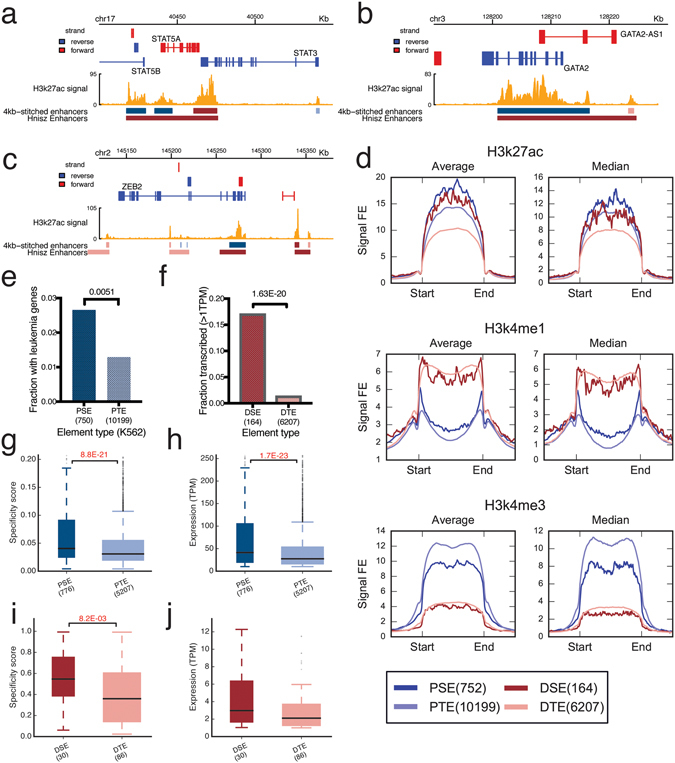
“The tracks shown are: (from top to bottom) (1) Genes, (2) K562 H3K27ac ChIP-Seq signal, (3) called typical enhancers and super-enhancers (dark red indicates distal super-enhancers, dark blue indicates proximal super-enhancers, light pink indicates distal typical enhancers and light blue indicates proximal typical enha…”
BackgroundThe pluripotent regulatory circuitry connecting promoters to their long-range interacting elements
Schoenfelder, S., Furlan-Magaril, M., Mifsud, B., Tavares-Cadete, F., Sugar, R., Javierre, B.-M., Nagano, T., Katsman, Y., Sakthidevi, M., Wingett, S. W., et al. (2015) · Genome Research · doi:10.1101/gr.185272.114 · Cited by 460
Mediator kinase inhibition further activates super-enhancer-associated genes in AML
Pelish, H. E., Liau, B. B., Nitulescu, I. I., Tangpeerachaikul, A., Poss, Z. C., Da Silva, D. H., Caruso, B. T., Arefolov, A., Fadeyi, O., Christie, A. L., et al. (2015) · Nature · doi:10.1038/nature14904 · Cited by 403
Chen, K., Chen, Z., Wu, D., Zhang, L., Lin, X., Su, J., Rodriguez, B., Xi, Y., Xia, Z., Chen, X., et al. (2015) · Nature Genetics · doi:10.1038/ng.3385 · Cited by 373 · cited 1×
“The tracks shown are: (from top to bottom) (1) Genes, (2) K562 H3K27ac ChIP-Seq signal, (3) called typical enhancers and super-enhancers (dark red indicates distal super-enhancers, dark blue indicates proximal super-enhancers, light pink indicates distal typical enhancers and light blue indicates proximal typical enha…”
BackgroundThe three 'C' s of chromosome conformation capture: controls, controls, controls
Dekker, J. (2006) · Nature Methods · doi:10.1038/nmeth823 · Cited by 349
Splinter, E., de Wit, E., van de Werken, H. J. G., Klous, P., & de Laat, W. (2012) · Methods · doi:10.1016/j.ymeth.2012.04.009 · Cited by 231
Predictive chromatin signatures in the mammalian genome
Hon, G. C., Hawkins, R. D., & Ren, B. (2009) · Human Molecular Genetics · doi:10.1093/hmg/ddp409 · Cited by 222
Thongjuea, S., Stadhouders, R., Grosveld, F. G., Soler, E., & Lenhard, B. (2013) · Nucleic Acids Research · doi:10.1093/nar/gkt373 · Cited by 119
Babu, D., & Fullwood, M. J. (2015) · Nucleus · doi:10.1080/19491034.2015.1106676 · Cited by 60
Self-citationChromatin Interaction Analysis Using Paired‐End Tag Sequencing
Fullwood, M. J., Han, Y., Wei, C., Ruan, X., & Ruan, Y. (2010) · Current Protocols in Molecular Biology · doi:10.1002/0471142727.mb2115s89 · Cited by 55
Self-citationChromatin barcodes as biomarkers for melanoma
Bastonini, E., Jeznach, M., Field, M., Juszczyk, K., Corfield, E., Dezfouli, M., Ahmat, N., Smith, A., Womersley, H. J., Jordan, P. W., et al. (2014) · Pigment Cell & Melanoma Research · doi:10.1111/pcmr.12258 · Cited by 27
Self-citationJakub, J. W., Grotz, T. E., Jordan, P. W., Hunter, E., Pittelkow, M. R., Ramadass, A., Akoulitchev, A. V., & Markovic, S. N. (2015) · Melanoma Research · doi:10.1097/cmr.0000000000000182 · Cited by 24
Self-citation
Cited by
A Genome-wide Framework for Mapping Gene Regulation via Cellular Genetic Screens
Gasperini, M., Hill, A. J., McFaline-Figueroa, J. L., Martin, B., Kim, S., Zhang, M. D., Jackson, D., Leith, A., Schreiber, J., Noble, W. S., et al. (2019) · Cell · doi:10.1016/j.cell.2018.11.029 · Cited by 613
Cai, Y., Zhang, Y., Loh, Y. P., Tng, J. Q., Lim, M. C., Cao, Z., Raju, A., Lieberman Aiden, E., Li, S., Manikandan, L., et al. (2021) · Nature Communications · doi:10.1038/s41467-021-20940-y · Cited by 321
Self-citationMeng, X., Grötsch, B., Luo, Y., Knaup, K. X., Wiesener, M. S., Chen, X.-X., Jantsch, J., Fillatreau, S., Schett, G., & Bozec, A. (2018) · Nature Communications · doi:10.1038/s41467-017-02683-x · Cited by 274
The dynamic broad epigenetic (H3K4me3, H3K27ac) domain as a mark of essential genes
Beacon, T. H., Delcuve, G. P., López, C., Nardocci, G., Kovalchuk, I., van Wijnen, A. J., & Davie, J. R. (2021) · Clinical Epigenetics · doi:10.1186/s13148-021-01126-1 · Cited by 249
“Features generally exploited to identify putative enhancers are DNase I hypersensitivity, H3K4me1 and H3K27ac marks as well as association of CBP/p300, which acetylates H3K27 among other targets [138].”
BackgroundMethodInfluentialIdentification of significant chromatin contacts from HiChIP data by FitHiChIP
Bhattacharyya, S., Chandra, V., Vijayanand, P., & Ay, F. (2019) · Nature Communications · doi:10.1038/s41467-019-11950-y · Cited by 238
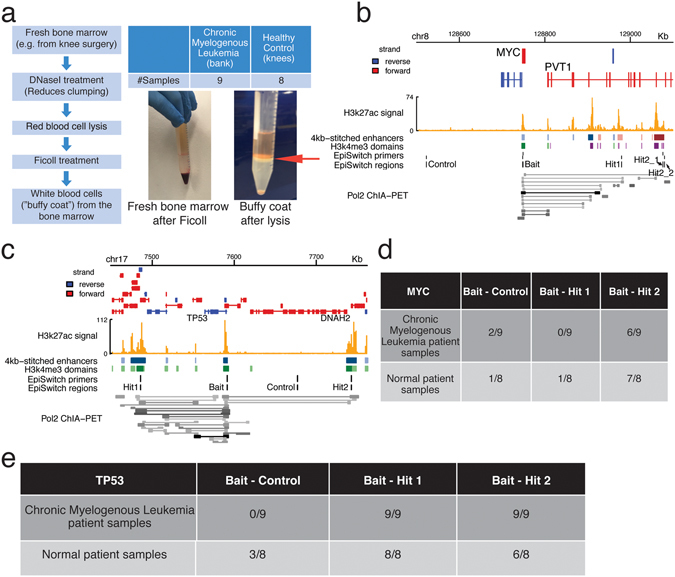
“In case of TP53 promoter, FitHiChIP identi fi es loops to both hit regions identi fi ed using EpiSwitch baits 22 , whereas HiCCUPS misses both (Fig.”
Method
Metadata
- Authors
- Cao, F., Fang, Y., Tan, H. K., Goh, Y., Choy, J. Y. H., Koh, B. T. H., Hao Tan, J., Bertin, N., Ramadass, A., Hunter, E., Green, J., Salter, M., Akoulitchev, A., Wang, W., Chng, W. J., Tenen, D. G., & Fullwood, M. J.
- Affiliations
- National University of Singapore (SG)
- National University Health System (SG)
- Oxford BioDynamics (United Kingdom) (GB)
- Agency for Science, Technology and Research (SG)
- Corresponding author
- Fullwood, Melissa J.
- ORCID
- Venue
- Scientific Reports
- Published
- 2017-05-19
- Volume
- 7
- Issue
- 1
- Pages
- 2186-2186
- ISSN
- 2045-2322 (ISSN-L)
- PMC
- PMC5438348
- OpenAlex
- W2614185636
- Cited by
- 80
- References
- 30
- Citations by year
- 2026: 2 · 2025: 3 · 2024: 3 · 2023: 11 · 2022: 8 · 2021: 17 · 2020: 10 · 2019: 10 · 2018: 14 · 2017: 2
- FWCI
- 4.02
- Type
- journal article
- Language
- en
- Open access
- gold
- doi.org
- Licence
- cc-by
- creativecommons.org/licenses/by/4.0 (tdm)
- creativecommons.org/licenses/by/4.0 (vor)
- Locations
- Scientific Reports (publishedVersion, cc-by)
- PubMed Central (publishedVersion, cc-by)
- PubMed (publishedVersion)
- National University of Singapore (submittedVersion)
- DOAJ (DOAJ: Directory of Open Access Journals) (submittedVersion, cc-by-sa)
- DR-NTU (Nanyang Technological University) (submittedVersion, cc-by)
- Funders
- Yale University
- Yale-NUS College
- National Research Foundation (NRF-NRFF2012–054)
- National Research Foundation Singapore (NRFF2012-054, NRF-NRFF2012-054, MOE2014-T3-1-006)
- Ministry of Education, India
- National University Cancer Institute, Singapore
- National University Health System
- Medical Research Council
- National Medical Research Council (MOE2014-T3-1-006)
- Cancer Science Institute of Singapore, National University of Singapore (MOE2014-T3-1-006)
- National Heart, Lung, and Blood Institute (P01HL131477)
- National Cancer Institute (R35CA197697, P01CA066996)
- Topics
- Life Sciences › Biochemistry, Genetics and Molecular Biology › Molecular Biology › Genomics and Chromatin Dynamics
- Life Sciences › Biochemistry, Genetics and Molecular Biology › Molecular Biology › Chromatin Remodeling and Cancer
- Life Sciences › Biochemistry, Genetics and Molecular Biology › Molecular Biology › Epigenetics and DNA Methylation
- Keywords
- super-enhancers, chromatin interactions, gene regulatory circuits, K562 cells, MCF-7 cells, chronic myeloid leukemia, breast cancer, tumor suppressor, cancer genes, cell identity, chromatin conformation
- MeSH terms
- Chromatin, Enhancer Elements, Genetic, Gene Expression Regulation, Histones, Humans, Multiprotein Complexes, Protein Interaction Domains and Motifs
About these checks
Registry, retraction, Cites and statistics results are computed, not judged, with one exception: a printed reference that no index lists is read once by a model before it counts as a citation error. Claims are extracted by a model and kept only when their quote appears verbatim in the text; each cited source is then checked, with a model’s help, for whether it says what the claim relies on. Those verdicts can be wrong — read the claim’s quote and the cited source before relying on one.
Statistics and arithmetic are recomputed, not judged.
Confidence bands are shown only for fields calibrated on our annotated test set. None is calibrated yet, so no band is shown.
What counts as a claim ›How we measure confidence ›How we check this ›
Are you an author, or do you see a problem with this page? Request a review
Data sources
Bibliographic data: Semantic Scholar, OpenAlex, Crossref.
Contains information from the Semantic Scholar Academic Graph Datasets, made available under the ODC Attribution License (ODC-BY 1.0).
Semantic Scholar’s data is described in: Kinney, R., et al. (2023). The Semantic Scholar Open Data Platform. arXiv:2301.10140.
