

The DOI matches its Crossref record; 49 of the 49 references it cites were found in a registry or an index.
A Comprehensive Mouse Transcriptomic BodyMap across 17 Tissues by RNA-seq
Open accessAbstract
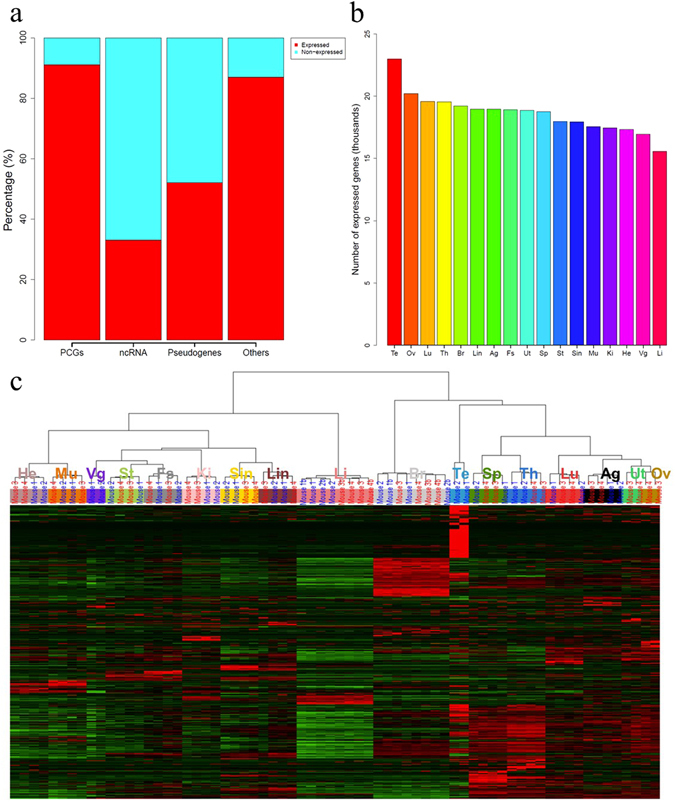
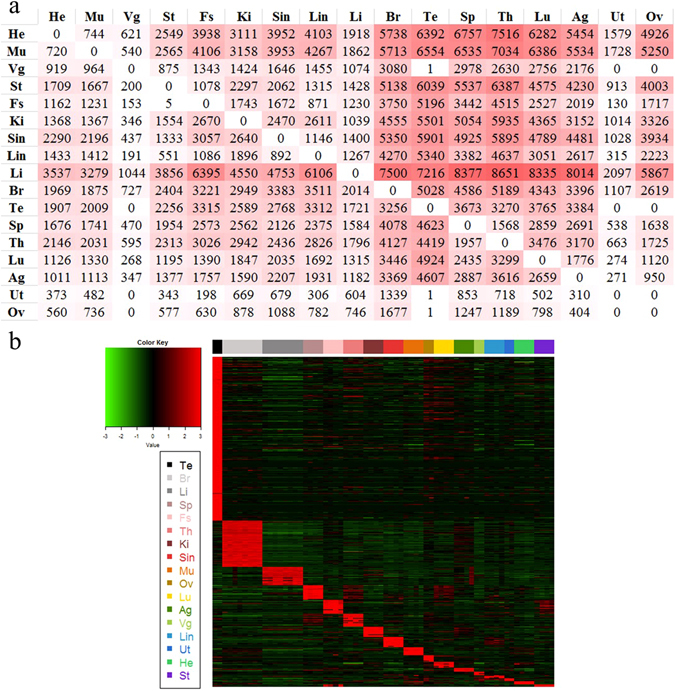
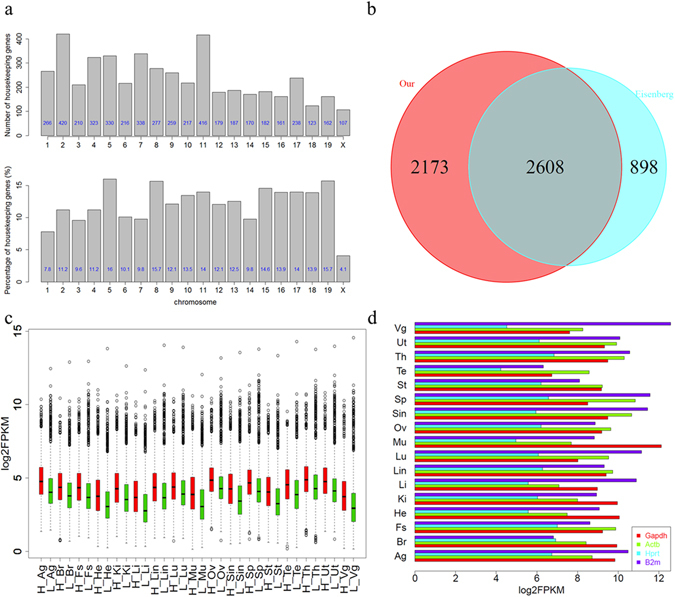
The mouse has been widely used as a model organism for studying human diseases and for evaluating drug safety and efficacy. Many diseases and drug effects exhibit tissue specificity that may be reflected by tissue-specific gene-expression profiles. Here we construct a comprehensive mouse transcriptomic BodyMap across 17 tissues of six-weeks old C57BL/6JJcl mice using RNA-seq. We find different expression patterns between protein-coding and non-coding genes. Liver expressed the least complex transcriptomes, that is, the smallest number of genes detected in liver across all 17 tissues, whereas testis and ovary harbor more complex transcriptomes than other tissues. We report a comprehensive list of tissue-specific genes across 17 tissues, along with a list of 4,781 housekeeping genes in mouse. In addition, we propose a list of 27 consistently and highly expressed genes that can be used as reference controls in expression-profiling analysis. Our study provides a unique resource of mouse gene-expression profiles, which is helpful for further biomedical research.
Overview
The claims and statistics of this paper haven’t been checked yet.
Run the check — free, no account needed. It reads the open-access text and checks the sources it cites.
Integrity signals
Registry
Cites
Statistics
Figures
Verification
Claims the paper makes
The claims and statistics of this paper haven’t been checked yet.
Run the check — free, no account needed. It reads the open-access text and checks the sources it cites.
Claims other papers make about this one
Each is checked against this paper’s own text: does it say what the citing paper says it does?
In the citing paper
“we found that the kidney and submandibular gland had higher expression of endogenous acidic β-gal”
From Elimination of senescent cells by β-galactosidase-targeted prodrug attenuates inflammation and restores physical function in aged mice (2020) · cites this paper as [51]
Self-check
Percentages, sums and reported differences re-computed from the paper’s own numbers.
The self-check needs the paper’s full text.
Citations
Cites
Trimmomatic: a flexible trimmer for Illumina sequence data
Bolger, A. M., Lohse, M., & Usadel, B. (2014) · Bioinformatics · doi:10.1093/bioinformatics/btu170 · Cited by 65,548
Fast gapped-read alignment with Bowtie 2
Langmead, B., & Salzberg, S. L. (2012) · Nature Methods · doi:10.1038/nmeth.1923 · Cited by 56,400
KEGG: Kyoto Encyclopedia of Genes and Genomes
Kanehisa, M. (2000) · Nucleic Acids Research · doi:10.1093/nar/28.1.27 · Cited by 37,077
KEGG: Kyoto Encyclopedia of Genes and Genomes
Ogata, H., Goto, S., Sato, K., Fujibuchi, W., Bono, H., & Kanehisa, M. (1999) · Nucleic Acids Research · doi:10.1093/nar/27.1.29 · Cited by 31,232
BEDTools: a flexible suite of utilities for comparing genomic features
Quinlan, A. R., & Hall, I. M. (2010) · Bioinformatics · doi:10.1093/bioinformatics/btq033 · Cited by 27,437
An integrated encyclopedia of DNA elements in the human genome
The ENCODE Project Consortium (2012) · Nature · doi:10.1038/nature11247 · Cited by 18,072
Trapnell, C., Williams, B. A., Pertea, G., Mortazavi, A., Kwan, G., van Baren, M. J., Salzberg, S. L., Wold, B. J., & Pachter, L. (2010) · Nature Biotechnology · doi:10.1038/nbt.1621 · Cited by 15,556
Mapping and quantifying mammalian transcriptomes by RNA-Seq
Mortazavi, A., Williams, B. A., McCue, K., Schaeffer, L., & Wold, B. (2008) · Nature Methods · doi:10.1038/nmeth.1226 · Cited by 13,696
A scaling normalization method for differential expression analysis of RNA-seq data
Robinson, M. D., & Oshlack, A. (2010) · Genome Biology · doi:10.1186/gb-2010-11-3-r25 · Cited by 7,876
Initial sequencing and comparative analysis of the mouse genome
Mouse Genome Sequencing Consortium (2002) · Nature · doi:10.1038/nature01262 · Cited by 7,187
The Genotype-Tissue Expression (GTEx) pilot analysis: Multitissue gene regulation in humans
The GTEx Consortium, Ardlie, K. G., Deluca, D. S., Segrè, A. V., Sullivan, T. J., Young, T. R., Gelfand, E. T., Trowbridge, C. A., Maller, J. B., Tukiainen, T., et al. (2015) · Science · doi:10.1126/science.1262110 · Cited by 5,062
Self-citationThe Transcriptional Landscape of the Mammalian Genome
Carninci, P., Kasukawa, T., Katayama, S., Gough, J., Frith, M. C., Maeda, N., Oyama, R., Ravasi, T., Lenhard, B., Wells, C. A., et al. (2005) · Science · doi:10.1126/science.1112014 · Cited by 3,492
Genomic responses in mouse models poorly mimic human inflammatory diseases
Seok, J., Warren, H. S., Cuenca, A. G., Mindrinos, M. N., Baker, H. V., Xu, W., Richards, D. R., McDonald-Smith, G. P., Gao, H., Hennessy, L., et al. (2013) · Proceedings of the National Academy of Sciences · doi:10.1073/pnas.1222878110 · Cited by 3,005
Huang, D. W., Sherman, B. T., Tan, Q., Kir, J., Liu, D., Bryant, D., Guo, Y., Stephens, R. M., Baseler, M., Lane, H. C., et al. (2007) · Nucleic Acids Research · doi:10.1093/nar/gkm415 · Cited by 2,216
A promoter-level mammalian expression atlas
The FANTOM Consortium and the RIKEN PMI and CLST (DGT) (2014) · Nature · doi:10.1038/nature13182 · Cited by 1,982
A comparative encyclopedia of DNA elements in the mouse genome
Yue, F., Cheng, Y., Breschi, A., Vierstra, J., Wu, W., Ryba, T., Sandstrom, R., Ma, Z., Davis, C., Pope, B. D., et al. (2014) · Nature · doi:10.1038/nature13992 · Cited by 1,781
Analysis of the mouse transcriptome based on functional annotation of 60,770 full-length cDNAs
Okazaki, Y., Furuno, M., Kasukawa, T., Adachi, J., Bono, H. U., Kondo, S., Nikaido, I., Osato, N., Saito, R., Suzuki, H., et al. (2002) · Nature · doi:10.1038/nature01266 · Cited by 1,660
Housekeeping genes as internal standards: use and limits
Thellin, O., Zorzi, W., Lakaye, B., Borman, B. D., Coumans, B., Hennen, G. P., Grisar, T. M., Igout, A., & Heinen, E. (1999) · Journal of Biotechnology · doi:10.1016/s0168-1656(99)00163-7 · Cited by 1,534
The human transcriptome across tissues and individuals
Melé, M., Ferreira, P. G., Reverter, F., DeLuca, D. S., Monlong, J., Sammeth, M., Young, T. R., Goldmann, J. M., Pervouchine, D. D., Sullivan, T. J., et al. (2015) · Science · doi:10.1126/science.aaa0355 · Cited by 1,304
Genetics of gene expression and its effect on disease
Emilsson, V., Thorleifsson, G., Zhang, B., Leonardson, A. S., Zink, F., Zhu, J., Carlson, S., Helgason, A., Walters, G. B., Gunnarsdottir, S., et al. (2008) · Nature · doi:10.1038/nature06758 · Cited by 1,296
Self-citationHuman housekeeping genes, revisited
Eisenberg, E., & Levanon, E. Y. (2013) · Trends in Genetics · doi:10.1016/j.tig.2013.05.010 · Cited by 1,249
Cunningham, F., Amode, M. R., Barrell, D., Beal, K., Billis, K., Brent, S., Carvalho-Silva, D., Clapham, P., Coates, G., Fitzgerald, S., et al. (2015) · Nucleic Acids Research · doi:10.1093/nar/gku1010 · Cited by 1,115
Validation of housekeeping genes for normalizing RNA expression in real-time PCR
Dheda, K. U. J., Huggett, J. F., Bustin, S. A., Johnson, M. A., Rook, G. A. W., & Zumla, A. I. (2004) · BioTechniques · doi:10.2144/04371rr03 · Cited by 1,025
Functional annotation of a full-length mouse cDNA collection
Kawai, J., Shinagawa, A., Shibata, K., Yoshino, M., Itoh, M., Ishii, Y., Arakawa, T., Hara, A., Fukunishi, Y., Konno, H., et al. (2001) · Nature · doi:10.1038/35055500 · Cited by 665
Applications of New Sequencing Technologies for Transcriptome Analysis
Morozova, O., Hirst, M., & Marra, M. A. (2009) · Annual Review of Genomics and Human Genetics · doi:10.1146/annurev-genom-082908-145957 · Cited by 590
Genomic responses in mouse models greatly mimic human inflammatory diseases
Takao, K., & Miyakawa, T. (2014) · Proceedings of the National Academy of Sciences · doi:10.1073/pnas.1401965111 · Cited by 505
The expression of three abundance classes of messenger RNA in mouse tissues
Hastie, N. D. (1976) · Cell · doi:10.1016/0092-8674(76)90139-2 · Cited by 399
A rat RNA-Seq transcriptomic BodyMap across 11 organs and 4 developmental stages
Yu, Y., Fuscoe, J. C., Zhao, C., Guo, C., Jia, M., Qing, T., Bannon, D. I., Lancashire, L., Bao, W., Du, T., et al. (2014) · Nature Communications · doi:10.1038/ncomms4230 · Cited by 395
Self-citationThe Mouse Genome Database (MGD): facilitating mouse as a model for human biology and disease
Eppig, J. T., Blake, J. A., Bult, C. J., Kadin, J. A., Richardson, J. E., & The Mouse Genome Database Group (2014) · Nucleic Acids Research · doi:10.1093/nar/gku967 · Cited by 363
Next-Generation Sequencing: Methodology and Application
Grada, A. A., & Weinbrecht, K. D. (2013) · Journal of Investigative Dermatology · doi:10.1038/jid.2013.248 · Cited by 361
A global map of human gene expression
Lukk, M., Kapushesky, M., Nikkilä, J., Parkinson, H., Gonçalves, Â., Huber, W. K., Ukkonen, E., & Brāzma, A. (2010) · Nature Biotechnology · doi:10.1038/nbt0410-322 · Cited by 353
The functional landscape of mouse gene expression
Zhang, W., Morris, Q., Chang, R., Shai, O., Bakowski, M. A., Mitsakakis, N., Mohammad, N., Robinson, M. D., Zirngibl, R. A., Somogyi, E., et al. (2004) · Journal of Biology · doi:10.1186/jbiol16 · Cited by 315
Noninvasive in vivo monitoring of tissue-specific global gene expression in humans
Koh, W. L. C., Pan, W., Gawad, C., Fan, H. C., Kerchner, G. A., Wyss‐Coray, T., Blumenfeld, Y. J., El-Sayed, Y. Y., & Quake, S. R. (2014) · Proceedings of the National Academy of Sciences · doi:10.1073/pnas.1405528111 · Cited by 306
Lage, K., Hansen, N. T., Karlberg, E. O., Eklund, A. C., Roque, F. S., Donahoe, P. K., Szallasi, Z., Jensen, T. S., & Brunak, S. (2008) · Proceedings of the National Academy of Sciences · doi:10.1073/pnas.0810772105 · Cited by 292
On the nature of human housekeeping genes
Zhu, J., He, F., Hu, S., & Yu, J. M. (2008) · Trends in Genetics · doi:10.1016/j.tig.2008.08.004 · Cited by 288
Self-citationButte, A. J., Dzau, V. J., & Glueck, S. B. (2001) · Physiological Genomics · doi:10.1152/physiolgenomics.2001.7.2.95 · Cited by 211
Unamplified cap analysis of gene expression on a single-molecule sequencerPreprint
Kanamori-Katayama, M., Itoh, M., Kawaji, H., Lassmann, T., Katayama, S., Kojima, M., Bertin, N., Kaiho, A., Ninomiya, N., Daub, C. O., et al. (2011) · Genome Research · doi:10.1101/gr.115469.110 · Cited by 176
Definition, conservation and epigenetics of housekeeping and tissue-enriched genes
She, X., Rohl, C. A., Castle, J. C., Kulkarni, A. V., Johnson, J. M., & Chen, R. (2009) · BMC Genomics · doi:10.1186/1471-2164-10-269 · Cited by 173
TiSGeD: a database for tissue-specific genes
Xiao, S.-J., Zhang, C., Zou, Q., & Ji, Z. (2010) · Bioinformatics · doi:10.1093/bioinformatics/btq109 · Cited by 170
Identification of Human Housekeeping Genes and Tissue-Selective Genes by Microarray Meta-Analysis
Chang, C.-W., Cheng, W., Chen, C.-R., Shu, W., Tsai, M., Huang, C.-L., & Hsu, I. C. (2011) · PLoS ONE · doi:10.1371/journal.pone.0022859 · Cited by 140
Housekeeping genes; expression levels may change with density of cultured cells
Greer, S. N., Honeywell, R., Geletu, M., Arulanandam, R., & Raptis, L. H. (2010) · Journal of Immunological Methods · doi:10.1016/j.jim.2010.02.006 · Cited by 128
Large scale comparison of global gene expression patterns in human and mouse
Zheng-Bradley, X., Rung, J., Parkinson, H., & Brāzma, A. (2010) · Genome biology · doi:10.1186/gb-2010-11-12-r124 · Cited by 125
Yu, N., Hallström, B. M., Fagerberg, L., Pontén, F., Kawaji, H., Carninci, P., Forrest, A. R. R., Hayashizaki, Y., Uhlén, M., & Daub, C. O. (2015) · Nucleic Acids Research · doi:10.1093/nar/gkv608 · Cited by 117
Kawaji, H., Lizio, M., Itoh, M., Kanamori-Katayama, M., Kaiho, A., Nishiyori-Sueki, H., Shin, J. W., Kojima-Ishiyama, M., Kawano, M., Murata, M., et al. (2014) · Genome Research · doi:10.1101/gr.156232.113 · Cited by 109
Evolution of duplicate genes versus genetic robustness against null mutations
Gu, X. (2003) · Trends in Genetics · doi:10.1016/s0168-9525(03)00139-2 · Cited by 104
From gene expression to disease risk
Dermitzakis, E. T. (2008) · Nature Genetics · doi:10.1038/ng0508-492 · Cited by 81
BodyMap: a human and mouse gene expression database
Hishiki, T. (2000) · Nucleic Acids Research · doi:10.1093/nar/28.1.136 · Cited by 64
Qing, T., Yu, Y., Du, T., & Shi, L. M. (2013) · Science China Life Sciences · doi:10.1007/s11427-013-4437-9 · Cited by 45
Self-citationeMouseAtlas, EMAGE, and the spatial dimension of the transcriptome
Armit, C. J., Venkataraman, S., Richardson, L., Stevenson, P. L., Moss, J. E., Graham, L., Ross, A., Yang, Y., Burton, N., Rao, J., et al. (2012) · Mammalian Genome · doi:10.1007/s00335-012-9407-1 · Cited by 35
Cited by
Sorted by citations
Activity-by-contact model of enhancer–promoter regulation from thousands of CRISPR perturbations
Fulco, C. P., Nasser, J., Jones, T. R., Munson, G., Bergman, D. T., Subramanian, V., Grossman, S. R., Anyoha, R., Doughty, B. R., Patwardhan, T. A., et al. (2019) · Nature Genetics · doi:10.1038/s41588-019-0538-0 · Cited by 1,111
Functional genomic landscape of cancer-intrinsic evasion of killing by T cells
Lawson, K. A., Sousa, C. M., Zhang, X., Kim, E., Akthar, R., Caumanns, J. J., Yao, Y., Mikolajewicz, N., Ross, C., Brown, K. R., et al. (2020) · Nature · doi:10.1038/s41586-020-2746-2 · Cited by 443
LRRC15(+) myofibroblasts dictate the stromal setpoint to suppress tumour immunity
Krishnamurty, A. T., Shyer, J. A., Thai, M., Gandham, V., Buechler, M. B., Yang, Y. A., Pradhan, R. N., Wang, A. W., Sanchez, P. L., Qu, Y., et al. (2022) · Nature · doi:10.1038/s41586-022-05272-1 · Cited by 436
Structural cells are key regulators of organ-specific immune responses
Krausgruber, T., Fortelny, N., Fife-Gernedl, V., Senekowitsch, M., Schuster, L. C., Lercher, A., Nemc, A., Schmidl, C., Rendeiro, A. F., Bergthaler, A., et al. (2020) · Nature · doi:10.1038/s41586-020-2424-4 · Cited by 434
Cai, Y., Zhou, H., Zhu, Y., Sun, Q., Ji, Y., Xue, A., Wang, Y., Chen, W., Yu, X., Wang, L., et al. (2020) · Cell Research · doi:10.1038/s41422-020-0314-9 · Cited by 397
Metadata
- Authors
- Li, B., Qing, T., Zhu, J., Wen, Z., Yu, Y., Fukumura, R., Zheng, Y., Gondo, Y., & Shi, L.
- Affiliations
- Fudan University (CN)
- Sichuan University (CN)
- RIKEN BioResource Research Center (JP)
- Corresponding author
- Zheng, Yuanting
- Gondo, Yoichi
- Shi, Leming
- Venue
- Scientific Reports
- Published
- 2017-06-23
- Volume
- 7
- Issue
- 1
- Pages
- 4200-4200
- ISSN
- 2045-2322 (ISSN-L)
- PMC
- PMC5482823
- OpenAlex
- W2644618666
- Cited by
- 184
- References
- 49
- Citations by year
- 2026: 13 · 2025: 18 · 2024: 18 · 2023: 25 · 2022: 22 · 2021: 22 · 2020: 37 · 2019: 22 · 2018: 6 · 2017: 1
- FWCI
- 7.38
- Type
- journal article
- Language
- en
- Open access
- gold
- doi.org
- Locations
- Scientific Reports (publishedVersion, cc-by)
- Europe PMC (PubMed Central) (publishedVersion, cc-by)
- PubMed Central (publishedVersion, cc-by)
- PubMed (publishedVersion)
- DOAJ (DOAJ: Directory of Open Access Journals) (submittedVersion, cc-by-sa)
- Funders
- National Natural Science Foundation of China (111 Project, B13016, 31671368, 31471239, 31601085, 31471239, 31671368)
- Higher Education Discipline Innovation Project (B13016)
- Japan Society for the Promotion of Science (16H06279, 17H00789, 25241016)
- National Key Research and Development Program of China (2016YFC0901704)
- National Supercomputing Center, Korea Institute of Science and Technology Information
- Topics
- Life Sciences › Biochemistry, Genetics and Molecular Biology › Molecular Biology › Gene expression and cancer classification
- Life Sciences › Biochemistry, Genetics and Molecular Biology › Molecular Biology › Genomics and Phylogenetic Studies
- Life Sciences › Biochemistry, Genetics and Molecular Biology › Molecular Biology › Single-cell and spatial transcriptomics
- Keywords
- mouse transcriptome, tissue-specific gene expression, C57BL/6J mice, tissue-specific genes, housekeeping genes, non-coding RNA, liver transcriptome, tissue expression profiling
- MeSH terms
- Animals, Female, Male, Mice, Inbred C57BL, Organ Specificity, Sequence Analysis, RNA, Genes, Essential, Gene Expression Profiling, Transcriptome
About these checks
Registry, retraction, Cites and statistics results are computed, not judged, with one exception: a printed reference that no index lists is read once by a model before it counts as a citation error. Claims are extracted by a model and kept only when their quote appears verbatim in the text; each cited source is then checked, with a model’s help, for whether it says what the claim relies on. Those verdicts can be wrong — read the claim’s quote and the cited source before relying on one.
Statistics and arithmetic are recomputed, not judged.
Confidence bands are shown only for fields calibrated on our annotated test set. None is calibrated yet, so no band is shown.
What counts as a claim ›How we measure confidence ›How we check this ›
Are you an author, or do you see a problem with this page? Request a review
