

Physiological dynamics of stress contagion
Open accessThe DOI matches its Crossref record; 29 of the 29 references it cites were found in a registry or an index.
Abstract
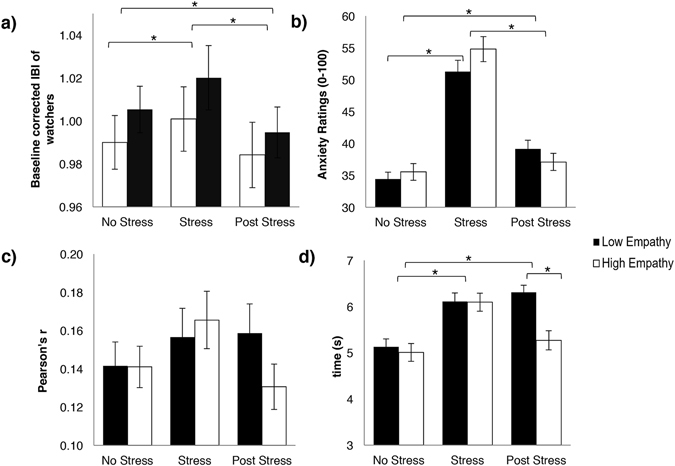
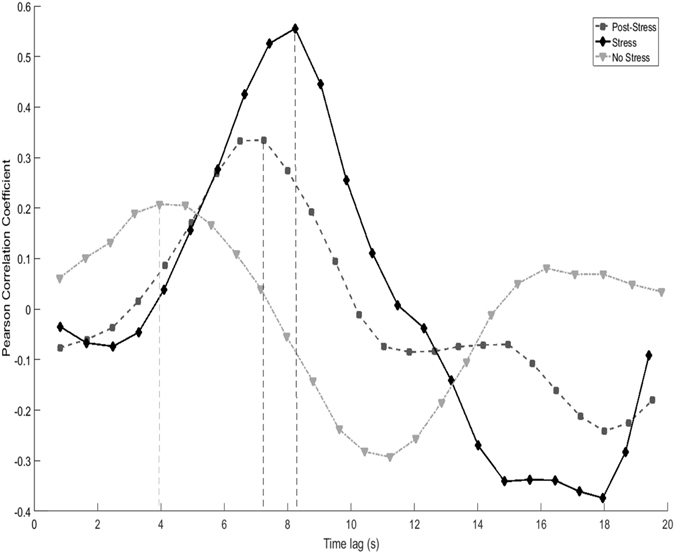
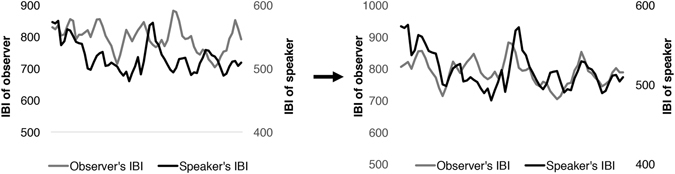
Can viewing others experiencing stress create a “contagious” physiological stress response in the observer? To investigate second-hand stress, we first created a stimulus set of videos, which featured participants speaking under either minimal stress, high stress, or while recovering from stress. We then recruited a second set of participants to watch these videos. All participants (speakers and observers) were monitored via electrocardiogram. Cardiac activity of the observers while watching the videos was then analyzed and compared to that of the speakers. Furthermore, we assessed dispositional levels of empathy in observers to determine how empathy might be related to the degree of stress contagion. Results revealed that depending on the video being viewed, observers experienced differential changes in cardiac activity that were based on the speaker’s stress level. Additionally, this is the first demonstration that individuals high in dispositional empathy experience these physiological changes more quickly.
Overview
The claims and statistics of this paper haven’t been checked yet.
Free: it reads the open-access text and checks the first 5 claims that cite a source we can check. Create a free account to check every claim.
Integrity signals
Registry
Cites
Statistics
Figures
Verification
Claims the paper makes
The claims and statistics of this paper haven’t been checked yet.
Free: it reads the open-access text and checks the first 5 claims that cite a source we can check. Create a free account to check every claim.
Claims other papers make about this one
Each is checked against this paper’s own text: does it say what the citing paper says it does?
The check wasn’t confident either way, so it gives no verdict — never disputed.
In the citing paper
“It should be noted that physiological synchrony is not always a predictor of better performance outcomes. In fact, physiological synchrony can be detrimental.”
From Physiological and Behavioral Synchrony Predict Group Cohesion and Performance (2020) · cites this paper as [82]
Experimental — accuracy not yet measured
Self-check
Percentages, sums and reported differences re-computed from the paper’s own numbers.
The self-check needs the paper’s full text.
Citations
Cites
Kirschbaum, C., Pirke, K.-M., & Hellhammer, D. H. (2008) · Neuropsychobiology · doi:10.1159/000119004 · Cited by 6,093 · cited 1×
“A matched pair t-test revealed the 14 speakers who completed the TSST (speakers in “Stress” and “Post Stress” conditions), experienced a significant decrease in IBI from baseline to TSST, t(13) = 8.”
Heart rate variability: origins, methods, and interpretive caveats
BERNTSON, G. G., THOMAS BIGGER, J., ECKBERG, D. L., GROSSMAN, P., KAUFMANN, P. G., MALIK, M., NAGARAJA, H. N., PORGES, S. W., SAUL, J. P., STONE, P. H., et al. (1997) · Psychophysiology · doi:10.1111/j.1469-8986.1997.tb02140.x · Cited by 3,962
Ekman, P. (1993) · American Psychologist · doi:10.1037/0003-066x.48.4.384 · Cited by 3,441
The functional architecture of human empathy
Decety, J., & Jackson, P. L. (2004) · Behavioral and Cognitive Neuroscience Reviews · doi:10.1177/1534582304267187 · Cited by 3,407
Self-citationLooking at pictures: Affective, facial, visceral, and behavioral reactions
LANG, P. J., GREENWALD, M. K., BRADLEY, M. M., & HAMM, A. O. (1993) · Psychophysiology · doi:10.1111/j.1469-8986.1993.tb03352.x · Cited by 3,190
Perceived social isolation and cognition
Cacioppo, J. T., & Hawkley, L. C. (2009) · Trends in Cognitive Sciences · doi:10.1016/j.tics.2009.06.005 · Cited by 2,144
McEwen, B. S., & Gianaros, P. J. (2010) · Annals of the New York Academy of Sciences · doi:10.1111/j.1749-6632.2009.05331.x · Cited by 1,715
It's All in the Timing: Interpersonal Synchrony Increases Affiliation
Hove, M. J., & Risen, J. L. (2009) · Social Cognition · doi:10.1521/soco.2009.27.6.949 · Cited by 1,334
Heart-rate change as a component of the orienting response.
Graham, F. K., & Clifton, R. K. (1966) · Psychological Bulletin · doi:10.1037/h0023258 · Cited by 1,029
Higher nervous functions: the orienting reflex
Sokolov, E. N. (1963) · Annual Review of Physiology · doi:10.1146/annurev.ph.25.030163.002553 · Cited by 1,026
Westman, M. (2001) · Human Relations · doi:10.1177/0018726701546002 · Cited by 968
The QCAE: a questionnaire of cognitive and affective empathy
Reniers, R. L. E. P., Corcoran, R., Drake, R., Shryane, N. M., & Völlm, B. A. (2011) · Journal of Personality Assessment · doi:10.1080/00223891.2010.528484 · Cited by 961
Hatfield, E., Cacioppo, J. T., & Rapson, R. L. (1993) · Cambridge University Press eBooks · doi:10.1017/cbo9781139174138 · Cited by 735
Emotional coregulation in close relationships
Butler, E. A., & Randall, A. K. (2013) · Emotion Review · doi:10.1177/1754073912451630 · Cited by 476
The role of intonation in emotional expressions
Bänziger, T., & Scherer, K. R. (2005) · Speech Communication · doi:10.1016/j.specom.2005.02.016 · Cited by 449 · cited 9×
“There was no significant main effect of video type on maximum correlation between speaker and watcher IBI, F(2, 122) = 1.”
BackgroundMethodInfluentialBERNTSON, G. G., CACIOPPO, J. T., BINKLEY, P. F., UCHINO, B. N., QUIGLEY, K. S., & FIELDSTONE, A. (1994) · Psychophysiology · doi:10.1111/j.1469-8986.1994.tb02352.x · Cited by 443
Bänziger, T., Grandjean, D., & Scherer, K. R. (2009) · Emotion · doi:10.1037/a0017088 · Cited by 380
Seery, M. D. (2011) · Neuroscience & Biobehavioral Reviews · doi:10.1016/j.neubiorev.2011.03.003 · Cited by 371
Social neuroscience: Autonomic, neuroendocrine, and immune responses to stress
CACIOPPO, J. T. (1994) · Psychophysiology · doi:10.1111/j.1469-8986.1994.tb01032.x · Cited by 301
A neurobehavioral evolutionary perspective on the mechanisms underlying empathy
Decety, J., Norman, G. J., Berntson, G. G., & Cacioppo, J. T. (2012) · Progress in Neurobiology · doi:10.1016/j.pneurobio.2012.05.001 · Cited by 289
Self-citationStress Contagion: Physiological Covariation Between Mothers and Infants
Waters, S. F., West, T. V., & Mendes, W. B. (2014) · Psychological Science · doi:10.1177/0956797613518352 · Cited by 231
Neurobiological Sequelae of Witnessing Stressful Events in Adult Mice
Warren, B. L., Vialou, V. F., Iñiguez, S. D., Alcantara, L. F., Wright, K. N., Feng, J., Kennedy, P. J., LaPlant, Q., Shen, L., Nestler, E. J., et al. (2013) · Biological Psychiatry · doi:10.1016/j.biopsych.2012.06.006 · Cited by 222
Cortisol increase in empathic stress is modulated by emotional closeness and observation modality
Engert, V., Plessow, F., Miller, R. E., Kirschbaum, C., & Singer, T. (2014) · Psychoneuroendocrinology · doi:10.1016/j.psyneuen.2014.04.005 · Cited by 196 · cited 1×
“Similar work by Engert et al.14 had observers watch either a romantic partner or a stranger complete the TSST via a one-way mirror or video.”
MethodThe empathic, physiological resonance of stress
Buchanan, T. W., Bagley, S. L., Stansfield, R. B., & Preston, S. D. (2012) · Social Neuroscience · doi:10.1080/17470919.2011.588723 · Cited by 189 · cited 3×
“01, and lower in “Post Stress” videos compared to “No Stress” videos, t(12) = 2.”
ResultInfluentialYou are in sync with me: Neural correlates of interpersonal synchrony with a partner
Cacioppo, S., Zhou, H., Monteleone, G., Majka, E. A., Quinn, K. A., Ball, A. B., Norman, G. J., Semin, G. R., & Cacioppo, J. T. (2014) · Neuroscience · doi:10.1016/j.neuroscience.2014.07.051 · Cited by 150
Self-citationPetersen, C. C. H. (2007) · Infoscience (Ecole Polytechnique Fédérale de Lausanne) · Cited by 133
The cost of caregiving: Endocrine and immune implications in elderly and non elderly caregivers
Lovell, B., & Wetherell, M. A. (2011) · Neuroscience & Biobehavioral Reviews · doi:10.1016/j.neubiorev.2011.02.007 · Cited by 131
Emotion, somatovisceral afference, and autonomic regulation
Norman, G. J., Berntson, G. G., & Cacioppo, J. T. (2014) · Emotion Review · doi:10.1177/1754073913512006 · Cited by 97
Self-citationHuman freezing in response to affective films.
Hagenaars, M. A., Roelofs, K., & Stins, J. F. (2014) · Anxiety, Stress, & Coping · doi:10.1080/10615806.2013.809420 · Cited by 91
Research works printed but not linked: 2
- Decety, J. & Lamm, C. The biological bases of empathy (eds. Cacioppo, J. T. & Bernston, G. G.) (John Wiley and Sons, 2009)
- Cacioppo, J. T., Bernston, G. G., Larsen, J. T., Poehlmann, K. M. & Ito, T. A. Handbook of Emotions (ed. Lewis M., Haviland-Jones, J. M. & Feldman Barrett, L.) 173–191 (The Guilford Press, 2000).
Cited by
Physiological and Behavioral Synchrony Predict Group Cohesion and Performance
Gordon, I., Gilboa, A., Cohen, S., Milstein, N., Haimovich, N., Pinhasi, S., & Siegman, S. (2020) · Scientific Reports · doi:10.1038/s41598-020-65670-1 · Cited by 146
Embodied stress: The physiological resonance of psychosocial stress
Engert, V., Linz, R., & Grant, J. A. (2018) · Psychoneuroendocrinology · doi:10.1016/j.psyneuen.2018.12.221 · Cited by 117
The contagion of social defeat stress: Insights from rodent studies
Carnevali, L., Montano, N., Tobaldini, E., Thayer, J. F., & Sgoifo, A. (2020) · Neuroscience & Biobehavioral Reviews · doi:10.1016/j.neubiorev.2020.01.011 · Cited by 100
The association between acute stress & empathy: A systematic literature review
Nitschke, J. P., & Bartz, J. A. (2022) · Neuroscience & Biobehavioral Reviews · doi:10.1016/j.neubiorev.2022.105003 · Cited by 82
The social transmission of stress in animal collectives
Brandl, H. B., Pruessner, J. C., & Farine, D. R. (2022) · Proceedings of the Royal Society B Biological Sciences · doi:10.1098/rspb.2021.2158 · Cited by 72
“Stresstransmissionisthought to help individuals navigate their dynamic social environments, allowing them to understand what others are experiencing [41].”
Background
Metadata
- Authors
- Dimitroff, S. J., Kardan, O., Necka, E. A., Decety, J., Berman, M. G., & Norman, G. J.
- Affiliations
- University of Chicago (US)
- Corresponding author
- Dimitroff, Stephanie J.
- ORCID
- Venue
- Scientific Reports
- Published
- 2017-07-21
- Volume
- 7
- Issue
- 1
- Pages
- 6168-6168
- ISSN
- 2045-2322 (ISSN-L)
- PMC
- PMC5522461
- OpenAlex
- W2738392326
- Cited by
- 97
- References
- 29
- Citations by year
- 2026: 13 · 2025: 10 · 2024: 20 · 2023: 12 · 2022: 9 · 2021: 18 · 2020: 7 · 2019: 3 · 2018: 4
- FWCI
- 2.96
- Type
- journal article
- Language
- en
- Open access
- gold
- doi.org
- Licence
- cc-by
- creativecommons.org/licenses/by/4.0 (tdm)
- creativecommons.org/licenses/by/4.0 (vor)
- Locations
- Scientific Reports (publishedVersion, cc-by)
- PubMed Central (publishedVersion, cc-by)
- PubMed (publishedVersion)
- DOAJ (DOAJ: Directory of Open Access Journals) (submittedVersion, cc-by-sa)
- KOPS (University of Konstanz) (submittedVersion, cc-by)
- Funders
- University of Chicago
- Topics
- Health Sciences › Medicine › Cardiology and Cardiovascular Medicine › Heart Rate Variability and Autonomic Control
- Social Sciences › Psychology › Social Psychology › Action Observation and Synchronization
- Life Sciences › Neuroscience › Behavioral Neuroscience › Stress Responses and Cortisol
- Keywords
- stress contagion, physiological stress response, cardiac activity, electrocardiogram, empathy, dispositional empathy, stress recovery
- MeSH terms
- Electrocardiography, Emotions, Empathy, Female, Humans, Male, Stress, Physiological, Observer Variation, Young Adult
About these checks
Registry, retraction, Cites and statistics results are computed, not judged, with one exception: a printed reference that no index lists is read once by a model before it counts as a citation error. Claims are extracted by a model and kept only when their quote appears verbatim in the text; each cited source is then checked, with a model’s help, for whether it says what the claim relies on. Those verdicts can be wrong — read the claim’s quote and the cited source before relying on one.
Statistics and arithmetic are recomputed, not judged.
Confidence bands are shown only for fields calibrated on our annotated test set. None is calibrated yet, so no band is shown.
What counts as a claim ›How we measure confidence ›How we check this ›
Are you an author, or do you see a problem with this page? Request a review
Data sources
Bibliographic data: Semantic Scholar, OpenAlex, Crossref.
Contains information from the Semantic Scholar Academic Graph Datasets, made available under the ODC Attribution License (ODC-BY 1.0).
Semantic Scholar’s data is described in: Kinney, R., et al. (2023). The Semantic Scholar Open Data Platform. arXiv:2301.10140.
