

The DOI matches its Crossref record; 46 of the 46 references it cites were found in a registry or an index.
Beta-hydroxybutyrate, an endogenic NLRP3 inflammasome inhibitor, attenuates stress-induced behavioral and inflammatory responses
Open accessAbstract
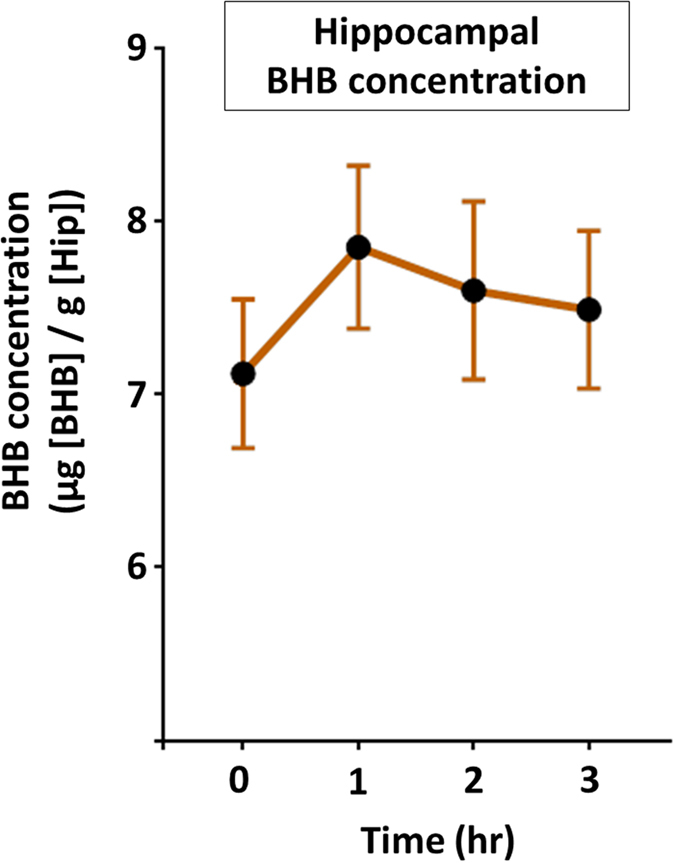
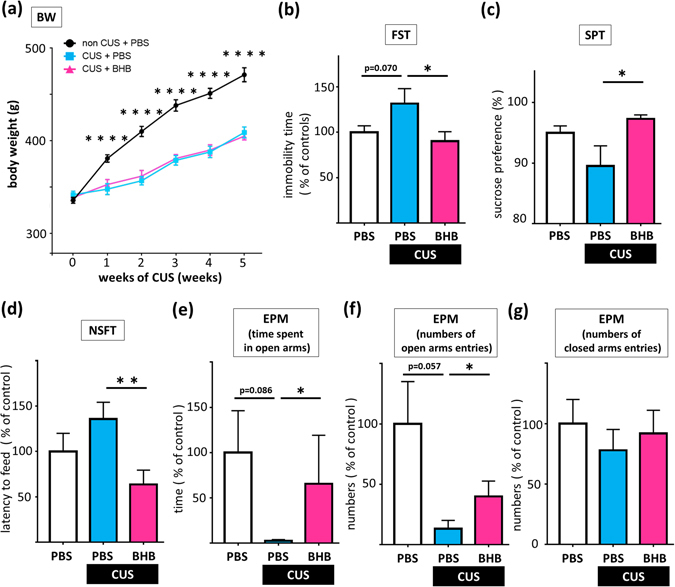
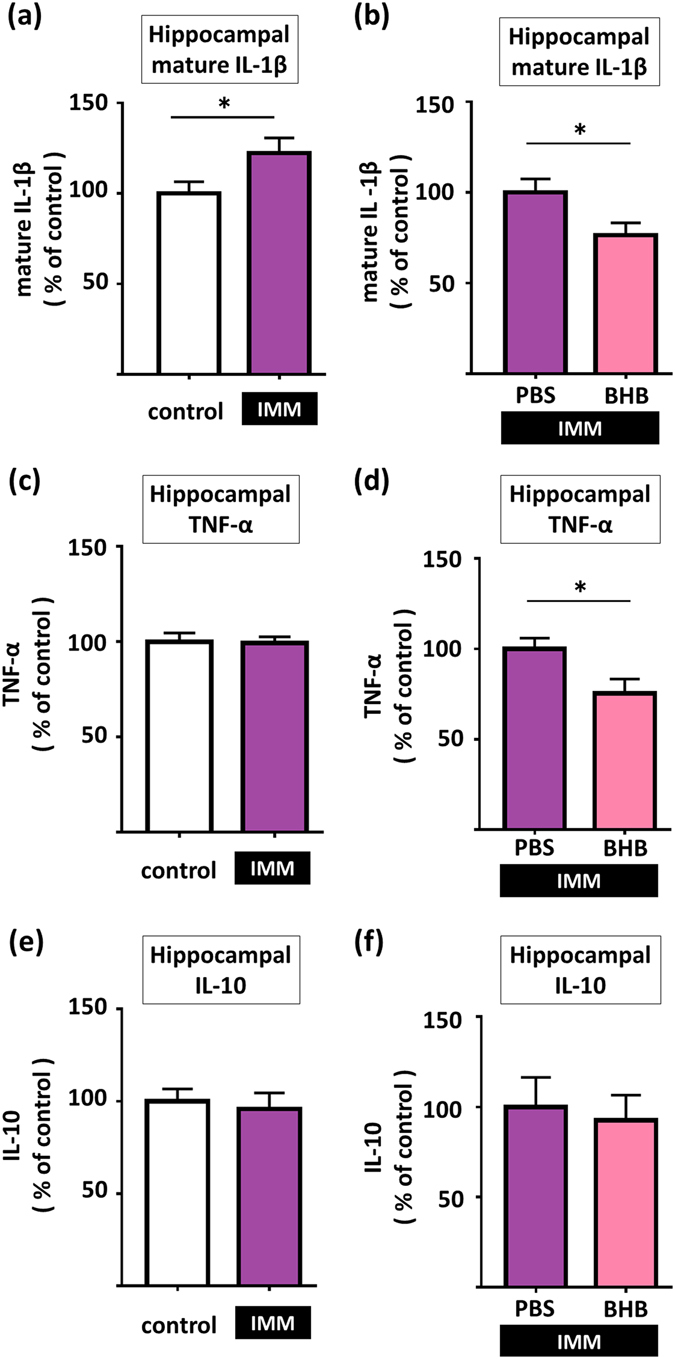
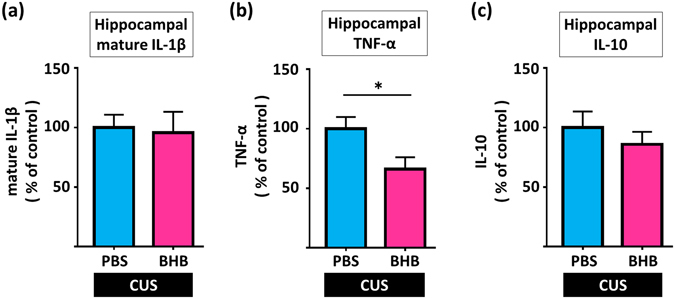
Neuro-inflammation has been shown to play a critical role in the development of depression. Beta-hydroxybutyrate (BHB) is a ketone body and has recently been reported to exert anti-inflammatory effects via inhibition of NLRP3 inflammasome. Here, we investigated the potential antidepressant and anti-inflammatory effects of BHB on rats exposed to acute and chronic stress. We examined the influence of repeated BHB administration on depressive and anxiety behaviors in a rodent model of chronic unpredictable stress (CUS). Additionally, the influence of acute immobilization (IMM) stress and single BHB administration on hippocampal interleukin-1β (IL-1β) and tumor necrosis factor-α (TNF-α) were assessed. Repeated administration of BHB attenuated CUS-induced depressive- and anxiety-related behaviors. IMM stress increased levels of IL-1β in the hippocampus, while a single pre-administration of BHB attenuated this increase. Although no effect was observed on hippocampal TNF-α levels after 1 h of IMM stress, a single BHB pre-administration reduced hippocampal TNF-α. Our previous report showed that the release of IL-1β and TNF-α caused by stress is tightly regulated by NLRP3 inflammasome. These findings demonstrate that BHB exerts antidepressant-like effects, possibly by inhibiting NLRP3-induced neuro-inflammation in the hippocampus, and that BHB may be a novel therapeutic candidate for the treatment of stress-related mood disorders.
Overview
The claims and statistics of this paper haven’t been checked yet.
Run the check — free, no account needed. It reads the open-access text and checks the sources it cites.
Integrity signals
Registry
Cites
Statistics
Figures
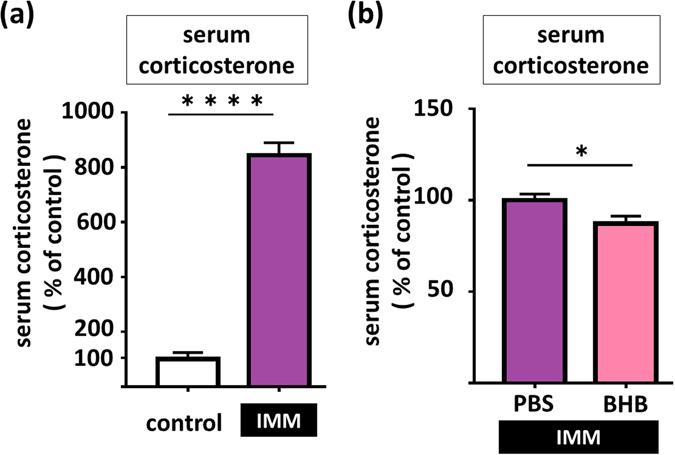
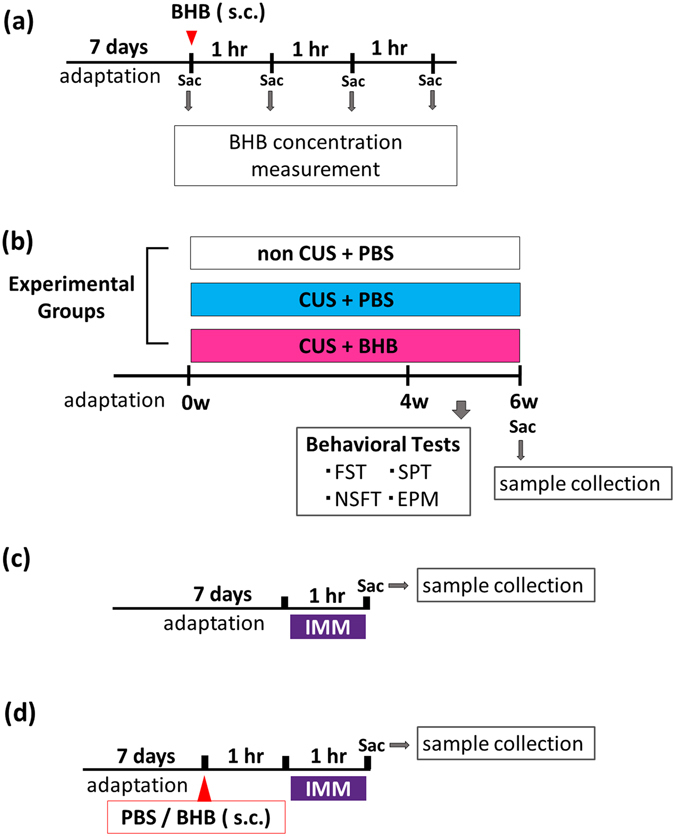
Verification
Claims the paper makes
The claims and statistics of this paper haven’t been checked yet.
Run the check — free, no account needed. It reads the open-access text and checks the sources it cites.
Claims other papers make about this one
Each is checked against this paper’s own text: does it say what the citing paper says it does?
The cited source says what the claim attributes to it.
In the citing paper
“β-hydroxybutyrate exerts an antidepressant-like effect in a rodent model of chronic unpredictable stress189,190.”
From Epigenetic regulation in major depression and other stress-related disorders: molecular mechanisms, clinical relevance and therapeutic potential (2023) · cites this paper as [189]
In the citing paper
“These findings suggest that BHB exerts antidepressant-like effects, possibly by anti-inflammatory mechanisms that inhibits or are led by NLRP3-induced neuro-inflammation in the hippocampus (255).”
From The gut-brain axis: how microbiota and host inflammasome influence brain physiology and pathology (2020) · cites this paper as [255]
Self-check
Percentages, sums and reported differences re-computed from the paper’s own numbers.
The self-check needs the paper’s full text.
Citations
Cites
Diagnostic and Statistical Manual of Mental Disorders
American Psychiatric Association (2013) · doi:10.1176/appi.books.9780890425596 · Cited by 116,369
Molecular Mechanisms of Depression: Perspectives on New Treatment Strategies
Lang, U. E., & Borgwardt, S. (2013) · Cellular Physiology and Biochemistry · doi:10.1159/000350094 · Cited by 8,526
Rush, A. J., Trivedi, M. H., Wisniewski, S. R., Nierenberg, A. A., Stewart, J. W., Warden, D., Niederehe, G., Thase, M. E., Lavori, P. W., Lebowitz, B. D., et al. (2006) · American Journal of Psychiatry · doi:10.1176/ajp.2006.163.11.1905 · Cited by 5,643
A Meta-Analysis of Cytokines in Major Depression
Dowlati, Y., Herrmann, N., Swardfager, W., Liu, H., Sham, L., Reim, E. K., & Lanctôt, K. L. (2010) · Biological Psychiatry · doi:10.1016/j.biopsych.2009.09.033 · Cited by 4,729
The ketone metabolite β-hydroxybutyrate blocks NLRP3 inflammasome-mediated inflammatory disease
Youm, Y.-H., Nguyen, K. Y., Grant, R. W., Goldberg, E. L., Bodogai, M., Kim, D., D'Agostino, D., Planavsky, N., Lupfer, C., Kanneganti, T. D., et al. (2015) · Nature Medicine · doi:10.1038/nm.3804 · Cited by 2,172
Animal models of neuropsychiatric disorders
Nestler, E. J., & Hyman, S. E. (2010) · Nature Neuroscience · doi:10.1038/nn.2647 · Cited by 2,023
Regulation of the Hypothalamic-Pituitary-Adrenal Axis by Cytokines: Actions and Mechanisms of Action
TURNBULL, A. V., & RIVIER, C. L. (1999) · Physiological Reviews · doi:10.1152/physrev.1999.79.1.1 · Cited by 1,297
Corticotropin-releasing factor-producing neurons in the rat activated by interleukin-1
Berkenbosch, F., van Oers, J., del Rey, A., Tilders, F., & Besedovsky, H. (1987) · Science · doi:10.1126/science.2443979 · Cited by 1,151
Ketone bodies as signaling metabolites
Newman, J. C., & Verdin, E. (2014) · Trends in Endocrinology & Metabolism · doi:10.1016/j.tem.2013.09.002 · Cited by 966
Hannestad, J., DellaGioia, N., & Bloch, M. (2011) · Neuropsychopharmacology · doi:10.1038/npp.2011.132 · Cited by 914
IL-1β is an essential mediator of the antineurogenic and anhedonic effects of stress
Koo, J. W., & Duman, R. S. (2008) · Proceedings of the National Academy of Sciences · doi:10.1073/pnas.0708092105 · Cited by 862
Self-citationIntegrating neuroimmune systems in the neurobiology of depression
Wohleb, E. S., Franklin, T., Iwata, M., & Duman, R. S. (2016) · Nature Reviews Neuroscience · doi:10.1038/nrn.2016.69 · Cited by 668
Glial Loss in the Prefrontal Cortex Is Sufficient to Induce Depressive-like Behaviors
Banasr, M., & Duman, R. S. (2008) · Biological Psychiatry · doi:10.1016/j.biopsych.2008.06.008 · Cited by 622
Kim, Y.-K., Na, K.-S., Myint, A.-M., & Leonard, B. E. (2016) · Progress in Neuro-Psychopharmacology and Biological Psychiatry · doi:10.1016/j.pnpbp.2015.06.008 · Cited by 620
Nuclear factor-κB is a critical mediator of stress-impaired neurogenesis and depressive behavior
Koo, J. W., Russo, S. J., Ferguson, D., Nestler, E. J., & Duman, R. S. (2010) · Proceedings of the National Academy of Sciences · doi:10.1073/pnas.0910658107 · Cited by 607
The inflammasome: Pathways linking psychological stress, depression, and systemic illnesses
Iwata, M., Ota, K. T., & Duman, R. S. (2013) · Brain, Behavior, and Immunity · doi:10.1016/j.bbi.2012.12.008 · Cited by 580
Self-citationD-β-Hydroxybutyrate rescues mitochondrial respiration and mitigates features of Parkinson disease
Tieu, K., Perier, C., Caspersen, C., Teismann, P., Wu, D.-C., Yan, S.-D., Naini, A., Vila, M., Jackson-Lewis, V., Ramasamy, R., et al. (2003) · Journal of Clinical Investigation · doi:10.1172/jci200318797 · Cited by 497
Factors influencing behavior in the forced swim test
Bogdanova, O. V., Kanekar, S., D’Anci, K. E., & Renshaw, P. F. (2013) · Physiology & Behavior · doi:10.1016/j.physbeh.2013.05.012 · Cited by 494
Iosif, R. E., Ekdahl, C. T., Ahlenius, H., Pronk, C. J., Bonde, S., Kokaia, Z., Jacobsen, S. E. W., & Lindvall, O. (2006) · Journal of Neuroscience · doi:10.1523/jneurosci.2723-06.2006 · Cited by 462
Ketone body metabolism and cardiovascular disease
Cotter, D. G., Schugar, R. C., & Crawford, P. A. (2013) · American Journal of Physiology-Heart and Circulatory Physiology · doi:10.1152/ajpheart.00646.2012 · Cited by 459
Alcocer-Gómez, E., de Miguel, M., Casas-Barquero, N., Núñez-Vasco, J., Sánchez-Alcazar, J. A., Fernández-Rodríguez, A., & Cordero, M. D. (2014) · Brain, Behavior, and Immunity · doi:10.1016/j.bbi.2013.10.017 · Cited by 443
Molecular Mechanism of NLRP3 Inflammasome Activation
Jin, C., & Flavell, R. A. (2010) · Journal of Clinical Immunology · doi:10.1007/s10875-010-9440-3 · Cited by 440
Neurobiology of chronic mild stress: parallels to major depression
Hill, M. N., Hellemans, K. G. C., Verma, P., Gorzalka, B. B., & Weinberg, J. (2012) · Neuroscience & Biobehavioral Reviews · doi:10.1016/j.neubiorev.2012.07.001 · Cited by 420
Iwata, M., Ota, K. T., Li, X.-Y., Sakaue, F., Li, N., Dutheil, S., Banasr, M., Duric, V., Yamanashi, T., Kaneko, K., et al. (2016) · Biological Psychiatry · doi:10.1016/j.biopsych.2015.11.026 · Cited by 387
Self-citationβ-hydroxybutyrate deactivates neutrophil NLRP3 inflammasome to relieve gout flares
Goldberg, E. L., Asher, J. L., Molony, R. D., Shaw, A. C., Zeiss, C. J., Wang, C., Morozova-Roche, L. A., Herzog, R. I., Iwasaki, A., & Dixit, V. D. (2017) · Cell Reports · doi:10.1016/j.celrep.2017.02.004 · Cited by 370
Interleukin-1 beta: a putative mediator of HPA axis hyperactivity in major depression?
(1993) · American Journal of Psychiatry · doi:10.1176/ajp.150.8.1189 · Cited by 364
Cerebrospinal Cytokine Levels in Patients with Acute Depression
Levine, J., Barak, Y., Chengappa, K. N. R., Rapoport, A., Rebey, M., & Barak, V. (1999) · Neuropsychobiology · doi:10.1159/000026615 · Cited by 354
Cryan, J. F., Page, M. E., & Lucki, I. (2005) · Psychopharmacology · doi:10.1007/s00213-005-0093-5 · Cited by 321
Pellerin, L., Halestrap, A. P., & Pierre, K. (2004) · Journal of Neuroscience Research · doi:10.1002/jnr.20307 · Cited by 269
Animal models as tools to study the pathophysiology of depression
Abelaira, H. M., Réus, G. Z., & Quevedo, J. (2013) · Brazilian Journal of Psychiatry · doi:10.1590/1516-4446-2013-1098 · Cited by 251
Duman, R. S. (2009) · Dialogues in Clinical Neuroscience · doi:10.31887/dcns.2009.11.3/rsduman · Cited by 210
Suzuki, M., Suzuki, M., Sato, K., Dohi, S., Sato, T., Matsuura, A., & Hiraide, A. (2001) · The Japanese Journal of Pharmacology · doi:10.1254/jjp.87.143 · Cited by 160
NLRP3 Inflammasome: Key Mediator of Neuroinflammation in Murine Japanese Encephalitis
Kaushik, D. K., Gupta, M., Kumawat, K. L., & Basu, A. (2012) · PLoS ONE · doi:10.1371/journal.pone.0032270 · Cited by 152
BHBA Suppresses LPS-Induced Inflammation in BV-2 Cells by Inhibiting NF-κB Activation
Fu, S., Li, S., Wang, J., Li, Y., Xie, S., Xue, W.-J., Liu, H., Huang, B., Lv, Q.-K., Lei, L., et al. (2014) · Mediators of Inflammation · doi:10.1155/2014/983401 · Cited by 147
The antidepressant properties of the ketogenic diet
Murphy, P., Likhodii, S. S., Nylen, K., & Burnham, W. M. (2004) · Biological Psychiatry · doi:10.1016/j.biopsych.2004.09.019 · Cited by 131
Zhang, J., Cao, Q., Li, S., Lu, X., Zhao, Y., Guan, J., Chen, J., Wu, Q., & Chen, G. (2013) · Biomaterials · doi:10.1016/j.biomaterials.2013.06.043 · Cited by 130
Evidence for IL-1 receptor blockade as a therapeutic strategy for the treatment of depression.
Koo, J. W., & Duman, R. S. (2009) · PubMed · Cited by 128
Koo, J. W., & Duman, R. S. (2009) · Neuroscience Letters · doi:10.1016/j.neulet.2009.03.068 · Cited by 125
Hippocampal damage mediated by corticosteroids — a neuropsychiatric research challenge
Höschl, C., & Hájek, T. (2001) · European Archives of Psychiatry and Clinical Neuroscience · doi:10.1007/bf03035134 · Cited by 121
Sussman, D., Germann, J., & Henkelman, R. M. (2014) · Brain and Behavior · doi:10.1002/brb3.300 · Cited by 102
Brand, S., Moller, M., & Harvey, B. (2015) · Current Neuropharmacology · doi:10.2174/1570159x13666150307004545 · Cited by 95
D-β-Hydroxybutyrate Is Protective in Mouse Models of Huntington's Disease
Lim, S., Chesser, A. S., Grima, J. C., Rappold, P. M., Blum, D. L., Przedborski, S., & Tieu, K. (2011) · PLoS ONE · doi:10.1371/journal.pone.0024620 · Cited by 94
Qian, J., Zhu, W., Lü, M., Ni, B., & Yang, J. (2017) · British Journal of Pharmacology · doi:10.1111/bph.13788 · Cited by 82
Stress-based animal models of depression: Do we actually know what we are doing?
Yin, X., Gueven, N., & Dietis, N. (2016) · Brain Research · doi:10.1016/j.brainres.2016.09.027 · Cited by 75
Depressive-like symptoms in a reserpine-induced model of fibromyalgia in rats
Blasco‐Serra, A., Escrihuela-Vidal, F., González-Soler, E. M., Martínez‐Expósito, F., Blasco-Ausina, M. C., Martínez‐Bellver, S., Cervera‐Ferri, A., Teruel‐Martí, V., & Valverde‐Navarro, A. A. (2015) · Physiology & Behavior · doi:10.1016/j.physbeh.2015.07.033 · Cited by 74
Brain-derived neurotrophic factor signalling mediates antidepressant effects of lamotrigine
Li, N., He, X., Zhang, Y., Qi, X., Li, H., Zhu, X., & He, S. (2010) · The International Journal of Neuropsychopharmacology · doi:10.1017/s1461145710001082 · Cited by 59
Cited by
Sorted by citations
The gut-brain axis: how microbiota and host inflammasome influence brain physiology and pathology
Rutsch, A., Kantsjö, J. B., & Ronchi, F. (2020) · Frontiers in Immunology · doi:10.3389/fimmu.2020.604179 · Cited by 821
Blevins, H. M., Xu, Y., Biby, S., & Zhang, S. (2022) · Frontiers in Aging Neuroscience · doi:10.3389/fnagi.2022.879021 · Cited by 587
Ketogenic diet in the treatment of cancer – Where do we stand?
Weber, D. D., Aminzadeh-Gohari, S., Tulipan, J., Catalano, L., Feichtinger, R. G., & Kofler, B. (2019) · Molecular Metabolism · doi:10.1016/j.molmet.2019.06.026 · Cited by 469
Dietary Intake Regulates the Circulating Inflammatory Monocyte Pool
Jordan, S., Tung, N., Casanova-Acebes, M., Chang, C., Cantoni, C., Zhang, D., Wirtz, T. H., Naik, S., Rose, S. A., Brocker, C. N., et al. (2019) · Cell · doi:10.1016/j.cell.2019.07.050 · Cited by 457
Metabolic regulation of NLRP 3
Hughes, M. M., & O'Neill, L. A. J. (2018) · Immunological Reviews · doi:10.1111/imr.12608 · Cited by 311
Metadata
- Authors
- Yamanashi, T., Iwata, M., Kamiya, N., Tsunetomi, K., Kajitani, N., Wada, N., Iitsuka, T., Yamauchi, T., Miura, A., Pu, S., Shirayama, Y., Watanabe, K., Duman, R. S., & Kaneko, K.
- Affiliations
- Tottori University (JP)
- Nara Medical University (JP)
- Teikyo University Chiba Medical Center (JP)
- Yale University (US)
- Corresponding author
- Iwata, Masaaki
- ORCID
- Venue
- Scientific Reports
- Published
- 2017-08-09
- Volume
- 7
- Issue
- 1
- Pages
- 7677-7677
- ISSN
- 2045-2322 (ISSN-L)
- PMC
- PMC5550422
- OpenAlex
- W2744221345
- Cited by
- 214
- References
- 46
- Citations by year
- 2026: 22 · 2025: 25 · 2024: 31 · 2023: 23 · 2022: 27 · 2021: 29 · 2020: 26 · 2019: 19 · 2018: 10 · 2017: 1
- FWCI
- 5.10
- Type
- journal article
- Language
- en
- Open access
- gold
- doi.org
- Locations
- Scientific Reports (publishedVersion, cc-by)
- PubMed Central (publishedVersion, cc-by)
- PubMed (publishedVersion)
- DOAJ (DOAJ: Directory of Open Access Journals) (submittedVersion, cc-by-sa)
- Tottori University research result repository (Tottori University) (submittedVersion, cc-by)
- Funders
- Yale University
- Japan Society for the Promotion of Science (17K10273, 25861006)
- Topics
- Life Sciences › Neuroscience › Biological Psychiatry › Tryptophan and brain disorders
- Health Sciences › Medicine › Pharmacology (medical) › Treatment of Major Depression
- Life Sciences › Neuroscience › Behavioral Neuroscience › Stress Responses and Cortisol
- Keywords
- beta-hydroxybutyrate, NLRP3 inflammasome, neuroinflammation, depression, anxiety, chronic unpredictable mild stress, restraint stress, hippocampus, IL-1β, TNF-α, ketone bodies, antidepressant effects
- MeSH terms
- NLR Family, Pyrin Domain-Containing 3 Protein, Animals, Anxiety, Behavior, Animal, Depression, Hippocampus, Inflammation, Male, Stress, Physiological, Stress, Psychological, Biomarkers, Cytokines, 3-Hydroxybutyric Acid, Rats
About these checks
Registry, retraction, Cites and statistics results are computed, not judged, with one exception: a printed reference that no index lists is read once by a model before it counts as a citation error. Claims are extracted by a model and kept only when their quote appears verbatim in the text; each cited source is then checked, with a model’s help, for whether it says what the claim relies on. Those verdicts can be wrong — read the claim’s quote and the cited source before relying on one.
Statistics and arithmetic are recomputed, not judged.
Confidence bands are shown only for fields calibrated on our annotated test set. None is calibrated yet, so no band is shown.
What counts as a claim ›How we measure confidence ›How we check this ›
Are you an author, or do you see a problem with this page? Request a review
