

REST, a master regulator of neurogenesis, evolved under strong positive selection in humans and in non human primates
Open accessThe DOI matches its Crossref record; 51 of the 52 references it cites were found in a registry or an index.
Abstract
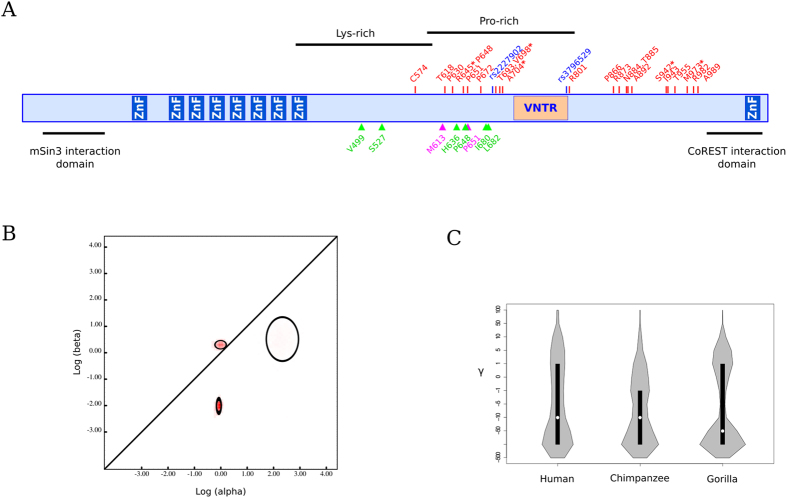
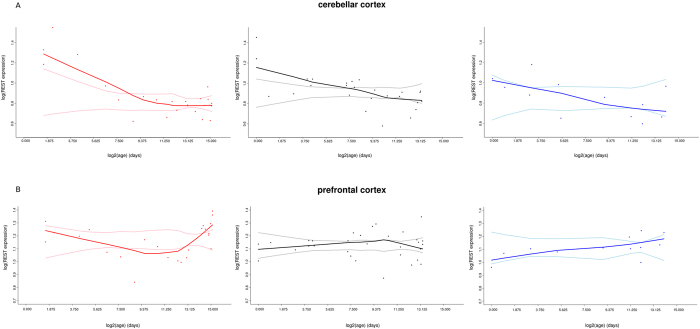
The transcriptional repressor REST regulates many neuronal genes by binding RE1 motifs. About one third of human RE1s are recently evolved and specific to primates. As changes in the activity of a transcription factor reverberate on its downstream targets, we assessed whether REST displays fast evolutionary rates in primates. We show that REST was targeted by very strong positive selection during primate evolution. Positive selection was also evident in the human lineage, with six selected sites located in a region that surrounds a VNTR in exon 4. Analysis of expression data indicated that REST brain expression peaks during aging in humans but not in other primates. Because a REST coding variant (rs3796529) was previously associated with protection from hippocampal atrophy in elderly subjects with mild cognitive impairment (MCI), we analyzed a cohort of Alzheimer disease (AD) continuum patients. Genotyping of two coding variants (rs3796529 and rs2227902) located in the region surrounding the VNTR indicated a role for rs2227902 in modulation of hippocampal volume loss, indirectly confirming a role for REST in neuroprotection. Experimental studies will be instrumental to determine the functional effect of positively selected sites in REST and the role of REST variants in neuropreservation/neurodegeneration.
Overview
The claims and statistics of this paper haven’t been checked yet.
Free: it reads the open-access text and checks the first 5 claims that cite a source we can check. Create a free account to check every claim.
Integrity signals
Registry
Cites
Statistics
Figures
Verification
Claims the paper makes
The claims and statistics of this paper haven’t been checked yet.
Free: it reads the open-access text and checks the first 5 claims that cite a source we can check. Create a free account to check every claim.
Self-check
Percentages, sums and reported differences re-computed from the paper’s own numbers.
The self-check needs the paper’s full text.
Citations
Cites
PLINK: a tool set for whole-genome association and population-based linkage analyses.
Purcell, S., Neale, B., Todd-Brown, K., Thomas, L., Ferreira, M. A. R., Bender, D., Maller, J., Sklar, P., de Bakker, P. I. W., Daly, M. J., et al. (2007) · The American Journal of Human Genetics · doi:10.1086/519795 · Cited by 34,089
PAML 4: Phylogenetic Analysis by Maximum Likelihood
Yang, Z. (2007) · Molecular Biology and Evolution · doi:10.1093/molbev/msm088 · Cited by 13,879
Advances in functional and structural MR image analysis and implementation as FSL
Smith, S. M., Jenkinson, M., Woolrich, M. W., Beckmann, C. F., Behrens, T. E. J., Johansen-Berg, H., Bannister, P. R., De Luca, M., Drobnjak, I., Flitney, D. E., et al. (2004) · NeuroImage · doi:10.1016/j.neuroimage.2004.07.051 · Cited by 13,630 · cited 1×
“Selection coefficients (γ) are classified as strongly beneficial (100, 50), moderately beneficial (10, 5), weakly beneficial (1), neutral (0), weakly deleterious (−1), moderately deleterious (−5, −10), strongly deleterious (−50, −100), and inviable (−500).”
BackgroundA map of human genome variation from population-scale sequencing.
The 1000 Genomes Project Consortium (2010) · Nature · doi:10.1038/nature09534 · Cited by 7,877
PAML: a program package for phylogenetic analysis by maximum likelihood
Yang, Z. (1997) · Bioinformatics · doi:10.1093/bioinformatics/13.5.555 · Cited by 5,373
HyPhy: hypothesis testing using phylogenies
Pond, S. L. K., Frost, S. D. W., & Muse, S. V. (2005) · Bioinformatics · doi:10.1093/bioinformatics/bti079 · Cited by 2,866
Not So Different After All: A Comparison of Methods for Detecting Amino Acid Sites Under Selection
Kosakovsky Pond, S. L., & Frost, S. D. W. (2005) · Molecular Biology and Evolution · doi:10.1093/molbev/msi105 · Cited by 2,324
A Bayesian model of shape and appearance for subcortical brain segmentation
Patenaude, B., Smith, S. M., Kennedy, D. N., & Jenkinson, M. (2011) · NeuroImage · doi:10.1016/j.neuroimage.2011.02.046 · Cited by 2,287
Accurate, Robust, and Automated Longitudinal and Cross-Sectional Brain Change Analysis
Smith, S. M., Zhang, Y., Jenkinson, M., Chen, J., Matthews, P. M., Federico, A., & De Stefano, N. (2002) · NeuroImage · doi:10.1006/nimg.2002.1040 · Cited by 2,013
Preclinical Alzheimer’s Disease: Definition, Natural History, and Diagnostic Criteria
Dubois, B., Hampel, H., Feldman, H. H., Scheltens, P., Aisen, P., Andrieu, S., Bakardjian, H., Benali, H., Bertram, L., Blennow, K., et al. (2016) · Alzheimer's & Dementia · doi:10.1016/j.jalz.2016.02.002 · Cited by 1,925
Molecular evolution of FOXP2, a gene involved in speech and language
Enard, W., Przeworski, M., Fisher, S. E., Lai, C. S. L., Wiebe, V., Kitano, T., Monaco, A. P., & Pääbo, S. (2002) · Nature · doi:10.1038/nature01025 · Cited by 1,603
FUBAR: A Fast, Unconstrained Bayesian AppRoximation for Inferring Selection
Murrell, B., Moola, S., Mabona, A., Weighill, T., Sheward, D., Kosakovsky Pond, S. L., & Scheffler, K. (2013) · Molecular Biology and Evolution · doi:10.1093/molbev/mst030 · Cited by 1,358
Datamonkey 2010: a suite of phylogenetic analysis tools for evolutionary biology
Delport, W., Poon, A. F. Y., Frost, S. D. W., & Kosakovsky Pond, S. L. (2010) · Bioinformatics · doi:10.1093/bioinformatics/btq429 · Cited by 1,179
LOWESS: A Program for Smoothing Scatterplots by Robust Locally Weighted Regression
Cleveland, W. S. (1981) · The American Statistician · doi:10.2307/2683591 · Cited by 1,150
REST: A mammalian silencer protein that restricts sodium channel gene expression to neurons
Chong, J. A., Tapia-Ramirez, J., Kim, S., Toledo-Aral, J. J., Zheng, Y., Boutros, M. C., Altshuller, Y. M., Frohman, M. A., Kraner, S. D., & Mandel, G. (1995) · Cell · doi:10.1016/0092-8674(95)90298-8 · Cited by 967 · cited 2×
“Selection coefficients (γ) are classified as strongly beneficial (100, 50), moderately beneficial (10, 5), weakly beneficial (1), neutral (0), weakly deleterious (−1), moderately deleterious (−5, −10), strongly deleterious (−50, −100), and inviable (−500).”
BackgroundMethodREST and Its Corepressors Mediate Plasticity of Neuronal Gene Chromatin throughout Neurogenesis
Ballas, N., Grunseich, C., Lu, D. D., Speh, J. C., & Mandel, G. (2005) · Cell · doi:10.1016/j.cell.2005.03.013 · Cited by 950 · cited 1×
“Selection coefficients (γ) are classified as strongly beneficial (100, 50), moderately beneficial (10, 5), weakly beneficial (1), neutral (0), weakly deleterious (−1), moderately deleterious (−5, −10), strongly deleterious (−50, −100), and inviable (−500).”
BackgroundAutomated Phylogenetic Detection of Recombination Using a Genetic Algorithm
Kosakovsky Pond, S. L., Posada, D., Gravenor, M. B., Woelk, C. H., & Frost, S. D. W. (2006) · Molecular Biology and Evolution · doi:10.1093/molbev/msl051 · Cited by 945
Great ape genetic diversity and population history
Prado-Martinez, J., Sudmant, P. H., Kidd, J. M., Li, H., Kelley, J. L., Lorente-Galdos, B., Veeramah, K. R., Woerner, A. E., O’Connor, T. D., Santpere, G., et al. (2013) · Nature · doi:10.1038/nature12228 · Cited by 894
Estimating Maximum Likelihood Phylogenies with PhyML
Guindon, S., Delsuc, F., Dufayard, J.-F., & Gascuel, O. (2009) · Methods in Molecular Biology · doi:10.1007/978-1-59745-251-9_6 · Cited by 820
REST and stress resistance in ageing and Alzheimer’s disease
Lu, T., Aron, L., Zullo, J., Pan, Y., Kim, H., Chen, Y., Yang, T.-H., Kim, H.-M., Drake, D., Liu, X. S., et al. (2014) · Nature · doi:10.1038/nature13163 · Cited by 772
Gene-Wide Identification of Episodic Selection
Murrell, B., Weaver, S., Smith, M. D., Wertheim, J. O., Murrell, S., Aylward, A., Eren, K., Pollner, T., Martin, D. P., Smith, D. M., et al. (2015) · Molecular Biology and Evolution · doi:10.1093/molbev/msv035 · Cited by 656
Anisimova, M., Nielsen, R., & Yang, Z. (2003) · Genetics · doi:10.1093/genetics/164.3.1229 · Cited by 561
Topics in herpesvirus genomics and evolution
McGeoch, D. J., Rixon, F. J., & Davison, A. J. (2006) · Virus Research · doi:10.1016/j.virusres.2006.01.002 · Cited by 544
RevTrans: multiple alignment of coding DNA from aligned amino acid sequences
Wernersson, R. (2003) · Nucleic Acids Research · doi:10.1093/nar/gkg609 · Cited by 511
CoREST: A functional corepressor required for regulation of neural-specific gene expression
Andrés, M. E., Burger, C., Peral-Rubio, M. J., Battaglioli, E., Anderson, M. E., Grimes, J., Dallman, J., Ballas, N., & Mandel, G. (1999) · Proceedings of the National Academy of Sciences · doi:10.1073/pnas.96.17.9873 · Cited by 494
Regulation of Neuronal Traits by a Novel Transcriptional Complex
Ballas, N., Battaglioli, E., Atouf, F., Andres, M. E., Chenoweth, J., Anderson, M. E., Burger, C., Moniwa, M., Davie, J. R., Bowers, W. J., et al. (2001) · Neuron · doi:10.1016/s0896-6273(01)00371-3 · Cited by 417 · cited 1×
“90), which calculates the posterior probability that each codon is from the site class of positive selection (under model M8)41; (2) the Random Effects Likelihood (REL)16, which models variation in nonsynonymous and synonymous rates across sites according to a predefined distribution, with the selection pressure at an…”
MethodAccuracy and Power of Bayes Prediction of Amino Acid Sites Under Positive Selection
Anisimova, M., Bielawski, J. P., & Yang, Z. (2002) · Molecular Biology and Evolution · doi:10.1093/oxfordjournals.molbev.a004152 · Cited by 408
Identification of potential target genes for the neuron-restrictive silencer factor.
Schoenherr, C. J., Paquette, A. J., & Anderson, D. J. (1996) · Proceedings of the National Academy of Sciences · doi:10.1073/pnas.93.18.9881 · Cited by 406 · cited 1×
“90), which calculates the posterior probability that each codon is from the site class of positive selection (under model M8)41; (2) the Random Effects Likelihood (REL)16, which models variation in nonsynonymous and synonymous rates across sites according to a predefined distribution, with the selection pressure at an…”
MethodHuman-specific transcriptional regulation of CNS development genes by FOXP2
Konopka, G., Bomar, J. M., Winden, K., Coppola, G., Jonsson, Z. O., Gao, F., Peng, S., Preuss, T. M., Wohlschlegel, J. A., & Geschwind, D. H. (2009) · Nature · doi:10.1038/nature08549 · Cited by 390
Evolutionary insights into host–pathogen interactions from mammalian sequence data
Sironi, M., Cagliani, R., Forni, D., & Clerici, M. (2015) · Nature Reviews Genetics · doi:10.1038/nrg3905 · Cited by 302
Self-citationGao, Z., Ure, K., Ding, P., Nashaat, M., Yuan, L., Ma, J., Hammer, R. E., & Hsieh, J. (2011) · Journal of Neuroscience · doi:10.1523/jneurosci.1604-11.2011 · Cited by 251
MicroRNA-driven developmental remodeling in the brain distinguishes humans from other primates
Somel, M., Liu, X., Tang, L., Yan, Z., Hu, H., Guo, S., Jiang, X., Zhang, X., Xu, G., Xie, G., et al. (2011) · PLoS Biology · doi:10.1371/journal.pbio.1001214 · Cited by 232
REST-dependent epigenetic remodeling promotes the developmental switch in synaptic NMDA receptors
Rodenas-Ruano, A., Chávez, A. E., Cossio, M. J., Castillo, P. E., & Zukin, R. S. (2012) · Nature Neuroscience · doi:10.1038/nn.3214 · Cited by 197
Cheong, A., Bingham, A. J., Li, J., Kumar, B., Sukumar, P., Munsch, C. M., Buckley, N. J., Neylon, C. B., Porter, K. E., Beech, D. J., et al. (2005) · Molecular Cell · doi:10.1016/j.molcel.2005.08.030 · Cited by 161
REST: an oncogene or a tumor suppressor?
Negrini, S., Prada, I., D’Alessandro, R., & Meldolesi, J. (2013) · Trends in Cell Biology · doi:10.1016/j.tcb.2013.01.006 · Cited by 107
The Transcription Repressor REST in Adult Neurons: Physiology, Pathology, and Diseases
Baldelli, P., & Meldolesi, J. (2015) · eNeuro · doi:10.1523/eneuro.0010-15.2015 · Cited by 94
A Population Genetics-Phylogenetics Approach to Inferring Natural Selection in Coding Sequences
Wilson, D. J., Hernandez, R. D., Andolfatto, P., & Przeworski, M. (2011) · PLoS Genetics · doi:10.1371/journal.pgen.1002395 · Cited by 85
FOXP2 Targets Show Evidence of Positive Selection in European Populations
Ayub, Q., Yngvadottir, B., Chen, Y., Xue, Y., Hu, M., Vernes, S. C., Fisher, S. E., & Tyler-Smith, C. (2013) · The American Journal of Human Genetics · doi:10.1016/j.ajhg.2013.03.019 · Cited by 78
Greenway, D. J., Street, M., Jeffries, A., & Buckley, N. J. (2007) · Stem Cells · doi:10.1634/stemcells.2006-0207 · Cited by 70
Evolutionary Fingerprinting of Genes
Kosakovsky Pond, S. L., Scheffler, K., Gravenor, M. B., Poon, A. F. Y., & Frost, S. D. W. (2010) · Molecular Biology and Evolution · doi:10.1093/molbev/msp260 · Cited by 67
The evolutionary history of genes involved in spoken and written language: beyond FOXP2
Mozzi, A., Forni, D., Clerici, M., Pozzoli, U., Mascheretti, S., Guerini, F. R., Riva, S., Bresolin, N., Cagliani, R., & Sironi, M. (2016) · Scientific Reports · doi:10.1038/srep22157 · Cited by 67
Self-citationRockowitz, S., & Zheng, D. (2015) · Nucleic Acids Research · doi:10.1093/nar/gkv514 · Cited by 56
Protective variant for hippocampal atrophy identified by whole exome sequencing
Nho, K., Kim, S., Risacher, S. L., Shen, L., Corneveaux, J. J., Swaminathan, S., Lin, H., Ramanan, V. K., Liu, Y., Foroud, T. M., et al. (2015) · Annals of Neurology · doi:10.1002/ana.24349 · Cited by 51 · cited 1×
“Selection coefficients (γ) are classified as strongly beneficial (100, 50), moderately beneficial (10, 5), weakly beneficial (1), neutral (0), weakly deleterious (−1), moderately deleterious (−5, −10), strongly deleterious (−50, −100), and inviable (−500).”
BackgroundComparison of REST Cistromes across Human Cell Types Reveals Common and Context-Specific Functions
Rockowitz, S., Lien, W., Pedrosa, E., Wei, G., Lin, M., Zhao, K., Lachman, H. M., Fuchs, E. V., & Zheng, D. (2014) · PLoS Computational Biology · doi:10.1371/journal.pcbi.1003671 · Cited by 47
Lee, N., Park, S. J., Haddad, G., Kim, D.-K., Park, S.-M., Park, S. K., & Choi, K. Y. (2016) · Scientific Reports · doi:10.1038/srep39049 · Cited by 43
Evolution of the Vertebrate Gene Regulatory Network Controlled by the Transcriptional Repressor REST
Johnson, R., Samuel, J., Ng, C. K. L., Jauch, R., Stanton, L. W., & Wood, I. C. (2009) · Molecular Biology and Evolution · doi:10.1093/molbev/msp058 · Cited by 37
Zhou, G., Du, T., & Roizman, B. (2013) · Viruses · doi:10.3390/v5051208 · Cited by 35
Additive effect of BDNF and REST polymorphisms is associated with improved general cognitive ability
Miyajima, F., Quinn, J. P., Horan, M., Pickles, A., Ollier, W. E., Pendleton, N., & Payton, A. (2008) · Genes, Brain and Behavior · doi:10.1111/j.1601-183x.2008.00409.x · Cited by 32
Role of NRSF/REST in the Regulation of Cardiac Gene Expression and Function
Kuwahara, K. (2013) · Circulation Journal · doi:10.1253/circj.cj-13-1210 · Cited by 28
REST rs3796529 variant does not influence human subcortical brain structures
Jiang, Q., & Liu, G. (2015) · Annals of Neurology · doi:10.1002/ana.24590 · Cited by 9
Nho, K. T., & Saykin, A. J. (2015) · Annals of Neurology · doi:10.1002/ana.24417 · Cited by 2
Cited by
A Connectomic Hypothesis for the Hominization of the Brain
Changeux, J., Goulas, A., & Hilgetag, C. C. (2020) · Cerebral Cortex · doi:10.1093/cercor/bhaa365 · Cited by 89
Martinez, M. E., Duarte, C. W., Stohn, J. P., Karaczyn, A. A., Wu, Z., DeMambro, V., & Hernández, A. (2018) · Molecular Psychiatry · doi:10.1038/s41380-018-0281-4 · Cited by 53
“The analysis also showed common enrichment in canonical pathways associated with stem cell pluripotency and axon guidance signaling, and pointed to upstream regulators involved in cell stemness and neurogenesis, including SOX2, ASCL1, CTNNB1, POU4F1 and REST.”
Evidence for functional interactions between the placenta and brain in pregnant mice
Behura, S. K., Kelleher, A. M., & Spencer, T. E. (2018) · The FASEB Journal · doi:10.1096/fj.201802037r · Cited by 37
When one becomes many—Alternative splicing in β‐cell function and failure
Alvelos, M. I., Juan‐Mateu, J., Colli, M. L., Turatsinze, J., & Eizirik, D. L. (2018) · Diabetes Obesity and Metabolism · doi:10.1111/dom.13388 · Cited by 37
“the inhibitory transcription factor REST (repressor element 1 silencing transcription factor) in both β-cells and neurons.(70) β-cells express sev-”
BackgroundOverexpression of miR-9 in the Nucleus Accumbens Increases Oxycodone Self-Administration
Mavrikaki, M., Anastasiadou, E., Ozdemir, R. A., Potter, D. N., Helmholz, C., Slack, F. J., & Chartoff, E. H. (2019) · The International Journal of Neuropsychopharmacology · doi:10.1093/ijnp/pyz015 · Cited by 36
“REST is a negative regulator of neuronal gene expression (Mozzi et al., 2017) involved in synaptic plasticity (Rodenas-Ruano et al.”
Background
Metadata
- Authors
- Mozzi, A., Guerini, F. R., Forni, D., Costa, A. S., Nemni, R., Baglio, F., Cabinio, M., Riva, S., Pontremoli, C., Clerici, M., Sironi, M., & Cagliani, R.
- Affiliations
- IRCCS Eugenio Medea (IT)
- Don Carlo Gnocchi Foundation (IT)
- University of Milan (IT)
- Corresponding author
- Cagliani, Rachele
- ORCID
- Venue
- Scientific Reports
- Published
- 2017-08-25
- Volume
- 7
- Issue
- 1
- Pages
- 9530-9530
- ISSN
- 2045-2322 (ISSN-L)
- PMC
- PMC5573535
- OpenAlex
- W2745823492
- Cited by
- 28
- References
- 52
- Citations by year
- 2026: 2 · 2024: 3 · 2023: 2 · 2022: 4 · 2021: 8 · 2020: 3 · 2019: 3 · 2018: 3
- FWCI
- 1.04
- Type
- journal article
- Language
- en
- Open access
- gold
- doi.org
- Licence
- cc-by
- creativecommons.org/licenses/by/4.0 (tdm)
- creativecommons.org/licenses/by/4.0 (vor)
- Locations
- Scientific Reports (publishedVersion, cc-by)
- PubMed Central (publishedVersion, cc-by)
- PubMed (publishedVersion)
- Archivio Istituzionale della Ricerca (Universita Degli Studi Di Milano) (submittedVersion, other-oa)
- BOA (University of Milano-Bicocca) (submittedVersion, other-oa)
- DOAJ (DOAJ: Directory of Open Access Journals) (submittedVersion)
- Topics
- Life Sciences › Neuroscience › Developmental Neuroscience › Neurogenesis and neuroplasticity mechanisms
- Life Sciences › Biochemistry, Genetics and Molecular Biology › Genetics › Genetics and Neurodevelopmental Disorders
- Life Sciences › Biochemistry, Genetics and Molecular Biology › Genetics › Evolution and Genetic Dynamics
- Keywords
- rest, transcriptional repressor, positive selection, primate evolution, neurogenesis, variable number tandem repeats, hippocampal atrophy, Alzheimer's disease, mild cognitive impairment, neuroprotection, brain gene expression, aging, non-human primates
- MeSH terms
- RE1-Silencing Transcription Factor, Amino Acids, Animals, Brain, Codon, Gene Expression Regulation, Humans, Primates, Repressor Proteins, Selection, Genetic, Gene Expression, Evolution, Molecular, Neurogenesis
About these checks
Registry, retraction, Cites and statistics results are computed, not judged, with one exception: a printed reference that no index lists is read once by a model before it counts as a citation error. Claims are extracted by a model and kept only when their quote appears verbatim in the text; each cited source is then checked, with a model’s help, for whether it says what the claim relies on. Those verdicts can be wrong — read the claim’s quote and the cited source before relying on one.
Statistics and arithmetic are recomputed, not judged.
Confidence bands are shown only for fields calibrated on our annotated test set. None is calibrated yet, so no band is shown.
What counts as a claim ›How we measure confidence ›How we check this ›
Are you an author, or do you see a problem with this page? Request a review
Data sources
Bibliographic data: Semantic Scholar, OpenAlex, Crossref.
Contains information from the Semantic Scholar Academic Graph Datasets, made available under the ODC Attribution License (ODC-BY 1.0).
Semantic Scholar’s data is described in: Kinney, R., et al. (2023). The Semantic Scholar Open Data Platform. arXiv:2301.10140.
