

Functional coupling of human pancreatic islets and liver spheroids on-a-chip: Towards a novel human ex vivo type 2 diabetes model
Open accessThe DOI matches its Crossref record; 50 of the 50 references it cites were found in a registry or an index.
Abstract
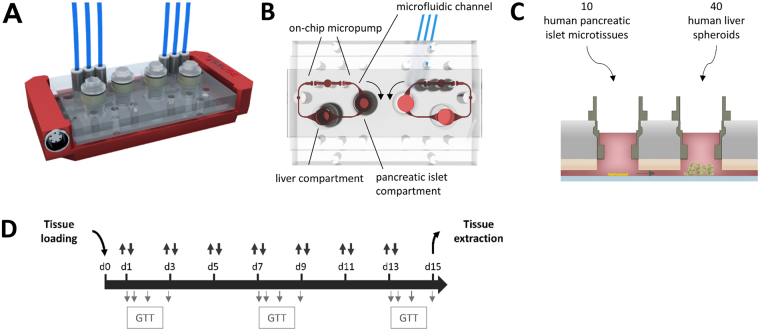
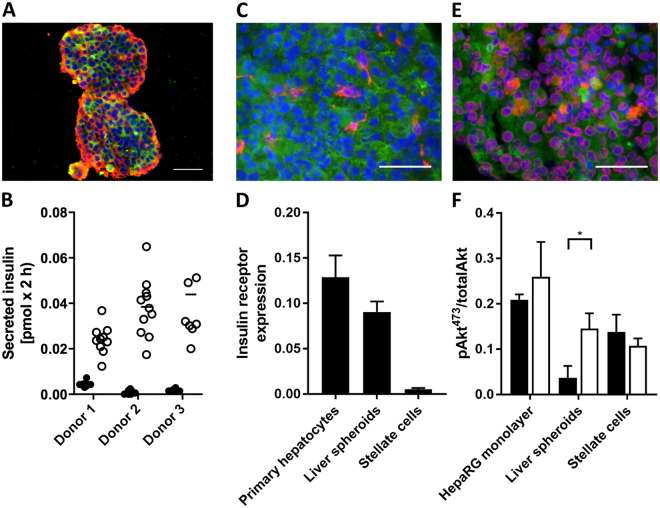
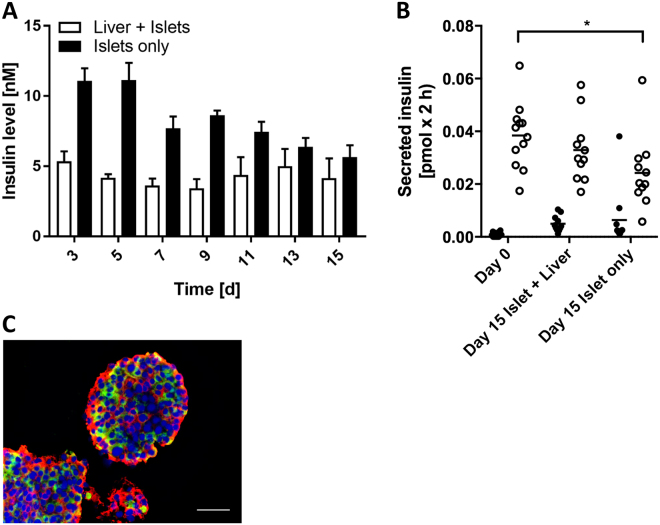
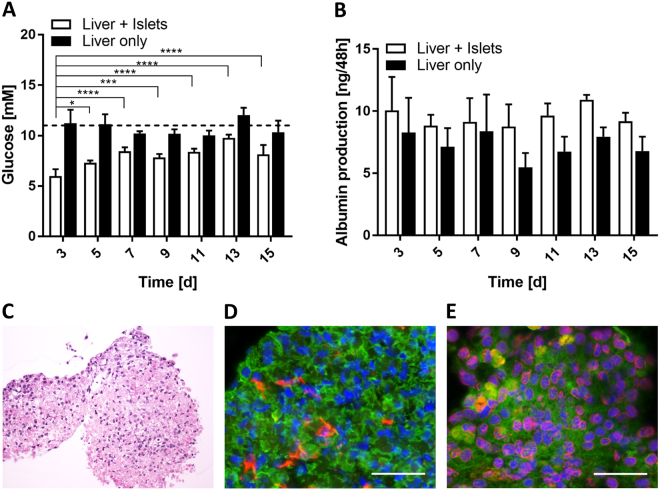
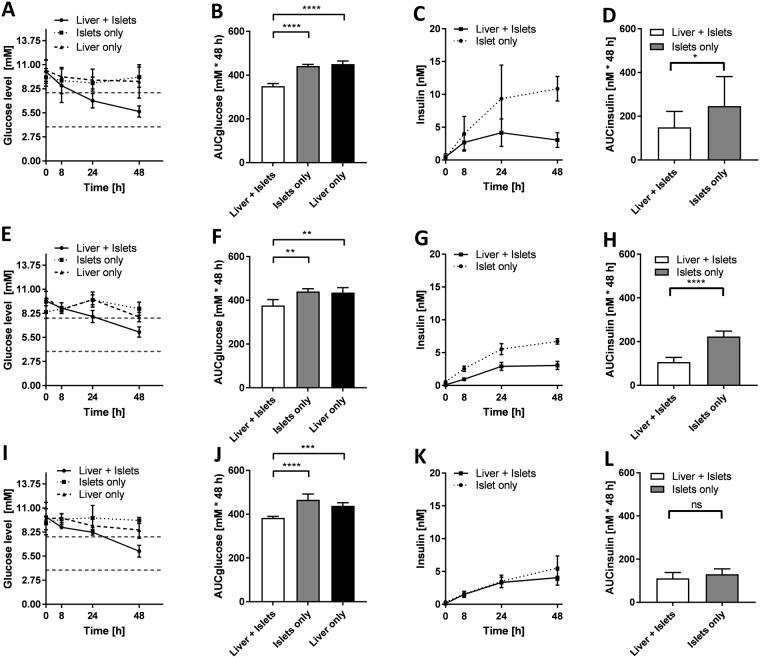
Human in vitro physiological models studying disease and drug treatment effects are urgently needed as more relevant tools to identify new drug targets and therapies. We have developed a human microfluidic two-organ-chip model to study pancreatic islet–liver cross-talk based on insulin and glucose regulation. We have established a robust co-culture of human pancreatic islet microtissues and liver spheroids maintaining functional responses up to 15 days in an insulin-free medium. Functional coupling, demonstrated by insulin released from the islet microtissues in response to a glucose load applied in glucose tolerance tests on different days, promoted glucose uptake by the liver spheroids. Co-cultures maintained postprandial glucose concentrations in the circulation whereas glucose levels remained elevated in both single cultures. Thus, insulin secreted into the circulation stimulated glucose uptake by the liver spheroids, while the latter, in the absence of insulin, did not consume glucose as efficiently. As the glucose concentration fell, insulin secretion subsided, demonstrating a functional feedback loop between the liver and the insulin-secreting islet microtissues. Finally, inter-laboratory validation verified robustness and reproducibility. Further development of this model using tools inducing impaired glucose regulation should provide a unique in vitro system emulating human type 2 diabetes mellitus.
Overview
The claims and statistics of this paper haven’t been checked yet.
Free: it reads the open-access text and checks the first 5 claims that cite a source we can check. Create a free account to check every claim.
Integrity signals
Registry
Cites
Statistics
Figures
Verification
Claims the paper makes
The claims and statistics of this paper haven’t been checked yet.
Free: it reads the open-access text and checks the first 5 claims that cite a source we can check. Create a free account to check every claim.
Claims other papers make about this one
Each is checked against this paper’s own text: does it say what the citing paper says it does?
The source backs part of the claim, not all of it — or backs it for a different population, condition or comparison.
In the citing paper
“Promising disease models of the liver65,66, pancreas67,68, central nervous system35,69,70, skin71, lung72,73, intestine72–76, musculoskeletal system77 and heart78–81 have been developed, but their equivalence or superiority over their animal models needs to be demonstrated.”
From Human disease models in drug development (2023) · cites this paper as [67]
Experimental — accuracy not yet measuredThe source backs part of the claim, not all of it — or backs it for a different population, condition or comparison.
In the citing paper
“The two-organ system has been simulated using connected chambers containing different tissue constructs to mimic liver injury (with intestinal epithelial cells and liver cells)101 and Type-2 diabetes (with human pancreatic islets and liver spheroids)102.”
From Organoids (2022) · cites this paper as [101]
Experimental — accuracy not yet measured
Self-check
Percentages, sums and reported differences re-computed from the paper’s own numbers.
The self-check needs the paper’s full text.
Citations
Cites
Diagnosis and Classification of Diabetes Mellitus
American Diabetes Association (2011) · Diabetes Care · doi:10.2337/dc11-s062 · Cited by 13,988
Diagnosis and classification of diabetes mellitus
American Diabetes Association (2014) · Diabetes Care · doi:10.2337/dc14-s081 · Cited by 5,974
Insulin signalling and the regulation of glucose and lipid metabolism
Saltiel, A. R., & Kahn, C. R. (2001) · Nature · doi:10.1038/414799a · Cited by 5,326
Reconstituting organ-level lung functions on a chip
Huh, D., Matthews, B. D., Mammoto, A., Montoya-Zavala, M., Hsin, H. Y., & Ingber, D. E. (2010) · Science · doi:10.1126/science.1188302 · Cited by 4,250
DeFronzo, R. A., Jacot, E., Jequier, E., Maeder, E., Wahren, J., & Felber, J. P. (1981) · Diabetes · doi:10.2337/diab.30.12.1000 · Cited by 1,770
Impaired Fasting Glucose and Impaired Glucose Tolerance
Nathan, D. M., Davidson, M. B., DeFronzo, R. A., Heine, R. J., Henry, R. R., Pratley, R., & Zinman, B. (2007) · Diabetes Care · doi:10.2337/dc07-9920 · Cited by 1,396
Organs-on-chips at the frontiers of drug discovery
Esch, E. W., Bahinski, A., & Huh, D. (2015) · Nature Reviews Drug Discovery · doi:10.1038/nrd4539 · Cited by 1,185
The role of hepatic lipids in hepatic insulin resistance and type 2 diabetes
Perry, R. J., Samuel, V. T., Petersen, K. F., & Shulman, G. I. (2014) · Nature · doi:10.1038/nature13478 · Cited by 1,136
Maschmeyer, I., Lorenz, A. K., Schimek, K., Hasenberg, T., Ramme, A. P., Hübner, J., Lindner, M., Drewell, C., Bauer, S., Thomas, A., et al. (2015) · Lab on a Chip · doi:10.1039/c5lc00392j · Cited by 861
Self-citationSmall airway-on-a-chip enables analysis of human lung inflammation and drug responses in vitro
Benam, K. H., Villenave, R., Lucchesi, C., Varone, A., Hubeau, C., Lee, H.-H., Alves, S. E., Salmon, M., Ferrante, T. C., Weaver, J. C., et al. (2016) · Nature Methods · doi:10.1038/nmeth.3697 · Cited by 816
Cited by
Items 101–200 of 271
Recent advances in an organ-on-a-chip: biomarker analysis and applications
Li, X., & Tian, T. (2018) · Analytical Methods · doi:10.1039/c8ay00970h · Cited by 38
Recent advances in the design of implantable insulin secreting heterocellular islet organoids
Akolpoglu, M. B., Inceoglu, Y., Bozuyuk, U., Sousa, A. R., Oliveira, M. B., Mano, J. F., & Kızılel, S. (2020) · Biomaterials · doi:10.1016/j.biomaterials.2020.120627 · Cited by 40
Recent advances in liver‐on‐chips: Design, fabrication, and applications
Qiu, L., Kong, B., Kong, T., & Wang, H. (2023) · Smart Medicine · doi:10.1002/smmd.20220010 · Cited by 44
Tavares, R. S. N., Tao, T. P., Maschmeyer, I., Maria–Engler, S. S., Schäfer‐Korting, M., Winter, A., Zoschke, C., Lauster, R., Marx, U., & Gaspar, L. R. (2020) · International Journal of Pharmaceutics · doi:10.1016/j.ijpharm.2020.119788 · Cited by 38
Self-citationModelling Human Physiology on-Chip: Historical Perspectives and Future Directions
Pun, S., Haney, L. C., & Barrile, R. (2021) · Micromachines · doi:10.3390/mi12101250 · Cited by 40
Animal Models in Diabetic Research—History, Presence, and Future Perspectives
Pandey, S., Chmelir, T., & Dvorakova, M. C. (2023) · Biomedicines · doi:10.3390/biomedicines11102852 · Cited by 38
“In 2017, Bauer and co-authors developed a microfluidic two-organ-chip model for the co-culture of human pancreatic islet microtissues and liver spheroids [174].”
BackgroundMimicking the Human Physiology with Microphysiological Systems (MPS)
Sung, J. H., Koo, J., & Shuler, M. L. (2019) · BioChip Journal · doi:10.1007/s13206-019-3201-z · Cited by 34
Drug Screening, Oral Bioavailability and Regulatory Aspects: A Need for Human Organoids
Zietek, T., Boomgaarden, W., & Rath, E. (2021) · Pharmaceutics · doi:10.3390/pharmaceutics13081280 · Cited by 35
Grand challenges in organoid and organ-on-a-chip technologies
Skardal, A. (2024) · Frontiers in Bioengineering and Biotechnology · doi:10.3389/fbioe.2024.1366280 · Cited by 37
Goldstein, Y., Spitz, S., Turjeman, K., Selinger, F., Barenholz, Y., Ertl, P., Benny, O., & Bavli, D. (2021) · Micromachines · doi:10.3390/mi12060627 · Cited by 34
Cryogel-Integrated Biochip for Liver Tissue Engineering
Boulais, L., Jellali, R., Pereira, U., Leclerc, É., Bencherif, S. A., & Legallais, C. (2020) · ACS Applied Bio Materials · doi:10.1021/acsabm.1c00425 · Cited by 31
Amir, S., Arathi, A., Reshma, S. C., & Mohanan, P. V. (2023) · International Journal of Biological Macromolecules · doi:10.1016/j.ijbiomac.2023.123784 · Cited by 34
Optical glucose sensor for microfluidic cell culture systems
Fuchs, S., Rieger, V., Tjell, A. Ø., Spitz, S., Brandauer, K., Schaller‐Ammann, R., Feiel, J., Ertl, P., Klimant, I., & Mayr, T. (2023) · Biosensors and Bioelectronics · doi:10.1016/j.bios.2023.115491 · Cited by 29
Jiang, J., Pieterman, C., Ertaylan, G., Peeters, R., & de Kok, T. M. C. M. (2019) · Archives of Toxicology · doi:10.1007/s00204-019-02585-5 · Cited by 34
Aizenshtadt, A., Wang, C., Abadpour, S., Menezes, P. D., Wilhelmsen, I., Dalmao‐Fernández, A., Stokowiec, J., Golovin, A., Johnsen, M., Combriat, T. M. D., et al. (2024) · Advanced Healthcare Materials · doi:10.1002/adhm.202303785 · Cited by 39
Schlünder, K., Cipriano, M., Zbinden, A., Fuchs, S., Mayr, T., Schenke‐Layland, K., & Loskill, P. (2024) · Lab on a Chip · doi:10.1039/d3lc00838j · Cited by 34
Maaß, C., Dallas, M. R., LaBarge, M. E., Shockley, M., Valdez, J., Geishecker, E., Stokes, C. L., Griffith, L. G., & Cirit, M. (2018) · Scientific Reports · doi:10.1038/s41598-018-25971-y · Cited by 26
Matsumoto, S., Rizki-Safitri, A., Danoy, M., Maekawa, T., Kinoshita, H., Shinohara, M., Sakai, Y., Fujii, T., & Leclerc, É. (2019) · Biotechnology Progress · doi:10.1002/btpr.2854 · Cited by 34
Go with the flow: modeling unique biological flows in engineered in vitro platforms
Wasson, E. M., Dubbin, K., & Moya, M. L. (2021) · Lab on a Chip · doi:10.1039/d1lc00014d · Cited by 30
Engineered Human Organoids for Biomedical Applications
Zhu, Y., Sun, L., Wu, X., Gu, Z., & Zhao, Y. (2023) · Advanced Functional Materials · doi:10.1002/adfm.202310961 · Cited by 32
Translating in vitro to in vivo and animal to human
Steger‐Hartmann, T., & Raschke, M. (2020) · Current Opinion in Toxicology · doi:10.1016/j.cotox.2020.02.003 · Cited by 33
Cox, B., Barton, P., Class, R., Coxhead, H., Delatour, C., Gillent, E., Henshall, J., Isin, E. M., King, L. M., & Valentin, J. (2022) · Biomaterials and Biosystems · doi:10.1016/j.bbiosy.2022.100054 · Cited by 34
The Foundation for Engineering a Pancreatic Islet Niche
Patel, S. N., Mathews, C. E., Chandler, R., & Stabler, C. L. (2022) · Frontiers in Endocrinology · doi:10.3389/fendo.2022.881525 · Cited by 32
Kim, J. J., Bae, M., & Cho, D. (2024) · Small Science · doi:10.1002/smsc.202400314 · Cited by 29
3D Pancreatic Tissue Modeling in vitro: Advances and Prospects
Kim, M., Hwang, D. G., & Jang, J. (2020) · BioChip Journal · doi:10.1007/s13206-020-4108-4 · Cited by 27
Nuts and Bolts: Microfluidics for the Production of Biomaterials
Fontana, F., Martins, J. P., Torrieri, G., & Santos, H. A. (2019) · Advanced Materials Technologies · doi:10.1002/admt.201800611 · Cited by 27
Harnessing the Potential of Stem Cells for Disease Modeling: Progress and Promises
Argentati, C., Tortorella, I., Bazzucchi, M., Morena, F., & Martino, S. (2020) · Journal of Personalized Medicine · doi:10.3390/jpm10010008 · Cited by 25
“As a matter of fact, in the past five years many disease models have been developed, such as lung-on-a-chip for cancer [205] or coupled-OOCs of liver and pancreas spheroids able to maintain glucose homeostasis for modeling type 2 diabetes [206] (Table 6) .”
BackgroundLeslie, J., Krishnamurthy, K. A., Gopalsamy, I. K., Inácio, P., Huch, M., Gallage, S., Oakley, F., & Vacca, M. (2026) · Nature Reviews Gastroenterology & Hepatology · doi:10.1038/s41575-025-01162-9 · Cited by 30
An alternative pathway for sweet sensation: possible mechanisms and physiological relevance
von Molitor, E., Riedel, K., Krohn, M., Rudolf, R., Hafner, M., & Cesetti, T. (2020) · Pflügers Archiv - European Journal of Physiology · doi:10.1007/s00424-020-02467-1 · Cited by 32
“Alternatively, taste bud-like, pancreatic [16] or intestinal [18] organoids can be used in organ-on-achip systems, where upon stimulation of one compartment, released neuromodulators and signaling molecules can be analyzed in the surrounding media or in cells of other compartments [18, 221].”
BackgroundWang, J., Zhang, H., Qu, Y., Yang, Y., Xu, S., Ji, Z., Wang, Y., Zhang, X., & Luo, Y. (2025) · Microsystems & Nanoengineering · doi:10.1038/s41378-025-00933-3 · Cited by 32
“Researchers select speci fi c organ types based on their objectives to conduct co-culture, enabling interactions between organ cells within this system 30,31,46 .”
Guenat, O. T., Geiser, T., & Berthiaume, F. (2020) · Annual Review of Analytical Chemistry · doi:10.1146/annurev-anchem-061318-114919 · Cited by 22
“For example, cocultures of pancreatic islets and liver spheroids were performed to create a feedback loop between glucose-stimulated secretion of insulin by the islets and insulin-stimulated glucose uptake by the liver spheroids (106).”
Sadiq, I. Z., Abubakar, F. S., Katsayal, B. S., Ibrahim, B., Adamu, A., Usman, M. A., Aliyu, M., Suleiman, M. A., & Muhammad, A. (2025) · Biomedical Engineering Advances · doi:10.1016/j.bea.2025.100172 · Cited by 35
The Convergence of Artificial Intelligence and Microfluidics in Drug Research and Development
Qiao, D., Li, H., Zhang, X., Chen, X., Jiang, Z., Zou, J., Zhao, D., Zhu, W., Qian, X. H., & Li, H. (2025) · Engineering · doi:10.1016/j.eng.2025.07.025 · Cited by 25
Vascularized pancreas-on-a-chip device produced using a printable simulated extracellular matrix
Hospodiuk-Karwowski, M., Chi, K., Pritchard, J. R., & Catchmark, J. M. (2022) · Biomedical Materials · doi:10.1088/1748-605x/ac8c74 · Cited by 22
“Similar research has been performed on hepatocytes as a functional coupling with pancreatic cells to investigate crosstalk between insulin production and promotion of glucose uptake by the liver [47].”
Zhang, S., Xu, G., Wu, J., Liu, X., Fan, Y. Z., Chen, J., Wallace, G. G., & Gu, Q. (2023) · Small Methods · doi:10.1002/smtd.202300685 · Cited by 28
Gravity-Based Flow Efficient Perfusion Culture System for Spheroids Mimicking Liver Inflammation
Kim, Y., Asif, A., Salih, A. R. C., Lee, J.-W., Hyun, K., & Choi, K. H. (2021) · Biomedicines · doi:10.3390/biomedicines9101369 · Cited by 26
Moon, H., Surianarayanan, N., Singh, T., & Han, B. (2023) · Biomicrofluidics · doi:10.1063/5.0179444 · Cited by 23
Hepatocyte cultures: From collagen gel sandwiches to microfluidic devices with integrated biosensors
de Hoyos‐Vega, J. M., Hong, H. J., Stybayeva, G., & Revzin, A. (2021) · APL Bioengineering · doi:10.1063/5.0058798 · Cited by 22
Trapečar, M. (2021) · FEBS Letters · doi:10.1002/1873-3468.14260 · Cited by 22
Innovations in 3D ovarian and follicle engineering for fertility preservation and restoration
Chavoshinezhad, N., & Niknafs, B. (2024) · Molecular Biology Reports · doi:10.1007/s11033-024-09783-0 · Cited by 24
“The EVATAR system is a dynamic culture platform designed to replicate the female reproductive sys-tem, focusing particularly on the functionality of the ovary [112].”
New Frontiers in Three-Dimensional Culture Platforms to Improve Diabetes Research
Mohandas, S., Gayatri, V., Kumaran, K., Gopinath, V., Paulmurugan, R., & Ramkumar, K. M. (2023) · Pharmaceutics · doi:10.3390/pharmaceutics15030725 · Cited by 25
Integrated Microphysiological Systems: Transferable Organ Models and Recirculating Flow
Renggli, K., Rousset, N., Lohasz, C., Nguyen, O. T. P., & Hierlemann, A. R. (2019) · Advanced Biosystems · doi:10.1002/adbi.201900018 · Cited by 22
New insights into human beta cell biology using human pluripotent stem cells
Amirruddin, N. S., Low, B. S. J., Lee, K., Tai, E. S., & Teo, A. K. K. (2019) · Seminars in Cell and Developmental Biology · doi:10.1016/j.semcdb.2019.11.004 · Cited by 22
Dutta, K., Kanjilal, P., Das, R., & Thayumanavan, S. (2020) · Angewandte Chemie · doi:10.1002/ange.202010412 · Cited by 18
Islet-on-a-chip for the study of pancreatic β-cell function
Rodríguez‐Comas, J., & Ramón‐Azcón, J. (2021) · In vitro models · doi:10.1007/s44164-021-00005-6 · Cited by 22
Ibrahim, W. S., Ibrahim, I. A. A. E.-H., Mahmoud, M. F., & Mahmoud, A. A. A. (2020) · Journal of Cardiovascular Pharmacology and Therapeutics · doi:10.1177/1074248420905683 · Cited by 23
Rigal, S., Casas, B., Kanebratt, K. P., Huldt, C. W., Magnusson, L. U., Müllers, E., Karlsson, F. H., Clausen, M., Hansson, S., Leonard, L., et al. (2024) · Communications Biology · doi:10.1038/s42003-024-06514-w · Cited by 24
“Since the pancreas and the liver are central organs in blood glucose regulation, we and others have shown that functional coupling of pancreatic and liver organ models on chip can recapitulate human-relevant pancreas-liveraxis 12 – 14 .”
InfluentialSelf-citationHernández-Rodríguez, J. F., López, M. Á., Rojas, D., & Escarpa, A. (2022) · Lab on a Chip · doi:10.1039/d2lc00499b · Cited by 19
Models for barrier understanding in health and disease in lab-on-a-chips
Ponmozhi, J., Dhinakaran, S., Kocsis, D., Iván, K., & Erdő, F. (2023) · Tissue Barriers · doi:10.1080/21688370.2023.2221632 · Cited by 20
“…microfluidic motherboard for the evaluation of ovarian hormone control of downstream human female reproductive tract and liver-peripheral tissues 122 , and a model for type II diabetes with high glucose stimulation, which releases insulin and enhances glucose uptake in the presence of insulin 123 .”
BackgroundStem Cell-Derived Islets for Type 2 Diabetes
Salib, A., Cayabyab, F., & Yoshihara, E. (2022) · International Journal of Molecular Sciences · doi:10.3390/ijms23095099 · Cited by 16
Effect of omega-3 fatty acids on glucose homeostasis: role of free fatty acid receptor 1
El‐Fayoumi, S. H., Mahmoud, A. A. A., Fahmy, A., & Ibrahim, I. A. A. E.-H. (2020) · Naunyn-Schmiedeberg s Archives of Pharmacology · doi:10.1007/s00210-020-01883-5 · Cited by 17
Zwi‐Dantsis, L., Jayarajan, V., Church, G. M., Kamm, R. D., de Magalhães, J. P., & Moeendarbary, E. (2025) · Advanced Healthcare Materials · doi:10.1002/adhm.202500217 · Cited by 16
Biomaterials for on-chip organ systems
Hassan, S., Heinrich, M. A., Çeçen, B., Prakash, J., & Zhang, Y. S. (2020) · Elsevier eBooks · doi:10.1016/b978-0-08-102906-0.00019-2 · Cited by 23
Importance of multiple endocrine cell types in islet organoids for type 1 diabetes treatment
Heaton, E. S., & Jin, S. (2022) · Translational research · doi:10.1016/j.trsl.2022.06.014 · Cited by 16
Emerging approaches for the development of artificial islets
Li, J., Sun, L., Bian, F., Pandol, S. J., & Li, L. (2024) · Smart Medicine · doi:10.1002/smmd.20230042 · Cited by 14
Żuchowska, A., Buta, A., Dąbrowski, B., Jastrzębska, E., Żukowski, K., & Brzózka, Z. (2019) · Sensors and Actuators B Chemical · doi:10.1016/j.snb.2019.127064 · Cited by 16
Casas, B., Vilén, L., Bauer, S., Kanebratt, K. P., Huldt, C. W., Magnusson, L. U., Marx, U., Andersson, T. B., Gennemark, P., & Cedersund, G. (2022) · PLoS Computational Biology · doi:10.1371/journal.pcbi.1010587 · Cited by 13
“After the MPS culture, pancreatic islets were transferred from the chips into a GravityTRAP plate (InSphero) to analyse their glucose-stimulated insulin secretion (GSIS) as earlier described [18].”
InfluentialSelf-citationCompact fluidic system for functional assessment of pancreatic islets
Hori, T., Yamane, K., Anazawa, T., Kurosawa, O., & Iwata, H. (2019) · Biomedical Microdevices · doi:10.1007/s10544-019-0443-4 · Cited by 13
“Moreover, similar to previous devices for culturing islets (Bauer et al. 2017), g-STAR may serve to study physiological systems of islets and mechanisms of diabetes.”
BackgroundRecent Advances in Drug Discovery Toxicology
Tang, B., & More, V. R. (2023) · International Journal of Toxicology · doi:10.1177/10915818231189659 · Cited by 15
Body-on-a-chip systems: Design, fabrication, and applications
Esch, M. B., & Mahler, G. J. (2018) · Elsevier eBooks · doi:10.1016/b978-0-12-813671-3.00011-6 · Cited by 17
Lenhart, A. E., & Kennedy, R. T. (2023) · ACS Measurement Science Au · doi:10.1021/acsmeasuresciau.3c00025 · Cited by 13
Feng, X., Zhang, H., Yang, S., Cui, D., Wu, Y., Qi, X., & Su, Z. (2024) · Molecular and Cellular Biochemistry · doi:10.1007/s11010-024-04999-x · Cited by 15
“Such technologies can be developed using coculture hPSC-derived islets with diverse primary peripheral tissues to facilitate a better understanding of the influences of hormonal and molecular communication between tissues on β cell dynamics [91].”
Aleman, J., Ravikumar, K., Wiegand, C., Schurdak, M. E., Vernetti, L. A., Gavlock, D. C., Reese, C. E., DeBiasio, R., LaRocca, G., Angarita, Y. D., et al. (2024) · Communications Biology · doi:10.1038/s42003-024-07006-7 · Cited by 14
Maschmeyer, I., & Kakava, S. (2020) · Advances in biochemical engineering, biotechnology · doi:10.1007/10_2020_135 · Cited by 16
Self-citationBioengineered Islet Cell Transplantation
Bellofatto, K., Moeckli, B., Wassmer, C., Laurent, M., Oldani, G., Andrès, A., Berney, T., Berishvili, E., Toso, C., & Peloso, A. (2021) · Current Transplantation Reports · doi:10.1007/s40472-021-00318-1 · Cited by 16
A Highly Programmable Magnetic Micropump
Peng, X., Peng, L., & Guo, Y. (2021) · Advanced Materials Technologies · doi:10.1002/admt.202100150 · Cited by 12
Marx, U., Accastelli, E., David, R. M., Erfurth, H., Koenig, L., Lauster, R., Ramme, A. P., Reinke, P., Volk, H., Winter, A., et al. (2021) · Frontiers in Medicine · doi:10.3389/fmed.2021.728866 · Cited by 18
Self-citationFrom organ to system: multiorgan-on-a-chip platforms as next-generation biomedical simulators
Chen, C., Zhou, L., Kou, N., Li, X., Mao, H., & Liu, H. (2025) · Biofabrication · doi:10.1088/1758-5090/ae0dba · Cited by 11
“…an OoC incorporating islet-liver crosstalk, simulating healthy (3.5 mM glucose) and prediabetic (11 mM glucose) conditions, dynamically capturing key indicators such as insulin secretion, blood glucose concentration, hepatic AKT phosphorylation levels, and gluc-oneogenesis inhibition [29, 85].”
Influential(Bio)fabrication of microfluidic devices and organs-on-a-chip
Hrynevich, A., Li, Y., Cedillo‐Servín, G., Malda, J., & Castilho, M. D. (2023) · Elsevier eBooks · doi:10.1016/b978-0-323-89831-7.00001-8 · Cited by 15
Beyond the hype and toward application: liver complex in vitro models in preclinical drug safety
Jadalannagari, S., & Ewart, L. C. (2024) · Expert Opinion on Drug Metabolism & Toxicology · doi:10.1080/17425255.2024.2328794 · Cited by 15
“Recently, 3D spheroids employing human hepatocytes from cadaver donors, human chimeric mice, human embryonic stem cells, induced pluripotent stem cells (iPSC), or hepatocellular carcinoma cell lines have also been added to preclinical testing strategies [13–15].”
Self-citationNovel organoids mode evaluating the food nutrition and safety: Current state and future prospects
Tan, F., Cui, P., Li, S., Tan, Y., & Ma, A. (2024) · Food Frontiers · doi:10.1002/fft2.451 · Cited by 11
Recent Advances in Integrated Organ‐Chip Sensing Toward Robust and User‐Friendly Systems
Schellberg, B. G., Koppes, R. A., & Koppes, A. N. (2025) · Journal of Biomedical Materials Research Part A · doi:10.1002/jbm.a.37876 · Cited by 17
Engineering Organoids for in vitro Modeling of Phenylketonuria
Borges, A. C., Broersen, K., Leandro, P., & Fernandes, T. G. (2022) · Frontiers in Molecular Neuroscience · doi:10.3389/fnmol.2021.787242 · Cited by 17
“Even though multi-organ-on-a-chip technology is taking its first steps, such approach has already been applied to model inflammatory bowel disease and ulcerative colitis (Trapecar et al., 2020), and diabetes mellitus type 2 (Bauer et al., 2017).”
MethodDehne, E., & Marx, U. (2019) · Elsevier eBooks · doi:10.1016/b978-0-12-817202-5.00013-9 · Cited by 14
Self-citationApplication and challenge of pancreatic organoids in therapeutic research
Chen, J., Lu, J., Wang, S., & Miao, C. (2024) · Frontiers in Pharmacology · doi:10.3389/fphar.2024.1366417 · Cited by 14
How dynamic prestress governs the shape of living systems, from the subcellular to tissue scale
Erlich, A., Etienne, J., Fouchard, J., & Wyatt, T. (2022) · Interface Focus · doi:10.1098/rsfs.2022.0038 · Cited by 10
In Vitro Disease Models of the Endocrine Pancreas
Milojević, M., Rožanc, J., Vajda, J., Ćurić, L. Č., Leitgeb, E. P., Stožer, A., Maver, U., & Vihar, B. (2021) · Biomedicines · doi:10.3390/biomedicines9101415 · Cited by 15
Multi-organ-on-a-chip: Modeling strategy, method, and biomedical applications
Gao, X., Wang, T., Huang, W., Liu, C., Zhang, Z., Deng, Y., & Huang, J. (2025) · Biomicrofluidics · doi:10.1063/5.0282055 · Cited by 10
Advancing Tumor Microenvironment Research by Combining Organs-on-Chips and Biosensors
Calejo, I., Heinrich, M. A., Zambito, G., Mezzanotte, L., Prakash, J., & Teixeira, L. M. (2022) · Advances in experimental medicine and biology · doi:10.1007/978-3-031-04039-9_7 · Cited by 9
Biomaterials meet organ-on-chips – a perspective on tumor modeling
Monteiro, C. F., Deus, I. A., Custódio, C. A., & Mano, J. F. (2024) · International Materials Reviews · doi:10.1177/09506608241303436 · Cited by 10
A microphysiological systems approach to design gastrointestinal system
Mathur, V., Gadre, M. A., Amrutha, H. K., & Vasanthan, K. S. (2025) · Journal of Biomaterials Science Polymer Edition · doi:10.1080/09205063.2025.2532567 · Cited by 8
Horn, G., Kranawetvogl, T., John, H., Weigel, C., Rauen, U., Worek, F., & Wille, T. (2022) · Chemico-Biological Interactions · doi:10.1016/j.cbi.2022.110285 · Cited by 9
A robotic platform for fluidically-linked human body-on-chips experimentationPreprint
Novak, R., Ingram, M., Clauson, S. L., Das, D., Delahanty, A., Herland, A., Maoz, B. M., Jeanty, S. S. F., Somayaji, M. R., Burt, M. A., et al. (2019) · bioRxiv (Cold Spring Harbor Laboratory) · doi:10.1101/569541 · Cited by 8
Bone-on-a-Chip Systems for Hematological Cancers
Kozalak, G., & Koşar, A. (2025) · Biosensors · doi:10.3390/bios15030176 · Cited by 7
“TissUse, for example, is partnering with AstraZeneca [212], while Emulate partnered with Johnson & Johnson (NJ, USA) [104].”
You, L., Chen, Y., Zhang, Z., Wang, Y., Gu, Z., Shen, L., & Ge, J. (2025) · 中国科学通报:英文版 · doi:10.1016/j.scib.2025.12.051 · Cited by 18
Tevonian, E. N., Kan, E. L., Maniar, K. K., Wang, A. J., Datta, A., Kamm, R. D., Lauffenburger, D. A., & Griffith, L. G. (2026) · Nature Communications · doi:10.1038/s41467-025-68031-6 · Cited by 14
Vanderlaan, E. L., Sexton, J., Evans‐Molina, C., Tepole, A. B., & Voytik‐Harbin, S. L. (2023) · Lab on a Chip · doi:10.1039/d3lc00371j · Cited by 10
Applying new approach methodologies to assess next-generation tobacco and nicotine products
Thorne, D., McHugh, D., Simms, L., Lee, K. M., Fujimoto, H., Moses, S., & Gaça, M. (2024) · Frontiers in Toxicology · doi:10.3389/ftox.2024.1376118 · Cited by 9
State of the Art in Integrated Biosensors for Organ-on-a-Chip Applications
Dey, T., Mitra, P., Chakraborty, B., Sanyal, A., Acharjee, A., Ghosh, A., & Mandal, D. (2024) · Smart nanomaterials technology · doi:10.1007/978-981-99-6597-7_10 · Cited by 9
Microphysiological systems in the evaluation of hematotoxicities during drug development
Dehne, E., Winter, A., & Marx, U. (2019) · Current Opinion in Toxicology · doi:10.1016/j.cotox.2019.09.008 · Cited by 9
Self-citationDesign and engineering of multiorgan systems
Renggli, K., & Frey, O. (2019) · Elsevier eBooks · doi:10.1016/b978-0-12-817202-5.00012-7 · Cited by 8
Engineering-inspired approaches to study β-cell function and diabetes
Lewis, P. L., & Wells, J. M. (2021) · Stem Cells · doi:10.1002/stem.3340 · Cited by 8
“In one example, pseudoislets impacted the activity of aggregates of the immortalized hepatocyte cell line HepaRG cells to monitor and take up glucose from the media.(97) Moreover, coculture enhanced the function of both constructs after long-term (15 days) culture, indicating that hepatic secretions maintain pseudoisl…”
BackgroundJeong, C. G., Negro, G. D., Getsios, S., & Ekert, J. E. (2018) · Elsevier eBooks · doi:10.1016/b978-0-12-813671-3.00005-0 · Cited by 13
Aleman, J., Sivakumar, H., DePalma, T. J., Zhou, Y., Mazzocchi, A. R., Huntwork, R. C., Yoo, K. M., Banks, S. R., Clark, C., Maycock, A., et al. (2021) · bioRxiv (Cold Spring Harbor Laboratory) · doi:10.1101/2021.09.01.458584 · Cited by 10
How to build your multiorgan-on-a-chip system: a case study
Bovard, D., & Sandoz, A. (2019) · Elsevier eBooks · doi:10.1016/b978-0-12-817202-5.00015-2 · Cited by 7
Sedentary Lifestyle as a Leading cause of Some Diseases and Disability
Tjahjono, C. T., & Arthamin, M. Z. (2024) · Clinical and Research Journal in Internal Medicine · doi:10.21776/ub.crjim.2024.005.01.09 · Cited by 14
3D cell aggregates amplify diffusion signals
Arjmandi, H., Kanebratt, K. P., Vilén, L., Gennemark, P., & Noel, A. (2024) · PLoS ONE · doi:10.1371/journal.pone.0310109 · Cited by 9
“3DCAs can be composed of several different cell types, e.g., hepatocytes and stellate cells to form liver spheroids [2].”
InfluentialSelf-citationJäger, J., Berger, P., Morrison, A. I., Erfurth, H., Thon, M., Dehne, E., Gibbs, S., & Koning, J. J. (2025) · Advanced Healthcare Materials · doi:10.1002/adhm.202503081 · Cited by 10
“Glucose, lactate, and LDH are standard cell metabolism and cell death markers and are widely used in the OoC context [32, 33].”
Spheroidal Molecular Communication via Diffusion: Signaling Between Homogeneous Cell Aggregates
Rezaei, M., Arjmandi, H., Zoofaghari, M., Kanebratt, K. P., Vilén, L., Janzén, D. L. I., Gennemark, P., & Noel, A. (2024) · IEEE Transactions on Molecular Biological and Multi-Scale Communications · doi:10.1109/tmbmc.2024.3366420 · Cited by 7
“The geometric parameters considered in Table I are based on the real HepaRG spheroids used in [2] where the spheroid’s radius is 275 μ m with N c ≈ 24000 cells.”
BackgroundMethodInfluentialSelf-citationEngineering organs-on-a-chip via multi-channel microfluidics
Qiu, J., Yang, J. J., Liu, L., Wen, J., Yang, J. J., Shi, W., Gao, X., Sun, J., Bai, L., Liu, X., et al. (2026) · Lab on a Chip · doi:10.1039/d5lc00598a · Cited by 8
Metadata
- Authors
- Bauer, S., Wennberg Huldt, C., Kanebratt, K. P., Durieux, I., Gunne, D., Andersson, S., Ewart, L., Haynes, W. G., Maschmeyer, I., Winter, A., Ämmälä, C., Marx, U., & Andersson, T. B.
- Affiliations
- AstraZeneca (Sweden) (SE)
- AstraZeneca (United Kingdom) (GB)
- Karolinska Institutet (SE)
- Corresponding author
- Bauer, Sophie
- ORCID
- Venue
- Scientific Reports
- Published
- 2017-11-03
- Volume
- 7
- Issue
- 1
- Pages
- 14620-14620
- ISSN
- 2045-2322 (ISSN-L)
- PMC
- PMC5668271
- OpenAlex
- W2765323542
- Semantic Scholar
- e1d791881ab8e14e85a0929101a1425da0efee9e
- Cited by
- 272
- References
- 50
- Citations by year
- 2026: 17 · 2025: 25 · 2024: 34 · 2023: 31 · 2022: 32 · 2021: 44 · 2020: 40 · 2019: 25 · 2018: 24
- FWCI
- 24.91
- Type
- journal article
- Language
- en
- Update notices
- correction (2018-01-23)
- Open access
- gold
- doi.org
- Licence
- cc-by
- creativecommons.org/licenses/by/4.0 (tdm)
- creativecommons.org/licenses/by/4.0 (vor)
- Locations
- Scientific Reports (publishedVersion, cc-by)
- PubMed Central (publishedVersion, cc-by)
- PubMed (publishedVersion)
- DOAJ (DOAJ: Directory of Open Access Journals) (submittedVersion)
- Funders
- Bundesministerium für Bildung und Forschung (01DJ14010A)
- Topics
- Health Sciences › Medicine › Endocrinology, Diabetes and Metabolism › Pancreatic function and diabetes
- Physical Sciences › Engineering › Biomedical Engineering › 3D Printing in Biomedical Research
- Health Sciences › Medicine › Endocrinology, Diabetes and Metabolism › Diabetes Management and Research
- Keywords
- type 2 diabetes, pancreatic islets, liver spheroids, insulin secretion, glucose uptake, glucose tolerance, co-culture, interlaboratory validation
- MeSH terms
- Cell Line, Culture Media, Diabetes Mellitus, Type 2, Equipment Design, Glucose, Glucose Tolerance Test, Humans, Insulin, Islets of Langerhans, Liver, Models, Biological, Reproducibility of Results, Spheroids, Cellular, Coculture Techniques, Feedback, Physiological, Tissue Culture Techniques
About these checks
Registry, retraction, Cites and statistics results are computed, not judged, with one exception: a printed reference that no index lists is read once by a model before it counts as a citation error. Claims are extracted by a model and kept only when their quote appears verbatim in the text; each cited source is then checked, with a model’s help, for whether it says what the claim relies on. Those verdicts can be wrong — read the claim’s quote and the cited source before relying on one.
Statistics and arithmetic are recomputed, not judged.
Confidence bands are shown only for fields calibrated on our annotated test set. None is calibrated yet, so no band is shown.
What counts as a claim ›How we measure confidence ›How we check this ›
Are you an author, or do you see a problem with this page? Request a review
Data sources
Bibliographic data: Semantic Scholar, OpenAlex, Crossref.
Contains information from the Semantic Scholar Academic Graph Datasets, made available under the ODC Attribution License (ODC-BY 1.0).
Semantic Scholar’s data is described in: Kinney, R., et al. (2023). The Semantic Scholar Open Data Platform. arXiv:2301.10140.
