

Functional coupling of human pancreatic islets and liver spheroids on-a-chip: Towards a novel human ex vivo type 2 diabetes model
Open accessThe DOI matches its Crossref record; 50 of the 50 references it cites were found in a registry or an index.
Abstract
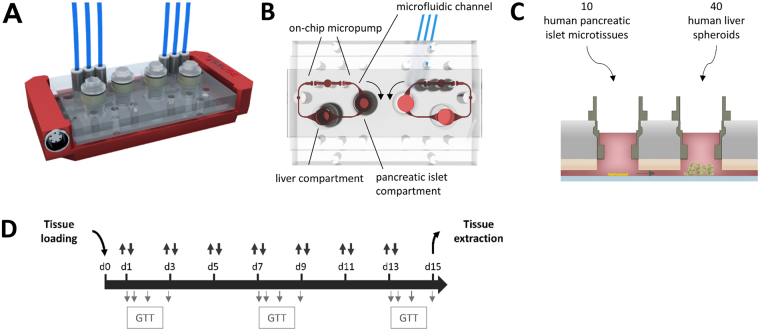
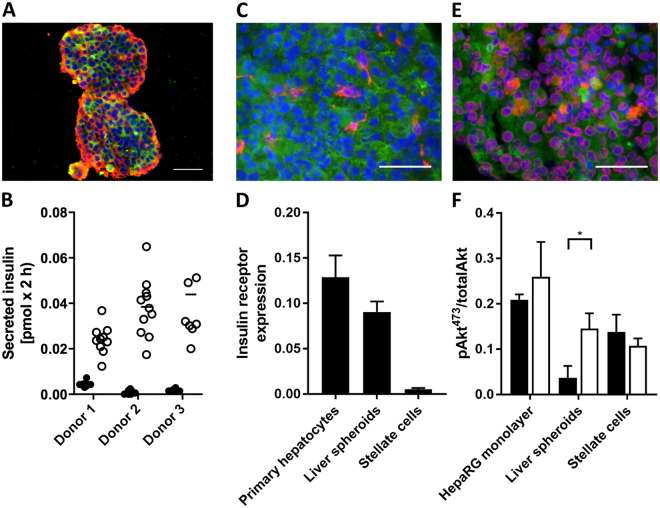
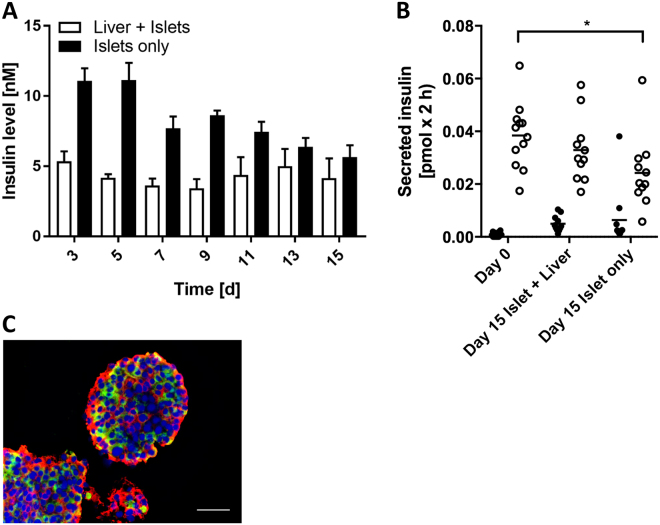
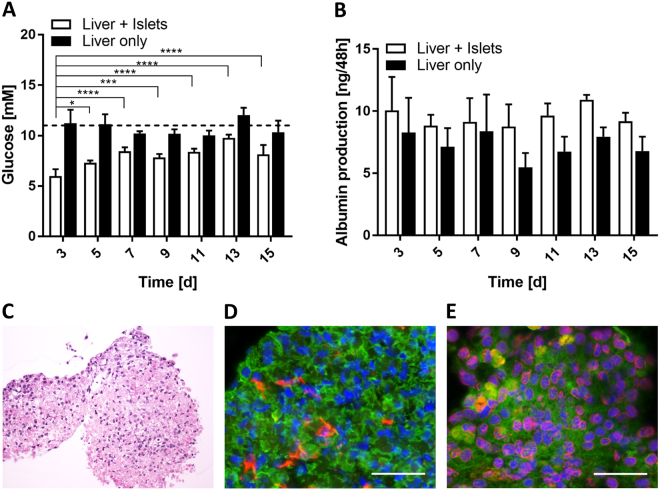
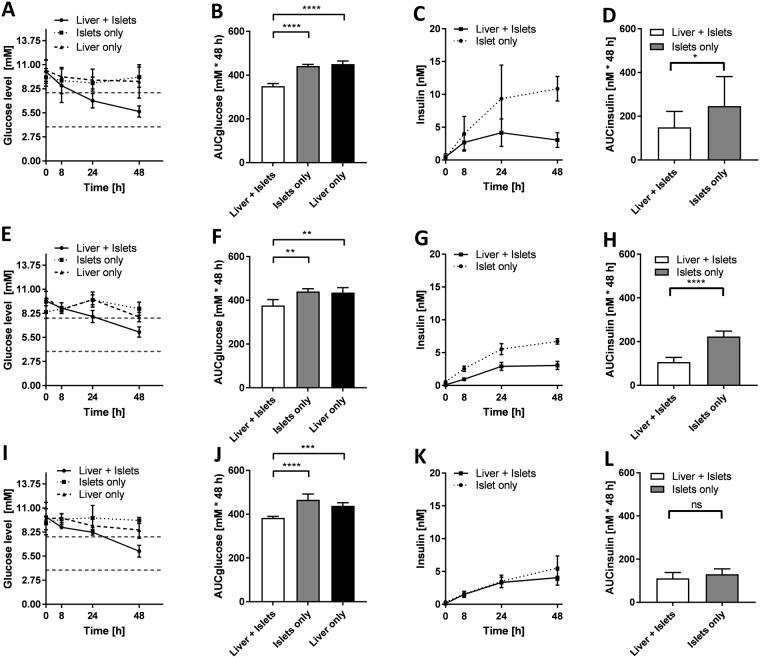
Human in vitro physiological models studying disease and drug treatment effects are urgently needed as more relevant tools to identify new drug targets and therapies. We have developed a human microfluidic two-organ-chip model to study pancreatic islet–liver cross-talk based on insulin and glucose regulation. We have established a robust co-culture of human pancreatic islet microtissues and liver spheroids maintaining functional responses up to 15 days in an insulin-free medium. Functional coupling, demonstrated by insulin released from the islet microtissues in response to a glucose load applied in glucose tolerance tests on different days, promoted glucose uptake by the liver spheroids. Co-cultures maintained postprandial glucose concentrations in the circulation whereas glucose levels remained elevated in both single cultures. Thus, insulin secreted into the circulation stimulated glucose uptake by the liver spheroids, while the latter, in the absence of insulin, did not consume glucose as efficiently. As the glucose concentration fell, insulin secretion subsided, demonstrating a functional feedback loop between the liver and the insulin-secreting islet microtissues. Finally, inter-laboratory validation verified robustness and reproducibility. Further development of this model using tools inducing impaired glucose regulation should provide a unique in vitro system emulating human type 2 diabetes mellitus.
Overview
The claims and statistics of this paper haven’t been checked yet.
Free: it reads the open-access text and checks the first 5 claims that cite a source we can check. Create a free account to check every claim.
Integrity signals
Registry
Cites
Statistics
Figures
Verification
Claims the paper makes
The claims and statistics of this paper haven’t been checked yet.
Free: it reads the open-access text and checks the first 5 claims that cite a source we can check. Create a free account to check every claim.
Claims other papers make about this one
Each is checked against this paper’s own text: does it say what the citing paper says it does?
The source backs part of the claim, not all of it — or backs it for a different population, condition or comparison.
In the citing paper
“Promising disease models of the liver65,66, pancreas67,68, central nervous system35,69,70, skin71, lung72,73, intestine72–76, musculoskeletal system77 and heart78–81 have been developed, but their equivalence or superiority over their animal models needs to be demonstrated.”
From Human disease models in drug development (2023) · cites this paper as [67]
Experimental — accuracy not yet measuredThe source backs part of the claim, not all of it — or backs it for a different population, condition or comparison.
In the citing paper
“The two-organ system has been simulated using connected chambers containing different tissue constructs to mimic liver injury (with intestinal epithelial cells and liver cells)101 and Type-2 diabetes (with human pancreatic islets and liver spheroids)102.”
From Organoids (2022) · cites this paper as [101]
Experimental — accuracy not yet measured
Self-check
Percentages, sums and reported differences re-computed from the paper’s own numbers.
The self-check needs the paper’s full text.
Citations
Cites
Diagnosis and Classification of Diabetes Mellitus
American Diabetes Association (2011) · Diabetes Care · doi:10.2337/dc11-s062 · Cited by 13,988
Diagnosis and classification of diabetes mellitus
American Diabetes Association (2014) · Diabetes Care · doi:10.2337/dc14-s081 · Cited by 5,974
Insulin signalling and the regulation of glucose and lipid metabolism
Saltiel, A. R., & Kahn, C. R. (2001) · Nature · doi:10.1038/414799a · Cited by 5,326
Reconstituting organ-level lung functions on a chip
Huh, D., Matthews, B. D., Mammoto, A., Montoya-Zavala, M., Hsin, H. Y., & Ingber, D. E. (2010) · Science · doi:10.1126/science.1188302 · Cited by 4,250
DeFronzo, R. A., Jacot, E., Jequier, E., Maeder, E., Wahren, J., & Felber, J. P. (1981) · Diabetes · doi:10.2337/diab.30.12.1000 · Cited by 1,770
Impaired Fasting Glucose and Impaired Glucose Tolerance
Nathan, D. M., Davidson, M. B., DeFronzo, R. A., Heine, R. J., Henry, R. R., Pratley, R., & Zinman, B. (2007) · Diabetes Care · doi:10.2337/dc07-9920 · Cited by 1,396
Organs-on-chips at the frontiers of drug discovery
Esch, E. W., Bahinski, A., & Huh, D. (2015) · Nature Reviews Drug Discovery · doi:10.1038/nrd4539 · Cited by 1,185
The role of hepatic lipids in hepatic insulin resistance and type 2 diabetes
Perry, R. J., Samuel, V. T., Petersen, K. F., & Shulman, G. I. (2014) · Nature · doi:10.1038/nature13478 · Cited by 1,136
Maschmeyer, I., Lorenz, A. K., Schimek, K., Hasenberg, T., Ramme, A. P., Hübner, J., Lindner, M., Drewell, C., Bauer, S., Thomas, A., et al. (2015) · Lab on a Chip · doi:10.1039/c5lc00392j · Cited by 861
Self-citationSmall airway-on-a-chip enables analysis of human lung inflammation and drug responses in vitro
Benam, K. H., Villenave, R., Lucchesi, C., Varone, A., Hubeau, C., Lee, H.-H., Alves, S. E., Salmon, M., Ferrante, T. C., Weaver, J. C., et al. (2016) · Nature Methods · doi:10.1038/nmeth.3697 · Cited by 816
Bell, C. C., Hendriks, D. F. G., Moro, S. M. L., Ellis, E., Walsh, J., Renblom, A., Fredriksson Puigvert, L., Dankers, A. C. A., Jacobs, F., Snoeys, J., et al. (2016) · Scientific Reports · doi:10.1038/srep25187 · Cited by 739
The assessment of insulin resistance in man
Wallace, T. M., & Matthews, D. R. (2002) · Diabetic Medicine · doi:10.1046/j.1464-5491.2002.00745.x · Cited by 677
Gerich, J. E. (2010) · Diabetic Medicine · doi:10.1111/j.1464-5491.2009.02894.x · Cited by 633
Endothelial Cell Metabolism in Normal and Diseased Vasculature
Eelen, G., de Zeeuw, P., Simons, M., & Carmeliet, P. (2015) · Circulation Research · doi:10.1161/circresaha.116.302855 · Cited by 627
A microfluidic culture model of the human reproductive tract and 28-day menstrual cycle
Xiao, S., Coppeta, J. R., Rogers, H. B., Isenberg, B. C., Zhu, J., Olalekan, S. A., McKinnon, K. E., Dokic, D., Rashedi, A. S., Haisenleder, D. J., et al. (2017) · Nature Communications · doi:10.1038/ncomms14584 · Cited by 479
Wagner, I., Materne, E.-M., Brincker, S., Süßbier, U., Frädrich, C., Busek, M., Sonntag, F., Sakharov, D. A., Trushkin, E. V., Tonevitsky, A. G., et al. (2013) · Lab on a Chip · doi:10.1039/c3lc50234a · Cited by 476
Self-citationPathogenesis of Type 2 Diabetes Mellitus
Leahy, J. L. (2005) · Archives of Medical Research · doi:10.1016/j.arcmed.2005.01.003 · Cited by 469
Metabolism of stromal and immune cells in health and disease
Ghesquière, B., Wong, B. W., Kuchnio, A., & Carmeliet, P. (2014) · Nature · doi:10.1038/nature13312 · Cited by 451
Multi-Organ toxicity demonstration in a functional human in vitro system composed of four organs
Oleaga, C., Bernabini, C., Smith, A. S. T., Srinivasan, B., Jackson, M., McLamb, W., Platt, V., Bridges, R., Cai, Y., Santhanam, N., et al. (2016) · Scientific Reports · doi:10.1038/srep20030 · Cited by 442
Pathogenesis of Type 2 (non-insulin dependent) diabetes mellitus: a balanced overview
DeFronzo, R. A. (1992) · Diabetologia · doi:10.1007/bf00401208 · Cited by 430
Identification of proliferative and mature β-cells in the islets of Langerhans
Bader, E., Migliorini, A., Gegg, M., Moruzzi, N., Gerdes, J., Roscioni, S. S., Bakhti, M., Brandl, E., Irmler, M., Beckers, J., et al. (2016) · Nature · doi:10.1038/nature18624 · Cited by 336
Marx, U. (2016) · ALTEX · doi:10.14573/altex.1603161 · Cited by 295
Self-citationAndersson, T. B., Kanebratt, K. P., & Kenna, J. G. (2012) · Expert Opinion on Drug Metabolism & Toxicology · doi:10.1517/17425255.2012.685159 · Cited by 259
Self-citationDesign and demonstration of a pumpless 14 compartment microphysiological system
Miller, P. G., & Shuler, M. L. (2016) · Biotechnology and Bioengineering · doi:10.1002/bit.25989 · Cited by 238
3D Organotypic Cultures of Human HepaRG Cells: A Tool for In Vitro Toxicity Studies
Gunness, P., Mueller, D., Shevchenko, V., Heinzle, E., Ingelman-Sundberg, M., & Noor, F. (2013) · Toxicological Sciences · doi:10.1093/toxsci/kft021 · Cited by 236
Maschmeyer, I., Hasenberg, T., Jaenicke, A., Lindner, M., Lorenz, A. K., Zech, J., Garbe, L.-A., Sonntag, F., Hayden, P., Ayehunie, S., et al. (2015) · European Journal of Pharmaceutics and Biopharmaceutics · doi:10.1016/j.ejpb.2015.03.002 · Cited by 218
Self-citationIntegrating biological vasculature into a multi-organ-chip microsystem
Schimek, K., Busek, M., Brincker, S., Groth, B., Hoffmann, S., Lauster, R., Lindner, G., Lorenz, A., Menzel, U., Sonntag, F., et al. (2013) · Lab on a Chip · doi:10.1039/c3lc50217a · Cited by 180
Self-citationMarx, U., Walles, H., Hoffmann, S., Lindner, G., Horland, R., Sonntag, F., Klotzbach, U., Sakharov, D., Tonevitsky, A., & Lauster, R. (2012) · Alternatives to Laboratory Animals · doi:10.1177/026119291204000504 · Cited by 177
Self-citationA multi-organ chip co-culture of neurospheres and liver equivalents for long-term substance testing
Dehne, E., Ramme, A. P., Terrasso, A. P., Serra, M., Alves, P. M., Brito, C., Sakharov, D. A., Tonevitsky, A., Lauster, R., & Marx, U. (2015) · Journal of Biotechnology · doi:10.1016/j.jbiotec.2015.02.002 · Cited by 166
Self-citationDevelopment of an in vitro human liver system for interrogating nonalcoholic steatohepatitis
Feaver, R. E., Cole, B. K., Lawson, M. J., Hoang, S. A., Marukian, S., Blackman, B. R., Figler, R. A., Sanyal, A. J., Wamhoff, B. R., & Dash, A. (2016) · JCI Insight · doi:10.1172/jci.insight.90954 · Cited by 153
Three-dimensional perfused human in vitro model of non-alcoholic fatty liver disease
Kostrzewski, T., Cornforth, T., Snow, S. A., Ouro-Gnao, L., Rowe, C., Large, E. M., & Hughes, D. J. (2017) · World Journal of Gastroenterology · doi:10.3748/wjg.v23.i2.204 · Cited by 149
Microfluidic device for multimodal characterization of pancreatic islets
Mohammed, J. S., Wang, Y., Harvat, T. A., Oberholzer, J., & Eddington, D. T. (2009) · Lab Chip · doi:10.1039/b809590f · Cited by 123
3D spheroid cultures improve the metabolic gene expression profiles of HepaRG cells
Takahashi, Y., Hori, Y., Yamamoto, T., Urashima, T., Ohara, Y., & Tanaka, H. (2015) · Bioscience Reports · doi:10.1042/bsr20150034 · Cited by 118
Materne, E.-M., Tonevitsky, A. G., & Marx, U. (2013) · Lab on a Chip · doi:10.1039/c3lc50240f · Cited by 112
Self-citationWu, M., Huang, S.-B., Cui, Z., Cui, Z., & Lee, G. (2007) · Biomedical Microdevices · doi:10.1007/s10544-007-9138-3 · Cited by 103
Shrayyef, M. Z., & Gerich, J. E. (2009) · Springer eBooks · doi:10.1007/978-0-387-09841-8_2 · Cited by 96
Of rodents and men: Species-specific glucose regulation and type 2 diabetes research
Chandrasekera, P. C. (2014) · ALTEX · doi:10.14573/1309231 · Cited by 89
Advantageous use of HepaRG cells for the screening and mechanistic study of drug-induced steatosis
Tolosa, L., Gómez‐Lechón, M. J., Jiménez, N., Hervás, D., Jover, R., & Donato, M. T. (2016) · Toxicology and Applied Pharmacology · doi:10.1016/j.taap.2016.04.007 · Cited by 81
Sankar, K. S., Green, B. J., Crocker, A. R., Verity, J. E., Altamentova, S. M., & Rocheleau, J. V. (2011) · PLoS ONE · doi:10.1371/journal.pone.0024904 · Cited by 77
The Ascendance of Microphysiological Systems to Solve the Drug Testing Dilemma
Dehne, E.-M., Hasenberg, T., & Marx, U. (2017) · Future Science OA · doi:10.4155/fsoa-2017-0002 · Cited by 68
Self-citationSamanez, C. H., Caron, S., Briand, O., Dehondt, H., Duplan, I., Kuipers, F., Hennuyer, N., Clavey, V., & Staels, B. (2012) · Archives of Physiology and Biochemistry · doi:10.3109/13813455.2012.683442 · Cited by 66
Li, X., Brooks, J. C., Hu, J., Ford, K. I., & Easley, C. J. (2017) · Lab on a Chip · doi:10.1039/c6lc01201a · Cited by 61
Zuellig, R. A., Cavallari, G., Gerber, P., Tschopp, O., Spinas, G. A., Moritz, W., & Lehmann, R. (2017) · Journal of Tissue Engineering and Regenerative Medicine · doi:10.1002/term.1891 · Cited by 55
Animal Models in Diabetes Research
(2012) · Methods in Molecular Biology · doi:10.1007/978-1-62703-068-7 · Cited by 49
Insulin action on the liver in vivo
Cherrington, A. D., Moore, M. C., Sindelar, D. K., & Edgerton, D. S. (2007) · Biochemical Society Transactions · doi:10.1042/bst0351171 · Cited by 43
Metabolomic signatures in lipid‐loaded HepaRGs reveal pathways involved in steatotic progression
Brown, M. V., Compton, S. A., Milburn, M. V., Lawton, K. A., & Cheatham, B. (2013) · Obesity · doi:10.1002/oby.20440 · Cited by 40
Hormone and Drug-Mediated Modulation of Glucose Metabolism in a Microscale Model of the Human Liver
Davidson, M. D., Lehrer, M., & Khetani, S. R. (2015) · Tissue Engineering Part C: Methods · doi:10.1089/ten.tec.2014.0512 · Cited by 34
Hughes, D. J., Kostrzewski, T., & Sceats, E. L. (2017) · Experimental Biology and Medicine · doi:10.1177/1535370217708976 · Cited by 31
Miniaturisierte menschliche Organe auf dem Chip
Hasenberg, T., Dehne, E., Lauster, R., & Marx, U. (2017) · BIOspektrum · doi:10.1007/s12268-017-0800-x · Cited by 1
Self-citationYesildag, B., Misun, P. M., Forschler, F., Neelakandhan, A., Biernath, A., Hierlemann, A. R., & Frey, O. (2017) · Cited by 1
Cited by
Human organs-on-chips for disease modelling, drug development and personalized medicine
Ingber, D. E. (2022) · Nature Reviews Genetics · doi:10.1038/s41576-022-00466-9 · Cited by 1,589
A guide to the organ-on-a-chip
Leung, C. M., de Haan, P., Ronaldson-Bouchard, K., Kim, G.-A., Ko, J., Rho, H. S., Chen, Z., Habibovic, P., Jeon, N. L., Takayama, S., et al. (2022) · Nature Reviews Methods Primers · doi:10.1038/s43586-022-00118-6 · Cited by 1,116
Advances in organ-on-a-chip engineering
Zhang, B., Korolj, A., Lai, B. F. L., & Radisic, M. (2018) · Nature Reviews Materials · doi:10.1038/s41578-018-0034-7 · Cited by 1,017
Zhao, Z., Chen, X., Dowbaj, A. M., Sljukic, A., Bratlie, K., Lin, L., Fong, E. L. S., Balachander, G. M., Chen, Z., Soragni, A., et al. (2022) · Nature Reviews Methods Primers · doi:10.1038/s43586-022-00174-y · Cited by 1,082
Organs-on-a-Chip: A Fast Track for Engineered Human Tissues in Drug Development
Ronaldson-Bouchard, K., & Vunjak-Novakovic, G. (2018) · Cell Stem Cell · doi:10.1016/j.stem.2018.02.011 · Cited by 657
Metadata
- Authors
- Bauer, S., Wennberg Huldt, C., Kanebratt, K. P., Durieux, I., Gunne, D., Andersson, S., Ewart, L., Haynes, W. G., Maschmeyer, I., Winter, A., Ämmälä, C., Marx, U., & Andersson, T. B.
- Affiliations
- AstraZeneca (Sweden) (SE)
- AstraZeneca (United Kingdom) (GB)
- Karolinska Institutet (SE)
- Corresponding author
- Bauer, Sophie
- ORCID
- Venue
- Scientific Reports
- Published
- 2017-11-03
- Volume
- 7
- Issue
- 1
- Pages
- 14620-14620
- ISSN
- 2045-2322 (ISSN-L)
- PMC
- PMC5668271
- OpenAlex
- W2765323542
- Cited by
- 272
- References
- 50
- Citations by year
- 2026: 17 · 2025: 25 · 2024: 34 · 2023: 31 · 2022: 32 · 2021: 44 · 2020: 40 · 2019: 25 · 2018: 24
- FWCI
- 24.91
- Type
- journal article
- Language
- en
- Update notices
- correction (2018-01-23)
- Open access
- gold
- doi.org
- Licence
- cc-by
- creativecommons.org/licenses/by/4.0 (tdm)
- creativecommons.org/licenses/by/4.0 (vor)
- Locations
- Scientific Reports (publishedVersion, cc-by)
- PubMed Central (publishedVersion, cc-by)
- PubMed (publishedVersion)
- DOAJ (DOAJ: Directory of Open Access Journals) (submittedVersion)
- Funders
- Bundesministerium für Bildung und Forschung (01DJ14010A)
- Topics
- Health Sciences › Medicine › Endocrinology, Diabetes and Metabolism › Pancreatic function and diabetes
- Physical Sciences › Engineering › Biomedical Engineering › 3D Printing in Biomedical Research
- Health Sciences › Medicine › Endocrinology, Diabetes and Metabolism › Diabetes Management and Research
- Keywords
- type 2 diabetes, pancreatic islets, liver spheroids, insulin secretion, glucose uptake, glucose tolerance, co-culture, interlaboratory validation
- MeSH terms
- Cell Line, Culture Media, Diabetes Mellitus, Type 2, Equipment Design, Glucose, Glucose Tolerance Test, Humans, Insulin, Islets of Langerhans, Liver, Models, Biological, Reproducibility of Results, Spheroids, Cellular, Coculture Techniques, Feedback, Physiological, Tissue Culture Techniques
About these checks
Registry, retraction, Cites and statistics results are computed, not judged, with one exception: a printed reference that no index lists is read once by a model before it counts as a citation error. Claims are extracted by a model and kept only when their quote appears verbatim in the text; each cited source is then checked, with a model’s help, for whether it says what the claim relies on. Those verdicts can be wrong — read the claim’s quote and the cited source before relying on one.
Statistics and arithmetic are recomputed, not judged.
Confidence bands are shown only for fields calibrated on our annotated test set. None is calibrated yet, so no band is shown.
What counts as a claim ›How we measure confidence ›How we check this ›
Are you an author, or do you see a problem with this page? Request a review
Data sources
Bibliographic data: Semantic Scholar, OpenAlex, Crossref.
Contains information from the Semantic Scholar Academic Graph Datasets, made available under the ODC Attribution License (ODC-BY 1.0).
Semantic Scholar’s data is described in: Kinney, R., et al. (2023). The Semantic Scholar Open Data Platform. arXiv:2301.10140.
