

Functional coupling of human pancreatic islets and liver spheroids on-a-chip: Towards a novel human ex vivo type 2 diabetes model
Open accessThe DOI matches its Crossref record; 50 of the 50 references it cites were found in a registry or an index.
Abstract
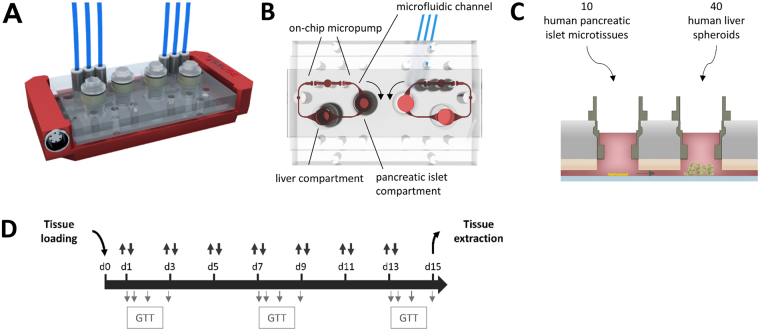
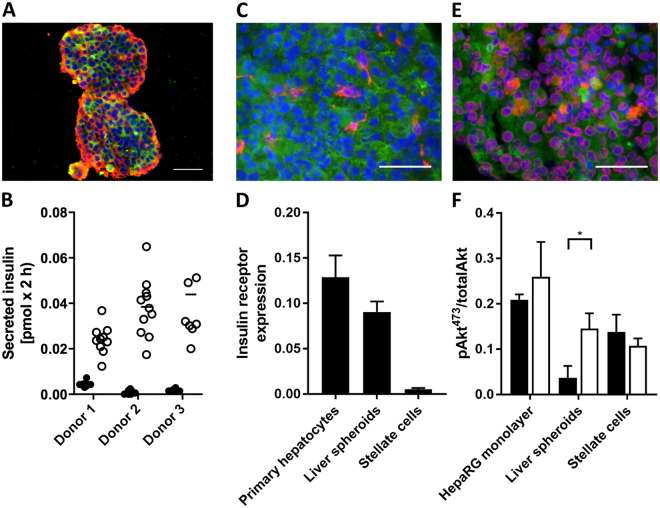
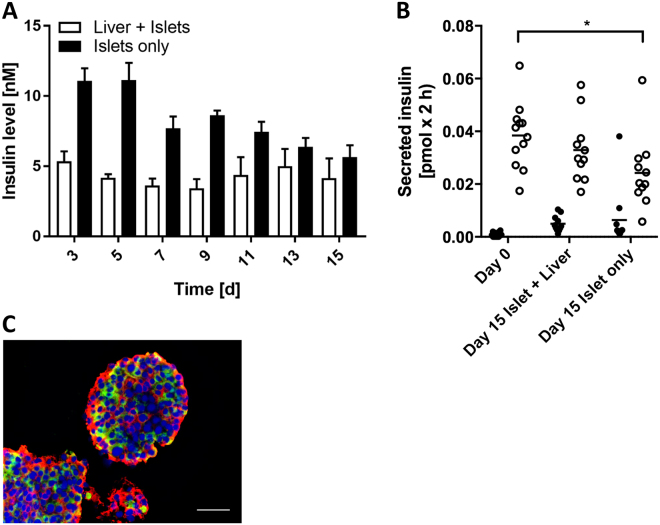
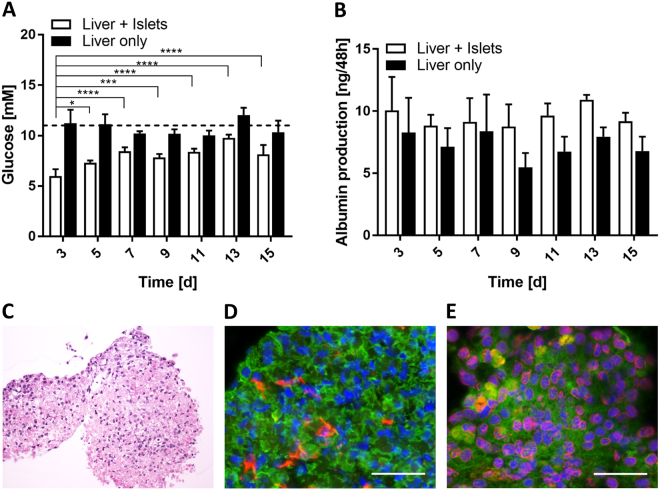
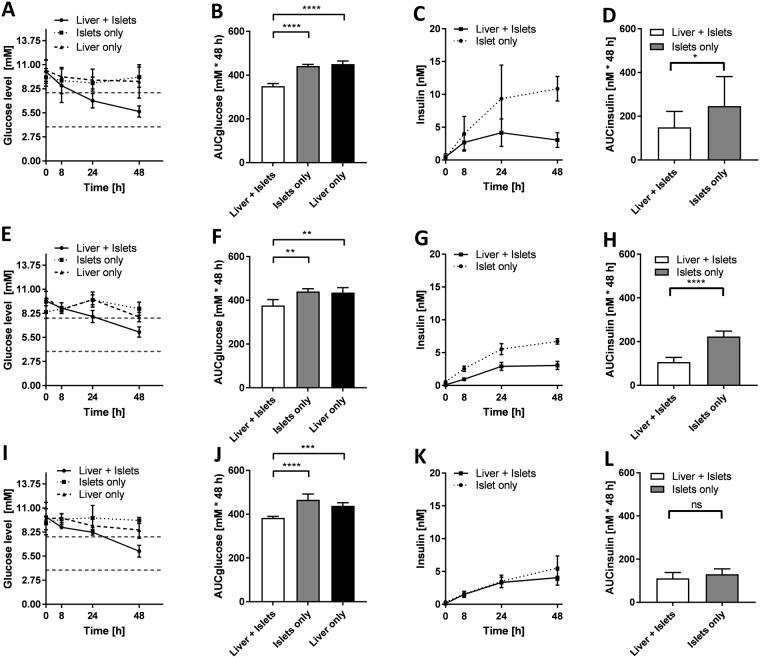
Human in vitro physiological models studying disease and drug treatment effects are urgently needed as more relevant tools to identify new drug targets and therapies. We have developed a human microfluidic two-organ-chip model to study pancreatic islet–liver cross-talk based on insulin and glucose regulation. We have established a robust co-culture of human pancreatic islet microtissues and liver spheroids maintaining functional responses up to 15 days in an insulin-free medium. Functional coupling, demonstrated by insulin released from the islet microtissues in response to a glucose load applied in glucose tolerance tests on different days, promoted glucose uptake by the liver spheroids. Co-cultures maintained postprandial glucose concentrations in the circulation whereas glucose levels remained elevated in both single cultures. Thus, insulin secreted into the circulation stimulated glucose uptake by the liver spheroids, while the latter, in the absence of insulin, did not consume glucose as efficiently. As the glucose concentration fell, insulin secretion subsided, demonstrating a functional feedback loop between the liver and the insulin-secreting islet microtissues. Finally, inter-laboratory validation verified robustness and reproducibility. Further development of this model using tools inducing impaired glucose regulation should provide a unique in vitro system emulating human type 2 diabetes mellitus.
Overview
The claims and statistics of this paper haven’t been checked yet.
Free: it reads the open-access text and checks the first 5 claims that cite a source we can check. Create a free account to check every claim.
Integrity signals
Registry
Cites
Statistics
Figures
Verification
Claims the paper makes
The claims and statistics of this paper haven’t been checked yet.
Free: it reads the open-access text and checks the first 5 claims that cite a source we can check. Create a free account to check every claim.
Claims other papers make about this one
Each is checked against this paper’s own text: does it say what the citing paper says it does?
The source backs part of the claim, not all of it — or backs it for a different population, condition or comparison.
In the citing paper
“Promising disease models of the liver65,66, pancreas67,68, central nervous system35,69,70, skin71, lung72,73, intestine72–76, musculoskeletal system77 and heart78–81 have been developed, but their equivalence or superiority over their animal models needs to be demonstrated.”
From Human disease models in drug development (2023) · cites this paper as [67]
Experimental — accuracy not yet measuredThe source backs part of the claim, not all of it — or backs it for a different population, condition or comparison.
In the citing paper
“The two-organ system has been simulated using connected chambers containing different tissue constructs to mimic liver injury (with intestinal epithelial cells and liver cells)101 and Type-2 diabetes (with human pancreatic islets and liver spheroids)102.”
From Organoids (2022) · cites this paper as [101]
Experimental — accuracy not yet measured
Self-check
Percentages, sums and reported differences re-computed from the paper’s own numbers.
The self-check needs the paper’s full text.
Citations
Cites
Diagnosis and Classification of Diabetes Mellitus
American Diabetes Association (2011) · Diabetes Care · doi:10.2337/dc11-s062 · Cited by 13,988
Diagnosis and classification of diabetes mellitus
American Diabetes Association (2014) · Diabetes Care · doi:10.2337/dc14-s081 · Cited by 5,974
Insulin signalling and the regulation of glucose and lipid metabolism
Saltiel, A. R., & Kahn, C. R. (2001) · Nature · doi:10.1038/414799a · Cited by 5,326
Reconstituting organ-level lung functions on a chip
Huh, D., Matthews, B. D., Mammoto, A., Montoya-Zavala, M., Hsin, H. Y., & Ingber, D. E. (2010) · Science · doi:10.1126/science.1188302 · Cited by 4,250
DeFronzo, R. A., Jacot, E., Jequier, E., Maeder, E., Wahren, J., & Felber, J. P. (1981) · Diabetes · doi:10.2337/diab.30.12.1000 · Cited by 1,770
Impaired Fasting Glucose and Impaired Glucose Tolerance
Nathan, D. M., Davidson, M. B., DeFronzo, R. A., Heine, R. J., Henry, R. R., Pratley, R., & Zinman, B. (2007) · Diabetes Care · doi:10.2337/dc07-9920 · Cited by 1,396
Organs-on-chips at the frontiers of drug discovery
Esch, E. W., Bahinski, A., & Huh, D. (2015) · Nature Reviews Drug Discovery · doi:10.1038/nrd4539 · Cited by 1,185
The role of hepatic lipids in hepatic insulin resistance and type 2 diabetes
Perry, R. J., Samuel, V. T., Petersen, K. F., & Shulman, G. I. (2014) · Nature · doi:10.1038/nature13478 · Cited by 1,136
Maschmeyer, I., Lorenz, A. K., Schimek, K., Hasenberg, T., Ramme, A. P., Hübner, J., Lindner, M., Drewell, C., Bauer, S., Thomas, A., et al. (2015) · Lab on a Chip · doi:10.1039/c5lc00392j · Cited by 861
Self-citationSmall airway-on-a-chip enables analysis of human lung inflammation and drug responses in vitro
Benam, K. H., Villenave, R., Lucchesi, C., Varone, A., Hubeau, C., Lee, H.-H., Alves, S. E., Salmon, M., Ferrante, T. C., Weaver, J. C., et al. (2016) · Nature Methods · doi:10.1038/nmeth.3697 · Cited by 816
Cited by
Items 201–271 of 271
Ingelman‐Sundberg, M., & Lauschke, V. M. (2024) · Drug Metabolism and Disposition · doi:10.1124/dmd.123.001302 · Cited by 7
Hosseinzadeh, M., Saber, N., Shab‐Bidar, S., Hashemi, S., Teymoori, F., Mirzaei, M., Nadjarzadeh, A., & Rahideh, S. T. (2024) · BMC Endocrine Disorders · doi:10.1186/s12902-024-01673-7 · Cited by 7
“For instance, physical inactivity can induce beta cell insufficiency and reduce pancreatic islet mass [43], which can compromise the ability to maintain normal glucose regulation [44].”
BackgroundThe universal physiological template—a system to advance medicines
Dehne, E., & Marx, U. (2020) · Current Opinion in Toxicology · doi:10.1016/j.cotox.2020.02.002 · Cited by 7
Self-citationWang, C., Abadpour, S., Aizenshtadt, A., Dalmao‐Fernández, A., Høyem, M., Wilhelmsen, I., Stokowiec, J., Olsen, P. A., Krauss, S. J. K., Chera, S., et al. (2024) · Frontiers in Bioengineering and Biotechnology · doi:10.3389/fbioe.2024.1392575 · Cited by 4
Diffusive Molecular Communication with a Spheroidal Receiver for Organ-on-Chip Systems
Arjmandi, H., Zoofaghari, M., Rezaei, M., Kanebratt, K. P., Vilén, L., Janzen, D., Gennemark, P., & Noel, A. (2023) · International Conference on Communications · doi:10.1109/icc45041.2023.10279128 · Cited by 5
“For N c = 24000 , which is the approximate number of cells in HepaRG spheroids reported in [18], we have (cid:15) = 0 .”
BackgroundMethodInfluentialSelf-citationSpherical Shell Bioprinting to Produce Uniform Spheroids with Controlled Sizes
Son, K. H., Kim, D.-H., Park, S., Kim, H. J., Park, M., Kim, S.-J., Lee, S. J., Ahn, K., & Lee, J. W. (2024) · Journal of Functional Biomaterials · doi:10.3390/jfb15110350 · Cited by 5
Recapitulating the liver niche in vitro
Yap, K. K., & Mitchell, G. M. (2022) · Advances in stem cells and their niches · doi:10.1016/bs.asn.2021.10.002 · Cited by 8
Discovery of Cell Aggregate-Inducing Peptides
Futaki, Y., Amimoto, I., Tanaka, M., Ito, T., & Hirano, Y. (2021) · Processes · doi:10.3390/pr9030538 · Cited by 4
Peng, X., Guo, Y., Peng, L., & Liu, J. (2021) · Advanced Materials Technologies · doi:10.1002/admt.202100045 · Cited by 4
Essaouiba, A., Jellali, R., Poulain, S., Kim, S. H., Danoy, M., Legallais, C., Sakai, Y., & Leclerc, É. (2025) · Molecular and Cellular Endocrinology · doi:10.1016/j.mce.2025.112582 · Cited by 4
Organ-on-a-Chip Models for Studying Gut–Brain Axis and Appetite Regulation
Jeong, S., & Lee, S. (2025) · BioChip Journal · doi:10.1007/s13206-025-00243-w · Cited by 5
“In the context of diabetes, gut chips are used to study GLP-1 dynamics (since GLP-1 is a target for diabetes treat-ment) [85].”
InfluentialA microphysiological model of human MASLD reveals paradoxical response to resmetirom
Hellen, D. J., Ungerleider, J. L., Tevonian, E. N., Sphabmixay, P., Roy, P., Meimetis, N., Presutti, F., Williams, A. M., Ogi, R., Lewis, C. A., et al. (2026) · Communications Biology · doi:10.1038/s42003-025-09484-9 · Cited by 4
“Co-culture of hepatocytes with islets is an appealingsolutiontobettermimicthenormalphysiologicinsulindelivery 82 , which exhibits a pulsatility lost in T2D 83 , but scaling the cell masses and medium volumes to obtain physiological variation is a signi fi cant burden 84 .”
Mirzababaei, S., Nigjeh, M. N., & Abdollahi, M. R. (2023) · Elsevier eBooks · doi:10.1016/b978-0-12-823536-2.00006-7 · Cited by 3
Learning about liver regeneration from liver-on-a-chip
Ortega‐Ribera, M. (2024) · Current Opinion in Biomedical Engineering · doi:10.1016/j.cobme.2024.100533 · Cited by 3
Multiorgan-on-a-chip: Design and Applications
Khan, H., Khan, S. A., & Parvez, S. (2024) · Elsevier eBooks · doi:10.1016/b978-0-443-13782-2.00009-7 · Cited by 3
Mirzababaei, S., Nigjeh, M. N., Abdollahi, M. R., & Shamloo, A. (2023) · Elsevier eBooks · doi:10.1016/b978-0-12-823536-2.00011-0 · Cited by 4
Microfluidic devices and their applicability to cell studies
Fernandes, A. C., Semenova, D., & Grundtvig, I. P. R. (2023) · Elsevier eBooks · doi:10.1016/b978-0-12-822482-3.00003-8 · Cited by 2
Taute, F., Homs-Corbera, A., & Gaudriault, P. (2021) · Open Research Europe · doi:10.12688/openreseurope.13335.1 · Cited by 3
Integration of Advanced Technologies into Regulatory Toxicology
Spielmann, H., & Kanďárová, H. (2021) · Springer eBooks · doi:10.1007/978-3-030-57499-4_34 · Cited by 3
Diseased human pancreas and liver microphysiological system for preclinical diabetes researchPreprint
Rigal, S., Casas, B., Kanebratt, K. P., Huldt, C. W., Magnusson, L. U., Müllers, E., Karlsson, F. H., Clausen, M., Hansson, S., Jansson‐Löfmark, R., et al. (2023) · bioRxiv (Cold Spring Harbor Laboratory) · doi:10.1101/2023.07.03.547412 · Cited by 3
Self-citationSingle Input Multi Output Model of Molecular Communication via Diffusion With Spheroidal Receivers
Işık, İ., Rezaei, M., & Noel, A. (2024) · IEEE Transactions on Molecular Biological and Multi-Scale Communications · doi:10.1109/tmbmc.2024.3521984 · Cited by 2
“14 × 10 − 15 m 3 and N c = 24000 , which are the approximate volume of HepaRG spheroids and the number of cells therein, respectively [19], we have (cid:2) = 0 .”
The reality of modeling irritable bowel syndrome: progress and challenges
B, M. S. F., Rad, N. K., Roostaei, G., Nikfar, S., & Abdollahi, M. R. (2025) · Expert Opinion on Drug Discovery · doi:10.1080/17460441.2025.2481264 · Cited by 2
“Peripheral neurons and complex hormonal axes remain challenging to model, and materials like polydimethylsiloxane (PDMS) used in chip fabrication can absorb lipophilic drugs, skewing drug distribution results [95,107].”
Exploring the applications of gastric organoids in disease modeling and personalized medicine
Mu, X.-R., Wang, L., Pang, M.-J., Tong, Q.-Y., Zhang, J., Li, Z.-L., Yuan, M., Chen, W., Miao, Z., & Zhao, T. (2025) · Gastrointestinal Tumors · doi:10.48130/git-0025-0013 · Cited by 2
Humayun, M., Jiménez‐Torres, J. A., Li, C., Ayuso, J. M., Lugo-Cintrón, K. M., Ulbrich, J., Myers, B., Kerr, S. C., Ahmed, A., & Beebe, D. J. (2025) · Advanced Materials Technologies · doi:10.1002/admt.202500429 · Cited by 2
Multicompartment hydrogel microcapsules for creating spatially patterned cell co-cultures
Cho, S., Nguyen, Q. H., de Hoyos‐Vega, J. M., Bharath, A., Gonzalez‐Suarez, A. M., Nguyen, K. M., Che, Q. T., Gwon, K., Matveyenko, A. V., Stybayeva, G., et al. (2026) · Microsystems & Nanoengineering · doi:10.1038/s41378-025-01140-w · Cited by 2
“For example, Bauer et al. developed a micro fl uidic system featuring distinct liver and pancreas compartments connected into a closed-loop fl uidic circuit driven by an on-chip micropump 3 .”
Parini, F., Galla, R., Mulè, S., Musu, M., & Uberti, F. (2026) · International Journal of Molecular Sciences · doi:10.3390/ijms27052375 · Cited by 3
Bone Organoids: A Novel Tool for Modeling and Managing Skeletal Disorders in Diabetes
Lin, S., Narayanan, K., & Vashishth, D. (2026) · Advanced Science · doi:10.1002/advs.202518788 · Cited by 4
“…long-term culture under physiologically relevant flow [ 20 ] and coupled pancreas-liver systems enabling real-time analysis of glucose-responsive insulin secretion and hepatic glucose uptake [ 21, 22 ]–demonstrate the feasibility of such integration for studying early diabetic dysfunction.”
Experimental models in diabetes research
Dewalkar, L. P. (2026) · Laboratory Animal Research · doi:10.1186/s42826-026-00286-6 · Cited by 4
“Importantly, OOC devices also sustain islet viability for extended periods, facilitate the modeling of diabeto-genic stressors such as hyperglycemia or lipotoxicity, and permit coupling with other tissues such as liver or vasculature to study systemic interactions [120, 123, 150].”
Horn, G., & Worek, F. (2024) · Toxicology in Vitro · doi:10.1016/j.tiv.2024.105811 · Cited by 2
In toto biological framework: Modeling interconnectedness during human development
Yoneyama, Y., Wu, Y., Mori, K., & Takebe, T. (2025) · Developmental Cell · doi:10.1016/j.devcel.2024.09.027 · Cited by 2
Advances in Organ-on-a-chip Technologies for Biomedical Research and Applications
Zhu, Q., Liao, M., Hu, Y., & Chai, R. (2025) · Materials Lab · doi:10.54227/mlab.20240006 · Cited by 2
“Organs on a Chip”: Revolutionization in personalized treatment
Sahoo, S., Patel, P., & Goswami, M. (2021) · Journal of Drug Delivery and Therapeutics · doi:10.22270/jddt.v11i4.4909 · Cited by 2
Culture and Co-culture of Cells for Multi-organ on a Chip
Arathi, A., Joseph, X., Megha, K. B., Akhil, V., & Mohanan, P. V. (2022) · Springer eBooks · doi:10.1007/978-981-19-1379-2_9 · Cited by 2
Cell Behavior on Peptide-Immobilized Substrate with Cell Aggregation Inducing Property
Amimoto, I., Watanabe, R., & Hirano, Y. (2022) · Processes · doi:10.3390/pr10091779 · Cited by 2
Microfluidics in Microbiome and Cancer Research
Udayasuryan, B., Slade, D. J., & Verbridge, S. S. (2019) · Wiley eBooks · doi:10.1002/9783527818341.ch9 · Cited by 3
Engineered tools to study endocrine dysfunction of pancreas
Alver, C. G., Domínguez‐Bendala, J., & Agarwal, A. (2024) · Biophysics Reviews · doi:10.1063/5.0220396 · Cited by 1
Recent advances of microfluidic organ-on-a-chip monitoring strategies
Ebrahimi, A., Benzait, Z., Tomsuk, Ö., Özel, C., Tüfekçioğlu, E., Dordinejad, G. G., Didarian, R., Ghorbanpoor, H., Güzel, F. D., & Avcı, H. (2025) · Elsevier eBooks · doi:10.1016/b978-0-443-21519-3.00029-7 · Cited by 3
Aleman, J., Vernetti, L. A., Schurdak, M. E., DeBiasio, R., LaRocca, G., Yechoor, V. K., Taylor, D. L., Stern, A. M., & Miedel, M. T. (2026) · BMC Biotechnology · doi:10.1186/s12896-026-01158-6 · Cited by 1
“[92, 93] The glucose consumption ratio (i.e., efflux/influx) from the hepatic chamber was constant across all three conditions under flow on day 2 (Fig.”
Engineering Human Biology on Chips: How “Human-Like” Can We Become?
Li, L., Dehne, E., König-Huber, F., & Marx, U. (2026) · Engineering · doi:10.1016/j.eng.2026.03.004 · Cited by 1
Self-citationda Silva, A. K. A., Nunes, G. A. M. D. A., Faria, R. M., Santos, K. S., de Souza, R. P., da Costa, L. B. M., Fonseca, M. A. M., Fortes, S. S. G., Lima, A. M., Monteiro, I., et al. (2026) · PLoS ONE · doi:10.1371/journal.pone.0328278 · Cited by 3
Organs-on-a-chip in precision medicine
Gupta, V., Sharma, R., Bansal, R., Kaur, G., Kumar, S., & Bansal, P. (2024) · Elsevier eBooks · doi:10.1016/b978-0-443-13782-2.00019-x · Cited by 2
Advances in Micro-Bioreactor Design for Organ Cell Studies
Mandenius, C. (2018) · MDPI eBooks · doi:10.3390/books978-3-03897-232-7 · Cited by 1
Organs-on-chips for the pharmaceutical development process: design perspectives and implementations
Christoffersson, J. (2018) · doi:10.3384/diss.diva-145300 · Cited by 3
“that connect organs-on-chips in series into multi-organs-on-chips, or humans-on-chips, have previously been demonstrated [21,129,159,160].”
Casas, B., Vilén, L. K., Bauer, S., Kanebratt, K. P., Huldt, C. W., Magnusson, L. U., Marx, U., Andersson, T. B., Gennemark, P., & Cedersund, G. (2021) · bioRxiv (Cold Spring Harbor Laboratory) · doi:10.1101/2021.08.18.456693 · Cited by 1
Self-citationElucidating Target Biology and Drug Mechanism of Action Across Human Cell‐Based Model Systems
Dawson, J. C., & Carragher, N. O. (2019) · Methods and principles in medicinal chemistry · doi:10.1002/9783527818242.ch7
Lush Prize Conference 2018: The Times They are A-Changin
Langley, G. (2020) · Alternatives to Laboratory Animals · doi:10.1177/0261192920911340
“Twelve multi-organ-on-a-chip models have been developed, combining two, three and four tissue types — including a pancreas–liver model which mimics in vivo interactions between insulin secretion and glucose loading.(5) This may provide an in vitro system to study human type-2 diabetes.”
BackgroundIntegration of Advanced Technologies into Regulatory Toxicology
Spielmann, H., & Kanďárová, H. (2020) · Springer eBooks · doi:10.1007/978-3-642-36206-4_34-2
do Amaral, R. L. F. (2020) · Digital Library of Theses and Dissertations (Universidade de São Paulo) · doi:10.11606/t.60.2020.tde-21092021-055958
Aziz, J. M., Grisales, P. A., Savino, J. R., Byers, L. N., Citro, A., Peloso, A., Asthana, A., & Orlando, G. (2022) · Elsevier eBooks · doi:10.1016/b978-0-12-824011-3.00003-5
Tucker, G. T. (2020) · Faculty Opinions – Post-Publication Peer Review of the Biomedical Literature · doi:10.3410/f.737720055.793577100
Wieland, F. C., Schumacher, A., Roumans, N. J. T., van Blitterswijk, C., LaPointe, V. L. S., & Rademakers, T. (2022) · Open Research Europe · doi:10.12688/openreseurope.14894.1 · Cited by 3
Stem cells, organoids, and cellular therapy
Manfiolli, A. O., do Amaral, R. L. F., & Caliári-Oliveira, C. (2023) · Elsevier eBooks · doi:10.1016/b978-0-323-90471-1.00003-7
Multi-organ-on-chip applications
Ferret-Miñana, A., Mughal, S., Rydosz, A. M., & Ramón‐Azcón, J. (2024) · Elsevier eBooks · doi:10.1016/b978-0-443-15384-6.00001-x
High throughput production and characterization of primary rat hepatocyte spheroids
Gökaltun, A. (2024) · Hacettepe Journal of Biology and Chemistry · doi:10.15671/hjbc.1394326
Peng, X., Li, L., Peng, Y., Zhou, G., & An, Z. (2024) · Annals of Medicine · doi:10.1080/07853890.2024.2322047 · Cited by 1
Krishna, D. V., Chandan, P. B., Venkat, D. S., & Sankar, M. R. (2025) · Wiley eBooks · doi:10.1002/9781394287659.ch18
Tornberg, K., Grötsch, W., Ritari, N., Haikka, S., Sukki, L., Aalto‐Setälä, K., Pekkanen-Mattila, M., & Kallio, P. J. (2025) · Lab on a Chip · doi:10.1039/d5lc00072f
Rodrigues, J. S., Relvas, S., Condelipes, P. G. M., Silva, B., Bozzo, R., de Pinho, P. G., Chu, V., Remião, F., Conde, J. P., & Miranda, J. P. (2025) · Biotechnology Journal · doi:10.1002/biot.70037
Wang, J., Wang, Y., Wang, Y., Qu, Y., Lin, B., Zhang, X., & Luo, Y. (2025) · Engineering · doi:10.1016/j.eng.2025.08.026
Zúñiga-Aguilar, E., Ramirez-Fernandez, O., & Anaya-Reza, O. (2025) · Journal of biomimetics, biomaterials and biomedical engineering · doi:10.4028/p-cdbht7
Silfvergren, O., Rigal, S., Schimek, K. M. S., Simonsson, C., Kanebratt, K. P., Forschler, F., Yesildag, B., Marx, U., Vilén, L., Gennemark, P., et al. (2026) · European Journal of Pharmaceutical Sciences · doi:10.1016/j.ejps.2026.107648 · Cited by 2
Self-citationConceição, F., Araújo‐Gomes, N., Koçer, G., Jin, J., Klein‐Nulend, J., Nolte, P. A., Jonkheijm, P., Bravenboer, N., & Teixeira, L. M. (2026) · Elsevier eBooks · doi:10.1016/b978-0-443-13683-2.00013-x
Silfvergren, O., Rigal, S., Schimek, K. M. S., Simonsson, C., Kanebratt, K. P., Forschler, F., Yesildag, B., Marx, U., Vilén, L., Gennemark, P., et al. (2026) · bioRxiv (Cold Spring Harbor Laboratory) · doi:10.64898/2026.03.25.714139 · Cited by 3
“Importantly, it is likely that these differences are dominated by biology rather than experimental noise, since we and others have seen an excellent reproducibility across experimental cell studies (4–10).”
Self-citationCryogel-integrated hepatic cell culture microchips for liver tissue engineering
Boulais, L. (2020) · theses.fr (ABES) · doi:10.70675/1d194219z4f19z460bz99c8z9937b30c5228 · Cited by 3
Hypoxia-on-chip : from technological developments to biological applications
Bouquerel, C. (2023) · theses.fr (ABES) · doi:10.70675/d7d58b5dzd927z4235z8c54z8dbb6fd4757e · Cited by 1
Morisseau, L. (2023) · theses.fr (ABES) · doi:10.70675/cfa5953ez697dz47bez9768zde0845d5a7b8 · Cited by 1
Delaney, W. H., Faulkner, S. A., Lam, W. A., Boulis, N. M., Qiu, Y., & Lei, K. (2026) · Materials Today Advances · doi:10.1016/j.mtadv.2026.100770
“In 2017, Bauer et al. showed functional coupling of human pancreatic islets and liver spheroids in a dual OoC, capturing insulin–glucose cross talk over 15 days in culture [79].”
A pumpless liver-adipose model for studying metabolic dysfunction and drug responses
Ebrahimian, Z., Kalalinia, F., Ameri, A. R., Hosseinzadeh, H., Razavi, B. M., & Shaegh, S. A. M. (2026) · PLoS ONE · doi:10.1371/journal.pone.0345524
New insights in tumor-on-a-chip models for studying cancer drug resistance
Wang, Y., Shi, L., Li, J., Zhang, X., Ren, J., Jia, Q., Lv, L., Yang, L., Zhang, Z., Yang, J., et al. (2026) · Pathology - Research and Practice · doi:10.1016/j.prp.2026.156562
Metadata
- Authors
- Bauer, S., Wennberg Huldt, C., Kanebratt, K. P., Durieux, I., Gunne, D., Andersson, S., Ewart, L., Haynes, W. G., Maschmeyer, I., Winter, A., Ämmälä, C., Marx, U., & Andersson, T. B.
- Affiliations
- AstraZeneca (Sweden) (SE)
- AstraZeneca (United Kingdom) (GB)
- Karolinska Institutet (SE)
- Corresponding author
- Bauer, Sophie
- ORCID
- Venue
- Scientific Reports
- Published
- 2017-11-03
- Volume
- 7
- Issue
- 1
- Pages
- 14620-14620
- ISSN
- 2045-2322 (ISSN-L)
- PMC
- PMC5668271
- OpenAlex
- W2765323542
- Semantic Scholar
- e1d791881ab8e14e85a0929101a1425da0efee9e
- Cited by
- 272
- References
- 50
- Citations by year
- 2026: 17 · 2025: 25 · 2024: 34 · 2023: 31 · 2022: 32 · 2021: 44 · 2020: 40 · 2019: 25 · 2018: 24
- FWCI
- 24.91
- Type
- journal article
- Language
- en
- Update notices
- correction (2018-01-23)
- Open access
- gold
- doi.org
- Licence
- cc-by
- creativecommons.org/licenses/by/4.0 (tdm)
- creativecommons.org/licenses/by/4.0 (vor)
- Locations
- Scientific Reports (publishedVersion, cc-by)
- PubMed Central (publishedVersion, cc-by)
- PubMed (publishedVersion)
- DOAJ (DOAJ: Directory of Open Access Journals) (submittedVersion)
- Funders
- Bundesministerium für Bildung und Forschung (01DJ14010A)
- Topics
- Health Sciences › Medicine › Endocrinology, Diabetes and Metabolism › Pancreatic function and diabetes
- Physical Sciences › Engineering › Biomedical Engineering › 3D Printing in Biomedical Research
- Health Sciences › Medicine › Endocrinology, Diabetes and Metabolism › Diabetes Management and Research
- Keywords
- type 2 diabetes, pancreatic islets, liver spheroids, insulin secretion, glucose uptake, glucose tolerance, co-culture, interlaboratory validation
- MeSH terms
- Cell Line, Culture Media, Diabetes Mellitus, Type 2, Equipment Design, Glucose, Glucose Tolerance Test, Humans, Insulin, Islets of Langerhans, Liver, Models, Biological, Reproducibility of Results, Spheroids, Cellular, Coculture Techniques, Feedback, Physiological, Tissue Culture Techniques
About these checks
Registry, retraction, Cites and statistics results are computed, not judged, with one exception: a printed reference that no index lists is read once by a model before it counts as a citation error. Claims are extracted by a model and kept only when their quote appears verbatim in the text; each cited source is then checked, with a model’s help, for whether it says what the claim relies on. Those verdicts can be wrong — read the claim’s quote and the cited source before relying on one.
Statistics and arithmetic are recomputed, not judged.
Confidence bands are shown only for fields calibrated on our annotated test set. None is calibrated yet, so no band is shown.
What counts as a claim ›How we measure confidence ›How we check this ›
Are you an author, or do you see a problem with this page? Request a review
Data sources
Bibliographic data: Semantic Scholar, OpenAlex, Crossref.
Contains information from the Semantic Scholar Academic Graph Datasets, made available under the ODC Attribution License (ODC-BY 1.0).
Semantic Scholar’s data is described in: Kinney, R., et al. (2023). The Semantic Scholar Open Data Platform. arXiv:2301.10140.
