

The DOI matches its Crossref record; 60 of the 60 references it cites were found in a registry or an index.
Insect-based diet, a promising nutritional source, modulates gut microbiota composition and SCFAs production in laying hens.
Open accessAbstract
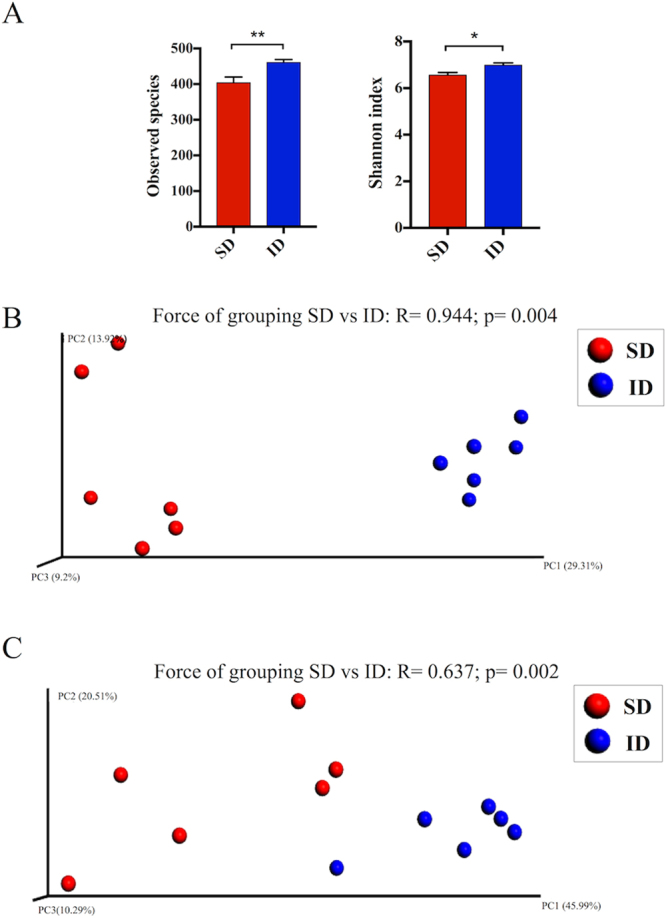
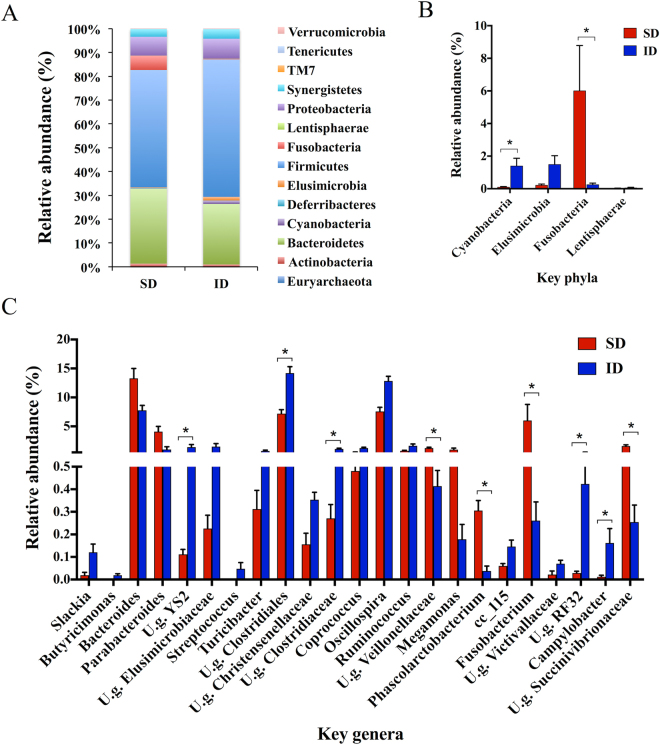
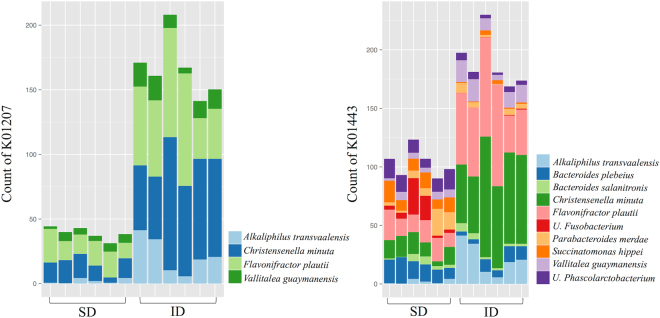
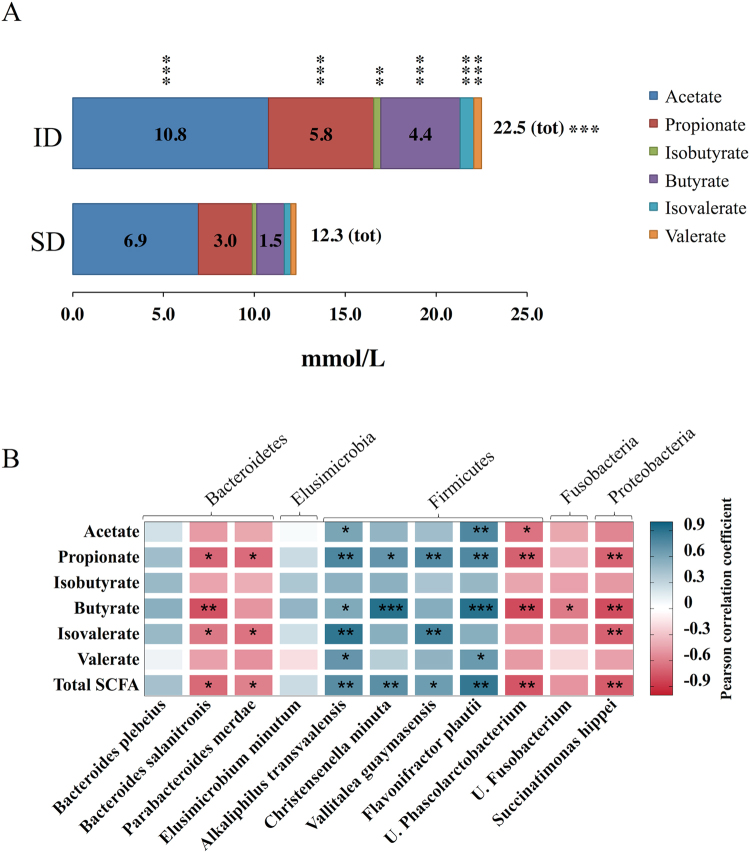
Insects could be potential nutritional sources both for humans and animals. Among these, Hermetia illucens, with good amount of chitin and proteins, represents a suitable diet replacement for laying hens. Little is known about insect diet effects on the microbial ecology of the gastrointestinal tract and bacterial metabolites production. In this study we investigated the effect of H. illucens larvae meal administration on cecal microbiota and short chain fatty acids (SCFAs) production in laying hens. 16S rDNA sequencing showed strong differences between cecal microbiota of soybean (SD) and insect diet (ID) groups both in type and relative abundance (unweighted and weighted beta diversity) of microbial species. In particular, Bacteroides plebeius, Elusimicrobium minutum, Alkaliphilus transvaalensis, Christensenella minuta, Vallitalea guaymasensis and Flavonifractor plautii represented the principal contributors of changes in gut microbiota composition of ID group (FDR p-values < 0.05). Of these, F. plautii, C. minuta and A. transvaalensis have the potential to degrade the chitin’s insect meal and correlated with the observed high levels of gut SCFAs produced in ID group. These microorganisms may thus connect the chitin degradation with high SCFAs production. Our results suggest H. illucens as a potential prebiotic by well feeding gut microbiota.
Overview
The claims and statistics of this paper haven’t been checked yet.
Run the check — free, no account needed. It reads the open-access text and checks the sources it cites.
Integrity signals
Registry
Cites
Statistics
Figures
Verification
Claims the paper makes
The claims and statistics of this paper haven’t been checked yet.
Run the check — free, no account needed. It reads the open-access text and checks the sources it cites.
Claims other papers make about this one
Each is checked against this paper’s own text: does it say what the citing paper says it does?
The source backs part of the claim, not all of it — or backs it for a different population, condition or comparison.
In the citing paper
“HI contains chitin which exhibits antimicrobial properties (Borrelli et al., 2017).”
From Insect Derived Lauric Acid as Promising Alternative Strategy to Antibiotics in the Antimicrobial Resistance Scenario (2021) · cites this paper as Borrelli et al., 2017
Experimental — accuracy not yet measuredThe cited source says what the claim attributes to it.
In the citing paper
“Insect diet might also promote metabolic shifts, including the increased production of microbiota-derived short-chain fatty acids (SCFAs) such as butyrate, acetate, and propionate (Borrelli et al., 2017)”
From Insect Derived Lauric Acid as Promising Alternative Strategy to Antibiotics in the Antimicrobial Resistance Scenario (2021) · cites this paper as Borrelli et al., 2017
Self-check
Percentages, sums and reported differences re-computed from the paper’s own numbers.
The self-check needs the paper’s full text.
Citations
Cites
QIIME allows analysis of high-throughput community sequencing data
Caporaso, J. G., Kuczynski, J., Stombaugh, J., Bittinger, K., Bushman, F. D., Costello, E. K., Fierer, N., Peña, A. G., Goodrich, J. K., Gordon, J. I., et al. (2010) · Nature Methods · doi:10.1038/nmeth.f.303 · Cited by 34,887
Non‐parametric multivariate analyses of changes in community structure
Clarke, K. R. (1993) · Australian Journal of Ecology · doi:10.1111/j.1442-9993.1993.tb00438.x · Cited by 14,449
Greengenes, a Chimera-Checked 16S rRNA Gene Database and Workbench Compatible with ARB
DeSantis, T. Z., Hugenholtz, P., Larsen, N., Rojas, M., Brodie, E. L., Keller, K., Huber, T., Dalevi, D., Hu, P., & Andersen, G. L. (2006) · Applied and Environmental Microbiology · doi:10.1128/aem.03006-05 · Cited by 10,891
Predictive functional profiling of microbial communities using 16S rRNA marker gene sequences
Langille, M. G. I., Zaneveld, J., Caporaso, J. G., McDonald, D., Knights, D., Reyes, J. A., Clemente, J. C., Burkepile, D. E., Vega Thurber, R. L., Knight, R., et al. (2013) · Nature Biotechnology · doi:10.1038/nbt.2676 · Cited by 9,116
KEGG as a reference resource for gene and protein annotation
Kanehisa, M., Sato, Y., Kawashima, M., Furumichi, M., & Tanabe, M. (2016) · Nucleic Acids Research · doi:10.1093/nar/gkv1070 · Cited by 7,387
Changes of Intestinal Functions in Liver Cirrhosis
Fukui, H., & Wiest, R. (2016) · Inflammatory Intestinal Diseases · doi:10.1159/000444436 · Cited by 6,820
Quality control and preprocessing of metagenomic datasets
Schmieder, R., & Edwards, R. A. (2011) · Bioinformatics · doi:10.1093/bioinformatics/btr026 · Cited by 5,119
PEAR: a fast and accurate Illumina Paired-End reAd mergeR
Zhang, J., Kobert, K., Flouri, T., & Stamatakis, A. (2014) · Bioinformatics · doi:10.1093/bioinformatics/btt593 · Cited by 4,497
Gut microbiota in health and disease
Sekirov, I., Russell, S. L., Antunes, L. C. M., & Finlay, B. B. (2010) · Physiological Reviews · doi:10.1152/physrev.00045.2009 · Cited by 4,182
Formation of propionate and butyrate by the human colonic microbiota
Louis, P., & Flint, H. J. (2017) · Environmental Microbiology · doi:10.1111/1462-2920.13589 · Cited by 3,028
Cited by
Sorted by citations
Items 201–263 of 263
Kwakernaak, C., van Spankeren, M., Dalim, M., Loureiro, B. A., Star, L., & Paul, A. (2023) · Journal of Insects as Food and Feed · doi:10.1163/23524588-20230106 · Cited by 3
Insect meals in cat diets and their effects on digestibility, physiology, and gut microbiota
Lisenko, K. G., Saad, F. M. D. O. B., Oliveira, M. R. D., Silva, T. V. C., Dias, D. S., de Oliveira, L. D., Júnior, S. R. S., Nascimento, J. C. D. S., Ribeiro, A. G., Zangerônimo, M. G., et al. (2025) · Frontiers in Veterinary Science · doi:10.3389/fvets.2025.1592625 · Cited by 3
Gałęcki, R., Nowak, A., & Szulc, J. (2025) · International Journal of Molecular Sciences · doi:10.3390/ijms26178663 · Cited by 4
Ahmed, S. T., Hassan, M. M., Parvin, M. M., Jannat, T., & Palash, M. R. A. (2026) · Veterinary Medicine and Science · doi:10.1002/vms3.70824 · Cited by 4
Fan, Y., Xiao, Y., Zhang, S., Bai, W., & Chen, J. (2024) · Food Science and Human Wellness · doi:10.26599/fshw.2024.9250129 · Cited by 3
Facey, H., Kithama, M., Mohammadigheisar, M., Barbut, S., Huber, L., Shoveller, A. K. K., & Kiarie, E. G. (2024) · Canadian Journal of Animal Science · doi:10.1139/cjas-2024-0006 · Cited by 3
Dabbou, S., Cattaneo, A., Cattapan, F., Malinverni, R., Macchi, E., Manenti, I., Todesco, S., Poloni, E., Rosà, R., Santori, D., et al. (2025) · Poultry Science · doi:10.1016/j.psj.2025.105418 · Cited by 4
Al-Qazzaz, M. F. A., Samsudin, A. A., Idris, L. H., Ismail, D., & Akit, H. (2020) · International Journal of Agriculture and Biology · doi:10.17957/ijab/15.1780 · Cited by 3
RECURRENT INGESTION OF GRIT BY COMMON NIGHTHAWKS (CHORDEILES MINOR)
Burger, A. E. (2021) · Northwestern Naturalist · doi:10.1898/nwn20-19 · Cited by 3
Pető, Á., Kósa, D., Szilvássy, Z., Fehér, P. S., Ujhelyi, Z., Kovács, G. E., Német, I., Pócsi, I., & Bácskay, I. (2023) · Fermentation · doi:10.3390/fermentation9080767 · Cited by 3
Utilisation of mealworm (Tenebrio molitor) oil in Pacific white shrimp (Litopenaeus vannamei) diet
Eom, G., Shin, J., & Lee, K. (2023) · Journal of Insects as Food and Feed · doi:10.1163/23524588-20230088 · Cited by 3
Insect live larvae as a new nutritional model in duck: effects on gut health
Colombino, E., Gariglio, M., Biasato, I., Ferrocino, I., Pozzo, S., Fragola, E., Battisti, E., Zanet, S., Ferroglio, E., Capucchio, M. T., et al. (2024) · Animal Microbiome · doi:10.1186/s42523-024-00316-5 · Cited by 3
Rivera, D. S., Beltrán, V., Gutiérrez-Cortés, I., Vargas, C., & Alfaro, F. D. (2024) · Microorganisms · doi:10.3390/microorganisms12061194 · Cited by 3
Elsheikh, H., Mahgoub, A., Abo-Donia, F. M., Ghania, A., & Mohamed, M. (2022) · Egyptian Journal of Nutrition and Feeds · doi:10.21608/ejnf.2022.256913 · Cited by 3
Bhattacharyya, J., Chatterjee, P. N., Chatterjee, J. K., & Pal, A. (2024) · bioRxiv (Cold Spring Harbor Laboratory) · doi:10.1101/2024.04.04.588065 · Cited by 3
Chang, S. Y., Kim, K. H., Lee, B. K., Lee, J. H., Oh, H. J., An, J., Song, D., Cho, H. A., Park, S., Jeon, K., et al. (2024) · Animal Feed Science and Technology · doi:10.1016/j.anifeedsci.2024.116003 · Cited by 3
A review on improving weaned pigs’ growth performance and gut health using nutritional strategies
Chang, S., Song, D., & Cho, J. H. (2024) · Animal Industry and Technology · doi:10.5187/ait.2024.11.1.1 · Cited by 2
Stefano, F. D., Rinaldi, R., Derin, E., Giglio, F., Borrelli, L., Scieuzo, C., & Falabella, P. (2025) · Elsevier eBooks · doi:10.1016/b978-0-443-29896-7.00004-4 · Cited by 2
Self-citationBiasato, I., Hassan, T., Buzzanca, D., Bagatella, S., Schiavone, A., Capucchio, M. T., Gasco, L., Kenéz, Á., & Ferrocino, I. (2026) · Poultry Science · doi:10.1016/j.psj.2026.106966 · Cited by 2
Dedousi, A., Kotzamanidis, C., Dimitropoulou, G., Sfetsas, T., Malousi, A., Giantzi, V., & Sossidou, E. (2024) · Foods · doi:10.3390/foods13244152 · Cited by 2
Chang, S., Park, Y., Lee, J., Song, D., Jeon, K., Kim, H., Yang, J., & Cho, J. H. (2025) · Journal of Animal Science and Technology · doi:10.5187/jast.2025.e11 · Cited by 2
Yazarel, S., Sarıca, Ş., & Karaman, S. (2021) · CURRENT TRENDS IN NATURAL SCIENCES · doi:10.47068/ctns.2021.v10i19.036 · Cited by 2
Fungal Enzyme-Based Nutraceutical Oligosaccharides
Choukade, R., & Kango, N. (2023) · Springer eBooks · doi:10.1007/978-981-19-8853-0_12 · Cited by 2
Sutton, A., & Costa, N. D. (2023) · Animal Production Science · doi:10.1071/an23080 · Cited by 2
Basili, M., Randazzo, B., Caccamo, L., Guicciardi, S., Meola, M., Perdichizzi, A., Quero, G. M., & Maricchiolo, G. (2024) · Research Square · doi:10.21203/rs.3.rs-4781211/v2 · Cited by 2
Elgendy, B., Atallah, S., & Mohammed, L. S. (2023) · Benha Veterinary Medical Journal · doi:10.21608/bvmj.2023.241120.1737 · Cited by 1
Hatab, M., Ibrahim, N. S., Sayed, W. A. A., Badran, A. M., & Rumpold, B. A. (2025) · Poultry Science · doi:10.1016/j.psj.2025.105198 · Cited by 2
Insects on the Plate: Nutritional Benefits, Health Impacts, and Market Dynamics
Mittal, R. K., Krishna, G., Chowdhury, S., Lakhanpal, S., Shabil, M., Sharma, R., & Suri, S. (2025) · Current Protein and Peptide Science · doi:10.2174/0113892037382429250624123540 · Cited by 2
Zhang, L., Li, Q., & Hua, Y. (2025) · Microbial Pathogenesis · doi:10.1016/j.micpath.2025.108036 · Cited by 1
Design of value chains for insect processing biorefinery
Singh, C. N., Healy, L. E., Chanu, N. S., & Dwivedi, M. (2025) · Elsevier eBooks · doi:10.1016/b978-0-443-28810-4.00003-7 · Cited by 1
Pilmer, L. W., Partridge, G. J., Woods, C. S., Foysal, M. J., Chaklader, M. R., Lymbery, A. J., & Woolley, L. D. (2025) · Aquaculture · doi:10.1016/j.aquaculture.2025.743371 · Cited by 1
Liu, S., Wang, J., Dong, S., Duan, Y., & Ma, Y. (2026) · Journal of Animal Science · doi:10.1093/jas/skag012 · Cited by 1
Almeida, J. V. D. A., Cabrera, J. M., Oliveira, M. D. M., Oliveira, R. P. D. S., & Varani, A. M. (2026) · Brazilian Journal of Microbiology · doi:10.1007/s42770-026-02033-4 · Cited by 1
Kinasih, I., Ulfa, R. A., Suciawaty, D., & Putra, R. E. (2020) · International Conference on Islam, Science and Technology (ICONISTECH) · doi:10.4108/eai.11-7-2019.2297567 · Cited by 1
Jadhav, R., Milesh, L., Mathew, T., Madhu, R., Raghavendra, Maruti, Halder, S., Kushwaha, R. K., & David, A. (2022) · International Journal of Life Science and Pharma Research · doi:10.22376/ijpbs/lpr.2020.10.5.l113-120 · Cited by 1
Edible insects: A functional food for future
Shahanaz (2020) · Journal of Pharmacognosy and Phytochemistry · doi:10.22271/phyto.2020.v9.i1z.14641 · Cited by 1
Sarıca, Ş., Yavuz, M., Sanli, E., Katı, A., Altuntaş, S., Alataş, M. S., Eki̇ci̇, M., Yazarel, S., & Keskintas, A. T. (2024) · Journal of the Hellenic Veterinary Medical Society · doi:10.12681/jhvms.35709 · Cited by 1
Bacterial Taxa Associated with High Adherence to Mediterranean Diet in a Spanish Population
Rosés, C., Cuevas‐Sierra, A., Quintana, S., Riezu‐Boj, J. I., Martínez, J. A., Milagro, F. I., & Barceló, A. (2020) · International Electronic Conference on Nutrients (IECN) · doi:10.3390/iecn2020-07001
Basili, M., Randazzo, B., Caccamo, L., Guicciardi, S., Meola, M., Perdichizzi, A., Quero, G. M., & Maricchiolo, G. (2024) · Research Square · doi:10.21203/rs.3.rs-4781211/v1
Edible Insects as An Alternative Food Source and Their Potential Positive Effects on Human Health
Usluoğlu, İ., & Filiz, S. D. (2025) · Current Research in Health Sciences · doi:10.62425/crihs.1548931
Omotoso, A. O., Werner, E., Hautkapp, N., Rodehutscord, M., & Wolfgang, S. (2025) · Journal of the Science of Food and Agriculture · doi:10.1002/jsfa.70196
The gut microecology of the two sympatric gerbil species varies with dietPreprint
Chu, D., Liu, N., Liu, Q., Yuan, S., & Fu, H. (2025) · Research Square · doi:10.21203/rs.3.rs-7587564/v1
Mahayri, T. M., Atallah, E., Mrázek, J., Bovera, F., Piccolo, G., Moniello, G., & Fliegerova, K. O. (2025) · Veterinary Medicine and Science · doi:10.1002/vms3.70650 · Cited by 1
Self-citationSingh, V., Mahra, K., Klingaite, J., Joshi, A., Kwon, S.-M., & Shin, J. (2025) · Future Foods · doi:10.1016/j.fufo.2025.100823
Wang, B., Zhang, Y., Li, J., Wu, M., Shi, Y., Sun, X., Xiao, X., Zhang, P., Shi, Y., Li, Y., et al. (2025) · Frontiers in Microbiology · doi:10.3389/fmicb.2025.1693396
Pucciarelli, V., Caivano, I., Scieuzo, C., & Falabella, P. (2025) · Elsevier eBooks · doi:10.1016/b978-0-443-29896-7.00005-6
Characterization of eggs from laying hens fed insect-enriched diets
Bonomini, M. G., D’Ambra, K., Minelli, G., Fiego, D. P. L., Leni, G., Lolli, V., & Caligiani, A. (2026) · Food Chemistry · doi:10.1016/j.foodchem.2026.148387
Diet‐Driven Divergence in Gut Microbiota Variation Between Two Sympatric Gerbil Species
Chu, D., Liu, N., Liu, Q., Li, X., Yang, H., Zhu, N., Liu, Z., Wang, R., Yuan, S., & Fu, H. (2026) · Ecology and Evolution · doi:10.1002/ece3.73367
El-Hack, M. E. A. (2026) · World s Poultry Science Journal · doi:10.1080/00439339.2026.2653150
Diet breadth shapes gut microbiota in the invasive hornet Vespa velutina
Herrera, C., Alemany, I., Leza, M., & Jurado‐Rivera, J. A. (2026) · Insect Conservation and Diversity · doi:10.1111/icad.70082
Kawasaki, K., Zhao, J., Ramirez-Camba, C. D., Kawasaki, T., Salfer, I. J., Shurson, G. C., & Urriola, P. E. (2026) · Animal Feed Science and Technology · doi:10.1016/j.anifeedsci.2026.116977
Hongcai, M., Wang, D.-J., Yuan, Z.-J., Shi, B., Chen, Z.-H., Zhuo, M., Zeng, J., & Aqib, A. I. (2026) · Microbial Pathogenesis · doi:10.1016/j.micpath.2026.108700
Insects in Poultry Nutrition: Enhancing the Health, Gut Status and Welfare
Belhassen, T., Dabbou, S., & Rayan, G. N. (2026) · Brazilian Journal of Poultry Science · doi:10.1590/1806-9061-2025-2202
Gałęcki, R., Nowak, A., Nizioł, J., Ruman, T., Płaza‐Altamer, A., & Szulc, J. (2026) · International Journal of Molecular Sciences · doi:10.3390/ijms27177627
Chiasson, M. A., Easton, A. A., Snyman, H. N., & Huyben, D. C. (2026) · North American Journal of Aquaculture · doi:10.1093/naaqua/vrag026
Lanzieri, M., Musco, N., Accetta, F., Addeo, N. F., Panettieri, V., Borrelli, L., Guarnieri, A., Salvia, R., Scieuzo, C., Bonis, A. D., et al. (2026) · Animal Feed Science and Technology · doi:10.1016/j.anifeedsci.2026.117085
Self-citationTeixeira, L. M., Genova, J. L., Duarte, M. E., Santana, J. P., Reis, L. F. L., Teixeira, A. L. M., & Rocha, G. C. (2026) · Animals · doi:10.3390/ani16193100
POTENCIAL DA MOSCA SOLDADO NEGRO (HERMETIA ILLUCENS) NA ALIMENTAÇÃO: UMA REVISÃO
de Lima, V. V. G., Rangel, D. D. A., Belato, R. D. S., & Teixeira, A. B. D. S. (2026) · Journal of Education Science and Health · doi:10.52832/jesh.v6i4.772
Sánchez‐Velázquez, O. A., & Hernández‐Álvarez, A. J. (2026) · Frontiers in Physiology · doi:10.3389/fphys.2026.1945787
Metadata
- Authors
- Borrelli, L., Coretti, L., Dipineto, L., Bovera, F., Menna, F., Chiariotti, L., Nizza, A., Lembo, F., & Fioretti, A.
- Affiliations
- University of Naples Federico II (IT)
- Institute for Experimental Endocrinology and Oncology (IT)
- Corresponding author
- Borrelli, Luca
- ORCID
- Venue
- Scientific Reports
- Published
- 2017-11-24
- Volume
- 7
- Issue
- 1
- Pages
- 16269-16269
- ISSN
- 2045-2322 (ISSN-L)
- PMC
- PMC5701250
- OpenAlex
- W2768218657
- Cited by
- 263
- References
- 60
- Citations by year
- 2026: 18 · 2025: 37 · 2024: 33 · 2023: 39 · 2022: 36 · 2021: 31 · 2020: 37 · 2019: 25 · 2018: 7
- FWCI
- 17.53
- Type
- journal article
- Language
- en
- Open access
- gold
- doi.org
- Locations
- Scientific Reports (publishedVersion, cc-by)
- Europe PMC (PubMed Central) (publishedVersion, cc-by)
- PubMed Central (publishedVersion, cc-by)
- PubMed (publishedVersion)
- Funders
- Università degli Studi di Firenze
- Topics
- Life Sciences › Agricultural and Biological Sciences › Insect Science › Insect Utilization and Effects
- Life Sciences › Agricultural and Biological Sciences › Animal Science and Zoology › Animal Nutrition and Physiology
- Life Sciences › Biochemistry, Genetics and Molecular Biology › Molecular Biology › Gut microbiota and health
- Keywords
- Hermetia illucens, insect meal, laying hens, gut microbiota, short-chain fatty acids, cecal microbiota, chitin degradation, prebiotics, soybean diet, Flavonifractor plautii, Christensenella minuta, Bacteroides plebeius, poultry nutrition
- MeSH terms
- Gastrointestinal Microbiome, Animals, Animal Feed, Chickens, Diet, Fatty Acids, Volatile, Female, Insecta
About these checks
Registry, retraction, Cites and statistics results are computed, not judged, with one exception: a printed reference that no index lists is read once by a model before it counts as a citation error. Claims are extracted by a model and kept only when their quote appears verbatim in the text; each cited source is then checked, with a model’s help, for whether it says what the claim relies on. Those verdicts can be wrong — read the claim’s quote and the cited source before relying on one.
Statistics and arithmetic are recomputed, not judged.
Confidence bands are shown only for fields calibrated on our annotated test set. None is calibrated yet, so no band is shown.
What counts as a claim ›How we measure confidence ›How we check this ›
Are you an author, or do you see a problem with this page? Request a review
