

The DOI matches its Crossref record; 50 of the 50 references it cites were found in a registry or an index.
Increased Abundance of Clostridium and Fusobacterium in Gastric Microbiota of Patients with Gastric Cancer in Taiwan
Open accessAbstract
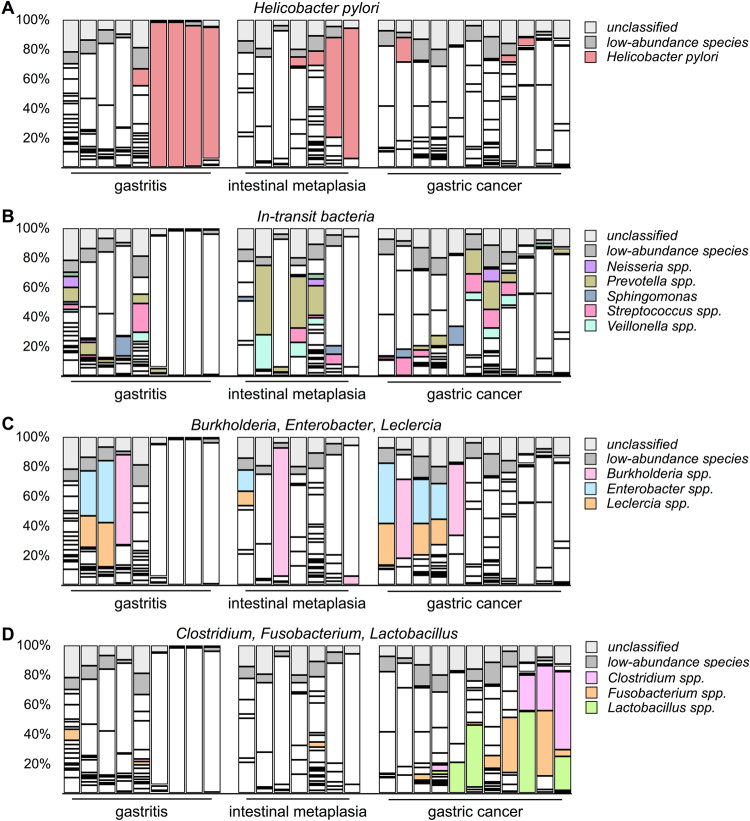
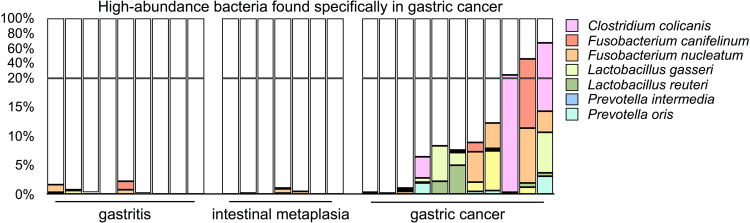
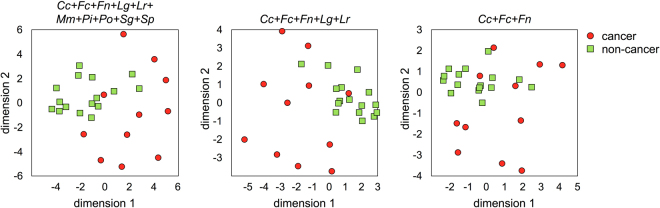
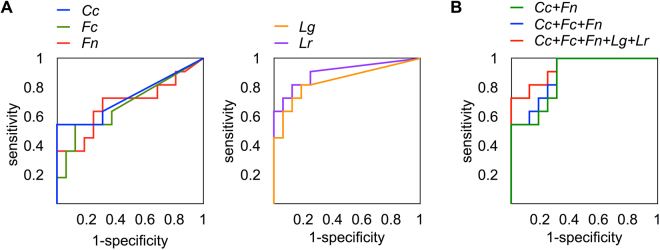
Helicobacter pylori is recognised as a main risk factor for gastric cancer. However, approximately half of the patients with gastritis are negative for H. pylori infection, and the abundance of H. pylori decreases in patients with cancer. In the current study, we profiled gastric epithelium-associated bacterial species in patients with gastritis, intestinal metaplasia, and gastric cancer to identify additional potential pathogenic bacteria. The overall composition of the microbiota was similar between the patients with gastritis and those with intestinal metaplasia. H. pylori was present in half of the non-cancer group, and the dominant bacterial species in the H. pylori-negative patients were Burkholderia, Enterobacter, and Leclercia. The abundance of those bacteria was similar between the cancer and non-cancer groups, whereas the frequency and abundance of H. pylori were significantly lower in the cancer group. Instead, Clostridium, Fusobacterium, and Lactobacillus species were frequently abundant in patients with gastric cancer, demonstrating a gastric cancer-specific bacterial signature. A receiver operating characteristic curve analysis showed that Clostridium colicanis and Fusobacterium nucleatum exhibited a diagnostic ability for gastric cancer. Our findings indicate that the gastric microenvironment is frequently colonised by Clostridium and Fusobacterium in patients with gastric cancer.
Overview
The claims and statistics of this paper haven’t been checked yet.
Run the check — free, no account needed. It reads the open-access text and checks the sources it cites.
Integrity signals
Registry
Cites
Statistics
Figures
Verification
Claims the paper makes
The claims and statistics of this paper haven’t been checked yet.
Run the check — free, no account needed. It reads the open-access text and checks the sources it cites.
Claims other papers make about this one
Each is checked against this paper’s own text: does it say what the citing paper says it does?
In the citing paper
“Fusobacterium spp. is important in the development and progression of gastrointestinal tumors1,19,34,35”
From RETRACTED ARTICLE: Microbiome analyses of blood and tissues suggest cancer diagnostic approach (2020) · cites this paper as [35]
Self-check
Percentages, sums and reported differences re-computed from the paper’s own numbers.
The self-check needs the paper’s full text.
Citations
Cites
Moderated estimation of fold change and dispersion for RNA-seq data with DESeq2
Love, M. I., Huber, W., & Anders, S. (2014) · Genome Biology · doi:10.1186/s13059-014-0550-8 · Cited by 95,106
Changes of Intestinal Functions in Liver Cirrhosis
Fukui, H., & Wiest, R. (2016) · Inflammatory Intestinal Diseases · doi:10.1159/000444436 · Cited by 6,820
Gut microbiota in health and disease
Sekirov, I., Russell, S. L., Antunes, L. C. M., & Finlay, B. B. (2010) · Physiological Reviews · doi:10.1152/physrev.00045.2009 · Cited by 4,182
Global Prevalence of Helicobacter pylori Infection: Systematic Review and Meta-Analysis
Hooi, J. K. Y., Lai, W. Y., Ng, W. K., Suen, M. M. Y., Underwood, F. E., Tanyingoh, D., Malfertheiner, P., Graham, D. Y., Wong, V. W., Wu, J. C., et al. (2017) · Gastroenterology · doi:10.1053/j.gastro.2017.04.022 · Cited by 3,391
Nod1 responds to peptidoglycan delivered by the Helicobacter pylori cag pathogenicity island
Viala, J., Chaput, C., Boneca, I. G., Cardona, A., Girardin, S. E., Moran, A. P., Athman, R., Mémet, S., Huerre, M., Coyle, A. J., et al. (2004) · Nature Immunology · doi:10.1038/ni1131 · Cited by 1,221
Probiotics, gut microbiota, and their influence on host health and disease
Sánchez, B., Delgado, S., Blanco‐Míguez, A., Lourenço, A., Gueimonde, M., & Margolles, A. (2017) · Molecular Nutrition & Food Research · doi:10.1002/mnfr.201600240 · Cited by 1,104
Abed, J., Emgård, J. E. M., Zamir, G., Faroja, M., Almogy, G., Grenov, A., Sol, A., Naor, R., Pikarsky, E., Atlan, K. A., et al. (2016) · Cell Host & Microbe · doi:10.1016/j.chom.2016.07.006 · Cited by 888
Mucosal microbiome dysbiosis in gastric carcinogenesis
Coker, O. O., Dai, Z., Nie, Y., Zhao, G., Cao, L., Nakatsu, G., Wu, W. K., Wong, S. H., Chen, Z., Sung, J. J. Y., et al. (2018) · Gut · doi:10.1136/gutjnl-2017-314281 · Cited by 695
Flanagan, L., Schmid, J., Ebert, M., Soucek, P., Kunicka, T., Liska, V., Bruha, J., Neary, P., Dezeeuw, N., Tommasino, M., et al. (2014) · European Journal of Clinical Microbiology & Infectious Diseases · doi:10.1007/s10096-014-2081-3 · Cited by 498
Association of Fusobacterium nucleatum with immunity and molecular alterations in colorectal cancer
Nosho, K. (2016) · World Journal of Gastroenterology · doi:10.3748/wjg.v22.i2.557 · Cited by 344
Cited by
Sorted by citations
Fusobacterium nucleatum — symbiont, opportunist and oncobacterium
Brennan, C. A., & Garrett, W. S. (2019) · Nature Reviews Microbiology · doi:10.1038/s41579-018-0129-6 · Cited by 1,205
RETRACTED ARTICLE: Microbiome analyses of blood and tissues suggest cancer diagnostic approach
Poore, G. D., Kopylova, E., Zhu, Q., Carpenter, C., Fraraccio, S., Wandro, S., Kosciolek, T., Janssen, S., Metcalf, J., Song, S. J., et al. (2020) · Nature · doi:10.1038/s41586-020-2095-1 · Cited by 989
RetractedGastric cancer: a comprehensive review of current and future treatment strategies
Sexton, R. E., Hallak, M. N. A., Diab, M., & Azmi, A. S. (2020) · Cancer and Metastasis Reviews · doi:10.1007/s10555-020-09925-3 · Cited by 813
Human gut microbiota in health and disease: Unveiling the relationship
Afzaal, M., Saeed, F., Shah, Y. A., Hussain, M., Rabail, R., Socol, C. T., Hassoun, A., Pateiro, M., Lorenzo, J. M., Rusu, A. V., et al. (2022) · Frontiers in Microbiology · doi:10.3389/fmicb.2022.999001 · Cited by 762
The role of gut microbiota in cancer treatment: friend or foe?
Cheng, W. Y., Wu, C.-Y., & Yu, J. (2020) · Gut · doi:10.1136/gutjnl-2020-321153 · Cited by 384
Self-citationFecal microbiota transplantation in cancer management: Current status and perspectives
Chen, D., Wu, J., Jin, D., Wang, B., & Cao, H. (2018) · International Journal of Cancer · doi:10.1002/ijc.32003 · Cited by 337
Fusobacterium nucleatum enhances the efficacy of PD-L1 blockade in colorectal cancer
Gao, Y., Bi, D., Xie, R., Li, M., Guo, J., Liu, H., Guo, X., Fang, J., Ding, T., Zhu, H., et al. (2021) · Signal Transduction and Targeted Therapy · doi:10.1038/s41392-021-00795-x · Cited by 303
Revisit gut microbiota and its impact on human health and disease
Ding, R., Goh, W.-R., Wu, R., Yue, X., Luo, X. G., Khine, W. W. T., Wu, J., & Lee, Y. K. (2019) · Journal of Food and Drug Analysis · doi:10.1016/j.jfda.2018.12.012 · Cited by 287
Salguero, M. V., Al-Obaide, M. A. I., Singh, R., Siepmann, T., & Vasylyeva, T. L. (2019) · Experimental and Therapeutic Medicine · doi:10.3892/etm.2019.7943 · Cited by 270
Gastric cancer: Epidemiology, risk factors and prevention strategies
Yang, L., Ying, X., Liu, S., Lyu, G., Xu, Z., Xi, Z., Li, H., Li, Q., Wang, N., & Ji, J. (2020) · Chinese Journal of Cancer Research · doi:10.21147/j.issn.1000-9604.2020.06.03 · Cited by 246
The interplay between Helicobacter pylori and gastrointestinal microbiota
Chen, C., Liou, J., Lee, Y., Hong, T., El-Omar, E. M., & Wu, M. (2021) · Gut Microbes · doi:10.1080/19490976.2021.1909459 · Cited by 216
Signatures within esophageal microbiota with progression of esophageal squamous cell carcinoma
Li, M., Shao, D., Zhou, J., Gu, J., Qin, J., Chen, W., & Wei, W. (2020) · Chinese Journal of Cancer Research · doi:10.21147/j.issn.1000-9604.2020.06.09 · Cited by 204
Fusobacterium nucleatum and oral cancer: a critical review
McIlvanna, E., Linden, G. J., Craig, S. G., Lundy, F. T., & James, J. A. (2021) · BMC Cancer · doi:10.1186/s12885-021-08903-4 · Cited by 219
Fusobacterium nucleatum and cancer
Alon‐Maimon, T., Mandelboim, O., & Bachrach, G. (2022) · Periodontology 2000 · doi:10.1111/prd.12426 · Cited by 203
Wu, D., Nie, X.-R., Gan, R., Guo, H., Fu, Y., Yuan, Q., Zhang, Q. R., & Qin, W. (2020) · Food Hydrocolloids · doi:10.1016/j.foodhyd.2020.106577 · Cited by 193
Gastric Cancer: Advances in Carcinogenesis Research and New Therapeutic Strategies
Seeneevassen, L., Bessède, E., Mégraud, F., Lehours, P., Dubus, P. R., & Varon, C. (2021) · International Journal of Molecular Sciences · doi:10.3390/ijms22073418 · Cited by 199
Systematic review: gastric microbiota in health and disease
Rajilić-Stojanović, M. D., Figueiredo, C., Smet, A., Hansen, R., Kupčinskas, J., Rokkas, T., Andersen, L. P., Machado, J. C., Ianiro, G., Gasbarrini, A., et al. (2020) · Alimentary Pharmacology & Therapeutics · doi:10.1111/apt.15650 · Cited by 176
Microbial carcinogenesis: Lactic acid bacteria in gastric cancer
Vinasco, K., Mitchell, H. M., Kaakoush, N. O., & Castaño‐Rodríguez, N. (2019) · Biochimica et Biophysica Acta (BBA) - Reviews on Cancer · doi:10.1016/j.bbcan.2019.07.004 · Cited by 176
Mucosa-Associated Microbiota in Gastric Cancer Tissues Compared With Non-cancer Tissues
Chen, X.-H., Wang, A., Chu, A., Gong, Y., & Yuan, Y. (2019) · Frontiers in Microbiology · doi:10.3389/fmicb.2019.01261 · Cited by 171
Role of the oral microbiota in cancer evolution and progression
Sun, J., Tang, Q., Yu, S., Xie, M., Xie, Y., Chen, G., & Chen, L. (2020) · Cancer Medicine · doi:10.1002/cam4.3206 · Cited by 161
Fusobacterium nucleatum secretes amyloid-like FadA to enhance pathogenicity
Meng, Q., Gao, Q., Mehrazarin, S., Tangwanichgapong, K., Wang, Y., Huang, Y., Pan, Y., Robinson, S. T., Liu, Z., Zangiabadi, A., et al. (2021) · EMBO Reports · doi:10.15252/embr.202152891 · Cited by 153
Correlation between human gut microbiome and diseases
Madhogaria, B., Bhowmik, P., & Kundu, A. (2022) · Infectious Medicine · doi:10.1016/j.imj.2022.08.004 · Cited by 175
Fan, Z., Tang, P., Li, C., Yang, Q., Xu, Y., Su, C., & Li, L. (2023) · Journal of Oral Microbiology · doi:10.1080/20002297.2022.2145729 · Cited by 150
Self-citationStomach microbiota in gastric cancer development and clinical implications
Zeng, R., Gou, H., Lau, H. C.-H., & Yu, J. Q. (2024) · Gut · doi:10.1136/gutjnl-2024-332815 · Cited by 151
More Than Just a Periodontal Pathogen –the Research Progress on Fusobacterium nucleatum
Chen, Y., Huang, Z., Tang, Z., Huang, Y., Huang, M., Liu, H., Ziebolz, D., Schmalz, G., Jia, B., & Zhao, J. (2022) · Frontiers in Cellular and Infection Microbiology · doi:10.3389/fcimb.2022.815318 · Cited by 154
Han, R., Pang, D., Wen, L., You, L., Huang, R., & Kulikouskaya, V. I. (2019) · Journal of Functional Foods · doi:10.1016/j.jff.2019.103652 · Cited by 135
Hu, Y.-L., Pang, W., Huang, Y., Zhang, Y., & Zhang, C. (2018) · Frontiers in Cellular and Infection Microbiology · doi:10.3389/fcimb.2018.00433 · Cited by 137
Association of oral dysbiosis with oral cancer development (Review)
Rosa, G. R. M. L., Gattuso, G., Pedull�, E., Rapisarda, E., Nicolosi, D., & Salmeri, M. (2020) · Oncology Letters · doi:10.3892/ol.2020.11441 · Cited by 129
Role of the Gastric Microbiome in Gastric Cancer: From Carcinogenesis to Treatment
Yang, J., Zhou, X., Liu, X., Ling, Z., & Ji, F. (2021) · Frontiers in Microbiology · doi:10.3389/fmicb.2021.641322 · Cited by 126
Boehm, E. T., Thon, C., Kupčinskas, J., Steponaitienė, R., Skiecevičienė, J., Canbay, A. E., Malfertheiner, P., & Link, A. (2020) · Scientific Reports · doi:10.1038/s41598-020-73448-8 · Cited by 117
Alexander, S. M., Retnakumar, R. J., Chouhan, D., Devi, T. N. B., Dharmaseelan, S., Devadas, K., Thapa, N., Tamang, J. P., Lamtha, S. C., & Chattopadhyay, S. (2021) · Frontiers in Microbiology · doi:10.3389/fmicb.2021.713955 · Cited by 117
Gunathilake, M. N., Lee, J., Choi, I. J., Kim, Y., Ahn, Y., Park, C., & Kim, J. (2019) · Scientific Reports · doi:10.1038/s41598-019-50054-x · Cited by 111
Gastric mucosal microbiota in a Mongolian population with gastric cancer and precursor conditions
Gantuya, B., El‐Serag, H. B., Matsumoto, T., Ajami, N. J., Uchida, T., Oyuntsetseg, K., Bolor, D., & Yamaoka, Y. (2020) · Alimentary Pharmacology & Therapeutics · doi:10.1111/apt.15675 · Cited by 109
Alterations of Gastric Microbiota in Gastric Cancer and Precancerous Stages
Zhang, X., Li, C., Cao, W., & Zhang, Z. (2021) · Frontiers in Cellular and Infection Microbiology · doi:10.3389/fcimb.2021.559148 · Cited by 104
Self-citationThe Crosstalk between Microbiome and Immune Response in Gastric Cancer
Nasr, R., Shamseddine, A. I., Mukherji, D., Nassar, F. J., & Temraz, S. N. (2020) · International Journal of Molecular Sciences · doi:10.3390/ijms21186586 · Cited by 90
The Influence of Nutrition on Intestinal Permeability and the Microbiome in Health and Disease
Inczefi, O., Bacsúr, P., Resál, T., Keresztes, C., & Molnár, T. (2022) · Frontiers in Nutrition · doi:10.3389/fnut.2022.718710 · Cited by 90
The Role of Microbiota in Gastrointestinal Cancer and Cancer Treatment: Chance or Curse?
Smet, A., Kupčinskas, J., Link, A., Hold, G. L., & Bornschein, J. (2021) · Cellular and Molecular Gastroenterology and Hepatology · doi:10.1016/j.jcmgh.2021.08.013 · Cited by 87
Microbial Similarity and Preference for Specific Sites in Healthy Oral Cavity and Esophagus
Dong, L., Yin, J., Zhao, J., Ma, S., Wang, H., Wang, M., Chen, W., & Wei, W. (2018) · Frontiers in Microbiology · doi:10.3389/fmicb.2018.01603 · Cited by 82
Fakharian, F., Asgari, B., Nabavi-Rad, A., Sadeghi, A., Soleimani, N., Yadegar, A., & Zali, M. R. (2022) · Frontiers in Cellular and Infection Microbiology · doi:10.3389/fcimb.2022.953718 · Cited by 79
Unraveling the Role of the Human Gut Microbiome in Health and Diseases
Khalil, M., Ciaula, A. D., Mahdi, L., Jaber, N., Palo, D. M. D., Graziani, A., Baffy, G., & Portincasa, P. (2024) · Microorganisms · doi:10.3390/microorganisms12112333 · Cited by 100
Wizenty, J., & Sigal, M. J. (2025) · Nature Reviews Gastroenterology & Hepatology · doi:10.1038/s41575-025-01042-2 · Cited by 86
Fusobacterium nucleatum in tumors: from tumorigenesis to tumor metastasis and tumor resistance
Ye, C., Liu, X., Liu, Z., Pan, C., Zhang, X., Zhao, Z., & Sun, H. (2024) · Cancer Biology & Therapy · doi:10.1080/15384047.2024.2306676 · Cited by 76
Gut microbiome analysis as a predictive marker for the gastric cancer patients
Zhang, Y., Shen, J. F., Shi, X., Du, Y., Niu, Y., Jin, G., Wang, Z., & Lyu, J. (2021) · Applied Microbiology and Biotechnology · doi:10.1007/s00253-020-11043-7 · Cited by 70
Cancer-fighting potentials of algal polysaccharides as nutraceuticals
Ouyang, Y., Qiu, Y., Liu, Y., Zhu, R., Chen, Y., El-Seedi, H. R., Chen, X., & Zhao, C. (2021) · Food Research International · doi:10.1016/j.foodres.2021.110522 · Cited by 71
Helicobacter pylori Infection, the Gastric Microbiome and Gastric Cancer
Pereira‐Marques, J., Ferreira, R. M., Pinto-Ribeiro, I., & Figueiredo, C. (2019) · Advances in experimental medicine and biology · doi:10.1007/5584_2019_366 · Cited by 77
Contaldo, M., Fusco, A., Stiuso, P., Lama, S., Gravina, A. G., Itro, A., Federico, A., Itro, A., Dipalma, G., Inchingolo, F., et al. (2021) · Microorganisms · doi:10.3390/microorganisms9051064 · Cited by 66
Oral microbiota and Helicobacter pylori in gastric carcinogenesis: what do we know and where next?
Bakhti, S. Z., & Latifi‐Navid, S. (2021) · BMC Microbiology · doi:10.1186/s12866-021-02130-4 · Cited by 68
A Systematic Overview of Type II and III Toxin-Antitoxin Systems with a Focus on Druggability
Kang, S., Kim, D., Jin, C., & Lee, B. (2018) · Toxins · doi:10.3390/toxins10120515 · Cited by 64
Interplay and cooperation of Helicobacter pylori and gut microbiota in gastric carcinogenesis
Bakhti, S. Z., & Latifi‐Navid, S. (2021) · BMC Microbiology · doi:10.1186/s12866-021-02315-x · Cited by 63
Zhang, W., Wang, S., Wang, H., Tang, Y.-J., Tang, Y., & Liang, X. (2019) · Experimental Cell Research · doi:10.1016/j.yexcr.2019.111634 · Cited by 57
Lehr, K., Nikitina, D., Vilchez-Vargas, R., Steponaitiene, R., Thon, C., Skieceviciene, J., Schanze, D., Zenker, M., Malfertheiner, P., Kupcinskas, J., et al. (2023) · Scientific Reports · doi:10.1038/s41598-023-31740-3 · Cited by 54
Wu, Y., Guo, S., Chen, F., Li, Y., Huang, Y., Liu, W., & Zhang, G. (2023) · PLoS Pathogens · doi:10.1371/journal.ppat.1011096 · Cited by 54
Adenovirus infection is associated with altered gut microbial communities in a non-human primate
Wasimuddin, Corman, V. M., Ganzhorn, J. U., Rakotondranary, J., Ratovonamana, Y. R., Drosten, C., & Sommer, S. (2019) · Scientific Reports · doi:10.1038/s41598-019-49829-z · Cited by 56
Overgrowth of Lactobacillus in gastric cancer
Li, Z., Liu, J.-X., Lu, L., Wang, L., Xu, L., Guo, Z.-H., & Dong, Q. (2021) · World Journal of Gastrointestinal Oncology · doi:10.4251/wjgo.v13.i9.1099 · Cited by 51
Hsieh, Y., Tung, S., Pan, H.-Y., Chang, T., Wei, K., Chen, W., Deng, Y.-F., Lu, C.-K., Lai, Y., Wu, C., et al. (2021) · World Journal of Gastroenterology · doi:10.3748/wjg.v27.i42.7311 · Cited by 50
Self-citationThe relationship between gastric microbiota and gastric disease
Zhang, S., Shi, D., Li, M., Li, Y., Wang, X., & Li, W. (2019) · Scandinavian Journal of Gastroenterology · doi:10.1080/00365521.2019.1591499 · Cited by 51
Wu, Z., Zou, K., Wu, G., Jin, Z., Xiang, C., Xu, S., Wang, Y., Wu, X., Chen, C., Xu, Z., et al. (2020) · Digestive Diseases and Sciences · doi:10.1007/s10620-020-06415-y · Cited by 51
Liu, Z., Zhang, D., & Chen, S. (2024) · Journal of Experimental & Clinical Cancer Research · doi:10.1186/s13046-024-03034-7 · Cited by 51
Kabwe, M., Dashper, S. G., Bachrach, G., & Tucci, J. (2021) · FEMS Microbiology Reviews · doi:10.1093/femsre/fuab017 · Cited by 52
Gastric microbiota in gastric cancer: Different roles of Helicobacter pylori and other microbes
Guo, Y., Cao, X., Zhou, M., & Yu, B. (2023) · Frontiers in Cellular and Infection Microbiology · doi:10.3389/fcimb.2022.1105811 · Cited by 51
Harness the functions of gut microbiome in tumorigenesis for cancer treatment
Lee, M. (2021) · Cancer Communications · doi:10.1002/cac2.12200 · Cited by 50
The Role of Gastric Mucosal Immunity in Gastric Diseases
Nie, S., & Yuan, Y. (2020) · Journal of Immunology Research · doi:10.1155/2020/7927054 · Cited by 47
Progress in characterizing the linkage between Fusobacterium nucleatum and gastrointestinal cancer
Liu, Y., Baba, Y., Ishimoto, T., Iwatsuki, M., Hiyoshi, Y., Miyamoto, Y., Yoshida, N., Wu, R., & Baba, H. (2018) · Journal of Gastroenterology · doi:10.1007/s00535-018-1512-9 · Cited by 47
Wheatley, R. C., Kilgour, E., Jacobs, T., Lamarca, Á., Hubner, R. A., Valle, J. W., & McNamara, M. G. (2021) · British Journal of Cancer · doi:10.1038/s41416-021-01583-8 · Cited by 46
Xin, Y., Li, X., Zhang, M., Shang, Z., Luo, Z.-D., Wang, Y., Gui, X., Liu, Q., Li, T., Zeng, S., et al. (2023) · Cancer Science · doi:10.1111/cas.15781 · Cited by 45
Fusobacterium in the microbiome: from health to disease across the oral–gut axis and beyond
Li, Z., Liu, J., Li, J., Zhou, Z., Huang, X., Gopinath, D., Luo, P., Wang, Q., & Shan, D. (2025) · npj Biofilms and Microbiomes · doi:10.1038/s41522-025-00838-z · Cited by 47
Dey, P., & Chaudhuri, S. R. (2022) · Biology · doi:10.3390/biology11050757 · Cited by 45
Lee, W., Um, J., Hwang, B., Lee, Y. C., Chung, B. C., & Hong, J. (2019) · The Journal of Steroid Biochemistry and Molecular Biology · doi:10.1016/j.jsbmb.2019.105539 · Cited by 41
Microbiota and Immune-Mediated Skin Diseases—An Overview
Cătinean, A., Neag, M. A., Mitre, A. O., Bocșan, I. C., & Buzoianu, A. D. (2019) · Microorganisms · doi:10.3390/microorganisms7090279 · Cited by 42
Barra, W. F., Sarquis, D. P., Khayat, A. S., Khayat, B. C. M., Demachki, S., Anaissi, A. K. M., Ishak, G., dos Santos, N. P. C., dos Santos, S. E. B., Burbano, R. M. R., et al. (2021) · Pathobiology · doi:10.1159/000512833 · Cited by 42
Bacterial Extracellular Vesicles in Gastrointestinal Tract Cancer: An Unexplored Territory
Amatya, S. B., Salmi, S., Kainulainen, V., Karihtala, P., & Reunanen, J. (2021) · Cancers · doi:10.3390/cancers13215450 · Cited by 43
The role of oral microbiota in cancer
Lan, Z., Liu, W.-J., Cui, H., Zou, K., Chen, H. H., Zhao, Y., & Yu, G. (2023) · Frontiers in Microbiology · doi:10.3389/fmicb.2023.1253025 · Cited by 40
Watanabe, T., Nadatani, Y., Suda, W., Higashimori, A., Otani, K., Fukunaga, S., Hosomi, S., Tanaka, F., Nagami, Y., Taira, K., et al. (2020) · Gastric Cancer · doi:10.1007/s10120-020-01141-w · Cited by 40
Chen, C., Chen, L., Lin, L., Jin, D., Du, Y., & Lyu, J. (2021) · Applied Microbiology and Biotechnology · doi:10.1007/s00253-021-11358-z · Cited by 42
Microbiota and cancer: current understanding and mechanistic implications
Khan, A. A., Sirsat, A., Singh, H., & Cash, P. (2021) · Clinical & Translational Oncology · doi:10.1007/s12094-021-02690-x · Cited by 40
Hsieh, Y., Kuo, W.-L., Hsu, W.-T., Tung, S., & Li, C. (2022) · Cancers · doi:10.3390/cancers15010269 · Cited by 38
Self-citationSalivary Fusobacterium nucleatum serves as a potential diagnostic biomarker for gastric cancer
Chen, W.-D., Zhang, X., Zhang, M.-J., Zhang, Y.-P., Shang, Z.-Q., Xin, Y.-W., & Zhang, Y. (2022) · World Journal of Gastroenterology · doi:10.3748/wjg.v28.i30.4120 · Cited by 38
Niikura, R., Hayakawa, Y., Nagata, N., Miyoshi-Akiayama, T., Miyabayashi, K., Tsuboi, M., Suzuki, N., Hata, M., Arai, J., Kurokawa, K., et al. (2023) · Gastro Hep Advances · doi:10.1016/j.gastha.2023.03.010 · Cited by 38
Kang, W., Ji, X., Zhang, X., Tang, D., & Feng, Q. (2019) · Frontiers in Cellular and Infection Microbiology · doi:10.3389/fcimb.2019.00429 · Cited by 38
Hold, G. L., & Hansen, R. (2019) · Current topics in microbiology and immunology · doi:10.1007/978-3-030-15138-6_12 · Cited by 35
Mucin-microbiome signatures shape the tumor microenvironment in gastric cancer
Oosterlinck, B., Ceuleers, H., Arras, W., Man, J. G. D., Geboes, K. P., Schepper, H. U. D., Peeters, M., Lebeer, S., Skiecevičienė, J., Hold, G. L., et al. (2023) · Microbiome · doi:10.1186/s40168-023-01534-w · Cited by 34
Huang, B., Mu, P., Yu, Y., Zhu, W., Jiang, T., Deng, R., Feng, G., Wen, J., Zhu, X., & Deng, Y. (2020) · Gastric Cancer · doi:10.1007/s10120-020-01097-x · Cited by 34
Self-citationMannion, A. J., Sheh, A., Shen, Z., Dzink-Fox, J., Piazuelo, M. B., Wilson, K. T., Peek, R. M., & Fox, J. G. (2023) · Gut Microbes · doi:10.1080/19490976.2023.2186677 · Cited by 33
Alterations in mucosa-associated microbiota in the stomach of patients with gastric cancer
Deng, Y., Ding, X., Song, Q., Zhao, G., Han, L., Ding, B., Wang, X., Hao, X., & Li, H. (2021) · Cellular Oncology · doi:10.1007/s13402-021-00596-y · Cited by 33
Self-citationMulti-omics reveals microbiome, host gene expression, and immune landscape in gastric carcinogenesis
Park, C. H., Hong, C., Lee, A.-R., Sung, J., & Hwang, T. H. (2022) · iScience · doi:10.1016/j.isci.2022.103956 · Cited by 33
Is There a Role for the Non-Helicobacter pylori Bacteria in the Risk of Developing Gastric Cancer?
Li, J., & Perez, G. I. P. (2018) · International Journal of Molecular Sciences · doi:10.3390/ijms19051353 · Cited by 32
Exploring the signature gut and oral microbiome in individuals of specific Ayurveda prakriti
Shalini, T., Jnana, A., Sriranjini, J. S., Tanwar, A. S., Brand, A. M., Murali, T. S., Satyamoorthy, K., & Gangadharan, G. G. (2021) · Journal of Biosciences · doi:10.1007/s12038-021-00182-2 · Cited by 32
Association between bacteria other than Helicobacter pylori and the risk of gastric cancer
Gunathilake, M. N., Lee, J., Choi, I. J., Kim, Y., & Kim, J. (2021) · Helicobacter · doi:10.1111/hel.12836 · Cited by 31
Gastric Microbiota beyond H. pylori: An Emerging Critical Character in Gastric Carcinogenesis
Wen, J., Lau, H. C.-H., Peppelenbosch, M. P., & Yu, J. Q. (2021) · Biomedicines · doi:10.3390/biomedicines9111680 · Cited by 32
de Assumpção, P. P., Araújo, T. M. T., ASSUMPÇÃO, P. P., Barra, W. F., Khayat, A. S., Assumpção, C. B., Ishak, G., Nunes, D. N., Dias‐Neto, E., & Coelho, L. G. V. (2019) · European Journal of Clinical Microbiology & Infectious Diseases · doi:10.1007/s10096-019-03564-5 · Cited by 30
Rastogi, Y. R., Saini, A. K., Thakur, V. K., & Saini, R. V. (2020) · International Journal of Molecular Sciences · doi:10.3390/ijms21093212 · Cited by 32
Wang, Q., Chen, X., Hu, H., Wei, X., Wang, X., Peng, Z., Ma, R., Zhao, Q., Zhao, J., Liu, J., et al. (2021) · Scientific Reports · doi:10.1038/s41598-021-82709-z · Cited by 22
The role of gastric microecological dysbiosis in gastric carcinogenesis
Huang, H., Zhong, W., Wang, X., Yang, Y. Z., Wu, T., Chen, R., Liu, Y., He, F., & Li, . (2023) · Frontiers in Microbiology · doi:10.3389/fmicb.2023.1218395 · Cited by 31
Smith, K. S., Frugé, A. D., Pol, W. V. D., Caston, N. E., Morrow, C. D., Demark‐Wahnefried, W., & Carson, T. L. (2021) · Beneficial Microbes · doi:10.3920/bm2020.0098 · Cited by 29
Han, J., Gong, S., Bian, X., Qian, Y., Wang, G., Li, N., & Wu, J. (2023) · Journal of Pharmaceutical Analysis · doi:10.1016/j.jpha.2023.06.009 · Cited by 29
Duan, X., Chen, P., Xu, X., Han, M., & Li, J. (2022) · BioMed Research International · doi:10.1155/2022/6263423 · Cited by 28
Review: Gastric malignancies: Basic aspects
Camargo, M. C., Figueiredo, C., & Machado, J. C. (2019) · Helicobacter · doi:10.1111/hel.12642 · Cited by 27
Change of the duodenal mucosa-associated microbiota is related to intestinal metaplasia
Gong, J., Li, L., Zuo, X., & Li, Y. (2019) · BMC Microbiology · doi:10.1186/s12866-019-1666-5 · Cited by 27
Nie, S., Wang, A., & Yuan, Y. (2020) · Journal of Cancer · doi:10.7150/jca.50918 · Cited by 28
Nutritional Interventions Targeting Gut Microbiota during Cancer Therapies
Rinninella, E., Raoul, P. C., Cintoni, M., Palombaro, M., Pulcini, G., Gasbarrini, A., & Mele, M. C. (2021) · Microorganisms · doi:10.3390/microorganisms9071469 · Cited by 28
Metadata
- Authors
- Hsieh, Y.-Y., Tung, S.-Y., Pan, H.-Y., Yen, C.-W., Xu, H.-W., Lin, Y.-J., Deng, Y.-F., Hsu, W.-T., Wu, C.-S., & Li, C.
- Affiliations
- Chang Gung University (TW)
- National Chiayi University (TW)
- Chiayi Chang Gung Memorial Hospital (TW)
- National Chung Cheng University (TW)
- Corresponding author
- Wu, Cheng-Shyong
- Li, Chin
- Venue
- Scientific Reports
- Published
- 2018-01-09
- Volume
- 8
- Issue
- 1
- Pages
- 158-158
- ISSN
- 2045-2322 (ISSN-L)
- PMC
- PMC5760541
- OpenAlex
- W2781688166
- Cited by
- 269
- References
- 50
- Citations by year
- 2026: 22 · 2025: 31 · 2024: 39 · 2023: 36 · 2022: 34 · 2021: 45 · 2020: 31 · 2019: 21 · 2018: 10
- FWCI
- 27.80
- Type
- journal article
- Language
- en
- Open access
- gold
- doi.org
- Locations
- Scientific Reports (publishedVersion, cc-by)
- PubMed Central (publishedVersion, cc-by)
- PubMed (publishedVersion)
- DOAJ (DOAJ: Directory of Open Access Journals) (submittedVersion)
- Funders
- Chang Gung Medical Foundation
- Chiayi Chang Gung Memorial Hospital (CORPG6D0063, CORPG6D0071, CORPG6D0012, CORPG6D0011, CORPG6D0061, CORPG6D0073, CORPG6D0072, CORPG6D0013, CORPG6D0062)
- Topics
- Health Sciences › Medicine › Gastroenterology › Helicobacter pylori-related gastroenterology studies
- Life Sciences › Biochemistry, Genetics and Molecular Biology › Molecular Biology › Gut microbiota and health
- Health Sciences › Dentistry › Periodontics › Oral microbiology and periodontitis research
- Keywords
- gastric cancer, gastric microbiota, Clostridium, Fusobacterium, Helicobacter pylori, intestinal metaplasia, gastritis, Fusobacterium nucleatum, cancer diagnosis, Lactobacillus, Burkholderia, Enterobacter, Leclercia
- MeSH terms
- Adult, Aged, Clostridium, Clostridium Infections, Female, Fusobacterium, Fusobacterium Infections, Gastric Mucosa, Humans, Male, Metaplasia, Middle Aged, Neoplasm Staging, RNA, Ribosomal, 16S, Stomach Neoplasms, Taiwan, Young Adult
About these checks
Registry, retraction, Cites and statistics results are computed, not judged, with one exception: a printed reference that no index lists is read once by a model before it counts as a citation error. Claims are extracted by a model and kept only when their quote appears verbatim in the text; each cited source is then checked, with a model’s help, for whether it says what the claim relies on. Those verdicts can be wrong — read the claim’s quote and the cited source before relying on one.
Statistics and arithmetic are recomputed, not judged.
Confidence bands are shown only for fields calibrated on our annotated test set. None is calibrated yet, so no band is shown.
What counts as a claim ›How we measure confidence ›How we check this ›
Are you an author, or do you see a problem with this page? Request a review
