

Enhanced skeletal muscle ribosome biogenesis, yet attenuated mTORC1 and ribosome biogenesis-related signalling, following short-term concurrent versus single-mode resistance training
Open accessPublished version of a preprint
The DOI matches its Crossref record; 70 of the 70 references it cites were found in a registry or an index.
Abstract
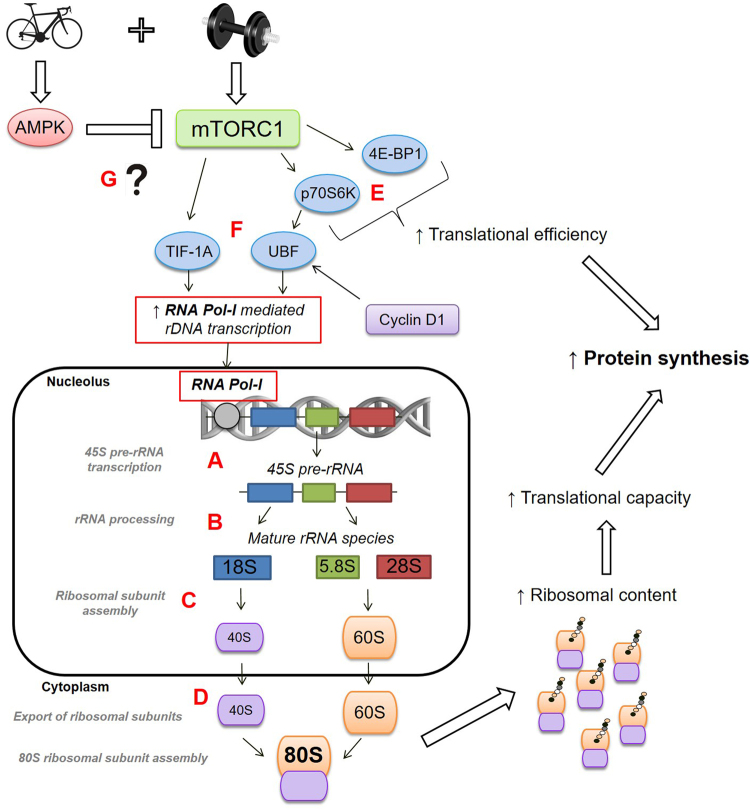
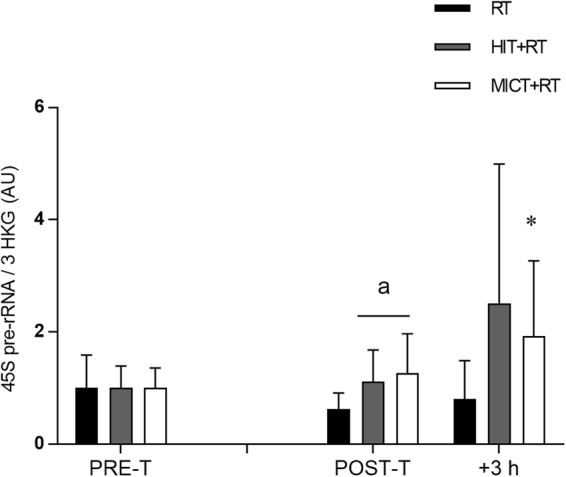
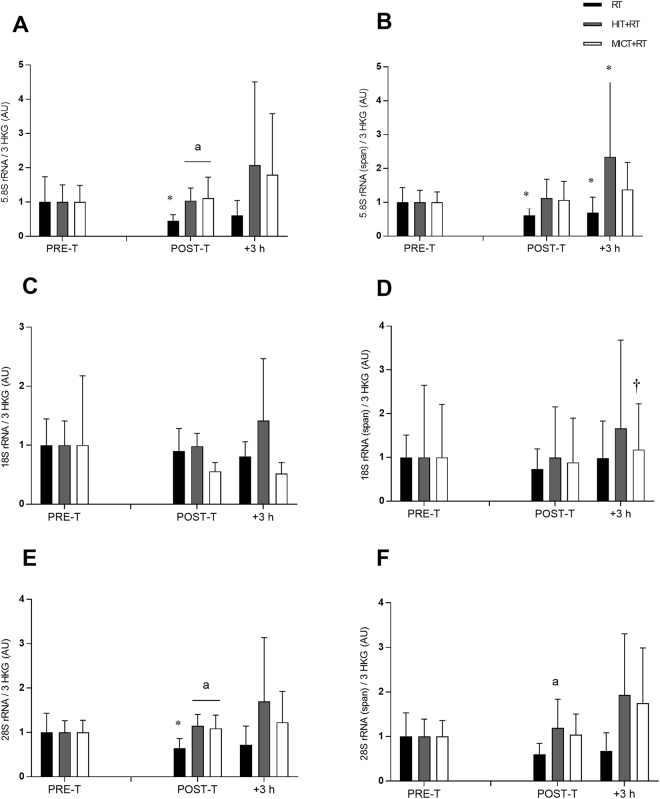
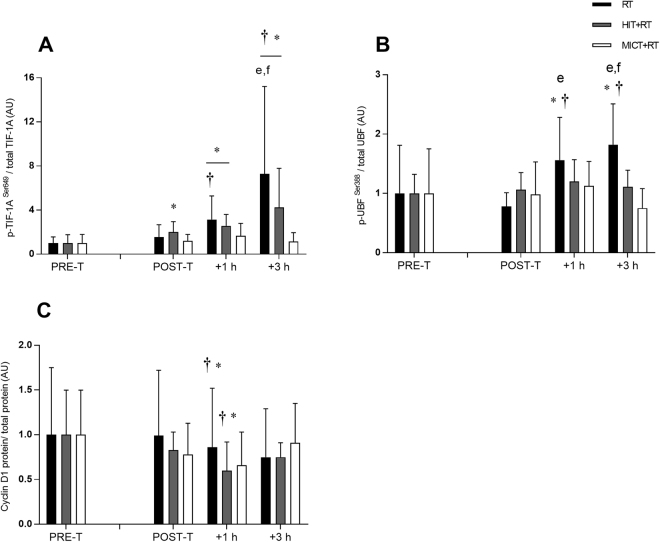
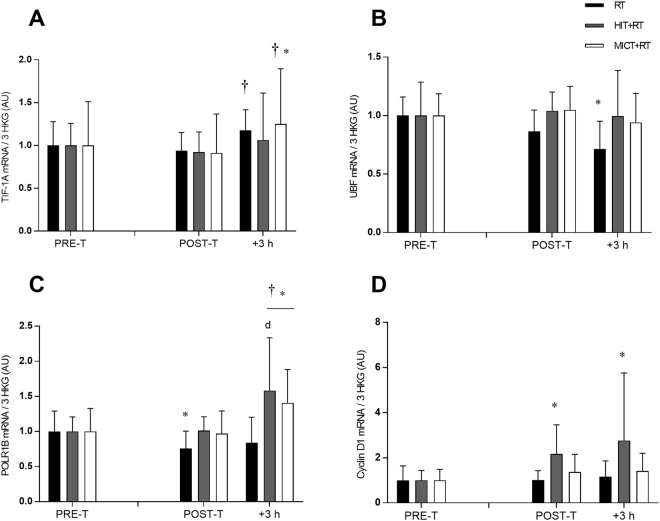
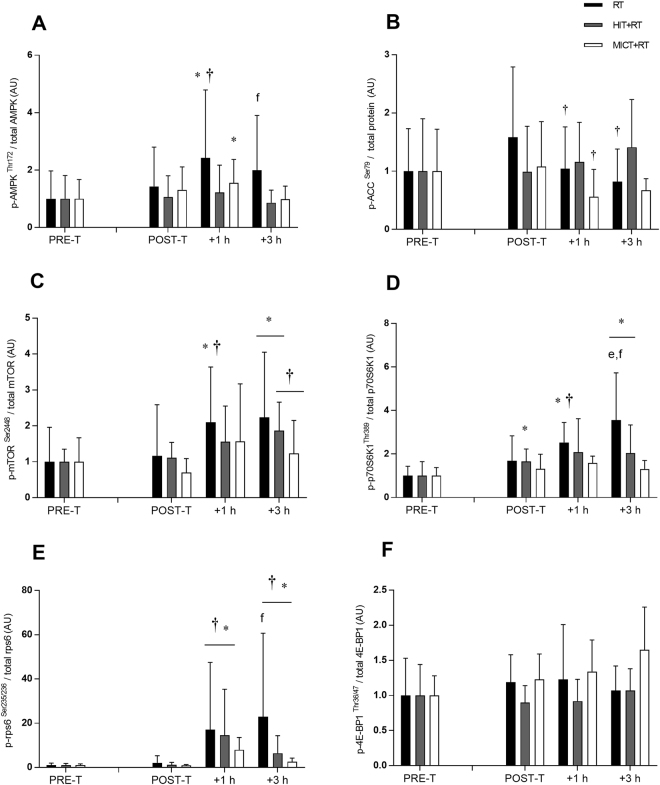
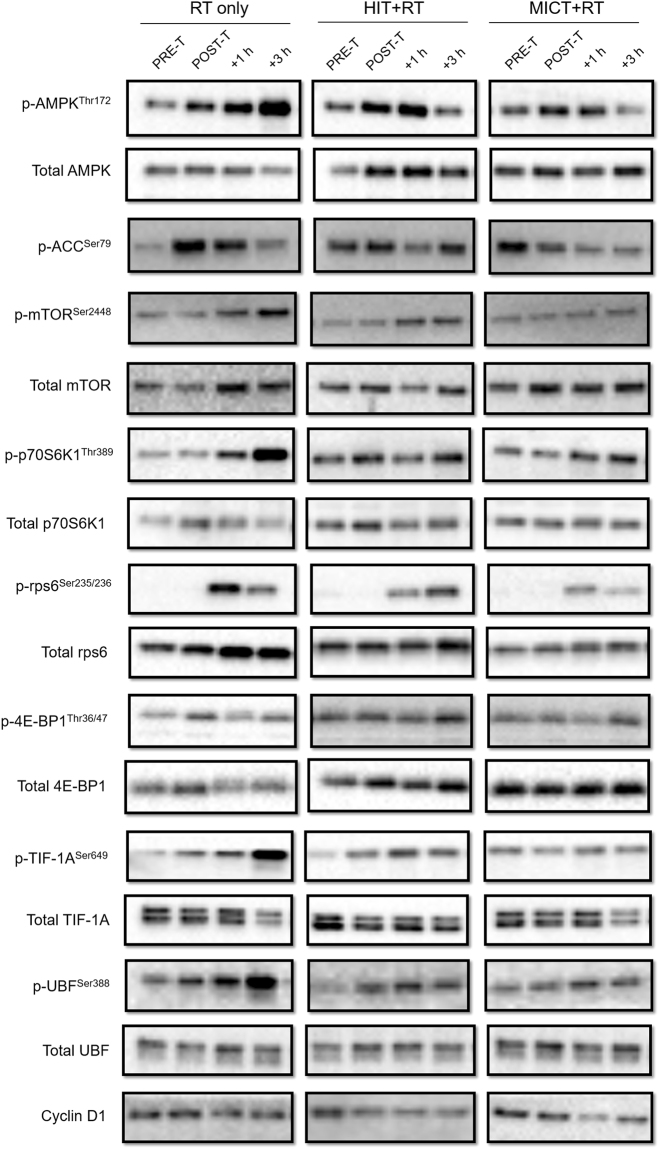
Combining endurance training with resistance training (RT) may attenuate skeletal muscle hypertrophic adaptation versus RT alone; however, the underlying mechanisms are unclear. We investigated changes in markers of ribosome biogenesis, a process linked with skeletal muscle hypertrophy, following concurrent training versus RT alone. Twenty-three males underwent eight weeks of RT, either performed alone (RT group, n = 8), or combined with either high-intensity interval training (HIT+RT group, n = 8), or moderate-intensity continuous training (MICT+RT group, n = 7). Muscle samples ( vastus lateralis) were obtained before training, and immediately before, 1 h and 3 h after the final training session. Training-induced changes in basal expression of the 45S ribosomal RNA (rRNA) precursor (45S pre-rRNA), and 5.8S and 28S mature rRNAs, were greater with concurrent training versus RT. However, during the final training session, RT further increased both mTORC1 (p70S6K1 and rps6 phosphorylation) and 45S pre-rRNA transcription-related signalling (TIF-1A and UBF phosphorylation) versus concurrent training. These data suggest that when performed in a training-accustomed state, RT induces further increases mTORC1 and ribosome biogenesis-related signalling in human skeletal muscle versus concurrent training; however, changes in ribosome biogenesis markers were more favourable following a period of short-term concurrent training versus RT performed alone.
Overview
The claims and statistics of this paper haven’t been checked yet.
Free: it reads the open-access text and checks the first 5 claims that cite a source we can check. Create a free account to check every claim.
Integrity signals
Registry
Cites
Statistics
Figures
Verification
Claims the paper makes
The claims and statistics of this paper haven’t been checked yet.
Free: it reads the open-access text and checks the first 5 claims that cite a source we can check. Create a free account to check every claim.
Claims other papers make about this one
Each is checked against this paper’s own text: does it say what the citing paper says it does?
The source backs part of the claim, not all of it — or backs it for a different population, condition or comparison.
In the citing paper
“the ribosomal-specific literature reviewed above more directly implicates repeated mechanical loading, recoverable training volume, training continuity, blood-flow restriction under appropriate conditions, and the timing of concurrent endurance exercise as practical modulators of ribosome-related outcomes [35,141,155,157]”
From Ribosome Biogenesis as a Putative Bottleneck to Skeletal Muscle Hypertrophy: Mechanisms, Human Evidence, and Practical Modulators (2026) · cites this paper as [157]
Experimental — accuracy not yet measuredThe source backs part of the claim, not all of it — or backs it for a different population, condition or comparison.
In the citing paper
“evidence suggests that both processes can occur simultaneously (Tang et al., 2006; Fyfe et al., 2016, 2018)”
From Skeletal Muscle Ribosome and Mitochondrial Biogenesis in Response to Different Exercise Training Modalities (2021) · cites this paper as Fyfe et al., 2018
Experimental — accuracy not yet measuredThe source backs part of the claim, not all of it — or backs it for a different population, condition or comparison.
In the citing paper
“Following the training intervention, basal 45S pre-rRNA, 28S rRNA, and 5.8S rRNA expression were greater in the two groups that incorporated high-intensity interval training or moderate-intensity continuous training vs. resistance training alone.”
From Skeletal Muscle Ribosome and Mitochondrial Biogenesis in Response to Different Exercise Training Modalities (2021) · cites this paper as Fyfe et al. (2018)
Experimental — accuracy not yet measuredThe cited source says what the claim attributes to it.
In the citing paper
“concurrent training, where endurance exercise is performed in close temporal proximity to resistance training, can profoundly attenuate elements of the ribosomal signaling response compared with resistance training alone [157]”
From Ribosome Biogenesis as a Putative Bottleneck to Skeletal Muscle Hypertrophy: Mechanisms, Human Evidence, and Practical Modulators (2026) · cites this paper as [157]
The cited source says what the claim attributes to it.
In the citing paper
“Total RNA per mg tissue also increased in the high-intensity interval training + resistance training, or moderate-intensity continuous training + resistance groups by ~20–30%, albeit these increases were not statistically significant.”
From Skeletal Muscle Ribosome and Mitochondrial Biogenesis in Response to Different Exercise Training Modalities (2021) · cites this paper as Fyfe et al. (2018)
Self-check
Percentages, sums and reported differences re-computed from the paper’s own numbers.
The self-check needs the paper’s full text.
Citations
Cites
Analysis of Relative Gene Expression Data Using Real-Time Quantitative PCR and the 2−ΔΔCT Method
Livak, K. J., & Schmittgen, T. D. (2001) · Methods · doi:10.1006/meth.2001.1262 · Cited by 180,860
Vandesompele, J., De Preter, K., Pattyn, F., Poppe, B., Van Roy, N., De Paepe, A., & Speleman, F. (2002) · Genome Biology · doi:10.1186/gb-2002-3-7-research0034 · Cited by 20,038
Progressive Statistics for Studies in Sports Medicine and Exercise Science
HOPKINS, W. G., MARSHALL, S. W., BATTERHAM, A. M., & HANIN, J. (2009) · Medicine & Science in Sports & Exercise · doi:10.1249/mss.0b013e31818cb278 · Cited by 9,128 · cited 3×
“To quantify the magnitude of within-and between-group differences for dependent variables, a magnitude-based approach to inferences using the standardised difference (effect size, ES) was used 62 .”
MethodInfluential(1992) · Applied Ergonomics · doi:10.1016/0003-6870(92)90338-v · Cited by 7,112
Mutation of the mouse klotho gene leads to a syndrome resembling ageing
Kuro-o, M., Matsumura, Y., Aizawa, H., Kawaguchi, H., Suga, T., Utsugi, T., Ohyama, Y., Kurabayashi, M., Kaname, T., Kume, E., et al. (1997) · Nature · doi:10.1038/36285 · Cited by 3,837
Identification of ubiquitin ligases required for skeletal muscle atrophy.
Bodine, S. C., Latres, E., Baumhueter, S., Lai, V. K.-M., Nunez, L., Clarke, B. A., Poueymirou, W. T., Panaro, F. J., Na, E., Dharmarajan, K., et al. (2001) · Science · doi:10.1126/science.1065874 · Cited by 3,521
Bodine, S. C., Stitt, T. N., Gonzalez, M., Kline, W. O., Stover, G. L., Bauerlein, R., Zlotchenko, E., Scrimgeour, A., Lawrence, J. C., Glass, D. J., et al. (2001) · Nature Cell Biology · doi:10.1038/ncb1101-1014 · Cited by 2,752
Making Meaningful Inferences About Magnitudes
Batterham, A. M., & Hopkins, W. G. (2006) · International Journal of Sports Physiology and Performance · doi:10.1123/ijspp.1.1.50 · Cited by 2,183
Kraemer, W. J., Patton, J. F., Gordon, S. E., Harman, E. A., Deschenes, M. R., Reynolds, K., Newton, R. U., Triplett, N. T., & Dziados, J. E. (1995) · Journal of Applied Physiology · doi:10.1152/jappl.1995.78.3.976 · Cited by 782 · cited 3×
“Subsequent work in humans 9–18 has focused on the hypothesis that attenuated muscle hypertrophy with concurrent training 2,4,19 may be explained by AMPK-mediated inhibition of the mTORC1 pathway.”
BackgroundResultInterference of strength development by simultaneously training for strength and endurance.
Hickson, R. C. (1980) · European Journal of Applied Physiology and Occupational Physiology · doi:10.1007/bf00421333 · Cited by 753 · cited 1×
“Consistent with previous reports of interference to strength development with concurrent training 3,19 , the magnitude of this change was greater for RT vs. both HIT + RT and MICT + RT (see Figure 1.”
Method
Research works printed but not linked: 1
- Bergstrom J Muscle electrolytes in man Scand J Clin Lab Invest 1962 68 1 110
Cited by
Egan, B., & Sharples, A. P. (2023) · Physiological Reviews · doi:10.1152/physrev.00054.2021 · Cited by 278
Roberts, M. D., McCarthy, J. J., Hornberger, T. A., Phillips, S. M., Mackey, A. L., Nader, G. A., Boppart, M. D., Kavazis, A. N., Reidy, P. T., Ogasawara, R., et al. (2023) · Physiological Reviews · doi:10.1152/physrev.00039.2022 · Cited by 214
Regulation of ribosome biogenesis in skeletal muscle hypertrophy
Figueiredo, V. C., & McCarthy, J. J. (2019) · Physiology · doi:10.1152/physiol.00034.2018 · Cited by 140
Ubiquitin-Proteasome Pathway and Muscle Atrophy
Khalil, R. M. (2018) · Advances in experimental medicine and biology · doi:10.1007/978-981-13-1435-3_10 · Cited by 123
Joanisse, S., Lim, C., McKendry, J., Mcleod, J. C., Stokes, T., & Phillips, S. M. (2020) · F1000Research · doi:10.12688/f1000research.21588.1 · Cited by 92
Benefits of higher resistance-training volume are related to ribosome biogenesis
Hammarström, D., Øfsteng, S., Koll, L., Hanestadhaugen, M., Hollan, I., Apró, W., Whist, J. E., Blomstrand, E., Rønnestad, B. R., & Ellefsen, S. (2020) · The Journal of Physiology · doi:10.1113/jp278455 · Cited by 99
“This may also explain differences in expression patterns of pre-rRNA seen in some studies (Figueiredo et al. 2015) but not others (Figueiredo et al. 2016, 2018; Fyfe et al. 2018).”
ResultHodson, N., West, D. W. D., Philp, A., Burd, N. A., & Moore, D. R. (2019) · American Journal of Physiology-Cell Physiology · doi:10.1152/ajpcell.00209.2019 · Cited by 72
Broatch, J. R., Petersen, A. C., & Bishop, D. J. (2018) · Sports Medicine · doi:10.1007/s40279-018-0910-8 · Cited by 90
Self-citationThe skeletal muscle fiber: a mechanically sensitive cell
Olsen, L. A., Nicoll, J. X., & Fry, A. C. (2019) · European Journal of Applied Physiology · doi:10.1007/s00421-018-04061-x · Cited by 83
Fyfe, J. J., & Loenneke, J. P. (2018) · Sports Medicine · doi:10.1007/s40279-017-0812-1 · Cited by 64
Self-citationThe nucleolus, an ally, and an enemy of cancer cells
Stępiński, D. (2018) · Histochemistry and Cell Biology · doi:10.1007/s00418-018-1706-5 · Cited by 75
Petré, H., Hemmingsson, E., Rosdahl, H., & Psilander, N. (2021) · Sports Medicine · doi:10.1007/s40279-021-01426-9 · Cited by 71
Revisiting the roles of protein synthesis during skeletal muscle hypertrophy induced by exercise
Figueiredo, V. C. (2019) · American Journal of Physiology-Regulatory, Integrative and Comparative Physiology · doi:10.1152/ajpregu.00162.2019 · Cited by 59
Mesquita, P. H. C., Vann, C. G., Phillips, S. M., McKendry, J., Young, K. C., Kavazis, A. N., & Roberts, M. D. (2021) · Frontiers in Physiology · doi:10.3389/fphys.2021.725866 · Cited by 62
Lundberg, T. R., Feuerbacher, J. F., Sünkeler, M., & Schumann, M. (2022) · Sports Medicine · doi:10.1007/s40279-022-01688-x · Cited by 62
Motahari Rad, M., Bijeh, N., Attarzadeh Hosseini, S. R., & Raouf Saeb, A. (2023) · Archives of Physiology and Biochemistry · doi:10.1080/13813455.2020.1829649 · Cited by 49
Ribosome biogenesis in skeletal muscle: coordination of transcription and translation
von Walden, F. (2019) · Journal of Applied Physiology · doi:10.1152/japplphysiol.00963.2018 · Cited by 56
Millward, D. J. (2021) · Nutrients · doi:10.3390/nu13030729 · Cited by 49
Petersen, A. C., & Fyfe, J. J. (2021) · Frontiers in Sports and Active Living · doi:10.3389/fspor.2021.660291 · Cited by 46
Self-citationReitzner, S. M., Emanuelsson, E. B., Arif, M., Kaczkowski, B., Kwon, A. T.-J., Mardinoğlu, A., Arner, E., Chapman, M., & Sundberg, C. J. (2023) · Molecular Metabolism · doi:10.1016/j.molmet.2023.101857 · Cited by 44
Solsona, R., Pavlin, L., Bernardi, H., & Sanchez, A. M. J. (2021) · International Journal of Molecular Sciences · doi:10.3390/ijms22052741 · Cited by 43
Shamim, B., Devlin, B. L., Timmins, R. G., Tofari, P., Lee Dow, C., Coffey, V. G., Hawley, J. A., & Camera, D. M. (2018) · Sports Medicine · doi:10.1007/s40279-018-0999-9 · Cited by 32
Spiliopoulou, P., Zaras, N., Methenitis, S., Papadimas, G., Papadopoulos, C., Bogdanis, G. C., & Terzis, G. (2021) · Journal of Strength & Conditioning Research · doi:10.1519/jsc.0000000000003172 · Cited by 36
Contraction‐regulated mTORC1 and protein synthesis: Influence of AMPK and glycogen
Knudsen, J. R., Li, Z., Persson, K. W., Li, J., Henríquez‐Olguín, C., & Jensen, T. E. (2020) · The Journal of Physiology · doi:10.1113/jp279780 · Cited by 38
Exercise and physical activity in cirrhosis: opportunities or perils
Bellar, A., Welch, N., & Dasarathy, S. (2020) · Journal of Applied Physiology · doi:10.1152/japplphysiol.00798.2019 · Cited by 37
Direction of epithelial folding defines impact of mechanical forces on epithelial state
Błoński, S., Aureille, J., Badawi, S., Zaremba, D., Pernet, L., Grichine, A., Fraboulet, S., Korczyk, P. M., Recho, P., Guilluy, C., et al. (2021) · Developmental Cell · doi:10.1016/j.devcel.2021.11.008 · Cited by 30
Chan, A. H., D'Souza, R. F., Beals, J. W., Zeng, N., Prodhan, U., Fanning, A. C., Poppitt, S. D., Li, Z., Burd, N. A., Cameron-Smith, D., et al. (2019) · The Journal of Nutrition · doi:10.1093/jn/nxz099 · Cited by 27
Azar, J. T., Maleki, A. H., Moshari, S., & Razi, M. (2020) · Gene · doi:10.1016/j.gene.2020.144850 · Cited by 25
Gharahdaghi, N., Rudrappa, S. S., Brook, M. S., Farrash, W. F., IDRIS, I. R., Aziz, M. H. A., Kadi, F., Papaioannou, K., Phillips, B. E., Sian, T. S., et al. (2022) · Journal of Cachexia Sarcopenia and Muscle · doi:10.1002/jcsm.12843 · Cited by 23
Ruff, Z. D. V., Miller, M. J., Moro, T., Reidy, P. T., Ebert, S. M., Volpi, E., Adams, C. M., & Rasmussen, B. B. (2025) · GeroScience · doi:10.1007/s11357-025-01564-2 · Cited by 22
Mesquita, P. H. C., Godwin, J. S., Ruple, B. A., Sexton, C. L., McIntosh, M. C., Mueller, B. J., Osburn, S. C., Mobley, C. B., Libardi, C. A., Young, K. C., et al. (2023) · The Journal of Physiology · doi:10.1113/jp284822 · Cited by 22
Wu, Q., Hong, J., Wang, Z., Hu, J., Chen, R., Hu, Z., Li, B., Hu, X., Zhang, Z., & Ruan, Y. (2019) · Oxidative Medicine and Cellular Longevity · doi:10.1155/2019/7064319 · Cited by 22
Cui, X., Zhang, Y., Wang, Z., Yu, J., Kong, Z., & Ružić, L. (2019) · Experimental Physiology · doi:10.1113/ep087601 · Cited by 22
Early accentuated muscle hypertrophy is strongly associated with myonuclear accretion
Lundberg, T. R., Martínez-Aranda, L. M., Sanz, G., Hansson, B., von Walden, F., Tesch, P. A., & Fernandez-Gonzalo, R. (2020) · American Journal of Physiology-Regulatory, Integrative and Comparative Physiology · doi:10.1152/ajpregu.00061.2020 · Cited by 19
The Plateau in Muscle Growth with Resistance Training: An Exploration of Possible Mechanisms
Kataoka, R., Hammert, W. B., Yamada, Y., Song, J. S., Seffrin, A., Kang, A., Spitz, R. W., Wong, V. H. Y., & Loenneke, J. P. (2023) · Sports Medicine · doi:10.1007/s40279-023-01932-y · Cited by 18
Chapman, S., Chung, H. C., Rawcliffe, A. J., Izard, R., Smith, L., & Roberts, J. D. (2021) · Nutrients · doi:10.3390/nu13051416 · Cited by 17
Post-natal muscle growth and protein turnover: a narrative review of current understanding
Millward, D. J. (2023) · Nutrition Research Reviews · doi:10.1017/s0954422423000124 · Cited by 17
Hansson, B., Olsen, L. A., Nicoll, J. X., von Walden, F., Melin, M., Strömberg, A., Rullman, E., Gustafsson, T. P., Fry, A. C., Fernandez‐Gonzalo, R., et al. (2019) · American Journal of Physiology-Regulatory, Integrative and Comparative Physiology · doi:10.1152/ajpregu.00022.2019 · Cited by 15
Rad, M. M., Bijeh, N., Hosseini, S. R. A., & Saeb, A. R. (2021) · Journal of Advances in Medical and Biomedical Research · doi:10.30699/jambs.29.134.125 · Cited by 14
Lee, M. J.-C., Caruana, N. J., Saner, N. J., Kuang, J., Stokes, T., Mcleod, J. C., Oikawa, S. Y., Bishop, D. J., Bartlett, J. D., & Phillips, S. M. (2023) · The FASEB Journal · doi:10.1096/fj.202302024r · Cited by 13
Self-citationMonserdà-Vilaró, A., Balsalobre‐Fernández, C., Hoffman, J. R., Alix‐Fages, C., & Sáiz, S. L. J. (2022) · The Journal of Strength and Conditioning Research · doi:10.1519/jsc.0000000000004304 · Cited by 11
Reduced Physical Activity Alters the Leucine-Stimulated Translatome in Aged Skeletal Muscle
Mahmassani, Z. S., McKenzie, A. I., Petrocelli, J. J., de Hart, N. M. M. P., Fix, D. K., Kelly, J. J., Baird, L. M., Howard, M. T., & Drummond, M. J. (2021) · The Journals of Gerontology Series A · doi:10.1093/gerona/glab077 · Cited by 11
Shamim, B., Camera, D. M., & Whitfield, J. (2021) · Frontiers in Physiology · doi:10.3389/fphys.2021.625044 · Cited by 8
“…to resistance training undertaken in isolation (Hickson, 1980; Craig et al., 1991; Hennessy and Watson, 1994; Kraemer et al., 1995; Dolezal and Potteiger, 1998; Bell et al., 2000; Häkkinen et al., 2003; Mikkola et al., 2012; Fyfe et al., 2016, 2018) and is referred to as the ‘interference effect.’”
BackgroundRe-organization of nucleolar architecture in myogenic differentiation
Miyake, T., & McDermott, J. C. (2023) · Journal of Cell Science · doi:10.1242/jcs.260496 · Cited by 8
Brown, A., Parise, G., Thomas, A. C. Q., Ng, S. Y., McGlory, C., Phillips, S. M., Kumbhare, D. A., & Joanisse, S. (2024) · Journal of Cellular Physiology · doi:10.1002/jcp.31182 · Cited by 9
Uemichi, K., Shirai, T., Matsuno, R., Iwata, T., Tanimura, R., & Takemasa, T. (2023) · Applied Physiology, Nutrition, and Metabolism · doi:10.1139/apnm-2022-0336 · Cited by 7
Brown, A., Thomas, A. C. Q., Hatt, A. A., McGlory, C., Phillips, S. M., Kumbhare, D. A., Parise, G., & Joanisse, S. (2022) · American Journal of Physiology-Cell Physiology · doi:10.1152/ajpcell.00418.2022 · Cited by 6
Shirai, T., Uemichi, K., Iwai, R., Shinkai, H., Iwata, T., Tanimura, R., Sugiyama, S., & Takemasa, T. (2025) · American Journal of Physiology-Endocrinology and Metabolism · doi:10.1152/ajpendo.00433.2024 · Cited by 7
Godwin, J. S., Telles, G. D., VECHIN, F. C., Conceição, M. S., Ugrinowitsch, C., Roberts, M. D., & Libardi, C. A. (2023) · The Journal of Strength and Conditioning Research · doi:10.1519/jsc.0000000000004550 · Cited by 5
Silva, J. D. N., Filho, J. I. A. B., Acha, B. T., Almeida, F. R. D. C., Batista, E. K. F., Silva, V. R., Bomfim, L. M., Soares, M. B. P., Bezerra, D. P., dos Santos, A. G., et al. (2024) · Pharmaceuticals · doi:10.3390/ph17050633 · Cited by 4
Maximizing Adaptations in Concurrent Training: An Umbrella Review of Meta-analyses
Held, S., Wolf, L., Rappelt, L., Bloch, W., Donath, L., Micke, F., Geisler, S., & Isenmann, E. (2026) · Sports Medicine · doi:10.1007/s40279-026-02401-y · Cited by 3
Post-exercise hot-water immersion is not effective for ribosome biogenesis in rat skeletal muscle
Kotani, T., Tamura, Y., Kouzaki, K., Sasaki, K., & Nakazato, K. (2024) · American Journal of Physiology-Regulatory, Integrative and Comparative Physiology · doi:10.1152/ajpregu.00068.2024 · Cited by 3
Molecular Adaptations to Concurrent Strength and Endurance Training
Souza, E. O. D. (2018) · Springer eBooks · doi:10.1007/978-3-319-75547-2_8 · Cited by 3
MoTrPAC Study Group, Katz, D. H., Jin, C. A., Many, G. M., Smith, G. R., Keshishian, H., Clark, N. M., Iyer, G. R., Ahn, C., Lindholm, M. E., et al. (2026) · bioRxiv (Cold Spring Harbor Laboratory) · doi:10.64898/2026.02.27.702183 · Cited by 3
Parastesh, M., Ghahfarrokhi, M. M., Bayatiani, M. R., Abbasi, Y., Pooladi, M., Khalounejad, H., & Nobarı, H. (2025) · BMC Sports Science Medicine and Rehabilitation · doi:10.1186/s13102-025-01379-w · Cited by 2
Kalenta, H., Marchant, E. D., Kilroe, S. P., Maroto, R., May, J. T., Bugay, V., Romsdahl, T. B., Linares, J. J., Hinojosa, M. R., Lai, Z., et al. (2026) · Journal of Applied Physiology · doi:10.1152/japplphysiol.00730.2025 · Cited by 2
Faezi, G., Moghadam, M. S., Shadmehri, S., & Fathalipour, M. (2020) · فصلنامه علوم پزشکی دانشگاه آزاد اسلامی واحد پزشکی تهران · doi:10.29252/iau.30.2.120 · Cited by 2
Evaluation of amino acid transport and protein metabolism in the mammary gland of dairy cattle
Yoder, P. S. (2019) · VTechWorks (Virginia Tech) · Cited by 2
Vandeweerd, J. (2021) · Jyväskylä University Digital Archive (University of Jyväskylä) · Cited by 2
Muñoz López, M., López-Gil, J. F., Ramírez de la piscina Viúdez, X., Baz-Valle, E., & Tornero Aguilera, J. F. (2026) · Cells · doi:10.3390/cells15111041 · Cited by 1
“Furthermore, as established in previous sections, concurrent training, where endurance exercise is performed in close temporal proximity to resistance training, can profoundly attenuate elements of the ribosomal signaling response compared with resistance training alone [157].”
Abd, M. N., Eqabi, J. M. H. A., Alsaedi, H. R. R., & Alfadhli, B. R. H. (2026) · Retos · doi:10.47197/retos.v74.118121 · Cited by 1
From Anecdote to Evidence: Dispelling Myths in Bodybuilding and Physique Sports
Roberts, B. M., Buckner, S. L., Colenso‐Semple, L. M., Conlin, L., Church, D. D., Campbell, B. I., Souza, E. O. D., Gonzalez, A. M., Helms, E. R., Newmire, D. E., et al. (2026) · Strength and conditioning journal · doi:10.1519/ssc.0000000000000937 · Cited by 1
Karimi, K., Roberts, S. C., Carter, N. S., Hofer, S. J., & Karimi, R. (2026) · Amino Acids · doi:10.1007/s00726-026-03512-6 · Cited by 1
Brenmoehl, J., Walz, C., & Hoeflich, A. (2026) · Best Practice & Research Clinical Endocrinology & Metabolism · doi:10.1016/j.beem.2026.102110 · Cited by 1
Baştürk, Z., Kiliç, M., & Embiyaoğlu, N. M. (2022) · Pakistan Journal of Medical and Health Sciences · doi:10.53350/pjmhs22165391 · Cited by 1
Mycoprotein and skeletal muscle anabolism
Monteyne, A. (2021) · Figshare · Cited by 1
Functional and molecular responses to concurrent exercise of the arm extensors
Hansson, B. (2018) · DiVA (Digitala Vetenskapliga Arkivet)
Physiological and Molecular Responses to Concurrent Training in Endurance-Trained Athletes
Eddens, L. (2019) · Northumbria Research Link (Northumbria University)
Sex differences in muscle function and myocellular response to a strenuous military field exercise
Lander, E. (2019) · NVA (Nasjonalt vitenarkiv)
Abbariki, T. N. (2021) · Repository KITopen (Karlsruhe Institute of Technology) · doi:10.5445/ir/1000129002
Aureille, J., Pezet, M., Pernet, L., Mazzega, J., Grichine, A., Guilluy, C., & Dolega, M. E. (2021) · Molecular Biology of the Cell · doi:10.1091/mbc.e20-10-0676
Efeito do volume de treinamento de força sobre a variabilidade da hipertrofia muscular em idosos
Lixandrão, M. E. (2020) · Digital Library of Theses and Dissertations (Universidade de São Paulo) · doi:10.11606/t.39.2020.tde-13052021-150429
Telles, G. D. (2019) · Digital Library of Theses and Dissertations (Universidade de São Paulo) · doi:10.11606/d.39.2019.tde-22102021-122843
Shamim, B., CAMERA, D. M., & Whitfield, J. (2021) · Frontiers in Physiology · doi:10.3389/fphys.2021.736848
Phillips, S. M. (2020) · Faculty Opinions – Post-Publication Peer Review of the Biomedical Literature · doi:10.3410/f.732455726.793571156
Molekulare Anpassungen an kombiniertes Ausdauer- und Krafttraining
Souza, E. O. D. (2023) · Springer eBooks · doi:10.1007/978-3-031-36310-8_8
Metadata
- Authors
- Fyfe, J. J., Bishop, D. J., Bartlett, J. D., Hanson, E. D., Anderson, M. J., Garnham, A. P., & Stepto, N. K.
- Affiliations
- Deakin University (AU)
- Edith Cowan University (AU)
- Victoria University (AU)
- University of North Carolina at Chapel Hill (US)
- The University of Melbourne (AU)
- Corresponding author
- Fyfe, Jackson J.
- ORCID
- Venue
- Scientific Reports
- Published
- 2018-01-12
- Volume
- 8
- Issue
- 1
- Pages
- 560-560
- ISSN
- 2045-2322 (ISSN-L)
- PMC
- PMC5766515
- OpenAlex
- W2952178653
- Semantic Scholar
- 89bf6b33692cec68c6151661c89184e6d23d58a2
- Cited by
- 69
- References
- 69
- Citations by year
- 2026: 7 · 2025: 2 · 2024: 3 · 2023: 11 · 2022: 6 · 2021: 12 · 2020: 10 · 2019: 11 · 2018: 6
- FWCI
- 5.40
- Type
- journal article
- Language
- en
- Open access
- gold
- doi.org
- Licence
- cc-by
- creativecommons.org/licenses/by/4.0 (tdm)
- creativecommons.org/licenses/by/4.0 (vor)
- Locations
- Scientific Reports (publishedVersion, cc-by)
- PubMed Central (publishedVersion, cc-by)
- PubMed (publishedVersion)
- Victoria University Research Repository (Victoria University) (submittedVersion, cc-by)
- Australasian Journal of Paramedicine (submittedVersion, cc-by)
- DOAJ (DOAJ: Directory of Open Access Journals) (submittedVersion)
- Minerva Access (University of Melbourne) (submittedVersion, cc-by)
- Funders
- Deakin University
- Gran Sasso Science Institute
- Topics
- Health Sciences › Nursing › Nutrition and Dietetics › Muscle metabolism and nutrition
- Life Sciences › Biochemistry, Genetics and Molecular Biology › Molecular Biology › Muscle Physiology and Disorders
- Health Sciences › Medicine › Orthopedics and Sports Medicine › Sports Performance and Training
- Keywords
- resistance training, concurrent training, high-intensity interval training, moderate-intensity continuous training, ribosome biogenesis, mTORC1 signaling, skeletal muscle hypertrophy, UBF, p70S6K1, S6 phosphorylation, vastus lateralis, endurance training
- MeSH terms
- High-Intensity Interval Training, Mechanistic Target of Rapamycin Complex 1, Humans, Male, Ribosomes, RNA, Ribosomal, RNA, Ribosomal, 28S, RNA, Ribosomal, 5.8S, Signal Transduction, Muscle, Skeletal, Resistance Training, Physical Conditioning, Human
About these checks
Registry, retraction, Cites and statistics results are computed, not judged, with one exception: a printed reference that no index lists is read once by a model before it counts as a citation error. Claims are extracted by a model and kept only when their quote appears verbatim in the text; each cited source is then checked, with a model’s help, for whether it says what the claim relies on. Those verdicts can be wrong — read the claim’s quote and the cited source before relying on one.
Statistics and arithmetic are recomputed, not judged.
Confidence bands are shown only for fields calibrated on our annotated test set. None is calibrated yet, so no band is shown.
What counts as a claim ›How we measure confidence ›How we check this ›
Are you an author, or do you see a problem with this page? Request a review
Data sources
Bibliographic data: Semantic Scholar, OpenAlex, Crossref.
Contains information from the Semantic Scholar Academic Graph Datasets, made available under the ODC Attribution License (ODC-BY 1.0).
Semantic Scholar’s data is described in: Kinney, R., et al. (2023). The Semantic Scholar Open Data Platform. arXiv:2301.10140.
