

Enhanced skeletal muscle ribosome biogenesis, yet attenuated mTORC1 and ribosome biogenesis-related signalling, following short-term concurrent versus single-mode resistance training
Open accessPublished version of a preprint
The DOI matches its Crossref record; 70 of the 70 references it cites were found in a registry or an index.
Abstract
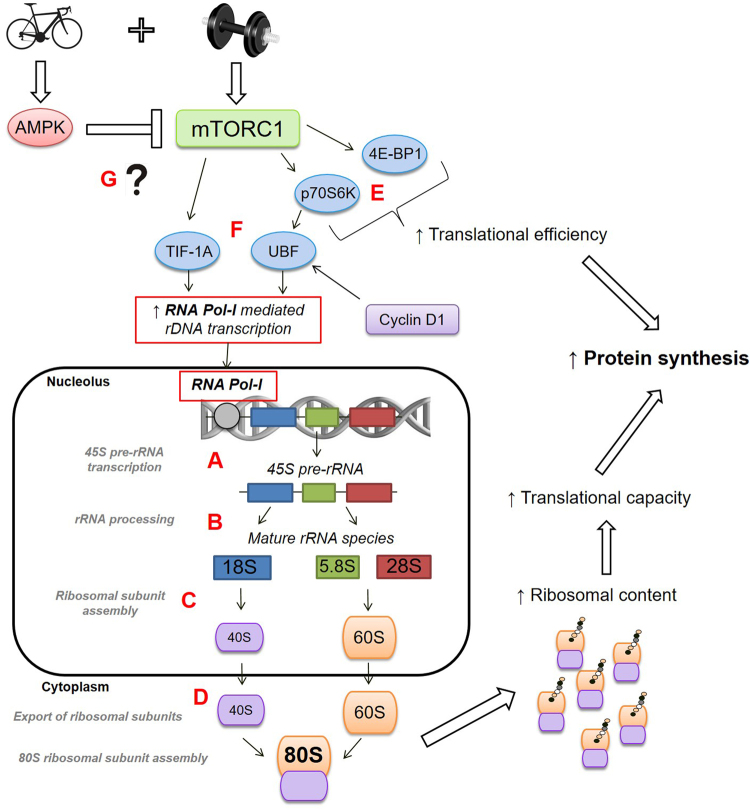
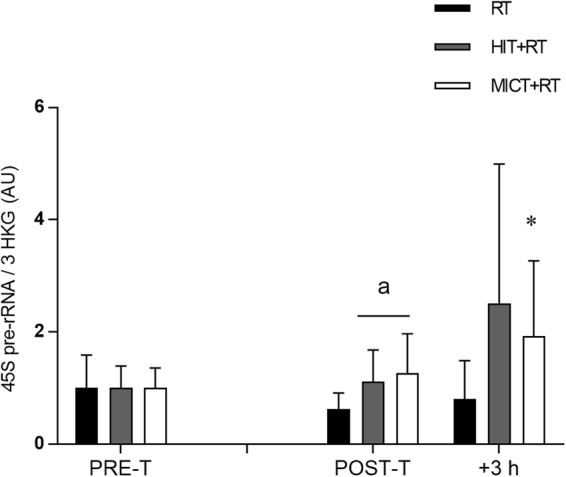
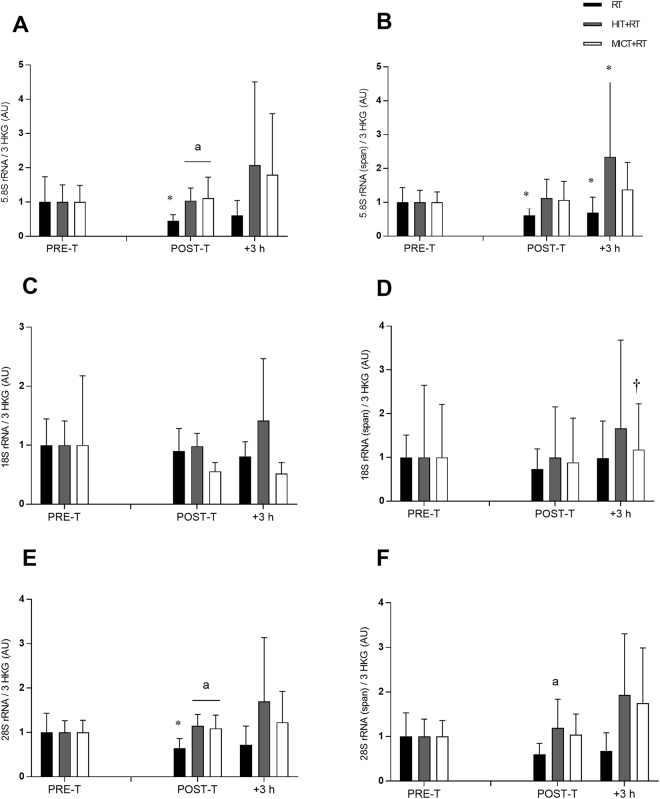
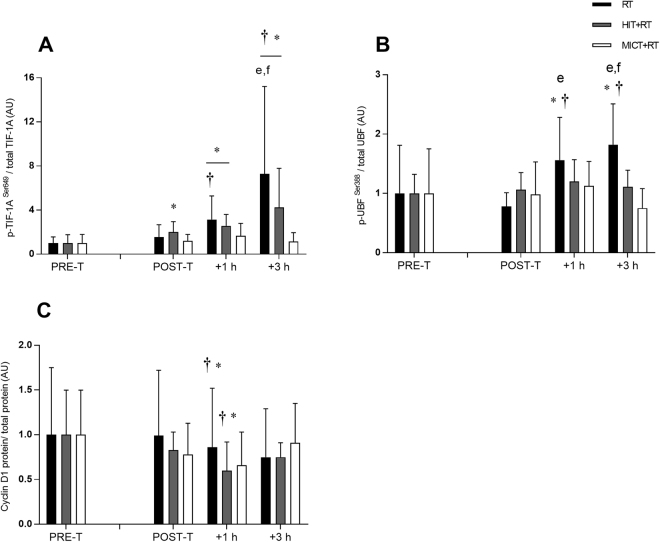
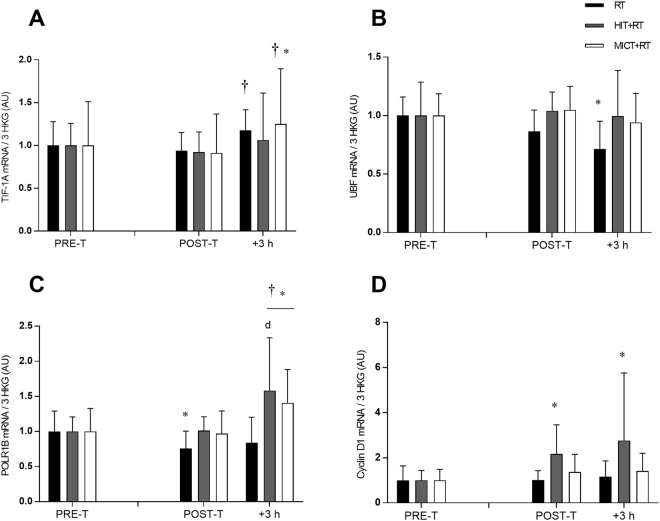
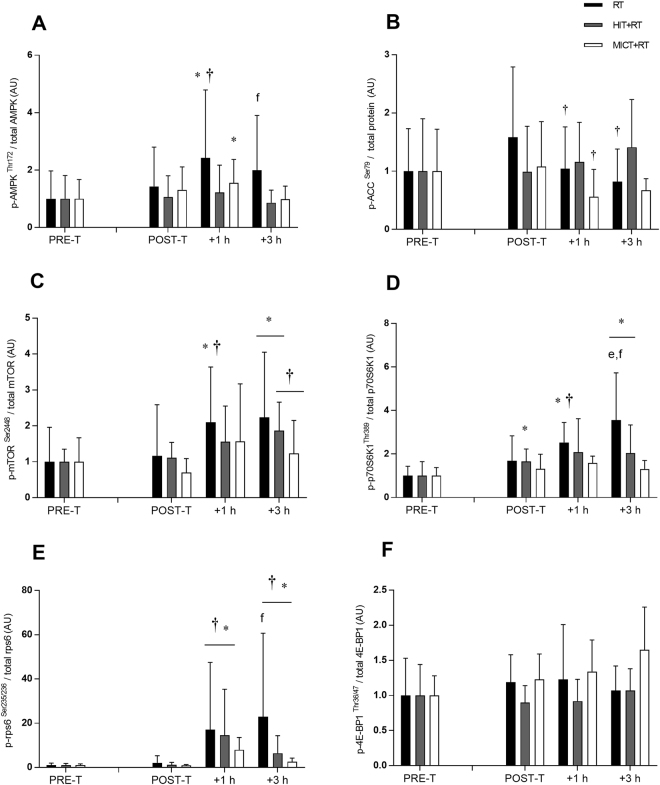
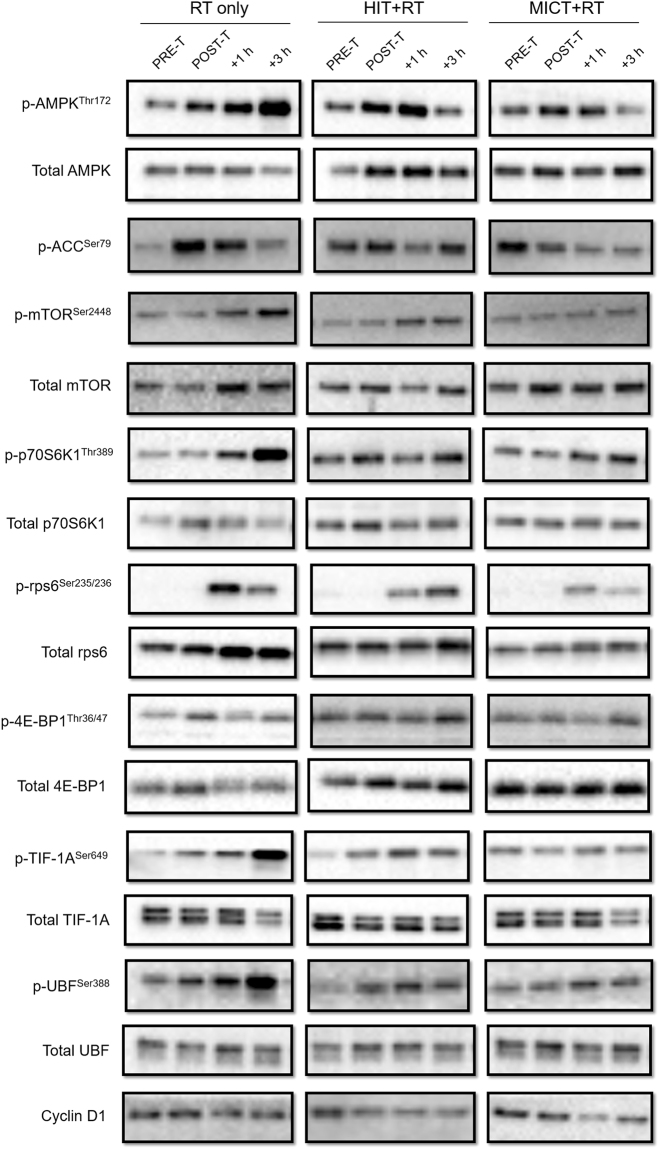
Combining endurance training with resistance training (RT) may attenuate skeletal muscle hypertrophic adaptation versus RT alone; however, the underlying mechanisms are unclear. We investigated changes in markers of ribosome biogenesis, a process linked with skeletal muscle hypertrophy, following concurrent training versus RT alone. Twenty-three males underwent eight weeks of RT, either performed alone (RT group, n = 8), or combined with either high-intensity interval training (HIT+RT group, n = 8), or moderate-intensity continuous training (MICT+RT group, n = 7). Muscle samples ( vastus lateralis) were obtained before training, and immediately before, 1 h and 3 h after the final training session. Training-induced changes in basal expression of the 45S ribosomal RNA (rRNA) precursor (45S pre-rRNA), and 5.8S and 28S mature rRNAs, were greater with concurrent training versus RT. However, during the final training session, RT further increased both mTORC1 (p70S6K1 and rps6 phosphorylation) and 45S pre-rRNA transcription-related signalling (TIF-1A and UBF phosphorylation) versus concurrent training. These data suggest that when performed in a training-accustomed state, RT induces further increases mTORC1 and ribosome biogenesis-related signalling in human skeletal muscle versus concurrent training; however, changes in ribosome biogenesis markers were more favourable following a period of short-term concurrent training versus RT performed alone.
Overview
The claims and statistics of this paper haven’t been checked yet.
Free: it reads the open-access text and checks the first 5 claims that cite a source we can check. Create a free account to check every claim.
Integrity signals
Registry
Cites
Statistics
Figures
Verification
Claims the paper makes
The claims and statistics of this paper haven’t been checked yet.
Free: it reads the open-access text and checks the first 5 claims that cite a source we can check. Create a free account to check every claim.
Claims other papers make about this one
Each is checked against this paper’s own text: does it say what the citing paper says it does?
The source backs part of the claim, not all of it — or backs it for a different population, condition or comparison.
In the citing paper
“the ribosomal-specific literature reviewed above more directly implicates repeated mechanical loading, recoverable training volume, training continuity, blood-flow restriction under appropriate conditions, and the timing of concurrent endurance exercise as practical modulators of ribosome-related outcomes [35,141,155,157]”
From Ribosome Biogenesis as a Putative Bottleneck to Skeletal Muscle Hypertrophy: Mechanisms, Human Evidence, and Practical Modulators (2026) · cites this paper as [157]
Experimental — accuracy not yet measuredThe source backs part of the claim, not all of it — or backs it for a different population, condition or comparison.
In the citing paper
“evidence suggests that both processes can occur simultaneously (Tang et al., 2006; Fyfe et al., 2016, 2018)”
From Skeletal Muscle Ribosome and Mitochondrial Biogenesis in Response to Different Exercise Training Modalities (2021) · cites this paper as Fyfe et al., 2018
Experimental — accuracy not yet measuredThe source backs part of the claim, not all of it — or backs it for a different population, condition or comparison.
In the citing paper
“Following the training intervention, basal 45S pre-rRNA, 28S rRNA, and 5.8S rRNA expression were greater in the two groups that incorporated high-intensity interval training or moderate-intensity continuous training vs. resistance training alone.”
From Skeletal Muscle Ribosome and Mitochondrial Biogenesis in Response to Different Exercise Training Modalities (2021) · cites this paper as Fyfe et al. (2018)
Experimental — accuracy not yet measuredThe cited source says what the claim attributes to it.
In the citing paper
“concurrent training, where endurance exercise is performed in close temporal proximity to resistance training, can profoundly attenuate elements of the ribosomal signaling response compared with resistance training alone [157]”
From Ribosome Biogenesis as a Putative Bottleneck to Skeletal Muscle Hypertrophy: Mechanisms, Human Evidence, and Practical Modulators (2026) · cites this paper as [157]
The cited source says what the claim attributes to it.
In the citing paper
“Total RNA per mg tissue also increased in the high-intensity interval training + resistance training, or moderate-intensity continuous training + resistance groups by ~20–30%, albeit these increases were not statistically significant.”
From Skeletal Muscle Ribosome and Mitochondrial Biogenesis in Response to Different Exercise Training Modalities (2021) · cites this paper as Fyfe et al. (2018)
Self-check
Percentages, sums and reported differences re-computed from the paper’s own numbers.
The self-check needs the paper’s full text.
Citations
Cites
Analysis of Relative Gene Expression Data Using Real-Time Quantitative PCR and the 2−ΔΔCT Method
Livak, K. J., & Schmittgen, T. D. (2001) · Methods · doi:10.1006/meth.2001.1262 · Cited by 180,860
Vandesompele, J., De Preter, K., Pattyn, F., Poppe, B., Van Roy, N., De Paepe, A., & Speleman, F. (2002) · Genome Biology · doi:10.1186/gb-2002-3-7-research0034 · Cited by 20,038
Progressive Statistics for Studies in Sports Medicine and Exercise Science
HOPKINS, W. G., MARSHALL, S. W., BATTERHAM, A. M., & HANIN, J. (2009) · Medicine & Science in Sports & Exercise · doi:10.1249/mss.0b013e31818cb278 · Cited by 9,128 · cited 3×
“To quantify the magnitude of within-and between-group differences for dependent variables, a magnitude-based approach to inferences using the standardised difference (effect size, ES) was used 62 .”
MethodInfluential(1992) · Applied Ergonomics · doi:10.1016/0003-6870(92)90338-v · Cited by 7,112
Mutation of the mouse klotho gene leads to a syndrome resembling ageing
Kuro-o, M., Matsumura, Y., Aizawa, H., Kawaguchi, H., Suga, T., Utsugi, T., Ohyama, Y., Kurabayashi, M., Kaname, T., Kume, E., et al. (1997) · Nature · doi:10.1038/36285 · Cited by 3,837
Identification of ubiquitin ligases required for skeletal muscle atrophy.
Bodine, S. C., Latres, E., Baumhueter, S., Lai, V. K.-M., Nunez, L., Clarke, B. A., Poueymirou, W. T., Panaro, F. J., Na, E., Dharmarajan, K., et al. (2001) · Science · doi:10.1126/science.1065874 · Cited by 3,521
Bodine, S. C., Stitt, T. N., Gonzalez, M., Kline, W. O., Stover, G. L., Bauerlein, R., Zlotchenko, E., Scrimgeour, A., Lawrence, J. C., Glass, D. J., et al. (2001) · Nature Cell Biology · doi:10.1038/ncb1101-1014 · Cited by 2,752
Making Meaningful Inferences About Magnitudes
Batterham, A. M., & Hopkins, W. G. (2006) · International Journal of Sports Physiology and Performance · doi:10.1123/ijspp.1.1.50 · Cited by 2,183
Kraemer, W. J., Patton, J. F., Gordon, S. E., Harman, E. A., Deschenes, M. R., Reynolds, K., Newton, R. U., Triplett, N. T., & Dziados, J. E. (1995) · Journal of Applied Physiology · doi:10.1152/jappl.1995.78.3.976 · Cited by 782 · cited 3×
“Subsequent work in humans 9–18 has focused on the hypothesis that attenuated muscle hypertrophy with concurrent training 2,4,19 may be explained by AMPK-mediated inhibition of the mTORC1 pathway.”
BackgroundResultInterference of strength development by simultaneously training for strength and endurance.
Hickson, R. C. (1980) · European Journal of Applied Physiology and Occupational Physiology · doi:10.1007/bf00421333 · Cited by 753 · cited 1×
“Consistent with previous reports of interference to strength development with concurrent training 3,19 , the magnitude of this change was greater for RT vs. both HIT + RT and MICT + RT (see Figure 1.”
MethodStimulation of de novo pyrimidine synthesis by growth signaling through mTOR and S6K1
Ben-Sahra, I., Howell, J. J., Asara, J. M., & Manning, B. D. (2013) · Science · doi:10.1126/science.1228792 · Cited by 739 · cited 1×
“…synthetase 2, aspartate transcarbamoylase, dihydroorotase) is directly phosphorylated by p70S6K1 and controls the first three steps in de novo pyrimidine synthesis 56 , a necessary process for accommodating the increased demand for RNA and DNA synthesis to support cellular growth.”
BackgroundWilkinson, S. B., Phillips, S. M., Atherton, P. J., Patel, R., Yarasheski, K. E., Tarnopolsky, M. A., & Rennie, M. J. (2008) · The Journal of Physiology · doi:10.1113/jphysiol.2008.153916 · Cited by 628
Wilson, J. M., Marin, P. J., Rhea, M. R., Wilson, S. M., Loenneke, J. P., & Anderson, J. C. (2012) · Journal of Strength and Conditioning Research · doi:10.1519/jsc.0b013e31823a3e2d · Cited by 587
Suction applied to a muscle biopsy maximizes sample size
EVANS, W. J., PHINNEY, S. D., & YOUNG, V. R. (1982) · Medicine & Science in Sports & Exercise · doi:10.1249/00005768-198201000-00018 · Cited by 519
Mayer, C., Zhao, J., Yuan, X., & Grummt, I. (2004) · Genes & Development · doi:10.1101/gad.285504 · Cited by 505
Atherton, P. J., Babraj, J. A., Smith, K., Singh, J., Rennie, M. J., & Wackerhage, H. (2005) · The FASEB Journal · doi:10.1096/fj.04-2179fje · Cited by 475
Goodman, C. A., Mabrey, D. M., Frey, J. W., Miu, M. H., Schmidt, E. K., Pierre, P., & Hornberger, T. A. (2011) · The FASEB Journal · doi:10.1096/fj.10-168799 · Cited by 475
Hannan, K. M., Brandenburger, Y., Jenkins, A., Sharkey, K., Cavanaugh, A., Rothblum, L., Moss, T., Poortinga, G., McArthur, G. A., Pearson, R. B., et al. (2003) · Molecular and Cellular Biology · doi:10.1128/mcb.23.23.8862-8877.2003 · Cited by 460
Drummond, M. J., Fry, C. S., Glynn, E. L., Dreyer, H. C., Dhanani, S., Timmerman, K. L., Volpi, E., & Rasmussen, B. B. (2009) · The Journal of Physiology · doi:10.1113/jphysiol.2008.163816 · Cited by 439
Bell, G. J., Syrotuik, D., Martin, T. P., Burnham, R., & Quinney, H. A. (2000) · European Journal of Applied Physiology · doi:10.1007/s004210050063 · Cited by 411 · cited 2×
“Subsequent work in humans 9–18 has focused on the hypothesis that attenuated muscle hypertrophy with concurrent training 2,4,19 may be explained by AMPK-mediated inhibition of the mTORC1 pathway.”
BackgroundResultThe effects of heavy resistance training and detraining on satellite cells in human skeletal muscles
Kadi, F., Schjerling, P., Andersen, L. L., Charifi, N., Madsen, J. L., Christensen, L. R., & Andersen, J. L. (2004) · The Journal of Physiology · doi:10.1113/jphysiol.2004.065904 · Cited by 363 · cited 2×
“…seen 1 h following a single bout of HIT + RT. Previous work has shown increases in cyclin D1 mRNA during long-term (3 months) resistance training 53 , which may suggest an increase in satellite cell activation and proliferation during the training intervention 53,54 , although direct measures…”
BackgroundConcurrent exercise training: do opposites distract?
Coffey, V. G., & Hawley, J. A. (2017) · The Journal of Physiology · doi:10.1113/jp272270 · Cited by 351 · cited 1×
“…regarding the progression of adaptation with concurrent versus single-mode training, suggesting early adaptation to combined resistance and endurance training may initially be complimentary, whereas longer-term training exacerbates interference to hallmark resistance training adaptations 52 .”
BackgroundFyfe, J. J., Bishop, D. J., & Stepto, N. K. (2014) · Sports Medicine · doi:10.1007/s40279-014-0162-1 · Cited by 347
Self-citationCritical phosphorylation sites for acetyl-CoA carboxylase activity.
Ha, J., Daniel, S., Broyles, S. S., & Kim, K. H. (1994) · Journal of Biological Chemistry · doi:10.1016/s0021-9258(17)31770-2 · Cited by 326
Eukaryotic ribosome biogenesis at a glance
Thomson, E., Ferreira-Cerca, S., & Hurt, E. (2013) · Journal of Cell Science · doi:10.1242/jcs.111948 · Cited by 324
Concurrent Strength and Endurance Training: A Review
Leveritt, M., Abernethy, P. J., Barry, B. K., & Logan, P. A. (1999) · Sports Medicine · doi:10.2165/00007256-199928060-00004 · Cited by 319
Phosphorylation-activity relationships of AMPK and acetyl-CoA carboxylase in muscle
Park, S. H., Gammon, S. R., Knippers, J. D., Paulsen, S. R., Rubink, D. S., & Winder, W. W. (2002) · Journal of Applied Physiology · doi:10.1152/japplphysiol.00071.2002 · Cited by 310
The role of skeletal muscle mTOR in the regulation of mechanical load‐induced growth
Goodman, C. A., Frey, J. W., Mabrey, D. M., Jacobs, B. L., Lincoln, H. C., You, J., & Hornberger, T. A. (2011) · The Journal of Physiology · doi:10.1113/jphysiol.2011.218255 · Cited by 297 · cited 1×
“In addition, attenuated rodent skeletal muscle hypertrophy with ageing 35,42,43 and rapamycin treatment 40 is associated with reduced markers of ribosome biogenesis, suggesting translational capacity is closely linked to the regulation of skeletal muscle mass.”
BackgroundmTORC1 signaling controls multiple steps in ribosome biogenesis
Iadevaia, V., Liu, R., & Proud, C. G. (2014) · Seminars in Cell & Developmental Biology · doi:10.1016/j.semcdb.2014.08.004 · Cited by 248 · cited 5×
“In addition to mediating transient changes in translational efficiency, accumulating evidence suggests mTORC1 also plays a key role in regulating ribosome biogenesis (and therefore translational capacity) in skeletal muscle by regulating all three classes of RNA polymerases (RNA Pol-I to -III) 25 .”
BackgroundInfluentialmTOR associates with TFIIIC, is found at tRNA and 5S rRNA genes, and targets their repressor Maf1
Kantidakis, T., Ramsbottom, B. A., Birch, J. L., Dowding, S. N., & White, R. J. (2010) · Proceedings of the National Academy of Sciences · doi:10.1073/pnas.1005188107 · Cited by 218
Time course of changes in markers of myogenesis in overloaded rat skeletal muscles
Adams, G. R., Haddad, F., & Baldwin, K. M. (1999) · Journal of Applied Physiology · doi:10.1152/jappl.1999.87.5.1705 · Cited by 218
Ribosome biogenesis: Emerging evidence for a central role in the regulation of skeletal muscle mass
Chaillou, T., Kirby, T. J., & McCarthy, J. J. (2014) · Journal of Cellular Physiology · doi:10.1002/jcp.24604 · Cited by 211
Promotion and Regulation of Ribosomal Transcription in Eukaryotes by RNA Polymerase
Moss, T., & Stefanovsky, V. Y. (1995) · Progress in Nucleic Acid Research and Molecular Biology · doi:10.1016/s0079-6603(08)60810-7 · Cited by 206
Brook, M. S., Wilkinson, D. J., Mitchell, W. K., Lund, J. N., Phillips, B. E., Szewczyk, N. J., Greenhaff, P. L., Smith, K., & Atherton, P. J. (2016) · The Journal of Physiology · doi:10.1113/jp272857 · Cited by 204
Cellular and molecular responses to increased skeletal muscle loading after irradiation
Adams, G. R., Caiozzo, V. J., Haddad, F., & Baldwin, K. M. (2002) · American Journal of Physiology-Cell Physiology · doi:10.1152/ajpcell.00173.2002 · Cited by 200
Miyazaki, M., McCarthy, J. J., Fedele, M. J., & Esser, K. A. (2011) · The Journal of Physiology · doi:10.1113/jphysiol.2011.205658 · Cited by 195
Phosphorylation by G1-specific cdk-cyclin complexes activates the nucleolar transcription factor UBF
Voit, R. (1999) · The EMBO Journal · doi:10.1093/emboj/18.7.1891 · Cited by 181
Thomson, D. M., Fick, C. A., & Gordon, S. E. (2008) · Journal of Applied Physiology · doi:10.1152/japplphysiol.00915.2007 · Cited by 153
McConell, G. K., Lee‐Young, R. S., Chen, Z., Stepto, N. K., Huynh, N. N., Stephens, T. J., Canny, B. J., & Kemp, B. E. (2005) · The Journal of Physiology · doi:10.1113/jphysiol.2005.089839 · Cited by 139
Self-citationRibosome biogenesis adaptation in resistance training-induced human skeletal muscle hypertrophy
Figueiredo, V. C., Caldow, M. K., Massie, V., Markworth, J. F., Cameron-Smith, D., & Blazevich, A. J. (2015) · American Journal of Physiology-Endocrinology and Metabolism · doi:10.1152/ajpendo.00050.2015 · Cited by 133
Nader, G. A., von Walden, F., Liu, C., Lindvall, J., Gutmann, L., Pistilli, E. E., & Gordon, P. M. (2014) · Journal of Applied Physiology · doi:10.1152/japplphysiol.01366.2013 · Cited by 129
Voit, R., & Grummt, I. (2001) · Proceedings of the National Academy of Sciences · doi:10.1073/pnas.231071698 · Cited by 125
Coffey, V. G., Jemiolo, B., Edge, J., Garnham, A. P., Trappe, S. W., & Hawley, J. A. (2009) · American Journal of Physiology-Regulatory, Integrative and Comparative Physiology · doi:10.1152/ajpregu.00351.2009 · Cited by 120
Self-citationSystematic method for determining an ideal housekeeping gene for real-time PCR analysis.
Mane, V. P., Heuer, M. A., Hillyer, P., Navarro, M. B., & Rabin, R. L. (2008) · PubMed · Cited by 117
Consecutive bouts of diverse contractile activity alter acute responses in human skeletal muscle
Coffey, V. G., Pilegaard, H., Garnham, A. P., O'Brien, B. J., & Hawley, J. A. (2009) · Journal of Applied Physiology · doi:10.1152/japplphysiol.91221.2008 · Cited by 116
Self-citationDonges, C. E., Burd, N. A., Duffield, R., Smith, G. C., West, D. W. D., Short, M. J., Mackenzie, R., Plank, L. D., Shepherd, P. R., Phillips, S. M., et al. (2012) · Journal of Applied Physiology · doi:10.1152/japplphysiol.00166.2012 · Cited by 114
AMPK-mediated regulation of transcription in skeletal muscle
McGee, S. L., & Hargreaves, M. (2010) · Clinical Science · doi:10.1042/cs20090533 · Cited by 112
Vissing, K., McGee, S. L., Farup, J., Kjølhede, T., Vendelbo, M. H., & Jessen, N. (2013) · Scandinavian Journal of Medicine & Science in Sports · doi:10.1111/j.1600-0838.2011.01395.x · Cited by 111
Interaction between the AMP-Activated Protein Kinase and mTOR Signaling Pathways
KIMBALL, S. R. (2006) · Medicine & Science in Sports & Exercise · doi:10.1249/01.mss.0000233796.16411.13 · Cited by 109
Apró, W., Wang, L., Pontén, M., Blomstrand, E., & Sahlin, K. (2013) · American Journal of Physiology-Endocrinology and Metabolism · doi:10.1152/ajpendo.00091.2013 · Cited by 109
Figueiredo, V. C., Roberts, L. A., Markworth, J. F., Barnett, M. P. G., Coombes, J. S., Raastad, T., Peake, J. M., & Cameron-Smith, D. (2016) · Physiological Reports · doi:10.14814/phy2.12670 · Cited by 104 · cited 1×
“In support of this notion, it was shown that a single session of resistance exercise was sufficient to increase only the expression of rRNA transcripts still bound to the 45S pre-rRNA, and not mature rRNA species, even after 48 h of post-exercise recovery 55 .”
Backgroundvon Walden, F., Casagrande, V., Östlund Farrants, A.-K., & Nader, G. A. (2012) · American Journal of Physiology-Cell Physiology · doi:10.1152/ajpcell.00460.2011 · Cited by 100
Time course of gene expression during mouse skeletal muscle hypertrophy
Chaillou, T., Lee, J. D., England, J. H., Esser, K. A., & McCarthy, J. J. (2013) · Journal of Applied Physiology · doi:10.1152/japplphysiol.00611.2013 · Cited by 97
Joanisse, S., Lim, C., McKendry, J., Mcleod, J. C., Stokes, T., & Phillips, S. M. (2020) · F1000Research · doi:10.12688/f1000research.21588.1 · Cited by 92
Lundberg, T. R., Fernandez-Gonzalo, R., & Tesch, P. A. (2014) · Journal of Applied Physiology · doi:10.1152/japplphysiol.01082.2013 · Cited by 91
Kirby, T. J., Lee, J. D., England, J. H., Chaillou, T., Esser, K. A., & McCarthy, J. J. (2015) · Journal of Applied Physiology · doi:10.1152/japplphysiol.00296.2015 · Cited by 89
Fyfe, J. J., Bartlett, J. D., Hanson, E. D., Stepto, N. K., & Bishop, D. J. (2016) · Frontiers in Physiology · doi:10.3389/fphys.2016.00487 · Cited by 88
Self-citationFyfe, J. J., Bishop, D. J., Zacharewicz, E., Russell, A. P., & Stepto, N. K. (2016) · American Journal of Physiology-Regulatory, Integrative and Comparative Physiology · doi:10.1152/ajpregu.00479.2015 · Cited by 87
Self-citationAerobic Exercise Alters Skeletal Muscle Molecular Responses to Resistance Exercise
LUNDBERG, T. R., FERNANDEZ-GONZALO, R., GUSTAFSSON, T., & TESCH, P. A. (2012) · Medicine & Science in Sports & Exercise · doi:10.1249/mss.0b013e318256fbe8 · Cited by 86
The skeletal muscle fiber: a mechanically sensitive cell
Olsen, L. A., Nicoll, J. X., & Fry, A. C. (2019) · European Journal of Applied Physiology · doi:10.1007/s00421-018-04061-x · Cited by 83
Apró, W., Moberg, M., Hamilton, D. L., Ekblom, B., van Hall, G., Holmberg, H.-C., & Blomstrand, E. (2015) · American Journal of Physiology-Endocrinology and Metabolism · doi:10.1152/ajpendo.00486.2014 · Cited by 82 · cited 6×
“…muscle hypertrophy and ribosome bio-genesis 24,33,34 , studies investigating molecular interference following concurrent exercise in human skeletal muscle have only measured transient ( 6 h) post-exercise changes in translational efficiency (as indexed by mTORC1 signalling) and MPS 9–18 .”
BackgroundInfluentialThe effects of age and resistance loading on skeletal muscle ribosome biogenesis
Stec, M. J., Mayhew, D. L., & Bamman, M. M. (2015) · Journal of Applied Physiology · doi:10.1152/japplphysiol.00489.2015 · Cited by 80 · cited 2×
“In addition, attenuated rodent skeletal muscle hypertrophy with ageing 35,42,43 and rapamycin treatment 40 is associated with reduced markers of ribosome biogenesis, suggesting translational capacity is closely linked to the regulation of skeletal muscle mass.”
BackgroundHaddad, F., Baldwin, K. M., & Tesch, P. A. (2005) · Journal of Applied Physiology · doi:10.1152/japplphysiol.00553.2004 · Cited by 72
Hodson, N., West, D. W. D., Philp, A., Burd, N. A., & Moore, D. R. (2019) · American Journal of Physiology-Cell Physiology · doi:10.1152/ajpcell.00209.2019 · Cited by 72
Fernandez‐Gonzalo, R., Lundberg, T. R., & Tesch, P. A. (2013) · Acta Physiologica · doi:10.1111/apha.12174 · Cited by 69
Nakada, S., Ogasawara, R., Kawada, S., Maekawa, T., & Ishii, N. (2016) · PLOS ONE · doi:10.1371/journal.pone.0147284 · Cited by 64 · cited 1×
“…robust increases in total RNA content concomitantly with rodent skeletal muscle hypertrophy typically employ supraphysiological methods for inducing muscle hypertrophy, such as synergist ablation 36,39,46,47 , a stimulus that is clearly not replicated by resistance training in human models.”
BackgroundPugh, J. K., Faulkner, S. H., Jackson, A. P., King, J. A., & Nimmo, M. A. (2015) · Physiological Reports · doi:10.14814/phy2.12364 · Cited by 63
Carrithers, J. A., Carroll, C. C., Coker, R. H., Sullivan, D. H., & Trappe, T. A. (2007) · PubMed · Cited by 45
Hypoxia transiently affects skeletal muscle hypertrophy in a functional overload model
Chaillou, T., Koulmann, N., Simler, N., Meunier, A., Serrurier, B., Chapot, R., Peinnequin, A., Beaudry, M., & Bigard, X. (2012) · American Journal of Physiology-Regulatory, Integrative and Comparative Physiology · doi:10.1152/ajpregu.00262.2011 · Cited by 43
Wu, Q., Hong, J., Wang, Z., Hu, J., Chen, R., Hu, Z., Li, B., Hu, X., Zhang, Z., & Ruan, Y. (2019) · Oxidative Medicine and Cellular Longevity · doi:10.1155/2019/7064319 · Cited by 22
Research works printed but not linked: 1
- Bergstrom J Muscle electrolytes in man Scand J Clin Lab Invest 1962 68 1 110
Cited by
Egan, B., & Sharples, A. P. (2023) · Physiological Reviews · doi:10.1152/physrev.00054.2021 · Cited by 278
Roberts, M. D., McCarthy, J. J., Hornberger, T. A., Phillips, S. M., Mackey, A. L., Nader, G. A., Boppart, M. D., Kavazis, A. N., Reidy, P. T., Ogasawara, R., et al. (2023) · Physiological Reviews · doi:10.1152/physrev.00039.2022 · Cited by 214
Regulation of ribosome biogenesis in skeletal muscle hypertrophy
Figueiredo, V. C., & McCarthy, J. J. (2019) · Physiology · doi:10.1152/physiol.00034.2018 · Cited by 140
Ubiquitin-Proteasome Pathway and Muscle Atrophy
Khalil, R. M. (2018) · Advances in experimental medicine and biology · doi:10.1007/978-981-13-1435-3_10 · Cited by 123
Joanisse, S., Lim, C., McKendry, J., Mcleod, J. C., Stokes, T., & Phillips, S. M. (2020) · F1000Research · doi:10.12688/f1000research.21588.1 · Cited by 92
Metadata
- Authors
- Fyfe, J. J., Bishop, D. J., Bartlett, J. D., Hanson, E. D., Anderson, M. J., Garnham, A. P., & Stepto, N. K.
- Affiliations
- Deakin University (AU)
- Edith Cowan University (AU)
- Victoria University (AU)
- University of North Carolina at Chapel Hill (US)
- The University of Melbourne (AU)
- Corresponding author
- Fyfe, Jackson J.
- ORCID
- Venue
- Scientific Reports
- Published
- 2018-01-12
- Volume
- 8
- Issue
- 1
- Pages
- 560-560
- ISSN
- 2045-2322 (ISSN-L)
- PMC
- PMC5766515
- OpenAlex
- W2952178653
- Cited by
- 69
- References
- 69
- Citations by year
- 2026: 7 · 2025: 2 · 2024: 3 · 2023: 11 · 2022: 6 · 2021: 12 · 2020: 10 · 2019: 11 · 2018: 6
- FWCI
- 5.40
- Type
- journal article
- Language
- en
- Open access
- gold
- doi.org
- Licence
- cc-by
- creativecommons.org/licenses/by/4.0 (tdm)
- creativecommons.org/licenses/by/4.0 (vor)
- Locations
- Scientific Reports (publishedVersion, cc-by)
- PubMed Central (publishedVersion, cc-by)
- PubMed (publishedVersion)
- Victoria University Research Repository (Victoria University) (submittedVersion, cc-by)
- Australasian Journal of Paramedicine (submittedVersion, cc-by)
- DOAJ (DOAJ: Directory of Open Access Journals) (submittedVersion)
- Minerva Access (University of Melbourne) (submittedVersion, cc-by)
- Funders
- Deakin University
- Gran Sasso Science Institute
- Topics
- Health Sciences › Nursing › Nutrition and Dietetics › Muscle metabolism and nutrition
- Life Sciences › Biochemistry, Genetics and Molecular Biology › Molecular Biology › Muscle Physiology and Disorders
- Health Sciences › Medicine › Orthopedics and Sports Medicine › Sports Performance and Training
- Keywords
- resistance training, concurrent training, high-intensity interval training, moderate-intensity continuous training, ribosome biogenesis, mTORC1 signaling, skeletal muscle hypertrophy, UBF, p70S6K1, S6 phosphorylation, vastus lateralis, endurance training
- MeSH terms
- High-Intensity Interval Training, Mechanistic Target of Rapamycin Complex 1, Humans, Male, Ribosomes, RNA, Ribosomal, RNA, Ribosomal, 28S, RNA, Ribosomal, 5.8S, Signal Transduction, Muscle, Skeletal, Resistance Training, Physical Conditioning, Human
About these checks
Registry, retraction, Cites and statistics results are computed, not judged, with one exception: a printed reference that no index lists is read once by a model before it counts as a citation error. Claims are extracted by a model and kept only when their quote appears verbatim in the text; each cited source is then checked, with a model’s help, for whether it says what the claim relies on. Those verdicts can be wrong — read the claim’s quote and the cited source before relying on one.
Statistics and arithmetic are recomputed, not judged.
Confidence bands are shown only for fields calibrated on our annotated test set. None is calibrated yet, so no band is shown.
What counts as a claim ›How we measure confidence ›How we check this ›
Are you an author, or do you see a problem with this page? Request a review
Data sources
Bibliographic data: Semantic Scholar, OpenAlex, Crossref.
Contains information from the Semantic Scholar Academic Graph Datasets, made available under the ODC Attribution License (ODC-BY 1.0).
Semantic Scholar’s data is described in: Kinney, R., et al. (2023). The Semantic Scholar Open Data Platform. arXiv:2301.10140.
