

Klebsiella oxytoca expands in cancer cachexia and acts as a gut pathobiont contributing to intestinal dysfunction
Open accessThe DOI matches its Crossref record; 50 of the 50 references it cites were found in a registry or an index.
Abstract
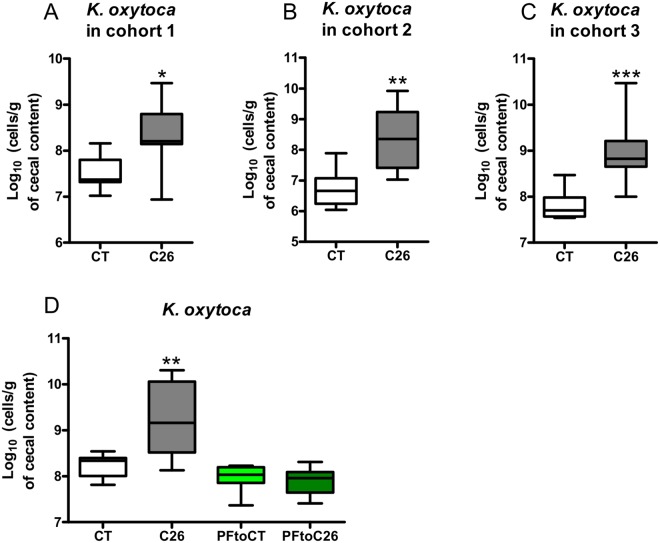
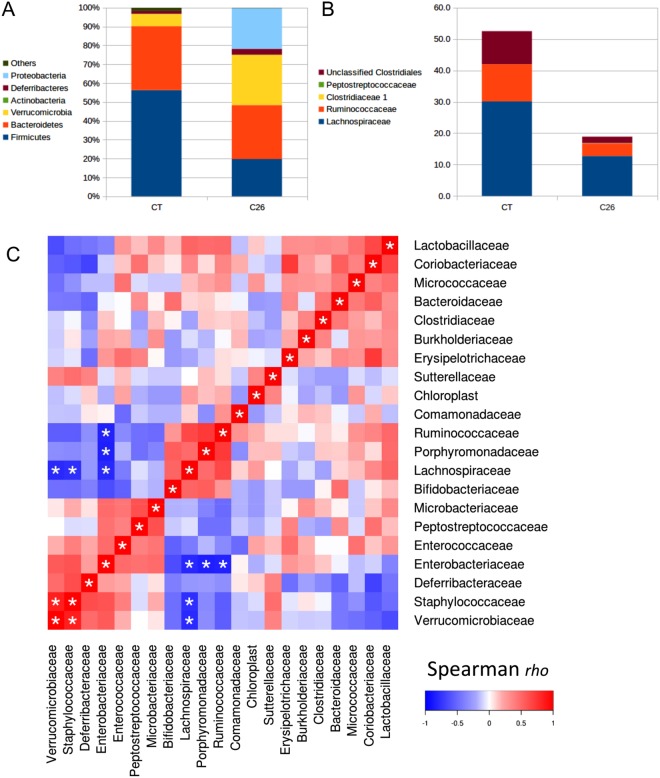
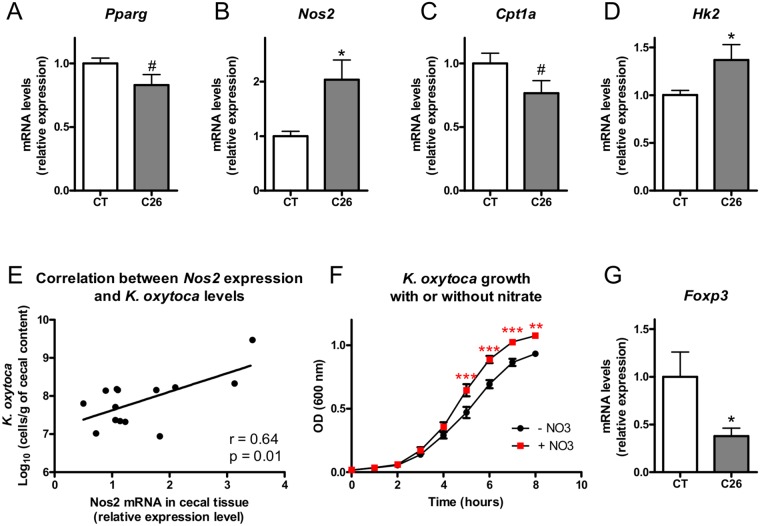
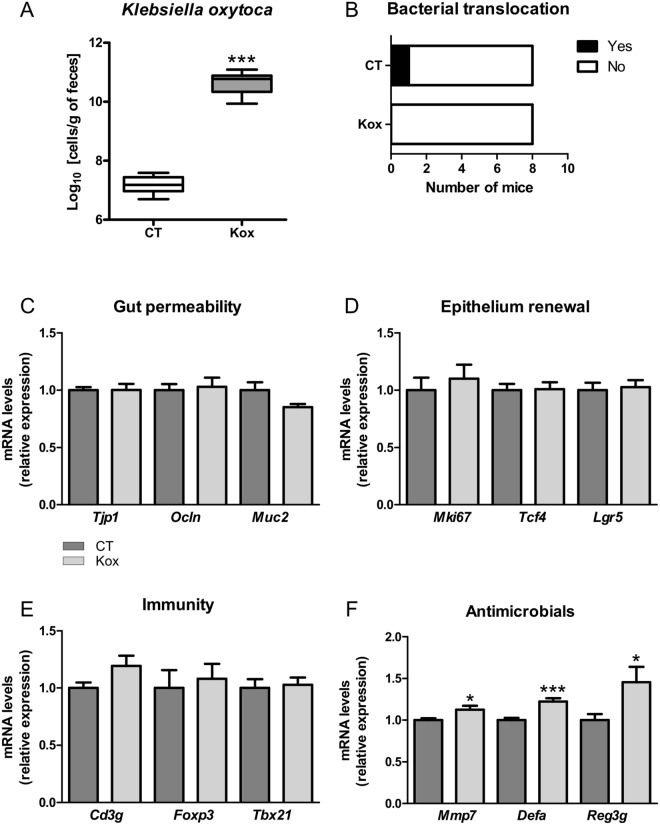
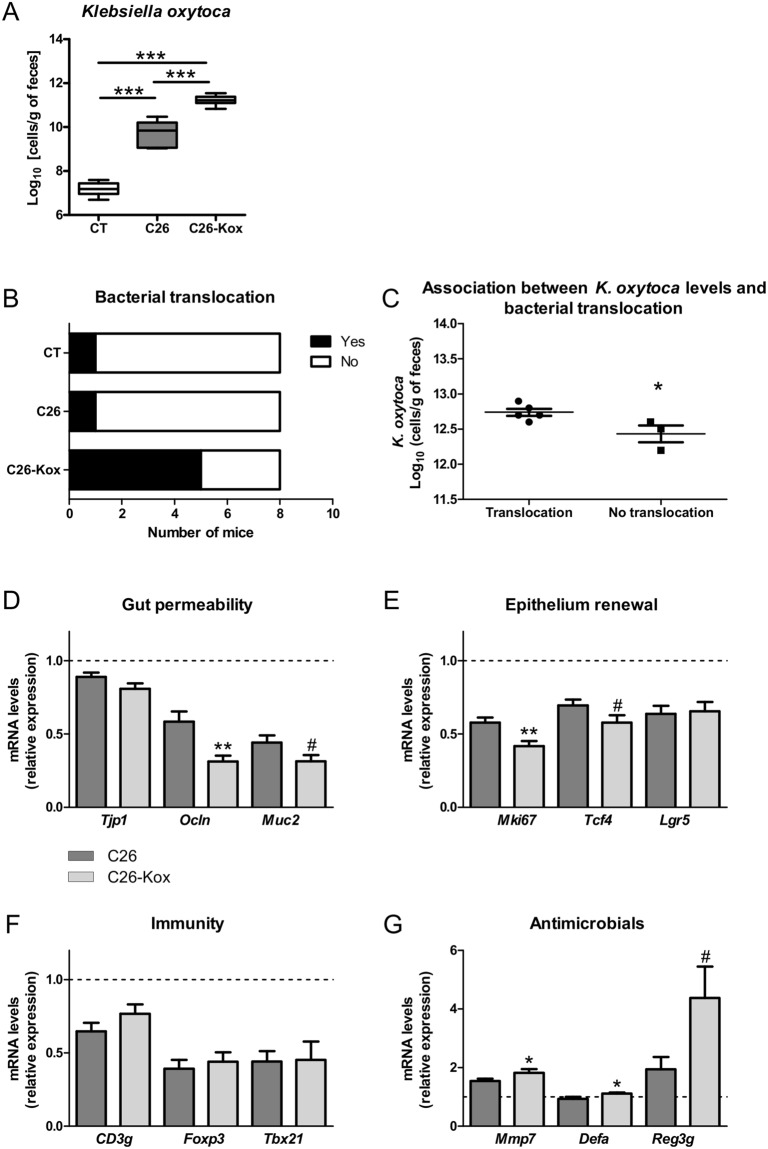
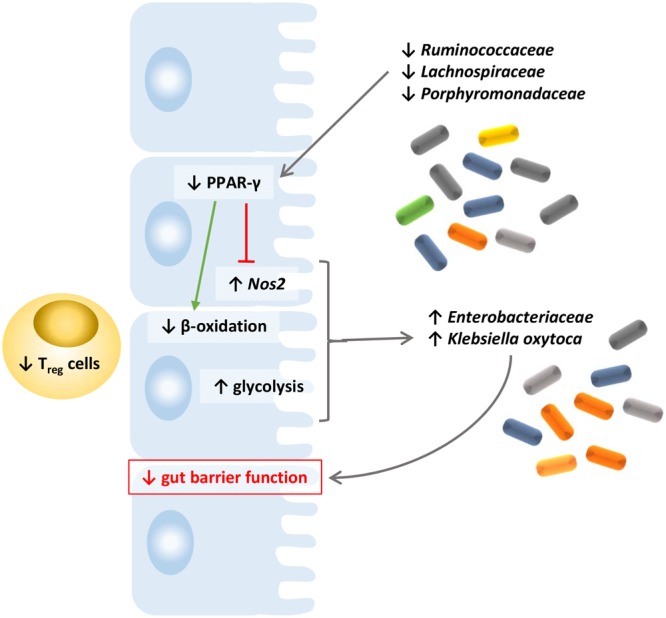
Cancer cachexia is a complex multi-organ syndrome characterized by body weight loss, weakness, muscle atrophy and fat depletion. With a prevalence of 1 million people in Europe and only limited therapeutic options, there is a high medical need for new approaches to treat cachexia. Our latest results highlighted microbial dysbiosis, characterized by a bloom in Enterobacteriaceae and altered gut barrier function in preclinical models of cancer cachexia. They also demonstrated the potential of targeting the gut microbial dysbiosis in this pathology. However, the exact mechanisms underlying the gut microbiota-host crosstalk in cancer cachexia remain elusive. In this set of studies, we identified Klebsiella oxytoca as one of the main Enterobacteriaceae species increased in cancer cachexia and we demonstrated that this bacteria acts as a gut pathobiont by altering gut barrier function in cachectic mice. Moreover, we propose a conceptual framework for the lower colonization resistance to K . oxytoca in cancer cachexia that involves altered host gut epithelial metabolism and host-derived nitrate boosting the growth of the gut pathobiont. This set of studies constitutes a strong progression in the field of gut microbiota in cancer cachexia, by dissecting the mechanism of emergence of one bacterium, K . oxytoca , and establishing its role as a gut pathobiont in this severe disease.
Overview
The claims and statistics of this paper haven’t been checked yet.
Free: it reads the open-access text and checks the first 5 claims that cite a source we can check. Create a free account to check every claim.
Integrity signals
Registry
Cites
Statistics
Figures
Verification
Claims the paper makes
The claims and statistics of this paper haven’t been checked yet.
Free: it reads the open-access text and checks the first 5 claims that cite a source we can check. Create a free account to check every claim.
Claims other papers make about this one
Each is checked against this paper’s own text: does it say what the citing paper says it does?
In the citing paper
“Murine models of cancer cachexia show a dysbiosis characterized by expansion of Enterobacteriaceae112 such as Klebsiella oxytoca, a gut pathobiont whose growth follows the depletion of butyrate-producing taxa.113”
From Gut dysbiosis in oncology: a risk factor for immunoresistance (2026) · doi:10.1038/s41422-025-01212-6 · cites this paper as [113]
Self-check
Percentages, sums and reported differences re-computed from the paper’s own numbers.
The self-check needs the paper’s full text.
Citations
Cites
Controlling the False Discovery Rate: A Practical and Powerful Approach to Multiple Testing
Benjamini, Y., & Hochberg, Y. (1995) · Journal of the Royal Statistical Society Series B: Statistical Methodology · doi:10.1111/j.2517-6161.1995.tb02031.x · Cited by 109,482
Cytoscape: A software Environment for integrated models of biomolecular interaction networks
Shannon, P., Markiel, A., Ozier, O., Baliga, N. S., Wang, J. T., Ramage, D., Amin, N., Schwikowski, B., & Ideker, T. (2003) · Genome Research · doi:10.1101/gr.1239303 · Cited by 51,888
Schloss, P. D., Westcott, S. L., Ryabin, T., Hall, J. R., Hartmann, M., Hollister, E. B., Lesniewski, R. A., Oakley, B. B., Parks, D. H., Robinson, C. J., et al. (2009) · Applied and Environmental Microbiology · doi:10.1128/aem.01541-09 · Cited by 19,549
UPARSE: highly accurate OTU sequences from microbial amplicon reads
Edgar, R. C. (2013) · Nature Methods · doi:10.1038/nmeth.2604 · Cited by 16,707
Definition and classification of cancer cachexia: an international consensus
Fearon, K., Strasser, F., Anker, S. D., Bosaeus, I., Bruera, E., Fainsinger, R. L., Jatoi, A., Loprinzi, C., MacDonald, N., Mantovani, G., et al. (2011) · The Lancet Oncology · doi:10.1016/s1470-2045(10)70218-7 · Cited by 5,767
Regulation of cancer cell metabolism
Cairns, R. A., Harris, I. S., & Mak, T. W. (2011) · Nature Reviews Cancer · doi:10.1038/nrc2981 · Cited by 4,744
Ribosomal Database Project: data and tools for high throughput rRNA analysis
Cole, J. R., Wang, Q., Fish, J. A., Chai, B., McGarrell, D. M., Sun, Y., Brown, C. T., Porras-Alfaro, A., Kuske, C. R., & Tiedje, J. M. (2014) · Nucleic Acids Research · doi:10.1093/nar/gkt1244 · Cited by 4,367
The peroxisome proliferator-activated receptor-γ is a negative regulator of macrophage activation
Ricote, M., Li, A. C., Willson, T. M., Kelly, C. J., & Glass, C. K. (1998) · Nature · doi:10.1038/34178 · Cited by 3,525
ESPEN guidelines on nutrition in cancer patients
Arends, J., Bachmann, P., Baracos, V., Barthelemy, N., Bertz, H., Bozzetti, F., Fearon, K., Hütterer, E., Isenring, E., Kaasa, S., et al. (2017) · Clinical Nutrition · doi:10.1016/j.clnu.2016.07.015 · Cited by 3,114
Diet–microbiota interactions as moderators of human metabolism
Sonnenburg, J. L., & Bäckhed, F. (2016) · Nature · doi:10.1038/nature18846 · Cited by 2,257
Baracos, V. E., Martin, L., Korc, M., Guttridge, D. C., & Fearon, K. C. H. (2018) · Nature Reviews Disease Primers · doi:10.1038/nrdp.2017.105 · Cited by 1,738
Schwabe, R. F., & Jobin, C. (2013) · Nature Reviews Cancer · doi:10.1038/nrc3610 · Cited by 1,689
Cancer cachexia: understanding the molecular basis
Argilés, J. M., Busquets, S., Stemmler, B., & López-Soriano, F. J. (2014) · Nature Reviews Cancer · doi:10.1038/nrc3829 · Cited by 1,517
Microbiota-activated PPAR-γ signaling inhibits dysbiotic Enterobacteriaceae expansion
Byndloss, M. X., Olsan, E. E., Rivera-Chávez, F., Tiffany, C. R., Cevallos, S. A., Lokken, K. L., Torres, T. P., Byndloss, A. J., Faber, F., Gao, Y., et al. (2017) · Science · doi:10.1126/science.aam9949 · Cited by 1,215
Cancer Cachexia: Mediators, Signaling, and Metabolic Pathways
Fearon, K. C. H., Glass, D. J., & Guttridge, D. C. (2012) · Cell Metabolism · doi:10.1016/j.cmet.2012.06.011 · Cited by 1,205
Revealing the Bacterial Butyrate Synthesis Pathways by Analyzing (Meta)genomic Data
Vital, M., Howe, A. C., & Tiedje, J. M. (2014) · mBio · doi:10.1128/mbio.00889-14 · Cited by 1,173
A general introduction to the biochemistry of mitochondrial fatty acid β‐oxidation
Houten, S. M., & Wanders, R. J. A. (2010) · Journal of Inherited Metabolic Disease · doi:10.1007/s10545-010-9061-2 · Cited by 1,020
Host-Derived Nitrate Boosts Growth of E. coli in the Inflamed Gut
Winter, S. E., Winter, M. G., Xavier, M. N., Thiennimitr, P., Poon, V., Keestra, A. M., Laughlin, R. C., Gomez, G., Wu, J., Lawhon, S. D., et al. (2013) · Science · doi:10.1126/science.1232467 · Cited by 1,019
Understanding the mechanisms and treatment options in cancer cachexia
Fearon, K., Arends, J., & Baracos, V. (2013) · Nature Reviews Clinical Oncology · doi:10.1038/nrclinonc.2012.209 · Cited by 940
Taur, Y., Jenq, R. R., Perales, M.-A., Littmann, E. R., Morjaria, S., Ling, L., No, D., Gobourne, A., Viale, A., Dahi, P. B., et al. (2014) · Blood · doi:10.1182/blood-2014-02-554725 · Cited by 885
Mechanisms of inflammation-driven bacterial dysbiosis in the gut
Zeng, M. Y., Inohara, N., & Nuñez, G. (2017) · Mucosal Immunology · doi:10.1038/mi.2016.75 · Cited by 877
Kim, J.-W., Gao, P., Liu, Y.-C., Semenza, G. L., & Dang, C. V. (2007) · Molecular and Cellular Biology · doi:10.1128/mcb.00440-07 · Cited by 658
Regulation of PPAR gamma gene expression by nutrition and obesity in rodents.
Vidal-Puig, A., Jimenez-Liñan, M., Lowell, B. B., Hamann, A., Hu, E., Spiegelman, B., Flier, J. S., & Moller, D. E. (1996) · Journal of Clinical Investigation · doi:10.1172/jci118703 · Cited by 655
CoNet app: inference of biological association networks using Cytoscape
Faust, K., & Raes, J. (2016) · F1000Research · doi:10.12688/f1000research.9050.1 · Cited by 615
Pathobionts of the gastrointestinal microbiota and inflammatory disease
Chow, J., Tang, H., & Mazmanian, S. K. (2011) · Current Opinion in Immunology · doi:10.1016/j.coi.2011.07.010 · Cited by 448
Klebsiella oxytoca as a Causative Organism of Antibiotic-Associated Hemorrhagic Colitis
Högenauer, C., Langner, C., Beubler, E., Lippe, I. T., Schicho, R., Gorkiewicz, G., Krause, R., Gerstgrasser, N., Krejs, G. J., & Hinterleitner, T. A. (2006) · New England Journal of Medicine · doi:10.1056/nejmoa054765 · Cited by 353
A Filtering Method to Generate High Quality Short Reads Using Illumina Paired-End Technology
Eren, A. M., Vineis, J. H., Morrison, H. G., & Sogin, M. L. (2013) · PLoS ONE · doi:10.1371/journal.pone.0066643 · Cited by 348
von Haehling, S., Anker, M. S., & Anker, S. D. (2016) · Journal of Cachexia, Sarcopenia and Muscle · doi:10.1002/jcsm.12167 · Cited by 330
Gut microbiota-derived propionate reduces cancer cell proliferation in the liver
Bindels, L. B., Porporato, P., Dewulf, E. M., Verrax, J., Neyrinck, A. M., Martin, J. C., Scott, K. P., Buc Calderon, P., Feron, O., Muccioli, G. G., et al. (2012) · British Journal of Cancer · doi:10.1038/bjc.2012.409 · Cited by 305
Self-citationDzutsev, A., Badger, J. H., Perez-Chanona, E., Roy, S., Salcedo, R., Smith, C. K., & Trinchieri, G. (2017) · Annual Review of Immunology · doi:10.1146/annurev-immunol-051116-052133 · Cited by 302
Bindels, L. B., Beck, R., Schakman, O., Martin, J. C., De Backer, F., Sohet, F. M., Dewulf, E. M., Pachikian, B. D., Neyrinck, A. M., Thissen, J.-P., et al. (2012) · PLoS ONE · doi:10.1371/journal.pone.0037971 · Cited by 278
Self-citationGut microorganisms as promising targets for the management of type 2 diabetes
Delzenne, N. M., Cani, P. D., Everard, A., Neyrinck, A. M., & Bindels, L. B. (2015) · Diabetologia · doi:10.1007/s00125-015-3712-7 · Cited by 262
Self-citationBindels, L. B., Neyrinck, A. M., Claus, S. P., Le Roy, C. I., Grangette, C., Pot, B., Martinez, I., Walter, J., Cani, P. D., & Delzenne, N. M. (2016) · The ISME Journal · doi:10.1038/ismej.2015.209 · Cited by 209
Self-citationDuodenal-Mucosal Bacteria Associated with Celiac Disease in Children
Sánchez, E., Donat, E., Ribes-Koninckx, C., Fernández-Murga, M. L., & Sanz, Y. (2013) · Applied and Environmental Microbiology · doi:10.1128/aem.00869-13 · Cited by 171
Cachexia as a major public health problem: frequent, costly, and deadly
Farkas, J., von Haehling, S., Kalantar-Zadeh, K., Morley, J. E., Anker, S. D., & Lainscak, M. (2013) · Journal of Cachexia, Sarcopenia and Muscle · doi:10.1007/s13539-013-0105-y · Cited by 162
Increased gut permeability in cancer cachexia: mechanisms and clinical relevance
Bindels, L. B., Neyrinck, A. M., Loumaye, A., Catry, E., Walgrave, H., Cherbuy, C., Leclercq, S., Van Hul, M., Plovier, H., Pachikian, B., et al. (2018) · Oncotarget · doi:10.18632/oncotarget.24804 · Cited by 147
Self-citationBeneficial bacteria inhibit cachexia
Varian, B. J., Goureshetti, S., Poutahidis, T., Lakritz, J. R., Levkovich, T., Kwok, C., Teliousis, K., Ibrahim, Y. M., Mirabal, S., & Erdman, S. E. (2016) · Oncotarget · doi:10.18632/oncotarget.7730 · Cited by 146
Stewart, V., Lu, Y., & Darwin, A. J. (2002) · Journal of Bacteriology · doi:10.1128/jb.184.5.1314-1323.2002 · Cited by 144
Enterotoxicity of a nonribosomal peptide causes antibiotic-associated colitis
Schneditz, G., Rentner, J., Roier, S., Pletz, J., Herzog, K. A. T., Bücker, R., Troeger, H., Schild, S., Weber, H., Breinbauer, R., et al. (2014) · Proceedings of the National Academy of Sciences · doi:10.1073/pnas.1403274111 · Cited by 135
Bindels, L. B., Neyrinck, A. M., Salazar, N., Taminiau, B., Druart, C., Muccioli, G. G., François, E., Blecker, C., Richel, A., Daube, G., et al. (2015) · PLOS ONE · doi:10.1371/journal.pone.0131009 · Cited by 134
Self-citationThe Colon-26 Carcinoma Tumor-bearing Mouse as a Model for the Study of Cancer Cachexia
Bonetto, A., Rupert, J. E., Barreto, R., & Zimmers, T. A. (2016) · Journal of Visualized Experiments · doi:10.3791/54893 · Cited by 113
Boye, K., & Hansen, D. S. (2003) · International Journal of Medical Microbiology · doi:10.1078/1438-4221-00228 · Cited by 88
Not Just Antibiotics: Is Cancer Chemotherapy Driving Antimicrobial Resistance?
Papanicolas, L. E., Gordon, D., Wesselingh, S. L., & Rogers, G. B. (2017) · Trends in Microbiology · doi:10.1016/j.tim.2017.10.009 · Cited by 71
Cytotoxic and Pathogenic Properties of Klebsiella oxytoca Isolated from Laboratory Animals
Darby, A., Lertpiriyapong, K., Sarkar, U., Seneviratne, U. I., Park, D. S., Gamazon, E. R., Batchelder, C., Cheung, C., Buckley, E. M., Taylor, N. S., et al. (2014) · PLoS ONE · doi:10.1371/journal.pone.0100542 · Cited by 66
Gut microbiota and hematopoietic stem cell transplantation: where do we stand?
Zama, D., Biagi, E., Masetti, R., Gasperini, P., Prete, A., Candela, M., Brigidi, P., & Pession, A. (2016) · Bone Marrow Transplantation · doi:10.1038/bmt.2016.173 · Cited by 63
Mechanisms of cross-talk between the diet, the intestinal microbiome, and the undernourished host
Velly, H., Britton, R. A., & Preidis, G. A. (2017) · Gut Microbes · doi:10.1080/19490976.2016.1267888 · Cited by 57
Colonization resistance: The deconvolution of a complex trait
Olsan, E. E., Byndloss, M. X., Faber, F., Rivera-Chávez, F., Tsolis, R. M., & Bäumler, A. J. (2017) · Journal of Biological Chemistry · doi:10.1074/jbc.r116.752295 · Cited by 57
Unlocking the wasting enigma: Highlights from the 8th Cachexia Conference
Ebner, N., & von Haehling, S. (2016) · Journal of Cachexia Sarcopenia and Muscle · doi:10.1002/jcsm.12106 · Cited by 31
Duszka, K., Picard, A., Ellero‐Simatos, S., Chen, J., Defernez, M., Paramalingam, E., Pigram, A., Vanoaica, L., Canlet, C., Parini, P., et al. (2016) · Scientific Reports · doi:10.1038/srep36937 · Cited by 31
Nutrition in cancer patients with cachexia: A role for the gut microbiota?
Bindels, L. B., & Thissen, J.-P. (2015) · Clinical Nutrition Experimental · doi:10.1016/j.yclnex.2015.11.001 · Cited by 27
Self-citation
Cited by
The microbiome and gut homeostasis
Lee, J.-Y., Tsolis, R. M., & Bäumler, A. J. (2022) · Science · doi:10.1126/science.abp9960 · Cited by 428
“Levels of hostderived oxygen and nitrate become elevated in the colonic lumen not only by a high-fat diet (96), but also after antibiotic treatment (54, 100); after infectionwith enteric pathogens (101–108); and inmouse models of ulcerative colitis (109–112), cancer cachexia (113), or colorectal cancer (114, 115).”
BackgroundCancer cachexia and its pathophysiology: links with sarcopenia, anorexia and asthenia
Peixoto da Silva, S., Santos, J. M. O., Costa e Silva, M. P., Gil da Costa, R. M., & Medeiros, R. (2020) · Journal of Cachexia, Sarcopenia and Muscle · doi:10.1002/jcsm.12528 · Cited by 371
“and help associating alterations in the gut microbiome with cancer cachexia.(130,131)”
BackgroundArgilés, J. M., López-Soriano, F. J., Stemmler, B., & Busquets, S. (2023) · Nature Reviews Clinical Oncology · doi:10.1038/s41571-023-00734-5 · Cited by 246
Scorletti, E., Afolabi, P. R., Miles, E. A., Smith, D. E., Almehmadi, A., Alshathry, A., Childs, C. E., Del Fabbro, S., Bilson, J., Moyses, H. E., et al. (2020) · Gastroenterology · doi:10.1053/j.gastro.2020.01.031 · Cited by 237
Self-citationMicrobiome—Microbial Metabolome—Cancer Cell Interactions in Breast Cancer—Familiar, but Unexplored
Mikó, E., Kovács, T., Sebő, É., Tóth, J., Csonka, T., Ujlaki, G., Sipos, A., Szabó, J., Méhes, G., & Bai, P. (2019) · Cells · doi:10.3390/cells8040293 · Cited by 220
Metadata
- Authors
- Pötgens, S. A., Brossel, H., Sboarina, M., Catry, E., Cani, P. D., Neyrinck, A. M., Delzenne, N. M., & Bindels, L. B.
- Affiliations
- UCLouvain (BE)
- Walloon Excellence in Lifesciences and Biotechnology (BE)
- Corresponding author
- Bindels, Laure B.
- ORCID
- Venue
- Scientific Reports
- Published
- 2018-08-17
- Volume
- 8
- Issue
- 1
- Pages
- 12321-12321
- ISSN
- 2045-2322 (ISSN-L)
- PMC
- PMC6098145
- OpenAlex
- W2886815222
- Cited by
- 114
- References
- 50
- Citations by year
- 2026: 17 · 2025: 13 · 2024: 12 · 2023: 12 · 2022: 16 · 2021: 20 · 2020: 13 · 2019: 11
- FWCI
- 3.91
- Type
- journal article
- Language
- en
- Open access
- gold
- doi.org
- Licence
- cc-by
- creativecommons.org/licenses/by/4.0 (tdm)
- creativecommons.org/licenses/by/4.0 (vor)
- Locations
- Scientific Reports (publishedVersion, cc-by)
- Europe PMC (PubMed Central) (publishedVersion, cc-by)
- PubMed Central (publishedVersion, cc-by)
- PubMed (publishedVersion)
- Digital Access to Libraries (Université catholique de Louvain (UCL), l'Université de Namur (UNamur) and the Université Saint-Louis (USL-B)) (submittedVersion, other-oa)
- DIAL (Catholic University of Leuven) (submittedVersion)
- DOAJ (DOAJ: Directory of Open Access Journals) (submittedVersion)
- ORBi (University of Liège) (submittedVersion, other-oa)
- Funders
- University of Minnesota
- European Commission (613979)
- Fonds De La Recherche Scientifique - FNRS (WELBIO-CR-2017C-02)
- Vlaamse regering
- Walloon excellence in life sciences and biotechnology (WELBIO-CR-2017C-02)
- FP7 Ideas: European Research Council (336452)
- Topics
- Life Sciences › Biochemistry, Genetics and Molecular Biology › Molecular Biology › Gut microbiota and health
- Health Sciences › Medicine › Physiology (medical) › Nutrition and Health in Aging
- Health Sciences › Medicine › Gastroenterology › Gastrointestinal motility and disorders
- Keywords
- Klebsiella oxytoca, cancer cachexia, gut dysbiosis, Enterobacteriaceae, intestinal barrier, intestinal dysfunction, colonization resistance, nitrate, host-microbe crosstalk
- MeSH terms
- Gastrointestinal Microbiome, Animals, Cachexia, Intestinal Diseases, Male, Neoplasms, Klebsiella oxytoca, Gastrointestinal Tract, Cell Line, Tumor, Mice
About these checks
Registry, retraction, Cites and statistics results are computed, not judged, with one exception: a printed reference that no index lists is read once by a model before it counts as a citation error. Claims are extracted by a model and kept only when their quote appears verbatim in the text; each cited source is then checked, with a model’s help, for whether it says what the claim relies on. Those verdicts can be wrong — read the claim’s quote and the cited source before relying on one.
Statistics and arithmetic are recomputed, not judged.
Confidence bands are shown only for fields calibrated on our annotated test set. None is calibrated yet, so no band is shown.
What counts as a claim ›How we measure confidence ›How we check this ›
Are you an author, or do you see a problem with this page? Request a review
Data sources
Bibliographic data: Semantic Scholar, OpenAlex, Crossref.
Contains information from the Semantic Scholar Academic Graph Datasets, made available under the ODC Attribution License (ODC-BY 1.0).
Semantic Scholar’s data is described in: Kinney, R., et al. (2023). The Semantic Scholar Open Data Platform. arXiv:2301.10140.
