

Altered gut microbiota and short chain fatty acids in Chinese children with autism spectrum disorder
Open accessThe DOI matches its Crossref record; 43 of the 43 references it cites were found in a registry or an index.
Abstract
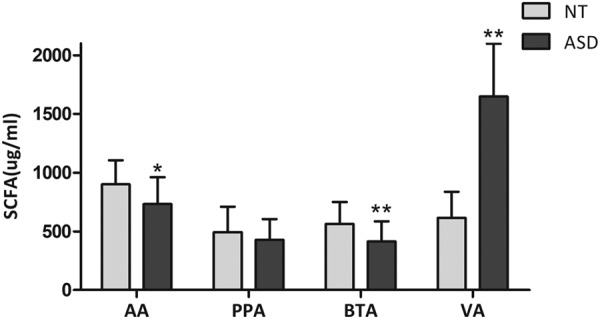
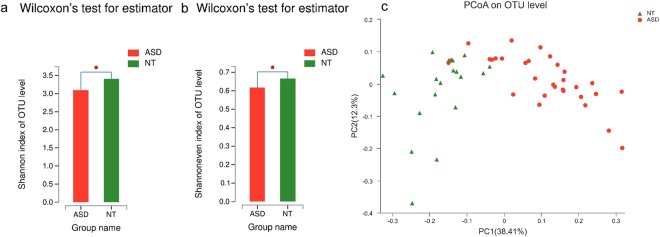
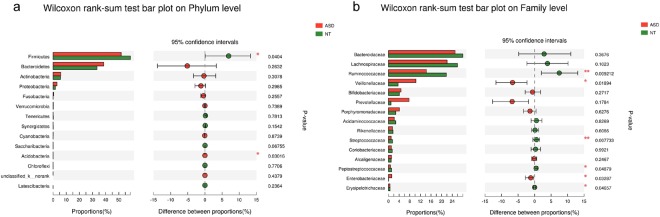
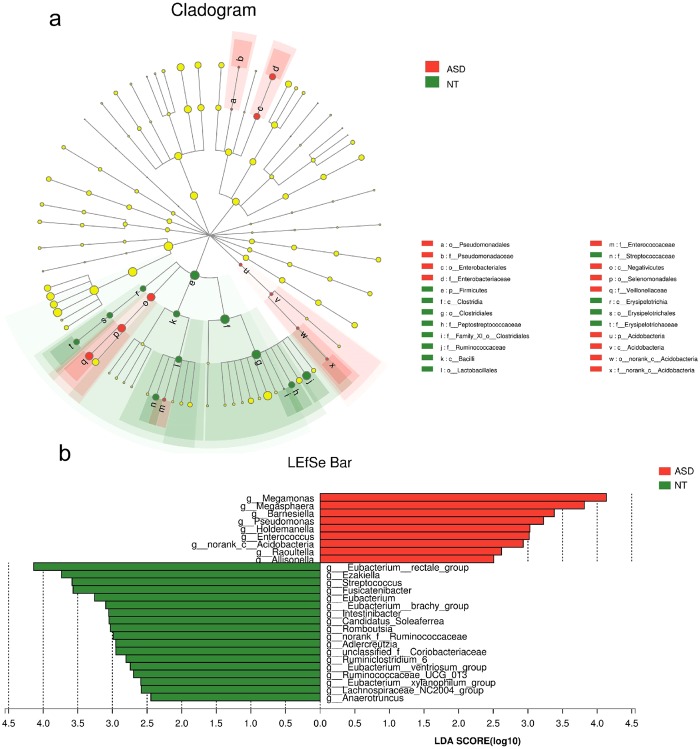
Autism spectrum disorder (ASD) is a neurodevelopmental disorder that is characterized by impairments in social interactions and communication, restricted interests and repetitive behaviors. Several studies report a high prevalence of gastrointestinal (GI) symptoms in autistic individuals. Cumulative evidence reveals that the gut microbiota and its metabolites (especially short-chain fatty acids, SCFAs) play an important role in GI disorders and the pathogenesis of ASD. However, the composition of the gut microbiota and its association with fecal SCFAs and GI symptoms of autistic children remain largely unknown. In the present study, we sequenced the bacterial 16S rRNA gene, detected fecal SCFAs, assessed GI symptoms and analyzed the relationship between the gut microbiome and fecal SCFAs in autistic and neurotypical individuals. The results showed that the compositions of the gut microbiota and SCFAs were altered in ASD individuals. We found lower levels of fecal acetic acid and butyrate and a higher level of fecal valeric acid in ASD subjects. We identified decreased abundances of key butyrate-producing taxa (Ruminococcaceae, Eubacterium, Lachnospiraceae and Erysipelotrichaceae) and an increased abundance of valeric acid associated bacteria (Acidobacteria) among autistic individuals. Constipation was the only GI disorder in ASD children in the present study. We also found enriched Fusobacterium, Barnesiella, Coprobacter and valeric acid-associated bacteria (Actinomycetaceae) and reduced butyrate-producing taxa in constipated autistic subjects. It is suggested that the gut microbiota contributes to fecal SCFAs and constipation in autism. Modulating the gut microbiota, especially butyrate-producing bacteria, could be a promising strategy in the search for alternatives for the treatment of autism spectrum disorder.
Overview
The claims and statistics of this paper haven’t been checked yet.
Free: it reads the open-access text and checks the first 5 claims that cite a source we can check. Create a free account to check every claim.
Integrity signals
Registry
Cites
Statistics
Figures
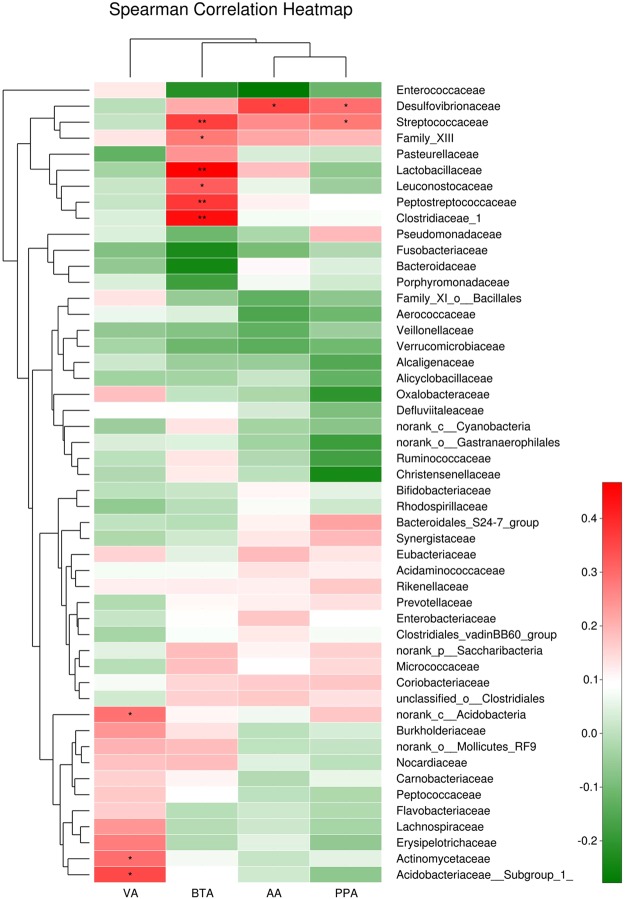
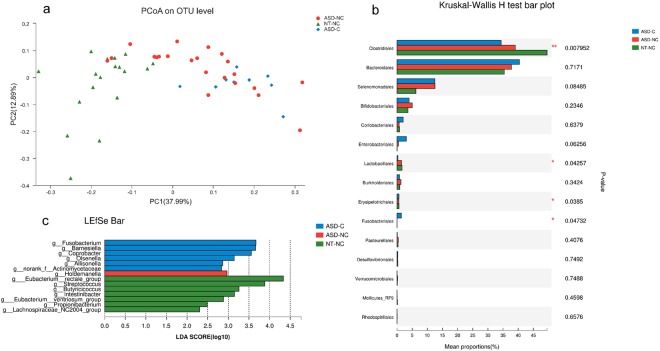
Verification
Claims the paper makes
The claims and statistics of this paper haven’t been checked yet.
Free: it reads the open-access text and checks the first 5 claims that cite a source we can check. Create a free account to check every claim.
Claims other papers make about this one
Each is checked against this paper’s own text: does it say what the citing paper says it does?
The source backs part of the claim, not all of it — or backs it for a different population, condition or comparison.
In the citing paper
“The reduced ratio of Firmicutes/Bacteroidetes in the gastrointestinal tract may lead to decreased circulating SCFAs (54,55)”
From The Role of Gut Microbiota in Lung Cancer: From Carcinogenesis to Immunotherapy (2021) · doi:10.3389/fonc.2021.720842 · cites this paper as [54]
Experimental — accuracy not yet measuredThe cited source says what the claim attributes to it.
In the citing paper
“butyrate-producing taxa belonging to the Erysipelotrichaceae were significantly decreased in the feces of individuals with ASD”
The cited source says what the claim attributes to it.
In the citing paper
“Although, a more recent report demonstrated decreased fecal acetate and butyrate levels in children with ASD (Liu et al., 2019).”
From The Microbiota-Gut-Brain Axis (2019) · cites this paper as Liu et al., 2019
In the citing paper
“Elevated isobutyric and isovaleric acid have been associated with hypercholesterolemia (Granado-Serrano et al., 2019) and elevated valeric acid in autism spectrum disorder (Liu et al., 2019).”
From Gut-microbiota-targeted diets modulate human immune status (2021) · cites this paper as Liu et al., 2019
Self-check
Percentages, sums and reported differences re-computed from the paper’s own numbers.
The self-check needs the paper’s full text.
Citations
Cites
Diagnostic and Statistical Manual of Mental Disorders
American Psychiatric Association (2013) · doi:10.1176/appi.books.9780890425596 · Cited by 116,369
Metagenomic biomarker discovery and explanation
Segata, N., Izard, J., Waldron, L., Gevers, D., Miropolsky, L., Garrett, W. S., & Huttenhower, C. (2011) · Genome Biology · doi:10.1186/gb-2011-12-6-r60 · Cited by 16,192
Molecular Mechanisms of Depression: Perspectives on New Treatment Strategies
Lang, U. E., & Borgwardt, S. (2013) · Cellular Physiology and Biochemistry · doi:10.1159/000350094 · Cited by 8,475
From Dietary Fiber to Host Physiology: Short-Chain Fatty Acids as Key Bacterial Metabolites
Koh, A., De Vadder, F., Kovatcheva-Datchary, P., & Bäckhed, F. (2016) · Cell · doi:10.1016/j.cell.2016.05.041 · Cited by 7,070
Baio, J., Wiggins, L., Christensen, D. L., Maenner, M. J., Daniels, J., Warren, Z., Kurzius-Spencer, M., Zahorodny, W., Robinson, C., Rosenberg, et al. (2018) · MMWR. Surveillance Summaries · doi:10.15585/mmwr.ss6706a1 · Cited by 6,078
The gut microbiota influences blood-brain barrier permeability in mice
Braniste, V., Al-Asmakh, M., Kowal, C., Anuar, F., Abbaspour, A., Tóth, M., Korecka, A., Bakocevic, N., Ng, L. G., Kundu, P., et al. (2014) · Science Translational Medicine · doi:10.1126/scitranslmed.3009759 · Cited by 2,530
Chang, P. V., Hao, L., Offermanns, S., & Medzhitov, R. (2014) · Proceedings of the National Academy of Sciences · doi:10.1073/pnas.1322269111 · Cited by 2,175
Peng, L., Li, Z.-R., Green, R. S., Holzmanr, I. R., & Lin, J. (2009) · The Journal of Nutrition · doi:10.3945/jn.109.104638 · Cited by 2,130
Genetic Heritability and Shared Environmental Factors Among Twin Pairs With Autism
Hallmayer, J. (2011) · Archives of General Psychiatry · doi:10.1001/archgenpsychiatry.2011.76 · Cited by 1,970
Microbes in Gastrointestinal Health and Disease
Neish, A. S. (2009) · Gastroenterology · doi:10.1053/j.gastro.2008.10.080 · Cited by 1,386
Cited by
Items 301–400 of 482
Lee, Y.-F., Wu, M., Sheng‐Kai, K., Huang, J., & Wei, J. C. (2023) · Frontiers in Psychiatry · doi:10.3389/fpsyt.2023.1116239 · Cited by 9
Microbiota and their Influence in the Human Body
Al-Judaibi, A. A. (2021) · Journal of Pure and Applied Microbiology · doi:10.22207/jpam.15.1.27 · Cited by 9
Chavira, A., Wang, E. H.-J., & Mills, R. H. (2022) · bioRxiv (Cold Spring Harbor Laboratory) · doi:10.1101/2022.03.18.484910 · Cited by 10
Guo, R., Xiao, X., Wang, C., Tian, Y., Zou, Q., Zhang, T., Liang, J., He, Y., Liu, Z., Liu, X., et al. (2024) · Food Science and Human Wellness · doi:10.26599/fshw.2024.9250159 · Cited by 10
Sivamaruthi, B. S., Kesika, P., Chaiyasut, C., & Varman, D. R. (2026) · Frontiers in Microbiology · doi:10.3389/fmicb.2026.1760635 · Cited by 9
“…validated that children with ASD display modified gut microbial composition in comparison to neurotypical counterparts, characterised by variations in diversity, taxonomic abundance, and community structure (Liu et al., 2019; Yap et al., 2021; Zou et al., 2021; Li et al., 2024; Zeng et al., 2025).”
Shucheng, H., Li, J., Liu, Y., Chen, X., & Jiang, X. L. (2024) · Frontiers in Medicine · doi:10.3389/fmed.2024.1405097 · Cited by 9
Crosstalk between gut microbiota and tumor: tumors could cause gut dysbiosis and metabolic imbalance
Zhang, S., Wen, H., Chen, Y., Ning, J., Hu, D., Dong, Y., Yao, C., Yuan, B., & Yang, S. (2024) · Molecular Oncology · doi:10.1002/1878-0261.13763 · Cited by 9
Qiu, J., Wu, S., Huang, R., Liao, Z., Pan, X., Zhao, K., Peng, Y., Xiang, S., Cao, Y., Ma, Y., et al. (2025) · Frontiers in Microbiology · doi:10.3389/fmicb.2024.1508217 · Cited by 7
Characterization of microbiota signatures in Iberian pig strains using machine learning algorithms
Azouggagh, L., Ibáñez‐Escriche, N., Martínez-Álvaro, M., Varona, L., Casellas, J., Negro, S., & Casto‐Rebollo, C. (2025) · Animal Microbiome · doi:10.1186/s42523-025-00378-z · Cited by 7
Wong, S. H., Xu, X., Xu, X., Zhou, R., Ng, S. K., Ng, S. K., Fan, X., & Subramaniam, M. (2025) · Nutrients · doi:10.3390/nu17111748 · Cited by 8
“Our results align with another study in children which showed an inverse association between the abundance of butyrate-producing Ruminococcaceae and ASD [43].”
Asbjornsdottir, B., Miranda-Ribera, A., Fiorentino, M. R., Konno, T., Çetinbaş, M., Lan, J., Sadreyev, R. I., Gudmundsson, L. S., Gottfreðsson, M., Lauth, B., et al. (2022) · Biomedicines · doi:10.3390/biomedicines11010091 · Cited by 8
Deyaert, S., Poppe, J., Vu, L. D., Baudot, A., Bubeck, S. S., Bayne, T., Krishnan, K., Giusto, M., Moltz, S., & den Abbeele, P. V. (2024) · Metabolites · doi:10.3390/metabo14090497 · Cited by 8
“…butter), cane sugar; contains 2% or less of the following: leavening (monocalcium phosphate, sodium bicarbonate), xylooligosaccharides, fenugreek seed, anise, molasses, sea salt, orange powder, banana powder, papaya powder, shiitake mushroom powder, monk fruit extract, Bacillus subtilis HU58™.”
BackgroundBlagonravova, A. S., Zhilyaeva, T. V., & Kvashnina, D. V. (2021) · Journal of microbiology epidemiology immunobiology · doi:10.36233/0372-9311-62 · Cited by 8
Yang, H., Wang, A., Yang, J., Luo, R., & Yang, Y. (2025) · Frontiers in Microbiology · doi:10.3389/fmicb.2025.1650212 · Cited by 6
“Some studies reported higher richness and diversity in ASD patients (Zhai et al., 2019; Kang et al., 2018), while others found lower diversity (Wu et al., 2020; Liu et al., 2019), with some showing no significant difference (Strati et al., 2017; Carissimi et al., 2019).”
Villagomez, P. E., Hinojosa-Figueroa, M. S., Vallejo, P., Pérez, F., Burneo, G., Villarreal, C., Rodas, J. A., & León-Rojas, J. E. (2026) · Frontiers in Neuroscience · doi:10.3389/fnins.2026.1728473 · Cited by 10
“…al., 2012; Grimaldi et al., 2018; Hua et al., 2020; Inoue et al., 2016; Kang et al., 2013, 2017, 2018, 2019; Kong et al., 2019; Kushak et al., 2017; Li et al., 2019; Liu et al., 2017; Liu S. et al., 2019; Luna et al., 2017; Ma et al., 2019; Plaza-Díaz et al., 2019; Shaaban et al., 2018; Son et…”
InfluentialSharma, R., Tiwari, A., Rahi, S., & Mehan, S. (2020) · Current Psychopharmacologye · doi:10.2174/1389203721999200820165117 · Cited by 6
Reeves, K. D., Figuereo, Y. F., Weis, V. G., Hsu, F., Engevik, M. A., Krigsman, A., & Walker, S. J. (2024) · American Journal of Physiology-Gastrointestinal and Liver Physiology · doi:10.1152/ajpgi.00101.2024 · Cited by 9
Charalambous, H., Brown, C., Vogazianos, P., Katsaounou, K., Nikolaou, E., Stylianou, I., Papageorgiou, E., Vraxnos, D., Aristodimou, A., Chi, J., et al. (2025) · Thoracic Cancer · doi:10.1111/1759-7714.70075 · Cited by 7
“The significance of the lower F/B ratio relates to the fact that this leads to a lower concentration of SCFAs, which influence systemic immunity and inflammation [37–40].”
Impact of oral anaerobic bacteria on the tumor immune microenvironment and prognosis of oral cancer
Kashima, K., Saito, T., Kajikawa, H., Kawashima, A., Ueyama, A., Uzawa, N., & Wada, H. (2025) · Journal of Translational Medicine · doi:10.1186/s12967-025-07189-5 · Cited by 6
Lee, G. A., Zhao, H.-W., Chang, Y.-W., Lee, C., Yang, Y. S. H., Wu, Y.-C., Lin, W., Liu, Y., Deshan, N., & Tseng, S. (2022) · Frontiers in Pharmacology · doi:10.3389/fphar.2022.964255 · Cited by 7
“The elevated levels of the inflammatory cytokine IL-1β during the gestational stage is associated with hypomyelination in LPS-induced MIA offspring with ASD-like behavior (Rousset et al., 2006; Simoes et al., 2018; Chamera et al., 2020).”
ResultInfluential[Diversity and functional prediction of gut microbiota in children with autism spectrum disorder].
Liu, Z., Wu, D., Qu, A.-N., & Wang, L. (2022) · PubMed Central · doi:10.7499/j.issn.1008-8830.2207130 · Cited by 8
Tracing human life trajectory using gut microbial communities by context-aware deep learning
Zhang, H., Chong, H., Yu, Q., Zha, Y., Cheng, M., & Ning, K. (2023) · Briefings in Bioinformatics · doi:10.1093/bib/bbac629 · Cited by 7
The gut microbiome modulates the susceptibility to traumatic stress in a sex‐dependent manner
Shen, D., Chang, L., Su, F., Huang, S., Xu, H., Si, Y., Wang, F., & Xue, Y.-X. (2024) · Journal of Neuroscience Research · doi:10.1002/jnr.25315 · Cited by 6
“…Ruminococcus and a lower abundance of Coprococcus , Erysipelotrichaies , and Actinobacteria than control offspring, which is consistent with that of humans with ASD (De Angelis et al., 2013; Hsiao et al., 2013; Krajmalnik-Brown et al., 2015; Lee et al., 2021; Liu et al., 2019 ; Wang et al., 2013).”
ResultDysbiosis promotes recurrence of adenomatous polyps in the distal colorectum
Yin, L., Qi, P., Hu, Y., Fu, X., He, R.-S., Wang, M., Deng, Y.-J., Xiong, S.-Y., Yu, Q., Hu, J., et al. (2024) · World Journal of Gastrointestinal Oncology · doi:10.4251/wjgo.v16.i8.3600 · Cited by 7
“5[99].”
Enzymatically hydrolyzed diet improves growth performance and intestinal microbiome in growing pigs
Gong, T., Ji, M., Yang, Y., Liu, J., Gong, Y., Liu, S., Zhao, Y., Cao, G., Guo, X., Yang, Y., et al. (2024) · Frontiers in Nutrition · doi:10.3389/fnut.2024.1485017 · Cited by 6
Self-citationZhang, Y., Xue, J., Chen, Y., Huang, X., Liu, Z., Zhong, H., Xie, Q., Luo, Y., Wang, Q., & Wang, C. (2024) · Animals · doi:10.3390/ani14050660 · Cited by 6
“Erysipelotrichaceae_UCG_003 is known as a key butyrate-producing member, which is positively associated with the antioxidant and anti-inflammatory capabilities in birds [45,46].”
BackgroundPan, Z., Gao, Z., Chen, J., Quan, Y.-X., Xu, J., Liang, X., Xie, W.-R., He, X., & Wu, L. (2025) · Frontiers in Neuroscience · doi:10.3389/fnins.2025.1602681 · Cited by 6
Davias, A., Lyon-Caen, S., Iszatt, N., Monot, C., Rayah, Y., Ilhan, Z. E., Guichardet, K., Bayat, S., Valmary‐Degano, S., Muckle, G., et al. (2025) · Brain Behavior & Immunity - Health · doi:10.1016/j.bbih.2025.101063 · Cited by 7
“…2017; Li et al., 2019; Liu et al., 2019; Ma et al., 2019; Plaza-Díaz et al., 2019; Pulikkan et al., 2018; Rose et al., 2018; Strati et al., 2017; Sun et al., 2019; Tomova et al., 2020; Zhai et al., 2019; Zhang et al., 2018; Zou et al., 2020; Zurita et al., 2020) or ADHD (Aarts et al., 2017;…”
Wang, M., Liang, Z., Zhuang, H., Cao, X., Ma, G., Sun, Y., Yan, X., Ran, X., Guan, H., & Shen, L. (2025) · Molecular Neurobiology · doi:10.1007/s12035-025-05567-0 · Cited by 5
“Studies have reported that children with ASD have higher abundances of Desulfovibrion-aceae compared to healthy children, with Desulfovibrionaceae abundance positively correlated with SCFAs such as propionic acid, which can induce ASD-like behaviors by modulating neurotransmitters [114].”
Applying biologically anchored subtypes to advance precision medicine in autism spectrum disorder
Choi, T.-Y., Gunawan, A., Seo, D., Park, J., Ahn, E. H., Suh, S. W., Fuccillo, M. V., & Choi, K. (2025) · Neurobiology of Disease · doi:10.1016/j.nbd.2025.107219 · Cited by 5
Wang, S., Feng, W., Tu, S., Li, J., Liu, Y., Wang, J., Zhang, Y., & Kang, W. (2025) · Food Research International · doi:10.1016/j.foodres.2025.118256 · Cited by 5
Liu, G., Chen, L., Guan, M., & Xiao, N. (2026) · Frontiers in Neuroscience · doi:10.3389/fnins.2026.1607951 · Cited by 6
“Liu et al. (2019) provides a cohort-level anchor that links microbiome profiles and metabolite-related readouts in ASD.”
Treating autism spectrum disorder by intervening with gut microbiota
Tu, T., & Zhao, C. (2021) · Journal of Medical Microbiology · doi:10.1099/jmm.0.001469 · Cited by 7
Gut Microbes: The Gut Brain Connection
Lynch, C. M. K., O’Riordan, K. J., Clarke, G. A., & Cryan, J. F. (2023) · Springer eBooks · doi:10.1007/978-3-031-46712-7_4 · Cited by 6
Could Gut Modulation through Probiotic Supplementation Be Beneficial in Autism Spectrum Disorder?
Khatib, R. E., Karam‐Sarkis, D., Waligora‐Dupriet, A., & Butel, M. (2020) · IntechOpen eBooks · doi:10.5772/intechopen.89375 · Cited by 9
Wu, R., Teng, X., Guo, Y., Cai, Y., Lv, Y., Gao, H., Zhang, W., Shen, H., & Fan, J. (2025) · Frontiers in Pediatrics · doi:10.3389/fped.2025.1648471 · Cited by 4
“In addition, metabolomic investigations further demonstrate microbial involvement in ASD pathogenesis via dysregulation of key metabolic pathways, including SCFA production, tryptophan metabolism, and phenolic compound synthesis (25, 28 – 35).”
Comparison of gut viral communities between autism spectrum disorder and healthy children
Yuan, M., Wang, Q., Lu, Y., Xu, P., Pan, C., Zhang, W., & Lu, H. (2025) · Frontiers in Cellular and Infection Microbiology · doi:10.3389/fcimb.2025.1660970 · Cited by 4
Zhang, L., Zhan, M., Zhao, Y., Wang, B., Lin, D., Ren, D., Yang, X., & Zhao, A. (2025) · Journal of Agricultural and Food Chemistry · doi:10.1021/acs.jafc.5c12858 · Cited by 6
Guo, T., Zeng, Z., & Lin, L. (2024) · International Journal of Neuroscience · doi:10.1080/00207454.2024.2341924 · Cited by 4
“Most theories support the idea that higher diversity of the gut microbiota may help individuals adapt more effectively to environmental changes and stabilize the intestinal environment [22].”
Autism Spectrum Disorders: Role of Pre- and Post-Natal GammaDelta (γδ) T Cells and Immune Regulation
Anderson, G., & Medina, S. R. B. (2019) · Current Pharmaceutical Design · doi:10.2174/1381612825666191102170125 · Cited by 6
Malnutrition-Induced Oxidative Stress in Nervous System and Its Health Implications
Veleri, S. (2023) · Springer eBooks · doi:10.1007/978-981-99-7652-2_17 · Cited by 6
Han, M., Zeng, F., Liu, Y., Shi, W., Shao, S., Yan, C., & Chen, Y. (2024) · Food Science and Human Wellness · doi:10.26599/fshw.2024.9250403 · Cited by 4
Zhang, J., Qin, H., Chang, M., Yang, Y., & Lin, J. (2022) · Frontiers in Cellular and Infection Microbiology · doi:10.3389/fcimb.2022.860201 · Cited by 4
Jalandra, R., Dhar, R., Pethusamy, K., Sharma, M., & Karmakar, S. (2022) · F1000Research · doi:10.12688/f1000research.122429.1 · Cited by 4
Aldegheri, L., Kharrat, F., Conti, A., Monica, F., Busa, F., Campisciano, G., Zanotta, N., Cason, C., & Comar, M. (2024) · Microorganisms · doi:10.3390/microorganisms12081625 · Cited by 7
“Today, there is accumulated evidence about alterations in the gut microbiome in individuals with ASD [6,7].”
Background[Anatomy of the external saphenous vein].
Payen, B. (1985) · PubMed · Cited by 6
Hu, D., Lu, Y., Wang, D., Nie, C., & Li, Y. (2021) · Scientific Reports · doi:10.1038/s41598-021-97790-7 · Cited by 5
The Effect of Probiotic Lactic Acid Bacteria on the Symptoms of Mental Disorders
Novikova, V. A., Bondarenko, K. D., Сазонов, А. Э., & Розанов, А. С. (2024) · Nanobiotechnology Reports · doi:10.1134/s2635167624602092 · Cited by 4
Luan, H., Sun, Z., Zhao, Y., & Luan, T. (2025) · TrAC Trends in Analytical Chemistry · doi:10.1016/j.trac.2025.118361 · Cited by 4
Self-citationGrowing Tibetan Pigs Adapt to High-Fiber Diets by Enhancing Fiber Degradation Capacity
Lamu, Z., Hao, S., Li, B., Yang, S., Shang, Z., Shang, P., Liu, S., Lin, Y., & Tan, Z. (2025) · Veterinary Sciences · doi:10.3390/vetsci12101010 · Cited by 3
“Its abundance is positively associated with carbohydrate digestion in high-fiber diets [72,73].”
Self-citationLin, B., Zhu, Z., Yang, X., Li, Z., Zhou, H., Luo, M., Guan, J., Zou, Y., Chen, H., Zhuang, Z., et al. (2025) · Frontiers in Pediatrics · doi:10.3389/fped.2025.1660773 · Cited by 3
Gut–Brain Inflammation and Disrupted Homeostasis Due to Activation of Mast Cells and Microglia
Katiraei, P., Frye, R. E., & Theoharides, T. C. (2026) · International Journal of Molecular Sciences · doi:10.3390/ijms27041768 · Cited by 5
“These changes are characterized by elevations of some microbial-derived metabolites [76], especially short-chain fatty acids (SCFAs), with reduced levels of butyrate [77,78] and increased levels of propionic acid [78,79].”
Yang, Z., Chen, X., Li, Y., Feng, Y., Lin, L., & Hou, X. (2026) · Brain Behavior & Immunity - Health · doi:10.1016/j.bbih.2026.101189 · Cited by 5
“After et al., 2011; Kang et al., 2018a; Adams et al., 2011; He et al., 2023; Wang et al., 2012b, 2019, 2020; Bojovi ´ c et al., 2020; Berding and Donovan, 2018, 2020; Coretti et al., 2018; Zhao et al., 2017; Liu et al., 2019; Ha et al., 2021; Deng et al., 2022; Zhang et al., 2022).”
Huang, Y., Liang, Q., Youjin, S., Chen, J., & Xu, W. (2026) · Frontiers in Microbiology · doi:10.3389/fmicb.2026.1783810 · Cited by 4
Paradigm Shift: New Approaches to Understanding Autism Spectrum Disorders
Ustinova, N. V., Namazova-Baranova, L. S., Aa, B., Vishneva, Е. A., Kaytukovа, E. V., Turti, T. V., Albitskiy, V. Y., Selimzianova, L. R., Gorbunova, E. A., & Efendieva, K. E. (2024) · Annals of the Russian academy of medical sciences · doi:10.15690/vramn12996 · Cited by 4
Wang, J., Dou, H., & Liang, Q. (2025) · Royal Society Open Science · doi:10.1098/rsos.250158 · Cited by 3
“For instance, SCFAs not only affect neurotransmitter metabolism but can also alter the gut microbio-me’s ecosystem by regulating gut pH [36,37].”
The Impacts of Probiotics on Microbiota in Patients With Autism Spectrum Disorder
Chen, H.-J., & Liu, Y.-W. (2021) · Elsevier eBooks · doi:10.1016/b978-0-12-819265-8.00101-7 · Cited by 3
Pathophysiology of autism spectrum disorders and the gut micro biome: A systematic review
Yogitha, P. S., Suchitra, M. R., Govindaraju, P., Meerasa, S. S., Jaiganesh, K., & Parthasarathy, S. (2024) · Multidisciplinary Reviews · doi:10.31893/multirev.2023ss002 · Cited by 4
Bukowski-Thall, G., Fellendorf, F. T., Gorkiewicz, S., Ip, K. C. K., Schmidt, L., Durdević, M., Habisch, H., Mörkl, S., Wagner‐Skacel, J., Bengesser, S., et al. (2023) · bioRxiv (Cold Spring Harbor Laboratory) · doi:10.1101/2023.11.16.566698 · Cited by 3
Zhu, K., Xie, X., Hou, F., Chen, Y., Wang, H., Jiang, Q., Feng, Y., Xiao, P. G., Zhang, Q., Xiang, Z., et al. (2024) · Molecular Neurobiology · doi:10.1007/s12035-024-04276-4 · Cited by 3
“Consistent with our study, previous studies have found an increase in Enterobacterales in ASD children [51, 52].”
Cho, S., Lee, S., Lee, H. J., Yum, J., Ha, W., Kim, K. M., & Chu, M. K. (2026) · The Journal of Headache and Pain · doi:10.1186/s10194-026-02268-4 · Cited by 2
Hu, Y., Yu, X.-L., Zhang, X., & Ma, L. (2026) · Frontiers in Microbiology · doi:10.3389/fmicb.2026.1798439 · Cited by 3
“For instance, in both patients with RTT and ASD, primary bacterial dysbiosis leads to reduced production of SCFAs and subsequent immune dysregulation (Liu et al., 2019; Strati et al., 2016; Xiang et al., 2025).”
InfluentialAgrawal, S., Rao, S. C., Whitehouse, A., Alvares, G. A., Kulkarni, A., Taylor, J. A., Conway, P. L., Thomas, T., & Patole, S. (2026) · Nutrients · doi:10.3390/nu18132079 · Cited by 4
Contribution of neuroinflammation, resolution, and neuroprotection in neuropsychiatric diseases
Farooqui, A. A. (2021) · Elsevier eBooks · doi:10.1016/b978-0-323-88460-0.00002-3 · Cited by 3
Multi-Omics Analysis to Generate Hypotheses for Mild Health Problems in Monkeys
Hamano, F., Tokuoka, S. M., Ishibashi, M., Yokoi, Y., Tourlousse, D. M., Kita, Y., Sekiguchi, Y., Yasui, H., Shimizu, T., & Oda, Y. (2021) · Metabolites · doi:10.3390/metabo11100701 · Cited by 2
Alodaini, H. A. (2022) · Journal of King Saud University - Science · doi:10.1016/j.jksus.2022.102443 · Cited by 2
Association of ADRB2 gene polymorphisms and intestinal microbiota in Chinese Han adolescents
Xu, S., Liu, W., Gong, L., Li, X., Chu, W., Han, M., Shi, S., & Zhou, D. (2023) · Open Life Sciences · doi:10.1515/biol-2022-0646 · Cited by 2
“Previous studies have shown that the abundance of Ruminococcaceae and Lachnospiraceae was decreased in autism spectrum disorder [33].”
Lactobacilli Profile in Faecal Samples of Tunisian Children Diagnosed with Autism Spectrum Disorder
Chamtouri, M., Merghni, A., Gaddour, N., Mastouri, M., Arboleya, S., & Reyes‐Gavilán, C. G. D. L. (2023) · Microbiology Research · doi:10.3390/microbiolres14030082 · Cited by 2
McPhail, M. N., Wu, M. C., Tague, K., Wajeeh, H., Beckler, M. D., & Kesselman, M. M. (2024) · Cureus · doi:10.7759/cureus.57512 · Cited by 2
Alba, C., Herranz, C., Monroy, M. A., Aragón, A., Jurado, R., Díaz‐Regañón, D., Sánchez, C., Tolín, M., Miranda, C., Gómez-Taylor, B., et al. (2024) · Microorganisms · doi:10.3390/microorganisms12102006 · Cited by 2
“…context, a decrease in the levels of SCFAs or in the abundance of genes linked to the production of SCFAs has been consistently found in ASD metagenomes [70,72,75], a relevant finding since these bacterial products enhance the integrity of both the gut epithelium and the blood–brain barrier [76].”
BackgroundResultXi, C., Zhang, J., Liu, H., Jia, X., Ding, Y., Wei, W., Wang, L., & Liu, Z. (2024) · Journal of Alzheimer s Disease · doi:10.3233/jad-231457 · Cited by 3
“Besides, some bacteria can also promote the growth of bacteria producing compounds such as butyrate, 74,75 which, through mechanisms like the regulation of the immune system, 76 help protect cognitive functions in the brain.”
Influential articles in autism and gut microbiota: bibliometric profile and research trends
Ying, J., Zhang, M. W., Wei, K., Wong, S. H., & Subramaniam, M. (2025) · Frontiers in Microbiology · doi:10.3389/fmicb.2024.1401597 · Cited by 3
Austin, K., Turner, A., Maricar, A., Taimuri, H., & Mutalib, M. (2025) · Frontline Gastroenterology · doi:10.1136/flgastro-2024-102870 · Cited by 3
Somatic disorders in autism as one of the factors of behavioral and social interaction disorders
Иванова, Д. В., Семина, И. И., & Зиганшин, А. У. (2019) · Kazan medical journal · doi:10.17816/kmj2019-689 · Cited by 4
“Под воздействием внешних и внутренних факторов микробиота меняет проницаемость кишечного и гематоэнцефалического барьеров, и в этом случае метаболиты, вырабатываемые изменённой микробиотой, могут попадать в кровоток и центральную нервную систему, тем самым нарушая её функционирование [21].”
InfluentialSauer, A. K., Dooley, L., Vaughan, A., & Grabrucker, A. M. (2021) · Elsevier eBooks · doi:10.1016/b978-0-12-822822-7.00007-7 · Cited by 3
Rouskas, K., Mamalaki, E., Ntanasi, E., Pantoura, M., Anezaki, M., Emmanouil, C., Novau-Ferré, N., Bulló, M., Dimas, A. S., Papandreou, C., et al. (2024) · medRxiv · doi:10.1101/2024.05.01.24306673 · Cited by 3
Piccoli, E., Vanzetto, S., Cerolini, L., Conti, D., Celebre, L., & Dell’Osso, B. M. (2024) · Cambridge University Press eBooks · doi:10.1017/9781009067287.019 · Cited by 2
Karley, D., Nayak, K. K., & Kolla, V. (2024) · CRC Press eBooks · doi:10.1201/9781003160663-17 · Cited by 1
Chen, Y., Yu, X., Cai, Y., Jin, Z., & Xu, Y. (2025) · Experimental Hematology · doi:10.1016/j.exphem.2025.104794 · Cited by 1
Hazani, R., Weller, A., Turjeman, S., Sharon, E., Saleev, N., Moadi, L., Elliott, E., Bartal, I. B.-A., & Koren, O. (2025) · Brain Behavior and Immunity · doi:10.1016/j.bbi.2025.06.023 · Cited by 1
Wu, Q., Pan, H., Zeng, X., Xiong, F., Lv, Y., Jiang, Z., Li, J., Wang, L., & Wang, X. (2025) · Frontiers in Cellular and Infection Microbiology · doi:10.3389/fcimb.2025.1456794 · Cited by 1
Caries influences the composition of oral microorganisms in male children with ASD
Meng, S., Huang, W., Peng, B., Zhao, X., Feng, Q., Liu, W., Liu, W., Wang, L., Ge, L., Lin, R., et al. (2025) · Microbial Pathogenesis · doi:10.1016/j.micpath.2025.107904 · Cited by 1
Immune Modulation by Microbiota and Its Possible Impact on Polyomavirus Infection
Cianci, G., Maini, G., Ferraresi, M., Pezzi, G., Bortolotti, D., Rizzo, S., Beltrami, S., & Schiuma, G. (2025) · Pathogens · doi:10.3390/pathogens14080747 · Cited by 2
“A deficiency in Enterococcus abundance may thus serve as a potential predictive biomarker for polyomavirus infection [90,191,193,194].”
Convergent gut microbiome signatures of Autism Spectrum Disorder across independent pediatric cohort
Li, Y. (2025) · Journal of Food Science Nutrition and Health · doi:10.54254/3029-0821/2025.29698 · Cited by 1
Chen, C., Yang, Z., Guo, J., Liu, Y., Yang, X., Deng, W., Yu, H., & Yang, S. (2025) · Medicine · doi:10.1097/md.0000000000046526 · Cited by 1
“[58] There is speculation about potential interactions between Holdemania [g] and Ruminiclostridium9 [g] with other pathogenic bacteria, possibly forming symbiotic relationship that could have pathogenic implications or produce harmful compounds.”
Jiménez-Arenas, P., Ferrer, M., Ruiz-Rivera, M., Júlvez, J., Bustamante, M., & Gascón, M. (2026) · Brain Behavior & Immunity - Health · doi:10.1016/j.bbih.2026.101212 · Cited by 4
“…et al., 2023; Vernocchi et al., 2022), Blautia (Vernocchi et al., 2022; Xie et al., 2022a; Deng et al., 2022), Lactobacillus (Galova et al., 2022a; Liu et al., 2019), and Eggerthella (Bundgaard-Nielsen et al., 2023; Chamtouri et al., 2023c) were inversely associated with increased ASD signs or…”
Reisinger, S. N., Kong, G., van de Garde, N., Muhammad, A., Adithya, P., Lü, D., Kiridena, P., Gubert, C., Dabscheck, G., Payne, J. M., et al. (2026) · Molecular Psychiatry · doi:10.1038/s41380-026-03609-0 · Cited by 1
Son, J. Y., Do, Y., Seo, J., & Choi, J. (2026) · Nutrients · doi:10.3390/nu18091442 · Cited by 2
“When clinical improvements have been observed, they have typically appeared in selected subgroups rather than across entire cohort [47,48,169,172].”
InfluentialLarroya, A., Romera-Giner, S., Tolosa-Enguís, V., Rodríguez-Ruano, S. M., Andrés-García, S., Soro-Conde, I., Codoñer‐Franch, P., & Sanz, Y. (2026) · Nutrition Journal · doi:10.1186/s12937-026-01335-5 · Cited by 1
“Furthermore, most observational studies linking the gut microbiota to mental health have primarily focused on specific disorders, such as autism spectrum disorder (ASD) and attention-deficit/hyper-activity disorder (ADHD) [13–17].”
The Gut Microbiome in Early Ontogeny: Implications for Brain and Immune System Development
Borrego-Ruiz, A., & Borrego, J. J. (2026) · Journal of Developmental Biology · doi:10.3390/jdb14020027 · Cited by 1
Probiotics Effect on Psychiatric Illnesses and Autism
Koç, S. T. (2020) · Journal of Experimental and Basic Medical Sciences · doi:10.5606/jebms.2020.75615 · Cited by 1
“Clinical studies of individuals with ASD have revealed that disorders of the brain are usually accompanied by infections or composition alterations in the gut microbiota, caused by exposure or chronic antibiotic use.[53,59]”
BackgroundMartins, F. D. N. P., Cunha, L. B. G., & Lacerda, E. M. D. C. B. (2021) · Psicologia e Saúde em Debate · doi:10.22289/2446-922x.v7n2a11 · Cited by 6
Microbiome-mediated T cell regulation, inflammation, and disease
Singh, A. R., Prasad, S., & Singh, G. (2023) · Elsevier eBooks · doi:10.1016/b978-0-323-99336-4.00018-5 · Cited by 1
Zare, M. J., Ahmadi, A., Dehbozorgi, S., Zare, M., & Hejazi, N. (2024) · Journal of Autism and Developmental Disorders · doi:10.1007/s10803-024-06328-z · Cited by 1
“…compared with non-autistic control groups have been observed in some studies; therefore, it has been suggested that the microbiota and SCFAs may have an impact on GI symptoms and pathogenesis of autism (Deng et al., 2022; Liu et al., 2019; Nogay & Nahikian-Nelms, 2021 ; Ristori et al., 2019).”
Qin, Z., He, X., Gao, Q., Li, Y., Zhang, Y., Wang, H., Qin, N., Wang, C., Huang, B., Shi, Y., et al. (2024) · Pharmacology Biochemistry and Behavior · doi:10.1016/j.pbb.2024.173807 · Cited by 1
Zyapbarov, A. M., Ivanova, D. V., Bakanova, A. S., & Зиганшин, А. У. (2024) · Kazan medical journal · doi:10.17816/kmj633586 · Cited by 1
Hardiyanti, L., Zahra, A. K., Azmiarrizqi, F., Khasanah, A. N., Agustina, S., Pratitapraya, A., & Oktavian, P. (2025) · Indonesian Journal of Biomedicine and Clinical Sciences · doi:10.22146/inajbcs.v57i2.19291 · Cited by 1
Pulikkan, J., Vasu, D. A., Deepthi, M., & Grace, T. (2025) · IntechOpen eBooks · doi:10.5772/intechopen.1010563 · Cited by 2
Evaluation of the synbiotic strategy as prevention and treatment of swine digestive pathologies
Rodríguez-Sorrento, A., & Aliments, U. A. D. B. D. D. C. A. I. D. (2019) · Tesis Doctorals en Xarxa (Consorci de Serveis Universitaris de Catalunya) · Cited by 2
Roussin, L. (2023) · theses.fr (ABES) · doi:10.70675/998d3bd1z4618z400dz998cz89e524b35aef · Cited by 2
Metadata
- Authors
- Liu, S., Li, E., Sun, Z., Fu, D., Duan, G., Jiang, M., Yu, Y., Mei, L., Yang, P., Tang, Y., & Zheng, P.
- Affiliations
- Fifth Affiliated Hospital of Zhengzhou University (CN)
- Third Affiliated Hospital of Zhengzhou University (CN)
- Corresponding author
- Tang, Youcai
- Zheng, Pengyuan
- Venue
- Scientific Reports
- Published
- 2019-01-22
- Volume
- 9
- Issue
- 1
- Pages
- 287-287
- ISSN
- 2045-2322 (ISSN-L)
- PMC
- PMC6342986
- OpenAlex
- W2924578805
- Semantic Scholar
- 37f659576572cd9176893208bfe593187dc946fd
- Cited by
- 457
- References
- 43
- Citations by year
- 2026: 36 · 2025: 58 · 2024: 86 · 2023: 61 · 2022: 83 · 2021: 67 · 2020: 43 · 2019: 21
- FWCI
- 17.70
- Type
- journal article
- Language
- en
- Open access
- gold
- doi.org
- Licence
- cc-by
- creativecommons.org/licenses/by/4.0 (tdm)
- creativecommons.org/licenses/by/4.0 (vor)
- Locations
- Scientific Reports (publishedVersion, cc-by)
- Europe PMC (PubMed Central) (publishedVersion, cc-by)
- PubMed Central (publishedVersion, cc-by)
- PubMed (publishedVersion)
- DOAJ (DOAJ: Directory of Open Access Journals) (submittedVersion, cc-by-sa)
- Funders
- National Natural Science Foundation of China (31471330, 81370494)
- Topics
- Life Sciences › Biochemistry, Genetics and Molecular Biology › Molecular Biology › Gut microbiota and health
- Life Sciences › Neuroscience › Cognitive Neuroscience › Autism Spectrum Disorder Research
- Health Sciences › Medicine › Gastroenterology › Gastrointestinal motility and disorders
- Keywords
- autism spectrum disorder, gut microbiota, short-chain fatty acids, gastrointestinal symptoms, constipation, butyrate-producing bacteria, valeric acid, acetic acid, fecal microbiota, children, 16S rRNA gene sequencing, gut-brain axis
- MeSH terms
- Autism Spectrum Disorder, Gastrointestinal Microbiome, Bacteria, Child, Fatty Acids, Volatile, Feces, Humans, Male, RNA, Ribosomal, 16S, Asian People
About these checks
Registry, retraction, Cites and statistics results are computed, not judged, with one exception: a printed reference that no index lists is read once by a model before it counts as a citation error. Claims are extracted by a model and kept only when their quote appears verbatim in the text; each cited source is then checked, with a model’s help, for whether it says what the claim relies on. Those verdicts can be wrong — read the claim’s quote and the cited source before relying on one.
Statistics and arithmetic are recomputed, not judged.
Confidence bands are shown only for fields calibrated on our annotated test set. None is calibrated yet, so no band is shown.
What counts as a claim ›How we measure confidence ›How we check this ›
Are you an author, or do you see a problem with this page? Request a review
Data sources
Bibliographic data: Semantic Scholar, OpenAlex, Crossref.
Contains information from the Semantic Scholar Academic Graph Datasets, made available under the ODC Attribution License (ODC-BY 1.0).
Semantic Scholar’s data is described in: Kinney, R., et al. (2023). The Semantic Scholar Open Data Platform. arXiv:2301.10140.
