

Characterization of drug binding within the HCN1 channel pore
Open accessThe DOI matches its Crossref record; 92 of the 92 references it cites were found in a registry or an index.
Abstract
Hyperpolarization-activated cyclic nucleotide-gated (HCN) channels mediate rhythmic electrical activity of cardiac pacemaker cells, and in neurons play important roles in setting resting membrane potentials, dendritic integration, neuronal pacemaking, and establishing action potential threshold. Block of HCN channels slows the heart rate and is currently used to treat angina. However, HCN block also provides a promising approach to the treatment of neuronal disorders including epilepsy and neuropathic pain. While several molecules that block HCN channels have been identified, including clonidine and its derivative alinidine, lidocaine, mepivacaine, bupivacaine, ZD7288, ivabradine, zatebradine, and cilobradine, their low affinity and lack of specificity prevents wide-spread use. Different studies suggest that the binding sites of these inhibitors are located in the inner vestibule of HCN channels, but the molecular details of their binding remain unknown. We used computational docking experiments to assess the binding sites and mode of binding of these inhibitors against the recently solved atomic structure of human HCN1 channels, and a homology model of the open pore derived from a closely related CNG channel. We identify a possible hydrophobic groove in the pore cavity that plays an important role in conformationally restricting the location and orientation of drugs bound to the inner vestibule. Our results also help explain the molecular basis of the low-affinity binding of these inhibitors, paving the way for the development of higher affinity molecules.
Overview
The claims and statistics of this paper haven’t been checked yet.
Free: it reads the open-access text and checks the first 5 claims that cite a source we can check. Create a free account to check every claim.
Integrity signals
Registry
Cites
Statistics
Figures
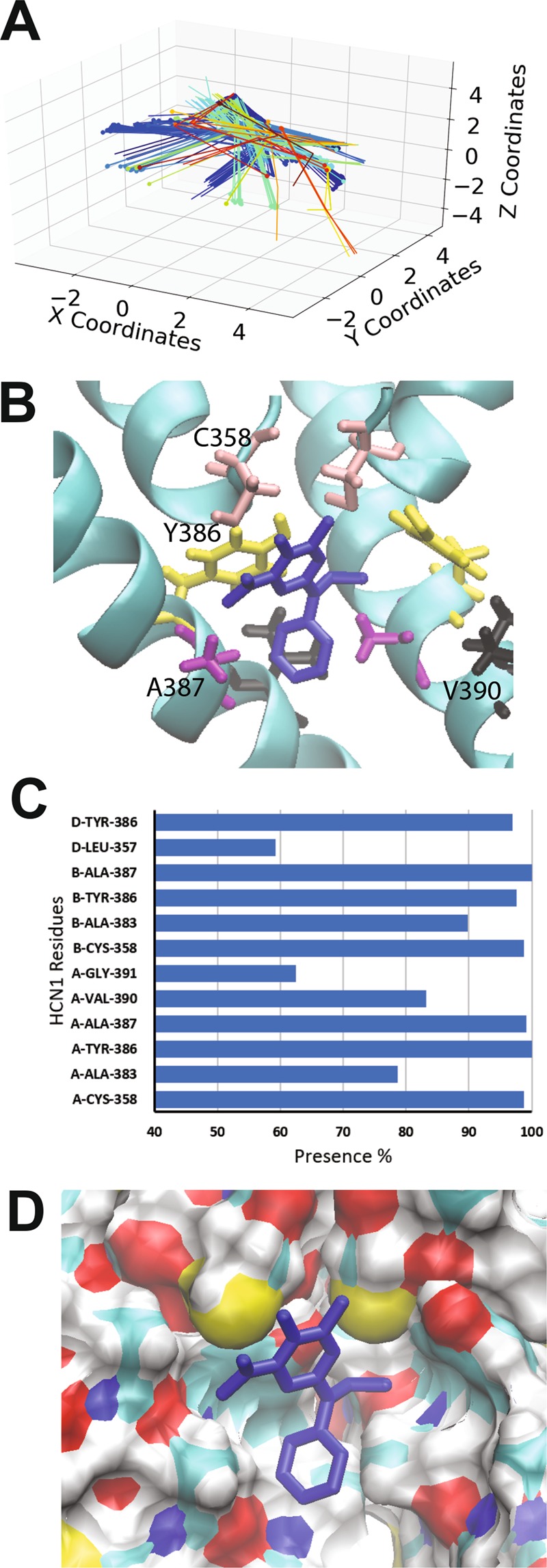
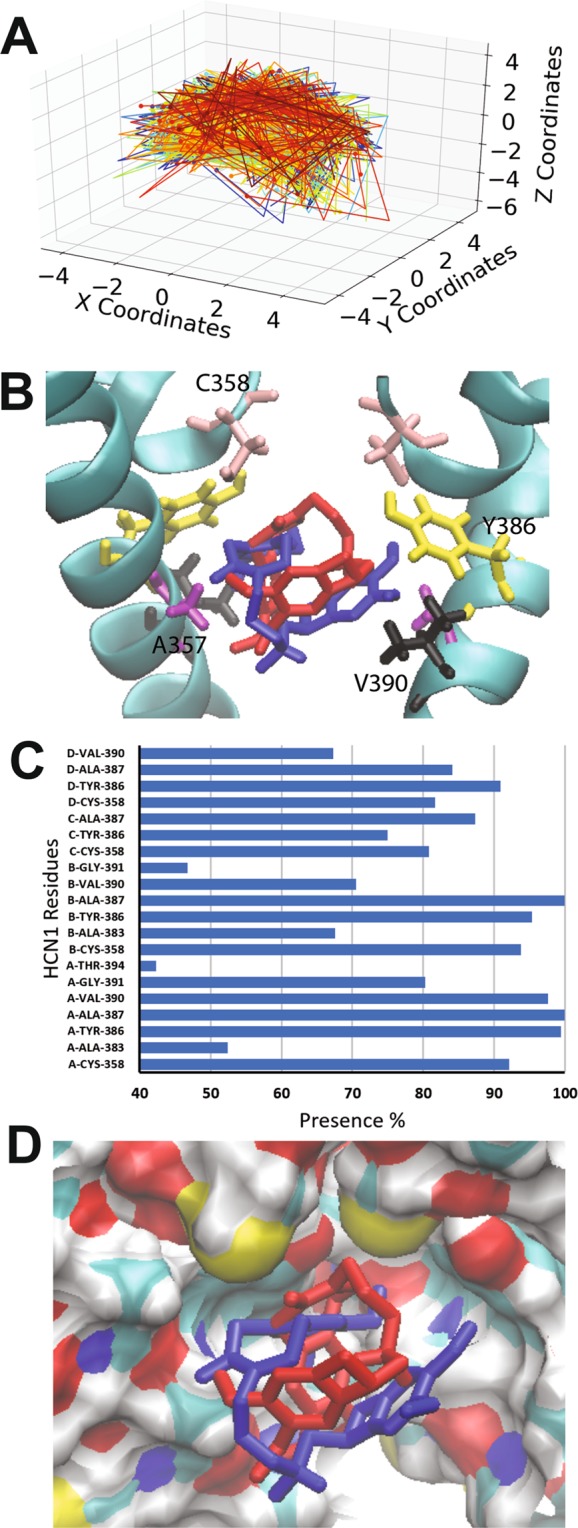
Verification
Claims the paper makes
The claims and statistics of this paper haven’t been checked yet.
Free: it reads the open-access text and checks the first 5 claims that cite a source we can check. Create a free account to check every claim.
Claims other papers make about this one
Each is checked against this paper’s own text: does it say what the citing paper says it does?
The source backs part of the claim, not all of it — or backs it for a different population, condition or comparison.
In the citing paper
“many “isoform-preferring” tools have incomplete pharmacokinetic and off-target profiling, resulting in narrow therapeutic windows and variable central effects [277,298]”
From Synaptic Plasticity—Intrinsic Excitability and Antidepressant Discovery (2026) · cites this paper as [298]
Experimental — accuracy not yet measuredThe cited source says what the claim attributes to it.
In the citing paper
“Canonical blockers such as ivabradine, a clinically approved HCN channel inhibitor, and ZD7288, a widely used experimental HCN channel blocker, bind within the HCN1 pore with modest affinity and broad cross-reactivity”
From Synaptic Plasticity—Intrinsic Excitability and Antidepressant Discovery (2026) · cites this paper as [298]
Self-check
Percentages, sums and reported differences re-computed from the paper’s own numbers.
The self-check needs the paper’s full text.
Citations
Cites
AutoDock4 and AutoDockTools4: Automated docking with selective receptor flexibility
Morris, G. M., Huey, R., Lindstrom, W., Sanner, M. F., Belew, R. K., Goodsell, D. S., & Olson, A. J. (2009) · Journal of Computational Chemistry · doi:10.1002/jcc.21256 · Cited by 25,486
Silhouettes: A graphical aid to the interpretation and validation of cluster analysis
Rousseeuw, P. J. (1987) · Journal of Computational and Applied Mathematics · doi:10.1016/0377-0427(87)90125-7 · Cited by 21,392
CHARMM‐GUI: A web‐based graphical user interface for CHARMM
Jo, S., Kim, T., Iyer, V. G., & Im, W. (2008) · Journal of Computational Chemistry · doi:10.1002/jcc.20945 · Cited by 9,284
Ivabradine and outcomes in chronic heart failure (SHIFT): a randomised placebo-controlled study
Swedberg, K., Komajda, M., Böhm, M., Borer, J. S., Ford, I., Dubost-Brama, A., Lerebours, G., & Tavazzi, L. (2010) · The Lancet · doi:10.1016/s0140-6736(10)61198-1 · Cited by 2,563
Clustal Omega for making accurate alignments of many protein sequences
Sievers, F., & Higgins, D. G. (2018) · Protein Science · doi:10.1002/pro.3290 · Cited by 2,137
Heart Rate, Life Expectancy and the Cardiovascular System: Therapeutic Considerations
Boudoulas, K. D., Borer, J. S., & Boudoulas, H. (2015) · Cardiology · doi:10.1159/000435947 · Cited by 1,938
Böhm, M., Swedberg, K., Komajda, M., Borer, J. S., Ford, I., Dubost-Brama, A., Lerebours, G., & Tavazzi, L. (2010) · The Lancet · doi:10.1016/s0140-6736(10)61259-7 · Cited by 1,099
Fox, K., Ford, I., Steg, P. G., Tendera, M., & Ferrari, R. (2008) · The Lancet · doi:10.1016/s0140-6736(08)61170-8 · Cited by 1,099
Hyperpolarization-Activated Cation Channels: From Genes to Function
Biel, M., Wahl-Schott, C., Michalakis, S., & Zong, X. (2009) · Physiological Reviews · doi:10.1152/physrev.00029.2008 · Cited by 1,003
Fox, K., Ford, I., Steg, P. G., Tendera, M., Robertson, M., & Ferrari, R. (2008) · The Lancet · doi:10.1016/s0140-6736(08)61171-x · Cited by 789
Absence epilepsy and sinus dysrhythmia in mice lacking the pacemaker channel HCN2
Ludwig, A. (2003) · The EMBO Journal · doi:10.1093/emboj/cdg032 · Cited by 534
Moosmang, S., Stieber, J., Zong, X., Biel, M., Hofmann, F., & Ludwig, A. (2001) · European Journal of Biochemistry · doi:10.1046/j.1432-1033.2001.02036.x · Cited by 415
Familial Sinus Bradycardia Associated with a Mutation in the Cardiac Pacemaker Channel
Milanesi, R., Baruscotti, M., Gnecchi-Ruscone, T., & DiFrancesco, D. (2006) · New England Journal of Medicine · doi:10.1056/nejmoa052475 · Cited by 402
Structures of the Human HCN1 Hyperpolarization-Activated Channel
Lee, C.-H., & MacKinnon, R. (2017) · Cell · doi:10.1016/j.cell.2016.12.023 · Cited by 390
Shi, W., Wymore, R., Yu, H., Wu, J., Wymore, R. T., Pan, Z., Robinson, R. B., Dixon, J. E., McKinnon, D., & Cohen, I. S. (1999) · Circulation Research · doi:10.1161/01.res.85.1.e1 · Cited by 382
Two pacemaker channels from human heart with profoundly different activation kinetics
Ludwig, A., Zong, X., Stieber, J., Hullin, R., Hofmann, F., & Biel, M. (1999) · The EMBO Journal · doi:10.1093/emboj/18.9.2323 · Cited by 374
Pacemaker channel dysfunction in a patient with sinus node disease
Schulze-Bahr, E., Neu, A., Friederich, P., Kaupp, U. B., Breithardt, G., Pongs, O., & Isbrandt, D. (2003) · Journal of Clinical Investigation · doi:10.1172/jci16387 · Cited by 366
Influence of Heart Rate on Mortality in a French Population: Role of Age, Gender, and Blood Pressure
Benetos, A., Rudnichi, A., Thomas, F., Safar, M., & Guize, L. (1999) · Hypertension · doi:10.1161/01.hyp.33.1.44 · Cited by 356
HCN2 Ion Channels Play a Central Role in Inflammatory and Neuropathic Pain
Emery, E. C., Young, G. T., Berrocoso, E. M., Chen, L., & McNaughton, P. A. (2011) · Science · doi:10.1126/science.1206243 · Cited by 353
Neuronal Hyperpolarization-Activated Pacemaker Channels Drive Neuropathic Pain
Chaplan, S. R., Guo, H.-Q., Lee, D. H., Luo, L., Liu, C., Kuei, C., Velumian, A. A., Butler, M. P., Brown, S. M., & Dubin, A. E. (2003) · The Journal of Neuroscience · doi:10.1523/jneurosci.23-04-01169.2003 · Cited by 335
Nolan, M. F., Malleret, G., Lee, K. H., Gibbs, E., Dudman, J. T., Santoro, B., Yin, D., Thompson, R. F., Siegelbaum, S. A., Kandel, E. R., et al. (2003) · Cell · doi:10.1016/s0092-8674(03)00884-5 · Cited by 319
BoSmith, R. E., Briggs, I., & Sturgess, N. C. (1993) · British Journal of Pharmacology · doi:10.1111/j.1476-5381.1993.tb13815.x · Cited by 313
Autism-associated SHANK3 haploinsufficiency causes I h channelopathy in human neurons
Yi, F., Danko, T., Botelho, S. C., Patzke, C., Pak, C., Wernig, M., & Südhof, T. C. (2016) · Science · doi:10.1126/science.aaf2669 · Cited by 313
Harris, N. C., & Constanti, A. (1995) · Journal of Neurophysiology · doi:10.1152/jn.1995.74.6.2366 · Cited by 297
Mode of action of bradycardic agent, S 16257, on ionic currents of rabbit sinoatrial node cells
Bois, P., Bescond, J., Renaudon, B., & Lenfant, J. (1996) · British Journal of Pharmacology · doi:10.1111/j.1476-5381.1996.tb15505.x · Cited by 297
Current-dependent Block of Rabbit Sino-Atrial Node If Channels by Ivabradine
Bucchi, A., Baruscotti, M., & DiFrancesco, D. (2002) · The Journal of General Physiology · doi:10.1085/jgp.20028593 · Cited by 289
Seifert, R., Scholten, A., Gauss, R., Mincheva, A., Lichter, P., & Kaupp, U. B. (1999) · Proceedings of the National Academy of Sciences · doi:10.1073/pnas.96.16.9391 · Cited by 277
Ishii, T. M., Takano, M., Xie, L.-H., Noma, A., & Ohmori, H. (1999) · Journal of Biological Chemistry · doi:10.1074/jbc.274.18.12835 · Cited by 275
NOLAN, M., MALLERET, G., DUDMAN, J., BUHL, D., SANTORO, B., GIBBS, E., VRONSKAYA, S., BUZSAKI, G., SIEGELBAUM, S., & KANDEL, E. (2004) · Cell · doi:10.1016/s0092-8674(04)01055-4 · Cited by 274
Baruscotti, M., Bucchi, A., Viscomi, C., Mandelli, G., Consalez, G., Gnecchi-Rusconi, T., Montano, N., Casali, K. R., Micheloni, S., Barbuti, A., et al. (2011) · Proceedings of the National Academy of Sciences · doi:10.1073/pnas.1010122108 · Cited by 271
De novo mutations in HCN1 cause early infantile epileptic encephalopathy
EuroEPINOMICS RES Consortium, Nava, C., Dalle, C., Rastetter, A., Striano, P., de Kovel, C. G. F., Nabbout, R., Cancès, C., Ville, D., Brilstra, E. H., et al. (2014) · Nature Genetics · doi:10.1038/ng.2952 · Cited by 234
Ueda, K., Nakamura, K., Hayashi, T., Inagaki, N., Takahashi, M., Arimura, T., Morita, H., Higashiuesato, Y., Hirano, Y., Yasunami, M., et al. (2004) · Journal of Biological Chemistry · doi:10.1074/jbc.m311953200 · Cited by 229
HCN4 provides a ‘depolarization reserve’ and is not required for heart rate acceleration in mice
Herrmann, S., Stieber, J., Stöckl, G., Hofmann, F., & Ludwig, A. (2007) · The EMBO Journal · doi:10.1038/sj.emboj.7601868 · Cited by 222
Action of the hyperpolarization-activated current ( I h ) blocker ZD 7288 in hippocampal CA1 neurons
Gasparini, S., & DiFrancesco, D. (1997) · Pfl�gers Archiv European Journal of Physiology · doi:10.1007/s004240050488 · Cited by 222
Functional Heteromerization of HCN1 and HCN2 Pacemaker Channels
Ulens, C., & Tytgat, J. (2001) · Journal of Biological Chemistry · doi:10.1074/jbc.c000738200 · Cited by 216
Milano, A., Vermeer, A. M. C., Lodder, E. M., Barc, J., Verkerk, A. O., Postma, A. V., van der Bilt, I. A. C., Baars, M. J. H., van Haelst, P. L., Caliskan, K., et al. (2014) · Journal of the American College of Cardiology · doi:10.1016/j.jacc.2014.05.045 · Cited by 205
Crotti, L., Marcou, C. A., Tester, D. J., Castelletti, S., Giudicessi, J. R., Torchio, M., Medeiros-Domingo, A., Simone, S., Will, M. L., Dagradi, F., et al. (2012) · Journal of the American College of Cardiology · doi:10.1016/j.jacc.2012.04.037 · Cited by 201
Voltage-sensing mechanism is conserved among ion channels gated by opposite voltages
Männikkö, R., Elinder, F., & Larsson, H. P. (2002) · Nature · doi:10.1038/nature01038 · Cited by 197
Loss of Dendritic HCN1 Subunits Enhances Cortical Excitability and Epileptogenesis
Huang, Z., Walker, M. C., & Shah, M. M. (2009) · The Journal of Neuroscience · doi:10.1523/jneurosci.1531-09.2009 · Cited by 195
Nof, E., Luria, D., Brass, D., Marek, D., Lahat, H., Reznik-Wolf, H., Pras, E., Dascal, N., Eldar, M., & Glikson, M. (2007) · Circulation · doi:10.1161/circulationaha.107.706887 · Cited by 178
Properties of ivabradine‐induced block of HCN1 and HCN4 pacemaker channels
Bucchi, A., Tognati, A., Milanesi, R., Baruscotti, M., & DiFrancesco, D. (2006) · The Journal of Physiology · doi:10.1113/jphysiol.2005.100776 · Cited by 175
Prefrontal cortical network connections: key site of vulnerability in stress and schizophrenia
Arnsten, A. F. T. (2011) · International Journal of Developmental Neuroscience · doi:10.1016/j.ijdevneu.2011.02.006 · Cited by 172
Homology modeling by the ICM method
Cardozo, T., Totrov, M., & Abagyan, R. (1995) · Proteins: Structure, Function, and Bioinformatics · doi:10.1002/prot.340230314 · Cited by 170
Blocker State Dependence and Trapping in Hyperpolarization-Activated Cation Channels
Shin, K. S., Rothberg, B. S., & Yellen, G. (2001) · The Journal of General Physiology · doi:10.1085/jgp.117.2.91 · Cited by 166
Sudden infant death syndrome: How significant are the cardiac channelopathies?
TESTER, D., & ACKERMAN, M. (2005) · Cardiovascular Research · doi:10.1016/j.cardiores.2005.02.013 · Cited by 163
Differential Expression of Ion Channel Transcripts in Atrial Muscle and Sinoatrial Node in Rabbit
Tellez, J. O., Dobrzynski, H., Greener, I. D., Graham, G. M., Laing, E., Honjo, H., Hubbard, S. J., Boyett, M. R., & Billeter, R. (2006) · Circulation Research · doi:10.1161/01.res.0000251717.98379.69 · Cited by 162
Structure of a eukaryotic cyclic-nucleotide-gated channel
Li, M., Zhou, X., Wang, S., Michailidis, I., Gong, Y., Su, D., Li, H., Li, X., & Yang, J. (2017) · Nature · doi:10.1038/nature20819 · Cited by 158
Schweizer, P. A., Schröter, J., Greiner, S., Haas, J., Yampolsky, P., Mereles, D., Buss, S. J., Seyler, C., Bruehl, C., Draguhn, A., et al. (2014) · Journal of the American College of Cardiology · doi:10.1016/j.jacc.2014.06.1155 · Cited by 144
Paspalas, C. D., Wang, M., & Arnsten, A. F. T. (2013) · Cerebral Cortex · doi:10.1093/cercor/bhs152 · Cited by 136
Mistrík, P., Mader, R., Michalakis, S., Weidinger, M., Pfeifer, A., & Biel, M. (2005) · Journal of Biological Chemistry · doi:10.1074/jbc.m502696200 · Cited by 130
Harzheim, D., Pfeiffer, K. H., Fabritz, L., Kremmer, E., Buch, T., Waisman, A., Kirchhof, P. F., Kaupp, U. B., & Seifert, R. (2008) · The EMBO Journal · doi:10.1038/emboj.2008.3 · Cited by 128
Augmented currents of an HCN2 variant in patients with febrile seizure syndromes
Dibbens, L. M., Reid, C. A., Hodgson, B., Thomas, E. A., Phillips, A. M., Gazina, E., Cromer, B. A., Clarke, A. L., Baram, T. Z., Scheffer, I. E., et al. (2010) · Annals of Neurology · doi:10.1002/ana.21909 · Cited by 113
Role of HCN4 channel in preventing ventricular arrhythmia
Ueda, K., Hirano, Y., Higashiuesato, Y., Aizawa, Y., Hayashi, T., Inagaki, N., Tana, T., Ohya, Y., Takishita, S., Muratani, H., et al. (2009) · Journal of Human Genetics · doi:10.1038/jhg.2008.16 · Cited by 106
S4 Movement in a Mammalian HCN Channel
Vemana, S., Pandey, S., & Larsson, H. P. (2003) · The Journal of General Physiology · doi:10.1085/jgp.200308916 · Cited by 106
Duhme, N., Schweizer, P. A., Thomas, D., Becker, R., Schröter, J., Barends, T. R. M., Schlichting, I., Draguhn, A., Bruehl, C., Katus, H. A., et al. (2013) · European Heart Journal · doi:10.1093/eurheartj/ehs391 · Cited by 104
Goethals, M., Raes, A., & van Bogaert, P. P. (1993) · Circulation · doi:10.1161/01.cir.88.5.2389 · Cited by 101
Distribution of the pacemaker HCN4 channel mRNA and protein in the rabbit sinoatrial node
Brioschi, C., Micheloni, S., Tellez, J. O., Pisoni, G., Longhi, R., Moroni, P., Billeter, R., Barbuti, A., Dobrzynski, H., Boyett, M. R., et al. (2009) · Journal of Molecular and Cellular Cardiology · doi:10.1016/j.yjmcc.2009.04.009 · Cited by 100
Gamo, N. J., Lur, G., Higley, M. J., Wang, M., Paspalas, C. D., Vijayraghavan, S., Yang, Y., Ramos, B. P., Peng, K., Kata, A., et al. (2015) · Biological Psychiatry · doi:10.1016/j.biopsych.2015.01.009 · Cited by 97
DiFrancesco, J. C., Barbuti, A., Milanesi, R., Coco, S., Bucchi, A., Bottelli, G., Ferrarese, C., Franceschetti, S., Terragni, B., Baruscotti, M., et al. (2011) · The Journal of Neuroscience · doi:10.1523/jneurosci.3727-11.2011 · Cited by 96
DiFrancesco, D. (1994) · Pflügers Archiv - European Journal of Physiology · doi:10.1007/bf00585943 · Cited by 88
Tang, B., Sander, T., Craven, K. B., Hempelmann, A., & Escayg, A. (2007) · Neurobiology of Disease · doi:10.1016/j.nbd.2007.08.006 · Cited by 86
Schweizer, P. A., Duhme, N., Thomas, D., Becker, R., Zehelein, J., Draguhn, A., Bruehl, C., Katus, H. A., & Koenen, M. (2010) · Circulation Arrhythmia and Electrophysiology · doi:10.1161/circep.110.949768 · Cited by 84
Inaugural Editorial: A New Era for Circulation Research
Marbán, E. (1999) · Circulation Research · doi:10.1161/01.res.85.1.1 · Cited by 84
Fundamental Properties of Local Anesthetics
Bräu, M. E., Vogel, W., & Hempelmann, G. (1998) · Anesthesia & Analgesia · doi:10.1097/00000539-199810000-00026 · Cited by 83
A novel trafficking-defective HCN4 mutation is associated with early-onset atrial fibrillation
Macri, V., Mahida, S., Zhang, M. L., Sinner, M. F., Dolmatova, E. V., Tucker, N. R., McLellan, M. A., Shea, M. A., Milan, D. J., Lunetta, K. L., et al. (2014) · Heart Rhythm · doi:10.1016/j.hrthm.2014.03.002 · Cited by 80
Kuwabara, Y., Kuwahara, K., Takano, M., Kinoshita, H., Arai, Y., Yasuno, S., Nakagawa, Y., Igata, S., Usami, S., Minami, T., et al. (2013) · Journal of the American Heart Association · doi:10.1161/jaha.113.000150 · Cited by 79
Lee, D. H., Chang, L., Sorkin, L. S., & Chaplan, S. R. (2005) · Journal of Pain · doi:10.1016/j.jpain.2005.02.002 · Cited by 79
HCN Channels Modulators: The Need for Selectivity
Novella Romanelli, M., Sartiani, L., Masi, A., Mannaioni, G., Manetti, D., Mugelli, A., & Cerbai, E. (2016) · Current Topics in Medicinal Chemistry · doi:10.2174/1568026616999160315130832 · Cited by 73
Identification of the Molecular Site of Ivabradine Binding to HCN4 Channels
Bucchi, A., Baruscotti, M., Nardini, M., Barbuti, A., Micheloni, S., Bolognesi, M., & DiFrancesco, D. (2013) · PLoS ONE · doi:10.1371/journal.pone.0053132 · Cited by 67
A Novel Mutation in theHCN4Gene Causes Symptomatic Sinus Bradycardia in Moroccan Jews
Laish‐Farkash, A., Glikson, M., Brass, D., Marek‐Yagel, D., Pras, E., Dascal, N., Antzelevitch, C. N., Nof, E., REZNIK, H., Eldar, M., et al. (2010) · Journal of Cardiovascular Electrophysiology · doi:10.1111/j.1540-8167.2010.01844.x · Cited by 66
Tu, E., Waterhouse, L., Duflou, J., Bagnall, R. D., & Semsarian, C. (2011) · Brain Pathology · doi:10.1111/j.1750-3639.2011.00500.x · Cited by 62
Cardiovascular actions of N-allyl-clonidine (ST 567), a substance with specific bradycardic action
Kobinger, W., Lillie, C., & Pichler, L. (1979) · European Journal of Pharmacology · doi:10.1016/0014-2999(79)90005-0 · Cited by 61
Nakamura, Y., Shi, X., Numata, T., Mori, Y., Inoue, R., Lossin, C., Baram, T. Z., & Hirose, S. (2013) · PLoS ONE · doi:10.1371/journal.pone.0080376 · Cited by 60
Sun, Q., Xing, G., Tu, H., Han, J., & Wan, Y. (2004) · Brain Research · doi:10.1016/j.brainres.2004.10.033 · Cited by 60
Knaus, A., Zong, X., Beetz, N., Jahns, R., Lohse, M. J., Biel, M., & Hein, L. (2007) · Circulation · doi:10.1161/circulationaha.106.667675 · Cited by 58
Cheng, L., Kinard, K. I., Rajamani, R., & Sanguinetti, M. C. (2007) · Journal of Pharmacology and Experimental Therapeutics · doi:10.1124/jpet.107.121467 · Cited by 54
A Homology Model of the Pore Region of HCN Channels
Giorgetti, A., Carloni, P., Mistrík, P., & Torre, V. (2005) · Biophysical Journal · doi:10.1529/biophysj.104.045286 · Cited by 52
Postmortem review and genetic analysis in sudden infant death syndrome: an 11-year review
Evans, A., Bagnall, R. D., Duflou, J. A., & Semsarian, C. (2013) · Human Pathology · doi:10.1016/j.humpath.2013.01.024 · Cited by 50
Griguoli, M., Maul, A., Nguyen, C., Giorgetti, A., Carloni, P., & Cherubini, E. (2010) · The Journal of Neuroscience · doi:10.1523/jneurosci.2446-10.2010 · Cited by 41
Ih Blockers Have a Potential of Antiepileptic Effects
Kitayama, M., Miyata, H., Yano, M., Saito, N., Matsuda, Y., Yamauchi, T., & Kogure, S. (2003) · Epilepsia · doi:10.1046/j.1528-1157.2003.22702.x · Cited by 38
Bischoff, U., Bräu, M. E., Vogel, W., Hempelmann, G., & Olschewski, A. (2003) · British Journal of Pharmacology · doi:10.1038/sj.bjp.0705363 · Cited by 33
Alinidine modifies the pacemaker current in sheep Purkinje fibers
Snyders, D. J., & van Bogaert, P. (1987) · Pflügers Archiv - European Journal of Physiology · doi:10.1007/bf00581900 · Cited by 33
A Novel HCN4 Mutation, G1097W, Is Associated With Atrioventricular Block
Zhou, J., Ding, W., Makiyama, T., Miyamoto, A., Matsumoto, Y., Kimura, H., Tarutani, Y., Zhao, J. H., Wu, J., Zang, W., et al. (2014) · Circulation Journal · doi:10.1253/circj.cj-13-0996 · Cited by 28
Electrophysiological study of alinidine in voltage clamped rabbit sino-atrial node cells
Satoh, H., & Hashimoto, K. (1986) · European Journal of Pharmacology · doi:10.1016/0014-2999(86)90492-9 · Cited by 27
Wu, S., Gao, W., Xie, C., Xu, X., Vorvis, C., Marni, F., Hackett, A. R., Liu, Q., & Zhou, L. (2012) · The Journal of General Physiology · doi:10.1085/jgp.201110749 · Cited by 26
Haemodynamic and electrophysiologic actions of alinidine in the dog.
Traunecker, W., & Walland, A. (1980) · PubMed · Cited by 26
Lillie, C., & Kobinger, W. (1983) · European Journal of Pharmacology · doi:10.1016/0014-2999(83)90046-8 · Cited by 21
Briggs, I., BoSmith, R. E., & Heapy, C. G. (1994) · Journal of Cardiovascular Pharmacology · doi:10.1097/00005344-199409000-00005 · Cited by 20
Ectopic automaticity induced in ventricular myocytes by transgenic overexpression of HCN2
Oshita, K., Itoh, M., Hirashima, S., Kuwabara, Y., Ishihara, K., Kuwahara, K., Nakao, K., Kimura, T., Nakamura, K., Ushijima, K., et al. (2015) · Journal of Molecular and Cellular Cardiology · doi:10.1016/j.yjmcc.2014.12.019 · Cited by 18
Probing the bradycardic drug binding receptor of HCN-encoded pacemaker channels
Chan, Y.-C., Wang, K., Au, K. W., Lau, C.-P., Tse, H., & Li, R. A. (2009) · Pflügers Archiv - European Journal of Physiology · doi:10.1007/s00424-009-0719-2 · Cited by 16
Putrenko, I., Yip, R. H. L., Schwarz, S. K. W., & Accili, E. A. (2017) · Scientific Reports · doi:10.1038/s41598-017-01253-x · Cited by 10
(1998) · doi:10.1002/(sici)1096-987x(19981115)19:14<1639::aid-jcc10>3.0.co;2-b
Research works printed but not linked: 1
- Stockhaus, K. In Problems of Drug Dependence 355-366 (Cambridge: National Academy of Sciences 1977).
Cited by
Gating movements and ion permeation in HCN4 pacemaker channels
Saponaro, A., Bauer, D., Giese, M. H., Swuec, P., Porro, A., Gasparri, F., Sharifzadeh, A. S., Chaves-Sanjuán, A., Alberio, L., Parisi, G., et al. (2021) · Molecular Cell · doi:10.1016/j.molcel.2021.05.033 · Cited by 98
Cardiac and neuronal HCN channelopathies
Rivolta, I., Binda, A., Masi, A., & DiFrancesco, J. C. (2020) · Pflügers Archiv - European Journal of Physiology · doi:10.1007/s00424-020-02384-3 · Cited by 96
Kessi, M., Peng, J., Duan, H., He, H., Chen, B., Xiong, J., Wang, Y. X., Yang, L., Wang, G., Kiprotich, K., et al. (2022) · Frontiers in Molecular Neuroscience · doi:10.3389/fnmol.2022.807202 · Cited by 51
Physiology and Therapeutic Potential of SK, H, and M Medium AfterHyperPolarization Ion Channels
Dwivedi, D., & Bhalla, U. S. (2021) · Frontiers in Molecular Neuroscience · doi:10.3389/fnmol.2021.658435 · Cited by 30
Effect of ivabradine on cognitive functions of rats with scopolamine-induced dementia
Assi, A.-A. A., Abdelnabi, S., Attaai, A., & Abd-ellatief, R. B. (2022) · Scientific Reports · doi:10.1038/s41598-022-20963-5 · Cited by 24
Metadata
- Authors
- Tanguay, J., Callahan, K. M., & D’Avanzo, N.
- Affiliations
- Université de Montréal (CA)
- Corresponding author
- D’Avanzo, Nazzareno
- ORCID
- D’Avanzo, Nazzareno
- Venue
- Scientific Reports
- Published
- 2019-01-24
- Volume
- 9
- Issue
- 1
- Pages
- 465-465
- ISSN
- 2045-2322 (ISSN-L)
- PMC
- PMC6345760
- OpenAlex
- W2911315107
- Cited by
- 29
- References
- 92
- Citations by year
- 2026: 1 · 2025: 1 · 2024: 5 · 2023: 5 · 2022: 7 · 2021: 6 · 2020: 4
- FWCI
- 1.41
- Type
- journal article
- Language
- en
- Open access
- gold
- doi.org
- Licence
- cc-by
- creativecommons.org/licenses/by/4.0 (tdm)
- creativecommons.org/licenses/by/4.0 (vor)
- Locations
- Scientific Reports (publishedVersion, cc-by)
- Europe PMC (PubMed Central) (publishedVersion, cc-by)
- PubMed Central (publishedVersion, cc-by)
- PubMed (publishedVersion)
- DOAJ (DOAJ: Directory of Open Access Journals) (submittedVersion)
- Topics
- Life Sciences › Biochemistry, Genetics and Molecular Biology › Molecular Biology › Ion channel regulation and function
- Health Sciences › Medicine › Cardiology and Cardiovascular Medicine › Cardiac electrophysiology and arrhythmias
- Life Sciences › Pharmacology, Toxicology and Pharmaceutics › Drug Discovery › Computational Drug Discovery Methods
- Keywords
- HCN1 channels, HCN channels, drug binding sites, channel pore, hydrophobic groove, ivabradine, ZD7288, lidocaine, alinidine, binding affinity, molecular docking, pacemaker cells, epilepsy, neuropathic pain
- MeSH terms
- Ivabradine, Amino Acids, Animals, Binding Sites, Humans, Lidocaine, Ligands, Protein Binding, Structure-Activity Relationship, Drug Discovery, Molecular Dynamics Simulation, Molecular Docking Simulation, Hyperpolarization-Activated Cyclic Nucleotide-Gated Channels
About these checks
Registry, retraction, Cites and statistics results are computed, not judged, with one exception: a printed reference that no index lists is read once by a model before it counts as a citation error. Claims are extracted by a model and kept only when their quote appears verbatim in the text; each cited source is then checked, with a model’s help, for whether it says what the claim relies on. Those verdicts can be wrong — read the claim’s quote and the cited source before relying on one.
Statistics and arithmetic are recomputed, not judged.
Confidence bands are shown only for fields calibrated on our annotated test set. None is calibrated yet, so no band is shown.
What counts as a claim ›How we measure confidence ›How we check this ›
Are you an author, or do you see a problem with this page? Request a review
Data sources
Bibliographic data: Semantic Scholar, OpenAlex, Crossref.
Contains information from the Semantic Scholar Academic Graph Datasets, made available under the ODC Attribution License (ODC-BY 1.0).
Semantic Scholar’s data is described in: Kinney, R., et al. (2023). The Semantic Scholar Open Data Platform. arXiv:2301.10140.
