

Downregulation of M-channels in lateral habenula mediates hyperalgesia during alcohol withdrawal in rats
Open accessThe DOI matches its Crossref record; 71 of the 71 references it cites were found in a registry or an index.
Abstract
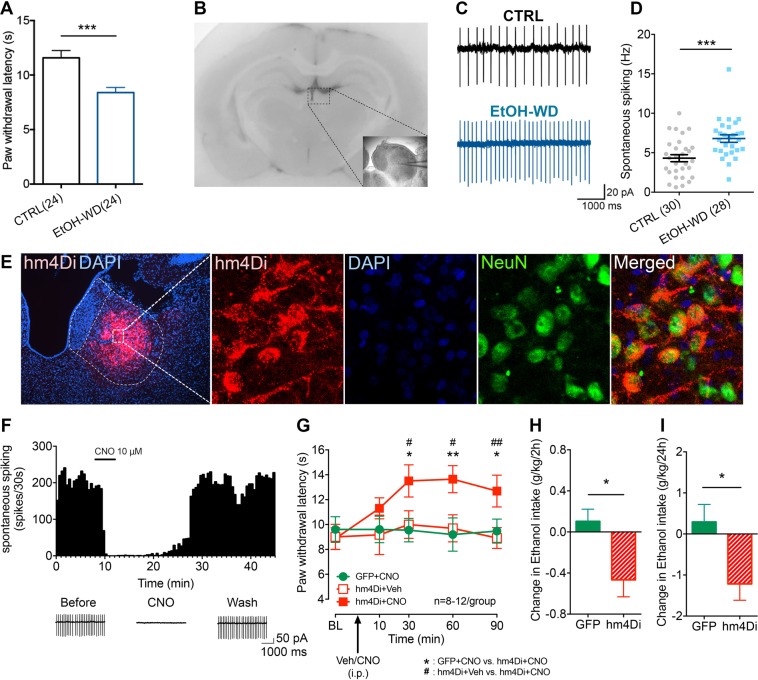
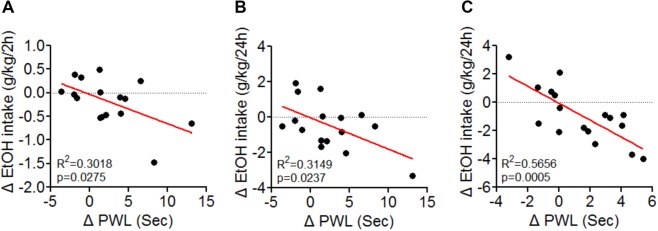
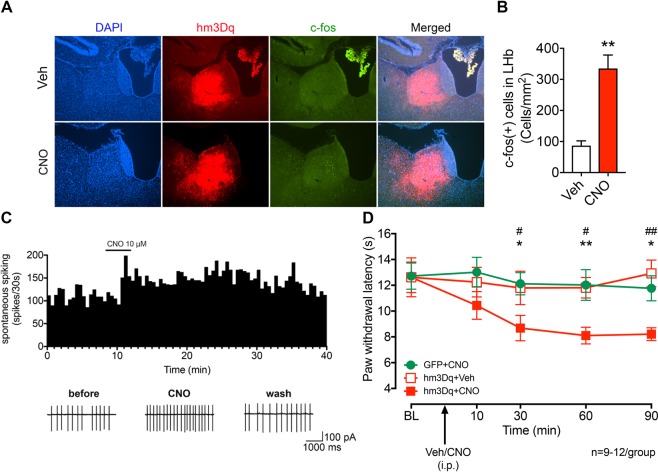
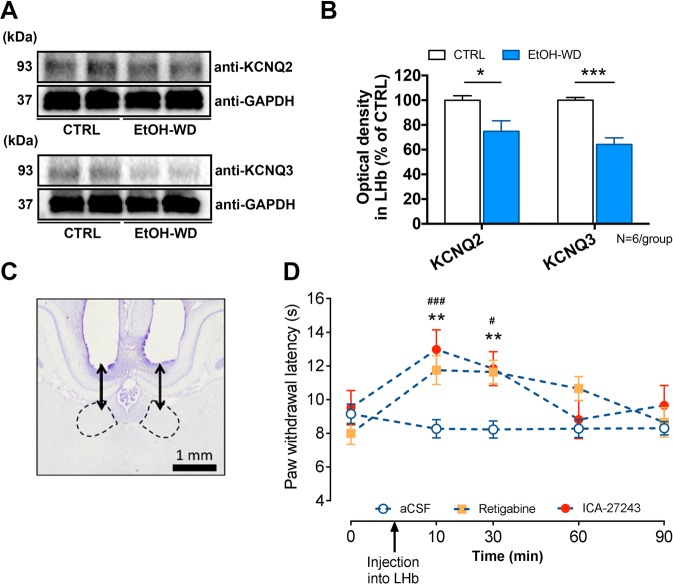
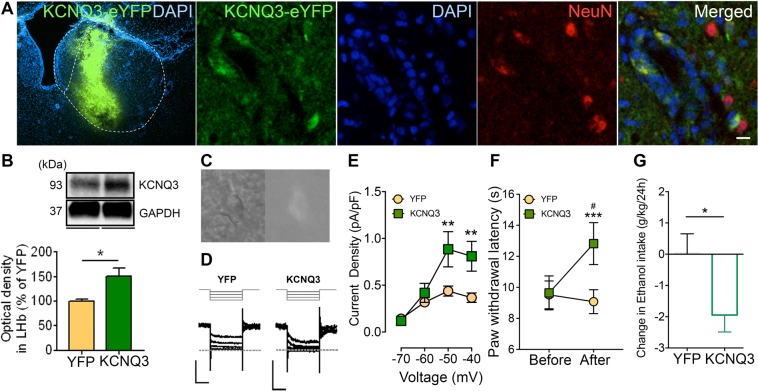
Hyperalgesia often occurs in alcoholics, especially during abstinence, yet the underlying mechanisms remain elusive. The lateral habenula (LHb) has been implicated in the pathophysiology of pain and alcohol use disorders. Suppression of m-type potassium channels (M-channels) has been found to contribute to the hyperactivity of LHb neurons of rats withdrawn from chronic alcohol administration. Here, we provided evidence that LHb M-channels may contribute to hyperalgesia. Compared to alcohol naïve counterparts, in male Long-Evans rats at 24-hours withdrawal from alcohol administration under the intermittent access paradigm for eight weeks, hyperalgesia was evident (as measured by paw withdrawal latencies in the Hargreaves Test), which was accompanied with higher basal activities of LHb neurons in brain slices, and lower M-channel protein expression. Inhibition of LHb neurons by chemogenetics, or pharmacological activation of M-channels, as well as overexpression of M-channels’ subunit KCNQ3, relieved hyperalgesia and decreased relapse-like alcohol consumption. In contrast, chemogenetic activation of LHb neurons induced hyperalgesia in alcohol-naive rats. These data reveal a central role for the LHb in hyperalgesia during alcohol withdrawal, which may be due in part to the suppression of M-channels and, thus, highlights M-channels in the LHb as a potential therapeutic target for hyperalgesia in alcoholics.
Overview
The claims and statistics of this paper haven’t been checked yet.
Free: it reads the open-access text and checks the first 5 claims that cite a source we can check. Create a free account to check every claim.
Integrity signals
Registry
Cites
Statistics
Figures
Verification
Claims the paper makes
The claims and statistics of this paper haven’t been checked yet.
Free: it reads the open-access text and checks the first 5 claims that cite a source we can check. Create a free account to check every claim.
Claims other papers make about this one
Each is checked against this paper’s own text: does it say what the citing paper says it does?
The cited source says what the claim attributes to it.
In the citing paper
“Alcohol withdrawal-induced hyperalgesia and relapse-like alcohol consumption were reversed by the chemogenetic inhibition of lateral habenula neurons, the pharmacological activation of M-channels, and the overexpression of the M-channel subunit potassium voltage-gated channel subfamily KQT member 3 (Kang et al., 2019).”
From Drug Addiction: Hyperkatifeia/Negative Reinforcement as a Framework for Medications Development (2021) · cites this paper as Kang et al., 2019
Self-check
Percentages, sums and reported differences re-computed from the paper’s own numbers.
The self-check needs the paper’s full text.
Citations
Cites
The Rat Brain in Stereotaxic Coordinates
(1982) · Elsevier eBooks · doi:10.1016/c2009-0-63235-9 · Cited by 51,963
Control of memory formation through regulated expression of a CaMKII transgene
Mayford, M., Bach, M. E., Huang, Y.-Y., Wang, L., Hawkins, R. D., & Kandel, E. R. (1996) · Science · doi:10.1126/science.274.5293.1678 · Cited by 1,550
Mechanisms of neuropathic pain
Campbell, J. N., & Meyer, R. A. (2006) · Neuron · doi:10.1016/j.neuron.2006.09.021 · Cited by 1,471
Muscarinic suppression of a novel voltage-sensitive K+ current in a vertebrate neurone
Brown, D. A., & Adams, P. R. (1980) · Nature · doi:10.1038/283673a0 · Cited by 1,444
Ossipov, M. H., Dussor, G. O., & Porreca, F. (2010) · Journal of Clinical Investigation · doi:10.1172/jci43766 · Cited by 1,159
Chemogenetics revealed: DREADD occupancy and activation via converted clozapine
Gomez, J. L., Bonaventura, J., Lesniak, W., Mathews, W. B., Sysa-Shah, P., Rodriguez, L. A., Ellis, R. J., Richie, C. T., Harvey, B. K., Dannals, R. F., et al. (2017) · Science · doi:10.1126/science.aan2475 · Cited by 980
The habenula: from stress evasion to value-based decision-making
Hikosaka, O. (2010) · Nature Reviews Neuroscience · doi:10.1038/nrn2866 · Cited by 955
Pathways modulating neural KCNQ/M (Kv7) potassium channels
Delmas, P., & Brown, D. A. (2005) · Nature Reviews Neuroscience · doi:10.1038/nrn1785 · Cited by 686
Intermittent Access to 20% Ethanol Induces High Ethanol Consumption in Long–Evans and Wistar Rats
Simms, J. A., Steensland, P., Medina, B., Abernathy, K. E., Chandler, L. J., Wise, R., & Bartlett, S. E. (2008) · Alcoholism: Clinical and Experimental Research · doi:10.1111/j.1530-0277.2008.00753.x · Cited by 610
Astroglial Kir4.1 in the lateral habenula drives neuronal bursts in depression
Cui, Y., Yang, Y., Ni, Z., Dong, Y., Cai, G., Foncelle, A., Ma, S., Sang, K., Tang, S., Li, Y., et al. (2018) · Nature · doi:10.1038/nature25752 · Cited by 597
Activation of lateral habenula inputs to the ventral midbrain promotes behavioral avoidance
Stamatakis, A. M., & Stuber, G. D. (2012) · Nature Neuroscience · doi:10.1038/nn.3145 · Cited by 564
Chemogenetic Tools to Interrogate Brain Functions
Sternson, S. M., & Roth, B. L. (2014) · Annual Review of Neuroscience · doi:10.1146/annurev-neuro-071013-014048 · Cited by 511
Reward processing by the lateral habenula in normal and depressive behaviors
Proulx, C. D., Hikosaka, O., & Malinow, R. (2014) · Nature Neuroscience · doi:10.1038/nn.3779 · Cited by 461
Voluntary ethanol intake in rats following exposure to ethanol on various schedules
Wise, R. A. (1973) · Psychopharmacologia · doi:10.1007/bf00414034 · Cited by 382
An after‐hyperpolarization of medium duration in rat hippocampal pyramidal cells.
Storm, J. F. (1989) · The Journal of Physiology · doi:10.1113/jphysiol.1989.sp017491 · Cited by 319
Navratilova, E., Xie, J. Y., Okun, A., Qu, C., Eyde, N., Ci, S., Ossipov, M. H., King, T., Fields, H. L., & Porreca, F. (2012) · Proceedings of the National Academy of Sciences · doi:10.1073/pnas.1214605109 · Cited by 313
Cooper, E. C., Harrington, E., Jan, Y. N., & Jan, L. Y. (2001) · The Journal of Neuroscience · doi:10.1523/jneurosci.21-24-09529.2001 · Cited by 305
Molecular characterization of the subnuclei in rat habenula
Aizawa, H., Kobayashi, M., Tanaka, S., Fukai, T., & Okamoto, H. (2012) · Journal of Comparative Neurology · doi:10.1002/cne.23167 · Cited by 285
The complex role of serotonin and 5-HT receptors in chronic pain
Bardin, L. (2011) · Behavioural Pharmacology · doi:10.1097/fbp.0b013e328349aae4 · Cited by 269
The dorsal raphe: An important nucleus in pain modulation
Qing-Ping, W., & Nakai, Y. (1994) · Brain Research Bulletin · doi:10.1016/0361-9230(94)90143-0 · Cited by 263
Neuronal and microglial mechanisms of neuropathic pain
Zhuo, M., Wu, G., & Wu, L.-J. (2011) · Molecular Brain · doi:10.1186/1756-6606-4-31 · Cited by 257
Zhao, J.-Y., Liang, L., Gu, X., Li, Z., Wu, S., Sun, L., Atianjoh, F. E., Feng, J., Mo, K., Jia, S., et al. (2017) · Nature Communications · doi:10.1038/ncomms14712 · Cited by 221
Self-citationMedications development to treat alcohol dependence: a vision for the next decade
Litten, R. Z., Egli, M., Heilig, M., Cui, C., Fertig, J. B., Ryan, M. L., Falk, D. E., Moss, H., Huebner, R., & Noronha, A. (2012) · Addiction Biology · doi:10.1111/j.1369-1600.2012.00454.x · Cited by 202
Pain and Psychology-A Reciprocal Relationship.
Vadivelu, N., Kai, A., Kodumudi, G., Babayan, K., Fontes, M. L., & Burg, M. M. (2017) · Europe PMC (PubMed Central) · Cited by 189
Amat, J., Sparks, P. D., Matus-Amat, P., Griggs, J., Watkins, L. R., & Maier, S. F. (2001) · Brain Research · doi:10.1016/s0006-8993(01)02934-1 · Cited by 185
KCNQ channel openers reverse depressive symptoms via an active resilience mechanism
Friedman, A. K., Juarez, B., Ku, S. M., Zhang, H., Calizo, R. C., Walsh, J. J., Chaudhury, D., Zhang, S., Hawkins, A., Dietz, D. M., et al. (2016) · Nature Communications · doi:10.1038/ncomms11671 · Cited by 172
Hibino, H., Fujita, A., Iwai, K., Yamada, M., & Kurachi, Y. (2004) · Journal of Biological Chemistry · doi:10.1074/jbc.m405985200 · Cited by 171
Aversive stimuli drive hypothalamus-to-habenula excitation to promote escape behavior
Lecca, S., Meye, F. J., Trusel, M., Tchenio, A., Harris, J., Schwarz, M. K., Burdakov, D., Georges, F., & Mameli, M. (2017) · eLife · doi:10.7554/elife.30697 · Cited by 166
Zhao, H., Zhang, B., Yang, S., & Rusak, B. (2014) · Behavioural Brain Research · doi:10.1016/j.bbr.2014.09.016 · Cited by 164
CNO Evil? Considerations for the Use of DREADDs in Behavioral Neuroscience
Mahler, S. V., & Aston‐Jones, G. (2018) · Neuropsychopharmacology · doi:10.1038/npp.2017.299 · Cited by 163
Morgan, M. M., Whittier, K. L., Hegarty, D. M., & Aicher, S. A. (2008) · Pain · doi:10.1016/j.pain.2008.09.009 · Cited by 150
Pain modulating and reward systems: A single brain mechanism?
Magnen, J. L., Marfaing-Jallat, P., Miceli, D., & Devos, M. (1980) · Pharmacology Biochemistry and Behavior · doi:10.1016/0091-3057(80)90157-4 · Cited by 145
Contribution of KCNQ2 and KCNQ3 to the medium and slow afterhyperpolarization currents
Tzingounis, A. V., & Nicoll, R. A. (2008) · Proceedings of the National Academy of Sciences · doi:10.1073/pnas.0810535105 · Cited by 140
Unmasking the mysteries of the habenula in pain and analgesia
Shelton, L., Becerra, L., & Borsook, D. (2012) · Progress in Neurobiology · doi:10.1016/j.pneurobio.2012.01.004 · Cited by 130
Wickenden, A. D., Krajewski, J. L., London, B., Wagoner, P. K., Wilson, W. A., Clark, S., Roeloffs, R., McNaughton-Smith, G. A., & Rigdon, G. C. (2007) · Molecular Pharmacology · doi:10.1124/mol.107.043216 · Cited by 129
Increased pain sensitivity in alcohol withdrawal syndrome
Jochum, T., Boettger, M. K., Burkhardt, C., Juckel, G., & Bär, K. (2010) · European Journal of Pain · doi:10.1016/j.ejpain.2009.11.008 · Cited by 128
Mapping pain activation and connectivity of the human habenula
Shelton, L., Pendse, G., Maleki, N., Moulton, E. A., Lebel, A., Becerra, L., & Borsook, D. (2012) · Journal of Neurophysiology · doi:10.1152/jn.00012.2012 · Cited by 123
Morgan, M. M., Sohn, J., & Liebeskind, J. C. (1989) · Brain Research · doi:10.1016/0006-8993(89)90461-7 · Cited by 122
Li, X. Y., McCay, P. B., Zughaib, M., Jeroudi, M. O., Triana, J. F., & Bolli, R. (1993) · Journal of Clinical Investigation · doi:10.1172/jci116608 · Cited by 111
Koike, H., Demars, M. P., Short, J. A., Nabel, E. M., Akbarian, S., Baxter, M. G., & Morishita, H. (2015) · Neuropsychopharmacology · doi:10.1038/npp.2015.229 · Cited by 106
Central amygdala circuits mediate hyperalgesia in alcohol-dependent rats
Avegno, E. M., Lobell, T. D., Itoga, C. A., Baynes, B. B., Whitaker, A. M., Weera, M. M., Edwards, S., Middleton, J. W., & Gilpin, N. W. (2018) · The Journal of Neuroscience · doi:10.1523/jneurosci.0483-18.2018 · Cited by 104
Coordinated signal integration at the M‐type potassium channel upon muscarinic stimulation
Kosenko, A., Kang, S., Smith, I. M., Greene, D. L., Langeberg, L. K., Scott, J. D., & Hoshi, N. (2012) · The EMBO Journal · doi:10.1038/emboj.2012.156 · Cited by 91
Self-citationRole of the Lateral Habenula in Pain-Associated Depression
Li, Y., Wang, Y., Xuan, C., Li, Y., Piao, L., Li, J., & Zhao, H. (2017) · Frontiers in Behavioral Neuroscience · doi:10.3389/fnbeh.2017.00031 · Cited by 85
Self-citationDolzani, S. D., Baratta, M. V., Amat, J., Agster, K. L., Saddoris, M. P., Watkins, L. R., & Maier, S. F. (2016) · eNeuro · doi:10.1523/eneuro.0229-16.2016 · Cited by 82
López, A. J., Kramár, E., Matheos, D. P., White, A. O., Kwapis, J., Vogel-Ciernia, A., Sakata, K., Espinoza, M., & Wood, M. A. (2016) · The Journal of Neuroscience · doi:10.1523/jneurosci.3682-15.2016 · Cited by 79
Kang, S., Li, J., Zuo, W., Fu, R., Gregor, D. M., Krnjević, K., Bekker, A., & Ye, J.-H. (2017) · Neuropsychopharmacology · doi:10.1038/npp.2017.68 · Cited by 78
Self-citationLi, J., Kang, S., Fu, R., Wu, L., Wu, W., Liu, H., Gregor, D., Zuo, W., Bekker, A., & Ye, J.-H. (2017) · Neuropharmacology · doi:10.1016/j.neuropharm.2017.08.035 · Cited by 74
Self-citationThe Role of the Habenula in Nicotine Addiction
R Baldwin, P., Alanis, R., & Salas, R. (2012) · Journal of Addiction Research & Therapy · doi:10.4172/2155-6105.s1-002 · Cited by 67
Why depression and pain often coexist and mutually reinforce: Role of the lateral habenula
Li, J., Li, Y., Zhang, B., Shen, X., & Zhao, H. (2016) · Experimental Neurology · doi:10.1016/j.expneurol.2016.08.010 · Cited by 65
Self-citationCassataro, D., Bergfeldt, D., Malekian, C., Snellenberg, J. X. V., Thanos, P. K., Fishell, G., & Sjulson, L. (2013) · Neuropsychopharmacology · doi:10.1038/npp.2013.184 · Cited by 64
Buhler, A. V., Choi, J. I., Proudfit, H. K., & Gebhart, G. F. (2005) · Pain · doi:10.1016/j.pain.2004.12.031 · Cited by 61
Ethanol withdrawal and hyperalgesia
Gatch, M. (2009) · Current Drug Abuse Reviewse · doi:10.2174/1874473710902010041 · Cited by 61
Abd-Elsayed, A. A., Ikeda, R., Jia, Z., Ling, J., Zuo, X., Li, M., & Gu, J. G. (2015) · Molecular Pain · doi:10.1186/s12990-015-0048-8 · Cited by 59
Li, J., Bian, W., Dave, V., & Ye, J. (2011) · Addiction Biology · doi:10.1111/j.1369-1600.2011.00344.x · Cited by 57
Self-citationChronic intermittent voluntary alcohol drinking induces hyperalgesia in Sprague-Dawley rats.
(2015) · PubMed Central · Cited by 57
Self-citationKv7 Channels as Targets for the Treatment of Pain
Wickenden, A., & McNaughton-Smith, G. A. (2009) · Current Pharmaceutical Design · doi:10.2174/138161209788186326 · Cited by 53
Zuo, W., Fu, R., Hopf, F. W., Xie, G., Krnjević, K., Li, J., & Ye, J. (2017) · Addiction Biology · doi:10.1111/adb.12298 · Cited by 52
Self-citationSmith, M. L., Walcott, A. T., Heinricher, M. M., & Ryabinin, A. E. (2017) · eneuro · doi:10.1523/eneuro.0087-17.2017 · Cited by 47
Bergeson, S. E., Blanton, H. L., Martinez, J. M., Curtis, D. C., Sherfey, C., Seegmiller, B., Marquardt, P. C., Groot, J. A., Allison, C. L., Bezboruah, C., et al. (2016) · Alcoholism Clinical and Experimental Research · doi:10.1111/acer.13252 · Cited by 44
McGuier, N. S., Griffin, W. C., Gass, J. T., Padula, A. E., Chesler, E. J., & Mulholland, P. J. (2016) · Addiction Biology · doi:10.1111/adb.12279 · Cited by 43
Li, J., Zuo, W., Fu, R., Xie, G., Kaur, A., Bekker, A., & Ye, J. H. (2016) · International Journal of Neuropsychopharmacology · doi:10.1093/ijnp/pyw050 · Cited by 43
Self-citationThe Effects of Adenosine Ligands R-PIA and CPT on Ethanol Withdrawal
Gatch, M. B., Wallis, C. J., & Lal, H. (1999) · Alcohol · doi:10.1016/s0741-8329(99)00009-9 · Cited by 29
Taylor, B. K., & Basbaum, A. I. (2003) · Journal of Neurochemistry · doi:10.1046/j.1471-4159.2003.01907.x · Cited by 25
Monoclonal antibodies as probes for unique antigens in secretory cells of mixed exocrine organs.
Basbaum, C. B., Mann, J. K., Chow, A. W., & Finkbeiner, W. E. (1984) · Proceedings of the National Academy of Sciences · doi:10.1073/pnas.81.14.4419 · Cited by 25
Khalilzadeh, E., & Saiah, G. V. (2017) · Research in Pharmaceutical Sciences · doi:10.4103/1735-5362.207205 · Cited by 25
Li, J., Fu, C., Liu, H., Fu, R., Zuo, W., Kang, S., Chen, P., Gregor, D. M., Paulose, R., Bekker, A., et al. (2017) · Alcoholism Clinical and Experimental Research · doi:10.1111/acer.13332 · Cited by 24
Self-citationEthanol potentiates both GABAergic and glutamatergic signaling in the lateral habenula
Zuo, W., Wang, L., Chen, L., Krnjević, K., Fu, R., Feng, X., He, W., Kang, S., Shah, A., Bekker, A., et al. (2016) · Neuropharmacology · doi:10.1016/j.neuropharm.2016.09.026 · Cited by 22
Self-citationAlcohol Consumption in Ugandan HIV-Infected Household-Brewers Versus Non-Brewers
Thakarar, K., Asiimwe, S. B., Cheng, D. M., Forman, L. S., Ngabirano, C., Muyindike, W. R., Emenyonu, N. I., Samet, J. H., & Hahn, J. A. (2016) · AIDS and Behavior · doi:10.1007/s10461-016-1421-y · Cited by 19
Rinker, J. A., & Mulholland, P. J. (2017) · Pharmacogenomics · doi:10.2217/pgs-2016-0193 · Cited by 19
Tolerance to the antinociceptive effects of ethanol during ethanol withdrawal
Gatch, M. B. (2006) · Progress in Neuro-Psychopharmacology and Biological Psychiatry · doi:10.1016/j.pnpbp.2006.02.010 · Cited by 14
(183) Alcohol withdrawal induced hyperalgesia and alcohol craving in young adult binge drinkers
Hahn, H. A., You, D. S., & Meagher, M. (2016) · Journal of Pain · doi:10.1016/j.jpain.2016.01.086 · Cited by 2
Cited by
Drug Addiction: Hyperkatifeia/Negative Reinforcement as a Framework for Medications Development
Koob, G. F. (2021) · Pharmacological Reviews · doi:10.1124/pharmrev.120.000083 · Cited by 337
“Alcohol withdrawal–induced hyperalgesia and relapse-like alcohol consumption were reversed by the chemogenetic inhibition of lateral habenula neurons, the pharmacological activation ofM-channels, and the overexpression of the M-channel subunit potassium voltage-gated channel subfamily KQT member 3 (Kang et al., 2019).”
BackgroundSemaglutide reduces alcohol intake and relapse-like drinking in male and female rats
Aranäs, C., Edvardsson, C. E., Shevchouk, O. T., Zhang, Q., Witley, S., Blid Sköldheden, S., Zentveld, L., Vallöf, D., Tufvesson-Alm, M., & Jerlhag, E. (2023) · eBioMedicine · doi:10.1016/j.ebiom.2023.104642 · Cited by 158
Marty, V. N., Farokhnia, M., Munier, J. J., Mulpuri, Y., Leggio, L., & Spigelman, I. (2020) · Frontiers in Neuroscience · doi:10.3389/fnins.2020.599646 · Cited by 102
Ketamine exerts its sustained antidepressant effects via cell-type-specific regulation of Kcnq2
Lopez, J. P., Lücken, M. D., Brivio, E., Karamihalev, S., Kos, A., De Donno, C., Benjamin, A., Yang, H., Dick, A. L. W., Stoffel, R., et al. (2022) · Neuron · doi:10.1016/j.neuron.2022.05.001 · Cited by 79
“In the lateral habenula, dysregulation of KCNQ channels mediates hyperalgesia during alcohol withdrawal (Kang et al., 2019).”
Edwards, S., Vendruscolo, L. F., Gilpin, N. W., Wojnar, M., & Witkiewitz, K. A. (2020) · Alcoholism Clinical and Experimental Research · doi:10.1111/acer.14260 · Cited by 89
Metadata
- Authors
- Kang, S., Li, J., Zuo, W., Chen, P., Gregor, D., Fu, R., Han, X., Bekker, A., & Ye, J.-H.
- Affiliations
- Rutgers, The State University of New Jersey (US)
- Corresponding author
- Ye, Jiang-Hong
- Venue
- Scientific Reports
- Published
- 2019-02-25
- Volume
- 9
- Issue
- 1
- Pages
- 2714-2714
- ISSN
- 2045-2322 (ISSN-L)
- PMC
- PMC6389965
- OpenAlex
- W2920611046
- Cited by
- 47
- References
- 71
- Citations by year
- 2026: 4 · 2025: 7 · 2024: 5 · 2023: 8 · 2022: 5 · 2021: 4 · 2020: 11 · 2019: 3
- FWCI
- 3.94
- Type
- journal article
- Language
- en
- Open access
- gold
- doi.org
- Licence
- cc-by
- creativecommons.org/licenses/by/4.0 (tdm)
- creativecommons.org/licenses/by/4.0 (vor)
- Locations
- Scientific Reports (publishedVersion, cc-by)
- Europe PMC (PubMed Central) (publishedVersion, other-oa)
- PubMed Central (publishedVersion, cc-by)
- PubMed (publishedVersion)
- Rutgers University Community Repository (Rutgers University) (submittedVersion)
- DOAJ (DOAJ: Directory of Open Access Journals) (submittedVersion)
- Funders
- U.S. Department of Health & Human Services | NIH | National Institute on Alcohol Abuse and Alcoholism (AA021657, AA022292)
- Topics
- Health Sciences › Medicine › Physiology (medical) › Pain Mechanisms and Treatments
- Life Sciences › Biochemistry, Genetics and Molecular Biology › Molecular Biology › Ion channel regulation and function
- Life Sciences › Neuroscience › Cellular and Molecular Neuroscience › Neuroscience and Neuropharmacology Research
- Keywords
- lateral habenula, M-channels, M-type potassium channels, KCNQ3, alcohol withdrawal, hyperalgesia, neuropathic pain, alcoholism, chemogenetics, neuronal hyperactivity, therapeutic target
- MeSH terms
- Alcoholism, Animals, Hyperalgesia, Male, Substance Withdrawal Syndrome, Up-Regulation, Habenula, Rats, Long-Evans, Rats, KCNQ Potassium Channels, KCNQ3 Potassium Channel
About these checks
Registry, retraction, Cites and statistics results are computed, not judged, with one exception: a printed reference that no index lists is read once by a model before it counts as a citation error. Claims are extracted by a model and kept only when their quote appears verbatim in the text; each cited source is then checked, with a model’s help, for whether it says what the claim relies on. Those verdicts can be wrong — read the claim’s quote and the cited source before relying on one.
Statistics and arithmetic are recomputed, not judged.
Confidence bands are shown only for fields calibrated on our annotated test set. None is calibrated yet, so no band is shown.
What counts as a claim ›How we measure confidence ›How we check this ›
Are you an author, or do you see a problem with this page? Request a review
Data sources
Bibliographic data: Semantic Scholar, OpenAlex, Crossref.
Contains information from the Semantic Scholar Academic Graph Datasets, made available under the ODC Attribution License (ODC-BY 1.0).
Semantic Scholar’s data is described in: Kinney, R., et al. (2023). The Semantic Scholar Open Data Platform. arXiv:2301.10140.
