

Faecal bacterial and short-chain fatty acids signature in hypercholesterolemia
Open accessThe DOI matches its Crossref record; 62 of the 62 references it cites were found in a registry or an index.
Abstract
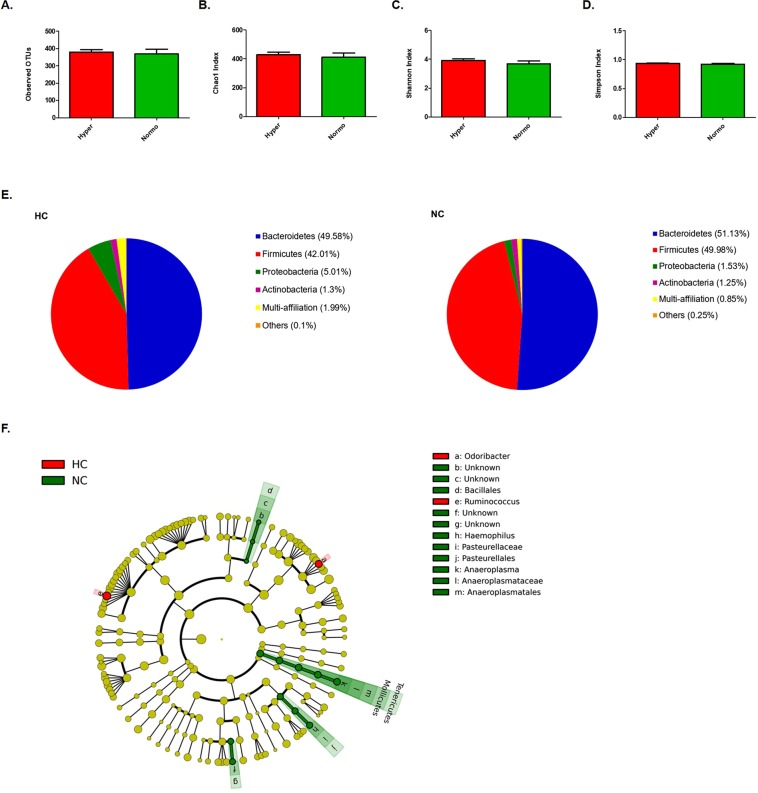
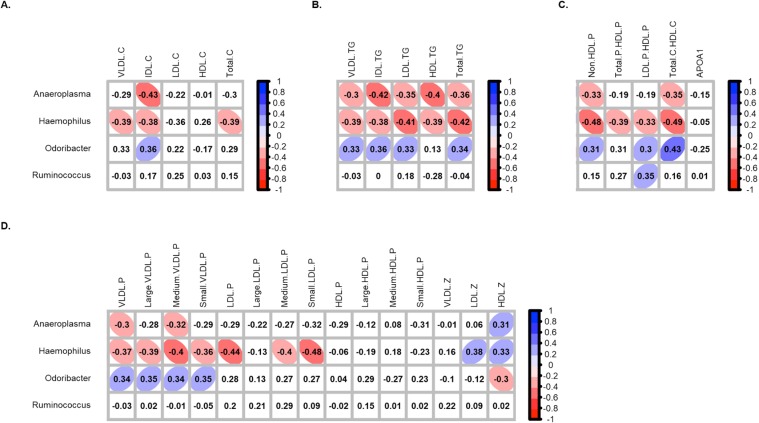
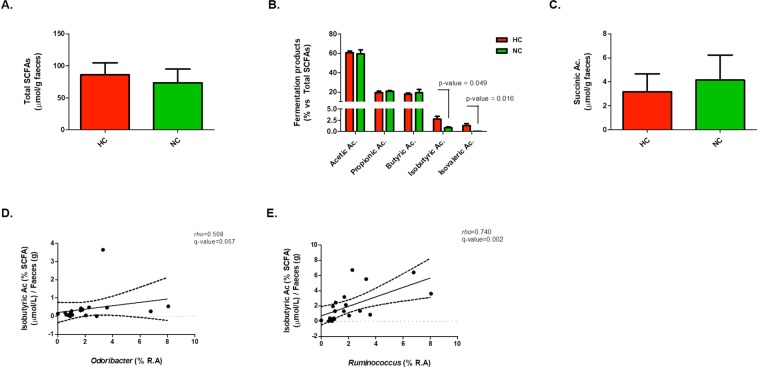
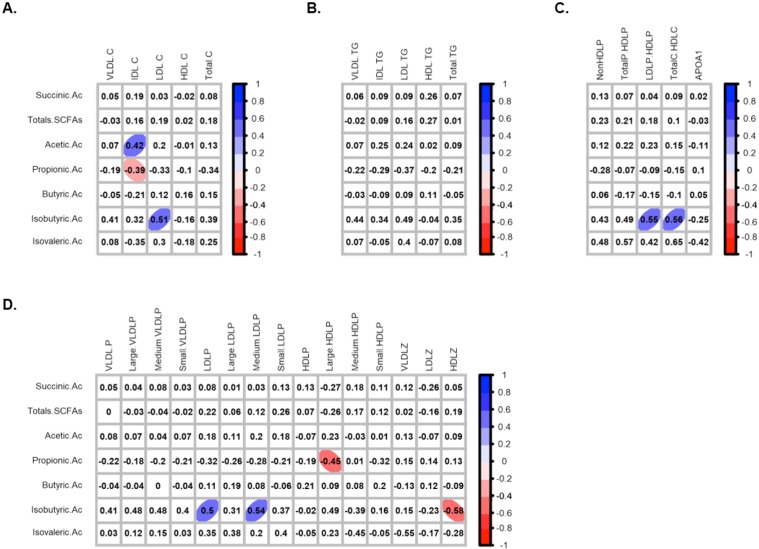
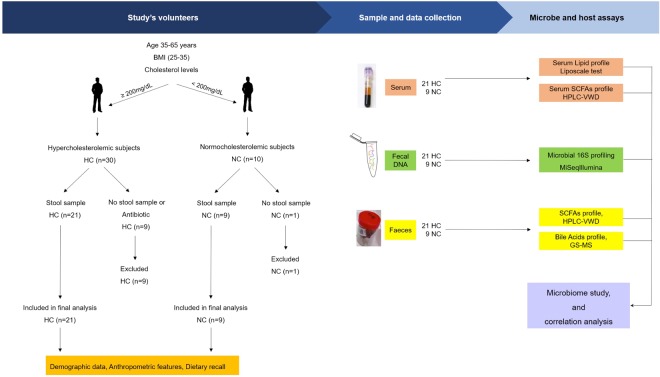
Gut microbiota has been suggested to affect lipid metabolism. The objective of this study was to characterize the faecal microbiota signature and both short chain fatty acids (SCFAs) and bile acids (BA) profile of hypercholesterolemic subjects. Microbiota composition, SCFAs, BA and blood lipid profile from male volunteers with hypercholesterolemia (HC) and normocholesterolemia (NC) were determined by 16S rDNA sequencing, HPLC, GC and NMR, respectively. HC subjects were characterized by having lower relative abundance of Anaeroplasma (0.002% vs 0.219%, p-value = 0.026) and Haemophilus (0.041% vs 0.078%, p-value = 0.049), and higher of Odoribacter (0.51% vs 0.16%; p-value = 0.044). Correlation analysis revealed that Anaeroplasma and Haemophilus were associated to an unfavourable lipid profile: they correlated negatively to cholesterol and triglycerides related biomarkers and the ratio total to high density lipoprotein (HDL) cholesterol, and positively to HDL size. Odoribacter displayed an opposite behaviour. Faecal SCFAs profile revealed higher abundance of isobutyric (2.76% vs 0.82%, p-value = 0.049) and isovaleric acid (1.32% vs 0.06%, p-value = 0.016) in HC. Isobutyric acid correlated positively with Odoribacter and lipid parameters indicative of an unfavourable profile. BA profile did not show differences between groups. It was concluded that HC subjects showed a particular faecal bacterial signature and SCFAs profile associated with their lipid profile.
Overview
The claims and statistics of this paper haven’t been checked yet.
Free: it reads the open-access text and checks the first 5 claims that cite a source we can check. Create a free account to check every claim.
Integrity signals
Registry
Cites
Statistics
Figures
Verification
Claims the paper makes
The claims and statistics of this paper haven’t been checked yet.
Free: it reads the open-access text and checks the first 5 claims that cite a source we can check. Create a free account to check every claim.
Claims other papers make about this one
Each is checked against this paper’s own text: does it say what the citing paper says it does?
In the citing paper
“Elevated isobutyric and isovaleric acid have been associated with hypercholesterolemia (Granado-Serrano et al., 2019) and elevated valeric acid in autism spectrum disorder (Liu et al., 2019).”
From Gut-microbiota-targeted diets modulate human immune status (2021) · cites this paper as Granado-Serrano et al., 2019
Self-check
Percentages, sums and reported differences re-computed from the paper’s own numbers.
The self-check needs the paper’s full text.
Citations
Cites
Metagenomic biomarker discovery and explanation
Segata, N., Izard, J., Waldron, L., Gevers, D., Miropolsky, L., Garrett, W. S., & Huttenhower, C. (2011) · Genome Biology · doi:10.1186/gb-2011-12-6-r60 · Cited by 16,192
Yusuf, S., Hawken, S., Ôunpuu, S., Dans, T., Avezum, A., Lanas, F., McQueen, M., Budaj, A., Pais, P., Varigos, J., et al. (2004) · The Lancet · doi:10.1016/s0140-6736(04)17018-9 · Cited by 12,026
From Dietary Fiber to Host Physiology: Short-Chain Fatty Acids as Key Bacterial Metabolites
Koh, A., De Vadder, F., Kovatcheva-Datchary, P., & Bäckhed, F. (2016) · Cell · doi:10.1016/j.cell.2016.05.041 · Cited by 7,070
Intestinal microbiota metabolism of l-carnitine, a nutrient in red meat, promotes atherosclerosis
Koeth, R. A., Wang, Z., Levison, B. S., Buffa, J. A., Org, E., Sheehy, B. T., Britt, E. B., Fu, X., Wu, Y., Li, L., et al. (2013) · Nature Medicine · doi:10.1038/nm.3145 · Cited by 4,386
Formation of short chain fatty acids by the gut microbiota and their impact on human metabolism
Morrison, D. J., & Preston, T. (2016) · Gut Microbes · doi:10.1080/19490976.2015.1134082 · Cited by 3,781
Global atlas on cardiovascular disease prevention and control.
Mendis, S., Puska, P., & Norrving, B. G. (2011) · Virtual Defense Library (Ministerio de Defensa) · Cited by 3,515
Human Genetics Shape the Gut Microbiome
Goodrich, J. K., Waters, J. L., Poole, A. C., Sutter, J. L., Koren, O., Blekhman, R., Beaumont, M., Van Treuren, W., Knight, R., Bell, J. T., et al. (2014) · Cell · doi:10.1016/j.cell.2014.09.053 · Cited by 3,164
Short chain fatty acids in human large intestine, portal, hepatic and venous blood
Cummings, J. H., Pomare, E. W., Branch, W. J., Naylor, C. P., & Macfarlane, G. T. (1987) · Gut · doi:10.1136/gut.28.10.1221 · Cited by 3,119
Formation of propionate and butyrate by the human colonic microbiota
Louis, P., & Flint, H. J. (2017) · Environmental Microbiology · doi:10.1111/1462-2920.13589 · Cited by 3,028
Colonic Health: Fermentation and Short Chain Fatty Acids
Wong, J. M. W., de Souza, R., Kendall, C. W. C., Emam, A., & Jenkins, D. J. A. (2006) · Journal of Clinical Gastroenterology · doi:10.1097/00004836-200603000-00015 · Cited by 2,739
Cited by
Items 101–178 of 178
Yang, Y., Shen, J., Deng, P., & Chen, P. (2024) · Cancer Biology & Therapy · doi:10.1080/15384047.2024.2380023 · Cited by 16
Neijat, M., Habtewold, J. Z., Li, S., Jing, M.-Y., & House, J. D. (2020) · Prostaglandins Leukotrienes and Essential Fatty Acids · doi:10.1016/j.plefa.2020.102182 · Cited by 17
Zhang, S., Wang, Y., Lü, F., Mohammed, S. A. D., Liu, H., Ding, S. Z., & Liu, S. (2022) · Frontiers in Pharmacology · doi:10.3389/fphar.2022.745074 · Cited by 17
“Modulatory Effects of SEJZ Upon Hyperlipidemia and the Role of the GM An increasing number of studies have revealed that homeostasis of intestinal flora has a pivotal role in maintaining the integrity of the intestinal epithelial barrier and improving immune protection of the intestinal mucosa (Granado-Serrano et al.,…”
BackgroundCândido, T. L. N., da Silva, L. E., Cândido, F. G., Valente, F. X., da Silva, J. S., Lopes, D. R. G., Pelúzio, M. D. C. G., Mantovani, H. C., & Alfenas, R. D. C. G. (2020) · Food Research International · doi:10.1016/j.foodres.2020.109951 · Cited by 18
Huang, Y., Qin, X., Zou, J., Wu, Y., & Yu, R. (2023) · Frontiers in Endocrinology · doi:10.3389/fendo.2023.1106812 · Cited by 14
“In a previous study, Odoribacter was reported to be highly abundant in hypercholesterolemic subjects and the isobutyric acid proportion was positively associated with Odoribacter abundance (60).”
BackgroundJi, M., Rong, X., Wu, Y., Li, H., Zhao, X., Zhao, Y., Guo, X., Cao, G., Yang, Y., & Li, B. (2025) · Animals · doi:10.3390/ani15050733 · Cited by 14
“Extensive research highlights the essential role of VFAs, such as acetate, butyrate, and propionate, in maintaining metabolic balance and overall gut health in humans and animals [36,37].”
Chen, K., Zhou, F., Zhang, J., Li, P., Zhang, Y., & Yang, B. (2022) · Foods · doi:10.3390/foods11162481 · Cited by 17
“Characteristic fecal bacterial signature has been found in patients with hypercholesterolemia in comparison to healthy subjects, such as Anaeroplasma and Haemophilus being negatively correlated to total cholesterol and triglyceride levels and positively to HDL particle size [13].”
BackgroundLiu, S., Chen, P., Mohammed, S. A. D., Li, Z., Jiang, X. M., Wu, J., & Liu, S. (2023) · Frontiers in Microbiology · doi:10.3389/fmicb.2022.1051100 · Cited by 14
Chewing the Fat with Microbes: Lipid Crosstalk in the Gut
Lemons, J. M. S., & Liu, L. (2022) · Nutrients · doi:10.3390/nu14030573 · Cited by 16
“Individuals with hypercholesterolemia, a major risk factor in cardiovascular disease, have bacterial fecal profiles characterized by lower abundance of Anaeroplasma and Haemophilus and higher abundance of Odoribacter relative to individuals with normal cholesterol levels [145].”
BackgroundYu, H., Fang, C., Li, P., Wu, M., & Shen, S. (2021) · European Journal of Pharmacology · doi:10.1016/j.ejphar.2021.173885 · Cited by 14
Granado-Serrano, A. B., Martín-Garí, M., Sánchez, V., Riart Solans, M., Lafarga Giribets, A., Berdún, R., Vilaprinyó, E., Portero-Otín, M., & Serrano, J. C. E. (2022) · Nutrients · doi:10.3390/nu14030525 · Cited by 12
“In a previous study from our group, we observed that subjects with hypercholesterolemia compared to subjects with normocholesterolemia were characterized with a higher abundance of Odoribacter and a lower abundance of Anaeroplasma and Haemophilus [6], which were associated with a differential profile in SCFAs.”
BackgroundResultSelf-citationZhang, Z., Qin, X., Yi, T., Li, Y., Li, C., Zeng, M., Luo, H., Lin, X., Xie, J., Xia, B., et al. (2024) · Molecular Nutrition & Food Research · doi:10.1002/mnfr.202300845 · Cited by 12
Chen, Y., Zheng, K., Leng, Y., Zhang, Z., Li, X., Li, X., Ou, H., Wen, M., Qiu, F., & Yu, H. (2025) · Frontiers in Nutrition · doi:10.3389/fnut.2025.1522982 · Cited by 15
Yoon, K., Yang, J.-H., Yeom, S., Kim, S.-S., Park, J., Song, B., Eun, J., Park, S., Lee, J. H., Kim, H. B., et al. (2024) · Frontiers in Microbiology · doi:10.3389/fmicb.2024.1440134 · Cited by 12
Rossell, J., Brindefalk, B., Baena‐Fustegueras, J. A., Peinado‐Onsurbe, J., & Udekwu, K. I. (2020) · European Journal of Nutrition · doi:10.1007/s00394-020-02190-8 · Cited by 12
Zhang, L., Zou, W., Hu, Y., Wu, H., Gao, Y., Zhang, J., & Zheng, J. (2023) · Clinical Science · doi:10.1042/cs20230372 · Cited by 11
de Maria, Y. N. L. F., Barbosa, D. A., Menegídio, F. B., Santos, K. B., Humberto, A. C., Alencar, V. C., Silva, J. F. S., de Oliveira, R. C., Júnior, M. L. B., Nunes, L. R., et al. (2021) · Microbiology · doi:10.1099/mic.0.001088 · Cited by 15
Xue, X., Zhou, H., Gao, J., Li, X., Wang, J., Bai, W., Bai, Y., Fan, L., Chang, H., & Shi, S. (2024) · Heliyon · doi:10.1016/j.heliyon.2024.e38339 · Cited by 10
Milton‐Laskibar, I., Marcos-Zambrano, L. J., Gómez‐Zorita, S., Pau, E. C. D. S., Fernández‐Quintela, A., Martínez, J. A., & Portillo, M. P. (2022) · Gut Microbiome · doi:10.1017/gmb.2022.2 · Cited by 11
Nam, J., Cho, J. H., Kim, H. B., Ahn, J., Kang, Y., Kim, S., Kim, J. T., Jung, S. W., Song, M., & Kyoung, H. (2024) · Journal of Animal Science and Technology · doi:10.5187/jast.2024.e70 · Cited by 9
“Agathobacter is a beneficial bacterium that contributes to short-chain fatty acid production, particularly butyrate, and is positively correlated with overall gut health in humans through metabolic interactions of the gut microbiota [61].”
Yogurt and health: a focus on its matrix
Tremblay, A., Drouin‐Chartier, J., Marette, A., & Drapeau, V. (2025) · Critical Reviews in Food Science and Nutrition · doi:10.1080/10408398.2025.2524472 · Cited by 11
“…isovalerate and isobutyrate are mainly produced upon protein catabolism (Van den Abbeele et al. 2022) and have been suggested to be involved in metabolic impairments in obesity, NAFLD and dyslipidemia (Da Silva et al. 2018; Granado-Serrano et al. 2019; Tiihonen, Ouwehand, and Rautonen 2010).”
Yang, C., Peng, C., Jin, H., You, L., Wang, J., Xu, H., & Sun, Z. (2021) · Food Science & Nutrition · doi:10.1002/fsn3.2290 · Cited by 9
Deng, M., Xiao, Z., Liu, G., Sun, B., Guo, Y., Zou, X., Liu, D., Yang, Z., & Li, Y. (2022) · Frontiers in Microbiology · doi:10.3389/fmicb.2022.942208 · Cited by 9
“, 2010), and Anaeroplasma has been found to be associated with lipid metabolic diseases and short-chain fatty acid metabolism (Granado-Serrano et al., 2019; Velazquez et al., 2019).”
BackgroundMeiller, L., Sauvinet, V., Breyton, A.-E., Ranaivo, H., Machon, C., Mialon, A., Meynier, A., Bischoff, S. C., Walter, J., Neyrinck, A. M., et al. (2023) · European Journal of Nutrition · doi:10.1007/s00394-023-03161-5 · Cited by 9
Kang, Y., Oba, P. M., Gaulke, C. A., Sánchez-Sánchez, L., & Swanson, K. S. (2023) · Journal of Nutrition · doi:10.1016/j.tjnut.2023.09.007 · Cited by 10
Souders, C. L., Zubcevic, J. A., & Martyniuk, C. J. (2021) · Cellular and Molecular Neurobiology · doi:10.1007/s10571-021-01044-z · Cited by 10
Bogunia‐Kubik, K., Wojtowicz, W., Świerkot, J., Mielko, K. A., Qasem, B., Wielińska, J., Sokolik, R., Pruss, Ł., & Młynarz, P. (2021) · International Journal of Molecular Sciences · doi:10.3390/ijms22147389 · Cited by 9
“This serum short-chain amino acid is the product of gut valine degradation [43,44] and can be related to the lipid profile [45].”
BackgroundHealthy human gut microbiome: Towards standardized research
Glazunova, E., Molodtsova, P. A., Grabarnik, I., Kurnosov, A., Bikaeva, I., Shipulin, G., & Zlobovskaya, O. (2025) · AIMS Microbiology · doi:10.3934/microbiol.2025034 · Cited by 10
Gao, Z., Zhou, R., Chen, Z., Qian, H., Xu, C., Gao, M., & Huang, X. (2024) · Journal of Psychiatric Research · doi:10.1016/j.jpsychires.2024.12.025 · Cited by 8
Urinary Metabolomic Profile of Neonates Born to Women with Gestational Diabetes Mellitus
Oostdam, A. S. H.-V., Salgado‐Bustamante, M., Lima‐Rogel, V., Oropeza-Valdez, J. J., López, J. A., Rodriguez, I. T., Toro-Ortiz, J. P., Oostdam, D. H., López‐Hernández, Y., & Monárrez‐Espino, J. (2021) · Metabolites · doi:10.3390/metabo11110723 · Cited by 9
“SCFAs are produced through colonic fermentation of dietary fibers, while BSCFAs are generated from undigested protein reaching the colon and are associated with the fermentation of branched amino acids [28].”
BackgroundZhang, X., Hou, Z., Tian, X., Wu, D., & Dai, Q. (2022) · Food & Function · doi:10.1039/d1fo04227k · Cited by 9
The Gut Microbiome Affects Atherosclerosis by Regulating Reverse Cholesterol Transport
Jiang, Y., Pang, S., Liu, X., Wang, L., & Liu, Y. (2024) · Journal of Cardiovascular Translational Research · doi:10.1007/s12265-024-10480-3 · Cited by 10
“The signature was a lower prevalence of the genera Anaeroplasma and Haemophilus , and a higher prevalence of Odoribacterium [11].”
Chai, W., Maskarinec, G., Lim, U., Boushey, C. J., Wilkens, L. R., Setiawan, V. W., Marchand, L. L., Randolph, T. W., Jenkins, I., Lampe, J. W., et al. (2023) · Gut Microbiome · doi:10.1017/gmb.2023.10 · Cited by 7
Trace antibiotic exposure affects murine gut microbiota and metabolism
Wang, C., Zhao, L., Xu, J. Z., Li, X., Liu, S., Du, J., Jia, X., Wang, Z., Ge, L., Yan, Z., et al. (2024) · The Science of The Total Environment · doi:10.1016/j.scitotenv.2024.177033 · Cited by 6
Acharya, A., Shetty, P. K., Sonkusare, S., Roopashree, P. G., Chitrabanu, S. P., Acharya, R., Somanatha, H., Derappajjanamane, D., & Nalilu, S. K. (2024) · Indian Journal of Clinical Biochemistry · doi:10.1007/s12291-024-01273-1 · Cited by 6
“Serum acetic acid and total SCFA levels were associated positively with APOA-1 levels [35].”
Hernández, M. A. G., Canfora, E. E., & Blaak, E. E. (2021) · Beneficial Microbes · doi:10.3920/bm2020.0179 · Cited by 7
Lutze, G., Römhild, W., Elwert, J., Leppelt, J., & Kutschmann, K. (2003) · PubMed · Cited by 5
Xu, L., Luo, C., Yuan, J., He, H., Liu, B., He, P., & Yi, C. (2023) · International Journal of Food Science & Technology · doi:10.1111/ijfs.16327 · Cited by 5
Huang, C., Yu, H.-S., Yu, S., Tu, H., Yeh, Y., & Yu, H. (2024) · Frontiers in Cellular and Infection Microbiology · doi:10.3389/fcimb.2023.1320713 · Cited by 5
“…(in green color); six bacteria were related to TCHO catabolism (Zhang et al., 2016; Zietak et al., 2016; Kriaa et al., 2019; Vourakis et al., 2021), and four bacteria were in relation to TCHO synthesis (Granado-Serrano et al., 2019; Bourgin et al., 2020; Vourakis et al., 2021; Le et al., 2022).”
BackgroundYan, Q., Li, X., Zhou, X., Chen, W., Tian, X., Wittayakun, S., Paengkoum, P., & Tan, Z. (2024) · Animal nutrition · doi:10.1016/j.aninu.2024.04.014 · Cited by 5
The Gut Microbiota as a Mediator Linking the MIND Diet to Alzheimer’s Disease
Ramezani, F., Herfeh, S. S., & Burke, E. (2026) · Nutrients · doi:10.3390/nu18091445 · Cited by 5
“…isobutyrate is a branched-chain fatty acid derived from amino acid fermentation rather than fiber fermentation, and its metabolic significance in this context requires further investigation, as elevated fecal isobutyrate has been associated with unfavorable lipid profiles in other studies [226].”
Oral Contraceptives Induce Time- and Intestinal Segment-Dependent Shifts in the Gut Microbiota
Organski, A. C., Reddivari, A., Reddivari, L., Brubaker, D. K., Fuller, K. N. Z., Thyfault, J. P., & Cross, T.-W. (2025) · Nutrients · doi:10.3390/nu17162591 · Cited by 4
“Higher fecal isobutyric acids have been positively associated with circulating total cholesterol and low-density lipoproteins (LDL) in humans [61].”
Sui, K., Yasrebi, A., Malonza, N., Jaffri, Z. H., Fisher, S. E., Seelenfreund, I., McGuire, B. D., Martinez, S. A., MacDonell, A. T., Tveter, K. M., et al. (2023) · Endocrinology · doi:10.1210/endocr/bqad059 · Cited by 4
Pomar, C. A., Viver, T., del Valle, A. F., Gago, J. F., Castillo, P., Palou, M., Palou, A., Rossello-Mora, R. A., & Picó, C. (2023) · Food Frontiers · doi:10.1002/fft2.322 · Cited by 4
Morin-Bernier, J., de Toro‐Martín, J., Barbe, V., San-Cristóbal, R., Lemieux, S., Rudkowska, I., Couture, P., Barbier, O., & Vohl, M. (2024) · Frontiers in Nutrition · doi:10.3389/fnut.2024.1327863 · Cited by 7
“An increase in BCFA levels has been also observed in individuals with hypercholesterolemia, as compared to those with normocholesterolemia (35), suggesting a potential association between BCFAs and lipid metabolism.”
BackgroundMacías-Acosta, M. P., Valerdi-Contreras, L., Bustos-Angel, E. D., García-Reyes, R. A., Álvarez-Zavala, M., & González‐Ávila, M. (2021) · Amino Acids · doi:10.1007/s00726-021-03107-3 · Cited by 4
Alterations of ileal mucosa-associated microbiota in hypercholesterolemia patients
Li, J., Ma, J., Wang, W., Du, H., Tang, S., Li, Y., Zhu, W., Zhang, R., & Wan, J. (2023) · Heliyon · doi:10.1016/j.heliyon.2023.e22116 · Cited by 3
“While Granado-Serrano A B et al. [16] showed that in the fecal microbiota, the top 3 phyla in the hypercholesterolemia group and the control group were Bacteroidetes (49.58 % vs 51.13 %), Firmicutes (42.01 % vs 49.78 %), and Proteobacteria (5.01 % vs 1.53”
BackgroundInfluentialLiu, Y., Li, B., Zhang, T., Jiang, Y., & Li, D. (2026) · Journal of Agricultural and Food Chemistry · doi:10.1021/acs.jafc.5c15354 · Cited by 4
Thiyajai, P., Trangcasanchai, P., Thapprathum, P., Soonkum, T., Sridonpai, P., Kitdumrongthum, S., Judprasong, K., Kriengsinyos, W., & Prachansuwan, A. (2025) · International Journal of Food Sciences and Nutrition · doi:10.1080/09637486.2025.2525901 · Cited by 2
“The sample size was calculated based on faecal isobu-tyrate and isovalerate data from a previous study (Granado-Serrano et al. 2019).”
InfluentialRobust multivariate regression controlling false discoveries for microbiome data
Monti, G. S., Tanyà, M. P., Rosingana, M. C., & Filzmoser, P. (2025) · Bioinformatics · doi:10.1093/bioinformatics/btaf506 · Cited by 2
“All of them have been previously reported to be abundant in healthy intestinal microbiomes compared to patients with T2D, hypercholesterolemia, and hypertension (Li et al. 2017, 2022, Granado-Serrano et al. 2019, Das et al. 2021, Hu et al. 2023).”
Park, J. E., Oh, S. W., Baek, J. Y., Yang, H.-J., Jeong, D., Han, A., & Cha, Y. (2025) · Food & Nutrition Research · doi:10.29219/fnr.v69.13034 · Cited by 2
Guo, X., Zhao, Y., Pan, Y., Huang, J., Wang, Z., Li, P., Yuan, W., He, Y., Qiu, J., Dong, J., et al. (2025) · Clinical Nutrition ESPEN · doi:10.1016/j.clnesp.2025.10.021 · Cited by 2
Zhao, R., Che, M., Cui, Y., Peng, J., & Chen, M. (2025) · Current Alzheimer Research · doi:10.2174/0115672050407276251014113234 · Cited by 2
Liu, Y., Peng, P., Hung, W., Wu, P., Kao, C., Wu, P.-Y., Huang, J., Chen, S., & Kuo, C. (2025) · Nutrition Metabolism and Cardiovascular Diseases · doi:10.1016/j.numecd.2025.104465 · Cited by 2
Stanford, J., Hoedt, E. C., Gómez‐Martín, M., Clarke, E. D., Duncanson, K., Burrows, T. L., & Collins, C. E. (2026) · Gut Microbes · doi:10.1080/19490976.2026.2685381 · Cited by 2
“9,73 These largely non-overlapping patterns suggest that the dietary influence on cardiometabolic physiology via the microbiome may operate through multiple, partially distinct routes 74 rather than a single generalized metabolic shift.”
Salazar, N., González, S., Gavilan, C. G. D. L. R., & Ríos-Covián, D. (2022) · Biomarkers in disease · doi:10.1007/978-3-031-07389-2_4 · Cited by 7
Machado, F., Coimbra, M. A., & Coreta-Gomes, F. M. (2024) · Elsevier eBooks · doi:10.1016/b978-0-443-13868-3.00077-6 · Cited by 2
Luo, X., Yang, W. P., Kang, Y., Ma, S., Fan, Y., Du, J., Luo, H., Wang, X., & Deng, F. (2025) · The Journal of Vascular Access · doi:10.1177/11297298251332047 · Cited by 1
“46 Studies have shown that knockdown of FXR (FXR-/-) induces vascular lipid deposition, while the use of bile acid agonists inhibits the progression of vascular lipidation.”
In Vitro Investigation of Equine Gut Microbiota Alterations During Hypoglycin A Exposure
François, A., Taminiau, B., Renaud, B., Gonza, I., Massey, C., Hyde, C. E., Piercy, R. J., Douny, C., Scippo, M., Daube, G., et al. (2025) · Animals · doi:10.3390/ani15223343 · Cited by 1
“Reductions in Anaeroplasma abundance have been reported in hypercholesterolemic subjects, a condition also characterised by altered lipid homeostasis [66].”
Górecka, W., Żeber-Lubecka, N., Ostrowska, M., Redl, M., Padewska, D., Świder, O., Bryła, M., Olędzka, A. J., Berezovska, D., Włodarczyk, M., et al. (2026) · Food Bioscience · doi:10.1016/j.fbio.2026.108623 · Cited by 1
HuiYan, S. T., Sarbini, S. R., Chang, L. S., Joe, L. S., & Babji, A. S. (2026) · Journal of Food Science and Technology · doi:10.1007/s13197-026-06670-3 · Cited by 1
Chen, J., Chen, L., Cai, G., Chen, Y., Zeng, Y., Zhang, Y. M., Huang, J., Xia, G., Wang, C., Feng, A., et al. (2026) · Pediatric Research · doi:10.1038/s41390-026-05247-2 · Cited by 1
Human Gut Microbiota: Friend or Foe?
Pliszka, M., & Szablewski, L. (2020) · OBM Hepatology and Gastroenterology · doi:10.21926/obm.hg.2003050 · Cited by 1
Синтез и свойства производных 2-метиламино-5-r-5н-тиазоло [4,3-b]-1,3,4-тиадиазола
Kukaniev, M. A., Акбарова, М. М., Хаджибаев, Ю. Х., & Раджабов, Т. Р. (2006) · Доклады Академии наук Республики Таджикистан
Guzzardi, M. A., Rosa, F. L., Campani, D., Collado, M. C., Monleón, D., Insilla, A. C., Tripodi, M., Zega, A., Dattilo, A., Brunetto, M. R., et al. (2022) · Metabolites · doi:10.3390/metabo12040278
“, Anaeroplasmataceae and Turicibacteriaceae, were correlated with low lipid content in BAT, consistent with the inverse association between the Anaeroplasma genus and circulating lipids (IDL-cholesterol, triglycerides) in healthy volunteers [43].”
ResultImpact of gut-derived metabollites on substrate metabolism and metabolic health
Gonzalez Hernandez Manuel, A. (2020) · Research Publications (Maastricht University) · doi:10.26481/dis.20201027mgh
Bile Microbiota Profile in Aging and Age-Related Disease
Sergi, C. M. (2023) · Healthy ageing and longevity · doi:10.1007/978-3-031-14023-5_5
Mechanistic Insights of Dietary Modulation on Gut Microflora and Associated Physiological Changes
Yadav, A., Hamsa, S., Tiwari, R., Bharti, A., Dhewa, T., Mehrotra, R., & Verma, P. (2023) · Wiley eBooks · doi:10.1002/9781394229116.ch3 · Cited by 1
Kumar, S., Khan, M. A., Beijer, E., Liu, J., Lowe, K. K., Young, W., Mills, D. A., & Moon, C. D. (2021) · Figshare · doi:10.6084/m9.figshare.14361443
Stothart, M. R., & Newman, A. E. M. (2021) · Figshare · doi:10.6084/m9.figshare.14913743
Kumar, S., Khan, M. A., Beijer, E., Liu, J., Lowe, K. K., Young, W., Mills, D. A., & Moon, C. D. (2021) · Figshare · doi:10.6084/m9.figshare.14361446
ニンニクによる脂質異常症及び腸内細菌叢失調の予防効果及び作用機構に関する研究
陳, 珂., 140716, & Chen, K. (2022) · Institutional Repositories DataBase (IRDB)
Zakaria, D. (2025) · AMS Dottorato Institutional Doctoral Theses Repository (University of Bologna) · doi:10.48676/unibo/amsdottorato/12448
Role of the neonatal intestinal microbiota in the eating behaviour programming in rat
Pocheron, A.-L. (2019) · theses.fr (ABES)
Pocheron, A.-L. (2019) · theses.fr (ABES) · doi:10.70675/29969b86z2649z4b67zb315za23a1106f4ef
Li, J., Zhou, H., Xu, L., Bai, J., Sun, Y., Wang, H., Yu, C., Hu, M., Zhong, B., Tu, Z., et al. (2026) · Journal of Agricultural and Food Chemistry · doi:10.1021/acs.jafc.6c03383
Zhang, X., Du, X., Wang, B., Wang, B., Li, L., Wang, P., Yan, X., & Zhang, H. (2026) · Chinese Herbal Medicines · doi:10.1016/j.chmed.2026.06.015
Kallapura, G., Prakash, A. S., Prasad, R., Josphine, I., Maurya, M., & Dhar, D. (2026) · iScience · doi:10.1016/j.isci.2026.118082
Metadata
- Authors
- Granado-Serrano, A. B., Martín-Garí, M., Sánchez, V., Riart Solans, M., Berdún, R., Ludwig, I. A., Rubió, L., Vilaprinyó, E., Portero-Otín, M., & Serrano, J. C. E.
- Affiliations
- Institut Català de la Salut (ES)
- Universitat de Lleida (ES)
- Universitat Rovira i Virgili (ES)
- Corresponding author
- Serrano, J. C. E.
- Venue
- Scientific Reports
- Published
- 2019-02-11
- Volume
- 9
- Issue
- 1
- Pages
- 1772-1772
- ISSN
- 2045-2322 (ISSN-L)
- PMC
- PMC6370822
- OpenAlex
- W2915021799
- Semantic Scholar
- af191e458ea6b43c3c496195a2162b13b4c10da0
- Cited by
- 169
- References
- 62
- Citations by year
- 2026: 8 · 2025: 16 · 2024: 20 · 2023: 24 · 2022: 30 · 2021: 39 · 2020: 22 · 2019: 8
- FWCI
- 8.27
- Type
- journal article
- Language
- en
- Open access
- gold
- doi.org
- Licence
- cc-by
- creativecommons.org/licenses/by/4.0 (tdm)
- creativecommons.org/licenses/by/4.0 (vor)
- Locations
- Scientific Reports (publishedVersion, cc-by)
- Europe PMC (PubMed Central) (publishedVersion, cc-by)
- PubMed Central (publishedVersion, cc-by)
- PubMed (publishedVersion)
- LA Referencia (Red Federada de Repositorios Institucionales de Publicaciones Científicas) (publishedVersion, cc-by)
- UdL Open Repository (University of Lleida) (publishedVersion, cc-by)
- LA Referencia (Red Federada de Repositorios Institucionales de Publicaciones Científicas) (submittedVersion, cc-by)
- DOAJ (DOAJ: Directory of Open Access Journals) (submittedVersion)
- RECERCAT (Consorci de Serveis Universitaris de Catalunya) (submittedVersion, cc-by)
- Funders
- Fellowship from the Agency for Business Competitiveness of the Government of Catalonia.
- Topics
- Life Sciences › Biochemistry, Genetics and Molecular Biology › Molecular Biology › Gut microbiota and health
- Health Sciences › Dentistry › Periodontics › Oral microbiology and periodontitis research
- Life Sciences › Agricultural and Biological Sciences › Food Science › Probiotics and Fermented Foods
- Keywords
- hypercholesterolemia, gut microbiota, fecal bacteria, short-chain fatty acids, bile acids, lipid metabolism, Anaeroplasma, Haemophilus, Odoribacter, isobutyric acid, isovaleric acid, HDL cholesterol, triglycerides, lipid profile
- MeSH terms
- Gastrointestinal Microbiome, Bacteria, Bile Acids and Salts, Fatty Acids, Volatile, Feces, Fermentation, Humans, Hypercholesterolemia, Lipids, Male, Middle Aged, Biomarkers
About these checks
Registry, retraction, Cites and statistics results are computed, not judged, with one exception: a printed reference that no index lists is read once by a model before it counts as a citation error. Claims are extracted by a model and kept only when their quote appears verbatim in the text; each cited source is then checked, with a model’s help, for whether it says what the claim relies on. Those verdicts can be wrong — read the claim’s quote and the cited source before relying on one.
Statistics and arithmetic are recomputed, not judged.
Confidence bands are shown only for fields calibrated on our annotated test set. None is calibrated yet, so no band is shown.
What counts as a claim ›How we measure confidence ›How we check this ›
Are you an author, or do you see a problem with this page? Request a review
Data sources
Bibliographic data: Semantic Scholar, OpenAlex, Crossref.
Contains information from the Semantic Scholar Academic Graph Datasets, made available under the ODC Attribution License (ODC-BY 1.0).
Semantic Scholar’s data is described in: Kinney, R., et al. (2023). The Semantic Scholar Open Data Platform. arXiv:2301.10140.
