

Faecal bacterial and short-chain fatty acids signature in hypercholesterolemia
Open accessThe DOI matches its Crossref record; 62 of the 62 references it cites were found in a registry or an index.
Abstract
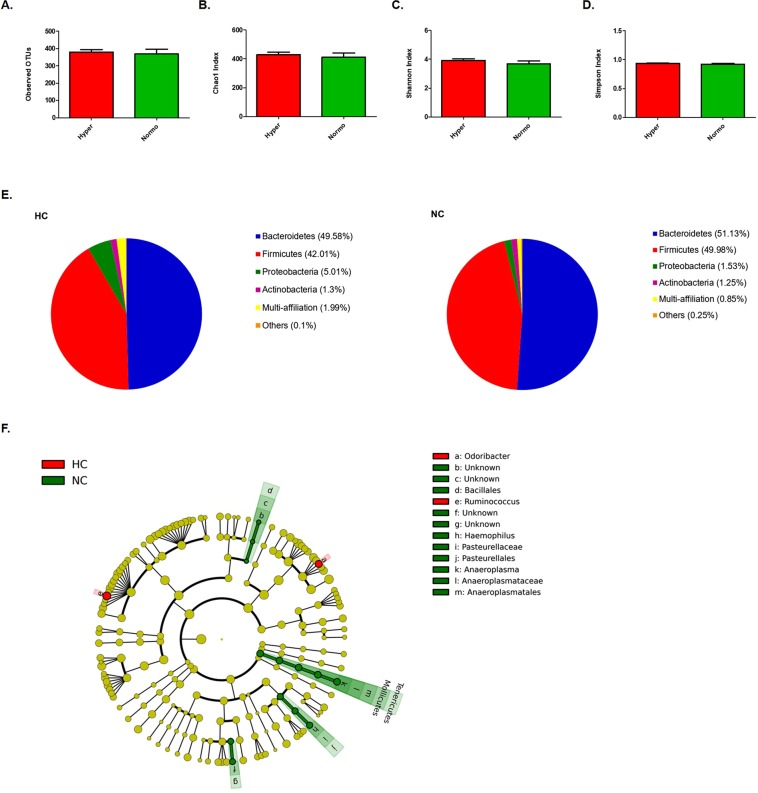
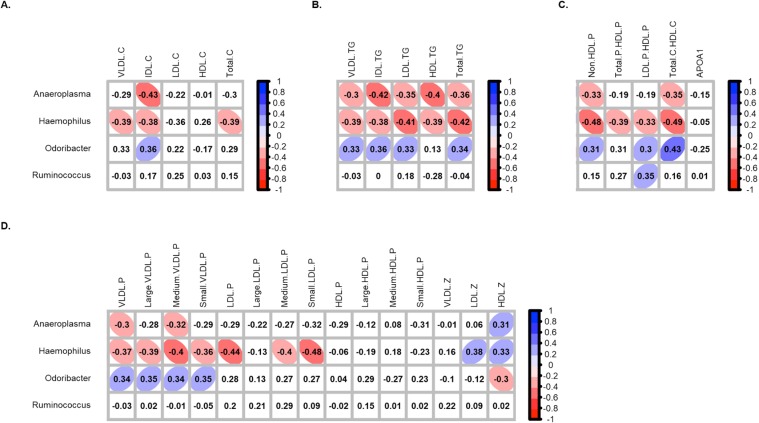
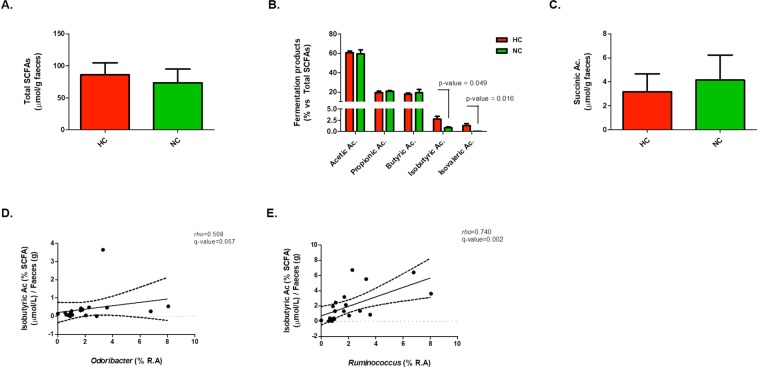
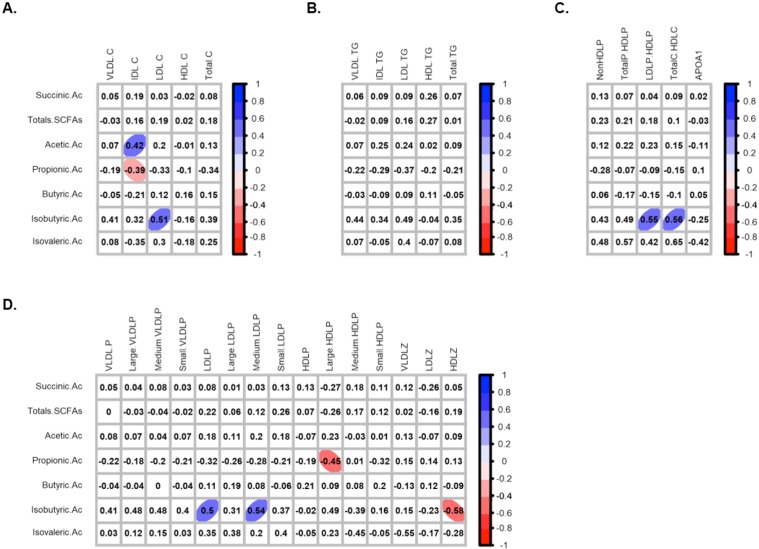
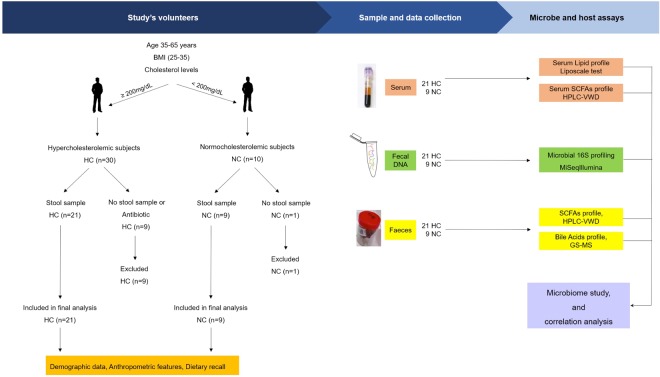
Gut microbiota has been suggested to affect lipid metabolism. The objective of this study was to characterize the faecal microbiota signature and both short chain fatty acids (SCFAs) and bile acids (BA) profile of hypercholesterolemic subjects. Microbiota composition, SCFAs, BA and blood lipid profile from male volunteers with hypercholesterolemia (HC) and normocholesterolemia (NC) were determined by 16S rDNA sequencing, HPLC, GC and NMR, respectively. HC subjects were characterized by having lower relative abundance of Anaeroplasma (0.002% vs 0.219%, p-value = 0.026) and Haemophilus (0.041% vs 0.078%, p-value = 0.049), and higher of Odoribacter (0.51% vs 0.16%; p-value = 0.044). Correlation analysis revealed that Anaeroplasma and Haemophilus were associated to an unfavourable lipid profile: they correlated negatively to cholesterol and triglycerides related biomarkers and the ratio total to high density lipoprotein (HDL) cholesterol, and positively to HDL size. Odoribacter displayed an opposite behaviour. Faecal SCFAs profile revealed higher abundance of isobutyric (2.76% vs 0.82%, p-value = 0.049) and isovaleric acid (1.32% vs 0.06%, p-value = 0.016) in HC. Isobutyric acid correlated positively with Odoribacter and lipid parameters indicative of an unfavourable profile. BA profile did not show differences between groups. It was concluded that HC subjects showed a particular faecal bacterial signature and SCFAs profile associated with their lipid profile.
Overview
The claims and statistics of this paper haven’t been checked yet.
Free: it reads the open-access text and checks the first 5 claims that cite a source we can check. Create a free account to check every claim.
Integrity signals
Registry
Cites
Statistics
Figures
Verification
Claims the paper makes
The claims and statistics of this paper haven’t been checked yet.
Free: it reads the open-access text and checks the first 5 claims that cite a source we can check. Create a free account to check every claim.
Claims other papers make about this one
Each is checked against this paper’s own text: does it say what the citing paper says it does?
In the citing paper
“Elevated isobutyric and isovaleric acid have been associated with hypercholesterolemia (Granado-Serrano et al., 2019) and elevated valeric acid in autism spectrum disorder (Liu et al., 2019).”
From Gut-microbiota-targeted diets modulate human immune status (2021) · cites this paper as Granado-Serrano et al., 2019
Self-check
Percentages, sums and reported differences re-computed from the paper’s own numbers.
The self-check needs the paper’s full text.
Citations
Cites
Metagenomic biomarker discovery and explanation
Segata, N., Izard, J., Waldron, L., Gevers, D., Miropolsky, L., Garrett, W. S., & Huttenhower, C. (2011) · Genome Biology · doi:10.1186/gb-2011-12-6-r60 · Cited by 16,192
Yusuf, S., Hawken, S., Ôunpuu, S., Dans, T., Avezum, A., Lanas, F., McQueen, M., Budaj, A., Pais, P., Varigos, J., et al. (2004) · The Lancet · doi:10.1016/s0140-6736(04)17018-9 · Cited by 12,026
From Dietary Fiber to Host Physiology: Short-Chain Fatty Acids as Key Bacterial Metabolites
Koh, A., De Vadder, F., Kovatcheva-Datchary, P., & Bäckhed, F. (2016) · Cell · doi:10.1016/j.cell.2016.05.041 · Cited by 7,070
Intestinal microbiota metabolism of l-carnitine, a nutrient in red meat, promotes atherosclerosis
Koeth, R. A., Wang, Z., Levison, B. S., Buffa, J. A., Org, E., Sheehy, B. T., Britt, E. B., Fu, X., Wu, Y., Li, L., et al. (2013) · Nature Medicine · doi:10.1038/nm.3145 · Cited by 4,386
Formation of short chain fatty acids by the gut microbiota and their impact on human metabolism
Morrison, D. J., & Preston, T. (2016) · Gut Microbes · doi:10.1080/19490976.2015.1134082 · Cited by 3,781
Global atlas on cardiovascular disease prevention and control.
Mendis, S., Puska, P., & Norrving, B. G. (2011) · Virtual Defense Library (Ministerio de Defensa) · Cited by 3,515
Human Genetics Shape the Gut Microbiome
Goodrich, J. K., Waters, J. L., Poole, A. C., Sutter, J. L., Koren, O., Blekhman, R., Beaumont, M., Van Treuren, W., Knight, R., Bell, J. T., et al. (2014) · Cell · doi:10.1016/j.cell.2014.09.053 · Cited by 3,164
Short chain fatty acids in human large intestine, portal, hepatic and venous blood
Cummings, J. H., Pomare, E. W., Branch, W. J., Naylor, C. P., & Macfarlane, G. T. (1987) · Gut · doi:10.1136/gut.28.10.1221 · Cited by 3,119
Formation of propionate and butyrate by the human colonic microbiota
Louis, P., & Flint, H. J. (2017) · Environmental Microbiology · doi:10.1111/1462-2920.13589 · Cited by 3,028
Colonic Health: Fermentation and Short Chain Fatty Acids
Wong, J. M. W., de Souza, R., Kendall, C. W. C., Emam, A., & Jenkins, D. J. A. (2006) · Journal of Clinical Gastroenterology · doi:10.1097/00004836-200603000-00015 · Cited by 2,739
Cited by
Gut-microbiota-targeted diets modulate human immune status
Wastyk, H. C., Fragiadakis, G. K., Perelman, D., Dahan, D., Merrill, B. D., Yu, F. B., Topf, M., Gonzalez, C. G., Van Treuren, W., Han, S., et al. (2021) · Cell · doi:10.1016/j.cell.2021.06.019 · Cited by 1,385
Gut Microbiome: Profound Implications for Diet and Disease
Hills, R., Pontefract, B., Mishcon, H., Black, C., Sutton, S., & Theberge, C. (2019) · Nutrients · doi:10.3390/nu11071613 · Cited by 1,092
Rios-Covian, D., González, S., Nogacka, A. M., Arboleya, S., Salazar, N., Gueimonde, M., & de los Reyes-Gavilán, C. G. (2020) · Frontiers in Microbiology · doi:10.3389/fmicb.2020.00973 · Cited by 316
Short-Chain Fatty Acids, Maternal Microbiota and Metabolism in Pregnancy
Ziętek, M., Celewicz, Z., & Szczuko, M. (2021) · Nutrients · doi:10.3390/nu13041244 · Cited by 233
Zhang, W., Zou, G., Li, B., Du, X., Sun, Z., Sun, Y., & Jiang, X. (2020) · Journal of Microbiology and Biotechnology · doi:10.4014/jmb.2002.02044 · Cited by 232
“The genera Odoribacter also include some species that have been related to SCFA production [66].”
BackgroundHiippala, K., Barreto, G., Burrello, C., Diaz-Basabe, A., Suutarinen, M., Kainulainen, V., Bowers, J. R., Lemmer, D., Engelthaler, D. M., Eklund, K. K., et al. (2020) · Frontiers in Microbiology · doi:10.3389/fmicb.2020.575455 · Cited by 228
Sanchez-Rodriguez, E., Egea-Zorrilla, A., Plaza-Díaz, J., Aragón-Vela, J., Muñoz-Quezada, S., Tercedor-Sánchez, L., & Abadia-Molina, F. (2020) · Nutrients · doi:10.3390/nu12030605 · Cited by 214
“Acetate is a net product of carbohydrate fermentation of most anaerobic bacteria, while propionic and butyric acid are generated from carbohydrate or protein fermentation by a distinct subset of bacteria [50,51].”
BackgroundWang, S.-Z., Yu, Y.-J., & Adeli, K. (2020) · Microorganisms · doi:10.3390/microorganisms8040527 · Cited by 207
“A recent research study characterized the fecal microbiota characteristics, SCFAs, blood lipids and bile acids profile in hypercholesterolemic subjects [81].”
BackgroundShort Chain Fatty Acid Metabolism in Relation to Gut Microbiota and Genetic Variability
Ramos Meyers, G., Samouda, H., & Bohn, T. (2022) · Nutrients · doi:10.3390/nu14245361 · Cited by 184
The oral microbiome in the pathophysiology of cardiovascular disease
Tonelli, A., Lumngwena, E. N., & Ntusi, N. A. B. (2023) · Nature Reviews Cardiology · doi:10.1038/s41569-022-00825-3 · Cited by 167
Short-chain fatty acid: An updated review on signaling, metabolism, and therapeutic effects
Rekha, K., Venkidasamy, B., Samynathan, R., Nagella, P., Rebezov, M., Khayrullin, M., Ponomarev, E., Bouyahya, A., Sarkar, T., Shariati, M. A., et al. (2024) · Critical Reviews in Food Science and Nutrition · doi:10.1080/10408398.2022.2124231 · Cited by 162
“The data concluded that hypercholesterolemia patients have a unique fecal bacterial signature and SCFAs profile in association with lipid profile (Granado-Serrano et al. 2019).”
BackgroundPlaza-Díaz, J., Solís-Urra, P., Rodríguez-Rodríguez, F., Olivares-Arancibia, J., Navarro-Oliveros, M., Abadía-Molina, F., & Álvarez-Mercado, A. I. (2020) · International Journal of Molecular Sciences · doi:10.3390/ijms21218351 · Cited by 145
“Acetate is an important product of carbohydrate fermentation of most anaerobic bacteria, whereas propionic and butyric acids are produced from carbohydrate or protein fermentation through a different subdivision of bacteria [40,41].”
BackgroundThe role of the gut microbiota in health and cardiovascular diseases
Wang, L., Wang, S., Zhang, Q., He, C., Fu, C., & Wei, Q. (2022) · Molecular Biomedicine · doi:10.1186/s43556-022-00091-2 · Cited by 122
Microbial Peer Pressure: The Role of the Gut Microbiota in Hypertension and Its Complications
Muralitharan, R. R., Jama, H. A., Xie, L., Peh, A., Snelson, M., & Marques, F. Z. (2020) · Hypertension · doi:10.1161/hypertensionaha.120.14473 · Cited by 144
Study of gut microbiota alterations in Alzheimer's dementia patients from Kazakhstan
Kaiyrlykyzy, A., Kozhakhmetov, S., Babenko, D., Zholdasbekova, G., Alzhanova, D., Olzhayev, F., Baibulatova, A., Kushugulova, A. R., & Askarova, S. (2022) · Scientific Reports · doi:10.1038/s41598-022-19393-0 · Cited by 128
Choi, B. S.-Y., Daniel, N., Houde, V. P., Ouellette, A., Marcotte, B., Varin, T. V., Vors, C., Feutry, P., Ilkayeva, O., Ståhlman, M., et al. (2021) · Nature Communications · doi:10.1038/s41467-021-23782-w · Cited by 126
Rapid transcriptional and metabolic adaptation of intestinal microbes to host immune activation
Becattini, S., Sorbara, M. T., Kim, S. G., Littmann, E. R., Dong, Q., Walsh, G., Wright, R. J., Amoretti, L. A., Fontana, E., Hohl, T. M., et al. (2021) · Cell Host & Microbe · doi:10.1016/j.chom.2021.01.003 · Cited by 109
Crittenden, S., Goepp, M., Pollock, J., Robb, C. T., Smyth, D. J., Zhou, Y., Andrews, R., Tyrrell, V. J., Gkikas, K., Adima, A., et al. (2021) · Science Advances · doi:10.1126/sciadv.abd7954 · Cited by 104
“Clostridia are producers of caproic acid and branched SCFAs including isobutyric and isovaleric acids (40, 41).”
BackgroundMueller, N. T., Zhang, M., Juraschek, S. P., Miller, E. R., & Appel, L. J. (2019) · American Journal of Clinical Nutrition · doi:10.1093/ajcn/nqz322 · Cited by 107
“In a study of 30 adult males, the fecal branched SCFAs isobutyrate and isovalerate, which can be produced from valine and leucine fermentation (46), were associated with an unfavorable lipid profile (47).”
BackgroundOh, J. K., Vasquez, R., Kim, S., Hwang, I., Song, J. H., Park, J. H., Kim, I. H., & Kang, D. (2021) · Journal of Animal Science and Technology · doi:10.5187/jast.2021.e94 · Cited by 97
“These metabolites are known to improve gut integrity, regulate glucose and lipid homeostasis, and improve immune function [1,2].”
BackgroundPolysaccharide Structures and Their Hypocholesterolemic Potential
Silva, I. M. V., Machado, F., Moreno, M. J., Nunes, C., Coimbra, M. A., & Coreta-Gomes, F. M. (2021) · Molecules · doi:10.3390/molecules26154559 · Cited by 88
Gut Microbiome: Profound Implications for Diet and Disease
Hills, R. D., Pontefract, B., Mishcon, H. R., Black, C. A., Sutton, S. C., & Theberge, C. R. (2022) · Kompass Nutrition & Dietetics · doi:10.1159/000523712 · Cited by 87
“Given the relationship between bacterial fermentation products and atherosclerosis, ongoing research aims to characterize the fecal microbiota and SCFA signatures of individuals with high blood lipid levels [46].”
BackgroundPreventive Effects and Mechanisms of Garlic on Dyslipidemia and Gut Microbiome Dysbiosis
Chen, K., Xie, K., Liu, Z., Nakasone, Y., Sakao, K., Hossain, M. A., & Hou, D.-X. (2019) · Nutrients · doi:10.3390/nu11061225 · Cited by 79
“A raise in iso-butyric acid was previously observed in hyperlipidemia, which was positively correlated with an unfavorable lipid metabolism [37].”
BackgroundTsao, S.-P., Nurrahma, B. A., Kumar, R., Wu, C.-H., Yeh, T.-H., Chiu, C.-C., Lee, Y.-P., Liao, Y.-C., Huang, C.-H., Yeh, Y.-T., et al. (2021) · Antioxidants · doi:10.3390/antiox10111823 · Cited by 79
“The SCFA contents of the fecal samples were determined via HPLC using a previously described protocol [23]; we analyzed the concentrations of acetic, propionic, butyric, isobutyric, valeric, and isovaleric acid.”
BackgroundMethodInfluentialMechanisms of action of coffee bioactive compounds – a key to unveil the coffee paradox
Machado, F. D. S., Coimbra, M. A., del Castillo, M. D., & Coreta-Gomes, F. M. (2023) · Critical Reviews in Food Science and Nutrition · doi:10.1080/10408398.2023.2221734 · Cited by 79
“The acetate:propionate ratio is therefore an important biomarker, being its decrease associated with reductions in serum lipids and risk of cardiovascular disease (Granado-Serrano et al. 2019; Weitkunat et al. 2016).”
Chen, Y.-C., Lin, H.-Y., Chien, Y., Tung, Y.-H., Ni, Y.-H., & Gau, S. S.-F. (2022) · Brain, Behavior, and Immunity · doi:10.1016/j.bbi.2022.08.015 · Cited by 67
The Importance of Dietary Fiber for Metabolic Health
Bulsiewicz, W. J. (2023) · American Journal of Lifestyle Medicine · doi:10.1177/15598276231167778 · Cited by 82
“Similarly, patients with hypercholesterolemia have been found to have a distinct gut microbial signature associated with blood lipid patterns.(58) By reducing LDL cholesterol and triglyceride uptake, dietary fiber may improve the elasticity of blood vessel walls, contributing to an antihypertensive effect.”
BackgroundGut microbiome and atrial fibrillation—results from a large population-based study
Palmu, J., Börschel, C. S., Ortega‐Alonso, A., Markó, L., Inouye, M., Jousilahti, P., Salido, R. A., Sanders, K., Brennan, C., Humphrey, G., et al. (2023) · EBioMedicine · doi:10.1016/j.ebiom.2023.104583 · Cited by 79
Ratajczak, W., Mizerski, A., Rył, A., Słojewski, M., Sipak‐Szmigiel, O., Piasecka, M., & Laszczyńska, M. (2021) · Aging · doi:10.18632/aging.202968 · Cited by 71
“[93] showed that in patients with hypercholesterolaemia, the SCFAs profile isolated from patients' faeces were dominated by: isobutyric and isovaleric acid.”
BackgroundVerdugo‐Meza, A., Ye, J., Dadlani, H., Ghosh, S., & Gibson, D. L. (2020) · Nutrients · doi:10.3390/nu12051434 · Cited by 72
“Negatively correlates with hypercholesterolemia (butyrate) [153].”
Li, R., Yao, Y., Gao, P., & Bu, S. (2021) · Frontiers in Microbiology · doi:10.3389/fmicb.2020.555293 · Cited by 67
CHIERICO, F. D., Manco, M., Gardini, S., Guarrasi, V., Russo, A., Bianchi, M., Tortosa, V., Quagliariello, A., Shashaj, B., Fintini, D., et al. (2021) · Acta Diabetologica · doi:10.1007/s00592-020-01669-4 · Cited by 62
“Lachnospiraceae, Gemellaceae, and Turicibacter were associated to low HDL-C values, while Bacteroides uniformis to high HDL-C values.”
BackgroundInfluentialNurrahma, B. A., Tsao, S.-P., Wu, C.-H., Yeh, T.-H., Hsieh, P.-S., Panunggal, B., & Huang, H.-Y. (2021) · Frontiers in Aging Neuroscience · doi:10.3389/fnagi.2021.668775 · Cited by 56
Pham, V. T., Calatayud, M., Rotsaert, C., Seifert, N., Richard, N., den Abbeele, P. V., Marzorati, M., & Steinert, R. E. (2021) · Nutrients · doi:10.3390/nu13041125 · Cited by 65
Gut microbiota short-chain fatty acids and their impact on the host thyroid function and diseases
Mendoza-León, M. J., Mangalam, A. K., Regaldiz, A., González-Madrid, E., Rangel-Ramírez, M. A., Álvarez-Mardones, O., Vallejos, O. P., Méndez, C., Bueno, S. M., Melo-González, F., et al. (2023) · Frontiers in Endocrinology · doi:10.3389/fendo.2023.1192216 · Cited by 63
López-Montoya, P., Cerqueda‐García, D., Rodríguez-Flores, M., López-Contreras, B. E., Villamil‐Ramírez, H., Morán‐Ramos, S., Molina‐Cruz, S., Rivera‐Paredez, B., Antuna-Puente, B., Velázquez‐Cruz, R., et al. (2022) · Nutrients · doi:10.3390/nu14173545 · Cited by 62
“Although several genera have been associated with lipid levels, these associations have been inconsistent [12,16,18].”
BackgroundWu, Z., Zhao, Z., Deng, J., Huang, J., Wang, Y., & Wang, Z. (2020) · Biomedicine & Pharmacotherapy · doi:10.1016/j.biopha.2020.109934 · Cited by 57
Yao, Z., Zhao, M., Gong, Y., Chen, W., Wang, Q., Fu, Y., Guo, T., Zhao, J., Gao, L., & Bo, T. (2020) · Frontiers in Cellular and Infection Microbiology · doi:10.3389/fcimb.2020.00495 · Cited by 62
“The relative abundance of the genus Odoribacter had been reported with a negative correlation with lipid profiles especially cholesterol level, as well as a positive correlation with other related metabolic parameters such as the body fat percentage, adiposity index, and visceral fat (Granado-Serrano et al., 2019; Sun…”
BackgroundProbiotics for the treatment of hyperlipidemia: Focus on gut-liver axis and lipid metabolism
You, M. S., Zhou, L., Wu, F., Zhang, L., Zhu, S.-X., & Zhang, H. (2025) · Pharmacological Research · doi:10.1016/j.phrs.2025.107694 · Cited by 57
du Preez, R., Majzoub, M. E., Thomas, T., Panchal, S. K., & Brown, L. (2020) · Metabolites · doi:10.3390/metabo10120500 · Cited by 53
“6% was insoluble fibre which may have resulted in an increased colonic production of short-chain fatty acids (SCFAs) including acetic, propionic and butyric acids [38].”
BackgroundHavlík, J., Marinello, V., Gardyne, A., Hou, M., Mullen, W., Morrison, D. J., Preston, T., Combet, E., & Edwards, C. A. (2020) · Nutrients · doi:10.3390/nu12061577 · Cited by 53
“[75] so such marked decrease may denote an effect on this or a similar microbial species.”
BackgroundTuck, C. J., De Palma, G., Takami, K., Brant, B., Caminero, A., Reed, D. E., Muir, J. G., Gibson, P. R., Winterborn, A., Verdu, E. F., et al. (2020) · Scientific Reports · doi:10.1038/s41598-020-74460-8 · Cited by 52
Leng, J., Huang, F., Hai, Y., Tian, H., Liu, W., Fang, Y., Hu, Y., & Peng, J. (2019) · Phytomedicine · doi:10.1016/j.phymed.2019.153135 · Cited by 52
Huang, Z., Huang, Q.-Z., Chen, K.-W., Huang, Z., Liu, Y., Jia, R., & Liu, B. (2022) · Frontiers in Nutrition · doi:10.3389/fnut.2022.1013466 · Cited by 52
“Besides, Odoribacter was reported to be enriched in hypercholesterolemic subjects (53) and highly abundant in db/db mice (54).”
BackgroundPark, Y. E., Kim, M. S., Shim, K. W., Kim, Y.-I., Chu, J., Kim, B.-K., Choi, I. S., & Kim, J. Y. (2020) · Nutrients · doi:10.3390/nu12010255 · Cited by 48
“The SCFAs were analyzed using GC with a flame ionization detector (FID) on an Agilent 6890N system (Agilent Technologies) equipped with a DB-FATWAX UI column (0.25 µm, 30 m × 0.25 mm; Agilent Technologies).”
BackgroundInfluentialLittle, M., Dutta, M., Li, H., Matson, A. P., Shi, X., Mascarinas, G., Molla, B., Weigel, K. M., Gu, H., Mani, S., et al. (2021) · Acta Pharmaceutica Sinica B · doi:10.1016/j.apsb.2021.07.022 · Cited by 44
Gestational Insulin Resistance Is Mediated by the Gut Microbiome–Indoleamine 2,3-Dioxygenase Axis
Priyadarshini, M., Navarro, G., Reiman, D. J., Sharma, A., Xu, K., Lednovich, K., Manzella, C. R., Khan, M. W., Garcia, M. S., Allard, S. M., et al. (2022) · Gastroenterology · doi:10.1053/j.gastro.2022.01.008 · Cited by 45
Exploiting the interactions between plant proteins and gut microbiota to promote intestinal health
Jia, J., Dell’Olio, A., Izquierdo-Sandoval, D., Capuano, E., Liu, X., Duan, X., & Rubert, J. (2024) · Trends in Food Science & Technology · doi:10.1016/j.tifs.2024.104749 · Cited by 43
Zhou, L., Xiao, X., Zhang, Q., Zheng, J., Li, M., Wang, X., Deng, M., Zhai, X., & Liu, J. Y. (2019) · Food & Function · doi:10.1039/c9fo01046g · Cited by 45
Wang, G., Yu, Y., García-Gutiérrez, E., Jin, X., He, Y., Wang, L., Tian, P., Liu, Z., Zhao, J., Zhang, H., et al. (2019) · Microorganisms · doi:10.3390/microorganisms8010049 · Cited by 42
“In contrast to the above conclusions, however, treatment with either JCM 1132 or CCFM 720 led to a decreased abundance of Anaeroplasma, which was reported to be correlated negatively with obesity and hypercholesterolemia [71,72].”
ResultMajor Lipids, Apolipoproteins, and Alterations of Gut Microbiota
Yun, K. E., Kim, J., Kim, M.-H., Park, E., Kim, H., Chang, Y., Ryu, S., & Kim, H. (2020) · Journal of Clinical Medicine · doi:10.3390/jcm9051589 · Cited by 41
“In a previous study, Odoribacter was reported to be highly abundant in hypercholesterolemic subjects and the isobutyric acid proportion was positively associated with Odoribacter abundance [48].”
BackgroundImplications of SCFAs on the Parameters of the Lipid and Hepatic Profile in Pregnant Women
Ziętek, M., Celewicz, Z., Kikut, J., & Szczuko, M. (2021) · Nutrients · doi:10.3390/nu13061749 · Cited by 39
“[24], the concentrations of acetic and propionic acid in the serum did not differ significantly between individuals with hypercholesterolemia (HC) and normocholesterolemia (NC), but they did find a tendency toward higher acetic acid concentrations and lower propionic acid concentrations in the HC and NC, respectively.”
BackgroundResultInfluentialXu, N., Zhou, Y., Lu, X., & Chang, Y. (2021) · Journal of Food Science · doi:10.1111/1750-3841.15963 · Cited by 40
You, X., Dadwal, U. C., Lenburg, M. E., Kacena, M. A., & Charles, J. F. (2022) · mSystems · doi:10.1128/msystems.01248-21 · Cited by 40
“Odoribacter has been previously reported as an unfavorable species for metabolism, associated with abnormal lipid and glucose metabolism in the host (51, 52).”
BackgroundMacho‐González, A., Garcimartín, A., Redondo, N., Cofrades, S., Bastida, S., Nova, E., Benedí, J., Sánchez-Muniz, F. J., Marcos, A., & López‐Oliva, M. E. (2021) · Food Research International · doi:10.1016/j.foodres.2021.110124 · Cited by 40
Montero, B. K., Wasimuddin, Schwensow, N., Gillingham, M. A. F., Ratovonamana, Y. R., Rakotondranary, S. J., Corman, V. M., Drosten, C., Ganzhorn, J. U., & Sommer, S. (2021) · PLoS Pathogens · doi:10.1371/journal.ppat.1009675 · Cited by 39
“Another SCFA generating microbe, Prevotellaceae UCG-001 [66], was both negatively (ST*12 and Migr-DRB*20) and positively (ST*1) associated to MHCI and MHCII specific motifs.”
BackgroundInfluentialTsai, H.-J., Hung, W., Hung, W., Lee, Y.-J., Chen, Y.-C., Lee, C., Tsai, Y., & Dai, C. (2023) · Nutrients · doi:10.3390/nu15071712 · Cited by 40
“However, a few human observational studies have reported that fecal BCFA concentrations were higher in individuals with obesity [30] and hypercholesterolemia [31], and that this was associated with NAFLD progression [32].”
BackgroundThe Potential Role of Gut Microbiota in the Prevention and Treatment of Lipid Metabolism Disorders
He, Y.-J., & You, C. (2020) · International Journal of Endocrinology · doi:10.1155/2020/8601796 · Cited by 35
“Most studies have shown that the intake of probiotics can reduce serum TC and TG [11, 12, 21, 22, 29–34], and only a small part can decrease LDL [12, 21, 30, 32, 34–37] and increase HDL [12, 16, 32, 34, 35, 37].”
BackgroundInfluentialKan, Y., Liu, Y., Huang, Y., Zhao, L., Jiang, C., Zhu, Y., Pang, Z., Hu, J., Pang, W., & Lin, W. (2022) · Food Science & Nutrition · doi:10.1002/fsn3.2979 · Cited by 34
Jin, M., Wu, J., Shi, L., Zhou, B., Shang, F., Chang, X., Dong, X., Deng, S., Liu, L., Cai, K., et al. (2022) · Frontiers in Microbiology · doi:10.3389/fmicb.2022.993285 · Cited by 34
Danese, E., Negrini, D., Pucci, M., NITTO, S. D., Ambrogi, D., Donzelli, S., Lievens, P., Salvagno, G. L., & Lippi, G. (2020) · Diagnostics · doi:10.3390/diagnostics10070462 · Cited by 33
Effect of milk replacer allowance on calf faecal bacterial community profiles and fermentation
Kumar, S., Khan, M. A., Beijer, E., Liu, J., Lowe, K. K., Young, W., Mills, D. A., & Moon, C. D. (2021) · Animal Microbiome · doi:10.1186/s42523-021-00088-2 · Cited by 32
“The BSCFAs in the gut have been associated with changes in host lipid metabolism in adult humans [29], though an understanding of their role in the gut of the growing calf is limited.”
BackgroundFreire, M. O. D. L., do Nascimento, L. C. P., de Oliveira, K. Á. R., de Oliveira, A. M., Napoleão, T. H., Lima, M. D. S., Lagranha, C. J., de Souza, E. L., & Alves, J. L. D. B. (2021) · Foods · doi:10.3390/foods10092202 · Cited by 35
“and circulating propionate could exert inhibitory effects on “de novo” lipogenesis and cholesterogenesis in the liver [36,37].”
BackgroundZahid, H. F., Ali, A., Legione, A. R., Ranadheera, C. S., Fang, Z., Dunshea, F. R., & Ajlouni, S. (2023) · International Journal of Molecular Sciences · doi:10.3390/ijms24108560 · Cited by 34
Fan, X., Liu, B., Zhou, J., Gu, X., Zhou, Y., Yang, Y., Guo, F., Wei, X., Wang, H., Si, N., et al. (2021) · Frontiers in Aging Neuroscience · doi:10.3389/fnagi.2021.658376 · Cited by 32
“Bile acids and SCFAs have been reported to act as important regulators involved in the mechanisms by which gut microbiota affect lipid metabolism (Granado-Serrano et al., 2019).”
BackgroundStothart, M. R., & Newman, A. E. M. (2021) · Animal Microbiome · doi:10.1186/s42523-021-00105-4 · Cited by 33
Zhang, X., Wang, J., Zhang, T., Li, S., Liu, J., Li, M., Lu, J., Zhang, M., & Chen, H. (2024) · Pharmaceuticals · doi:10.3390/ph17040456 · Cited by 33
“At the phylum level, the Gram-positive Firmicutes and Gram-negative Bacteroidetes were two dominant bacteria in the gut microbiota, comprising more than 90% of total 16S rRNA-targeted sequences from bacteria [141].”
BackgroundZheng, X., Xia, C., Liu, M., Wu, H., Yan, J., Zhang, Z., Huang, Y., Gu, Q., & Li, P. (2024) · Applied Microbiology and Biotechnology · doi:10.1007/s00253-023-12825-5 · Cited by 31
“Isovaleric acid, a branched-chain SCFA, has received less attention, but some studies have found associations between fecal isobu-tyric acid levels and mesolipid parameters (Granado-Serrano et al. 2019).”
Biotics and bacterial function: impact on gut and host health
Kandari, A., Al-Odat, M. A., Alzaïd, F., & Scott, K. P. (2024) · The ISME Journal · doi:10.1093/ismejo/wrae226 · Cited by 30
“However,individuals with hypercholesterolemia exhibit higher fecal levels of BCFA, particularly iso-butyric acid, which correlate with a more adverse lipid profile in serum [44].”
Lan, Q., Liufu, S., Chen, B., Wang, K., Chen, W., Xiao, L., Liu, X., Yi, L., Liu, J., Xu, X., et al. (2025) · npj Biofilms and Microbiomes · doi:10.1038/s41522-025-00792-w · Cited by 29
“P . succinatutens has been reported to exhibit a lower relative abundance in individuals with hypercholesterolemia 43 .”
Genetic regulation of liver lipids in a mouse model of insulin resistance and hepatic steatosis
Norheim, F., Krishnan, K. C., Bjellaas, T., Vergnes, L., Pan, C., Parks, B. W., Meng, Y., Lang, J., Ward, J. A., Reue, K., et al. (2021) · Molecular Systems Biology · doi:10.15252/msb.20209684 · Cited by 32
“Anaeroplasma has been associated with unfavorable lipid profiles in humans (Granado-Serrano et al, 2019), but the underlying mechanisms are unclear.”
BackgroundHaran, J. P., Ward, D. V., Bhattarai, S. K., Loew, E. B., Dutta, P., Higgins, A., McCormick, B. A., & Bucci, V. (2021) · Gut Microbes · doi:10.1080/19490976.2021.1897209 · Cited by 28
Chen, J., Chi, B., Ma, J., Zhang, J., Gu, Q., Xie, H., Kong, Y., Yao, S., Liu, J., Sun, J., et al. (2022) · Frontiers in Cellular and Infection Microbiology · doi:10.3389/fcimb.2022.1073113 · Cited by 27
“In addition, compared with control, subjects with hypercholesterolemia had a lower level of butyrate, which was negatively correlated with LDL (Granado-Serrano et al., 2019).”
BackgroundInfluentialKirschner, S. K., ENGELEN, M. P. K. J., Haas, P., Bischoff, S. C., & Deutz, N. E. P. (2025) · American Journal of Clinical Nutrition · doi:10.1016/j.ajcnut.2025.04.018 · Cited by 26
Metformin inhibits tumor growth and affects intestinal flora in diabetic tumor-bearing mice
Kang, J., Li, C., Gao, X., Liu, Z., Chen, C., & Luo, D. (2021) · European Journal of Pharmacology · doi:10.1016/j.ejphar.2021.174605 · Cited by 24
Cheng, X., Zhou, L., Li, Z., Shen, S., Zhao, Y., Liu, C., Zhong, X., Chang, Y., Kermode, A. G., & Qiu, W. (2022) · Frontiers in Immunology · doi:10.3389/fimmu.2022.827865 · Cited by 24
“Haemophilus displayed a negative correlation with common indicators of dyslipidaemia, such as total cholesterol and high-density lipoprotein cholesterol (26).”
BackgroundHossain, M. N., Ranadheera, C. S., Fang, Z., Masum, A. K. M., & Ajlouni, S. (2022) · Current Research in Food Science · doi:10.1016/j.crfs.2022.08.001 · Cited by 23
“Other studies reported that the maximum amounts of SCFAs were produced between 24 and 48 h of colonic fermentation (Granado-Serrano et al., 2019; Horiuchi et al., 2020; Zheng et al., 2020).”
BackgroundChen, Y., Jiang, S., Wang, H., Si, M., Wu, H., Liang, X., Yao, S., Zhang, Y., Wen, X., & Yang, J. (2025) · Advanced Science · doi:10.1002/advs.202502624 · Cited by 32
Manoppo, J. I. C., Nurkolis, F., Pramono, A., Ardiaria, M., Murbawani, E. A., Yusuf, M. F. R. H., Qhabibi, F. R., Yusuf, V. M., Amar, N., Karim, M. R. A., et al. (2022) · Frontiers in Nutrition · doi:10.3389/fnut.2022.1010867 · Cited by 25
“lentillifera is proposed to be linked with enhanced short-chain fatty acids (SCFAs) production inside the colon, such as butyric, propionic, and acetic acids (33).”
BackgroundMorales, C., Rojas, G., Rebolledo, C., Rojas-Herrera, M., Arias‐Carrasco, R., Cuadros-Orellana, S., Maracaja‐Coutinho, V., Saavedra, K., Leal, P., Lanas, F. T., et al. (2022) · Frontiers in Cellular and Infection Microbiology · doi:10.3389/fcimb.2022.943609 · Cited by 26
Xu, H. Y., Wang, X., Geng, G., Xu, X., Liu, L., Zhang, Y., Wang, Z., Wang, L., & Li, Y. (2023) · Nutrients · doi:10.3390/nu15071580 · Cited by 24
“BCFA levels are higher in feces of hypercholesterolemic patients, and serum lipid indicators are worse in patients with high fecal isobutyric acid levels [36].”
BackgroundBody composition of the upper limb associated with hypertension, hypercholesterolemia, and diabetes
Qi, Q., Sun, K., Rong, Y., Li, Z., Wu, Y., Zhang, D., Song, S., Wang, H., & Feng, L. (2022) · Frontiers in Endocrinology · doi:10.3389/fendo.2022.985031 · Cited by 21
“Hypercholesterolemia is generally accepted as the second most crucial risk factor for developing cardiovascular disease after hypertension (5) and is a modifiable factor (6).”
BackgroundMyronovych, A., Bhattacharjee, J., Salazar-Gonzalez, R.-M., Tan, B. K., Mowery, S., Ferguson, D. L., Ryan, K. K., Zhang, W., Zhao, X., Oehrle, M., et al. (2020) · American Journal of Physiology-Gastrointestinal and Liver Physiology · doi:10.1152/ajpgi.00175.2020 · Cited by 21
Chen, X., Zou, G., Yang, Z., Qi, X., Song, F., Peng, L., Wang, D., Zhou, J. H., Ma, J., He, H., et al. (2025) · Redox Biology · doi:10.1016/j.redox.2025.103546 · Cited by 21
Hossain, M. N., Ranadheera, C. S., Fang, Z., & Ajlouni, S. (2022) · Food Bioscience · doi:10.1016/j.fbio.2022.101682 · Cited by 21
Ostrowska, J., Samborowska, E., Jaworski, M., Toczyłowska, K., & Szostak-Węgierek, D. E. (2024) · Nutrients · doi:10.3390/nu16020266 · Cited by 23
“Similar results were obtained in a study by Granado-Serrano et al. [31], where no significant difference in the concentration of acetic acid in the serum between individuals with hypercholesterolemia and those with normocholesterolemia was found.”
ResultDaniel, N., Perazza, L. R., Varin, T. V., Trottier, J., Marcotte, B., St‐Pierre, P., Barbier, O., Chassaing, B., & Marette, A. (2021) · American Journal of Physiology-Gastrointestinal and Liver Physiology · doi:10.1152/ajpgi.00028.2021 · Cited by 22
“It was found to be depleted in diet-induced obesity (17, 62, 63) and hypercholesterolemia (55) context and was associated with atherosclerosis protection (64).”
Unraveling the complexities of diet induced obesity and glucolipid dysfunction in metabolic syndrome
Dutta, B., Tripathy, A., Archana, P. R., & Kamath, S. U. (2025) · Diabetology & Metabolic Syndrome · doi:10.1186/s13098-025-01837-y · Cited by 21
Liu, H., Li, X., Zhu, Y., Huang, Y., Zhang, Q., Lin, S., Fang, C., Li, L., Lv, Y., Mei, W., et al. (2022) · Frontiers in Nutrition · doi:10.3389/fnut.2022.830960 · Cited by 20
Zhong, S. S., Yang, Y., Huo, J., Sun, Y., Ren, N., Lu, Q., Li, D., Zhan, P., Wu, W., Chen, H., et al. (2023) · Journal of Functional Foods · doi:10.1016/j.jff.2023.105906 · Cited by 19
Faecal biomarkers in type 1 diabetes with and without diabetic nephropathy
Winther, S. A., Mannerla, M., Frimodt‐Møller, M., Persson, F., Hansen, T. W., Lehto, M. J., Hörkkö, S., Blaut, M., Forsblom, C. M., Groop, P., et al. (2021) · Scientific Reports · doi:10.1038/s41598-021-94747-8 · Cited by 20
Kerlikowsky, F., Müller, M., Greupner, T., Amend, L., Strowig, T., & Hahn, A. (2023) · Probiotics and Antimicrobial Proteins · doi:10.1007/s12602-023-10191-2 · Cited by 18
“Of note, Oscillibacter presence has been negatively associated with HDL-C concentrations in an observational cohort of healthy and hypercholesteremic men [41].”
Imbalance in the force: the dark side of the microbiota on stroke risk and progression
Kumar, K. P., & Wong, C. H. Y. (2019) · Current Opinion in Neurobiology · doi:10.1016/j.conb.2019.10.002 · Cited by 19
Chaiyasut, C., Tirawat, Y., Sivamaruthi, B. S., Kesika, P., Thangaleela, S., Khongtan, S., Khampithum, N., Peerajan, S., Chaiyasut, K., Sirilun, S., et al. (2021) · Applied Sciences · doi:10.3390/app11104333 · Cited by 20
“Furthermore, the increase in short-chain fatty acid production is related to decreasing blood cholesterol due to disturbed reverse cholesterol transport (RCT) [29].”
BackgroundGut microbial metabolites of amino acids in liver diseases
Hu, M., Xu, Y., Zhou, H., & He, X. (2025) · Gut Microbes · doi:10.1080/19490976.2025.2586328 · Cited by 20
“80 Similarly, in a study of individuals with obesity, faecal levels of both 2-methylbutyrate and isovalerate were found to be elevated compared to normal-weight controls.”
Rowe, J. C., Winston, J. A., Parker, V. J., McCool, K. E., Suchodolski, J. S., Lopes, R., Steiner, J. M., Gilor, C., & Rudinsky, A. J. (2024) · Scientific Reports · doi:10.1038/s41598-024-62243-4 · Cited by 19
Song, L., Ji, W., & Cao, X. (2024) · Frontiers in Cellular and Infection Microbiology · doi:10.3389/fcimb.2024.1404678 · Cited by 17
Salazar, N., González, S., Gavilan, C. G. D. L. R., & Ríos-Covián, D. (2022) · Biomarkers in disease · doi:10.1007/978-3-030-81304-8_4-1 · Cited by 21
Variations in the Relative Abundance of Gut Bacteria Correlate with Lipid Profiles in Healthy Adults
Kalniņa, I., Gudrā, D., Silamiķelis, I., Vīksne, K., Roga, A., Skinderskis, E., Frīdmanis, D., & Kloviņš, J. (2023) · Microorganisms · doi:10.3390/microorganisms11112656 · Cited by 18
Yang, Y., Shen, J., Deng, P., & Chen, P. (2024) · Cancer Biology & Therapy · doi:10.1080/15384047.2024.2380023 · Cited by 16
Metadata
- Authors
- Granado-Serrano, A. B., Martín-Garí, M., Sánchez, V., Riart Solans, M., Berdún, R., Ludwig, I. A., Rubió, L., Vilaprinyó, E., Portero-Otín, M., & Serrano, J. C. E.
- Affiliations
- Institut Català de la Salut (ES)
- Universitat de Lleida (ES)
- Universitat Rovira i Virgili (ES)
- Corresponding author
- Serrano, J. C. E.
- Venue
- Scientific Reports
- Published
- 2019-02-11
- Volume
- 9
- Issue
- 1
- Pages
- 1772-1772
- ISSN
- 2045-2322 (ISSN-L)
- PMC
- PMC6370822
- OpenAlex
- W2915021799
- Cited by
- 169
- References
- 62
- Citations by year
- 2026: 8 · 2025: 16 · 2024: 20 · 2023: 24 · 2022: 30 · 2021: 39 · 2020: 22 · 2019: 8
- FWCI
- 8.27
- Type
- journal article
- Language
- en
- Open access
- gold
- doi.org
- Licence
- cc-by
- creativecommons.org/licenses/by/4.0 (tdm)
- creativecommons.org/licenses/by/4.0 (vor)
- Locations
- Scientific Reports (publishedVersion, cc-by)
- Europe PMC (PubMed Central) (publishedVersion, cc-by)
- PubMed Central (publishedVersion, cc-by)
- PubMed (publishedVersion)
- LA Referencia (Red Federada de Repositorios Institucionales de Publicaciones Científicas) (publishedVersion, cc-by)
- UdL Open Repository (University of Lleida) (publishedVersion, cc-by)
- LA Referencia (Red Federada de Repositorios Institucionales de Publicaciones Científicas) (submittedVersion, cc-by)
- DOAJ (DOAJ: Directory of Open Access Journals) (submittedVersion)
- RECERCAT (Consorci de Serveis Universitaris de Catalunya) (submittedVersion, cc-by)
- Funders
- Fellowship from the Agency for Business Competitiveness of the Government of Catalonia.
- Topics
- Life Sciences › Biochemistry, Genetics and Molecular Biology › Molecular Biology › Gut microbiota and health
- Health Sciences › Dentistry › Periodontics › Oral microbiology and periodontitis research
- Life Sciences › Agricultural and Biological Sciences › Food Science › Probiotics and Fermented Foods
- Keywords
- hypercholesterolemia, gut microbiota, fecal bacteria, short-chain fatty acids, bile acids, lipid metabolism, Anaeroplasma, Haemophilus, Odoribacter, isobutyric acid, isovaleric acid, HDL cholesterol, triglycerides, lipid profile
- MeSH terms
- Gastrointestinal Microbiome, Bacteria, Bile Acids and Salts, Fatty Acids, Volatile, Feces, Fermentation, Humans, Hypercholesterolemia, Lipids, Male, Middle Aged, Biomarkers
About these checks
Registry, retraction, Cites and statistics results are computed, not judged, with one exception: a printed reference that no index lists is read once by a model before it counts as a citation error. Claims are extracted by a model and kept only when their quote appears verbatim in the text; each cited source is then checked, with a model’s help, for whether it says what the claim relies on. Those verdicts can be wrong — read the claim’s quote and the cited source before relying on one.
Statistics and arithmetic are recomputed, not judged.
Confidence bands are shown only for fields calibrated on our annotated test set. None is calibrated yet, so no band is shown.
What counts as a claim ›How we measure confidence ›How we check this ›
Are you an author, or do you see a problem with this page? Request a review
Data sources
Bibliographic data: Semantic Scholar, OpenAlex, Crossref.
Contains information from the Semantic Scholar Academic Graph Datasets, made available under the ODC Attribution License (ODC-BY 1.0).
Semantic Scholar’s data is described in: Kinney, R., et al. (2023). The Semantic Scholar Open Data Platform. arXiv:2301.10140.
