

From Louvain to Leiden: guaranteeing well-connected communities
Open accessThe DOI matches its Crossref record; 30 of the 30 references it cites were found in a registry or an index; 1 of the 26 sources its claims cite were checked for support.
Abstract
Community detection is often used to understand the structure of large and complex networks. One of the most popular algorithms for uncovering community structure is the so-called Louvain algorithm. We show that this algorithm has a major defect that largely went unnoticed until now: the Louvain algorithm may yield arbitrarily badly connected communities. In the worst case, communities may even be disconnected, especially when running the algorithm iteratively. In our experimental analysis, we observe that up to 25% of the communities are badly connected and up to 16% are disconnected. To address this problem, we introduce the Leiden algorithm. We prove that the Leiden algorithm yields communities that are guaranteed to be connected. In addition, we prove that, when the Leiden algorithm is applied iteratively, it converges to a partition in which all subsets of all communities are locally optimally assigned. Furthermore, by relying on a fast local move approach, the Leiden algorithm runs faster than the Louvain algorithm. We demonstrate the performance of the Leiden algorithm for several benchmark and real-world networks. We find that the Leiden algorithm is faster than the Louvain algorithm and uncovers better partitions, in addition to providing explicit guarantees.
Overview
CoChat Summary
TL;DR
The Louvain algorithm can yield arbitrarily badly connected communities, including disconnected ones, especially when iterated. The Leiden algorithm guarantees connected communities and, under iteration, converges to subset-optimal partitions while running faster and finding higher-quality partitions.
Key findings
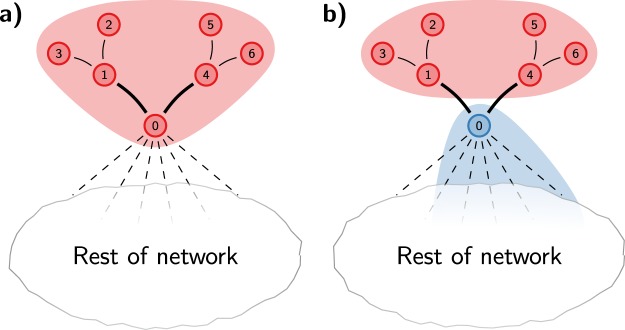
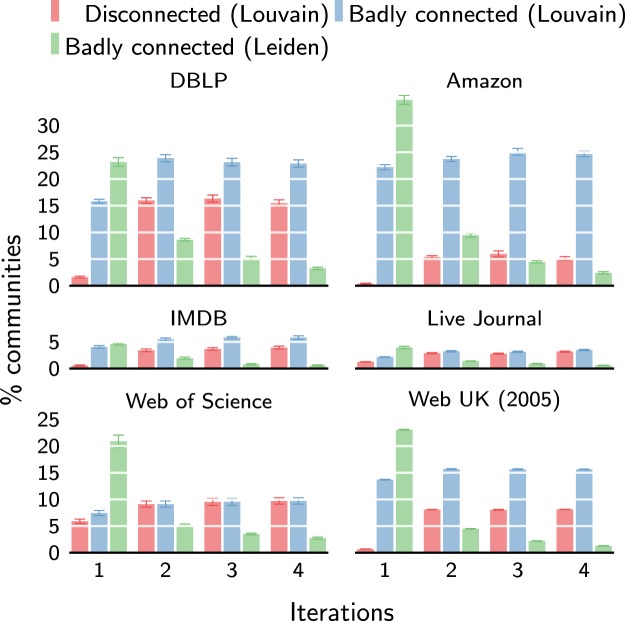
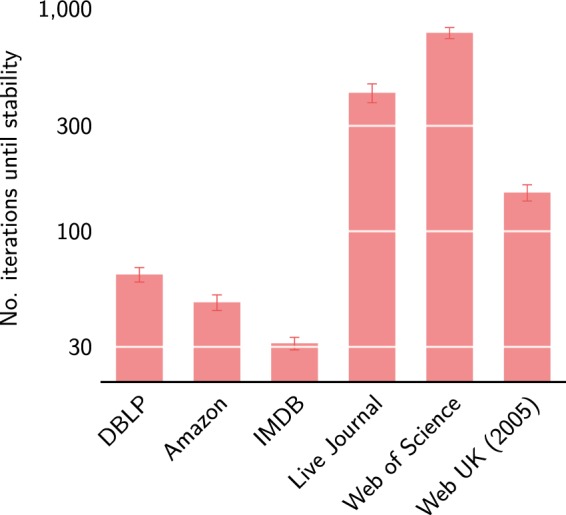
- Louvain may produce arbitrarily badly connected communities; in experiments up to 25% of communities were badly connected and up to 16% were disconnected. First-iteration badly connected percentages included Amazon 23%, DBLP 16%, and Web UK 14%; disconnected communities were usually around 1%, but exceeded 5% for Web of Science in the first iteration and jumped to 16% for DBLP in later iterations. After four iterations, Amazon had 5% disconnected but 25% badly connected communities.
- Leiden guarantees all communities are connected after each iteration, and also γ-separated and γ-connected. After a stable iteration, all nodes are locally optimally assigned and all communities are subpartition γ-dense; asymptotically, all communities are uniformly γ-dense and subset optimal.
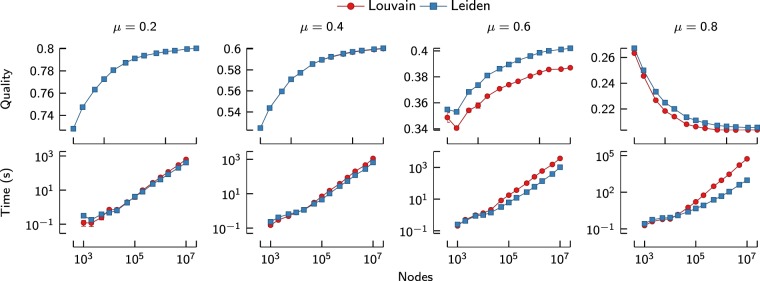
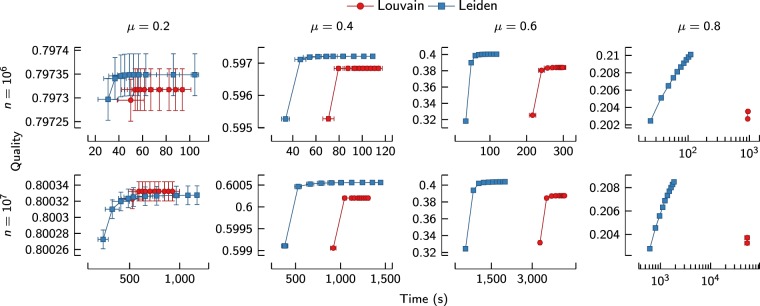
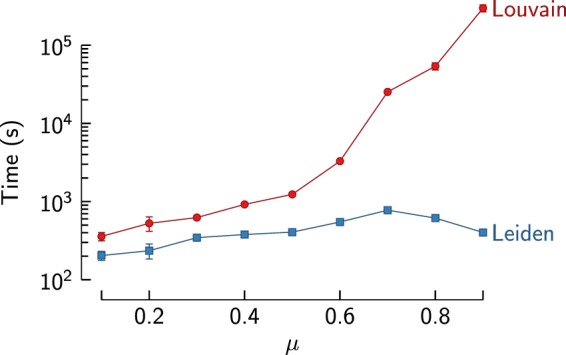
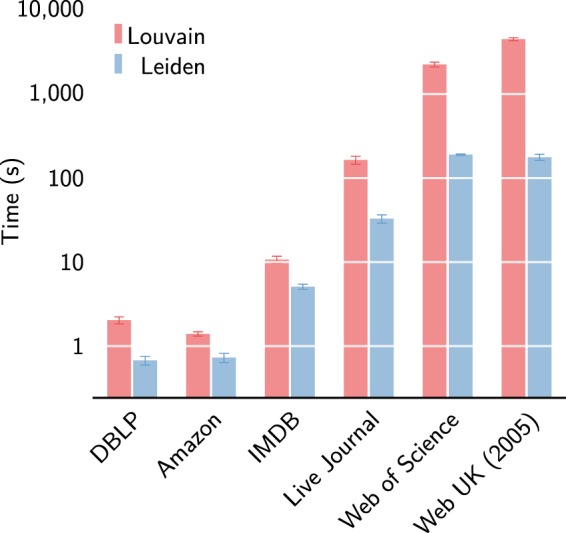
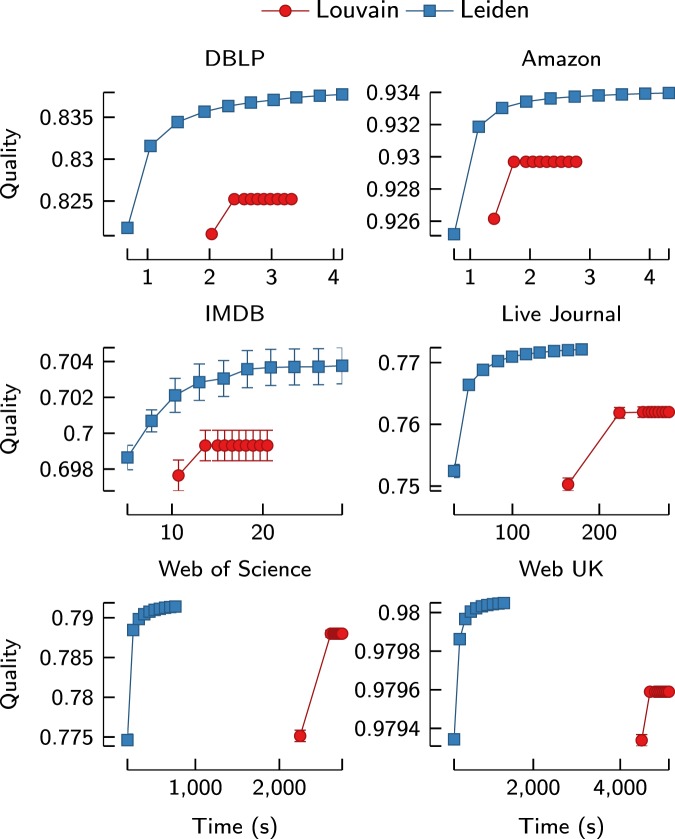
- Leiden was faster than Louvain: first iteration roughly 2–20 times faster on empirical networks, including more than 7× faster for Live Journal, more than 11× for Web of Science, and more than 20× for Web UK. On benchmark networks with difficult partitions (μ = 0.9), Louvain required almost 2.5 days while Leiden needed fewer than 10 minutes; for largest networks Leiden reached 10–100 times faster runtimes.
- Leiden found higher modularity on all six empirical networks: DBLP 0.8387 vs 0.8262, Amazon 0.9341 vs 0.9301, IMDB 0.7069 vs 0.7062, Live Journal 0.7739 vs 0.7653, Web of Science 0.7951 vs 0.7911, and Web UK 0.9801 vs 0.9796.
Methods
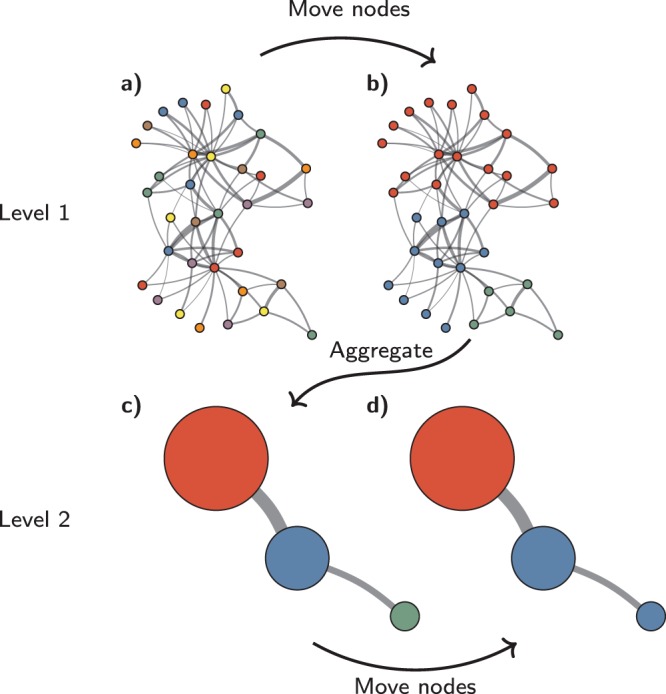
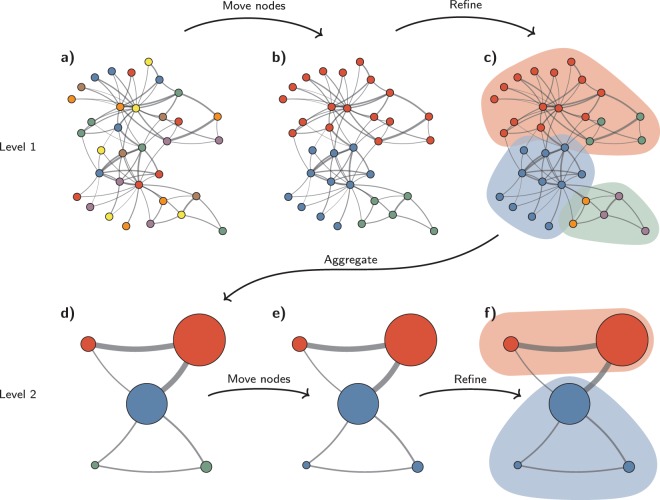
- The paper introduces the Leiden algorithm, which combines local moving, refinement of the partition, and aggregation; proofs of guarantees are relegated to Supplementary Information. It compares Leiden with Louvain on six empirical networks and on benchmark networks.
- Empirical networks: DBLP (317,080 nodes, degree 6.6), Amazon (334,863, 5.6), IMDB (374,511, 80.2), Live Journal (3,997,962, 17.4), Web of Science (9,811,130, 21.2), and Web UK (39,252,879, 39.8). Modularity was used with γ = 1; Table 2 reports maximal modularity after 10 replications of 10 iterations each. Badly connected community analysis was repeated 10 times, with Leiden run on each community’s subnetwork until a stable iteration.
- Benchmark networks ranged from n = 10^3 to n = 10^7 nodes, with community size 50 and CPM as the quality function; the mixing parameter μ varied, 10 iterations were performed, and each parameter set was repeated 10 times. The refinement randomness parameter was θ = 0.01.
Limitations
- The paper states that benchmark networks have only limited value because they are not representative of empirical real-world networks and have a rather simple structure.
- The paper states that counting communities split by Leiden gives only a lower bound on the number of badly connected communities; if Leiden does not find subcommunities, there is no guarantee that modularity cannot be increased by splitting the community.
- Evident from the text: there is no dedicated limitations section; technical details and proofs are relegated to Supplementary Information, and the experimental analysis fixes θ = 0.01 although values roughly in [0.0005, 0.1] are said to provide reasonable results.
Model-written summary. Check it against the paper before relying on it.
Integrity signals
Registry
Cites
Statistics
Figures
Verification
Claims the paper makes
1 Valid · 2 Not valid · 17 Not checked · 142 Own results and interpretations
The cited sources support only part of this claim — read each source’s verdict below.
In the paper
“Hence, the problem of Louvain outlined above is independent from the issue of the resolution limit.”
§ From Louvain to Leiden: guaranteeing well-connected communities > Louvain Algorithm > Badly connected communities
What the sources say
- Partly supportedcites [14] Fortunato S Barthélemy M Resolution Limit in Community Detection Proc. Natl. Acad. Sci. USA 2007 104 36 10.1073/pnas.0605965104 17190818 PMC1765466 sourceExperimental — accuracy not yet measured
Our copy supports the resolution-limit side of the sentence: the Conclusions (VI, p. 7) state that 'the resolution limit of modularity does not rely on particular network structures, but only on the comparison between the sizes of interconnected communities and that of the whole network', the Introduction (p. 1) calls it an 'intrinsic scale' of modularity, and Section V (pp. 5-6) shows the failure persists with simulated annealing, i.e. it is a property of the quality function rather than of one particular optimizer. What the source does not contain is the other term of the comparison: Louvain is never mentioned anywhere in the paper (the Introduction, p. 1, lists only generic greedy procedures [19,20], extremal optimization [21] and simulated annealing [22,23]), and no passage contrasts the resolution limit with an algorithm-specific defect. The independence claim is therefore the citing authors' own inference built on this paper's characterization of the resolution limit. (LLM, conf=0.70)
plain- Asserted: passes — The authors put it forward as true.
- Checkable: passes — It can be checked against evidence.
- Load-bearing: passes — The paper’s conclusions depend on it.
- Based: passes — The paper gives a reason why it holds.
- Partly supported
A result the paper states — it cites no source for it, so there is none to check. The quote shows it is in the paper.
In the paper
“The percentage of badly connected communities is less affected by the number of iterations of the Louvain algorithm.”
§ From Louvain to Leiden: guaranteeing well-connected communities > Experimental Analysis > Badly connected communities
plain- Asserted: passes — The authors put it forward as true.
- Checkable: passes — It can be checked against evidence.
- Load-bearing: unclear — It is unclear whether the paper’s conclusions depend on it.
- Based: passes — The paper gives a reason why it holds.
A result the paper states — it cites no source for it, so there is none to check. The quote shows it is in the paper.
In the paper
“In addition, we prove that, when the Leiden algorithm is applied iteratively, it converges to a partition in which all subsets of all communities are locally optimally assigned.”
- Also stated in: § Introduction · boosted
“In addition, we prove that the algorithm converges to an asymptotically stable partition in which all subsets of all communities are locally optimally assigned.”
§ From Louvain to Leiden: guaranteeing well-connected communities > Abstract
boostedstates a cause- Asserted: passes — The authors put it forward as true.
- Checkable: passes — It can be checked against evidence.
- Load-bearing: passes — The paper’s conclusions depend on it.
- Based: passes — The paper gives a reason why it holds.
- Also stated in: § Introduction · boosted
A result the paper reports from its own data — it cites no other source for it, so there is none to check. The quote shows it is in the paper.
In the paper
“The second iteration of Louvain shows a large increase in the percentage of disconnected communities.”
§ From Louvain to Leiden: guaranteeing well-connected communities > Experimental Analysis > Badly connected communities
plainstates a cause- Asserted: passes — The authors put it forward as true.
- Checkable: passes — It can be checked against evidence.
- Load-bearing: passes — The paper’s conclusions depend on it.
- Based: passes — The paper gives a reason why it holds.
A result the paper reports from its own data — it cites no other source for it, so there is none to check. The quote shows it is in the paper.
In the paper
“In terms of the percentage of badly connected communities in the first iteration, Leiden performs even worse than Louvain, as can be seen in Fig. 4.”
§ From Louvain to Leiden: guaranteeing well-connected communities > Experimental Analysis > Badly connected communities
plain- Asserted: passes — The authors put it forward as true.
- Checkable: passes — It can be checked against evidence.
- Load-bearing: unclear — It is unclear whether the paper’s conclusions depend on it.
- Based: passes — The paper gives a reason why it holds.
115 more claims
Create a free account to see all 162 claims and to verify the 24 references still open.
- Probably not a substantial claim. 23
- It may state two separate claims as one. 23
- The quote only partly states this claim. 1
Claims other papers make about this one
Each is checked against this paper’s own text: does it say what the citing paper says it does?
The cited source says what the claim attributes to it.
In the citing paper
“When compared to six common clustering algorithms, including Leiden25 and CellHarmony26, VFC was the top performing algorithm on every simulation on the T cell data and best performing, on average, on the zebrafish dataset, with a 57% increase in average performance over Louvain, which was the next best algorithm”
From Quantifying the effect of experimental perturbations at single-cell resolution (2021) · cites this paper as [25]
The cited source says what the claim attributes to it.
In the citing paper
“Louvain’s successor Leiden circumvents this issue by yielding guaranteed connected communities and is computationally more efficient52.”
From Best practices for single-cell analysis across modalities (2023) · cites this paper as [52]
The cited source says what the claim attributes to it.
In the citing paper
“However, the Louvain algorithm can lead to arbitrarily poorly connected communities52.”
From Best practices for single-cell analysis across modalities (2023) · cites this paper as [52]
The cited source says what the claim attributes to it.
In the citing paper
“We found that many t-types had total variance substantially above the variances of the k-means clusters (Fig. 5b) and an alternative analysis using entropies of Leiden clustering35 often highlighted the same t-types as variable (Extended Data Fig. 8).”
From Phenotypic variation of transcriptomic cell types in mouse motor cortex (2021) · cites this paper as [35]
The cited source says what the claim attributes to it.
In the citing paper
“Community detection uses the Leiden algorithm [28] with ModularityVertexPartition, producing hierarchical subclustering to depth 3.”
From SuperLocalMemory: Privacy-Preserving Multi-Agent Memory with Bayesian Trust Defense Against Memory Poisoning (2026) · cites this paper as [28]
6 more claims about this paper
Create a free account to see every claim other papers make about this one.
Citations
Cites
Fast unfolding of communities in large networks
Blondel, V. D., Guillaume, J.-L., Lambiotte, R., & Lefebvre, E. (2008) · Journal of Statistical Mechanics: Theory and Experiment · doi:10.1088/1742-5468/2008/10/p10008 · Cited by 21,424 · cited 3×
“The Louvain algorithm 10 is very simple and elegant.”
MethodFinding and evaluating community structure in networks
Newman, M. E. J., & Girvan, M. (2004) · Physical Review E · doi:10.1103/physreve.69.026113 · Cited by 13,931 · cited 2×
“The Leiden algorithm consists of three phases: (1) local moving of nodes, (2) refinement of the partition and (3) aggregation of the network based on the refined partition, using the non-refined partition to create an initial partition for the aggregate network.”
BackgroundMethodComplex brain networks: graph theoretical analysis of structural and functional systems
Bullmore, E., & Sporns, O. (2009) · Nature Reviews Neuroscience · doi:10.1038/nrn2575 · Cited by 11,820
Fortunato, S. (2010) · Physics Reports · doi:10.1016/j.physrep.2009.11.002 · Cited by 11,293 · cited 4×
“The Leiden algorithm consists of three phases: (1) local moving of nodes, (2) refinement of the partition and (3) aggregation of the network based on the refined partition, using the non-refined partition to create an initial partition for the aggregate network.”
BackgroundMethodInfluentialFinding community structure in very large networks
Clauset, A., Newman, M. E. J., & Moore, C. (2004) · Physical Review E · doi:10.1103/physreve.70.066111 · Cited by 7,390 · cited 1×
“Optimising modularity is NP-hard 5 , and consequentially many heuristic algorithms have been proposed, such as hierarchical agglomeration 6 , extremal optimisation 7 , simulated annealing 4,8 and spectral 9 algorithms.”
MethodFinding community structure in networks using the eigenvectors of matrices
Newman, M. E. J. (2006) · Physical Review E · doi:10.1103/physreve.74.036104 · Cited by 4,761
Functional cartography of complex metabolic networks
Guimerà, R., & Nunes Amaral, L. A. (2005) · Nature · doi:10.1038/nature03288 · Cited by 3,983 · cited 2×
“Optimising modularity is NP-hard 5 , and consequentially many heuristic algorithms have been proposed, such as hierarchical agglomeration 6 , extremal optimisation 7 , simulated annealing 4,8 and spectral 9 algorithms.”
MethodNear linear time algorithm to detect community structures in large-scale networks
Raghavan, U. N., Albert, R., & Kumara, S. (2007) · Physical Review E · doi:10.1103/physreve.76.036106 · Cited by 3,502 · cited 2×
“Trying to fix the problem by simply considering the connected components of communities 19–21 is unsatisfactory because it addresses only the most extreme case and does not resolve the more fundamental problem.”
BackgroundBenchmark graphs for testing community detection algorithms
Lancichinetti, A., Fortunato, S., & Radicchi, F. (2008) · Physical Review E · doi:10.1103/physreve.78.046110 · Cited by 3,051 · cited 1×
“To study the scaling of the Louvain and the Leiden algorithm, we rely on a variant of a well-known approach for constructing benchmark networks 28 .”
MethodResolution limit in community detection
Fortunato, S., & Barthélemy, M. (2007) · Proceedings of the National Academy of Sciences · doi:10.1073/pnas.0605965104 · Cited by 3,024 · cited 2×
“The algorithm may yield arbitrarily badly connected communities, over and above the well-known issue of the resolution limit 14 .”
Background
Research works printed but not linked: 2
- Porter MA Onnela J-P Mucha PJ Communities in Networks Not. AMS 2009 56 1082 1097
- Luecken, M. D. Application of multi-resolution partitioning of interaction networks to the study of complex disease. Ph.D. thesis, (University of Oxford, 2016).
Cited by
Items 6,901–7,000 of 7,288
Simulation of Content-Based Recommendation Algorithms in Social Media Networks
Zhao, J., Sasahara, K., & Chen, Y. (2026) · Procedia Computer Science · doi:10.1016/j.procs.2026.08.211
Li, M., Huo, Q., Wu, Z., Huang, L., Sun, T., Zhao, Y., Liang, Q., Ou, Y., Yang, P., Zhu, S., et al. (2026) · Journal of Molecular Neuroscience · doi:10.1007/s12031-026-02624-8
Mechanical and chemical macrophage activation differ by arm, not by amplitudePreprint
Zhong, C., Chen, W., Zeng, T., Zhang, S., zhu, J., & Cong, Z. (2026) · bioRxiv (Cold Spring Harbor Laboratory) · doi:10.64898/2026.11.10.765627
TideCluster: clustering and classification of tandem repeats for comparative and pangenomic analysisPreprint
Novák, P., & Macas, J. (2026) · bioRxiv (Cold Spring Harbor Laboratory) · doi:10.64898/2026.11.06.764801
Medisetti, S., Kalinina, A., Shah, S., Fayaz, M. A., Clémot-Dupont, S., Picketts, D. J., & Mattar, P. A. (2026) · bioRxiv (Cold Spring Harbor Laboratory) · doi:10.64898/2026.10.29.762969
Network-guided prioritization of plasma protein signatures across 23 diseases
Kong, X., Yang, H., Li, M., Zhang, T., Álvez, M. B., Liao, X., Song, X., Meng, L., Altay, Ö., Şener, L. T., et al. (2026) · Molecular Systems Biology · doi:10.1038/s44320-026-00256-z
Prado, H. M. D. A., Miyamoto, J. G., Busso-Lopes, A. F., Coimbra, N. D. R., de Figueiredo, D., Domingues, R. R., Pauletti, B. A., Mores, A. L., Medina, T. D. S., Ramos, R. N., et al. (2026) · bioRxiv (Cold Spring Harbor Laboratory) · doi:10.64898/2026.09.08.750082
Najwa, A. M., Alifah, A. N., Alifianti, T. D. P., & Pradana, I. P. M. D. (2026) · International Conference on Information Technology and Computing (ICITCOM) · doi:10.1109/icitcom70739.2026.11714419
Counterfactual assessment of social media interventions by separating exposure from engagementPreprint
Pisani, T., Gravino, P., & Prevedello, G. (2026) · arXiv (Cornell University) · doi:10.48550/arxiv.2610.37864
Wang, Z., Shi, Y., Bai, T., Huang, S., Zheng, C., Yao, K., Li, K., & He, Y. (2026) · Vehicles · doi:10.3390/vehicles8100228
A transcriptomic and spatial map of serotonin autoreceptor expression in DrosophilaPreprint
Brewer, L., Li, Y., Lim, J., Solano, S., Walker, E., Watts, M., Rhodes, J. K., Cai, D., & Roossien, D. H. (2026) · bioRxiv (Cold Spring Harbor Laboratory) · doi:10.64898/2026.08.27.747575
Single-nucleus chromatin accessibility time course of excisional wound repair in rat skin
Chai, C., Ding, X., Li, Y., Liang, L., Huang, R., Zhang, W., Li, R., Xie, S., Zeng, X., Zhang, L., et al. (2026) · Gigabyte · doi:10.46471/gigabyte.197
Luu, R. J., Hoefler, B. C., Gard, A. L., Ritenour, C. R., Rogers, M. T., Kim, E. S., Coppeta, J. R., Cain, B. P., Isenberg, B. C., Azizgolshani, H., et al. (2023) · doi:10.3389/fmolb.2023.1160851.s001
Complex network analysis of extreme precipitations in North America
Oladoja, V. A. (2024) · K-State Research Exchange (Kansas State University)
Supporting information 2 of LISA2: Learning Complex Single-Cell Trajectory and Expression Trends
Chen, Y., Zhang, Y., Li, J. Y. H., & Ouyang, Z. (2021) · doi:10.3389/fgene.2021.681206.s002
Shea, A., Cui, J., Li, M., Leonard, R. J., Bartz, J., Nguyen, T., Zhang, J., Garry, D. J., & Dong, X. (2026) · Scientific Reports · doi:10.1038/s41598-026-74259-z
Qin, T., Sun, C., Sun, J., Zhang, A., Zhang, X., Chen, L., & Zhou, Q. (2026) · Frontiers in Cell and Developmental Biology · doi:10.3389/fcell.2026.1969882
Isgandarov, I., Abilbayeva, A., Tarabayeva, A., Шамекова, М., Bitanova, E., Yessenkulova, S., Kulmanbetov, R., Zhubanturliyeva, A., Nurmukhanbetova, A., Tulepbergenova, A., et al. (2026) · International Journal of Molecular Sciences · doi:10.3390/ijms272210189
Human mobility shapes how urban policy effects spread across citiesPreprint
Joseph, B., Gibbs, H. P., Yabe, T., & Moro, E. (2026) · arXiv (Cornell University) · doi:10.48550/arxiv.2610.02639
Characterization of heterogeneous bioinformatics training needs in the AI eraPreprint
van Geest, G., Cola, V. D., Zahn‐Zabal, M., Marek, D., Rossier, G., Duchemin, W., Carlevaro-Fita, J., Tanwar, D. K., Vaucher, M., & Palagi, P. M. (2026) · bioRxiv (Cold Spring Harbor Laboratory) · doi:10.64898/2026.10.22.761024
Heimli, M., Flåm, S. T., Hjorthaug, H. S., Trinh, D., Frisk, M., Dumont, K.-A., Ribarska, T., Tekpli, X., Saare, M., & Lie, B. A. (2023) · doi:10.3389/fimmu.2022.1092028.s004
A thermodynamic framework for mapping elastic recoil mechanism across the human proteomePreprint
Desai, R., Pople, D., Jain, S., Musale, A., Sajjad, I., Wittebort, R. J., Koder, R. L., & Nanda, V. (2026) · bioRxiv (Cold Spring Harbor Laboratory) · doi:10.64898/2026.08.28.747957
Ding, L., Roeck, K., Zhang, C., Zidek, B., Rodman, E., Hernandez-Barco, Y., Zhang, J.-S., Bamlet, W., Oberg, A., Zhang, L., et al. (2022) · doi:10.3389/fcell.2022.853003.s002
Deep immune cell phenotyping predicts influenza vaccine immunogenicity in HCT recipientsPreprint
Asiaee, A., Pal, S., Simmons, J. D., Spieker, A. J., Chappell, J. D., Halasa, N., Kalams, S. A., & Influenza Vaccine in HCT Study Group (2026) · medRxiv · doi:10.64898/2026.11.01.26367040
Cristiani, J., Rubidge, E., Forbes, C., Moore-Maley, B., & O’Connor, M. I. (2021) · doi:10.3389/fmars.2021.717469.s001
Duran, R. C.-D., González-Orozco, J. C., Velasco, I., & Wu, J. Q. (2022) · doi:10.3389/fcell.2022.884748.s002
Modeling and Analyzing Collective Behavior Captured by Many-to-Many Networks
FERREIRA, C. H. G. (2022) · PORTO@Iris
Revisiting the Objective of Echo Chamber DetectionPreprint
Bexeit, A., Perera, K., Karunasekera, S. A., & Honorio, J. (2026) · arXiv (Cornell University) · doi:10.48550/arxiv.2609.18545
Network Analysis for Rating Datasets in R: A Multi-Disciplinary Perspective
Lamprianou, I. (2026) · Routledge eBooks · doi:10.4324/9781003613459
Georgoulias, G., & Zaravinos, A. (2022) · doi:10.3389/fimmu.2022.1006665.s013
İnecik, K., Sevinc, E. S., Erken, E., & Theis, F. J. (2026) · bioRxiv (Cold Spring Harbor Laboratory) · doi:10.64898/2026.11.11.766029
Sloover, L. D. (2026) · Ghent University Academic Bibliography (Ghent University)
Qian, X., & Wang, J. (2026) · Briefings in Bioinformatics · doi:10.1093/bib/bbag586
Working memory operations emerge from dynamic changes in neural subspace geometryPreprint
Santo-Angles, A., Gyurkovics, M., Jaworska, K., Palva, J. M., Thut, G., & Palva, S. (2026) · bioRxiv (Cold Spring Harbor Laboratory) · doi:10.64898/2026.08.31.748237
KONE, M., Haidara, G., Hou, C., & Wang, S. (2026) · Research Square · doi:10.21203/rs.3.rs-10394296/v1
Blind Noise Equalization for Large Data Matrices under General Variance ProfilesPreprint
Landa, B., Strino, F., Parisi, F., Li, R., & Kluger, Y. (2026) · arXiv (Cornell University) · doi:10.48550/arxiv.2611.08784
Cytoneighbor: a scalable neighbor evidence framework for single-cell state analysis
Hu, H., Yu, Y.-Q., Shi, G.-M., Wang, J., Lin, H., & Hou, X. (2026) · Results in Engineering · doi:10.1016/j.rineng.2026.114181
Vilela, J., Martiniano, H., Marques, A. R., Santos, J. X., Rasga, C., Oliveira, G., & Vicente, A. M. (2022) · doi:10.3389/fnmol.2022.932305.s006
Chen, H., Li, D., & Shen, C. (2026) · Cytotechnology · doi:10.1007/s10616-026-01116-2
HSLeiden: A Hybrid Semantic Community Detection Algorithm for Heterogeneous Academic Networks*
Zhang, X., & Chen, Y. (2026) · International Conference on Electronic Technology and Information Science (ICETIS) · doi:10.1109/icetis70504.2026.11633451
Guan, P. Y., Lee, J. S., Wang, L., Lin, K. Z., Mei, W., Chen, L., & Jiang, Y. (2023) · doi:10.3389/fgene.2023.1089936.s001
He, C., Liu, S., & Liu, Z. (2026) · Engineering Construction & Architectural Management · doi:10.1108/ecam-05-2026-0937
Reproducible Classification and Analysis for Single Cell, rCASC
Alessandrì, L. (n.d.) · Institutional Research Information System University of Turin (University of Turin)
Truecell reproduces R Seurat's single-cell analysis outputs natively in the Python ecosystemPreprint
Ismail, N., Amarasoma, S., Galeas‐Pena, M., & Glover, S. C. (2026) · arXiv (Cornell University) · doi:10.48550/arxiv.2610.10482
Cornfield, D. N., Ansari, J. R., Fornes, D. D., Yang, L., Knutsen, C., Kum, A., Michel, G., Henze, D. E., Alvira, C., & Quake, S. R. (2026) · Research Square · doi:10.21203/rs.3.rs-11225136/v1
Sathiqu, R. M., Rootes, C. L., Brice, A. M., Caputo, A. T., Williams, S. M., Rodrigues, C. H. M., Farr, R. J., Alexander, M., & Stewart, C. R. (2026) · bioRxiv (Cold Spring Harbor Laboratory) · doi:10.64898/2026.11.02.763686
Washizu, K., Wang, X., Draper, J. M., Yamanaka, S., & Kunitomi, A. (2026) · bioRxiv (Cold Spring Harbor Laboratory) · doi:10.64898/2026.11.09.764947
Liu, B., Rosenhahn, B., Illig, T., & DeLuca, D. S. (2024) · doi:10.1371/journal.pcbi.1011198.r002
Cahua, J. C. H., Ticona, Y. O., Quispe, M. Y. V., Carpio, N. B. V., & Ojeda-Flores, E. C. (2026) · Interacciones Revista de Avances en Psicología · doi:10.24016/2026.v12.514
A Proteomic Atlas of Human Milk: Uncovering Milk Functional ComponentsPreprint
Deriu, M. A., Zaverdas, H., Shah, S. T. H., Stojceski, F., Panagiotopoulos, K., Liontou, K., Mavroudi, S. P., Durán-Ruiz, M. C., Kiskira, F., Kalogeras, A. P., et al. (2026) · Research Square · doi:10.21203/rs.3.rs-10089470/v1
Wu, D., Guan, R., Xie, Q., Li, Y., & Wang, H. (2026) · arXiv (Cornell University) · doi:10.48550/arxiv.2608.28990
Operationalizing open-ended biological discovery across single-cell representationsPreprint
Zhang, N., Wang, Z., Xie, N., & Liu, N. (2026) · arXiv · doi:10.48550/arxiv.2609.00681
Language-encoded network topology enables large language models to reason about complex networksPreprint
Utsha, U. T., Mostafa, S., Zou, J., & Islam, M. T. (2026) · arXiv (Cornell University) · doi:10.48550/arxiv.2609.03229
Shao, T. (2026) · arXiv (Cornell University) · doi:10.48550/arxiv.2609.36825
Uthamacumaran, A. (2026) · arXiv (Cornell University) · doi:10.48550/arxiv.2610.23927
TargetAgent: Mathematical AI Co-Scientist for Drug Target IdentificationPreprint
Cottrell, S., & Wei, G. (2026) · arXiv (Cornell University) · doi:10.48550/arxiv.2610.33003
Jia, C., Liu, Y., Han, M., & Na, X. (2026) · Sustainability · doi:10.3390/su182111258
The Network Adaptive Market Hypothesis: Detection, Attribution, and Network-Mediated EfficiencyPreprint
Sahu, H. K., Bhandari, A., & Parida, I. (2026) · arXiv (Cornell University) · doi:10.48550/arxiv.2611.09208
Yılmaz, M. B. (2026) · International Journal of Gastronomy and Food Science · doi:10.1016/j.ijgfs.2026.101720
Distinct cellular source and bulk immune correlates of HAVCR2 expression in seminoma
Kim, S. H., Lee, D. Y., Kim, M. G., Jung, M. J., Han, T. W., Yang, H. J., Kim, D. S., Kim, H. J., Lee, C. H., Jeon, Y. S., et al. (2026) · Medical Oncology · doi:10.1007/s12032-026-03507-z
Hickey, S. L., McKim, A., Mancuso, C. A., & Krishnan, A. (2022) · doi:10.3389/fphar.2022.995459.s016
Li, B., Han, X., Zheng, B., Liu, J., Kang, D., Zhang, L., Peng, Y., Ge, Z., & Yuan, H. (2026) · Process Safety and Environmental Protection · doi:10.1016/j.psep.2026.109906
Iyer, N. G., Alagappan, L., Brooker, R. C., Quah, H. S., Greaney, F., Hunter, K. D., Ottensmeier, C. H. H., Robinson, M., Fernando, K., Yu, J., et al. (2026) · Research Square · doi:10.21203/rs.3.rs-10709977/v1
Rocha‐Meneses, L., Smolak, K., Khalid, H., Luna-delRisco, M., Inayat, A., & Sher, F. (2026) · Communications Earth & Environment · doi:10.1038/s43247-026-04059-w
Nikita, N. Y., & Andrey, S. A. (2026) · Materials Today Communications · doi:10.1016/j.mtcomm.2026.116336
Multiplex coupling: Connecting the intellectual base and the topics of a research fieldPreprint
Aria, M., Cuccurullo, C., & Spano, M. (2026) · arXiv (Cornell University) · doi:10.48550/arxiv.2610.21858
Liu, B., Li, T., Zhang, J., Xiao, Z., Tang, Z., & Li, K. (2026) · arXiv (Cornell University) · doi:10.48550/arxiv.2610.28467
Machine learning methods for antibiotics discovery
Roget, C. (2026) · Papyrus : Institutional Repository (Université de Montréal) · doi:10.71781/36463
Starlng: STability Analysis of coRegulated ‘Nests’ of Genes
Munteanu, A. (2026) · Bioinformatics · doi:10.1093/bioinformatics/btag801
HiSfM: Disambiguating Structure-from-Motion via Scaffold-Anchored Hierarchical ReconstructionPreprint
赵子定, Cui, H., Tao, P., & Shen, S. (2026) · arXiv (Cornell University) · doi:10.48550/arxiv.2609.04718
Kintsugi decides, gene by gene, where spatial transcriptomics borrows informationPreprint
Yang, C., Zhang, X., & Chen, J. (2026) · bioRxiv (Cold Spring Harbor Laboratory) · doi:10.64898/2026.08.30.748061
ProClust provides reliable statistical significance of clusters for single-cell transcriptomic dataPreprint
Qian, H., Wu, H., Dai, Y., Yan, G., & Liu, Y. (2026) · bioRxiv (Cold Spring Harbor Laboratory) · doi:10.64898/2026.11.08.764985
Advancing long-read metagenomic binning via single-copy-gene guided contrastive learningPreprint
Han, H., Messer, L. F., Quince, C., Bending, G. D., Raguideau, S., Wang, Z., & Zhu, S. (2026) · bioRxiv (Cold Spring Harbor Laboratory) · doi:10.64898/2026.09.07.749871
Villumsen, S. O., Benfeitas, R., Knudsen, A. D., Gelpi, M., Høgh, J., Thomsen, M. T., Murray, D., Ullum, H., Neogi, U., & Nielsen, S. D. (2022) · doi:10.3389/fimmu.2021.742736.s001
Chien, S.-C., Huang, C.-C., & Huang, C.-C. (2026) · Journal of Medical Systems · doi:10.1007/s10916-026-02488-w
Yuan, C., Wei, D., Lei, M., & Wang, N. (2026) · Statistical Methods & Applications · doi:10.1007/s10260-026-00885-6
Hurtado, J., Flynn, C., Lee, J. H., Salcedo, E. C., Cottrell, C. A., Skog, P. D., Burton, D. R., Nemazee, D., Schief, W. R., Landais, E., et al. (2023) · doi:10.3389/fcimb.2022.962945.s001
Selective Inference for Clustering Under Unknown CovariancePreprint
Chen, Y. T., & Gao, L. L. (2026) · arXiv (Cornell University) · doi:10.48550/arxiv.2610.17458
VeriCam: A Verification Baseline for the Classification of Unknown DataPreprint
Wojcik, L., Lima, G. E., Silva, S. M., Nascimento, E., & Menotti, D. (2026) · arXiv (Cornell University) · doi:10.48550/arxiv.2608.31107
The making of a niche: mechanotransduction and tissue mechanics in dermal condensate morphogenesis
Boylan, L. W. (2026) · URN:NBN Resolver for Germany & Switzerland (German National Library) · doi:10.17879/77858405251
AIA2: Attribute-Agnostic Imbalance Augmentation for Subgroup Robustness
Rao, H., Han, G., & Huang, X. (2026) · Findings of the Association for Computational Linguistics: EMNLP (Findings of EMNLP) · doi:10.18653/2026.findings-emnlp.566
Performance Trade-offs of Community Detection Algorithms in Dense and Sparse Network Topologies
Fredyan, R., & Fernando, D. (2026) · International Conference on ICT for Smart Society (ICISS) · doi:10.1109/iciss71466.2026.11715059
Cellular context shapes the transcriptomic impact of somatic variantsPreprint
Sun, P., Jia, P., Lou, C., Li, X., Li, M., Zhang, R., Lin, H., Li, X., Zhou, Y., Cai, S., et al. (2026) · bioRxiv (Cold Spring Harbor Laboratory) · doi:10.64898/2026.10.28.760887
Wang, S., Zhu, B., Li, S., & Wei, X. (2026) · bioRxiv (Cold Spring Harbor Laboratory) · doi:10.64898/2026.08.12.744394
Alshahrani, M. (2026) · The Journal of Contemporary Dental Practice · doi:10.5005/jp-journals-10024-4070
Honig, F., Brochen, C., Basha, M., Arora, R., Jimenez‐Liñan, M., Antoniou, A., Rueda, O. M., & Martins, F. C. (2026) · bioRxiv (Cold Spring Harbor Laboratory) · doi:10.64898/2026.10.23.761433
Sørensen, B., Brown, C., Sereika, M., Heidelbach, S., Hugenholtz, P., Albertsen, M., & Delogu, F. (2026) · bioRxiv (Cold Spring Harbor Laboratory) · doi:10.64898/2026.10.06.756670
Can Prompt Anonymity Protect Your Identity From LLM Providers?Preprint
Pham, D., Sheils, D., Singh, N., & Houmansadr, A. (2026) · arXiv (Cornell University) · doi:10.48550/arxiv.2609.33903
General Classification for Digital Knowledge: Algorithm, Identifiers and a First BenchmarkPreprint
Awad, D. (2026) · arXiv (Cornell University) · doi:10.48550/arxiv.2610.19547
Explicit objective functions in modularity-based community detection on multiplex networksPreprint
Evmenova, E., & Chunaev, P. (2026) · arXiv · doi:10.48550/arxiv.2609.37253
κ-methodology for the study of scientific leadership: a bibliometric application in physicsPreprint
Ramírez, M. C. (2026) · Research Square · doi:10.21203/rs.3.rs-10560686/v1
A Graph-based Decomposition Framework for Flow-based Charging Station Location ProblemsPreprint
Xiang, J., Carroll, P., & Amideo, A. E. (2026) · Research Square · doi:10.21203/rs.3.rs-10321708/v1
Методы и модели анализа научной деятельности
Алексеевич, Г. Д., Жилякова, Л. Ю., Петрович, К. О., & Гедеванович, Ч. А. (2025) · Ontology of Designing
Multimodal protein representations across human brain cell typesPreprint
Dong, A., Li, M. M., Ding, K., Nazeen, S., Noori, A., Huang, Y., Gao, S., Ritter, D., Afroz, J., Henderson, A. B. H., et al. (2026) · bioRxiv (Cold Spring Harbor Laboratory) · doi:10.64898/2026.11.10.765762
Accessory regions shape genome evolution in the cereal pathogen Fusarium poae
Witte, T. E., Elian, M., Bruggink, J., Blackman, C., Harris, L. J., Johnston, A., Hicks, C., Hermans, A., Bosnich, W., Wang, X., et al. (2026) · PLoS Genetics · doi:10.1371/journal.pgen.1012369
Beyond Accuracy: Benchmarking the Reproducibility and Robustness of Single-Cell EmbeddingsPreprint
Jain, A. (2026) · Research Square · doi:10.21203/rs.3.rs-11109782/v1
Metadata
- Authors
- Traag, V. A., Waltman, L., & van Eck, N. J.
- Affiliations
- Leiden University (NL)
- Corresponding author
- Traag, V. A.
- Venue
- Scientific Reports
- Published
- 2019-03-26
- Volume
- 9
- Issue
- 1
- Pages
- 5233-5233
- ISSN
- 2045-2322 (ISSN-L)
- PMC
- PMC6435756
- OpenAlex
- W2897249806
- Semantic Scholar
- 79cdbabb22ef80074f5659430fe6fc97932798f5
- Cited by
- 5,635
- References
- 27
- Citations by year
- 2026: 1250 · 2025: 1281 · 2024: 980 · 2023: 757 · 2022: 639 · 2021: 466 · 2020: 213 · 2019: 46
- FWCI
- 158.78
- Type
- journal article
- Language
- en
- Open access
- gold
- doi.org
- Licence
- cc-by
- creativecommons.org/licenses/by/4.0 (tdm)
- creativecommons.org/licenses/by/4.0 (vor)
- Locations
- Scientific Reports (publishedVersion, cc-by)
- Europe PMC (PubMed Central) (publishedVersion, other-oa)
- PubMed Central (publishedVersion, cc-by)
- PubMed (publishedVersion)
- arXiv (Cornell University) (submittedVersion)
- Leiden Repository (Leiden University) (submittedVersion, cc-by)
- Data Archiving and Networked Services (DANS) (submittedVersion, cc-by)
- DOAJ (DOAJ: Directory of Open Access Journals) (submittedVersion)
- Leiden Repository (Leiden University) (submittedVersion)
- arXiv (Cornell University)
- Topics
- Physical Sciences › Physics and Astronomy › Statistical and Nonlinear Physics › Complex Network Analysis Techniques
- Physical Sciences › Computer Science › Artificial Intelligence › Advanced Clustering Algorithms Research
- Life Sciences › Biochemistry, Genetics and Molecular Biology › Molecular Biology › Bioinformatics and Genomic Networks
- Keywords
- community detection, Louvain algorithm, Leiden algorithm, network partitioning, community connectivity, complex networks
About these checks
Registry, retraction, Cites and statistics results are computed, not judged, with one exception: a printed reference that no index lists is read once by a model before it counts as a citation error. Claims are extracted by a model and kept only when their quote appears verbatim in the text; each cited source is then checked, with a model’s help, for whether it says what the claim relies on. Those verdicts can be wrong — read the claim’s quote and the cited source before relying on one.
The claim verdicts this report counts are experimental: their accuracy is not yet measured.
A language model drew the claims from the paper on 2026-11-23, under version 3 of the claim definition (model deepseek-v4.1-flash, prompt extract-v3).
A second model labelled each claim on 2026-11-23 (model jev-1.13-20260917, definition revision gold-guideline-v0.2).
Cited sources are checked with a language model’s help (qwen3.8-omni-flash).
Statistics and arithmetic are recomputed, not judged.
Confidence bands are shown only for fields calibrated on our annotated test set. None is calibrated yet, so no band is shown.
What counts as a claim ›How we measure confidence ›How we check this ›
Are you an author, or do you see a problem with this page? Request a review
Data sources
Bibliographic data: Semantic Scholar, OpenAlex, Crossref.
Contains information from the Semantic Scholar Academic Graph Datasets, made available under the ODC Attribution License (ODC-BY 1.0).
Semantic Scholar’s data is described in: Kinney, R., et al. (2023). The Semantic Scholar Open Data Platform. arXiv:2301.10140.
