

The Fungal Histone Acetyl Transferase Gcn5 Controls Virulence of the Human Pathogen Candida albicans through Multiple Pathways
Open accessThe DOI matches its Crossref record; 138 of the 138 references it cites were found in a registry or an index.
Abstract
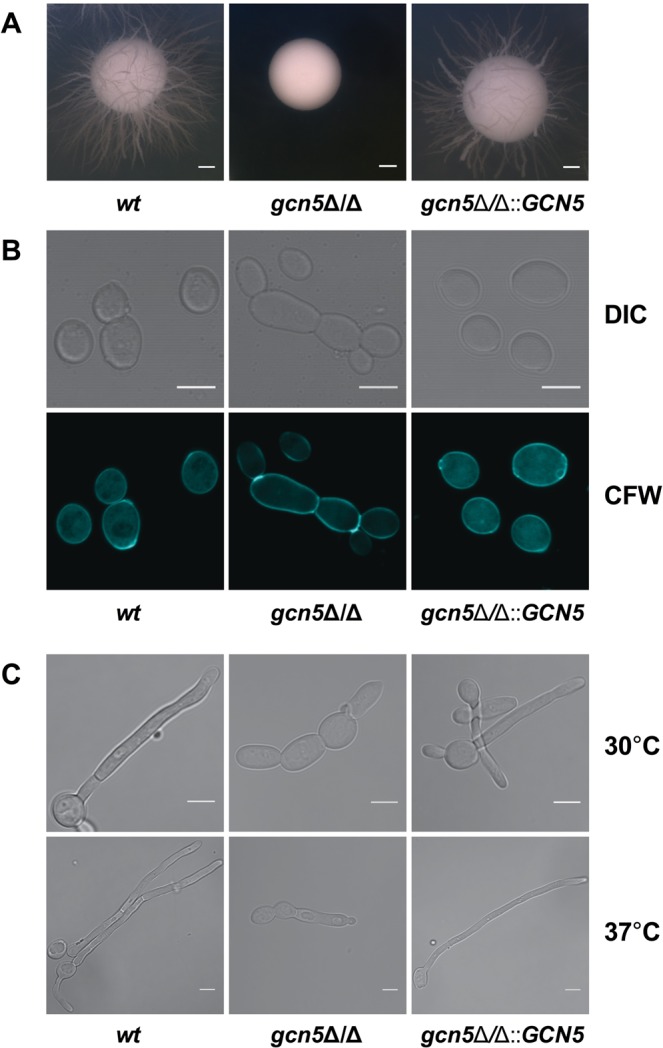
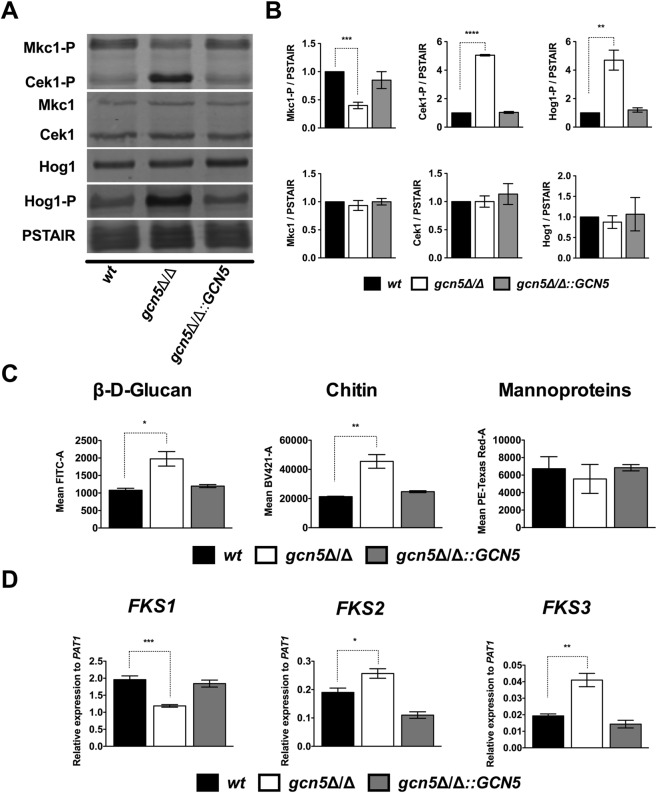
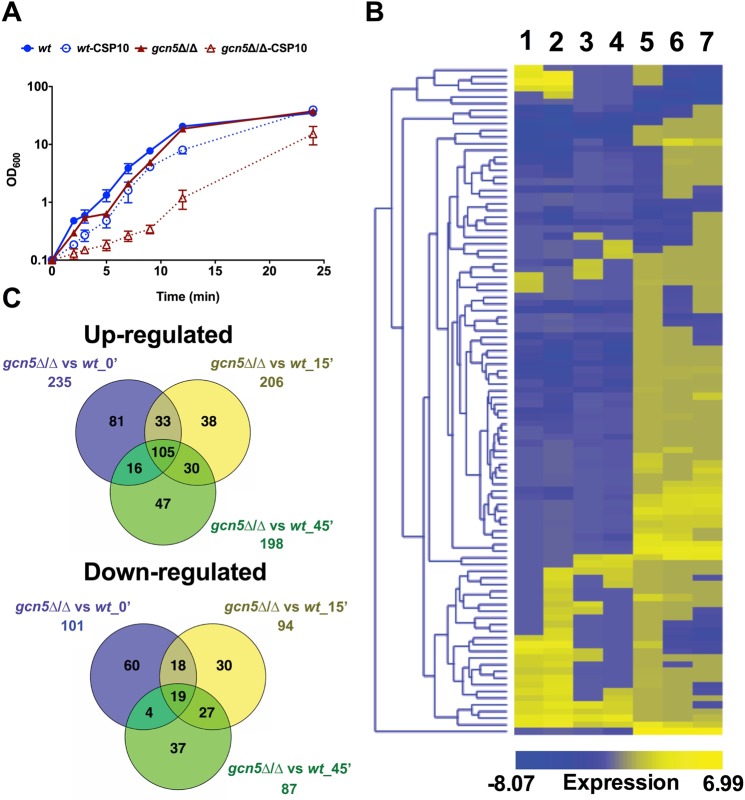
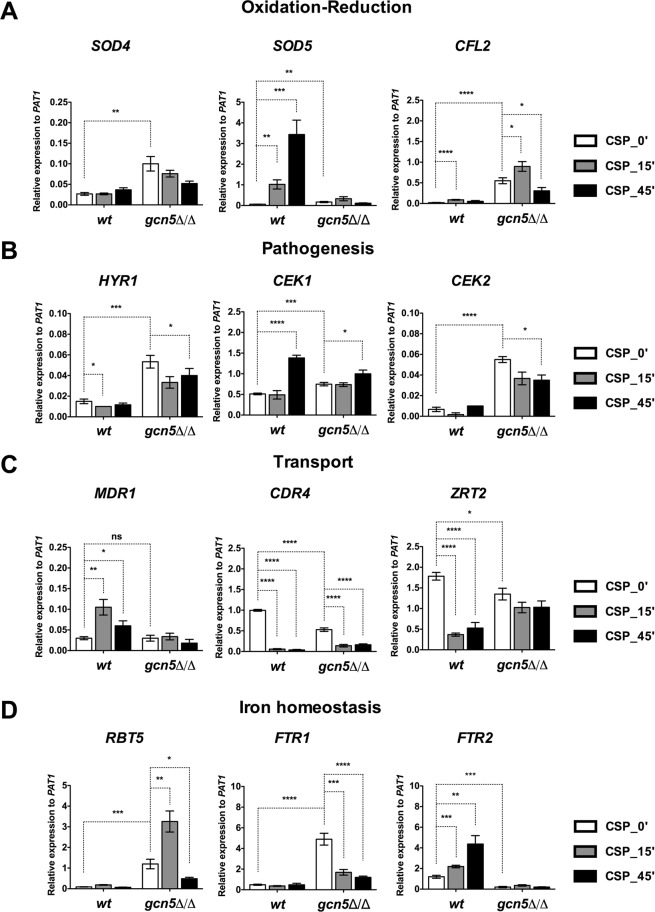
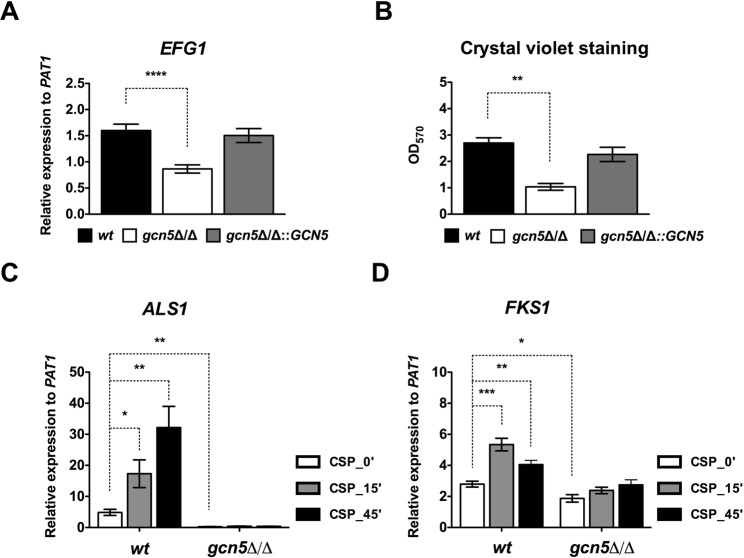
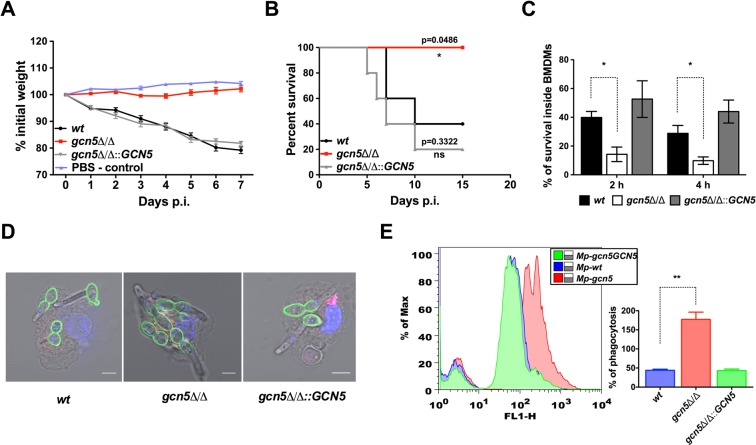
Fungal virulence is regulated by a tight interplay of transcriptional control and chromatin remodelling. Despite compelling evidence that lysine acetylation modulates virulence of pathogenic fungi such as Candida albicans, the underlying mechanisms have remained largely unexplored. We report here that Gcn5, a paradigm lysyl-acetyl transferase (KAT) modifying both histone and non-histone targets, controls fungal morphogenesis – a key virulence factor of C. albicans. Our data show that genetic removal of GCN5 abrogates fungal virulence in mice, suggesting strongly diminished fungal fitness in vivo. This may at least in part arise from increased susceptibility to killing by macrophages, as well as by other phagocytes such as neutrophils or monocytes. Loss of GCN5 also causes hypersensitivity to the fungicidal drug caspofungin. Caspofungin hypersusceptibility requires the master regulator Efg1, working in concert with Gcn5. Moreover, Gcn5 regulates multiple independent pathways, including adhesion, cell wall-mediated MAP kinase signaling, hypersensitivity to host-derived oxidative stress, and regulation of the Fks1 glucan synthase, all of which play critical roles in virulence and antifungal susceptibility. Hence, Gcn5 regulates fungal virulence through multiple mechanisms, suggesting that specific inhibition of Gcn5 could offer new therapeutic strategies to combat invasive fungal infections.
Overview
The claims and statistics of this paper haven’t been checked yet.
Free: it reads the open-access text and checks the first 5 claims that cite a source we can check. Create a free account to check every claim.
Integrity signals
Registry
Cites
Statistics
Figures
Verification
Claims the paper makes
The claims and statistics of this paper haven’t been checked yet.
Free: it reads the open-access text and checks the first 5 claims that cite a source we can check. Create a free account to check every claim.
Claims other papers make about this one
Each is checked against this paper’s own text: does it say what the citing paper says it does?
The source backs part of the claim, not all of it — or backs it for a different population, condition or comparison.
In the citing paper
“Lysine acetyltransferases, such as Gcn5, also mediate antifungal tolerance and resistance in Candida species93–95.”
From Molecular mechanisms governing antifungal drug resistance (2023) · cites this paper as [94]
Experimental — accuracy not yet measuredThe source backs part of the claim, not all of it — or backs it for a different population, condition or comparison.
In the citing paper
“Disrupting the gene encoding the acetyltransferase catalytic subunit Gcn5 results in significant defects in the pathogenicity and drug resistance of C. albicans and N. glabratus, as well as reduced pathogenicity in C. neoformans and multiple virulence-related phenotypes in A. fumigatus.”
From Targeting epigenetic regulators to overcome drug resistance in the emerging human fungal pathogen Candida auris (2025) · cites this paper as [25]
Experimental — accuracy not yet measuredThe source backs part of the claim, not all of it — or backs it for a different population, condition or comparison.
In the citing paper
“Recent studies have demonstrated the critical role of histone H3 PTMs, such as methylation and acetylation, in driving both drug resistance and pathogenicity in human fungal pathogens.”
From Targeting epigenetic regulators to overcome drug resistance in the emerging human fungal pathogen Candida auris (2025) · cites this paper as [25]
Experimental — accuracy not yet measuredThe cited source says what the claim attributes to it.
In the citing paper
“Previous reports indicate that in C. albicans and N. glabratus, knockout of Gcn5 or the Spt7 or Spt8 subunits of the SAGA complex results in increased sensitivity to phagocytosis and enhanced killing by macrophages25,66,71.”
From Targeting epigenetic regulators to overcome drug resistance in the emerging human fungal pathogen Candida auris (2025) · cites this paper as [25]
The cited source says what the claim attributes to it.
In the citing paper
“Previous studies in human fungal pathogens such as C. albicans and C. neoformans have established a strong correlation between Gcn5 activity and fungal virulence25,53,55”
From Targeting epigenetic regulators to overcome drug resistance in the emerging human fungal pathogen Candida auris (2025) · cites this paper as [25]
Self-check
Percentages, sums and reported differences re-computed from the paper’s own numbers.
The self-check needs the paper’s full text.
Citations
Cites
Moderated estimation of fold change and dispersion for RNA-seq data with DESeq2
Love, M. I., Huber, W., & Anders, S. (2014) · Genome Biology · doi:10.1186/s13059-014-0550-8 · Cited by 95,106
A new mathematical model for relative quantification in real-time RT-PCR
Pfaffl, M. W. (2001) · Nucleic Acids Research · doi:10.1093/nar/29.9.e45 · Cited by 34,610
HTSeq—a Python framework to work with high-throughput sequencing data
Anders, S., Pyl, P. T., & Huber, W. (2015) · Bioinformatics · doi:10.1093/bioinformatics/btu638 · Cited by 21,464
TopHat: discovering splice junctions with RNA-Seq
Trapnell, C., Pachter, L., & Salzberg, S. L. (2009) · Bioinformatics · doi:10.1093/bioinformatics/btp120 · Cited by 11,617
Hidden Killers: Human Fungal Infections
Brown, G. D., Denning, D. W., Gow, N. A. R., Levitz, S. M., Netea, M. G., & White, T. C. (2012) · Science Translational Medicine · doi:10.1126/scitranslmed.3004404 · Cited by 4,284
Epidemiology of Invasive Candidiasis: a Persistent Public Health Problem
Pfaller, M. A., & Diekema, D. J. (2007) · Clinical Microbiology Reviews · doi:10.1128/cmr.00029-06 · Cited by 4,174
Global and Multi-National Prevalence of Fungal Diseases-Estimate Precision
Bongomin, F., Gago, S., Oladele, R., & Denning, D. (2017) · Journal of Fungi · doi:10.3390/jof3040057 · Cited by 2,953
Orange: data mining toolbox in python
Demšar, J., Curk, T., Erjavec, A., Gorup, Č., Hočevar, T., Milutinovič, M., Možina, M., Polajnar, M., Toplak, M., Starič, A., et al. (2013) · Journal of Machine Learning Research · Cited by 2,811
The molecular hallmarks of epigenetic control
Allis, C. D., & Jenuwein, T. (2016) · Nature Reviews Genetics · doi:10.1038/nrg.2016.59 · Cited by 2,809
Brownell, J. E., Zhou, J., Ranalli, T., Kobayashi, R., Edmondson, D. G., Roth, S. Y., & Allis, C. D. (1996) · Cell · doi:10.1016/s0092-8674(00)81063-6 · Cited by 1,640
Cited by
Molecular mechanisms governing antifungal drug resistance
Lee, Y., Robbins, N., & Cowen, L. E. (2023) · npj Antimicrobials and Resistance · doi:10.1038/s44259-023-00007-2 · Cited by 304
Resistance to Antifungal Drugs
Ben‐Ami, R., & Kontoyiannis, D. P. (2021) · Infectious Disease Clinics of North America · doi:10.1016/j.idc.2021.03.003 · Cited by 122
McCrory, C., Lenardon, M. D., & Traven, A. (2024) · Trends in Microbiology · doi:10.1016/j.tim.2024.04.004 · Cited by 77
Shivarathri, R., Jenull, S., Stoiber, A., Chauhan, M., Mazumdar, R., Singh, A., Nogueira, F., Kuchler, K., Chowdhary, A., & Chauhan, N. (2020) · mSphere · doi:10.1128/msphere.00973-20 · Cited by 59
“After that, cultures were washed once with ice-cold water and whole-cell extracts were prepared by the trichloroacetic acid (TCA) method as described previously (50).”
MethodInfluentialSelf-citationAustermeier, S., Kasper, L., Westman, J., & Gresnigt, M. S. (2020) · Current Opinion in Microbiology · doi:10.1016/j.mib.2020.05.007 · Cited by 55
Post-Translational Modifications Drive Success and Failure of Fungal–Host Interactions
Retanal, C., Ball, B., & Geddes‐McAlister, J. (2021) · Journal of Fungi · doi:10.3390/jof7020124 · Cited by 56
“Recently, a connection between phosphorylation and acetylation was observed through the impact of Gcn5 on the MAPK pathway [32].”
BackgroundInfluentialIntron distribution and emerging role of alternative splicing in fungi
Muzafar, S., Sharma, R. D., Chauhan, N., & Prasad, R. (2021) · FEMS Microbiology Letters · doi:10.1093/femsle/fnab135 · Cited by 54
“The Gcn5 gene is a paradigm histone acetyl transferase (HAT) that is involved in morphogenesis and virulence of C. albicans (Shivarathri et al. 2019).”
Self-citationComparative Transcriptomics Reveal Possible Mechanisms of Amphotericin B Resistance in Candida auris
Shivarathri, R., Jenull, S., Chauhan, M., Singh, A., Mazumdar, R., Chowdhary, A., Kuchler, K., & Chauhan, N. (2022) · Antimicrobial Agents and Chemotherapy · doi:10.1128/aac.02276-21 · Cited by 41
“H4 as well as regulate cell mediated MAPK signaling pathway (38, 44).”
BackgroundMethodSelf-citationPricopie, A., Focşan, M., Ionuţ, I. A., Marc, G., Vlase, L., Găină, L., Vodnar, D. C., Simon, E., Barta, G., Pîrnău, A., et al. (2020) · Molecules · doi:10.3390/molecules25051079 · Cited by 40
“Invasive candidiasis rank among the top four causes of nosocomial infectious diseases, being associated with an alarming mortality rate, especially in immunocompromised and critically ill patients [1].”
BackgroundNon-histone protein acetylation by the evolutionarily conserved GCN5 and PCAF acetyltransferases
Downey, M. (2020) · Biochimica et Biophysica Acta (BBA) - Gene Regulatory Mechanisms · doi:10.1016/j.bbagrm.2020.194608 · Cited by 43
Luo, Y., McAuley, D. F., Fulton, C. R., Sá‐Pessoa, J., McMullan, R., & Lundy, F. T. (2021) · PLoS ONE · doi:10.1371/journal.pone.0249547 · Cited by 40
“albicans hyphal-deficient mutant (Ca_gcn5Δ/Δ) [24] (gift from Prof Karl Kuchner, Medical University of Vienna) was studied along with the laboratory strain of C.”
MethodHistone Acetylation/Deacetylation in Candida Albicans and their Potential as Antifungal Targets
Su, S., Li, X., Yang, X., Li, Y., Chen, X., Sun, S., & Jia, S. (2020) · Future Microbiology · doi:10.2217/fmb-2019-0343 · Cited by 36
Epigenetic Regulation of Antifungal Drug Resistance
Patra, S., Raney, M., Pareek, A., & Kaur, R. (2022) · Journal of Fungi · doi:10.3390/jof8080875 · Cited by 38
“Moreover, the increased susceptibility of the gcn5∆/∆ mutant towards caspofungin was not due to high intracellular ROS levels [48].”
BackgroundZhang, Y., Zeng, L., Huang, X., Wang, Y., Chen, G., Moses, M., Zou, Y., Xiong, S., Xue, W., Dong, Y., et al. (2025) · Nature Communications · doi:10.1038/s41467-025-59898-6 · Cited by 33
“Previous studies in human fungal pathogens such as C. albicans and C. neoformans have established a strong correlation between Gcn5 activity and fungal virulence 25,53,55 , raising the question of its role in regulating the virulence of C. auris .”
Zhang, Y., Fan, J., Ye, J., & Lü, L. (2020) · Molecular Microbiology · doi:10.1111/mmi.14665 · Cited by 41
“C6002 65200 Shivarathri, R., Tscherner, M., Zwolanek, F., Singh, N.K., Chauhan, N. and Kuchler, K. (2019) The fungal histone acetyl transferase Gcn5 controls virulence of the human pathogen Candida albicans through multiple pathways.”
BackgroundInfluentialZhang, X., Zhou, Y., Liu, Y., Li, B., Tian, S., & Zhang, Z. (2024) · Journal of Fungi · doi:10.3390/jof10080522 · Cited by 32
“GCN5 plays a crucial role in regulating gene expression across multiple pathways vital for the virulence capabilities of fungi and their sensitivity to antifungal agents [71,72].”
BackgroundBaker, K. M., Hoda, S., Saha, D., Gregor, J. B., Georgescu, L., Serratore, N. D., Zhang, Y., Cheng, L., Lanman, N. A., & Briggs, S. D. (2022) · Antimicrobial Agents and Chemotherapy · doi:10.1128/aac.02250-21 · Cited by 30
Wang, Q., Verma, J., Vidan, N., Wang, Y., Tucey, T. M., Lo, T. L., Harrison, P. F., See, M., Swaminathan, A., Kuchler, K., et al. (2020) · Cell Reports · doi:10.1016/j.celrep.2020.107528 · Cited by 31
Self-citationHistone Acetylation Regulator Gcn5 Mediates Drug Resistance and Virulence of Candida glabrata
Yu, S., Paderu, P., Lee, A., Eirekat, S., Healey, K., Chen, L., Perlin, D. S., & Zhao, Y. (2022) · Microbiology Spectrum · doi:10.1128/spectrum.00963-22 · Cited by 23
Jenull, S., Tscherner, M., Mair, T., & Kuchler, K. (2020) · Journal of Fungi · doi:10.3390/jof6030182 · Cited by 23
Self-citationShivarathri, R., Chauhan, M., Datta, A., Das, D., Karuli, A., Aptekmann, A., Jenull, S., Kuchler, K., Thangamani, S., Chowdhary, A., et al. (2024) · mBio · doi:10.1128/mbio.02748-24 · Cited by 26
“Both these processes have been shown to affect the virulence of Candida spp. (43, 54, 55).”
Self-citationOn and Off: Epigenetic Regulation of C. albicans Morphological Switches
Iracane, E., Vega, S. B. P., & Buscaino, A. (2021) · Pathogens · doi:10.3390/pathogens10111463 · Cited by 21
“For example, the HAT Gcn5 is a positive regulator of hyphal growth, while the HATs Sas2 and Hat1 are negative regulators of hyphae formation [75,82,83].”
BackgroundMoirangthem, R., Kumar, K., & Kaur, R. (2021) · Antimicrobial Agents and Chemotherapy · doi:10.1128/aac.02415-20 · Cited by 20
McCrory, C., Verma, J., Tucey, T. M., Turner, R., Weerasinghe, H., Beilharz, T. H., & Traven, A. (2023) · mBio · doi:10.1128/mbio.02605-23 · Cited by 21
“Chromatin regulation has been implicated in hyphal growth and the transcription of hyphal-specific genes, including their regulation by Nrg1 (49, 53–56).”
BackgroundChromatin Structure and Drug Resistance in Candida spp.
O’Kane, C. J., Weild, R., & M. Hyland, E. (2020) · Journal of Fungi · doi:10.3390/jof6030121 · Cited by 18
“unaltered azole susceptibility but hyper-s n itivity to caspofungin [40].”
BackgroundResultA Histone Acetyltransferase Inhibitor with Antifungal Activity against CTG clade Candida Species
Tscherner, M., & Kuchler, K. (2019) · Microorganisms · doi:10.3390/microorganisms7070201 · Cited by 19
Self-citationCandida auris : host interactions, antifungal drug resistance, and diagnostics
Chowdhary, A., Lionakis, M. S., & Chauhan, N. (2025) · Microbiology and Molecular Biology Reviews · doi:10.1128/mmbr.00187-22 · Cited by 22
“Similarly, lysine acetyltransferases, such as Rtt109, Hat1, and Gcn5, are important regulators of echinocandin resistance in Candida spp. ( 71, 88, 90, 234).”
Self-citationRashid, S., Correia-Mesquita, T. O., Godoy, P., Omran, R. P., & Whiteway, M. (2022) · Frontiers in Cellular and Infection Microbiology · doi:10.3389/fcimb.2022.764711 · Cited by 15
“In vivo assays have shown that various SAGA complex modules play roles in virulence; mutations in TBP interaction module subunit-spt3D/D and HAT module subunit-gcn5D/D have shown avirulent behavior, whereas HAT module subunits-ada2D/D, ngg1D/D; TBP interaction unit component-spt20D/D and DUB module subunits—ubp8D/D, s…”
BackgroundChauhan, M., Shivarathri, R., Aptekmann, A. A., Chowdhary, A., Kuchler, K., Desai, J. V., & Chauhan, N. (2025) · mSphere · doi:10.1128/msphere.00069-25 · Cited by 16
“Importantly, Gcn5 is essential for resistance to echinocandins and is required for virulence in Candida albicans (5, 6).”
Self-citationFiller, E. E., Liu, Y., Solis, N. V., Wang, L., Diaz, L. F., Edwards, J. E., Filler, S. G., & Yeaman, M. R. (2021) · Infection and Immunity · doi:10.1128/iai.00146-20 · Cited by 13
Metabolomic and Proteomic Changes in Candida albicans Biofilm in Response to Zosteric Acid Treatment
Cattò, C., Corte, L., Roscini, L., Cardinali, G., Villa, F., & Cappitelli, F. (2022) · International Journal of Molecular Sciences · doi:10.3390/ijms232214067 · Cited by 13
“It was found that hat1−/−mutants were more resistant to killing by innate immune cells, displayed more persistence in a murine infection model and were more resistant toward different azole drugs, because of a defect in chromatin assembly [45,48].”
BackgroundThe hidden threat: Unveiling the rise of antifungal drug resistance
Chaudhary, R., & Thakur, Z. (2025) · Microbial Pathogenesis · doi:10.1016/j.micpath.2025.108068 · Cited by 12
Impact of Lysine Succinylation on the Biology of Fungi
Adejor, J., Tumukunde, E., Li, G., Lin, H., Xie, R., & Wang, S. (2024) · Current Issues in Molecular Biology · doi:10.3390/cimb46020065 · Cited by 13
“The acetyltransferase Gcn5 (known as GcnE in A. fumigatus ) belongs to the evolutionarily conserved Gcn5-related N-acetyltransferase family (GNATs) and is a component of the large transcriptional multiprotein complex Spt-Ada-Gcn5 acetyltransferase (SAGA) [41].”
BackgroundHDAC1 fine-tunes Th17 polarization in vivo to restrain tissue damage in fungal infections
Penninger, P., Brezovec, H., Tsymala, I., Teufl, M., Phan-Canh, T., Bitencourt, T. A., Brinkmann, M., Glaser, W., Ellmeier, W., Bonelli, M. M., et al. (2024) · Cell Reports · doi:10.1016/j.celrep.2024.114993 · Cited by 10
Self-citationThe SAGA and NuA4 component Tra1 regulates Candida albicans drug resistance and pathogenesis
Razzaq, I., Berg, M. D., Jiang, Y., Genereaux, J. L., Uthayakumar, D., Kim, G. H., Agyare-Tabbi, M. R., Halder, V., Brandl, C. J., Lajoie, P., et al. (2021) · Genetics · doi:10.1093/genetics/iyab131 · Cited by 11
What ‘Omics can tell us about antifungal adaptation
Ribeiro, G. F., Denes, E., Heaney, H., & Childers, D. S. (2021) · FEMS Yeast Research · doi:10.1093/femsyr/foab070 · Cited by 11
“Shivarathri et al. (2019) investigated C. albicans responses to caspofungin over 15 and 45 min of exposure.”
BackgroundResultInfluentialHuang, Y., Lee, Y.-H., Lin, C.-J., Hsu, L.-H., & Chen, Y. (2023) · Medical Mycology · doi:10.1093/mmy/myad099 · Cited by 7
Hu, S.-J., Zheng, H., Li, X., Li, Z., Xu, C., Li, J., Liu, J.-H., Hu, W.-X., Zhao, X., Wang, J.-J., et al. (2023) · Microbiology Spectrum · doi:10.1128/spectrum.00281-23 · Cited by 6
“fungal virulence and antifungal susceptibility (14, 15).”
Tarek, A. A., Tartor, Y. H., Hassan, M. N., Peț, I., Ahmadi, M., & Abdelkhalek, A. (2024) · Antibiotics · doi:10.3390/antibiotics13070578 · Cited by 7
Acetylation-mediated fluconazole inactivation: A novel antifungal resistance mechanism
Gouveia‐Eufrásio, L., de Freitas, G. J. C., da Silva, D. L., Silva, I. R., de Carvalho, D. S., Drott, M. T., Almeida, B. C. T., Moura, C. D. S. S., Ribeiro, B. M. R. M., Negreli, M. F. L. A., et al. (2026) · Drug Resistance Updates · doi:10.1016/j.drup.2026.101359 · Cited by 4
Gao, J., Song, C., Zhang, J., Hu, Y., & Shao, Y. (2022) · Journal of Applied Microbiology · doi:10.1111/jam.15586 · Cited by 4
“Lysine acetylation is one of the most widely studied protein posttranslational modifications and is involved in almost all important biological processes (Shivarathri et al., 2019).”
BackgroundCore histones govern echinocandin susceptibility in Candida glabrata
Pareek, A., & Kaur, R. (2025) · Microbiology Spectrum · doi:10.1128/spectrum.02399-24 · Cited by 3
“Similarly, Gcn5, a catalytic subunit of the ADA and SAGA histone acetyltransferase complexes, modulated the tolerance to echinocandins and azole and echinocandin drugs in C. albicans and C. glabrata , respectively (40, 41).”
Singha, R., Aggarwal, R., & Sanyal, K. (2023) · Molecular Microbiology · doi:10.1111/mmi.15050 · Cited by 3
“…albicans (Hnisz et al., 2009; Hnisz et al., 2010; Hnisz et al., 2012; Jenull et al., 2017; Li et al., 2015; Nobile et al., 2014; Robbins et al., 2012; Shivarathri et al., 2019; Srikantha et al., 2001; Stevenson & Liu, 2011; Tscherner et al., 2012; Tscherner et al., 2015; Wurtele et al., 2010).”
BackgroundSet1 is a critical transcriptional regulator in response to external signals in Candida albicans
Kim, J.-E., Park, J., Lee, E., Cho, Y., & Lee, J. (2025) · Nucleic Acids Research · doi:10.1093/nar/gkaf632 · Cited by 3
“A recent study revealed that Gcn5 is required for cell separation and normal morphogenesis in C. albicans [ 3 , 44 ].”
Hanafy, D. M., & Leaver, D. J. (2024) · ACS Medicinal Chemistry Letters · doi:10.1021/acsmedchemlett.4c00568 · Cited by 3
Chai, Z., Li, Y., Zhang, J., Ding, C., Tong, X., & Zhang, Z. (2024) · Microbiology Spectrum · doi:10.1128/spectrum.00038-24 · Cited by 1
Nagar, P., Teli, B. B., Dinesh, D., & Natarajan, K. (2025) · Genetics · doi:10.1093/genetics/iyaf159 · Cited by 1
Wang, H., Tan, Y., Ma, J., Yang, J., Liu, M., Jiang, P., Lu, S., Xia, H., Tang, G., Liu, W., et al. (2026) · mLife · doi:10.1002/mlf2.70060 · Cited by 1
“Furthermore, chromatin ‐ binding proteins, such as histone acetyltransfer-ases and transcription factors, play crucial roles in modifying histones or binding to promoters, thereby regulating gene expression, development, stress responses, and pathogenicity in eukaryotes, including fungi 9,10 .”
Zhang, D., XiaoXing, L., Zhao, X., Yan, Z., Wang, W., & Dai, G. (2026) · Critical Reviews in Microbiology · doi:10.1080/1040841x.2026.2655675 · Cited by 2
“…histone acetyltransferase complex, is required for the invasive and filamentous growth of C. albicans . loss of Gcn5 induces hypersensitivity to cAS, a response dependent on the master regulator EFG1 , which coop-erates with Gcn5 to mediate this sensitivity (Shivarathri et al. 2019).”
Stack-Couture, S., Marsiglio-Librais, G. N., Lung, B., Genereaux, J. L., Halder, V., Dumeaux, V., Shapiro, R. S., & Lajoie, P. (2026) · Journal of Cell Science · doi:10.1242/jcs.264610 · Cited by 2
“…through various mechanisms including serum treatment, elevated temperature, nutrient starvation, chromatin accessibility and pH neutralization (Do et al., 2025; Jenull et al., 2017; Razzaq et al., 2021; Shapiro et al., 2011; Shivarathri et al., 2019; Tebbji et al., 2017; Villa et al., 2020).”
Evolutionary diversity of the control of the azole response by Tra1 across yeast species
Marsiglio-Librais, G. N., Jiang, Y., Razzaq, I., Brandl, C. J., Shapiro, R. S., & Lajoie, P. (2023) · G3 Genes Genomes Genetics · doi:10.1093/g3journal/jkad250 · Cited by 1
“Many components of the SAGA and NuA4 complexes regulate different aspects of the C. albicans antifungal response and pathogenicity (Laprade et al. 2002; Lu et al. 2008; Sellam et al. 2009; Askew et al. 2009; Chang et al. 2015; Shivarathri et al. 2019; Razzaq et al. 2021; Rashid et al. 2022).”
BackgroundWilliams, C. C., & Usher, J. (2025) · Microbiology Spectrum · doi:10.1128/spectrum.02522-24
“The increased expression of GCN5 supports its involvement in stress adaptation and antifungal response (110).”
Calorie Restriction Extends Lifespan in Yeast Independently of GCN5
Mallick, S., Jahan, H., Shormi, A. S., & Khandaker, A. M. (2026) · Bioresearch Communications · doi:10.3329/brc.v12i1.86765
Poonia, P., Srivastav, M. K., Nagar, P., & Natarajan, K. (2026) · bioRxiv (Cold Spring Harbor Laboratory) · doi:10.64898/2026.02.06.704420
“SAGA-mediated histone acetylation plays a pivotal role in regulating stress responses and morphogenesis in Candida albicans (24,27,61).”
Joshi, A., Brahmandam, G., Kannan, H., Roy, S. C., Subramanian, S., Sanyal, A., & Ghosh, S. K. (2026) · mSphere · doi:10.1128/msphere.00084-26
Antifungal resistance: from classical mechanisms to the expanding role of acetyltransferases
Werneck, S. M. C., Gouveia‐Eufrásio, L., de Freitas, G. J. C., de Carvalho, D. S., César, I. C., Rossato, L. L., Bastos, R. W., Peres, N. T. A., & Santos, D. A. (2026) · Journal of Biomedical Science · doi:10.1186/s12929-026-01273-8
“C) [47, 112].”
InfluentialImpact of chromatin changes in pathogenesis of infectious diseases: A pathogen view
Ropolo, A., Touz, M. C., Feliziani, C., & Rivero, M. R. (2026) · Elsevier eBooks · doi:10.1016/b978-0-443-19001-8.00029-5
Metadata
- Authors
- Shivarathri, R., Tscherner, M., Zwolanek, F., Singh, N. K., Chauhan, N., & Kuchler, K.
- Affiliations
- Max Perutz Labs (AT)
- Université Libre de Bruxelles (BE)
- Rutgers, The State University of New Jersey (US)
- Corresponding author
- Chauhan, Neeraj
- Kuchler, Karl
- Venue
- Scientific Reports
- Published
- 2019-07-01
- Volume
- 9
- Issue
- 1
- Pages
- 9445-9445
- ISSN
- 2045-2322 (ISSN-L)
- PMC
- PMC6603162
- OpenAlex
- W2955208745
- Cited by
- 58
- References
- 138
- Citations by year
- 2026: 9 · 2025: 9 · 2024: 8 · 2023: 6 · 2022: 7 · 2021: 8 · 2020: 10 · 2019: 1
- FWCI
- 2.15
- Type
- journal article
- Language
- en
- Open access
- gold
- doi.org
- Licence
- cc-by
- creativecommons.org/licenses/by/4.0 (tdm)
- creativecommons.org/licenses/by/4.0 (vor)
- Locations
- Scientific Reports (publishedVersion, cc-by)
- Europe PMC (PubMed Central) (publishedVersion, cc-by)
- PubMed Central (publishedVersion, cc-by)
- PubMed (publishedVersion)
- Rutgers University Community Repository (Rutgers University) (submittedVersion)
- DOAJ (DOAJ: Directory of Open Access Journals) (submittedVersion)
- Funders
- Austrian Science Fund (FWF-P25333-B22, P25333, J 3835)
- National Institutes of Health
- National Institute of Allergy and Infectious Diseases (R01AI124499)
- Topics
- Life Sciences › Biochemistry, Genetics and Molecular Biology › Molecular Biology › Fungal and yeast genetics research
- Health Sciences › Medicine › Infectious Diseases › Antifungal resistance and susceptibility
- Health Sciences › Medicine › Infectious Diseases › Fungal Infections and Studies
- Keywords
- GCN5, histone acetyltransferase, Candida albicans, fungal virulence, histone acetylation, fungal morphogenesis, EFG1, adhesion, MAPK signaling, oxidative stress, antifungal resistance, macrophage susceptibility, invasive fungal infections, chromatin remodeling
- MeSH terms
- Caspofungin, Animals, Antifungal Agents, Candida albicans, Candidiasis, Cell Adhesion, Cell Wall, DNA-Binding Proteins, Fungal Proteins, Glucosyltransferases, Humans, Macrophages, Mice, Inbred C57BL, Phagocytosis, Transcription Factors, Virulence, Gene Expression Regulation, Fungal, Oxidative Stress, MAP Kinase Signaling System, Mice, Histone Acetyltransferases
About these checks
Registry, retraction, Cites and statistics results are computed, not judged, with one exception: a printed reference that no index lists is read once by a model before it counts as a citation error. Claims are extracted by a model and kept only when their quote appears verbatim in the text; each cited source is then checked, with a model’s help, for whether it says what the claim relies on. Those verdicts can be wrong — read the claim’s quote and the cited source before relying on one.
Statistics and arithmetic are recomputed, not judged.
Confidence bands are shown only for fields calibrated on our annotated test set. None is calibrated yet, so no band is shown.
What counts as a claim ›How we measure confidence ›How we check this ›
Are you an author, or do you see a problem with this page? Request a review
Data sources
Bibliographic data: Semantic Scholar, OpenAlex, Crossref.
Contains information from the Semantic Scholar Academic Graph Datasets, made available under the ODC Attribution License (ODC-BY 1.0).
Semantic Scholar’s data is described in: Kinney, R., et al. (2023). The Semantic Scholar Open Data Platform. arXiv:2301.10140.
