

Mechanical vibration does not systematically reduce the tremor in essential tremor patients
Open accessPublished version of a preprint
The DOI matches its Crossref record; 60 of the 61 references it cites were found in a registry or an index.
Abstract
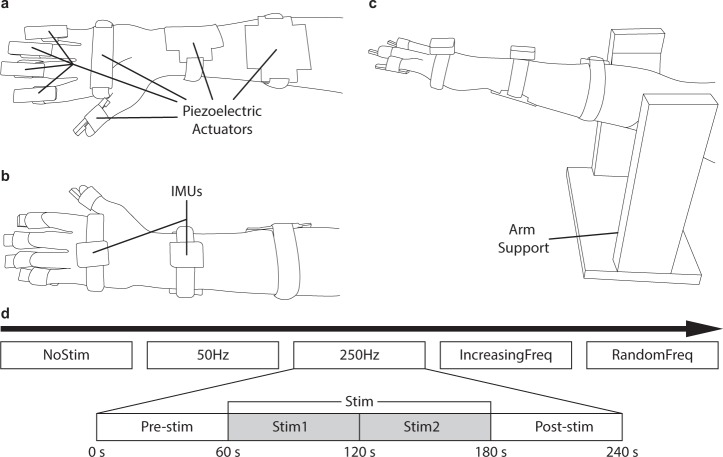
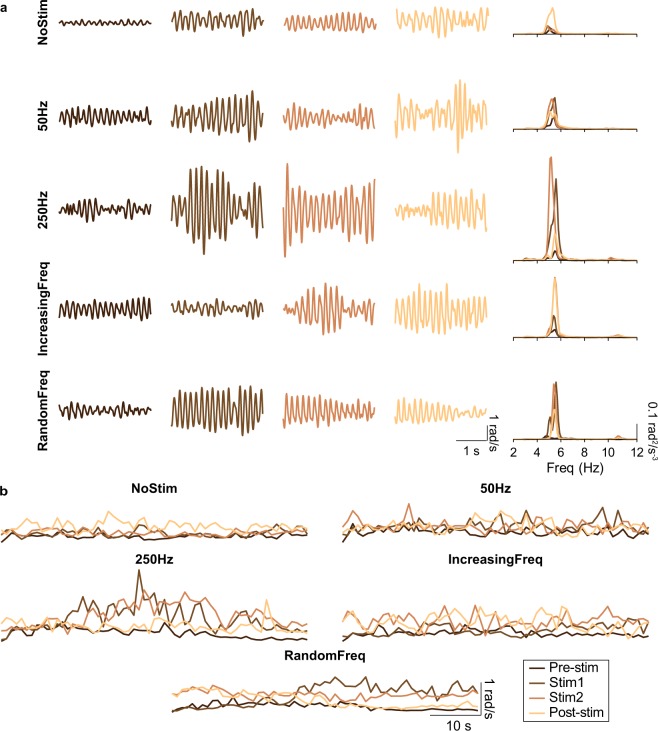
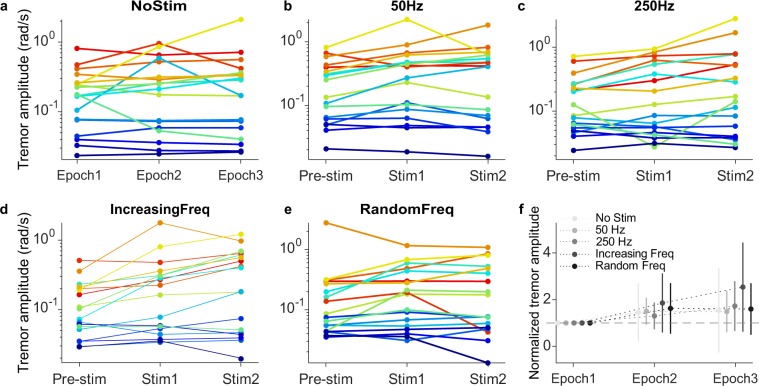
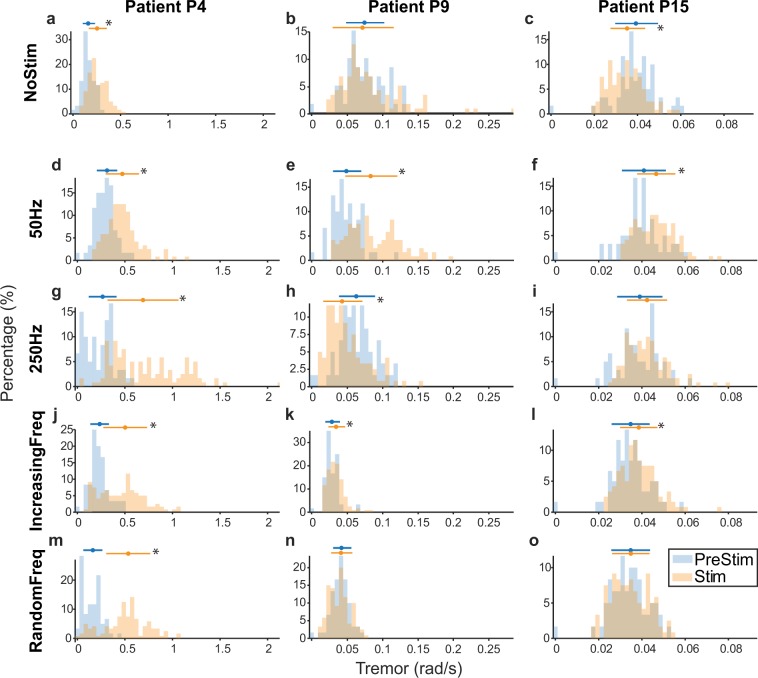
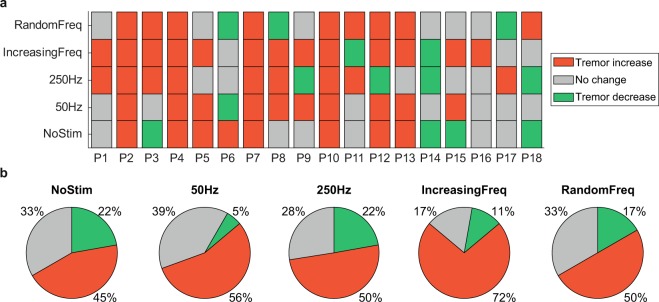
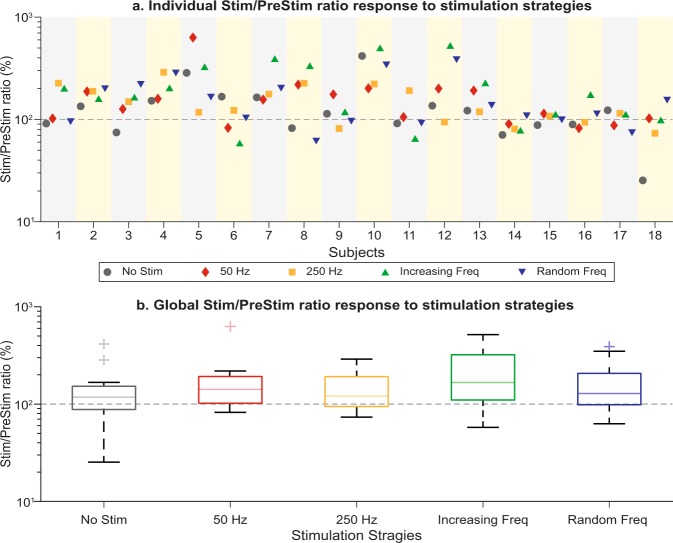
Essential tremor (ET) is a major cause of disability and is not effectively managed in half of the patients. We investigated whether mechanical vibration could reduce tremor in ET by selectively recruiting afferent pathways. We used piezoelectric actuators to deliver vibratory stimuli to the hand and forearm during long trials (4 min), while we monitored the tremor using inertial sensors. We analyzed the effect of four stimulation strategies, including different constant and variable vibration frequencies, in 18 ET patients. Although there was not a clear homogeneous response to vibration across patients and strategies, in most cases (50–72%) mechanical vibration was associated with an increase in the amplitude of their tremor. In contrast, the tremor was reduced in 5–22% of the patients, depending on the strategy. However, these results are hard to interpret given the intrinsic variability of the tremor: during equally long trials without vibration, the tremor changed significantly in 67% of the patients (increased in 45%; decreased in 22%). We conclude that mechanical vibration of the limb does not have a systematic effect on tremor in ET. Moreover, the observed intrinsic variability of the tremor should be taken into account when designing future experiments to assess tremor in ET and how it responds to any intervention.
Overview
The claims and statistics of this paper haven’t been checked yet.
Free: it reads the open-access text and checks the first 5 claims that cite a source we can check. Create a free account to check every claim.
Integrity signals
Registry
Cites
Statistics
Figures
Verification
Claims the paper makes
The claims and statistics of this paper haven’t been checked yet.
Free: it reads the open-access text and checks the first 5 claims that cite a source we can check. Create a free account to check every claim.
Claims other papers make about this one
Each is checked against this paper’s own text: does it say what the citing paper says it does?
The cited source says what the claim attributes to it.
In the citing paper
“Although the dominant trend in tremor response was to increase, the high variability observed in tremor severity, even without stimulation, made it difficult to interpret the results and, therefore, to reach conclusions.”
From A Review on Wearable Technologies for Tremor Suppression (2021) · cites this paper as [87]
Self-check
Percentages, sums and reported differences re-computed from the paper’s own numbers.
The self-check needs the paper’s full text.
Citations
Cites
Consensus Statement of the Movement Disorder Society on Tremor
Deuschl, G., Bain, P., & Brin, M. (2008) · Movement Disorders · doi:10.1002/mds.870131303 · Cited by 1,981
(2013) · Practical Psychology · doi:10.4324/9781315009810-7 · Cited by 1,066
Talbot, W. H., Darian-Smith, I., Kornhuber, H. H., & Mountcastle, V. B. (1968) · Journal of Neurophysiology · doi:10.1152/jn.1968.31.2.301 · Cited by 990
The responses of human muscle spindle endings to vibration of non‐contracting muscles.
Burke, D., Hagbarth, K. E., Löfstedt, L., & Wallin, B. G. (1976) · The Journal of Physiology · doi:10.1113/jphysiol.1976.sp011580 · Cited by 817
Proprioceptive Illusions Induced by Muscle Vibration: Contribution by Muscle Spindles to Perception?
Goodwin, G. M., McCloskey, D. I., & Matthews, P. B. C. (1972) · Science · doi:10.1126/science.175.4028.1382 · Cited by 674
Neuropathological changes in essential tremor: 33 cases compared with 21 controls
Louis, E. D., Faust, P. L., Vonsattel, J.-P. G., Honig, L. S., Rajput, A., Robinson, C. A., Rajput, A., Pahwa, R., Lyons, K. E., Ross, G. W., et al. (2007) · Brain · doi:10.1093/brain/awm266 · Cited by 562
Persistent inward currents in motoneuron dendrites: Implications for motor output
Heckman, C. J., Gorassini, M. A., & Bennett, D. J. (2005) · Muscle & Nerve · doi:10.1002/mus.20261 · Cited by 487
Treatment of patients with essential tremor
Deuschl, G., Raethjen, J., Hellriegel, H., & Elble, R. (2011) · The Lancet Neurology · doi:10.1016/s1474-4422(10)70322-7 · Cited by 428
Mountcastle, V. B., LaMotte, R. H., & Carli, G. (1972) · Journal of Neurophysiology · doi:10.1152/jn.1972.35.1.122 · Cited by 404
Design and Validation of a Rehabilitation Robotic Exoskeleton for Tremor Assessment and Suppression
Rocon, E., Belda-Lois, J. M., Ruiz, A. F., Manto, M., Moreno, J. C., & Pons, J. L. (2007) · IEEE Transactions on Neural Systems and Rehabilitation Engineering · doi:10.1109/tnsre.2007.903917 · Cited by 349
Louis, E. D. (2005) · The Lancet Neurology · doi:10.1016/s1474-4422(05)00991-9 · Cited by 334
Wenning, G. K., Kiechl, S., Seppi, K., Müller, J., Högl, B., Saletu, M., Rungger, G., Gasperi, A., Willeit, J., & Poewe, W. (2005) · The Lancet Neurology · doi:10.1016/s1474-4422(05)70226-x · Cited by 302
The pathophysiology of essential tremor and parkinson's tremor
Helmich, R. C., Toni, I., Deuschl, G., & Bloem, B. R. (2013) · Current Neurology and Neuroscience Reports · doi:10.1007/s11910-013-0378-8 · Cited by 294
Concurrent neuromechanical and functional gains following upper-extremity power training post-stroke
Patten, C., Condliffe, E. G., Dairaghi, C. A., & Lum, P. S. (2013) · Journal of NeuroEngineering and Rehabilitation · doi:10.1186/1743-0003-10-1 · Cited by 259
Correlates of functional disability in essential tremor
Louis, E. D., Barnes, L., Albert, S. M., Cote, L., Schneier, F. R., Pullman, S. L., & Yu, Q. (2001) · Movement Disorders · doi:10.1002/mds.1184 · Cited by 252
Intrinsic Activation of Human Motoneurons: Possible Contribution to Motor Unit Excitation
Gorassini, M., Yang, J. F., Siu, M., & Bennett, D. J. (2002) · Journal of Neurophysiology · doi:10.1152/jn.00024.2001 · Cited by 249
Joint position sense and vibration sense: anatomical organisation and assessment
Gilman, S. (2002) · Journal of Neurology, Neurosurgery & Psychiatry · doi:10.1136/jnnp.73.5.473 · Cited by 234
THE RESPONSE TO VIBRATION OF THE END ORGANS OF MAMMALIAN MUSCLE SPINDLES
Bianconi, R., & Van Der Meulen, J. P. (1963) · Journal of Neurophysiology · doi:10.1152/jn.1963.26.1.177 · Cited by 209
(2000) · PubMed · Cited by 193
The effects of random whole-body-vibration on motor symptoms in Parkinson's disease
Haas, C. T., Turbanski, S., Kessler, K., & Schmidtbleicher, D. (2006) · NeuroRehabilitation · doi:10.3233/nre-2006-21105 · Cited by 192
Touch sense: Functional organization and molecular determinants of mechanosensitive receptors
Roudaut, Y., Lonigro, A., Coste, B., Hao, J., Delmas, P., & Crest, M. (2012) · Channels · doi:10.4161/chan.22213 · Cited by 187
The pathophysiology of essential tremor.
Deuschl, G., & Elble, R. J. (2000) · PubMed · Cited by 173
Busenbark, K. L., Nash, J., Nash, S., Hubble, J. P., & Koller, W. C. (1991) · Neurology · doi:10.1212/wnl.41.12.1982 · Cited by 152
Attenuation of pathological tremors by functional electrical stimulation I: Method
Prochazka, A., Elek, J., & Javidan, M. (1992) · Annals of Biomedical Engineering · doi:10.1007/bf02368521 · Cited by 150
The role of spectroscopy in parkinsonism
Davie, C. A. (1998) · Movement Disorders · doi:10.1002/mds.870130104 · Cited by 148
Serotonin Affects Movement Gain Control in the Spinal Cord
Wei, K., Glaser, J. I., Deng, L., Thompson, C. K., Stevenson, I. H., Wang, Q., Hornby, T. G., Heckman, C. J., & Kording, K. P. (2014) · Journal of Neuroscience · doi:10.1523/jneurosci.1855-14.2014 · Cited by 135
Clinical update: diagnosis and treatment of essential tremor
Benito‐León, J., & Louis, E. D. (2007) · The Lancet · doi:10.1016/s0140-6736(07)60544-3 · Cited by 132
Online tremor suppression using electromyography and low-level electrical stimulation
Dosen, S., Muceli, S., Dideriksen, J. L., Romero, J. P., Rocon, E., Pons, J., & Farina, D. (2015) · IEEE Transactions on Neural Systems and Rehabilitation Engineering · doi:10.1109/tnsre.2014.2328296 · Cited by 120
(2000) · Neurology · doi:10.1212/wnl.54.4.14a · Cited by 119
Jung, J.-Y., Heo, W., Yang, H., & Park, H. (2015) · Sensors · doi:10.3390/s151127738 · Cited by 113
GAMMA CONTROL OF DYNAMIC PROPERTIES OF MUSCLE SPINDLES
Granit, R., & Henatsch, H. D. (1956) · Journal of Neurophysiology · doi:10.1152/jn.1956.19.4.356 · Cited by 112
Essential tremor quantification during activities of daily living
Heldman, D. A., Jankovic, J., Vaillancourt, D. E., Prodoehl, J., Elble, R. J., & Giuffrida, J. P. (2011) · Parkinsonism & Related Disorders · doi:10.1016/j.parkreldis.2011.04.017 · Cited by 110
Essential tremor is not dependent upon cerebellar Purkinje cell loss
Rajput, A. H., Robinson, C. A., Rajput, M. L., Robinson, S. L., & Rajput, A. (2012) · Parkinsonism & Related Disorders · doi:10.1016/j.parkreldis.2012.01.013 · Cited by 96
Empirical Mode Decomposition: a novel technique for the study of tremor time series
de Lima, E. R., Andrade, A. O., Pons, J. L., Kyberd, P., & Nasuto, S. J. (2006) · Medical and Biological Engineering and Computing · doi:10.1007/s11517-006-0065-x · Cited by 93
Harmaline Tremor: Underlying Mechanisms in a Potential Animal Model of Essential Tremor
Handforth, A. (2012) · Europe PMC (PubMed Central) · doi:10.7916/d8td9w2p · Cited by 93
Short-term effects of vibration therapy on motor impairments in Parkinson's disease
King, L. K., Almeida, Q. J., & Ahonen, H. (2009) · NeuroRehabilitation: An International, Interdisciplinary Journal · doi:10.3233/nre-2009-0528 · Cited by 89
Early‐ and late‐onset essential tremor patients represent clinically distinct subgroups
Hopfner, F., Ahlf, A., Lorenz, D., Klebe, S., Zeuner, K. E., Kuhlenbäumer, G., & Deuschl, G. (2016) · Movement Disorders · doi:10.1002/mds.26708 · Cited by 82
A neuroprosthesis for tremor management through the control of muscle co-contraction
Gallego, J. Á., Rocon, E., Belda-Lois, J. M., & Pons, J. L. (2013) · Journal of NeuroEngineering and Rehabilitation · doi:10.1186/1743-0003-10-36 · Cited by 81
Self-citationStimulation within the cuneate nucleus suppresses synaptic activation of climbing fibers
Geborek, P., Jörntell, H., & Bengtsson, F. (2013) · Frontiers in Neural Circuits · doi:10.3389/fncir.2012.00120 · Cited by 80
The Olivary Hypothesis of Essential Tremor: Time to Lay this Model to Rest?
Louis, E. D., & Lenka, A. (2017) · Tremor and Other Hyperkinetic Movements · doi:10.5334/tohm.380 · Cited by 77
Coding of information about tactile stimuli by neurones of the cuneate nucleus.
Douglas, P. R., Ferrington, D. G., & Rowe, M. (1978) · The Journal of Physiology · doi:10.1113/jphysiol.1978.sp012585 · Cited by 72
Re-thinking the biology of essential tremor: From models to morphology
Louis, E. D. (2013) · Parkinsonism & Related Disorders · doi:10.1016/s1353-8020(13)70023-3 · Cited by 70
Electrical stimulation of afferent pathways for the suppression of pathological tremor
Dideriksen, J. L., Laine, C. M., Dosen, S., Muceli, S., Rocon, E., Pons, J. L., Benito-Leon, J., & Farina, D. (2017) · Frontiers in Neuroscience · doi:10.3389/fnins.2017.00178 · Cited by 67
Presynaptic Inhibitory Actions: Presynaptic Inhibition in the Cuneate Nucleus
Andersen, P. N., Eccles, J. C., & Schmidt, R. F. (1962) · Nature · doi:10.1038/194741a0 · Cited by 66
Proprioceptive Movement Illusions Due to Prolonged Stimulation: Reversals and Aftereffects
Seizova-Cajić, T., Smith, J. L., Taylor, J. L., & Gandevia, S. C. (2007) · PLoS ONE · doi:10.1371/journal.pone.0001037 · Cited by 54
Adaptive Suppression of Severe Pathological Tremor by Torque Estimation Method
Taheri, B., Case, D., & Richer, E. (2015) · IEEE/ASME Transactions on Mechatronics · doi:10.1109/tmech.2014.2317948 · Cited by 53
Essential tremor is a neurodegenerative disease
Bonuccelli, U. (2012) · Journal of Neural Transmission · doi:10.1007/s00702-012-0878-8 · Cited by 52
The evolving definition of essential tremor: What are we dealing with?
Louis, E. D. (2018) · Parkinsonism & Related Disorders · doi:10.1016/j.parkreldis.2017.07.004 · Cited by 52
The Olivary Hypothesis of Essential Tremor: Time to Lay this Model to Rest?
Louis, E., & Lenka, A. (2017) · Tremor and Other Hyperkinetic Movements · doi:10.7916/d8ff40rx · Cited by 48
Therapeutic advances in tremor
Fasano, A., & Deuschl, G. (2015) · Movement Disorders · doi:10.1002/mds.26383 · Cited by 43
Essential Tremor: One of the Most Common Neurodegenerative Diseases?
Benito‐León, J. (2011) · Neuroepidemiology · doi:10.1159/000323572 · Cited by 33
Sensory electrical stimulation for suppression of postural tremor in patients with essential tremor
Heo, J.-H., Kim, J.-W., Kwon, Y., Lee, S.-K., Eom, G.-M., Kwon, D.-Y., Lee, C.-N., Park, K.-W., & Manto, M. (2015) · Bio-Medical Materials and Engineering · doi:10.3233/bme-151372 · Cited by 30
Biomechanical Loading as an Alternative Treatment for Tremor: A Review of Two Approaches
Rocón, E., Gallego, J. Á., Lois, J. M. B., Benito‐León, J., & Pons, J. L. (2011) · PubMed · doi:10.7916/d82z147g · Cited by 26
Self-citationIdentification of activities of daily living in tremorous patients using inertial sensors
Serrano, J. I., Lambrecht, S., del Castillo, M. D., Romero, J. P., Benito‐León, J., & Rocón, E. (2017) · Expert Systems with Applications · doi:10.1016/j.eswa.2017.04.032 · Cited by 26
Biomechanical loading as an alternative treatment for tremor: a review of two approaches
Rocon, E., Gallego, J. Á., Belda-Lois, J. M., Benito-León, J., & Pons, J. L. (2012) · Tremor and Other Hyperkinetic Movements · doi:10.5334/tohm.107 · Cited by 26
Self-citationLouis, E. D., Jiang, W., Marina Gerbin, B., Mullaney, M. M., & Zheng, W. (2010) · NeuroToxicology · doi:10.1016/j.neuro.2010.08.003 · Cited by 24
Cerebellar Pathology in Familial vs. Sporadic Essential Tremor
Louis, E. D., Kuo, S., Wang, J., Tate, W. J., Pan, M., Kelly, G. C., Gutierrez, J., Cortes, E. P., Vonsattel, J., & Faust, P. L. (2017) · The Cerebellum · doi:10.1007/s12311-017-0853-x · Cited by 23
Methodological considerations for a chronic neural interface with the cuneate nucleus of macaques
Suresh, A. K., Winberry, J. E., Versteeg, C., Chowdhury, R. H., Tomlinson, T., Rosenow, J. M., Miller, L. E., & Bensmaïa, S. J. (2017) · Journal of Neurophysiology · doi:10.1152/jn.00436.2017 · Cited by 23
Die Persistenz von Streptokokken der Gruppe A nach intranasaler Infektion
Raska, K., Jr., & Rotta, J. (2008) · Schweizerische Zeitschrift für allgemeine Pathologie und Bakteriologie · doi:10.1159/000160700 · Cited by 15
Louis, E. D. (2013) · DOAJ (DOAJ: Directory of Open Access Journals) · doi:10.7916/d8g73cf9 · Cited by 5
Research works printed but not linked: 1
- Prochazka A Elek J Javidan M Attenuation of pathological tremors by functional electrical stimulation. I: Method Ann. Biomed. Eng. 1992 20 205 224 10.1007/BF02368521 1575377 · DOI · Paper page
Cited by
Peripheral electrical stimulation to reduce pathological tremor: a review
Pascual-Valdunciel, A., Hoo, G. W., Avrillon, S., Barroso, F. O., Goldman, J. G., Hernandez-Pavon, J. C., & Pons, J. L. (2021) · Journal of NeuroEngineering and Rehabilitation · doi:10.1186/s12984-021-00811-9 · Cited by 66
“It is worth mentioning that one study, out of the scope of this review, proposed mechanical vibration as an alternative method to acutely suppress tremor via stimulation of afferent fibers [64].”
MethodMedical Devices for Tremor Suppression: Current Status and Future Directions
Mo, J., & Priefer, R. (2021) · Biosensors · doi:10.3390/bios11040099 · Cited by 78
A Review on Wearable Technologies for Tremor Suppression
Lora-Millan, J. S., Delgado-Oleas, G., Benito-León, J., & Rocon, E. (2021) · Frontiers in Neurology · doi:10.3389/fneur.2021.700600 · Cited by 62
“26 Essential platform (87) Continuous mechanical afferent”
BackgroundMethodInfluentialSelf-citationOkelberry, T., Lyons, K. E., & Pahwa, R. (2024) · Parkinsonism & Related Disorders · doi:10.1016/j.parkreldis.2024.106086 · Cited by 49
4D printing of soft orthoses for tremor suppression
Mohammadi, M., Zolfagharian, A., Bodaghi, M., Xiang, Y., & Kouzani, A. Z. (2022) · Bio-Design and Manufacturing · doi:10.1007/s42242-022-00199-y · Cited by 43
Metadata
- Authors
- Lora-Millán, J. S., López-Blanco, R., Gallego, J. Á., Méndez-Guerrero, A., González de la Aleja, J., & Rocon, E.
- Affiliations
- Consejo Superior de Investigaciones Científicas (ES)
- Hospital Universitario 12 De Octubre (ES)
- Venue
- Scientific Reports
- Published
- 2019-11-11
- Volume
- 9
- Issue
- 1
- Pages
- 16476-16476
- ISSN
- 2045-2322 (ISSN-L)
- PMC
- PMC6848159
- OpenAlex
- W2986318758
- Cited by
- 20
- References
- 61
- Citations by year
- 2026: 2 · 2025: 3 · 2024: 3 · 2023: 3 · 2022: 4 · 2021: 4 · 2020: 1
- FWCI
- 1.52
- Type
- journal article
- Language
- en
- Open access
- gold
- doi.org
- Licence
- cc-by
- creativecommons.org/licenses/by/4.0 (tdm)
- creativecommons.org/licenses/by/4.0 (vor)
- Locations
- Scientific Reports (publishedVersion, cc-by)
- bioRxiv (Cold Spring Harbor Laboratory) (acceptedVersion, cc-by-nc-nd)
- Europe PMC (PubMed Central) (publishedVersion, cc-by)
- PubMed Central (publishedVersion, cc-by)
- PubMed (publishedVersion)
- DIGITAL.CSIC (Spanish National Research Council (CSIC)) (submittedVersion, cc-by)
- DOAJ (DOAJ: Directory of Open Access Journals) (submittedVersion)
- Funders
- Ministerio de Economía y Competitividad (RTC-2015-3967-1, DPI2015-72638-EXP, DPI2015-68664-C4-1-R)
- Topics
- Health Sciences › Medicine › Clinical Neurology › Deep Brain Stimulation and Movement Disorders
- Life Sciences › Neuroscience › Cognitive Neuroscience › Motor Control and Adaptation
- Health Sciences › Medicine › Orthopedics and Sports Medicine › Effects of Vibration on Health
- Keywords
- essential tremor, mechanical vibration, tremor suppression, piezoelectric actuators, vibration frequency, afferent pathways, inertial sensors
- MeSH terms
- Aged, Aged, 80 and over, Female, Humans, Male, Middle Aged, Muscle Contraction, Muscles, Spain, Tremor, Vibration, Essential Tremor
About these checks
Registry, retraction, Cites and statistics results are computed, not judged, with one exception: a printed reference that no index lists is read once by a model before it counts as a citation error. Claims are extracted by a model and kept only when their quote appears verbatim in the text; each cited source is then checked, with a model’s help, for whether it says what the claim relies on. Those verdicts can be wrong — read the claim’s quote and the cited source before relying on one.
Statistics and arithmetic are recomputed, not judged.
Confidence bands are shown only for fields calibrated on our annotated test set. None is calibrated yet, so no band is shown.
What counts as a claim ›How we measure confidence ›How we check this ›
Are you an author, or do you see a problem with this page? Request a review
Data sources
Bibliographic data: Semantic Scholar, OpenAlex, Crossref.
Contains information from the Semantic Scholar Academic Graph Datasets, made available under the ODC Attribution License (ODC-BY 1.0).
Semantic Scholar’s data is described in: Kinney, R., et al. (2023). The Semantic Scholar Open Data Platform. arXiv:2301.10140.
