

New insights into cheddar cheese microbiota-metabolome relationships revealed by integrative analysis of multi-omics data
Open accessThe DOI matches its Crossref record; 46 of the 46 references it cites were found in a registry or an index.
Abstract
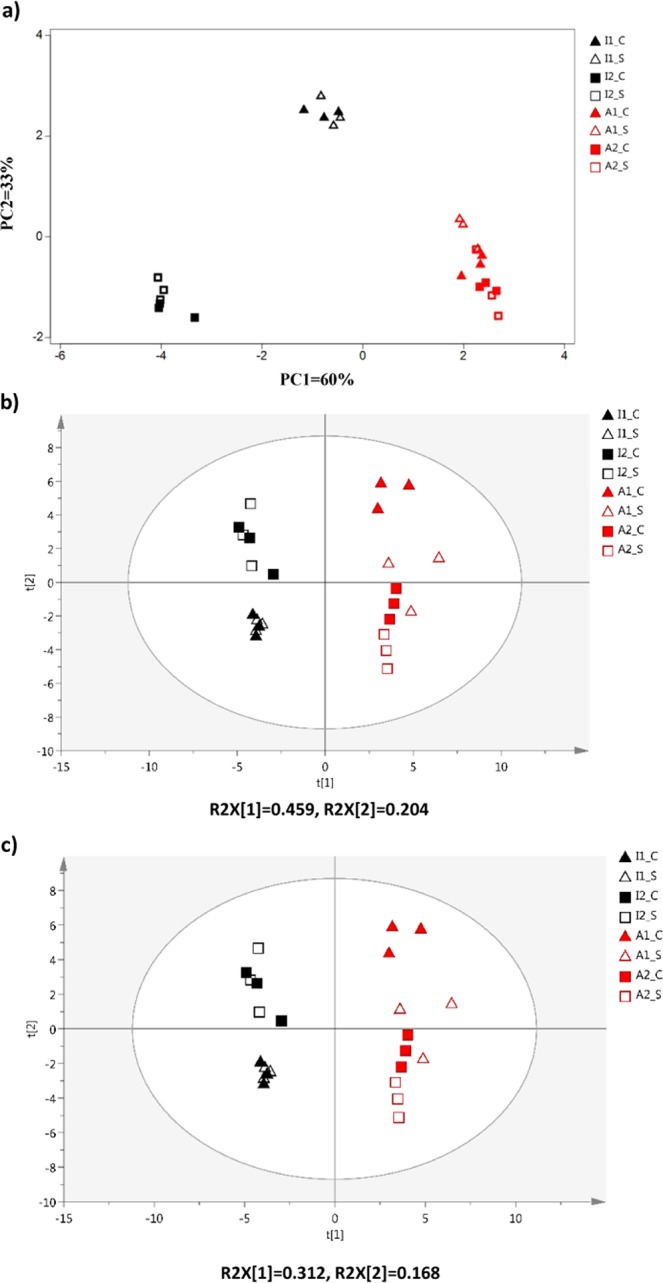
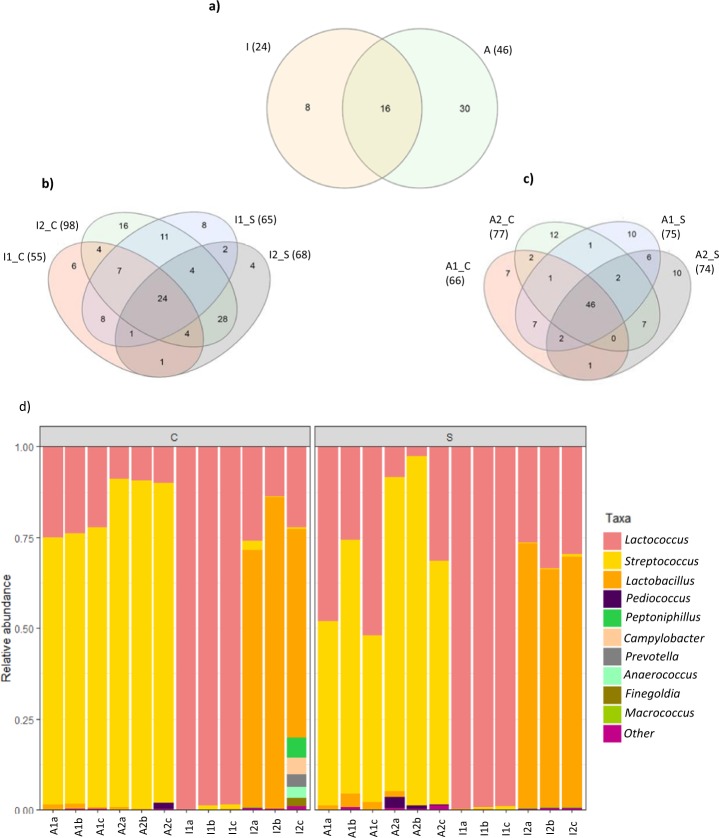
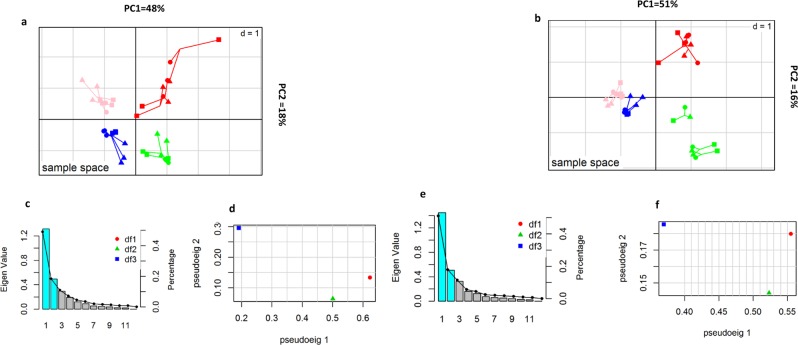
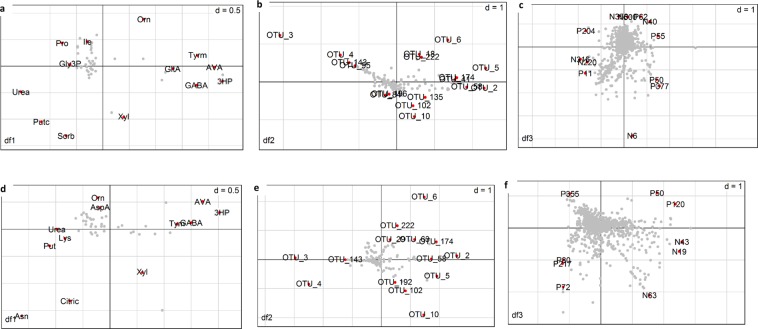
Cheese microbiota and metabolites and their inter-relationships that underpin specific cheese quality attributes remain poorly understood. Here we report that multi-omics and integrative data analysis (multiple co-inertia analysis, MCIA) can be used to gain deeper insights into these relationships and identify microbiota and metabolite fingerprints that could be used to monitor product quality and authenticity. Our study into different brands of artisanal and industrial cheddar cheeses showed that Streptococcus , Lactococcus and Lactobacillus were the dominant taxa with overall microbial community structures differing not only between industrial and artisanal cheeses but also among different cheese brands. Metabolome analysis also revealed qualitative and semi-quantitative differences in metabolites between different cheeses. This also included the presence of two compounds (3-hydroxy propanoic acid and O-methoxycatechol-O-sulphate) in artisanal cheese that have not been previously reported in any type of cheese. Integrative analysis of multi-omics datasets revealed that highly similar cheeses, identical in age and appearance, could be distinctively clustered according to cheese type and brand. Furthermore, the analysis detected strong relationships, some previously unknown, which existed between the cheese microbiota and metabolome, and uncovered specific taxa and metabolites that contributed to these relationships. These results highlight the potential of this approach for identifying product specific microbe/metabolite signatures that could be used to monitor and control cheese quality and product authenticity.
Overview
The claims and statistics of this paper haven’t been checked yet.
Free: it reads the open-access text and checks the first 5 claims that cite a source we can check. Create a free account to check every claim.
Integrity signals
Registry
Cites
Statistics
Figures
Verification
Claims the paper makes
The claims and statistics of this paper haven’t been checked yet.
Free: it reads the open-access text and checks the first 5 claims that cite a source we can check. Create a free account to check every claim.
Claims other papers make about this one
Each is checked against this paper’s own text: does it say what the citing paper says it does?
The source backs part of the claim, not all of it — or backs it for a different population, condition or comparison.
In the citing paper
“Bacterial communities differ among raw milk cheeses depending on the manufacturing process, but the bacteria in the cheese core are dominated by LAB belonging to the genera Lactococcus, Lactobacillus, Enterococcus, Streptococcus, and Leuconostoc [4,7,8,60,62,63,64].”
From Lactic Acid Bacteria in Raw-Milk Cheeses: From Starter Cultures to Probiotic Functions (2022) · cites this paper as [62]
Experimental — accuracy not yet measuredThe source backs part of the claim, not all of it — or backs it for a different population, condition or comparison.
In the citing paper
“Studies conducted on traditional raw milk cheeses describe the dominance of lactobacilli throughout food ripening [62].”
From Lactic Acid Bacteria in Raw-Milk Cheeses: From Starter Cultures to Probiotic Functions (2022) · cites this paper as [62]
Experimental — accuracy not yet measured
Self-check
Percentages, sums and reported differences re-computed from the paper’s own numbers.
The self-check needs the paper’s full text.
Citations
Cites
Cytoscape: A software Environment for integrated models of biomolecular interaction networks
Shannon, P., Markiel, A., Ozier, O., Baliga, N. S., Wang, J. T., Ramage, D., Amin, N., Schwikowski, B., & Ideker, T. (2003) · Genome Research · doi:10.1101/gr.1239303 · Cited by 51,888
UPARSE: highly accurate OTU sequences from microbial amplicon reads
Edgar, R. C. (2013) · Nature Methods · doi:10.1038/nmeth.2604 · Cited by 16,707
Ultra-high-throughput microbial community analysis on the Illumina HiSeq and MiSeq platforms
Caporaso, J. G., Lauber, C. L., Walters, W. A., Berg-Lyons, D., Huntley, J., Fierer, N., Owens, S. M., Betley, J., Fraser, L., Bauer, M., et al. (2012) · The ISME Journal · doi:10.1038/ismej.2012.8 · Cited by 8,839
VEGAN, a package of R functions for community ecology
Dixon, P. (2003) · Journal of Vegetation Science · doi:10.1111/j.1654-1103.2003.tb02228.x · Cited by 6,824
Ribosomal Database Project: data and tools for high throughput rRNA analysis
Cole, J. R., Wang, Q., Fish, J. A., Chai, B., McGarrell, D. M., Sun, Y., Brown, C. T., Porras-Alfaro, A., Kuske, C. R., & Tiedje, J. M. (2014) · Nucleic Acids Research · doi:10.1093/nar/gkt1244 · Cited by 4,367
Best practices for analysing microbiomes
Knight, R., Vrbanac, A., Taylor, B. C., Aksenov, A., Callewaert, C., Debelius, J., Gonzalez, A., Kosciolek, T., McCall, L.-I., McDonald, D., et al. (2018) · Nature Reviews Microbiology · doi:10.1038/s41579-018-0029-9 · Cited by 2,030
Cheese flavour formation by amino acid catabolism
Yvon, M., & Rijnen, L. (2001) · International Dairy Journal · doi:10.1016/s0958-6946(01)00049-8 · Cited by 736
Key odorants in various cheese types as determined by gas chromatography-olfactometry
Curioni, P. M. G., & Bosset, J. O. (2002) · International Dairy Journal · doi:10.1016/s0958-6946(02)00124-3 · Cited by 732
Traditional Cheeses: Rich and Diverse Microbiota with Associated Benefits
Montel, M.-C., Buchin, S., Mallet, A., Delbes-Paus, C., Vuitton, D. A., Desmasures, N., & Berthier, F. (2014) · International Journal of Food Microbiology · doi:10.1016/j.ijfoodmicro.2014.02.019 · Cited by 665
Wolfe, B. E., Button, J. E., Santarelli, M., & Dutton, R. J. (2014) · Cell · doi:10.1016/j.cell.2014.05.041 · Cited by 648
Non-starter lactic acid bacteria used to improve cheese quality and provide health benefits
Settanni, L., & Moschetti, G. (2010) · Food Microbiology · doi:10.1016/j.fm.2010.05.023 · Cited by 456
Landaud, S., Helinck, S., & Bonnarme, P. (2008) · Applied Microbiology and Biotechnology · doi:10.1007/s00253-007-1288-y · Cited by 373
A multivariate approach to the integration of multi-omics datasets
Meng, C., Kuster, B., Culhane, A. C., & Gholami, A. M. (2014) · BMC Bioinformatics · doi:10.1186/1471-2105-15-162 · Cited by 324
Quigley, L., O'Sullivan, O., Beresford, T. P., Ross, R. P., Fitzgerald, G. F., & Cotter, P. D. (2012) · Applied and Environmental Microbiology · doi:10.1128/aem.00918-12 · Cited by 258
Delbès, C., Ali-Mandjee, L., & Montel, M.-C. (2007) · Applied and Environmental Microbiology · doi:10.1128/aem.01716-06 · Cited by 230
Streptococcus thermophilus strains: Multifunctional lactic acid bacteria
Iyer, R., Tomar, S. K., Uma Maheswari, T., & Singh, R. (2010) · International Dairy Journal · doi:10.1016/j.idairyj.2009.10.005 · Cited by 220
Highlighting the microbial diversity of 12 French cheese varieties
Dugat‐Bony, É., Garnier, L., Denonfoux, J., Ferreira, S., Sarthou, A., Bonnarme, P., & Irlinger, F. (2016) · International Journal of Food Microbiology · doi:10.1016/j.ijfoodmicro.2016.09.026 · Cited by 191
Advantages and Pitfalls of Mass Spectrometry Based Metabolome Profiling in Systems Biology
Aretz, I., & Meierhofer, D. (2016) · International Journal of Molecular Sciences · doi:10.3390/ijms17050632 · Cited by 167
Chen, Y., Bao, J., Kim, I., Siewers, V., & Nielsen, J. (2014) · Metabolic Engineering · doi:10.1016/j.ymben.2014.01.005 · Cited by 149
Mora, D., Fortina, M. G., Parini, C., Ricci, G., Gatti, M., Giraffa, G., & Manachini, P. L. (2002) · Journal of Applied Microbiology · doi:10.1046/j.1365-2672.2002.01696.x · Cited by 148
Pimpão, R. C., Ventura, M. R., Ferreira, R. B., Williamson, G., & Santos, C. N. (2015) · British Journal of Nutrition · doi:10.1017/s0007114514003511 · Cited by 126
Cheesomics: the future pathway to understanding cheese flavour and quality.
Afshari, R., Pillidge, C. J., Dias, D. A., Osborn, A. M., & Gill, H. (2020) · Critical Reviews in Food Science and Nutrition · doi:10.1080/10408398.2018.1512471 · Cited by 126
Self-citationSources of Umami Taste in Cheddar and Swiss Cheeses
Drake, S. L., Carunchia Whetstine, M. E., Drake, M. A., Courtney, P., Fligner, K., Jenkins, J., & Pruitt, C. (2007) · Journal of Food Science · doi:10.1111/j.1750-3841.2007.00402.x · Cited by 123
Dias, D. A., Hill, C. B., Jayasinghe, N. S., Atieno, J., Sutton, T., & Roessner, U. (2015) · Journal of Chromatography B · doi:10.1016/j.jchromb.2015.07.002 · Cited by 106
Self-citationProcess engineering for microbial production of 3-hydroxypropionic acid
de Fouchécour, F., Sánchez-Castañeda, A.-K., Saulou-Bérion, C., & Spinnler, H. É. (2018) · Biotechnology Advances · doi:10.1016/j.biotechadv.2018.03.020 · Cited by 105
Fox, P. F., & McSweeney, P. L. H. (2004) · Cheese · doi:10.1016/s1874-558x(04)80060-5 · Cited by 99
Biological Production of 3-Hydroxypropionic Acid: An Update on the Current Status
Μάτσακας, Λ., Hrůzová, K., Rova, U., & Christakopoulos, P. (2018) · Fermentation · doi:10.3390/fermentation4010013 · Cited by 98
Cultivation-independent analysis of microbial communities on Austrian raw milk hard cheese rinds
Schornsteiner, E., Mann, E., Bereuter, O., Wagner, M., & Schmitz‐Esser, S. (2014) · International Journal of Food Microbiology · doi:10.1016/j.ijfoodmicro.2014.04.010 · Cited by 96
Dishisha, T., Pereyra, L. P., Pyo, S., Britton, R. A., & Hatti‐Kaul, R. (2014) · Microbial Cell Factories · doi:10.1186/1475-2859-13-76 · Cited by 96
Characterization of the bacterial biodiversity in Pico cheese (an artisanal Azorean food)
Riquelme, C., Câmara, S., Enes Dapkevicius, M. D. L. N., Vinuesa, P., da Silva, C. C. G., Malcata, F. X., & Rego, O. A. (2015) · International Journal of Food Microbiology · doi:10.1016/j.ijfoodmicro.2014.09.031 · Cited by 87
Pimpão, R. C., Dew, T., Figueira, M. E., McDougall, G. J., Stewart, D., Ferreira, R. B., Santos, C. N., & Williamson, G. (2014) · Molecular Nutrition & Food Research · doi:10.1002/mnfr.201300822 · Cited by 86
Diana, M., Rafecas, M., Arco, C., & Quílez, J. (2014) · Journal of Food Composition and Analysis · doi:10.1016/j.jfca.2014.06.007 · Cited by 84
3-Hydroxypropionic Acid as an Antibacterial Agent from Endophytic Fungi Diaporthe phaseolorum
Sebastianes, F. L. S., Cabedo, N., Aouad, N. E., Valente, A. M. M. P., Lacava, P. T., de Azevedo, J. L., Pizzirani‐Kleiner, A. A., & Cortés, D. (2012) · Current Microbiology · doi:10.1007/s00284-012-0206-4 · Cited by 83
Ochi, H., Naito, H., Iwatsuki, K., Bamba, T., & Fukusaki, E. (2012) · Journal of Bioscience and Bioengineering · doi:10.1016/j.jbiosc.2012.02.006 · Cited by 80
Valenzuela, J. A., Flórez, A. B., Vázquez, L., Vasek, O. M., & Mayo, B. (2019) · Beneficial Microbes · doi:10.3920/bm2018.0176 · Cited by 60
Wang, H. K., Dong, C., Chen, Y. F., Cui, L. M., & Zhang, H. P. (2010) · DOAJ (DOAJ: Directory of Open Access Journals) · Cited by 51
Luo, L. H., Seo, J., Baek, J., Oh, B.-R., Heo, S.-Y., Hong, W.-K., Kim, D., & Kim, C. H. (2010) · Applied Microbiology and Biotechnology · doi:10.1007/s00253-010-2887-6 · Cited by 50
Mazhar, S., Hill, C., & McAuliffe, O. E. (2018) · Advances in applied microbiology · doi:10.1016/bs.aambs.2018.05.002 · Cited by 49
Caboni, P., Maxia, D., Scano, P., Addis, M., Dedola, A. S., Pes, M., Murgia, A., Casula, M., Profumo, A., & Pirisi, A. (2019) · Journal of Dairy Science · doi:10.3168/jds.2018-15885 · Cited by 47
Comparison of flavor isolation techniques applied to Cheddar cheese
Vandeweghe, P., & Reineccius, G. A. (1990) · Journal of Agricultural and Food Chemistry · doi:10.1021/jf00097a026 · Cited by 46
Catabolism of Serine by Pediococcus acidilactici and Pediococcus pentosaceus
Irmler, S., Bavan, T., Oberli, A., Roetschi, A., Badertscher, R., Guggenbühl, B., & Berthoud, H. (2012) · Applied and Environmental Microbiology · doi:10.1128/aem.03085-12 · Cited by 40
Boucher, C. L., Courant, F., Royer, A., Jeanson, S., Lortal, S., Dervilly, G., Thierry, A., & Bizec, B. L. (2015) · Metabolomics · doi:10.1007/s11306-014-0769-0 · Cited by 36
Krause, I., Bockhardt, A., & Klostermeyer, H. (1997) · Le Lait · doi:10.1051/lait:199716 · Cited by 33
Huang, S., Ai, Z. W., Sun, X., Liu, G. F., Zhai, S., Zhang, M., Chen, H., & Feng, Z. G. (2016) · Journal of Applied Microbiology · doi:10.1111/jam.13221 · Cited by 30
Eugster, E., Fuchsmann, P., Schlichtherle‐Cerny, H., Bütikofer, U., & Irmler, S. (2019) · International Dairy Journal · doi:10.1016/j.idairyj.2019.04.001 · Cited by 25
Ocando, A. F., Granados, A. D. P. F., Basanta, Y., Gutiérrez, B., & Cabrera, L. (1993) · Food Microbiology · doi:10.1006/fmic.1993.1001 · Cited by 20
Cited by
Lactic Acid Bacteria in Raw-Milk Cheeses: From Starter Cultures to Probiotic Functions
Coelho, M. C., Malcata, F. X., & Silva, C. C. G. (2022) · Foods · doi:10.3390/foods11152276 · Cited by 276
“Bacterial communities differ among raw milk cheeses depending on the manufacturing process, but the bacteria in the cheese core are dominated by LAB belonging to the genera Lactococcus , Lactobacillus , Enterococcus , Streptococcus , and Leuconostoc [4,7,8,60,62 – 64].”
Mayo, B., Rodríguez, J., Vázquez, L., & Flórez, A. B. (2021) · Foods · doi:10.3390/foods10030602 · Cited by 183
Fermented food products in the era of globalization: tradition meets biotechnology innovations
Galimberti, A., Bruno, A., Agostinetto, G., Casiraghi, M., Guzzetti, L., & Labra, M. (2020) · Current Opinion in Biotechnology · doi:10.1016/j.copbio.2020.10.006 · Cited by 149
The need for an integrated multi-OMICs approach in microbiome science in the food system
Ferrocino, I., Rantsiou, K., McClure, R., Kostic, T., de Souza, R. S. C., Lange, L., FitzGerald, J., Kriaa, A., Cotter, P., Maguin, E., et al. (2023) · Comprehensive Reviews in Food Science and Food Safety · doi:10.1111/1541-4337.13103 · Cited by 110
Terzić-Vidojević, A., Veljović, K., Tolinački, M., Živković, M., Lukić, J., Lozo, J., Fira, Đ., Jovčić, B., Strahinić, I., Begović, J., et al. (2020) · Food Research International · doi:10.1016/j.foodres.2020.109494 · Cited by 118
Metadata
- Authors
- Afshari, R., Pillidge, C. J., Read, E., Rochfort, S., Dias, D. A., Osborn, A. M., & Gill, H.
- Affiliations
- RMIT University (AU)
- Department of Environment, Land, Water and Planning (AU)
- Corresponding author
- Gill, Harsharn
- ORCID
- Venue
- Scientific Reports
- Published
- 2020-02-21
- Volume
- 10
- Issue
- 1
- Pages
- 3164-3164
- ISSN
- 2045-2322 (ISSN-L)
- PMC
- PMC7035325
- OpenAlex
- W3007931984
- Cited by
- 58
- References
- 46
- Citations by year
- 2026: 6 · 2025: 7 · 2024: 7 · 2023: 10 · 2022: 14 · 2021: 10 · 2020: 4
- FWCI
- 6.16
- Type
- journal article
- Language
- en
- Update notices
- correction (2021-01-25)
- Open access
- gold
- doi.org
- Licence
- cc-by
- creativecommons.org/licenses/by/4.0 (tdm)
- creativecommons.org/licenses/by/4.0 (vor)
- Locations
- Scientific Reports (publishedVersion, cc-by)
- PubMed Central (publishedVersion, cc-by)
- PubMed (publishedVersion)
- RMIT Research Repository (RMIT University Library) (submittedVersion)
- Figshare (submittedVersion, cc-by)
- Minerva Access (University of Melbourne) (submittedVersion, cc-by)
- Funders
- Australian Government
- Topics
- Life Sciences › Agricultural and Biological Sciences › Food Science › Probiotics and Fermented Foods
- Life Sciences › Agricultural and Biological Sciences › Food Science › Fermentation and Sensory Analysis
- Life Sciences › Agricultural and Biological Sciences › Food Science › Food Nutrient Composition and Product Development
- Keywords
- Cheddar cheese, cheese microbiota, Streptococcus, Lactococcus, Lactobacillus, artisanal cheese, industrial cheese, cheese authenticity, cheese quality, microbial community structure
- MeSH terms
- Cheese, DNA, Bacterial, Food Analysis, Food Microbiology, Lactobacillus, RNA, Ribosomal, 16S, Streptococcus, Lactococcus, Principal Component Analysis, Biodiversity, Metabolomics, Metabolome, Metagenomics, Microbiota
About these checks
Registry, retraction, Cites and statistics results are computed, not judged, with one exception: a printed reference that no index lists is read once by a model before it counts as a citation error. Claims are extracted by a model and kept only when their quote appears verbatim in the text; each cited source is then checked, with a model’s help, for whether it says what the claim relies on. Those verdicts can be wrong — read the claim’s quote and the cited source before relying on one.
Statistics and arithmetic are recomputed, not judged.
Confidence bands are shown only for fields calibrated on our annotated test set. None is calibrated yet, so no band is shown.
What counts as a claim ›How we measure confidence ›How we check this ›
Are you an author, or do you see a problem with this page? Request a review
Data sources
Bibliographic data: Semantic Scholar, OpenAlex, Crossref.
Contains information from the Semantic Scholar Academic Graph Datasets, made available under the ODC Attribution License (ODC-BY 1.0).
Semantic Scholar’s data is described in: Kinney, R., et al. (2023). The Semantic Scholar Open Data Platform. arXiv:2301.10140.
