

Group structure and kinship in beluga whale societies
Open accessThe DOI matches its Crossref record; 89 of the 89 references it cites were found in a registry or an index.
Abstract
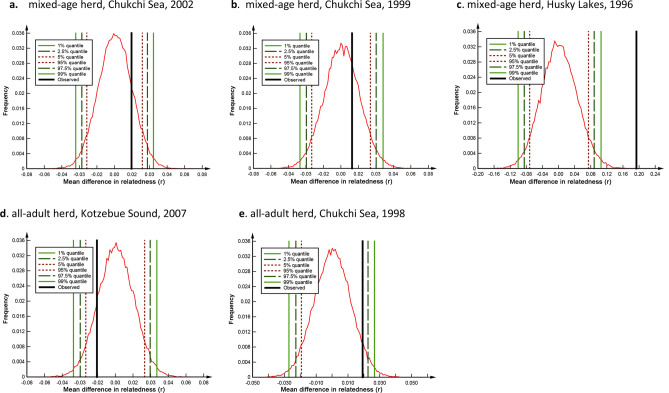
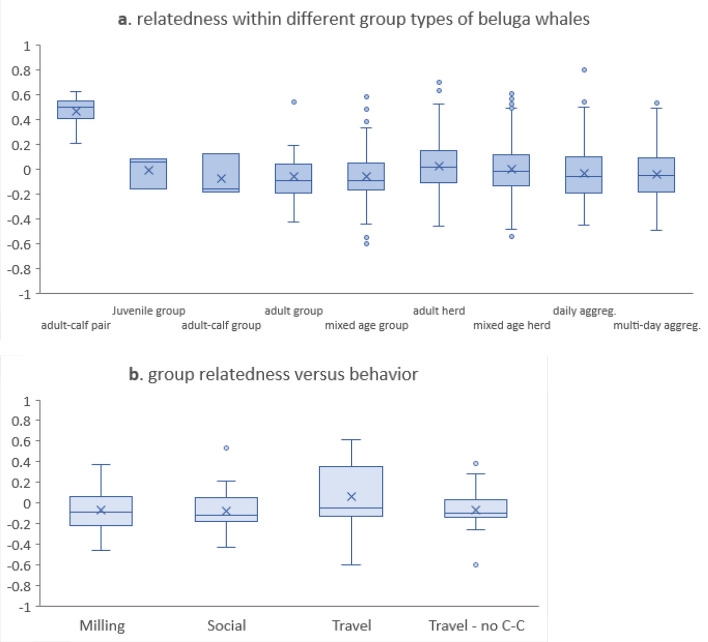
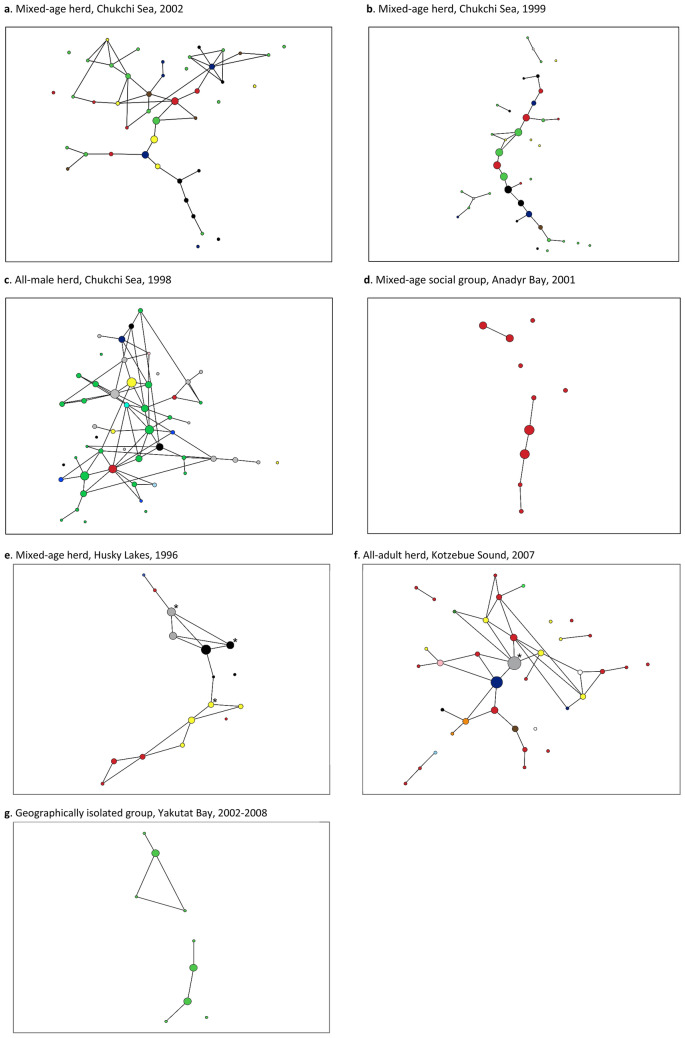
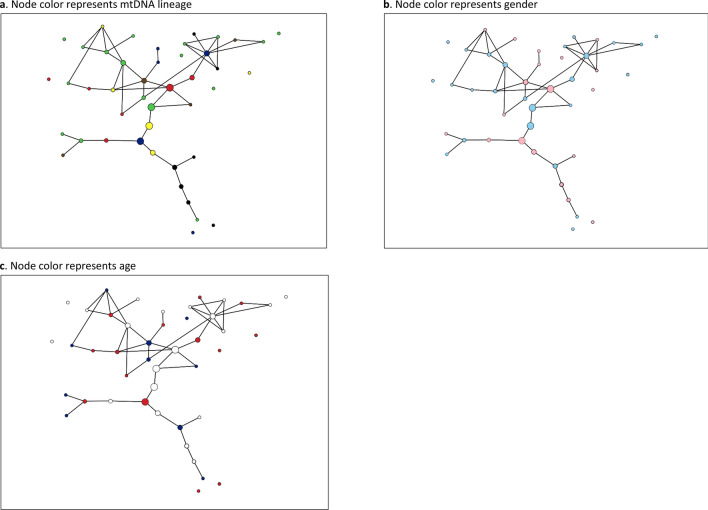
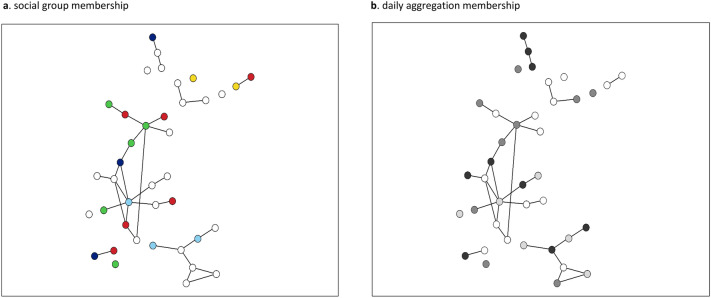
Evolutionary explanations for mammalian sociality typically center on inclusive-fitness benefits of associating and cooperating with close kin, or close maternal kin as in some whale societies, including killer and sperm whales. Their matrilineal structure has strongly influenced the thinking about social structure in less well-studied cetaceans, including beluga whales. In a cross-sectional study of group structure and kinship we found that belugas formed a limited number of distinct group types, consistently observed across populations and habitats. Certain behaviours were associated with group type, but group membership was often dynamic. MtDNA-microsatellite profiling combined with relatedness and network analysis revealed, contrary to predictions, that most social groupings were not predominantly organized around close maternal relatives. They comprised both kin and non-kin, many group members were paternal rather than maternal relatives, and unrelated adult males often traveled together. The evolutionary mechanisms that shape beluga societies are likely complex; fitness benefits may be achieved through reciprocity, mutualism and kin selection. At the largest scales these societies are communities comprising all ages and both sexes where multiple social learning pathways involving kin and non-kin can foster the emergence of cultures. We explore the implications of these findings for species management and the evolution of menopause.
Overview
The claims and statistics of this paper haven’t been checked yet.
Free: it reads the open-access text and checks the first 5 claims that cite a source we can check. Create a free account to check every claim.
Integrity signals
Registry
Cites
Statistics
Figures
Verification
Claims the paper makes
The claims and statistics of this paper haven’t been checked yet.
Free: it reads the open-access text and checks the first 5 claims that cite a source we can check. Create a free account to check every claim.
Claims other papers make about this one
Each is checked against this paper’s own text: does it say what the citing paper says it does?
The source backs part of the claim, not all of it — or backs it for a different population, condition or comparison.
In the citing paper
“Beluga whales are members of the family Monodontidae and like the other mammalian species that demonstrate the capacity for MSR, have large complex brains [19,20] and live in complex societies with a fission-fusion social structure [21–23].”
From Evidence for mirror self-recognition in beluga whales (Delphinapterus leucas) (2026) · cites this paper as [23]
Experimental — accuracy not yet measured
Self-check
Percentages, sums and reported differences re-computed from the paper’s own numbers.
The self-check needs the paper’s full text.
Citations
Cites
Axelrod, R., & Hamilton, W. D. (1981) · Science · doi:10.1126/science.7466396 · Cited by 20,065
The genetical evolution of social behaviour. I
Hamilton, W. D. (1964) · Journal of Theoretical Biology · doi:10.1016/0022-5193(64)90038-4 · Cited by 15,725
The Evolution of Reciprocal Altruism
Trivers, R. L. (1971) · The Quarterly Review of Biology · doi:10.1086/406755 · Cited by 11,010
Hamilton, W. D. (1971) · Journal of Theoretical Biology · doi:10.1016/0022-5193(71)90189-5 · Cited by 3,506
ESTIMATING RELATEDNESS USING GENETIC MARKERS
Queller, D. C., & Goodnight, K. F. (1989) · Evolution · doi:10.1111/j.1558-5646.1989.tb04226.x · Cited by 3,032
Nowak, M. A., Tarnita, C. E., & Wilson, E. O. (2010) · Nature · doi:10.1038/nature09205 · Cited by 1,491
Estimating Relatedness Using Genetic Markers
Queller, D. C., & Goodnight, K. F. (1989) · Evolution · doi:10.2307/2409206 · Cited by 1,191
Evolution from Molecules to Men.
Fryer, G., & Bendal, D. S. (1984) · The Journal of Ecology · doi:10.2307/2260026 · Cited by 1,139
Cooperation between non-kin in animal societies
Clutton-Brock, T. (2009) · Nature · doi:10.1038/nature08366 · Cited by 951
ml‐relate: a computer program for maximum likelihood estimation of relatedness and relationship
KALINOWSKI, S. T., WAGNER, A. P., & TAPER, M. L. (2006) · Molecular Ecology Notes · doi:10.1111/j.1471-8286.2006.01256.x · Cited by 933
Research works printed but not linked: 7
- Bigg MA Olesiuk PF Ellis GM Ford JKB Balcomb KC III Social organization and genealogy of resident killer whales (Orcinus orca) in the coastal waters of British Columbia and Washington State Rep. Int. Whal. Commun. 1990 SI 12 383 405
- Michaud R Distribution estivale du béluga du St.-Laurent: synthèse 1986 à 1992 Can. Tech. Rep. Fish. Aquat. Sci. 1993 1906 28
- Suydam, R. S. Age, Growth, Reproduction, and Movements of Beluga Whales (Delphinapterus leucas) from the Eastern Chukchi Sea. PhD thesis (2009).
- Ford JKB Ellis GM Balcomb KC III Killer Whales 2000 Vancouver University of British Columbia Press
- Litovka DI Research of belugas Delphinapterus leucas in Anadyr Gulf (Chukotka) using satellite telemetry Mar. Mamm. Holarctic 2002 10 70 80
- Fain SR LeMay JP Gender identification of humans and mammalian wildlife species from PCR amplified sex linked genes Proc. Am. Acad. Forensic Sci. 1995 1 34
- Kivelä M Arnaud-Haond S Saramäki J EDENetworks Version 218: Ecological and Evolutionary Networks 2014 Oxford Oxford University Press
Cited by
A deepening understanding of animal culture suggests lessons for conservation
Brakes, P., Carroll, E. L., Dall, S. R. X., Keith, S. A., McGregor, P. K., Mesnick, S. L., Noad, M. J., Rendell, L. E., Robbins, M. M., Rutz, C., et al. (2021) · Proceedings of the Royal Society B Biological Sciences · doi:10.1098/rspb.2020.2718 · Cited by 192
The evolution of menopause in toothed whales
Ellis, S., Franks, D. W., Nielsen, M. L. K., Weiss, M. N., & Croft, D. P. (2024) · Nature · doi:10.1038/s41586-024-07159-9 · Cited by 66
Lesage, V. S. (2021) · Polar Research · doi:10.33265/polar.v40.5523 · Cited by 53
Skin microbiome of beluga whales: spatial, temporal, and health-related dynamics
Cise, A. M. V., Wade, P. R., Goertz, C. E. C., Huntington, K. B., Parsons, K. M., Clauss, T. M., Hobbs, R. C., & Apprill, A. M. (2020) · Animal Microbiome · doi:10.1186/s42523-020-00057-1 · Cited by 41
Storrie, L., Hussey, N. E., MacPhee, S. A., O'Corry-Crowe, G. M., Iacozza, J., Barber, D. G., Nunes, A., & Loseto, L. L. (2022) · Frontiers in Marine Science · doi:10.3389/fmars.2021.715412 · Cited by 38
Self-citationSkovrind, M., Louis, M., Westbury, M. V., Garilao, C., Kaschner, K., Castruita, J. A. S., Gopalakrishnan, S., Knudsen, S. W., Haile, J., Dalén, L., et al. (2021) · Molecular Ecology · doi:10.1111/mec.15915 · Cited by 35
Self-citationSex in Cetaceans: Morphology, Behavior, and the Evolution of Sexual Strategies
Würsig, B., & Orbach, D. N. (2023) · Springer eBooks · doi:10.1007/978-3-031-35651-3 · Cited by 33
Ryan, K. P., Ferguson, S. H., Koski, W. R., Young, B. G., Roth, J. D., & Watt, C. A. (2022) · Arctic Science · doi:10.1139/as-2021-0047 · Cited by 31
Putative neural consequences of captivity for elephants and cetaceans
Jacobs, B., Rally, H., Doyle, C., O’Brien, L., Tennison, M., & Marino, L. (2022) · Reviews in the Neurosciences · doi:10.1515/revneuro-2021-0100 · Cited by 25
“As with elephants, cetaceans naturally have long juvenile periods and depend heavily on cultural learning as well as life-long support from a complex social network (O’Corry-Crowe et al. 2020).”
BackgroundOuellet, J., Michaud, R., Moisan, M., & Lesage, V. S. (2021) · Ecosphere · doi:10.1002/ecs2.3560 · Cited by 24
Brewer, A. M., Castellote, M., Cise, A. M. V., Gage, T., & Berdahl, A. M. (2023) · The Journal of the Acoustical Society of America · doi:10.1121/10.0022516 · Cited by 23
Evidence of stereotyped contact call use in narwhal (Monodon monoceros) mother-calf communication
Ames, A. E. M., Blackwell, S. B., Tervo, O. M., & Heide‐Jørgensen, M. P. (2021) · PLoS ONE · doi:10.1371/journal.pone.0254393 · Cited by 22
Ham, J. R., Lilley, M. K., Lelekach, J., Miller, M. R., Robeck, T. R., Pellis, S. M., & Manitzas Hill, H. M. (2022) · Behavioural Processes · doi:10.1016/j.beproc.2022.104695 · Cited by 22
Do beluga whales truly migrate? Testing a key trait of the classical migration syndrome
Storrie, L., Loseto, L. L., Sutherland, E. L., MacPhee, S. A., O'Corry-Crowe, G. M., & Hussey, N. E. (2023) · Movement Ecology · doi:10.1186/s40462-023-00416-y · Cited by 24
Self-citationMayette, A., Loseto, L. L., Pearce, T. D., Hornby, C., & Marcoux, M. (2022) · Canadian Journal of Zoology · doi:10.1139/cjz-2021-0232 · Cited by 20
Conspecific scarring on wild belugas (Delphinapterus leucas) in Cunningham Inlet
Ham, J. R., Lilley, M. K., & Hill, H. M. M. (2021) · Behaviour · doi:10.1163/1568539x-bja10086 · Cited by 19
Miller, E. H., & Kochnev, A. A. (2021) · Ethology and behavioral ecology of marine mammals · doi:10.1007/978-3-030-59184-7_22 · Cited by 19
Noel, A., Iacozza, J., Devred, E., Marcoux, M., Hornby, C., & Loseto, L. L. (2022) · Arctic Science · doi:10.1139/as-2022-0003 · Cited by 17
Ausen, E. L., Marcoux, M., Chan, W. S., & Barber, D. G. (2022) · Frontiers in Marine Science · doi:10.3389/fmars.2022.837425 · Cited by 17
Neural representations of kinship
Clemens, A. M., & Brecht, M. (2021) · Current Opinion in Neurobiology · doi:10.1016/j.conb.2021.02.007 · Cited by 14
Social games that belugas (Delphinapterus leucas) play
Hill, H. M. M., Ortiz, N., Kolodziej, K., & Ham, J. R. (2022) · International Journal of Play · doi:10.1080/21594937.2022.2152536 · Cited by 14
Prospective evolutionary drivers of allocare in wild belugas
Aubin, J. A., Michaud, R., & Wal, E. V. (2021) · Behaviour · doi:10.1163/1568539x-bja10094 · Cited by 14
Seasonality of social behaviour among immature belugas (Delphinapterus leucas) in managed care
Ham, J. R., Lilley, M. K., Miller, M. R., & Hill, H. M. M. (2021) · Polar Research · doi:10.33265/polar.v40.5498 · Cited by 14
Storrie, L., Hussey, N. E., MacPhee, S. A., O'Corry-Crowe, G. M., Iacozza, J., Barber, D. G., & Loseto, L. L. (2022) · Functional Ecology · doi:10.1111/1365-2435.14172 · Cited by 14
Self-citationFerguson, S. H., Biddlecombe, B. A., Westdal, K. H., Petersen, S. D., Watt, C. A., Matthews, C. J. D., & Higdon, J. W. (2025) · Frontiers in Marine Science · doi:10.3389/fmars.2025.1595960 · Cited by 13
Parent, G. J., Mosnier, A., Montana, L., Cortial, G., St-Pierre, A., Bordeleau, X., Lesage, V., Watt, C. A., Postma, L., & Hammill, M. O. (2023) · Federal Open Science Repository of Canada / Le Dépôt fédéral de science ouverte du Canada · Cited by 13
Vocal communication in wild chimpanzees: a call rate study
Crunchant, A., Stewart, F. A., & Piel, A. K. (2021) · PeerJ · doi:10.7717/peerj.12326 · Cited by 12
Cetacean Brain, Cognition, and Social Complexity
Marino, L. (2022) · Ethology and behavioral ecology of marine mammals · doi:10.1007/978-3-030-98100-6_4 · Cited by 11
Zoller, J. A., Lu, A. T.-H., Haghani, A., Horvath, S., & Robeck, T. R. (2025) · Scientific Reports · doi:10.1038/s41598-025-86705-5 · Cited by 11
Observations of Mating Practice by Non-Sexually Mature Male Belugas (Delphinapterus leucas)
Hill, H. M. M., Ham, J. R., & Lilley, M. K. (2022) · Aquatic Mammals · doi:10.1578/am.48.6.2022.541 · Cited by 11
Protection, energetic assistance, or social perks: How do beluga offspring benefit from allocare?
Aubin, J. A., Michaud, R., & Wal, E. V. (2022) · Marine Mammal Science · doi:10.1111/mms.12957 · Cited by 11
Summer distribution and habitat preference of beluga whale social groups in the Eastern Beaufort Sea
Mayette, A., Marcoux, M., Iacozza, J., Ferguson, M. C., Brower, A. A., & Loseto, L. L. (2023) · Arctic Science · doi:10.1139/as-2022-0035 · Cited by 11
Possible occurrence of contact calls in all‐male groups of free‐ranging beluga whales
Panova, E. M., & Agafonov, A. (2023) · Journal of Zoology · doi:10.1111/jzo.13054 · Cited by 10
Hill, H. M. M., Yeater, D. B., & Noonan, M. J. (2021) · Polar Research · doi:10.33265/polar.v40.5508 · Cited by 10
Hill, H. M. M., Lilley, M. K., Ham, J. R., & Robeck, T. R. (2024) · Theriogenology Wild · doi:10.1016/j.therwi.2024.100071 · Cited by 9
Self-handicapping in object play: how belugas (Delphinapterus leucas) make play difficult
Ham, J. R., Lilley, M. K., Miller, M. R., Leca, J., Pellis, S. M., & Hill, H. M. M. (2022) · International Journal of Play · doi:10.1080/21594937.2022.2152535 · Cited by 8
Skovrind, M., Louis, M., Ferguson, S. H., Glazov, D. M., Литовка, Д. И., Loseto, L. L., Meschersky, I. G., Miller, M. M., Petr, M., Postma, L., et al. (2024) · Proceedings of the National Academy of Sciences · doi:10.1073/pnas.2405993121 · Cited by 8
Biologically important areas II for cetaceans in U.S. and adjacent waters - Arctic region
Clarke, J. T., Ferguson, M. C., Brower, A. A., Fujioka, E., & DeLand, S. E. (2023) · Frontiers in Marine Science · doi:10.3389/fmars.2023.1040123 · Cited by 8
Richard, J. T., Levine, R., Romano, T. A., & Sartini, B. L. (2021) · Polar Research · doi:10.33265/polar.v40.5504 · Cited by 8
Su, H., & Duan, L. (2025) · Humanities and Social Sciences Communications · doi:10.1057/s41599-025-05259-z · Cited by 8
A review of the ecology and status of white whales (Delphinapterus leucas) in Svalbard, Norway
Lydersen, C., & Kovacs, K. M. (2021) · Polar Research · doi:10.33265/polar.v40.5509 · Cited by 8
Self-citationSerres, A., Lin, W., Liu, B., Lin, M., Liu, M., Chen, S., & Li, S. (2022) · Marine Mammal Science · doi:10.1111/mms.12986 · Cited by 8
Sexual Behaviors of Odontocetes in Managed Care
Hill, H. M. M., Dudzinski, K. M., Lilley, M. K., & Ham, J. R. (2023) · Springer eBooks · doi:10.1007/978-3-031-35651-3_9 · Cited by 7
Kinship study reveals stable non-kin-based associations in a medium-sized delphinid
Hartman, K. L., Chen, I., van der Harst, P. A., Moura, A. E., Jahnke, M., Pilot, M., Vilela, R., & Hoelzel, A. R. (2023) · Behavioral Ecology and Sociobiology · doi:10.1007/s00265-023-03411-w · Cited by 7
Alaska Beluga Whale Committee—a unique model of co-management
Frost, K. J., Gray, T., Goodwin, W., Schaeffer, R., & SUYDAM, R. S. (2021) · Polar Research · doi:10.33265/polar.v40.5611 · Cited by 7
Self-citationA review of the utility and application of relatedness and kinship in elasmobranchs
Amini, S. R., Feutry, P., Phillips, N. M., & Kyne, P. M. (2025) · Reviews in Fish Biology and Fisheries · doi:10.1007/s11160-025-09983-2 · Cited by 6
Norman, S. A., Dreiss, L. M., Niederman, T. E., & Nalven, K. B. (2022) · Frontiers in Marine Science · doi:10.3389/fmars.2022.804218 · Cited by 6
An observation of white whale (Delphinapterus leucas) mating behaviour in the wild
Lydersen, C., Langenberger, K., & Kovacs, K. M. (2023) · Polar Research · doi:10.33265/polar.v42.8875 · Cited by 6
Self-citationOrigin stories: how does learned migratory behaviour arise in populations?
Fugate, J., Wallace, C. F., Aikens, E. O., Jesmer, B. R., & Kauffman, M. J. (2024) · Biological reviews/Biological reviews of the Cambridge Philosophical Society · doi:10.1111/brv.13171 · Cited by 6
Richard, J. T., Pellegrini, I., & Levine, R. (2024) · Animal Cognition · doi:10.1007/s10071-024-01843-z · Cited by 5
A comparative analysis of cone photoreceptor morphology in bowhead and beluga whales
Smith, M. A., Waugh, D. A., McBurney, D. L., George, J. C., SUYDAM, R. S., Thewissen, J. G. M., & Crish, S. D. (2021) · The Journal of Comparative Neurology · doi:10.1002/cne.25101 · Cited by 5
Self-citationGeographic variation in simple contact calls of Canadian beluga whales (Delphinapterus leucas)
Booy, K. V., Vergara, V., Loseto, L. L., Mikus, M., & Marcoux, M. (2023) · Marine Mammal Science · doi:10.1111/mms.13095 · Cited by 4
Beluga societies: the social and cultural lives of an enigmatic odontocete
Aubin, J. A., Mennill, D. J., Michaud, R., & Vergara, V. (2026) · Behavioral Ecology and Sociobiology · doi:10.1007/s00265-025-03630-3 · Cited by 4
Social structure in northern bottlenose whales: stable relationships without stable groups
Walmsley, S. F., Feyrer, L., & Whitehead, H. (2026) · Animal Behaviour · doi:10.1016/j.anbehav.2026.123568 · Cited by 4
Recovery potential assessment for the St. Lawrence Estuary Beluga (Delphinapterus leucas) population
Lesage, V., Harvey, V., Tinker, M. T., St-Pierre, A., Aulanier, F. J., Lair, S., Hammill, M. O., Simard, Y., Brown, T., Mosnier, A., et al. (2024) · Federal Open Science Repository of Canada / Le Dépôt fédéral de science ouverte du Canada · Cited by 4
He, Y., Zhang, Z., Xiao, Z., Liang, B., Mo, J., Zhu, B., & Liu, W. (2025) · Aquaculture · doi:10.1016/j.aquaculture.2025.743376 · Cited by 3
An update on captive cetacean welfare
Marino, L., Doyle, C., Rally, H., O’Brien, L., Tennison, M. E., & Jacobs, B. (2025) · PeerJ · doi:10.7717/peerj.19878 · Cited by 3
Greenfield-Feig, M. R., Durden, W. N., Jablonski, T., Moreland, L., Fabry, A. C., Gemma, L. Y., & Clifford, H. H. (2022) · Journal of Mammalogy · doi:10.1093/jmammal/gyac063 · Cited by 3
Visual narratives and the depiction of whaling in north European rock art: the case of the White Sea
Janik, L. (2022) · Les Nouvelles de l archéologie · doi:10.4000/nda.13517 · Cited by 3
de Walle, J. V., Tinker, M. T., & Sauvé, C. C. (2025) · Federal Open Science Repository of Canada / Le Dépôt fédéral de science ouverte du Canada · Cited by 3
Recovery potential assessment for Beluga (Delphinapterus leucas) stocks in Nunavik (Northern Quebec)
Sauvé, C. C., Caissy, P., Hammill, M. O., St-Pierre, A., Gosselin, J., & Mosnier, A. (2024) · Federal Open Science Repository of Canada / Le Dépôt fédéral de science ouverte du Canada · Cited by 3
Abundance Estimate for Beluga (Delphinapterus leucas) in the Ungava Bay Area in Summer 2022
Sauvé, C. C., St-Pierre, A., Hammill, M. O., & Gosselin, J. (2023) · Federal Open Science Repository of Canada / Le Dépôt fédéral de science ouverte du Canada · Cited by 3
Zamorano-Abramson, J., & Hernández-Lloreda, M. V. (2023) · Animals · doi:10.3390/ani13243763 · Cited by 2
“In fact, it has been suggested that this social learning dynamic could facilitate the development and perpetuation of cultural practices in this species, such as the formation of migratory circuits and the utilization of traditional feeding areas [41,42].”
BackgroundMishima, Y., Matsumoto, T., Morisaka, T., & Nakahara, F. (2023) · Mammal Study · doi:10.3106/ms2023-0020 · Cited by 2
Cook Inlet beluga whale calling varies by group characteristics, behavior, and tidal state
Brewer, A. M., Cise, A. M. V., Garner, C. D., Gilstad, A. J., Castellote, M., Converse, S. J., Goetz, K. T., & Berdahl, A. M. (2026) · Behavioral Ecology and Sociobiology · doi:10.1007/s00265-026-03740-6 · Cited by 2
Étude des grands mammifères marins en Méditerranée pour mieux adapter les politiques de conservation
Tardy, C. (2021) · theses.fr (ABES) · doi:10.70675/1274811bz6f07z4b9fz984dz57e5a8df1d5b · Cited by 2
The role of touch in marine mammal society: a review and future directions
Eguiguren, A., Walmsley, S. F., Feyrer, L., Zwamborn, E. M. J., & Whitehead, H. (2025) · Animal Behaviour · doi:10.1016/j.anbehav.2025.123387 · Cited by 2
Exploring Marine Mammal Cognition as a Conservation Tool
Bauer, G. B., Cook, P. F., Harley, H. E., Bruck, J. N., Cosentino, M., Deutsch, C. J., Erdsack, N., Fellner, W., Gunnars, T., Hill, H. M., et al. (2026) · Marine Mammal Science · doi:10.1111/mms.70114 · Cited by 2
Storrie, L., Hussey, N. E., MacPhee, S. A., O’Corry-Crowe, G., & Loseto, L. L. (2025) · Arctic Science · doi:10.1139/as-2024-0055 · Cited by 2
Self-citationPolar bears in western Hudson Bay show limited on-ice site fidelity
Jodouin, C., Derocher, A. E., Lunn, N. J., McGeachy, D., & Pilfold, N. W. (2025) · Polar Biology · doi:10.1007/s00300-025-03366-w · Cited by 2
Aubin, J. A. (2025) · Scholarship at UWindsor (University of Windsor) · Cited by 2
Influence of sex and home range on released Antillean manatees’ behavior in Brazil
do Val, H. G. P., Attademo, F. L. N., Normande, I. C., Borges, J. C. G., Costa, A. F., de Alencar, A. E. B., Melo, L. I. D. S., de Paiva, L. H., & Luna, F. D. O. (2024) · Latin American Journal of Aquatic Mammals · doi:10.5597/lajam00325 · Cited by 2
Beluga Whale Delphinapterus leucas (Pallas, 1776)
Ryan, K. P., & Watt, C. A. (2022) · Handbook of the mammals of Europe · doi:10.1007/978-3-319-65038-8_99-2 · Cited by 2
Mating systems, parentage, and reproductive success of beluga whales in Bristol Bay, Alaska
O’Corry-Crowe, G., Quakenbush, L. T., Ferrer, T., Citta, J. J., & Bryan, A. L. (2026) · Frontiers in Marine Science · doi:10.3389/fmars.2025.1707758 · Cited by 2
Self-citationStewart, J. B., Iacozza, J., Loseto, L. L., & Watt, C. A. (2025) · Marine Mammal Science · doi:10.1111/mms.70033 · Cited by 1
Ryan, K. P. (2025) · Mspace (University of Manitoba) · Cited by 1
Krasnova, V. V., Chernetsky, A. D., & Panova, E. M. (2025) · Oceanology · doi:10.1134/s000143702470111x · Cited by 1
A Review of Science and Conservation Management for the Cumberland Sound Beluga Population
Reeves, R. R., & Lee, D. C. (2024) · ARCTIC · doi:10.14430/arctic79753 · Cited by 1
Panova, E. M., Krasnova, V. V., & Chernetsky, A. D. (2025) · Oceanology · doi:10.1134/s0001437024700747 · Cited by 1
Barreau, E., Lesage, V. S., Michaud, R., Senécal, J.-F., Chion, C., & Dupuch, A. (2025) · Endangered Species Research · doi:10.3354/esr01461 · Cited by 1
Ausen, E. L. (2022) · Mspace (University of Manitoba) · Cited by 1
Evidence for mirror self-recognition in beluga whales (Delphinapterus leucas)
Mildener, A., Buchman, D., Ragir, S., & Reiss, D. (2026) · PLOS One · doi:10.1371/journal.pone.0348287
“…leucas) was a promising candidate to test for MSR. Beluga whales are members of the family Monodontidae and like the other mammalian species that demonstrate the capacity for MSR, have large complex brains [19,20] and live in complex societies with a fission-fusion social structure [21–23].”
Social Structure of Pods' Correlation to Frequency of Repetitive Pacing in Captive Beluga Whales
Perugini, G., & Orrego, J. (2021) · Journal of Student Research · doi:10.47611/jsrhs.v10i3.2010
Incorporating uniparental markers and demographic information in kinship analysisPreprint
Liu, J., & Li, M. (2022) · bioRxiv (Cold Spring Harbor Laboratory) · doi:10.1101/2022.05.05.490843
Stewart, J. B., & Watt, C. A. (2026) · Marine Ecology Progress Series · doi:10.3354/meps15066
Van Cise, A. M., Wade, P. R., Goertz, C. E. C., Burek-Huntington, K. A., Parsons, K. M., Clauss, T. M., Hobbs, R. C., & Apprill, A. M. (2020) · Figshare · doi:10.6084/m9.figshare.13141823
Are Visual Stimuli Enriching for Three Species of Odontocetes in Managed Care?
Yeater, D. B., Ali, S. N. S., Lamia, S., Guarino, S., Halter, E. R., Aibel, S., & Hill, H. M. (2026) · Zoo Biology · doi:10.1002/zoo.70077
The core properties of language in nonhuman animals: insights from bottlenose dolphins
GANAU, G. (2025) · Nova Science Publishers (Nova Science Publishers, Inc.)
Stewart, J. (2024) · Mspace (University of Manitoba)
Ince, D. (2022) · Mspace (University of Manitoba)
Allocare in St. Lawrence estuary belugas: patterns, prospective drivers, and potential benefits
Aubin, J. A. (2020) · Memorial University Research Repository (Memorial University) · doi:10.48336/nkbf-hx13
Mayette, A. (2022) · Mspace (University of Manitoba)
Sutherland, E. L. (2026) · Mspace (University of Manitoba)
Sauvé, C. C., Mosnier, A., & Gosselin, J. (2025) · Federal Open Science Repository of Canada / Le Dépôt fédéral de science ouverte du Canada
Sauvé, C. C., Mosnier, A., & Gosselin, J. (2025) · Federal Open Science Repository of Canada / Le Dépôt fédéral de science ouverte du Canada
Sauvé, C. C., Caissy, P., Hammill, M. O., Mosnier, A., St-Pierre, A., & Gosselin, J. (2024) · Federal Open Science Repository of Canada / Le Dépôt fédéral de science ouverte du Canada
Anthropogenic activity and Cook Inlet beluga whale presence in two Alaska rivers
Kumar, S. V., Castellote, M., Gill, V. A., Cunningham, C. J., Konar, B. H., & Horstmann, L. A. (2026) · Endangered Species Research · doi:10.3354/esr01509
Metadata
- Authors
- O’Corry-Crowe, G., Suydam, R., Quakenbush, L., Smith, T. G., Lydersen, C., Kovacs, K. M., Orr, J., Harwood, L., Litovka, D., & Ferrer, T.
- Affiliations
- North Slope Borough (US)
- Alaska Department of Fish and Game (US)
- The FRAM Centre (NO)
- Fisheries and Oceans Canada (CA)
- Florida Atlantic University (US)
- Venue
- Scientific Reports
- Published
- 2020-07-10
- Volume
- 10
- Issue
- 1
- Pages
- 11462-11462
- ISSN
- 2045-2322 (ISSN-L)
- PMC
- PMC7351962
- OpenAlex
- W3041411185
- Cited by
- 81
- References
- 88
- Citations by year
- 2026: 8 · 2025: 13 · 2024: 7 · 2023: 11 · 2022: 17 · 2021: 22 · 2020: 3
- FWCI
- 7.04
- Type
- journal article
- Language
- en
- Open access
- gold
- doi.org
- Licence
- cc-by
- creativecommons.org/licenses/by/4.0 (tdm)
- creativecommons.org/licenses/by/4.0 (vor)
- Locations
- Scientific Reports (publishedVersion, cc-by)
- PubMed Central (publishedVersion, cc-by)
- PubMed (publishedVersion)
- Funders
- National Fish and Wildlife Foundation (2008-0105-000)
- Alaska Beluga Whale Committee
- Topics
- Physical Sciences › Environmental Science › Ecology › Marine animal studies overview
- Life Sciences › Agricultural and Biological Sciences › Ecology, Evolution, Behavior and Systematics › Animal Behavior and Reproduction
- Social Sciences › Cultural Studies › Language and cultural evolution
- Keywords
- beluga whale, Delphinaptera musculus, social structure, kinship, matrilineal kinship, group types, kin selection, reciprocal altruism, social learning, cultural evolution, species management
About these checks
Registry, retraction, Cites and statistics results are computed, not judged, with one exception: a printed reference that no index lists is read once by a model before it counts as a citation error. Claims are extracted by a model and kept only when their quote appears verbatim in the text; each cited source is then checked, with a model’s help, for whether it says what the claim relies on. Those verdicts can be wrong — read the claim’s quote and the cited source before relying on one.
Statistics and arithmetic are recomputed, not judged.
Confidence bands are shown only for fields calibrated on our annotated test set. None is calibrated yet, so no band is shown.
What counts as a claim ›How we measure confidence ›How we check this ›
Are you an author, or do you see a problem with this page? Request a review
Data sources
Bibliographic data: Semantic Scholar, OpenAlex, Crossref.
Contains information from the Semantic Scholar Academic Graph Datasets, made available under the ODC Attribution License (ODC-BY 1.0).
Semantic Scholar’s data is described in: Kinney, R., et al. (2023). The Semantic Scholar Open Data Platform. arXiv:2301.10140.
