

Efficacy of masks and face coverings in controlling outward aerosol particle emission from expiratory activities
Open accessThe DOI matches its Crossref record; 66 of the 66 references it cites were found in a registry or an index.
Abstract
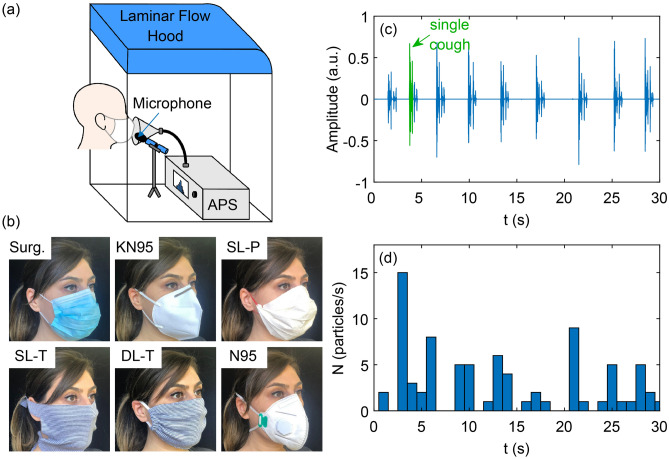
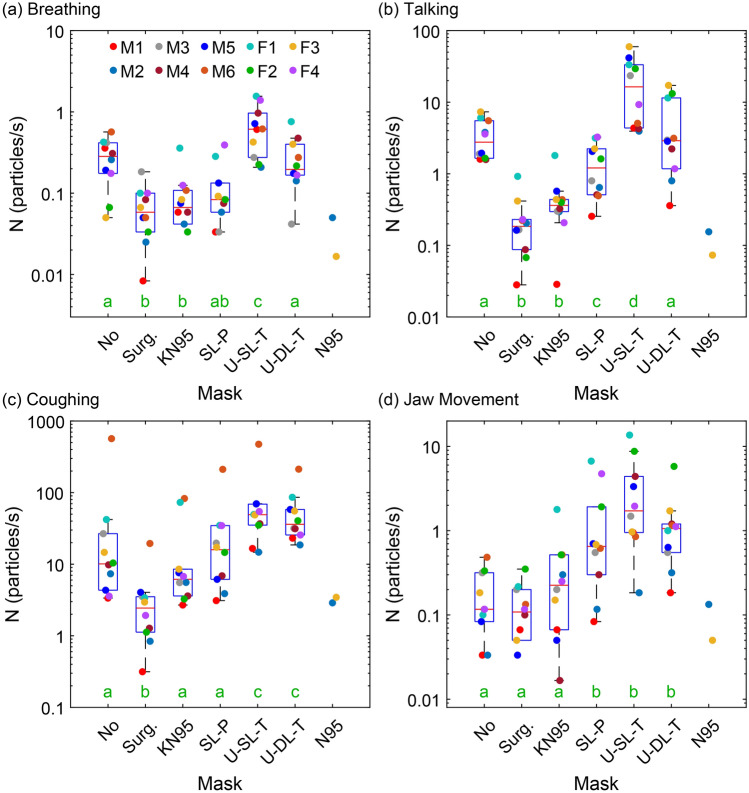
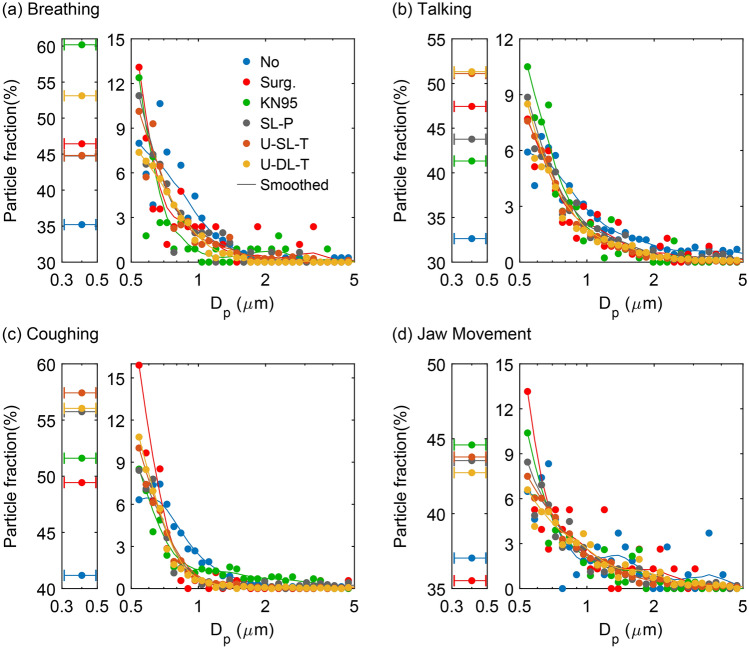
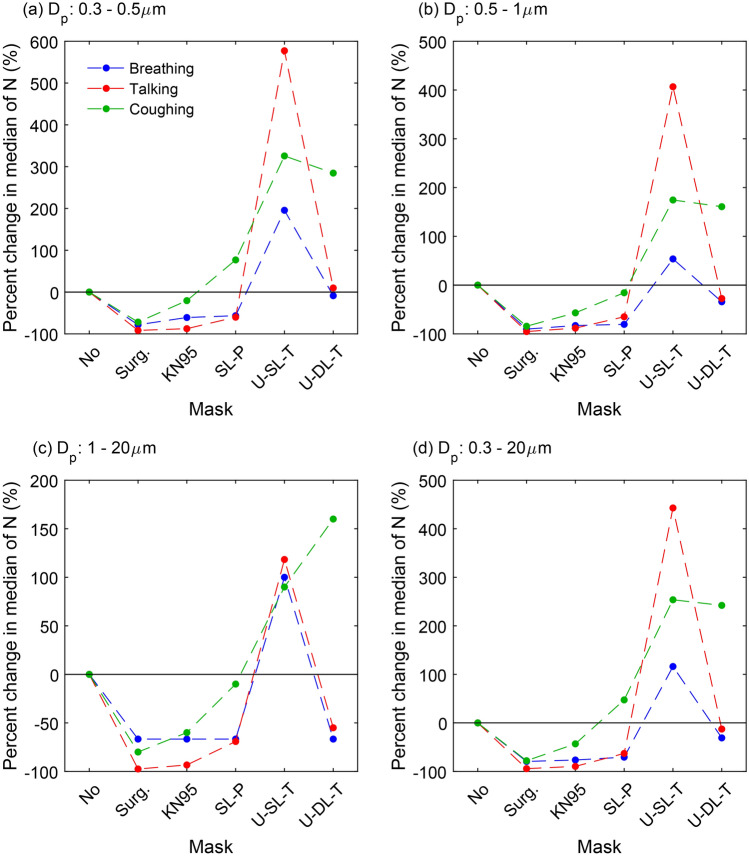
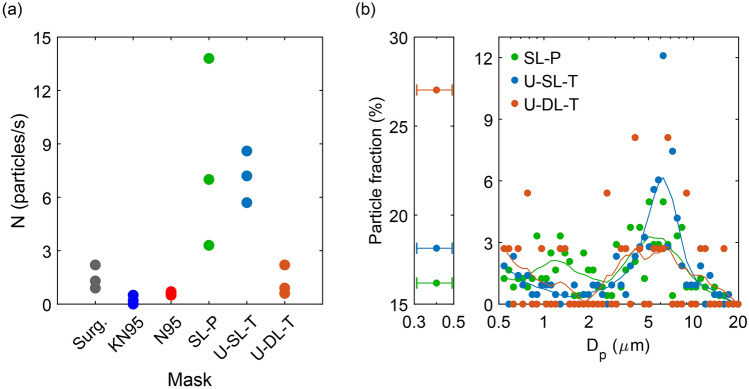
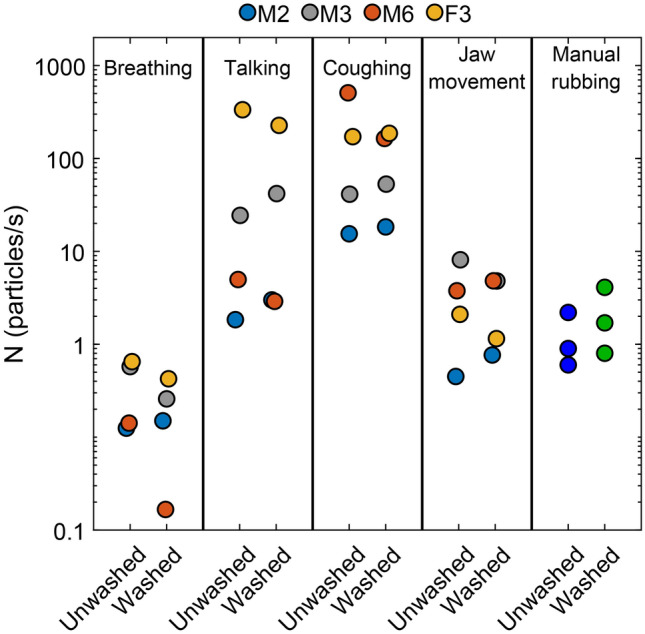
The COVID-19 pandemic triggered a surge in demand for facemasks to protect against disease transmission. In response to shortages, many public health authorities have recommended homemade masks as acceptable alternatives to surgical masks and N95 respirators. Although mask wearing is intended, in part, to protect others from exhaled, virus-containing particles, few studies have examined particle emission by mask-wearers into the surrounding air. Here, we measured outward emissions of micron-scale aerosol particles by healthy humans performing various expiratory activities while wearing different types of medical-grade or homemade masks. Both surgical masks and unvented KN95 respirators, even without fit-testing, reduce the outward particle emission rates by 90% and 74% on average during speaking and coughing, respectively, compared to wearing no mask, corroborating their effectiveness at reducing outward emission. These masks similarly decreased the outward particle emission of a coughing superemitter, who for unclear reasons emitted up to two orders of magnitude more expiratory particles via coughing than average. In contrast, shedding of non-expiratory micron-scale particulates from friable cellulosic fibers in homemade cotton-fabric masks confounded explicit determination of their efficacy at reducing expiratory particle emission. Audio analysis of the speech and coughing intensity confirmed that people speak more loudly, but do not cough more loudly, when wearing a mask. Further work is needed to establish the efficacy of cloth masks at blocking expiratory particles for speech and coughing at varied intensity and to assess whether virus-contaminated fabrics can generate aerosolized fomites, but the results strongly corroborate the efficacy of medical-grade masks and highlight the importance of regular washing of homemade masks.
Overview
The claims and statistics of this paper haven’t been checked yet.
Free: it reads the open-access text and checks the first 5 claims that cite a source we can check. Create a free account to check every claim.
Integrity signals
Registry
Cites
Statistics
Figures
Verification
Claims the paper makes
The claims and statistics of this paper haven’t been checked yet.
Free: it reads the open-access text and checks the first 5 claims that cite a source we can check. Create a free account to check every claim.
Claims other papers make about this one
Each is checked against this paper’s own text: does it say what the citing paper says it does?
The source backs part of the claim, not all of it — or backs it for a different population, condition or comparison.
In the citing paper
“N95 FFR are employed as personal protective equipment (PPE) and they provide a high level of protection for filtering facepiece masks that cover only the nose and mouth (as opposed to full and half-face respirators constructed from elastomeric materials) [3, 58–74].”
From The protective performance of reusable cloth face masks, disposable procedure masks, KN95 masks and N95 respirators: Filtration and total inward leakage (2021) · cites this paper as [63]
Experimental — accuracy not yet measuredThe source backs part of the claim, not all of it — or backs it for a different population, condition or comparison.
In the citing paper
“The data sets employed by Wagner et al. represent a range of mask fit conditions including human subjects, mannikins, and non-leaking custom apparatus [11,20,21,22], but all are likely a best case compared to the range of actual public practice because they were laboratory tested with due diligence and proper usage.”
From Comparative Mask Protection against Inhaling Wildfire Smoke, Allergenic Bioaerosols, and Infectious Particles (2022) · cites this paper as [21]
Experimental — accuracy not yet measuredThe source backs part of the claim, not all of it — or backs it for a different population, condition or comparison.
In the citing paper
“wearing surgical or FFP2 masks substantially reduces the number of bioaerosol particles emitted from human respiration.”
From Bacteria Filtration Efficiency for Different Types of Protective Face Masks (2023) · cites this paper as [25]
Experimental — accuracy not yet measuredThe source backs part of the claim, not all of it — or backs it for a different population, condition or comparison.
In the citing paper
“the efficacy of the single-layer cloth mask is not as clear and complete for the protection and prevention that could be achieved [25-27].”
From Bacteria Filtration Efficiency for Different Types of Protective Face Masks (2023) · cites this paper as [25]
Experimental — accuracy not yet measuredThe cited source says what the claim attributes to it.
In the citing paper
“Studies have shown that materials with higher filtration efficiency may reduce the outward emission of particles produced during respiratory activities through masks [63].”
From The protective performance of reusable cloth face masks, disposable procedure masks, KN95 masks and N95 respirators: Filtration and total inward leakage (2021) · cites this paper as [63]
2 more claims about this paper
Create a free account to see every claim other papers make about this one.
Self-check
Percentages, sums and reported differences re-computed from the paper’s own numbers.
The self-check needs the paper’s full text.
Citations
Cites
Virological assessment of hospitalized patients with COVID-2019
Wölfel, R., Corman, V. M., Guggemos, W., Seilmaier, M., Zange, S., Müller, M. A., Niemeyer, D., Jones, T. C., Vollmar, P., Rothe, C., et al. (2020) · Nature · doi:10.1038/s41586-020-2196-x · Cited by 6,661
Temporal dynamics in viral shedding and transmissibility of COVID-19
He, X., Lau, E. H. Y., Wu, P., Deng, X., Wang, J., Hao, X., Lau, Y. C., Wong, J. Y., Guan, Y., Tan, X., et al. (2020) · Nature Medicine · doi:10.1038/s41591-020-0869-5 · Cited by 4,247
Transmission of 2019-nCoV Infection from an Asymptomatic Contact in Germany
Rothe, C., Schunk, M., Sothmann, P., Bretzel, G., Froeschl, G., Wallrauch, C., Zimmer, T., Thiel, V., Janke, C., Guggemos, W., et al. (2020) · New England Journal of Medicine · doi:10.1056/nejmc2001468 · Cited by 4,144
Chu, D. K., Akl, E. A., Duda, S., Solo, K., Yaacoub, S., Schünemann, H. J., Chu, D. K., Akl, E. A., El-harakeh, A., Bognanni, A., et al. (2020) · The Lancet · doi:10.1016/s0140-6736(20)31142-9 · Cited by 3,843
Respiratory virus shedding in exhaled breath and efficacy of face masks
Leung, N. H. L., Chu, D. K. W., Shiu, E. Y. C., Chan, K.-H., McDevitt, J. J., Hau, B. J. P., Yen, H.-L., Li, Y., Ip, D. K. M., Peiris, J. S. M., et al. (2020) · Nature Medicine · doi:10.1038/s41591-020-0843-2 · Cited by 2,270
Aerodynamic Analysis of SARS-CoV-2 in Two Wuhan Hospitals
Liu, Y., Ning, Z., Chen, Y., Guo, M., Liu, Y., Gali, N. K., Sun, L., Duan, Y., Cai, J., Westerdahl, D., et al. (2020) · Nature · doi:10.1038/s41586-020-2271-3 · Cited by 1,872
Rational use of face masks in the COVID-19 pandemic
Feng, S., Shen, C., Xia, N., Song, W., Fan, M., & Cowling, B. J. (2020) · The Lancet Respiratory Medicine · doi:10.1016/s2213-2600(20)30134-x · Cited by 1,418
Morawska, L., Johnson, G. R., Ristovski, Z. D., Hargreaves, M., Mengersen, K., Corbett, S., Chao, C. Y. H., Li, Y., & Katoshevski, D. (2009) · Journal of Aerosol Science · doi:10.1016/j.jaerosci.2008.11.002 · Cited by 1,129
Bourouiba, L. (2020) · JAMA · doi:10.1001/jama.2020.4756 · Cited by 1,066
Aerosol filtration efficiency of common fabrics used in respiratory cloth masks
Konda, A., Prakash, A., Moss, G. A., Schmoldt, M., Grant, G. D., & Guha, S. (2020) · ACS Nano · doi:10.1021/acsnano.0c03252 · Cited by 934
Research works printed but not linked: 1
- Crafty Journal-Imaginative craft ideas and tip, DIY paper towel face mask: s https://craftyjournal.com/diy-paper-towel-face-mask/. Accessed 28 May 2020.
Cited by
Items 101–200 of 491
Virus Blocking Textile for SARS-CoV-2 Using Human Body Triboelectric Energy Harvesting
Kang, M., Jang, N.-Y., Kim, Y., Ro, H., Kim, D., Kim, Y., Kim, H. T., Kwon, H. M., Ahn, J., Choi, B., et al. (2021) · Cell Reports Physical Science · doi:10.1016/j.xcrp.2022.100813 · Cited by 21
How Face Masks Affect Acoustic and Auditory Perceptual Characteristics of the Singing Voice
Oren, L., Rollins, M. K., Gutmark, E. J., & Howell, R. J. (2021) · Journal of Voice · doi:10.1016/j.jvoice.2021.02.028 · Cited by 20
Assessment of cloth masks ability to limit Covid-19 particles spread: a systematic review
Ataei, M., Shirazi, F. “., Nakhaee, S., Abdollahi, M. R., & Mehrpour, O. (2021) · Environmental Science and Pollution Research · doi:10.1007/s11356-021-16847-2 · Cited by 20
Filter Inserts Impact Cloth Mask Performance against Nano- to Micro-Sized Particles
Radney, J. G., Weaver, J. L., Vicenzi, E. P., Staymates, M. E., & Zangmeister, C. D. (2021) · ACS Nano · doi:10.1021/acsnano.1c05182 · Cited by 20
Airborne Transmission Risk in Urban Buses: A Computational Fluid Dynamics Study
Ramajo, D. E., & Corzo, S. F. (2022) · Aerosol and Air Quality Research · doi:10.4209/aaqr.210334 · Cited by 19
“These low values correspond to the minimum efficiency measured with homemade face masks (Fischer et al. , 2020; Asadi et al. , 2020 ; Li et al. , 2021).”
Simulation of COVID-19 Propagation Scenarios in the Madrid Metropolitan Area
Singh, D. E., Marinescu, M.-C., Guzmán-Merino, M., Durán, C., Delgado‐Sanz, C., Gómez‐Barroso, D., & Carretero, J. (2021) · Frontiers in Public Health · doi:10.3389/fpubh.2021.636023 · Cited by 21
Hariharan, P., Sharma, N., Guha, S., Banerjee, R. K., D’Souza, G. A., & Myers, M. R. (2021) · Scientific Reports · doi:10.1038/s41598-021-89604-7 · Cited by 19
Technical note: Impact of face covering on aerosol transport patterns during coughing and sneezing
Grinshpun, S. A., & Yermakov, M. V. (2021) · Journal of Aerosol Science · doi:10.1016/j.jaerosci.2021.105847 · Cited by 21
Penetration and secondary atomization of droplets impacted on wet facemasks
Bagchi, S., Basu, S., Chaudhuri, S., & Saha, A. (2021) · Physical Review Fluids · doi:10.1103/physrevfluids.6.110510 · Cited by 19
Large-eddy simulation of buoyant airflow in an airborne pathogen transmission scenario
Laitinen, A., Korhonen, M., Keskinen, K., Kaario, O. T., & Vuorinen, V. (2023) · Building and Environment · doi:10.1016/j.buildenv.2023.110462 · Cited by 19
Antimicrobial Properties of CuO Particles Deposited on a Medical Mask
Giedraitienė, A., Ružauskas, M., Šiugždinienė, R., Tučkutė, S., & Milčius, D. (2022) · Materials · doi:10.3390/ma15227896 · Cited by 18
“Although medical masks are recognised as an effective measure against the transmission of infectious agents, their efficiency is not an absolute [6,7].”
Disinfection and Electrostatic Recovery of N95 Respirators by Corona Discharge for Safe Reuse
Narayanan, S. S. K. S., Wang, X., Paul, J., Paley, V., Weng, Z., Ye, L., & Zhong, Y. (2021) · Environmental Science & Technology · doi:10.1021/acs.est.1c02649 · Cited by 18
Bridge the gap: correlate face mask leakage and facial features with 3D morphable face models
Wang, T.-K., Solano, T., & Shoele, K. (2021) · Journal of Exposure Science & Environmental Epidemiology · doi:10.1038/s41370-021-00399-1 · Cited by 19
“The outflow from the mouth results in several magnitudes higher particle emission rate than breathing from the nose [44].”
BackgroundModeling COVID-19 Mortality Across 44 Countries: Face Covering May Reduce Deaths
Motallebi, S., Cheung, R. C. Y., Mohit, B., Shahabi, S., Tabriz, A. A., & Moattari, S. (2021) · American Journal of Preventive Medicine · doi:10.1016/j.amepre.2021.09.019 · Cited by 22
“There has been extensive debate around face mask effectiveness in controlling the COVID-19 pandemic.(15) −20 Several studies have suggested near-universal face covering as an effective protective measure.”
BackgroundInfluentialThe Foegen effect: A mechanism by which facemasks contribute to the COVID-19 case fatality rate
Fögen, Z. (2022) · Medicine · doi:10.1097/md.0000000000028924 · Cited by 21
The effects of face coverings, own-ethnicity biases, and attitudes on emotion recognition
Cooper, H., Brar, A., Beyaztas, H., Jennings, B. J., & Bennetts, R. J. (2022) · Cognitive Research Principles and Implications · doi:10.1186/s41235-022-00400-x · Cited by 19
“Face coverings were found to be useful in preventing the spread of the virus (Asadi et al., 2020).”
BackgroundA highly efficient cloth facemask design
Cappa, C. D., The San Francisco Opera Costume Department, Ristenpart, W. D., Barreda, S., Bouvier, N. M., Levintal, E., Wexler, A. S., & Roman, S. A. (2022) · Aerosol Science and Technology · doi:10.1080/02786826.2021.1962795 · Cited by 17
Self-citationExercise testing in COVID‐19 era: Clinical profile, results and feasibility wearing a facemask
Barbeito‐Caamaño, C., Bouzas‐Mosquera, A., Peteiro, J., Vázquez, D. L., Guzmán, M. Q., Cancelo, A. V., Martínez‐Ruiz, D., Yañez‐Wonenburger, J. C., Piñeiro‐Portela, M., & Vázquez‐Rodríguez, J. M. (2021) · European Journal of Clinical Investigation · doi:10.1111/eci.13509 · Cited by 17
Krajnc, A. P., Pirker, L., Centa, U. G., Gradišek, A., Mekjavić, I. B., Godnič, M., Čebašek, M., Bregant, T., & Remškar, M. (2021) · Sensors · doi:10.3390/s21051567 · Cited by 20
“The filtra‐ tion process depends not only on the type of fabric used in the mask, but also on the num‐ ber of fabric layers and the structure of the fabric threads [2,15].”
BackgroundInfluentialVentilation of ordinary face masks
Huo, S., & Zhang, T. (2021) · Building and Environment · doi:10.1016/j.buildenv.2021.108261 · Cited by 17
“Wearing a face mask not only decreases the shedding of COIVD-19 virus by infected individuals [2,3], but also minimizes respiratory exposure for susceptible individuals.”
Particle Size Analysis in Aerosol-Generating Dental Procedures Using Laser Diffraction Technique
Onoyama, K., Matsui, S., Kikuchi, M., Sato, D., Fukamachi, H., Kadena, M., Funatsu, T., Maruoka, Y., Baba, K., Maki, K., et al. (2022) · Frontiers in Oral Health · doi:10.3389/froh.2022.804314 · Cited by 19
“To quantitatively assess the risk of respiratory infections from aerosols, measuring particle size distribution (PSD) provides a solid scientific basis [18, 19].”
BackgroundDenpetkul, T., Pumkaew, M., Sittipunsakda, O., Leaungwutiwong, P., Mongkolsuk, S., & Sirikanchana, K. (2022) · Journal of Water and Health · doi:10.2166/wh.2022.190 · Cited by 17
Uncertainty analysis of facemasks in mitigating SARS-CoV-2 transmission
Liu, F., & Qian, H. (2022) · Environmental Pollution · doi:10.1016/j.envpol.2022.119167 · Cited by 18
Pycha, A., Cohn, M., & Zellou, G. (2022) · Frontiers in Communication · doi:10.3389/fcomm.2022.874215 · Cited by 16
Zika virus persistence in the male macaque reproductive tract
Ball, E. E., Pesavento, P. A., Rompay, K. K. A. V., Keel, M. K., Singapuri, A., Gómez-Vázquez, J. P., Dudley, D. M., O’Connor, D. H., Breitbach, M. E., Maness, N. J., et al. (2022) · PLoS neglected tropical diseases · doi:10.1371/journal.pntd.0010566 · Cited by 16
Xu, J., Wang, C., & Guo, H. (2024) · Journal of Building Engineering · doi:10.1016/j.jobe.2024.109016 · Cited by 19
Zhang, Y., Jiang, F., Li, F., ShaoYong, L., Liu, Z., Wang, Y., Chi, Y., Jiang, C., Zhang, L., Chen, Q., et al. (2024) · Journal of Hazardous Materials · doi:10.1016/j.jhazmat.2024.134572 · Cited by 16
Sussman, R. A., Golberstein, E., & Polosa, R. (2021) · International Journal of Environmental Research and Public Health · doi:10.3390/ijerph18041437 · Cited by 16
“It is known that N95 respirators afford effective protection to wearers [61], but empiric evidence on mask protection from inward external emissions for the wearer (that would support the need for reciprocal masking) in the most commonly used surgical masks is scarce, as most studies on mask filtration efficiency deal…”
BackgroundOrtiz, M. A., Ghasemieshkaftaki, M., & Bluyssen, P. M. (2021) · Intelligent Buildings International · doi:10.1080/17508975.2021.1951153 · Cited by 19
Hartig, M., Stephens, C., Foster, A., Fontes, D. H., Kinzel, M., & García-Godoy, F. (2021) · Experimental Biology and Medicine · doi:10.1177/15353702211034164 · Cited by 20
“Wearing surgical face masks at all times is effective for preventing the transmission of SARS-CoV-2, because it can reduce the outward respiratory particle emission rates by up to 90% when compared to not wearing a mask.(62) Droplet emission ranged from 0.”
BackgroundSobolik, J. S., Sajewski, E. T., Jaykus, L., Cooper, D. K., Lopman, B. A., Kraay, A. N. M., Ryan, P. B., & León, J. S. (2021) · Food Control · doi:10.1016/j.foodcont.2021.108632 · Cited by 19
“Empirical and modeling studies suggest physical distancing (41, 42), mask use (43-47), and hand washing and surface disinfection (48-50) are effective measures against SARS-CoV-2 transmission.”
What We Are Learning from COVID-19 for Respiratory Protection: Contemporary and Emerging Issues
Li, R., Zhang, M., Wu, Y., Tang, P., Sun, G. Z., Wang, L., Mandal, S., Wang, L., Lang, J. A., Passalacqua, A., et al. (2021) · Polymers · doi:10.3390/polym13234165 · Cited by 18
“Not all face coverings are protective, and some may even concentrate particles or contaminates on the surface of the covering materials [123,178].”
BackgroundCorzo, S. F., Ramajo, D. E., & Idelsohn, S. R. (2022) · Computer Methods in Applied Mechanics and Engineering · doi:10.1016/j.cma.2022.115387 · Cited by 16
Wang, C., Xu, J., Zhai, H., So, L. K., & Guo, H. (2025) · Journal of Hazardous Materials · doi:10.1016/j.jhazmat.2025.137782 · Cited by 19
Recommendations for Face Coverings While Exercising During the COVID-19 Pandemic
Shurlock, J., Muñiz-Pardos, B., Tucker, R., Bachl, N., Papadopoulou, T., Holloway, G., Jones, N. E., Bigard, X. A., Vonbank, K., Niederseer, D., et al. (2021) · Sports Medicine - Open · doi:10.1186/s40798-021-00309-7 · Cited by 16
Freeman, A. L. J., Parker, S. T., Noakes, C. J., Fitzgerald, S., Smyth, A., Macbeth, R., Spiegelhalter, D. J., & Rutter, H. (2021) · BMJ Open · doi:10.1136/bmjopen-2021-050869 · Cited by 15
Are people more averse to microbe-sharing contact with ethnic outgroup members? A registered report
Fan, L., Tybur, J. M., & Jones, B. C. (2022) · Evolution and Human Behavior · doi:10.1016/j.evolhumbehav.2022.08.007 · Cited by 15
Kisielinski, K., Hirsch, O., Wagner, S., Wojtasik, B., Funken, S., Klosterhalfen, B., Manna, S. K., Prescher, A., Sukul, P., & Sönnichsen, A. C. (2023) · Frontiers in Public Health · doi:10.3389/fpubh.2023.1125150 · Cited by 15
“5μm, shifting the geometric mean diameter toward smaller sizes (longer in air) compared to no mask conditions (185) doubts arise.”
BackgroundRetractedSussman, R. A., Golberstein, E., & Polosa, R. (2021) · Applied Sciences · doi:10.3390/app11146355 · Cited by 15
Styczynski, A., Hemlock, C., Hoque, K. I., Verma, R., LeBoa, C., Bhuiyan, O. F., Nag, A., Harun, M. G. D., Amin, M. B., & Andrews, J. R. (2022) · BMJ Open · doi:10.1136/bmjopen-2021-055206 · Cited by 15
Wagner, J., Macher, J. M., Chen, W., & Kumagai, K. (2022) · International Journal of Environmental Research and Public Health · doi:10.3390/ijerph192315555 · Cited by 14
Contact dermatitis caused by prevention measures during the COVID-19 pandemic: a narrative review
Tang, H., Wang, H., Hamblin, M. R., Jiang, L., Zhou, Y., Xu, Y., & Wen, X. (2023) · Frontiers in Public Health · doi:10.3389/fpubh.2023.1189190 · Cited by 14
“These masks could effectively reduce the number of particles of influenza virus released from the respiratory tract into the environment (25, 26).”
BackgroundGreen, D. N., Kozen, F. H., & Blumenkamp, C. K. (2021) · Clothing and Textiles Research Journal · doi:10.1177/0887302x211006775 · Cited by 14
“Despite the growing body of scientific evidence of facemasks’ efficacy, individuals may not comply or be willing, consciously or subconsciously, to change behaviors and habits of dress (Asadi et al., 2020; Liang et al., 2020; Scheid et al., 2020). To understand facemasking behaviors, preferences, and motivations of em…”
BackgroundA comprehensive review on facemask manufacturing, testing, and its environmental impacts
Khan, J. A., Netnapa, E., Mariatti, M., Vilay, V., & Todo, M. (2022) · Journal of Industrial Textiles · doi:10.1177/15280837221111175 · Cited by 14
“However, a recent study by Asadi et al.(3) reported the efficacy of different facemask types during various activities like breathing, speaking, and coughing using an aerodynamic particle sizer (APS, TSI model 3321) as shown in Figure 5(a) They used different facemasks such as KN95, N95, surgical, and homemade facemas…”
BackgroundMethodInfluentialWan, X., Lu, Q., Sun, D., Wu, H. Y., & Jiang, G. (2021) · Dermatology · doi:10.1159/000517219 · Cited by 14
Htwe, Y. Z. N., Mamat, H., Osman, B., & Mahmud, H. (2022) · Arabian Journal for Science and Engineering · doi:10.1007/s13369-022-06801-w · Cited by 14
“The reason for the improvement can be attributed to the better fit and compactness obtained after using the combination of the two face masks [10, 23].”
BackgroundSources of Aerosol Dispersion During Singing and Potential Safety Procedures for Singers
Westphalen, C., Kniesburges, S., Veltrup, R., Gantner, S., Peters, G., Benthaus, T., Jakubaß, B., Köberlein, M. C., Döllinger, M., & Echternach, M. (2021) · Journal of Voice · doi:10.1016/j.jvoice.2021.03.013 · Cited by 16
Vereen, R. N., Lazard, A. J., Frank, S. C., Pulido, M., Richter, A. P. C., Higgins, I. C. A., Shelus, V., Vandegrift, S. M., Hall, M. G., & Ribisl, K. M. (2021) · PLoS ONE · doi:10.1371/journal.pone.0251169 · Cited by 14
“Behaviors that were strongly recommended in the early months of the pandemic (March-May 2020) such as frequent hand washing and social distancing are still encouraged, though public health experts now cite the use of face coverings as the most important behavioral intervention to slow the spread of COVID-19 [5, 6].”
BackgroundGlänzel, M. H., Barbosa, I. M., Machado, E., Prusch, S. K., Barbosa, A. R., Lemos, L. F. C., Schuch, F. B., & Lanferdini, F. J. (2022) · Frontiers in Physiology · doi:10.3389/fphys.2022.994454 · Cited by 14
“Beyond the discussions about its effectiveness against coronavirus infection (Asadi et al., 2020; Liang et al., 2020), there are reports of prolonged use of the face mask causing skin lesions, headaches, discomfort and malaise, signs of stress, anxiety, and claustrophobia (Ramirez-Moreno et al.,…”
BackgroundInfluentialBerger, S., Mattern, M., & Niessner, J. (2022) · International Journal of Hygiene and Environmental Health · doi:10.1016/j.ijheh.2022.114103 · Cited by 13
“reducing the number of inhaled as well as exhaled particles and thus potentially provides an effective means of protecting oneself (self-protection) and others (third-party protection) (Asadi et al., 2020).”
Spatiotemporal droplet dispersion measurements demonstrate face masks reduce risks from singing
Ho, K. M. A., Davies, H., Epstein, R., Bassett, P., Hogan, Á., Kabir, Y., Rubin, J. S., Shin, G. Y., Reid, J. P., Torii, R., et al. (2021) · Scientific Reports · doi:10.1038/s41598-021-03519-x · Cited by 14
“Laboratory based experiments have similarly demonstrated efficacy, often with at least 80% reduction.(28,31,32) Our data additionally demonstrate that wearing a face mask dramatically reduces the inter-individual variability of droplet transmission while speaking and singing.”
BackgroundMethodResultInfluentialOksanen, L., Sanmark, E., Sofieva, S., Rantanen, N., Lahelma, M., Anttila, V., Lehtonen, L., Atanasova, N. S., Pesonen, E., Geneid, A., et al. (2022) · Acta Anaesthesiologica Scandinavica · doi:10.1111/aas.14022 · Cited by 13
Segovia, J. M., Huang, C.-H. S., Mamishev, M., Yuan, N., He, J., & Novosselov, I. V. (2022) · Applied Sciences · doi:10.3390/app12189360 · Cited by 13
Rowan, N. J., Meade, E., & Garvey, M. (2021) · Current Opinion in Environmental Science & Health · doi:10.1016/j.coesh.2021.100290 · Cited by 14
Gutz, S. E., Rowe, H. P., Tilton-Bolowsky, V. E., & Green, J. R. (2022) · Cognitive Research Principles and Implications · doi:10.1186/s41235-022-00423-4 · Cited by 13
“Changes in vocal load suggest phonatory compensation to the mask’s attenuation (Asadi et al., 2020), although it is unclear whether such compensation is in response to the overall attenuation or the attenuation of high frequencies only.”
BackgroundMendez, S., Garcia, W., & Nicolas, A. (2023) · Advanced Science · doi:10.1002/advs.202205255 · Cited by 14
“One-way coupling is used as the concentration of droplets is small (of the order of a few particles per liter [17]).”
BackgroundMethodInfluentialKhan, J. A., Mariatti, M., Osman, B., & Mahmud, H. (2023) · Polymer Engineering and Science · doi:10.1002/pen.26451 · Cited by 12
Yoon, D., Kim, K.-E., Lee, J. E., Kim, M., & Kim, J. (2021) · Journal of Korean Medical Science · doi:10.3346/jkms.2021.36.e204 · Cited by 11
Speaking with a KN95 Face Mask: ASR Performance and Speaker Compensation
Gutz, S. E., Rowe, H. P., & Green, J. R. (2021) · Interspeech (USB) · doi:10.21437/interspeech.2021-99 · Cited by 14
“(2020) found, people may naturally alter how they speak while wearing a mask by speaking more loudly [12].”
BackgroundInfluentialSiebler, L., Calandri, M., Rathje, T., & Stergiaropoulos, K. (2022) · International Journal of Environmental Research and Public Health · doi:10.3390/ijerph191811300 · Cited by 11
“Substituting the assumed constant mass flow (output) of surrogate particles (ṁout sp = cout sp V̇ag) and a fictitious mass inhalation rate of surrogate particles (ṁin sp(t) = cin sp(t) V̇inh) in (9) (considering mask filtration efficiency see [29,30]) results in:”
BackgroundHow opening windows and other measures decrease virus concentration in a moving car
Shu, S., Mitchell, T. E., Wiggins, M. R. R., You, S., Thomas, H., & Li, C. (2022) · Engineering Computations · doi:10.1108/ec-11-2021-0666 · Cited by 12
Geng, P., Lu, Q., Guo, H. X., & Zeng, J. (2023) · PLoS ONE · doi:10.1371/journal.pone.0283724 · Cited by 11
“In line with the opinions of previous studies [14, 15], our findings implied that the speakers tend to conduct acoustic adjustments to improve their speech intelligibility when wearing surgical mask.”
BackgroundResultImproving the measurement and acoustic performance of transparent face masks and shields
Cox, T. J., Dodgson, G., Harris, L., Perugia, E., Stone, M. A., & Walsh, M. (2022) · The Journal of the Acoustical Society of America · doi:10.1121/10.0010384 · Cited by 11
The Effect of Singers’ Masks on the Impulse Dispersion of Aerosols During Singing
Echternach, M., Hermann, L. A., Gantner, S., Tur, B., Peters, G., Westphalen, C., Benthaus, T., Köberlein, M. C., Kuranova, L., Döllinger, M., et al. (2021) · Journal of Voice · doi:10.1016/j.jvoice.2021.08.011 · Cited by 13
Interaction between SARS-CoV-2 spike glycoprotein and human skin models: a molecular dynamics study
Domingo, M., & Faraudo, J. (2021) · Soft Matter · doi:10.1039/d1sm01026c · Cited by 12
Cu-ZnO Embedded in a Polydopamine Shell for the Generation of Antibacterial Surgical Face Masks
d’Alessandro, N., Coccia, F., Vitali, L. A., Rastelli, G., Cinosi, A., Mascitti, A., & Tonucci, L. (2024) · Molecules · doi:10.3390/molecules29184512 · Cited by 10
“FMs can filtrate aerosols and particles larger than 0.7 µ m in size [5].”
BackgroundInfluentialSafety implications of mask use: a systematic review and evidence map
Farah, W. H., Abusalih, M. E., Hasan, B., Lees, E. H., Fleti, F., Elkhatib, W. Y., Johnson, B. D., Toups, G. N., Wolf, M. S., & Murad, M. H. (2024) · BMJ Evidence-Based Medicine · doi:10.1136/bmjebm-2024-113028 · Cited by 10
“4 While the efficacy of masks in reducing infection transmission is widely recognised, 5 the surge in mask usage has raised concerns regarding their impact on health outcomes.”
The bacterial burden of worn face masks—observational research and literature review
Kisielinski, K., Wojtasik, B., Zalewska, A., Livermore, D. M., & Jurczak-Kurek, A. (2024) · Frontiers in Public Health · doi:10.3389/fpubh.2024.1460981 · Cited by 14
Lee, S. J., Kang, M. S., Park, Y. M., & Lim, J. (2022) · Journal of Voice · doi:10.1016/j.jvoice.2022.06.013 · Cited by 11
Llanaj, E., & Muka, T. (2022) · Journal of Clinical Medicine · doi:10.3390/jcm11144084 · Cited by 11
“Facemasks are suggested to create a barrier against a high percentage of the viral particles released from a wearer’s mouth and nose [19], and high-quality medical masks may decrease particle emission during breathing [20].”
BackgroundMeasured Air Flow Leakage in Facemask Usage
Larsen, P. S., Heebøll, J., & Meyer, K. E. (2023) · International Journal of Environmental Research and Public Health · doi:10.3390/ijerph20032363 · Cited by 10
Hidden faces, altered perceptions: the impact of face masks on interpersonal perception
Wang, S., Han, C., Sang, Z., Zhang, X., Chen, S., Wang, H., Wang, G., Xu, Y., Lei, X., & Chen, J. (2023) · Frontiers in Psychology · doi:10.3389/fpsyg.2023.1203442 · Cited by 10
“org that wearing face masks activates two mechanisms: Firstly, the Lombard effect occurs among speakers, which means that when noise or interference occurs during the conversation, speakers raise their pitch, slow down their speech rate, and increase the clarity of their speech (Lombard, 1911; Asadi et al., 2020).”
BackgroundHow Can Hybrid Simulation Support Organizations in Assessing COVID-19 Containment Measures?
Cimini, C., Pezzotta, G., Lagorio, A., Pirola, F., & Cavalieri, S. (2021) · Healthcare · doi:10.3390/healthcare9111412 · Cited by 11
“Masks can be distinguished into three macro groups [63]:”
BackgroundMills, R., Vogler, R. J., Bernard, M., Concolino, J., Hersh, L. B., Wei, Y., Hastings, J. T., Dziubla, T. D., Baldridge, K. C., & Bhattacharyya, D. (2022) · Communications Materials · doi:10.1038/s43246-022-00256-0 · Cited by 12
“For respiratory face masks, aerosol filtration and capture are crucial for the protection of the wearer and has been widely studied in recent years 44,59,60 .”
BackgroundFeng, Z., Xu, B., Zhong, L.-L., Chen, J., Deng, J., Luo, Z., Cao, L., Tang, Y. J., Li, C., Jin, R., et al. (2023) · Archives of Virology · doi:10.1007/s00705-023-05698-6 · Cited by 11
Estimating the reduction in SARS-CoV-2 viral load by common face masks with a simple leak model
Freitag, S., Howell, S. G., & Jim, K. T. C. (2022) · Aerosol Science and Technology · doi:10.1080/02786826.2022.2053656 · Cited by 10
“Some interesting developments have happened along this line, as in Asadi et al. (2020), but much work remains to fully characterize leaks and their effects on mask performance.”
BackgroundInfluentialSubramanian, P. S. G., Puthussery, J. V., Mao, Y., Salana, S., Nguyen, T. H., Newell, T. A., & Verma, V. (2024) · ACS ES&T Air · doi:10.1021/acsestair.3c00088 · Cited by 9
Environmental sustainability in dermatological surgery. Part 1: reducing carbon intensity
Ali, F., Collaborative, B. S. S., Ali, F., Abbott, R. A., Wernham, A. G. H., Nikookam, Y., Hunt, W., Holloran, S., Chaolin, C., Ang, E., et al. (2024) · Clinical and Experimental Dermatology · doi:10.1093/ced/llae434 · Cited by 10
Influence of Humidity on FFP Masks with Electret Filter Media Under Real-Life Wearing Conditions
Stoll, D., & Antonyuk, S. I. (2025) · Atmosphere · doi:10.3390/atmos16010062 · Cited by 10
“Considerable experimental research in the field of half masks is documented in the literature, with the main goal being to ascertain the effectiveness of the devices either on test heads or human subjects [14,32,33].”
Gericke, A., Venkataraman, M., Militký, J., Steyn, H., & Vermaas, J. (2021) · Materials · doi:10.3390/ma14247756 · Cited by 10
“It is postulated that particle emission from (homemade) fabric masks can substantially exceed emission compared to when no mask is worn, raising the possibility that shed fibre particulates from contaminated cotton masks might serve as a source of aerosolized fomites [3,17].”
BackgroundPeng, Y., & Yao, M. (2023) · Environmental Science & Technology · doi:10.1021/acs.est.2c08503 · Cited by 9
Speech air flow with and without face masks
Derrick, D., Kabaliuk, N., Longworth, L., Pishyar-Dehkordi, P., & Jermy, M. (2022) · Scientific Reports · doi:10.1038/s41598-021-04745-z · Cited by 10
Müller, W. E. G., Wang, X., Neufurth, M., & Schröder, H. C. (2022) · Progress in molecular and subcellular biology · doi:10.1007/978-3-031-01237-2_7 · Cited by 9
Exploring innovations in antimicrobial protective mask filters: A review
Ezeh, O. V., Ternero-Hidalgo, J. J., LINTAG, R. M. N., Han, W., & Yeung, K. L. (2025) · Advances in Colloid and Interface Science · doi:10.1016/j.cis.2025.103635 · Cited by 8
COVID-19 Prevention: Role of Activated Carbon
Reza, M. S., Hasan, A. K., Ahmed, A. S., Afroze, S., Bakar, M. S. A., Islam, S. N., & Азад, А. К. (2021) · Journal of Engineering and Technological Sciences · doi:10.5614/j.eng.technol.sci.2021.53.4.4 · Cited by 8
“To protect against COVID-19, people use several types of masks and respirators such as N95, surgical, and cotton cloth masks [16].”
BackgroundDastidar, M. G., & Roy, S. (2021) · Elsevier eBooks · doi:10.1016/b978-0-323-85780-2.00009-3 · Cited by 15
“Since the majority of transmission of the virus comes from water droplets released by the patient during coughing, sneezing, and talking, therefore, covering the mouth and nose using a surgical mask or N95 mask are extremely necessary.(42) Essential workers need to wear PPE kits all the”
BackgroundThe Mask Game with Multiple Populations
Altman, E., Datar, M. J., Pellegrini, F. D., Perlaza, S. M., & Menasché, D. S. (2022) · Dynamic Games and Applications · doi:10.1007/s13235-022-00431-5 · Cited by 8
“At the same time, it protects others from contamination originated at such particular individual [3].”
Ohara, Y., Kanie, J., & Hori, K. (2022) · HardwareX · doi:10.1016/j.ohx.2022.e00314 · Cited by 8
“The facemask is a personal protective equipment used to prevent splashed aerosols and droplets exhaled by wearers [5,6,8,13,14].”
Seidu, R. K., Jiang, S., Tawiah, B., Acquaye, R., & Howard, E. K. (2023) · Research Journal of Textile and Apparel · doi:10.1108/rjta-08-2022-0098 · Cited by 9
Effectiveness of respiratory protective equipment on source control of exhaled pollutants
Jia, Z., Ai, Z., Cao, S., & Bekö, G. (2024) · Journal of Building Engineering · doi:10.1016/j.jobe.2024.108742 · Cited by 10
Heyerdahl, L. W., Lana, B., & Giles‐Vernick, T. (2021) · JMIR Infodemiology · doi:10.2196/27472 · Cited by 9
Chiera, S., Cristoforetti, A., Benedetti, L., Borro, L., Mazzei, L., Nollo, G., Bucciarelli, A., & Tessarolo, F. (2023) · IEEE Transactions on Instrumentation and Measurement · doi:10.1109/tim.2023.3257326 · Cited by 8
The effect of the Sars-Cov-2 pandemic on the use of personal protective equipment in hospitals
Ivanović, T., Gräbsch, C., Som, C., & Nowack, B. (2023) · Journal of Material Cycles and Waste Management · doi:10.1007/s10163-023-01745-1 · Cited by 8
Flipping the Perspective in Contact TracingPreprint
Loh, P. (2020) · arXiv (Cornell University) · doi:10.48550/arxiv.2010.03806 · Cited by 8
“…ranging from 6–80%” stated by Sch¨unemann et al. in The Lancet Respiratory Medicine [40], while a recent study by Asadi et al. in Scientific Reports [5] found that in terms of particle emission, surgical masks blocked 90% of particles while speaking, while cloth masks increased the number of…”
BackgroundSortwell, A., Ramírez‐Campillo, R., Knijnik, J., Forte, P. M., Marinho, D. A., Ferraz, R. M. P., & Trimble, K. (2021) · German Journal of Exercise and Sport Research · doi:10.1007/s12662-021-00785-9 · Cited by 9
“Moreover, the level of protection appears to be relatively stable and independent of sustained activity or duration of wear (Asadi et al., 2020).”
BackgroundIncreased ambient noise and elevated vocal effort contribute to airborne transmission of COVID-19
Kopechek, J. A. (2020) · The Journal of the Acoustical Society of America · doi:10.1121/10.0002640 · Cited by 9
“Masks and face coverings can provide some protection by filtering infectious respiratory droplets in situations where vocal effort is required (Asadi et al., 2020), and increasing air ventilation can reduce concentrations of potentially infectious airborne respiratory droplets (Milton, 2020), but…”
BackgroundVannaladsaysy, V., Fakhri, M. A. M., Khan, J. A., & M.Mariatti (2022) · Materials Today Proceedings · doi:10.1016/j.matpr.2022.06.512 · Cited by 7
Lessons Learned from a Global Perspective of Coronavirus Disease-2019
Kaul, V., Chahal, J., Schrarstzhaupt, I. N., Geduld, H. I., Shen, Y., Cecconi, M., Siqueira, A. M., Markoski, M. M., & Kawano-Dourado, L. B. (2022) · Clinics in Chest Medicine · doi:10.1016/j.ccm.2022.11.020 · Cited by 8
“These studies helped the scientific community to claim that FFP2/N95 respirators, previously only used by health professionals, would be the most protective against an airborne disease such as COVID-19.(34) A study from Bangladesh compared the use and nonuse of cloth and surgical masks in more than 340,000 people, and…”
Occlusion of faces by sanitary masks improves facial attractiveness of other races
Kamatani, M., Miyazaki, Y., & Kawahara, J. (2023) · Frontiers in Psychology · doi:10.3389/fpsyg.2022.953389 · Cited by 11
Fate of Exhaled Droplets From Breathing and Coughing in Supermarket Checkouts and Passenger Cars
Nishandar, S. R., He, Y., Princevac, M., & Edwards, R. D. (2023) · Environmental Health Insights · doi:10.1177/11786302221148274 · Cited by 7
Metadata
- Authors
- Asadi, S., Cappa, C. D., Barreda, S., Wexler, A. S., Bouvier, N. M., & Ristenpart, W. D.
- Affiliations
- University of California, Davis (US)
- Icahn School of Medicine at Mount Sinai (US)
- Corresponding author
- Ristenpart, William D.
- ORCID
- Venue
- Scientific Reports
- Published
- 2020-09-24
- Volume
- 10
- Issue
- 1
- Pages
- 15665-15665
- ISSN
- 2045-2322 (ISSN-L)
- PMC
- PMC7518250
- OpenAlex
- W3088267014
- Semantic Scholar
- e722d5ee534d71790558066afa375705bab4adf2
- Cited by
- 480
- References
- 65
- Citations by year
- 2026: 11 · 2025: 19 · 2024: 39 · 2023: 58 · 2022: 95 · 2021: 136 · 2020: 120
- FWCI
- 57.64
- Type
- journal article
- Language
- en
- Open access
- gold
- doi.org
- Licence
- cc-by
- creativecommons.org/licenses/by/4.0 (tdm)
- creativecommons.org/licenses/by/4.0 (vor)
- Locations
- Scientific Reports (publishedVersion, cc-by)
- PubMed Central (publishedVersion, cc-by)
- PubMed (publishedVersion)
- eScholarship (California Digital Library) (submittedVersion)
- eScholarship (California Digital Library) (submittedVersion, cc-by)
- Funders
- National Institute of Allergy and Infectious Diseases (R01 AI110703)
- Topics
- Health Sciences › Medicine › Pulmonary and Respiratory Medicine › Infection Control and Ventilation
- Physical Sciences › Environmental Science › Global and Planetary Change › COVID-19 impact on air quality
- Social Sciences › Sociology and Political Science › COVID-19 Prevention and Impact
- Keywords
- face masks, surgical masks, cough, speaking, SARS-CoV-2 transmission, particle shedding
- MeSH terms
- Betacoronavirus, COVID-19, SARS-CoV-2, Adolescent, Adult, Aerosols, Cough, Female, Filtration, Humans, Male, Masks, Middle Aged, Pneumonia, Viral, Primary Prevention, Respiratory Protective Devices, Coronavirus Infections, Inhalation Exposure, Exhalation, Young Adult, Pandemics
About these checks
Registry, retraction, Cites and statistics results are computed, not judged, with one exception: a printed reference that no index lists is read once by a model before it counts as a citation error. Claims are extracted by a model and kept only when their quote appears verbatim in the text; each cited source is then checked, with a model’s help, for whether it says what the claim relies on. Those verdicts can be wrong — read the claim’s quote and the cited source before relying on one.
Statistics and arithmetic are recomputed, not judged.
Confidence bands are shown only for fields calibrated on our annotated test set. None is calibrated yet, so no band is shown.
What counts as a claim ›How we measure confidence ›How we check this ›
Are you an author, or do you see a problem with this page? Request a review
Data sources
Bibliographic data: Semantic Scholar, OpenAlex, Crossref.
Contains information from the Semantic Scholar Academic Graph Datasets, made available under the ODC Attribution License (ODC-BY 1.0).
Semantic Scholar’s data is described in: Kinney, R., et al. (2023). The Semantic Scholar Open Data Platform. arXiv:2301.10140.
