

Efficacy of masks and face coverings in controlling outward aerosol particle emission from expiratory activities
Open accessThe DOI matches its Crossref record; 66 of the 66 references it cites were found in a registry or an index.
Abstract
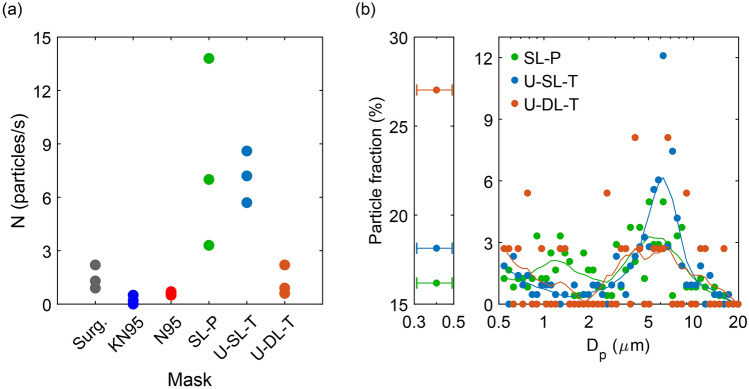
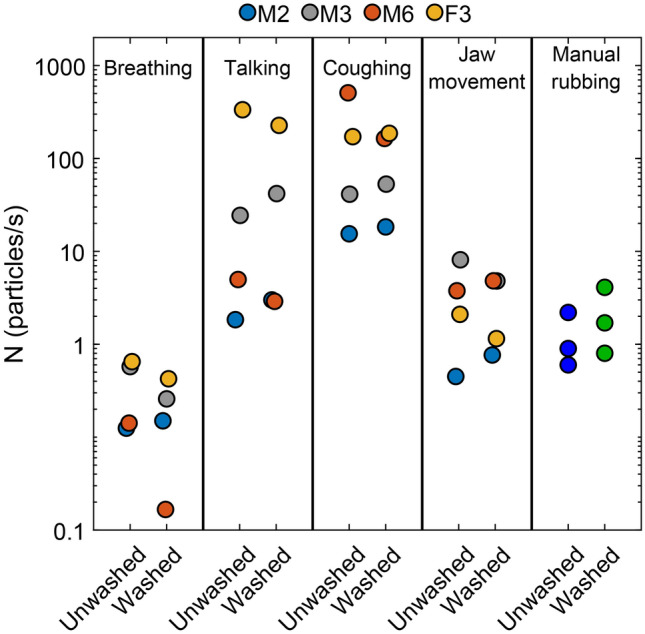
The COVID-19 pandemic triggered a surge in demand for facemasks to protect against disease transmission. In response to shortages, many public health authorities have recommended homemade masks as acceptable alternatives to surgical masks and N95 respirators. Although mask wearing is intended, in part, to protect others from exhaled, virus-containing particles, few studies have examined particle emission by mask-wearers into the surrounding air. Here, we measured outward emissions of micron-scale aerosol particles by healthy humans performing various expiratory activities while wearing different types of medical-grade or homemade masks. Both surgical masks and unvented KN95 respirators, even without fit-testing, reduce the outward particle emission rates by 90% and 74% on average during speaking and coughing, respectively, compared to wearing no mask, corroborating their effectiveness at reducing outward emission. These masks similarly decreased the outward particle emission of a coughing superemitter, who for unclear reasons emitted up to two orders of magnitude more expiratory particles via coughing than average. In contrast, shedding of non-expiratory micron-scale particulates from friable cellulosic fibers in homemade cotton-fabric masks confounded explicit determination of their efficacy at reducing expiratory particle emission. Audio analysis of the speech and coughing intensity confirmed that people speak more loudly, but do not cough more loudly, when wearing a mask. Further work is needed to establish the efficacy of cloth masks at blocking expiratory particles for speech and coughing at varied intensity and to assess whether virus-contaminated fabrics can generate aerosolized fomites, but the results strongly corroborate the efficacy of medical-grade masks and highlight the importance of regular washing of homemade masks.
Overview
The claims and statistics of this paper haven’t been checked yet.
Free: it reads the open-access text and checks the first 5 claims that cite a source we can check. Create a free account to check every claim.
Integrity signals
Registry
Cites
Statistics
Figures
Verification
Claims the paper makes
The claims and statistics of this paper haven’t been checked yet.
Free: it reads the open-access text and checks the first 5 claims that cite a source we can check. Create a free account to check every claim.
Claims other papers make about this one
Each is checked against this paper’s own text: does it say what the citing paper says it does?
The source backs part of the claim, not all of it — or backs it for a different population, condition or comparison.
In the citing paper
“N95 FFR are employed as personal protective equipment (PPE) and they provide a high level of protection for filtering facepiece masks that cover only the nose and mouth (as opposed to full and half-face respirators constructed from elastomeric materials) [3, 58–74].”
From The protective performance of reusable cloth face masks, disposable procedure masks, KN95 masks and N95 respirators: Filtration and total inward leakage (2021) · cites this paper as [63]
Experimental — accuracy not yet measuredThe source backs part of the claim, not all of it — or backs it for a different population, condition or comparison.
In the citing paper
“The data sets employed by Wagner et al. represent a range of mask fit conditions including human subjects, mannikins, and non-leaking custom apparatus [11,20,21,22], but all are likely a best case compared to the range of actual public practice because they were laboratory tested with due diligence and proper usage.”
From Comparative Mask Protection against Inhaling Wildfire Smoke, Allergenic Bioaerosols, and Infectious Particles (2022) · cites this paper as [21]
Experimental — accuracy not yet measuredThe source backs part of the claim, not all of it — or backs it for a different population, condition or comparison.
In the citing paper
“wearing surgical or FFP2 masks substantially reduces the number of bioaerosol particles emitted from human respiration.”
From Bacteria Filtration Efficiency for Different Types of Protective Face Masks (2023) · cites this paper as [25]
Experimental — accuracy not yet measuredThe source backs part of the claim, not all of it — or backs it for a different population, condition or comparison.
In the citing paper
“the efficacy of the single-layer cloth mask is not as clear and complete for the protection and prevention that could be achieved [25-27].”
From Bacteria Filtration Efficiency for Different Types of Protective Face Masks (2023) · cites this paper as [25]
Experimental — accuracy not yet measuredThe cited source says what the claim attributes to it.
In the citing paper
“Studies have shown that materials with higher filtration efficiency may reduce the outward emission of particles produced during respiratory activities through masks [63].”
From The protective performance of reusable cloth face masks, disposable procedure masks, KN95 masks and N95 respirators: Filtration and total inward leakage (2021) · cites this paper as [63]
2 more claims about this paper
Create a free account to see every claim other papers make about this one.
Self-check
Percentages, sums and reported differences re-computed from the paper’s own numbers.
The self-check needs the paper’s full text.
Citations
Cites
Virological assessment of hospitalized patients with COVID-2019
Wölfel, R., Corman, V. M., Guggemos, W., Seilmaier, M., Zange, S., Müller, M. A., Niemeyer, D., Jones, T. C., Vollmar, P., Rothe, C., et al. (2020) · Nature · doi:10.1038/s41586-020-2196-x · Cited by 6,661
Temporal dynamics in viral shedding and transmissibility of COVID-19
He, X., Lau, E. H. Y., Wu, P., Deng, X., Wang, J., Hao, X., Lau, Y. C., Wong, J. Y., Guan, Y., Tan, X., et al. (2020) · Nature Medicine · doi:10.1038/s41591-020-0869-5 · Cited by 4,247
Transmission of 2019-nCoV Infection from an Asymptomatic Contact in Germany
Rothe, C., Schunk, M., Sothmann, P., Bretzel, G., Froeschl, G., Wallrauch, C., Zimmer, T., Thiel, V., Janke, C., Guggemos, W., et al. (2020) · New England Journal of Medicine · doi:10.1056/nejmc2001468 · Cited by 4,144
Chu, D. K., Akl, E. A., Duda, S., Solo, K., Yaacoub, S., Schünemann, H. J., Chu, D. K., Akl, E. A., El-harakeh, A., Bognanni, A., et al. (2020) · The Lancet · doi:10.1016/s0140-6736(20)31142-9 · Cited by 3,843
Respiratory virus shedding in exhaled breath and efficacy of face masks
Leung, N. H. L., Chu, D. K. W., Shiu, E. Y. C., Chan, K.-H., McDevitt, J. J., Hau, B. J. P., Yen, H.-L., Li, Y., Ip, D. K. M., Peiris, J. S. M., et al. (2020) · Nature Medicine · doi:10.1038/s41591-020-0843-2 · Cited by 2,270
Aerodynamic Analysis of SARS-CoV-2 in Two Wuhan Hospitals
Liu, Y., Ning, Z., Chen, Y., Guo, M., Liu, Y., Gali, N. K., Sun, L., Duan, Y., Cai, J., Westerdahl, D., et al. (2020) · Nature · doi:10.1038/s41586-020-2271-3 · Cited by 1,872
Rational use of face masks in the COVID-19 pandemic
Feng, S., Shen, C., Xia, N., Song, W., Fan, M., & Cowling, B. J. (2020) · The Lancet Respiratory Medicine · doi:10.1016/s2213-2600(20)30134-x · Cited by 1,418
Morawska, L., Johnson, G. R., Ristovski, Z. D., Hargreaves, M., Mengersen, K., Corbett, S., Chao, C. Y. H., Li, Y., & Katoshevski, D. (2009) · Journal of Aerosol Science · doi:10.1016/j.jaerosci.2008.11.002 · Cited by 1,129
Bourouiba, L. (2020) · JAMA · doi:10.1001/jama.2020.4756 · Cited by 1,066
Aerosol filtration efficiency of common fabrics used in respiratory cloth masks
Konda, A., Prakash, A., Moss, G. A., Schmoldt, M., Grant, G. D., & Guha, S. (2020) · ACS Nano · doi:10.1021/acsnano.0c03252 · Cited by 934
Research works printed but not linked: 1
- Crafty Journal-Imaginative craft ideas and tip, DIY paper towel face mask: s https://craftyjournal.com/diy-paper-towel-face-mask/. Accessed 28 May 2020.
Cited by
A guideline to limit indoor airborne transmission of COVID-19
Bazant, M. Z., & Bush, J. W. M. (2021) · Proceedings of the National Academy of Sciences · doi:10.1073/pnas.2018995118 · Cited by 477
Face masks to prevent transmission of COVID-19: A systematic review and meta-analysis
Li, Y., Liang, M., Gao, L., Ayaz Ahmed, M., Uy, J. P., Cheng, C., Zhou, Q., & Sun, C. (2021) · American Journal of Infection Control · doi:10.1016/j.ajic.2020.12.007 · Cited by 275
Respiratory aerosols and droplets in the transmission of infectious diseases
Pöhlker, M. L., Pöhlker, C., Krüger, O. O., Förster, J., Berkemeier, T., Elbert, W., Fröhlich‐Nowoisky, J., Pöschl, U., Bagheri, G., Bodenschatz, E., et al. (2023) · Reviews of Modern Physics · doi:10.1103/revmodphys.95.045001 · Cited by 231
“…with virus-laden respiratory particles transmitted through the air being (key) drivers of infection (e.g., Anderson et al., 2020; Asadi et al., 2020a; Birgand et al., 2020; van Doremalen et al., 2020; Hadei et al., 2020; Klompas et al., 2020; Kutter et al., 2020; Kwon et al.,…”
BackgroundInfluentialImpacts of face coverings on communication: an indirect impact of COVID-19
Saunders, G. H., Jackson, I. R., & Visram, A. S. (2021) · International Journal of Audiology · doi:10.1080/14992027.2020.1851401 · Cited by 178
Inward and Outward Effectiveness of Cloth Masks, a Surgical Mask, and a Face Shield
Pan, J., Harb, C., Leng, W., & Marr, L. C. (2021) · Aerosol Science and Technology · doi:10.1080/02786826.2021.1890687 · Cited by 186
Kisielinski, K., Giboni, P., Prescher, A., Klosterhalfen, B., Graessel, D., Funken, S., Kempski, O., & Hirsch, O. (2021) · International Journal of Environmental Research and Public Health · doi:10.3390/ijerph18084344 · Cited by 169
“The increased volume of speech also contributes to increased aerosol production by the mask wearer [98].”
BackgroundMethodInfluentialLindsley, W. G., Blachere, F. M., Law, B. F., Beezhold, D. H., & Noti, J. D. (2021) · Aerosol Science and Technology · doi:10.1080/02786826.2020.1862409 · Cited by 167
“Studies of cloth face masks have suggested that they also can be effective at reducing the release of respiratory aerosols into the environment (Asadi et al. 2020; Davies et al. 2013; Konda et al. 2020).”
BackgroundAssessment of COVID-19 Information Overload Among the General Public
Mohammed, M., Sha’aban, A., Jatau, A. I., Yunusa, I., Isa, A. M., Wada, A. S., Obamiro, K., Zainal, H., & Ibrahim, B. (2022) · Journal of Racial and Ethnic Health Disparities · doi:10.1007/s40615-020-00942-0 · Cited by 137
Castaño, N., Cordts, S. C., Jalil, M. K., Zhang, K. S., Koppaka, S., Bick, A., Paul, R., & Tang, S. K. Y. (2021) · ACS Omega · doi:10.1021/acsomega.0c06335 · Cited by 158
Kemmelmeier, M., & Jami, W. A. (2021) · Frontiers in Psychology · doi:10.3389/fpsyg.2021.648692 · Cited by 141
Protective Face Masks: Current Status and Future Trends
Tuñón‐Molina, A., Takayama, K., Redwan, E. M. M. M., Uversky, V. N., Andrés, J., & Serrano‐Aroca, Á. (2021) · ACS Applied Materials & Interfaces · doi:10.1021/acsami.1c12227 · Cited by 137
Nanofiber-Based Face Masks and Respirators as COVID-19 Protection: A Review
Essa, W. K., Yasin, S. A., Saeed, I. A., & Ali, G. A. M. (2021) · Membranes · doi:10.3390/membranes11040250 · Cited by 128
Masks and respirators for prevention of respiratory infections: a state of the science review
Greenhalgh, T., MacIntyre, C. R., Baker, M. G., Bhattacharjee, S., Chughtai, A. A., Fisman, D. N., Kunasekaran, M. P., Kvalsvig, A., Lupton, D. A., Oliver, M., et al. (2024) · Clinical Microbiology Reviews · doi:10.1128/cmr.00124-23 · Cited by 133
Sun, X., Wei, Z., Lin, H., Jit, M., Li, Z., & Fu, C. (2020) · Journal of Infection · doi:10.1016/j.jinf.2020.12.013 · Cited by 103
COVID-19: the case for aerosol transmission
Tellier, R. (2022) · Interface Focus · doi:10.1098/rsfs.2021.0072 · Cited by 105
“In addition to conferring protection to the wearer, wearing a mask significantly decreases large droplet and aerosol particle emission, including for micrometre size particles [25,65,66].”
BackgroundRowan, N. J., & Moral, R. D. A. (2021) · The Science of The Total Environment · doi:10.1016/j.scitotenv.2021.145530 · Cited by 100
Cohn, M., Pycha, A., & Zellou, G. (2021) · Cognition · doi:10.1016/j.cognition.2020.104570 · Cited by 94
“Parallel to Lombard effects, recent work found that speakers spoke more loudly when wearing any type of mask (surgical, fabric, etc.) relative to when they were non-face-masked (Asadi et al., 2020), reflecting more effortful speech.”
BackgroundFace Coverings, Aerosol Dispersion and Mitigation of Virus Transmission Risk
Viola, I. M., Peterson, B., Pisetta, G., Pavar, G. S., Akhtar, H., Menoloascina, F., Mangano, E., Dunn, K. E., Gabl, R., Nila, A., et al. (2021) · IEEE Open Journal of Engineering in Medicine and Biology · doi:10.1109/ojemb.2021.3053215 · Cited by 92
“Asadi and co-workers [5] confirmed the outward effectiveness of face masks by testing human volunteers.”
A review on indoor airborne transmission of COVID-19– modelling and mitigation approaches
Rayegan, S., Shu, C., Berquist, J., Jeon, J., Zhou, L. (., Wang, L. L., Mbareche, H., Tardif, P., & Ge, H. (2022) · Journal of Building Engineering · doi:10.1016/j.jobe.2022.105599 · Cited by 100
“Based on the filter efficiency of masks, they can mitigate COVID-19 airborne transmission between 60% to more than 90%, as indicated in different studies [33,194,195].”
Shah, Y. H., Kurelek, J. W., Peterson, S. D., & Yarusevych, S. V. (2021) · Physics of Fluids · doi:10.1063/5.0057100 · Cited by 89
Archer, J., McCarthy, L. P., Symons, H. E., Watson, N. A., Orton, C. M., Browne, W. J., Harrison, J., Moseley, B., Philip, K. E. J., Calder, J. D. F., et al. (2022) · Interface Focus · doi:10.1098/rsfs.2021.0078 · Cited by 84
The face mask: A tale from protection to pollution and demanding sustainable solution
Mohanty, M., Mohanty, J., Dey, S., Dutta, K., Shah, M. P., & Das, A. P. (2023) · Emerging contaminants · doi:10.1016/j.emcon.2023.100298 · Cited by 78
The ventilation of buildings and other mitigating measures for COVID-19: a focus on wintertime
Burridge, H. C., Bhagat, R. K., Stettler, M. E. J., Kumar, P., Mel, I. D., Demis, P., Hart, A., Johnson-Llambias, Y., King, M., Victorovich, K. O., et al. (2021) · Proceedings of the Royal Society A Mathematical Physical and Engineering Sciences · doi:10.1098/rspa.2020.0855 · Cited by 83
“The study of efficacy of face coverings and masks in regulating emissions during expiratory activities was conducted by Asadi et al. [60] they noted ‘both surgical masks and unvented KN95 respirators, even without fit-testing, reduce the outward particle emission rates by 90 and 74% on average during…”
Duncan, S., Bodurtha, P., & Naqvi, S. (2021) · PLOS ONE · doi:10.1371/journal.pone.0258191 · Cited by 75
Monitoring carbon dioxide to quantify the risk of indoor airborne transmission of COVID-19
Bazant, M. Z., Kodio, O., Cohen, A. E., Khan, K., Gu, Z., & Bush, J. W. M. (2021) · Flow · doi:10.1017/flo.2021.10 · Cited by 84
Xi, J., Si, X. A., & Nagarajan, R. (2020) · Physics of Fluids · doi:10.1063/5.0034580 · Cited by 75
3D‐Printing to Mitigate COVID‐19 Pandemic
Padinjareveetil, A. K. K., & Pumera, M. (2021) · Advanced Functional Materials · doi:10.1002/adfm.202100450 · Cited by 71
Indoor Aerosol Science Aspects of SARS-CoV-2 Transmission
Nazaroff, W. W. (2022) · Indoor Air · doi:10.1111/ina.12970 · Cited by 70
Expiratory aerosol particle escape from surgical masks due to imperfect sealing
Cappa, C. D., Asadi, S., Barreda, S., Wexler, A. S., Bouvier, N. M., & Ristenpart, W. D. (2021) · Scientific Reports · doi:10.1038/s41598-021-91487-7 · Cited by 68
Self-citationKim, M. S., Seong, D., Li, H., Chung, S. K., Park, Y., Lee, M., Lee, S. W., Yon, D. K., Kim, J. H., Lee, K. H., et al. (2022) · Reviews in Medical Virology · doi:10.1002/rmv.2336 · Cited by 70
“Laboratory findings insisted that wearing of surgical masks or KN95 respirators reduced the number of particles emitted from breath and coughing,(51) even without proper fit testing.(52)”
BackgroundSingh, P., Ali, S. W., & Kale, R. D. (2023) · ACS Omega · doi:10.1021/acsomega.2c06343 · Cited by 64
Wearing mask hinders emotion recognition, but enhances perception of attractiveness
Parada‐Fernández, P., Herrero‐Fernández, D., Jorge, R., & Comesaña, P. C. (2021) · Personality and Individual Differences · doi:10.1016/j.paid.2021.111195 · Cited by 69
Factors influencing the filtration performance of homemade face masks
Hao, W., Xu, G., & Wang, Y. (2021) · Journal of Occupational and Environmental Hygiene · doi:10.1080/15459624.2020.1868482 · Cited by 62
Exhaled SARS-CoV-2 quantified by face-mask sampling in hospitalised patients with COVID-19
Williams, C., Pan, D., Decker, J., Wisniewska, A., Fletcher, E., Sze, S., Assadi, S., Haigh, R., Abdulwhhab, M., Bird, P. W., et al. (2021) · Journal of Infection · doi:10.1016/j.jinf.2021.03.018 · Cited by 60
Ogbuoji, E. A., Zaky, A. M., & Escobar, I. C. (2021) · Polymers · doi:10.3390/polym13121998 · Cited by 55
Lindsley, W. G., Blachère, F. M., Beezhold, D. H., Law, B. F., Derk, R. C., Hettick, J. M., Woodfork, K. A., Goldsmith, W. T., Harris, J. R., Duling, M. G., et al. (2021) · Aerosol Science and Technology · doi:10.1080/02786826.2021.1933377 · Cited by 58
“Each dot corresponds to the mean result for one type of source control device. the advantage of directly examining the expulsion of aerosols into the environment by people (Asadi et al. 2020; Davies et al. 2013; Leung et al. 2020; Li, Niu, and Zhu 2021).”
Koh, X. Q., Sng, A., Chee, J. Y., Sadovoy, A., Luo, P., & Daniel, D. (2021) · Journal of Aerosol Science · doi:10.1016/j.jaerosci.2021.105905 · Cited by 54
Sankhyan, S., Heinselman, K. N., Ciesielski, P. N., Barnes, T. M., Himmel, M. E., Teed, H., Patel, S., & Vance, M. E. (2021) · Aerosol and Air Quality Research · doi:10.4209/aaqr.210117 · Cited by 52
“Recent studies have demonstrated that the use of face masks reduces respiratory aerosol/droplet emissions and respiratory virus shedding (Asadi et al., 2020; Howard et al., 2021; Leung et al., 2020).”
BackgroundWittenberg-Lyles, E. M., Goldsmith, J. V., Chen, C., Prince‐Paul, M., & Capper, B. (2021) · Nurse Education Today · doi:10.1016/j.nedt.2021.105105 · Cited by 50
“Given the contagious nature of COVID-19, the use of PPE and telehealth was quickly adopted by nurses to slow the spread of COVID-19 (Asadi et al., 2020; Barrett, 2020), resulting in a paradigm shift in health communication (Fisk et al.”
BackgroundModelling airborne transmission of SARS-CoV-2 using CARA: risk assessment for enclosed spaces
Henriques, A., Mounet, N., Aleixo, L., Elson, P., Devine, J., Azzopardi, G., Andreini, M., Rognlien, M., Tarocco, N., & Tang, J. W.-T. (2022) · Interface Focus · doi:10.1098/rsfs.2021.0076 · Cited by 56
“Recent studies measured the outward filtration efficiency for surgical masks of 80% while breathing [38] and 60–75% in the 0.”
BackgroundResultInfluentialLi, L., Niu, M., & Zhu, Y. (2020) · Aerosol Science and Technology · doi:10.1080/02786826.2020.1846679 · Cited by 49
“Asadi et al. (2020) found that when masks were hand-rubbed, more particles were coming off home-made ones compared to N95 respirator and surgical mask.”
BackgroundSi, X. A., Talaat, M., & Xi, J. (2021) · Physics of Fluids · doi:10.1063/5.0040914 · Cited by 46
Wang, Q., Gu, J., & An, T. (2022) · Building and Environment · doi:10.1016/j.buildenv.2022.109224 · Cited by 47
“Reported ηe values for surgical face mask from measurement ranged from 40% [111] to 74%–80% [112].”
Aerosol transmission of SARS‐CoV‐2 by children and adults during the COVID‐19 pandemic
Moschovis, P. P., Yonker, L. M., Shah, J., Singh, D., Demokritou, P., & Kinane, T. B. (2021) · Pediatric Pulmonology · doi:10.1002/ppul.25330 · Cited by 47
“Masks (cotton, surgical, and N95) are very effective at limiting respiratory particle transmission during speaking and coughing (90% and 74%, respectively).(62,63) Masks reduce both inhalation and exhalation of droplets and aerosols, and are thus critical for interrupting transmission.”
BackgroundThe impact of crowd gatherings on the spread of COVID-19
Liu, C., Huang, J., Chen, S., Wang, D., Zhang, L., Liu, X., & Lian, X. (2022) · Environmental Research · doi:10.1016/j.envres.2022.113604 · Cited by 46
Costa, G. M. J., Lacerda, S. M. D. S. N., Figueiredo, A. F. A., Wnuk, N. T., Brener, M. R. G., de Andrade, L. M., Campolina-Silva, G. H., Kauffmann-Zeh, A., Pacífico, L. G. G., Versiani, A. F., et al. (2023) · BMC Biology · doi:10.1186/s12915-022-01497-8 · Cited by 45
Risk assessment for long- and short-range airborne transmission of SARS-CoV-2, indoors and outdoors
Poydenot, F., Abdourahamane, I., Caplain, E., Der, S., Haiech, J., Jallon, A., Khoutami, I., Loucif, A., Marinov, E., & Andreotti, B. (2022) · PNAS Nexus · doi:10.1093/pnasnexus/pgac223 · Cited by 48
Women on the Frontline: A Changed Workforce and the Fight Against COVID-19
Rabinowitz, L. G., & Rabinowitz, D. G. (2021) · Academic Medicine · doi:10.1097/acm.0000000000004011 · Cited by 41
Block the Spread: Barriers to Transmission of Influenza Viruses
Sage, V. L., Lowen, A. C., & Lakdawala, S. S. (2023) · Annual Review of Virology · doi:10.1146/annurev-virology-111821-115447 · Cited by 46
Wendling, J.-M., Fabacher, T., Pébaÿ, P., Cosperec, I., & Rochoy, M. (2021) · International Journal of Environmental Research and Public Health · doi:10.3390/ijerph18041942 · Cited by 48
“Despite these limitations, its effectiveness has been widely demonstrated, particularly in real life in the fight against the spread of COVID-19 [12,14,16,19,21,22,30].”
BackgroundEngeroff, T., Groneberg, D. A., & Niederer, D. (2021) · Sports Medicine - Open · doi:10.1186/s40798-021-00388-6 · Cited by 45
“Although not specifically recommended to suppress transmission in public settings, current evidence suggests that surgical masks and filtering face pieces type 2 or N95 respirators (FFP2 have comparable features to N95 respirators) are more effective in filtering particle emission compared to cloth masks [2].”
BackgroundKriegel, M., Hartmann, A., Buchholz, U., Seifried, J., Baumgarte, S., & Gastmeier, P. (2021) · International Journal of Environmental Research and Public Health · doi:10.3390/ijerph19010220 · Cited by 39
Covid-19: Mask Efficacy is Dependent on Both Fabric and Fit
Darby, S. B., Chullipalliyalil, K., Przyjalgowski, M. A., McGowan, P., Jeffers, S., Giltinan, A., Lewis, L., Smith, N. J., & Sleator, R. D. (2020) · Future Microbiology · doi:10.2217/fmb-2020-0292 · Cited by 38
“Other studies that measured the overall outward mask performance by collecting air around the head did not attempt to separate leakage from fabric penetration as a parameter which contributes to the mask efficiency [23,24].”
BackgroundCoyle, J. P., Derk, R. C., Lindsley, W. G., Blachère, F. M., Boots, T. E., Lemons, A. R., Martin, S. B., Mead, K. R., Fotta, S. A., Reynolds, J. S., et al. (2021) · Viruses · doi:10.3390/v13122536 · Cited by 42
Cuthbert, T. J., Ennis, S., Musolino, S. F., Buckley, H. L., Niikura, M., Wulff, J. E., & Menon, C. (2021) · Scientific Reports · doi:10.1038/s41598-021-98280-6 · Cited by 36
SARS‐CoV ‐2 air sampling: A systematic review on the methodologies for detection and infectivity
da Silva, P. G., Branco, P. T. B. S., Soares, R. R. G., Mesquita, J. R., & Sousa, S. I. V. (2022) · Indoor Air · doi:10.1111/ina.13083 · Cited by 37
Strömer, A., Rose, R., Grobe, O., Neumann, F., Fickenscher, H., Lorentz, T., & Krumbholz, A. (2020) · Microorganisms · doi:10.3390/microorganisms8101572 · Cited by 35
Alterations in CD39/CD73 axis of T cells associated with COVID‐19 severity
Dorneles, G. P., Teixeira, P. C., da Silva, I. M., Schipper, L. L., Filho, P. S., Rodrigues, L. C., Bonorino, C., Peres, A., Fonseca, S. G., Monteiro, M. C., et al. (2022) · Journal of Cellular Physiology · doi:10.1002/jcp.30805 · Cited by 40
Schmitt, J., & Wang, J. (2022) · Indoor Air · doi:10.1111/ina.13127 · Cited by 36
Joo, T., Takeuchi, M., Liu, F., Rivera, M. P., Barr, J., Blum, E. S., Parker, E., Tipton, J. H., Varnedoe, J., Dutta, B., et al. (2021) · Aerosol Science and Technology · doi:10.1080/02786826.2021.1905149 · Cited by 36
“Furthermore, paper or cotton masks can generate significant number of particles if rubbed, around 7 8 particles/sec (Asadi et al. 2020).”
BackgroundVlaskin, M. S. (2021) · Applied Thermal Engineering · doi:10.1016/j.applthermaleng.2021.117855 · Cited by 35
“Wearing conventional surgical masks reduces on average the outward particle emission rates while speaking and coughing by 90% and 74%, respectively [102].”
Microplastics/nanoplastics released from facemasks as contaminants of emerging concern
Kaur, M., Ghosh, D., Guleria, S., Arya, S. K., Puri, S., & Khatri, M. (2023) · Marine Pollution Bulletin · doi:10.1016/j.marpolbul.2023.114954 · Cited by 33
Efficacy of facemasks in mitigating respiratory exposure to submicron aerosols
Sharma, A., Omidvarborna, H., & Kumar, P. (2021) · Journal of Hazardous Materials · doi:10.1016/j.jhazmat.2021.126783 · Cited by 36
Corbin, J. C., Smallwood, G. J., Leroux, I. D., Oliaee, J. N., Liu, F., Sipkens, T. A., Green, R. G., Murnaghan, N. F., Koukoulas, T., & Lobo, P. (2021) · Scientific Reports · doi:10.1038/s41598-021-01265-8 · Cited by 37
Lindsley, W. G., Beezhold, D. H., Coyle, J. P., Derk, R. C., Blachère, F. M., Boots, T. E., Reynolds, J. S., McKinney, W., Sinsel, E. W., & Noti, J. D. (2021) · Journal of Occupational and Environmental Hygiene · doi:10.1080/15459624.2021.1939879 · Cited by 35
“Studies using healthy human subjects have shown that cloth face masks partially block respiratory aerosols produced during coughing, breathing, and talking (Davies et al. 2013; Asadi et al. 2020).”
BackgroundCoronavirus Disease 2019: Clinics, Treatment, and Prevention
Burkert, F. R., Lanser, L., Bellmann‐Weiler, R., & Weiß, G. (2021) · Frontiers in Microbiology · doi:10.3389/fmicb.2021.761887 · Cited by 36
Marchant, E., Griffiths, L. J., Crick, T., Fry, R. J., Hollinghurst, J., James, M., Cowley, L., Abbasizanjani, H., Torabi, F., Thompson, D., et al. (2022) · PLoS ONE · doi:10.1371/journal.pone.0264023 · Cited by 31
“Research demonstrates that people speak louder when wearing masks [35].”
BackgroundThinking green: Modelling respirator reuse strategies to reduce cost and waste
Chu, J., Ghenand, O., Collins, J., Byrne, J., Wentworth, A., Chai, P. R., Dadabhoy, F., Hur, C., & Traverso, G. (2021) · BMJ Open · doi:10.1136/bmjopen-2021-048687 · Cited by 30
Do Regulations Matter in Fighting the COVID-19 Pandemic? Lessons from Poland
Gruszczynski, L. A., Zatonski, M. Z., & McKee, M. (2021) · European Journal of Risk Regulation · doi:10.1017/err.2021.53 · Cited by 30
Airborne Transmission of SARS-CoV-2: Evidence and Implications for Engineering Controls
McNeill, V. F. (2022) · Annual Review of Chemical and Biomolecular Engineering · doi:10.1146/annurev-chembioeng-092220-111631 · Cited by 35
Quantitative Protection Factors for Common Masks and Face Coverings
Leith, D., L’Orange, C., & Volckens, J. (2021) · Environmental Science & Technology · doi:10.1021/acs.est.0c07291 · Cited by 29
Mapping Aerosolized Saliva on Face Coverings for Biosensing Applications
Jin, Z., Jorns, A., Yim, W., Wing, R., Mantri, Y., Zhou, J., Zhou, J., Wu, Z., Moore, C., Penny, W. F., et al. (2021) · Analytical Chemistry · doi:10.1021/acs.analchem.1c02399 · Cited by 30
Locke, L., Dada, O. M., & Shedd, J. S. (2021) · Journal of Occupational and Environmental Medicine · doi:10.1097/jom.0000000000002366 · Cited by 34
“Asadi et al, 2020 The coronavirus pandemic and aerosols: does COVID-19 transmit via expiratory particles?”
BackgroundExperimental Evidence for the Optimal Design of a High-Performing Cloth Mask
Bhattacharjee, S., Bahl, P., de Silva, C. M., Doolan, C. J., Chughtai, A. A., Heslop, D. J., & MacIntyre, C. R. (2021) · ACS Biomaterials Science & Engineering · doi:10.1021/acsbiomaterials.1c00368 · Cited by 29
Assessing the impact of widespread respirator use in curtailing COVID-19 transmission in the USA
Ngonghala, C. N., Knitter, J. R., Marinacci, L., Bonds, M. H., & Gumel, A. B. (2021) · Royal Society Open Science · doi:10.1098/rsos.210699 · Cited by 31
Khan, J. A., Momin, S. A., Mariatti, M., Vilay, V., & Todo, M. (2021) · Materials Research Express · doi:10.1088/2053-1591/ac35d0 · Cited by 28
Farthing, T. S., & Lanzas, C. (2021) · Epidemics · doi:10.1016/j.epidem.2021.100524 · Cited by 30
Quantifying the effect of a mask on expiratory flows
Bourrianne, P., Xue, N., Nunes, J. K., Abkarian, M., & Stone, H. A. (2021) · Physical Review Fluids · doi:10.1103/physrevfluids.6.110511 · Cited by 28
Hip fracture surgery initiation after admission to the hospital, 2017 (or nearest year)
(2020) · Health at a glance. Europe · doi:10.1787/295f3095-en · Cited by 28
Li, X., Ding, P., Deng, F., Mao, Y., Zhou, L., Ding, C., Wang, Y., Luo, Y., Zhou, Y., MacIntyre, C. R., et al. (2021) · Environmental Technology & Innovation · doi:10.1016/j.eti.2021.102165 · Cited by 31
Uyanga, K. A., Li, W., & Daoud, W. A. (2024) · European Polymer Journal · doi:10.1016/j.eurpolymj.2024.113041 · Cited by 27
Lai, J., Coleman, K. K., Tai, S.-H. S., German, J. R., Hong, F. H., Albert, B., Esparza, Y., Rastogi, D., Srikakulapu, A. K., Kalliomäki, P., et al. (2024) · EBioMedicine · doi:10.1016/j.ebiom.2024.105157 · Cited by 31
Is a COVID-19 Vaccine Likely to Make Things Worse?
Abo, S. M. C., & Smith, R. J. (2020) · Vaccines · doi:10.3390/vaccines8040761 · Cited by 28
“Wearing a double-layer cotton T-shirt mask or a homemade cloth mask had no statistically significant effect on the particle-emission rate [33].”
BackgroundCommunities and Testing for COVID-19
Stillman, S., & Tonin, M. (2021) · The European Journal of Health Economics · doi:10.1007/s10198-021-01385-y · Cited by 28
“Wearing masks, for instance, can provide protection to the wearers, as well as reduce outward transmission by infected individuals, therefore, providing protection for others [3, 34].”
BackgroundKisielinski, K., Wagner, S., Hirsch, O., Klosterhalfen, B., & Prescher, A. (2023) · Heliyon · doi:10.1016/j.heliyon.2023.e14117 · Cited by 28
“Such smaller particles fly further and also float around the room longer than the larger aerosol particles released by people without masks [14].”
Balkan, B. A., Chang, Y., Sparnaaij, M., Wouda, B., Boschma, D., Liu, Y., Yuan, Y., Daamen, W., de Jong, M. C. M., Teberg, C., et al. (2024) · PLoS Computational Biology · doi:10.1371/journal.pcbi.1011956 · Cited by 26
Water-Borne Nanocoating for Rapid Inactivation of SARS-CoV-2 and Other Viruses
Bobrin, V. A., Chen, S. R., Reyes, C. F. G., Sun, B., Ng, C. K., Kim, Y., Purcell, D. F. J., Jia, Z., Gu, W., Armstrong, J. W., et al. (2021) · ACS Nano · doi:10.1021/acsnano.1c05075 · Cited by 26
Wong, A. K., & Balzer, L. B. (2021) · Epidemiology · doi:10.1097/ede.0000000000001453 · Cited by 26
“The steps of the Causal Roadmap are (1) defin-”
MethodOverview of tight fit and infection prevention benefits of respirators (filtering face pieces)
Knobloch, J. K. ‐., Franke, G., Knobloch, M. J., Knobling, B., & Kampf, G. (2023) · Journal of Hospital Infection · doi:10.1016/j.jhin.2023.01.009 · Cited by 27
“However, surgical masks showed a 90% reduction in outward emissions compared with wearing nomask, whereas respirators showed a mean reduction of only 74% [31].”
Kvasnicka, J., Hubal, E. A. C., Siegel, J. A., Scott, J. A., & Diamond, M. L. (2022) · Environmental Science & Technology · doi:10.1021/acs.est.1c08342 · Cited by 26
Assessment of microplastic exposure in nasal lavage fluid and the influence of face masks
Zhang, M., Liu, T., Zhang, L., Hua, Z., Guo, Z., Dong, J., Tan, Q., Xie, Y., Yin, X., Yan, L., et al. (2024) · Journal of Hazardous Materials · doi:10.1016/j.jhazmat.2024.136069 · Cited by 25
Harmon, M., & Lau, J. (2021) · Indoor and Built Environment · doi:10.1177/1420326x211039544 · Cited by 22
Effects of surgical masks on aerosol dispersion in professional singing
Kniesburges, S., Schlegel, P., Peters, G., Westphalen, C., Jakubaß, B., Veltrup, R., Kist, A. M., Döllinger, M., Gantner, S., Kuranova, L., et al. (2021) · Journal of Exposure Science & Environmental Epidemiology · doi:10.1038/s41370-021-00385-7 · Cited by 24
Nguyên, D. D., Chacon, A. M., Payten, C. L., Black, R. J., Sheth, M. C., McCabe, P., Novakovic, D., & Madill, C. (2022) · International Journal of Language & Communication Disorders · doi:10.1111/1460-6984.12705 · Cited by 23
Modeling the Impacts of Physical Distancing and Other Exposure Determinants on Aerosol Transmission
Wagner, J., Sparks, T. L., Miller, S., Chen, W., Macher, J. M., & Waldman, J. M. (2021) · Journal of Occupational and Environmental Hygiene · doi:10.1080/15459624.2021.1963445 · Cited by 21
“assumes a singing emission rate six times higher than speaking (Asadi et al. 2020), Einf 1⁄4 0.”
BackgroundMethodInfluentialAerosol generation during chest compression and defibrillation in a swine cardiac arrest model
Hsu, C. H., Tiba, M. H., Boehman, A. L., McCracken, B. M., Leander, D. C., Francalancia, S. C., Pickell, Z., Sanderson, T. H., Ward, K. R., & Neumar, R. W. (2020) · Resuscitation · doi:10.1016/j.resuscitation.2020.12.004 · Cited by 21
“If subsequent clinical studies confirm aerosol generation during postdefibrillation chest compression, then potential strategies to reduce lay rescuer risk may include placing a facemask or cloth/towel over the CA victim’s nose and mouth prior to defibrillation attempts in order to minimize aerosol spread.(2,3,11,15)…”
BackgroundEffectiveness of different types of mask in aerosol dispersion in SARS-CoV-2 infection
Tanısalı, G., Sözak, A., Bulut, A. S., Sander, T. Z., Doğan, Ö., Dağ, Ç., Gönen, M., Can, F., DeMirci, H., & Ergönül, Ö. (2021) · International Journal of Infectious Diseases · doi:10.1016/j.ijid.2021.06.029 · Cited by 23
Spang, R. P., & Pieper, K. (2021) · Scientific Reports · doi:10.1038/s41598-021-99100-7 · Cited by 22
Grimm, K., Niederer, D., Nienhaus, A., Groneberg, D. A., & Engeroff, T. (2022) · Scientific Reports · doi:10.1038/s41598-022-13711-2 · Cited by 22
“We further hypothesize, that (2) FFP2/N95 and surgical mask wearing during exercise or rest has an effect on subjective complaints and cognitive function.”
BackgroundVirus Blocking Textile for SARS-CoV-2 Using Human Body Triboelectric Energy Harvesting
Kang, M., Jang, N.-Y., Kim, Y., Ro, H., Kim, D., Kim, Y., Kim, H. T., Kwon, H. M., Ahn, J., Choi, B., et al. (2021) · Cell Reports Physical Science · doi:10.1016/j.xcrp.2022.100813 · Cited by 20
Metadata
- Authors
- Asadi, S., Cappa, C. D., Barreda, S., Wexler, A. S., Bouvier, N. M., & Ristenpart, W. D.
- Affiliations
- University of California, Davis (US)
- Icahn School of Medicine at Mount Sinai (US)
- Corresponding author
- Ristenpart, William D.
- ORCID
- Venue
- Scientific Reports
- Published
- 2020-09-24
- Volume
- 10
- Issue
- 1
- Pages
- 15665-15665
- ISSN
- 2045-2322 (ISSN-L)
- PMC
- PMC7518250
- OpenAlex
- W3088267014
- Cited by
- 480
- References
- 65
- Citations by year
- 2026: 11 · 2025: 19 · 2024: 39 · 2023: 58 · 2022: 95 · 2021: 136 · 2020: 120
- FWCI
- 57.64
- Type
- journal article
- Language
- en
- Open access
- gold
- doi.org
- Licence
- cc-by
- creativecommons.org/licenses/by/4.0 (tdm)
- creativecommons.org/licenses/by/4.0 (vor)
- Locations
- Scientific Reports (publishedVersion, cc-by)
- PubMed Central (publishedVersion, cc-by)
- PubMed (publishedVersion)
- eScholarship (California Digital Library) (submittedVersion)
- eScholarship (California Digital Library) (submittedVersion, cc-by)
- Funders
- National Institute of Allergy and Infectious Diseases (R01 AI110703)
- Topics
- Health Sciences › Medicine › Pulmonary and Respiratory Medicine › Infection Control and Ventilation
- Physical Sciences › Environmental Science › Global and Planetary Change › COVID-19 impact on air quality
- Social Sciences › Sociology and Political Science › COVID-19 Prevention and Impact
- Keywords
- face masks, surgical masks, cough, speaking, SARS-CoV-2 transmission, particle shedding
- MeSH terms
- Betacoronavirus, COVID-19, SARS-CoV-2, Adolescent, Adult, Aerosols, Cough, Female, Filtration, Humans, Male, Masks, Middle Aged, Pneumonia, Viral, Primary Prevention, Respiratory Protective Devices, Coronavirus Infections, Inhalation Exposure, Exhalation, Young Adult, Pandemics
About these checks
Registry, retraction, Cites and statistics results are computed, not judged, with one exception: a printed reference that no index lists is read once by a model before it counts as a citation error. Claims are extracted by a model and kept only when their quote appears verbatim in the text; each cited source is then checked, with a model’s help, for whether it says what the claim relies on. Those verdicts can be wrong — read the claim’s quote and the cited source before relying on one.
Statistics and arithmetic are recomputed, not judged.
Confidence bands are shown only for fields calibrated on our annotated test set. None is calibrated yet, so no band is shown.
What counts as a claim ›How we measure confidence ›How we check this ›
Are you an author, or do you see a problem with this page? Request a review
Data sources
Bibliographic data: Semantic Scholar, OpenAlex, Crossref.
Contains information from the Semantic Scholar Academic Graph Datasets, made available under the ODC Attribution License (ODC-BY 1.0).
Semantic Scholar’s data is described in: Kinney, R., et al. (2023). The Semantic Scholar Open Data Platform. arXiv:2301.10140.
