

Efficacy of masks and face coverings in controlling outward aerosol particle emission from expiratory activities
Open accessThe DOI matches its Crossref record; 66 of the 66 references it cites were found in a registry or an index.
Abstract
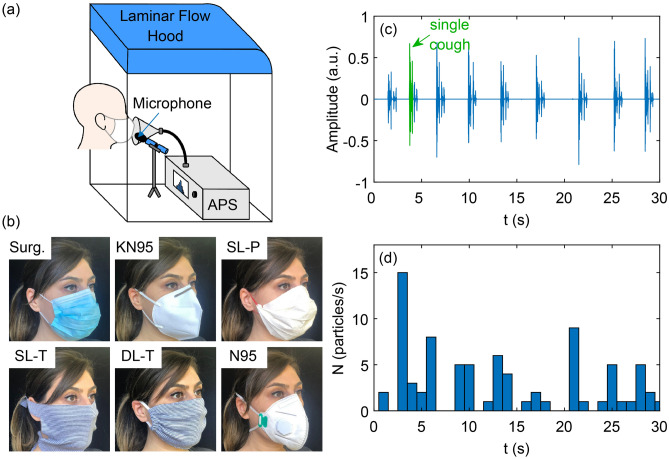
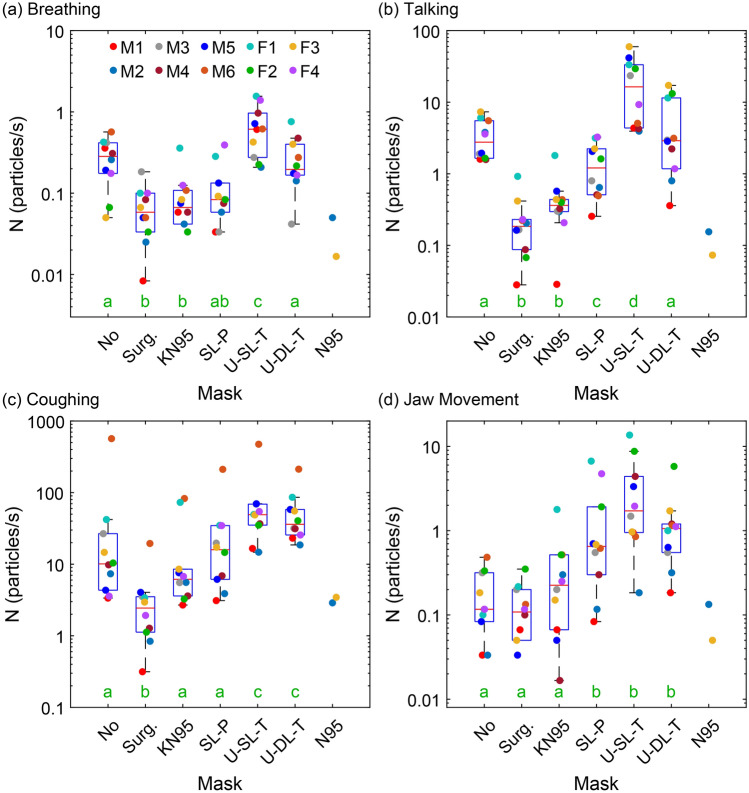
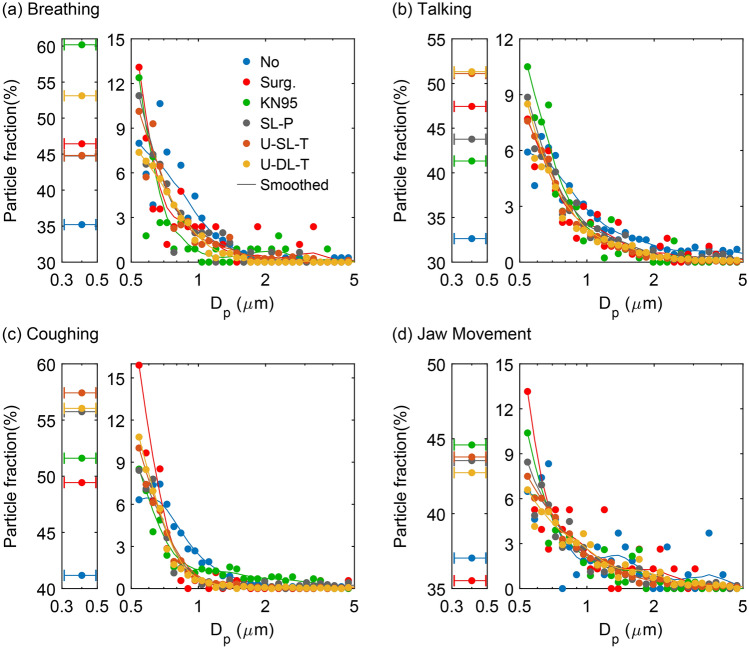
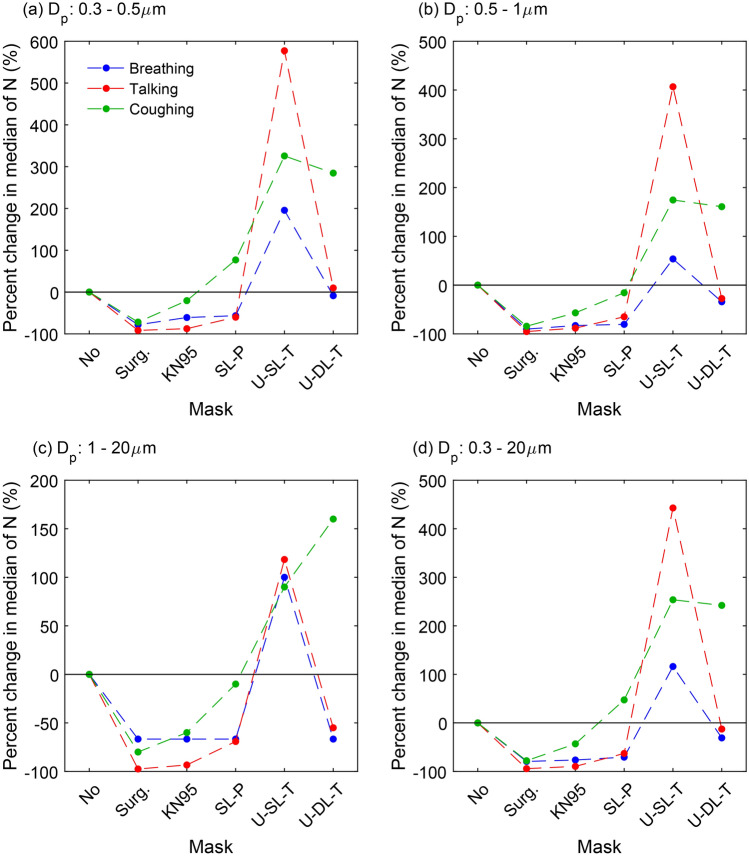
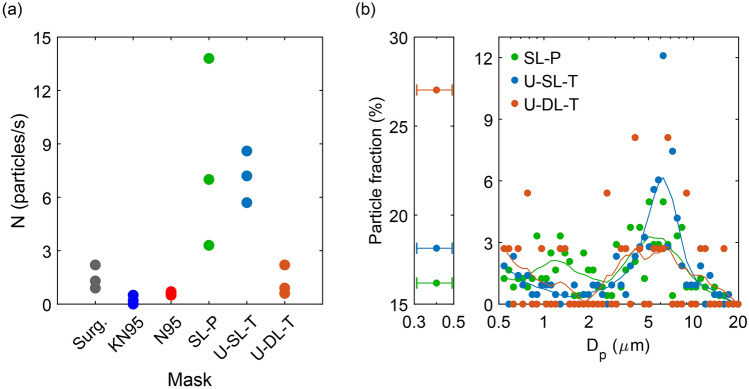
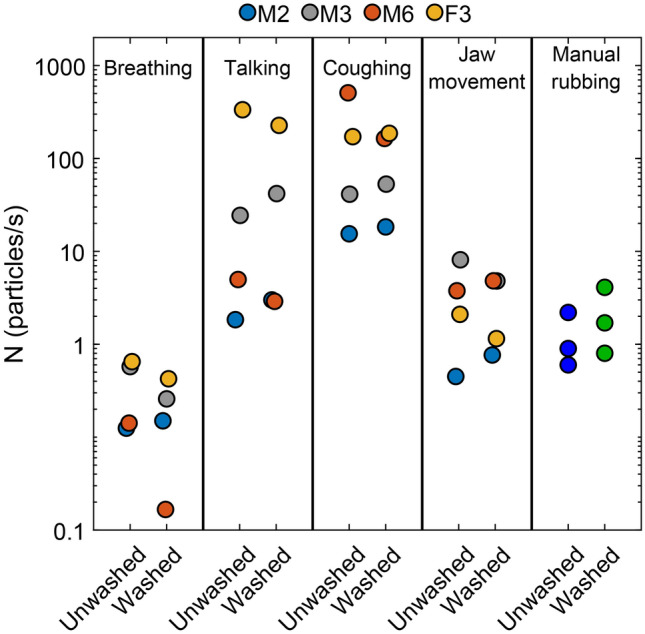
The COVID-19 pandemic triggered a surge in demand for facemasks to protect against disease transmission. In response to shortages, many public health authorities have recommended homemade masks as acceptable alternatives to surgical masks and N95 respirators. Although mask wearing is intended, in part, to protect others from exhaled, virus-containing particles, few studies have examined particle emission by mask-wearers into the surrounding air. Here, we measured outward emissions of micron-scale aerosol particles by healthy humans performing various expiratory activities while wearing different types of medical-grade or homemade masks. Both surgical masks and unvented KN95 respirators, even without fit-testing, reduce the outward particle emission rates by 90% and 74% on average during speaking and coughing, respectively, compared to wearing no mask, corroborating their effectiveness at reducing outward emission. These masks similarly decreased the outward particle emission of a coughing superemitter, who for unclear reasons emitted up to two orders of magnitude more expiratory particles via coughing than average. In contrast, shedding of non-expiratory micron-scale particulates from friable cellulosic fibers in homemade cotton-fabric masks confounded explicit determination of their efficacy at reducing expiratory particle emission. Audio analysis of the speech and coughing intensity confirmed that people speak more loudly, but do not cough more loudly, when wearing a mask. Further work is needed to establish the efficacy of cloth masks at blocking expiratory particles for speech and coughing at varied intensity and to assess whether virus-contaminated fabrics can generate aerosolized fomites, but the results strongly corroborate the efficacy of medical-grade masks and highlight the importance of regular washing of homemade masks.
Overview
The claims and statistics of this paper haven’t been checked yet.
Free: it reads the open-access text and checks the first 5 claims that cite a source we can check. Create a free account to check every claim.
Integrity signals
Registry
Cites
Statistics
Figures
Verification
Claims the paper makes
The claims and statistics of this paper haven’t been checked yet.
Free: it reads the open-access text and checks the first 5 claims that cite a source we can check. Create a free account to check every claim.
Claims other papers make about this one
Each is checked against this paper’s own text: does it say what the citing paper says it does?
The source backs part of the claim, not all of it — or backs it for a different population, condition or comparison.
In the citing paper
“N95 FFR are employed as personal protective equipment (PPE) and they provide a high level of protection for filtering facepiece masks that cover only the nose and mouth (as opposed to full and half-face respirators constructed from elastomeric materials) [3, 58–74].”
From The protective performance of reusable cloth face masks, disposable procedure masks, KN95 masks and N95 respirators: Filtration and total inward leakage (2021) · cites this paper as [63]
Experimental — accuracy not yet measuredThe source backs part of the claim, not all of it — or backs it for a different population, condition or comparison.
In the citing paper
“The data sets employed by Wagner et al. represent a range of mask fit conditions including human subjects, mannikins, and non-leaking custom apparatus [11,20,21,22], but all are likely a best case compared to the range of actual public practice because they were laboratory tested with due diligence and proper usage.”
From Comparative Mask Protection against Inhaling Wildfire Smoke, Allergenic Bioaerosols, and Infectious Particles (2022) · cites this paper as [21]
Experimental — accuracy not yet measuredThe source backs part of the claim, not all of it — or backs it for a different population, condition or comparison.
In the citing paper
“wearing surgical or FFP2 masks substantially reduces the number of bioaerosol particles emitted from human respiration.”
From Bacteria Filtration Efficiency for Different Types of Protective Face Masks (2023) · cites this paper as [25]
Experimental — accuracy not yet measuredThe source backs part of the claim, not all of it — or backs it for a different population, condition or comparison.
In the citing paper
“the efficacy of the single-layer cloth mask is not as clear and complete for the protection and prevention that could be achieved [25-27].”
From Bacteria Filtration Efficiency for Different Types of Protective Face Masks (2023) · cites this paper as [25]
Experimental — accuracy not yet measuredThe cited source says what the claim attributes to it.
In the citing paper
“Studies have shown that materials with higher filtration efficiency may reduce the outward emission of particles produced during respiratory activities through masks [63].”
From The protective performance of reusable cloth face masks, disposable procedure masks, KN95 masks and N95 respirators: Filtration and total inward leakage (2021) · cites this paper as [63]
2 more claims about this paper
Create a free account to see every claim other papers make about this one.
Self-check
Percentages, sums and reported differences re-computed from the paper’s own numbers.
The self-check needs the paper’s full text.
Citations
Cites
Virological assessment of hospitalized patients with COVID-2019
Wölfel, R., Corman, V. M., Guggemos, W., Seilmaier, M., Zange, S., Müller, M. A., Niemeyer, D., Jones, T. C., Vollmar, P., Rothe, C., et al. (2020) · Nature · doi:10.1038/s41586-020-2196-x · Cited by 6,661
Temporal dynamics in viral shedding and transmissibility of COVID-19
He, X., Lau, E. H. Y., Wu, P., Deng, X., Wang, J., Hao, X., Lau, Y. C., Wong, J. Y., Guan, Y., Tan, X., et al. (2020) · Nature Medicine · doi:10.1038/s41591-020-0869-5 · Cited by 4,247
Transmission of 2019-nCoV Infection from an Asymptomatic Contact in Germany
Rothe, C., Schunk, M., Sothmann, P., Bretzel, G., Froeschl, G., Wallrauch, C., Zimmer, T., Thiel, V., Janke, C., Guggemos, W., et al. (2020) · New England Journal of Medicine · doi:10.1056/nejmc2001468 · Cited by 4,144
Chu, D. K., Akl, E. A., Duda, S., Solo, K., Yaacoub, S., Schünemann, H. J., Chu, D. K., Akl, E. A., El-harakeh, A., Bognanni, A., et al. (2020) · The Lancet · doi:10.1016/s0140-6736(20)31142-9 · Cited by 3,843
Respiratory virus shedding in exhaled breath and efficacy of face masks
Leung, N. H. L., Chu, D. K. W., Shiu, E. Y. C., Chan, K.-H., McDevitt, J. J., Hau, B. J. P., Yen, H.-L., Li, Y., Ip, D. K. M., Peiris, J. S. M., et al. (2020) · Nature Medicine · doi:10.1038/s41591-020-0843-2 · Cited by 2,270
Aerodynamic Analysis of SARS-CoV-2 in Two Wuhan Hospitals
Liu, Y., Ning, Z., Chen, Y., Guo, M., Liu, Y., Gali, N. K., Sun, L., Duan, Y., Cai, J., Westerdahl, D., et al. (2020) · Nature · doi:10.1038/s41586-020-2271-3 · Cited by 1,872
Rational use of face masks in the COVID-19 pandemic
Feng, S., Shen, C., Xia, N., Song, W., Fan, M., & Cowling, B. J. (2020) · The Lancet Respiratory Medicine · doi:10.1016/s2213-2600(20)30134-x · Cited by 1,418
Morawska, L., Johnson, G. R., Ristovski, Z. D., Hargreaves, M., Mengersen, K., Corbett, S., Chao, C. Y. H., Li, Y., & Katoshevski, D. (2009) · Journal of Aerosol Science · doi:10.1016/j.jaerosci.2008.11.002 · Cited by 1,129
Bourouiba, L. (2020) · JAMA · doi:10.1001/jama.2020.4756 · Cited by 1,066
Aerosol filtration efficiency of common fabrics used in respiratory cloth masks
Konda, A., Prakash, A., Moss, G. A., Schmoldt, M., Grant, G. D., & Guha, S. (2020) · ACS Nano · doi:10.1021/acsnano.0c03252 · Cited by 934
Research works printed but not linked: 1
- Crafty Journal-Imaginative craft ideas and tip, DIY paper towel face mask: s https://craftyjournal.com/diy-paper-towel-face-mask/. Accessed 28 May 2020.
Cited by
Items 201–300 of 491
Géczy, A., Havellant, G., Bátorfi, R., Skwarek, A., Dušek, K., Bušek, D., & Illés, B. (2023) · Materials · doi:10.3390/ma16030903 · Cited by 7
“This di nsion is comparable to aero ol particles with 1–10 μm s ze [3,21], which is th size range capabl of transmi ting COVID-19.”
BackgroundMethodInfluentialThe effect of activity and face masks on exhaled particles in children
Moschovis, P. P., Lombay, J., Rooney, J. L., Schenkel, S. R., Singh, D., Rezaei, S. J., Salo, N., Gong, A., Yonker, L. M., Shah, J., et al. (2023) · Pediatric Investigation · doi:10.1002/ped4.12376 · Cited by 8
Szczepańska, A., Harrison, J., Saccente‐Kennedy, B., Archer, J., Watson, N. A., Orton, C. M., Browne, W. J., Epstein, R., Calder, J. D. F., Shah, P. L., et al. (2023) · Aerosol Science and Technology · doi:10.1080/02786826.2023.2267689 · Cited by 7
“(Asadi et al. 2020).”
BackgroundInfluentialAeroSense: Sensing Aerosol Emissions from Indoor Human Activities
Chhaglani, B., Zakaria, C., Peltier, R. E., Gummeson, J., & Shenoy, P. J. (2024) · Proceedings of the ACM on Interactive Mobile Wearable and Ubiquitous Technologies · doi:10.1145/3659593 · Cited by 10
“One way to reduce aerosol generation into the air is mask-wearing [12].”
BackgroundInfluentialGeisler, S. M., Lausch, K. H., Hehnen, F., Schulz, I., Kertzscher, U., Kriegel, M., Paschereit, C. O., Schimek, S., Hasirci, Ü., Brockmann, G., et al. (2024) · Communications Engineering · doi:10.1038/s44172-024-00297-y · Cited by 7
Aerosol Generation During Peak Flow Testing: Clinical Implications for COVID-19
Subat, Y. W., Guntupalli, S. K., Sajgalik, P., Hainy, M., Torgerud, K. D., Helgeson, S. A., Johnson, B. D., Allison, T. G., Lim, K. G., & Niven, A. S. (2021) · Respiratory Care · doi:10.4187/respcare.08731 · Cited by 7
“Asadi et al 27 reported a 6-fold reduction in particle generation (0.3–20 m m) with masks compared to unmasked tidal breathing; however, subjects in that study performed expiratory maneuvers directly into a funnel that directed particles to the aerodynamic particle sizer.”
InfluentialBánfai, B., Musch, J., Betlehem, J., Sánta, E., Horváth, B., Németh, D., & Bánfai-Csonka, H. (2022) · BMC Emergency Medicine · doi:10.1186/s12873-022-00636-2 · Cited by 7
Impact of COVID-19 Protocols on Primary and Revision Total Hip Arthroplasty
Sybert, M., Oakley, C. T., Christensen, T. H., Bosco, J. A., Schwarzkopf, R. M., & Slover, J. D. (2022) · The Journal of Arthroplasty · doi:10.1016/j.arth.2022.05.035 · Cited by 7
“The positive effect of masks on the spread of bioaerosols has been shown in the literature [8,9].”
Bourrianne, P., Kaneelil, P. R., Abkarian, M., & Stone, H. A. (2022) · Physical Review Applied · doi:10.1103/physrevapplied.18.024042 · Cited by 7
Droplet and bone dust contamination from high‐speed drilling during mastoidectomy
Markey, A., Leong, S. C., & Vaughan, C. (2021) · Clinical Otolaryngology · doi:10.1111/coa.13725 · Cited by 6
CoViMask: A Novel Face Mask Type Detector Using Convolutional Neural Networks
Rangasrinivasan, S., Bhagam, S. L., Athira, N. K., Niharika, K., Raj, A. D., & Anjali, T. (2022) · International Conference on Wireless Communications, Signal Processing and Networking (WiSPNET) · doi:10.1109/wispnet54241.2022.9767107 · Cited by 6
Modeling and interactive simulation of measures against infection transmission
Abadeer, M., Magharious, S., & Gorlatch, S. (2022) · SIMULATION · doi:10.1177/00375497221133849 · Cited by 6
“Second, agents may choose to wear surgical masks with a protection percentage of at least 74%, 32 which is denoted by the protection value 2.”
BackgroundPaim, A. A. M., de Andrade, M. C., & Steffens, F. (2023) · Research Journal of Textile and Apparel · doi:10.1108/rjta-04-2022-0041 · Cited by 6
High efficacy of layered controls for reducing exposure to airborne pathogens
Fierce, L. M., Robey, A. J., & Hamilton, C. (2022) · Indoor Air · doi:10.1111/ina.12989 · Cited by 7
“Measurements show that surgical masks tend to have higher collection efficiencies than microfiber or cotton masks [14, 43], while using a surgical mask with a cotton mask is even more effective [44].”
BackgroundPerformance of Valved Respirators to Reduce Emission of Respiratory Particles Generated by Speaking
Hazard, J. M., & Cappa, C. D. (2022) · Environmental Science & Technology Letters · doi:10.1021/acs.estlett.2c00210 · Cited by 6
Self-citationAerosol Generation During Otologic Surgery
Lahelma, M., Oksanen, L., Rantanen, N., Sinkkonen, S. T., Aarnisalo, A. A., Geneid, A., & Sanmark, E. (2022) · Otology & Neurotology · doi:10.1097/mao.0000000000003591 · Cited by 6
T cell responses to adenoviral vectors expressing the SARS-CoV-2 nucleoprotein.
Hasanpourghadi, M., Novikov, M., Ambrose, R., Chekaoui, A., Newman, D., Zhou, X., & Ertl, H. C. J. (2021) · PubMed · Cited by 7
Fouqueau, A., Pourchez, J., Leclerc, L., Peyron, A., Montigaud, Y., Verhoeven, P. O., Macé, T., Bescond, A., Thomas, D., Charvet, A., et al. (2023) · Aerosol and Air Quality Research · doi:10.4209/aaqr.220252 · Cited by 8
“Since 2019 and the appearance of the severe acute respiratory syndrome coronavirus-2 (SARS-CoV-2), the World Health Organization (WHO) has officially declared the global outbreak of coronavirus disease 2019 (COVID-19) as a pandemic (WHO, 2020).”
Filtration Performance and Fiber Shedding Behavior in Common Respirator and Face Mask Materials
Cao, Q., Kim, S. C., Ou, Q., Chung, H. Y., Chen, W., Durfee, W. K., Arnold, S. F., Hillmyer, M. A., Griffin, L., & Pui, D. Y. H. (2022) · Aerosol and Air Quality Research · doi:10.2139/ssrn.4132447 · Cited by 6
The Spread of Exhaled Air and Aerosols during Physical Exercise
Alsaad, H., Schälte, G., Schneeweiß, M., Becher, L., Pollack, M., Gena, A. W., Schweiker, M., Hartmann, M., Voelker, C., Rossaint, R., et al. (2023) · Journal of Clinical Medicine · doi:10.3390/jcm12041300 · Cited by 6
Hong, J., Byun, J., Choi, J.-O., Shim, D., & Rha, D. (2022) · International Journal of Environmental Research and Public Health · doi:10.3390/ijerph192114106 · Cited by 6
“Although these types of masks have a lower filtering capacity than N95 or KF-94 masks [3,5], this is uncontroversial due to their superior effectiveness compared to not wearing a mask [6].”
BackgroundHealthcare associated infections
(2008) · PsycEXTRA Dataset · doi:10.1037/e416382008-003 · Cited by 6
Bacteria Filtration Efficiency for Different Types of Protective Face Masks
Linšak, Ž., Ražov, L., Furlan, N., Begić, G., Pavičić Žeželj, S., Crvelin, G., Broznić, D., & Tomić Linšak, D. (2023) · Applied Sciences · doi:10.3390/app13105972 · Cited by 5
Stoll, D., & Antonyuk, S. I. (2025) · Atmosphere · doi:10.3390/atmos16070815 · Cited by 6
Israni, D. K., Soni, J., Singh, S. K., & Prajapati, B. G. (2024) · Water Air & Soil Pollution · doi:10.1007/s11270-024-07146-w · Cited by 5
“Lee et al. proved that surgical mask filters may let through particles as small as 0.04 to 0.2 μm, (Asadi et al., 2020; Lee et al., 2008; Tuñón-Molina et al., 2021).”
InfluentialA novel approach to infectious disease control and radiotherapy risk management
Islam, N. M., Wadi-Ramahi, S. J., Lalonde, R. J., Baig, T. N., diMayorca, M. S., Clump, D. A., & Huq, M. S. (2023) · Medical Physics · doi:10.1002/mp.16328 · Cited by 5
Veenstra, T., van Schelven, P. D., ten Have, Y. M., Swaan, C. M., & van den Akker, W. M. R. (2023) · Emerging infectious diseases · doi:10.3201/eid2904.221433 · Cited by 5
“The COVID-19 pandemic has demonstrated the effectiveness of wearing a face mask in reducing the number of cases (35,36).”
BackgroundPuglia, M., Ottani, F., Morselli, N., Pedrazzi, S., Allesina, G., Muscio, A., Cossarizza, A., & Tartarini, P. (2024) · Heliyon · doi:10.1016/j.heliyon.2024.e26076 · Cited by 5
“This reduction aligns with the 75 % decrease in surgical mask outward emission rate decrease reported in literature [55].”
Bioderived Antibacterial Coating for Polypropylene Non-woven Fabric to Prevent Secondary Infection
Aparna, S., Parameswaranpillai, J., George, J. S., Thomas, S., D., M. D. C., Sreedevi, T., & Poornima Vijayan, P. (2024) · Materials Circular Economy · doi:10.1007/s42824-024-00127-8 · Cited by 5
“Asadi et al.(Asadi et al. 2020) assessed (via experiments conducted on human participants) that surgical masks or res-pirators substantially reduced the number of particles emitted from breathing, talking, and coughing when compared with that of cotton or paper masks.”
How airborne transmission of SARS-CoV-2 confirmed the need for new ways of proper ventilation
Bluyssen, P. M. (2022) · Routledge eBooks · doi:10.4324/9781003244929-41 · Cited by 7
Quigley, A. L., Nguyen, P., Stone, H., Heslop, D. J., Chughtai, A. A., & MacIntyre, C. R. (2020) · Journal of Racial and Ethnic Health Disparities · doi:10.1007/s40615-022-01308-4 · Cited by 5
“It is also important to note the great variability of protection provided by masks for SARS-CoV-2 transmission [55].”
BackgroundViala, R., Creton, M., Jousserand, M., Soubrié, T., Néchab, J., Crenn, V., & Leglise, J. (2022) · Journal of Aerosol Science · doi:10.1016/j.jaerosci.2022.106051 · Cited by 5
Quinn, G. A., Connolly, R., ÓhAiseadha, C. O., & Hynds, P. D. (2021) · OSF Preprints (OSF Preprints) · doi:10.31219/osf.io/s9z2p · Cited by 5
Use of the Appropriate Fabric for Cloth Face Mask: A Necessity in the Fight against COVID-19
Gbadegbe, R. S., Buami, E. K., Kumah, C., & Vigbedor, D. (2021) · Journal of Textile Science and Technology · doi:10.4236/jtst.2021.74015 · Cited by 4
Modeling Social Distancing and Quantifying Epidemic Disease Exposure in a Built Environment
Hegde, C., Rad, A. B., Sameni, R., & Clifford, G. D. (2022) · IEEE Journal of Selected Topics in Signal Processing · doi:10.1109/jstsp.2022.3145622 · Cited by 4
Pooled RNA-extraction-free testing of saliva for the detection of SARS-CoV-2
Allicock, O. M., Yolda-Carr, D., Todd, J. A., & Wyllie, A. L. (2023) · Scientific Reports · doi:10.1038/s41598-023-34662-2 · Cited by 4
Douti, N. B., Amuah, E. E. Y., Acheampong, E., Dankwa, P., Kazapoe, R. W., & Agyemang, E. P. (2023) · World Development Sustainability · doi:10.1016/j.wds.2023.100093 · Cited by 6
Potisk, T., Remškar, M., Pirker, L., Filipič, G., Mihelič, I., Ješelnik, M., Čoko, U., & Ravnik, M. (2023) · ACS Applied Nano Materials · doi:10.1021/acsanm.3c02592 · Cited by 4
“30 − 32 The widespread use of disposable respiratory masks during the Covid-19 pandemic led to an increased environmental burden 33 − 35 and prompted a worldwide search for mask recycling and reuse.”
Kong, B., Cui, Y., Shi, H. G., & Jiang, Y. (2024) · Indoor and Built Environment · doi:10.1177/1420326x241267888 · Cited by 4
Uso de mascarillas faciales como medida de prevención en el contexto de la pandemia por SARS-CoV-2
Montaño-Luna, V. E., & Miranda-Novales, M. G. (2020) · Revista Mexicana de Pediatría · doi:10.35366/97169 · Cited by 5
Kristo, G., He, K., Whang, E. E., & Fisichella, P. M. (2021) · Journal of Laparoendoscopic & Advanced Surgical Techniques · doi:10.1089/lap.2021.0111 · Cited by 5
Pires, C. M. B. F. (2021) · International Journal of Clinical Practice · doi:10.1111/ijcp.14215 · Cited by 6
Epidemic Prediction and Analysis of COVID-19: A Mathematical Modelling Study
Nabi, K. N. (2021) · Studies in systems, decision and control · doi:10.1007/978-3-030-72834-2_23 · Cited by 4
Ventilation time recommendation system incorporating local meteorological data
Muñuzuri, A. P., Otero-Cacho, A., & Mira, J. (2022) · Indoor and Built Environment · doi:10.1177/1420326x221081738 · Cited by 4
“Their use has proven to be determinant in controlling the spread of the pandemic as they prevent the dissemination of little droplets containing the virus.(16) Some authors measured the levels of CO2 inside the masks and determined that under some circumstances they may reach noncomfortable levels.”
BackgroundWu, S. X., & Wu, X. Y. (2022) · Frontiers in Public Health · doi:10.3389/fpubh.2022.990400 · Cited by 5
“Recent studies indicated that not all face masks have equal efficacy in reducing the transmission of particles or droplets, those most likely involved in COVID-19 peopleto-people transmission (3, 5).”
BackgroundPhysical activity among children and adolescents
OECD, & Union, E. (2020) · Health at a glance. Europe · doi:10.1787/5ee82799-en · Cited by 6
Study of a novel neck-side ventilation system for reducing pollutant exposure
Zhang, H., Zhang, W., Ding, X., & Xuan, Y. (2025) · Building and Environment · doi:10.1016/j.buildenv.2025.112911 · Cited by 3
Enhanced aerosol dispersion of a sequential cough and social distancing implications
Wang, C., Xu, J., Zhai, H., So, L. K., & Guo, H. (2025) · Journal of Hazardous Materials · doi:10.1016/j.jhazmat.2025.140002 · Cited by 5
Tracing Microplastics in the Human Body: From Detection to Disease Mechanisms
Talau, S. A., Chialda, M., Ichim, C., Dura, H., & Tanasescu, C. A. H. (2025) · Diagnostics · doi:10.3390/diagnostics15232971 · Cited by 3
“Moreover, a 90% decrease in exhaled particles has been observed in mask wearers, which may contribute to MPs accumulation in the respiratory tract over time [48,49].”
Tvrzová, L., Hrubanová, M., Benešovský, P., Doubková, H., Bláhová, A., Malčík, P., Dufková, P., Jarmičová, P., & Nasadil, P. (2022) · Journal of Microbiological Methods · doi:10.1016/j.mimet.2022.106655 · Cited by 3
Xue, Y., Jabi, W., Woolley, T. E., & Kaouri, K. (2024) · Scientific Reports · doi:10.1038/s41598-024-79525-6 · Cited by 4
Measuring the fitted filtration efficiency of cloth masks, medical masks and respirators
Tomkins, A. A., Dulai, G., Dulai, R., Rassenberg, S., Lawless, D., Laengert, S. E., Rudman, R. S., Hasan, S., de Lannoy, C., Drouillard, K. G., et al. (2025) · PLoS ONE · doi:10.1371/journal.pone.0301310 · Cited by 4
“Finally, we examined masks through the lens of wearer protection; we provide no data on source control, for which there is a wealth of data [64] but no standard methodology [63].”
Piromchai, P., Netnoi, J., Srirompotong, S., & Thanawirattananit, P. (2021) · Scientific Reports · doi:10.1038/s41598-021-01631-6 · Cited by 3
“Then, the patients were randomly assigned to perform (1) the nose-blowing with pinching by pressing a finger on the left nostril to shut the left nostril off or (2) blowing without pinching (both nostrils open).”
MethodSafe Return to Work for Domestic Workers in the Time of COVID-19
Bardhan, R., Byrd, T., & Boyd, J. (2021) · COVID · doi:10.3390/covid1030048 · Cited by 3
“However, they are helpful in containing the wearer’s coughs or sneezes as an important preventive measure to protect others around them [42,43].”
BackgroundHussain, Y., Cui, J., Khan, H. Z., Makvandi, P., & Alam, W. (2021) · Expert Reviews in Molecular Medicine · doi:10.1017/erm.2021.25 · Cited by 3
Young, C. C., Byrne, J. D., Wentworth, A. J., Collins, J. E., Chu, J. N., & Traverso, G. (2022) · Global Challenges · doi:10.1002/gch2.202200001 · Cited by 4
Ayed, I. I., Khalil, R., Adam, I., & Al‐Wutayd, O. (2022) · Patient Preference and Adherence · doi:10.2147/ppa.s366099 · Cited by 3
“030* Family income (SDG: Sudanese pounds) ≤10,000 (≤US$23) 88 (54) 74 (46) 15 (9) 147 (91) 17 (10) 145 (90)”
da Silva, P. G., Gonçalves, J., Torres-Franco, A. F., Rodríguez, E., Díaz, I., Orduña, A., Pérez, S. G., Roselló, G. A. M., Gutiérrez, C., Nascimento, M. S. J., et al. (2023) · International Journal of Environmental Research and Public Health · doi:10.3390/ijerph20021574 · Cited by 3
Ramajo, D. E., & Corzo, S. F. (2023) · SIMULATION · doi:10.1177/00375497221151168 · Cited by 3
“These values correspond to the lower efficiencies measured for homemade face masks.(29,30) The virus removal rate l is the sum of four terms corresponding to ventilation with fresh air, filtering, deposition of the virus over surfaces, and virus inactivation in time: l = lven + lfil + ldep + ldec.”
ResultMasking the truth: the impact of face masks on deception detection
Cash, D. K., & Pazos, L. A. (2023) · The Journal of Social Psychology · doi:10.1080/00224545.2023.2195092 · Cited by 3
“Although an effective means of reducing transmission rates (Asadi et al., 2020; Wu & McGoogan, 2020), face masks also serve to cover a substantial portion of one of the most relied upon tools in social communication, the face.”
BreathEasy: Exploring the Potential of Acoustic Sensing for Healthy Indoor Environments
Chhaglani, B., Zakaria, C., Gummeson, J., & Shenoy, P. J. (2023) · doi:10.1145/3597064.3597338 · Cited by 5
“As suggested by prior work, aerosol deposition from humans can be reduced drastically, as much as 90% for cough and 74% for speech [2]; thus, it is a vital factor in determining the risk of airborne transmission.”
BackgroundStoehr, A., Souganidis, C., Thomas, T., Jacobsen, J., & Martin, C. D. (2023) · The Journal of the Acoustical Society of America · doi:10.1121/10.0020064 · Cited by 3
Diagnostic performance of respirators for collection and detection of SARS-CoV-2
Kim, H.-S., Lee, H. S., Kang, S., Kim, W. J., & Shin, S. (2023) · Scientific Reports · doi:10.1038/s41598-023-39789-w · Cited by 3
Leithäuser, C., Norrefeldt, V., Thiel, E., Buschhaus, M., Kuhnert, J., & Suchde, P. (2024) · International Journal for Numerical Methods in Fluids · doi:10.1002/fld.5277 · Cited by 4
Text-Guided Synthesis of Masked Face Images
Anjali, T., & Masilamani, V. (2024) · ACM Transactions on Multimedia Computing Communications and Applications · doi:10.1145/3654667 · Cited by 3
“Wearing face masks can provide protection from the virus at a rate between 50% and 95% [33].”
Effect of Face Masking on Transmission of SARS-CoV-2
Kampf, G. (2024) · Advances in experimental medicine and biology · doi:10.1007/978-3-031-61943-4_12 · Cited by 3
Critical Capability Needs for Reduction of Transmission of SARS-CoV-2 Indoors
Morrow, J. B., Packman, A. I., Martinez, K. F., Wymelenberg, K. G. V. D., Goeres, D. M., Farmer, D. K., Mitchell, J., Ng, L., Hazi, Y., Schoch‐Spana, M., et al. (2021) · Frontiers in Bioengineering and Biotechnology · doi:10.3389/fbioe.2021.641599 · Cited by 3
OECD, & Union, E. (2020) · Health at a glance. Europe · doi:10.1787/667fed97-en · Cited by 4
Infodemia: gênese, contextualizações e interfaces com a pandemia de covid-19
Gontijo, T. L., & de Castro, E. A. B. (2022) · Editora ABEn eBooks · doi:10.51234/aben.22.e10 · Cited by 3
Khan, N. B., Mthembu, N., Narothan, A., Sibisi, Z., & Vilane, Q. (2022) · South African Journal of Communication Disorders · doi:10.4102/sajcd.v69i2.890 · Cited by 3
Crespo, N. C., Fornasier, J. M., Dionicio, P., Godino, J., Ramers, C. B., & Elder, J. P. (2023) · Research Square · doi:10.21203/rs.3.rs-2534269/v1 · Cited by 3
Mavaji, A., Raju, U., Kirubakaran, S., Khanderi, C., & Hiremath, M. (2022) · Global Journal on Quality and Safety in Healthcare · doi:10.36401/jqsh-21-12 · Cited by 2
“Asadi et al[21] showed that both surgical masks and unvented KN95 respirators without fit-testing, reduced the outward particle emission rates by 90% and 74% on average during speaking and coughing, respectively.”
BackgroundOECD, & Union, E. (2020) · Health at a glance. Europe · doi:10.1787/f0ab8da4-it · Cited by 2
Sussman, R. A., Golberstein, E., & Polosa, R. (2022) · Environmental Science and Pollution Research · doi:10.1007/s11356-022-20499-1 · Cited by 2
Das, A., Chattopadhyay, B., Paul, B., Bandyopadhyay, L., & Bhattacharyya, M. (2022) · Journal of Education and Health Promotion · doi:10.4103/jehp.jehp_537_21 · Cited by 2
“While exploring the reasons for this rapid spread and growing caseload, public health experts opined that the effectiveness of mask usage in preventing transmission depended on multiple factors such as the type of masks used, seal and fit of the worn mask, the epidemiology of the local area, places or settings where t…”
BackgroundCalà, F., Manfredi, C., Battilocchi, L., Frassineti, L., & Cantarella, G. (2023) · The Journal of the Acoustical Society of America · doi:10.1121/10.0017244 · Cited by 2
Tangpaisarn, T., Chaiyakot, N., Saenpan, K., Sriphrom, S., Owattanapanich, N., Kotruchin, P., & Phungoen, P. (2023) · The American Journal of Emergency Medicine · doi:10.1016/j.ajem.2023.07.046 · Cited by 2
de Winter, D. A. M., Verhoeven, F. M., Vermeulen, L. C., Duizer, E., Bartels, A. A., Husman, A. M. D. R., & Schijven, J. F. (2024) · Physics of Fluids · doi:10.1063/5.0204150 · Cited by 2
Britten, A. J. (2024) · Aerosol Science and Technology · doi:10.1080/02786826.2024.2369629 · Cited by 2
“This is partly because there are so many population variables that can affect output, as well as variables during measurements such as volume of breath, loudness of speech and rate of cough (Asadi et al. 2019, 2020; Alsved et al. 2020).”
Zhu, C., Xie, H., Chen, X., Wang, X., Meng, J., Wei, J., & Zhao, Z. (2024) · Journal of the Air & Waste Management Association · doi:10.1080/10962247.2024.2416927 · Cited by 2
“This underscores the significance of wearing masks as a crucial measure for safeguarding against the direct inhalation of infectious aerosols (Asadi et al. 2020).”
Thirugnanasampanthar, M., Tian, L., Rhem, R. G., Libera, D. D., Gomez, M., Jackson, K. J., Fox‐Robichaud, A., DOLOVICH, M. B., & Hosseinidoust, Z. (2024) · PNAS Nexus · doi:10.1093/pnasnexus/pgae473 · Cited by 3
“The ability of facemasks to prevent inhalation of harmful particles and droplets can vary significantly depending on the filtration efficiency of the material used (4, 5 ).”
BackgroundPurpose and performance of respiratory protective devices in a pandemic
Li, R., Joshi, A., Wu, Y., & Zhang, M. (2024) · Elsevier eBooks · doi:10.1016/b978-0-323-95316-0.00003-7 · Cited by 2
A rapid assessment method for airborne transmission risk distribution based on human behaviors
Ding, Y., Gao, C. X., Zhang, N., Wang, D., & Qian, H. (2025) · Building and Environment · doi:10.1016/j.buildenv.2025.113752 · Cited by 2
Papakonstantinou, E., Pierouli, K., Mitsis, Τ., Diakou, K. I., Palaiogeorgou, A. M., Bacopoulou, F., Chrousos, G. P., Eliopoulos, E., & Vlachakis, D. P. (2021) · International Journal of Epigenetics · doi:10.3892/ije.2021.8 · Cited by 2
Analysis of SARS-CoV-2 RNA on surfaces in New York City
Karani, R., Zeng, Q., Abdelhakim, A. H., Diaconita, V., Moussa, O., Zhou, H. W., Sharma, T., Sohail, M., Snow, Z. E., Kassotis, A. S., et al. (2021) · Journal of Global Health · doi:10.7189/jogh.11.05022 · Cited by 3
Impacto de la introducción del cubrebocas contra el COVID-19: una revisión narrativa.
Uribe, J. I. A. (2021) · Revista de Salud Pública · doi:10.15446/rsap.v23n3.92258 · Cited by 16
Martarelli, M., Montalto, L., Chiariotti, P., Simoni, S., Castellini, P., Battista, G., & Paone, N. (2022) · Acoustics · doi:10.3390/acoustics4010009 · Cited by 2
“[9] investigated several respiratory actions when wearing face masks and recorded the audio associated with these actions.”
BackgroundSi, X. A., & Xi, J. (2022) · Springer eBooks · doi:10.1007/978-981-16-5180-9_25 · Cited by 2
Knobloch, J. K. ‐., Popp, W., Exner, M., Walger, P., & Kampf, G. (2022) · Journal of Hospital Infection · doi:10.1016/j.jhin.2022.09.009 · Cited by 2
“In addition, the release of particles into the environment is dependent on facialmovement and flow velocity of exhaled air (quiet breathing, talking, coughing) and can be significantly higher with a respirator compared with a medical mask [7].”
Comparison of aerosol generation between electrocautery and cold dissection tonsillectomy
Sanmark, E., Rantanen, N.-K., Oksanen, L., Matvejeff, A. T., Moller, R. Y., & Geneid, A. (2023) · The Journal of Laryngology & Otology · doi:10.1017/s0022215123000324 · Cited by 3
Evaluation of Personal Protective Equipment Using Low-cost Aerosol Monitors
Baldelli, A., Poznikoff, A. K., Heieis, K., & Purdy, R. (2024) · Aerosol and Air Quality Research · doi:10.4209/aaqr.230323 · Cited by 2
“The virus is categorized as airborne with predicted spread through droplets and aerosols generated by coughing, sneezing, talking, and singing (Asadi et al. , 2020a; Carducci et al. , 2020; Domingo et al. , 2020; Morawska and Milton, 2020; Setti et al. , 2020; Shao et al. , 2021).”
BackgroundA SARS-CoV-2 outbreak in a public order and safety training facility in England, June 2021
Gilham, E., Raja, A. I., van Veldhoven, K., Nicholls, G., Sandys, V., Atkinson, B., Spencer, A., Nicholls, I., Cooke, J., Bennett, A., et al. (2024) · Annals of Work Exposures and Health · doi:10.1093/annweh/wxae038 · Cited by 2
Trends in infant mortality, 1990-2018
(2020) · Health at a glance. Europe · doi:10.1787/070e312a-en · Cited by 2
(2020) · Health at a glance. Europe · doi:10.1787/3bb54bc8-en · Cited by 2
Delgado, C. E., Barbosa, S. D. S., Abad, A., & Barbosa, A. J. G. (2022) · Editora ABEn eBooks · doi:10.51234/aben.22.e10.c01 · Cited by 1
Self-rated health status and hygienic behaviour of pregnant women in Hungary during the pandemic
Grestyák, A. K. M., Nagy, M. S., Barabás, Á., Nagy, A. C., Takács, P., Sántha, Á., Konečná, M., Sedlák, V., Babejová, A., Blaščáková, M. M., et al. (2023) · Central European Journal of Public Health · doi:10.21101/cejph.a7897 · Cited by 1
Disability and Ableism in the COVID-19 Pandemic
Bhatt, K. J., & Swenor, B. K. (2024) · Oxford University Press eBooks · doi:10.1093/oso/9780197625217.003.0009 · Cited by 1
Evaluating layer contributions and salt coating effects on mask performance
Han, S., Maliksi, C., Oh, E., Kumaran, S. K., Lee, K. H., Ko, D., & Choi, H. (2024) · RSC Advances · doi:10.1039/d4ra04581e · Cited by 1
Polydopamine Nanoconjugate‐Coated Masks: An Efficient Barrier Against Airborne Pathogens
Singh, I., Gautam, H. K., Kumar, P., & Dhawan, G. (2024) · ChemistrySelect · doi:10.1002/slct.202402467 · Cited by 1
Metadata
- Authors
- Asadi, S., Cappa, C. D., Barreda, S., Wexler, A. S., Bouvier, N. M., & Ristenpart, W. D.
- Affiliations
- University of California, Davis (US)
- Icahn School of Medicine at Mount Sinai (US)
- Corresponding author
- Ristenpart, William D.
- ORCID
- Venue
- Scientific Reports
- Published
- 2020-09-24
- Volume
- 10
- Issue
- 1
- Pages
- 15665-15665
- ISSN
- 2045-2322 (ISSN-L)
- PMC
- PMC7518250
- OpenAlex
- W3088267014
- Semantic Scholar
- e722d5ee534d71790558066afa375705bab4adf2
- Cited by
- 480
- References
- 65
- Citations by year
- 2026: 11 · 2025: 19 · 2024: 39 · 2023: 58 · 2022: 95 · 2021: 136 · 2020: 120
- FWCI
- 57.64
- Type
- journal article
- Language
- en
- Open access
- gold
- doi.org
- Licence
- cc-by
- creativecommons.org/licenses/by/4.0 (tdm)
- creativecommons.org/licenses/by/4.0 (vor)
- Locations
- Scientific Reports (publishedVersion, cc-by)
- PubMed Central (publishedVersion, cc-by)
- PubMed (publishedVersion)
- eScholarship (California Digital Library) (submittedVersion)
- eScholarship (California Digital Library) (submittedVersion, cc-by)
- Funders
- National Institute of Allergy and Infectious Diseases (R01 AI110703)
- Topics
- Health Sciences › Medicine › Pulmonary and Respiratory Medicine › Infection Control and Ventilation
- Physical Sciences › Environmental Science › Global and Planetary Change › COVID-19 impact on air quality
- Social Sciences › Sociology and Political Science › COVID-19 Prevention and Impact
- Keywords
- face masks, surgical masks, cough, speaking, SARS-CoV-2 transmission, particle shedding
- MeSH terms
- Betacoronavirus, COVID-19, SARS-CoV-2, Adolescent, Adult, Aerosols, Cough, Female, Filtration, Humans, Male, Masks, Middle Aged, Pneumonia, Viral, Primary Prevention, Respiratory Protective Devices, Coronavirus Infections, Inhalation Exposure, Exhalation, Young Adult, Pandemics
About these checks
Registry, retraction, Cites and statistics results are computed, not judged, with one exception: a printed reference that no index lists is read once by a model before it counts as a citation error. Claims are extracted by a model and kept only when their quote appears verbatim in the text; each cited source is then checked, with a model’s help, for whether it says what the claim relies on. Those verdicts can be wrong — read the claim’s quote and the cited source before relying on one.
Statistics and arithmetic are recomputed, not judged.
Confidence bands are shown only for fields calibrated on our annotated test set. None is calibrated yet, so no band is shown.
What counts as a claim ›How we measure confidence ›How we check this ›
Are you an author, or do you see a problem with this page? Request a review
Data sources
Bibliographic data: Semantic Scholar, OpenAlex, Crossref.
Contains information from the Semantic Scholar Academic Graph Datasets, made available under the ODC Attribution License (ODC-BY 1.0).
Semantic Scholar’s data is described in: Kinney, R., et al. (2023). The Semantic Scholar Open Data Platform. arXiv:2301.10140.
