

Artificial intelligence enabled automated diagnosis and grading of ulcerative colitis endoscopy images
Open accessThe DOI matches its Crossref record; 39 of the 40 references it cites were found in a registry or an index.
Abstract
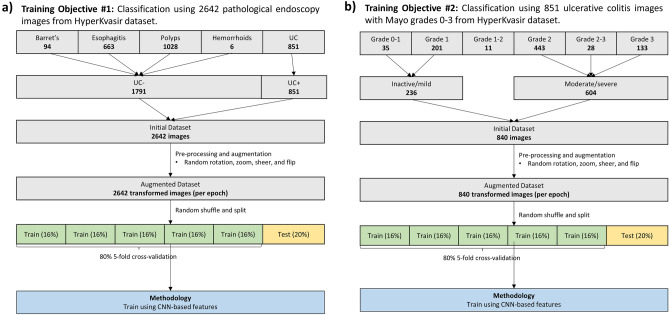
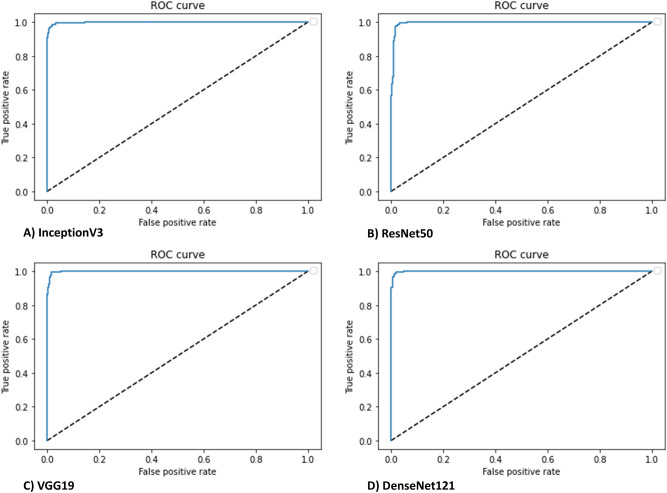
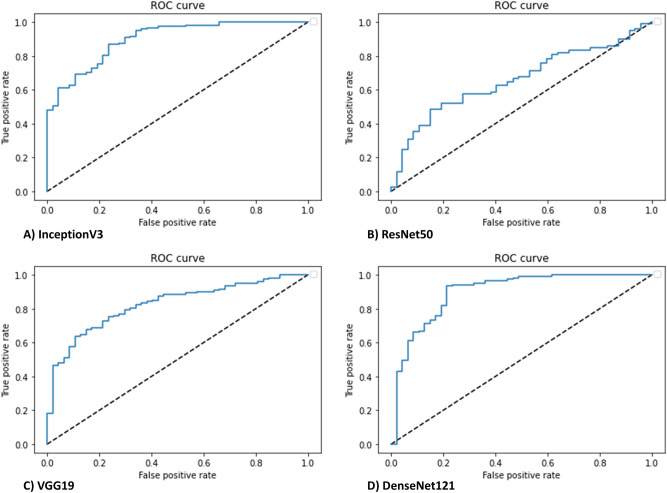
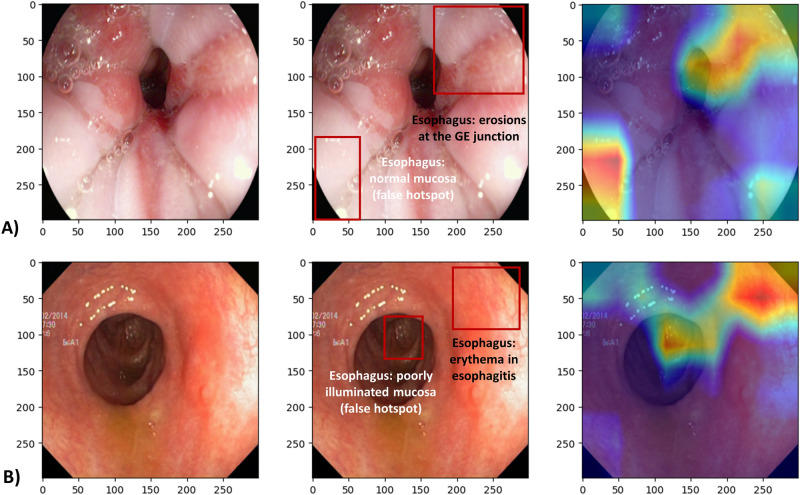
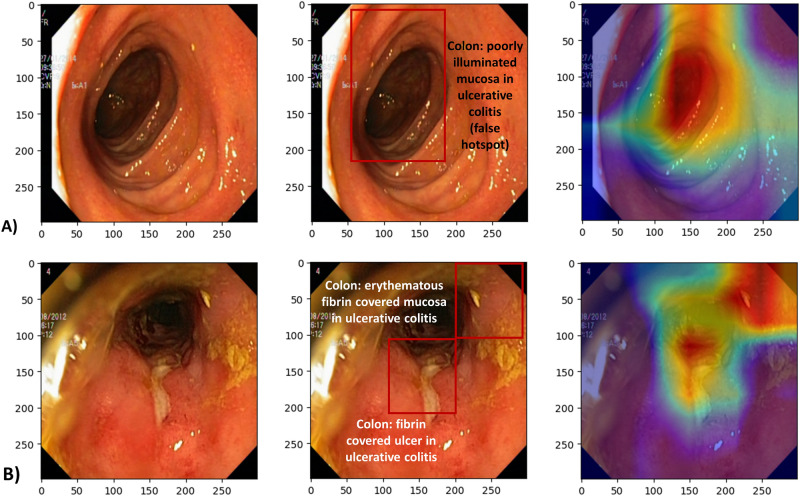
Endoscopic evaluation to reliably grade disease activity, detect complications including cancer and verification of mucosal healing are paramount in the care of patients with ulcerative colitis (UC); but this evaluation is hampered by substantial intra- and interobserver variability. Recently, artificial intelligence methodologies have been proposed to facilitate more objective, reproducible endoscopic assessment. In a first step, we compared how well several deep learning convolutional neural network architectures (CNNs) applied to a diverse subset of 8000 labeled endoscopic still images derived from HyperKvasir, the largest multi-class image and video dataset from the gastrointestinal tract available today. The HyperKvasir dataset includes 110,079 images and 374 videos and could (1) accurately distinguish UC from non-UC pathologies, and (2) inform the Mayo score of endoscopic disease severity. We grouped 851 UC images labeled with a Mayo score of 0–3, into an inactive/mild (236) and moderate/severe (604) dichotomy. Weights were initialized with ImageNet, and Grid Search was used to identify the best hyperparameters using fivefold cross-validation. The best accuracy (87.50%) and Area Under the Curve (AUC) (0.90) was achieved using the DenseNet121 architecture, compared to 72.02% and 0.50 by predicting the majority class (‘no skill’ model). Finally, we used Gradient-weighted Class Activation Maps (Grad-CAM) to improve visual interpretation of the model and take an explainable artificial intelligence approach (XAI).
Overview
The claims and statistics of this paper haven’t been checked yet.
Free: it reads the open-access text and checks the first 5 claims that cite a source we can check. Create a free account to check every claim.
Integrity signals
Registry
Cites
Statistics
Figures
Verification
Claims the paper makes
The claims and statistics of this paper haven’t been checked yet.
Free: it reads the open-access text and checks the first 5 claims that cite a source we can check. Create a free account to check every claim.
Claims other papers make about this one
Each is checked against this paper’s own text: does it say what the citing paper says it does?
The source backs part of the claim, not all of it — or backs it for a different population, condition or comparison.
In the citing paper
“Recently, several AI algorithms have been developed to accurately grade disease activity across various endoscopic scoring systems in ulcerative colitis (UC) to overcome these limitations, showing excellent diagnostic performance and strong concordance with experts.13-23”
From Artificial intelligence and endo-histo-omics: new dimensions of precision endoscopy and histology in inflammatory bowel disease (2024) · cites this paper as [18]
Experimental — accuracy not yet measured
Self-check
Percentages, sums and reported differences re-computed from the paper’s own numbers.
The self-check needs the paper’s full text.
Citations
Cites
Deep Residual Learning for Image Recognition
He, K., Zhang, X., Ren, S., & Sun, J. (2016) · 2016 IEEE Conference on Computer Vision and Pattern Recognition (CVPR) · doi:10.1109/cvpr.2016.90 · Cited by 235,474 · cited 1×
“• Pre-trained ResNet50 , a Keras implementation of ResNet50, a 50-layer CNN which uses residual functions that reference previous layer inputs 29 .”
MethodVery Deep Convolutional Networks for Large-Scale Image Recognition
Simonyan, K., & Zisserman, A. (2014) · arXiv · doi:10.48550/arxiv.1409.1556 · Cited by 114,148
LeCun, Y., Bengio, Y., & Hinton, G. (2015) · Nature · doi:10.1038/nature14539 · Cited by 84,126
Densely Connected Convolutional Networks
Huang, G., Liu, Z., Van Der Maaten, L., & Weinberger, K. Q. (2017) · 2017 IEEE Conference on Computer Vision and Pattern Recognition (CVPR) · doi:10.1109/cvpr.2017.243 · Cited by 48,566
Rethinking the Inception Architecture for Computer Vision
Szegedy, C., Vanhoucke, V., Ioffe, S., Shlens, J., & Wojna, Z. (2016) · 2016 IEEE Conference on Computer Vision and Pattern Recognition (CVPR) · doi:10.1109/cvpr.2016.308 · Cited by 32,138
Grad-CAM: Visual Explanations from Deep Networks via Gradient-Based Localization
Selvaraju, R. R., Cogswell, M., Das, A., Vedantam, R., Parikh, D., & Batra, D. (2017) · 2017 IEEE International Conference on Computer Vision (ICCV) · doi:10.1109/iccv.2017.74 · Cited by 24,513
Dermatologist-level classification of skin cancer with deep neural networks
Esteva, A., Kuprel, B., Novoa, R. A., Ko, J., Swetter, S. M., Blau, H. M., & Thrun, S. (2017) · Nature · doi:10.1038/nature21056 · Cited by 14,362
TensorFlow: A system for large-scale machine learning
Abadi, M., Barham, P., Chen, J., Chen, Z., Davis, A., Dean, J., Devin, M., Ghemawat, S., Irving, G., Isard, M., et al. (2016) · arXiv (Cornell University) · doi:10.48550/arxiv.1605.08695 · Cited by 11,822
Gulshan, V., Peng, L., Coram, M., Stumpe, M. C., Wu, D., Narayanaswamy, A., Venugopalan, S., Widner, K., Madams, T., Cuadros, J., et al. (2016) · JAMA · doi:10.1001/jama.2016.17216 · Cited by 7,697
Shin, H.-C., Roth, H. R., Gao, M., Lu, L., Xu, Z., Nogues, I., Yao, J., Mollura, D., & Summers, R. M. (2016) · IEEE Transactions on Medical Imaging · doi:10.1109/tmi.2016.2528162 · Cited by 5,759 · cited 1×
“Transfer learning with ImageNet weights is a relatively common approach which has shown success in many medical imaging domains 35 .”
Deep Inside Convolutional Networks: Visualising Image Classification Models and Saliency Maps
Simonyan, K., Vedaldi, A., & Zisserman, A. (2013) · arXiv · doi:10.48550/arxiv.1312.6034 · Cited by 5,370
Hannun, A. Y., Rajpurkar, P., Haghpanahi, M., Tison, G. H., Bourn, C., Turakhia, M. P., & Ng, A. Y. (2019) · Nature Medicine · doi:10.1038/s41591-018-0268-3 · Cited by 3,148
Coated Oral 5-Aminosalicylic Acid Therapy for Mildly to Moderately Active Ulcerative Colitis
Schroeder, K. W., Tremaine, W. J., & Ilstrup, D. M. (1987) · New England Journal of Medicine · doi:10.1056/nejm198712243172603 · Cited by 3,026 · cited 1×
“Importantly, the dataset includes 851 ulcerative colitis images which are labelled and graded using the Mayo endoscopic subscore 26,27 by a minimum of one board certified gastroenterologist and one or more junior doctors or PhD students (total of 3 reviewers per image).”
MethodTurner, D., Ricciuto, A., Lewis, A., D’Amico, F., Dhaliwal, J., Griffiths, A. M., Bettenworth, D., Sandborn, W. J., Sands, B. E., Reinisch, W., et al. (2021) · Gastroenterology · doi:10.1053/j.gastro.2020.12.031 · Cited by 2,911
Baumgart, D. C., & Sandborn, W. J. (2012) · The Lancet · doi:10.1016/s0140-6736(12)60026-9 · Cited by 2,154
Self-citationPeyrin-Biroulet, L., Sandborn, W., Sands, B. E., Reinisch, W., Bemelman, W., Bryant, R. V., D'Haens, G., Dotan, I., Dubinsky, M., Feagan, B., et al. (2015) · American Journal of Gastroenterology · doi:10.1038/ajg.2015.233 · Cited by 1,844
Maaser, C., Sturm, A., Vavricka, S. R., Kucharzik, T., Fiorino, G., Annese, V., Calabrese, E., Baumgart, D. C., Bettenworth, D., Borralho Nunes, P., et al. (2019) · Journal of Crohn's and Colitis · doi:10.1093/ecco-jcc/jjy113 · Cited by 1,823
Self-citationMucosal Healing in Inflammatory Bowel Disease: Results From a Norwegian Population-Based Cohort
Frøslie, K. F., Jahnsen, J., Moum, B. A., & Vatn, M. H. (2007) · Gastroenterology · doi:10.1053/j.gastro.2007.05.051 · Cited by 1,121
Danese, S., & Fiocchi, C. (2011) · New England Journal of Medicine · doi:10.1056/nejmra1102942 · Cited by 1,102
Pathway paradigms revealed from the genetics of inflammatory bowel disease
Graham, D. B., & Xavier, R. J. (2020) · Nature · doi:10.1038/s41586-020-2025-2 · Cited by 771
KVASIR: A Multi-Class Image Dataset for Computer Aided Gastrointestinal Disease Detection
Pogorelov, K., Randel, K. R., Griwodz, C., Eskeland, S. L., de Lange, T., Johansen, D., Spampinato, C., Dang-Nguyen, D.-T., Lux, M., Schmidt, P. T., et al. (2017) · Proceedings of the 8th ACM on Multimedia Systems Conference · doi:10.1145/3083187.3083212 · Cited by 684
Top-Down Neural Attention by Excitation Backprop
Zhang, J., Bargal, S. A., Lin, Z., Brandt, J., Shen, X., & Sclaroff, S. (2018) · International Journal of Computer Vision · doi:10.1007/s11263-017-1059-x · Cited by 680
Development of the Crohnʼs disease digestive damage score, the Lémann score
Pariente, B., Cosnes, J., Danese, S., Sandborn, W. J., Lewin, M., Fletcher, J. G., Chowers, Y., DʼHaens, G., Feagan, B. G., Hibi, T., et al. (2011) · Inflammatory Bowel Diseases · doi:10.1002/ibd.21506 · Cited by 588
HyperKvasir, a comprehensive multi-class image and video dataset for gastrointestinal endoscopy
Borgli, H., Thambawita, V., Smedsrud, P. H., Hicks, S., Jha, D., Eskeland, S. L., Randel, K. R., Pogorelov, K., Lux, M., Nguyen, D. T. D., et al. (2020) · Scientific Data · doi:10.1038/s41597-020-00622-y · Cited by 564 · cited 1×
“HyperKvasir is an extension of the Kvasir dataset, collected from the same Bærum Hospital from 2008 to 2016, containing 110,079 images, 10,662 of which are labelled with 23 classes of findings 25 .”
MethodSturm, A., Maaser, C., Calabrese, E., Annese, V., Fiorino, G., Kucharzik, T., Vavricka, S. R., Verstockt, B., van Rheenen, P., Tolan, D., et al. (2019) · Journal of Crohn's and Colitis · doi:10.1093/ecco-jcc/jjy114 · Cited by 461
Self-citationReliability and Initial Validation of the Ulcerative Colitis Endoscopic Index of Severity
Travis, S. P. L., Schnell, D., Krzeski, P., Abreu, M. T., Altman, D. G., Colombel, J., Feagan, B. G., Hanauer, S. B., Lichtenstein, G. R., Marteau, P. R., et al. (2013) · Gastroenterology · doi:10.1053/j.gastro.2013.07.024 · Cited by 457 · cited 1×
“Importantly, the dataset includes 851 ulcerative colitis images which are labelled and graded using the Mayo endoscopic subscore 26,27 by a minimum of one board certified gastroenterologist and one or more junior doctors or PhD students (total of 3 reviewers per image).”
MethodNewer Biologic and Small-Molecule Therapies for Inflammatory Bowel Disease
Baumgart, D. C., & Le Berre, C. (2021) · New England Journal of Medicine · doi:10.1056/nejmra1907607 · Cited by 354
Self-citationStidham, R. W., Liu, W., Bishu, S., Rice, M. D., Higgins, P. D. R., Zhu, J., Nallamothu, B. K., & Waljee, A. K. (2019) · JAMA Network Open · doi:10.1001/jamanetworkopen.2019.3963 · Cited by 285 · cited 3×
“Stidham et al. (2019) deployed an InceptionV3 model on 16,514 images from 3082 patients, to predict remission (Mayo 0/1 vs.”
BackgroundMethodInfluentialEndoscopic scoring indices for evaluation of disease activity in ulcerative colitis
Mohammed Vashist, N., Samaan, M., Mosli, M. H., Parker, C. E., MacDonald, J. K., Nelson, S. A., Zou, G., Feagan, B. G., Khanna, R., & Jairath, V. (2018) · Cochrane Database of Systematic Reviews · doi:10.1002/14651858.cd011450.pub2 · Cited by 277
Takenaka, K., Ohtsuka, K., Fujii, T., Negi, M., Suzuki, K., Shimizu, H., Oshima, S., Akiyama, S., Motobayashi, M., Nagahori, M., et al. (2020) · Gastroenterology · doi:10.1053/j.gastro.2020.02.012 · Cited by 266 · cited 1×
“Takenaka et al. (2020) deployed an Inceptionv3 network on 40,000 + images from 2012 patients 21 .”
BackgroundOzawa, T., Ishihara, S., Fujishiro, M., Saito, H., Kumagai, Y., Shichijo, S., Aoyama, K., & Tada, T. (2019) · Gastrointestinal Endoscopy · doi:10.1016/j.gie.2018.10.020 · Cited by 231
Feagan, B. G., Sandborn, W. J., D'Haens, G., Pola, S., McDonald, J. W. D., Rutgeerts, P., Munkholm, P., Mittmann, U., King, D., Wong, C. J., et al. (2013) · Gastroenterology · doi:10.1053/j.gastro.2013.03.025 · Cited by 223
Yoon, H., Jangi, S., Dulai, P. S., Boland, B. S., Prokop, L. J., Jairath, V., Feagan, B. G., Sandborn, W. J., & Singh, S. (2020) · Gastroenterology · doi:10.1053/j.gastro.2020.06.043 · Cited by 218
Guellouz, S., Pariente, B., Benet, C., Baudry, C., Lourenco, N., Kraemer, A., Allez, M., & Gornet, J.-M. (2014) · Case Reports in Gastroenterology · doi:10.1159/000360844 · Cited by 216
Reinink, A. R., Lee, T. C., & Higgins, P. D. R. (2016) · Inflammatory Bowel Diseases · doi:10.1097/mib.0000000000000816 · Cited by 126
Bossuyt, P., Nakase, H., Vermeire, S., de Hertogh, G., Eelbode, T., Ferrante, M., Hasegawa, T., Willekens, H., Ikemoto, Y., Makino, T., et al. (2020) · Gut · doi:10.1136/gutjnl-2019-320056 · Cited by 125
Fully automated endoscopic disease activity assessment in ulcerative colitis
Yao, H., Najarian, K., Gryak, J., Bishu, S., Rice, M. D., Waljee, A. K., Wilkins, H. J., & Stidham, R. W. (2021) · Gastrointestinal Endoscopy · doi:10.1016/j.gie.2020.08.011 · Cited by 118 · cited 1×
“Yao et al. (2021) developed an automated video analysis system for grading UC 36 .”
MethodA Multi-Component Framework for the Analysis and Design of Explainable Artificial Intelligence
Kim, M.-Y., Atakishiyev, S., Babiker, H. K. B., Farruque, N., Goebel, R., Zaïane, O. R., Motallebi, M.-H., Rabelo, J., Syed, T., Yao, H., et al. (2021) · Machine Learning and Knowledge Extraction · doi:10.3390/make3040045 · Cited by 57
Self-citationComparison of the EMA and FDA Guidelines on Ulcerative Colitis Drug Development
Reinisch, W., Gottlieb, K., Colombel, J.-F., Danese, S., Panaccione, R., Panes, J., Peyrin-Biroulet, L., Rubin, D., Sands, B. E., Schreiber, S., et al. (2019) · Clinical Gastroenterology and Hepatology · doi:10.1016/j.cgh.2018.10.032 · Cited by 35 · cited 1×
“In comparing endoscopic remission (Mayo subscore of 0 or 1) with moderate to severe active disease (2 or 3), based on the US FDA definition 34 , all models achieved varying prediction accuracy.”
MethodScoring endoscopic disease activity in IBD: artificial intelligence sees more and better than we do
Bossuyt, P., Vermeire, S., & Bisschops, R. (2020) · Gut · doi:10.1136/gutjnl-2019-318235 · Cited by 24
Cited by
Survey of Explainable AI Techniques in Healthcare
Chaddad, A., Peng, J., Xu, J., & Bouridane, A. (2023) · Sensors · doi:10.3390/s23020634 · Cited by 591
Explainable, Domain-Adaptive, and Federated Artificial Intelligence in Medicine
Chaddad, A., Lu, Q., Li, J., Katib, Y., Kateb, R., Tanougast, C., Bouridane, A., & Abdulkadir, A. (2023) · IEEE/CAA Journal of Automatica Sinica · doi:10.1109/jas.2023.123123 · Cited by 141
“Further developments of such AI tools for clinical practice will depend on the key technologies discussed previously, and for each of which we will conclude with a summary. a) Explainable AI: We found that the most XAI with deep learning addresses post-hoc interpretability to increase face value, like the CNN-CAM.”
BackgroundInfluentialHybrid and Deep Learning Approach for Early Diagnosis of Lower Gastrointestinal Diseases
Fati, S. M., Senan, E. M., & Azar, A. T. (2022) · Sensors · doi:10.3390/s22114079 · Cited by 81
Explainable Artificial Intelligence: A Perspective on Drug Discovery
Qadri, Y. A., Shaikh, S., Ahmad, K., Choi, I., Kim, S. W., & Vasilakos, A. V. (2025) · Pharmaceutics · doi:10.3390/pharmaceutics17091119 · Cited by 97
“[87] Grad-CAM Chest CT A neighboring-aware graph neural network was suggested for COVID-19 detection based on chest CT images.”
Iacucci, M., Santacroce, G., Zammarchi, I., Maeda, Y., Del Amor, R., Meseguer, P., Kolawole, B. B., Chaudhari, U., Di Sabatino, A., Danese, S., et al. (2024) · The Lancet Gastroenterology & Hepatology · doi:10.1016/s2468-1253(24)00053-0 · Cited by 73
Metadata
- Authors
- Sutton, R. T., Zai͏̈ane, O. R., Goebel, R., & Baumgart, D. C.
- Affiliations
- University of Alberta (CA)
- Corresponding author
- Baumgart, Daniel C.
- Venue
- Scientific Reports
- Published
- 2022-02-17
- Volume
- 12
- Issue
- 1
- Pages
- 2748-2748
- ISSN
- 2045-2322 (ISSN-L)
- PMC
- PMC8854553
- OpenAlex
- W4212905562
- Cited by
- 99
- References
- 39
- Citations by year
- 2026: 13 · 2025: 26 · 2024: 24 · 2023: 31 · 2022: 5
- FWCI
- 7.08
- Type
- journal article
- Language
- en
- Open access
- gold
- doi.org
- Licence
- cc-by
- creativecommons.org/licenses/by/4.0 (tdm)
- creativecommons.org/licenses/by/4.0 (vor)
- Locations
- Scientific Reports (publishedVersion, cc-by)
- PubMed Central (publishedVersion, cc-by)
- PubMed (publishedVersion)
- DOAJ (DOAJ: Directory of Open Access Journals) (submittedVersion, cc-by-sa)
- Funders
- Canadian Institutes of Health Research (Vanier Canada Program)
- Canadian Institute for Advanced Research
- Natural Sciences and Engineering Research Council of Canada
- Alberta Innovates
- Topics
- Physical Sciences › Computer Science › Artificial Intelligence › AI in cancer detection
- Health Sciences › Medicine › Gastroenterology › Inflammatory Bowel Disease
- Health Sciences › Medicine › Oncology › Colorectal Cancer Screening and Detection
- Keywords
- ulcerative colitis, endoscopic image analysis, Mayo score, convolutional neural networks, DenseNet121, mucosal healing, cancer detection, explainable AI, Grad-CAM, intraobserver variability
- MeSH terms
- Colitis, Ulcerative, Diagnosis, Computer-Assisted, Female, Humans, Image Processing, Computer-Assisted, Male, Middle Aged, Endoscopy, Gastrointestinal, Neural Networks, Computer
About these checks
Registry, retraction, Cites and statistics results are computed, not judged, with one exception: a printed reference that no index lists is read once by a model before it counts as a citation error. Claims are extracted by a model and kept only when their quote appears verbatim in the text; each cited source is then checked, with a model’s help, for whether it says what the claim relies on. Those verdicts can be wrong — read the claim’s quote and the cited source before relying on one.
Statistics and arithmetic are recomputed, not judged.
Confidence bands are shown only for fields calibrated on our annotated test set. None is calibrated yet, so no band is shown.
What counts as a claim ›How we measure confidence ›How we check this ›
Are you an author, or do you see a problem with this page? Request a review
Data sources
Bibliographic data: Semantic Scholar, OpenAlex, Crossref.
Contains information from the Semantic Scholar Academic Graph Datasets, made available under the ODC Attribution License (ODC-BY 1.0).
Semantic Scholar’s data is described in: Kinney, R., et al. (2023). The Semantic Scholar Open Data Platform. arXiv:2301.10140.
