

Prevalence of extrapulmonary tuberculosis and factors influencing successful treatment outcomes among notified cases in South India
Open accessThe DOI matches its Crossref record; 30 of the 30 references it cites were found in a registry or an index; 7 of the 9 sources its claims cite were checked for support.
Abstract
A retrospective study of extrapulmonary tuberculosis epidemiology and treatment outcomes among notified cases in South India.
Overview
CoChat Summary
TL;DR
This retrospective study at a Puducherry chest hospital used GeneXpert on 4,526 extrapulmonary TB (epTB) samples from 2016–2019 to estimate prevalence and identify predictors of unfavorable treatment outcomes. epTB positivity was 16.5%, rifampicin-resistant epTB was 4.83% among epTB cases, and treatment success was 91.02% overall but 83.33% for rifampicin-resistant epTB.
Key findings
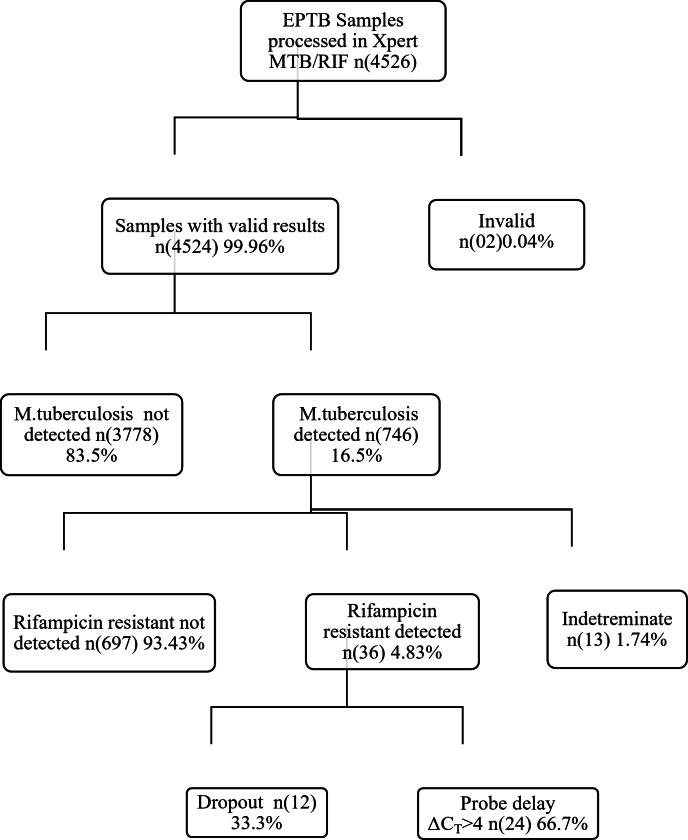
- Among 4,524 valid GeneXpert results from 4,526 processed samples, 746 were M. tuberculosis-positive, giving an epTB positivity rate of 16.5%; 2/4,526 (0.04%) were invalid due to improper sample processing.
- Of the 746 epTB cases, 679 (91.02%) had successful treatment outcomes; among 36 rifampicin-resistant epTB cases, 30 (83.33%) had successful outcomes.
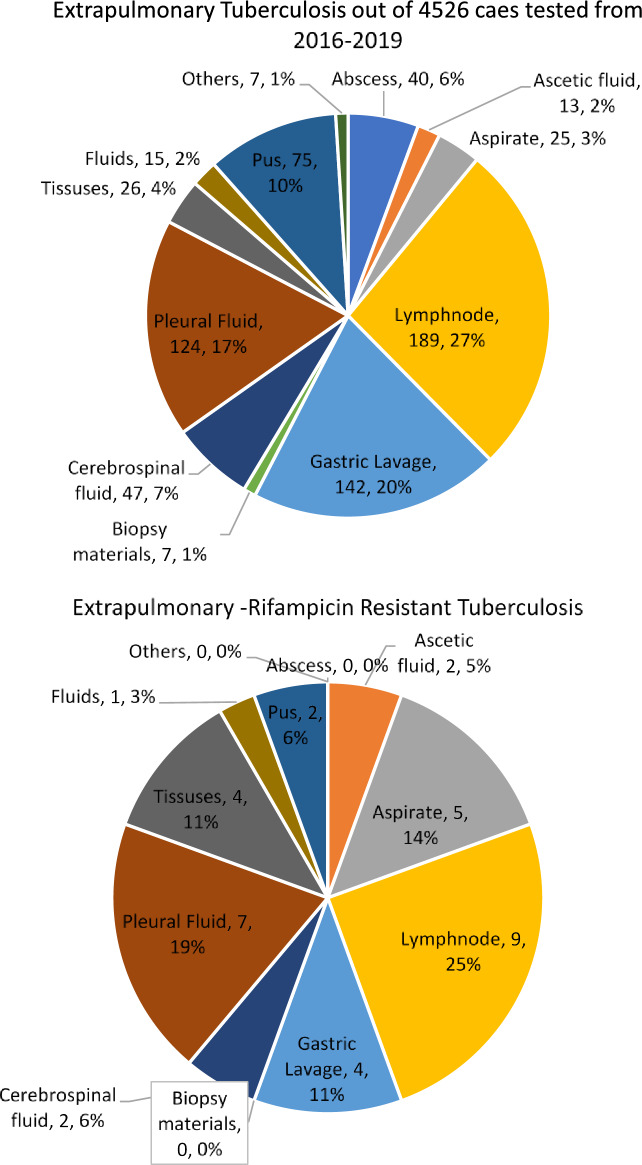
- The most common epTB sites/samples reported were lymph node TB (n = 348, 38.79%), pus (n = 241, 31.95%), and among sample types pleural fluid (n = 1052, 23.2%) and gastric lavage (n = 923, 20.4%); the highest positivity rates were in abscesses (47.06%), lymph nodes (38.37%), and pus (31.95%).
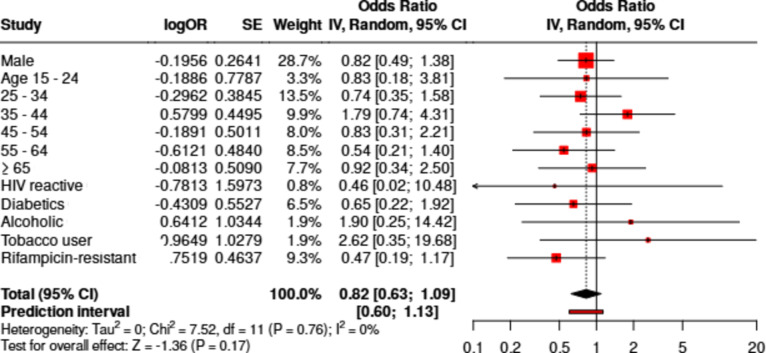
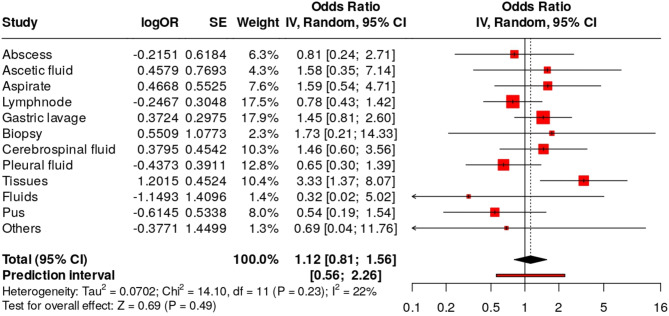
- Factors associated with unfavorable outcomes included age 35–44, alcohol use (OR 1.90), tobacco use (OR 2.62), and certain sample/site categories such as tuberculous peritonitis (OR 1.58), aspirate (OR 1.59), gastric lavage (OR 1.45), biopsy (OR 1.73), TB meningitis (OR 1.46), and tissue samples (OR 3.33).
Methods
- Retrospective study at the Government Hospital for Chest Disease, Puducherry, from January 2016 to December 2019.
- Included 4,526 suspected extrapulmonary TB samples from Puducherry and eight adjoining districts in Tamil Nadu; processed using GeneXpert MTB/RIF on non-respiratory specimens.
- Analysis used simple and multivariable logistic regression for unfavorable treatment outcomes; ORs and 95% CIs were reported, with significance set at p < 0.05. A random-effects inverse-variance model was also used for the forest plot analysis of 12 variables.
Limitations
- The paper explicitly states that only microbiologically confirmed epTB cases were included, creating selection bias and limiting generalizability; it says this may overestimate treatment success because clinically diagnosed epTB cases were excluded.
- Evident from the text: some reported associations have wide confidence intervals and at least one correlation was described as not statistically significant (Spearman r = 0.92, P = 0.078), suggesting imprecision in some estimates.
Model-written summary. Check it against the paper before relying on it.
Integrity signals
Registry
Cites
Statistics
Figures
Verification
Claims the paper makes
4 Valid · 1 Not valid · 1 Not checked · 37 Own results and interpretations
Some cited sources support this claim and some don’t — read each source’s verdict below.
In the paper
“the study found that the rate of rifampicin resistance among epTB cases was 4.83%, which is lower than the rate reported by previous studies conducted in India by Kant et al.,2018 (13.4%)15, Lohiya et al. 2020 (16%)16, and Misra et al. in 202117.”
§ Prevalence of extrapulmonary tuberculosis and factors influencing successful treatment outcomes among notified cases in South India > Discussion
What the sources say
- Could not verifycites [15] Khan, A. H. et al. Treatment outcomes and risk factors of extra-pulmonary tuberculosis in patients with co-morbidities. BMC Infect. Dis. 19, 691 (2019). 31382889 PMC6683549 sourceExperimental — accuracy not yet measured
The cited paper’s Results (Proportion, socio-demographic and baseline clinical characteristics; page unavailable) concern Malaysian EPTB cases and report one rifampicin-resistant patient among 687 culture-confirmed cases. The citation in the sentence is attached to a purported 2021 Indian study by Misra et al.; searches for Misra, 4.83%, 13.4%, and 16% found no passage in our copy reporting that comparison. (LLM, conf=0.78)
- Disputedcites [16] Lohiya, S. et al. Does Drug-Resistant extrapulmonary tuberculosis hinder TB elimination plans?? A case from Delhi. India Trop. Med. Infect. Dis. 5, 109 (2020). 32630163 PMC7558170 sourceExperimental — accuracy not yet measured
The Results (§4.1) and Discussion (§5) say that 203 of 1,261 registered drug-resistant TB patients (16%) had extrapulmonary TB. The citing sentence reverses the denominator: 16% is not the rate of rifampicin resistance among extrapulmonary TB cases. (LLM, conf=0.91)
Checked by a reasoning model — may be wrong.
- Supportedcites [17] Misra, R., Kesarwani, V. & Nath, A. Assessment of burden of drug- resistant tuberculosis at a tertiary care centre in Northern India: a prospective single centre cohort study. BMJ Open.11 e044096 (2021). PMC8055106 33858870 source
The Results section reports rifampicin resistance in 17.4% (57/326) of extrapulmonary cases in Misra et al., which is higher than the citing study’s 4.83%. The Kant and Lohiya figures are attributed to other sources and are not assessed here; page numbers are not provided in our copy. (LLM, conf=0.94)
plain- Asserted: passes — The authors put it forward as true.
- Checkable: passes — It can be checked against evidence.
- Load-bearing: unclear — It is unclear whether the paper’s conclusions depend on it.
- Based: passes — The paper gives a reason why it holds.
- Could not verify
Every source the paper cites for this claim was checked and supports it.
In the paper
“Our study found that 16.5% of all TB cases were epTB, which is lower to rates found in other developed countries like the Netherlands (38%), the United States (27%), and Germany (21.6%), as reported by Rolo et al.14.”
§ Prevalence of extrapulmonary tuberculosis and factors influencing successful treatment outcomes among notified cases in South India > Discussion
What the sources say
- Supportedcites [14] Rolo, M., Blanco, B. G., Reyes, C. A., Rosillo, N. & Lopez-Roa, P. Epidemiology and factors associated with Extra-pulmonary tuberculosis in a Low-prevalence area. J. Clin. Tuberc Other Mycobactl Dis.32 100377 (2023). PMC10209530 37252369 source
The Discussion reports rates of 38% in the Netherlands, 27% in the United States, and 21.6% in Germany, all higher than the citing authors’ 16.5%. The 16.5% is presented as the citing authors’ own finding, not as a result attributed to Rolo et al.; Rolo et al. report 20.9% for their Madrid study. (LLM, conf=0.93)
plain- Asserted: passes — The authors put it forward as true.
- Checkable: passes — It can be checked against evidence.
- Load-bearing: unclear — It is unclear whether the paper’s conclusions depend on it.
- Based: passes — The paper gives a reason why it holds.
- Supported
The cited sources support only part of this claim — read each source’s verdict below.
In the paper
“However, the percentage of TB-related deaths in this study (1.6%) was lower than in national (4%) and other studies in India, Bhutan, and Ethiopia19,20.”
§ Prevalence of extrapulmonary tuberculosis and factors influencing successful treatment outcomes among notified cases in South India > Discussion
What the sources say
- Partly supportedcites [19] Penjora, K., Kuenzang, Tshokey, T. & Wangdi, K. The trend of tuberculosis case notification and predictors of unsuccessful treatment outcomes in Samdrup Jongkhar district, Bhutan: A fourteen-year retrospective study. Heliyon7 e06573 (2021). PMC8027770 33855240 sourceExperimental — accuracy not yet measured
The Results table records 14 deaths (1.9%) in this Bhutan study, so its rate is higher than the citing study’s 1.6%. The Discussion says the 1.9% rate was lower than rates in other countries of Asia and Africa. Our copy does not give a national death rate of 4% or specifically establish the comparisons with India and Ethiopia. (LLM, conf=0.87)
- Not matchedcites [20] Jayalakshmy, R. et al. Risk factors for death during treatment in pulmonary tuberculosis patients in South India: A cohort study. Indian J. Tuber. 68)1, 32–39 (2021). 33641849
Its entry has no title and year that we can search by.
plain- Asserted: passes — The authors put it forward as true.
- Checkable: passes — It can be checked against evidence.
- Load-bearing: unclear — It is unclear whether the paper’s conclusions depend on it.
- Based: passes — The paper gives a reason why it holds.
- Partly supported
Every source the paper cites for this claim was checked and supports it.
In the paper
“Patients who discontinue treatment too early are one of the leading causes of treatment failure40.”
§ Prevalence of extrapulmonary tuberculosis and factors influencing successful treatment outcomes among notified cases in South India > Discussion
What the sources say
- Supportedcites [40] Rahayu, S. R. et al. Lost to Follow-Up among tuberculosis patients during the Public-Private mix era in rural area of Indonesia. Ethiop. J. Health Sci. 33 (1), 115–122 (2023). 36890941 PMC9987293 source
The Introduction states the citing sentence verbatim and also says that lost to follow-up can increase the risk of treatment failure. The supplied copy does not provide a page number. (LLM, conf=0.95)
plainstates a cause- Asserted: passes — The authors put it forward as true.
- Checkable: passes — It can be checked against evidence.
- Load-bearing: unclear — It is unclear whether the paper’s conclusions depend on it.
- Based: passes — The paper gives a reason why it holds.
- Supported
A result the paper reports from its own data — it cites no other source for it, so there is none to check. The quote shows it is in the paper.
In the paper
“Among 710 patients with rifampicin-sensitive TB, 649 (91.41%) had successful treatment”
§ Prevalence of extrapulmonary tuberculosis and factors influencing successful treatment outcomes among notified cases in South India > Results > Study participants During the study period, 4,526 epTB samples were processed. The GeneXpert assay provided valid results for 4,524 cases, which account for 99.96% of all processed samples. Only two cases (0.04%) had invalid results attributed to improper sample processing, causing sample processing control failure. Among the 4,524 valid results, M.tuberculosis was detected in 746 samples, equal to 16.5% of all valid results, and not in 3,778 samples, making up 83.5% (Fig. 1). The distribution of 16.5% epTB and 4.83% extrapulmonary rifampicin-resistant tuberculosis among the 746 epTB cases is presented in Fig. 2. The GeneXpert assay provides semi-quantitative detection of rifampicin-resistant M. tuberculosis based on the PCR cycle threshold (Ct) of the probes required to amplify M. tuberculosis DNA to detectable levels. Among the 36 rifampicin-resistant detected results, 12 (33.3%) were reported as “dropout” (no hybridization), and 24 (66.7%) cases were reported as “delayed” (ΔCt > 4). The most common probes used for rifampicin resistance detection were D (n = 4, 11.23%), E (n = 3, 8.3%), A (n = 3, 8.3%), and B (n = 2, 5.6%), as shown in Table 2. A strong positive correlation was observed between rifampicin-resistant epTB and the semi-quantification value, with a Spearman correlation coefficient of 0.92 (P-value = 0.078). This indicates a significant relationship between the two variables. However, the P-value of 0.078 suggests that this correlation is not statistically significant at the conventional threshold of 0.05. Of the 4526 TB cases registered, the majority of patients were found to have pleural fluids (n = 1052, 23.2%), followed by gastric lavage (n = 923, 20.4%), cerebrospinal fluid (n = 552, 12.2%), aspirate (n = 395, 8.7%), lymph node (n = 516, 11.4), pus (n = 241, 5.3%), and ascetic fluid (n = 193, 4.3%). Out of the 746 cases of epTB, 6.84% of patients (n = 51) had various affected sites, including pericardial, genitourinary, peritoneal, bone, skin, and breast, which were categorized as “others.” The overall M.tuberculosis positivity rate among epTB samples was 16.5%. Table 3 shows that the highest positivity rates of extrapulmonary tuberculosis (epTB) were found in abscesses (47.06%), lymph nodes (38.37%), pus (31.95%), tissues (18.06%), gastric lavage (15.82%), pleural fluid (12.45%), other fluids (10.39%), and tuberculosis meningitis (8.88%).Table 4 presents treatment outcomes for patients with epTB. Among 710 patients with rifampicin-sensitive TB, 649 (91.41%) had successful treatment, while 61 (8.59%) faced unfavourable outcomes, including 10 deaths (1.41%) and 46 lost to follow-up (6.48%). For the 36 patients with rifampicin-resistant TB, 30 (83.33%) completed treatment successfully, but 6 (16.67%) had unfavourable outcomes, including 2 deaths (5.56%) and 4 lost to follow-up (11.18%).
plainn = 710- Asserted: passes — The authors put it forward as true.
- Checkable: passes — It can be checked against evidence.
- Load-bearing: unclear — It is unclear whether the paper’s conclusions depend on it.
- Based: passes — The paper gives a reason why it holds.
29 more claims
Create a free account to see all 43 claims and every source verdict.
- It may state two separate claims as one. 8
- Probably not a substantial claim. 1
Self-check
Percentages, sums and reported differences re-computed from the paper’s own numbers.
Each contradiction between two passages listed here was confirmed by an independent check.
Rated minor: it would not touch a result — a value no result rests on, a p-value that stays on the same side of the significance level, or a conflict that is clerical, resolved elsewhere in the paper, or outside its own findings.
In the paper
§ Prevalence of extrapulmonary tuberculosis and factors influencing successful treatment outcomes among notified cases in South India > Results > Study participants
“A strong positive correlation was observed between rifampicin-resistant epTB and the semi-quantification value, with a Spearman correlation coefficient of 0.92 (P-value = 0.078). This indicates a significant relationship between the two variables.”
§ Prevalence of extrapulmonary tuberculosis and factors influencing successful treatment outcomes among notified cases in South India > Results > Study participants
“However, the P-value of 0.078 suggests that this correlation is not statistically significant at the conventional threshold of 0.05.”
Citations
Cites
Fekete, J. T., & Győrffy, B. (2025) · Journal of Medical Internet Research · doi:10.2196/64016 · Cited by 221
Berhe, G., Enquselassie, F., & Aseffa, A. (2012) · BMC Public Health · doi:10.1186/1471-2458-12-537 · Cited by 146 · cited 1×
“%) showed relatively better treatment success rates 25,26 .”
The impact of alcohol use on tuberculosis treatment outcomes: a systematic review and meta-analysis
Ragan, E. J., Kleinman, M. B., Sweigart, B., Gnatienko, N., Parry, C. D. H., Horsburgh, C. R., LaValley, M. P., MYERS, B. J., & Jacobson, K. R. (2020) · The International Journal of Tuberculosis and Lung Disease · doi:10.5588/ijtld.19.0080 · Cited by 140 · cited 1×
“Ragan et al. 29 discovered that alcohol use was associated with 1.5 to 2.0 time’s higher odds of poor treatment outcomes for both drug-sensitive and drug-resistant tuberculosis compared to those without alcohol exposure.”
InfluentialEpidemiology and factors associated with Extra-pulmonary tuberculosis in a Low-prevalence area
Rolo, M., González-Blanco, B., Reyes, C. A., Rosillo, N., & López-Roa, P. (2023) · Journal of Clinical Tuberculosis and Other Mycobacterial Diseases · doi:10.1016/j.jctube.2023.100377 · Cited by 85 · cited 1×
“Our study found that 16.5% of all TB cases were epTB, which is lower to rates found in other developed countries like the Netherlands (38%), the United States (27%), and Germany (21.6%), as reported by Rolo et al. 14 .”
InfluentialDuraisamy, K., Mrithyunjayan, S., Ghosh, S., Nair, S. A., Balakrishnan, S., Subramoniapillai, J., Oeltmann, J. E., Moonan, P. K., & Kumar, A. M. V. (2014) · Annals of the American Thoracic Society · doi:10.1513/annalsats.201312-447oc · Cited by 83 · cited 2×
“Additionally, Karthickeyan et al. 30 identified alcohol consumption during the treatment of multidrug-resistant tuberculosis as the most significant risk factor for unsuccessful treatment outcomes.”
High mortality among tuberculosis patients on treatment in Nigeria: a retrospective cohort study
Adamu, A. L., Gadanya, M. A., Abubakar, I. S., Jibo, A. M., Bello, M. M., Gajida, A. U., Babashani, M., & Abubakar, I. I. (2017) · BMC Infectious Diseases · doi:10.1186/s12879-017-2249-4 · Cited by 82 · cited 1×
“%) also reported suboptimal treatment success rates among epTB patients 22,23 .”
Kigozi, G., Heunis, C., Chikobvu, P., Botha, S., & van Rensburg, D. (2017) · International Journal of Infectious Diseases · doi:10.1016/j.ijid.2016.11.407 · Cited by 76 · cited 1×
“21 .”
Wen, Y., Zhang, Z., Li, X., Xia, D., Ma, J., Dong, Y., & Zhang, X. (2018) · BMC Infectious Diseases · doi:10.1186/s12879-018-3019-7 · Cited by 67 · cited 1×
“These findings are consistent with other published studies 5,38 .”
Treatment outcomes and risk factors of extra-pulmonary tuberculosis in patients with co-morbidities
Khan, A. H., Sulaiman, S. A. S., Laghari, M., Hassali, M. A., Muttalif, A. R., Bhatti, Z., Ming, L. C., & Talpur, B. A. (2019) · BMC Infectious Diseases · doi:10.1186/s12879-019-4312-9 · Cited by 49 · cited 2×
“15 , Lohiya et al. 2020 (16”
Long term outcomes of patients with tuberculous meningitis: The impact of drug resistance
Evans, E. E., Avaliani, T., Gujabidze, M., Bakuradze, T., Kipiani, M., Sabanadze, S., Smith, A., Avaliani, Z., Collins, J. M., & Kempker, R. R. (2022) · PLoS ONE · doi:10.1371/journal.pone.0270201 · Cited by 48 · cited 2×
“The concerning death rate among epTB patients receiving treatment for drug-resistant disease aligns with the limited reports available, highlighting the ineffectiveness of current treatments 36 .”
InfluentialRisk factors associated with unsuccessful tuberculosis treatment outcomes in Hunan Province, China
Gilmour, B., Xu, Z., Bai, L., Alene, K. A., & Clements, A. (2022) · Tropical Medicine & International Health · doi:10.1111/tmi.13720 · Cited by 42 · cited 1×
“There could be several reasons for the lower treatment success rates, including non-adherence to anti-TB drugs, potential side effects associated with these drugs, lack of patient knowledge about the consequences of loss to follow-up, and distance from the treatment centre 24 .”
Tuberculosis-Related Malnutrition: Public Health Implications
ter Beek, L., Alffenaar, J. C., Bolhuis, M. S., van der Werf, T. S., & Akkerman, O. W. (2019) · The Journal of Infectious Diseases · doi:10.1093/infdis/jiz091 · Cited by 39
Predictors of Treatment Outcomes in Drug Resistant Tuberculosis-Observational Retrospective Study
Johnson, J. M., Mohapatra, A. K., Velladath, S. U., & Shettigar, K. S. (2022) · International Journal of Mycobacteriology · doi:10.4103/ijmy.ijmy_244_21 · Cited by 27 · cited 1×
“Studies indicate that both tobacco chewing and alcohol consumption negatively impact successful treatment outcomes by suppressing immune mechanisms through nicotine and altering drug metabolism (Johnson et al. 31 5.”
Huang, M., Ma, Y., Ji, X., Jiang, H., Liu, F., Chu, N., & Li, Q. (2023) · Frontiers in Public Health · doi:10.3389/fpubh.2022.1040071 · Cited by 27
Treatment outcomes of extrapulmonary tuberculosis in Bahawalpur, Pakistan; a record review
Atif, M., Fatima, R., Ahmad, N., & Babar, Z.-U.-D. (2020) · Journal of Pharmaceutical Policy and Practice · doi:10.1186/s40545-020-00227-1 · Cited by 21
Mamo, A., Mama, M., Solomon, D., & Mohammed, M. (2021) · Infection and Drug Resistance · doi:10.2147/idr.s285542 · Cited by 21
Fu, M., Cao, L., Xia, H.-L., Ji, Z.-M., Hu, N., Leng, Z.-J., Xie, W., Fang, Y., Zhang, J., & Xia, D. (2022) · BMC Pulmonary Medicine · doi:10.1186/s12890-022-02079-8 · Cited by 20 · cited 1×
“Our study found that the prevalence of tuberculosis (TB) in biopsy materials was 8.75%, which is consistent with the 8.93% reported by Fu et al. 37 .”
InfluentialSong, W.-M., Li, S.-J., Liu, J., Fu, Q., Xu, T., Tao, N., Zhang, Q.-Y., Liu, S.-Q., An, Q.-Q., Zhu, X., et al. (2022) · BMJ Open · doi:10.1136/bmjopen-2021-059149 · Cited by 19 · cited 1×
“Likewise, Song et al. 28 reported that alcohol abuse increased the odds of poor treatment outcomes in patients with tuberculosis, ranging from 1.3 to 1.8 times.”
InfluentialRamakrishnan, J., Sarkar, S., Chinnakali, P., Lakshminarayanan, S., Sahu, S. K., Reshma, A., Knudsen, S., Das, M., Thekkur, P., Venugopal, V., et al. (2020) · Indian Journal of Tuberculosis · doi:10.1016/j.ijtb.2020.09.022 · Cited by 18 · cited 2×
“This treatment success rate is higher than the findings of a previous study in India and a Pakistani study, which reported 83.8% and 71.1% treatment success rates among epTB patients, respectively 20 .”
InfluentialHiluf, S. B., Abera, A., Bahiru, M., & Kassie, B. (2024) · Frontiers in Public Health · doi:10.3389/fpubh.2024.1406211 · Cited by 17 · cited 1×
“Berihe Hiluf et al. 27 reported that older patients (> 35 years) were more likely to experience unsuccessful treatment outcomes than younger patients.”
Lohiya, S., Tripathy, J. P., Sagili, K., Khanna, V., Kumar, R., Ojha, A., Bhatnagar, A., & Khanna, A. (2020) · Tropical Medicine and Infectious Disease · doi:10.3390/tropicalmed5030109 · Cited by 16 · cited 3×
“15 , Lohiya et al. 2020 (16”
Kumar, A., Harakuni, S. U., Paranjape, R., Korabu, A. S., & Prasad, J. B. (2024) · Clinical Epidemiology and Global Health · doi:10.1016/j.cegh.2024.101505 · Cited by 16
Misra, R., Kesarwani, V., & Nath, A. (2021) · BMJ Open · doi:10.1136/bmjopen-2020-044096 · Cited by 14 · cited 1×
“16 , and Misra et al. in 2021 17 .”
Ramachandra, V., Brammacharry, U., Muralidhar, A., et al. (2023) · Microbiology Research · doi:10.3390/microbiolres15010006 · Cited by 14
Self-citationDiagnosing and Treating Extrapulmonary Tuberculosis in India: Challenges and Solutions
Nischal, N., Nath, R., Rathi, V., & Ish, P. (2024) · Preventive Medicine: Research & Reviews · doi:10.4103/pmrr.pmrr_40_23 · Cited by 10 · cited 1×
“Globally, epTB accounts for approximately 15 to 20% of all TB cases 13 .”
Epidemiological perspective of drug resistant extrapulmonary tuberculosis
Singh, P. K. (2015) · World Journal of Clinical Infectious Diseases · doi:10.5495/wjcid.v5.i4.77 · Cited by 9 · cited 1×
“Our data also support this notion, as 8.16% of the meningeal TB patients were lost to follow-up, and 4.1% died during the treatment 39 .”
InfluentialPenjor, K., Kuenzang, Tshokey, T., & Wangdi, K. (2021) · Heliyon · doi:10.1016/j.heliyon.2021.e06573 · Cited by 9
Rahayu, S. R., Susilastuti, M. S., Saefurrohim, M. Z., Azam, M., Indrawati, F., Supriyono, M., Miarso, D., Safitri, B. D., Daniswara, S., Merzistya, A. N., et al. (2023) · Ethiopian Journal of Health Sciences · doi:10.4314/ejhs.v33i1.15 · Cited by 4
(2015) · PubMed Central
Garcia, M. A. C., & Imperial, P. M. (2024) · Nephrology Dialysis Transplantation · doi:10.1093/ndt/gfae069.911
Research works printed but not linked: 1
- Anil et al. Factors determining successful treatment outcome among notified tuberculosis patients in Belagavi district of North Karnataka, India. Clin. Epidemiol. Global Health, 25(3): 101505 (2024) · DOI
Cited by
Singh, M., Joshi, S., Vohra, V., Sarin, R., Kamble, S., Velayutham, B., Mohan, A., Singh, U. B., Kumar, R., Pati, S., et al. (2026) · BMJ · doi:10.1136/bmj-2025-085716 · Cited by 14
“Supplementary tables S-34 and S-35 respectively show summaries of the efficacy analysis for VPM1002 and Immuvac (with lower confidence limit ≥0).”
InfluentialSinha, S., Titiyal, R., Mohapatra, P. R., Palvai, R. K., Kar, I., Mishra, B., Ajayababu, A., Sinha, A., Bhuniya, S., & Pandey, S. (2025) · Tropical Medicine and Infectious Disease · doi:10.3390/tropicalmed10080206 · Cited by 9
“Several factors may contribute to lower treatment success rates, including poor adherence to anti-tuberculosis therapy, adverse drug reactions, limited patient awareness of the consequences of treatment interruption, and geographic barriers to accessing care [31].”
Hidden in Plain Sight: Peritoneal Tuberculosis Mimicking Ovarian Neoplasm—A Case Report
Romero-Rojas, D. S., Rojas-Torres, A., Amell-Barón, B., et al. (2025) · Tropical Medicine and Infectious Disease · doi:10.3390/tropicalmed10120346 · Cited by 1
Advances in Tuberculous Meningitis: Research, Challenges, and Future Perspectives
Ailioaie, L. M., Ailioaie, C., & Litscher, G. (2025) · Applied Sciences · doi:10.3390/app16010232 · Cited by 4
Enhancing renal tuberculosis treatment: lysozyme-mediated targeted drug delivery approaches
Sonar, H., Paul, P., Rajkhowa, S., Gohain, B. B., & Bora, M. (2026) · In Silico Pharmacology · doi:10.1007/s40203-026-00691-8 · Cited by 1
“In people with HIV co-infection, extrapulmonary tuberculosis (epTB) is significantly more common, accounting for over 50% of reported cases (VidyaRaj et al. 2025).”
Metadata
- Authors
- VidyaRaj, C. K., Vadakunnel, M. J., Mani, B. R., Anbazhagi, M., Pradhabane, G., Venkateswari, R., Palavesam, S., Venkatesh, K., Usharani, B., Sriramkumar, S. R., Subramani, S., Govindarajan, S., & Muthuraj, M.
- Affiliations
- Sri Balaji Vidyapeeth University (IN)
- University of Madras (IN)
- National Institute of Nutrition (IN)
- Saveetha University (IN)
- Venue
- Scientific Reports
- Published
- 2025-03-10
- Volume
- 15
- Issue
- 1
- Pages
- 8290-8290
- ISSN
- 2045-2322 (ISSN-L)
- PMC
- PMC11893790
- OpenAlex
- W4408288360
- Cited by
- 31
- References
- 29
- Citations by year
- 2026: 21 · 2025: 10
- FWCI
- 20.03
- Type
- journal article
- Language
- en
- Open access
- gold
- doi.org
- Licence
- cc-by-nc-nd
- creativecommons.org/licenses/by-nc-nd/4.0 (tdm)
- creativecommons.org/licenses/by-nc-nd/4.0 (vor)
- Locations
- Scientific Reports (publishedVersion, cc-by-nc-nd)
- PubMed (publishedVersion)
- Europe PMC (PubMed Central) (submittedVersion, cc-by-nc-nd)
- PubMed Central (submittedVersion, cc-by-nc-nd)
- DOAJ (DOAJ: Directory of Open Access Journals) (submittedVersion, cc-by-sa)
- Topics
- Health Sciences › Medicine › Infectious Diseases › Tuberculosis Research and Epidemiology
- Health Sciences › Medicine › Infectious Diseases › Diagnosis and treatment of tuberculosis
- Health Sciences › Medicine › Epidemiology › Pneumonia and Respiratory Infections
- Keywords
- extrapulmonary tuberculosis, rifampicin-resistant tuberculosis, treatment outcomes, lymphadenitis, tuberculous peritonitis, tuberculous meningitis, alcohol consumption, tobacco use
- MeSH terms
- Tuberculosis, Extrapulmonary, Adolescent, Adult, Aged, Antitubercular Agents
About these checks
Registry, retraction, Cites and statistics results are computed, not judged, with one exception: a printed reference that no index lists is read once by a model before it counts as a citation error. Claims are extracted by a model and kept only when their quote appears verbatim in the text; each cited source is then checked, with a model’s help, for whether it says what the claim relies on. Those verdicts can be wrong — read the claim’s quote and the cited source before relying on one.
The claim verdicts this report counts are experimental: their accuracy is not yet measured.
A language model drew the claims from the paper on 2026-10-11, under version 3 of the claim definition (model deepseek-v4.1-flash, prompt extract-v3).
A second model labelled each claim on 2026-10-11 (model jev-1.13-20260917, definition revision gold-guideline-v0.2).
Cited sources are checked with a language model’s help (gpt-6-sol).
Statistics and arithmetic are recomputed, not judged.
Confidence bands are shown only for fields calibrated on our annotated test set. None is calibrated yet, so no band is shown.
What counts as a claim ›How we measure confidence ›How we check this ›
Are you an author, or do you see a problem with this page? Request a review
Data sources
Bibliographic data: Semantic Scholar, OpenAlex, Crossref.
Contains information from the Semantic Scholar Academic Graph Datasets, made available under the ODC Attribution License (ODC-BY 1.0).
Semantic Scholar’s data is described in: Kinney, R., et al. (2023). The Semantic Scholar Open Data Platform. arXiv:2301.10140.
