

The evolving landscape of antibody-drug conjugates (ADCs) for treatment of prostate cancer
Open accessThe DOI matches its Crossref record; 235 of the 239 references it cites were found in a registry or an index; 91 of the 249 sources its claims cite were checked for support.
Abstract
Advances in antibody-drug conjugate (ADC) technology and identification of new antigen targets are repositioning ADCs as a promising therapeutic platform for metastatic castration-resistant prostate cancer (mCRPC). This review summarizes recent progress in ADC payload and linker chemistry, highlights membrane antigens in prostate cancer that have demonstrated encouraging antitumor activity in clinical trials, and addresses strategies to mitigate off-target toxicity. These advances position ADCs to transform the therapeutic landscape of mCRPC.
Overview
CoChat Summary
## TL;DR
This is a narrative review of antibody-drug conjugates (ADCs) for prostate cancer, focused on payloads, linker chemistry, and molecular targets most relevant to metastatic castration-resistant prostate cancer (mCRPC). It concludes that ADCs remain promising but none are yet approved for prostate cancer because safety, target heterogeneity, and payload delivery remain major barriers.
## Key findings
- The review states that ADC development in prostate cancer is being driven by advances in payload and linker chemistry and by targets such as PSMA, B7H3, STEAP1, TROP2, and CD46.
- Several early trials showed signal of activity:
- FOR46 in mCRPC: 14/31 (45%) evaluable patients had PSA50 responses, and 8/18 (44%) had tumor regression.
- ARX517 in 24 mCRPC patients: ≥50% PSA and ctDNA decline were observed at 2.8 mg/kg, with RECIST responses in 2/7 patients with measurable soft tissue disease.
- Ifinatamab deruxtecan (B7H3-DXd): among 59 evaluable heavily pretreated mCRPC patients, 15 had partial or complete responses, with average DOR 6.4 months and PFS 4.8 months.
- Some ADC programs were stopped because of toxicity or limited benefit:
- MLN2704 had 71% dose-limiting peripheral neuropathy and was discontinued.
- PSMA ADC had 24% grade ≥3 neurotoxicity, 8% neutropenia, and 3 sepsis-related deaths.
- ASG-5ME caused substantial toxicity, including 2 treatment-related deaths, and was discontinued.
- The review highlights that 177Lu-PSMA-617 improved median overall survival and radiographic PFS versus best standard of care in VISION and is FDA-approved, underscoring the importance of PSMA as a validated prostate cancer target.
## Methods
- Narrative review of ADCs for prostate cancer, synthesizing preclinical and clinical evidence on payloads, linker technologies, and molecular targets.
- Uses published clinical trial results and identifies completed and ongoing studies in prostate cancer, especially mCRPC.
- Main analysis is qualitative comparison of target biology, ADC design features, efficacy signals, and toxicity patterns across agents.
## Limitations
- The paper explicitly notes that no ADCs have yet been approved for prostate cancer because of safety and specificity issues.
- It states that mCRPC presents intrinsic challenges for ADCs: dense stroma, low vascularity, and high intertumor heterogeneity limit penetration and distribution.
- Evident from the text: much of the prostate cancer evidence is early-phase, often with small cohorts, and several agents have no prostate-cancer-specific published data yet, limiting definitive conclusions.
Model-written summary. Check it against the paper before relying on it.
Integrity signals
Registry
Cites
Statistics
Figures
Verification
Claims the paper makes
69 Valid · 8 Not valid · 103 Not checked · 9 Own results and interpretations
At least one cited source doesn’t support this claim or points to a different paper, and none confirmed it — see the verdicts below.
In the paper
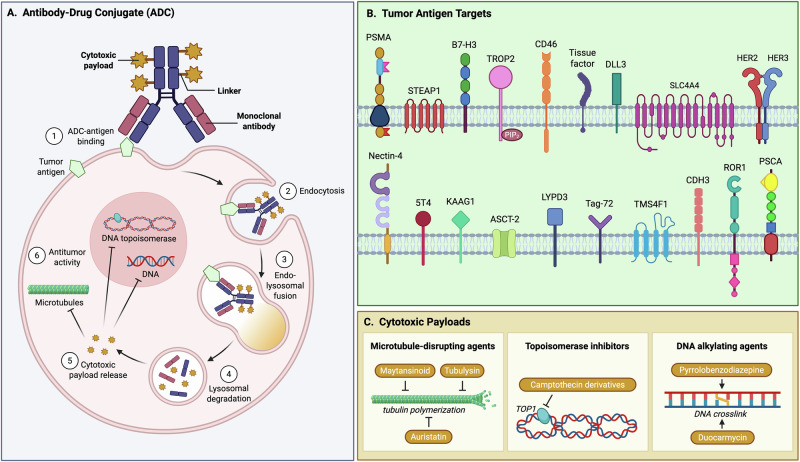
“Auristatins, such as monomethyl auristatin E (MMAE), monomethyl auristatin F (MMAF), and Duostatin-5, inhibit tubulin polymerization;”
§ The evolving landscape of antibody-drug conjugates (ADCs) for treatment of prostate cancer > ADC cytotoxic payloads > Microtubule-disrupting agents: Auristatin, Maytansinoid, and Tubulysin
What the sources say
- Disputedcites [10] Wang, Z., Li, H., Gou, L., Li, W. & Wang, Y. Antibody-drug conjugates: Recent advances in payloads. Acta Pharm. Sin. B 13, 4025–4059 (2023). 37799390 PMC10547921 sourceExperimental — accuracy not yet measured
In “Microtubules targeting payloads” (page unavailable), the paper calls MMAE and MMAF “tubulin polymerization enhancers,” explicitly contrasting them with polymerization inhibitors. That contradicts the claimed mechanism for MMAE and MMAF. The passages do not mention Duostatin-5, so its mechanism cannot be assessed from this copy. (LLM, conf=0.88)
Checked by a reasoning model — may be wrong.
- Not checked — no full text of the sourcecites [19] Pettit, G. R. et al. Antineoplastic agents 365. Dolastatin 10 SAR probes. Anticancer Drug Des. 13, 243–277 (1998). 9627667
plainstates a cause- Asserted: passes — The authors put it forward as true.
- Checkable: passes — It can be checked against evidence.
- Load-bearing: unclear — It is unclear whether the paper’s conclusions depend on it.
- Based: passes — The paper gives a reason why it holds.
- Disputed
The cited sources support only part of this claim — read each source’s verdict below.
In the paper
“Disruption of microtubule-facilitated movement and segregation of chromosomes during mitosis induces mitotic arrest and apoptosis in rapidly dividing cancer cells10,12.”
§ The evolving landscape of antibody-drug conjugates (ADCs) for treatment of prostate cancer > ADC cytotoxic payloads > Microtubule-disrupting agents: Auristatin, Maytansinoid, and Tubulysin
What the sources say
- Supportedcites [10] Wang, Z., Li, H., Gou, L., Li, W. & Wang, Y. Antibody-drug conjugates: Recent advances in payloads. Acta Pharm. Sin. B 13, 4025–4059 (2023). 37799390 PMC10547921 source
The “Microtubules targeting payloads” section (page unavailable) says tubulin inhibitors disrupt microtubules and the mitotic spindle, arrest cells in G2/M, and ultimately lead to apoptosis. It also says these inhibitors are more toxic to rapidly dividing cancer cells than to slow-growing normal cells. The claim’s chromosome-movement wording paraphrases the spindle’s role in mitosis. (LLM, conf=0.90)
- Could not verifycites [12] Janke, C. & Magiera, M. M. The tubulin code and its role in controlling microtubule properties and functions. Nat. Rev. Mol. Cell Biol. 21, 307–326 (2020). 32107477 sourceExperimental — accuracy not yet measured
Our copy of Janke & Magiera (10.1038/s41580-020-0214-3) consists only of the HAL landing-page/metadata records (repository search fields, author affiliations, HAL Id hal-03012135, citation line 'Nature Reviews Molecular Cell Biology, 2020, 21 (6), pp.307-326'); no body text of the review is indexed. Four searches (mitotic arrest/apoptosis in cancer cells, microtubule spindle chromosome segregation, tubulin post-translational modifications, mitotic checkpoint/tubulin inhibitors) returned nothing but these metadata pages, so nothing in our copy states or contradicts that disrupting microtubule-facilitated chromosome movement and segregation causes mitotic arrest and apoptosis in rapidly dividing cancer cells. (LLM, conf=0.70)
plainstates a cause- Asserted: passes — The authors put it forward as true.
- Checkable: passes — It can be checked against evidence.
- Load-bearing: passes — The paper’s conclusions depend on it.
- Based: passes — The paper gives a reason why it holds.
- Supported
The cited sources support only part of this claim — read each source’s verdict below.
In the paper
“Advanced tumors often become castration-resistant and refractory to conventional androgen-deprivation therapy (ADT)4.”
§ The evolving landscape of antibody-drug conjugates (ADCs) for treatment of prostate cancer > Introduction
What the sources say
- Partly supportedcites [4] Fujita, K. & Nonomura, N. Role of androgen receptor in prostate cancer: A review. World J. Mens. Health 37, 288–295 (2019). 30209899 PMC6704300 sourceExperimental — accuracy not yet measured
The “Changes of Androgen Receptor in Prostate Cancer” section says some high-risk prostate cancers progress to castration-resistant disease and grow despite castrate androgen levels. This supports resistance to conventional androgen-deprivation therapy, but the passage does not establish that advanced tumors *often* do so. (LLM, conf=0.82)
plainstates a cause- Asserted: passes — The authors put it forward as true.
- Checkable: passes — It can be checked against evidence.
- Load-bearing: passes — The paper’s conclusions depend on it.
- Based: passes — The paper gives a reason why it holds.
- Partly supported
Every source the paper cites for this claim was checked and supports it.
In the paper
“Taxanes have also been reported in preclinical models of prostate cancer to inhibit nuclear translocation of the androgen receptor (AR), thereby decreasing the pro-tumorigenic transcriptional activity of AR14,15.”
§ The evolving landscape of antibody-drug conjugates (ADCs) for treatment of prostate cancer > ADC cytotoxic payloads > Microtubule-disrupting agents: Auristatin, Maytansinoid, and Tubulysin
What the sources say
- Supportedcites [14] Zhu, M. L. et al. Tubulin-targeting chemotherapy impairs androgen receptor activity in prostate cancer. Cancer Res 70, 7992–8002 (2010). 20807808 PMC2978028 source
In the Results section on AR nuclear translocation, paclitaxel blocked androgen-induced AR nuclear translocation in prostate cancer cells. The Results section on transcriptional activity reports that paclitaxel significantly inhibited androgen-response-element activation, and the Discussion links microtubule-targeting chemotherapy to impaired AR localization and activity. (LLM, conf=0.93)
- Supportedcites [15] Bai, S., Zhang, B. & Dong, Y. Impact of taxanes on androgen receptor signaling. Asian J. Androl. 21, 249–252 (2019). 29900882 PMC6498725 source
The ‘Effects of Docetaxel and Paclitaxel on AR Signaling’ section reports that paclitaxel nearly abolished androgen-induced AR nuclear translocation and reduced AR transcriptional activity in prostate cancer cells. The claim appropriately says this effect has been reported in preclinical models; the review also notes that the effect is not established for every taxane or dose. (LLM, conf=0.90)
hedgedstates a cause- Asserted: passes — The authors put it forward as true.
- Checkable: passes — It can be checked against evidence.
- Load-bearing: unclear — It is unclear whether the paper’s conclusions depend on it.
- Based: passes — The paper gives a reason why it holds.
- Supported
The cited sources support only part of this claim — read each source’s verdict below.
In the paper
“However, nearly all tumors eventually develop resistance to taxanes, mediated by mutations in tubulin, decreased microtubule bundling, and development of drug efflux pumps (e.g. P-glycoprotein)16,17.”
§ The evolving landscape of antibody-drug conjugates (ADCs) for treatment of prostate cancer > ADC cytotoxic payloads > Microtubule-disrupting agents: Auristatin, Maytansinoid, and Tubulysin
What the sources say
- Partly supportedcites [16] Maloney, S. M., Hoover, C. A., Morejon-Lasso, L. V. & Prosperi, J. R. Mechanisms of taxane resistance. Cancers (Basel) 12, 3323 (2020). 33182737 PMC7697134 sourceExperimental — accuracy not yet measured
The Concluding Remarks say that many patients do not respond initially or lose response over time—not that nearly all tumors eventually become resistant. Section 1.2.2 identifies P-glycoprotein drug efflux as a major resistance mechanism, and section 4.2 reports decreased microtubule bundling in resistant tumors. But section 4.2 says a tubulin mutation could reduce taxane binding while noting no clinical correlation with resistance; it does not establish tubulin mutations as a demonstrated mechanism in tumors. (LLM, conf=0.90)
- Not checked — no full text of the sourcecites [17] Hashemi, M. et al. Paclitaxel and docetaxel resistance in prostate cancer: Molecular mechanisms and possible therapeutic strategies. Biomed. Pharmacother. 160, 114392 (2023). 36804123 source
plainstates a cause- Asserted: passes — The authors put it forward as true.
- Checkable: passes — It can be checked against evidence.
- Load-bearing: passes — The paper’s conclusions depend on it.
- Based: passes — The paper gives a reason why it holds.
- Partly supported
69 more claims · 23 with their cited sources checked
Create a free account to see all 189 claims and to verify the 41 references still open.
- It may state two separate claims as one. 111
- Probably not a substantial claim. 7
Self-check
Percentages, sums and reported differences re-computed from the paper’s own numbers.
Self-check results appear here once an independent check has confirmed them.
Cited works that were retracted
Works this paper cites that were later retracted, from the retraction notices publishers deposit. Major when the notice came out before this paper was published.
Rated major: it would touch a result — a value a result rests on, reported and recomputed p-values on opposite sides of the significance level, two passages that conflict with no sign which is right, or a cited work retracted before this paper was published.
In the paper
“Hashemi, M. et al. Paclitaxel and docetaxel resistance in prostate cancer: Molecular mechanisms and possible therapeutic strategies. Biomed. Pharmacother. 160, 114392 (2023).”
Cited work 10.1016/j.biopha.2023.114392 · retracted 2023-04-01 · notice 10.1016/j.biopha.2023.114392 · this paper published 2025-11-14
Citations
Cites
1 retracted
Hashemi, M., Zandieh, M. A., Talebi, Y., Rahmanian, P., Shafiee, S. S., Nejad, M. M., Babaei, R., Sadi, F. H., Rajabi, R., Abkenar, Z. O., et al. (2023) · Biomedicine & Pharmacotherapy · doi:10.1016/j.biopha.2023.114392 · Cited by 117
RetractedMultidrug resistance in cancer: role of ATP–dependent transporters
Gottesman, M. M., Fojo, T., & Bates, S. E. (2002) · Nature Reviews Cancer · doi:10.1038/nrc706 · Cited by 5,536
Trastuzumab Emtansine for Residual Invasive HER2-Positive Breast Cancer
von Minckwitz, G., Huang, C.-S., Mano, M. S., Loibl, S., Mamounas, E. P., Untch, M., Wolmark, N., Rastogi, P., Schneeweiss, A., Redondo, A., et al. (2019) · New England Journal of Medicine · doi:10.1056/nejmoa1814017 · Cited by 2,625
Topoisomerase I inhibitors: camptothecins and beyond
Pommier, Y. (2006) · Nature Reviews Cancer · doi:10.1038/nrc1977 · Cited by 2,277
Strategies and challenges for the next generation of antibody–drug conjugates
Beck, A., Goetsch, L., Dumontet, C., & Corvaïa, N. (2017) · Nature Reviews Drug Discovery · doi:10.1038/nrd.2016.268 · Cited by 2,271
Tumor microenvironment as a therapeutic target in cancer
Xiao, Y., & Yu, D. (2021) · Pharmacology & Therapeutics · doi:10.1016/j.pharmthera.2020.107753 · Cited by 1,957
Antibody drug conjugate: the “biological missile” for targeted cancer therapy
Fu, Z., Li, S., Han, S., Shi, C., & Zhang, Y. (2022) · Signal Transduction and Targeted Therapy · doi:10.1038/s41392-022-00947-7 · Cited by 1,643
(1997) · PubMed · Cited by 1,541
Emerging mechanisms of resistance to androgen receptor inhibitors in prostate cancer
Watson, P. A., Arora, V. K., & Sawyers, C. L. (2015) · Nature Reviews Cancer · doi:10.1038/nrc4016 · Cited by 1,536
Enfortumab Vedotin in Previously Treated Advanced Urothelial Carcinoma
Powles, T., Rosenberg, J. E., Sonpavde, G. P., Loriot, Y., Durán, I., Lee, J.-L., Matsubara, N., Vulsteke, C., Castellano, D., Wu, C., et al. (2021) · New England Journal of Medicine · doi:10.1056/nejmoa2035807 · Cited by 1,229
Glutathione in Cancer Biology and Therapy
Estrela, J. M., Ortega, A., & Obrador, E. (2006) · Critical Reviews in Clinical Laboratory Sciences · doi:10.1080/10408360500523878 · Cited by 1,041
The tubulin code and its role in controlling microtubule properties and functions
Janke, C., & Magiera, M. M. (2020) · Nature Reviews Molecular Cell Biology · doi:10.1038/s41580-020-0214-3 · Cited by 956
Antibody–drug conjugates come of age in oncology
Dumontet, C., Reichert, J. M., Senter, P. D., Lambert, J. M., & Beck, A. (2023) · Nature Reviews Drug Discovery · doi:10.1038/s41573-023-00709-2 · Cited by 842
Ogitani, Y., Hagihara, K., Oitate, M., Naito, H., & Agatsuma, T. (2016) · Cancer Science · doi:10.1111/cas.12966 · Cited by 751
Mechanisms of Taxol resistance related to microtubules
Orr, G. A., Verdier-Pinard, P., McDaid, H., & Horwitz, S. B. (2003) · Oncogene · doi:10.1038/sj.onc.1206934 · Cited by 727
Role of the Extrinsic Pathway of Blood Coagulation in Hemostasis and Thrombosis
Mackman, N., Tilley, R. E., & Key, N. S. (2007) · Arteriosclerosis, Thrombosis, and Vascular Biology · doi:10.1161/atvbaha.107.141911 · Cited by 725
Hurvitz, S. A., Hegg, R., Chung, W.-P., Im, S.-A., Jacot, W., Ganju, V., Chiu, J. W. Y., Xu, B., Hamilton, E., Madhusudan, S., et al. (2023) · The Lancet · doi:10.1016/s0140-6736(22)02420-5 · Cited by 687
Exploring the next generation of antibody–drug conjugates
Tsuchikama, K., Anami, Y., Ha, S. Y. Y., & Yamazaki, C. M. (2024) · Nature Reviews Clinical Oncology · doi:10.1038/s41571-023-00850-2 · Cited by 659
Upregulation of prostate-specific membrane antigen after androgen-deprivation therapy
Wright, G. L., Mayer Grob, B., Haley, C., Grossman, K., Newhall, K., Petrylak, D., Troyer, J., Konchuba, A., Schellhammer, P. F., & Moriarty, R. (1996) · Urology · doi:10.1016/s0090-4295(96)00184-7 · Cited by 635
The B7 family member B7-H3 preferentially down-regulates T helper type 1–mediated immune responses
Suh, W.-K., Gajewska, B. U., Okada, H., Gronski, M. A., Bertram, E. M., Dawicki, W., Duncan, G. S., Bukczynski, J., Plyte, S., Elia, A., et al. (2003) · Nature Immunology · doi:10.1038/ni967 · Cited by 576
DNA topoisomerase-targeting antitumor drugs can be studied in yeast.
Nitiss, J., & Wang, J. C. (1988) · Proceedings of the National Academy of Sciences · doi:10.1073/pnas.85.20.7501 · Cited by 499
Role of Androgen Receptor in Prostate Cancer: A Review
Fujita, K., & Nonomura, N. (2019) · The World Journal of Men's Health · doi:10.5534/wjmh.180040 · Cited by 483
Kovtun, Y. V., Audette, C. A., Ye, Y., Xie, H., Ruberti, M. F., Phinney, S. J., Leece, B. A., Chittenden, T., Blättler, W. A., & Goldmacher, V. S. (2006) · Cancer Research · doi:10.1158/0008-5472.can-05-3973 · Cited by 479
Mechanisms of ADC Toxicity and Strategies to Increase ADC Tolerability
Nguyen, T. D., Bordeau, B. M., & Balthasar, J. P. (2023) · Cancers · doi:10.3390/cancers15030713 · Cited by 441
Gu, Z., Thomas, G., Yamashiro, J., Shintaku, I. P., Dorey, F., Raitano, A., Witte, O., Said, J., Loda, M., & Reiter, R. (2000) · Oncogene · doi:10.1038/sj.onc.1203426 · Cited by 436
Antibody–drug conjugates: Recent advances in linker chemistry
Su, Z., Xiao, D., Xie, F., Liu, L., Wang, Y., Fan, S., Zhou, X., & Li, S. (2021) · Acta Pharmaceutica Sinica B · doi:10.1016/j.apsb.2021.03.042 · Cited by 403
Zang, X., Thompson, R. H., Al-Ahmadie, H. A., Serio, A. M., Reuter, V. E., Eastham, J. A., Scardino, P. T., Sharma, P., & Allison, J. P. (2007) · Proceedings of the National Academy of Sciences · doi:10.1073/pnas.0709802104 · Cited by 401
Bardia, A., Messersmith, W. A., Kio, E. A., Berlin, J. D., Vahdat, L., Masters, G. A., Moroose, R., Santin, A. D., Kalinsky, K., Picozzi, V., et al. (2021) · Annals of Oncology · doi:10.1016/j.annonc.2021.03.005 · Cited by 400
Cathepsin B as a cancer target
Gondi, C. S., & Rao, J. S. (2013) · Expert Opinion on Therapeutic Targets · doi:10.1517/14728222.2013.740461 · Cited by 399
Morris, M. J., Castellano, D., Herrmann, K., de Bono, J. S., Shore, N. D., Chi, K. N., Crosby, M., Piulats, J. M., Fléchon, A., Wei, X. X., et al. (2024) · The Lancet · doi:10.1016/s0140-6736(24)01653-2 · Cited by 362
Tubulin-Targeting Chemotherapy Impairs Androgen Receptor Activity in Prostate Cancer
Zhu, M.-L., Horbinski, C. M., Garzotto, M., Qian, D. Z., Beer, T. M., & Kyprianou, N. (2010) · Cancer Research · doi:10.1158/0008-5472.can-10-0585 · Cited by 352
Okajima, D., Yasuda, S., Maejima, T., Karibe, T., Sakurai, K., Aida, T., Toki, T., Yamaguchi, J., Kitamura, M., Kamei, R., et al. (2021) · Molecular Cancer Therapeutics · doi:10.1158/1535-7163.mct-21-0206 · Cited by 339
Targeting ASCT2‐mediated glutamine uptake blocks prostate cancer growth and tumour development
Wang, Q., Hardie, R., Hoy, A. J., van Geldermalsen, M., Gao, D., Fazli, L., Sadowski, M. C., Balaban, S., Schreuder, M., Nagarajah, R., et al. (2015) · The Journal of Pathology · doi:10.1002/path.4518 · Cited by 338
Antimitotic Activity of the Potent Tumor Inhibitor Maytansine
Remillard, S., Rebhun, L. I., Howie, G. A., & Kupchan, S. M. (1975) · Science · doi:10.1126/science.1241159 · Cited by 337
Lee, Y.-H., Martin-Orozco, N., Zheng, P., Li, J., Zhang, P., Tan, H., Park, H. J., Jeong, M., Chang, S. H., Kim, B.-S., et al. (2017) · Cell Research · doi:10.1038/cr.2017.90 · Cited by 328
Topoisomerase I-Mediated Inhibition of Hypoxia-Inducible Factor 1
Rapisarda, A., Uranchimeg, B., Sordet, O., Pommier, Y., Shoemaker, R. H., & Melillo, G. (2004) · Cancer Research · doi:10.1158/0008-5472.can-03-3139 · Cited by 301
Violet, J., Sandhu, S., Iravani, A., Ferdinandus, J., Thang, S.-P., Kong, G., Kumar, A. R., Akhurst, T., Pattison, D., Beaulieu, A., et al. (2020) · Journal of Nuclear Medicine · doi:10.2967/jnumed.119.236414 · Cited by 292
Potential mechanisms of target-independent uptake and toxicity of antibody-drug conjugates
Mahalingaiah, P. K., Ciurlionis, R., Durbin, K. R., Yeager, R. L., Philip, B. K., Bawa, B., Mantena, S. R., Enright, B. P., Liguori, M. J., & Van Vleet, T. R. (2019) · Pharmacology & Therapeutics · doi:10.1016/j.pharmthera.2019.04.008 · Cited by 286
Rossin, R., Versteegen, R. M., Wu, J., Khasanov, A., Wessels, H. J., Steenbergen, E. J., ten Hoeve, W., Janssen, H. M., van Onzen, A. H. A. M., Hudson, P. J., et al. (2018) · Nature Communications · doi:10.1038/s41467-018-03880-y · Cited by 277
Optimizing the safety of antibody–drug conjugates for patients with solid tumours
Tarantino, P., Ricciuti, B., Pradhan, S. M., & Tolaney, S. M. (2023) · Nature Reviews Clinical Oncology · doi:10.1038/s41571-023-00783-w · Cited by 269
Roth, T. J., Sheinin, Y., Lohse, C. M., Kuntz, S. M., Frigola, X., Inman, B. A., Krambeck, A. E., Mckenney, M. E., Karnes, R. J., Blute, M. L., et al. (2007) · Cancer Research · doi:10.1158/0008-5472.can-07-1068 · Cited by 267
Antibody–drug conjugates: Recent advances in payloads
Wang, Z., Li, H., Gou, L., Li, W., & Wang, Y. (2023) · Acta Pharmaceutica Sinica B · doi:10.1016/j.apsb.2023.06.015 · Cited by 264
From Anthramycin to Pyrrolobenzodiazepine (PBD)‐Containing Antibody–Drug Conjugates (ADCs)
Mantaj, J., Jackson, P. J. M., Rahman, K. M., & Thurston, D. E. (2017) · Angewandte Chemie International Edition · doi:10.1002/anie.201510610 · Cited by 262
Tumor Microenvironment-Derived NRG1 Promotes Antiandrogen Resistance in Prostate Cancer
Zhang, Z., Karthaus, W. R., Lee, Y. S., Gao, V. R., Wu, C., Russo, J. W., Liu, M., Mota, J. M., Abida, W., Linton, E., et al. (2020) · Cancer Cell · doi:10.1016/j.ccell.2020.06.005 · Cited by 259
Payload diversification: a key step in the development of antibody–drug conjugates
Conilh, L., Sadilkova, L., Viricel, W., & Dumontet, C. (2023) · Journal of Hematology & Oncology · doi:10.1186/s13045-022-01397-y · Cited by 257
Fallah, J., Agrawal, S., Gittleman, H., Fiero, M. H., Subramaniam, S., John, C., Chen, W., Ricks, T. K., Niu, G., Fotenos, A., et al. (2023) · Clinical Cancer Research · doi:10.1158/1078-0432.ccr-22-2875 · Cited by 255
The Journey of Antibody–Drug Conjugates: Lessons Learned from 40 Years of Development
Colombo, R., Tarantino, P., Rich, J. R., LoRusso, P. M., & de Vries, E. G. E. (2024) · Cancer Discovery · doi:10.1158/2159-8290.cd-24-0708 · Cited by 254
Erickson, H. K., Widdison, W. C., Mayo, M. F., Whiteman, K., Audette, C., Wilhelm, S. D., & Singh, R. (2010) · Bioconjugate Chemistry · doi:10.1021/bc900315y · Cited by 246
Ahn, M.-J., Tanaka, K., Paz-Ares, L., Cornelissen, R., Girard, N., Pons-Tostivint, E., Vicente Baz, D., Sugawara, S., Cobo, M., Pérol, M., et al. (2025) · Journal of Clinical Oncology · doi:10.1200/jco-24-01544 · Cited by 244
Homologous Recombination Deficiency: Concepts, Definitions, and Assays
Stewart, M. D., Merino Vega, D., Arend, R. C., Baden, J. F., Barbash, O., Beaubier, N., Collins, G., French, T., Ghahramani, N., Hinson, P., et al. (2022) · The Oncologist · doi:10.1093/oncolo/oyab053 · Cited by 240
de Bono, J. S., Concin, N., Hong, D. S., Thistlethwaite, F. C., Machiels, J.-P., Arkenau, H.-T., Plummer, R., Jones, R. H., Nielsen, D., Windfeld, K., et al. (2019) · The Lancet Oncology · doi:10.1016/s1470-2045(18)30859-3 · Cited by 237
Trapping Poly(ADP-Ribose) Polymerase
Shen, Y., Aoyagi-Scharber, M., & Wang, B. (2015) · The Journal of Pharmacology and Experimental Therapeutics · doi:10.1124/jpet.114.222448 · Cited by 230
Breij, E. C. W., de Goeij, B. E. C. G., Verploegen, S., Schuurhuis, D. H., Amirkhosravi, A., Francis, J., Miller, V. B., Houtkamp, M., Bleeker, W. K., Satijn, D., et al. (2014) · Cancer Research · doi:10.1158/0008-5472.can-13-2440 · Cited by 227
Rajasekaran, S. A., Anilkumar, G., Oshima, E., Bowie, J. U., Liu, H., Heston, W., Bander, N. H., & Rajasekaran, A. K. (2003) · Molecular Biology of the Cell · doi:10.1091/mbc.e02-11-0731 · Cited by 226
Current and Emerging Clinical Applications of PSMA PET Diagnostic Imaging for Prostate Cancer
Farolfi, A., Calderoni, L., Mattana, F., Mei, R., Telo, S., Fanti, S., & Castellucci, P. (2021) · Journal of Nuclear Medicine · doi:10.2967/jnumed.120.257238 · Cited by 218
Oxime Linkage: A Robust Tool for the Design of pH-Sensitive Polymeric Drug Carriers
Jin, Y., Song, L., Su, Y., Zhu, L., Pang, Y., Qiu, F., Tong, G., Yan, D., Zhu, B., & Zhu, X. (2011) · Biomacromolecules · doi:10.1021/bm200956u · Cited by 216
Delta-like protein 3 expression and therapeutic targeting in neuroendocrine prostate cancer
Puca, L., Gavyert, K., Sailer, V., Conteduca, V., Dardenne, E., Sigouros, M., Isse, K., Kearney, M., Vosoughi, A., Fernandez, L., et al. (2019) · Science Translational Medicine · doi:10.1126/scitranslmed.aav0891 · Cited by 214
Prostate Stem Cell Antigen Is Overexpressed in Prostate Cancer Metastases
Lam, J. S., Yamashiro, J., Shintaku, I. P., Vessella, R. L., Jenkins, R. B., Horvath, S., Said, J. W., & Reiter, R. E. (2005) · Clinical Cancer Research · doi:10.1158/1078-0432.ccr-04-1842 · Cited by 211
The Onco-Embryonic Antigen ROR1 Is Expressed by a Variety of Human Cancers
Zhang, S., Chen, L., Wang-Rodriguez, J., Zhang, L., Cui, B., Frankel, W., Wu, R., & Kipps, T. J. (2012) · The American Journal of Pathology · doi:10.1016/j.ajpath.2012.08.024 · Cited by 207
S Phase and G2 Arrests Induced by Topoisomerase I Poisons Are Dependent on ATR Kinase Function
Cliby, W. A., Lewis, K. A., Lilly, K. K., & Kaufmann, S. H. (2002) · Journal of Biological Chemistry · doi:10.1074/jbc.m106287200 · Cited by 205
Gregson, S. J., Howard, P. W., Hartley, J. A., Brooks, N. A., Adams, L. J., Jenkins, T. C., Kelland, L. R., & Thurston, D. E. (2001) · Journal of Medicinal Chemistry · doi:10.1021/jm001064n · Cited by 202
Mechanisms of Taxane Resistance
Maloney, S., Spring, C., Morejon-Lasso, L., & Prosperi, J. (2020) · Cancers · doi:10.3390/cancers12113323 · Cited by 198
A review of the clinical efficacy of FDA-approved antibody‒drug conjugates in human cancers
Liu, K., Li, M., Li, Y., Li, Y., Chen, Z., Tang, Y., Yang, M., Deng, G., & Liu, H. (2024) · Molecular Cancer · doi:10.1186/s12943-024-01963-7 · Cited by 196
Zhu, Y., Liu, K., Wang, K., & Zhu, H. (2023) · Cancer · doi:10.1002/cncr.34507 · Cited by 192
Bardia, A., Krop, I. E., Kogawa, T., Juric, D., Tolcher, A. W., Hamilton, E. P., Mukohara, T., Lisberg, A., Shimizu, T., Spira, A. I., et al. (2024) · Journal of Clinical Oncology · doi:10.1200/jco.23.01909 · Cited by 188
Novel antibody drug conjugates containing exatecan derivative-based cytotoxic payloads
Nakada, T., Masuda, T., Naito, H., Yoshida, M., Ashida, S., Morita, K., Miyazaki, H., Kasuya, Y., Ogitani, Y., Yamaguchi, J., et al. (2016) · Bioorganic & Medicinal Chemistry Letters · doi:10.1016/j.bmcl.2016.02.020 · Cited by 172
Murai, J., Thomas, A., Miettinen, M., & Pommier, Y. (2019) · Pharmacology & Therapeutics · doi:10.1016/j.pharmthera.2019.05.009 · Cited by 172
Anti-cancer therapies targeting the tumor stroma
Hofmeister, V., Schrama, D., & Becker, J. C. (2007) · Cancer Immunology Immunotherapy · doi:10.1007/s00262-007-0365-5 · Cited by 169
PSCA-CAR T cell therapy in metastatic castration-resistant prostate cancer: a phase 1 trial
Dorff, T. B., Blanchard, M. S., Adkins, L. N., Luebbert, L., Leggett, N. A., Shishido, S. N., Macias, A., Real, M. M. D., Dhapola, G., Egelston, C. A., et al. (2024) · Nature Medicine · doi:10.1038/s41591-024-02979-8 · Cited by 157
Mazzu, Y. Z., Armenia, J., Chakraborty, G., Yoshikawa, Y., Coggins, S. A., Nandakumar, S., Gerke, T. A., Pomerantz, M. M., Qiu, X., Zhao, H., et al. (2019) · Clinical Cancer Research · doi:10.1158/1078-0432.ccr-18-4046 · Cited by 156
Alkylating agents and cancer therapy
Ralhan, R., & Kaur, J. (2007) · Expert Opinion on Therapeutic Patents · doi:10.1517/13543776.17.9.1061 · Cited by 147
Trop2 is a driver of metastatic prostate cancer with neuroendocrine phenotype via PARP1
Hsu, E.-C., Rice, M. A., Bermudez, A., Marques, F. J. G., Aslan, M., Liu, S., Ghoochani, A., Zhang, C. A., Chen, Y.-S., Zlitni, A., et al. (2020) · Proceedings of the National Academy of Sciences · doi:10.1073/pnas.1905384117 · Cited by 146
Galsky, M. D., Eisenberger, M., Moore-Cooper, S., Kelly, W. K., Slovin, S. F., DeLaCruz, A., Lee, Y., Webb, I. J., & Scher, H. I. (2008) · Journal of Clinical Oncology · doi:10.1200/jco.2007.15.0532 · Cited by 145
Minner, S., Jessen, B., Stiedenroth, L., Burandt, E., Köllermann, J., Mirlacher, M., Erbersdobler, A., Eichelberg, C., Fisch, M., Brümmendorf, T. H., et al. (2010) · Clinical Cancer Research · doi:10.1158/1078-0432.ccr-09-2546 · Cited by 144
Orthogonal Cysteine Protection Enables Homogeneous Multi‐Drug Antibody–Drug Conjugates
Levengood, M. R., Zhang, X., Hunter, J. H., Emmerton, K. K., Miyamoto, J. B., Lewis, T. S., & Senter, P. D. (2017) · Angewandte Chemie International Edition · doi:10.1002/anie.201608292 · Cited by 144
Antibody-drug conjugates targeting TROP-2: Clinical development in metastatic breast cancer
Shastry, M., Jacob, S., Rugo, H. S., & Hamilton, E. (2022) · The Breast · doi:10.1016/j.breast.2022.10.007 · Cited by 143
Expression and Nuclear Localization of ErbB3 in Prostate Cancer
Koumakpayi, I. H., Diallo, J.-S., Le Page, C., Lessard, L., Gleave, M., Bégin, L. R., Mes-Masson, A.-M., & Saad, F. (2006) · Clinical Cancer Research · doi:10.1158/1078-0432.ccr-05-2242 · Cited by 140
Hypoxia Inducible Factor Pathway Inhibitors as Anticancer Therapeutics
Burroughs, S. K., Kaluz, S., Wang, D., Wang, K., Van Meir, E. G., & Wang, B. (2013) · Future Medicinal Chemistry · doi:10.4155/fmc.13.17 · Cited by 140
(1973) · PubMed · Cited by 140
Rise of Antibody-Drug Conjugates: The Present and Future
Shastry, M., Gupta, A., Chandarlapaty, S., Young, M. R., Powles, T. B., & Hamilton, E. P. (2023) · American Society of Clinical Oncology Educational Book · doi:10.1200/edbk_390094 · Cited by 135
Nessler, I., Khera, E., Vance, S., Kopp, A., Qiu, Q., Keating, T. A., Abu-Yousif, A. O., Sandal, T., Legg, J., Thompson, L., et al. (2020) · Cancer Research · doi:10.1158/0008-5472.can-19-2295 · Cited by 128
A B7H3-targeting antibody–drug conjugate in advanced solid tumors: a phase 1/1b trial
Ma, Y., Yang, Y., Huang, Y., Fang, W., Xue, J., Meng, X., Fan, Y., Fu, S., Wu, L., Zheng, Y., et al. (2025) · Nature Medicine · doi:10.1038/s41591-025-03600-2 · Cited by 122
Tyrosine Kinase ROR1 as a Target for Anti-Cancer Therapies
Zhao, Y., Zhang, D., Guo, Y., Lü, B., Zhao, Z. J., Xu, X., & Chen, Y. (2021) · Frontiers in Oncology · doi:10.3389/fonc.2021.680834 · Cited by 113
Antibody-drug conjugates (ADCs) delivering pyrrolobenzodiazepine (PBD) dimers for cancer therapy
Hartley, J. A. (2021) · Expert Opinion on Biological Therapy · doi:10.1080/14712598.2020.1776255 · Cited by 109
Lutetium Lu 177 Vipivotide Tetraxetan: First Approval
Keam, S. J. (2022) · Molecular Diagnosis & Therapy · doi:10.1007/s40291-022-00594-2 · Cited by 108
Trastuzumab deruxtecan in breast cancer
Martín, M., Pandiella, A., Vargas-Castrillón, E., Díaz-Rodríguez, E., Iglesias-Hernangómez, T., Martínez Cano, C., Fernández-Cuesta, I., Winkow, E., & Perelló, M. F. (2024) · Critical Reviews in Oncology/Hematology · doi:10.1016/j.critrevonc.2024.104355 · Cited by 103
Challita-Eid, P. M., Morrison, K., Etessami, S., An, Z., Morrison, K. J., Perez-Villar, J. J., Raitano, A. B., Jia, X.-C., Gudas, J. M., Kanner, S. B., et al. (2007) · Cancer Research · doi:10.1158/0008-5472.can-06-3849 · Cited by 99
A Mechanistic Tumor Penetration Model to Guide Antibody Drug Conjugate Design
Vasalou, C., Helmlinger, G., & Gomes, B. (2015) · PLOS ONE · doi:10.1371/journal.pone.0118977 · Cited by 98
Danila, D. C., Szmulewitz, R. Z., Vaishampayan, U., Higano, C. S., Baron, A. D., Gilbert, H. N., Brunstein, F., Milojic-Blair, M., Wang, B., Kabbarah, O., et al. (2019) · Journal of Clinical Oncology · doi:10.1200/jco.19.00646 · Cited by 90
Petrylak, D. P., Kantoff, P., Vogelzang, N. J., Mega, A., Fleming, M. T., Stephenson, J. J., Frank, R., Shore, N. D., Dreicer, R., McClay, E. F., et al. (2019) · The Prostate · doi:10.1002/pros.23765 · Cited by 84
Self-citationTargeting CD46 for both adenocarcinoma and neuroendocrine prostate cancer
Su, Y., Liu, Y., Behrens, C. R., Bidlingmaier, S., Lee, N.-K., Aggarwal, R., Sherbenou, D. W., Burlingame, A. L., Hann, B. C., Simko, J. P., et al. (2018) · JCI Insight · doi:10.1172/jci.insight.121497 · Cited by 82
Self-citationThe antibody–drug conjugate landscape
Flynn, P., Suryaprakash, S., Grossman, D., Panier, V., & Wu, J. (2024) · Nature Reviews Drug Discovery · doi:10.1038/d41573-024-00064-w · Cited by 82
5T4 oncofoetal antigen: an attractive target for immune intervention in cancer
Stern, P. L., & Harrop, R. (2017) · Cancer Immunology, Immunotherapy · doi:10.1007/s00262-016-1917-3 · Cited by 80
Tandem-Cleavage Linkers Improve the In Vivo Stability and Tolerability of Antibody–Drug Conjugates
Chuprakov, S., Ogunkoya, A. O., Barfield, R. M., Bauzon, M., Hickle, C., Kim, Y. C., Yeo, D., Zhang, F., Rabuka, D., & Drake, P. M. (2021) · Bioconjugate Chemistry · doi:10.1021/acs.bioconjchem.1c00029 · Cited by 80
A phase I/II study of rovalpituzumab tesirine in delta-like 3—expressing advanced solid tumors
Mansfield, A. S., Hong, D. S., Hann, C. L., Farago, A. F., Beltran, H., Waqar, S. N., Hendifar, A. E., Anthony, L. B., Taylor, M. H., Bryce, A. H., et al. (2021) · npj Precision Oncology · doi:10.1038/s41698-021-00214-y · Cited by 80
Self-citationMilowsky, M. I., Galsky, M. D., Morris, M. J., Crona, D. J., George, D. J., Dreicer, R., Tse, K., Petruck, J., Webb, I. J., Bander, N. H., et al. (2016) · Urologic Oncology: Seminars and Original Investigations · doi:10.1016/j.urolonc.2016.07.005 · Cited by 78
Tissue factor expression and prognosis in patients with metastatic prostate cancer
Akashi, T., Furuya, Y., Ohta, S., & Fuse, H. (2003) · Urology · doi:10.1016/s0090-4295(03)00768-4 · Cited by 75
Trop-2 is up-regulated in invasive prostate cancer and displaces FAK from focal contacts
Trerotola, M., Ganguly, K. K., Fazli, L., Fedele, C., Lu, H., Dutta, A., Liu, Q., De Angelis, T., Riddell, L. W., Riobo, N. A., et al. (2015) · Oncotarget · doi:10.18632/oncotarget.3960 · Cited by 70
Yao, H.-P., Zhao, H., Hudson, R., Tong, X.-M., & Wang, M.-H. (2021) · Drug Discovery Today · doi:10.1016/j.drudis.2021.06.012 · Cited by 70
HER3 Is an Actionable Target in Advanced Prostate Cancer
Gil, V., Miranda, S., Riisnaes, R., Gurel, B., D’Ambrosio, M., Vasciaveo, A., Crespo, M., Ferreira, A., Brina, D., Troiani, M., et al. (2021) · Cancer Research · doi:10.1158/0008-5472.can-21-3360 · Cited by 68
Targeting the Intrinsic Apoptosis Pathway: A Window of Opportunity for Prostate Cancer
Westaby, D., Jiménez‐Vacas, J. M., Padilha, A., Varkaris, A. S., Balk, S. P., Bono, J. S. D., & Sharp, A. (2021) · Cancers · doi:10.3390/cancers14010051 · Cited by 67
Carrasquillo, J. A., Fine, B. M., Pandit-Taskar, N., Larson, S. M., Fleming, S. E., Fox, J. J., Cheal, S. M., O’Donoghue, J. A., Ruan, S., Ragupathi, G., et al. (2019) · Journal of Nuclear Medicine · doi:10.2967/jnumed.118.222844 · Cited by 65
Ruiz de Porras, V., Font, A., & Aytes, A. (2021) · Cancer Letters · doi:10.1016/j.canlet.2021.08.033 · Cited by 65
(1998) · PubMed · Cited by 64
Improving Taxane-Based Chemotherapy in Castration-Resistant Prostate Cancer
Kroon, J., Kooijman, S., Cho, N.-J., Storm, G., & van der Pluijm, G. (2016) · Trends in Pharmacological Sciences · doi:10.1016/j.tips.2016.03.003 · Cited by 64
TM4SF1: a new vascular therapeutic target in cancer
Lin, C., Merley, A., Sciuto, T. E., Li, D., Dvořàk, A. M., Melero‐Martin, J. M., Dvorak, H. F., & Jaminet, S.-C. S. (2014) · Angiogenesis · doi:10.1007/s10456-014-9437-2 · Cited by 63
Self-citationPeripheral neuropathy associated with monomethyl auristatin E-based antibody-drug conjugates
Fu, Z., Gao, C., Wu, T., Wang, L., Li, S., Zhang, Y. X., & Chen, S. (2023) · iScience · doi:10.1016/j.isci.2023.107778 · Cited by 63
Dual-payload antibody–drug conjugates: Taking a dual shot
Tao, J., Gu, Y., Zhou, W., & Wang, Y. (2024) · European Journal of Medicinal Chemistry · doi:10.1016/j.ejmech.2024.116995 · Cited by 62
Xu, M., Evans, L., Bizzaro, C. L., Quaglia, F., Verrillo, C. E., Li, L., Stieglmaier, J., Schiewer, M. J., Languino, L. R., & Kelly, W. K. (2022) · Cancers · doi:10.3390/cancers14164034 · Cited by 61
Abelman, R. O., Wu, B., Barnes, H., Medford, A., Norden, B., Putur, A., Bitman, E., Thant, W., Liu, T., Weipert, C., et al. (2025) · Clinical Cancer Research · doi:10.1158/1078-0432.ccr-24-2771 · Cited by 61
Marzi, L., Szabova, L., Gordon, M., Weaver Ohler, Z., Sharan, S. K., Beshiri, M. L., Etemadi, M., Murai, J., Kelly, K., & Pommier, Y. (2019) · Clinical Cancer Research · doi:10.1158/1078-0432.ccr-19-0419 · Cited by 60
Liu, K. X., Naranjo, A., Zhang, F. F., DuBois, S. G., Braunstein, S. E., Voss, S. D., Khanna, G., London, W. B., Doski, J. J., Geiger, J. D., et al. (2020) · Journal of Clinical Oncology · doi:10.1200/jco.19.03316 · Cited by 60
Zanvit, P., van Dyk, D., Fazenbaker, C., McGlinchey, K., Luo, W., Pezold, J. M., Meekin, J., Chang, C.-Y., Carrasco, R. A., Breen, S., et al. (2023) · Journal of Clinical Investigation · doi:10.1172/jci169655 · Cited by 60
Minor groove binder antibody conjugates employing a water soluble β-glucuronide linker
Jeffrey, S. C., Nguyen, M. T., Moser, R. F., Meyer, D. L., Miyamoto, J. B., & Senter, P. D. (2007) · Bioorganic & Medicinal Chemistry Letters · doi:10.1016/j.bmcl.2007.01.071 · Cited by 59
Tarcsa, E., Guffroy, M. R., Falahatpisheh, H., Phipps, C., & Kalvass, J. C. (2020) · Drug Discovery Today: Technologies · doi:10.1016/j.ddtec.2020.07.002 · Cited by 58
Oprea‐Lager, D. E., MacLennan, S., Bjartell, A. S., Briganti, A., Burger, I. A., de Jong, I. J., Santis, M. D., Eberlein, U., Emmett, L., Fizazi, K. S., et al. (2023) · European Urology · doi:10.1016/j.eururo.2023.09.003 · Cited by 58
The role of Trop2 in prostate cancer: an oncogene, biomarker, and therapeutic target.
Shen, M., Liu, S., & Stoyanova, T. I. (2021) · PubMed Central · Cited by 55
de Bono, J. S., Fleming, M. T., Wang, J. S., Cathomas, R., Miralles, M. S., Bothos, J., Hinrichs, M. J., Zhang, Q., He, P., Williams, M., et al. (2021) · Clinical Cancer Research · doi:10.1158/1078-0432.ccr-20-4528 · Cited by 54
All That Glitters Is Not Gold: The Story of Rovalpituzumab Tesirine in SCLC
Uprety, D., Remón, J., & Adjei, A. A. (2021) · Journal of Thoracic Oncology · doi:10.1016/j.jtho.2021.07.012 · Cited by 54
Gomes, I. M., Rocha, S. M., Gaspar, C., Alvelos, M. I., Santos, C. R., Socorro, S., & Maia, C. J. (2018) · Medical Oncology · doi:10.1007/s12032-018-1100-0 · Cited by 51
BRCA-deficient metastatic prostate cancer has an adverse prognosis and distinct genomic phenotype
Fettke, H., Dai, C., Kwan, E. M., Zheng, T., Du, P., Ng, N., Bukczynska, P. E., Docanto, M. M., Kostos, L. K., Foroughi, S., et al. (2023) · EBioMedicine · doi:10.1016/j.ebiom.2023.104738 · Cited by 51
Mattie, M. D., Raitano, A. B., Morrison, K., Morrison, K. J. M., An, Z., Capo, L., Verlinsky, A., Leavitt, M., Ou, J. W., Nadell, R., et al. (2016) · Molecular Cancer Therapeutics · doi:10.1158/1535-7163.mct-16-0225 · Cited by 50
Wang, Y., Fan, S., Xiao, D., Xie, F., Li, W., Zhong, W., & Zhou, X. (2019) · Cancers · doi:10.3390/cancers11070957 · Cited by 50
Chen, M., Huang, R., Chen, R., Pan, F., Shen, X., Li, H., Rong, Q., An, X., Xue, C., & Shi, Y. (2024) · The Oncologist · doi:10.1093/oncolo/oyae055 · Cited by 49
Bukavina, L., Luckenbaugh, A. N., Hofman, M. S., Hope, T., Kamran, S. C., Murphy, D. G., Yamoah, K., & Ost, P. (2022) · European Urology · doi:10.1016/j.eururo.2022.10.024 · Cited by 48
Ajkunic, A., Sayar, E., Roudier, M. P., Patel, R. A., Coleman, I. M., Sarkar, N. D., Hanratty, B. P., Adil, M., Zhao, J. L., Zaidi, S., et al. (2024) · npj Precision Oncology · doi:10.1038/s41698-024-00599-6 · Cited by 48
Allioli, N., Vincent, S., Vlaeminck‐Guillem, V., Decaussin‐Petrucci, M., Ragage, F., Ruffion, A., & Samarut, J. (2011) · The Prostate · doi:10.1002/pros.21340 · Cited by 47
The signaling pathways activated by ROR1 in cancer
Quezada, M. J., & Lopez‐Bergami, P. (2023) · Cellular Signalling · doi:10.1016/j.cellsig.2023.110588 · Cited by 47
Jang, S., Powderly, J. D., Spira, A. I., Bakkacha, O., Loo, D., Bohac, G. C., & Sharma, M. (2021) · Journal of Clinical Oncology · doi:10.1200/jco.2021.39.15_suppl.2631 · Cited by 46
Yamamoto, T., Tamura, Y., Kobayashi, J.-I., Kamiguchi, K., Hirohashi, Y., Miyazaki, A., Torigoe, T., Asanuma, H., Hiratsuka, H., & Sato, N. (2013) · Experimental Cell Research · doi:10.1016/j.yexcr.2013.07.025 · Cited by 45
ADME and Safety Aspects of Non-cleavable Linkers in Drug Discovery and Development
Walles, M., Connor, A., & Hainzl, D. (2018) · Current Topics in Medicinal Chemistry · doi:10.2174/1568026618666180118153502 · Cited by 45
Investigation of the stability of aromatic hydrazones in plasma and related biological material
Kovaříková, P., Mrkvičková, Z., & Klimeš, J. (2008) · Journal of Pharmaceutical and Biomedical Analysis · doi:10.1016/j.jpba.2008.01.011 · Cited by 44
Doi, T., Patel, M., Falchook, G. S., Koyama, T., Friedman, C. F., Piha-Paul, S., Gutierrez, M. E., Abdul-Karim, R., Awad, M., Adkins, D. R., et al. (2022) · Annals of Oncology · doi:10.1016/j.annonc.2022.07.582 · Cited by 44
Bardia, A., Jhaveri, K., Im, S.-A., Pernas Simon, S., De Laurentiis, M., Wang, S., Martinez, N., Santos Borges, G., Cescon, D. W., Hattori, M., et al. (2023) · Annals of Oncology · doi:10.1016/j.annonc.2023.10.015 · Cited by 43
Liu, Y., Lian, W., Zhao, X., Qi, W., Xu, J., Xiao, L., Qing, Y., Xue, T.-T., & Wang, J. (2020) · doi:10.1200/jco.2020.38.15_suppl.1049 · Cited by 43
Agarwal, S., Fang, L., McGowen, K. M., Yin, J., Bowman, J., Ku, A. T., Alilin, A. N., Corey, E., Roudier, M. P., True, L. D., et al. (2023) · Journal of Clinical Investigation · doi:10.1172/jci162148 · Cited by 42
Lucas, A. T., Moody, A., Schorzman, A. N., & Zamboni, W. C. (2021) · Antibodies · doi:10.3390/antib10030030 · Cited by 40
Nectin-4 expression patterns and therapeutics in oncology
Nikanjam, M., Pérez‐Granado, J., Gramling, M., Larvol, B., & Kurzrock, R. (2025) · Cancer Letters · doi:10.1016/j.canlet.2025.217681 · Cited by 40
Majumder, A. (2023) · Cells · doi:10.3390/cells12212517 · Cited by 39
Gebbia, V., Serretta, V., Borsellino, N., & Valerio, M. R. (2011) · Urology · doi:10.1016/j.urology.2011.08.010 · Cited by 38
Self-immolative Linkers in Prodrugs and Antibody Drug Conjugates in Cancer Treatment
Edupuganti, V. V. S. R., Tyndall, J. D. A., & Gamble, A. B. (2021) · Recent Patents on Anti-Cancer Drug Discovery · doi:10.2174/1574892816666210509001139 · Cited by 36
SLC4A4 is a novel driver of enzalutamide resistance in prostate cancer
Chen, H.-J., Yu, M.-M., Huang, J.-C., Lan, F.-Y., Liao, H.-H., Xu, Z.-H., Yu, Y.-J., Huang, Y.-C., & Chen, F. (2024) · Cancer Letters · doi:10.1016/j.canlet.2024.217070 · Cited by 35
PARP inhibitors for prostate cancer
Longoria, O., Beije, N., & de Bono, J. S. (2024) · Seminars in Oncology · doi:10.1053/j.seminoncol.2023.09.003 · Cited by 34
Patel, M. R., Doi, T., Koyama, T., Falchook, G. S., Friedman, C. F., Piha-Paul, S. A., Gutierrez, M., Awad, M. M., Mattour, A. H., Satoh, T., et al. (2023) · Annals of Oncology · doi:10.1016/j.annonc.2023.09.1876 · Cited by 33
Gallant, J. P., Hintz, H. M., Gunaratne, G. S., Breneman, M. T., Recchia, E. E., West, J. L., Ott, K. L., Héninger, E., Jackson, A. E., Luo, N. Y., et al. (2024) · Cancer Research Communications · doi:10.1158/2767-9764.crc-24-0248 · Cited by 33
Vaishampayan, U., Fontana, J., Du, W., & Hussain, M. (2002) · Urology · doi:10.1016/s0090-4295(02)01990-8 · Cited by 32
Expression of Tissue Factor in Prostate Cancer Correlates With Malignant Phenotype
Kaushal, V., Mukunyadzi, P., Siegel, E. R., Dennis, R. A., Johnson, D. E., & Kohli, M. (2008) · Applied Immunohistochemistry & Molecular Morphology · doi:10.1097/01.pai.0000213157.94804.fc · Cited by 32
Phase II study of topotecan in metastatic hormone-refractory prostate cancer
Hudes, G. R., Kosierowski, R., Greenberg, R., Ramsey, H. E., Fox, S. C., Ozols, R. F., McAleer, C. A., & Giantonio, B. J. (1995) · Investigational New Drugs · doi:10.1007/bf00873806 · Cited by 32
5T4 oncofoetal glycoprotein: an old target for a novel prostate cancer immunotherapy
Cappuccini, F., Pollock, E., Stribbling, S., Hill, A. V. S., & Redchenko, I. (2017) · Oncotarget · doi:10.18632/oncotarget.17666 · Cited by 31
Huang, Y., Del Nagro, C. J., Balic, K., Mylott, W. R., Ismaiel, O. A., Ma, E., Faria, M., Wheeler, A. M., Yuan, M., Waldron, M. P., et al. (2020) · Analytical Chemistry · doi:10.1021/acs.analchem.0c01187 · Cited by 29
Phase 1b study of tarlatamab in de novo or treatment-emergent neuroendocrine prostate cancer (NEPC).
Aggarwal, R. R., Rottey, S., Bernard-Tessier, A., Mellado-Gonzalez, B., Kosaka, T., Stadler, W. M., Sandhu, S., Yu, B., Shaw, C., Ju, C.-H., et al. (2024) · Journal of Clinical Oncology · doi:10.1200/jco.2024.42.16_suppl.5012 · Cited by 29
Self-citationShenderov, E., Mallesara, G. H. G., Wysocki, P. J., Xu, W., Ramlau, R., Weickhardt, A. J., Zolnierek, J., Spira, A., Joshua, A. M., Powderly, J., et al. (2021) · Annals of Oncology · doi:10.1016/j.annonc.2021.08.1133 · Cited by 28
Wang, J., Duan, J., Xing, L., Sun, Y., Guo, W., Wang, H., Chen, J., Han, L., Liu, B., Wang, Q., et al. (2023) · Journal of Clinical Oncology · doi:10.1200/jco.2023.41.16_suppl.3017 · Cited by 28
Kostos, L. K., Buteau, J. P., Hofman, M. S., & Azad, A. (2023) · Therapeutic Advances in Medical Oncology · doi:10.1177/17588359231179309 · Cited by 28
Li, H., Xie, N., Gleave, M. E., & Dong, X. (2015) · Oncotarget · doi:10.18632/oncotarget.4105 · Cited by 26
Genomic (In)stability of the Breast Tumor Microenvironment
Rummel, S. K., Valente, A. L., Kane, J. L., Shriver, C. D., & Ellsworth, R. E. (2012) · Molecular Cancer Research · doi:10.1158/1541-7786.mcr-12-0425 · Cited by 26
Impact of taxanes on androgen receptor signaling
Dong, Y., Bai, S., & Zhang, B. (2019) · Asian Journal of Andrology · doi:10.4103/aja.aja_37_18 · Cited by 26
Development of STEAP1 targeting chimeric antigen receptor for adoptive cell therapy against cancer
Jin, Y., Lorvik, K. B., Jin, Y., Beck, C., Sike, A., Persiconi, I., Kvaløy, E., Saatcioglu, F., Dunn, C., & Kyte, J. A. (2022) · Molecular Therapy - Oncolytics · doi:10.1016/j.omto.2022.06.007 · Cited by 26
Petrylak, D. P., Vogelzang, N. J., Chatta, G. S., Fleming, M. T., Smith, D. C., Appleman, L. J., Hussain, A., Modiano, M., Singh, P., Tagawa, S. T., et al. (2015) · Journal of Clinical Oncology · doi:10.1200/jco.2015.33.7_suppl.144 · Cited by 25
Self-citationPatil, P., Satam, V., & Lee, M. (2015) · Anti-Cancer Agents in Medicinal Chemistry · doi:10.2174/1871520615666141216144116 · Cited by 25
Janjigian, Y. Y., Oaknin, A., Lang, J. M., Ciombor, K. K., Ray-Coquard, I. L., Oza, A. M., Yonemori, K., Xu, R., Zhao, J. L., Gajavelli, S., et al. (2023) · Journal of Clinical Oncology · doi:10.1200/jco.2023.41.16_suppl.tps3153 · Cited by 25
von Arx, C., Capozzi, M., López-Jiménez, E., Ottaiano, A., Tatangelo, F., Di Mauro, A., Nasti, G., Tornesello, M. L., & Tafuto, S. (2019) · Journal of Clinical Medicine · doi:10.3390/jcm8091277 · Cited by 24
Shen, J., Pachynski, R., Nordquist, L. T., Adra, N., Bilen, M. A., Aggarwal, R., Reichert, Z., Schweizer, M., Iravani, A., Aung, S., et al. (2023) · Annals of Oncology · doi:10.1016/j.annonc.2023.09.2752 · Cited by 24
Self-citationMcHugh, D., Eisenberger, M., Heath, E. I., Bruce, J., Danila, D. C., Rathkopf, D. E., Feldman, J., Slovin, S. F., Anand, B., Chu, R., et al. (2019) · Investigational New Drugs · doi:10.1007/s10637-019-00731-5 · Cited by 23
SLC4A4 promotes prostate cancer progression in vivo and in vitro via AKT-mediated signalling pathway
Liu, Z., Wang, Q., Zhai, G., Ke, S., Yu, X., & Guo, J. (2022) · Cancer Cell International · doi:10.1186/s12935-022-02546-6 · Cited by 22
Aggarwal, R. R., Vuky, J., VanderWeele, D. J., Rettig, M., Heath, E. I., Beer, T. M., Huang, J., Pawlowska, N., Sinit, R., Abbey, J., et al. (2022) · Journal of Clinical Oncology · doi:10.1200/jco.2022.40.16_suppl.3001 · Cited by 22
Self-citationAntibody-Drug Conjugates in Prostate Cancer: Where Are we?
Mjaess, G., Aoun, F., Rassy, E., Diamand, R., Albisinni, S., & Roumeguère, T. (2023) · Clinical Genitourinary Cancer · doi:10.1016/j.clgc.2022.07.009 · Cited by 22
Natangelo, S., Trapani, D., Koukoutzeli, C., Bielo, L. B., Marvaso, G., Jereczek‐Fossa, B. A., & Curigliano, G. (2024) · Critical Reviews in Oncology/Hematology · doi:10.1016/j.critrevonc.2024.104270 · Cited by 22
Li, X., Yao, J., Chen, Q., Luo, L., Li, B., Zhang, Y. L., Zhu, Z., Qiu, Y., & Hua, H. (2024) · Journal of Translational Medicine · doi:10.1186/s12967-024-05133-7 · Cited by 22
Hypoxia‐inducible factor 1A inhibition overcomes castration resistance of prostate tumors
Terzic, J., Abu el Maaty, M. A., Lutzing, R., Vincent, A., El Bizri, R., Jung, M., Keime, C., & Metzger, D. (2023) · EMBO Molecular Medicine · doi:10.15252/emmm.202217209 · Cited by 21
The prevalence and clinical significance of HER2 expression in prostate adenocarcinoma
Estephan, F., Lap, C. J. G., Banagan, J., Antonio, M., Liu, S., Diao, G., Rozalen, A. Z., Rajendran, R., Krasnow, S. H., Subrahmanyam, R., et al. (2023) · Annals of Diagnostic Pathology · doi:10.1016/j.anndiagpath.2023.152219 · Cited by 21
Modi, S. (2025) · Future Oncology · doi:10.1080/14796694.2024.2434388 · Cited by 21
Downregulated CDH3 decreases proliferation, migration, and invasion in thyroid cancer.
Zhou, Y., Chi, Y., Bhandari, A., Xia, E., Thakur, P. C., Qu, J., Wang, O., & Zhang, X. (2020) · PubMed Central · Cited by 20
Carneiro, B. A., Perets, R., Dowlati, A., LoRusso, P. M., Yonemori, K., He, L., Munasinghe, W. P., Noorani, B., Johnson, E. F., & Zugazagoitia, J. (2023) · Journal of Clinical Oncology · doi:10.1200/jco.2023.41.16_suppl.3027 · Cited by 20
Self-citationCai, T.-Y., Liu, X.-W., Zhu, H., Cao, J., Zhang, J., Ding, L., Lou, J.-S., He, Q.-J., & Yang, B. (2014) · Molecular Cancer Therapeutics · doi:10.1158/1535-7163.mct-13-0490 · Cited by 19
Petrylak, D. P., Kantoff, P. W., Mega, A. E., Vogelzang, N. J., Stephenson, J., Fleming, M. T., Stambler, N., Petrini, M., Huang, K., & Israel, R. J. (2013) · Journal of Clinical Oncology · doi:10.1200/jco.2013.31.6_suppl.119 · Cited by 19
Self-citationZL-1310, a DLL3 ADC, in patients with extensive stage small cell lung cancer: Ph1 trial update.
Patel, M. R., Wu, Y.-L. L. C., Wang, Z., et al. (2025) · Journal of Clinical Oncology · doi:10.1200/jco.2025.43.16_suppl.3041 · Cited by 19
Mirzaei, Y., Hussein Mer, A., fattah Maran, B., Omidvar, L., Misamogooe, F., Amirkhani, Z., Javaheri Haghighi, N., Bagheri, N., Keshtkaran, Z., Rezaei, B., et al. (2024) · Bioorganic Chemistry · doi:10.1016/j.bioorg.2024.107803 · Cited by 18
A phase II trial of irinotecan in hormone-refractory prostate cancer
Reese, D. M., Tchekmedyian, S., Chapman, Y., Prager, D., & Rosen, P. J. (1998) · Investigational New Drugs · doi:10.1023/a:1006120910380 · Cited by 17
The Correlation between PSCA Expression and Neuroendocrine Differentiation in Prostate Cancer
Xiang, Q., Zhu, Z., Luo, L., Wang, J., Liu, Y., Deng, Y., Zhou, M., & Zhao, Z. (2020) · BioMed Research International · doi:10.1155/2020/5395312 · Cited by 17
Boghaert, E. R., Cox, M. C., & Vaidya, K. S. (2022) · Cancer Research · doi:10.1158/0008-5472.can-21-3236 · Cited by 17
Wang, J., Tong, Z., Tan, Y., Shi, Y., Wu, Y., Zhou, Q., Xing, X., Chen, X., Qiu, F., & Ma, F. (2024) · Cell Reports Medicine · doi:10.1016/j.xcrm.2024.101707 · Cited by 16
Antibody-Drug Conjugates in Prostate Cancer: A Systematic Review
Sardinha, M., Palma dos Reis, A. F., Barreira, J. V., Fontes Sousa, M., Pacey, S., & Luz, R. (2023) · Cureus · doi:10.7759/cureus.34490 · Cited by 16
Rahim, N. S., Wu, Y. S., Sim, M. S., Velaga, A., Bonam, S. R., Gopinath, S. C. B., Subramaniyan, V., Choy, K. W., Teow, S., Fareez, I. M., et al. (2023) · Pharmaceuticals · doi:10.3390/ph16010110 · Cited by 16
Lisberg, A., Drakaki, A., Meric-Bernstam, F., Alhalabi, O., Kojima, T., Kato, M., Spira, A. I., Salkeni, M. A., Heist, R., Gao, X., et al. (2024) · Journal of Clinical Oncology · doi:10.1200/jco.2024.42.4_suppl.603 · Cited by 15
Nectin‐4 and p63 immunohistochemical expression in canine prostate tumourigenesis
Della Salda, L., Massimini, M., Romanucci, M., Palmieri, C., Perillo, A., Grieco, V., Malatesta, D., Spinillo, M. A., Passantino, G., Dondi, F., et al. (2019) · Veterinary and Comparative Oncology · doi:10.1111/vco.12469 · Cited by 13
Exploring membranous NECTIN‐4 expression patterns and enfortumab vedotin response in prostate cancer
Weiten, R., Bernhardt, M., Niemann, M., Kristiansen, G., Grünwald, V., Ritter, M., Hölzel, M., Eckstein, M., Alajati, A., Klümper, N., et al. (2024) · Journal of Cellular and Molecular Medicine · doi:10.1111/jcmm.18572 · Cited by 12
Peng, X., Lan, B., Wang, J., Li, Q., Wang, J., Fan, Y., Luo, Y., Chen, S., Mo, H., Li, L., et al. (2025) · The Breast · doi:10.1016/j.breast.2025.104470 · Cited by 12
Shen, Z., Pei, Q., Zhang, H., Yang, C., Cui, H., Li, B., Liu, J., Bo, Z., Wei, F., Zhang, M., et al. (2022) · Anti-Cancer Drugs · doi:10.1097/cad.0000000000001294 · Cited by 11
HER2 as a potential therapeutic target on quiescent prostate cancer cells
Yumoto, K., Rashid, J., Ibrahim, K. G., Zielske, S. P., Wang, Y., Omi, M., Decker, A. M., Jung, Y., Sun, D., Remmer, H. A., et al. (2023) · Translational Oncology · doi:10.1016/j.tranon.2023.101642 · Cited by 11
Striese, F., Neuber, C., Gräßel, S., Arndt, C., Ullrich, M., Steinbach, J., Pietzsch, J., Bergmann, R., Pietzsch, H., Sihver, W., et al. (2023) · International Journal of Molecular Sciences · doi:10.3390/ijms24119420 · Cited by 11
Lemech, C., Zuniga, R. M., Barve, M. A., et al. (2024) · Journal of Clinical Oncology · doi:10.1200/jco.2024.42.16_suppl.3023 · Cited by 11
Imaging and therapy in prostate cancer using prostate specific membrane antigen radioligands
Naik, M., Khan, S. R., Lewington, V., Challapalli, A., Eccles, A., & Barwick, T. D. (2024) · British Journal of Radiology · doi:10.1093/bjr/tqae092 · Cited by 10
Amin, A., Halabi, S., Gelmann, E. P., Stadler, W., Vogelzang, N., & Small, E. (2004) · Urologic Oncology: Seminars and Original Investigations · doi:10.1016/j.urolonc.2004.05.002 · Cited by 9
Lang, J., Tagawa, S. T., Slovin, S., Emamekhoo, H., Rathkopf, D., Abida, W., Autio, K., Xiao, H., Molina, A. M., Eickhoff, J., et al. (2022) · Annals of Oncology · doi:10.1016/j.annonc.2022.07.1892 · Cited by 9
Jeon, K.-H., Park, S., Shin, J.-H., Jung, A.-R., Hwang, S.-Y., Seo, S. H., Jo, H., Na, Y., & Kwon, Y. (2023) · European Journal of Medicinal Chemistry · doi:10.1016/j.ejmech.2022.114999 · Cited by 9
Swami, U., Maughan, B. L., Boucher, K. M., Nordblad, B., Lloyd, J., Batten, J., Phunrab, T. K., Quertinmont, J., Kohli, M., Gupta, S., et al. (2024) · Journal of Clinical Oncology · doi:10.1200/jco.2024.42.4_suppl.152 · Cited by 9
Rosenberg, J. E., Sabatier, R., Viceneux, A., et al. (2024) · Cancer Research · doi:10.1158/1538-7445.am2024-ct084 · Cited by 9
Sivaganesh, V., Ta, T. M., & Peethambaran, B. (2024) · International Journal of Molecular Sciences · doi:10.3390/ijms25137003 · Cited by 9
Sun, Y., Xiao, Z., Cheng, Y., Li, J., Tu, H. Y., Long, J., Lin, X., Li, W., Zhao, J., Wang, Y., et al. (2024) · Journal of Clinical Oncology · doi:10.1200/jco.2024.42.16_suppl.8548 · Cited by 9
Research works printed but not linked: 1
- Klaassen, Z. ASCO 2025: DB‑1311/BNT324 (A Novel B7H3 ADC) in Patients with Heavily Pretreated CRPC, https://www.urotoday.com/conference-highlights/asco-2025/asco-2025-prostate-cancer/160832-asco-2025-db-1311-bnt324-a-novel-b7h3-adc-in-patients-with-heavily-pretreated-crpc.html (2025).
Cited by
Basem, Y., Ata, A., Sherif, A., Abdel-Ghany, S. E., Arneth, B. M., & Sabit, H. (2026) · Pharmaceuticals · doi:10.3390/ph19040541 · Cited by 6
“…biophysical modeling) will be essential to integrate features, stratify patients into microenvironmental phenotypes (e.g., “vascular-normalized & immune-hot”, “ECM-dense & immune-cold”, “hypoxic & myeloid-rich”), and guide therapeutic decisions (monotherapy vs. combination, sequence, dose) [162].”
Antibody–Drug Conjugates in Oncology: Principles, Clinical Development, and Future Directions
Cheng, B., Gong, L., Wang, Z. P., Peng, P., Xu, K., Huang, H., & Wu, P. (2026) · MedComm · doi:10.1002/mco2.70699 · Cited by 9
Repurposing payloads: next generation of antibody–drug conjugates
Shatzer, K., & Müller, F. L. (2026) · Trends in cancer · doi:10.1016/j.trecan.2026.04.001 · Cited by 8
Xie, D., Yang, C. C.-K., Gao, S., Li, J., Yang, J., Li, X., Jiang, R., Cao, F., Zhang, S., Wang, L., et al. (2026) · International Journal of Molecular Sciences · doi:10.3390/ijms27073287 · Cited by 6
Path dependency and the rescuing of the biomedical research enterprise
Nahle, Z. A. (2026) · Frontiers in Medical Technology · doi:10.3389/fmedt.2025.1683835 · Cited by 3
Metadata
- Authors
- Lin, C., Hadfield, M. J., Santopietro, A., Lagos, G., Cheng, L., El-Deiry, W. S., Aggarwal, R., Mega, A., Hyams, E., & Carneiro, B. A.
- Affiliations
- Brown University (US)
- University of California, San Francisco (US)
- Corresponding author
- Carneiro, Benedito A.
- ORCID
- Venue
- npj Precision Oncology
- Published
- 2025-11-14
- Volume
- 9
- Issue
- 1
- Pages
- 351-351
- ISSN
- 2397-768X (ISSN-L)
- PMC
- PMC12618892
- OpenAlex
- W4416225775
- Cited by
- 20
- References
- 228
- Citations by year
- 2026: 20
- FWCI
- 3.46
- Type
- journal article
- Language
- en
- Open access
- gold
- doi.org
- Licence
- cc-by-nc-nd
- creativecommons.org/licenses/by-nc-nd/4.0 (tdm)
- creativecommons.org/licenses/by-nc-nd/4.0 (vor)
- Locations
- npj Precision Oncology (publishedVersion, cc-by-nc-nd)
- Europe PMC (PubMed Central) (publishedVersion, cc-by-nc-nd)
- PubMed (publishedVersion)
- DOAJ (DOAJ: Directory of Open Access Journals) (submittedVersion, cc-by-sa)
- Funders
- Pfizer
- AstraZeneca
- Daiichi Sankyo Europe
- Topics
- Life Sciences › Biochemistry, Genetics and Molecular Biology › Cancer Research › Prostate Cancer Treatment and Research
- Life Sciences › Biochemistry, Genetics and Molecular Biology › Molecular Biology › Protein Degradation and Inhibitors
- Life Sciences › Immunology and Microbiology › Immunology › Monoclonal and Polyclonal Antibodies Research
- Keywords
- antibody-drug conjugates, prostate cancer, metastatic castration-resistant prostate cancer, linker chemistry, membrane antigens, off-target toxicity
About these checks
Registry, retraction, Cites and statistics results are computed, not judged, with one exception: a printed reference that no index lists is read once by a model before it counts as a citation error. Claims are extracted by a model and kept only when their quote appears verbatim in the text; each cited source is then checked, with a model’s help, for whether it says what the claim relies on. Those verdicts can be wrong — read the claim’s quote and the cited source before relying on one.
The claim verdicts this report counts are experimental: their accuracy is not yet measured.
A language model drew the claims from the paper on 2026-10-10, under version 3 of the claim definition (model deepseek-v4.1-flash, prompt extract-v3).
A second model labelled each claim on 2026-10-10 (model jev-1.13-20260917, definition revision gold-guideline-v0.2).
Cited sources are checked with a language model’s help (gpt-6-sol and qwen3.8-omni-flash).
Statistics and arithmetic are recomputed, not judged.
Confidence bands are shown only for fields calibrated on our annotated test set. None is calibrated yet, so no band is shown.
What counts as a claim ›How we measure confidence ›How we check this ›
Are you an author, or do you see a problem with this page? Request a review
Data sources
Bibliographic data: Semantic Scholar, OpenAlex, Crossref.
Contains information from the Semantic Scholar Academic Graph Datasets, made available under the ODC Attribution License (ODC-BY 1.0).
Semantic Scholar’s data is described in: Kinney, R., et al. (2023). The Semantic Scholar Open Data Platform. arXiv:2301.10140.
