

Preventive digital mental health interventions for children and young people: a review of the design and reporting of research
Open accessThe DOI matches its Crossref record; 67 of the 67 references it cites were found in a registry or an index.
Abstract
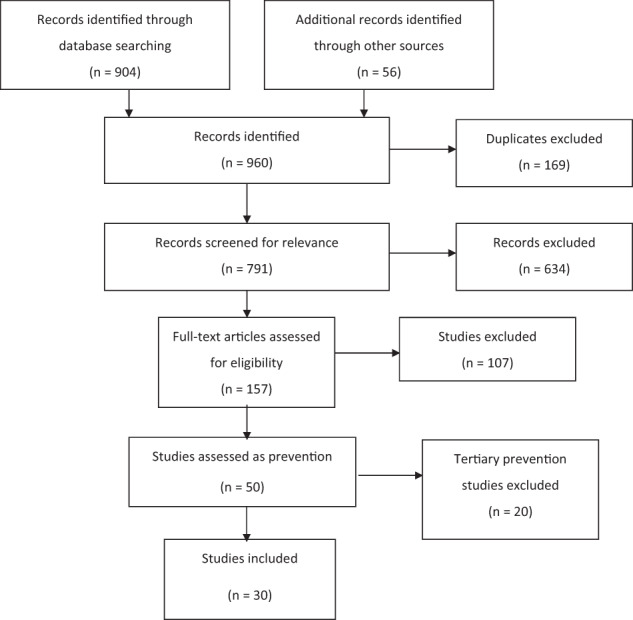
Digital health interventions (DHIs) have frequently been highlighted as one way to respond to increasing levels of mental health problems in children and young people. Whilst many are developed to address existing mental health problems, there is also potential for DHIs to address prevention and early intervention. However, there are currently limitations in the design and reporting of the development, evaluation and implementation of preventive DHIs that can limit their adoption into real-world practice. This scoping review aimed to examine existing evidence-based DHI interventions and review how well the research literature described factors that researchers need to include in their study designs and reports to support real-world implementation. A search was conducted for relevant publications published from 2013 onwards. Twenty-one different interventions were identified from 30 publications, which took a universal ( n = 12), selective ( n = 3) and indicative ( n = 15) approach to preventing poor mental health. Most interventions targeted adolescents, with only two studies including children aged ≤10 years. There was limited reporting of user co-design involvement in intervention development. Barriers and facilitators to implementation varied across the delivery settings, and only a minority reported financial costs involved in delivering the intervention. This review found that while there are continued attempts to design and evaluate DHIs for children and young people, there are several points of concern. More research is needed with younger children and those from poorer and underserved backgrounds. Co-design processes with children and young people should be recognised and reported as a necessary component within DHI research as they are an important factor in the design and development of interventions, and underpin successful adoption and implementation. Reporting the type and level of human support provided as part of the intervention is also important in enabling the sustained use and implementation of DHIs.
Overview
The claims and statistics of this paper haven’t been checked yet.
Free: it reads the open-access text and checks the first 5 claims that cite a source we can check. Create a free account to check every claim.
Integrity signals
Registry
Cites
Statistics
Figures
Verification
Claims the paper makes
The claims and statistics of this paper haven’t been checked yet.
Free: it reads the open-access text and checks the first 5 claims that cite a source we can check. Create a free account to check every claim.
Claims other papers make about this one
Each is checked against this paper’s own text: does it say what the citing paper says it does?
The source backs part of the claim, not all of it — or backs it for a different population, condition or comparison.
In the citing paper
“A systematic review of preventive digital interventions for mental health in youth identified only 3 such programs, with no preventive program including children younger than age 7 (Bergin et al., 2020).”
From Perceived acceptability and appropriateness of a web-based program targeting risk for anxiety in young children and their parents (2025) · cites this paper as Bergin et al., 2020
Experimental — accuracy not yet measuredThe source backs part of the claim, not all of it — or backs it for a different population, condition or comparison.
In the citing paper
“Earlier studies suggest that adolescents are open to using mHealth [48].”
From A Smartphone Serious Game for Adolescents (Grow It! App): Development, Feasibility, and Acceptance Study (2022) · cites this paper as [48]
Experimental — accuracy not yet measured
Self-check
Percentages, sums and reported differences re-computed from the paper’s own numbers.
The self-check needs the paper’s full text.
Citations
Cites
Preferred Reporting Items for Systematic Reviews and Meta-Analyses: the PRISMA statement
Moher, D., Liberati, A., Tetzlaff, J., Altman, D. G., & for the PRISMA Group (2009) · BMJ · doi:10.1136/bmj.b2535 · Cited by 83,823
Preferred reporting items for systematic reviews and meta-analyses: the PRISMA Statement.
(2009) · PubMed Central · Cited by 44,859
Scoping studies: towards a methodological framework
Arksey, H., & O'Malley, L. (2005) · International Journal of Social Research Methodology · doi:10.1080/1364557032000119616 · Cited by 36,742
Munn, Z., Peters, M. D. J., Stern, C., Tufanaru, C., McArthur, A., & Aromataris, E. (2018) · BMC Medical Research Methodology · doi:10.1186/s12874-018-0611-x · Cited by 11,385
(2020) · JBI Manual for Evidence Synthesis · doi:10.46658/jbimes-20-12 · Cited by 2,545
(2007) · PubMed Central · Cited by 2,521
Objective user engagement with mental health apps: systematic search and panel-based usage analysis
Baumel, A., Muench, F., Edan, S., & Kane, J. M. (2019) · Journal of Medical Internet Research · doi:10.2196/14567 · Cited by 965
An Operational Classification of Disease Prevention
Gordon, R. (1987) · PsycEXTRA Dataset · doi:10.1037/e659532007-006 · Cited by 860
Hollis, C., Falconer, C. J., Martin, J. L., Whittington, C., Stockton, S., Glazebrook, C., & Davies, E. B. (2017) · Journal of Child Psychology and Psychiatry · doi:10.1111/jcpp.12663 · Cited by 846
Self-citationFleming, T., Bavin, L., Lucassen, M., Stasiak, K., Hopkins, S., & Merry, S. (2018) · Journal of Medical Internet Research · doi:10.2196/jmir.9275 · Cited by 670
Self-citation
Research works printed but not linked: 1
- National Institute for Health and Care Excellence. Depression in children and young people: identification and management (NICE Guideline 134). Available at: https://www.nice.org.uk/guidance/ng134 (2019). 31577402
Cited by
Werner-Seidler, A., Spanos, S., Calear, A. L., Perry, Y., Torok, M., O'Dea, B., Christensen, H., & Newby, J. M. (2021) · Clinical Psychology Review · doi:10.1016/j.cpr.2021.102079 · Cited by 293
Zidaru, T., Morrow, E. M., & Stockley, R. (2021) · Health Expectations · doi:10.1111/hex.13299 · Cited by 119
Effectiveness of digital mental health interventions for university students: An umbrella review
Harith, S., Backhaus, I., Mohbin, N., Ngo, H. T., & Khoo, S. (2022) · PeerJ · doi:10.7717/peerj.13111 · Cited by 105
“Acknowledging that user engagement could play a role in effectiveness, many studies have yet to assess this, which has been supported as future directions by other reviews (Bergin et al., 2020).”
ResultDigital health for quality healthcare: A systematic mapping of review studies
Ibrahim, M. S., Yusoff, H. M., Bakar, Y. I. A., Aung, M. M. T., Abas, M. I., & Ramli, R. A. (2022) · Digital Health · doi:10.1177/20552076221085810 · Cited by 138
“These concerns were highlighted by Bergin et al. 51 whose review reported studies among children on mental health commonly did not include ethnicity and socio-economic status when investigating issue of access to care.”
BackgroundGötzl, C., Hiller, S., Rauschenberg, C., Schick, A., Fechtelpeter, J., Fischer-Abaigar, U., Koppe, G., Durstewitz, D., Reininghaus, U., & Krumm, S. (2022) · Child and Adolescent Psychiatry and Mental Health · doi:10.1186/s13034-022-00522-6 · Cited by 105
“Existing apps available in major app stores rarely use evidence–based frameworks [16–19], frequently do not involve young people in the development [20], and therefore often remain insufficiently tailored to the needs of young users [4, 20, 21].”
BackgroundBanerjee, S., Alsop, P. H., Jones, L. A., & Cardinal, R. N. (2022) · Patterns · doi:10.1016/j.patter.2022.100506 · Cited by 95
Evaluation of the Use of Digital Mental Health Platforms and Interventions: Scoping Review
Balcombe, L., & De Leo, D. (2022) · International Journal of Environmental Research and Public Health · doi:10.3390/ijerph20010362 · Cited by 76
Multimodal Educational Data Fusion for Students’ Mental Health Detection
Guo, T., Zhao, W., Alrashoud, M. R., Tolba, A. K. R., Firmin, S., & Xia, F. (2022) · IEEE Access · doi:10.1109/access.2022.3187502 · Cited by 90
Wright, M., Reitegger, F., Cela, H., Papst, A., & Gasteiger‐Klicpera, B. (2023) · Journal of Youth and Adolescence · doi:10.1007/s10964-023-01735-4 · Cited by 114
“Increasingly, digital technologies, such as mobile apps or web-delivered programs, are being used to meet the needs of mental health promotion within this age group (Bergin et al., 2020).”
Czeisler, M. É., Howard, M. E., & Rajaratnam, S. M. W. (2021) · American Journal of Health Promotion · doi:10.1177/0890117120983982b · Cited by 72
Wani, C., McCann, L., Lennon, M., & Radu, C. (2024) · Journal of Medical Internet Research · doi:10.2196/51376 · Cited by 101
Kornfield, R., Meyerhoff, J., Studd, H., Bhattacharjee, A., Williams, J. J., Reddy, M. C., & Mohr, D. C. (2022) · CHI Conference on Human Factors in Computing Systems · doi:10.1145/3491102.3502046 · Cited by 73
Digital Mental Health Interventions for Young People Aged 16-25 Years: Scoping Review
Potts, C., Kealy, C., McNulty, J. M., Madrid‐Cagigal, A., Wilson, T., Mulvenna, M. D., O’Neill, S. M., Donohoe, G. J., & Barry, M. M. (2025) · Journal of Medical Internet Research · doi:10.2196/72892 · Cited by 75
“Other previous work also identified that more research is needed on preventative DMHIs in young people having poor or underserved backgrounds [205].”
Ludlow, K., Russell, J. K., Ryan, B., Brown, R. L., Joynt, T., Uhlmann, L. R., Smith, G. E., Donovan, C., Hides, L., Spence, S. H., et al. (2023) · DIGITAL HEALTH · doi:10.1177/20552076231216410 · Cited by 42
“26,32,33 A 2019 review of randomised control trials evaluating the effectiveness of DMHIs for those aged 6 – 18 years with depression and anxiety found that of the 34 interventions identi fi ed, none reported involving young people in the design.”
BackgroundSmith, K., Hardy, A., Vinnikova, A., Blease, C., Milligan, L., Hidalgo‐Mazzei, D., Lambe, S., Marzano, L., Uhlhaas, P. J., Ostinelli, E. G., et al. (2024) · JMIR Mental Health · doi:10.2196/57155 · Cited by 51
“…to digital interventions (eg, 46% of individuals aged 13-17 years in the United States reported “almost constant” use of social networking services [45]), effective digital interventions may need to be targeted earlier than in previous studies and tailored to the needs of young people [46,47].”
BackgroundSelf-citationLi, S. H., Achilles, M. R., Spanos, S., Habak, S., Werner-Seidler, A., & O’Dea, B. (2022) · The Cognitive Behaviour Therapist · doi:10.1017/s1754470x22000095 · Cited by 39
“However, a recent review indicated that more than 70% of preventative digital mental interventions for young people did not report on users’ involvement in their design and development (Bergin et al., 2020).”
BackgroundMilitello, L. K., Sobolev, M., Okeke, F., Adler, D. A., & Nahum-Shani, I. B. (2022) · JMIR Formative Research · doi:10.2196/30606 · Cited by 42
Dietvorst, E., Aukes, M. A., Legerstee, J. S., Vreeker, A., Hrehovcsik, M. M., Keijsers, L., & Hillegers, M. H. J. (2022) · JMIR Formative Research · doi:10.2196/29832 · Cited by 35
“Earlier studies suggest that adolescents are open to using mHealth [48].”
BackgroundPetsolari, M., Ibrahim, S. B., & Slovak, P. (2024) · Proceedings of the CHI Conference on Human Factors in Computing Systems · doi:10.1145/3613904.3642619 · Cited by 35
“However, despite their availability and promising outcomes [39, 102], parent training (PT) programs often fall short due to low-engagement, lack of personalisation and limited contextual understanding [28, 72, 176, 302, 323].”
Liverpool, S., Donagh, C. M., Feather, J., Uzondu, C., Howarth, M. L., Bannerman, F., Kaehne, A., Foster, C., & Mateus, C. (2025) · European Child & Adolescent Psychiatry · doi:10.1007/s00787-025-02722-9 · Cited by 53
“Although there is some evidence suggesting high levels of engagement [e.g., 24], there is also evidence highlighting low programme completion [e.g., 119].”
Lockwood, J., Williams, L., Martin, J. L., Rathee, M., & Hill, C. (2022) · JMIR Mental Health · doi:10.2196/29008 · Cited by 35
“…with teachers and guardians, including practical support with processes of enrollment in the study and game setup, were provided to maximize engagement in the study; nonetheless, guardian retention was a challenge, and this was consistent with other evaluation studies in digital mental health [31].”
BackgroundResultOpie, J. E., Vuong, A. T., Welsh, E. T., Esler, T. B., Khan, U. R., & Khalil, H. (2024) · Clinical Child and Family Psychology Review · doi:10.1007/s10567-024-00468-5 · Cited by 46
Hugh‐Jones, S., Pert, K., Kendal, S., Eltringham, S., Skelton, C., Yaziji, N., & West, R. (2022) · Mental Health & Prevention · doi:10.1016/j.mhp.2022.200241 · Cited by 42
Scoping Review: Digital Mental Health Interventions for Children and Adolescents Affected by War
Danese, A., Martsenkovskyi, D., Remberk, B., Khalil, M. Y., Diggins, E., Keiller, E., Masood, S., Awah, I., Barbui, C., Beer, R., et al. (2024) · Journal of the American Academy of Child & Adolescent Psychiatry · doi:10.1016/j.jaac.2024.02.017 · Cited by 68
“91 Furthermore, most interventions identi fi ed relied on online text or videos to deliver their content, simply digitizing content that was previously available in lea fl ets or books.”
Finlay‐jones, A. L., Parkinson, A., Sirois, F. M., Perry, Y., Boyes, M. E., & Rees, C. S. (2023) · Journal of Medical Internet Research · doi:10.2196/44016 · Cited by 41
“…the trial; this aligns with the recommendation from a recent systematic review of preventative interventions for children and young people: “co-design processes with children and young people should be recognized and reported as a necessary component” of digital health intervention research [81].”
BackgroundUnderstanding Mental Health Apps for Youth: Focus Group Study With Latinx Youth
Agapie, E., Chang, K., Patrachari, S., Neary, M., & Schueller, S. M. (2022) · JMIR Formative Research · doi:10.2196/40726 · Cited by 32
“Studies on MHapps for youth have been characterized by poor uptake and engagement, lack of specification of procedures such as human support, and a lack of research on younger children or traditionally marginalized populations [29].”
BackgroundBarker, T. G., O’Higgins, A., Fonagy, P., & Gardner, F. E. M. (2024) · Journal of Affective Disorders · doi:10.1016/j.jad.2023.12.080 · Cited by 32
Povey, J., Sweet, M., Nagel, T., Lowell, A., Shand, F., Vigona, J., & Dingwall, K. M. (2022) · JMIR Formative Research · doi:10.2196/28342 · Cited by 26
Hall, C. L., Bergin, A., & Rennick‐Egglestone, S. (2024) · Journal of Medical Internet Research · doi:10.2196/58939 · Cited by 43
“Conversely, there are several well-validated DMHIs that may never be implemented in routine health care settings [68].”
Self-citationAdvances in digital CBT: where are we now, and where next?
Thew, G. R., Rozental, A., & Hadjistavropoulos, H. D. (2022) · The Cognitive Behaviour Therapist · doi:10.1017/s1754470x22000423 · Cited by 33
Knapp, A. A., Hersch, E., Wijaya, C., Herrera, M. A., Kruzan, K. P., Carroll, A. J., Lee, S., Baker, A., Gray, A., Harris, V., et al. (2023) · Frontiers in Digital Health · doi:10.3389/fdgth.2023.1183319 · Cited by 31
Dietvorst, E., Legerstee, J. S., Vreeker, A., Koval, S., Mens, M. M., Keijsers, L., & Hillegers, M. H. J. (2023) · European Child & Adolescent Psychiatry · doi:10.1007/s00787-022-01982-z · Cited by 24
“Moreover, feasibility studies suggest that adolescents perceive mHealth as less stigmatizing compared to face-to-face health care [13].”
BackgroundCoulaud, P.-J., Jesson, J., Bolduc, N., Ferlatte, O., Jenkins, E., Bertrand, K., Salway, T., Jauffret‐Roustide, M., & Knight, R. (2022) · Community Mental Health Journal · doi:10.1007/s10597-022-01000-1 · Cited by 29
“, telemedicine, online therapy) such as difficulty to reach people in need, develop quality services, and support to scale up those interventions (Bergin et al., 2020).”
BackgroundSakellari, Ε., Notara, V., Lagiou, A., Fatkulina, N., Ivanova, S., Korhonen, J., Velikonja, N. K., Lalova, V., Laaksonen, C., Petrova, G. G., et al. (2021) · Children · doi:10.3390/children8050345 · Cited by 34
“Likewise, in a recent systematic review, even though the majority of the identified studies reported interventions with the use of the internet, the authors concluded that universal and selective primary prevention interventions were also not available to children aged ≤9 years [59].”
BackgroundIndia's policy and programmatic response to mental health of young people: A narrative review
Girase, B., Parikh, R., Vashisht, S., Mullick, A., Ambhore, V., & Maknikar, S. (2022) · SSM - Mental Health · doi:10.1016/j.ssmmh.2022.100145 · Cited by 35
“Community-based, non-specialist care models using digital technologies are being developed and tested by academicians and researchers with promising results (Bergin et al., 2020; Deb et al., 2018; Sreejith and Menon, 2019).”
Personalization in Digital Psychological Interventions for Young Adults
Jahedi, F., Henman, P. W. F., & Ryan, J. C. (2022) · International Journal of Human-Computer Interaction · doi:10.1080/10447318.2022.2158261 · Cited by 26
“A lack of user personalization might also signify a lack of involvement of users in the design of digital mental health solutions as co-designers (Bergin et al., 2020; Jones et al., 2020).”
BackgroundKotera, Y., Rennick-Egglestone, S., Ng, F., Llewellyn-Beardsley, J., Ali, Y., Newby, C., Fox, C., Slade, E., Bradstreet, S., Harrison, J., et al. (2023) · JMIR Mental Health · doi:10.2196/44601 · Cited by 21
“DMHIs have become an important domain in medical internet research [13-15].”
BackgroundHuffman, L. G., Lawrence‐Sidebottom, D., Huberty, J., Roots, M., Roots, K., Parikh, A., Guerra, R., & Weiser, J. (2023) · JMIR Pediatrics and Parenting · doi:10.2196/46154 · Cited by 24
“This dearth of research also means that many questions remain regarding the basic factors associated with treatment effectiveness, such as the length of treatment and demographic and socioeconomic status [17].”
BackgroundVial, S., Boudhraâ, S., Dumont, M., Tremblay, M., & Riendeau, S. (2023) · JMIR Research Protocols · doi:10.2196/47220 · Cited by 25
“Few studies in mental health report using co-design in the development of their applications [11,21], and even fewer embrace its principles [7,22,23].”
BackgroundChildren and Young People’s Involvement in Designing Applied Games: Scoping Review
Saiger, M. J., Deterding, S., & Gega, L. (2023) · JMIR Serious Games · doi:10.2196/42680 · Cited by 27
“Involving users in the design process has been shown to improve use and treatment engagement [13,14], usability [15], and system adoption and adherence across stakeholders [16-18].”
BackgroundToward a New Conceptual Framework for Digital Mental Health Technologies: Scoping Review
Hopkin, G., Coole, H., Edelmann, F., Ayiku, L., Branson, R., Campbell, P., Cooper, S., & Salmon, M. (2025) · JMIR Mental Health · doi:10.2196/63484 · Cited by 20
“Due to the lack of rigorous work in this area, there have been calls from researchers and other stakeholders to develop improved frameworks for DMHTs to help address issues across research, evaluation, regulation, and HTA [15,16].”
Moltrecht, B., Patalay, P., Bear, H. A., Deighton, J., & Edbrooke-Childs, J. H. (2022) · JMIR Formative Research · doi:10.2196/28300 · Cited by 26
“Mobile apps for children represent a promising pathway for providing effective mental health support; however, there is a significant lack of mental health apps for this age group (ages 10-12 years) [7,9].”
BackgroundBiernesser, C., Win, E., Escobar-Viera, C., Farzan, R., Rose, M., & Goldstein, T. (2023) · Internet Interventions · doi:10.1016/j.invent.2023.100663 · Cited by 21
Armaou, M., Pears, M., Konstantinidis, S. T., & Blake, H. (2024) · International Journal of Environmental Research and Public Health · doi:10.3390/ijerph21030375 · Cited by 18
“Another limitation that generally applies to bibliometric analyses is that research themes are defined by the choice of authors’ keywords, not the actual content of a study; thus, only citations provide an estimate of the importance of specific studies within a field.”
BackgroundRaeside, R., Jia, S. S., Todd, A., Hyun, K. K., Singleton, A. C., Gardner, L. A., Champion, K. E., Redfern, J., & Partridge, S. R. (2023) · Adolescent Research Review · doi:10.1007/s40894-023-00224-w · Cited by 32
“Furthermore, there is increasing research into the application of digital health interventions for prevention of mental health conditions among adolescents (Bantjes, 2022; Bergin et al., 2020; Werner-Seidler et al., 2020).”
Hogg-Bremer, W., & Sarker, A. (2022) · Informatics for Health and Social Care · doi:10.1080/17538157.2022.2082297 · Cited by 21
“13 Despite the flurry of literature reviews in this space, which are much needed to improve the state-of-the-art in mHealth technologies, there are still important gaps that need to be studied.”
BackgroundRaeside, R., Todd, A., Sim, K. A., Kang, M. S., Mihrshahi, S., Gardner, L. A., Champion, K. E., Skinner, J. C., Laranjo, L., Steinbeck, K. S., et al. (2024) · Frontiers in Public Health · doi:10.3389/fpubh.2024.1389739 · Cited by 19
O’Dea, B., KING, C. A., Achilles, M. R., Calear, A. L., & Subotic-Kerry, M. (2021) · Health Services Insights · doi:10.1177/11786329211017689 · Cited by 15
Rapid Evidence Review of Digital Cognitive-Behavioral Therapy for Adolescents With Depression
Ivlev, I., Beil, T. L., Haynes, J. S., & Patnode, C. D. (2022) · Journal of Adolescent Health · doi:10.1016/j.jadohealth.2022.01.220 · Cited by 13
Povey, J., Raphiphatthana, B., Torok, M. H., Nagel, T. M., Mills, P. P. J. R., Sells, J. R. H., Shand, F., Sweet, M., Lowell, A., & Dingwall, K. M. (2023) · Systematic Reviews · doi:10.1186/s13643-023-02262-w · Cited by 15
“They rely on computerised systems that are less resource-dependent and easily scalable, thereby reducing cost, increasing accessibility, and improving treatment fidelity [16, 17].”
BackgroundReal-time personalized feedback in mHealth for adolescents
Dietvorst, E., Hillegers, M. H. J., Legerstee, J. S., de Vries, L. P., Vreeker, A., & Keijsers, L. (2024) · Digital Health · doi:10.1177/20552076241247937 · Cited by 19
“Thirdly, from a user perspective, adolescents may perceive mHealth as less stigmatizing compared to face-to-face health-care, 4 and it may also have a better fi t with their natural ways of interacting with others, which increasingly takes place online.”
BackgroundPovey, J., Raphiphatthana, B., Torok, M. H., Nagel, T. M., Shand, F., Sweet, M., Lowell, A., Mills, P. P. J. R., & Dingwall, K. M. (2021) · Systematic Reviews · doi:10.1186/s13643-021-01685-7 · Cited by 16
“websites, online game or SMS support) will not be eligible, as these services are more closely aligned with face-to-face services than dMH services which rely on computerised systems and are designed to be less resource dependent and easily replicated to the wider population [52, 53].”
BackgroundCross, S. P. M., Mangelsdorf, S. N., Valentine, L., O’Sullivan, S., McEnery, C., Scott, I., Gilbertson, T., Louis, S., Myer, J., Liu, P., et al. (2025) · Internet Interventions · doi:10.1016/j.invent.2025.100849 · Cited by 18
“Two recent reviews of 21 (Bergin et al., 2020) and 71 (Liverpool et al., 2020) youth DMHIs concluded that while these interventions show promise, more research is required to establish their real-world effectiveness and cost-effectiveness.”
No decision about me, without me: Collaborating with young people in mental health research
Lloyd, A., Wu, T. C.-H., Lucas, L., Agunbiade, A., Saleh, R., Fearon, P. R. M., & Viding, E. M. (2024) · JCPP Advances · doi:10.1002/jcv2.12291 · Cited by 18
Davies, S. M., Jardine, J., Gutridge, K., Bernard, Z., Park, S., Dawson, T., Abel, K. M., & Whelan, P. (2021) · JMIR Formative Research · doi:10.2196/30668 · Cited by 14
Mirzadegan, I. A., Lewis, E. M., Cole, S. L., & Meyer, A. (2025) · Journal of Pediatric Psychology · doi:10.1093/jpepsy/jsae040 · Cited by 10
Hong, M., Liang, D., Lu, T., & Liu, S. (2023) · Frontiers in Psychology · doi:10.3389/fpsyg.2023.1213089 · Cited by 10
“In response to the mental health needs of this demographic, an increasing number of digital technologies, such as mobile applications and web delivery programs, are being developed and applied (Bergin et al., 2020).”
BackgroundReitegger, F., Peras, I., Wright, M., & Gasteiger‐Klicpera, B. (2024) · Adolescent Research Review · doi:10.1007/s40894-024-00237-z · Cited by 20
Auva’a-Alatimu, T., Alefaio‐Tugia, S., & Ioane, J. (2024) · International Journal of Mental Health Systems · doi:10.1186/s13033-024-00633-x · Cited by 14
Cai, Z., Fang, H., Liu, J., Xu, G., Long, Y., Guan, Y., & Ke, T. (2025) · Artificial Intelligence in Medicine · doi:10.1016/j.artmed.2025.103087 · Cited by 13
Self-citationLee, Y. Y., Le, L. K., Lal, A., Engel, L., & Mihalopoulos, C. (2021) · Mental Health & Prevention · doi:10.1016/j.mhp.2021.200210 · Cited by 13
Johnson, S. S., Czeisler, M. É., Howard, M. E., Rajaratnam, S. M. W., Sumner, J. A., Koenen, K. C., Kubzansky, L. D., Greenberger, H. M., Pande, R. L., & Mendell, G. (2021) · American Journal of Health Promotion · doi:10.1177/0890117120983982 · Cited by 12
Fernández-León, P., Lima‐Serrano, M., Fagundo-Rivera, J., & Martínez-Montilla, J. M. (2025) · Health Education Research · doi:10.1093/her/cyaf021 · Cited by 11
Giansanti, D., Siotto, M., Parisi, L., & Aprile, I. G. (2022) · International Journal of Environmental Research and Public Health · doi:10.3390/ijerph19106135 · Cited by 11
“This approach showed two potentialities: the first is reaching subjects and investigating their state of mental health, even for preventive purposes; the second consists in setting up a self-awareness tool that stimulates subjects to take care of themselves [8,9].”
BackgroundMethodInfluentialHolst, C. G., Oncioiu, S. I., Creswell, C., & Bowes, L. (2023) · JAACAP Open · doi:10.1016/j.jaacop.2023.05.003 · Cited by 13
Transdiagnostic prevention in youth mental health, Part II: interventions
DeTore, N. R., Balogun‐Mwangi, O., Choi, K. W., & Holt, D. J. (2025) · Neuropsychopharmacology · doi:10.1038/s41386-025-02234-9 · Cited by 13
Universal digital mental health interventions for children and youth: a scoping review
Pierdomenico, K. D., Bucsea, O., Leguia, A., Hashemi, H., Lovegrove, A., Cribbie, R. A., & Riddell, R. P. (2025) · Frontiers in Digital Health · doi:10.3389/fdgth.2025.1665975 · Cited by 12
Guinart, D., Fagiolini, A. M., Fusar‐Poli, P., Giordano, G. M., Leucht, S., Moreno, C., & Correll, C. U. (2024) · Neuropsychiatric Disease and Treatment · doi:10.2147/ndt.s456163 · Cited by 8
Davies, E. B., & Bergin, A. (2021) · Journal of Child Psychology and Psychiatry · doi:10.1111/jcpp.13423 · Cited by 22
“The authors acknowledge the important role of parents/caregivers in supporting their child’s engagement in implementing the intervention, but evidence regarding this is lacking, perhaps as little research has involved younger children who are more dependent on parental support (Bergin et al., 2020).”
BackgroundInfluentialSelf-citationKaya, M., & McCabe, C. (2022) · International Journal of Environmental Research and Public Health · doi:10.3390/ijerph19158927 · Cited by 10
“As adolescents have widespread internet availability via smartphones, digital interventions could be the way forward to treat otherwise hard-to-reach young people [16,17].”
BackgroundMendes, J. A. D. A., Lucassen, M. F. G., Adams, A., Martin, L., Aicardi, C., Woodcock, R., Nielsen, E., Townsend, E., & Jirotka, M. D. (2024) · Research Involvement and Engagement · doi:10.1186/s40900-024-00591-1 · Cited by 10
Hammami, N., & Katapally, T. R. (2022) · Preventive Medicine Reports · doi:10.1016/j.pmedr.2022.101944 · Cited by 7
Birnkammer, S., & Calvano, C. (2023) · Children · doi:10.3390/children10020207 · Cited by 11
Figueroa, C. A., Pérez‐Flores, N. J., Guan, K., & Stiles‐Shields, C. (2024) · BMJ Open · doi:10.1136/bmjopen-2023-081673 · Cited by 5
“25 These studies likely point to a lack of inclusive and equitable representation among users.”
BackgroundHuman-Centered Design and Digital Transformation of Mental Health Services
Fleming, W. J., Coutts, A. P., Pochard, D., Trivedi, D. P., & Sanderson, K. A. (2025) · JMIR Human Factors · doi:10.2196/66040 · Cited by 13
“Some level of co-design is almost always argued in the development of prevention interventions to ensure either underrepresented voices are included [103], engagement with products is maintained [102,104], or there is trust generally between users, designers, and health professionals [102].”
Bolesnikov, A., Golshan, A., Tierney, L., Mann, A., Kang, J., & Girouard, A. (2022) · Lecture notes of the Institute for Computer Sciences, Social Informatics and Telecommunications Engineering · doi:10.1007/978-3-030-99194-4_13 · Cited by 6
Spaan, P., van den Boogert, F., Mil, N. H. G., Hoogendijk, W. J. G., & Roza, S. J. (2023) · Journal of Research on Adolescence · doi:10.1111/jora.12858 · Cited by 10
Côté, L., & Lane, J. (2023) · JMIR Formative Research · doi:10.2196/46195 · Cited by 7
“For example, the technical aspects of developing, maintaining, and operating digital interventions have rarely been discussed [21,22].”
BackgroundChew, J., Frings, D., Reavey, P., & Allabyrne, C. (2026) · Digital Health · doi:10.1177/20552076251406323 · Cited by 4
“33 Previous studies indicate that only a small proportion of existing literature focuses DMHIs on younger children aged 12 and below, 34,35 leading to a lack of high-quality evidence available for this age group.”
Abdulwahab, L. O., Daniel, O., Gul, A., & Umar, H. B. (2026) · IGI Global eBooks · doi:10.4018/979-8-3373-3531-5.ch002 · Cited by 7
Knepper, A. K., Feinstein, R. T., Sanchez-Flack, J., Fitzgibbon, M., Lefaiver, C. A., McHugh, A., Gladstone, T. R. G., & Voorhees, B. W. V. (2024) · Implementation Research and Practice · doi:10.1177/26334895241246203 · Cited by 4
“However, more robust evidence from large, well-controlled clinical trials for such interventions is crucial (Bergin et al., 2020).”
BackgroundWeerasekara, M., & Smedberg, Å. B. (2023) · BMC Public Health · doi:10.1186/s12889-023-15480-7 · Cited by 8
Romm, K. L., Skoge, M., Barrett, E. A., Berentzen, L., Bergsager, D., Fugelli, P., Bjella, T. D., Gardsjord, E. S., Kling, K., Kruse, S. H., et al. (2025) · JMIR Formative Research · doi:10.2196/57614 · Cited by 9
“Despite extensive research on the importance of applying design principles to technology to make it effective, only a limited number of studies in mental health care report using co-design and expert designers in their developmental process [26,28].”
The Road to Digitally-Driven Mental Health Services: Remote Psychological Interventions
Dores, A. R., Geraldo, A., & Martins, H. (2021) · Advances in psychology, mental health, and behavioral studies (APMHBS) book series · doi:10.4018/978-1-7998-8634-1.ch003 · Cited by 4
Maddison, C., Wharrad, H. J., Archard, P. J., & O’Reilly, M. J. (2023) · Mental Health Practice · doi:10.7748/mhp.2023.e1671 · Cited by 4
Bjornstad, G. J., Sonthalia, S., Rouse, B., Freeman, L., Hessami, N., Dunne, J. H., & Axford, N. (2024) · Campbell Systematic Reviews · doi:10.1002/cl2.1376 · Cited by 8
Kaubisch, S., Kloek, M., Primbs, R., Iglhaut, L., Piechaczek, C., Keim, P., Feldmann, L., Schulte‐Körne, G., & Greimel, E. (2025) · Internet Interventions · doi:10.1016/j.invent.2025.100872 · Cited by 4
“Therefore, digital technologies are increasingly being utilized to address the mental health promotion needs of this age group (Bergin et al., 2020) and a growing number of research indicates their potential (Wright et al., 2023).”
Giansanti, D., Siotto, M., Maccioni, G., & Aprile, I. G. (2022) · Healthcare · doi:10.3390/healthcare10071242 · Cited by 4
“Through mTech it is possible to monitor mental problems, providing specific and consolidated tests remotely to obtain objective measures [9], with the potential to inform structured mental health interventions [10].”
BackgroundMolloy, C. S., Beatson, R. M., Fehlberg, Z., Macmillan, C. M., Harrop, C., Perini, N., & Goldfeld, S. R. (2025) · Children and Youth Services Review · doi:10.1016/j.childyouth.2025.108610 · Cited by 2
Obse, A., Pavarini, G., Fazel, M. S., Ma, M., Fancourt, D. E., Morgan, C., Harriss, E. P., Bhui, K. S., Smith, L., Hugh‐Jones, S., et al. (2026) · European Child & Adolescent Psychiatry · doi:10.1007/s00787-025-02932-1 · Cited by 4
“DHIs can be designed for providing mental health prevention and promotion services [22] or treatment of existing mental health problems [20].”
Designing and Evaluating Digital Mental Health Interventions: Scoping Review
Mbawa, S. Z., de Vries, R. A. J., Siebert, L. C., van Turnhout, K., & Brinkman, W. (2026) · JMIR Mental Health · doi:10.2196/77038 · Cited by 4
“…intelligence–based virtual agents for mental health care [30,31], digital platforms for early interventions in young people with mental health challenges [32,33], mobile health interventions for suicide prevention [34], virtual reality psychotherapy [35,36], and internet-delivered CBT [37].”
Kindergarten children’s reactions to the COVID-19 pandemic: Creating a sense of coherence
Paryente, B., & Gez-Langerman, R. (2022) · Journal of Early Childhood Research · doi:10.1177/1476718x221145471 · Cited by 3
“Many parents have reported that their children, aged 4–10, are experiencing emotional distress as demonstrated by heightened dependence on their parents and the expression of worries and fears (Bergin et al., 2020; Brooks et al., 2020).”
BackgroundJonas, R. M., Hanrahan, B. V., Sloan, C. J., & Fosco, G. M. (2023) · ACM Conference on Computer Supported Cooperative Work (CSCW) · doi:10.1145/3584931.3606969 · Cited by 3
“Recent work reviewing existing digital mental health interventions for children and young adults has noted that there is an opportunity for tools focused on preventative care and early intervention [4].”
Yang, Y., Law, M. A., & Vaghri, Z. (2024) · PLoS ONE · doi:10.1371/journal.pone.0301008 · Cited by 4
“Similarly, the development of digital health interventions has recently proliferated [292– 294] with mixed reviews [144] appearing to work better than no intervention for some disorders when used in settings that are highly supervised.”
BackgroundGibson, K. L., Trnka, S. H., Jonas, M., Pomare, P., Thompson, S., Tiatia‐Seath, J., Ma'ia'i, K. A., Aoake, M., Bouttier-Esprit, T., Spray, I., et al. (2024) · Digital Health · doi:10.1177/20552076241260116 · Cited by 2
“34 However, research on young people ’ s engagement with the internet suggests that they seldom engage with a single digital platform and rather treat the digital environment like a buffet from which they can select and curate their own resources.”
BackgroundPediatric Mental Health Prevention Programs in Primary Care
Chen, Y., Zhong, D., Roby, E., Canfield, C. F., & Mendelsohn, A. L. (2024) · Pediatric Clinics of North America · doi:10.1016/j.pcl.2024.07.015 · Cited by 2
Draper, C. E., Cook, C. J., Ankrah, E. A., Beltran, J. A., Cibrian, F. L., Lakes, K. D., Mofid, H., Williams, L., & Hayes, G. R. (2025) · Infant and Child Development · doi:10.1002/icd.2567 · Cited by 2
Digital mental health and employment - Lessons from the Australian experience
Rosenberg, S. P., Salvador‐Carulla, L., Lukersmith, S., & Bagheri, N. (2022) · The European Journal of Psychiatry · doi:10.1016/j.ejpsy.2022.08.001 · Cited by 3
Predictors of participation in online self-management programs: A longitudinal observational study.
Staguhn, E. D., Kirkhart, T., Allen, L., Campbell, C. M., Wegener, S. T., & Castillo, R. C. (2023) · Rehabilitation Psychology · doi:10.1037/rep0000521 · Cited by 1
Ocasio, M. A., Fernandez, M. I., Cortese, S., & Kampa, K. (2023) · PLoS ONE · doi:10.1371/journal.pone.0290149 · Cited by 1
“Health promotion interventions and programs are increasingly using digital technologies [30, 31].”
Background
Metadata
- Authors
- Bergin, A. D., Vallejos, E. P., Davies, E. B., Daley, D., Ford, T., Harold, G., Hetrick, S., Kidner, M., Long, Y., Merry, S., Morriss, R., Sayal, K., Sonuga-Barke, E., Robinson, J., Torous, J., & Hollis, C.
- Affiliations
- University of Nottingham (GB)
- University of Cambridge (GB)
- Trinity College Dublin (IE)
- University of Auckland (NZ)
- University of Exeter (GB)
- University of Essex (GB)
- King's College London (GB)
- The University of Melbourne (AU)
- Beth Israel Deaconess Medical Center (US)
- Corresponding author
- Bergin, Aislinn D.
- ORCID
- Venue
- npj Digital Medicine
- Published
- 2020-10-15
- Volume
- 3
- Issue
- 1
- Pages
- 133-133
- ISSN
- 2398-6352 (ISSN-L)
- PMC
- PMC7562906
- OpenAlex
- W3094330626
- Cited by
- 157
- References
- 67
- Citations by year
- 2026: 27 · 2025: 23 · 2024: 32 · 2023: 25 · 2022: 33 · 2021: 17
- FWCI
- 2.95
- Type
- journal article
- Language
- en
- Open access
- gold
- doi.org
- Licence
- cc-by
- creativecommons.org/licenses/by/4.0 (tdm)
- creativecommons.org/licenses/by/4.0 (vor)
- Locations
- npj Digital Medicine (publishedVersion, cc-by)
- PubMed Central (publishedVersion, cc-by)
- PubMed (publishedVersion)
- Research Portal (King's College London) (publishedVersion, other-oa)
- Repository@Nottingham (University of Nottingham) (publishedVersion, cc-by)
- Repository@Nottingham (University of Nottingham) (submittedVersion, cc-by)
- Open Access at Essex (University of Essex) (submittedVersion)
- Apollo (University of Cambridge) (submittedVersion, cc-by)
- DOAJ (DOAJ: Directory of Open Access Journals) (submittedVersion, cc-by-sa)
- Minerva Access (University of Melbourne) (submittedVersion, cc-by)
- Scopus (Elsevier) (submittedVersion, other-oa)
- ResearchSpace (University of Auckland) (submittedVersion, cc-by)
- Apollo (cc-by)
- Apollo
- Funders
- National Institute for Health and Care Research (NF-SI-0617-10016, NIHR200263, NF-SI-0514-10119)
- Department of Health and Social Care
- Auckland Medical Research Foundation
- Cure Kids
- NIHR Maudsley Biomedical Research Centre
- Arts and Humanities Research Council (AH/T003804/1, AH/K003364/1)
- Engineering and Physical Sciences Research Council (EP/M02315X/1, EP/R033633/1, EP/N02785X/1, EP/G065802/1)
- Economic and Social Research Council (ES/S004467/2, ES/S004467/1, ES/L014718/1, ES/M00161X/1)
- NIHR Nottingham Biomedical Research Centre
- Topics
- Social Sciences › Psychology › Applied Psychology › Digital Mental Health Interventions
- Health Sciences › Health Professions › General Health Professions › Mobile Health and mHealth Applications
- Social Sciences › Sociology and Political Science › Impact of Technology on Adolescents
- Keywords
- digital mental health interventions, preventive interventions, children and young people, adolescent mental health, universal prevention, selective prevention, co-design, implementation barriers and facilitators, intervention costs, reporting quality, early intervention
About these checks
Registry, retraction, Cites and statistics results are computed, not judged, with one exception: a printed reference that no index lists is read once by a model before it counts as a citation error. Claims are extracted by a model and kept only when their quote appears verbatim in the text; each cited source is then checked, with a model’s help, for whether it says what the claim relies on. Those verdicts can be wrong — read the claim’s quote and the cited source before relying on one.
Statistics and arithmetic are recomputed, not judged.
Confidence bands are shown only for fields calibrated on our annotated test set. None is calibrated yet, so no band is shown.
What counts as a claim ›How we measure confidence ›How we check this ›
Are you an author, or do you see a problem with this page? Request a review
Data sources
Bibliographic data: Semantic Scholar, OpenAlex, Crossref.
Contains information from the Semantic Scholar Academic Graph Datasets, made available under the ODC Attribution License (ODC-BY 1.0).
Semantic Scholar’s data is described in: Kinney, R., et al. (2023). The Semantic Scholar Open Data Platform. arXiv:2301.10140.
