

The future of sleep health: a data-driven revolution in sleep science and medicine
Open accessThe DOI matches its Crossref record; 200 of the 202 references it cites were found in a registry or an index; 30 of the 88 sources its claims cite were checked for support.
Abstract
In recent years, there has been a significant expansion in the development and use of multi-modal sensors and technologies to monitor physical activity, sleep and circadian rhythms. These developments make accurate sleep monitoring at scale a possibility for the first time. Vast amounts of multi-sensor data are being generated with potential applications ranging from large-scale epidemiological research linking sleep patterns to disease, to wellness applications, including the sleep coaching of individuals with chronic conditions. However, in order to realise the full potential of these technologies for individuals, medicine and research, several significant challenges must be overcome. There are important outstanding questions regarding performance evaluation, as well as data storage, curation, processing, integration, modelling and interpretation. Here, we leverage expertise across neuroscience, clinical medicine, bioengineering, electrical engineering, epidemiology, computer science, mHealth and human-computer interaction to discuss the digitisation of sleep from a inter-disciplinary perspective. We introduce the state-of-the-art in sleep-monitoring technologies, and discuss the opportunities and challenges from data acquisition to the eventual application of insights in clinical and consumer settings. Further, we explore the strengths and limitations of current and emerging sensing methods with a particular focus on novel data-driven technologies, such as Artificial Intelligence.
Overview
CoChat Summary
## TL;DR
This is a narrative review that proposes a five-step “Digital Sleep Framework” for moving from sleep data acquisition to clinical and consumer applications. It argues that digital sleep technologies and AI could enable scalable, unobtrusive sleep monitoring, but only if major issues in validation, interoperability, bias, privacy, and reproducibility are addressed.
## Key findings
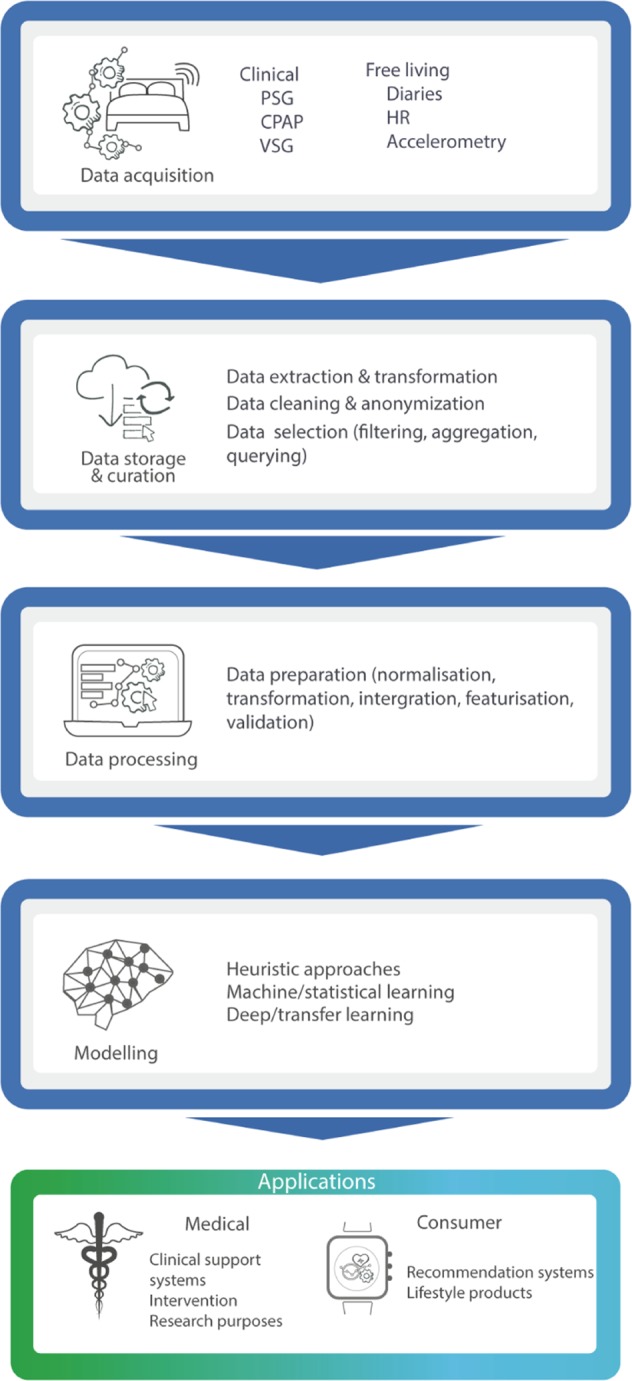
- The paper frames sleep digitization around a five-step framework: data acquisition, data storage and curation, data pre-processing, AI-based sleep modelling, and data-driven applications.
- PSG remains the gold standard, but it is “expensive, time-consuming” and impractical for long-term home use; ambulatory PSG is described as only a partial solution.
- Actigraphy and accelerometry are recognized by the American Academy of Sleep Medicine as valid for sleep assessment, but the paper states three key limitations: lack of validation across consumer devices, lack of standardization in human-activity recognition, and lack of assessment techniques for daytime sleeping.
- Some methods reported specific performance figures: a single-channel EEG ensemble model reached an agreement rate of 0.87 versus expert scoring, in-ear sensor sleep-stage prediction reached 74% agreement with full PSG, ultrasound-based movement detection showed 86% recall and <10% error, and iSleep reported >90% accuracy for event classification.
## Methods
- Narrative review / perspective article synthesizing prior literature on sleep sensing, storage, preprocessing, modelling, and applications; no original participant study is reported.
- The authors organize the discussion using a five-step “Digital Sleep Framework” spanning multi-modal acquisition through end-user application.
- The analysis is qualitative and literature-based, citing examples across PSG, actigraphy, EEG, mobile sensing, bed sensors, WiFi/radio sensing, cloud/fog architectures, and machine learning/deep learning methods.
## Limitations
- The paper explicitly notes that “few methods have been validated against gold-standard PSG or undergone systematic reliability assessment.”
- It also states that consumer-oriented sleep technologies “lack validation” and that their underlying models “change frequently.”
- Evident from the text: this is not an empirical evaluation of specific devices or algorithms; it is a broad synthesis, so its conclusions depend on the cited literature rather than new data collected in the paper.
Model-written summary. Check it against the paper before relying on it.
Integrity signals
Registry
Cites
Statistics
Figures
Verification
Claims the paper makes
24 Valid · 16 Not valid · 41 Not checked · 47 Own results and interpretations
The cited sources support only part of this claim — read each source’s verdict below.
In the paper
“Traditionally, polysomnography (PSG), paired with clinical evaluation, has been the gold-standard and de-facto technique to study sleep in clinical and laboratory settings, as well as to diagnose a subset of sleep disorders37.”
§ The future of sleep health: a data-driven revolution in sleep science and medicine > Sleep data acquisition
What the sources say
- Partly supportedcites [37] Morgenthaler TI Practice parameters for the clinical evaluation and treatment of circadian rhythm sleep disorders. An American Academy of Sleep Medicine report Sleep 2007 30 1445 1459 10.1093/sleep/30.11.1445 18041479 PMC2082098 sourceExperimental — accuracy not yet measured
Section 3.1.6 says PSG is indicated when a patient with suspected circadian rhythm sleep disorder may also have another primary sleep disorder, such as obstructive sleep apnea. Section 3.2.2.1 describes its use in laboratory studies of simulated jet lag. The paper does not establish PSG as the traditional gold-standard or de-facto technique for studying sleep across clinical and laboratory settings; it says PSG is not routinely indicated to diagnose circadian rhythm sleep disorders. (LLM, conf=0.84)
plain- Asserted: passes — The authors put it forward as true.
- Checkable: passes — It can be checked against evidence.
- Load-bearing: unclear — It is unclear whether the paper’s conclusions depend on it.
- Based: passes — The paper gives a reason why it holds.
- Partly supported
The cited sources support only part of this claim — read each source’s verdict below.
In the paper
“Body movements, breathing and even cardiac activities can be detected by the volume change of the pneumatic underneath an individual whilst they are lying in bed52–54.”
§ The future of sleep health: a data-driven revolution in sleep science and medicine > Sleep data acquisition > Emerging sleep-sensing technologies
What the sources say
- Not checked — no full text of the sourcecites [52] Chow P Nagendra G Abisheganaden J Wang Y Respiratory monitoring using an air-mattress system Physiol. Meas. 2000 21 345 10.1088/0967-3334/21/3/301 10984203 source
- Supportedcites [53] Chee Y Han J Youn J Park K Air mattress sensor system with balancing tube for unconstrained measurement of respiration and heart beat movements Physiol. Meas. 2005 26 413 10.1088/0967-3334/26/4/007 15886436 source
The Introduction explains that respiration and heart-beat movements press on the air mattress and change its air pressure. The Measurement results from the human body show signals from a person lying on the mattress, including breathing, heart beats, and body movement. The paper measures pressure changes in the air cells rather than volume directly, but this supports the claim’s description of pneumatic changes beneath the person. (LLM, conf=0.89)
- Partly supportedcites [54] Arlotto P Grimaldi M Naeck R Ginoux J-M An ultrasonic contactless sensor for breathing monitoring Sensors 2014 14 15371 15386 10.3390/s140815371 25140632 PMC4179033 sourceExperimental — accuracy not yet measured
The Introduction and Section 2.7 describe detecting breathing and subject movements with an ultrasonic Doppler sensor. They do not support detection through volume changes in a pneumatic device beneath a person in bed, or detection of cardiac activity. (LLM, conf=0.88)
plainstates a cause- Asserted: passes — The authors put it forward as true.
- Checkable: passes — It can be checked against evidence.
- Load-bearing: unclear — It is unclear whether the paper’s conclusions depend on it.
- Based: passes — The paper gives a reason why it holds.
Every source the paper cites for this claim was checked and supports it.
In the paper
“These advances facilitate the objective and unobtrusive measurement of sleep characteristics in large, free-living populations at scale, facilitating well-powered epidemiological investigations designed to explore the relationships between sleep and disease35.”
§ The future of sleep health: a data-driven revolution in sleep science and medicine > Introduction
What the sources say
- Supportedcites [35] Willetts M Hollowell S Aslett L Holmes C Doherty A Statistical machine learning of sleep and physical activity phenotypes from sensor data in 96,220 UK Biobank participants Sci. Rep. 2018 8 7961 10.1038/s41598-018-26174-1 29784928 PMC5962537 source
Split into 2 atoms — 2 confirmed, 0 partially supported, 0 disputed, 0 misattributed, 0 unverifiable. Expand the claim to see per-atom verdicts.
plainstates a cause- Asserted: passes — The authors put it forward as true.
- Checkable: passes — It can be checked against evidence.
- Load-bearing: passes — The paper’s conclusions depend on it.
- Based: passes — The paper gives a reason why it holds.
- Supported
Every source the paper cites for this claim was checked and supports it.
In the paper
“Nevertheless, this increased availability of sensors also results in a greater challenges when optimising the match between the end-application and the sensor used43.”
§ The future of sleep health: a data-driven revolution in sleep science and medicine > Sleep data acquisition > Traditional free-living sleep sensing and measurement approaches: actigraphy and accelerometry Actigraphy and accelerometry are non-invasive methods to monitor human activity and rest cycles. They have been used to describe physical activity levels in large-scale populations44, and can also be used to monitor sleep. These methods offer an affordable, scalable alternative to PSG to monitor sleep–wake cycles, and have now been recognised by the American Academy of Sleep Medicine as a valid method for the assessment of sleep45. Recent advances in AI and larger studies in conjunction with PSG have resulted in the refinement of the method46. However, three key limitations of actigraphy and accelerometry remain. These are (1) the lack of validation studies for the different consumer-grade devices, (2) lack of standardisation of approaches for human-activity recognition and (3) the lack of assessment techniques for daytime sleeping. Nowadays, wearable sensors are often used in combination with other minimally invasive sensors (such as heart rate monitors, miniaturised ECG, pulse-oximetry, blood pressure monitors, galvanic skin conduction, light sensors, gyroscopes, barometric altimeters and GPS trackers). Sleep can also be monitored through a combination of wrist actigraphy, hip sensors, smartphone sensors and under-mattress sensors47. Nevertheless, this increased availability of sensors also results in a greater challenges when optimising the match between the end-application and the sensor used43. A description of actigraphy specific sleep metrics is provided in the Supplementary Material. Data on sleep can be also obtained from devices to treat sleep apnoea, such as Continuous Positive Air Pressure (CPAP). For example, Aggarwal et al.48 showed that CPAP can be used to classify and track sleep metrics, which could be used to monitor the response of CPAP therapy in sleep apnoea patients.
What the sources say
- Supportedcites [43] Caulfield B Reginatto B Slevin P Not all sensors are created equal: a framework for evaluating human performance measurement technologies npj Digital Med. 2019 2 7 10.1038/s41746-019-0082-4 PMC6550243 31304357 source
The Abstract states that increased sensor availability and choice make it challenging to match a sensor to a specific application context. The Introduction likewise says the growing availability of devices can create confusion when professionals select technology for particular application requirements. (LLM, conf=0.95)
plainstates a cause- Asserted: passes — The authors put it forward as true.
- Checkable: passes — It can be checked against evidence.
- Load-bearing: unclear — It is unclear whether the paper’s conclusions depend on it.
- Based: passes — The paper gives a reason why it holds.
- Supported
The cited sources that could be checked couldn’t confirm or dispute this claim.
In the paper
“Multiple published works have demonstrated that a single modality sensor representation, such as heart rate alone, is not sufficient to accurately complete sophisticated sleep stage classification42.”
§ The future of sleep health: a data-driven revolution in sleep science and medicine > Sleep data acquisition > Sleep monitoring outside the laboratory
What the sources say
- Could not verifycites [42] Baltrušaitis T Ahuja C Morency L-P Multimodal machine learning: a survey and taxonomy IEEE Trans. Pattern Anal. Mach. Intell. 2018 41 423 443 10.1109/TPAMI.2018.2798607 29994351 sourceExperimental — accuracy not yet measured
The survey discusses multimodal representations (Section 3, p. 3) and fusion applications (Section 6, p. 12), but those passages do not address sleep-stage classification. Searches for sleep stages, heart rate, and physiological sensors found no passage reporting that heart rate alone is insufficient for accurate classification. (LLM, conf=0.76)
boosted- Asserted: passes — The authors put it forward as true.
- Checkable: passes — It can be checked against evidence.
- Load-bearing: unclear — It is unclear whether the paper’s conclusions depend on it.
- Based: passes — The paper gives a reason why it holds.
- Could not verify
50 more claims · 12 with their cited sources checked
Create a free account to see all 128 claims and to verify the 17 references still open.
- It may state two separate claims as one. 34
- Probably not a substantial claim. 54
Citations
Cites
Hochreiter, S., & Schmidhuber, J. (1997) · Neural Computation · doi:10.1162/neco.1997.9.8.1735 · Cited by 102,318
High-performance medicine: the convergence of human and artificial intelligence
Topol, E. J. (2019) · Nature Medicine · doi:10.1038/s41591-018-0300-7 · Cited by 10,450
‘Small Changes' to Diet and Physical Activity Behaviors for Weight Management
Hills, A. P., Byrne, N. M., Lindstrom, R., & Hill, J. O. (2013) · Obesity Facts · doi:10.1159/000345030 · Cited by 9,493
Physical Activity in the United States Measured by Accelerometer
TROIANO, R. P., BERRIGAN, D., DODD, K. W., MÂSSE, L. C., TILERT, T., & MCDOWELL, M. (2008) · Medicine & Science in Sports & Exercise · doi:10.1249/mss.0b013e31815a51b3 · Cited by 7,638
Multimodal Machine Learning: A Survey and Taxonomy
Baltrusaitis, T., Ahuja, C., & Morency, L.-P. (2019) · IEEE Transactions on Pattern Analysis and Machine Intelligence · doi:10.1109/tpami.2018.2798607 · Cited by 5,018
(2010) · Cited by 4,411
Convolutional networks for images, speech, and time series
LeCun, Y., & Bengio, Y. (1998) · HAL (Le Centre pour la Communication Scientifique Directe) · doi:10.5555/303568.303704 · Cited by 4,231
International Classification of Sleep Disorders-Third Edition
Sateia, M. J. (2014) · Chest · doi:10.1378/chest.14-0970 · Cited by 3,860
Federated Learning: Strategies for Improving Communication Efficiency
Konečný, J., McMahan, H. B., Yu, F. X., Richtárik, P., Suresh, A. T., & Bacon, D. (2016) · arXiv · doi:10.48550/arxiv.1610.05492 · Cited by 3,766
International Classification of Sleep Disorders
Thorpy, M. (2017) · Sleep Disorders Medicine · doi:10.1007/978-1-4939-6578-6_27 · Cited by 2,505
Research works printed but not linked: 4
- Zhao, M., Yue, S., Katabi, D., Jaakkola, T. S. & Bianchi, M. T. Learning sleep stages from radio signals: a conditional adversarial architecture. in Proceedings of the 34th International Conference on Machine Learning, 4100–4109 (2017). https://www.acm.org/publications.
- Van Drongelen, W. Signal Processing for Neuroscientists (Academic Press, 2018).
- Choi YK Smartphone applications to support sleep self-management: review and evaluation J. Clin. Sleep Med. 2018 14 1783 1790 10.5664/jcsm.7396 30353814 PMC6175783 · DOI · Paper page
- IEEE. IEEE VIS 2015 Workshop on Personal Visualization: Exploring Data in Everyday Life. https://www.vis4me.com/personalvis15/papers.html (2015).
Cited by
Items 101–200 of 307
Li, T., Wu, Y., Wu, F. P., et al. (2021) · Computers & Electrical Engineering · doi:10.1016/j.compeleceng.2021.107181 · Cited by 12
Sadek, I., & Abdulrazak, B. (2022) · Health Systems · doi:10.1080/20476965.2022.2072777 · Cited by 19
“Patients typically spend the night in a sleep laboratory, i.e., a controlled setting under the continued supervision of a sleep technician (Faust et al., 2019; Perez-Pozuelo et al., 2020).”
BackgroundPredictive Sleep Disorder Modelling: Using Machine Learning with Lifestyle and Sleep Health Data
Kumar, M., Ahmed, B., Mishra, H. M., et al. (2024) · International Conference on Advances in Computing, Communication and Applied Informatics (ACCAI) · doi:10.1109/accai61061.2024.10602153 · Cited by 11
Machine and Deep Learning in Molecular and Genetic Aspects of Sleep Research
Elgart, M., Redline, S. S., & Sofer, T. (2021) · Neurotherapeutics · doi:10.1007/s13311-021-01014-9 · Cited by 12
“Moreover, conventional ML techniques often struggle when dealing with natural data in its raw form, requiring complex preprocessing [36].”
BackgroundPfammatter, A. F., Hughes, B. O., Tucker, B., Whitmore, H. R., Spring, B. J., & Tasali, E. (2022) · Journal of Medical Internet Research · doi:10.2196/39489 · Cited by 12
“In this regard, wearable mHealth devices offer a promising tool for at-home monitoring of sleep using accelerometry-based technology [24-26].”
BackgroundMultiarmed Bandits for Sleep Recognition of Elderly Living in Single-Resident Smart Homes
Shahid, Z. K., Saguna, S., & Åhlund, C. (2023) · IEEE Internet of Things Journal · doi:10.1109/jiot.2023.3300015 · Cited by 10
“Specifically, IoT services have the potential to facilitate nonintrusive sleep monitoring for older adults living independently [7].”
BackgroundInfluentialImplementing AI-Driven Bed Sensors: Perspectives from Interdisciplinary Teams in Geriatric Care
Acosta, C. G., Ye, Y., Wong, K. L. Y., Zhao, Y., Lawrence, J., Towell, M., D’Oyley, H., Mackay-Dunn, M., Chow, B., & Hung, L. (2024) · Sensors · doi:10.3390/s24216803 · Cited by 13
A digital, real-time, history-based sleep-management tool to enhance alertness
Song, Y. M., Choi, S. J., Lim, D., Wijaya, R. H., Jang, H. J., Park, H. R., Joo, E. Y., & Kim, J. K. (2025) · SLEEP · doi:10.1093/sleep/zsaf160 · Cited by 8
Bakewell, N., Sabin, C. A., Negi, R., Leon, A. A. G., Winston, A., Sachikonye, M., Doyle, N., Redline, S. S., Mallon, P. W. G., & Kunisaki, K. M. (2022) · SLEEP · doi:10.1093/sleep/zsac212 · Cited by 11
Pires, G. N., Arnardóttir, E. S., Bailly, S., & McNicholas, W. T. (2024) · Journal of Sleep Research · doi:10.1111/jsr.14163 · Cited by 12
“New sleep technologies are now being developed, refined and made available at a pace never seen before (Perez-Pozuelo et al., 2020; Pires et al., 2023; Schutte-Rodin et al., 2021).”
Insomnia, Sleep Apnea, Serenity: Unveiling Sleep Disorders with Machine Learning
Payne, P., Singh, V., Gourisaria, M. K., Patra, S. S., & Das, H. (2024) · International Conference on Intelligent Data Communication Technologies and Internet of Things (IDCIoT) · doi:10.1109/idciot59759.2024.10468035 · Cited by 9
“While its actual biological purpose is yet to be fully elucidated, it has been generally concluded that sleep serves to replenish energy and facilitate the recovery of the immune system [1].”
BackgroundLu, E., Zhang, D., Han, M., Wang, S., & He, L. (2025) · Digital Health · doi:10.1177/20552076251324456 · Cited by 15
Unobtrusive Monitoring of Sleep Cycles: A Technical Review
Siyanbade, J., Abdulrazak, B., & Sadek, I. (2022) · BioMedInformatics · doi:10.3390/biomedinformatics2010013 · Cited by 11
Xu, J., Chen, W., Liu, L., Jiang, S., Wang, H., Zhang, J., Gan, X., Zhou, X., Guo, T., Wu, C., et al. (2024) · Science China Materials · doi:10.1007/s40843-023-2758-7 · Cited by 9
“To track sleep movements, most sensors can only monitor the number of body movements or breathing during sleep, but not the specific sleep posture [26–29].”
Kervezee, L., Dashti, H. S., Pilz, L. K., Skarke, C., & Ruben, M. D. (2024) · PLOS Digital Health · doi:10.1371/journal.pdig.0000511 · Cited by 12
Zero-Defect Manufacturing using data-driven technologies to support the natural stone industry
Sousa, J., Nazarenko, A. A., Ferreira, J. C., Antunes, H., Jesus, E., & Sarraipa, J. (2021) · IEEE International Conference on Engineering, Technology and Innovation (ICE/ITMC) · doi:10.1109/ice/itmc52061.2021.9570260 · Cited by 12
LaGoy, A. D., Kubala, A. G., Seech, T. R., Jameson, J., Markwald, R. R., & Russell, D. W. (2024) · SLEEP Advances · doi:10.1093/sleepadvances/zpae008 · Cited by 8
“Importantly, these models often make assumptions regarding sleep–wake periods based on work schedules due to difficulty obtaining objective sleep data in operational settings—a gap that wearables may address [19, 22].”
BackgroundBig data analytics and internet of things for personalised healthcare: opportunities and challenges
Venkatraman, S., Parvin, S., Mansoor, W., & Gawanmeh, A. (2023) · International Journal of Power Electronics and Drive Systems/International Journal of Electrical and Computer Engineering · doi:10.11591/ijece.v13i4.pp4306-4316 · Cited by 14
Berciu, A.-G., Micu, D. D., & Dulf, E. H. (2024) · International Conference on Electrical, Computer and Energy Technologies (ICECET) · doi:10.1109/icecet61485.2024.10698066 · Cited by 8
“By leveraging AI, meaningful patterns and correlations can be extracted in order to identify deviations from healthy sleep patterns and personalize interventions for improving sleep quality [17].”
BackgroundDing, H., Madan, S., Searls, E., McNulty, M. F., Low, S., Li, Z., Ho, K., Rahman, S., Igwe, A., Popp, Z., et al. (2025) · Sleep Medicine · doi:10.1016/j.sleep.2025.106532 · Cited by 6
Adams, J. (2025) · AI & Society · doi:10.1007/s00146-025-02398-4 · Cited by 10
Khowaja, K., Syed, W. W., Singh, M., Taheri, S., Chagoury, O. L., Al‐Thani, D., & Aupetit, M. J. M. (2022) · JMIR Human Factors · doi:10.2196/25880 · Cited by 11
“The visualization of the recorded activity data can then show the time when an individual was the most or least active throughout the day [12] and support monitoring and exploration of such activities.”
BackgroundSelf-citationBedrooms and the Vulnerability of Sleepers to Extreme Heat Events
Emmitt, S. (2023) · Atmosphere · doi:10.3390/atmos14121782 · Cited by 8
Yeom, J. W., Kim, H., Pack, S. P., Lee, H., Cheong, T., & Cho, C. (2025) · JMIR Mental Health · doi:10.2196/67478 · Cited by 8
“The ability of digital phenotyping to provide both objective and subjective data highlights its potential for improving our understanding of insomnia’s multifaceted nature [33].”
Khanmohmmadi, S., Khatibi, T., Tajeddin, G., Noughabi, E. A., & Shojaee, A. (2025) · Scientific Reports · doi:10.1038/s41598-025-01893-4 · Cited by 13
Way, J. A. H., Mathieu, E., Chau, J. Y., Cistulli, P. A., & Bin, Y. S. (2025) · Sleep Medicine Reviews · doi:10.1016/j.smrv.2025.102196 · Cited by 7
Bibi, M., Ahmad, R., Rizwan, A., Khan, A. N., Khan, Q. W., & Kim, D.-H. (2026) · IEEE Access · doi:10.1109/access.2025.3650610 · Cited by 12
“Similarly, Li et al. [34] proposed a FL structure for explainable and accurate sleep apnea diagnosis that leveraged multi-modality data.”
Self-Supervised Transformer Model Training for a Sleep-EEG Foundation Model
Ogg, M., & Coon, W. G. (2024) · Annual International Conference of the IEEE Engineering in Medicine and Biology Society (EMBC) · doi:10.1109/embc53108.2024.10782281 · Cited by 20
“The importance of sleep along with increases in the quality of consumer grade wearable sensors has generated excitement about health monitoring efforts that could flag changes for early clinical intervention or promote well-being by improving sleep habits [6].”
Sleep Monitoring and Sleep-Aid Intervention Methods: A Review
He, C., Wang, X., Wen, Y., Liu, S., Fang, Z., Wu, H. Y., Liang, M., & Deng, S. (2025) · IEEE Internet of Things Journal · doi:10.1109/jiot.2025.3582901 · Cited by 9
“Sleep quality is related to age, cardiovascular, neurological, and mental health, reflecting the organization of the autonomic nervous system (ANS) and the homeostatic state of circadian rhythms [12].”
Restrepo-Parra, E., Ariza-Colpas, P., Torres-Bonilla, L. V., Piñeres-Melo, M. A., Urina‐Triana, M., & Butt, S. A. (2024) · IoT · doi:10.3390/iot5030024 · Cited by 9
Sleep Stage Classification For Medical Purposes: Machine Learning Evaluation For Imbalanced DataPreprint
Pardamean, B., Budiarto, A., Mahesworo, B., Hidayat, A. A., & Sudigyo, D. (2022) · Research Square · doi:10.21203/rs.3.rs-1208553/v1 · Cited by 10
Abdelaal, Y., Aupetit, M. J. M., Baggag, A., Bashir, M., & Al‐Thani, D. (2024) · International Journal of Human-Computer Interaction · doi:10.1080/10447318.2024.2400388 · Cited by 6
“Following previous studies (Perez-Pozuelo et al., 2020), we use the sleep scoreas an indicator of the benefit of past physical activities and of recommended activities beyond current standard health guidelines relying on activity duration and intensity only.”
Self-citationSchmickler, J. M., Blaschke, S., Mess, F., Olson, N., Reiner, B., Schulz, T., & Friedrich, J. (2025) · BMC Psychology · doi:10.1186/s40359-025-03280-0 · Cited by 10
“Although these approaches have contributed to the development of various intervention strategies to improve sleep among students [63], there is an increasing need for research that offers guidance for individualized and adaptive interventions.”
The effects of empathy by caregivers on healthcare service satisfaction
Wang, X., Wang, R., Sheng, F., & Chen, L. (2022) · Frontiers in Psychology · doi:10.3389/fpsyg.2022.912076 · Cited by 17
“Moreover, self-reported data cannot assess psychological responses in real time, while EEG can reveal information at a millisecond temporal resolution (Spiegelhalder et al., 2014; Plassmann et al., 2015).”
BackgroundMeasuring regularity of human physical activities with entropy models
Shi, K., Chen, Z., Sun, W., & Hu, W. (2024) · Journal Of Big Data · doi:10.1186/s40537-024-00891-z · Cited by 6
“This indicates the majority of people have stable physical activity habits.”
BackgroundAuricular bioelectronic devices for health, medicine, and human-computer interfaces
Tyler, W. J. (2025) · Frontiers in Electronics · doi:10.3389/felec.2025.1503425 · Cited by 7
Penzel, T., Salanitro, M., & Fietze, I. (2025) · Journal of Sleep Research · doi:10.1111/jsr.70092 · Cited by 4
“…trackers to AI-powered applications optimising administrative and clinical tasks, these innovations should be seamlessly integrated into practice (Perez-Pozuelo et al. 2020)—not as additional burdens for patients or staff, but as tools that alleviate workload and improve accessibility to manage…”
Frantzidιs, C. A. (2025) · Brain Sciences · doi:10.3390/brainsci15070667 · Cited by 6
“The sleepCare is regarded as a digital health application that enables the automated analysis of sleep-related textual reports such as sleep diaries, questionnaires, and patient descriptions [32].”
Rahman, M. J., & Morshed, B. I. (2021) · ACM Transactions on Computing for Healthcare · doi:10.1145/3479432 · Cited by 6
“Edge computing provides more privacy-preserving pre-screening of OSA, can be deployed at a wider scale, and has the prospect of being popular [34].”
BackgroundA Domain-Based, Adaptive, Multi-Scale, Inter-Subject Sleep Stage Classification Network
Zhang, Z., & Tang, M. (2023) · Applied Sciences · doi:10.3390/app13063474 · Cited by 5
Mo, W., Yamakawa, M., Takahashi, S., Liu, X., Nobuhara, K., Kurakami, H., Takeya, Y., & Ikeda, M. (2023) · Psychogeriatrics · doi:10.1111/psyg.12994 · Cited by 6
Sleep Monitoring: Enriching the Traditional Approach by Sensor-collected Data
Comai, S., Carpaneto, L., Masciadri, A., Pozzi, G., & Salice, F. (2023) · IEEE International Conference on Healthcare Informatics (ICHI) · doi:10.1109/ichi57859.2023.00054 · Cited by 5
Pratyasha, P., & Gupta, S. (2024) · Sleep and Vigilance · doi:10.1007/s41782-024-00282-7 · Cited by 6
“On the contrary, clustering techniques offer a more flexible and data-driven approach [21].”
From sleep medicine to medicine during sleep–a clinical perspective
Bar, N., Sobel, J., Penzel, T., Shamay, Y., & Behar, J. A. (2021) · Physiological Measurement · doi:10.1088/1361-6579/abf47c · Cited by 5
Acquiring unobtrusive sleep-related signals through an ESP32-based data logger
Srisuchinwong, D., Sukhachewanon, B., & Chanwimalueang, T. (2021) · International Conference on Knowledge and Smart Technology · doi:10.1109/kst51265.2021.9415820 · Cited by 5
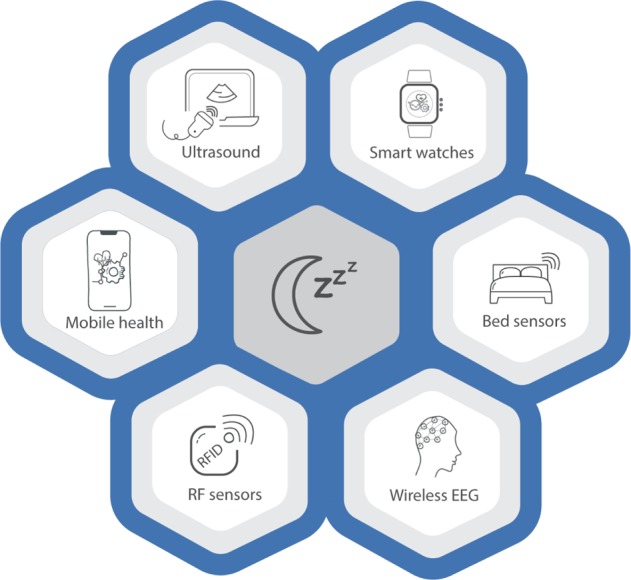
“From [11], sleep-sensing technologies emerged in a form of a bed sensor, smartwatches, mobile health, wireless EEG, RF sensors, and ultrasound.”
BackgroundHandling Missing Data For Sleep Monitoring Systems
Gashi, S., Alecci, L., Gjoreski, M., Lascio, E. D., Mehrotra, A., Musolesi, M., Debus, M. E., Gasparini, F., & Silvia Santini, B. (2022) · International Conference on Affective Computing and Intelligent Interaction and workshops · doi:10.1109/acii55700.2022.9953832 · Cited by 6
“Several researchers have used sensor data to create models for recognizing sleep and wake [1, 18, 19, 20, 21].”
BackgroundVan, N. T. P., Son, D. M., & Zettsu, K. (2021) · NAFOSTED Conference on Information and Computer Science (NICS) · doi:10.1109/nics54270.2021.9700990 · Cited by 7
Co‐production in sleep research: A scoping review of current practices and future directions
Gale, E. L., Manrai, R., Caddick, L., Murray, A. L., Whalley, H. C., Smıth, D. J., & Gardani, M. (2025) · Journal of Sleep Research · doi:10.1111/jsr.14476 · Cited by 8
“Sleep is essential for mental and physical health, and research in the field has substantially expanded over the past 50 years (Hassan et al., 2021; Perez-Pozuelo et al., 2020).”
Newton, T., Shah, N., Lewis, K., Zocchi, M. S., Bixler, F. R., Etingen, B., Lipschitz, J. M., Robinson, S. A., Hogan, T. P., & Shimada, S. L. (2025) · Journal of Medical Internet Research · doi:10.2196/70755 · Cited by 4
“Heterogeneity, variability, and data quality are also known challenges with sleep data [15].”
Sarwar, N., Alharthi, R. S., Mujlid, H. M., & Almalki, F. A. (2025) · Journal of Cloud Computing Advances Systems and Applications · doi:10.1186/s13677-025-00816-y · Cited by 7
Wang, Y., Liu, Q., Min, F., & Wang, H. (2025) · IEEE Transactions on Neural Systems and Rehabilitation Engineering · doi:10.1109/tnsre.2025.3645353 · Cited by 5
“Subjective di ff erences among experts can also lead to variability in annotation results [7], [8].”
Development and validation of a novel sleep health score in the sleep heart health study
Xing, M., Zhang, L., Li, J., Li, Z., Yu, Q., & Li, W. (2024) · European Journal of Internal Medicine · doi:10.1016/j.ejim.2024.05.002 · Cited by 4
Liu, Z., Li, G., Wang, C., Cascioli, V., & McCarthy, P. W. (2025) · Sensors · doi:10.3390/s25123609 · Cited by 8
Data augmentation in semi-supervised adversarial domain adaptation for EEG-based sleep staging
Heremans, E. R. M., Osselaer, T., Seeuws, N., Phan, H., Testelmans, D., & Vos, M. D. (2022) · IEEE-EMBS International Conference on Biomedical and Health Informatics (BHI ...) · doi:10.1109/bhi56158.2022.9926942 · Cited by 4
“Deep neural networks perform well on sleep staging tasks when trained on large, labeled datasets [2]–[4].”
BackgroundHong, W. (2024) · ACS Applied Materials & Interfaces · doi:10.1021/acsami.4c11493 · Cited by 4
Permana, K. E., & Iramina, K. (2025) · IEEE Access · doi:10.1109/access.2025.3599828 · Cited by 4
“Future work may focus on improving performance in borderline stages like N1 through data augmentation or advanced feature extraction techniques [1], [2], [13], [14], [23].”
Rahman, M. J., Morshed, B. I., & Preza, C. (2021) · BioMedInformatics · doi:10.3390/biomedinformatics1030008 · Cited by 3
Memory-Efficient AI Algorithm for Infant Sleeping Death Syndrome Detection in Smart Buildings
Huang, Q., Hsieh, C., Hsieh, J., & Liu, C. (2021) · AI · doi:10.3390/ai2040042 · Cited by 5
“The researchers in [15] predict that future research on sleep health will be data-driven and AI algorithms will play a critical role.”
BackgroundDo, T. Q.-P., MacKay, S. G., Lam, M. E., Sideris, A. W., Jones, A., & Chan, L. S. (2022) · Frontiers in Neurology · doi:10.3389/fneur.2022.825708 · Cited by 4
Early alert for sleep deprivation using mobile sensor data fusion
Sah, D. K., Ravindra, C., Cengiz, K., Alshehri, Y. A., Alnazzawi, N., & Ivković, N. (2022) · Computers & Electrical Engineering · doi:10.1016/j.compeleceng.2022.108228 · Cited by 4
The Blockchain Never Sleeps: How Can Blockchain Technology Transform Sleep Medicine?
Pandi-Perumal, S. R., Santaji, S., Desai, V., Sunil, T., & Chattu, V. K. (2021) · Sleep and Vigilance · doi:10.1007/s41782-021-00132-w · Cited by 4
Actualités de 2024 en santé du sommeil
Micoulaud‐Franchi, J., & Rancillac, A. (2025) · Médecine du Sommeil · doi:10.1016/j.msom.2025.01.221 · Cited by 3
Data-Driven Approaches for Personalized Sleep Disorder Diagnosis
Asmita, R., Hrithik, T. H., Akhil, K. H., Mishra, N., & Devi, V. S. K. (2025) · International Conference on Intelligent Data Communication Technologies and Internet of Things (IDCIoT) · doi:10.1109/idciot64235.2025.10914799 · Cited by 3
“The most recent advancements in sleep monitoring technology and the potential benefits and drawbacks of data collection, analysis, and eventual consumer and clinical application of the findings have been presented[4].”
Wearable device-measured circadian rest–activity rhythm with mortality risk in patients with cancer
Mei, X., Zheng, N., Li, B., Liu, Y., Yang, L., Luo, T., Chan, N. Y., Chan, J. W. Y., Liu, Y., Tan, X. W., et al. (2025) · BMJ Health & Care Informatics · doi:10.1136/bmjhci-2025-101553 · Cited by 5
Single-channel EEG-based sleep staging with rhythm representation and contrastive learning
Zhou, H., Liu, A., Cui, H., Wan, F., Wang, Y., & Chen, X. (2025) · Biomedical Signal Processing and Control · doi:10.1016/j.bspc.2025.108623 · Cited by 3
Zhao, Y., Acosta, C. G., Ye, Y., Wong, K. L. Y., Lawrence, J., Towell, M., D’Oyley, H., Mackay-Dunn, M., Chow, B., & Hung, L. (2025) · The Gerontologist · doi:10.1093/geront/gnaf312 · Cited by 3
Practical High-Fidelity Sensing of the Sleep Environment in the Home
Feustel, C., Shu, N., Clifford, G. D., Anderson, D. V., & Zimring, C. (2022) · International Conference on PErvasive Technologies Related to Assistive Environments (PETRA) · doi:10.1145/3529190.3529219 · Cited by 3
“bed sensors), have introduced a bevy of new data streams that can inform an individual about the quality of her sleep [21].”
BackgroundA Deep Learning Method of Human Identification from Radar Signal for Daily Sleep Health Monitoring
Chen, K., Duan, Y., Huang, Y., Hu, W., & Xie, Y. (2023) · Bioengineering · doi:10.3390/bioengineering11010002 · Cited by 3
Pan, J., Cai, X., Chen, L., Wu, L., Xia, J., & Lu, J. (2024) · BMJ Open · doi:10.1136/bmjopen-2024-087090 · Cited by 6
Kerkeni, M., Kerkeni, M., Ammar, A., Aziz, A. R., Jallouli, A., AlSaleh, A. F. F., Husain, W., Ghazzawi, H., Moalla, W., Chtourou, H., et al. (2025) · Nutrition and Health · doi:10.1177/02601060241311385 · Cited by 5
“Insuf fi cient sleep in children is linked to serious health risks, such as obesity (Perez-Pozuelo et al., 2020; Morrison et al., 2022).”
Xin, L., Qin, N., & Wei, X. (2025) · Behavioral Sciences · doi:10.3390/bs15030276 · Cited by 8
Huang, B., Liu, X., Wang, Y., Li, H., Si, J., Wang, D., & Afzal, K. (2022) · Frontiers in Neuroscience · doi:10.3389/fnins.2022.817450 · Cited by 5
La santé du sommeil en psychiatrie : à la croisée de la physiologie et de la santé publique
Coelho, J., Quilès, C., Geoffroy, P. A., & Micoulaud‐Franchi, J. (2022) · Annales Médico-psychologiques revue psychiatrique · doi:10.1016/j.amp.2022.07.013 · Cited by 8
LaGoy, A. D., Kubala, A. G., Deering, S., Germain, A., & Markwald, R. R. (2023) · Sleep Medicine Clinics · doi:10.1016/j.jsmc.2023.05.010 · Cited by 3
Towards Accurate and Efficient Sleep Period Detection Using Wearable Devices
Jokar, F., Azzopardi, G., & Palotti, J. (2023) · Lecture notes in computer science · doi:10.1007/978-3-031-44240-7_5 · Cited by 4
Self-citationMoon, S., Kim, T. S., Ryu, J., & Lee, W. H. (2023) · IEEE International Conference on Consumer Electronics - Berlin (ICCE-Berlin) · doi:10.1109/icce-berlin58801.2023.10375664 · Cited by 7
“Thus, automated methods for sleep stage classification have been developed using machine learning approaches [8], which can significantly reduce the manual effort required.”
MethodÇakar, T. E., Son-Turan, S., Girişken, Y., Sayar, A., Ertuğrul, S., Filiz, G., & Tuna, E. (2024) · Frontiers in Human Neuroscience · doi:10.3389/fnhum.2024.1286918 · Cited by 15
Saner, H. E., Möri, K., Schütz, N., Buluschek, P., & Nef, T. (2024) · Journal of Sleep Research · doi:10.1111/jsr.14348 · Cited by 3
“Results from longitudinal sleep measurements at individuals' homes are rare and are mainly derived from wearables such as smart watches (Aubert & Brauers, 2008; Fallmann & Chen, 2019; Perez-Pozuelo et al., 2020).”
Lee, P., Gu, W., Huang, W.-C., & Chiang, A. A.-P. (2024) · Springer optimization and its applications · doi:10.1007/978-3-031-68263-6_4 · Cited by 4
Martinot, J., Lê-Dông, N.-N., Malhotra, A., & Pépin, J. (2024) · Journal of Prosthodontics · doi:10.1111/jopr.14003 · Cited by 3
He, S., Wang, C., Shi, W., Zhou, C., Liu, C., Xu, Y., Gui, Y., Jiang, X., & Fan, G. (2025) · Chemistry & Biodiversity · doi:10.1002/cbdv.202402788 · Cited by 5
Esparza-Iaizzo, M., Sierra-Torralba, M., Klinzing, J. G., Mínguez, J., Montesano, L., & López‐Larraz, E. (2026) · Computers in Biology and Medicine · doi:10.1016/j.compbiomed.2026.111560 · Cited by 9
Automatic Sleep Staging: Recent Development, Challenges, and Future DirectionsPreprint
Phan, H., & Mikkelsen, K. B. (2021) · arXiv (Cornell University) · Cited by 3
Grandner, M. A., Bromberg, Z., Hadley, A. J., Morrell, Z., Graf, A. B. A., Hutchison, S., & Freckleton, D. (2022) · medRxiv · doi:10.1101/2021.12.22.21268267 · Cited by 3
Machine Learning for Biosensors
Anapanani, G. (2023) · The Research Repository @ WVU (West Virginia University) · doi:10.33915/etd.12118 · Cited by 10
Riedmann, K. J., Gay, S., Lott, S. A., Berent, J., Buhl, D. L., Dzierzewski, J. M., Kabiri, N. S., Kramer, F., Kremliovsky, M. N., Seitz, C., et al. (2025) · Quality of Life Research · doi:10.1007/s11136-025-03932-z · Cited by 6
“Recently, many digital tools have emerged that enable measurements of sleep in the home environment [8, 9].”
A review of AI-based health prediction using apple watch and fitbit data
Khan, N., Deshpande, N. M., Singh, P., & Kadam, P. (2025) · Discover Applied Sciences · doi:10.1007/s42452-025-07783-8 · Cited by 10
“In classification [89], AI and ML models are significant because they identify sleep disorders such as insomnia and sleep apnea [90].”
Daily steps and sleep in adults: A systematic review and meta-analysis
Wang, Y., Yao, Z., Wang, M., Liu, H., Shi, S., Zheng, F., & Zhong, Z. (2025) · Sleep Medicine · doi:10.1016/j.sleep.2025.108697 · Cited by 4
Ishaq, F. (2026) · Neurology International · doi:10.3390/neurolint18010019 · Cited by 2
“Emerging evidence supports the utility of portable devices and oximetry-based approaches, particularly for detection of moderate-to-severe SDB [80–82].”
Wearanize+ : a multimodal dataset for evaluating wearable technologies in sleep research
Sikder, N., Verkaar, L., Paltarzhytskaya, A., Acan, S., Bovy, L., Almazova, T., Krugliakova, E., Rosenblum, Y., Krauledat, M., Dresler, M., et al. (2025) · SLEEP Advances · doi:10.1093/sleepadvances/zpaf094 · Cited by 7
“However,they are increasinglybeingused in sleep studies,and some are showing promising results , indicating their usefulness [11–14].”
Ramaprasad, S., Sharma, N. K. M., & Majumdar, V. (2022) · Contemporary Clinical Trials Communications · doi:10.1016/j.conctc.2022.101028 · Cited by 2
“As a behavioral target, sleep-based assessments need repeated measurements over shorter time intervals [43].”
BackgroundJu, E., Guo, Y., Burton, C. W., Kim, J. J., & Lee, J. (2024) · Research in Gerontological Nursing · doi:10.3928/19404921-20240911-03 · Cited by 2
Tan, J. L., Chen, W., Yu, D., Peng, T., Li, C., & Lv, K. (2025) · Nature and Science of Sleep · doi:10.2147/nss.s503124 · Cited by 6
Honnavalli, A., Preetham, H., & Srinivasa, G. (2025) · IEEE International Conference on Acoustics Speech and Signal Processing · doi:10.1109/icassp49660.2025.10887584 · Cited by 2
“Sleep monitoring is vital for assessing health and well-being [1].”
Thorne, H. B., Sophocleous, R. M., Sprajcer, M., Shriane, A. E., Duncan, M. J., Ferguson, S. A., Vandelanotte, C., Kolbe-Alexander, T. L., Gupta, C. C., Rigney, G., et al. (2025) · Behavioral Sleep Medicine · doi:10.1080/15402002.2025.2476687 · Cited by 3
Harrington, S. C. (2023) · Ophthalmic and Physiological Optics · doi:10.1111/opo.13262 · Cited by 4
Photoplethysmography-based derivation of physiological information using the BioPoint
Gagnon-Turcotte, G., Côté‐Allard, U., Mascret, Q., Tørresen, J., & Gosselin, B. J. (2023) · Annual International Conference of the IEEE Engineering in Medicine and Biology Society (EMBC) · doi:10.1109/embc40787.2023.10340642 · Cited by 3
“Unfortunately, acquiring this information comes with a host of technical challenges [9], [10], [11].”
BackgroundThordarson, B., Islind, A. S., Arnardottir, E., & Óskarsdóttir, M. (2023) · Hawaii International Conference on System Sciences (HICSS) · doi:10.24251/hicss.2023.380 · Cited by 4
A subtle impediment to the progress of clinical sleep research
Chiang, A. A.-P., & Folz, R. J. (2021) · SLEEP · doi:10.1093/sleep/zsab196 · Cited by 2
Falkingham, J., Evandrou, M., Qin, M., & Vlachantoni, A. (2020) · SSRN Electronic Journal · doi:10.2139/ssrn.3732793 · Cited by 2
Metadata
- Authors
- Perez-Pozuelo, I., Zhai, B., Palotti, J., Mall, R., Aupetit, M., Garcia-Gomez, J. M., Taheri, S., Guan, Y., & Fernandez-Luque, L.
- Affiliations
- University of Cambridge (GB)
- Newcastle University (GB)
- Universitat Politècnica de València (ES)
- Weill Cornell Medical College in Qatar (QA)
- Corresponding author
- Perez-Pozuelo, Ignacio
- Mall, Raghvendra
- ORCID
- Venue
- npj Digital Medicine
- Published
- 2020-03-23
- Volume
- 3
- Issue
- 1
- Pages
- 42-42
- ISSN
- 2398-6352 (ISSN-L)
- PMC
- PMC7089984
- OpenAlex
- W3012581557
- Cited by
- 311
- References
- 202
- Citations by year
- 2026: 35 · 2025: 71 · 2024: 55 · 2023: 51 · 2022: 48 · 2021: 38 · 2020: 11
- FWCI
- 5.40
- Type
- journal article
- Language
- en
- Open access
- gold
- doi.org
- Licence
- cc-by
- creativecommons.org/licenses/by/4.0 (tdm)
- creativecommons.org/licenses/by/4.0 (vor)
- Locations
- npj Digital Medicine (publishedVersion, cc-by)
- PubMed Central (publishedVersion, cc-by)
- PubMed (publishedVersion)
- DOAJ (DOAJ: Directory of Open Access Journals) (submittedVersion, cc-by-sa)
- Figshare (submittedVersion, cc-by)
- Apollo (University of Cambridge) (submittedVersion, cc-by)
- Apollo (cc-by)
- Qatar National Library (cc-by)
- Funders
- RCUK | Engineering and Physical Sciences Research Council (iCase 17100053)
- Topics
- Social Sciences › Psychology › Experimental and Cognitive Psychology › Sleep and related disorders
- Physical Sciences › Computer Science › Computer Vision and Pattern Recognition › Context-Aware Activity Recognition Systems
- Physical Sciences › Engineering › Biomedical Engineering › Non-Invasive Vital Sign Monitoring
- Keywords
- sleep monitoring, sleep health, wearable sensors, multi-sensor data, circadian rhythm, physical activity monitoring, sleep coaching, chronic disease, sleep epidemiology, mobile health, consumer health technology
About these checks
Registry, retraction, Cites and statistics results are computed, not judged, with one exception: a printed reference that no index lists is read once by a model before it counts as a citation error. Claims are extracted by a model and kept only when their quote appears verbatim in the text; each cited source is then checked, with a model’s help, for whether it says what the claim relies on. Those verdicts can be wrong — read the claim’s quote and the cited source before relying on one.
The claim verdicts this report counts are experimental: their accuracy is not yet measured.
A language model drew the claims from the paper on 2026-10-10, under version 3 of the claim definition (model deepseek-v4.1-flash, prompt extract-v3).
A second model labelled each claim on 2026-10-10 (model jev-1.13-20260917, definition revision gold-guideline-v0.2).
Cited sources are checked with a language model’s help (gpt-6-sol).
Statistics and arithmetic are recomputed, not judged.
Confidence bands are shown only for fields calibrated on our annotated test set. None is calibrated yet, so no band is shown.
What counts as a claim ›How we measure confidence ›How we check this ›
Are you an author, or do you see a problem with this page? Request a review
Data sources
Bibliographic data: Semantic Scholar, OpenAlex, Crossref.
Contains information from the Semantic Scholar Academic Graph Datasets, made available under the ODC Attribution License (ODC-BY 1.0).
Semantic Scholar’s data is described in: Kinney, R., et al. (2023). The Semantic Scholar Open Data Platform. arXiv:2301.10140.
