

The future of sleep health: a data-driven revolution in sleep science and medicine
Open accessThe DOI matches its Crossref record; 200 of the 202 references it cites were found in a registry or an index; 30 of the 88 sources its claims cite were checked for support.
Abstract
In recent years, there has been a significant expansion in the development and use of multi-modal sensors and technologies to monitor physical activity, sleep and circadian rhythms. These developments make accurate sleep monitoring at scale a possibility for the first time. Vast amounts of multi-sensor data are being generated with potential applications ranging from large-scale epidemiological research linking sleep patterns to disease, to wellness applications, including the sleep coaching of individuals with chronic conditions. However, in order to realise the full potential of these technologies for individuals, medicine and research, several significant challenges must be overcome. There are important outstanding questions regarding performance evaluation, as well as data storage, curation, processing, integration, modelling and interpretation. Here, we leverage expertise across neuroscience, clinical medicine, bioengineering, electrical engineering, epidemiology, computer science, mHealth and human-computer interaction to discuss the digitisation of sleep from a inter-disciplinary perspective. We introduce the state-of-the-art in sleep-monitoring technologies, and discuss the opportunities and challenges from data acquisition to the eventual application of insights in clinical and consumer settings. Further, we explore the strengths and limitations of current and emerging sensing methods with a particular focus on novel data-driven technologies, such as Artificial Intelligence.
Overview
CoChat Summary
## TL;DR
This is a narrative review that proposes a five-step “Digital Sleep Framework” for moving from sleep data acquisition to clinical and consumer applications. It argues that digital sleep technologies and AI could enable scalable, unobtrusive sleep monitoring, but only if major issues in validation, interoperability, bias, privacy, and reproducibility are addressed.
## Key findings
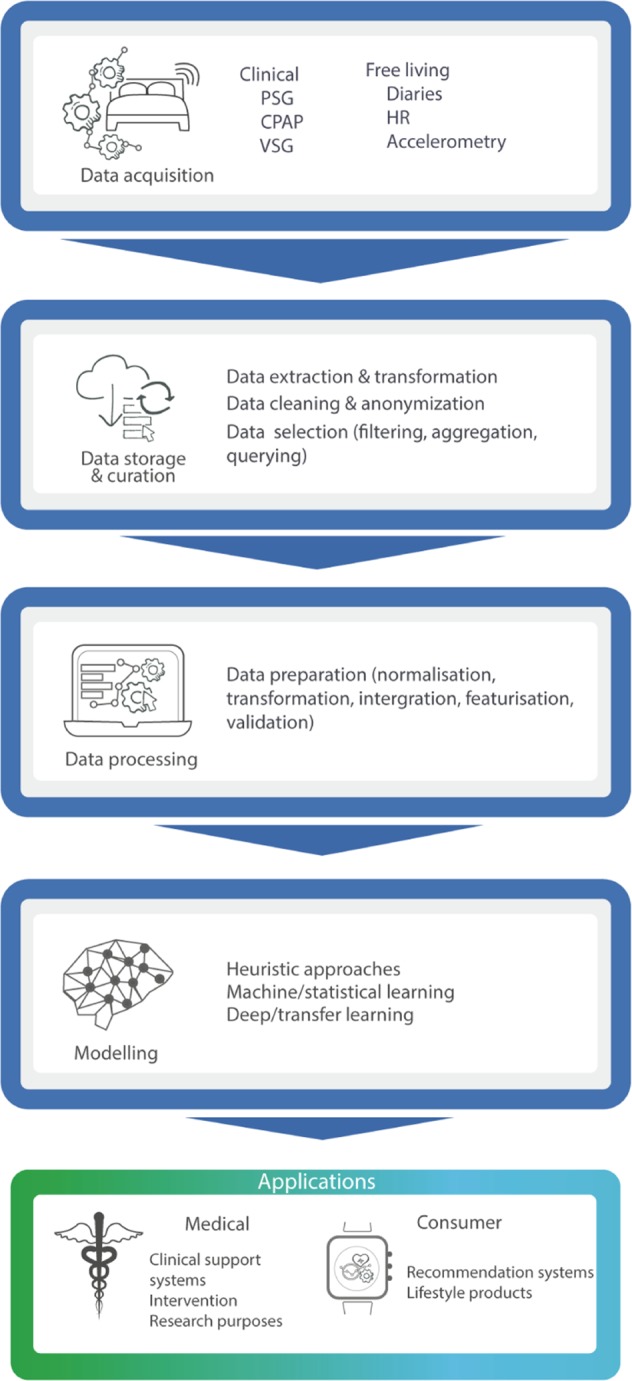
- The paper frames sleep digitization around a five-step framework: data acquisition, data storage and curation, data pre-processing, AI-based sleep modelling, and data-driven applications.
- PSG remains the gold standard, but it is “expensive, time-consuming” and impractical for long-term home use; ambulatory PSG is described as only a partial solution.
- Actigraphy and accelerometry are recognized by the American Academy of Sleep Medicine as valid for sleep assessment, but the paper states three key limitations: lack of validation across consumer devices, lack of standardization in human-activity recognition, and lack of assessment techniques for daytime sleeping.
- Some methods reported specific performance figures: a single-channel EEG ensemble model reached an agreement rate of 0.87 versus expert scoring, in-ear sensor sleep-stage prediction reached 74% agreement with full PSG, ultrasound-based movement detection showed 86% recall and <10% error, and iSleep reported >90% accuracy for event classification.
## Methods
- Narrative review / perspective article synthesizing prior literature on sleep sensing, storage, preprocessing, modelling, and applications; no original participant study is reported.
- The authors organize the discussion using a five-step “Digital Sleep Framework” spanning multi-modal acquisition through end-user application.
- The analysis is qualitative and literature-based, citing examples across PSG, actigraphy, EEG, mobile sensing, bed sensors, WiFi/radio sensing, cloud/fog architectures, and machine learning/deep learning methods.
## Limitations
- The paper explicitly notes that “few methods have been validated against gold-standard PSG or undergone systematic reliability assessment.”
- It also states that consumer-oriented sleep technologies “lack validation” and that their underlying models “change frequently.”
- Evident from the text: this is not an empirical evaluation of specific devices or algorithms; it is a broad synthesis, so its conclusions depend on the cited literature rather than new data collected in the paper.
Model-written summary. Check it against the paper before relying on it.
Integrity signals
Registry
Cites
Statistics
Figures
Verification
Claims the paper makes
24 Valid · 16 Not valid · 41 Not checked · 47 Own results and interpretations
The cited sources support only part of this claim — read each source’s verdict below.
In the paper
“Traditionally, polysomnography (PSG), paired with clinical evaluation, has been the gold-standard and de-facto technique to study sleep in clinical and laboratory settings, as well as to diagnose a subset of sleep disorders37.”
§ The future of sleep health: a data-driven revolution in sleep science and medicine > Sleep data acquisition
What the sources say
- Partly supportedcites [37] Morgenthaler TI Practice parameters for the clinical evaluation and treatment of circadian rhythm sleep disorders. An American Academy of Sleep Medicine report Sleep 2007 30 1445 1459 10.1093/sleep/30.11.1445 18041479 PMC2082098 sourceExperimental — accuracy not yet measured
Section 3.1.6 says PSG is indicated when a patient with suspected circadian rhythm sleep disorder may also have another primary sleep disorder, such as obstructive sleep apnea. Section 3.2.2.1 describes its use in laboratory studies of simulated jet lag. The paper does not establish PSG as the traditional gold-standard or de-facto technique for studying sleep across clinical and laboratory settings; it says PSG is not routinely indicated to diagnose circadian rhythm sleep disorders. (LLM, conf=0.84)
plain- Asserted: passes — The authors put it forward as true.
- Checkable: passes — It can be checked against evidence.
- Load-bearing: unclear — It is unclear whether the paper’s conclusions depend on it.
- Based: passes — The paper gives a reason why it holds.
- Partly supported
The cited sources support only part of this claim — read each source’s verdict below.
In the paper
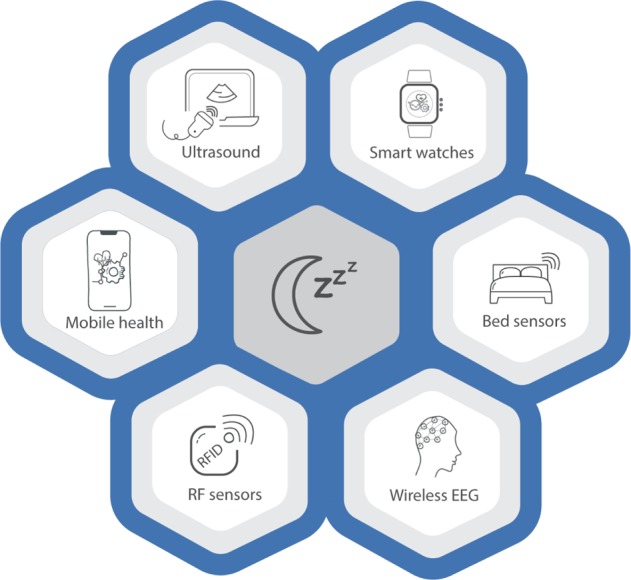
“Body movements, breathing and even cardiac activities can be detected by the volume change of the pneumatic underneath an individual whilst they are lying in bed52–54.”
§ The future of sleep health: a data-driven revolution in sleep science and medicine > Sleep data acquisition > Emerging sleep-sensing technologies
What the sources say
- Not checked — no full text of the sourcecites [52] Chow P Nagendra G Abisheganaden J Wang Y Respiratory monitoring using an air-mattress system Physiol. Meas. 2000 21 345 10.1088/0967-3334/21/3/301 10984203 source
- Supportedcites [53] Chee Y Han J Youn J Park K Air mattress sensor system with balancing tube for unconstrained measurement of respiration and heart beat movements Physiol. Meas. 2005 26 413 10.1088/0967-3334/26/4/007 15886436 source
The Introduction explains that respiration and heart-beat movements press on the air mattress and change its air pressure. The Measurement results from the human body show signals from a person lying on the mattress, including breathing, heart beats, and body movement. The paper measures pressure changes in the air cells rather than volume directly, but this supports the claim’s description of pneumatic changes beneath the person. (LLM, conf=0.89)
- Partly supportedcites [54] Arlotto P Grimaldi M Naeck R Ginoux J-M An ultrasonic contactless sensor for breathing monitoring Sensors 2014 14 15371 15386 10.3390/s140815371 25140632 PMC4179033 sourceExperimental — accuracy not yet measured
The Introduction and Section 2.7 describe detecting breathing and subject movements with an ultrasonic Doppler sensor. They do not support detection through volume changes in a pneumatic device beneath a person in bed, or detection of cardiac activity. (LLM, conf=0.88)
plainstates a cause- Asserted: passes — The authors put it forward as true.
- Checkable: passes — It can be checked against evidence.
- Load-bearing: unclear — It is unclear whether the paper’s conclusions depend on it.
- Based: passes — The paper gives a reason why it holds.
Every source the paper cites for this claim was checked and supports it.
In the paper
“These advances facilitate the objective and unobtrusive measurement of sleep characteristics in large, free-living populations at scale, facilitating well-powered epidemiological investigations designed to explore the relationships between sleep and disease35.”
§ The future of sleep health: a data-driven revolution in sleep science and medicine > Introduction
What the sources say
- Supportedcites [35] Willetts M Hollowell S Aslett L Holmes C Doherty A Statistical machine learning of sleep and physical activity phenotypes from sensor data in 96,220 UK Biobank participants Sci. Rep. 2018 8 7961 10.1038/s41598-018-26174-1 29784928 PMC5962537 source
Split into 2 atoms — 2 confirmed, 0 partially supported, 0 disputed, 0 misattributed, 0 unverifiable. Expand the claim to see per-atom verdicts.
plainstates a cause- Asserted: passes — The authors put it forward as true.
- Checkable: passes — It can be checked against evidence.
- Load-bearing: passes — The paper’s conclusions depend on it.
- Based: passes — The paper gives a reason why it holds.
- Supported
Every source the paper cites for this claim was checked and supports it.
In the paper
“Nevertheless, this increased availability of sensors also results in a greater challenges when optimising the match between the end-application and the sensor used43.”
§ The future of sleep health: a data-driven revolution in sleep science and medicine > Sleep data acquisition > Traditional free-living sleep sensing and measurement approaches: actigraphy and accelerometry Actigraphy and accelerometry are non-invasive methods to monitor human activity and rest cycles. They have been used to describe physical activity levels in large-scale populations44, and can also be used to monitor sleep. These methods offer an affordable, scalable alternative to PSG to monitor sleep–wake cycles, and have now been recognised by the American Academy of Sleep Medicine as a valid method for the assessment of sleep45. Recent advances in AI and larger studies in conjunction with PSG have resulted in the refinement of the method46. However, three key limitations of actigraphy and accelerometry remain. These are (1) the lack of validation studies for the different consumer-grade devices, (2) lack of standardisation of approaches for human-activity recognition and (3) the lack of assessment techniques for daytime sleeping. Nowadays, wearable sensors are often used in combination with other minimally invasive sensors (such as heart rate monitors, miniaturised ECG, pulse-oximetry, blood pressure monitors, galvanic skin conduction, light sensors, gyroscopes, barometric altimeters and GPS trackers). Sleep can also be monitored through a combination of wrist actigraphy, hip sensors, smartphone sensors and under-mattress sensors47. Nevertheless, this increased availability of sensors also results in a greater challenges when optimising the match between the end-application and the sensor used43. A description of actigraphy specific sleep metrics is provided in the Supplementary Material. Data on sleep can be also obtained from devices to treat sleep apnoea, such as Continuous Positive Air Pressure (CPAP). For example, Aggarwal et al.48 showed that CPAP can be used to classify and track sleep metrics, which could be used to monitor the response of CPAP therapy in sleep apnoea patients.
What the sources say
- Supportedcites [43] Caulfield B Reginatto B Slevin P Not all sensors are created equal: a framework for evaluating human performance measurement technologies npj Digital Med. 2019 2 7 10.1038/s41746-019-0082-4 PMC6550243 31304357 source
The Abstract states that increased sensor availability and choice make it challenging to match a sensor to a specific application context. The Introduction likewise says the growing availability of devices can create confusion when professionals select technology for particular application requirements. (LLM, conf=0.95)
plainstates a cause- Asserted: passes — The authors put it forward as true.
- Checkable: passes — It can be checked against evidence.
- Load-bearing: unclear — It is unclear whether the paper’s conclusions depend on it.
- Based: passes — The paper gives a reason why it holds.
- Supported
The cited sources that could be checked couldn’t confirm or dispute this claim.
In the paper
“Multiple published works have demonstrated that a single modality sensor representation, such as heart rate alone, is not sufficient to accurately complete sophisticated sleep stage classification42.”
§ The future of sleep health: a data-driven revolution in sleep science and medicine > Sleep data acquisition > Sleep monitoring outside the laboratory
What the sources say
- Could not verifycites [42] Baltrušaitis T Ahuja C Morency L-P Multimodal machine learning: a survey and taxonomy IEEE Trans. Pattern Anal. Mach. Intell. 2018 41 423 443 10.1109/TPAMI.2018.2798607 29994351 sourceExperimental — accuracy not yet measured
The survey discusses multimodal representations (Section 3, p. 3) and fusion applications (Section 6, p. 12), but those passages do not address sleep-stage classification. Searches for sleep stages, heart rate, and physiological sensors found no passage reporting that heart rate alone is insufficient for accurate classification. (LLM, conf=0.76)
boosted- Asserted: passes — The authors put it forward as true.
- Checkable: passes — It can be checked against evidence.
- Load-bearing: unclear — It is unclear whether the paper’s conclusions depend on it.
- Based: passes — The paper gives a reason why it holds.
- Could not verify
50 more claims · 12 with their cited sources checked
Create a free account to see all 128 claims and to verify the 17 references still open.
- It may state two separate claims as one. 34
- Probably not a substantial claim. 54
Citations
Cites
Hochreiter, S., & Schmidhuber, J. (1997) · Neural Computation · doi:10.1162/neco.1997.9.8.1735 · Cited by 102,318
High-performance medicine: the convergence of human and artificial intelligence
Topol, E. J. (2019) · Nature Medicine · doi:10.1038/s41591-018-0300-7 · Cited by 10,450
‘Small Changes' to Diet and Physical Activity Behaviors for Weight Management
Hills, A. P., Byrne, N. M., Lindstrom, R., & Hill, J. O. (2013) · Obesity Facts · doi:10.1159/000345030 · Cited by 9,493
Physical Activity in the United States Measured by Accelerometer
TROIANO, R. P., BERRIGAN, D., DODD, K. W., MÂSSE, L. C., TILERT, T., & MCDOWELL, M. (2008) · Medicine & Science in Sports & Exercise · doi:10.1249/mss.0b013e31815a51b3 · Cited by 7,638
Multimodal Machine Learning: A Survey and Taxonomy
Baltrusaitis, T., Ahuja, C., & Morency, L.-P. (2019) · IEEE Transactions on Pattern Analysis and Machine Intelligence · doi:10.1109/tpami.2018.2798607 · Cited by 5,018
(2010) · Cited by 4,411
Convolutional networks for images, speech, and time series
LeCun, Y., & Bengio, Y. (1998) · HAL (Le Centre pour la Communication Scientifique Directe) · doi:10.5555/303568.303704 · Cited by 4,231
International Classification of Sleep Disorders-Third Edition
Sateia, M. J. (2014) · Chest · doi:10.1378/chest.14-0970 · Cited by 3,860
Federated Learning: Strategies for Improving Communication Efficiency
Konečný, J., McMahan, H. B., Yu, F. X., Richtárik, P., Suresh, A. T., & Bacon, D. (2016) · arXiv · doi:10.48550/arxiv.1610.05492 · Cited by 3,766
International Classification of Sleep Disorders
Thorpy, M. (2017) · Sleep Disorders Medicine · doi:10.1007/978-1-4939-6578-6_27 · Cited by 2,505
Research works printed but not linked: 4
- Zhao, M., Yue, S., Katabi, D., Jaakkola, T. S. & Bianchi, M. T. Learning sleep stages from radio signals: a conditional adversarial architecture. in Proceedings of the 34th International Conference on Machine Learning, 4100–4109 (2017). https://www.acm.org/publications.
- Van Drongelen, W. Signal Processing for Neuroscientists (Academic Press, 2018).
- Choi YK Smartphone applications to support sleep self-management: review and evaluation J. Clin. Sleep Med. 2018 14 1783 1790 10.5664/jcsm.7396 30353814 PMC6175783 · DOI · Paper page
- IEEE. IEEE VIS 2015 Workshop on Personal Visualization: Exploring Data in Everyday Life. https://www.vis4me.com/personalvis15/papers.html (2015).
Cited by
Items 201–300 of 307
Automated remote sleep monitoring needs machine learning with uncertainty quantificationPreprint
Heremans, E. R. M., den Bulcke, L. V., Seedat, N., Devulder, A., Borzée, P., Buyse, B., Testelmans, D., Bossche, M. J. A. V. D., van der Schaar, M., & Vos, M. D. (2023) · Research Square · doi:10.21203/rs.3.rs-3678070/v1 · Cited by 2
Self-Supervised Transformer Model Training for a Sleep-EEG Foundation ModelPreprint
Ogg, M., & Coon, W. G. (2024) · bioRxiv (Cold Spring Harbor Laboratory) · doi:10.1101/2024.01.18.576245 · Cited by 2
“The importance of sleep along with increases in the quality of consumer grade wearable sensors has generated excitement about health monitoring efforts that could flag changes for early clinical intervention or promote well-being by improving sleep habits [6].”
Gale, E. L., Manrai, R., Caddick, L., Murray, A. L., Whalley, H. C., Smıth, D. J., & Gardani, M. (2024) · Research Square · doi:10.21203/rs.3.rs-5529766/v1 · Cited by 2
Sirrianni, J., Calloway, A., Hussain, S.-A., et al. (2025) · medRxiv · doi:10.1101/2025.05.31.25328640 · Cited by 2
Autism and sleep across development: Advancing research and treatment through co-production
Spanò, G., Combs, D., Dwyer, P. S. R., Luongo, A., Parent-Johnson, W., & Edgin, J. O. (2024) · Neurodiversity · doi:10.1177/27546330241238668 · Cited by 3
“In line with this, emerging digital technologies offer avenues to promote sleep health, streamline the identi fi cation of sleep disorders, facilitate effortless sleep tracking, and enable the personalized customization of sleep environments and interventions (Perez-Pozuelo et al., 2020).”
Yang, X., Hu, J.-H., Fan, L.-P., Peng, H., Shi, H.-J., Zhuang, M.-Y., Ji, F., & Peng, K. (2024) · Heliyon · doi:10.1016/j.heliyon.2024.e31668 · Cited by 3
“However, the high expenses of PSG and need for specialized staff make it difficult for application in many studies [52,53].”
Machine learning identification of sleep EEG and EOG biomarkers for mortality risk
Ganglberger, W. (2024) · SLEEP · doi:10.1093/sleep/zsae231 · Cited by 3
“Different methodologies exist along a continuum, from the use of carefully selected features designed by experts to directly applying machine learning models to raw polysomnographic signals [31].”
Adaptive Multi-Scale Convolution and Local Attention for single-channel EEG sleep staging
Fan, J., Zhao, M., Wang, L., et al. (2025) · Biomedical Signal Processing and Control · doi:10.1016/j.bspc.2025.108084 · Cited by 1
Zhang, Y., Li, Z., Lu, Y., Zhang, Y., Liu, G., & Wang, C. (2025) · IEEE Journal of Biomedical and Health Informatics · doi:10.1109/jbhi.2025.3579556 · Cited by 2
Tabular Feature Guided Multimodal Cardiovascular Disease Classification
Zhou, Y., Li, Y., Sun, X., Wang, Z., Li, D., & Shan, P. (2025) · International Conference on Cloud Computing and Big Data Analytics (ICCCBDA) · doi:10.1109/icccbda64898.2025.11030487 · Cited by 1
“The rapid advancement of information technology has made it possible to acquire massive amounts of medical data, especially in sleep-related scenarios, where these multimodal data comprehensively reflect the multidimensional health information of the human body [18].”
Benhammou, Y., Kalyan, S., & Kumar, S. (2026) · International Conference on Federated Learning and Intelligent Computing Systems (FLICS) · doi:10.1109/flics70075.2026.11621962 · Cited by 1
Morokuma, S., Hayashi, T., MOTOMURA, N., Kanegae, M., Mizukami, Y., ASANO, S., KIMURA, I., Fujita, K., KOHDA, Y., Hiroshi, I. M. A. I., et al. (2025) · Proceedings of the Japan Academy Series B · doi:10.2183/pjab.101.032 · Cited by 1
“7),8) EEG is considered the most accurate for determining sleep stages as it directly measures the brain activity.”
Nowacka, A., Śniegocki, M., Bożiłow, D., & Ziółkowska, E. (2025) · International Journal of Molecular Sciences · doi:10.3390/ijms262110766 · Cited by 3
Wang, H., Zhang, C., Chen, B., Xie, Y., & Tian, P. (2025) · BMC Psychiatry · doi:10.1186/s12888-025-07730-2 · Cited by 3
“Sleep disorders are a prevalent global health issue, characterized by abnormalities in sleep quality, duration, or rhythm, and are well recognized as significant contributors to adverse health outcomes [1].”
The human sleep project: a multi-center clinical polysomnography dataset across the human lifespan
Li, Q., Wen, S., Sun, H., Ganglberger, W., Tripathi, A., Turley, N., Waters, S., Gupta, A., Gupta, A., Ghanta, M., et al. (2026) · SLEEP · doi:10.1093/sleep/zsag215 · Cited by 3
Chikama, H., Yamakawa, M., Shigenobu, K., Kurakami, H., Nobuhara, K., Umemura, K., Mizukami, W., Takeya, Y., Koujiya, E., Adachi, H., et al. (2026) · Geriatrics and gerontology international/Geriatrics & gerontology international · doi:10.1111/ggi.70756 · Cited by 3
Smolders, K. C. H. J., de Woestijne, G. D.-V., Meijer, K. A., McConchie, H., & de Kort, Y. A. W. (2023) · Journal of Medical Internet Research · doi:10.2196/38066 · Cited by 3
“This could provide detailed insights into individuals’ habitual rest-activity patterns and regularities or irregularities in these patterns across days, weeks, or years [24-26], potentially elucidating the effects of interventions or treatment [27,28].”
Alarcón, Á. S., Madrid, N. M., Seepold, R., & Ramirez, J. A. O. (2022) · Procedia Computer Science · doi:10.1016/j.procs.2022.09.532 · Cited by 1
A triangle-shape region of interest in cardiorespiratory estimation during sleep monitoring
Haghi, M., Asadov, A., Boiko, A., & Seepold, R. (2023) · Current Directions in Biomedical Engineering · doi:10.1515/cdbme-2023-1069 · Cited by 1
SmartGuard Drive: A Comprehensive IoT System for Automated Driver Drowsiness Detection
Sarkar, D., Pal, S., Saha, P., et al. (2023) · International Conference on Electronics, Materials Engineering & Nano-Technology (IEMENTech) · doi:10.1109/iementech60402.2023.10423534 · Cited by 1
BaHammam, A. S., Pandi-Perumal, S. R., & Hunasikatti, M. (2023) · Progress in Sleep Research · doi:10.1007/978-981-99-7901-1_10 · Cited by 2
Gao, S., Cheng, A., Li, Z., et al. (2023) · IEEE International Conference on E-health Networking, Application & Services (HealthCom) · doi:10.1109/healthcom56612.2023.10472336 · Cited by 1
“Sleep is a crucial biological process that has long been recognized as an important determinant of human health [1].”
BackgroundInsights from the 2nd China intelligent sleep staging competition
Li, Y., Xu, Z., Chen, Z., Zhang, Y., & Zhang, B. (2024) · Sleep And Breathing · doi:10.1007/s11325-024-03055-8 · Cited by 1
“The prowess of AI in data analysis has the capacity to revolutionize the sleep staging, auto-mating a process that has traditionally relied on manual scoring [8–12].”
Automated remote sleep monitoring needs uncertainty quantification
Heremans, E. R. M., den Bulcke, L. V., Seedat, N., Devulder, A., Borzée, P., Buyse, B., Testelmans, D., Bossche, M. J. A. V. D., van der Schaar, M., & Vos, M. D. (2024) · Journal of Sleep Research · doi:10.1111/jsr.14300 · Cited by 4
Zan, X., Liu, F., Xian, X., & Pardalos, P. M. (2024) · Springer optimization and its applications · doi:10.1007/978-3-031-68263-6_1 · Cited by 3
Valenzuela‐Pascual, F., Verdejo-Amengual, F. J., Martínez-Navarro, O., Blanco‐Blanco, J., Arab, R. A. E., Rubinat, E., Masbernat, M. A., Rubí‐Carnacea, F., Martí, B. M., Barbé, F., et al. (2024) · BMJ Open Respiratory Research · doi:10.1136/bmjresp-2023-001889 · Cited by 3
“21 Clinical guidelines recommend continuous airway pressure (CPAP) treatment as the gold standard for moderate and severe OSA.”
Smart Healthcare System and Internet of Medical Things: Applications of Personalized Medicine
Shaikh, Z. P. (2025) · Advances in computational intelligence and robotics book series · doi:10.4018/979-8-3693-6180-1.ch003 · Cited by 4
Digital Fiat Currency (DFC): A Taxonomy for Automatic Sleep Stage Classification
Kaur, A., Alsadoon, O. H., & Aloussi, S. A. (2020) · International Conference on Innovative Technologies in Intelligent Systems and Industrial Applications (CITISIA) · doi:10.1109/citisia50690.2020.9371800 · Cited by 1
“[8] The traditional methods were not appropriate enough, because of its various limitations, like difficult methodologies and complex structures, which were followed by human experts to classify the sleep stages.”
MethodPredicting Sleeping Quality Using Convolutional Neural Networks
Sathish, V. R. K., Woo, W. L., & Ho, E. S. L. (2023) · Engineering cyber-physical systems and critical infrastructures · doi:10.1007/978-3-031-21101-0_14 · Cited by 2
Torres-Pagán, L., Terepka, A., Vaysman, R., Agosto, N. M. V., Usseglio, J., & Shechter, A. (2022) · Journal of Applied Research on Children Informing Policy for Children at Risk · doi:10.58464/2155-5834.1488 · Cited by 4
Ravindran, K. K. G., della Monica, C., Atzori, G., Lambert, D., Hassanin, H., Revell, V. L., & Dijk, D. (2022) · Research Square · doi:10.21203/rs.3.rs-2251437/v1 · Cited by 1
Kumar, A., Sangwan, S. R., & Sharma, A. (2025) · medRxiv · doi:10.1101/2025.04.17.25326012 · Cited by 1
“In the domain of sleep quality prediction, wearable and mobile devices dominate the field [15, 16].”
A Review on Sleep Disorder Analysis and Applications Based on Artificial Intelligence
Mathew, A. A., & Shanmugasundaram, V. (2021) · Advances in medical technologies and clinical practice book series · doi:10.4018/978-1-7998-8018-9.ch002
Sleep disturbances from the use of cannabis
Gelvez, A. I. L. (2022) · Salud Uninorte · doi:10.14482/sun.36.3.615.78 · Cited by 2
Takeuchi, H., Suwa, K., Kishi, A., Nakamura, T., Yoshiuchi, K., & Yamamoto, Y. (2022) · doi:10.2196/preprints.39150
Tasrif: processing wearable data in Python
Homaid, A. A., Hashim, S., Abubaker, F., Abbas, U., Farooq, F., & Palotti, J. (2022) · IEEE International Conference on Pervasive Computing and Communications Workshops (PerCom Workshops) · doi:10.1109/percomworkshops53856.2022.9767286
“The last decade has seen a significant growth in developing and using new sensing technologies to ubiquitously and objectively monitor people’s lifestyle [1].”
BackgroundSelf-citationUsing technology and exposomics to understand and address sleep health disparities
Jackson, C. L., & Miller, G. W. (2022) · Elsevier eBooks · doi:10.1016/b978-0-12-822963-7.00358-3
Circadian dysregulation and Alzheimer’s disease: A comprehensive review
Iacobelli, P. (2022) · Brain Science Advances · doi:10.26599/bsa.2022.9050021
“physiological data from an individual in a sleep state continues to advance, there are questions raised pertaining to the validity and breadth of this data [15].”
BackgroundDes médecins du sommeil aux prises avec les technologies d’automesure
Calvignac, C. (2023) · Médecine du Sommeil · doi:10.1016/j.msom.2023.01.216 · Cited by 1
Coveney, C. M., Greaney, M., Hsu, E. L., Meadows, R. P., & Williams, S. J. (2023) · Springer eBooks · doi:10.1007/978-3-031-30599-3_3
Stratified Technosleep Futures
Coveney, C. M., Greaney, M., Hsu, E. L., Meadows, R. P., & Williams, S. J. (2023) · Springer eBooks · doi:10.1007/978-3-031-30599-3_7
Hrozanova, M., Haugan, J. A., Saksvik‐Lehouillier, I., et al. (2023) · Sleep Medicine · doi:10.1016/j.sleep.2023.07.007
A Monitoring System for the Recognition of Sleeping Disorders in Patients with Cognitive Impairment
Dev, P., & Pathak, A. (2023) · BENTHAM SCIENCE PUBLISHERS eBooks · doi:10.2174/9789815196054123050007
Abdelwahab, M., Abdelwahab, R., & Capasso, R. (2023) · Springer eBooks · doi:10.1007/978-3-031-34992-8_27
Sueño y Rendimiento Académico en la Educación Primaria. Una Revisión Sistématica
Bernad, S. G., (España), U. D. L. R., Sastre-Riba, S., (España), U. D. L. R., Viana-Sáenz, L., & (España), U. D. L. R. (2024) · Revista de Psicología y Educación - Journal of Psychology and Education · doi:10.23923/rpye2024.01.251 · Cited by 2
NREM3 Sleep Stage Estimation Based on Accelerometer by Body Movement Count and Biological Rhythms
Shintani, D., Nakari, I., Washizaki, S., & Takadama, K. (2024) · Proceedings of the AAAI Symposium Series · doi:10.1609/aaaiss.v3i1.31246
“Such effects on individual as well as social well-being have also been reported, affecting increased government healthcare costs, population safety, and social performance (Perez-Pozuelo et al. 2020).”
BackgroundData-driven model for healthcare diagnosis
Narayanan, L. K., Subbiah, P., Ramanujam, R. A. M., Prasad, P. B. A., & Selvaraj, P. (2024) · Elsevier eBooks · doi:10.1016/b978-0-443-19073-5.00008-2
Takeshita, Y., Odachi, R., Nakashima, K., Nishiyama, N., Nozawa, K., Matoba, K., Nakano, N., Mashita, M., Mamiya, Y., Yamakawa, M., et al. (2024) · Research Square · doi:10.21203/rs.3.rs-4552133/v1
Sleep telemedicine: Reimagining the health care team
Hilbert, J., & Fields, B. G. (2024) · Elsevier eBooks · doi:10.1016/b978-0-323-87041-2.00014-2
Wearables and sleep tracking in athletics programs
Lujan, M. R., Perez-Pozuelo, I., & Grandner, M. A. (2024) · Elsevier eBooks · doi:10.1016/b978-0-12-822969-9.00013-4
Self-citationNdongo, J. M., Lele, E. C. B., Njoya, E. G. N., Manga, L. J. O., Tabunguia, A. U. L., Mbian, W. M., Guessogo, W. R., Ahmadou, Foko, P. L. K., Bilog, N. C., et al. (2024) · Research Square · doi:10.21203/rs.3.rs-4700970/v1
Review of Sleep Monitoring Research Based on Wireless Sensor
Hu, Y., Chen, J., Zhao, S., Tan, K., Yu, K., & Wang, W. W. (2024) · Lecture notes of the Institute for Computer Sciences, Social Informatics and Telecommunications Engineering · doi:10.1007/978-3-031-65126-7_8
Shama, H., & Portnov, B. A. (2024) · Research Square · doi:10.21203/rs.3.rs-4802176/v1
Passfield, G., Mackay, L. M., Crofts, C. A. P., & Schofield, G. (2024) · medRxiv · doi:10.1101/2024.11.10.24317079 · Cited by 1
Navigating ethical horizon: A dive into metaverse and analytics of things in healthcare system
Jasrotia, S. S., Kamila, M. K., & Kushwaha, P. S. (2024) · Elsevier eBooks · doi:10.1016/b978-0-443-24049-2.00001-7 · Cited by 1
Eyre, H., Gan, Q., Hu, M., Bowles, A., Stanley, J. C., Shi, J., DuVall, S. L., & Alba, P. R. (2025) · medRxiv · doi:10.1101/2025.03.21.25323520 · Cited by 2
Changing Lifestyle through Technology
Whelan, M., & Esliger, D. (2025) · Cambridge University Press eBooks · doi:10.1017/9781009391573.025
Zou, W., Lv, M., Zhang, Y., Wang, X., Fu, D., Wang, J., & Guo, L. (2026) · Biomedical Signal Processing and Control · doi:10.1016/j.bspc.2026.110790 · Cited by 1
Mogra, A., Pandey, P. K., & Panwar, R. S. (2024) · International Conference on Parallel, Distributed and Grid Computing (PDGC) · doi:10.1109/pdgc64653.2024.10984363
“The primary findings center on lowering forecast errors and, in turn, stock levels [13].”
Trends in sleep dentistry research in Asia: A bibliometric analysis
Hasan, F., Sujarwadi, M., Yuliana, L. T., Winoto, E. R., Chusida, A., & Budi, H. S. (2025) · F1000Research · doi:10.12688/f1000research.164414.1
Estrella, T., Capdevila, L., Alfonso, C., & Losilla, J.-M. (2025) · doi:10.2196/preprints.78648
Non-invasive systems for sleep monitoring: Respiratory rate and sleep posture classification
Duc, P. D. T. T., Tuyen, V. M., Huy, P. Q., et al. (2025) · Journal of Military Science and Technology · doi:10.54939/1859-1043.j.mst.104.2025.3-14
Smart Health Wellness: Detection and Prevention of a User Health Risk Using a Machine Learning Model
Reddy, L. H., Kumar, K. K., Kakulapati, V., Anand, M., & Vindhya, C. (2025) · Lecture notes in networks and systems · doi:10.1007/978-981-96-1264-2_30
Mirugwe, A., & Nyirenda, J. (2025) · medRxiv · doi:10.1101/2025.07.27.25332284
Ogg, M., & Coon, W. G. (2025) · medRxiv · doi:10.1101/2025.08.07.25333233
“…available repositories of PSG data have already reached volumes (G.-Q. Zhang et al., 2018) substantial enough to support the development of advanced deep learning models for analyzing sleep physiology (Fiorillo et al., 2019; Hanna & Flöel, 2023; Perez-Pozuelo et al., 2020; Perslev et al., 2021).”
InfluentialBai, X., Liu, Y. F., Ma, J., Wu, F., Dai, Z., Chen, Y., & Fang, P. (2025) · BMJ Open · doi:10.1136/bmjopen-2025-099831
“39 40 Sensing technologies for sleep monitoring have made significant progress in recent years, including monitoring of heart rate, respiration and brain waves.”
Yi, X., Ma, X., Shi, L., & Li, X. (2025) · Frontiers in Public Health · doi:10.3389/fpubh.2025.1579151 · Cited by 1
“Sleep, as a biological process, takes up one-third of the human life cycle, ensures the continuity of human health, and is considered one of the most basic physiological needs of humans (10).”
Cognitive performance measurements and the impact of sleep quality using wearable and mobile sensors
Visuri, A., Koskimäki, H., van Berkel, N., Alorwu, A., Peltonen, E., Abdullah, S., & Hosio, S. J. (2025) · Personal and Ubiquitous Computing · doi:10.1007/s00779-025-01847-7 · Cited by 7
“Although these devices, while validated for accuracy by CS researchers [12, 104], are currently not perfectly suited for clinical research, the generated insights prove helpful for those using them and thus for human-centric research [105].”
Qiu, X., Chen, Z., Ma, G., Huang, J., & Tan, X. (2025) · Lecture notes in computer science · doi:10.1007/978-3-032-04978-0_55 · Cited by 1
An Eye Mask-Based Wearable System Toward Tailored Sleep Monitoring
Tuheti, A., Zeng, Z., Tao, L., Zhang, Y., Tang, Z., Huang, H., Chen, C., & Chen, W. (2025) · IEEE Sensors Journal · doi:10.1109/jsen.2025.3618239
“PSG records multimodal bioelectrical signals, such as electroencephalogram (EEG), electrooculography (EOG), electromyogram (EMG), electro-cardiogram (ECG), and so on [4], [5].”
Comparative Study of Sleep Disorder Classification Using Under-Sampled and Augmented Data
Doshi, A., Maurya, A., Shah, S., & Gupte, A. (2025) · Lecture notes in networks and systems · doi:10.1007/978-3-032-02949-2_9
Bradford, A. M., McDaniel, A. T., Ricanek, K., Schroeder, L. H., Cobble, D. D., ElSaid, A. A., Smith, L., Cooley, R., Meter, J. V., & DuBois, C. (2025) · Sensing and Bio-Sensing Research · doi:10.1016/j.sbsr.2025.100902
Puterflam, J. M., Cheung, J. M. Y., Rahimi, M. M., Schokman, A., Eyles, J. P., Grunstein, R. R., Ferreira, P. H., & Gordon, C. J. (2025) · Behavioral Sleep Medicine · doi:10.1080/15402002.2025.2586006
“Therefore, if DHIs are to be successfully integrated into clinical practice for chronic LBP populations then exploring their will-ingness and acceptability toward DHIs is required (Perez-Pozuelo et al., 2020; Ranney et al., 2016).”
Kamar, M. N., Jarandikar, A. A., Ingale, M. H., Chavan, P. S., Shinde, V., & Mahajan, G. D. (2025) · Indian Journal of Otolaryngology and Head & Neck Surgery · doi:10.1007/s12070-025-06252-3
“Consumer-grade devices and apps allow individuals to track sleep health, while explainable AI builds transparency in corporate screening programs [19].”
InfluentialDressle, R. J., Riemann, D. W., Thoma, N., Erler, C., Burmeister, R., Jogwitz, B., Domschke, K., Spiegelhalder, K., Boldt, J., Wiertz, S., et al. (2025) · JMIR Human Factors · doi:10.2196/66513
“In addition, the field of sleep research is particularly suitable for data-based approaches, as investigating sleep generates a large amount of data, such as sensor data (from the conventionally used polysomnography to modern lifestyle devices such as smartwatches) and subjective data [48].”
Deb, A., Shahnaz, C., & Saquib, M. (2025) · Annual International Conference of the IEEE Engineering in Medicine and Biology Society (EMBC) · doi:10.1109/embc58623.2025.11252945
“The surge of Machine Learning(ML) and Deep Learning(DL) models leads experts to adopt these automated algorithms to reduce the dependency on human labor[8].”
Bonnell, J., Guhan, N., Tsai, T. C., Moulder, R. G., Jr., Ogihara, M., & Kim, Y. (2025) · IEEE-EMBS International Conference on Biomedical and Health Informatics (BHI ...) · doi:10.1109/bhi67747.2025.11269498
“However, traditional unidimensional approaches are insufficient to fully capture the complexity of multi-dimensional and multi-level factors involved in sleep health of both patients and caregivers simultaneously [9], [10].”
Additional file 1 of Measuring regularity of human physical activities with entropy models
Shi, K., Chen, Z., sun, W., & hu, W. (2024) · Figshare · doi:10.6084/m9.figshare.26685357
Machine Learning for the Analysis of Healthy Lifestyle Data: Scoping Review and Guidelines
Estrella, T., Capdevila, L., Alfonso, C., & Losilla, J.-M. (2026) · JMIR Human Factors · doi:10.2196/78648
“The growth in technology allows the integration of different data forms as well as more objective measures of lifestyle, substantially reducing the impact of retrospective bias by tracking real-time data in an ecological situation [120].”
Exploring Generalist Foundation Models for Time Series of Electrodermal Activity Data
Alchieri, L., Candian, L., Abdalazim, N., Alecci, L., de Felice, G., & Santini, S. (2025) · ACM International Joint Conference on Pervasive and Ubiquitous Computing (UbiComp) · doi:10.1145/3714394.3756186 · Cited by 2
Robust PPG Authentication: The Role of Temporal, Individual, and State Variability
Alecci, L., Zanzi, A., Laporte, M., Alchieri, L., Abdalazim, N., Felice, G. D., & Santini, S. (2025) · ACM International Joint Conference on Pervasive and Ubiquitous Computing (UbiComp) · doi:10.1145/3714394.3756172 · Cited by 1
Classifying Human Sleep Stages Using Plant Sensors
Fülle, J., Lange, L., Rajabiefumani, B., et al. (2026) · Contributions to economics · doi:10.1007/978-3-032-13458-5_8
Editorial: Methods to modulate sleep with neurotechnology, devices, or wearables
Reid, M. C., Coon, W. G., & Smith, M. T. (2026) · Frontiers in Neuroscience · doi:10.3389/fnins.2026.1792469
Shama, H., & Portnov, B. A. (2026) · Chronobiology International · doi:10.1080/07420528.2026.2650829
“A shortage of MLT makes the human body more alert and reduces the desire to sleep (Davies and Smyth 2018; Perez-Pozuelo et al. 2020).”
Mou, F., Jin, X., peng, J., et al. (2026) · IEEE Signal Processing Letters · doi:10.1109/lsp.2026.3686085
Yang, A. C. (2026) · Journal of physiological investigation. · doi:10.4103/ejpi.ejpi-d-25-00066
Wang, Y., Wen, X., Kong, L., et al. (2026) · Buildings · doi:10.3390/buildings16101856 · Cited by 2
Kumar, A., Sangwan, S. R., & Sharma, A. (2026) · PLOS Digital Health · doi:10.1371/journal.pdig.0000859 · Cited by 2
“In the domain of sleep quality prediction, wearable and mobile devices dominate the field [15,16].”
Tang, Y., Peng, H., Huang, S., Li, F., Wang, X., Huang, D., Li, J., Ding, X., & Hua, J. (2026) · Frontiers in Psychology · doi:10.3389/fpsyg.2026.1772030
Ding, H., Anderson, K., Burk, A., Searls, E., THOMAS, R. J., Au, R., & Lin, H. (2026) · JMIR mhealth and uhealth · doi:10.2196/preprints.102229
Predicting Sleep Disorders in Late Sleepers Using Supervised Machine Learning
Ahmed, M. J., Hossain, M. A., Talha, F. F., Huda, M. S. A., Shaharum, S. M., & Ali, M. A. (2025) · IEEE International Women in Engineering (WIE) Conference on Electrical and Computer Engineering (WIECON-ECE) · doi:10.1109/wiecon-ece69386.2025.11526705
“The current study expands the scope by resolving class imbalances via SMOTE, feature selection through mutual information, and associating predictions with customized sleep recommendations [10].”
Kim, E., Park, D.-H., Lee, J., Kim, J., Ko, S., Kim, Y., & Lee, S. Y. (2026) · International Journal of Human-Computer Interaction · doi:10.1080/10447318.2026.2684306 · Cited by 1
Muthaiah, V. P. K., Balakrishnan, B., Muthukumaraswamy, K., Lefebvre, C., Peters-Brinkerhoff, C., & Ganesan, M. (2026) · Psychology Health & Medicine · doi:10.1080/13548506.2026.2691401
A Comprehensive Study of Machine Learning-Based Improvements in Sleep Monitoring Wearables
Nag, M. K., Shrivastava, A., Nayak, S., & Kumari, R. (2026) · Lecture notes in electrical engineering · doi:10.1007/978-981-95-7350-9_18
K-SleepNet: Knowledge-Enhanced Single-Channel Sleep Staging via Dual-Stream Multi-Task Learning
Yu, Q., Li, Z. C., Wang, Q., et al. (2026) · International Conference on Computer Supported Cooperative Work in Design (CSCWD) · doi:10.1109/cscwd68734.2026.11581617
“While many recent deep models employ multi-channel EEG or multimodal PSG signals (EEG+EOG+EMG) to improve accuracy [5], [6], such setups require complex acquisition procedures and dedicated hardware, increasing system complexity [7].”
Chen, K. (2026) · Digital Health · doi:10.1177/20552076261437432
“Psychological issues such as anxiety and depression are commonly associated with OSA 15 .”
Klier, K., Masur, L., & Düking, P. (2026) · Frontiers in Sports and Active Living · doi:10.3389/fspor.2026.1872518
“Where possible, sleep-related information should be contextualized with additional variables such as nutritional status, training load, travel, and psychosocial stressors to enable more meaningful interpretation and actionable insights (41, 48, 69).”
Sbrollini, A., Palma, M., & Burattini, L. (2026) · IEEE International Workshop on Metrology for Industry 4.0 & IoT (MetroInd4.0&IoT) · doi:10.1109/metroind4.0iot69397.2026.11653174
“…monitoring of cardiorespiratory parameters has grown significantly in recent years, being translated from the clinical environment to wellness applications, such as stress/anxiety assessment, sleep disorder monitoring, sports performance evaluation, and long-term health surveillance [1], [2], [3].”
Metadata
- Authors
- Perez-Pozuelo, I., Zhai, B., Palotti, J., Mall, R., Aupetit, M., Garcia-Gomez, J. M., Taheri, S., Guan, Y., & Fernandez-Luque, L.
- Affiliations
- University of Cambridge (GB)
- Newcastle University (GB)
- Universitat Politècnica de València (ES)
- Weill Cornell Medical College in Qatar (QA)
- Corresponding author
- Perez-Pozuelo, Ignacio
- Mall, Raghvendra
- ORCID
- Venue
- npj Digital Medicine
- Published
- 2020-03-23
- Volume
- 3
- Issue
- 1
- Pages
- 42-42
- ISSN
- 2398-6352 (ISSN-L)
- PMC
- PMC7089984
- OpenAlex
- W3012581557
- Cited by
- 311
- References
- 202
- Citations by year
- 2026: 35 · 2025: 71 · 2024: 55 · 2023: 51 · 2022: 48 · 2021: 38 · 2020: 11
- FWCI
- 5.40
- Type
- journal article
- Language
- en
- Open access
- gold
- doi.org
- Licence
- cc-by
- creativecommons.org/licenses/by/4.0 (tdm)
- creativecommons.org/licenses/by/4.0 (vor)
- Locations
- npj Digital Medicine (publishedVersion, cc-by)
- PubMed Central (publishedVersion, cc-by)
- PubMed (publishedVersion)
- DOAJ (DOAJ: Directory of Open Access Journals) (submittedVersion, cc-by-sa)
- Figshare (submittedVersion, cc-by)
- Apollo (University of Cambridge) (submittedVersion, cc-by)
- Apollo (cc-by)
- Qatar National Library (cc-by)
- Funders
- RCUK | Engineering and Physical Sciences Research Council (iCase 17100053)
- Topics
- Social Sciences › Psychology › Experimental and Cognitive Psychology › Sleep and related disorders
- Physical Sciences › Computer Science › Computer Vision and Pattern Recognition › Context-Aware Activity Recognition Systems
- Physical Sciences › Engineering › Biomedical Engineering › Non-Invasive Vital Sign Monitoring
- Keywords
- sleep monitoring, sleep health, wearable sensors, multi-sensor data, circadian rhythm, physical activity monitoring, sleep coaching, chronic disease, sleep epidemiology, mobile health, consumer health technology
About these checks
Registry, retraction, Cites and statistics results are computed, not judged, with one exception: a printed reference that no index lists is read once by a model before it counts as a citation error. Claims are extracted by a model and kept only when their quote appears verbatim in the text; each cited source is then checked, with a model’s help, for whether it says what the claim relies on. Those verdicts can be wrong — read the claim’s quote and the cited source before relying on one.
The claim verdicts this report counts are experimental: their accuracy is not yet measured.
A language model drew the claims from the paper on 2026-10-10, under version 3 of the claim definition (model deepseek-v4.1-flash, prompt extract-v3).
A second model labelled each claim on 2026-10-10 (model jev-1.13-20260917, definition revision gold-guideline-v0.2).
Cited sources are checked with a language model’s help (gpt-6-sol).
Statistics and arithmetic are recomputed, not judged.
Confidence bands are shown only for fields calibrated on our annotated test set. None is calibrated yet, so no band is shown.
What counts as a claim ›How we measure confidence ›How we check this ›
Are you an author, or do you see a problem with this page? Request a review
Data sources
Bibliographic data: Semantic Scholar, OpenAlex, Crossref.
Contains information from the Semantic Scholar Academic Graph Datasets, made available under the ODC Attribution License (ODC-BY 1.0).
Semantic Scholar’s data is described in: Kinney, R., et al. (2023). The Semantic Scholar Open Data Platform. arXiv:2301.10140.
