

The future of sleep health: a data-driven revolution in sleep science and medicine
Open accessThe DOI matches its Crossref record; 200 of the 202 references it cites were found in a registry or an index; 30 of the 88 sources its claims cite were checked for support.
Abstract
In recent years, there has been a significant expansion in the development and use of multi-modal sensors and technologies to monitor physical activity, sleep and circadian rhythms. These developments make accurate sleep monitoring at scale a possibility for the first time. Vast amounts of multi-sensor data are being generated with potential applications ranging from large-scale epidemiological research linking sleep patterns to disease, to wellness applications, including the sleep coaching of individuals with chronic conditions. However, in order to realise the full potential of these technologies for individuals, medicine and research, several significant challenges must be overcome. There are important outstanding questions regarding performance evaluation, as well as data storage, curation, processing, integration, modelling and interpretation. Here, we leverage expertise across neuroscience, clinical medicine, bioengineering, electrical engineering, epidemiology, computer science, mHealth and human-computer interaction to discuss the digitisation of sleep from a inter-disciplinary perspective. We introduce the state-of-the-art in sleep-monitoring technologies, and discuss the opportunities and challenges from data acquisition to the eventual application of insights in clinical and consumer settings. Further, we explore the strengths and limitations of current and emerging sensing methods with a particular focus on novel data-driven technologies, such as Artificial Intelligence.
Overview
CoChat Summary
## TL;DR
This is a narrative review that proposes a five-step “Digital Sleep Framework” for moving from sleep data acquisition to clinical and consumer applications. It argues that digital sleep technologies and AI could enable scalable, unobtrusive sleep monitoring, but only if major issues in validation, interoperability, bias, privacy, and reproducibility are addressed.
## Key findings
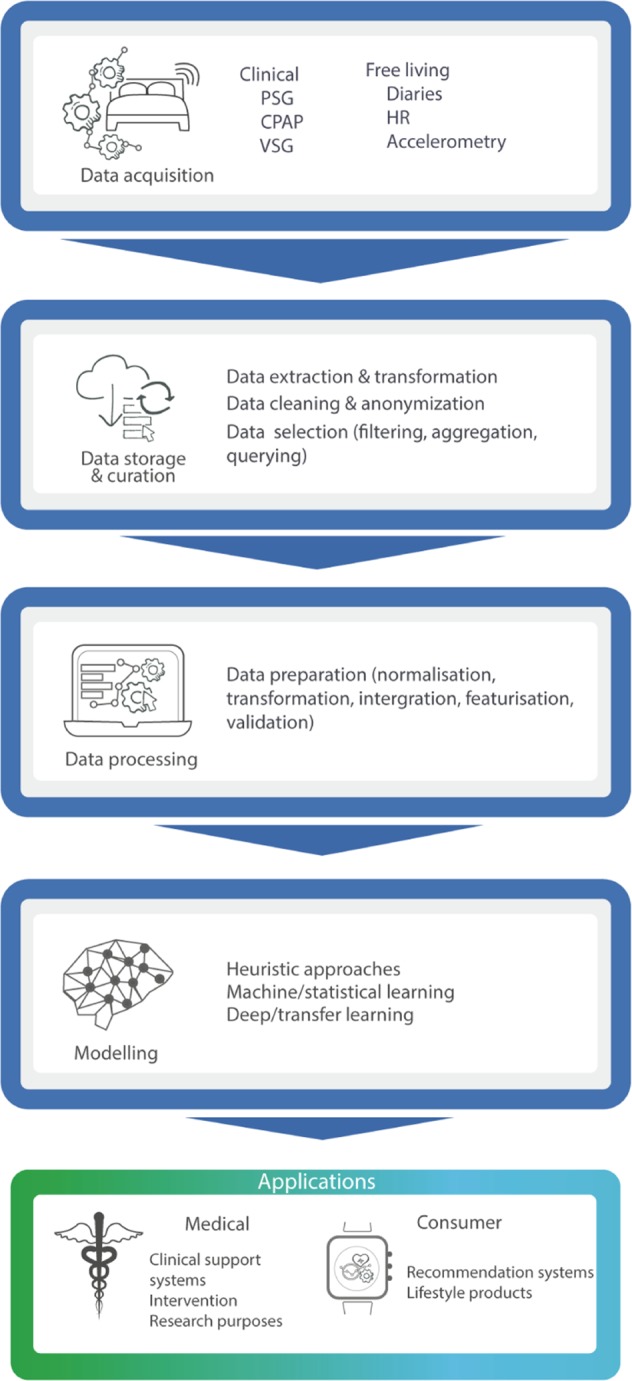
- The paper frames sleep digitization around a five-step framework: data acquisition, data storage and curation, data pre-processing, AI-based sleep modelling, and data-driven applications.
- PSG remains the gold standard, but it is “expensive, time-consuming” and impractical for long-term home use; ambulatory PSG is described as only a partial solution.
- Actigraphy and accelerometry are recognized by the American Academy of Sleep Medicine as valid for sleep assessment, but the paper states three key limitations: lack of validation across consumer devices, lack of standardization in human-activity recognition, and lack of assessment techniques for daytime sleeping.
- Some methods reported specific performance figures: a single-channel EEG ensemble model reached an agreement rate of 0.87 versus expert scoring, in-ear sensor sleep-stage prediction reached 74% agreement with full PSG, ultrasound-based movement detection showed 86% recall and <10% error, and iSleep reported >90% accuracy for event classification.
## Methods
- Narrative review / perspective article synthesizing prior literature on sleep sensing, storage, preprocessing, modelling, and applications; no original participant study is reported.
- The authors organize the discussion using a five-step “Digital Sleep Framework” spanning multi-modal acquisition through end-user application.
- The analysis is qualitative and literature-based, citing examples across PSG, actigraphy, EEG, mobile sensing, bed sensors, WiFi/radio sensing, cloud/fog architectures, and machine learning/deep learning methods.
## Limitations
- The paper explicitly notes that “few methods have been validated against gold-standard PSG or undergone systematic reliability assessment.”
- It also states that consumer-oriented sleep technologies “lack validation” and that their underlying models “change frequently.”
- Evident from the text: this is not an empirical evaluation of specific devices or algorithms; it is a broad synthesis, so its conclusions depend on the cited literature rather than new data collected in the paper.
Model-written summary. Check it against the paper before relying on it.
Integrity signals
Registry
Cites
Statistics
Figures
Verification
Claims the paper makes
24 Valid · 16 Not valid · 41 Not checked · 47 Own results and interpretations
The cited sources support only part of this claim — read each source’s verdict below.
In the paper
“Traditionally, polysomnography (PSG), paired with clinical evaluation, has been the gold-standard and de-facto technique to study sleep in clinical and laboratory settings, as well as to diagnose a subset of sleep disorders37.”
§ The future of sleep health: a data-driven revolution in sleep science and medicine > Sleep data acquisition
What the sources say
- Partly supportedcites [37] Morgenthaler TI Practice parameters for the clinical evaluation and treatment of circadian rhythm sleep disorders. An American Academy of Sleep Medicine report Sleep 2007 30 1445 1459 10.1093/sleep/30.11.1445 18041479 PMC2082098 sourceExperimental — accuracy not yet measured
Section 3.1.6 says PSG is indicated when a patient with suspected circadian rhythm sleep disorder may also have another primary sleep disorder, such as obstructive sleep apnea. Section 3.2.2.1 describes its use in laboratory studies of simulated jet lag. The paper does not establish PSG as the traditional gold-standard or de-facto technique for studying sleep across clinical and laboratory settings; it says PSG is not routinely indicated to diagnose circadian rhythm sleep disorders. (LLM, conf=0.84)
plain- Asserted: passes — The authors put it forward as true.
- Checkable: passes — It can be checked against evidence.
- Load-bearing: unclear — It is unclear whether the paper’s conclusions depend on it.
- Based: passes — The paper gives a reason why it holds.
- Partly supported
The cited sources support only part of this claim — read each source’s verdict below.
In the paper
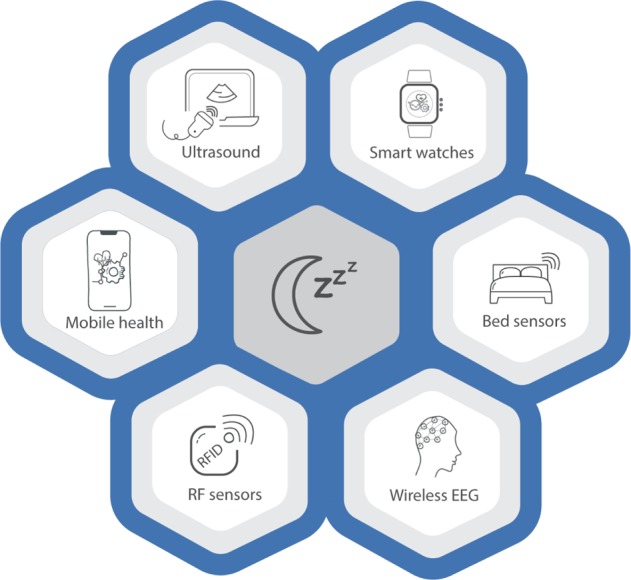
“Body movements, breathing and even cardiac activities can be detected by the volume change of the pneumatic underneath an individual whilst they are lying in bed52–54.”
§ The future of sleep health: a data-driven revolution in sleep science and medicine > Sleep data acquisition > Emerging sleep-sensing technologies
What the sources say
- Not checked — no full text of the sourcecites [52] Chow P Nagendra G Abisheganaden J Wang Y Respiratory monitoring using an air-mattress system Physiol. Meas. 2000 21 345 10.1088/0967-3334/21/3/301 10984203 source
- Supportedcites [53] Chee Y Han J Youn J Park K Air mattress sensor system with balancing tube for unconstrained measurement of respiration and heart beat movements Physiol. Meas. 2005 26 413 10.1088/0967-3334/26/4/007 15886436 source
The Introduction explains that respiration and heart-beat movements press on the air mattress and change its air pressure. The Measurement results from the human body show signals from a person lying on the mattress, including breathing, heart beats, and body movement. The paper measures pressure changes in the air cells rather than volume directly, but this supports the claim’s description of pneumatic changes beneath the person. (LLM, conf=0.89)
- Partly supportedcites [54] Arlotto P Grimaldi M Naeck R Ginoux J-M An ultrasonic contactless sensor for breathing monitoring Sensors 2014 14 15371 15386 10.3390/s140815371 25140632 PMC4179033 sourceExperimental — accuracy not yet measured
The Introduction and Section 2.7 describe detecting breathing and subject movements with an ultrasonic Doppler sensor. They do not support detection through volume changes in a pneumatic device beneath a person in bed, or detection of cardiac activity. (LLM, conf=0.88)
plainstates a cause- Asserted: passes — The authors put it forward as true.
- Checkable: passes — It can be checked against evidence.
- Load-bearing: unclear — It is unclear whether the paper’s conclusions depend on it.
- Based: passes — The paper gives a reason why it holds.
Every source the paper cites for this claim was checked and supports it.
In the paper
“These advances facilitate the objective and unobtrusive measurement of sleep characteristics in large, free-living populations at scale, facilitating well-powered epidemiological investigations designed to explore the relationships between sleep and disease35.”
§ The future of sleep health: a data-driven revolution in sleep science and medicine > Introduction
What the sources say
- Supportedcites [35] Willetts M Hollowell S Aslett L Holmes C Doherty A Statistical machine learning of sleep and physical activity phenotypes from sensor data in 96,220 UK Biobank participants Sci. Rep. 2018 8 7961 10.1038/s41598-018-26174-1 29784928 PMC5962537 source
Split into 2 atoms — 2 confirmed, 0 partially supported, 0 disputed, 0 misattributed, 0 unverifiable. Expand the claim to see per-atom verdicts.
plainstates a cause- Asserted: passes — The authors put it forward as true.
- Checkable: passes — It can be checked against evidence.
- Load-bearing: passes — The paper’s conclusions depend on it.
- Based: passes — The paper gives a reason why it holds.
- Supported
Every source the paper cites for this claim was checked and supports it.
In the paper
“Nevertheless, this increased availability of sensors also results in a greater challenges when optimising the match between the end-application and the sensor used43.”
§ The future of sleep health: a data-driven revolution in sleep science and medicine > Sleep data acquisition > Traditional free-living sleep sensing and measurement approaches: actigraphy and accelerometry Actigraphy and accelerometry are non-invasive methods to monitor human activity and rest cycles. They have been used to describe physical activity levels in large-scale populations44, and can also be used to monitor sleep. These methods offer an affordable, scalable alternative to PSG to monitor sleep–wake cycles, and have now been recognised by the American Academy of Sleep Medicine as a valid method for the assessment of sleep45. Recent advances in AI and larger studies in conjunction with PSG have resulted in the refinement of the method46. However, three key limitations of actigraphy and accelerometry remain. These are (1) the lack of validation studies for the different consumer-grade devices, (2) lack of standardisation of approaches for human-activity recognition and (3) the lack of assessment techniques for daytime sleeping. Nowadays, wearable sensors are often used in combination with other minimally invasive sensors (such as heart rate monitors, miniaturised ECG, pulse-oximetry, blood pressure monitors, galvanic skin conduction, light sensors, gyroscopes, barometric altimeters and GPS trackers). Sleep can also be monitored through a combination of wrist actigraphy, hip sensors, smartphone sensors and under-mattress sensors47. Nevertheless, this increased availability of sensors also results in a greater challenges when optimising the match between the end-application and the sensor used43. A description of actigraphy specific sleep metrics is provided in the Supplementary Material. Data on sleep can be also obtained from devices to treat sleep apnoea, such as Continuous Positive Air Pressure (CPAP). For example, Aggarwal et al.48 showed that CPAP can be used to classify and track sleep metrics, which could be used to monitor the response of CPAP therapy in sleep apnoea patients.
What the sources say
- Supportedcites [43] Caulfield B Reginatto B Slevin P Not all sensors are created equal: a framework for evaluating human performance measurement technologies npj Digital Med. 2019 2 7 10.1038/s41746-019-0082-4 PMC6550243 31304357 source
The Abstract states that increased sensor availability and choice make it challenging to match a sensor to a specific application context. The Introduction likewise says the growing availability of devices can create confusion when professionals select technology for particular application requirements. (LLM, conf=0.95)
plainstates a cause- Asserted: passes — The authors put it forward as true.
- Checkable: passes — It can be checked against evidence.
- Load-bearing: unclear — It is unclear whether the paper’s conclusions depend on it.
- Based: passes — The paper gives a reason why it holds.
- Supported
The cited sources that could be checked couldn’t confirm or dispute this claim.
In the paper
“Multiple published works have demonstrated that a single modality sensor representation, such as heart rate alone, is not sufficient to accurately complete sophisticated sleep stage classification42.”
§ The future of sleep health: a data-driven revolution in sleep science and medicine > Sleep data acquisition > Sleep monitoring outside the laboratory
What the sources say
- Could not verifycites [42] Baltrušaitis T Ahuja C Morency L-P Multimodal machine learning: a survey and taxonomy IEEE Trans. Pattern Anal. Mach. Intell. 2018 41 423 443 10.1109/TPAMI.2018.2798607 29994351 sourceExperimental — accuracy not yet measured
The survey discusses multimodal representations (Section 3, p. 3) and fusion applications (Section 6, p. 12), but those passages do not address sleep-stage classification. Searches for sleep stages, heart rate, and physiological sensors found no passage reporting that heart rate alone is insufficient for accurate classification. (LLM, conf=0.76)
boosted- Asserted: passes — The authors put it forward as true.
- Checkable: passes — It can be checked against evidence.
- Load-bearing: unclear — It is unclear whether the paper’s conclusions depend on it.
- Based: passes — The paper gives a reason why it holds.
- Could not verify
50 more claims · 12 with their cited sources checked
Create a free account to see all 128 claims and to verify the 17 references still open.
- It may state two separate claims as one. 34
- Probably not a substantial claim. 54
Citations
Cites
Hochreiter, S., & Schmidhuber, J. (1997) · Neural Computation · doi:10.1162/neco.1997.9.8.1735 · Cited by 102,318
High-performance medicine: the convergence of human and artificial intelligence
Topol, E. J. (2019) · Nature Medicine · doi:10.1038/s41591-018-0300-7 · Cited by 10,450
‘Small Changes' to Diet and Physical Activity Behaviors for Weight Management
Hills, A. P., Byrne, N. M., Lindstrom, R., & Hill, J. O. (2013) · Obesity Facts · doi:10.1159/000345030 · Cited by 9,493
Physical Activity in the United States Measured by Accelerometer
TROIANO, R. P., BERRIGAN, D., DODD, K. W., MÂSSE, L. C., TILERT, T., & MCDOWELL, M. (2008) · Medicine & Science in Sports & Exercise · doi:10.1249/mss.0b013e31815a51b3 · Cited by 7,638
Multimodal Machine Learning: A Survey and Taxonomy
Baltrusaitis, T., Ahuja, C., & Morency, L.-P. (2019) · IEEE Transactions on Pattern Analysis and Machine Intelligence · doi:10.1109/tpami.2018.2798607 · Cited by 5,018
(2010) · Cited by 4,411
Convolutional networks for images, speech, and time series
LeCun, Y., & Bengio, Y. (1998) · HAL (Le Centre pour la Communication Scientifique Directe) · doi:10.5555/303568.303704 · Cited by 4,231
International Classification of Sleep Disorders-Third Edition
Sateia, M. J. (2014) · Chest · doi:10.1378/chest.14-0970 · Cited by 3,860
Federated Learning: Strategies for Improving Communication Efficiency
Konečný, J., McMahan, H. B., Yu, F. X., Richtárik, P., Suresh, A. T., & Bacon, D. (2016) · arXiv · doi:10.48550/arxiv.1610.05492 · Cited by 3,766
International Classification of Sleep Disorders
Thorpy, M. (2017) · Sleep Disorders Medicine · doi:10.1007/978-1-4939-6578-6_27 · Cited by 2,505
Research works printed but not linked: 4
- Zhao, M., Yue, S., Katabi, D., Jaakkola, T. S. & Bianchi, M. T. Learning sleep stages from radio signals: a conditional adversarial architecture. in Proceedings of the 34th International Conference on Machine Learning, 4100–4109 (2017). https://www.acm.org/publications.
- Van Drongelen, W. Signal Processing for Neuroscientists (Academic Press, 2018).
- Choi YK Smartphone applications to support sleep self-management: review and evaluation J. Clin. Sleep Med. 2018 14 1783 1790 10.5664/jcsm.7396 30353814 PMC6175783 · DOI · Paper page
- IEEE. IEEE VIS 2015 Workshop on Personal Visualization: Exploring Data in Everyday Life. https://www.vis4me.com/personalvis15/papers.html (2015).
Cited by
Genetics of circadian rhythms and sleep in human health and disease
Lane, J. M., Qian, J., Mignot, E., Redline, S., Scheer, F. A. J. L., & Saxena, R. (2023) · Nature Reviews Genetics · doi:10.1038/s41576-022-00519-z · Cited by 236
The translational neuroscience of sleep: A contextual framework
Grandner, M. A., & Fernandez, F.-X. (2021) · Science · doi:10.1126/science.abj8188 · Cited by 196
Shaik, T., Tao, X., Li, L., Xie, H., & Velásquez, J. D. (2024) · Information Fusion · doi:10.1016/j.inffus.2023.102040 · Cited by 196
“The integration of data from diverse sources and ensuring its quality and compatibility across different healthcare systems and modalities can be complex and time-consuming [131].”
BackgroundAsgari Mehrabadi, M., Azimi, I., Sarhaddi, F., Axelin, A., Niela-Vilén, H., Myllyntausta, S., Stenholm, S., Dutt, N., Liljeberg, P., & Rahmani, A. M. (2020) · JMIR mHealth and uHealth · doi:10.2196/20465 · Cited by 155
“Monitoring sleep quality is a vital step in this regard when the individuals' sleep parameters are tracked [5].”
The sleep–circadian interface: A window into mental disorders
Meyer, N., Lok, R., Schmidt, C., Kyle, S. D., McClung, C. A., Cajochen, C., Scheer, F. A. J. L., Jones, M. W., & Chellappa, S. L. (2024) · Proceedings of the National Academy of Sciences · doi:10.1073/pnas.2214756121 · Cited by 219
Automatic sleep staging of EEG signals: recent development, challenges, and future directions
Phan, H., & Mikkelsen, K. B. (2022) · Physiological Measurement · doi:10.1088/1361-6579/ac6049 · Cited by 207
“Good sleep is crucial in maintaining one’s mental and physical health [1,2] while sleep disorders are linked with a host of different ailments [3].”
BackgroundA deep transfer learning approach for wearable sleep stage classification with photoplethysmography
Radha, M., Fonseca, P. M., Moreau, A., Ross, M., Cerny, A., Anderer, P., Long, X., & Aarts, R. M. (2021) · npj Digital Medicine · doi:10.1038/s41746-021-00510-8 · Cited by 158
“Next to that, sleep assessments in sleep medicine could also bene fi t from longitudinal home monitoring 5 , which could provide a complementary role to gold-standard polysomnography (PSG) measurements.”
BackgroundPast, Present, and Future of Multisensory Wearable Technology to Monitor Sleep and Circadian Rhythms
Lujan, M. R., Perez-Pozuelo, I., & Grandner, M. A. (2021) · Frontiers in Digital Health · doi:10.3389/fdgth.2021.721919 · Cited by 137
Self-citationFang, Y., Forger, D. B., Frank, E., Sen, S., & Goldstein, C. (2021) · npj Digital Medicine · doi:10.1038/s41746-021-00400-z · Cited by 99
Technologies for sleep monitoring at home: wearables and nearables
Yoon, H., & Choi, S. H. (2023) · Biomedical Engineering Letters · doi:10.1007/s13534-023-00305-8 · Cited by 95
Zhai, B., Perez-Pozuelo, I., Clifton, E. A. D., Palotti, J., & Guan, Y. (2020) · Proceedings of the ACM on Interactive Mobile Wearable and Ubiquitous Technologies · doi:10.1145/3397325 · Cited by 95
“As a result of its importance to vital human processes and the incomplete understanding of its function, accurate sleep monitoring is of interest to the understanding of human health and an active area of research for the ubiquitous computing community [1, 11, 34, 48].”
BackgroundSelf-citationMcLay, L., Jamieson, H. A., France, K. G., & Schlüter, P. J. (2021) · Scientific Reports · doi:10.1038/s41598-021-83778-w · Cited by 88
“Social isolation was defined by the living arrangements at the time of the assessment, and ascertained by asking participants who lived in their home; with response options: (1) alone; (2) with spouse/ partner only; (3) with spouse/partner and other(s); (4) with child (not spouse/partner); (5) with parent(s) or guardi…”
Background(2021) · Handbook of Clinical Neurology · doi:10.1016/b978-0-12-819975-6.00023-6 · Cited by 66
Capturing sleep–wake cycles by using day-to-day smartphone touchscreen interactions
Borger, J. N., Huber, R., & Ghosh, A. (2019) · npj Digital Medicine · doi:10.1038/s41746-019-0147-4 · Cited by 64
Recent advances of triboelectric nanogenerator based applications in biomedical systems
Xia, X., Liu, Q., Zhu, Y., & Zi, Y. (2020) · EcoMat · doi:10.1002/eom2.12049 · Cited by 66
Non-invasive Techniques for Monitoring Different Aspects of Sleep: A Comprehensive Review
Hussain, Z., Sheng, Q. Z., Zhang, W. E., Ortiz, J., & Pouriyeh, S. (2022) · ACM Transactions on Computing for Healthcare · doi:10.1145/3491245 · Cited by 72
“Nowadays, smart health technologies offer ubiquitous solutions for sleep monitoring, which are relatively cheap and easy to use [53, 55].”
BackgroundWearable technology and systems modeling for personalized chronotherapy
Kim, D. W., Zavala, E., & Kim, J. K. (2020) · Current Opinion in Systems Biology · doi:10.1016/j.coisb.2020.07.007 · Cited by 63
Yue, H., Chen, Z., Guo, W., Sun, L., Dai, Y., Wang, Y., Ma, W., Fan, X., Wen, W., & Lei, W. (2024) · Sleep Medicine Reviews · doi:10.1016/j.smrv.2024.101897 · Cited by 79
Minimum number of nights for reliable estimation of habitual sleep using a consumer sleep tracker
Lau, T., Ong, J. L., Ng, B. K. L., Chan, L. F., Koek, D., Tan, C. S., Müller‐Riemenschneider, F., Cheong, K., Massar, S. A. A., & Chee, M. W. L. (2022) · SLEEP Advances · doi:10.1093/sleepadvances/zpac026 · Cited by 69
“Large-scale, long-term objective sleep tracking via these trackers [9, 10] could improve the assessment of population health, interventions to improve sleep, and realize the dispensation of personalized sleep advice [11–17].”
BackgroundRevolutionizing Sleep Health: The Emergence and Impact of Personalized Sleep Medicine
Garbarino, S., & Bragazzi, N. L. (2024) · Journal of Personalized Medicine · doi:10.3390/jpm14060598 · Cited by 67
Smart Home Automation—Use Cases of a Secure and Integrated Voice-Control System
Venkatraman, S., Overmars, A., & Thông, M. (2021) · Systems · doi:10.3390/systems9040077 · Cited by 67
Tsai, H.-J., Yang, A. C., Zhu, J.-D., Hsu, Y.-Y., Hsu, T.-F., & Tsai, S.-J. (2022) · Journal of Personalized Medicine · doi:10.3390/jpm12030481 · Cited by 45
“Moreover, to achieve personalized digital sleep medicine [62] or digital phenotyping insomnia disorder [63,64], the future development for the dCBT-i with advanced technologies is recommended, including digital devices (e.”
BackgroundSleep classification using Consumer Sleep Technologies and AI: A review of the current landscape
Djanian, S., Bruun, A., & Nielsen, T. D. (2022) · Sleep Medicine · doi:10.1016/j.sleep.2022.09.004 · Cited by 63
Self-Supervised Learning for Label- Efficient Sleep Stage Classification: A Comprehensive Evaluation
Eldele, E., Ragab, M., Chen, Z., Wu, M., Kwoh, C. K., & Li, X. (2023) · IEEE Transactions on Neural Systems and Rehabilitation Engineering · doi:10.1109/tnsre.2023.3245285 · Cited by 60
“Sleep stage classification (SSC) plays a key role in diagnosing many common diseases such as insomnia and sleep apnea [1].”
LifeSnaps, a 4-month multi-modal dataset capturing unobtrusive snapshots of our lives in the wild
Yfantidou, S., Karagianni, C., Efstathiou, S., Vakali, A. I., Palotti, J., Giakatos, D. P., Marchioro, T., Kazlouski, A., Ferrari, E., & Girdzijauskas, Š. (2022) · Scientific Data · doi:10.1038/s41597-022-01764-x · Cited by 61
Self-citationStrumpf, Z. B., Gu, W., Tsai, C.-W., Chen, P., Yeh, E., Leung, L., Cheung, C., Wu, I.-C., Strohl, K. P., Tsai, T., et al. (2023) · Sleep Health · doi:10.1016/j.sleh.2023.05.001 · Cited by 51
Sleep-tracking technology in scientific research: looking to the future
Grandner, M. A., Lujan, M. R., & Ghani, S. B. (2021) · SLEEP · doi:10.1093/sleep/zsab071 · Cited by 46
“Future research might be able to further develop this line of inquiry, identifying metrics and factors present in these real-world signals that predict important outcomes [12].”
BackgroundHe, C., Tan, J., Jian, X., Zhong, G., Cheng, L., & Lin, J. (2022) · IEEE Internet of Things Journal · doi:10.1109/jiot.2022.3146926 · Cited by 40
A critical review on clinical evidence of the efficacy of lavender in sleep disorders
Luo, J., & Jiang, W. (2022) · Phytotherapy Research · doi:10.1002/ptr.7448 · Cited by 47
“used with a good performance metrics profile (Perez-Pozuelo et al., 2020).”
MethodCajochen, C., Stefani, O., Schöllhorn, I., Lang, D., & Chellappa, S. L. (2022) · Lighting Research & Technology · doi:10.1177/14771535221078765 · Cited by 47
Bappi, M. H., Prottay, A. A. S., Kamli, H. M., Sonia, F. A., Mia, M. N., Akbor, M. S., Hossen, M. M., Awadallah, S. M., Mubarak, M. S., & Islam, M. T. (2023) · Molecules · doi:10.3390/molecules28145616 · Cited by 41
Schütz, N., Saner, H. E., Botros, A., Pais, B., Santschi, V., Buluschek, P., Gática-Pérez, D., Urwyler, P., Müri, R. M., & Nef, T. (2021) · JMIR mhealth and uhealth · doi:10.2196/24666 · Cited by 41
“As a result of people being stationary during sleep, contactless modern sensor technology can be used to measure sleep without device interactions or the necessity to wear and maintain devices likes smartwatches or fitness trackers [23-25].”
BackgroundGrandner, M. A., Bromberg, Z., Hadley, A. J., Morrell, Z., Graf, A. B. A., Hutchison, S., & Freckleton, D. (2022) · SLEEP · doi:10.1093/sleep/zsac152 · Cited by 47
A real-time, personalized sleep intervention using mathematical modeling and wearable devices
Song, Y. M., Choi, S. J., Park, S. H., Lee, S. J., Joo, E. Y., & Kim, J. K. (2023) · SLEEP · doi:10.1093/sleep/zsad179 · Cited by 48
Morokuma, S., Hayashi, T., Kanegae, M., Mizukami, Y., Asano, S., KIMURA, I., Tateizumi, Y., Ueno, H., Ikeda, S., & Niizeki, K. (2023) · Scientific Reports · doi:10.1038/s41598-023-45020-7 · Cited by 47
“In recent years, machine learning techniques have gained significant traction because of their potential to enable the automatic classification of sleep stages from multimodal physiological data without EEG recordings 6 .”
BackgroundGhorbani, S., Golkashani, H. A., Chee, N. I., Teo, T. B., Dicom, A. R., Yilmaz, G., Leong, R. L., Ong, J. L., & Chee, M. W. (2022) · Nature and Science of Sleep · doi:10.2147/nss.s359789 · Cited by 36
“Earlier consumer wearables had relatively poor and variable performance, but newer devices have shown greater accuracy and consistency of sleep assessment which continue to improve.(2,5,26,27) To guide their own usage of collected data, most users, clinicians, and researchers, are interested in improvements of two maj…”
BackgroundOlsen, M., Zeitzer, J. M., Nakase‐Richardson, R., Davidenko, P., Jennum, P., Sørensen, H. B. D., & Mignot, E. J.-M. (2022) · IEEE Transactions on Biomedical Engineering · doi:10.1109/tbme.2022.3187945 · Cited by 40
“Hence, there is an unmet need to validate raw sensor data from wrist-worn CSTs against gold-standard polysomnography (PSG) recordings [2].”
BackgroundSocial dimensions impact individual sleep quantity and quality
Park, S., Zhunis, A., Constantinides, M., Aiello, L. M., Quercia, D., & Cha, M. (2023) · Scientific Reports · doi:10.1038/s41598-023-36762-5 · Cited by 42
Gkintoni, E., Vassilopoulos, S. P., Nikolaou, G., & Boutsinas, B. (2025) · Journal of Clinical Medicine · doi:10.3390/jcm14072265 · Cited by 34
Current and future strategies for diagnostic and management of obstructive sleep apnea
Khurana, S., Soda, N., Shiddiky, M. J. A., Nayak, R., & Bose, S. K. (2021) · Expert Review of Molecular Diagnostics · doi:10.1080/14737159.2021.2002686 · Cited by 33
“of detecting body movements, sleep patterns, breathing patterns and even cardiac activities [51].”
BackgroundHeremans, E. R. M., Phan, H., Borzée, P., Buyse, B., Testelmans, D., & Vos, M. D. (2022) · Journal of Neural Engineering · doi:10.1088/1741-2552/ac6ca8 · Cited by 40
OSA diagnosis goes wearable: are the latest devices ready to shine?
Chiang, A. A.-P., Jerkins, E., Holfinger, S. J., Schutte-Rodin, S., Chandrakantan, A., Mong, L., Glinka, S., & Khosla, S. (2024) · Journal of Clinical Sleep Medicine · doi:10.5664/jcsm.11290 · Cited by 42
Personalized sleep-wake patterns aligned with circadian rhythm relieve daytime sleepiness
Hong, J., Choi, S. J., Park, S. H., Hong, H., Booth, V., Joo, E. Y., & Kim, J. K. (2021) · iScience · doi:10.1016/j.isci.2021.103129 · Cited by 38
Ravindran, K. K. G., della Monica, C., Atzori, G., Lambert, D., Hassanin, H., Revell, V. L., & Dijk, D. (2023) · JMIR mhealth and uhealth · doi:10.2196/46338 · Cited by 40
“Without rigorous evaluation, there are also potential risks of the multimodal capabilities and clinical value of CSTs not being used to their full potential and the data being misinterpreted [12].”
BackgroundDesign and Implementation of IoT based sleep monitoring system for Insomniac people
Rajguru, K., Tarpe, P., Aswar, V., Bawane, K., Sorte, S., & Agrawal, R. (2022) · International Conference on Artificial Intelligence and Smart Energy (ICAIS) · doi:10.1109/icais53314.2022.9742803 · Cited by 31
“discovered detailed links between rest and cardio-metabolic disease [7].”
BackgroundCaulfield, B., Reginatto, B., & Slevin, P. (2019) · npj Digital Medicine · doi:10.1038/s41746-019-0082-4 · Cited by 30
Falkingham, J., Evandrou, M., Qin, M., & Vlachantoni, A. (2020) · BMJ Open · doi:10.1136/bmjopen-2021-053094 · Cited by 37
Detecting sleep outside the clinic using wearable heart rate devices
Perez-Pozuelo, I., Posa, M., Spathis, D., Westgate, K. L., Wareham, N. J., Mascolo, C., Brage, S., & Palotti, J. (2022) · Scientific Reports · doi:10.1038/s41598-022-11792-7 · Cited by 33
Self-citationTavares, D. L., Lopes, A. I., Castro, C., Maia, G. H., Leite, L., & Quintas, M. (2023) · Advances in medical education, research, and ethics (AMERE) book series · doi:10.4018/978-1-6684-7164-7.ch006 · Cited by 36
AI-Driven sleep staging from actigraphy and heart rate
Song, T.-A., Chowdhury, S. R., Malekzadeh, M., Harrison, S. L., Blackwell-Hoge, T., Redline, S. S., Stone, K. L., Saxena, R., Purcell, S., & Dutta, J. (2023) · PLoS ONE · doi:10.1371/journal.pone.0285703 · Cited by 36
Massar, S. A. A., Chua, X. Y., Soon, C. S., Ng, A., Ong, J. L., Chee, N. I. Y. N., Lee, T.-S. W., Ghosh, A., & Chee, M. W. L. (2021) · npj Digital Medicine · doi:10.1038/s41746-021-00466-9 · Cited by 36
The Role of Model Personalization for Sleep Stage and Sleep Quality Recognition Using Wearables
Gashi, S., Alecci, L., Lascio, E. D., Debus, M. E., Gasparini, F., & Santini, S. (2022) · IEEE Pervasive Computing · doi:10.1109/mprv.2022.3164334 · Cited by 38
“12 Indeed, physiological signals vary signi fi cantly across individuals due to age, gender, diet, and sleep behavior.”
BackgroundMethodPires, G. N., Arnardóttir, E. S., Íslind, A. S., Leppänen, T., & McNicholas, W. T. (2023) · Journal of Sleep Research · doi:10.1111/jsr.13819 · Cited by 40
“This includes the evaluation of pulse oximetry, heart rate and heart rate variability, respiratory rate, breathing-related sounds, and body movements, among others (O'Mahony et al., 2020; Perez-Pozuelo et al., 2020).”
BackgroundQuality of Sleep Data Validation From the Xiaomi Mi Band 5 Against Polysomnography: Comparison Study
Concheiro-Moscoso, P., Groba, B., Álvarez-Estévez, D., Miranda-Duro, M. D. C., Pousada, T., Nieto-Riveiro, L., Mejuto-Muiño, F. J., & Pereira, J. (2023) · Journal of Medical Internet Research · doi:10.2196/42073 · Cited by 34
“However, PSG is limited to the clinical setting owing to its cost, invasiveness, the need for specialized professionals, and difficulty functioning in the user’s free-living environment [15,18].”
Smyth, A., Jenkins, M., Dunham, M., Kutzer, Y., Taheri, S., & Whitehead, L. (2020) · Diabetes Research and Clinical Practice · doi:10.1016/j.diabres.2020.108532 · Cited by 28
Self-citationYeh, E., Wong, E., Tsai, C.-W., Gu, W., Chen, P., Leung, L., Wu, I., Strohl, K. P., Folz, R. J., Yar, W., et al. (2021) · PLoS ONE · doi:10.1371/journal.pone.0258040 · Cited by 33
Ode, K. L., Shi, S., Katori, M., Mitsui, K., Takanashi, S., Oguchi, R., Aoki, D., & Ueda, H. R. (2022) · iScience · doi:10.1016/j.isci.2021.103727 · Cited by 31
“The MCTQ also revealed irregular sleep schedules caused by social environments, namely, a social jet lag, in most people in modern society (Roenneberg et al., 2012; Wittmann et al., 2006).”
BackgroundThe Management of Chronic Pain: Re-Centring Person-Centred Care
Themelis, K., & Tang, N. K. Y. (2023) · Journal of Clinical Medicine · doi:10.3390/jcm12226957 · Cited by 41
“These measurements provide real-time assessment and tailored feedback to evaluate interventions, particularly in sleep treatment where portable devices have allowed monitoring outside the laboratory settings for extended periods [126].”
BackgroundSleepSmart: an IoT-enabled continual learning algorithm for intelligent sleep enhancement
Gamel, S. A., & Talaat, F. M. (2023) · Neural Computing and Applications · doi:10.1007/s00521-023-09310-5 · Cited by 35
Olsen, M., Zeitzer, J. M., Nakase‐Richardson, R., Musgrave, V. H., Sørensen, H. B. D., Mignot, E. J.-M., & Jennum, P. (2024) · IEEE Transactions on Biomedical Engineering · doi:10.1109/tbme.2024.3378480 · Cited by 31
Fernández-Luque, L., Herbish, A. S. A., Shammari, R. A., Argente, J., Bin-Abbas, B. S., Deeb, A., Dixon, D., Zary, N., Koledova, E. B., & Savage, M. O. (2021) · Frontiers in Pediatrics · doi:10.3389/fped.2021.715705 · Cited by 33
Self-citationJenkins, C. A., Tiley, L. C. F., Lay, I., Hartmann, J., Chan, J. K. M., & Nicholas, C. L. (2021) · Behavioral Sleep Medicine · doi:10.1080/15402002.2021.1924175 · Cited by 25
“It has played a central role in sleep assessment over recent decades and the range of research-grade devices has increased dramatically (Fekedulegn et al., 2020; Perez-Pozuelo et al., 2020).”
BackgroundAgreement of Sleep Measures—A Comparison between a Sleep Diary and Three Consumer Wearable Devices
Klier, K., & Wagner, M. O. (2022) · Sensors · doi:10.3390/s22166189 · Cited by 25
A Review of Epidermal Flexible Pressure Sensing Arrays
Nan, X., Xu, Z., Cao, X., Hao, J., Wang, X., Duan, Q., Wu, G., Hu, L., Zhao, Y., Yang, Z., et al. (2023) · Biosensors · doi:10.3390/bios13060656 · Cited by 28
“memory loss [227], and even cardiovascular disease or even life-threatening [228].”
BackgroundChallenges and opportunities of deep learning for wearable-based objective sleep assessment
Zhai, B., Elder, G. J., & Godfrey, A. (2024) · npj Digital Medicine · doi:10.1038/s41746-024-01086-9 · Cited by 34
Self-citationA data-driven performance dashboard for surgical dissection
Baghdadi, A., Lama, S., Singh, R. S., Hoshyarmanesh, H., Razmi, M., & Sutherland, G. R. (2021) · Scientific Reports · doi:10.1038/s41598-021-94487-9 · Cited by 27
Budig, M., Stoohs, R. A., & Keiner, M. (2022) · Sensors · doi:10.3390/s22239540 · Cited by 26
HRS White Paper on Clinical Utilization of Digital Health Technology
Wan, E. Y., Ghanbari, H., AKOUM, N. W., Attia, Z. I., Asirvatham, S. J., Chung, E. H., Dagher, L., Al‐Khatib, S. M., Mendenhall, G. S., McManus, D. D., et al. (2021) · Cardiovascular Digital Health Journal · doi:10.1016/j.cvdhj.2021.07.001 · Cited by 22
Zhai, B., Guan, Y., Catt, M., & Plötz, T. (2021) · Proceedings of the ACM on Interactive Mobile Wearable and Ubiquitous Technologies · doi:10.1145/3494961 · Cited by 25
“Long-term lack of sleep and/or poor-quality sleep is likely to increase the risk of obesity, diabetes, and heart and blood vessel (cardiovascular) disease [38, 57].”
BackgroundSelf-citationBenis, A., Haghi, M., Deserno, T. M., & Tamburis, O. (2023) · JMIR Medical Informatics · doi:10.2196/43871 · Cited by 28
“She also bought a pair of blue light–blocking glasses to guarantee high-quality naps [36].”
Sleep deprivation and medication administration errors in registered nurses—A scoping review
Martin, C., Joyce-McCoach, J. T., Peddle, M., & East, C. E. (2023) · Journal of Clinical Nursing · doi:10.1111/jocn.16912 · Cited by 28
Arora, A., Pell, D., van Sluijs, E. M. F., & Winpenny, E. M. (2020) · PLoS ONE · doi:10.1371/journal.pone.0242852 · Cited by 23
“Indeed, the growing body of evidence describing the effects of poor sleep has prompted calls for sleep to be routinely assessed in clinical practice [62].”
BackgroundPoor Sleep Quality and Daytime Sleepiness in Health Professionals: Prevalence and Associated Factors
Carvalho, V. P., Barcelos, K. A., de Oliveira, E. P., Marins, S. N., Rocha, I. B. S., de Sousa, D. F. M., Moreira, B. C., de Almeida, G. A., Carneiro, M. L. S., Silva, J. D. D. F., et al. (2021) · International Journal of Environmental Research and Public Health · doi:10.3390/ijerph18136864 · Cited by 33
“Further, sleep regulation impacts brain function and behavior [1].”
BackgroundGreen, S. F., Frame, T. V. H., Banerjee, L. V., Gimson, A., Blackman, J., Morrison, H. D., Lloyd, K., Rudd, S., Fotherby, W. F., Bartsch, U., et al. (2022) · Sleep Medicine Reviews · doi:10.1016/j.smrv.2022.101665 · Cited by 21
Assessing Risk of Health Outcomes From Brain Activity in Sleep: A Retrospective Cohort Study
Sun, H., Adra, N., Ayub, M. A., Ganglberger, W., Ye, E. M., Fernandes, M. P., Paixão, L. G. P., Fan, Z., Gupta, A., Ghanta, M., et al. (2023) · Neurology Clinical Practice · doi:10.1212/cpj.0000000000200225 · Cited by 23
“10 Yet, how to measure sleep quality remains unclear.”
BackgroundLanders, M., Saria, S., & Espay, A. J. (2021) · Journal of Parkinson s Disease · doi:10.3233/jpd-212545 · Cited by 22
“By continuously collecting movement, voice, and other relevant data [19], smartphones, and the sensors embedded therein, generate a vast amount of data that permit an accurate and objective assessment of a patient’s movement impairment [20], speech limitation [21], somnolence [22], and other disease-related burdens.”
BackgroundReal-world longitudinal data collected from the SleepHealth mobile app study
Deering, S., Pratap, A., Suver, C., Borelli, A., Amdur, A., Headapohl, W., & Stepnowsky, C. J. (2020) · Scientific Data · doi:10.1038/s41597-020-00753-2 · Cited by 25
Enabling secure and self determined health data sharing and consent management
Welzel, C., Ostermann, M., Smith, H. L., Minssen, T., Kirsten, T., & Gilbert, S. (2025) · npj Digital Medicine · doi:10.1038/s41746-025-01945-z · Cited by 21
Consumer Wearable Sleep Trackers
Chiang, A. A.-P., & Khosla, S. (2023) · Sleep Medicine Clinics · doi:10.1016/j.jsmc.2023.05.005 · Cited by 22
A Customized Deep Sleep Recommender System Using Hybrid Deep Learning
Park, J.-H., & Lee, J.-D. (2023) · Sensors · doi:10.3390/s23156670 · Cited by 24
Abatan, A., Obaigbena, A., Ugwuanyi, E. D., Jacks, B. S., Umoga, U. J., Daraojimba, O. H., & Lottu, O. A. (2024) · Engineering Science & Technology Journal · doi:10.51594/estj.v5i2.831 · Cited by 21
Simim, M. A. D. M., Souza, H. D. S., Filho, C. A. C., Gianoni, R. L. D. S., Bezerra, R. R., Affonso, H. D. O., Amadio, A. C., D’Almeida, V., Serrão, J. C., & Claudino, J. G. (2020) · PubMed Central · doi:10.5935/1984-0063.20200032 · Cited by 33
“In this sense, different instruments and information collected can complement each other and aggregate sleep data makes the assessment of sleep quality more robust and tolerant to noise and lack of data 109 .”
BackgroundTakeuchi, H., Suwa, K., Kishi, A., Nakamura, T., Yoshiuchi, K., & Yamamoto, Y. (2022) · JMIR mhealth and uhealth · doi:10.2196/39150 · Cited by 22
“The widespread use of mobile or wearable sensing devices (eg, bed sensors, smartphone apps, and activity monitors) makes it easier and more commonplace to monitor sleep behavior in real time [27].”
BackgroundHaghi, M., Asadov, A., Boiko, A., Ortega, J. A., Madrid, N. M., & Seepold, R. (2023) · Sensors · doi:10.3390/s23083973 · Cited by 18
Jahrami, H., Husain, W., Trabelsi, K., Penzel, T., Hirshkowitz, M., Razjouyan, J., BaHammam, A. S., & Sharafkhaneh, A. (2025) · Sleep Medicine Reviews · doi:10.1016/j.smrv.2025.102212 · Cited by 22
Sumter, S. R., Baumgartner, S. E., & Wiradhany, W. (2024) · Behaviour and Information Technology · doi:10.1080/0144929x.2024.2350663 · Cited by 23
“The sole reliance on self-reported measures is problematic for measures of media use (e.g. Naab, Karnowski, and Schlütz 2019; Parry et al. 2021) as well as sleep (Perez-Pozuelo et al. 2020).”
Jiang, J., Li, D., Huang, T., Huang, S., Tan, H., & Xia, Z. (2024) · Frontiers in Nutrition · doi:10.3389/fnut.2024.1453064 · Cited by 19
Ren, Z., Ma, J., & Ding, Y. (2025) · IEEE Journal of Biomedical and Health Informatics · doi:10.1109/jbhi.2025.3525626 · Cited by 31
Garbarino, S., & Bragazzi, N. L. (2024) · Journal of Sleep Research · doi:10.1111/jsr.14210 · Cited by 15
Berjaoui, C., Kibrom, B. T., Ghayyad, M. H., Joumaa, S., Labban, N. T. A., Nazir, A., Kachouh, C., Moradeyo, A. A., Wojtara, M. S., & Uwishema, O. (2023) · Health Science Reports · doi:10.1002/hsr2.1773 · Cited by 17
“48 Additionally, telemedicine technologies are developed to wire-lessly transmit sleep and related biosignals from a patient to a remote monitoring center.”
BackgroundInfluentialA robust deep learning detector for sleep spindles and K-complexes: towards population norms
Tapia, N. I., Estévez, P. A., & Cortes-Briones, J. (2024) · Scientific Reports · doi:10.1038/s41598-023-50736-7 · Cited by 21
“In recent years, simpler and wireless alternatives to traditional EEG systems have been developed and validated, thus expanding the population size with access to sleep monitoring 46 .”
MethodASTGSleep: Attention-Based Spatial–Temporal Graph Network for Sleep Staging
Chen, X., Zhang, Y., Chen, Q., Zhou, L., Chen, H., Wu, H., Xu, Y., Chen, K., Yin, B., Chen, W., et al. (2025) · IEEE Transactions on Instrumentation and Measurement · doi:10.1109/tim.2025.3548733 · Cited by 26
“Accurate sleep staging is essential for diagnosing and treating sleep disorders [1].”
Tamschick, R., Navarini, A. A., Strobel, W. M., & Müller, S. (2021) · Clinics in Dermatology · doi:10.1016/j.clindermatol.2021.09.001 · Cited by 18
Feature matching as improved transfer learning technique for wearable EEG
Heremans, E. R. M., Phan, H., Ansari, A. H., Borzée, P., Buyse, B., Testelmans, D., & Vos, M. D. (2022) · Biomedical Signal Processing and Control · doi:10.1016/j.bspc.2022.104009 · Cited by 19
“Most automated sleep staging methods focus on supervised learning on large annotated PSG datasets, often making use of deep neural network models [2, 6, 7, 8, 9, 10, 11, 12].”
BackgroundGenetics and Epigenetics of Sleep and Dreams
Volobuev, A. N., & Romanchuk, P. (2020) · Bulletin of Science and Practice · doi:10.33619/2414-2948/56/21 · Cited by 13
Tschopp, S., Borner, U., Caversaccio, M. D., & Tschopp, K. P. (2024) · Journal of Clinical Sleep Medicine · doi:10.5664/jcsm.11070 · Cited by 17
New Paths in Respiratory Sleep Medicine
Penzel, T., Dietz-Terjung, S., Woehrle, H., & Schöbel, C. (2021) · Sleep Medicine Clinics · doi:10.1016/j.jsmc.2021.08.006 · Cited by 13
Expert-level sleep staging using an electrocardiography-only feed-forward neural network
Jones, A. M., Itti, L., & Sheth, B. R. (2024) · Computers in Biology and Medicine · doi:10.1016/j.compbiomed.2024.108545 · Cited by 17
Nocturnal sleep sounds classification with artificial neural network for sleep monitoring
Pandey, C., Baghel, N., Gupta, R., & Dutta, M. K. (2023) · Multimedia Tools and Applications · doi:10.1007/s11042-023-16190-3 · Cited by 13
“…monitoring may include monitoring the activity of the brain and heart, through EEG and ECG, respectively; tracking of eye movement using EOG and other parameters such as respiratory rate, blood oxygen saturation using a pulse oximeter, blood pressure, and body position via video imaging [14, 16].”
Clinical trial strategies for rare neurodevelopmental disorders: challenges and opportunities
Krishnan, M. L., Berry‐Kravis, E., Capal, J. K., Carpenter, R., Gringras, P., Hipp, J. F., Miller, M. T., Mingorance, A., Philpot, B. D., Pletcher, M. T., et al. (2021) · Nature Reviews Drug Discovery · doi:10.1038/d41573-021-00085-9 · Cited by 12
Metadata
- Authors
- Perez-Pozuelo, I., Zhai, B., Palotti, J., Mall, R., Aupetit, M., Garcia-Gomez, J. M., Taheri, S., Guan, Y., & Fernandez-Luque, L.
- Affiliations
- University of Cambridge (GB)
- Newcastle University (GB)
- Universitat Politècnica de València (ES)
- Weill Cornell Medical College in Qatar (QA)
- Corresponding author
- Perez-Pozuelo, Ignacio
- Mall, Raghvendra
- ORCID
- Venue
- npj Digital Medicine
- Published
- 2020-03-23
- Volume
- 3
- Issue
- 1
- Pages
- 42-42
- ISSN
- 2398-6352 (ISSN-L)
- PMC
- PMC7089984
- OpenAlex
- W3012581557
- Cited by
- 311
- References
- 202
- Citations by year
- 2026: 35 · 2025: 71 · 2024: 55 · 2023: 51 · 2022: 48 · 2021: 38 · 2020: 11
- FWCI
- 5.40
- Type
- journal article
- Language
- en
- Open access
- gold
- doi.org
- Licence
- cc-by
- creativecommons.org/licenses/by/4.0 (tdm)
- creativecommons.org/licenses/by/4.0 (vor)
- Locations
- npj Digital Medicine (publishedVersion, cc-by)
- PubMed Central (publishedVersion, cc-by)
- PubMed (publishedVersion)
- DOAJ (DOAJ: Directory of Open Access Journals) (submittedVersion, cc-by-sa)
- Figshare (submittedVersion, cc-by)
- Apollo (University of Cambridge) (submittedVersion, cc-by)
- Apollo (cc-by)
- Qatar National Library (cc-by)
- Funders
- RCUK | Engineering and Physical Sciences Research Council (iCase 17100053)
- Topics
- Social Sciences › Psychology › Experimental and Cognitive Psychology › Sleep and related disorders
- Physical Sciences › Computer Science › Computer Vision and Pattern Recognition › Context-Aware Activity Recognition Systems
- Physical Sciences › Engineering › Biomedical Engineering › Non-Invasive Vital Sign Monitoring
- Keywords
- sleep monitoring, sleep health, wearable sensors, multi-sensor data, circadian rhythm, physical activity monitoring, sleep coaching, chronic disease, sleep epidemiology, mobile health, consumer health technology
About these checks
Registry, retraction, Cites and statistics results are computed, not judged, with one exception: a printed reference that no index lists is read once by a model before it counts as a citation error. Claims are extracted by a model and kept only when their quote appears verbatim in the text; each cited source is then checked, with a model’s help, for whether it says what the claim relies on. Those verdicts can be wrong — read the claim’s quote and the cited source before relying on one.
The claim verdicts this report counts are experimental: their accuracy is not yet measured.
A language model drew the claims from the paper on 2026-10-10, under version 3 of the claim definition (model deepseek-v4.1-flash, prompt extract-v3).
A second model labelled each claim on 2026-10-10 (model jev-1.13-20260917, definition revision gold-guideline-v0.2).
Cited sources are checked with a language model’s help (gpt-6-sol).
Statistics and arithmetic are recomputed, not judged.
Confidence bands are shown only for fields calibrated on our annotated test set. None is calibrated yet, so no band is shown.
What counts as a claim ›How we measure confidence ›How we check this ›
Are you an author, or do you see a problem with this page? Request a review
Data sources
Bibliographic data: Semantic Scholar, OpenAlex, Crossref.
Contains information from the Semantic Scholar Academic Graph Datasets, made available under the ODC Attribution License (ODC-BY 1.0).
Semantic Scholar’s data is described in: Kinney, R., et al. (2023). The Semantic Scholar Open Data Platform. arXiv:2301.10140.
