

Smartphone camera based assessment of adiposity: a validation study
Open accessPublished version of a preprint
The DOI matches its Crossref record; 52 of the 52 references it cites were found in a registry or an index.
Abstract
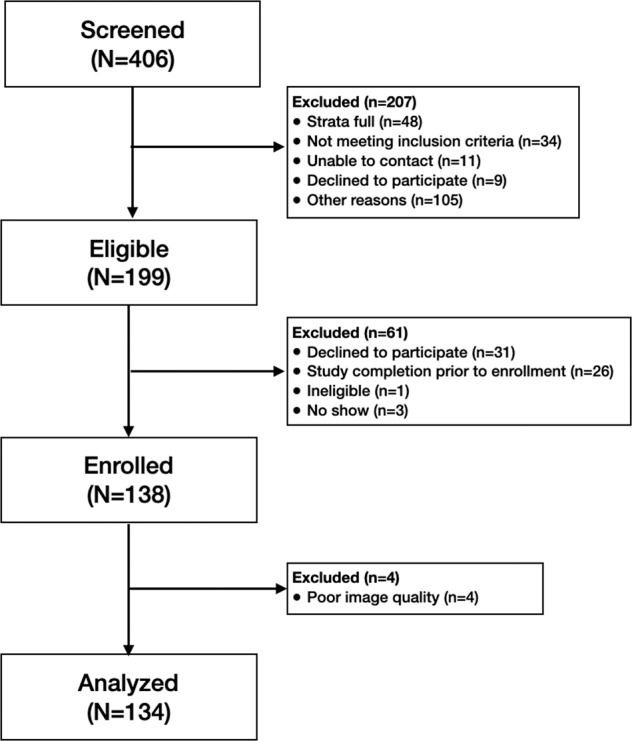
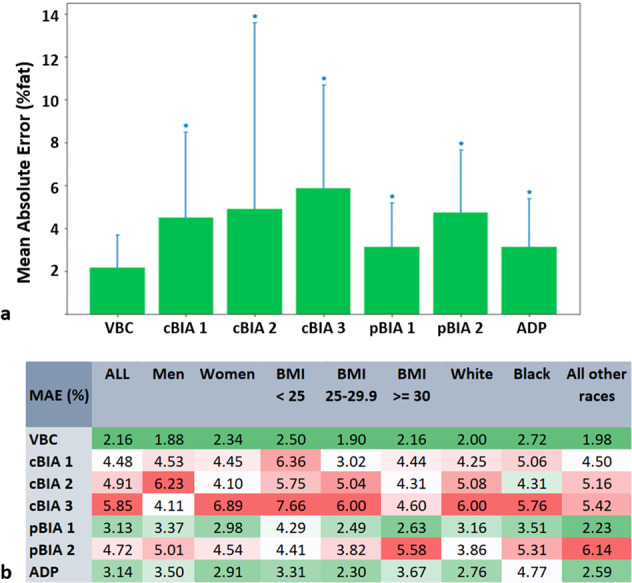
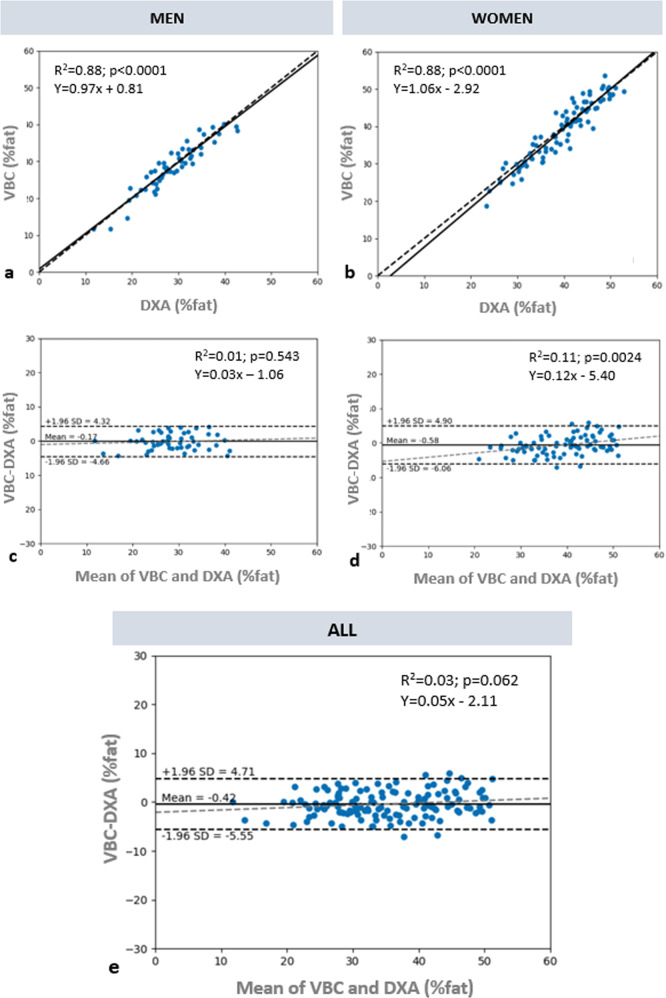
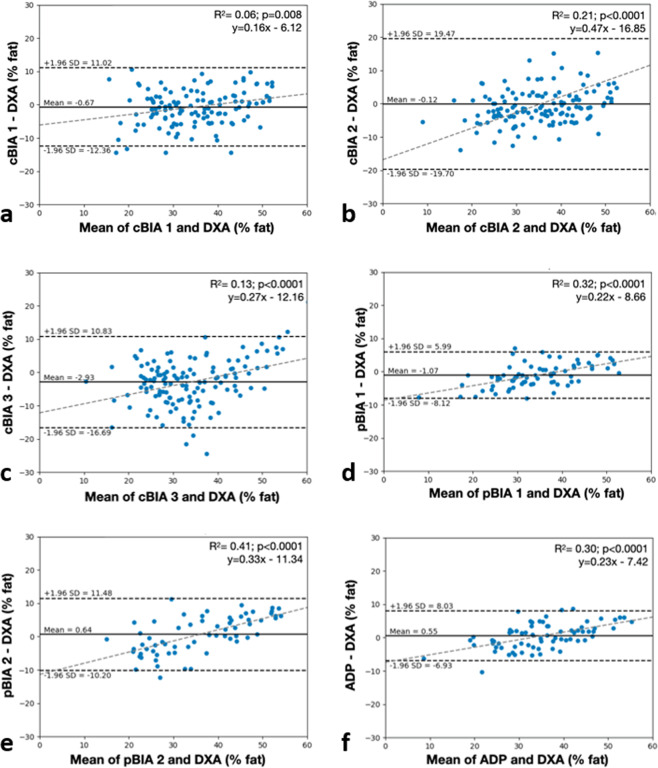
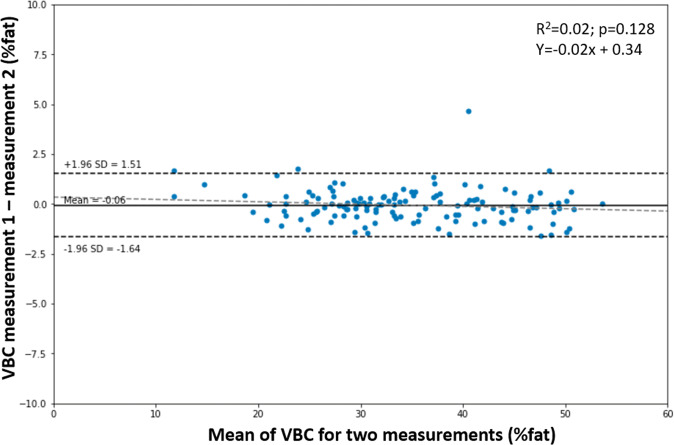
Abstract Body composition is a key component of health in both individuals and populations, and excess adiposity is associated with an increased risk of developing chronic diseases. Body mass index (BMI) and other clinical or commercially available tools for quantifying body fat (BF) such as DXA, MRI, CT, and photonic scanners (3DPS) are often inaccurate, cost prohibitive, or cumbersome to use. The aim of the current study was to evaluate the performance of a novel automated computer vision method, visual body composition (VBC), that uses two-dimensional photographs captured via a conventional smartphone camera to estimate percentage total body fat (%BF). The VBC algorithm is based on a state-of-the-art convolutional neural network (CNN). The hypothesis is that VBC yields better accuracy than other consumer-grade fat measurements devices. 134 healthy adults ranging in age (21–76 years), sex (61.2% women), race (60.4% White; 23.9% Black), and body mass index (BMI, 18.5–51.6 kg/m 2 ) were evaluated at two clinical sites ( N = 64 at MGH, N = 70 at PBRC). Each participant had %BF measured with VBC, three consumer and two professional bioimpedance analysis (BIA) systems. The PBRC participants also had air displacement plethysmography (ADP) measured. %BF measured by dual-energy x-ray absorptiometry (DXA) was set as the reference against which all other %BF measurements were compared. To test our scientific hypothesis we run multiple, pair-wise Wilcoxon signed rank tests where we compare each competing measurement tool (VBC, BIA, …) with respect to the same ground-truth (DXA). Relative to DXA, VBC had the lowest mean absolute error and standard deviation (2.16 ± 1.54%) compared to all of the other evaluated methods ( p < 0.05 for all comparisons). %BF measured by VBC also had good concordance with DXA (Lin’s concordance correlation coefficient, CCC: all 0.96; women 0.93; men 0.94), whereas BMI had very poor concordance (CCC: all 0.45; women 0.40; men 0.74). Bland-Altman analysis of VBC revealed the tightest limits of agreement (LOA) and absence of significant bias relative to DXA (bias −0.42%, R 2 = 0.03; p = 0.062; LOA −5.5% to +4.7%), whereas all other evaluated methods had significant ( p < 0.01) bias and wider limits of agreement. Bias in Bland-Altman analyses is defined as the discordance between the y = 0 axis and the regressed line computed from the data in the plot. In this first validation study of a novel, accessible, and easy-to-use system, VBC body fat estimates were accurate and without significant bias compared to DXA as the reference; VBC performance exceeded those of all other BIA and ADP methods evaluated. The wide availability of smartphones suggests that the VBC method for evaluating %BF could play an important role in quantifying adiposity levels in a wide range of settings. Trial registration : ClinicalTrials.gov Identifier: NCT04854421.
Overview
The claims and statistics of this paper haven’t been checked yet.
Free: it reads the open-access text and checks the first 5 claims that cite a source we can check. Create a free account to check every claim.
Integrity signals
Registry
Cites
Statistics
Figures
Verification
Claims the paper makes
The claims and statistics of this paper haven’t been checked yet.
Free: it reads the open-access text and checks the first 5 claims that cite a source we can check. Create a free account to check every claim.
Claims other papers make about this one
Each is checked against this paper’s own text: does it say what the citing paper says it does?
The cited source says what the claim attributes to it.
In the citing paper
“An automated computer vision method estimates total body fat via visual body composition (VBC) that uses two-dimensional photographs from a conventional smartphone camera and convolutional neural network algorithms; validations were promising versus more burdensome DXA, BIA, and ADP measures [65].”
From Advantages and Limitations of the Body Mass Index (BMI) to Assess Adult Obesity (2024) · cites this paper as [65]
In the citing paper
“Newer technologies, such as visual-based capture using a smart phone, are being developed and validated and may be more widely used in the future [168].”
Self-check
Percentages, sums and reported differences re-computed from the paper’s own numbers.
The self-check needs the paper’s full text.
Citations
Cites
LeCun, Y., Bengio, Y., & Hinton, G. (2015) · Nature · doi:10.1038/nature14539 · Cited by 84,126
Child abuse: Adolescent records vs. adult recall
Femina, D. D., Yeager, C. A., & Lewis, D. O. (1990) · Child Abuse & Neglect · doi:10.1016/0145-2134(90)90033-p · Cited by 8,820
The Disease Burden Associated With Overweight and Obesity
Must, A. (1999) · JAMA · doi:10.1001/jama.282.16.1523 · Cited by 4,780
2013 AHA/ACC/TOS Guideline for the Management of Overweight and Obesity in Adults
Jensen, M. D., Ryan, D. H., Apovian, C. M., Ard, J. D., Comuzzie, A. G., Donato, K. A., Hu, F. B., Hubbard, V. S., Jakicic, J. M., Kushner, R. F., et al. (2014) · Journal of the American College of Cardiology · doi:10.1016/j.jacc.2013.11.004 · Cited by 4,058
Finkelstein, E. A., Trogdon, J. G., Cohen, J. W., & Dietz, W. (2009) · Health Affairs · doi:10.1377/hlthaff.28.5.w822 · Cited by 2,957
Jensen, M. D., Ryan, D. H., Apovian, C. M., Ard, J. D., Comuzzie, A. G., Donato, K. A., Hu, F. B., Hubbard, V. S., Jakicic, J. M., Kushner, R. F., et al. (2014) · Circulation · doi:10.1161/01.cir.0000437739.71477.ee · Cited by 2,735
Health and economic burden of the projected obesity trends in the USA and the UK
Wang, Y. C., McPherson, K., Marsh, T., Gortmaker, S. L., & Brown, M. (2011) · The Lancet · doi:10.1016/s0140-6736(11)60814-3 · Cited by 2,692
(2020) · PubMed · Cited by 2,642
Comparing correlated correlation coefficients
Meng, X.-L., Rosenthal, R., & Rubin, D. B. (1992) · Psychological Bulletin · doi:10.1037/0033-2909.111.1.172 · Cited by 2,472
Body Mass Index: Obesity, BMI, and Health A Critical Review
Nuttall, F. Q. (2015) · Nutrition Today · doi:10.1097/nt.0000000000000092 · Cited by 2,284
Healthy percentage body fat ranges: an approach for developing guidelines based on body mass index
Gallagher, D., Heymsfield, S. B., Heo, M., Jebb, S. A., Murgatroyd, P. R., & Sakamoto, Y. (2000) · The American Journal of Clinical Nutrition · doi:10.1093/ajcn/72.3.694 · Cited by 2,139
Self-citationObesity in adults: a clinical practice guideline
Wharton, S., Lau, D. C. W., Vallis, M., Sharma, A. M., Biertho, L., Campbell-Scherer, D., Adamo, K., Alberga, A., Bell, R., Boulé, N., et al. (2020) · Canadian Medical Association Journal · doi:10.1503/cmaj.191707 · Cited by 1,506
Body Fat Distribution and Risk of Cardiovascular Disease: An Update
Després, J.-P. (2012) · Circulation · doi:10.1161/circulationaha.111.067264 · Cited by 1,481
Assessment methods in human body composition
Lee, S. Y., & Gallagher, D. (2008) · Current Opinion in Clinical Nutrition & Metabolic Care · doi:10.1097/mco.0b013e32830b5f23 · Cited by 694
Advanced Body Composition Assessment: From Body Mass Index to Body Composition Profiling
Borga, M., West, J., Bell, J. D., Harvey, N. C., Romu, T., Heymsfield, S. B., & Dahlqvist Leinhard, O. (2018) · Journal of Investigative Medicine · doi:10.1136/jim-2018-000722 · Cited by 606
Self-citationKlein, S., Allison, D. B., Heymsfield, S. B., Kelley, D. E., Leibel, R. L., Nonas, C., & Kahn, R. (2007) · The American Journal of Clinical Nutrition · doi:10.1093/ajcn/85.5.1197 · Cited by 552
Self-citationLean Tissue Imaging: A New Era for Nutritional Assessment and Intervention
Prado, C. M. M., & Heymsfield, S. B. (2014) · Journal of Parenteral and Enteral Nutrition · doi:10.1177/0148607114550189 · Cited by 550
Self-citationSarcopenia and Age-Related Changes in Body Composition and Functional Capacity
Evans, W. J., & Campbell, W. W. (1993) · The Journal of Nutrition · doi:10.1093/jn/123.suppl_2.465 · Cited by 549
The Validity of BMI as an Indicator of Body Fatness and Risk Among Children
Freedman, D. S., & Sherry, B. (2009) · Pediatrics · doi:10.1542/peds.2008-3586e · Cited by 506
Heymsfield, S. B., Peterson, C. M., Thomas, D. M., Heo, M., & Schuna, J. M. (2016) · Obesity Reviews · doi:10.1111/obr.12358 · Cited by 470
Self-citationShepherd, J. A., Ng, B. K., Sommer, M. J., & Heymsfield, S. B. (2017) · Bone · doi:10.1016/j.bone.2017.06.010 · Cited by 460
Self-citationChurch, T. S., LaMonte, M. J., Barlow, C. E., & Blair, S. N. (2005) · Archives of Internal Medicine · doi:10.1001/archinte.165.18.2114 · Cited by 445 · cited 3×
“Both the MRI and the DXA fat estimation paths have errors: (1) in MRI because tissue volumes need to be segmented in 3D, most often by hand, (2) in DXA because 3D mass information is extrapolated from 2D x-ray images.”
BackgroundMethodCorrelates of weight stigma in adults with overweight and obesity: A systematic literature review
Papadopoulos, S., & Brennan, L. (2015) · Obesity · doi:10.1002/oby.21187 · Cited by 339
Wildman, R. P., Gu, D., Reynolds, K., Duan, X., & He, J. (2004) · The American Journal of Clinical Nutrition · doi:10.1093/ajcn/80.5.1129 · Cited by 265
Racial Disparities in Obesity Treatment
Byrd, A. S., Toth, A. T., & Stanford, F. C. (2018) · Current Obesity Reports · doi:10.1007/s13679-018-0301-3 · Cited by 204
Self-citationThe performance of anthropometric tools to determine obesity: a systematic review and meta-analysis
Sommer, I., Teufer, B., Szelag, M., Nussbaumer-Streit, B., Titscher, V., Klerings, I., & Gartlehner, G. (2020) · Scientific Reports · doi:10.1038/s41598-020-69498-7 · Cited by 192
Comparison of Three Bioelectrical Impedance Methods with DXA in Overweight and Obese Men
Pateyjohns, I. R., Brinkworth, G. D., Buckley, J. D., Noakes, M., & Clifton, P. M. (2006) · Obesity · doi:10.1038/oby.2006.241 · Cited by 187
Whole-body adipose tissue analysis: comparison of MRI, CT and dual energy X-ray absorptiometry
KULLBERG, J., BRANDBERG, J., ANGELHED, J.-E., FRIMMEL, H., BERGELIN, E., STRID, L., AHLSTRÖM, H., JOHANSSON, L., & LÖNN, L. (2009) · The British Journal of Radiology · doi:10.1259/bjr/80083156 · Cited by 164
Leahy, S., O’Neill, C., Sohun, R., & Jakeman, P. M. (2011) · European Journal of Applied Physiology · doi:10.1007/s00421-011-2010-4 · Cited by 151
Cell phone addiction and psychological and physiological health in adolescents
Shoukat, S. (2019) · EXCLI journal · doi:10.17179/excli2018-2006 · Cited by 149
Digital anthropometry: a critical review
Heymsfield, S. B., Bourgeois, B., Ng, B. K., Sommer, M. J., Li, X., & Shepherd, J. A. (2018) · European Journal of Clinical Nutrition · doi:10.1038/s41430-018-0145-7 · Cited by 138
Self-citationKok, P., Seidell, J. C., & Meinders, A. E. (2004) · Nederlandsch tijdschrift voor geneeskunde/Nederlands tijdschrift voor geneeskunde/NTvG-databank · Cited by 106
Berardi, G., Antonelli, G., Colasanti, M., Meniconi, R., Guglielmo, N., Laurenzi, A., Ferretti, S., Levi Sandri, G. B., Spagnoli, A., Moschetta, G., et al. (2020) · JAMA Surgery · doi:10.1001/jamasurg.2020.3336 · Cited by 96
Wong, J., O’Neill, S., Beck, B. R., Forwood, M. R., & Khoo, S. K. (2021) · PLoS ONE · doi:10.1371/journal.pone.0245436 · Cited by 87
Deep learning method for localization and segmentation of abdominal CT
Dabiri, S., Popuri, K., Ma, C., Chow, V., Feliciano, E. M. C., Caan, B. J., Baracos, V. E., & Beg, M. F. (2020) · Computerized Medical Imaging and Graphics · doi:10.1016/j.compmedimag.2020.101776 · Cited by 74
Wells, J. C. K. (2019) · BMC Medicine · doi:10.1186/s12916-019-1465-8 · Cited by 73
Smith, S., & Madden, A. M. (2016) · Journal of Human Nutrition and Dietetics · doi:10.1111/jhn.12372 · Cited by 67
Tinsley, G. M., Moore, M. L., Benavides, M. L., Dellinger, J. R., & Adamson, B. T. (2020) · Clinical Nutrition · doi:10.1016/j.clnu.2020.02.008 · Cited by 66
Bariatric Surgery: Impact on Body Composition After Roux-en-Y Gastric Bypass
de Aquino, L. A., Pereira, S., Silva, J. D. S., Saboya, C. J., & Ramalho, A. (2011) · Obesity Surgery · doi:10.1007/s11695-011-0500-4 · Cited by 65
Lowry, D. W., & Tomiyama, A. J. (2015) · PLOS ONE · doi:10.1371/journal.pone.0115086 · Cited by 63
Race, Ethnicity, Sex, and Obesity: Is It Time to Personalize the Scale?
Stanford, F. C., Lee, M., & Hur, C. (2019) · Mayo Clinic Proceedings · doi:10.1016/j.mayocp.2018.10.014 · Cited by 61
Self-citationTinsley, G. M., Moore, M. L., Dellinger, J. R., Adamson, B. T., & Benavides, M. L. (2019) · European Journal of Clinical Nutrition · doi:10.1038/s41430-019-0526-6 · Cited by 54
Novel body fat estimation using machine learning and 3-dimensional optical imaging
Harty, P. S., Sieglinger, B. A., Heymsfield, S. B., Shepherd, J., Bruner, D., Stratton, M. T., & Tinsley, G. M. (2020) · European Journal of Clinical Nutrition · doi:10.1038/s41430-020-0603-x · Cited by 54
Self-citationHowe, A. S., Black, K. E., Wong, J. E., Parnell, W. R., & Skidmore, P. M. L. (2013) · Nutrition Journal · doi:10.1186/1475-2891-12-51 · Cited by 42
Adler, C., Steinbrecher, A., Jaeschke, L., Mähler, A., Boschmann, M., Jeran, S., & Pischon, T. (2017) · PLoS ONE · doi:10.1371/journal.pone.0180201 · Cited by 39
A Smartphone Application for Personal Assessments of Body Composition and Phenotyping
Farina, G. L., Spataro, F., LORENZO, A. D., & Lukaski, H. C. (2016) · Sensors · doi:10.3390/s16122163 · Cited by 38
Goacher, P., Lambert, R., & Moffatt, P. G. (2012) · Medical Hypotheses · doi:10.1016/j.mehy.2012.08.003 · Cited by 33
Cai, J., Wei, J., Schrott, V. M., Zhao, J., Bullock, G. C., & Zhao, Y. (2017) · Journal of Investigative Medicine · doi:10.1136/jim-2017-000622 · Cited by 28
Sobhiyeh, S., Kennedy, S., Dunkel, A., Dechenaud, M., Weston, J., Shepherd, J. A., Wolenski, P., & Heymsfield, S. (2020) · Obesity Science & Practice · doi:10.1002/osp4.467 · Cited by 27
Self-citationHübers, M., Geisler, C., Bosy‐Westphal, A., Braun, W., Pourhassan, M., Sørensen, T. I. A., & Müller, M. J. (2018) · European Journal of Clinical Nutrition · doi:10.1038/s41430-018-0150-x · Cited by 19
Cabre, H. E., Blue, M. N. M., Hirsch, K. R., Brewer, G. J., Gould, L. M., Nelson, A. G., & Smith‐Ryan, A. E. (2020) · Applied Physiology, Nutrition, and Metabolism · doi:10.1139/apnm-2020-0744 · Cited by 15
Analyzing Body Fat from Depth Images
Carletti, M., Cristani, M., Cavedon, V., Milanese, C., Zancanaro, C., & Giachetti, A. (2018) · International Conference on 3D Vision (3DV) · doi:10.1109/3dv.2018.00055 · Cited by 2
Research works printed but not linked: 3
- Sommer I The performance of anthropometric tools to determine obesity: a systematic review and meta‑analysis Sci. Rep. 2020 10 12699 10.1038/s41598-020-69498-7 32728050 PMC7391719 · DOI · Paper page
- Krizhevsky A Sutskever I Hinton G ImageNet classification with deep convolutional neural network Adv. Neural Inf. Process. Syst. 2012 25 1097 1105
- Siri, W. E. 1961 Body composition from fluid spaces and density: analysis of methods. In: Brozek J., Henschel A. (eds) Techniques for Measuring Body Composition. National Academy of Sciences/National Research Council, Washington, DC, pp. 223–224.
Cited by
Advantages and Limitations of the Body Mass Index (BMI) to Assess Adult Obesity
Wu, Y., Li, D., & Vermund, S. H. (2024) · International Journal of Environmental Research and Public Health · doi:10.3390/ijerph21060757 · Cited by 552
“An automated computer vision method estimates total body fat via visual body composition (VBC) that uses two-dimensional photographs from a conventional smart-phone camera and convolutional neural network algorithms; validations were promising versus more burdensome DXA, BIA, and ADP measures [65].”
MethodBrown, T. M., Pack, Q. R., Aberegg, E., Brewer, L. C., Ford, Y. R., Forman, D. E., Gathright, E. C., Khadanga, S., Ozemek, C., Thomas, R. J., et al. (2024) · Circulation · doi:10.1161/cir.0000000000001289 · Cited by 288
Relevance of body composition in phenotyping the obesities
Salmón-Gómez, L., Catalán, V., Frühbeck, G., & Gómez-Ambrosi, J. (2023) · Reviews in Endocrine and Metabolic Disorders · doi:10.1007/s11154-023-09796-3 · Cited by 158
Mozaffarian, D., Agarwal, M., Aggarwal, M., Alexander, L., Apovian, C. M., Bindlish, S., Bonnet, J., Butsch, W. S., Christensen, S., Gianos, E., et al. (2025) · The American Journal of Clinical Nutrition · doi:10.1016/j.ajcnut.2025.04.023 · Cited by 154
“Newer technologies, such as visual-based capture using a smart phone, are being developed and validated and may be more widely used in the future [168].”
Self-citationMozaffarian, D., Agarwal, M., Aggarwal, M., Alexander, L., Apovian, C. M., Bindlish, S., Bonnet, J., Butsch, W. S., Christensen, S., Gianos, E., et al. (2025) · Obesity · doi:10.1002/oby.24336 · Cited by 143
“Based on the human, societal, and financial burdens of obesity, as well as the costs and adherence challenges of GLP-1 therapy, more comprehensive weight management programs and research on their optimal use are needed in healthcare.”
Self-citation
Metadata
- Authors
- Majmudar, M. D., Chandra, S., Yakkala, K., Kennedy, S., Agrawal, A., Sippel, M., Ramu, P., Chaudhri, A., Smith, B., Criminisi, A., Heymsfield, S. B., & Stanford, F. C.
- Affiliations
- Amazon (United States) (US)
- Pennington Biomedical Research Center (US)
- Harvard University (US)
- Corresponding author
- Majmudar, Maulik D.
- ORCID
- Venue
- npj Digital Medicine
- Published
- 2022-06-29
- Volume
- 5
- Issue
- 1
- Pages
- 79-79
- ISSN
- 2398-6352 (ISSN-L)
- PMC
- PMC9243018
- OpenAlex
- W4283698854
- Cited by
- 75
- References
- 52
- Citations by year
- 2026: 12 · 2025: 18 · 2024: 22 · 2023: 15 · 2022: 7
- FWCI
- 9.60
- Type
- journal article
- Language
- en
- Open access
- gold
- doi.org
- Licence
- cc-by
- creativecommons.org/licenses/by/4.0 (tdm)
- creativecommons.org/licenses/by/4.0 (vor)
- Locations
- npj Digital Medicine (publishedVersion, cc-by)
- medRxiv (acceptedVersion)
- PubMed Central (publishedVersion, cc-by)
- PubMed (publishedVersion)
- DOAJ (DOAJ: Directory of Open Access Journals) (submittedVersion)
- Funders
- National Institute of Diabetes and Digestive and Kidney Diseases (P30DK072476, P30DK040561)
- Topics
- Health Sciences › Medicine › Physiology (medical) › Body Composition Measurement Techniques
- Physical Sciences › Computer Science › Computer Vision and Pattern Recognition › Advanced Neural Network Applications
- Health Sciences › Medicine › Surgery › Body Contouring and Surgery
- Keywords
- adiposity assessment, body fat percentage, smartphone camera, computer vision, convolutional neural networks, body composition measurement, bioelectrical impedance analysis, air displacement plethysmography, dual-energy X-ray absorptiometry, body mass index, measurement accuracy, healthy adults, sex differences
About these checks
Registry, retraction, Cites and statistics results are computed, not judged, with one exception: a printed reference that no index lists is read once by a model before it counts as a citation error. Claims are extracted by a model and kept only when their quote appears verbatim in the text; each cited source is then checked, with a model’s help, for whether it says what the claim relies on. Those verdicts can be wrong — read the claim’s quote and the cited source before relying on one.
Statistics and arithmetic are recomputed, not judged.
Confidence bands are shown only for fields calibrated on our annotated test set. None is calibrated yet, so no band is shown.
What counts as a claim ›How we measure confidence ›How we check this ›
Are you an author, or do you see a problem with this page? Request a review
Data sources
Bibliographic data: Semantic Scholar, OpenAlex, Crossref.
Contains information from the Semantic Scholar Academic Graph Datasets, made available under the ODC Attribution License (ODC-BY 1.0).
Semantic Scholar’s data is described in: Kinney, R., et al. (2023). The Semantic Scholar Open Data Platform. arXiv:2301.10140.
