

Systematic review and meta-analysis of AI-based conversational agents for promoting mental health and well-being
Open accessThe DOI matches its Crossref record; 73 of the 74 references it cites were found in a registry or an index.
Abstract
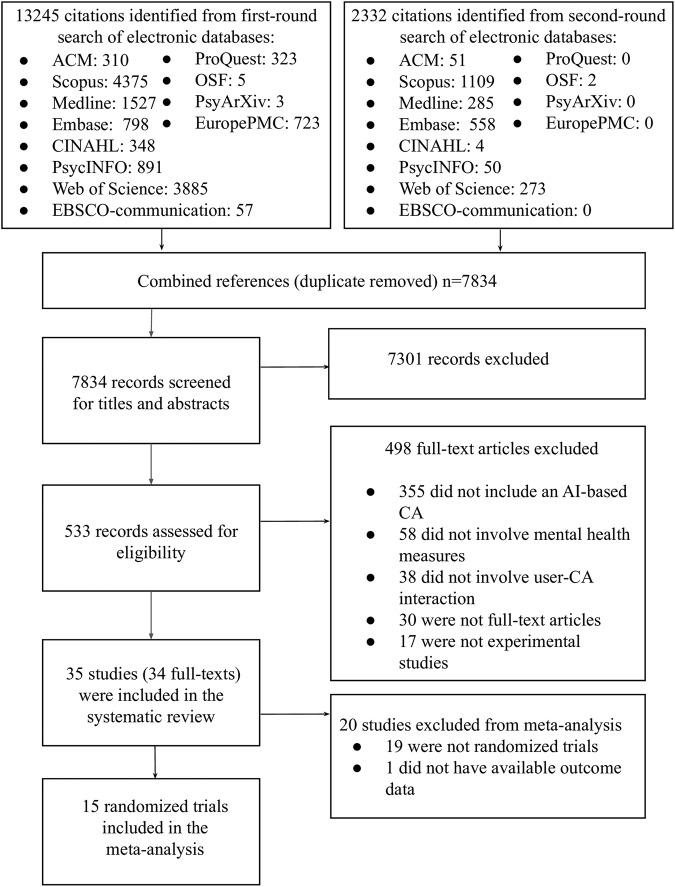
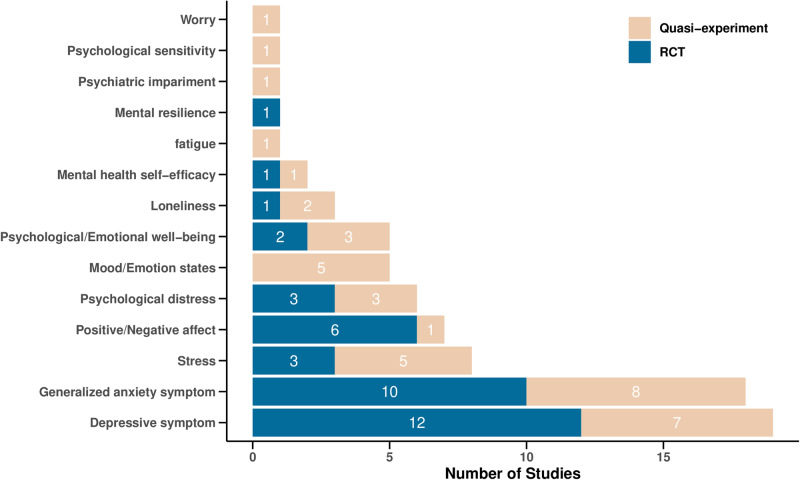
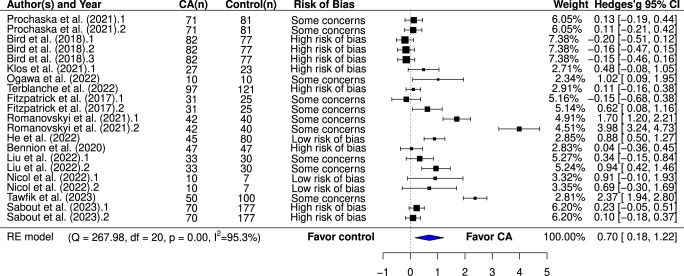
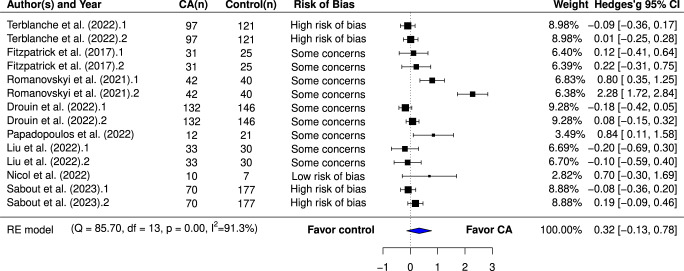
Conversational artificial intelligence (AI), particularly AI-based conversational agents (CAs), is gaining traction in mental health care. Despite their growing usage, there is a scarcity of comprehensive evaluations of their impact on mental health and well-being. This systematic review and meta-analysis aims to fill this gap by synthesizing evidence on the effectiveness of AI-based CAs in improving mental health and factors influencing their effectiveness and user experience. Twelve databases were searched for experimental studies of AI-based CAs’ effects on mental illnesses and psychological well-being published before May 26, 2023. Out of 7834 records, 35 eligible studies were identified for systematic review, out of which 15 randomized controlled trials were included for meta-analysis. The meta-analysis revealed that AI-based CAs significantly reduce symptoms of depression (Hedge’s g 0.64 [95% CI 0.17–1.12]) and distress (Hedge’s g 0.7 [95% CI 0.18–1.22]). These effects were more pronounced in CAs that are multimodal, generative AI-based, integrated with mobile/instant messaging apps, and targeting clinical/subclinical and elderly populations. However, CA-based interventions showed no significant improvement in overall psychological well-being (Hedge’s g 0.32 [95% CI –0.13 to 0.78]). User experience with AI-based CAs was largely shaped by the quality of human-AI therapeutic relationships, content engagement, and effective communication. These findings underscore the potential of AI-based CAs in addressing mental health issues. Future research should investigate the underlying mechanisms of their effectiveness, assess long-term effects across various mental health outcomes, and evaluate the safe integration of large language models (LLMs) in mental health care.
Overview
The claims and statistics of this paper haven’t been checked yet.
Free: it reads the open-access text and checks the first 5 claims that cite a source we can check. Create a free account to check every claim.
Integrity signals
Registry
Cites
Statistics
Figures
Verification
Claims the paper makes
The claims and statistics of this paper haven’t been checked yet.
Free: it reads the open-access text and checks the first 5 claims that cite a source we can check. Create a free account to check every claim.
Claims other papers make about this one
Each is checked against this paper’s own text: does it say what the citing paper says it does?
The source backs part of the claim, not all of it — or backs it for a different population, condition or comparison.
In the citing paper
“The rapid adoption of generative LLMs (e.g., GPT‐4) reflects broader AI trends, but introduces unique risks in mental health contexts 185 .”
From Charting the evolution of artificial intelligence mental health chatbots from rule‐based systems to large language models: a systematic review (2025) · cites this paper as [185]
Experimental — accuracy not yet measuredThe source backs part of the claim, not all of it — or backs it for a different population, condition or comparison.
In the citing paper
“Although reviews and meta-analyses of LLM-CBs for mental health exist13,14,29,30, as well as scoping reviews on the implementation of LLM-CBs in mental health31,32, their focus is narrowed to applications of LLM-CBs as clinical intervention tools.”
From A scoping review on the mental health harms of LLM-based chatbots (2026) · cites this paper as [14]
Experimental — accuracy not yet measuredThe source backs part of the claim, not all of it — or backs it for a different population, condition or comparison.
In the citing paper
“the first systematic reviews and meta-analyses demonstrate the potential of LLM-CBs as clinical tools for mental health13,14.”
From A scoping review on the mental health harms of LLM-based chatbots (2026) · cites this paper as [14]
Experimental — accuracy not yet measuredThe source backs part of the claim, not all of it — or backs it for a different population, condition or comparison.
In the citing paper
“LLM-CBs find increasing use as mental health support tools, both for the general public8–12 and for patients in clinical interventions13,14.”
From A scoping review on the mental health harms of LLM-based chatbots (2026) · cites this paper as [14]
Experimental — accuracy not yet measuredThe source backs part of the claim, not all of it — or backs it for a different population, condition or comparison.
In the citing paper
“A recent meta-analysis shows that GenAI chatbots outperform rule-based and retrieval-based chatbots in reducing depressive symptoms [13].”
From Generative AI Mental Health Chatbots as Therapeutic Tools: Systematic Review and Meta-Analysis of Their Role in Reducing Mental Health Issues (2025) · cites this paper as [13]
Experimental — accuracy not yet measured
6 more claims about this paper
Create a free account to see every claim other papers make about this one.
Self-check
Percentages, sums and reported differences re-computed from the paper’s own numbers.
The self-check needs the paper’s full text.
Citations
Cites
The Cochrane Collaboration's tool for assessing risk of bias in randomised trials
Higgins, J. P. T., Altman, D. G., Gotzsche, P. C., Juni, P., Moher, D., Oxman, A. D., Savovic, J., Schulz, K. F., Weeks, L., Sterne, J. A. C., et al. (2011) · BMJ · doi:10.1136/bmj.d5928 · Cited by 33,817
Dermyshi, E., Wang, Y., Yan, C., Hong, W., Qiu, G., Gong, X., & Zhang, T. (2017) · Neonatology · doi:10.1159/000454668 · Cited by 24,451
GRADE: an emerging consensus on rating quality of evidence and strength of recommendations
Guyatt, G. H., Oxman, A. D., Vist, G. E., Kunz, R., Falck-Ytter, Y., Alonso-Coello, P., & Schünemann, H. J. (2008) · BMJ · doi:10.1136/bmj.39489.470347.ad · Cited by 23,305
Interrater reliability: The kappa statistic
McHugh, M. L. (2012) · Biochemia Medica · doi:10.11613/bm.2012.031 · Cited by 19,877 · cited 1×
“Inter-rater reliability, assessed using Cohen ’ s Kappa 63 , indicated near-perfect agreement for title/abstract screening (0.9) and full-text review (0.83).”
MethodInfluentialCochrane Handbook for Systematic Reviews of Interventions
(2019) · doi:10.1002/9781119536604 · Cited by 14,828
Preferred reporting items for systematic reviews and meta-analyses: The PRISMA statement
Moher, D., Liberati, A., Tetzlaff, J., & Altman, D. G. (2010) · International Journal of Surgery · doi:10.1016/j.ijsu.2010.02.007 · Cited by 12,156 · cited 1×
“The study protocol was registered in PROSPERO, CRD 42023392187, and adhered to the Preferred Reporting Items for Systematic reviews and Meta-Analyses 74 (Supplementary Table 9).”
MethodCohen, J. (1992) · Psychological Bulletin · doi:10.1037//0033-2909.112.1.155 · Cited by 8,771
Fitzpatrick, K. K., Darcy, A., & Vierhile, M. (2017) · JMIR Mental Health · doi:10.2196/mental.7785 · Cited by 2,730 · cited 4×
“…Empathic communication 17,26,28,29,37 ( n = 5) (cid:129) Non-judgmental 33,49 ( n = 2) (cid:129) Accountability (e.g., regular check-ins) 21,26 ( n = 2) (cid:129) Human-like personality 26,49 ( n = 2) (cid:129) Tailored feedback 28 ( n = 1) (cid:129) Relationship 28 ( n = 1) Content ( n =…”
BackgroundInfluentialHow important are the common factors in psychotherapy? An update
Wampold, B. E. (2015) · World Psychiatry · doi:10.1002/wps.20238 · Cited by 1,728 · cited 1×
“…were key determinants of user experience, which corresponds to previous psychotherapy research that identi fi es these common elements (e.g., therapeutic alliance, empathy, and therapist effect) as active ingredients contributing to therapeutic changes across various therapeutic frameworks 61 .”
Charlson, F., van Ommeren, M., Flaxman, A., Cornett, J., Whiteford, H., & Saxena, S. (2019) · The Lancet · doi:10.1016/s0140-6736(19)30934-1 · Cited by 1,702 · cited 1×
“We fi ne-tuned our search strategy based on previous systematic reviews 3,51,62 to locate sources related to AI-based CAs for addressing mental health problems or promoting mental well-being.”
Method
Research works printed but not linked: 2
- Romanovskyi, O., Pidbutska, N. & Knysh, A. Elomia Chatbot: The effectiveness of Artificial Intelligence in the fight for mental health. In COLINs 5th International Conference on Computational Linguistics and Intelligent Systems, 1215–1224 (2021).
- Terblanche N Molyn J De Haan E Nilsson VO Coaching at scale: Investigating the efficacy of Artificial Intelligence coaching Int. J. Evid. Based Coach. Mentor 2022 20 20 36
Cited by
Items 101–200 of 606
Fritz, B., Eppelmann, L., Edelmann, A., Rohrmann, S., & Wessa, M. (2025) · BMC Psychology · doi:10.1186/s40359-025-02954-z · Cited by 15
“…learning (ML) algorithms, analysing user behaviour and inputs to offer personalised content or interventions; and, more recently, through general AI and deep learning (DL), enabling them to generate content such as text, images, music or videos, or to perform more complex tasks [1, 7, 9, 10].”
Advancing youth co-design of ethical guidelines for AI-powered digital mental health tools
Figueroa, C. A., Ramos, G., Psihogios, A. M., Ekuban, E., Bansie, P., de Haas, M., Karnik, N. S., Ajilore, O., Anderson, E. E., & Stiles‐Shields, C. (2025) · Nature Mental Health · doi:10.1038/s44220-025-00467-7 · Cited by 23
“For example, AI-based conversational agents (that is, chatbots) have shown a large positive effect on reducing depressive symptoms in adults 17,18 .”
Indrayanti, I., Salsabila, A. K., Amrita, V., Alhaddad, M. M., Saskia, A. B., & Ramadhani, D. P. (2025) · SSM - Mental Health · doi:10.1016/j.ssmmh.2025.100504 · Cited by 19
Yang, F., Wei, J., Zhao, X., & An, R. (2025) · JMIR mhealth and uhealth · doi:10.2196/58597 · Cited by 18
“Recent comprehensive reviews by Li et al [17] and Hua et al [18] have made significant contributions to the field by providing valuable insights into AI-based conversational agents and large language models, respectively.”
Malipeddi, S., Mehrotra, S., John, J. P., & Kutty, B. M. (2024) · Frontiers in Public Health · doi:10.3389/fpubh.2024.1280859 · Cited by 12
Relational AI: Facilitating Intergroup Cooperation with Socially Aware Conversational Support
Claggett, E. L., Kraut, R. E., & Shirado, H. (2025) · CHI Conference on Human Factors in Computing Systems · doi:10.1145/3706598.3713757 · Cited by 29
Self-citationMarshall, N. J., Loades, M. E., Jacobs, C., Biddle, L., & Lambert, J. D. (2025) · Current Treatment Options in Psychiatry · doi:10.1007/s40501-025-00348-x · Cited by 11
“Conversational agents are also being used to provide mental health support [19].”
Guglielmucci, F., & Di Basilio, D. (2025) · JMIR Human Factors · doi:10.2196/70698 · Cited by 10
von Conta, J., Engelke, M., Bahnsen, F. H., Dada, A., Liebert, E., Nensa, F., Kleesiek, J., & Diehl, A. (2025) · Bundesgesundheitsblatt - Gesundheitsforschung - Gesundheitsschutz · doi:10.1007/s00103-025-04086-6 · Cited by 17
Santiago-Torner, C., Marfil, J. A. C., & Tarrats-Pons, E. (2025) · Societies · doi:10.3390/soc16010006 · Cited by 18
“Virtual assistants, mobile applications, and machine learning algorithms enable continuous emotional monitoring, early detection of symptoms, and tailored coping strategies [14,30].”
Artificial Intelligence and the Potential Transformation of Mental Health
Perlis, R. H. (2026) · JAMA Psychiatry · doi:10.1001/jamapsychiatry.2025.4116 · Cited by 17
Shim, H., Cho, J., & Sung, Y. H. (2024) · Asian Communication Research · doi:10.20879/acr.2024.21.019 · Cited by 15
Hu, Y., Li, Y., Li, J., Liu, J. Y. W., Gustin, S. M., Li, M., & Leung, A. Y. M. (2025) · Journal of the American Medical Directors Association · doi:10.1016/j.jamda.2025.105491 · Cited by 12
Bernstein, E. E., Jaroszewski, A. C., Jacoby, R. J., Bailen, N. H., Ragan, J. D., Usmani, A., & Wilhelm, S. (2025) · Behavior Therapy · doi:10.1016/j.beth.2025.02.005 · Cited by 13
“…have shown preliminary promise in supporting diagnosis and clinical decision making Elyoseph et al., 2024; Fahmi et al., 2023; Levkovich & Elyoseph, 2023b; Omar et al., 2024) and directly supporting patients through psychoeducation and therapeutic conversations (Li et al., 2023; Omar et al., 2024).”
Baik, R. L., Lee, S., Xie, S. J., Liao, W., Hwang, E. H., & Yuwen, W. (2025) · CHI Conference Extended Abstracts on Human Factors in Computing Systems (CHI EA) · doi:10.1145/3706599.3719711 · Cited by 15
McFadyen, J., Habicht, J., Dina, L.-M., Harper, R., Hauser, T. U., & Rollwage, M. (2024) · doi:10.1101/2024.11.01.24316565 · Cited by 10
An Automated Conversational Agent Self-Help Program: Randomized Controlled Trial
Foran, H. M., Kubb, C., Mueller, J., Poff, S., Ung, M., Li, M., Smith, E. M., Akinyemi, A., Kambadur, M., Waller, F., et al. (2024) · Journal of Medical Internet Research · doi:10.2196/53829 · Cited by 13
“While there are promising conversational agent–based interventions designed to promote mental health and well-being, fewer studies assess their impact on well-being outcomes compared with other mental health outcomes [20].”
InfluentialHeiskari, M., Celuch, M., Koivula, A., Savolainen, I., & Oksanen, A. (2025) · International Journal of Information Management · doi:10.1016/j.ijinfomgt.2025.102926 · Cited by 13
Crossing the Line? The Paradox of Human-Like Design in Conversational Agents
Zargham, N., Avanesi, V., Spillner, L., & Rockstroh, J. (2025) · ACM Conference on Conversational User Interfaces (CUI) · doi:10.1145/3719160.3737612 · Cited by 11
Investigating How Clinicians Form Trust in an AI-Based Mental Health Model: Qualitative Case Study
Kelly, A., Bhardwaj, N., Holmberg, T. T., van de Ven, P. W. J., Melia, R., Williams, J. E., Mathiasen, K., & Nielsen, A. S. (2025) · JMIR Human Factors · doi:10.2196/79658 · Cited by 17
“Li et al [23] point out that the user interface is a key factor influencing user experience, acting as the main medium through which an AI system communicates its internal reasoning and decision-making process.”
Olisaeloka, L., Richardson, C. G., Wang, A. Y., Munthali, R. J., & Vigo, D. (2026) · Healthcare · doi:10.3390/healthcare14101395 · Cited by 23
“Existing reviews of digital mental health chatbots have focused largely on efficacy and have mostly included non-generative systems, meaning their findings offer limited insight into how safety is operationalised in LLM-based interventions specifically [6,8,9,11,15].”
Interaction with AI companions and psychological well-being
Zhang, Y., Zhao, D., Hancock, J. T., Kraut, R. E., & Yang, D. (2026) · Nature Human Behaviour · doi:10.1038/s41562-026-02516-2 · Cited by 231
“Research on therapy-oriented chatbots has shown that outcomes can be positive when systems are explicitly designed for psychological support 73–76 .”
Self-citationHuman-Computer Interaction and Artificial Intelligence: Advancing Care Through Extended Mind Theory
Jacobs, C., Johnson, H., Rennie, T. W., Lambert, J., & Joiner, R. (2024) · Cureus · doi:10.7759/cureus.74968 · Cited by 13
Kotov, A., Carcone, A. I., & Towner, E. (2024) · JMIR Research Protocols · doi:10.2196/60361 · Cited by 12
“The vast majority of existing conversational agents for mental health care, promoting psychological well-being, and health behavior counseling are rule-or retrieval-based [86].”
BackgroundTechnical Solutions to Emotion AI's Privacy Harms: A Systematic Literature Review
Chowdhary, S., Ingber, A. S., & Andalibi, N. (2025) · ACM Conference on Fairness, Accountability, and Transparency (FAccT) · doi:10.1145/3715275.3732074 · Cited by 12
Dash, A., & Mohanta, G. (2025) · Cleaner and Responsible Consumption · doi:10.1016/j.clrc.2025.100306 · Cited by 21
Held, P., Stade, E. C., Dondanville, K. A., & Stirman, S. W. (2025) · Journal of Traumatic Stress · doi:10.1002/jts.23188 · Cited by 11
“In particular, large language models (LLMs) can emulate nuanced human dialogue and may be well-suited to provide on-demand therapeutic support as well as to support clinicians and potentially enhance existing PTSD treatments (Li et al., 2023; Stade, Stirman, Ungar, et al., 2024).”
Investigating tourism chatbot adoption: the moderating role of privacy concerns
Cheikh, A. B., & Zarrad, H. (2025) · Journal of Hospitality and Tourism Insights · doi:10.1108/jhti-10-2024-1161 · Cited by 9
Computational and ethical considerations for using large language models in psychotherapy
Zhang, R., Meng, H., Neubronner, M., & Lee, Y. (2025) · Nature Computational Science · doi:10.1038/s43588-025-00874-x · Cited by 16
Self-citationKumar, H., Yoo, S., Bernuy, A. Z., Shi, J., Luo, H., Williams, J. J., Kuzminykh, A., Anderson, A., & Kornfield, R. (2025) · Proceedings of the ACM on Human-Computer Interaction · doi:10.1145/3757619 · Cited by 29
Dai, X., Leng, L. L., Liu, Y., Huang, Y., & Wong, D. F. K. (2025) · BMC Psychiatry · doi:10.1186/s12888-025-07671-w · Cited by 18
“These advancements allow ChatGPT to overcome many limitations of rule-based chatbots, such as repetitive, constrained, and unnatural interactions, making it more capable of engaging in open-ended discussions on diverse mental health concerns [8].”
Addressing loneliness by AI chatbot: a qualitative study of empty-nest elderly
Jiao, F., Mei-yu, L., Liu, M., & Zhang, Q. (2026) · BMC Public Health · doi:10.1186/s12889-026-26283-x · Cited by 10
The Impact of Chatbots on Adolescent Mental Health Development: A Comprehensive Literature Review
Wu, Y., Wu, T., Zhu, K., Liu, X., Liu, J., Wang, Y., Shi, R., Xiong, J., Xing, X., Lv, Y., et al. (2026) · Journal of Multidisciplinary Healthcare · doi:10.2147/jmdh.s579872 · Cited by 14
“8,37 Research on self-stigma found that high help-seeking self-stigma associated with human-delivered psychotherapy was linked to more negative attitudes towards human therapy but more positive attitudes towards AI-delivered psychotherapy.”
Alignment of Large Language Model Responses With Human Therapists in Motivational Interviewing
Teferra, B. G., Huang, S., Johny, N., Perivolaris, A., Al-Shamali, H. F., Parkington, K. B., Rueda, A., Zeifman, R. J., Sharma, D., Krishnan, S., et al. (2026) · JAMA Network Open · doi:10.1001/jamanetworkopen.2026.2750 · Cited by 9
Transforming artificial intelligence into artificial wisdom
Jeste, D. V., Paulus, M. P., Alexopoulos, G. S., Barnard, M., Otte, W. M., Satake, Y., Na, P. J., Torous, J. B., Prodan, A., & Occhipinti, J. (2026) · Nature Mental Health · doi:10.1038/s44220-026-00640-6 · Cited by 10
“…trials) showed that AI conversational agents significantly reduced depression and distress, particularly when systems were multi-modal, GenAI-based, integrated into messaging platforms and used in clinical/subclinical populations, yet did not significantly improve psychological well-being 113 .”
Vlaescu, G., Carlbring, P., & Andersson, G. (2026) · Internet Interventions · doi:10.1016/j.invent.2026.100955 · Cited by 12
AI-Facilitated Cognitive Reappraisal via Socrates 2.0: Mixed Methods Feasibility Study.
Held, P., Pridgen, S. A., Szoke, D. R., Chen, Y., Akhtar, Z., & Amin, D. (2025) · JMIR Mental Health · doi:10.2196/80461 · Cited by 7
“These findings support literature suggesting that specialized AI tools, rather than broad all-purpose models, may be more successful at engaging users in structured therapeutic exercises [4,7,32].”
“It tracks me!”: An analysis of apple watch nudging and user adoption mechanisms
Asimakopoulos, G., Asimakopoulos, S., & Spillers, F. (2024) · Health Informatics Journal · doi:10.1177/14604582241291405 · Cited by 10
“62 The practical implications of our study show the need for more user control (customization) over nudges.”
Kelly, A., Noctor, E., & van de Ven, P. W. J. (2024) · Procedia Computer Science · doi:10.1016/j.procs.2024.10.363 · Cited by 14
Jain, S., Singh, R., Agarwal, B., & Singh, A. K. (2025) · IGI Global eBooks · doi:10.4018/979-8-3693-6910-4.ch007 · Cited by 8
Liebherr, M., Babiker, A., Alshakhsi, S. A. A., Al‐Thani, D., Yankouskaya, A., Montag, C., & Ali, R. (2025) · Journal of Technology in Behavioral Science · doi:10.1007/s41347-025-00503-4 · Cited by 10
“Studies have shown that AI-powered tools can enhance various aspects of well-being by increasing automation, improving access to services like healthcare and education, as well as providing personalized support (Li et al., 2023; Scoglio et al., 2019).”
Hou, J., Gibson, J., Phi, T., Ritchie, B., Gallagher, L., Strudwick, G., Foussias, G., Courtney, D., Voineskos, A. N., Ameis, S. H., et al. (2025) · Digital Health · doi:10.1177/20552076251330550 · Cited by 11
“35,38,39 In addition to these reviews, other studies have shown that DCAs have the potential to promote mind-fulness, emotion regulation, 40 and medication adherence 41 in patients with mental health challenges, yet research on their use speci fi cally for treatment-seeking youth populations remains…”
The psychology of LLM interactions: the uncanny valley and other minds
Kirkeby-Hinrup, A., & Stenseke, J. (2025) · Journal of Psychology and AI · doi:10.1080/29974100.2025.2457627 · Cited by 12
Youth Perspectives on Generative AI and Its Use in Health Care
Schaaff, C., Bains, M., Davis, S., Amalraj, T., Frank, A., Waselewski, M. E., Chang, T., & Wong, A. H. (2025) · Journal of Medical Internet Research · doi:10.2196/72197 · Cited by 8
“GAI is unique in its widespread adoption by both the general public and technical professionals [3].”
Yokotani, K., Ito, M., Ihara, N., & Shigeeda, Y. (2025) · Computers in Human Behavior Reports · doi:10.1016/j.chbr.2025.100770 · Cited by 9
Yeasmin, S., Saha, S., Rony, M. K. K., Semi, M. M. A., Das, S., Rahman, R., Khan, R., Tasnim, A. F., & Hosen, A. S. M. S. (2025) · Digital Health · doi:10.1177/20552076251386662 · Cited by 14
“66 RAAT shows promise in enhancing emotional, social, and cognitive skills in children with ASD, but standardization and long-term studies are lacking.”
Qi, L., Cho, M., & Ko, E. (2025) · International Journal of Human-Computer Interaction · doi:10.1080/10447318.2025.2560517 · Cited by 9
“While research has been conducted on the use of generative AI in mental health and therapy (Czerwinski et al., 2021; Li et al., 2023), there remains a need to investigate the mechanisms underlying emotional connection between consumers and brands from a consumer perspective.”
Kuta, B., Novak, L., Zidkova, R., Furstova, J., Malinakova, K., De Winter, A., & Husek, V. (2026) · JMIR Mental Health · doi:10.2196/82642 · Cited by 15
“Recent evidence indicates that GenAI chatbots may achieve larger effects on mental health outcomes compared to rule-based agents [28], and perform better in giving empathetic responses and establishing the alliance between the CA and the user [27].”
Large language models in human-robot collaboration: A systematic review, trends, and challenges
Yuan, G., Liu, X., Xiao, M., Xiao, J., & Wang, L. (2026) · Journal of Manufacturing Systems · doi:10.1016/j.jmsy.2026.01.011 · Cited by 14
Gong, B., Yao, N., Xie, H., Huang, C., Tomoko, K., Berenbaum, H., & Mu, W. (2026) · Journal of Medical Internet Research · doi:10.2196/82677 · Cited by 21
“(2) Limited statistical power: 3 systematic reviews examine chatbots for mental health improvement, but they included a relatively small number of randomized controlled trials (RCTs) targeting anxiety and/or depression (ranging from 2 to 13), resulting in insufficient statistical power [48-50].”
Conversational Agents to Support Pain Management: A Scoping Review
Souza, F. L., Bowman, H., Yang, F., Hesam‐Shariati, N., Linke, J., Gilanyi, Y. L., Jones, M. D., Z‐Pinto, R., McAuley, J. H., & Rizzo, R. R. N. (2025) · European Journal of Pain · doi:10.1002/ejp.70016 · Cited by 8
Conversational Systems for Social Care in Older Adults: Protocol for a Scoping Review
Brownson-Smith, R., Ananthakrishnan, A., Hagen, O., Cong, C., Aly, A., Jones, R. B., & Meinert, E. (2025) · JMIR Research Protocols · doi:10.2196/72310 · Cited by 12
“…several targeted reviews, including telehealth solutions for chronic heart failure [48], behavioral health interventions using voice assistant technologies [23], digital coaching systems for older adults [49,50], and AI-based conversational agents promoting mental health and well-being [51].”
Meng, H., Zhang, R., Wang, G., Yang, Y., Qin, P., Lee, J., & Lee, Y. (2025) · CHI Conference on Human Factors in Computing Systems · doi:10.1145/3706598.3714255 · Cited by 19
Self-citationCo-designing a conversational generative artificial intelligence system for youth mental health
Poulsen, A., Hickie, I. B., de Haan, Z., Capon, W., LaMonica, H. M., Eyeson-Annan, E., Radwan, J., Barnabie, N., Scott, E. M., & Iorfino, F. (2025) · CHI Conference Extended Abstracts on Human Factors in Computing Systems (CHI EA) · doi:10.1145/3706599.3719696 · Cited by 17
Keyan, D., Hall, J., Jordan, S., Watts, S., Au, T. M., Dawson, K. S., Sway, R. A., Crawford, J., Sorsdahl, K. R., Luitel, N. P., et al. (2025) · Frontiers in Digital Health · doi:10.3389/fdgth.2025.1528580 · Cited by 13
“Indeed, a recent systematic review and meta-analysis of AI-based conversational agents in mental health care indicated that generative AI-based interventions can signi fi cantly reduce psychological distress amongst clinical populations relative to rule-based chatbots (42).”
Deep learning-based detection of depression by fusing auditory, visual and textual clues
Xu, C., Chen, Y., Tao, Y., Xie, W., Liu, X., Lin, Y., Liang, C., Du, F., Lin, Z., & Shi, C. (2025) · Journal of Affective Disorders · doi:10.1016/j.jad.2025.119860 · Cited by 11
Loneliness by Design: The Structural Logic of Isolation in Engagement-Driven Systems
Dwyer, L. J. (2025) · International Journal of Environmental Research and Public Health · doi:10.3390/ijerph22091394 · Cited by 11
“AI-based chatbots and digital humans are explicitly designed to make users feel heard and supported, traits widely identified as effective in reducing the perception of loneliness [75].”
Jiang, Z., Yeo, S., Xuan, D. S. W., & Perrault, S. T. (2025) · Proceedings of the ACM on Human-Computer Interaction · doi:10.1145/3757650 · Cited by 15
BetterMood: A human-like AI counseling service for adolescents and young adults
Kim, D. H., Baek, S., Lee, J., Lee, T., Park, S., You, B., Hur, J., Kim, M., & Lee, C.-G. (2025) · Digital Health · doi:10.1177/20552076251392294 · Cited by 9
“19,20 Scoping reviews identify more than 50 mental health chatbots, over 20 explicitly using LLMs, across academic pilots and commercial products.”
Reimagining Human-AI Relationships: A Positive Future for Chatbots, Social AI, and the Phygital Self
Ahuvia, A., Brandtzæg, P. B., Köles, B., Pagani, M., Malhotra, A., Izberk‐Bilgin, E., Cacho-Elizondo, S., Sarkar, M., & Belk, R. W. (2025) · Journal of Macromarketing · doi:10.1177/02761467251398717 · Cited by 7
“Empirical research further demonstrates that social AI can signi fi cantly alleviate symptoms of depression and psychological distress, highlighting their effectiveness as supportive tools in mental health care (Li et al., 2023).”
Leung, W. K. C., Lam, S. C., Chan, B. C. L., Chow, J. N. L., Wong, Y. Y. Y., Ng, F., Yip, C. C. K., & Chan, A. C. K. (2026) · BMJ Health & Care Informatics · doi:10.1136/bmjhci-2025-101479 · Cited by 10
Leightley, D., Williamson, C., Korbacz, A., Ćurčin, V., Marshall, I. J., & Greenberg, N. L. (2026) · British Medical Bulletin · doi:10.1093/bmb/ldag007 · Cited by 10
Torales, J. C. (2026) · Journal of Religion and Health · doi:10.1007/s10943-026-02729-9 · Cited by 7
“More recent evidence has also suggested that AI-based conversational agents may contribute to improvements in some mental health outcomes, while emphasising heterogeneity, short follow-up periods, and the need for safe, supervised, and user-centred integration into care (Li et al., 2023).”
Exploring Photo-Based Dialogue Between Elderly Individuals and Generative AI Agents
Shimizu, K., Ami, B., Dongeun, C., Iwamoto, M., Kusaka, N., Siriaraya, P., & Kuwahara, N. (2024) · International Journal of Advanced Computer Science and Applications · doi:10.14569/ijacsa.2024.01507106 · Cited by 6
“While previous studies have explored various technological interventions, there remains a significant gap in personalized, scalable solutions that can effectively reduce the burden on caregivers and enhance the quality of life for elderly individuals [2].”
BackgroundKoltcov, S., Surkov, A., Koltsova, O. Y., & Ignatenko, V. (2024) · PeerJ Computer Science · doi:10.7717/peerj-cs.2395 · Cited by 8
A Review of Sensor-Based Interventions for Supporting Patient Adherence to Inhalation Therapy
Ma, J., Sun, X., & Liu, B. (2024) · Patient Preference and Adherence · doi:10.2147/ppa.s485553 · Cited by 6
“91 Furthermore, conversational agents can provide emotional support and motivational encouragement through simulated interpersonal communication, 92 which is particularly important for long-term adherence to treatment regimens.”
Leung, W. K. C., Lam, S. C., Ng, F., Yip, C. K., & Chan, C. (2024) · BMJ Health & Care Informatics · doi:10.1136/bmjhci-2024-101148 · Cited by 6
Gushken, F., Costa, G. P. A., SOUZA, A. D. P., Heringer, D. L., & Anand, A. (2025) · Journal of Substance Use and Addiction Treatment · doi:10.1016/j.josat.2025.209627 · Cited by 14
The Cybernetic Teammate: A Field Experiment on Generative AI Reshaping Teamwork and ExpertisePreprint
Dell’Acqua, F., Ayoubi, C., Lifshitz‐Assaf, H., Sadun, R., Mollick, E., Mollick, L., Han, Y., Goldman, J., Nair, H., Taub, S., et al. (2025) · SSRN Electronic Journal · doi:10.2139/ssrn.5207588 · Cited by 17
E-Mental Health Interventions in Inpatient Care: Scoping Review
Diel, A., Schröter, I. C., Robitzsch, A., Jansen, C., Teufel, M., & Bäuerle, A. (2025) · Journal of Medical Internet Research · doi:10.2196/65947 · Cited by 6
The (in)efficacy of AI personas in deception detection experiments
Markowitz, D. M., & Levine, T. R. (2025) · Journal of Communication · doi:10.1093/joc/jqaf034 · Cited by 9
Fu, Z., Yan, M., Han, X., Zhang, K., & Zhao, X. (2025) · Archives of Gerontology and Geriatrics · doi:10.1016/j.archger.2025.106056 · Cited by 7
Exploring artificial intelligence chatbots in pediatric fluoride education: a cross-sectional study
Karamüftüoğlu, N., Varol, E. A., & Bal, C. (2025) · Scientific Reports · doi:10.1038/s41598-025-28857-y · Cited by 10
AI chatbots and the loneliness crisis
Shelmerdine, S. C., & Nour, M. M. (2025) · BMJ · doi:10.1136/bmj.r2509 · Cited by 9
Joy, G. V., Joy, F. E., & Nashwan, A. J. (2025) · Asian Journal of Psychiatry · doi:10.1016/j.ajp.2025.104816 · Cited by 7
Can chatbot companions alleviate loneliness in autistic users? evaluating digital companions
Hollis, A. S., McKenna-Plumley, P. E., Roman, R. B., & McKeown, G. J. (2026) · AI & Society · doi:10.1007/s00146-026-02877-2 · Cited by 7
“This perceived confidentiality is precisely what makes such technologies compelling for many users, particularly for those who feel marginalised or misunderstood (Følstad and Brandtzæg 2017; Li et al. 2023).”
Wang, X., Wang, Y., Dong, W., Guo, S., Wang, K. Y., He, S., Wang, Y., Li, H., Lyu, J., Liu, M., et al. (2026) · Journal of Pharmaceutical Analysis · doi:10.1016/j.jpha.2026.101581 · Cited by 7
“LLM-based agents, integrating knowledge reasoning, data parsing, and tool invocation [38], represent a paradigm shift.”
Self-citationGenerative AI in sport and exercise psychology: Exploring opportunities and overcoming challenges
Oliver, A., & Guiller, J. (2024) · Sport & Exercise Psychology Review · doi:10.53841/bpssepr.2024.19.2.36 · Cited by 7
Phoenix: A Conversational Agent for Emotional Well-Being and Psychological Support
Benita, J., Jaswanth, S., Bhuvaneshwar, N., Yuvaraj, R., & Narayana, Y. L. (2025) · International Conference on Multi-Agent Systems for Collaborative Intelligence (ICMSCI) · doi:10.1109/icmsci62561.2025.10894579 · Cited by 8
“While these friendships share similarities with human relationships, notable differences are also identified [13].”
Artificial intelligence, health empowerment, and the general practitioner scheme
Krumsvik, R. J., Johansen, M. O., & Slettvoll, V. (2025) · Digital Health · doi:10.1177/20552076251365006 · Cited by 5
“” Li et al. 38 found that “ The meta-analysis revealed that AI-based CAs signi fi cantly reduce symptoms of depression and distress.”
Development of a Mental Health Chatbot Using Large Language Models for Indonesian Undergraduates
Gumilang, M. A., Karsanti, H. T., Linsiya, R. W., Yudanarko, K. D., Sari, L. N., Saputra, A., & Salsabila, N. Z. (2024) · International Conference on Computer, Control, Informatics and its Applications · doi:10.1109/ic3ina64086.2024.10732708 · Cited by 5
“The integration of large language models (LLMs) has further enhanced the potential of chatbots to deliver more personalized and adaptive mental health care [11].”
BackgroundAutomatically extracting social determinants of health for suicide: a narrative literature review
Schoene, A. M., Garverich, S., Ibrahim, I., Shah, S., Irving, B., & Dacso, C. C. (2024) · npj Mental Health Research · doi:10.1038/s44184-024-00087-6 · Cited by 6
“Workinthisspacehaspredominantlyfocusedon reviewing(i)AIformentalhealthdetectionandunderstanding 8,9 ,(ii)theuse of NLP and ML to predict suicide, suicidal ideation or attempts without considering social factors 10 – 25 , (iii) the use of NLP to extract SDoH without focusing on speci fi c mental…”
A Layered Multi-Expert Framework for Long-Context Mental Health Assessments
Tang, J., Guo, Q., Sun, W., & Shang, Y. (2025) · IEEE Conference on Artificial Intelligence (CAI) · doi:10.1109/cai64502.2025.00080 · Cited by 5
“Modern AI-driven applications—such as semi-automated screening platforms, interactive self-reporting interfaces, and responsive mental health chatbots—now enable more nuanced interpretation of human language and broader access to mental health services [13].”
Evaluating Enhanced LLMs for Precise Mental Health Diagnosis from Clinical NotesPreprint
Boggavarapu, L., Srivastava, V., Varanasi, A. M., Lu, Y., & Bhaumik, R. (2024) · medRxiv · doi:10.1101/2024.12.16.24317648 · Cited by 7
A scoping review on the mental health harms of LLM-based chatbots
Diel, A., Torous, J., Cuijpers, P., Kleesiek, J., Nensa, F., Weber, N., Faust, F., Lalgi, T. J., Mellis, F. S., Teufel, M., et al. (2026) · npj Digital Medicine · doi:10.1038/s41746-026-03054-x · Cited by 22
“Although reviews and meta-analyses of LLM-CBs for mental health exist 13,14,29,30 , as well as scoping reviews on the implementation of LLM-CBs in mental health 31,32 , their focus is narrowed to applications of LLM-CBs as clinical intervention tools.”
InfluentialArtificial Intelligence and Psychotherapy
Bal, F. (2025) · Psikiyatride Guncel Yaklasimlar - Current Approaches in Psychiatry · doi:10.18863/pgy.1538432 · Cited by 7
Feng, X., Guan, W., & Xu, E. (2025) · International Journal of Developmental Disabilities · doi:10.1080/20473869.2025.2511661 · Cited by 7
Papiernik, P., Dzula, S., Zimanyi, M., Millgate, E., Bouazzaoui, M., Buttimer, J., Warren, G., Cooper, E., Catarino, A., Mehew, S., et al. (2025) · JMIR Human Factors · doi:10.2196/76377 · Cited by 8
“Users have reported finding rule-based mental health apps less satisfying than those using generative conversations [58], and recent findings suggest that generative conversational agents may have a greater ameliorative impact on psychological distress than retrieval-based ones [59].”
Liu, L., Franklin, R. S., Cheong, J., Cong, T., Byun, J. S., Oh, A. Y., & Torous, J. B. (2025) · International Journal of Health Geographics · doi:10.1186/s12942-025-00423-9 · Cited by 6
“LLMs and vision–language models (VLMs) offer opportunities for improved inference while requiring transparency and safety in sensitive behavioral contexts [19].”
How AI Alleviates Woes: The Impact of Chatbot Relational Cues on Emotional Interaction Experiences
Xiang, Y., Gu, R., Chen, Z., Gan, T., & Zheng, Y. (2025) · International Journal of Human-Computer Interaction · doi:10.1080/10447318.2025.2601286 · Cited by 9
“…capabilities in language understanding, logical reasoning, and content generation, making it easier to foster complex, emotionally engaged, and trusting relationships with users (Huang et al., 2025; Lee et al., 2024) while becoming more effective in improving mental health (H. Li et al., 2023).”
Chen, Y., Gao, Y., Yu, S., Zhao, C., & Lu, Y. (2026) · Journal of Industrial Integration and Management · doi:10.1142/s2424862225300042 · Cited by 7
Zhang, Y., Zhao, J., Lü, H., Wu, S., & Yang, Z. (2026) · BMC Medical Education · doi:10.1186/s12909-026-08577-1 · Cited by 6
“In today’s context of intense competitive pressure, we propose to integrate technological resources such as artificial intelligence into medical education and military training [89, 90] to help create a positive learning environment.”
Peng, X., QIAN, Y., & He, Y. (2026) · Frontiers in Psychology · doi:10.3389/fpsyg.2025.1724313 · Cited by 10
Stefaniak, I., Gabor-Siatkowska, K., Kozłowski, M., & Janicki, A. (2026) · PLoS ONE · doi:10.1371/journal.pone.0343519 · Cited by 4
Mutluer, T., Fıçıcıoğlu, İ. E. G., Uysal, M., Ekinci, S., Coskun, C. N., Mete, H. K., Çaltıner, Ş. N. İ., Bugay, B. Z., Sever, E., & Başdoğan, Ç. (2026) · European Child & Adolescent Psychiatry · doi:10.1007/s00787-025-02867-7 · Cited by 13
Kállai, J., Rózsa, S., Bandi, S. A., Varga, J. É., Török, I. A., Szendi, I., Hartung, I., Kertész, Á., Somlai, E. H., Tényi, T., et al. (2026) · Journal of Psychiatric Research · doi:10.1016/j.jpsychires.2026.03.028 · Cited by 5
Wei, H.-S., Atwal, P., Humphrey, L., & Yu, Y.-A. (2026) · Psychiatry Research Communications · doi:10.1016/j.psycom.2026.100263 · Cited by 10
Lau, G. R., Kasturiratna, K. T. A. S., Goh, A. Y. H., Tong, E. M., & Hartanto, A. (2026) · Computers in Human Behavior Reports · doi:10.1016/j.chbr.2026.101186 · Cited by 14
Generative AI for Elderly Well-being through the Computer as Social Actor Paradigm
Pramod, D., & Patil, K. P. (2024) · International Conference on Contemporary Computing · doi:10.1145/3675888.3676033 · Cited by 6
Kim, S. J., Clark, V., Hancock, J. T., Rawassizadeh, R., Liu, H., Taylor, E. A., & Sheppard, V. B. (2025) · Translational Behavioral Medicine · doi:10.1093/tbm/ibaf007 · Cited by 6
Metadata
- Authors
- Li, H., Zhang, R., Lee, Y.-C., Kraut, R. E., & Mohr, D. C.
- Affiliations
- National University of Singapore (SG)
- Carnegie Mellon University (US)
- Northwestern University (US)
- Corresponding author
- Zhang, Renwen
- Venue
- npj Digital Medicine
- Published
- 2023-12-19
- Volume
- 6
- Issue
- 1
- Pages
- 236-236
- ISSN
- 2398-6352 (ISSN-L)
- PMC
- PMC10730549
- OpenAlex
- W4389934892
- Semantic Scholar
- 69a4cb1a3d84e924ab79848910507ee34e80150a
- Cited by
- 598
- References
- 74
- Citations by year
- 2026: 322 · 2025: 212 · 2024: 64
- FWCI
- 20.31
- Type
- journal article
- Language
- en
- Open access
- gold
- doi.org
- Licence
- cc-by
- creativecommons.org/licenses/by/4.0 (tdm)
- creativecommons.org/licenses/by/4.0 (vor)
- Locations
- npj Digital Medicine (publishedVersion, cc-by)
- PubMed Central (publishedVersion, cc-by)
- PubMed (publishedVersion)
- DOAJ (DOAJ: Directory of Open Access Journals) (submittedVersion, cc-by-sa)
- Funders
- National University of Singapore (A-8000936-01-00)
- National Institute of Mental Health (P50MH119029)
- Topics
- Social Sciences › Psychology › Applied Psychology › Digital Mental Health Interventions
- Social Sciences › Psychology › Social Psychology › Social Robot Interaction and HRI
- Health Sciences › Medicine › Health Informatics › Artificial Intelligence in Healthcare and Education
- Keywords
- chatbots, artificial intelligence, mental health, depression, psychological distress, psychological well-being, generative AI, multimodal AI, mobile health apps, older adults, large language models, user experience
About these checks
Registry, retraction, Cites and statistics results are computed, not judged, with one exception: a printed reference that no index lists is read once by a model before it counts as a citation error. Claims are extracted by a model and kept only when their quote appears verbatim in the text; each cited source is then checked, with a model’s help, for whether it says what the claim relies on. Those verdicts can be wrong — read the claim’s quote and the cited source before relying on one.
Statistics and arithmetic are recomputed, not judged.
Confidence bands are shown only for fields calibrated on our annotated test set. None is calibrated yet, so no band is shown.
What counts as a claim ›How we measure confidence ›How we check this ›
Are you an author, or do you see a problem with this page? Request a review
Data sources
Bibliographic data: Semantic Scholar, OpenAlex, Crossref.
Contains information from the Semantic Scholar Academic Graph Datasets, made available under the ODC Attribution License (ODC-BY 1.0).
Semantic Scholar’s data is described in: Kinney, R., et al. (2023). The Semantic Scholar Open Data Platform. arXiv:2301.10140.
