

Systematic review and meta-analysis of AI-based conversational agents for promoting mental health and well-being
Open accessThe DOI matches its Crossref record; 73 of the 74 references it cites were found in a registry or an index.
Abstract
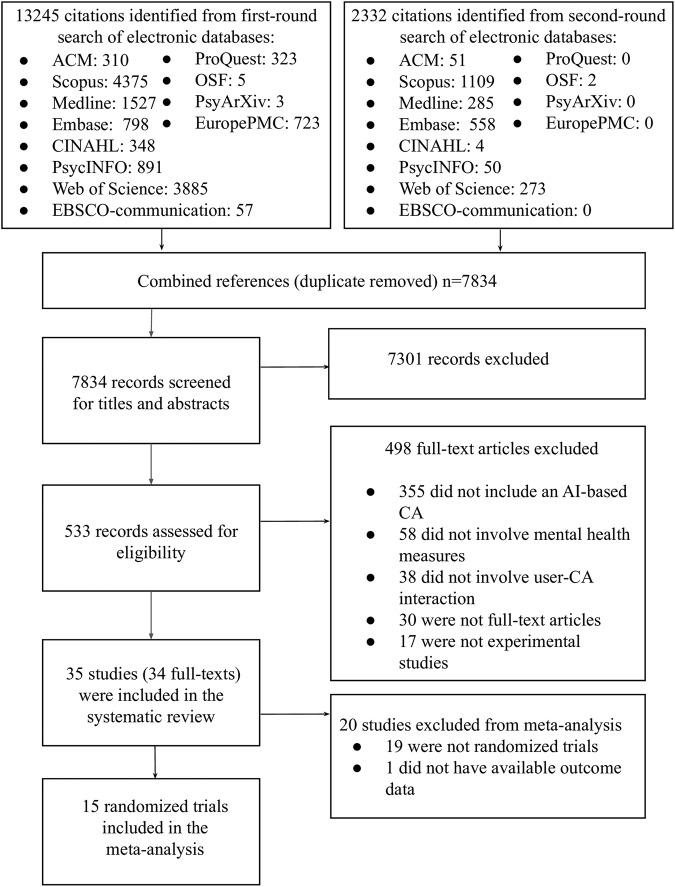
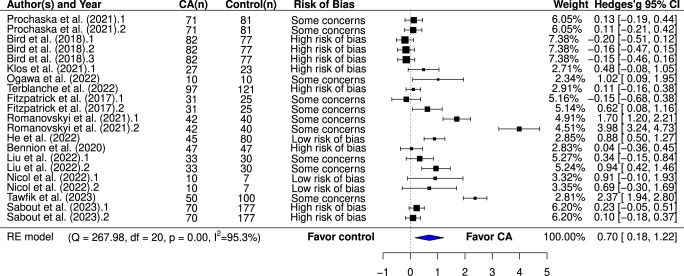
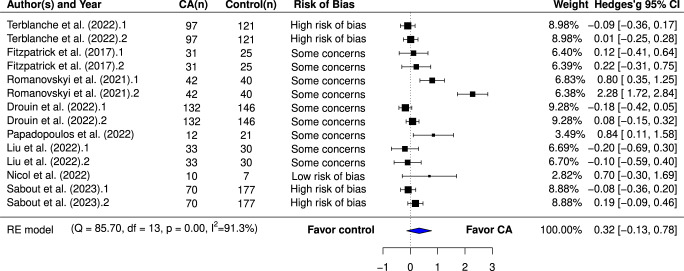
Conversational artificial intelligence (AI), particularly AI-based conversational agents (CAs), is gaining traction in mental health care. Despite their growing usage, there is a scarcity of comprehensive evaluations of their impact on mental health and well-being. This systematic review and meta-analysis aims to fill this gap by synthesizing evidence on the effectiveness of AI-based CAs in improving mental health and factors influencing their effectiveness and user experience. Twelve databases were searched for experimental studies of AI-based CAs’ effects on mental illnesses and psychological well-being published before May 26, 2023. Out of 7834 records, 35 eligible studies were identified for systematic review, out of which 15 randomized controlled trials were included for meta-analysis. The meta-analysis revealed that AI-based CAs significantly reduce symptoms of depression (Hedge’s g 0.64 [95% CI 0.17–1.12]) and distress (Hedge’s g 0.7 [95% CI 0.18–1.22]). These effects were more pronounced in CAs that are multimodal, generative AI-based, integrated with mobile/instant messaging apps, and targeting clinical/subclinical and elderly populations. However, CA-based interventions showed no significant improvement in overall psychological well-being (Hedge’s g 0.32 [95% CI –0.13 to 0.78]). User experience with AI-based CAs was largely shaped by the quality of human-AI therapeutic relationships, content engagement, and effective communication. These findings underscore the potential of AI-based CAs in addressing mental health issues. Future research should investigate the underlying mechanisms of their effectiveness, assess long-term effects across various mental health outcomes, and evaluate the safe integration of large language models (LLMs) in mental health care.
Overview
The claims and statistics of this paper haven’t been checked yet.
Free: it reads the open-access text and checks the first 5 claims that cite a source we can check. Create a free account to check every claim.
Integrity signals
Registry
Cites
Statistics
Figures
Verification
Claims the paper makes
The claims and statistics of this paper haven’t been checked yet.
Free: it reads the open-access text and checks the first 5 claims that cite a source we can check. Create a free account to check every claim.
Claims other papers make about this one
Each is checked against this paper’s own text: does it say what the citing paper says it does?
The source backs part of the claim, not all of it — or backs it for a different population, condition or comparison.
In the citing paper
“The rapid adoption of generative LLMs (e.g., GPT‐4) reflects broader AI trends, but introduces unique risks in mental health contexts 185 .”
From Charting the evolution of artificial intelligence mental health chatbots from rule‐based systems to large language models: a systematic review (2025) · cites this paper as [185]
Experimental — accuracy not yet measuredThe source backs part of the claim, not all of it — or backs it for a different population, condition or comparison.
In the citing paper
“Although reviews and meta-analyses of LLM-CBs for mental health exist13,14,29,30, as well as scoping reviews on the implementation of LLM-CBs in mental health31,32, their focus is narrowed to applications of LLM-CBs as clinical intervention tools.”
From A scoping review on the mental health harms of LLM-based chatbots (2026) · cites this paper as [14]
Experimental — accuracy not yet measuredThe source backs part of the claim, not all of it — or backs it for a different population, condition or comparison.
In the citing paper
“the first systematic reviews and meta-analyses demonstrate the potential of LLM-CBs as clinical tools for mental health13,14.”
From A scoping review on the mental health harms of LLM-based chatbots (2026) · cites this paper as [14]
Experimental — accuracy not yet measuredThe source backs part of the claim, not all of it — or backs it for a different population, condition or comparison.
In the citing paper
“LLM-CBs find increasing use as mental health support tools, both for the general public8–12 and for patients in clinical interventions13,14.”
From A scoping review on the mental health harms of LLM-based chatbots (2026) · cites this paper as [14]
Experimental — accuracy not yet measuredThe source backs part of the claim, not all of it — or backs it for a different population, condition or comparison.
In the citing paper
“A recent meta-analysis shows that GenAI chatbots outperform rule-based and retrieval-based chatbots in reducing depressive symptoms [13].”
From Generative AI Mental Health Chatbots as Therapeutic Tools: Systematic Review and Meta-Analysis of Their Role in Reducing Mental Health Issues (2025) · cites this paper as [13]
Experimental — accuracy not yet measured
6 more claims about this paper
Create a free account to see every claim other papers make about this one.
Self-check
Percentages, sums and reported differences re-computed from the paper’s own numbers.
The self-check needs the paper’s full text.
Citations
Cites
The Cochrane Collaboration's tool for assessing risk of bias in randomised trials
Higgins, J. P. T., Altman, D. G., Gotzsche, P. C., Juni, P., Moher, D., Oxman, A. D., Savovic, J., Schulz, K. F., Weeks, L., Sterne, J. A. C., et al. (2011) · BMJ · doi:10.1136/bmj.d5928 · Cited by 33,817
Dermyshi, E., Wang, Y., Yan, C., Hong, W., Qiu, G., Gong, X., & Zhang, T. (2017) · Neonatology · doi:10.1159/000454668 · Cited by 24,451
GRADE: an emerging consensus on rating quality of evidence and strength of recommendations
Guyatt, G. H., Oxman, A. D., Vist, G. E., Kunz, R., Falck-Ytter, Y., Alonso-Coello, P., & Schünemann, H. J. (2008) · BMJ · doi:10.1136/bmj.39489.470347.ad · Cited by 23,305
Interrater reliability: The kappa statistic
McHugh, M. L. (2012) · Biochemia Medica · doi:10.11613/bm.2012.031 · Cited by 19,877 · cited 1×
“Inter-rater reliability, assessed using Cohen ’ s Kappa 63 , indicated near-perfect agreement for title/abstract screening (0.9) and full-text review (0.83).”
MethodInfluentialCochrane Handbook for Systematic Reviews of Interventions
(2019) · doi:10.1002/9781119536604 · Cited by 14,828
Preferred reporting items for systematic reviews and meta-analyses: The PRISMA statement
Moher, D., Liberati, A., Tetzlaff, J., & Altman, D. G. (2010) · International Journal of Surgery · doi:10.1016/j.ijsu.2010.02.007 · Cited by 12,156 · cited 1×
“The study protocol was registered in PROSPERO, CRD 42023392187, and adhered to the Preferred Reporting Items for Systematic reviews and Meta-Analyses 74 (Supplementary Table 9).”
MethodCohen, J. (1992) · Psychological Bulletin · doi:10.1037//0033-2909.112.1.155 · Cited by 8,771
Fitzpatrick, K. K., Darcy, A., & Vierhile, M. (2017) · JMIR Mental Health · doi:10.2196/mental.7785 · Cited by 2,730 · cited 4×
“…Empathic communication 17,26,28,29,37 ( n = 5) (cid:129) Non-judgmental 33,49 ( n = 2) (cid:129) Accountability (e.g., regular check-ins) 21,26 ( n = 2) (cid:129) Human-like personality 26,49 ( n = 2) (cid:129) Tailored feedback 28 ( n = 1) (cid:129) Relationship 28 ( n = 1) Content ( n =…”
BackgroundInfluentialHow important are the common factors in psychotherapy? An update
Wampold, B. E. (2015) · World Psychiatry · doi:10.1002/wps.20238 · Cited by 1,728 · cited 1×
“…were key determinants of user experience, which corresponds to previous psychotherapy research that identi fi es these common elements (e.g., therapeutic alliance, empathy, and therapist effect) as active ingredients contributing to therapeutic changes across various therapeutic frameworks 61 .”
Charlson, F., van Ommeren, M., Flaxman, A., Cornett, J., Whiteford, H., & Saxena, S. (2019) · The Lancet · doi:10.1016/s0140-6736(19)30934-1 · Cited by 1,702 · cited 1×
“We fi ne-tuned our search strategy based on previous systematic reviews 3,51,62 to locate sources related to AI-based CAs for addressing mental health problems or promoting mental well-being.”
Method
Research works printed but not linked: 2
- Romanovskyi, O., Pidbutska, N. & Knysh, A. Elomia Chatbot: The effectiveness of Artificial Intelligence in the fight for mental health. In COLINs 5th International Conference on Computational Linguistics and Intelligent Systems, 1215–1224 (2021).
- Terblanche N Molyn J De Haan E Nilsson VO Coaching at scale: Investigating the efficacy of Artificial Intelligence coaching Int. J. Evid. Based Coach. Mentor 2022 20 20 36
Cited by
“It happened to be the perfect thing”: experiences of generative AI chatbots for mental health
Siddals, S., Torous, J., & Coxon, A. (2024) · npj Mental Health Research · doi:10.1038/s44184-024-00097-4 · Cited by 241
(2024) · doi:10.21203/rs.3.rs-4612612/v1 · Cited by 241
Moore, J., Grabb, D., Agnew, W., Klyman, K., Chancellor, S., Ong, D. C., & Haber, N. (2025) · Proceedings of the 2025 ACM Conference on Fairness, Accountability, and Transparency · doi:10.1145/3715275.3732039 · Cited by 204
Saeidnia, H. R., Hashemi Fotami, S. G., Lund, B., & Ghiasi, N. (2024) · Social Sciences · doi:10.3390/socsci13070381 · Cited by 169
Digital interventions in mental health: An overview and future perspectives
Löchner, J., Carlbring, P., Schuller, B. W., Torous, J. B., & Sander, L. (2025) · Internet Interventions · doi:10.1016/j.invent.2025.100824 · Cited by 208
Finding love in algorithms: deciphering the emotional contexts of close encounters with AI chatbots
Li, H., & Zhang, R. (2024) · Journal of Computer-Mediated Communication · doi:10.1093/jcmc/zmae015 · Cited by 143
Self-citationFinding Love in Algorithms: Deciphering the Emotional Contexts of Close Encounters with AI Chatbots
Li, H., & Zhang, R. (2024) · doi:10.31219/osf.io/xd4k7 · Cited by 150
Self-citationAlhuwaydi, A. M. (2024) · Risk Management and Healthcare Policy · doi:10.2147/rmhp.s461562 · Cited by 187
Zhang, R., Li, H., Meng, H., Zhan, J., Gan, H., & Lee, Y.-C. (2025) · Proceedings of the 2025 CHI Conference on Human Factors in Computing Systems · doi:10.1145/3706598.3713429 · Cited by 123
Self-citationHua, Y., Siddals, S., Ma, Z., Galatzer‐Levy, I., Xia, W., Hau, C., Na, H., Flathers, M., Linardon, J., Ayubcha, C., et al. (2025) · World Psychiatry · doi:10.1002/wps.21352 · Cited by 117
“The rapid adoption of generative LLMs (e.g., GPT - 4 ) reflects broader AI trends, but introduces unique risks in mental health contexts 185 .”
Regulating AI in Mental Health: Ethics of Care Perspective
Tavory, T. (2024) · JMIR Mental Health · doi:10.2196/58493 · Cited by 108
“Indeed, some applications have already been criticized as lacking clinical validation [5].”
BackgroundThe use of artificial intelligence in psychotherapy: development of intelligent therapeutic systems
Spytska, L. (2025) · BMC Psychology · doi:10.1186/s40359-025-02491-9 · Cited by 113
“Li et al. [6] also emphasised the effectiveness of conversational AI bots in delivering real-time support, complementing rather than replacing traditional treat-ment.”
Large Language Models in Mental Health Care: A Scoping Review
Hua, Y., Liu, F., Yang, K., Li, Z., Na, H., Sheu, Y.-H., Zhou, P., Moran, L. V., Ananiadou, S., Clifton, D. A., et al. (2025) · Current Treatment Options in Psychiatry · doi:10.1007/s40501-025-00363-y · Cited by 92
AI in the Classroom: Insights from Educators on Usage, Challenges, and Mental Health
Delello, J. A., Sung, W., Mokhtari, K., Hebert, J., Bronson, A., & Giuseppe, T. D. (2025) · Education Sciences · doi:10.3390/educsci15020113 · Cited by 191
Applications of large language models in psychiatry: a systematic review
Omar, M., Soffer, S., Charney, A. W., Landi, I., Nadkarni, G. N., & Klang, E. (2024) · Frontiers in Psychiatry · doi:10.3389/fpsyt.2024.1422807 · Cited by 84
Performance of mental health chatbot agents in detecting and managing suicidal ideation
Pichowicz, W., Kotas, M., & Piotrowski, P. (2025) · Scientific Reports · doi:10.1038/s41598-025-17242-4 · Cited by 143
Kolding, S., Lundin, R. M., Hansen, L., & Østergaard, S. D. (2024) · Acta Neuropsychiatrica · doi:10.1017/neu.2024.50 · Cited by 114
Feng, Y., Hang, Y., Wu, W., Song, X., Xiao, X., Dong, F., & Qiao, Z. (2025) · Journal of Medical Internet Research · doi:10.2196/69639 · Cited by 143
“This aligns with previous meta-analyses that have found AI-based CA interventions to be less effective for anxiety, positive affect, negative affect, and psychological well-being compared to depression [28,50].”
InfluentialYuan, A., Colato, E. G., Pescosolido, B. A., Song, H., & Samtani, S. (2025) · ACM Transactions on Management Information Systems · doi:10.1145/3701041 · Cited by 110
Omar, M., Brin, D., Glicksberg, B., & Klang, E. (2024) · American Journal of Infection Control · doi:10.1016/j.ajic.2024.03.016 · Cited by 59
Sanjeewa, R., Iyer, R., Apputhurai, P., Wickramasinghe, N. S., & Meyer, D. (2024) · JMIR Mental Health · doi:10.2196/58974 · Cited by 97
“Moreover, there are reviews focusing on AI-based CAs, their effectiveness, and their impact in the realm of MH care [17,18,42].”
BackgroundMethodZhong, W., Luo, J., & Lyu, Y. (2024) · PLoS ONE · doi:10.1371/journal.pone.0313314 · Cited by 76
Li, J., Li, Y., Hu, Y., Ma, C. F., Mei, X., Chan, E. A., & Yorke, J. (2025) · Worldviews on Evidence-Based Nursing · doi:10.1111/wvn.70059 · Cited by 87
Zhang, Q., Zhang, R., Xiong, Y., Sui, Y., Tong, C., & Lin, F.-H. (2025) · Journal of Medical Internet Research · doi:10.2196/78238 · Cited by 127
“This was similar to previous meta-analyses on the effectiveness of rule-based, retrieval-based, and GenAI chatbots [13,15,16,18].”
Self-citationLarge Language Models in Biomedical and Health Informatics: A Review with Bibliometric Analysis
Yu, H., Fan, L., Li, L., Zhou, J., Ma, Z., Xian, L., Hua, W., He, S., Jin, M., Zhang, Y., et al. (2024) · Journal of Healthcare Informatics Research · doi:10.1007/s41666-024-00171-8 · Cited by 102
The use of AI in mental health services to support decision-making: scoping review
Auf, H., Svedberg, P., Nygren, J., Nair, M., & Lundgren, L. E. (2025) · Journal of Medical Internet Research · doi:10.2196/63548 · Cited by 56
“While conversational agents show great potential in facilitating mental health services [82,83], several studies indicate a lack of clarity about effectiveness and evidence-based design for therapy and mental health assessment [84-88].”
Ali, M., Ali, S., Abbas, Q., Abbas, Z., & Lee, S. (2025) · Digital Health · doi:10.1177/20552076251395548 · Cited by 116
“54 Clinical documentation analysis.”
From screens to scenes: A survey of embodied AI in healthcare
Liu, Y., Cao, X., Chen, T., Jiang, Y., You, J., Wu, M., Wang, X., Feng, M., Jin, Y., & Chen, J. (2025) · Information Fusion · doi:10.1016/j.inffus.2025.103033 · Cited by 92
Feng, X., Tian, L., Ho, G. W. K., Yorke, J., & Hui, V. (2025) · Journal of Medical Internet Research · doi:10.2196/79850 · Cited by 51
Technological folie à deux: feedback loops between AI chatbots and mental health
Dohnány, S., Kurth-Nelson, Z., Spens, E., Luettgau, L., Reid, A., Gabriel, I., Summerfield, C., Shanahan, M., & Nour, M. M. (2026) · Nature Mental Health · doi:10.1038/s44220-026-00595-8 · Cited by 51
Large Language Models in Mental Health Care: A Systematic Scoping Review (Preprint)
hua, Y., Liu, F., Yang, K., Li, Z., Sheu, Y.-H., Zhou, P., Moran, L. V., Ananiadou, S., Clifton, D. A., & Beam, A. (2024) · doi:10.2196/preprints.64088 · Cited by 46
Exploring depression in adults over a decade: a review of longitudinal studies
de Sousa, R. D., Zagalo, D. M., Costa, T., de Almeida, J. M. C., Canhão, H., & Rodrigues, A. (2025) · BMC Psychiatry · doi:10.1186/s12888-025-06828-x · Cited by 44
“However, despite these advancements, the long-term effects and safe integration of large language models (LLMs) in chatbot interventions remain an area that requires further exploration [62].”
Risks and protective measures for synthetic relationships
Starke, C., Ventura, A., Bersch, C., Cha, M., de Vreese, C., Doebler, P., Dong, M., Krämer, N., Leib, M., Peter, J., et al. (2024) · Nature Human Behaviour · doi:10.1038/s41562-024-02005-4 · Cited by 44
Manole, A., Cârciumaru, R., Brînzaș, R., & Manole, F. (2024) · Information · doi:10.3390/info15120768 · Cited by 69
Designing Conversational AI for Aging: A Systematic Review of Older Adults' Perceptions and Needs
Yuan-hui, H., Zhou, Q., & Piper, A. M. (2025) · CHI Conference on Human Factors in Computing Systems · doi:10.1145/3706598.3713578 · Cited by 72
Campellone, T. R., Flom, M., Montgomery, R. M., Bullard, L., Pirner, M. C., Pavez, A., Morales, M., Harper, D., Oddy, C., O'Connor, T., et al. (2025) · Journal of Medical Internet Research · doi:10.2196/67365 · Cited by 42
Risks from Language Models for Automated Mental Healthcare: Ethics and Structure for Implementation
Grabb, D., Lamparth, M., & Vasan, N. (2024) · doi:10.1101/2024.04.07.24305462 · Cited by 40
“…(Higgins et al., 2023), deliver treatment in the form of increasingly automated psychotherapy or conversational agent (Thieme et al., 2023; Li et al., 2023; Balan et al., 2024), aid in psychiatric diagnosis (Kasula, 2023), and investigated the use of AI to analyze biometric data in the…”
BackgroundThe Future of Artificial Intelligence in Mental Health Nursing Practice: An Integrative Review
Milasan, L. H., & Scott, D. (2025) · International Journal of Mental Health Nursing · doi:10.1111/inm.70003 · Cited by 68
Rony, M. K. K., Das, D. C., Khatun, M. T., Ferdousi, S., Akter, M. R., Khatun, M. A., Begum, M. H., Khalil, M. I., Parvin, M. R., Alrazeeni, D. M., et al. (2025) · Digital Health · doi:10.1177/20552076251330528 · Cited by 62
“52,53 Both studies reported high diagnostic accuracy for ML models, reinforcing our result that ML remains the most effective methodology for psychiatric diagnoses.”
The Digital Therapeutic Alliance With Mental Health Chatbots: Diary Study and Thematic Analysis
Xu, Z., Lee, Y., Stasiak, K., Warren, J., & Lottridge, D. M. (2025) · JMIR Mental Health · doi:10.2196/76642 · Cited by 68
“Yet, how DTA is conceptualized, especially in relation to people’s sense of connection with mental health chatbots, if any, remains inconclusive [13-15], in particular due to the absence of longitudinal studies examining how relationships with mental health chatbots evolve over time [16].”
Self-citationRisks from Language Models for Automated Mental Healthcare: Ethics and Structure for Implementation
Grabb, D., Lamparth, M., & Vasan, N. (2024) · arXiv · doi:10.48550/arxiv.2406.11852 · Cited by 39
Kelly, A., Noctor, E., Ryan, L., & van de Ven, P. W. J. (2025) · Journal of Medical Internet Research · doi:10.2196/70131 · Cited by 60
“The use of chatbot technology leveraging AI and natural language processing is gaining significant attention as a means to enhance interactive patient engagement [14,15].”
In-person and virtual social interactions improve well-being during the COVID-19 pandemic
Liang, N., Grayson, S., Kussman, M. A., Mildner, J. N., & Tamir, D. (2024) · Computers in Human Behavior Reports · doi:10.1016/j.chbr.2024.100455 · Cited by 67
“Further, newer technology for artificial intelligence may enhance the impact of texting between existing friends (Narain et al., 2020) or expand the availability of social interaction with artificial agents on well-being (Li, Zhang, Lee, & Mohr, 2023).”
BackgroundAssessing and alleviating state anxiety in large language models
Ben‐Zion, Z., Witte, K., Jagadish, A. K., Duek, O. A., Harpaz‐Rotem, I., Khorsandian, M.-C., Burrer, A., Seifritz, E., Homan, P., Schulz, E., et al. (2025) · npj Digital Medicine · doi:10.1038/s41746-025-01512-6 · Cited by 83
The role of lifestyle medicine in menopausal health: a review of non-pharmacologic interventions
Anekwe, C. V., Cano, A., Mulligan, J., Ang, S. B., Johnson, C. N., Panay, N., Schaedel, Z., Akam, E. Y., Porterfield, F., Wang, E., et al. (2025) · Climacteric · doi:10.1080/13697137.2025.2548806 · Cited by 53
“The quality of human–AI therapeutic relationships, content engagement and effective communications shaped the user experience [109].”
Conversational AI in Pediatric Mental Health: A Narrative Review
Mansoor, M. A., Hamide, A., & Tran, T. (2025) · Children · doi:10.3390/children12030359 · Cited by 59
“While digital tools for mental health have existed for decades—from computerized cognitive behavioral therapy programs to mobile applications for mood tracking—AI conversational agents mark a qualitative shift in how technology can simulate human-like therapeutic interactions [42].”
Manole, A., Cârciumaru, R., Brînzaș, R., & Manole, F. (2024) · Information · doi:10.3390/info16010011 · Cited by 44
Algumaei, A. H., Yaacob, N. M., Doheir, M., Al-Andoli, M. N., & Algumaei, M. Y. (2025) · Symmetry · doi:10.3390/sym17071082 · Cited by 48
“Promising works such as those of [36–38] and others have added valuable lessons concerning patient engagement, clinical efficacy, and the potential of digital tools.”
AI companions and adolescent social relationships: Benefits, risks, and bidirectional influences
Sun, X., Wang, Y., & McDaniel, B. T. (2026) · Child Development Perspectives · doi:10.1093/cdpers/aadaf009 · Cited by 69
Schillings, C., Meißner, E., Erb, B., Bendig, E., Schultchen, D., & Pollatos, O. (2024) · JMIR Mental Health · doi:10.2196/50454 · Cited by 61
“Recent meta-analyses [73,74] showed that chatbot-based studies are more effective when diverse input and output modalities are combined.”
BackgroundArtificial Intelligence in Medical Education and Mentoring in Rehabilitation Medicine
Silver, J. K., Dodurgali, M. R., & Gavini, N. (2024) · American Journal of Physical Medicine & Rehabilitation · doi:10.1097/phm.0000000000002604 · Cited by 33
Rackoff, G. N., Zhang, Z. Z., & Newman, M. G. (2025) · Digital Health · doi:10.1177/20552076241313401 · Cited by 58
Beyond Doomsday Fears: Why We Need to Consider the Potential Harms of AI Psychotherapy
Tekin, Ş., & Delehanty, M. (2025) · The American Journal of Bioethics · doi:10.1080/15265161.2025.2457724 · Cited by 55
“Meta-analyses have shown that AI psychotherapy chatbots have reduced some symptoms in the short-term but not demonstrated overall mental health improvement and long-term effectiveness (Li et al. 2023; Casu et al. 2024; He et al. 2023).”
Singh, M. P., & Keche, Y. N. (2025) · Cureus · doi:10.7759/cureus.84804 · Cited by 67
Tong, A. C. Y., Wong, K. T. Y., Chung, W. W. T., & Mak, W. W. S. (2025) · Journal of Medical Internet Research · doi:10.2196/70436 · Cited by 59
“Meanwhile, Li et al [19] found a larger effect size in reducing depressive symptoms ( g =0.64) and distress ( g =0.70), but these same interventions did not enhance psychological well-being ( g =0.32).”
InfluentialAutonomy by Design: Preserving Human Autonomy in AI Decision-Support
Buijsman, S., Carter, S. E., & Bermúdez, J. P. (2025) · Philosophy & Technology · doi:10.1007/s13347-025-00932-2 · Cited by 53
“While the claims of mental health chatbots to relieve acute psychological distress are widely supported in the literature, the relationship between mental health chatbot use and long-term psychological wellbeing is less clear (Li et al., 2023).”
“It’s Not Only Attention We Need”: Systematic Review of Large Language Models in Mental Health Care
Bucher, A. M., Egger, S., Vashkite, I., Wu, W., & Schwabe, G. (2025) · JMIR Mental Health · doi:10.2196/78410 · Cited by 63
“Furthermore, chatbots are effective in identifying specific mental conditions [54], building emotional support [55], or supporting interventions [56].”
Cuijpers, P. J., Harrer, M., & Furukawa, T. A. (2026) · World Psychiatry · doi:10.1002/wps.70002 · Cited by 37
“…of trials on artificial intelligence (AI) based conversational agents for promoting mental health and well being included 15 randomized trials 127 , but most were aimed at non clinical populations or groups with subclinical symptoms, and only one trial was aimed at adolescents with a…”
ChatGPT as a psychotherapist for anxiety disorders: An empirical study with anxiety patients
Alanzi, T. M., Alharthi, A. K. Z., Alrumman, S. N., Abanmi, S. N., Jumah, A., Alansari, H., Alharthi, T. S., Alibrahim, A. O., Algethami, A. A., Aburass, M. K., et al. (2024) · Nutrition and Health · doi:10.1177/02601060241281906 · Cited by 34
“Prior AI-based mental health tools often faced challenges such as limited conversational depth, lack of empathetic responses, and dif fi culty in understanding nuanced human emotions (Li et al., 2023; Olawade et al., 2024; Sharma et al., 2023).”
Ibrahim, S. T., Li, M., Patel, J., & Katapally, T. R. (2025) · Computers in Biology and Medicine · doi:10.1016/j.compbiomed.2025.109859 · Cited by 43
Technological folie à deux: Feedback Loops Between AI Chatbots and Mental Illness
Dohnány, S., Kurth-Nelson, Z., Spens, E., Luettgau, L., Reid, A., Gabriel, I., Summerfield, C., Shanahan, M., & Nour, M. M. (2025) · arXiv · doi:10.48550/arxiv.2507.19218 · Cited by 26
Khosravi, M., & Azar, G. (2024) · Digital Health · doi:10.1177/20552076241247983 · Cited by 36
Park, J., Singh, V. K., & Wiśniewski, P. (2025) · JMIR Medical Informatics · doi:10.2196/62758 · Cited by 39
“…health conditions in the short term, while substantial long-term effects were not observed [10]; artificial intelligence (AI)–based mental health CAs showed a meaningful reduction in symptoms of depression and distress, with no substantial improvement in overall psychological well-being [11].”
Sedláková, J., Lucivero, F., Pavarini, G., & Kerasidou, A. (2025) · The American Journal of Bioethics · doi:10.1080/15265161.2025.2526734 · Cited by 31
“Conversational artificial intelligence (CAI), such as chatbots, is increasingly applied in mental healthcare for prevention, psychoeducation, therapy support and intervention (He et al. 2023; Li et al. 2023).”
Towards Multimodal Emotional Support Conversation Systems
Chu, Y., Liao, L., Zhou, Z., Ngo, C.-W., & Hong, R. (2025) · IEEE Transactions on Multimedia · doi:10.1109/tmm.2025.3604951 · Cited by 25
“This gap significantly hinders the development of AI systems that can understand and respond to the complex emotional states of users [3], [4].”
Transforming healthcare delivery with conversational AI platforms
Mahajan, A., & Powell, D. (2025) · npj Digital Medicine · doi:10.1038/s41746-025-01968-6 · Cited by 27
Qin, J., Nan, Y., Li, Z., & Meng, J. (2025) · Journal of Medical Internet Research · doi:10.2196/76296 · Cited by 34
“Given that CAs are an emerging technology, we adopted a keyword-based search strategy based on the approach used in previous reviews on the effectiveness of CAs [9,10,14].”
InfluentialZhang, R., Li, H., Chen, A., Liu, Z., & Lee, Y.-C. (2024) · Social Media + Society · doi:10.1177/20563051241290845 · Cited by 23
“Conversational artificial intelligence (AI) systems (e.g., smart speakers, chatbots) have permeated our daily lives, providing services from customer service to entertainment to mental health support (Li et al., 2023; Liao et al., 2018; Xu et al., 2017).”
Self-citationUnleashing the potential of chatbots in mental health: bibliometric analysis
Qing, H., & Zhao, C. (2025) · Frontiers in Psychiatry · doi:10.3389/fpsyt.2025.1494355 · Cited by 35
Tbaishat, D. M., & Elfadel, M. W. (2025) · BMC Medical Education · doi:10.1186/s12909-025-08462-3 · Cited by 37
“…and virtual health coaches guiding users in lifestyle, nutrition, and preventive care [19]; conversational AI chatbots for interactive guidance [20]; emotionally intelligent systems that respond to user emotions and sustain engagement [21]; adaptive learning platforms tailored to individual…”
Transforming mental health research and care through artificial intelligence
Opel, N., & Breakspear, M. J. (2026) · Science · doi:10.1126/science.adz9193 · Cited by 37
A review on the efficacy of artificial intelligence for managing anxiety disorders
Das, K. P., & Gavade, P. (2024) · Frontiers in Artificial Intelligence · doi:10.3389/frai.2024.1435895 · Cited by 28
The future of psychiatry: clinical practice, diagnosis, and treatment
Turner, S., Yadav, P., Morrin, H., & Bhat, A. (2025) · International Review of Psychiatry · doi:10.1080/09540261.2025.2594523 · Cited by 23
Linardon, J. (2025) · Current Treatment Options in Psychiatry · doi:10.1007/s40501-025-00344-1 · Cited by 28
“A recent meta-analysis [39] of 15 randomized controlled trials (RCTs) on AI-based chatbots reported a significant pooled effect size of g = 0.70 (95% CI = 0.18, 1.22) on reduced psychological distress in favor of chatbot conditions over controls.”
InfluentialBoit, S., & Patil, R. (2025) · JMIR Mental Health · doi:10.2196/75078 · Cited by 46
“While AI holds the promise for hyperpersonalized treatment through the analysis of diverse data [90], current systems often struggle with the complexity and variability of mental illnesses, including the subtleties of human communication [91].”
Du, Q., Ren, Y., Meng, Z.-L., He, H., & Meng, S. (2025) · Journal of Medical Internet Research · doi:10.2196/78186 · Cited by 44
“A large-sample analysis by Li et al [60] indicates that AI interventions have limited effects on improving depression and anxiety symptoms, whereas studies by Villarreal-Zegarra et al [61] report significant small to moderate effects.”
Systematic review and meta analysis of chatbots in the management of depressive and anxiety symptoms
Sohn, J.-S., Ha, B., Park, S., Kim, J.-J., Lee, E., Oh, H., Lee, S., & Kim, E. (2026) · npj Digital Medicine · doi:10.1038/s41746-026-02566-w · Cited by 37
“In contrast, Li et al. (2023) found a statistically signi fi cant effect of AI-based conversational agents on depressive symptoms( g = 0.64)butnosigni fi cantimprovementinanxietyoutcomes 22 .”
InfluentialShoshani, A., Gurfinkel, B., Kor, A., Ben-Haim, Y., Kanarek, O., Segev, R., Shafir, O., & Arbel, R. (2026) · JAMA Network Open · doi:10.1001/jamanetworkopen.2026.6713 · Cited by 27
Ghozali, M. T. (2025) · Journal of Asthma · doi:10.1080/02770903.2025.2450482 · Cited by 25
Transdiagnostic-focused apps for depression and anxiety: a meta-analysis
Linardon, J., Anderson, C., Messer, M., Liu, C., & Torous, J. B. (2025) · npj Digital Medicine · doi:10.1038/s41746-025-01860-3 · Cited by 25
“…showthat variousmodes of digital interventions, including web-based programs 8,9 , smartphone apps 10,11 , virtual reality 12,13 , and chatbots 14 delivered either as stand-alone options or an adjunct to traditional care, outperform control conditions in reducing symptoms of depression or…”
Bragazzi, N. L., & Garbarino, S. (2024) · JMIR Formative Research · doi:10.2196/55762 · Cited by 24
“In the era of generative conversational artificial intelligence (AI) [9,10], characterized by disruptive technological transformation, the importance of sleep health promotion and education becomes even more relevant [11]: conversational AI-based platforms and agents, such as chatbots, can provide…”
BackgroundWu, X., Liew, K., & Dorahy, M. J. (2025) · JMIR AI · doi:10.2196/68960 · Cited by 38
“More recently, Li et al [6] conducted a meta-analysis of 15 randomized controlled trials specifically focusing on CAI counseling, and found that CAIs showed a significant decrease in depression and distress symptoms, especially when used with clinical, subclinical, and older adult populations.”
Schäfer, L. M., Köhler, S., & Krause, T. (2025) · Frontiers in Digital Health · doi:10.3389/fdgth.2025.1576135 · Cited by 26
“Loneliness is recognized as detrimental to health, and while CAIs, including chatbots, have the potential for social support, their impact on loneliness remains under-researched (9), but could be a central therapeutic target of CAIs.”
Zhang, W., Zhang, Q., Wang, P., Zhou, X., & Wu, Y. (2025) · Asian Journal of Psychiatry · doi:10.1016/j.ajp.2025.104596 · Cited by 22
Sun, X., Jahangir, A., Alghamdi, A. A., & Liu, F. (2025) · Scientific Reports · doi:10.1038/s41598-025-24013-8 · Cited by 31
“As previous studies have noted, students often prefer discreet and autonomous forms of mental health support, making AI-driven tools a psychologically acceptable alternative 57–59 .”
Huynh, A., Roy, T. J., Jackson, K. N., Lee, A. G., Liaw, W. R., & Hossain, M. M. (2025) · International Journal of Medical Informatics · doi:10.1016/j.ijmedinf.2025.106204 · Cited by 28
Effectiveness of telemedicine on common mental disorders: An umbrella review and meta-meta-analysis
Chen, J., Li, C., An, K., Dong, X., Liu, J., & Wu, H. Y. (2024) · Computers in Human Behavior · doi:10.1016/j.chb.2024.108325 · Cited by 22
Sobowale, K., & Humphrey, D. K. (2025) · JMIR Formative Research · doi:10.2196/65605 · Cited by 15
“Studies suggest that chatbots are effective in improving common mental illnesses [9-11], and there is enthusiasm for their use in clinical care [6].”
Song, Y., Yan, T., Jia, F., Chen, L., & Li, H. (2025) · Journal of Operations Management · doi:10.1002/joom.70012 · Cited by 22
Self-citationEiselt, A.-K., Kirkendall, S., Xiong, E., Langner, D., & Goldfarb, M. B. (2026) · Frontiers in Digital Health · doi:10.3389/fdgth.2025.1713334 · Cited by 21
“…agents and AI-guided triage processes can reduce organizational resources and individual cognitive load, and support guided self-management and informed clinical decision-making, which enhances patient engagement and empowerment (8, 9) leading to improved patient priority outcomes (10–12).”
Ueda, M., Birnbaum, M. L., Liu, Y., Yu, Q., Tian, X., Mirer, A., Ramanathan, S., & Sinyor, M. (2026) · JMIR Mental Health · doi:10.2196/88196 · Cited by 32
“Some studies indicate that conversational AI agents can help reduce depressive symptoms and psychological distress, including suicidal ideation [28,29], and the social need fulfillment model [30] suggests that humans may derive both concrete and symbolic benefits from responsive AI interactions,…”
The rise of artificial intelligence for cognitive behavioral therapy: A bibliometric overview
Vanhée, L., Andersson, G., Garcia, D., & Sikström, S. (2025) · Applied Psychology Health and Well-Being · doi:10.1111/aphw.70033 · Cited by 14
“(Aggarwal et al., 2023; Boucher et al., 2021; Li et al., 2023) focus on chatbots for promoting mental health behavioral changes and concurred that CBT is the most often used therapeutic background for chatbots, though not informing on how chatbots relate to the overall CBT literature.”
Influentialvan Breugel, M., Greenhawt, M., Eguíluz‐Gracia, I., Torres, M. J., Anagnostou, A., & Koppelman, G. H. (2025) · Journal of Allergy and Clinical Immunology · doi:10.1016/j.jaci.2025.08.022 · Cited by 23
Kollig, F., Pater, J. A., Nova, F. F., & Fiesler, C. L. (2025) · CHI Conference on Human Factors in Computing Systems · doi:10.1145/3706598.3713322 · Cited by 18
Therapy chatbots and emotional complexity: do therapy chatbots really empathise?
Gabriels, K., & Goffin, K. (2026) · Current Opinion in Psychology · doi:10.1016/j.copsyc.2025.102263 · Cited by 19
The Cybernetic Teammate: A Field Experiment on Generative AI and Teamwork
Dell’Acqua, F., Ayoubi, C., Lifshitz‐Assaf, H., Sadun, R., Mollick, E., Mollick, L., Han, Y., Goldman, J., Nair, H., Taub, S., et al. (2026) · Organization Science · doi:10.1287/orsc.2025.20702 · Cited by 66
Disrupted self, therapy, and the limits of conversational AI
Babushkina, D., & de Boer, B. (2024) · Philosophical Psychology · doi:10.1080/09515089.2024.2397004 · Cited by 18
“…about CAs in a variety of contexts (e.g., boosting mental resilience, mitigating symptoms of depression and anxiety), but little is known about the long-term effects of using CAs, nor about the underlying mechanisms that are explanatory for the positive experiences (e.g., Li et al., 2023).”
The New Emerging Treatment Choice for Major Depressive Disorders: Digital Therapeutics
Cho, C., Lee, H., & Kim, Y. (2024) · Advances in experimental medicine and biology · doi:10.1007/978-981-97-4402-2_16 · Cited by 17
Sun, Y., Pang, H., Järvilehto, L., Zhang, O., Shapiro‐Ilan, D. I., Korkman, J., Haginoya, S., & Santtila, P. O. (2025) · PLoS ONE · doi:10.1371/journal.pone.0316317 · Cited by 16
“In the past years, the integration of conversational Artificial Intelligence systems has increasingly become an interest across various disciplines, including the health-care sector [62].”
Zhu, H., & Yang, S. (2026) · Behavioral Sciences · doi:10.3390/bs16020304 · Cited by 13
Metadata
- Authors
- Li, H., Zhang, R., Lee, Y.-C., Kraut, R. E., & Mohr, D. C.
- Affiliations
- National University of Singapore (SG)
- Carnegie Mellon University (US)
- Northwestern University (US)
- Corresponding author
- Zhang, Renwen
- Venue
- npj Digital Medicine
- Published
- 2023-12-19
- Volume
- 6
- Issue
- 1
- Pages
- 236-236
- ISSN
- 2398-6352 (ISSN-L)
- PMC
- PMC10730549
- OpenAlex
- W4389934892
- Semantic Scholar
- 69a4cb1a3d84e924ab79848910507ee34e80150a
- Cited by
- 598
- References
- 74
- Citations by year
- 2026: 322 · 2025: 212 · 2024: 64
- FWCI
- 20.31
- Type
- journal article
- Language
- en
- Open access
- gold
- doi.org
- Licence
- cc-by
- creativecommons.org/licenses/by/4.0 (tdm)
- creativecommons.org/licenses/by/4.0 (vor)
- Locations
- npj Digital Medicine (publishedVersion, cc-by)
- PubMed Central (publishedVersion, cc-by)
- PubMed (publishedVersion)
- DOAJ (DOAJ: Directory of Open Access Journals) (submittedVersion, cc-by-sa)
- Funders
- National University of Singapore (A-8000936-01-00)
- National Institute of Mental Health (P50MH119029)
- Topics
- Social Sciences › Psychology › Applied Psychology › Digital Mental Health Interventions
- Social Sciences › Psychology › Social Psychology › Social Robot Interaction and HRI
- Health Sciences › Medicine › Health Informatics › Artificial Intelligence in Healthcare and Education
- Keywords
- chatbots, artificial intelligence, mental health, depression, psychological distress, psychological well-being, generative AI, multimodal AI, mobile health apps, older adults, large language models, user experience
About these checks
Registry, retraction, Cites and statistics results are computed, not judged, with one exception: a printed reference that no index lists is read once by a model before it counts as a citation error. Claims are extracted by a model and kept only when their quote appears verbatim in the text; each cited source is then checked, with a model’s help, for whether it says what the claim relies on. Those verdicts can be wrong — read the claim’s quote and the cited source before relying on one.
Statistics and arithmetic are recomputed, not judged.
Confidence bands are shown only for fields calibrated on our annotated test set. None is calibrated yet, so no band is shown.
What counts as a claim ›How we measure confidence ›How we check this ›
Are you an author, or do you see a problem with this page? Request a review
Data sources
Bibliographic data: Semantic Scholar, OpenAlex, Crossref.
Contains information from the Semantic Scholar Academic Graph Datasets, made available under the ODC Attribution License (ODC-BY 1.0).
Semantic Scholar’s data is described in: Kinney, R., et al. (2023). The Semantic Scholar Open Data Platform. arXiv:2301.10140.
