

Systematic review and meta-analysis of AI-based conversational agents for promoting mental health and well-being
Open accessThe DOI matches its Crossref record; 73 of the 74 references it cites were found in a registry or an index.
Abstract
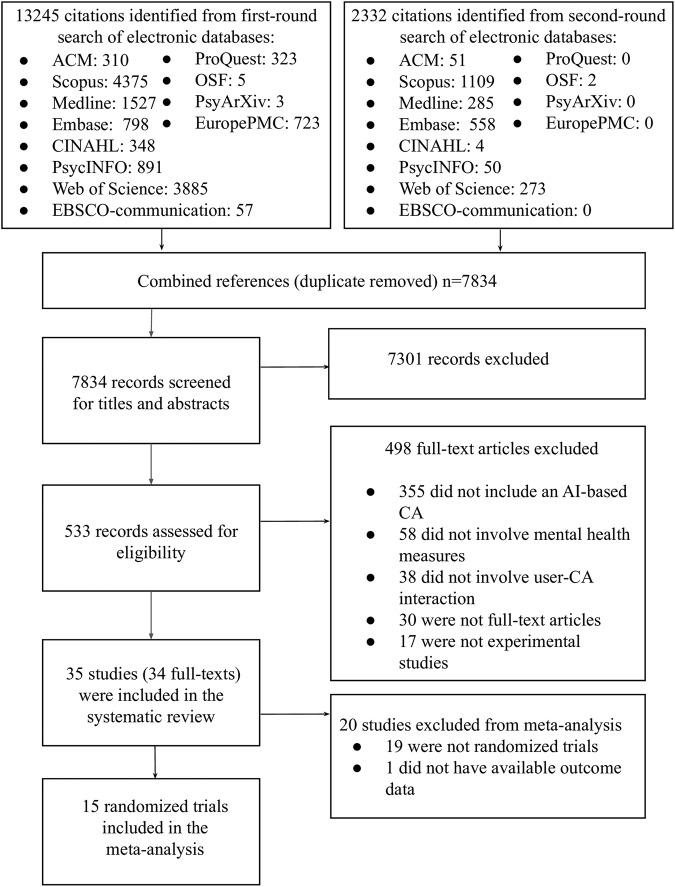
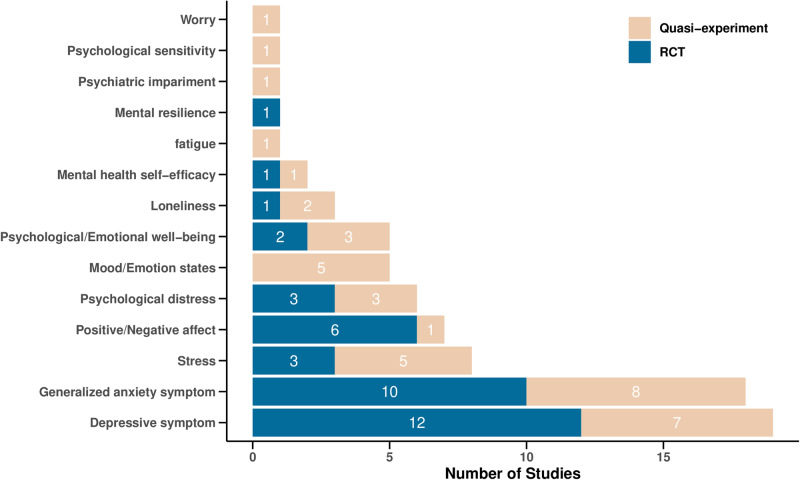
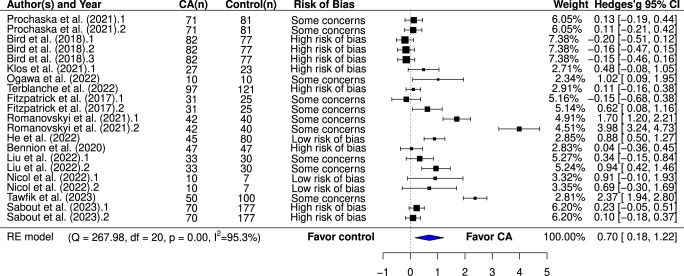
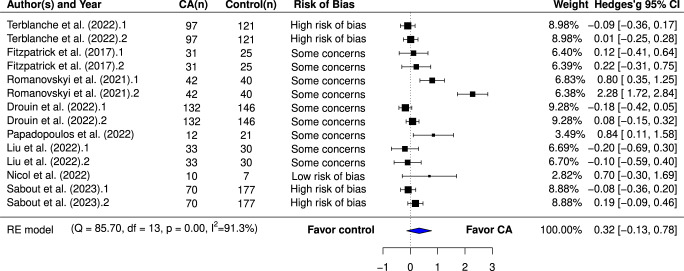
Conversational artificial intelligence (AI), particularly AI-based conversational agents (CAs), is gaining traction in mental health care. Despite their growing usage, there is a scarcity of comprehensive evaluations of their impact on mental health and well-being. This systematic review and meta-analysis aims to fill this gap by synthesizing evidence on the effectiveness of AI-based CAs in improving mental health and factors influencing their effectiveness and user experience. Twelve databases were searched for experimental studies of AI-based CAs’ effects on mental illnesses and psychological well-being published before May 26, 2023. Out of 7834 records, 35 eligible studies were identified for systematic review, out of which 15 randomized controlled trials were included for meta-analysis. The meta-analysis revealed that AI-based CAs significantly reduce symptoms of depression (Hedge’s g 0.64 [95% CI 0.17–1.12]) and distress (Hedge’s g 0.7 [95% CI 0.18–1.22]). These effects were more pronounced in CAs that are multimodal, generative AI-based, integrated with mobile/instant messaging apps, and targeting clinical/subclinical and elderly populations. However, CA-based interventions showed no significant improvement in overall psychological well-being (Hedge’s g 0.32 [95% CI –0.13 to 0.78]). User experience with AI-based CAs was largely shaped by the quality of human-AI therapeutic relationships, content engagement, and effective communication. These findings underscore the potential of AI-based CAs in addressing mental health issues. Future research should investigate the underlying mechanisms of their effectiveness, assess long-term effects across various mental health outcomes, and evaluate the safe integration of large language models (LLMs) in mental health care.
Overview
The claims and statistics of this paper haven’t been checked yet.
Free: it reads the open-access text and checks the first 5 claims that cite a source we can check. Create a free account to check every claim.
Integrity signals
Registry
Cites
Statistics
Figures
Verification
Claims the paper makes
The claims and statistics of this paper haven’t been checked yet.
Free: it reads the open-access text and checks the first 5 claims that cite a source we can check. Create a free account to check every claim.
Claims other papers make about this one
Each is checked against this paper’s own text: does it say what the citing paper says it does?
The source backs part of the claim, not all of it — or backs it for a different population, condition or comparison.
In the citing paper
“The rapid adoption of generative LLMs (e.g., GPT‐4) reflects broader AI trends, but introduces unique risks in mental health contexts 185 .”
From Charting the evolution of artificial intelligence mental health chatbots from rule‐based systems to large language models: a systematic review (2025) · cites this paper as [185]
Experimental — accuracy not yet measuredThe source backs part of the claim, not all of it — or backs it for a different population, condition or comparison.
In the citing paper
“Although reviews and meta-analyses of LLM-CBs for mental health exist13,14,29,30, as well as scoping reviews on the implementation of LLM-CBs in mental health31,32, their focus is narrowed to applications of LLM-CBs as clinical intervention tools.”
From A scoping review on the mental health harms of LLM-based chatbots (2026) · cites this paper as [14]
Experimental — accuracy not yet measuredThe source backs part of the claim, not all of it — or backs it for a different population, condition or comparison.
In the citing paper
“the first systematic reviews and meta-analyses demonstrate the potential of LLM-CBs as clinical tools for mental health13,14.”
From A scoping review on the mental health harms of LLM-based chatbots (2026) · cites this paper as [14]
Experimental — accuracy not yet measuredThe source backs part of the claim, not all of it — or backs it for a different population, condition or comparison.
In the citing paper
“LLM-CBs find increasing use as mental health support tools, both for the general public8–12 and for patients in clinical interventions13,14.”
From A scoping review on the mental health harms of LLM-based chatbots (2026) · cites this paper as [14]
Experimental — accuracy not yet measuredThe source backs part of the claim, not all of it — or backs it for a different population, condition or comparison.
In the citing paper
“A recent meta-analysis shows that GenAI chatbots outperform rule-based and retrieval-based chatbots in reducing depressive symptoms [13].”
From Generative AI Mental Health Chatbots as Therapeutic Tools: Systematic Review and Meta-Analysis of Their Role in Reducing Mental Health Issues (2025) · cites this paper as [13]
Experimental — accuracy not yet measured
6 more claims about this paper
Create a free account to see every claim other papers make about this one.
Self-check
Percentages, sums and reported differences re-computed from the paper’s own numbers.
The self-check needs the paper’s full text.
Citations
Cites
The Cochrane Collaboration's tool for assessing risk of bias in randomised trials
Higgins, J. P. T., Altman, D. G., Gotzsche, P. C., Juni, P., Moher, D., Oxman, A. D., Savovic, J., Schulz, K. F., Weeks, L., Sterne, J. A. C., et al. (2011) · BMJ · doi:10.1136/bmj.d5928 · Cited by 33,817
Dermyshi, E., Wang, Y., Yan, C., Hong, W., Qiu, G., Gong, X., & Zhang, T. (2017) · Neonatology · doi:10.1159/000454668 · Cited by 24,451
GRADE: an emerging consensus on rating quality of evidence and strength of recommendations
Guyatt, G. H., Oxman, A. D., Vist, G. E., Kunz, R., Falck-Ytter, Y., Alonso-Coello, P., & Schünemann, H. J. (2008) · BMJ · doi:10.1136/bmj.39489.470347.ad · Cited by 23,305
Interrater reliability: The kappa statistic
McHugh, M. L. (2012) · Biochemia Medica · doi:10.11613/bm.2012.031 · Cited by 19,877 · cited 1×
“Inter-rater reliability, assessed using Cohen ’ s Kappa 63 , indicated near-perfect agreement for title/abstract screening (0.9) and full-text review (0.83).”
MethodInfluentialCochrane Handbook for Systematic Reviews of Interventions
(2019) · doi:10.1002/9781119536604 · Cited by 14,828
Preferred reporting items for systematic reviews and meta-analyses: The PRISMA statement
Moher, D., Liberati, A., Tetzlaff, J., & Altman, D. G. (2010) · International Journal of Surgery · doi:10.1016/j.ijsu.2010.02.007 · Cited by 12,156 · cited 1×
“The study protocol was registered in PROSPERO, CRD 42023392187, and adhered to the Preferred Reporting Items for Systematic reviews and Meta-Analyses 74 (Supplementary Table 9).”
MethodCohen, J. (1992) · Psychological Bulletin · doi:10.1037//0033-2909.112.1.155 · Cited by 8,771
Fitzpatrick, K. K., Darcy, A., & Vierhile, M. (2017) · JMIR Mental Health · doi:10.2196/mental.7785 · Cited by 2,730 · cited 4×
“…Empathic communication 17,26,28,29,37 ( n = 5) (cid:129) Non-judgmental 33,49 ( n = 2) (cid:129) Accountability (e.g., regular check-ins) 21,26 ( n = 2) (cid:129) Human-like personality 26,49 ( n = 2) (cid:129) Tailored feedback 28 ( n = 1) (cid:129) Relationship 28 ( n = 1) Content ( n =…”
BackgroundInfluentialHow important are the common factors in psychotherapy? An update
Wampold, B. E. (2015) · World Psychiatry · doi:10.1002/wps.20238 · Cited by 1,728 · cited 1×
“…were key determinants of user experience, which corresponds to previous psychotherapy research that identi fi es these common elements (e.g., therapeutic alliance, empathy, and therapist effect) as active ingredients contributing to therapeutic changes across various therapeutic frameworks 61 .”
Charlson, F., van Ommeren, M., Flaxman, A., Cornett, J., Whiteford, H., & Saxena, S. (2019) · The Lancet · doi:10.1016/s0140-6736(19)30934-1 · Cited by 1,702 · cited 1×
“We fi ne-tuned our search strategy based on previous systematic reviews 3,51,62 to locate sources related to AI-based CAs for addressing mental health problems or promoting mental well-being.”
Method
Research works printed but not linked: 2
- Romanovskyi, O., Pidbutska, N. & Knysh, A. Elomia Chatbot: The effectiveness of Artificial Intelligence in the fight for mental health. In COLINs 5th International Conference on Computational Linguistics and Intelligent Systems, 1215–1224 (2021).
- Terblanche N Molyn J De Haan E Nilsson VO Coaching at scale: Investigating the efficacy of Artificial Intelligence coaching Int. J. Evid. Based Coach. Mentor 2022 20 20 36
Cited by
Items 401–500 of 606
Fan, L. (2026) · International Journal of Educational Research · doi:10.1016/j.ijer.2026.102991
Vanishing Point: Italian Psychologists between Today's and Tomorrow's Uncertainty
Stampa, P. (2026) · Rivista di Psicologia Clinica · doi:10.3280/rpc2-2025oa21810
AI Agents in Mental Health Treatment: A Systematic Review
Nur, J., Tan, K., & Wiputra, R. (2025) · International Conference on Innovation and Intelligence for Informatics, Computing, and Technologies (3ICT) · doi:10.1109/3ict68299.2025.11442195
“The results of this study corroborate prior studies indicating that accessibility and personalised interactions might enhance user satisfaction [6].”
InfluentialSun, J., Ma, S., Fan, Y., & Washington, P. Y. (2026) · Applied Sciences · doi:10.3390/app16073388 · Cited by 1
Khalpey, Z., King, N., & Abraham, A. (2026) · Cureus · doi:10.7759/cureus.106427
“Heterogeneous comparators were accepted, including rule-based systems, larger LLMs, and standard clinical workflows, to reflect real-world implementation diversity [7,9].”
RetractedKéri, S. (2026) · Orvosi Hetilap · doi:10.1556/650.2026.33542
Mehić, T., Jacobs, M.-B. A., Kowalke, V., Salinas, L. D. R., Quentin, J., Müller, F. K., & Baumgart, N. (2026) · Information - Wissenschaft & Praxis · doi:10.1515/iwp-2026-2005
Kim, M., Song, H., Lee, J., & Suh, B. (2026) · CHI Conference Extended Abstracts on Human Factors in Computing Systems (CHI EA) · doi:10.1145/3772363.3798512
Chung, K.-M., Kung, L.-H., & Yan, Y. (2026) · Frontiers in Public Health · doi:10.3389/fpubh.2026.1792791
The You You Are: A Payphone Installation for Parallel-Self Dialogue Enabled by Voice Cloning
Xue, B., Ono, G., Yoshida, T., Hu, Y.-H., & Narumi, T. (2026) · CHI Conference Extended Abstracts on Human Factors in Computing Systems (CHI EA) · doi:10.1145/3772363.3799159 · Cited by 1
Shirvani, M. S., Crowley, J., Peng, C., Liu, J., Chao, T. W.-C., Martinez, S., Brandt, L., Kim, I.-J., & Yoon, D. (2026) · CHI Conference on Human Factors in Computing Systems · doi:10.1145/3772318.3790986 · Cited by 5
“We build on this literature by positioning self-clone chatbots as a possible novel tool within DMHI, showcasing the unexplored power of AI systems to transform users’ own voices and inner dialogue into more persuasive, supportive, and reflective digital interactions.”
Ni, M., Jiang, Y., Li, M., & Zhou, Y. (2026) · Informatics for Health and Social Care · doi:10.1080/17538157.2026.2655820
KI als Antwort auf den sozialprofessionellen Fachkräftemangel?
Pietsch, M., Krimmer, P., & Heinz, A. (2026) · DiMe-Sozial | Soziale Arbeit Medien und Digitalisierung · doi:10.21240/dimesoz/2026/1/70
Zhang, Z., & Tan, X. (2026) · Digital Health · doi:10.1177/20552076261443211 · Cited by 2
“23 Such breakdowns occur when conversational agents inadequately interpret or contextually respond to user inputs, thereby diminishing intervention efficacy and fostering negative experiences.”
The Use and Evaluation of Behavior Change Theories in Generative Artificial Intelligence Chatbots
Heo, R., & Depp, C. A. (2026) · Psychiatric Annals · doi:10.3928/00485713-20260416-02
Love, T., Waugh, M., & Shore, J. H. (2026) · Current Psychiatry Reports · doi:10.1007/s11920-026-01673-5
A Self Adaptive Autonomous AI Chatbot for Human Computer Interaction
Sakthi, M., Pooja, K., Deepika, C., Yuvadharani.M, Varshini.R, & Boomika, V. (2026) · International Conference on Expert Clouds and Applications (ICOECA) · doi:10.1109/icoeca68095.2026.11485029
The rise of conversational agents: can they keep up with humans? Evidence from a meta-analysis
Ebrahimi, S., Farivar, S., & Eshghi, K. (2026) · Behaviour and Information Technology · doi:10.1080/0144929x.2026.2662405
Schwientek, A.-K., Drüge, M., Terhorst, Y., Kabrel, M., Sahan, F., & Apolinário-Hagen, J. (2026) · Advances in experimental medicine and biology · doi:10.1007/978-981-95-6872-7_29
Hu, Y., Wang, Y., Huang, M., Hodgkiss, D. D., Nightingale, T. E., Li, M., Li, K., Li, Y., & Leung, A. Y. M. (2026) · Spinal Cord · doi:10.1038/s41393-026-01205-1
“…transformation, were weighted by inverse variance, and the pooled Zr was back-transformed to r for interpretation [37 To account for the expected heterogeneity across studies and outcome measures, we employed random-effects models to pool SMDs or r values [39], with 95% con fi dence intervals (CI).”
Insuasti, J. P. B., Vargas, D. P. C., & Yánez, V. A. V. (2026) · Esprint Investigación · doi:10.61347/ei.v5i1.283
Cuentas, M. I. C., Enriquez, J. F. A., Dongo, I., Paredes-Gonzales, Y., Unda, A. J. M., Shishupal, S., & Villarreal‐Zegarra, D. (2026) · doi:10.2196/preprints.95501
Lee, W.-J., Shin, S., & Shin, L. (2026) · Health Marketing Quarterly · doi:10.1080/07359683.2026.2663735 · Cited by 1
Sawant, P., Chavan, N. V., & Bharti, M. (2026) · International Conference on Emerging Technologies and Future Innovations (ETFI) · doi:10.1109/etfi68128.2026.11484735 · Cited by 1
“Recent studies underscore the importance of empathetic discourse in contexts of mental health [13]–[15].”
Recalled AI Experiences Shift Evaluations of AI but Not of Humans or ExpertsPreprint
Dan, K., & Hoshino, T. (2026) · Research Square · doi:10.21203/rs.3.rs-9267872/v1
AI in Psychotherapy: Opportunities and Risks
Neacşu, V. (2026) · Behavioral Sciences · doi:10.3390/bs16050676 · Cited by 1
“The absence of natural friction (scheduling conflicts, therapist fatigue, relational tension) creates an asymmetrical bond where the user invests emotionally while the system remains indifferent (Fiske et al., 2019; Li et al., 2023).”
Liljedahl, N., Ali, L., Liljedahl, S. I., Falk, Ö., & Steingrímsson, S. (2026) · doi:10.2196/preprints.98840
Human Paradox of Artificial Empathy: Holistic Acceptance Model for Conversational AI
Schlaus, V. (2026) · Digital Society · doi:10.1007/s44206-026-00253-7
“Evaluating the triumph of human-machine collaboration demands more than a tally of metrics (Li et al., 2023 ).”
Chen, X. S., Wen, W., Choi, S., Andrade, F. C. D., & Mejía, S. T. (2026) · Aging & Mental Health · doi:10.1080/13607863.2026.2664078 · Cited by 2
A Statistical and Thematic Benchmark for Evaluating Emotional Support in Generative AI
Hansana, M. M. S. M., Rasingolla, R. W. M. S. M., Kumarasingha, K. M. S. S., & Kithulwatta, W. M. C. J. T. (2026) · International Research Conference on Smart Computing and Systems Engineering (SCSE) · doi:10.1109/scse70081.2026.11499903
“These contemporary systems, which differ from previous rule-based ones, can interpret intricate natural language and produce nuanced replies, making them potential instruments for offering customized mental health aid and recovery guidance [5], [6], [7].”
Kumarasingha, K. M. S. S., Kithulwatta, W. M. C. J. T., Hansana, M. M. S. M., Hansika, S. L. C., & Wijerathna, P. A. T. C. (2026) · International Research Conference on Smart Computing and Systems Engineering (SCSE) · doi:10.1109/scse70081.2026.11499925
ChatGPT et la crise suicidaire chez les jeunes
Resende, J. P., Tayoun, G., Schoving, M.-P., Bouhedec, M. L., Guennec, E., Meradji, S., Jauregi, A., Milhiet, V., & Cohen, D. (2026) · Neuropsychiatrie de l Enfance et de l Adolescence · doi:10.1016/j.neurenf.2026.04.004
Deokar, M. A. M. M. V., & Parmar, P. K. G. M. M. (2026) · International Journal of Advanced Research in Science Communication and Technology · doi:10.48175/ijarsct-34979
Kanoh, H. (2025) · International Conference on Education and E-Learning (ICEEL) · doi:10.1145/3789859.3789906
Wu, X., Wang, H., Yan, Z., Xiaohan, T., Xu, P., Siok, W. T., Li, P., Gao, J., Lyu, B., & Qin, L. (2026) · Computers in Human Behavior · doi:10.1016/j.chb.2026.109051 · Cited by 1
Exploring the Bias Identification and Measuring Mechanisms in Mental Health Analysis
Choudhary, R., Kumar, G., & Saha, R. (2026) · Lecture notes in networks and systems · doi:10.1007/978-3-032-23219-9_20 · Cited by 1
Scaling-up Mental Health Services Artificial Intelligence: Regulatory Pathways and Case Study
Hooley, C., Schwarze, A. C., & Boyd, Z. M. (2026) · Journal of Technology in Human Services · doi:10.1080/15228835.2026.2670322
Johnson, B., Yang, T., Stjepanović, D., Sun, T., Chan, G., & Leung, J. (2026) · doi:10.2196/preprints.101629
Tong, X., He, L., Deng, Z., Li, W., Tang, Z., Li, Y., Ren, Y., Mauriello, M. L., & Li, M. (2026) · International Journal of Human-Computer Interaction · doi:10.1080/10447318.2026.2659953
Alhuwaydi, A. M. (2026) · Journal of Clinical Medicine · doi:10.3390/jcm15113993 · Cited by 1
Agents conversationnels médicalisés : en quête d’un bonheur inédit ?
Lepoix, L. (2026) · Médecine & Droit · doi:10.1016/j.meddro.2026.04.001
Yang, H., Liu, J., Chen, S., Mao, Y., Lai, K.-H., Wu, X., Jiang, R., & Cheng, Y. (2026) · Research Square · doi:10.21203/rs.3.rs-9664215/v1
Chen, H., Chen, L., Yang, J., Tang, A., & Yang, Y. (2026) · Digital Health · doi:10.1177/20552076261455239
“Li et al. (2023) reported in a systematic review and meta-analysis that AI-based conversational agents were associated with reduced depressive symptoms, with potentially stronger effects in generative systems.”
How AI Can Enhance Psychological Resilience
Gavankar, M. S., & Ghosh, S. (2026) · IGI Global eBooks · doi:10.4018/979-8-3373-7986-9.ch019
Only Time Will Tell: A Structured Survey of Longitudinal Studies on Social AI Companions
Pi, Y., & Hunter, R. (2026) · International Journal of Human-Computer Interaction · doi:10.1080/10447318.2026.2670529 · Cited by 1
Kaygı Bozukluklarının Tanısal Amaçlı Klinik Değerlendirmesi ve Yapay Zekâ
Kocabaş, N., & Yılmaz, T. (2026) · Mersin Üniversitesi Tıp Fakültesi Lokman Hekim Tıp Tarihi ve Folklorik Tıp Dergisi · doi:10.31020/mutftd.1796301
Haba, D., Miyashita, R., Kondo, T., TATSUKAWA, K., Oohashi, F., Kitamura, A., Konya, C., Sanada, H., & Matsumoto, M. (2026) · JMIR Formative Research · doi:10.2196/89166
“Communication robots have been developed for dialog, interaction, and monitoring with individuals and are used in a wide range of fields, such as health care, long-term care, and education [4,5].”
Hatfield, S., & Tamm, J. (2026) · Theoretical and Applied Ergonomics · doi:10.3390/tae2030017
“Studies have shown a significant association between insomnia and an increased risk of developing depression and anxiety disorders [19,23].”
InfluentialInterdisciplinary Workshop on XR and AI Interfaces for Stress Management
Dong, Z., Zhang, J., Siriaraya, P., Hirai, T., Liew, K., Thanyadit, S., Intharah, T., Yomaboot, P., Ens, B. M., Clark, A., et al. (2026) · Lecture notes in computer science · doi:10.1007/978-981-95-7195-6_34
Lu, X., Guha, S., Pfafman, R., Pater, J. A., Washington, C. L., & Nova, F. F. (2026) · Frontiers in Digital Health · doi:10.3389/fdgth.2026.1797681 · Cited by 1
Wang, J., Li, S., Lv, J., Zhang, Y., Liu, Z., Wang, Z., Peng, Y., Liu, C., Yu, X., Du, Y., et al. (2026) · BMC Psychology · doi:10.1186/s40359-026-04924-5
“However, some studies suggest that the overall effect of chatbots on improving mental health outcomes and lone-liness is not significant [28–30], which may be related to the complex reasons why adolescents seek GCAI-ESN.”
Özen, B., Agus, İ. D., & Uygur, S. S. (2026) · International Journal of Social Sciences and Education Research · doi:10.24289/ijsser.1833050
Generative AI for pre-consultation mental health triage in disorders of gut-brain interaction
Zeng, D., Zeng, H., Song, J., & Zhu, K. (2026) · Frontiers in Psychiatry · doi:10.3389/fpsyt.2026.1854670 · Cited by 1
Puspitarani, N. M. A. P., Devi, I. G. A. A. I. R. P., Ngey, M. W. N. T., Tanaem, K. P. N., Arauna, R. S., & Hendriani, W. (2026) · F1000Research · doi:10.12688/f1000research.181969.1
Diel, A., Weber, N., Beckord, J., Lalgi, T. J., Jansen, C., Skoda, E., Dörrie, N., Musche, V., Robitzsch, A., Teufel, M., et al. (2026) · JMIR AI · doi:10.2196/104297
“Furthermore, LLM-CBs have shown initial promise as mental health support tools in clinical interventions [16,17], and their role in mental health care is expected to grow [18].”
AI-Based Mental Health Support and Prediction Using Sentiment Analysis(RoBERTa)
Mugilan, T., & Sudha, S. (2026) · International Conference on Computational Robotics, Testing and Engineering Evaluation (ICCRTEE) · doi:10.1109/iccrtee68719.2026.11566070
Cerniglia, L., & Cimino, S. (2026) · JMIR Pediatrics and Parenting · doi:10.2196/91292
“Research on social media and body image has shown that exposure to idealized online images is associated with increased appearance dissatisfaction via social comparison processes [29].”
Optimizing Mental-Health Support via Context-Sensitive Conversational AI
Zhang, Y., & Ali, W. (2025) · doi:10.1109/ccat68690.2025.00036
“For instance, surveys suggest that roughly one in five adults will experience a mental health disorder in any given year [1].”
InfluentialDemir, İ. (2026) · Kuram ve Uygulamada Sosyal Bilimler Dergisi · doi:10.48066/kusob.1883728
Yang, Y., Fan, L., Wang, T. R., & Yan, R. (2026) · Acta Psychologica · doi:10.1016/j.actpsy.2026.107325 · Cited by 1
Vanega-Romero, S., Hernández-Chan, G., Sosa-Correa, M., & Jiménez‐Coello, M. (2026) · Communications in computer and information science · doi:10.1007/978-3-032-30396-7_9
Disclosure is not destigmatization: rethinking AI and mental health stigma
Chen, W., Zeng, Z., Liu, W., & Yan, W. (2026) · Frontiers in Public Health · doi:10.3389/fpubh.2026.1881272
“Large language model (LLM)-based tools are increasingly used for emotional support, psychoeducation, symptom discussion, and help-seeking guidance (2, 3, 5, 7–9).”
Yang, H., Liu, J., Li, L., Jiang, R., Lou, Q., Sun, W., & Zhou, C. (2026) · BMC Medical Ethics · doi:10.1186/s12910-026-01510-7
“To ensure comprehensiveness, we refined previously employed search strategies in systematic reviews [26–28] for each database.”
AI Chatbot’s Impact on Mental Well-Being and Its Potential Psychotherapy Effect: A Systematic Review
Xu, X. (2026) · SHS Web of Conferences · doi:10.1051/shsconf/202623503004 · Cited by 1
Li, M., Li, B., & Long, Z. (2026) · Cogent Education · doi:10.1080/2331186x.2026.2695483
Healthcare Beyond Reaction: Harnessing AI and Sensing for Proactive Care
Srinivasan, S. S. K., O’Kane, A. A., Tajadura‐Jiménez, A., Thieme, A., Magrabi, F., Nunes, F., Tripathi, G., Lakra, K., Belani, M., Kumar, M. J., et al. (2026) · ACM Interactive Health Conference · doi:10.1145/3786579.3799787
An Analysis of GenAI Adoption Effectiveness in Philippines Healthcare SMEs
Agaloos, R., Gide, E., & ElKhodr, M. (2026) · International Conference on Information Technology Based Higher Education and Training (ITHET) · doi:10.1109/ithet69978.2026.11585098
Herlina, M. G., Ozgen, E., Ingrid, S., & Tanuwijaya, N. (2026) · Economics and Culture · doi:10.2478/jec-2026-0003
“Moreover, AIX is positively related to WPH (H3), which is in line with previous studies suggesting that positive AI usage is associated with increased work satisfaction among employees (Cramarenco et al., 2023; Kazmi et al., 2024; Li et al., 2023).”
Shalender, K., Singla, B., & Singla, R. (2026) · Mental Health and Social Inclusion · doi:10.1108/mhsi-05-2026-0162
Assessing Financial Self-awareness with an Agentic AI-Based Conversational Chatbot
Kushwah, R., Choubey, S., Jangra, A., Sawian, J., Bhavsar, M., Chatterjee, A., & Raveendran, J. (2026) · Lecture notes in computer science · doi:10.1007/978-3-032-30860-3_28
Transdiagnostic Assessment of Mental Health and Sleep Registry: Protocol for a Cross-Sectional Study
Ishii, A., Muroi, K., Noma, H., Nishimura, M., Maeda, S., Furutani, K., Machida, M., Lee, S., Oi, H., Koike, M., et al. (2026) · ALPHA PSYCHIATRY · doi:10.31083/ap51115
“…artificial intelligence (AI)-based support tools for addressing mental health concerns [31,32]; however, their effectiveness and real-world implementation are strongly influenced by psychosocial factors, including users’ and professionals’ attitudes, ethical concerns, and risk perceptions [31,33].”
MAESTRO: a Framework for Trustworthy Integration of LLMs in Psychological Digital Interventions
Sanna, L., Franzin, M., Carli, S. D., Bolpagni, M., Casazza, S., Rizzi, S., Eccher, C., & Dragoni, M. (2026) · Lecture notes in computer science · doi:10.1007/978-3-032-30813-9_27
Koller, T., & Keller, T. (2026) · Lecture notes in computer science · doi:10.1007/978-3-032-31421-5_6
Silacci, A., Boldi, A., Caon, M., & Rapp, A. (2026) · Frontiers in Digital Health · doi:10.3389/fdgth.2026.1869793
The Evolution of Algorithmic Forecasting in Finance: From Traditional Models to AI-Driven Insights
Dahake, P. S., Dahake, P. P., Chandak, S. J., & Singh, D. K. (2026) · Advances in computational intelligence and robotics book series · doi:10.4018/979-8-3373-3053-2.ch005
Poulsen, A., Hickie, I. B., Gorban, C., de Haan, Z., Small, D. R., Hutcheon, A., Capon, W., Iorfino, F., & LaMonica, H. M. (2026) · doi:10.2196/preprints.105593
Zhang, Y., Hadier, S. G., Liu, Y., & Yanlan, G. (2026) · Behavioral Sciences · doi:10.3390/bs16071173 · Cited by 1
“…recent reviews show that automated emotion recognition is expanding in education and online learning environments, while AI-based conversational agents and large language models are increasingly being explored for mental health support (H. Li et al., 2023; Hua et al., 2025; Yu et al., 2024).”
Human–AI interaction data governance and personal health management: Analysis of the literature
Liu, X., & Shankar, K. (2026) · Data & Policy · doi:10.1017/dap.2026.10080
“Using the Big Language Model (Li et al., 2023).”
ARTIFICIAL INTELLIGENCE IN MENTAL HEALTH INTERVENTIONS: A BIBLIOMETRIC REVIEW
Lee, J. K. S., & Tan, J. S. (2026) · International Journal of Entrepreneurship and Management Practices · doi:10.35631/ijepc.1163035
ZHANG, G., & QIAN, Y. (2026) · International Journal of Behavioral Medicine · doi:10.1007/s12529-026-10481-3
Rekkas, P., Verbert, K., & Abeele, V. V. (2026) · ACM Conference on Conversational User Interfaces (CUI) · doi:10.1145/3816046.3816210 · Cited by 3
Digital Humanities in Child and Adolescent Mental Health Services: A Review
Hong, S., Walton, B. A., & Kim, H. (2026) · Children · doi:10.3390/children13070967
AI-Based Virtual Therapist for Mental Wellbeing Monitoring and Assistance
Mugilarasi, S., G, R. P., & Thilakraj, M. (2026) · IEEE International Conference on Intelligent Technologies for a Sustainable and Inclusive Future (ICITSIF) · doi:10.1109/icitsif69060.2026.11608784
“Abd-Alrazaq et al. [9] and Li et al. [10] conducted sys-tematic reviews and meta-analyses confirming that AI-based conversational agents can effectively reduce symptoms of depression and anxiety while maintaining acceptable safety levels, highlighting their scalability as supportive mental health…”
AI for Primary Prevention and Longevity: From Reactive to Proactive Healthcare Model
Iaccarino, K., Ongaro, F., Palma, L. D., Fouladi, S., Castiglioni, I., & Alì, M. (2026) · Applied Sciences · doi:10.3390/app16157375
Lee, Y.-C., Li, J., Zhang, R., & Liu, N. (2026) · Cambridge University Press eBooks · doi:10.1017/9781009625180.002
Self-citationJohnson, B. H., Yang, T., Stjepanović, D., Sun, T., Chan, G., & Leung, J. (2026) · Journal of Medical Internet Research · doi:10.2196/101629 · Cited by 1
“These applications may include direct client interaction [3-6] and clinician-support functions such as documentation [7], treatment planning [3-5,7], Existing research on AI in mental health has focused largely on chatbots and their use in direct interaction with users [6,8].”
Why parents of children aged 4–6 use generative AI: a qualitative interview study
Güngör, B. Ş., & Güngör, A. (2026) · Children and Youth Services Review · doi:10.1016/j.childyouth.2026.109196
Hennemann, S., Fähnrich, J. M., Tietze, C., Witthöft, M., & Jungmann, S. M. (2026) · Digital Health · doi:10.1177/20552076261450336 · Cited by 1
“6,7 A recent meta-analysis of 15 trials found a moderate to large average effect (hedge’s g = 0.7) for AI-based CAs in reducing psychological distress compared to various control conditions.”
InfluentialWati, N. H., Hantono, B. S., & Permanasari, A. E. (2026) · IEEE International Conference on Industry 4.0, Artificial Intelligence, and Communications Technology (IAICT) · doi:10.1109/iaict71158.2026.11621050
Vernmark, K., Lai, S., Moulton‐Perkins, A., & Pote, H. L. (2026) · JMIR Formative Research · doi:10.2196/92332 · Cited by 2
“However, the use of digital interventions substantially increased during the COVID-19 pandemic [3,4], and recent developments in AI are increasingly being applied in the treatment of mental health problems [5-7].”
Rathmann, R., Bozkurt, A., Kaindl, A., Piazza, A., & Garg, R. (2026) · Edition HMD · doi:10.1007/978-3-658-51795-3_19
Advancing mental health research with artificial intelligence
Hua, Y., & Torous, J. B. (2026) · Elsevier eBooks · doi:10.1016/b978-0-443-33151-0.00018-6
User experience and ethical design for AI-driven behavioral health technologies
Armstrong, C. M., Luxton, D. D., & June, J. D. (2026) · Elsevier eBooks · doi:10.1016/b978-0-443-33151-0.00006-x
Cao, Y., Tang, Y., Deng, L., Liu, X., Feng, Z., & Gao, Y. (2026) · Journal of Advanced Nursing · doi:10.1111/jan.70691 · Cited by 1
Kamaleddin, M. A., Mirjalili, M., Barzegar, R., Le, N. T., Visram, A., Nezhad, F. G., Rueda, A., Teferra, B. G., Monson, C. M., Glatard, T., et al. (2026) · Translational Psychiatry · doi:10.1038/s41398-026-04335-5
“Recent advances in large language models (LLMs) enable context-aware, naturalistic dialogue and response interpretation [11 – 14], but naïve deployment risks deviation from structured diagnostic protocols [15].”
Rosita, Y. D., Hakim, A. R., & Satwika, Y. W. (2026) · International Conference on Smart Computing, IoT and Machine Learning (SIML) · doi:10.1109/siml69834.2026.11621191
“The system is explicitly designed as a supportive, non-diagnostic tool that complements—rather than replaces—professional mental health services while addressing concerns related to privacy, psychological safety, and responsible AI deployment [14].”
Artificial Empathy in AI-Based Mental Health: A Review
Moradi, S. (2025) · International Conference on Information and Knowledge Technology (IKT) · doi:10.1109/ikt69652.2025.11626779
“However, the authors noted heterogeneity across studies and limited long-term data [4].”
Gruber, E. N., & Biočina, S. M. (2026) · Archives of Trauma and Emergency Medicine · doi:10.33696/trauma.2.008
Metadata
- Authors
- Li, H., Zhang, R., Lee, Y.-C., Kraut, R. E., & Mohr, D. C.
- Affiliations
- National University of Singapore (SG)
- Carnegie Mellon University (US)
- Northwestern University (US)
- Corresponding author
- Zhang, Renwen
- Venue
- npj Digital Medicine
- Published
- 2023-12-19
- Volume
- 6
- Issue
- 1
- Pages
- 236-236
- ISSN
- 2398-6352 (ISSN-L)
- PMC
- PMC10730549
- OpenAlex
- W4389934892
- Semantic Scholar
- 69a4cb1a3d84e924ab79848910507ee34e80150a
- Cited by
- 598
- References
- 74
- Citations by year
- 2026: 322 · 2025: 212 · 2024: 64
- FWCI
- 20.31
- Type
- journal article
- Language
- en
- Open access
- gold
- doi.org
- Licence
- cc-by
- creativecommons.org/licenses/by/4.0 (tdm)
- creativecommons.org/licenses/by/4.0 (vor)
- Locations
- npj Digital Medicine (publishedVersion, cc-by)
- PubMed Central (publishedVersion, cc-by)
- PubMed (publishedVersion)
- DOAJ (DOAJ: Directory of Open Access Journals) (submittedVersion, cc-by-sa)
- Funders
- National University of Singapore (A-8000936-01-00)
- National Institute of Mental Health (P50MH119029)
- Topics
- Social Sciences › Psychology › Applied Psychology › Digital Mental Health Interventions
- Social Sciences › Psychology › Social Psychology › Social Robot Interaction and HRI
- Health Sciences › Medicine › Health Informatics › Artificial Intelligence in Healthcare and Education
- Keywords
- chatbots, artificial intelligence, mental health, depression, psychological distress, psychological well-being, generative AI, multimodal AI, mobile health apps, older adults, large language models, user experience
About these checks
Registry, retraction, Cites and statistics results are computed, not judged, with one exception: a printed reference that no index lists is read once by a model before it counts as a citation error. Claims are extracted by a model and kept only when their quote appears verbatim in the text; each cited source is then checked, with a model’s help, for whether it says what the claim relies on. Those verdicts can be wrong — read the claim’s quote and the cited source before relying on one.
Statistics and arithmetic are recomputed, not judged.
Confidence bands are shown only for fields calibrated on our annotated test set. None is calibrated yet, so no band is shown.
What counts as a claim ›How we measure confidence ›How we check this ›
Are you an author, or do you see a problem with this page? Request a review
Data sources
Bibliographic data: Semantic Scholar, OpenAlex, Crossref.
Contains information from the Semantic Scholar Academic Graph Datasets, made available under the ODC Attribution License (ODC-BY 1.0).
Semantic Scholar’s data is described in: Kinney, R., et al. (2023). The Semantic Scholar Open Data Platform. arXiv:2301.10140.
