

Systematic review and meta-analysis of AI-based conversational agents for promoting mental health and well-being
Open accessThe DOI matches its Crossref record; 73 of the 74 references it cites were found in a registry or an index.
Abstract
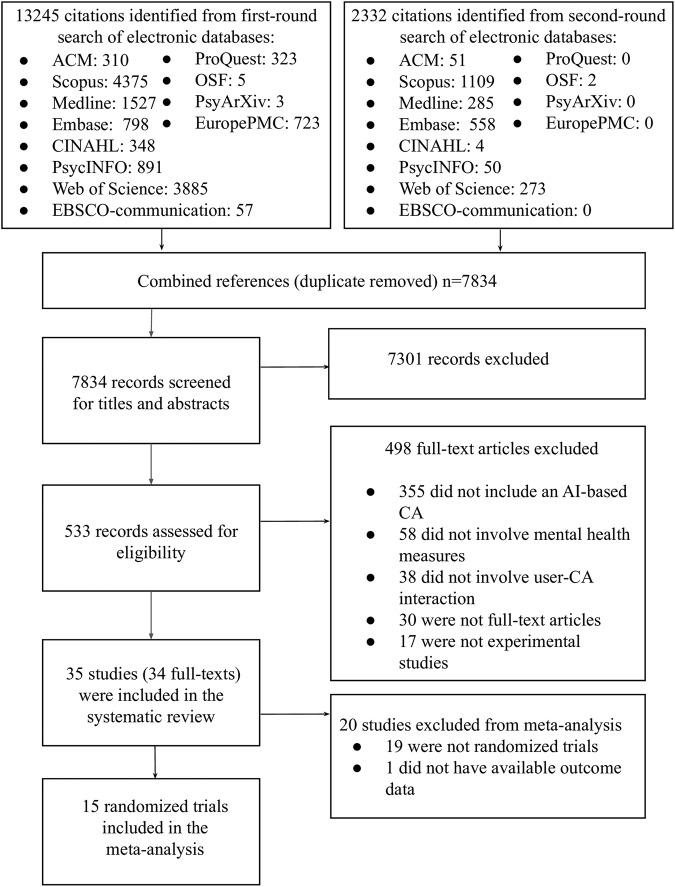
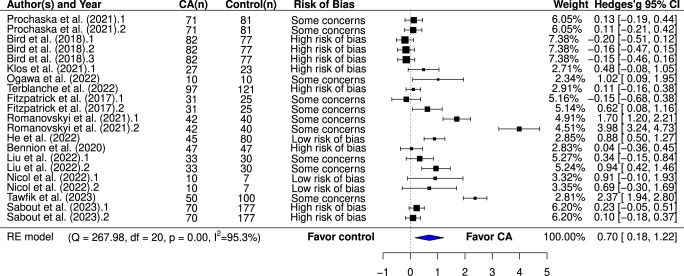
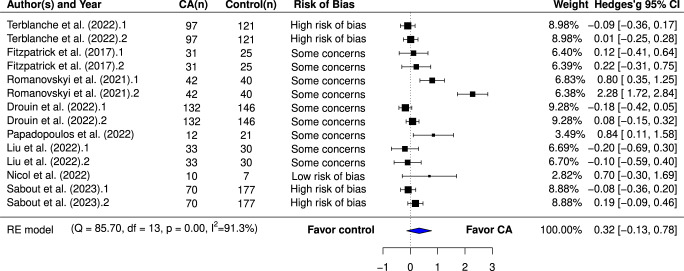
Conversational artificial intelligence (AI), particularly AI-based conversational agents (CAs), is gaining traction in mental health care. Despite their growing usage, there is a scarcity of comprehensive evaluations of their impact on mental health and well-being. This systematic review and meta-analysis aims to fill this gap by synthesizing evidence on the effectiveness of AI-based CAs in improving mental health and factors influencing their effectiveness and user experience. Twelve databases were searched for experimental studies of AI-based CAs’ effects on mental illnesses and psychological well-being published before May 26, 2023. Out of 7834 records, 35 eligible studies were identified for systematic review, out of which 15 randomized controlled trials were included for meta-analysis. The meta-analysis revealed that AI-based CAs significantly reduce symptoms of depression (Hedge’s g 0.64 [95% CI 0.17–1.12]) and distress (Hedge’s g 0.7 [95% CI 0.18–1.22]). These effects were more pronounced in CAs that are multimodal, generative AI-based, integrated with mobile/instant messaging apps, and targeting clinical/subclinical and elderly populations. However, CA-based interventions showed no significant improvement in overall psychological well-being (Hedge’s g 0.32 [95% CI –0.13 to 0.78]). User experience with AI-based CAs was largely shaped by the quality of human-AI therapeutic relationships, content engagement, and effective communication. These findings underscore the potential of AI-based CAs in addressing mental health issues. Future research should investigate the underlying mechanisms of their effectiveness, assess long-term effects across various mental health outcomes, and evaluate the safe integration of large language models (LLMs) in mental health care.
Overview
The claims and statistics of this paper haven’t been checked yet.
Free: it reads the open-access text and checks the first 5 claims that cite a source we can check. Create a free account to check every claim.
Integrity signals
Registry
Cites
Statistics
Figures
Verification
Claims the paper makes
The claims and statistics of this paper haven’t been checked yet.
Free: it reads the open-access text and checks the first 5 claims that cite a source we can check. Create a free account to check every claim.
Claims other papers make about this one
Each is checked against this paper’s own text: does it say what the citing paper says it does?
The source backs part of the claim, not all of it — or backs it for a different population, condition or comparison.
In the citing paper
“The rapid adoption of generative LLMs (e.g., GPT‐4) reflects broader AI trends, but introduces unique risks in mental health contexts 185 .”
From Charting the evolution of artificial intelligence mental health chatbots from rule‐based systems to large language models: a systematic review (2025) · cites this paper as [185]
Experimental — accuracy not yet measuredThe source backs part of the claim, not all of it — or backs it for a different population, condition or comparison.
In the citing paper
“Although reviews and meta-analyses of LLM-CBs for mental health exist13,14,29,30, as well as scoping reviews on the implementation of LLM-CBs in mental health31,32, their focus is narrowed to applications of LLM-CBs as clinical intervention tools.”
From A scoping review on the mental health harms of LLM-based chatbots (2026) · cites this paper as [14]
Experimental — accuracy not yet measuredThe source backs part of the claim, not all of it — or backs it for a different population, condition or comparison.
In the citing paper
“the first systematic reviews and meta-analyses demonstrate the potential of LLM-CBs as clinical tools for mental health13,14.”
From A scoping review on the mental health harms of LLM-based chatbots (2026) · cites this paper as [14]
Experimental — accuracy not yet measuredThe source backs part of the claim, not all of it — or backs it for a different population, condition or comparison.
In the citing paper
“LLM-CBs find increasing use as mental health support tools, both for the general public8–12 and for patients in clinical interventions13,14.”
From A scoping review on the mental health harms of LLM-based chatbots (2026) · cites this paper as [14]
Experimental — accuracy not yet measuredThe source backs part of the claim, not all of it — or backs it for a different population, condition or comparison.
In the citing paper
“A recent meta-analysis shows that GenAI chatbots outperform rule-based and retrieval-based chatbots in reducing depressive symptoms [13].”
From Generative AI Mental Health Chatbots as Therapeutic Tools: Systematic Review and Meta-Analysis of Their Role in Reducing Mental Health Issues (2025) · cites this paper as [13]
Experimental — accuracy not yet measured
6 more claims about this paper
Create a free account to see every claim other papers make about this one.
Self-check
Percentages, sums and reported differences re-computed from the paper’s own numbers.
The self-check needs the paper’s full text.
Citations
Cites
The Cochrane Collaboration's tool for assessing risk of bias in randomised trials
Higgins, J. P. T., Altman, D. G., Gotzsche, P. C., Juni, P., Moher, D., Oxman, A. D., Savovic, J., Schulz, K. F., Weeks, L., Sterne, J. A. C., et al. (2011) · BMJ · doi:10.1136/bmj.d5928 · Cited by 33,817
Dermyshi, E., Wang, Y., Yan, C., Hong, W., Qiu, G., Gong, X., & Zhang, T. (2017) · Neonatology · doi:10.1159/000454668 · Cited by 24,451
GRADE: an emerging consensus on rating quality of evidence and strength of recommendations
Guyatt, G. H., Oxman, A. D., Vist, G. E., Kunz, R., Falck-Ytter, Y., Alonso-Coello, P., & Schünemann, H. J. (2008) · BMJ · doi:10.1136/bmj.39489.470347.ad · Cited by 23,305
Interrater reliability: The kappa statistic
McHugh, M. L. (2012) · Biochemia Medica · doi:10.11613/bm.2012.031 · Cited by 19,877 · cited 1×
“Inter-rater reliability, assessed using Cohen ’ s Kappa 63 , indicated near-perfect agreement for title/abstract screening (0.9) and full-text review (0.83).”
MethodInfluentialCochrane Handbook for Systematic Reviews of Interventions
(2019) · doi:10.1002/9781119536604 · Cited by 14,828
Preferred reporting items for systematic reviews and meta-analyses: The PRISMA statement
Moher, D., Liberati, A., Tetzlaff, J., & Altman, D. G. (2010) · International Journal of Surgery · doi:10.1016/j.ijsu.2010.02.007 · Cited by 12,156 · cited 1×
“The study protocol was registered in PROSPERO, CRD 42023392187, and adhered to the Preferred Reporting Items for Systematic reviews and Meta-Analyses 74 (Supplementary Table 9).”
MethodCohen, J. (1992) · Psychological Bulletin · doi:10.1037//0033-2909.112.1.155 · Cited by 8,771
Fitzpatrick, K. K., Darcy, A., & Vierhile, M. (2017) · JMIR Mental Health · doi:10.2196/mental.7785 · Cited by 2,730 · cited 4×
“…Empathic communication 17,26,28,29,37 ( n = 5) (cid:129) Non-judgmental 33,49 ( n = 2) (cid:129) Accountability (e.g., regular check-ins) 21,26 ( n = 2) (cid:129) Human-like personality 26,49 ( n = 2) (cid:129) Tailored feedback 28 ( n = 1) (cid:129) Relationship 28 ( n = 1) Content ( n =…”
BackgroundInfluentialHow important are the common factors in psychotherapy? An update
Wampold, B. E. (2015) · World Psychiatry · doi:10.1002/wps.20238 · Cited by 1,728 · cited 1×
“…were key determinants of user experience, which corresponds to previous psychotherapy research that identi fi es these common elements (e.g., therapeutic alliance, empathy, and therapist effect) as active ingredients contributing to therapeutic changes across various therapeutic frameworks 61 .”
Charlson, F., van Ommeren, M., Flaxman, A., Cornett, J., Whiteford, H., & Saxena, S. (2019) · The Lancet · doi:10.1016/s0140-6736(19)30934-1 · Cited by 1,702 · cited 1×
“We fi ne-tuned our search strategy based on previous systematic reviews 3,51,62 to locate sources related to AI-based CAs for addressing mental health problems or promoting mental well-being.”
Method
Research works printed but not linked: 2
- Romanovskyi, O., Pidbutska, N. & Knysh, A. Elomia Chatbot: The effectiveness of Artificial Intelligence in the fight for mental health. In COLINs 5th International Conference on Computational Linguistics and Intelligent Systems, 1215–1224 (2021).
- Terblanche N Molyn J De Haan E Nilsson VO Coaching at scale: Investigating the efficacy of Artificial Intelligence coaching Int. J. Evid. Based Coach. Mentor 2022 20 20 36
Cited by
Items 201–300 of 606
Who is the “Therapist” in Digital Cognitive Behavioural Therapy for Insomnia (dCBTi)?
Stanley, N., Heslop-Marshall, K., & Gardiner, A. (2025) · Nature and Science of Sleep · doi:10.2147/nss.s516276 · Cited by 4
“An empathic approach to care has been reported to reduce patients’ experiences of isolation, anxiety, pain, and depression, 19 all of which are common comorbidities of insomnia.”
Laffier, J., Rehman, A., & Westley, M. (2025) · Cyberpsychology Behavior and Social Networking · doi:10.1089/cyber.2024.0546 · Cited by 11
Self-disclosure and relational agents for mental health: a scoping review protocol
Sha, S., Loveys, K., Francis, I., Ji, E., Lyu, L., Krpan, D., Galizzi, M. M., & Taylor, M. (2025) · BMJ Open · doi:10.1136/bmjopen-2025-100613 · Cited by 4
“14 15 Research indicates that relational agents can be effective and provide valuable support for mental health Open access problems, 16 but their effectiveness varies based on several factors, such as design, patient beliefs or the specific needs of individual patients.”
Igarashi, T., Iijima, K., Nitta, K., & Chen, Y. (2024) · International Journal of Environmental Research and Public Health · doi:10.3390/ijerph21091170 · Cited by 5
“The user experience was significantly influenced by the therapeutic relationship between humans and AI, engagement with the content, and effective communication [24].”
BackgroundChatbots as Tools for Psychoeducation and Self-Help in Mental Health
Sowbarnika, A., Patra, A., Kaur, L., Suresh, S., Srivastava, S., & Chawla, D. (2025) · Advances in medical technologies and clinical practice book series · doi:10.4018/979-8-3693-3112-5.ch003 · Cited by 8
Foundation models for digital mental health: igniting the dawn
Qian, K., Zhang, H., Jing, X., Hu, B., Yamamoto, Y., & Schuller, B. W. (2025) · Medicine Plus · doi:10.1016/j.medp.2025.100085 · Cited by 8
Lim, S., Yang, Q., Meng, J., & Rains, S. A. (2025) · Behaviour and Information Technology · doi:10.1080/0144929x.2025.2567989 · Cited by 3
A Framework for Automation in Psychotherapy
Imel, Z. E., Creed, T. A., Kious, B. M., Althoff, T., Atzil–Slonim, D., & Srikumar, V. (2025) · Current Directions in Psychological Science · doi:10.1177/09637214251386047 · Cited by 7
“Utility and safety depend closely on what aspect(s) of psychotherapy are automated, but tools with very different functions and underlying technologies are difficult to distinguish when many systems are proprietary (e.g., Li et al., 2023) and carry similar descriptors (e.g., “AI-led”).”
Vanhée, L., & Scarpa, S. (2025) · Drug and Alcohol Review · doi:10.1111/dar.70057 · Cited by 4
User Experience in mHealth Research: Bibliometric Analysis of Trends and Developments (2007–2023)
Alkhwaiter, B., Aloud, M., & Almezeini, N. (2025) · JMIR mhealth and uhealth · doi:10.2196/75909 · Cited by 7
Artificial intelligence-based psychotherapy: focusing on common psychotherapeutic factors
Giotakos, O. (2025) · Frontiers in Psychiatry · doi:10.3389/fpsyt.2025.1710715 · Cited by 11
“It can detect patterns related to mental health issues, such as depression or anxiety, and is a vital component of chatbots (21, 22).”
Saraswati, K. D. H., Fajrianthi, F., & Sami’an, S. (2025) · SA Journal of Industrial Psychology · doi:10.4102/sajip.v51i0.2323 · Cited by 8
Real-World Use of a Mental Health AI Companion: Multiple Methods Study
Callahan, C. E., Tanner, L., Coe, C. M., Davis, M., Glover, J., Bernstein, E., Scranton, K., Urruty, K., Chester, M., & Kunkle, S. (2026) · JMIR Formative Research · doi:10.2196/86904 · Cited by 9
“…24/7 to provide support in a timely, accessible manner and initial research suggests that AI-based conversational agents may improve anxiety and depression symptoms [5], general AI tools are not designed using evidence-based practices or with the safety guardrails necessary for mental health use.”
Digital Mental Health Through an Intersectional Lens: A Narrative Review
Yesha, R., Orezzoli, M. C. E., Sims, K., & Landau, A. Y. (2026) · Healthcare · doi:10.3390/healthcare14020211 · Cited by 8
“The findings of this review highlight that CAs may effectively alleviate mental distress, with the most significant effects seen in research using generative AI, using multimodal or voice-https based CAs, or providing interventions with mobile applications and instant messaging platforms [33].”
User trust in AI and major tech companies in twelve countries
Cvetkovic, A., Savolainen, I., Celuch, M., Heiskari, M., Ruokosuo, E. S., Arriaga, P., Koike, M., & Oksanen, A. (2026) · Behaviour and Information Technology · doi:10.1080/0144929x.2026.2619648 · Cited by 6
“Modern AI technologies can, under certain circumstances, promote health and well-being (Li et al. 2023b; Pataranutaporn et al. 2021).”
AI-Human synergy in single-session therapy: augmenting capacity for scalable mental health support
Joseph, J., Pai, M., Asai, K., & Turek, M. (2026) · Journal of Psychology and AI · doi:10.1080/29974100.2026.2636264 · Cited by 4
Yang, H., Chang, F., Muroi, F., Liu, Z., Zhang, W., & Cai, J. (2026) · Psychotherapy and Psychosomatics · doi:10.1159/000552072 · Cited by 4
Estrada-Araoz, E. G. (2026) · Discover Public Health · doi:10.1186/s12982-026-02266-6 · Cited by 4
“Among these technologies are conversational agents and therapeutic chatbots capable of sustaining automated dialogues and providing coping strategies, emotional support, or psycho-educational content in response to experiences of stress, anxiety, or psychological distress [1–3].”
Agentic AI: A Perspective on Architecture, Frameworks and Applications
Raghavendra, P., & Saikia, M. J. (2026) · AI · doi:10.3390/ai7060219 · Cited by 6
Digital Psychiatry: Opportunities, Challenges, and Future Directions
Sidani, L., Nadar, S. M., Tfaili, J., Rayes, S. E., Sharara, F., Elhage, J. C., & Fakhoury, M. (2024) · Journal of Psychiatric Practice · doi:10.1097/pra.0000000000000819 · Cited by 7
“4,83,84 Prevention can involve tackling risk factors, increasing knowledge of early signs and symptoms, and implementing preventive measures along with frequent follow-ups.”
AI-based treatment of psychological conditions: the potential use, benefits and drawbacks
Baber, M., & Baker, B. (2025) · Exploration of Digital Health Technologies · doi:10.37349/edht.2025.101143 · Cited by 4
AI-Powered Virtual Therapy: Toward a Responsible and Client-Centered Future
Luxton, D. D. (2025) · Journal of Health Service Psychology · doi:10.1007/s42843-025-00136-4 · Cited by 8
“A meta-analysis by Li et al. (2023), which included 15 randomized controlled trials, found that AI-based CAs significantly reduced symptoms of depression and distress.”
The Promise and Peril of Mental Health Apps
Kushlev, K., Moon, K., Harris, M., & Falgoust, G. (2025) · Policy Insights from the Behavioral and Brain Sciences · doi:10.1177/23727322251405255 · Cited by 3
“The review further concluded that these effects are stronger when the AI conversation agent is integrated into a mobile app (Li et al., 2023).”
Cripping AI: Reimagining AI Through Lived Disability Experiences
Tang, X., Lin, T.-A., Li, J., & Wu, S. (2026) · Proceedings of the 2026 ACM Conference on Fairness, Accountability, and Transparency · doi:10.1145/3805689.3806744 · Cited by 2
Pompedda, F., Santtila, P. O., Maso, E. D., Nyman, T. J., Sun, Y., & Zappalà, A. (2025) · Journal of Psychology and AI · doi:10.1080/29974100.2025.2503343 · Cited by 7
Ahire, S., Guyre, M., Rey, B., Lee, M., & Candello, H. C. D. S. P. (2025) · ACM Conference on Conversational User Interfaces (CUI) · doi:10.1145/3719160.3728628 · Cited by 3
When can AI psychotherapy be considered comparable to human psychotherapy? Exploring the criteria
Kabrel, M. (2025) · Frontiers in Psychiatry · doi:10.3389/fpsyt.2025.1674104 · Cited by 8
Developing judgement for business: an AI-based model of independent management learning
Johnson, M. W., Maitland, E., & Sofka, W. (2025) · Journal of Business Research · doi:10.1016/j.jbusres.2025.115842 · Cited by 9
Attanasio, F., Fazio, V., Antonini, C., Lanzano, N., Obumselu, G., Prato, M., Flutti, E., Pacchioni, F., Fregna, L., Franchini, L. A. M., et al. (2025) · Journal of Psychiatric Research · doi:10.1016/j.jpsychires.2025.11.039 · Cited by 6
Towards Expert Human-Robot Interactions Using Knowledge Graphs
Wilcock, G., Jokinen, K., Thankachan, B., & Turunen, M. (2025) · Lecture notes in computer science · doi:10.1007/978-981-95-2379-5_41 · Cited by 1
Li, Y. L. (2025) · Scientific Reports · doi:10.1038/s41598-025-28529-x · Cited by 4
Investigating the use of AI in psychological counseling: systematic review
Li, B., Paracha, S., Limniou, M., & Zhang, X. (2026) · Mental Health and Digital Technologies · doi:10.1108/mhdt-04-2025-0027 · Cited by 8
Neuropsychiatric Treatment in Functional Neurological Disorder: Foundations and Future
Gonsalvez, I., Lane, C. E., & Baslet, G. C. (2026) · Seminars in Neurology · doi:10.1055/a-2786-3694 · Cited by 3
Large Language Model–Based Agents for Physical Activity and Cognitive Training: Scoping Review
Silacci, A., Giachetti, B., Angelini, L., Lopomo, N. F., Andreoni, G., Mugellini, E., Cherubini, M., & Caon, M. (2026) · JMIR AI · doi:10.2196/80123 · Cited by 2
“Conversational agents (CAs) have been increasingly integrated into digital health interventions, offering scalable and personalized support for health-related behavioral change [1].”
Yoshida, I. (2026) · JMIR Formative Research · doi:10.2196/78717 · Cited by 2
“In addition, the use of generative AI for conversational support is gaining attention in psychological support, rehabilitation, and mHealth interventions, with increasing evidence of its effectiveness in health management and mental health [31,32].”
Friend or Therapist? A Systematic Literature Review on Chatbots and Mental Health in Young People
Hashmati, N., Skoog, T., Obaid, M., & Eriksson, T. (2026) · doi:10.1145/3780045.3780052 · Cited by 3
Meinert, E., Milne‐Ives, M., Taylor, E., Inkster, B., Paik, A., Ananthakrishnan, A., Orr, M., Costelloe, C., & Shankar, R. (2026) · International Journal of Social Psychiatry · doi:10.1177/00207640251415507 · Cited by 3
“Regarding the effectiveness of CAs specifically, a recent meta-analysis found a significant effect of CAs (compared to controls) on symptoms of depression (Hedges’ g = 0.64) (Li et al., 2023).”
InfluentialZhang, Q., Xiong, Y., Sui, Y., Tong, C., & Zhang, R. (2026) · Adolescent Research Review · doi:10.1007/s40894-026-00284-8 · Cited by 4
“The finding about effective reduction in distress and inef - fective improvement in psychosocial well-being outcomes aligns with previous literature (Li et al., 2023).”
Self-citationThe AI Integration Matrix: a Framework for Responsible Artificial Intelligence in Mental Health
Schneider, E. M., & Ayearst, L. E. (2026) · Journal of Technology in Behavioral Science · doi:10.1007/s41347-026-00608-4 · Cited by 2
Xiang, B., Yan, Z., Wei, H., & Shi, J. (2026) · Expert Systems with Applications · doi:10.1016/j.eswa.2026.132026 · Cited by 3
Mitsea, E., Drigas, A. S., & Skianis, C. A. (2026) · Healthcare · doi:10.3390/healthcare14060783 · Cited by 4
“Existing research often emphasizes clinical outcomes such as symptom reduction or diagnostic precision, rather than the cultivation of long-term well-being [32,33].”
Mlakar, I., Šafran, V., Plohl, N., Kumperščak, H. G., Močnik, S., Smogavc, Ž., & Smrke, U. (2026) · PLOS Digital Health · doi:10.1371/journal.pdig.0001069 · Cited by 4
“Conversational agents significantly reduce symptoms of depression and distress in youth populations [19–22], while social robots have been found to create “safe spaces” for emotional sharing among children with anxiety [23].”
AI ‐Enabled Consumer Services and Subjective Well‐Being
Pak, T. (2026) · International Journal of Consumer Studies · doi:10.1111/ijcs.70212 · Cited by 3
Ma, L., Wang, Y., & Wang, Y. (2026) · Health Communication · doi:10.1080/10410236.2026.2660147 · Cited by 4
Reconceptualizing cognitive-behavioral processes in youth anxiety in the digital age
Skjerdingstad, N., & Leigh, E. (2026) · Nature Mental Health · doi:10.1038/s44220-026-00633-5 · Cited by 3
“With the rise of artificial intelligence (AI), the distinction between human-to-human and computer-to-human interactions is narrowing 92 , as illustrated by emerging applications of conversational AI in mental health support 93 .”
Han, G. I., Lee, H. J., & Son, Y.-J. (2026) · Digital Health · doi:10.1177/20552076261450385 · Cited by 3
“36 The most consistent finding across the included studies was that NLP-based chatbots improved cognitive outcomes, such as disease-specific knowledge and health literacy.”
Conversational AI and Personal Growth: Insights from a Critical Integrative Review
Sharma, S., Vohra, P., & Vowels, L. M. (2026) · Behavioral Sciences · doi:10.3390/bs16050756 · Cited by 3
“Similarly, therapeutically driven personalisation increases adherence (Li et al., 2023), whereas engagement-optimised personalisation produces dependency loops that prioritise emotional reliance over development (Fang et al., 2025).”
Wang, Q., Ma, S., Sun, J., Qi, X., Zhao, J., Ma, D., Liu, X., An, Q., Zhao, D., & He, S. (2026) · Frontiers in Public Health · doi:10.3389/fpubh.2026.1859078 · Cited by 7
“This, combined with patient demand for immediacy, privacy, and personalized support, creates potential opportunities for LLM application in psychiatry (12, 13).”
Huang, T., Li, S., Wang, Y., & Liu, W. (2026) · Journal of Medical Internet Research · doi:10.2196/88697 · Cited by 4
“A meta-analysis by Li et al [15] found that AI-based conversational agents significantly reduced depressive symptoms and further suggested that user experience depends on factors such as therapeutic alliance with AI, content engagement, and communication quality.”
Zhao, Y., Guo, R., Miao, Y., Luo, Y., Wang, H., & Wu, Y. X. (2026) · Journal of Medical Internet Research · doi:10.2196/89190 · Cited by 2
Li, Q., Geng, H., Hu, X., Pan, D., Liu, H., Li, Y., & Guo, J. (2026) · Frontiers in Artificial Intelligence · doi:10.3389/frai.2026.1810097 · Cited by 4
A clinically validated framework for auditing AI chatbot behavior in mental health interactions
Weilnhammer, V. A., Hou, K. Y., Luettgau, L., Summerfield, C., Dolan, R. J., & Nour, M. M. (2026) · Nature Medicine · doi:10.1038/s41591-026-04577-2 · Cited by 38
Demystifying the Ethical Framework for Generative AI in Healthcare: A Data Science Perspective
Vani Lakshmi, R., Clare, R. S., & Kamath, A. (2024) · Lecture notes in computer science · doi:10.1007/978-3-031-67285-9_20 · Cited by 4
Towards Metaclinical Medicine ― The Non-Human Physician as Our Destiny ―
Vardas, P. E., Xintarakou, A., Vardas, E. P., & Tzeis, S. E. (2024) · Circulation Journal · doi:10.1253/circj.cj-24-0760 · Cited by 2
Leveraging Large Language Models in Healthcare: From Speech Documentation to Conversational Agents
Winkler, C. (2026) · Springer eBooks · doi:10.1007/978-3-032-16837-5_16 · Cited by 2
Human-at-the-Helm: Redefining the role of artificial intelligence in student support
Rhodes, J. E. (2026) · Applied Developmental Science · doi:10.1080/10888691.2026.2683481 · Cited by 3
Hang, Y., Wu, W., Feng, Y., Yan, K., Liu, Y., Xiao, X., & Qiao, Z. (2025) · doi:10.2196/preprints.72249 · Cited by 2
Kelly, A., Bhardwaj, N., Holmberg, T. T., van de Ven, P. W. J., Melia, R., Williams, J. E., Mathiasen, K., & Nielsen, A. S. (2025) · doi:10.2196/preprints.79658 · Cited by 2
Navigating the Intersection of Technology and Depression Precision Medicine
Irmak-Yazicioglu, M. B., & Arslan, A. (2024) · Advances in experimental medicine and biology · doi:10.1007/978-981-97-4402-2_20 · Cited by 1
Okado, Y., Nye, B. D., Aguirre, A., & Swartout, W. (2025) · International Journal of Artificial Intelligence in Education · doi:10.1007/s40593-025-00482-w · Cited by 1
“As generative AI becomes increasingly reliable for generating tailored or interactive responses (e.g., retrieval-augmented generation), virtual agents will increasingly rely on these capabilities (Li et al., 2023).”
Xie, Y., Fadahunsi, K. P., Broughan, J., O’Donoghue, J., Gallagher, J., & Cullen, W. (2025) · PLoS ONE · doi:10.1371/journal.pone.0321426 · Cited by 5
“AI-CAs have proven effective in easing psychological distress and promoting well-being, making mental health support more accessible and widely scalable [17,20,23].”
The Role of AI in Children's Mental Health and Well-Being Empowerment
Ioannidou, L. M., Argyriadi, A., & Argyriadis, A. (2025) · Advances in computational intelligence and robotics book series · doi:10.4018/979-8-3373-5072-1.ch002 · Cited by 4
Dong, W., Wang, W., Han, X., Huang, J., Li, L., & Huang, Y. (2025) · Computers in Biology and Medicine · doi:10.1016/j.compbiomed.2025.110789 · Cited by 5
Web Content and Anxiety in Today’s Society
Mustač, F., Škarić, M., Bošković, M. L., Papić, K., Horvat, T., Matovinović, M., & Marčinko, D. (2025) · International Conference on Smart and Sustainable Technologies (SpliTech) · doi:10.23919/splitech65624.2025.11091688 · Cited by 1
“A recent meta-analysis reviewing AI-based conversational agents for mental health interventions found that while the chat bots helped mitigate specific symptoms of anxiety and depression, they had little impact on overall psychological well-being (Hedge’s g 0.32 [95% CI -0.13 to 0.78]) [9].”
InfluentialLim, D., Lee, K., Jo, J., Lim, H., Bae, H., & Kang, C. (2025) · Applied Sciences · doi:10.3390/app151810170 · Cited by 2
Zhou, C., Kraus, M., Nasir, J., Mahesh, B., & André, E. (2025) · ACM International Conference on Intelligent Virtual Agents (IVA) · doi:10.1145/3742886.3756744 · Cited by 2
Fulmer, R., Li, N., & Liu, S. (2025) · Springer eBooks · doi:10.1007/978-3-031-97999-6_7 · Cited by 2
Digital Mental Health Treatments for Depression
Ramos, G., Karyotaki, E., Mohr, D. C., & Schueller, S. M. (2025) · Psychiatric Clinics of North America · doi:10.1016/j.psc.2025.08.023 · Cited by 1
Self-citationAI in Workplace Wellness Programs
Majumder, S., & Dey, N. (2025) · Studies in computational intelligence · doi:10.1007/978-3-032-15735-5_4 · Cited by 3
Emotional Dependence in Long-Term Use of Large Language Models
Ramello, S. (2025) · Digital Society · doi:10.1007/s44206-025-00242-2 · Cited by 3
“This imbalance is structural, since the very architecture that promises equal access to support generates unequal consequences, dividing populations into those who can extract temporary benefit and those whose distress is deepened by exposure (Li et al., 2023).”
Li, L., Huang, X., Ma, R., Zhang, B. Z., Wu, H., Yang, F., & Chen, C. (2026) · International World Wide Web Conference (WWW) · doi:10.1145/3774904.3793025 · Cited by 7
Yıldız, E., & Yıldız, E. (2026) · Journal of Affective Disorders · doi:10.1016/j.jad.2026.121190 · Cited by 1
Xiang, L., Jin, Q., & Kikuchi, H. (2025) · IEEE Intl Conf on Dependable, Autonomic and Secure Computing, Intl Conf on Pervasive Intelligence and Computing, Intl Conf on Cloud and Big Data Computing, Intl Conf on Cyber Science and Technology Congress (DASC/PiCom/CBDCom/CyberSciTech) · doi:10.1109/cyberscitech68397.2025.00102 · Cited by 1
“In digital health, several studies examine the potential of agents to provide emotional support during long-term interaction [1,5,14].”
Schloemer, H., & Deeg, M. D. (2026) · Journal of College Student Retention Research Theory & Practice · doi:10.1177/15210251251408352 · Cited by 2
AI Chatbots in Mental Health Support: Are They Effective
Mohammed, O., Alan, U., & Banjoko, B. (2025) · Proceedings of London International Conferences · doi:10.31039/plic.2025.14.337 · Cited by 1
Wang, L., & Jiang, Y. (2026) · JMIR AI · doi:10.2196/70017 · Cited by 1
“Reviews of genAI applications in mental health provided preliminary evidence on their capabilities in providing psychoeducation, coaching, and providing responses with empathy and accuracy [18,19].”
The Imitation of Intimacy: Comparing Satisfaction in Intimate Human and AI Companion Relationships
Masterson, A. M., Ye, X., Li, Y., & Robert, L. (2026) · ACM/IEEE International Conference on Human-Robot Interaction (HRI) · doi:10.1145/3776734.3794515 · Cited by 1
Ebrahimi, M., Sahay, R., Akram, B., & Hosseinalipour, S. (2026) · Frontiers in Psychiatry · doi:10.3389/fpsyt.2026.1792429 · Cited by 1
“(Use Case 6) AI Companions: AI companions represent a new horizon for psychiatric care (66), offering supportive, personalized, and continuous engagement.”
Immersive futures in healthcare: A mapping review of review articles on the metaverse
Rikala, J., Ylönen, M., Solberg, M., Sellberg, C., Heilala, V., Antikainen, T., Munoz, M., Kärkkäinen, T., & Hämäläinen, R. (2026) · Digital Health · doi:10.1177/20552076261431602 · Cited by 1
“35 Thus, while intelligent technologies have immense potential to revolutionize healthcare through personalized medicine, operational ef fi ciency, and accelerated medical research, many applications remain at the proof-of-concept stage.”
Villarreal‐Zegarra, D., Paredes-Gonzales, Y., Dámaso-Román, A., Quiñones-Inga, J., Centeno-Terrazas, G., & Lozada, Y. P. A.-M. (2026) · PLoS ONE · doi:10.1371/journal.pone.0344939 · Cited by 4
“A meta-analysis of 15 randomized controlled trials showed that these systems achieve reductions in depressive symptoms and psychological distress, with moderate pooled effect sizes between 0.6 and 0.7 [1].”
InfluentialÇelik, Y. S., Özer, N., Öksüzoğlu, M. E., Macit, Ş. S., Okumuş, H. G., Kaşak, M., Efe, A., & Öztürk, Y. (2026) · Psychiatric Quarterly · doi:10.1007/s11126-026-10275-6 · Cited by 2
Mikhaylov, A. Y., Ikramov, M. A., Nabieva, N. M., Sokolov, B., Zhang, W., Nazarov, V., Ergasheva, M., Turaev, S., Meilyeva, D., Dinets, D., et al. (2026) · Sound&Vibration · doi:10.59400/sv3941 · Cited by 1
“Tool: The Facial Action Coding System (FACS) was used to capture the subconscious judgments of experts [20–22].”
Tulbure, B. T., Spătaru, B., Rusu, A., Faur, D., Precupaș, D., Trancă, L. M., Popa, S. N., & Spătaru, A. (2026) · JMIR Formative Research · doi:10.2196/84296 · Cited by 3
“Early therapy chatbots were typically rule-based or scripted (eg, Woebot and Wysa) and demonstrated the capacity to deliver highly personalized user experiences [12], holding small but significant reductions in anxiety and depressive symptoms [13,14].”
Azeem, O., Sulaiman, F., & Dong, Z. H. (2026) · Computers in Human Behavior Artificial Humans · doi:10.1016/j.chbah.2026.100296 · Cited by 1
Pareek, S., & Jain, G. (2026) · Journal of College Student Mental Health · doi:10.1080/28367138.2026.2653092 · Cited by 1
Shimgekar, S. R., Rodriguez, V. J., Bloom, P. A., Yoo, D. W., & Saha, K. (2026) · JMIR AI · doi:10.2196/86265 · Cited by 9
Rădulescu, C. Z., Rădulescu, M., & Mihăilescu, A. I. (2026) · Future Internet · doi:10.3390/fi18040191 · Cited by 1
Xu, Z., Lee, Y., Stasiak, K., Warren, J., & Lottridge, D. M. (2026) · CHI Conference on Human Factors in Computing Systems · doi:10.1145/3772318.3791614 · Cited by 3
Self-citationChawla, D. K., Zheng, Y., Larson, S., Lat, H., Key, S., & Perkins, K. (2026) · CHI Conference Extended Abstracts on Human Factors in Computing Systems (CHI EA) · doi:10.1145/3772363.3798996 · Cited by 1
"Words are not enough": Examining Emotional Support by Conversational AI for Caregivers
Vafafar, M., Joel-Edgar, S., Harteveld, C., Dabbagh, H., Martin, A. K., & Ang, C. S. (2026) · CHI Conference on Human Factors in Computing Systems · doi:10.1145/3772318.3790647 · Cited by 4
When AI support shapes affect in L2 writing: Task-specific emotions across genre-based writing tasks
Jiang, Z., Huang, Z., & Yang, N. (2026) · System · doi:10.1016/j.system.2026.104041 · Cited by 3
Kaňková, J., Vranken, S., Matthes, J., Lazić, A., Hodzic, S., Seki, M., Kawano, Y., 伊藤, 晃., Sakagami, Y., & Iwakuma, M. (2026) · SSM - Mental Health · doi:10.1016/j.ssmmh.2026.100630 · Cited by 2
Personality, identity, and Artificial Intelligence: a grand challenge
Matthews, G., & Bliuc, A. (2026) · Frontiers in Psychology · doi:10.3389/fpsyg.2026.1817687 · Cited by 4
Responsible artificial intelligence integration framework for psychiatric guidelines
Mendlovic, S., Frankova, I., Vermetten, E. H. G. J. M., Wasserman, D., Schulze, T. G., Falkai, P., Fountoulakis, K. Ν., Adorjan, K., Uchida, H., Fruchter, E., et al. (2026) · The International Journal of Neuropsychopharmacology · doi:10.1093/ijnp/pyag010 · Cited by 4
“Multiple initiatives (algorithmic prediction models, 27 digital triage tools, 5 autonomous conversational agents 28 operate under different assumptions and standards.”
A scoping review on conversational AI in mental health: A human-centered perspective
Li, J., Li, H., Zhu, H., Walter, H., Banaschewski, T., Li, C., Li, X., & Zhang, Y. (2026) · International Journal of Medical Informatics · doi:10.1016/j.ijmedinf.2026.106460 · Cited by 5
Self-citationHigh-Risk Human–AI Engagement: Clinical Assessment and Management Considerations
Palaniyappan, L. K., Paquin, V., & Barou-Laforie, E. (2026) · The Canadian Journal of Psychiatry · doi:10.1177/07067437261445770 · Cited by 1
Xu, Z., Warren, J., & Lottridge, D. M. (2025) · International Conference on Human-Engaged Computing (ICHEC) · doi:10.1145/3786995.3787059 · Cited by 1
Li, M. (2026) · International Journal of Human-Computer Interaction · doi:10.1080/10447318.2026.2669037 · Cited by 2
Song, X., & Jang, J. (2026) · Behavioral Sciences · doi:10.3390/bs16050830 · Cited by 2
“In light of increasing digital technologies in the last few decades, the introduction of AI-based conversational agents (H. Li et al., 2023) and various e-mental health interventions (Phillips et al., 2019) is being regarded as a potential remedy for enhancing service accessibility.”
Sun, Y., Ma, H., Zhong, W., Peng, Y., Fan, X., Liang, Y., Zeng, F., Zhao, H., Yin, X., Xue, M., et al. (2026) · BMC Geriatrics · doi:10.1186/s12877-026-07666-6 · Cited by 1
“Sample size calculation was based on prior pre-exper-imental data and relevant literature [12], assuming a moderate intervention effect on the primary outcome (difference in PSS scores between groups; Cohen’s d = 0.64).”
Influential
Metadata
- Authors
- Li, H., Zhang, R., Lee, Y.-C., Kraut, R. E., & Mohr, D. C.
- Affiliations
- National University of Singapore (SG)
- Carnegie Mellon University (US)
- Northwestern University (US)
- Corresponding author
- Zhang, Renwen
- Venue
- npj Digital Medicine
- Published
- 2023-12-19
- Volume
- 6
- Issue
- 1
- Pages
- 236-236
- ISSN
- 2398-6352 (ISSN-L)
- PMC
- PMC10730549
- OpenAlex
- W4389934892
- Semantic Scholar
- 69a4cb1a3d84e924ab79848910507ee34e80150a
- Cited by
- 598
- References
- 74
- Citations by year
- 2026: 322 · 2025: 212 · 2024: 64
- FWCI
- 20.31
- Type
- journal article
- Language
- en
- Open access
- gold
- doi.org
- Licence
- cc-by
- creativecommons.org/licenses/by/4.0 (tdm)
- creativecommons.org/licenses/by/4.0 (vor)
- Locations
- npj Digital Medicine (publishedVersion, cc-by)
- PubMed Central (publishedVersion, cc-by)
- PubMed (publishedVersion)
- DOAJ (DOAJ: Directory of Open Access Journals) (submittedVersion, cc-by-sa)
- Funders
- National University of Singapore (A-8000936-01-00)
- National Institute of Mental Health (P50MH119029)
- Topics
- Social Sciences › Psychology › Applied Psychology › Digital Mental Health Interventions
- Social Sciences › Psychology › Social Psychology › Social Robot Interaction and HRI
- Health Sciences › Medicine › Health Informatics › Artificial Intelligence in Healthcare and Education
- Keywords
- chatbots, artificial intelligence, mental health, depression, psychological distress, psychological well-being, generative AI, multimodal AI, mobile health apps, older adults, large language models, user experience
About these checks
Registry, retraction, Cites and statistics results are computed, not judged, with one exception: a printed reference that no index lists is read once by a model before it counts as a citation error. Claims are extracted by a model and kept only when their quote appears verbatim in the text; each cited source is then checked, with a model’s help, for whether it says what the claim relies on. Those verdicts can be wrong — read the claim’s quote and the cited source before relying on one.
Statistics and arithmetic are recomputed, not judged.
Confidence bands are shown only for fields calibrated on our annotated test set. None is calibrated yet, so no band is shown.
What counts as a claim ›How we measure confidence ›How we check this ›
Are you an author, or do you see a problem with this page? Request a review
Data sources
Bibliographic data: Semantic Scholar, OpenAlex, Crossref.
Contains information from the Semantic Scholar Academic Graph Datasets, made available under the ODC Attribution License (ODC-BY 1.0).
Semantic Scholar’s data is described in: Kinney, R., et al. (2023). The Semantic Scholar Open Data Platform. arXiv:2301.10140.
