

Systematic review and meta-analysis of AI-based conversational agents for promoting mental health and well-being
Open accessThe DOI matches its Crossref record; 73 of the 74 references it cites were found in a registry or an index.
Abstract
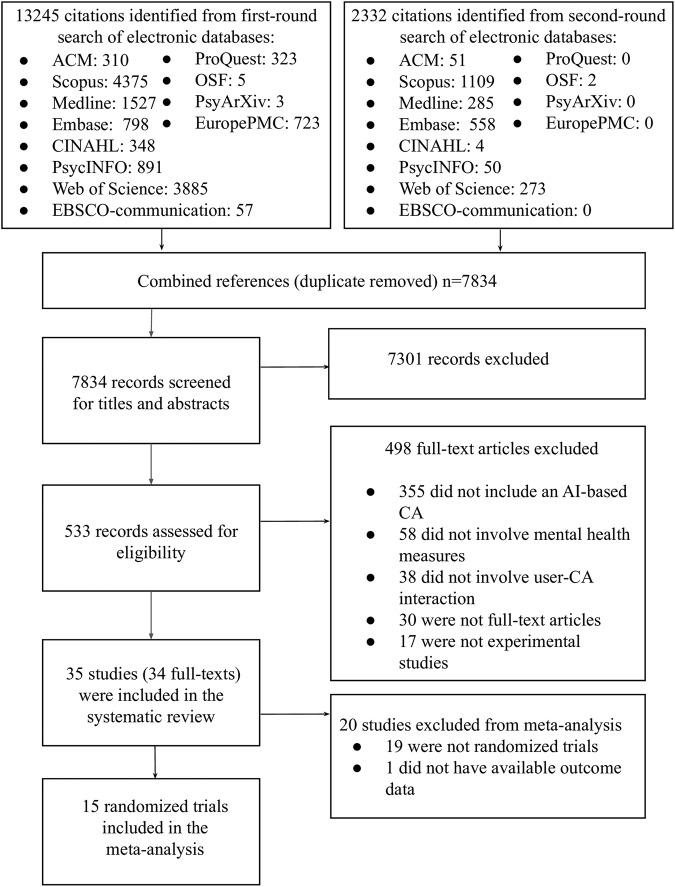
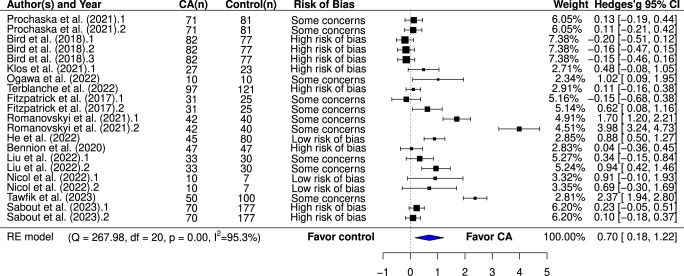
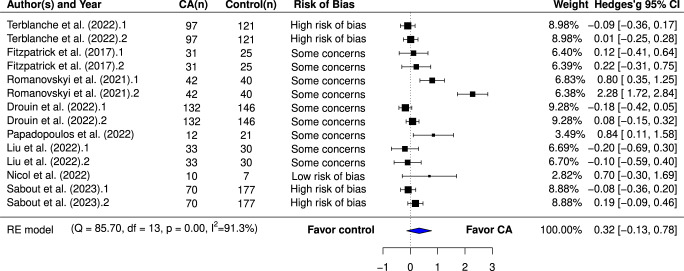
Conversational artificial intelligence (AI), particularly AI-based conversational agents (CAs), is gaining traction in mental health care. Despite their growing usage, there is a scarcity of comprehensive evaluations of their impact on mental health and well-being. This systematic review and meta-analysis aims to fill this gap by synthesizing evidence on the effectiveness of AI-based CAs in improving mental health and factors influencing their effectiveness and user experience. Twelve databases were searched for experimental studies of AI-based CAs’ effects on mental illnesses and psychological well-being published before May 26, 2023. Out of 7834 records, 35 eligible studies were identified for systematic review, out of which 15 randomized controlled trials were included for meta-analysis. The meta-analysis revealed that AI-based CAs significantly reduce symptoms of depression (Hedge’s g 0.64 [95% CI 0.17–1.12]) and distress (Hedge’s g 0.7 [95% CI 0.18–1.22]). These effects were more pronounced in CAs that are multimodal, generative AI-based, integrated with mobile/instant messaging apps, and targeting clinical/subclinical and elderly populations. However, CA-based interventions showed no significant improvement in overall psychological well-being (Hedge’s g 0.32 [95% CI –0.13 to 0.78]). User experience with AI-based CAs was largely shaped by the quality of human-AI therapeutic relationships, content engagement, and effective communication. These findings underscore the potential of AI-based CAs in addressing mental health issues. Future research should investigate the underlying mechanisms of their effectiveness, assess long-term effects across various mental health outcomes, and evaluate the safe integration of large language models (LLMs) in mental health care.
Overview
The claims and statistics of this paper haven’t been checked yet.
Free: it reads the open-access text and checks the first 5 claims that cite a source we can check. Create a free account to check every claim.
Integrity signals
Registry
Cites
Statistics
Figures
Verification
Claims the paper makes
The claims and statistics of this paper haven’t been checked yet.
Free: it reads the open-access text and checks the first 5 claims that cite a source we can check. Create a free account to check every claim.
Claims other papers make about this one
Each is checked against this paper’s own text: does it say what the citing paper says it does?
The source backs part of the claim, not all of it — or backs it for a different population, condition or comparison.
In the citing paper
“The rapid adoption of generative LLMs (e.g., GPT‐4) reflects broader AI trends, but introduces unique risks in mental health contexts 185 .”
From Charting the evolution of artificial intelligence mental health chatbots from rule‐based systems to large language models: a systematic review (2025) · cites this paper as [185]
Experimental — accuracy not yet measuredThe source backs part of the claim, not all of it — or backs it for a different population, condition or comparison.
In the citing paper
“Although reviews and meta-analyses of LLM-CBs for mental health exist13,14,29,30, as well as scoping reviews on the implementation of LLM-CBs in mental health31,32, their focus is narrowed to applications of LLM-CBs as clinical intervention tools.”
From A scoping review on the mental health harms of LLM-based chatbots (2026) · cites this paper as [14]
Experimental — accuracy not yet measuredThe source backs part of the claim, not all of it — or backs it for a different population, condition or comparison.
In the citing paper
“the first systematic reviews and meta-analyses demonstrate the potential of LLM-CBs as clinical tools for mental health13,14.”
From A scoping review on the mental health harms of LLM-based chatbots (2026) · cites this paper as [14]
Experimental — accuracy not yet measuredThe source backs part of the claim, not all of it — or backs it for a different population, condition or comparison.
In the citing paper
“LLM-CBs find increasing use as mental health support tools, both for the general public8–12 and for patients in clinical interventions13,14.”
From A scoping review on the mental health harms of LLM-based chatbots (2026) · cites this paper as [14]
Experimental — accuracy not yet measuredThe source backs part of the claim, not all of it — or backs it for a different population, condition or comparison.
In the citing paper
“A recent meta-analysis shows that GenAI chatbots outperform rule-based and retrieval-based chatbots in reducing depressive symptoms [13].”
From Generative AI Mental Health Chatbots as Therapeutic Tools: Systematic Review and Meta-Analysis of Their Role in Reducing Mental Health Issues (2025) · cites this paper as [13]
Experimental — accuracy not yet measured
6 more claims about this paper
Create a free account to see every claim other papers make about this one.
Self-check
Percentages, sums and reported differences re-computed from the paper’s own numbers.
The self-check needs the paper’s full text.
Citations
Cites
The Cochrane Collaboration's tool for assessing risk of bias in randomised trials
Higgins, J. P. T., Altman, D. G., Gotzsche, P. C., Juni, P., Moher, D., Oxman, A. D., Savovic, J., Schulz, K. F., Weeks, L., Sterne, J. A. C., et al. (2011) · BMJ · doi:10.1136/bmj.d5928 · Cited by 33,817
Dermyshi, E., Wang, Y., Yan, C., Hong, W., Qiu, G., Gong, X., & Zhang, T. (2017) · Neonatology · doi:10.1159/000454668 · Cited by 24,451
GRADE: an emerging consensus on rating quality of evidence and strength of recommendations
Guyatt, G. H., Oxman, A. D., Vist, G. E., Kunz, R., Falck-Ytter, Y., Alonso-Coello, P., & Schünemann, H. J. (2008) · BMJ · doi:10.1136/bmj.39489.470347.ad · Cited by 23,305
Interrater reliability: The kappa statistic
McHugh, M. L. (2012) · Biochemia Medica · doi:10.11613/bm.2012.031 · Cited by 19,877 · cited 1×
“Inter-rater reliability, assessed using Cohen ’ s Kappa 63 , indicated near-perfect agreement for title/abstract screening (0.9) and full-text review (0.83).”
MethodInfluentialCochrane Handbook for Systematic Reviews of Interventions
(2019) · doi:10.1002/9781119536604 · Cited by 14,828
Preferred reporting items for systematic reviews and meta-analyses: The PRISMA statement
Moher, D., Liberati, A., Tetzlaff, J., & Altman, D. G. (2010) · International Journal of Surgery · doi:10.1016/j.ijsu.2010.02.007 · Cited by 12,156 · cited 1×
“The study protocol was registered in PROSPERO, CRD 42023392187, and adhered to the Preferred Reporting Items for Systematic reviews and Meta-Analyses 74 (Supplementary Table 9).”
MethodCohen, J. (1992) · Psychological Bulletin · doi:10.1037//0033-2909.112.1.155 · Cited by 8,771
Fitzpatrick, K. K., Darcy, A., & Vierhile, M. (2017) · JMIR Mental Health · doi:10.2196/mental.7785 · Cited by 2,730 · cited 4×
“…Empathic communication 17,26,28,29,37 ( n = 5) (cid:129) Non-judgmental 33,49 ( n = 2) (cid:129) Accountability (e.g., regular check-ins) 21,26 ( n = 2) (cid:129) Human-like personality 26,49 ( n = 2) (cid:129) Tailored feedback 28 ( n = 1) (cid:129) Relationship 28 ( n = 1) Content ( n =…”
BackgroundInfluentialHow important are the common factors in psychotherapy? An update
Wampold, B. E. (2015) · World Psychiatry · doi:10.1002/wps.20238 · Cited by 1,728 · cited 1×
“…were key determinants of user experience, which corresponds to previous psychotherapy research that identi fi es these common elements (e.g., therapeutic alliance, empathy, and therapist effect) as active ingredients contributing to therapeutic changes across various therapeutic frameworks 61 .”
Charlson, F., van Ommeren, M., Flaxman, A., Cornett, J., Whiteford, H., & Saxena, S. (2019) · The Lancet · doi:10.1016/s0140-6736(19)30934-1 · Cited by 1,702 · cited 1×
“We fi ne-tuned our search strategy based on previous systematic reviews 3,51,62 to locate sources related to AI-based CAs for addressing mental health problems or promoting mental well-being.”
MethodWhat is user engagement? A conceptual framework for defining user engagement with technology
O'Brien, H. L., & Toms, E. G. (2008) · Journal of the American Society for Information Science and Technology · doi:10.1002/asi.20801 · Cited by 1,397
Fitting three-level meta-analytic models in R: A step-by-step tutorial
Assink, M., & Wibbelink, C. J. M. (2016) · The Quantitative Methods for Psychology · doi:10.20982/tqmp.12.3.p154 · Cited by 1,330
Torous, J., Bucci, S., Bell, I. H., Kessing, L. V., Faurholt‐Jepsen, M., Whelan, P., Carvalho, A. F., Keshavan, M., Linardon, J., & Firth, J. (2021) · World Psychiatry · doi:10.1002/wps.20883 · Cited by 1,199
Firth, J., Torous, J., Nicholas, J., Carney, R., Pratap, A., Rosenbaum, S., & Sarris, J. (2017) · World Psychiatry · doi:10.1002/wps.20472 · Cited by 1,097
Inkster, B., Sarda, S., & Subramanian, V. (2018) · doi:10.2196/preprints.12106 · Cited by 1,063
An Overview of Chatbot Technology
Adamopoulou, E., & Moussiades, L. (2020) · IFIP Advances in Information and Communication Technology · doi:10.1007/978-3-030-49186-4_31 · Cited by 990 · cited 1×
“Powered by NLP, machine learning and deep learning, these AI-based CAs possess expanding capabilities to process more complex information and thus allow for more personalized, adaptive, and sophisticated responses to mental health needs 8,9 .”
MethodLinardon, J., Cuijpers, P., Carlbring, P., Messer, M., & Fuller‐Tyszkiewicz, M. (2019) · World Psychiatry · doi:10.1002/wps.20673 · Cited by 860
Fulmer, R., Joerin, A., Gentile, B., Lakerink, L., & Rauws, M. (2018) · doi:10.2196/preprints.9782 · Cited by 715
An overview of the features of chatbots in mental health: A scoping review
Abd-alrazaq, A. A., Alajlani, M., Alalwan, A. A., Bewick, B. M., Gardner, P., & Househ, M. (2019) · International Journal of Medical Informatics · doi:10.1016/j.ijmedinf.2019.103978 · Cited by 605 · cited 10×
“The detailed results of subgroup analysis are presented in Supplementary Table 6.”
BackgroundInfluentialA systematic review and meta-analysis of psychological interventions to improve mental wellbeing
van Agteren, J., Iasiello, M., Lo, L., Bartholomaeus, J., Kopsaftis, Z., Carey, M., & Kyrios, M. (2021) · Nature Human Behaviour · doi:10.1038/s41562-021-01093-w · Cited by 510 · cited 3×
“We fi ne-tuned our search strategy based on previous systematic reviews 3,51,62 to locate sources related to AI-based CAs for addressing mental health problems or promoting mental well-being.”
MethodResultAbd-Alrazaq, A. A., Rababeh, A., Alajlani, M., Bewick, B. M., & Househ, M. (2020) · Journal of Medical Internet Research · doi:10.2196/16021 · Cited by 503 · cited 4×
“A plethora of research has examined the effectiveness of CAs in in fl uencing mental health, indicating that CAs can effectively mitigate symptoms of depression, anxiety, and distress, while also fostering well-being and quality of life 3,12 – 15 .”
BackgroundMethodInfluentialViertiö, S., Kiviruusu, O., Piirtola, M., Kaprio, J., Korhonen, T., Marttunen, M., & Suvisaari, J. (2021) · BMC Public Health · doi:10.1186/s12889-021-10560-y · Cited by 438 · cited 1×
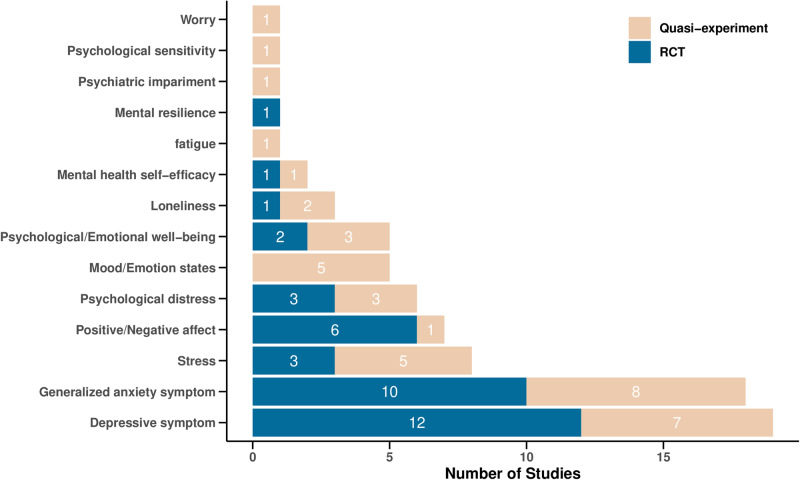
“…randomized controlled trials (RCTs) reported at least one indicator of psychological distress (i.e., distress, depression, anxiety and stress) 65 and/or psychological well-being (i.e., psychological well-being, positive and negative affect, mental resilience, mental health self-ef fi cacy),…”
BackgroundPsychotherapy for Depression Across Different Age Groups: A Systematic Review and Meta-analysis
Cuijpers, P., Karyotaki, E., Eckshtain, D., Ng, M. Y., Corteselli, K. A., Noma, H., Quero, S., & Weisz, J. R. (2020) · JAMA Psychiatry · doi:10.1001/jamapsychiatry.2020.0164 · Cited by 429 · cited 1×
“Future research is warranted, as a prior review suggests a curvilinear relationship between age and treatment effects 59 .”
"Hey Google is it OK if I eat you?": Initial Explorations in Child-Agent Interaction
Druga, S., Williams, R., Breazeal, C., & Resnick, M. (2017) · Proceedings of the 2017 Conference on Interaction Design and Children · doi:10.1145/3078072.3084330 · Cited by 330 · cited 1×
“Their integration of multiple communication modalities may enhance social presence 53 and deepen personalization, thus fostering a more human-like experience 54,55 and boost the therapeutic effects 56 .”
BackgroundLiu, H., Peng, H., Song, X., Xu, C., & Zhang, M. (2022) · Internet Interventions · doi:10.1016/j.invent.2022.100495 · Cited by 296
Use of Social Robots in Mental Health and Well-Being Research: Systematic Review
Scoglio, A. A., Reilly, E. D., Gorman, J. A., & Drebing, C. E. (2019) · Journal of Medical Internet Research · doi:10.2196/13322 · Cited by 288 · cited 2×
“A plethora of research has examined the effectiveness of CAs in in fl uencing mental health, indicating that CAs can effectively mitigate symptoms of depression, anxiety, and distress, while also fostering well-being and quality of life 3,12 – 15 .”
BackgroundMethodProchaska, J. J., Vogel, E. A., Chieng, A., Kendra, M., Baiocchi, M., Pajarito, S., & Robinson, A. (2021) · Journal of Medical Internet Research · doi:10.2196/24850 · Cited by 257 · cited 2×
“…CAs in mental health, only 15 studies incorporated safety assessment or protection measures in CAs, such as access to human experts 20,23,39 , onboarding processes 19,20,25,26,31 , assessment of adverse events 25,29,31,34 and automatic crises or harm identi fi cation 17,19,25,31,34,36,41,42,46,47 .”
BackgroundResultFrom promise to practice: towards the realisation of AI-informed mental health care
Koutsouleris, N., Hauser, T. U., Skvortsova, V., & De Choudhury, M. (2022) · The Lancet Digital Health · doi:10.1016/s2589-7500(22)00153-4 · Cited by 251 · cited 1×
“Powered by NLP, machine learning and deep learning, these AI-based CAs possess expanding capabilities to process more complex information and thus allow for more personalized, adaptive, and sophisticated responses to mental health needs 8,9 .”
Systematic review and meta-analysis of the effectiveness of chatbots on lifestyle behaviours
Singh, B., Olds, T., Brinsley, J., Dumuid, D., Virgara, R., Matricciani, L., Watson, A., Szeto, K., Eglitis, E., Miatke, A., et al. (2023) · npj Digital Medicine · doi:10.1038/s41746-023-00856-1 · Cited by 224 · cited 1×
“However, a recent study found text-based chatbots were better at promoting fruits and vegetable consumption 57 .”
BackgroundHe, Y., Yang, L., Qian, C., Li, T., Su, Z., Zhang, Q., & Hou, X. (2023) · Journal of Medical Internet Research · doi:10.2196/43862 · Cited by 213 · cited 4×
“A plethora of research has examined the effectiveness of CAs in in fl uencing mental health, indicating that CAs can effectively mitigate symptoms of depression, anxiety, and distress, while also fostering well-being and quality of life 3,12 – 15 .”
BackgroundMethodResultInfluentialDriessen, E., Cuijpers, P., Hollon, S. D., & Dekker, J. J. M. (2010) · Journal of Consulting and Clinical Psychology · doi:10.1037/a0020570 · Cited by 208
Klos, M. C., Escoredo, M., Joerin, A., Lemos, V. N., Rauws, M., & Bunge, E. L. (2021) · JMIR Formative Research · doi:10.2196/20678 · Cited by 200
He, Y., Yang, L., Zhu, X., Wu, B., Zhang, S., Qian, C., & Tian, T. (2022) · Journal of Medical Internet Research · doi:10.2196/40719 · Cited by 178 · cited 4×
“…process 17,26,29 ( n = 3) Accessibility 17,29 ( n = 2) Interaction mode 33 ( n = 1) Factors associated with negative user experience 17,21,26,28,29,33,41,46 ( n = 8) Content ( n = 4): (cid:129) Topic of content 17,28,29 ( n = 3) (cid:129) Format of content 17,46 ( n = 2) Impersonal 17,29 (…”
BackgroundMethodInfluentialLim, S. M., Shiau, C. W. C., Cheng, L. J., & Lau, Y. (2022) · Behavior Therapy · doi:10.1016/j.beth.2021.09.007 · Cited by 163 · cited 1×
“However, these reviews have largely focused on speci fi c types of CA 12 or particular types of mental disorders 13,14 .”
MethodReadiness for voice assistants to support healthcare delivery during a health crisis and pandemic
Sezgin, E., Huang, Y., Ramtekkar, U., & Lin, S. (2020) · npj Digital Medicine · doi:10.1038/s41746-020-00332-0 · Cited by 155 · cited 1×
“Their integration of multiple communication modalities may enhance social presence 53 and deepen personalization, thus fostering a more human-like experience 54,55 and boost the therapeutic effects 56 .”
BackgroundRathnayaka, P., Mills, N., Burnett, D., De Silva, D., Alahakoon, D., & Gray, R. (2022) · Sensors · doi:10.3390/s22103653 · Cited by 155 · cited 3×
“…CAs in mental health, only 15 studies incorporated safety assessment or protection measures in CAs, such as access to human experts 20,23,39 , onboarding processes 19,20,25,26,31 , assessment of adverse events 25,29,31,34 and automatic crises or harm identi fi cation 17,19,25,31,34,36,41,42,46,47 .”
BackgroundMethodThe promise of large language models in health care
Arora, A., & Arora, A. (2023) · The Lancet · doi:10.1016/s0140-6736(23)00216-7 · Cited by 153 · cited 1×
“Moreover, the rapid progress in generative AI, such as Large Language Models (LLMs), necessitates an exploration of this technology ’ s potential and pitfalls, amidst uncertainties associated with its deployment in mental health care 16 .”
BackgroundHow to Interpret Results of Meta-AnalysisPreprint
Hak, T., van Rhee, H., & Suurmond, R. (2016) · SSRN Electronic Journal · doi:10.2139/ssrn.3241367 · Cited by 124 · cited 1×
“First, fewer studies investigated psychological well-being ( n = 8) compared to psychological distress ( n = 13), which could potentially curtail the statistical power necessary to detect a signi fi cant pooled effect on well-being 52 .”
BackgroundNicol, G., Wang, R., Graham, S., Dodd, S., & Garbutt, J. (2022) · JMIR Formative Research · doi:10.2196/40242 · Cited by 123 · cited 3×
“…CAs in mental health, only 15 studies incorporated safety assessment or protection measures in CAs, such as access to human experts 20,23,39 , onboarding processes 19,20,25,26,31 , assessment of adverse events 25,29,31,34 and automatic crises or harm identi fi cation 17,19,25,31,34,36,41,42,46,47 .”
BackgroundPapadopoulos, C., Castro, N., Nigath, A., Davidson, R., Faulkes, N., Menicatti, R., Khaliq, A. A., Recchiuto, C., Battistuzzi, L., Randhawa, G., et al. (2022) · International Journal of Social Robotics · doi:10.1007/s12369-021-00781-x · Cited by 117 · cited 3×
“Most were single-site studies, with 14 conducted in the United States and only one multi-site study conducted in the UK and Japan 18 .”
BackgroundMethodProchaska, J. J., Vogel, E. A., Chieng, A., Baiocchi, M., Maglalang, D. D., Pajarito, S., Weingardt, K. R., Darcy, A., & Robinson, A. (2021) · Drug and Alcohol Dependence · doi:10.1016/j.drugalcdep.2021.108986 · Cited by 113 · cited 3×
“…CAs in mental health, only 15 studies incorporated safety assessment or protection measures in CAs, such as access to human experts 20,23,39 , onboarding processes 19,20,25,26,31 , assessment of adverse events 25,29,31,34 and automatic crises or harm identi fi cation 17,19,25,31,34,36,41,42,46,47 .”
BackgroundResultAbdollahi, H., Mollahosseini, A., Lane, J. T., & Mahoor, M. H. (2017) · 2017 IEEE-RAS 17th International Conference on Humanoid Robotics (Humanoids) · doi:10.1109/humanoids.2017.8246925 · Cited by 112 · cited 1×
“Additionally, several CAs were designed to offer social assistance, companionship, or act as a source of emotional support for users 18,22,30,38,40 – 43 .”
BackgroundBird, T., Mansell, W., Wright, J., Gaffney, H., & Tai, S. (2018) · Behavioural and Cognitive Psychotherapy · doi:10.1017/s1352465817000820 · Cited by 109 · cited 1×
“Of the four studies examining participant-related moderators, those with severe baseline mental health symptoms reported greater reductions in psychological distress 34,48 .”
BackgroundEthical implications of conversational agents in global public health
Luxton, D. D. (2020) · Bulletin of the World Health Organization · doi:10.2471/blt.19.237636 · Cited by 108 · cited 1×
“Their unpredictable nature may generate fl awed, potentially harmful outcomes leading to unexpected negative consequences 11 .”
BackgroundSabour, S., Zhang, W., Xiao, X., Zhang, Y., Zheng, Y., Wen, J., Zhao, J., & Huang, M. (2023) · Frontiers in Digital Health · doi:10.3389/fdgth.2023.1133987 · Cited by 102 · cited 4×
“In contrast, generative CAs, such as ChatGPT and Replika, leverage machine learning algorithms to learn and auto-generate responses based on a large amount of training data 71 .”
BackgroundMethodInfluentialPreliminary Evaluation of the Engagement and Effectiveness of a Mental Health Chatbot
Daley, K., Hungerbuehler, I., Cavanagh, K., Claro, H. G., Swinton, P. A., & Kapps, M. (2020) · Frontiers in Digital Health · doi:10.3389/fdgth.2020.576361 · Cited by 101 · cited 2×
“…CAs in mental health, only 15 studies incorporated safety assessment or protection measures in CAs, such as access to human experts 20,23,39 , onboarding processes 19,20,25,26,31 , assessment of adverse events 25,29,31,34 and automatic crises or harm identi fi cation 17,19,25,31,34,36,41,42,46,47 .”
BackgroundSecurity, privacy, and healthcare-related conversational agents: a scoping review
May, R., & Denecke, K. (2022) · Informatics for Health and Social Care · doi:10.1080/17538157.2021.1983578 · Cited by 90 · cited 1×
“Despite their advantages, AI-based CAs carry risks, such as privacy infringement, biases, and safety issues 10 .”
BackgroundHey Google, Can I Ask You Something in Private?
Cho, E. (2019) · Proceedings of the 2019 CHI Conference on Human Factors in Computing Systems · doi:10.1145/3290605.3300488 · Cited by 88 · cited 1×
“Their integration of multiple communication modalities may enhance social presence 53 and deepen personalization, thus fostering a more human-like experience 54,55 and boost the therapeutic effects 56 .”
BackgroundLoveys, K., Hiko, C., Sagar, M. A., Zhang, X., & Broadbent, E. (2022) · International Journal of Human-Computer Studies · doi:10.1016/j.ijhcs.2021.102771 · Cited by 83 · cited 1×
“Their integration of multiple communication modalities may enhance social presence 53 and deepen personalization, thus fostering a more human-like experience 54,55 and boost the therapeutic effects 56 .”
BackgroundTawfik, E., Ghallab, E., & Moustafa, A. (2023) · BMC Nursing · doi:10.1186/s12912-023-01243-7 · Cited by 82
Vaidyam, A. N., Linggonegoro, D., & Torous, J. (2021) · The Canadian Journal of Psychiatry · doi:10.1177/0706743720966429 · Cited by 81
The Use and Promise of Conversational Agents in Digital Health
Dingler, T., Kwasnicka, D., Wei, J., Gong, E., & Oldenburg, B. (2021) · Yearbook of Medical Informatics · doi:10.1055/s-0041-1726510 · Cited by 81
Is chatting with a sophisticated chatbot as good as chatting online or FTF with a stranger?
Drouin, M., Sprecher, S., Nicola, R., & Perkins, T. (2022) · Computers in Human Behavior · doi:10.1016/j.chb.2021.107100 · Cited by 75 · cited 2×
“Of these, one employed both GPT-2 and BERT 27 , the other four utilized GPT 41 , BERT 45 , LSTM 40 and DP 28 , respectively.”
BackgroundMethodLeo, A. J., Schuelke, M. J., Hunt, D. M., Metzler, J. P., Miller, J. P., Areán, P. A., Armbrecht, M. A., & Cheng, A. L. (2022) · JMIR Formative Research · doi:10.2196/34889 · Cited by 70 · cited 2×
“…CAs in mental health, only 15 studies incorporated safety assessment or protection measures in CAs, such as access to human experts 20,23,39 , onboarding processes 19,20,25,26,31 , assessment of adverse events 25,29,31,34 and automatic crises or harm identi fi cation 17,19,25,31,34,36,41,42,46,47 .”
BackgroundBennion, M. R., Hardy, G. E., Moore, R. K., Kellett, S., & Millings, A. (2020) · Journal of Medical Internet Research · doi:10.2196/16794 · Cited by 68
Tulsulkar, G., Mishra, N., Magnenat‐Thalmann, N., Lim, H. E., Lee, M. P., & Cheng, S. K. (2021) · The Visual Computer · doi:10.1007/s00371-021-02242-y · Cited by 67 · cited 2×
“Additionally, several CAs were designed to offer social assistance, companionship, or act as a source of emotional support for users 18,22,30,38,40 – 43 .”
BackgroundMental Health Problems and Cancer Risk Factors Among Young Adults
Massetti, G. M., Thomas, C. C., King, J., Ragan, K. R., & Lunsford, N. B. (2017) · American Journal of Preventive Medicine · doi:10.1016/j.amepre.2017.04.023 · Cited by 63
Jabir, A. I., Martinengo, L., Lin, X., Torous, J., Subramaniam, M., & Tudor Car, L. (2023) · Journal of Medical Internet Research · doi:10.2196/44548 · Cited by 63
Investigating Students’ Use of a Mental Health Chatbot to Alleviate Academic Stress
De Nieva, J. O., Joaquin, J. A., Tan, C. B., Marc Te, R. K., & Ong, E. (2020) · 6th International ACM In-Cooperation HCI and UX Conference · doi:10.1145/3431656.3431657 · Cited by 56 · cited 2×
“…(cid:129) Empathic communication 17,26,28,29,37 ( n = 5) (cid:129) Non-judgmental 33,49 ( n = 2) (cid:129) Accountability (e.g., regular check-ins) 21,26 ( n = 2) (cid:129) Human-like personality 26,49 ( n = 2) (cid:129) Tailored feedback 28 ( n = 1) (cid:129) Relationship 28 ( n = 1) Content ( n…”
BackgroundLoveys, K., Fricchione, G., Kolappa, K., Sagar, M., & Broadbent, E. (2019) · Journal of Medical Internet Research · doi:10.2196/13664 · Cited by 54
Development of an Empathy-Centric Counseling Chatbot System Capable of Sentimental Dialogue Analysis
Trappey, A. J. C., Lin, A. P. C., Hsu, K. Y. K., Trappey, C. V., & Tu, K. L. K. (2022) · Processes · doi:10.3390/pr10050930 · Cited by 49 · cited 4×
“Of these, one employed both GPT-2 and BERT 27 , the other four utilized GPT 41 , BERT 45 , LSTM 40 and DP 28 , respectively.”
BackgroundMethodInfluentialCan AI make people happy? The effect of AI-based chatbot on smile and speech in Parkinson's disease
Ogawa, M., Oyama, G., Morito, K., Kobayashi, M., Yamada, Y., Shinkawa, K., Kamo, H., Hatano, T., & Hattori, N. (2022) · Parkinsonism & Related Disorders · doi:10.1016/j.parkreldis.2022.04.018 · Cited by 43 · cited 2×
“…d o f t h e C A - b a s e d i n t e r v e n t i o n s , w h i c h d i d n o t i n c l u d e a n y s u b s e q u e n t f o ll o w - u p p e r i o d s . report or screened symptoms of mental illnesses, and another seven studies 19,24,35 – 39 involved patients with diagnosed mental or physical issues.”
BackgroundMethodWrightson-Hester, A.-R., Anderson, G., Dunstan, J., McEvoy, P. M., Sutton, C. J., Myers, B., Egan, S., Tai, S., Johnston-Hollitt, M., Chen, W., et al. (2023) · JMIR Human Factors · doi:10.2196/46849 · Cited by 43
Leo, A. J., Schuelke, M. J., Hunt, D. M., Miller, J. P., Areán, P. A., & Cheng, A. L. (2022) · JMIR Formative Research · doi:10.2196/36203 · Cited by 40 · cited 2×
“…regarding CAs in mental health, only 15 studies incorporated safety assessment or protection measures in CAs, such as access to human experts 20,23,39 , onboarding processes 19,20,25,26,31 , assessment of adverse events 25,29,31,34 and automatic crises or harm identi fi cation…”
BackgroundVertsberger, D., Naor, N., & Winsberg, M. E. (2022) · JMIR AI · doi:10.2196/38171 · Cited by 37
Negative Emotion Management Using a Smart Shirt and a Robot Assistant
Pham, M., Manh, H., Su, Z., Bishop, A. J., & Sheng, W. (2021) · IEEE Robotics and Automation Letters · doi:10.1109/lra.2021.3067867 · Cited by 29 · cited 2×
“Additionally, several CAs were designed to offer social assistance, companionship, or act as a source of emotional support for users 18,22,30,38,40 – 43 .”
BackgroundUser Perception of Wysa as a Mental Well-being Support Tool during the COVID-19 Pandemic
Legaspi, C. M., Pacana, T. R., Loja, K., Sing, C., & Ong, E. (2022) · Asian HCI Symposium · doi:10.1145/3516492.3559064 · Cited by 28
Gamborino, E., Yueh, H., Lin, W., Yeh, S., & Fu, L. (2019) · IEEE RO-MAN · doi:10.1109/ro-man46459.2019.8956460 · Cited by 27 · cited 2×
“Additionally, several CAs were designed to offer social assistance, companionship, or act as a source of emotional support for users 18,22,30,38,40 – 43 .”
BackgroundChiauzzi, E. J., Williams, A. A. A., Mariano, T. Y., Pajarito, S., Robinson, A. H., Kirvin-Quamme, A., & Forman‐Hoffman, V. L. (2024) · BMC Psychiatry · doi:10.1186/s12888-024-05532-6 · Cited by 25 · cited 5×
“…CAs in mental health, only 15 studies incorporated safety assessment or protection measures in CAs, such as access to human experts 20,23,39 , onboarding processes 19,20,25,26,31 , assessment of adverse events 25,29,31,34 and automatic crises or harm identi fi cation 17,19,25,31,34,36,41,42,46,47 .”
InfluentialAn Evaluation of Generative Pre-Training Model-based Therapy Chatbot for Caregivers
Wang, L., Mujib, M. I., Williams, J., Demiris, G., & Huh-Yoo, J. (2021) · arXiv · doi:10.48550/arxiv.2107.13115 · Cited by 21 · cited 1×
“In contrast, generative CAs, such as ChatGPT and Replika, leverage machine learning algorithms to learn and auto-generate responses based on a large amount of training data 71 .”
MethodBassi, G., Giuliano, C., Perinelli, A., Forti, S., Gabrielli, S., & Salcuni, S. (2022) · JMIR Human Factors · doi:10.2196/32211 · Cited by 21 · cited 4×
“Therapeutic alliance support ( n = 8): (cid:129) Empathic communication 17,26,28,29,37 ( n = 5) (cid:129) Non-judgmental 33,49 ( n = 2) (cid:129) Accountability (e.g., regular check-ins) 21,26 ( n = 2) (cid:129) Human-like personality 26,49 ( n = 2) (cid:129) Tailored feedback 28 ( n = 1) (cid:129)…”
BackgroundMethodInfluentialAn Efficient System for Eye Movement Desensitization and Reprocessing (EMDR) Therapy: A Pilot Study
Goga, N., Boiangiu, C.-A., Vasilăţeanu, A., Popovici, A.-F., Drăgoi, M.-V., Popovici, R., Gancea, I. O., Pîrlog, M. C., Popa, R. C., & Hadăr, A. (2022) · Healthcare · doi:10.3390/healthcare10010133 · Cited by 19
Research works printed but not linked: 2
- Romanovskyi, O., Pidbutska, N. & Knysh, A. Elomia Chatbot: The effectiveness of Artificial Intelligence in the fight for mental health. In COLINs 5th International Conference on Computational Linguistics and Intelligent Systems, 1215–1224 (2021).
- Terblanche N Molyn J De Haan E Nilsson VO Coaching at scale: Investigating the efficacy of Artificial Intelligence coaching Int. J. Evid. Based Coach. Mentor 2022 20 20 36
Cited by
“It happened to be the perfect thing”: experiences of generative AI chatbots for mental health
Siddals, S., Torous, J., & Coxon, A. (2024) · npj Mental Health Research · doi:10.1038/s44184-024-00097-4 · Cited by 241
(2024) · doi:10.21203/rs.3.rs-4612612/v1 · Cited by 241
Moore, J., Grabb, D., Agnew, W., Klyman, K., Chancellor, S., Ong, D. C., & Haber, N. (2025) · Proceedings of the 2025 ACM Conference on Fairness, Accountability, and Transparency · doi:10.1145/3715275.3732039 · Cited by 204
Saeidnia, H. R., Hashemi Fotami, S. G., Lund, B., & Ghiasi, N. (2024) · Social Sciences · doi:10.3390/socsci13070381 · Cited by 169
Digital interventions in mental health: An overview and future perspectives
Löchner, J., Carlbring, P., Schuller, B. W., Torous, J. B., & Sander, L. (2025) · Internet Interventions · doi:10.1016/j.invent.2025.100824 · Cited by 208
Metadata
- Authors
- Li, H., Zhang, R., Lee, Y.-C., Kraut, R. E., & Mohr, D. C.
- Affiliations
- National University of Singapore (SG)
- Carnegie Mellon University (US)
- Northwestern University (US)
- Corresponding author
- Zhang, Renwen
- Venue
- npj Digital Medicine
- Published
- 2023-12-19
- Volume
- 6
- Issue
- 1
- Pages
- 236-236
- ISSN
- 2398-6352 (ISSN-L)
- PMC
- PMC10730549
- OpenAlex
- W4389934892
- Cited by
- 598
- References
- 74
- Citations by year
- 2026: 322 · 2025: 212 · 2024: 64
- FWCI
- 20.31
- Type
- journal article
- Language
- en
- Open access
- gold
- doi.org
- Licence
- cc-by
- creativecommons.org/licenses/by/4.0 (tdm)
- creativecommons.org/licenses/by/4.0 (vor)
- Locations
- npj Digital Medicine (publishedVersion, cc-by)
- PubMed Central (publishedVersion, cc-by)
- PubMed (publishedVersion)
- DOAJ (DOAJ: Directory of Open Access Journals) (submittedVersion, cc-by-sa)
- Funders
- National University of Singapore (A-8000936-01-00)
- National Institute of Mental Health (P50MH119029)
- Topics
- Social Sciences › Psychology › Applied Psychology › Digital Mental Health Interventions
- Social Sciences › Psychology › Social Psychology › Social Robot Interaction and HRI
- Health Sciences › Medicine › Health Informatics › Artificial Intelligence in Healthcare and Education
- Keywords
- chatbots, artificial intelligence, mental health, depression, psychological distress, psychological well-being, generative AI, multimodal AI, mobile health apps, older adults, large language models, user experience
About these checks
Registry, retraction, Cites and statistics results are computed, not judged, with one exception: a printed reference that no index lists is read once by a model before it counts as a citation error. Claims are extracted by a model and kept only when their quote appears verbatim in the text; each cited source is then checked, with a model’s help, for whether it says what the claim relies on. Those verdicts can be wrong — read the claim’s quote and the cited source before relying on one.
Statistics and arithmetic are recomputed, not judged.
Confidence bands are shown only for fields calibrated on our annotated test set. None is calibrated yet, so no band is shown.
What counts as a claim ›How we measure confidence ›How we check this ›
Are you an author, or do you see a problem with this page? Request a review
Data sources
Bibliographic data: Semantic Scholar, OpenAlex, Crossref.
Contains information from the Semantic Scholar Academic Graph Datasets, made available under the ODC Attribution License (ODC-BY 1.0).
Semantic Scholar’s data is described in: Kinney, R., et al. (2023). The Semantic Scholar Open Data Platform. arXiv:2301.10140.
