

Systematic review and meta-analysis of AI-based conversational agents for promoting mental health and well-being
Open accessThe DOI matches its Crossref record; 73 of the 74 references it cites were found in a registry or an index.
Abstract
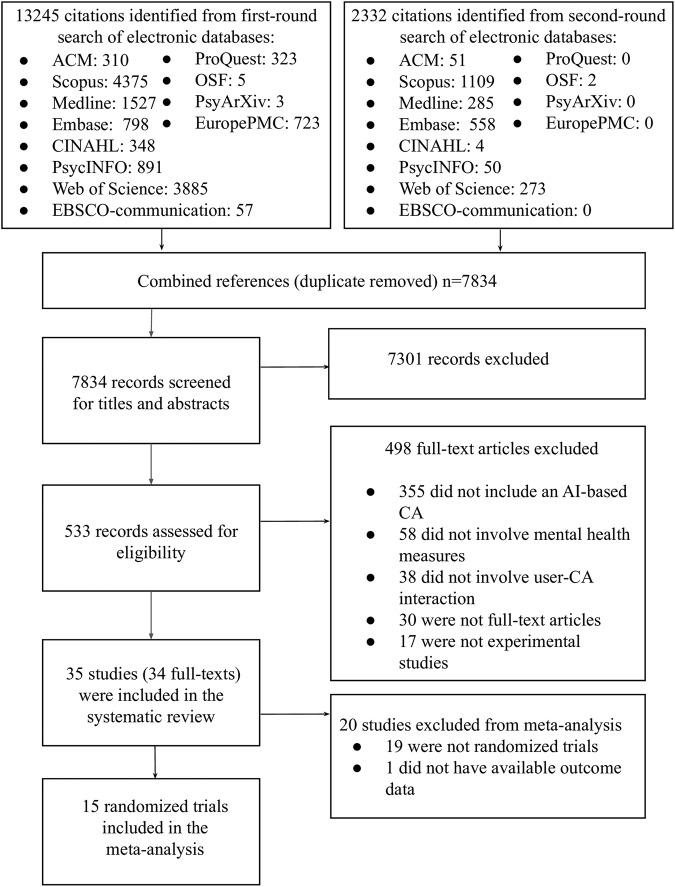
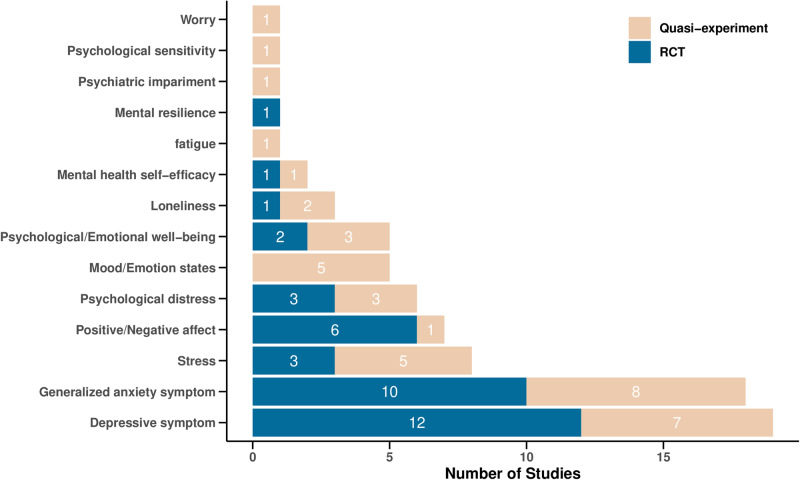
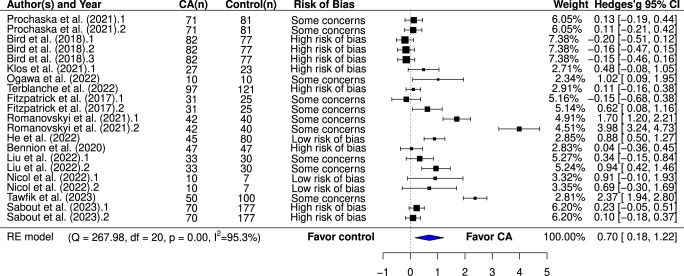
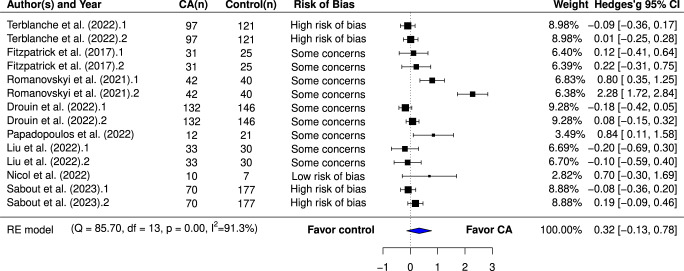
Conversational artificial intelligence (AI), particularly AI-based conversational agents (CAs), is gaining traction in mental health care. Despite their growing usage, there is a scarcity of comprehensive evaluations of their impact on mental health and well-being. This systematic review and meta-analysis aims to fill this gap by synthesizing evidence on the effectiveness of AI-based CAs in improving mental health and factors influencing their effectiveness and user experience. Twelve databases were searched for experimental studies of AI-based CAs’ effects on mental illnesses and psychological well-being published before May 26, 2023. Out of 7834 records, 35 eligible studies were identified for systematic review, out of which 15 randomized controlled trials were included for meta-analysis. The meta-analysis revealed that AI-based CAs significantly reduce symptoms of depression (Hedge’s g 0.64 [95% CI 0.17–1.12]) and distress (Hedge’s g 0.7 [95% CI 0.18–1.22]). These effects were more pronounced in CAs that are multimodal, generative AI-based, integrated with mobile/instant messaging apps, and targeting clinical/subclinical and elderly populations. However, CA-based interventions showed no significant improvement in overall psychological well-being (Hedge’s g 0.32 [95% CI –0.13 to 0.78]). User experience with AI-based CAs was largely shaped by the quality of human-AI therapeutic relationships, content engagement, and effective communication. These findings underscore the potential of AI-based CAs in addressing mental health issues. Future research should investigate the underlying mechanisms of their effectiveness, assess long-term effects across various mental health outcomes, and evaluate the safe integration of large language models (LLMs) in mental health care.
Overview
The claims and statistics of this paper haven’t been checked yet.
Free: it reads the open-access text and checks the first 5 claims that cite a source we can check. Create a free account to check every claim.
Integrity signals
Registry
Cites
Statistics
Figures
Verification
Claims the paper makes
The claims and statistics of this paper haven’t been checked yet.
Free: it reads the open-access text and checks the first 5 claims that cite a source we can check. Create a free account to check every claim.
Claims other papers make about this one
Each is checked against this paper’s own text: does it say what the citing paper says it does?
The source backs part of the claim, not all of it — or backs it for a different population, condition or comparison.
In the citing paper
“The rapid adoption of generative LLMs (e.g., GPT‐4) reflects broader AI trends, but introduces unique risks in mental health contexts 185 .”
From Charting the evolution of artificial intelligence mental health chatbots from rule‐based systems to large language models: a systematic review (2025) · cites this paper as [185]
Experimental — accuracy not yet measuredThe source backs part of the claim, not all of it — or backs it for a different population, condition or comparison.
In the citing paper
“Although reviews and meta-analyses of LLM-CBs for mental health exist13,14,29,30, as well as scoping reviews on the implementation of LLM-CBs in mental health31,32, their focus is narrowed to applications of LLM-CBs as clinical intervention tools.”
From A scoping review on the mental health harms of LLM-based chatbots (2026) · cites this paper as [14]
Experimental — accuracy not yet measuredThe source backs part of the claim, not all of it — or backs it for a different population, condition or comparison.
In the citing paper
“the first systematic reviews and meta-analyses demonstrate the potential of LLM-CBs as clinical tools for mental health13,14.”
From A scoping review on the mental health harms of LLM-based chatbots (2026) · cites this paper as [14]
Experimental — accuracy not yet measuredThe source backs part of the claim, not all of it — or backs it for a different population, condition or comparison.
In the citing paper
“LLM-CBs find increasing use as mental health support tools, both for the general public8–12 and for patients in clinical interventions13,14.”
From A scoping review on the mental health harms of LLM-based chatbots (2026) · cites this paper as [14]
Experimental — accuracy not yet measuredThe source backs part of the claim, not all of it — or backs it for a different population, condition or comparison.
In the citing paper
“A recent meta-analysis shows that GenAI chatbots outperform rule-based and retrieval-based chatbots in reducing depressive symptoms [13].”
From Generative AI Mental Health Chatbots as Therapeutic Tools: Systematic Review and Meta-Analysis of Their Role in Reducing Mental Health Issues (2025) · cites this paper as [13]
Experimental — accuracy not yet measured
6 more claims about this paper
Create a free account to see every claim other papers make about this one.
Self-check
Percentages, sums and reported differences re-computed from the paper’s own numbers.
The self-check needs the paper’s full text.
Citations
Cites
The Cochrane Collaboration's tool for assessing risk of bias in randomised trials
Higgins, J. P. T., Altman, D. G., Gotzsche, P. C., Juni, P., Moher, D., Oxman, A. D., Savovic, J., Schulz, K. F., Weeks, L., Sterne, J. A. C., et al. (2011) · BMJ · doi:10.1136/bmj.d5928 · Cited by 33,817
Dermyshi, E., Wang, Y., Yan, C., Hong, W., Qiu, G., Gong, X., & Zhang, T. (2017) · Neonatology · doi:10.1159/000454668 · Cited by 24,451
GRADE: an emerging consensus on rating quality of evidence and strength of recommendations
Guyatt, G. H., Oxman, A. D., Vist, G. E., Kunz, R., Falck-Ytter, Y., Alonso-Coello, P., & Schünemann, H. J. (2008) · BMJ · doi:10.1136/bmj.39489.470347.ad · Cited by 23,305
Interrater reliability: The kappa statistic
McHugh, M. L. (2012) · Biochemia Medica · doi:10.11613/bm.2012.031 · Cited by 19,877 · cited 1×
“Inter-rater reliability, assessed using Cohen ’ s Kappa 63 , indicated near-perfect agreement for title/abstract screening (0.9) and full-text review (0.83).”
MethodInfluentialCochrane Handbook for Systematic Reviews of Interventions
(2019) · doi:10.1002/9781119536604 · Cited by 14,828
Preferred reporting items for systematic reviews and meta-analyses: The PRISMA statement
Moher, D., Liberati, A., Tetzlaff, J., & Altman, D. G. (2010) · International Journal of Surgery · doi:10.1016/j.ijsu.2010.02.007 · Cited by 12,156 · cited 1×
“The study protocol was registered in PROSPERO, CRD 42023392187, and adhered to the Preferred Reporting Items for Systematic reviews and Meta-Analyses 74 (Supplementary Table 9).”
MethodCohen, J. (1992) · Psychological Bulletin · doi:10.1037//0033-2909.112.1.155 · Cited by 8,771
Fitzpatrick, K. K., Darcy, A., & Vierhile, M. (2017) · JMIR Mental Health · doi:10.2196/mental.7785 · Cited by 2,730 · cited 4×
“…Empathic communication 17,26,28,29,37 ( n = 5) (cid:129) Non-judgmental 33,49 ( n = 2) (cid:129) Accountability (e.g., regular check-ins) 21,26 ( n = 2) (cid:129) Human-like personality 26,49 ( n = 2) (cid:129) Tailored feedback 28 ( n = 1) (cid:129) Relationship 28 ( n = 1) Content ( n =…”
BackgroundInfluentialHow important are the common factors in psychotherapy? An update
Wampold, B. E. (2015) · World Psychiatry · doi:10.1002/wps.20238 · Cited by 1,728 · cited 1×
“…were key determinants of user experience, which corresponds to previous psychotherapy research that identi fi es these common elements (e.g., therapeutic alliance, empathy, and therapist effect) as active ingredients contributing to therapeutic changes across various therapeutic frameworks 61 .”
Charlson, F., van Ommeren, M., Flaxman, A., Cornett, J., Whiteford, H., & Saxena, S. (2019) · The Lancet · doi:10.1016/s0140-6736(19)30934-1 · Cited by 1,702 · cited 1×
“We fi ne-tuned our search strategy based on previous systematic reviews 3,51,62 to locate sources related to AI-based CAs for addressing mental health problems or promoting mental well-being.”
Method
Research works printed but not linked: 2
- Romanovskyi, O., Pidbutska, N. & Knysh, A. Elomia Chatbot: The effectiveness of Artificial Intelligence in the fight for mental health. In COLINs 5th International Conference on Computational Linguistics and Intelligent Systems, 1215–1224 (2021).
- Terblanche N Molyn J De Haan E Nilsson VO Coaching at scale: Investigating the efficacy of Artificial Intelligence coaching Int. J. Evid. Based Coach. Mentor 2022 20 20 36
Cited by
Items 501–600 of 606
Leite, M. V., Abe, J. M., dos Santos, J. G. B., Thomas, L. C. D. S., & Souza, M. L. H. (2026) · Advances in sustainability science and technology · doi:10.1007/978-3-032-25267-8_12
Degani, M., Natale, A. F. D., Cremaschi, G., & Villani, D. (2026) · Behavioral Sciences · doi:10.3390/bs16081332
“These considerations may be particularly relevant in the context of the rapid expansion of artificial intelligence–based conversational agents as digital mental health tools (H. Li et al., 2023).”
She, W. J., Tabbaa, L., Covaci, A., Siriaraya, P., Yip, B., Perusquía-Hernández, M., Nakajima, S., Yamashita, N., Shibuya, Y., & Ang, C. S. (2026) · International Journal of Human-Computer Interaction · doi:10.1080/10447318.2026.2708444
Talyshinskii, A., Kudakova, F., Staroseltseva, O., Gadzhiev, N. K., & Somani, B. K. (2026) · Diagnostics · doi:10.3390/diagnostics16152479
“Along with the work described by Li et al. performed meta-analysis of AI-based conversational agents for mental health and stated that such technology significantly reduces symptoms of depression and distress [22].”
Schneider, B. C., Klein, J. P., Berger, T., & Klöppel, S. (2025) · Elsevier eBooks · doi:10.1016/b978-3-437-21155-3.00013-7
Therapix: Leveraging Artificial Intelligence for Secure and Compliant SOAP Note Automation
Bera, J., Sobhashana, H., & Shaikh, N. (2026) · Lecture notes in networks and systems · doi:10.1007/978-3-032-27705-3_10
Naeim, M., & Narimani, M. (2026) · Psychiatry Research · doi:10.1016/j.psychres.2026.117371 · Cited by 1
Zhou, Y., Honary, M., & Fayoumi, A. (2026) · Information Systems Frontiers · doi:10.1007/s10796-026-10802-7
Baglivo, F., Gorga, A., Vella, G., Barbati, C., D’Atri, A. L., Pecchioli, M., Angelis, L. D., Siliquini, R., Mazzucco, W., Odone, A., et al. (2026) · Frontiers in Public Health · doi:10.3389/fpubh.2026.1860473
“The evaluation of the Custom GPT VaxSense chatbot revealed good usability, with mean CUQ-IT scores comparable to or higher than those reported in recent studies assessing health chatbots and LLM-based clinical tools (31, 32).”
McAlister, K. L., Jewell, C. C., & Huberty, J. (2026) · JMIR Mental Health · doi:10.2196/98690
“Conversational AI agents can produce meaningful reductions in symptoms of depression and anxiety [5,6], lending empirical credibility to their growing adoption and positioning them as a practical option in settings where traditional care is hard to access.”
The Integration of Traditional and AI-Based Approaches in Mental Healthcare
Vally, Z., Ndayizigamiye, P., Bokaba, T., Maguraushe, K., & Idemudia, E. C. (2026) · Lecture notes of the Institute for Computer Sciences, Social Informatics and Telecommunications Engineering · doi:10.1007/978-3-032-33957-7_3
Jia, W., Dai, Y. H., Jiang, L., & Huang, Y. C. (2026) · International Journal of Human-Computer Interaction · doi:10.1080/10447318.2026.2708470
Triantafyllidis, A. K., Segkouli, S., Lithoxoidou, E. E., Alexiadis, A., Votis, K., Koutra, K., Kilintzis, V., Kondylakis, H., Arana‐Arri, E., Haug, S., et al. (2026) · Information · doi:10.3390/info17080770 · Cited by 1
Fukuoka, Y., Kim, D. D., Zhang, J., Hoffmann, T. J., & Sagae, K. (2026) · JMIR Research Protocols · doi:10.2196/103597
Zhou, X., & Geng, L. (2026) · Frontiers in Psychiatry · doi:10.3389/fpsyt.2026.1910713
Liljedahl, N., Ali, L., Liljedahl, S., Falk, Ö., & Steingrímsson, S. (2026) · JMIR Mental Health · doi:10.2196/98840
“While evidence on AI-CA in mental health care remains limited overall [17,21], research specifically addressing its use in BPD or within DBT frameworks is, to our knowledge, absent.”
Pareek, S., Jain, G., & Nagar, R. (2026) · Journal of Technology in Behavioral Science · doi:10.1007/s41347-026-00700-9
Kronbach, G., Hidayat, A., & Wulandarı, M. (2026) · Cogent Psychology · doi:10.1080/23311908.2026.2715699
Travelbee and relational AI: A triadic model for nursing
Neves, H. L., Sousa, J. P., Seguro, J. M., Bernardes, R. A., Caldeira, S., Shapira, R., Oliveira, I., Coelho, A., & Parola, V. S. D. O. (2026) · Nursing Outlook · doi:10.1016/j.outlook.2026.102878
Yuwen, W., Wang, L., Xie, S. J., Divina, M., Fan, X., Kearns, W. R., & Ward, T. M. (2026) · Journal of Medical Internet Research · doi:10.2196/94175
“The majority of AI-based systems have focused on delivering psychotherapy and psychoeduca-tional content for the general population, and less attention is given to particular populations with specific needs and stress, such as family caregivers of children with chronic health conditions [18].”
Healthcare Chatbots: From Rule-Based Systems to LLMs based
Reddy, P. U. K., Pandey, M. K., & Goel, P. (2026) · International Conference on NextGen Data Science and Analytics (ICNDSA) · doi:10.1109/icndsa68777.2026.11652327
Thakre, Y., Kulsum, S., Sharma, J., Agrawal, H., Bonde, A., & Wankhade, U. (2026) · International Conference on NextGen Data Science and Analytics (ICNDSA) · doi:10.1109/icndsa68777.2026.11652064
Internet-/Online-basierte Psychotherapieverfahren
Zagorscak, P., & Knaevelsrud, C. (2026) · Springer Reference Medizin · doi:10.1007/978-3-642-45028-0_130-1
Shaw, S. L., & Bell, D. (2026) · American Journal of Psychotherapy · doi:10.1176/appi.psychotherapy.20260007 · Cited by 1
Effectiveness of Student-Centered Fine-Tuning of Large Language Models for Mental Health Support
Musmade, S., & Liu, L. (2026) · IEEE International Conference on Big Data Computing Service and Applications (BigDataService) · doi:10.1109/bigdataservice70481.2026.00024
“At the same time, studies have reported that conversational agents can reduce depression and anxiety symptoms from chatbot interventions, though effect sizes vary by population and design [9].”
Rah, H., Jung, W., & Lee, E. (2026) · Symmetry · doi:10.3390/sym18091409
“Meta-analyses have reported that conversational agents can have short-term significant effects on alleviating depression, anxiety, and psychological distress [23,24].”
Haber, Y., Refoua, E., Yirmiya, K., Rafaeli, E., Yinon, D., Atzil–Slonim, D., Fonagy, P., Meinlschmidt, G., Hadar‐Shoval, D., Simon, T., et al. (2026) · doi:10.2196/preprints.110192
AI-Based Approaches to Refugee Mental Health Care: Systematic Integrative Review
Kang, H., Park, S., Kim, J. S., Kim, O., Kim, H., Choi, J., & Chu, S. H. (2026) · Journal of Medical Internet Research · doi:10.2196/101857
“…learning models have leveraged multimodal data—including physiological measures, audio and speech signals, and questionnaires—to detect and predict stress-related mental disorders [14], while AI-based conversational agents have been tested and used to promote mental health and well-being [15,16].”
Yu, J., Zhang, X., Zhu, X., Ning, R., Chen, Q., Zhu, Z., Fu, Y., & Yang, Z. (2026) · JMIR mhealth and uhealth · doi:10.2196/101669
Zhu, N., Gu, Y., Liu, X., Li, C., Yang, C., Wang, H., & Chen, C. (2026) · doi:10.2196/preprints.110577
Jewell, C. C., McAlister, K. L., Deliberto, T. L., Wallis, T., Winns, G., & Huberty, J. (2026) · JMIR AI · doi:10.2196/99950 · Cited by 1
“In most current implementations, memory is treated primarily as a mechanism for personalization: the system recalls past topics, noted preferences, and conversational history in order to make interactions feel more coherent and tailored to the individual [3,4].”
Validation of the AI mental health Therapy Attitude, Perception, and Intention Scale (AiTAPI)
Lam, L. T.-M., & Lam, L. T.-M. (2026) · Internet Interventions · doi:10.1016/j.invent.2026.100994
Erdem, G., Kafesçioğlu, N., & Başer, G. (2026) · Journal of Marital and Family Therapy · doi:10.1111/jmft.70168
“…literature exploring AI agent use for therapeutic purposes has focused on manualized and protocol‐driven approaches, such as cognitive‐behavioral therapy models, given the ease of training AI agents on them due to their standardized nature (He et al. 2023; Li et al. 2023; Zhong et al. 2024).”
Xie, W., Xiang, C., Wu, F., & Chen, X. (2026) · Frontiers in Psychiatry · doi:10.3389/fpsyt.2026.1922251
“Conversational agents can support sustained, interactive exchanges (6), but therapeutic fi ndings cannot be transferred directly to childcare education.”
Cusido, J. (2025) · Annals of Psychiatry and Treatment · doi:10.17352/apt.000075
Tieu, K. D. B., Agyapong-Opoku, F., & Agyapong, B. (2026) · Frontiers in Digital Health · doi:10.3389/fdgth.2026.1789599
“Regarding function, rule-based chatbots are noted to have a limited understanding of context and intention (9), making them less robust.”
Kalpana, T., & Hemalatha, S. (2026) · International Journal of Advances in Nursing Management · doi:10.52711/2454-2652.2026.00027
Wan, M. W., Hill, F., Firth, J., & Churchman, A. (2026) · doi:10.2196/preprints.110917
Akhmetova, J., Kuznetsov, A. A., Oshanova, N. T., & ZHILKISHBAYEV, A. (2026) · Trends in Higher Education · doi:10.3390/higheredu5030089
“Li et al. [16] synthesized 35 studies of AI-based conversational agents for mental health and wellbeing and found that user experience depends strongly on communication quality and the human–AI relationship.”
Xia, B., Shu, Y., Jiang, C., Lin, J., He, X., & Hong, T. (2026) · Microchemical Journal · doi:10.1016/j.microc.2026.119622
Wang, C. (2026) · Frontiers in Psychology · doi:10.3389/fpsyg.2026.1950163
“Prior research has typically examined broad constructs such as AI use, companionship, loneliness, anthropomorphism, attachment, and mental health outcomes (Chaturvedi et al., 2023; Li et al., 2023; Kim and Im, 2023; Olisaeloka et al., 2026).”
Hudon, A., Bhat, V., Nuñez, J.-J., Paquin, V., Malouin-Lachance, A., & Lespérance, F. (2026) · JMIR Medical Education · doi:10.2196/108766
“Systematic reviews similarly suggest that relational factors may contribute to engagement and user experience, although the included technologies are heterogeneous and findings should not be extrapolated directly to general-purpose LLM systems [10].”
InfluentialNawaz, S., Nawaz, L., Ali, H., Yaqoob, M., & Saeed, M. M. (2026) · Digital Medicine · doi:10.1097/dm-2026-00028
When Robots Join the Table: Psychological Effects of Co-presence and Dialogue in Commensal Settings
Yamamoto, T., & Kozai, Y. (2026) · Journal of the Robotics Society of Japan · doi:10.7210/jrsj.44.663
Oh, J., Cho, H., Pang, S., Heo, S., & Lee, J. (2026) · doi:10.2196/preprints.111409
Psychology and Counseling Going Forward
Sharma, D. (2026) · Advances in computational intelligence and robotics book series · doi:10.4018/979-8-3373-9109-0.ch013
Wang, Q., Zhong, J., Qi, K., Bao, H., Wang, Y., Guo, S., & Chen, A. (2026) · Psychiatry Research · doi:10.1016/j.psychres.2026.117459 · Cited by 1
Sabala, A., Davins, M., Cano, M., Bonet, G., Mariscal, A., & Valero, P. (2026) · Journal of Healthcare Quality Research · doi:10.1016/j.jhqr.2026.101243
Hu, R., Kong, J., Yang, Y., Yang, Y., Liu, J., Tang, H., Zhang, S., & Liu, Z. (2026) · doi:10.2196/preprints.112162
Wrzosek, K., Udrycka, K., Kuchta, K., Poleszak, J., Leśniak, M., & Kowalewski, P. (2026) · International Journal of Innovative Technologies in Social Science · doi:10.31435/ijitss.3(51).2026.6484
Human–AI Collaboration is an Underspecified Intervention: A Reporting Guide for Cumulative Research
Rafner, J. F. (2026) · Creativity Research Journal · doi:10.1080/10400419.2026.2726243 · Cited by 1
Kuşci, İ., & Bakır, V. (2026) · Current Psychology · doi:10.1007/s12144-026-10070-3
“Specifically, studies such as Fiske et al. (2019), Vaidyam et al. (2019), Li et al. (2023), and Abd-Alrazaq et al. (2020), which are among the most frequently cited works in the field, were manually checked and confirmed to be present in the final data - set.”
Ravendran, K., Singh, A. P., Kishore, J., Roy, Y. J., Mirani, Y., Nawaz, H., Nissar, M., Azhar, A., & Singh, K. (2026) · Psychiatry International · doi:10.3390/psychiatryint7050214
Zhou, C., Wu, H., Li, G., & CHEN, Y. (2026) · Frontiers in Psychology · doi:10.3389/fpsyg.2026.1915597
“Recent systematic reviews further suggest that AI-based conversational agents may promote mental health and wellbeing, although the mechanisms through which such effects occur remain insufficiently specified (Li et al., 2023).”
When Machines Make Humans Feel: Emotion, Intelligence, and the Ethics of AI
Guarini, M. (2026) · Journal of Superintelligence · doi:10.3390/superintelligence1020006
Conversational AI and the Temporal Ecology of Self-Reflection
Kvietkute, D. (2026) · Integrative Psychological and Behavioral Science · doi:10.1007/s12124-026-10041-0
“…et al., 2023 ; De Freitas et al., 2026) and the use of conversational systems for mental health and therapeutic support (Jin et al., 2025 ; Li et al., 2023 ) has expanded considerably, while their role in mediating everyday self-reflection and the development of self-understanding outside…”
Generative Artificial Intelligence Use and Adolescent Mental Health
Nagata, J. M., Hur, J. O., Diep, T., Alsamman, H., Lee, E. D., Heuer, A., Huynh, H., Nayak, S., McBain, R. K., Cantor, J. H., et al. (2026) · Current Pediatrics Reports · doi:10.1007/s40124-026-00388-8 · Cited by 2
Predicting Symptom Change in Mental Health Chatbot Interventions: A Meta-Analysis
Saucier, C. J., Li, H., Calabrese, C. R., Baker, A. M., & Park, J. (2026) · Health Communication · doi:10.1080/10410236.2026.2734165
Self-citationBurgun, A., Khnaisser, C., Dault, R., & Éthier, J. (2026) · PLOS Digital Health · doi:10.1371/journal.pdig.0001240
“While some patients are enthusiastic about digital tools, others remain skeptical, often due to prior negative experiences or a preference for human interaction [21].”
Zhang, O. X., Shumsky, I., Hancock, J. T., Choudhury, M. D., & Liu, X. (2026) · doi:10.2196/preprints.110259
Worth, J. E., Perez, A., Wu, D. J., Brodeur, P. G., Tat, E., Manrai, A. K., Wu, D., Walton, C., McCoy, L. G., Jain, P., et al. (2026) · BMJ Digital Health & AI · doi:10.1136/bmjdh-2026-000113 · Cited by 1
Ethische Aspekte zur KI-Anwendung in der Psychotherapie
Schürmann, J. M., Sedláková, J., & Trachsel, M. (2026) · Psychotherapie-Wissenschaft · doi:10.30820/1664-9583-2026-2-17
“Übersichtsarbeiten legen nahe, dass mithilfe KI-basierter Chatbots sowohl depressive Symptome als auch psychischer Distress statistisch und klinisch signifikant reduziert werden können (Li et al., 2023; Farzan et al., 2025; Rezaei et al., 2026).”
Yaacob, N. M., Doheir, M., Algumaei, A. H., Al-Andoli, M. N., Alsayaydeh, J. A. J., Elzamly, A., & Basari, A. S. (2026) · Frontiers in Child and Adolescent Psychiatry · doi:10.3389/frcha.2026.1905782
Rostami, P., Bakhtiari, E., Baharizadeh, B., & Grasso, G. M. (2026) · Behavioral Sciences · doi:10.3390/bs16101781
“…that AI-based conversational systems may support mental health-related outcomes, including reductions in psychological distress and depressive symptoms, while also offering opportunities for accessible and personalized digital support (Li et al., 2023; Zhang et al., 2025; Adindu et al., 2025).”
InfluentialWang, W., Cavallini, A., Søraa, R. A., & Manzi, F. (2026) · Asian Journal of Psychiatry · doi:10.1016/j.ajp.2026.105172
Psychotherapy remains a human endeavor: Human therapy is valued more than AI-integrated therapyPreprint
Xu, C., & Kim, T. T. (2026) · medRxiv · doi:10.64898/2026.09.29.26364234
Liu, Y., Mu, J., Li, Y., Ke, Y., & Zhang, Y. (2026) · Frontiers in Psychology · doi:10.3389/fpsyg.2026.1926092
“…and support tools have long promised low-threshold access, flexible timing, and scalable interaction, but their evidence bases differ across tool types and use cases (Fitzpatrick et al., 2017; Inkster et al., 2018; Vaidyam et al., 2019; Graham et al., 2019; Li et al., 2023; Haque and Rubya, 2023).”
Juarto, B., Tiara, K. A., Rahmania, R., & Chen, V. F. (2026) · International Conference on ICT for Smart Society (ICISS) · doi:10.1109/iciss71466.2026.11715381
“Quantitative synthesis indicates that AI-based CAs can reduce symptoms of depression and distress [10], and broader systematic reviews catalogue applications across early screening, digital intervention, and clinical decision support [11], [12].”
Brown, F. J., Hulson-Jones, A., & Fuidge, E.-M. (2026) · doi:10.2196/preprints.112686
Designing Multimodal Conversational AI for Longitudinal Well-Being Monitoring
Bui, T. (2026) · INTERNATIONAL CONFERENCE ON MULTIMODAL INTERACTION · doi:10.1145/3776574.3828965
Xiaotian, R., Li, X., Gao, L., Wei, Q., Liu, H., & Yu, X. (2026) · Educational Psychology Review · doi:10.1007/s10648-026-10217-5
“…designs, including quasi-experi-ments, single-group pre–post studies, and correlational surveys, limiting causal conclusions about whether AI improves emotional health or produces only transient or placebo-like effects (Dong et al., 2025; Hawke et al., 2025 ; Kim et al., 2025 ; Li et al., 2023 ).”
Liability and Standard of Care in AI-Driven Psychiatric Practice: European Viewpoint
Madeira, L., Pereira, C. A., Schouler‐Ocak, M., Samochowiec, J., Galderisi, S., & da Costa, M. P. (2026) · Journal of Medical Internet Research · doi:10.2196/99894
“[3,4,6,15,27,29,30,43,44] a EHR: electronic health record. b LLM: large language model.”
Responses of AI chatbots to escalating suicide risk: A simulation study of repeated interactions
Pichowicz, W., Kotas, M., Kalka, N., Dembowska, J., Karska, J., Piotrowski, P., & Misiak, B. (2026) · Journal of Affective Disorders · doi:10.1016/j.jad.2026.122586
Thakkar, S., Bhatt, P., & Parekh, H. (2026) · Counselling and Psychotherapy Research · doi:10.1002/capr.70237
Łapot, M., Hober, K., Krupnik, D., Skowron, W., Skowron, M., Bzdak, W., Szwemińska, P., Górak, J., & Neumann, W. (2026) · International Journal of Innovative Technologies in Social Science · doi:10.31435/ijitss.3(51).2026.6235
Jent, J. F., Mannweiler, M. D., Malave, K. Y., Mirza, A., Ogihara, M., Alonso, B., Juan, J. S., Davis, E., Sobalvarro, C., & Garcia, D. (2026) · JMIR Formative Research · doi:10.2196/105131
An Autonomous Agent RAG Framework for Multimodal Customer Insights in E-commerce
Song, Y., Wang, L., Chen, J., Fan, X., Li, J., & Li, X. (2026) · Lecture notes in computer science · doi:10.1007/978-3-032-38715-8_1
Chen, Y., Yue, D. I. N. G., Wang, L., & Kou, Y. (2026) · International Journal of Human-Computer Interaction · doi:10.1080/10447318.2026.2738514
Affective directions in activation space: An interpretable inference-time control mechanism
Dong, Y., Jin, L., Yang, Y., Lu, B., Yang, J., & Liu, Z. (2026) · Engineering Applications of Artificial Intelligence · doi:10.1016/j.engappai.2026.116407 · Cited by 12
Shao, C., Chen, X., Qiao, S., Li, A., Liu, S., & Chen, Y. (2026) · Frontiers in Psychiatry · doi:10.3389/fpsyt.2026.1824378
Eilert, D. W., Schaper, L.-G., Meyer, F., Weigand, A., Mensah, P., Barkhorn, A., & Bonanno, G. A. (2026) · Frontiers in Psychology · doi:10.3389/fpsyg.2026.1965838
“Meta-analytic evidence suggests that AI-based conversational agents can improve mental health and well-being and may represent an effective and accessible form of psychological support (He et al., 2023; Li et al., 2023).”
Mental Health Detection using Advanced Machine Learning
Bhavithiran, S., Nithyanandh, S., & Sofia, V. S. A. (2026) · International Journal of Scientific Research in Science Engineering and Technology · doi:10.32628/ijsrset2613521
Sato, W., Kawamura, N., Shimokawa, K., Kubota, Y., & Minato, T. (2026) · Telematics and Informatics Reports · doi:10.1016/j.teler.2026.100379
Using emojis to uplift emotion: Effects on mental health chatbots’ performance
Deng, Z., Yan, X., & Fan, G. (2026) · Journal of Retailing and Consumer Services · doi:10.1016/j.jretconser.2026.105159
Chen, A., Jin, S., Wang, C., Swartz, H. A., Wu, T., Kraut, R. E., & Zhu, H. (2026) · JMIR Mental Health · doi:10.2196/95389 · Cited by 1
Self-citationCho, C., & Kim, Y. (2026) · Psychiatry Research · doi:10.1016/j.psychres.2026.117528
Yang, G., Liu, R., Wang, C., Zhu, R., Qin, S., Yan, J., Wang, Y., Pei, H., Liang, L., Su, Y., et al. (2026) · Frontiers in Psychology · doi:10.3389/fpsyg.2026.1877887
Moya, M. O. C., Cabrera, L. H., Ramírez, L. M., González, M. A. G., Pazos, A. A., Feitó, L. B. F., & Pernas, G. G. (2026) · SAP Social AI · doi:10.62486/sai2026109
Wang, Y., Yin, M., & Lv, K. (2026) · Behavioral Sciences · doi:10.3390/bs16101914
“Second, a systematic review and meta-analysis found that AI-based conversational agents can reduce depressive symptoms and psychological distress, suggesting their potential to support mental health care (Li et al., 2023).”
Xiao, W., Cao, X., Jin, W., Chen, X., Cai, J., 駱旭琛, & Deng, J. (2026) · Frontiers in Psychiatry · doi:10.3389/fpsyt.2026.1962615
“We conducted a standardized simulated-patient benchmarking study to examine whether general-purpose arti fi cial intelligence (AI) chatbots could provide psychologically appropriate and context-sensitive support for depression, anxiety, and illness-related distress in chronic physical illness (30).”
The superego prosthetic: Feminized AI and the psychic fantasy of frictionless care
Grover, M. (2026) · International Forum of Psychoanalysis · doi:10.1080/0803706x.2026.2705569
Omigbodun, F. T. (2026) · Journal of Medicine Surgery and Public Health · doi:10.1016/j.glmedi.2026.100258
Agarwal, S. (2026) · IEEE International Conference on Intelligent Systems · doi:10.1109/is71416.2026.11727359
Bonnot, O., Mouhoud, T. T., Shadili, G., & Gollier-Briant, F. (2026) · L Encéphale · doi:10.1016/j.encep.2026.08.003
Serving the Player or Shaping Them? Game-Embedded AI Companions and the Rewiring of Well-being
Vafafar, M., Joel-Edgar, S., Dabbagh, H., & Harteveld, C. (2026) · Annual Symposium on Computer-Human Interaction in Play · doi:10.1145/3800965.3834657
Generative AI Chatbot Responses to Suicide and Self-Harm: A Systematic Review (Preprint)
Kelly, D. A., Franz, P. J., Gutman, A., Sleiman, M., Dorsky, J., Singh, H., Appel, W., Wyatt, S. M., Low, D. M., Stirman, S. W., et al. (2026) · Journal of Medical Internet Research · doi:10.2196/103517 · Cited by 2
Liu, Y., Xu, K., Zhao, S., Li, D., Zhang, Y., Chen, J., & Wu, Y. (2026) · doi:10.2196/preprints.113358
Metadata
- Authors
- Li, H., Zhang, R., Lee, Y.-C., Kraut, R. E., & Mohr, D. C.
- Affiliations
- National University of Singapore (SG)
- Carnegie Mellon University (US)
- Northwestern University (US)
- Corresponding author
- Zhang, Renwen
- Venue
- npj Digital Medicine
- Published
- 2023-12-19
- Volume
- 6
- Issue
- 1
- Pages
- 236-236
- ISSN
- 2398-6352 (ISSN-L)
- PMC
- PMC10730549
- OpenAlex
- W4389934892
- Semantic Scholar
- 69a4cb1a3d84e924ab79848910507ee34e80150a
- Cited by
- 598
- References
- 74
- Citations by year
- 2026: 322 · 2025: 212 · 2024: 64
- FWCI
- 20.31
- Type
- journal article
- Language
- en
- Open access
- gold
- doi.org
- Licence
- cc-by
- creativecommons.org/licenses/by/4.0 (tdm)
- creativecommons.org/licenses/by/4.0 (vor)
- Locations
- npj Digital Medicine (publishedVersion, cc-by)
- PubMed Central (publishedVersion, cc-by)
- PubMed (publishedVersion)
- DOAJ (DOAJ: Directory of Open Access Journals) (submittedVersion, cc-by-sa)
- Funders
- National University of Singapore (A-8000936-01-00)
- National Institute of Mental Health (P50MH119029)
- Topics
- Social Sciences › Psychology › Applied Psychology › Digital Mental Health Interventions
- Social Sciences › Psychology › Social Psychology › Social Robot Interaction and HRI
- Health Sciences › Medicine › Health Informatics › Artificial Intelligence in Healthcare and Education
- Keywords
- chatbots, artificial intelligence, mental health, depression, psychological distress, psychological well-being, generative AI, multimodal AI, mobile health apps, older adults, large language models, user experience
About these checks
Registry, retraction, Cites and statistics results are computed, not judged, with one exception: a printed reference that no index lists is read once by a model before it counts as a citation error. Claims are extracted by a model and kept only when their quote appears verbatim in the text; each cited source is then checked, with a model’s help, for whether it says what the claim relies on. Those verdicts can be wrong — read the claim’s quote and the cited source before relying on one.
Statistics and arithmetic are recomputed, not judged.
Confidence bands are shown only for fields calibrated on our annotated test set. None is calibrated yet, so no band is shown.
What counts as a claim ›How we measure confidence ›How we check this ›
Are you an author, or do you see a problem with this page? Request a review
Data sources
Bibliographic data: Semantic Scholar, OpenAlex, Crossref.
Contains information from the Semantic Scholar Academic Graph Datasets, made available under the ODC Attribution License (ODC-BY 1.0).
Semantic Scholar’s data is described in: Kinney, R., et al. (2023). The Semantic Scholar Open Data Platform. arXiv:2301.10140.
