

The DOI matches its Crossref record; 80 of the 81 references it cites were found in a registry or an index.
Identification of 12 genetic loci associated with human healthspan
Open accessPublished version of a preprint
Abstract
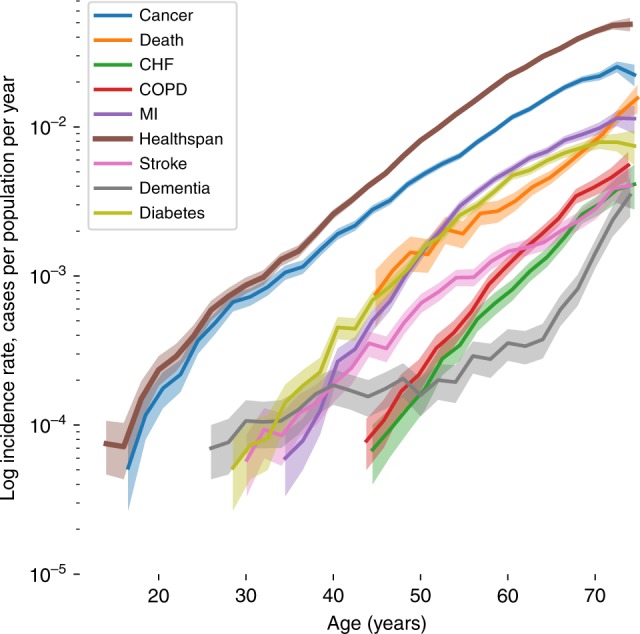
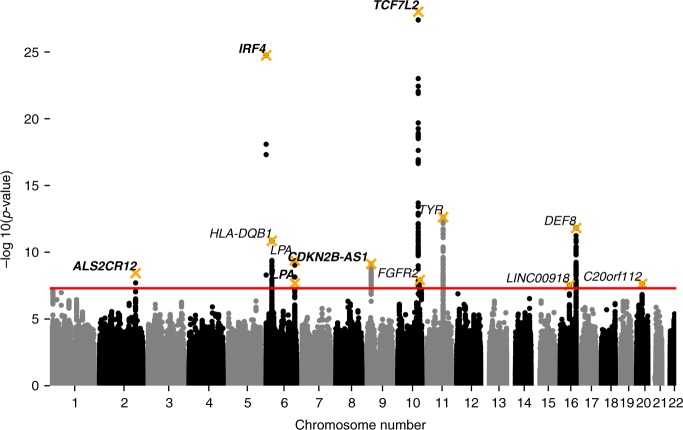
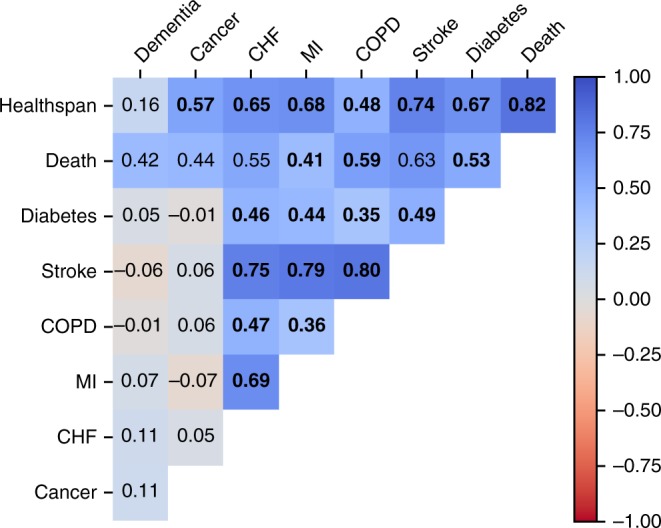
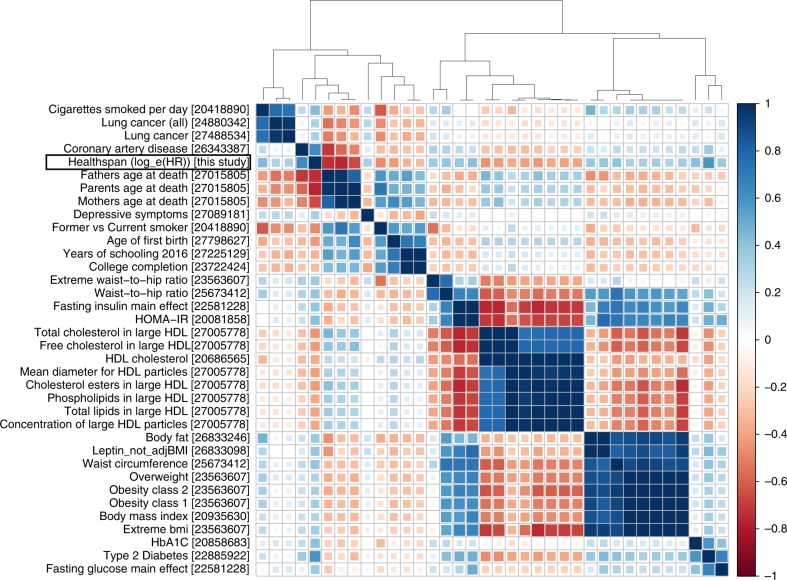
Aging populations face diminishing quality of life due to increased disease and morbidity. These challenges call for longevity research to focus on understanding the pathways controlling healthspan. We use the data from the UK Biobank (UKB) cohort and observe that the risks of major chronic diseases increased exponentially and double every eight years, i.e., at a rate compatible with the Gompertz mortality law. Assuming that aging drives the acceleration in morbidity rates, we build a risk model to predict the age at the end of healthspan depending on age, gender, and genetic background. Using the sub-population of 300,447 British individuals as a discovery cohort, we identify 12 loci associated with healthspan at the whole-genome significance level. We find strong genetic correlations between healthspan and all-cause mortality, life-history, and lifestyle traits. We thereby conclude that the healthspan offers a promising new way to interrogate the genetics of human longevity.
Overview
The claims and statistics of this paper haven’t been checked yet.
Run the check — free, no account needed. It reads the open-access text and checks the sources it cites.
Integrity signals
Registry
Cites
Statistics
Figures
Verification
Claims the paper makes
The claims and statistics of this paper haven’t been checked yet.
Run the check — free, no account needed. It reads the open-access text and checks the sources it cites.
Claims other papers make about this one
Each is checked against this paper’s own text: does it say what the citing paper says it does?
In the citing paper
“Genes that regulate lifespan in animal models6–9 and human studies10–14 as well as multiple experimental paradigms, such as caloric restriction, heterochronic parabiosis and partial epigenetic reprogramming, have demonstrated that it is possible to manipulate ageing biology to ‘rejuvenate’ physiological functioning in complex model organisms15–28.”
From Measuring biological age using omics data (2022) · cites this paper as [11]
Self-check
Percentages, sums and reported differences re-computed from the paper’s own numbers.
The self-check needs the paper’s full text.
Citations
Cites
A global reference for human genetic variation
The 1000 Genomes Project Consortium, authors, C., Auton, A., Abecasis, G. R., Steering committee, Altshuler, D. M., Durbin, R. M., Abecasis, G. R., Bentley, D. R., Chakravarti, A., et al. (2015) · Nature · doi:10.1038/nature15393 · Cited by 18,247
Sudlow, C., Gallacher, J., Allen, N., Beral, V., Burton, P., Danesh, J., Downey, P., Elliott, P., Green, J., Landray, M., et al. (2015) · PLOS Medicine · doi:10.1371/journal.pmed.1001779 · Cited by 12,728
Second-generation PLINK: rising to the challenge of larger and richer datasets
Chang, C. C., Chow, C. C., Tellier, L. C., Vattikuti, S., Purcell, S. M., & Lee, J. J. (2015) · Gigascience · doi:10.1186/s13742-015-0047-8 · Cited by 12,709
The UK Biobank resource with deep phenotyping and genomic data
Bycroft, C., Freeman, C., Petkova, D., Band, G., Elliott, L. T., Sharp, K., Motyer, A., Vukcevic, D., Delaneau, O., O’Connell, J., et al. (2018) · Nature · doi:10.1038/s41586-018-0579-z · Cited by 8,876
The Ensembl Variant Effect Predictor
McLaren, W., Gil, L., Hunt, S. E., Riat, H. S., Ritchie, G. R. S., Thormann, A., Flicek, P., & Cunningham, F. (2016) · Genome Biology · doi:10.1186/s13059-016-0974-4 · Cited by 8,099
A map of human genome variation from population-scale sequencing.
The 1000 Genomes Project Consortium (2010) · Nature · doi:10.1038/nature09534 · Cited by 7,877
LD Score regression distinguishes confounding from polygenicity in genome-wide association studies
Schizophrenia Working Group of the Psychiatric Genomics Consortium, Bulik-Sullivan, B. K., Loh, P.-R., Finucane, H. K., Ripke, S., Yang, J., Patterson, N., Daly, M. J., Price, A. L., & Neale, B. M. (2015) · Nature Genetics · doi:10.1038/ng.3211 · Cited by 5,559
Meta-Analysis of 74,046 Individuals Identifies 11 New Susceptibility Loci for Alzheimer’s Disease
(EADI), E. A. D. I., Lambert, J.-C., (GERAD), G. A. E. R. I. A. D., Alzheimer's Disease Genetic Consortium (ADGC), (CHARGE), C. F. H. A. A. R. I. G. E., Ibrahim-Verbaas, C. A., Harold, D., Naj, A. C., Sims, R., Bellenguez, C., et al. (2013) · Nature Genetics · doi:10.1038/ng.2802 · Cited by 4,336
An atlas of genetic correlations across human diseases and traits
ReproGen Consortium, Bulik-Sullivan, B., Psychiatric Genomics Consortium, Genetic Consortium for Anorexia Nervosa of the Wellcome Trust Case Control Consortium 3, Finucane, H. K., Anttila, V., Gusev, A., Day, F. R., Loh, P.-R., Duncan, L., et al. (2015) · Nature Genetics · doi:10.1038/ng.3406 · Cited by 4,255
Gompertz, B. (1825) · Philosophical Transactions of the Royal Society of London · doi:10.1098/rstl.1825.0026 · Cited by 3,816
Cited by
Sorted by citations
Mitochondrial and metabolic dysfunction in ageing and age-related diseases
Amorim, J. A., Coppotelli, G., Rolo, A. P., Palmeira, C. M., Ross, J. M., & Sinclair, D. A. (2022) · Nature Reviews Endocrinology · doi:10.1038/s41574-021-00626-7 · Cited by 990
“6-Amino[1,2,5]oxadiazolo[3,4-b] pyrazin-5-ol derivatives as efficacious mitochondrial uncouplers in STAM mouse model of nonalcoholic steatohepatitis.”
BackgroundMeasuring biological age using omics data
Rutledge, J., Oh, H., & Wyss-Coray, T. (2022) · Nature Reviews Genetics · doi:10.1038/s41576-022-00511-7 · Cited by 570
Applications of multi‐omics analysis in human diseases
Chen, C., Wang, J., Pan, D., Wang, X., Xu, Y., Yan, J., Wang, L., Yang, X., Yang, M., & Liu, G. (2023) · MedComm · doi:10.1002/mco2.315 · Cited by 545
Sex differences in biological aging with a focus on human studies
Hägg, S., & Jylhävä, J. (2021) · eLife · doi:10.7554/elife.63425 · Cited by 442
Aging Hallmarks and the Role of Oxidative Stress
Maldonado, E., Morales, S., Urbina, F., & Solari, A. (2023) · Antioxidants · doi:10.3390/antiox12030651 · Cited by 491
A meta-analysis of genome-wide association studies identifies multiple longevity genes
Deelen, J., Evans, D. S., Arking, D. E., Tesi, N., Nygaard, M., Liu, X., Wojczynski, M. K., Biggs, M. L., van der Spek, A., Atzmon, G., et al. (2019) · Nature Communications · doi:10.1038/s41467-019-11558-2 · Cited by 370
Melzer, D. R., Pilling, L. C., & Ferrucci, L. (2019) · Nature Reviews Genetics · doi:10.1038/s41576-019-0183-6 · Cited by 387
Causality-enriched epigenetic age uncouples damage and adaptation
Ying, K., Liu, H., Tarkhov, A. E., Sadler, M. C., Lu, A. T.-H., Moqri, M., Horvath, S., Kutalik, Z., Shen, X., & Gladyshev, V. N. (2024) · Nature Aging · doi:10.1038/s43587-023-00557-0 · Cited by 235
Sociology, Genetics, and the Coming of Age of Sociogenomics
Mills, M. C., & Tropf, F. C. (2020) · Annual Review of Sociology · doi:10.1146/annurev-soc-121919-054756 · Cited by 162
Multivariate genomic scan implicates novel loci and haem metabolism in human ageing
Timmers, P. R. H. J., Wilson, J. F., Joshi, P. K., & Deelen, J. (2020) · Nature Communications · doi:10.1038/s41467-020-17312-3 · Cited by 146
Pyrkov, T. V., Avchaciov, K., Tarkhov, A. E., Menshikov, L. I., Gudkov, A. V., & Fedichev, P. O. (2021) · Nature Communications · doi:10.1038/s41467-021-23014-1 · Cited by 139
Self-citationLipoprotein(a) and cardiovascular and valvular diseases: A genetic epidemiological perspective
Arsenault, B. J., & Kamstrup, P. R. (2022) · Atherosclerosis · doi:10.1016/j.atherosclerosis.2022.04.015 · Cited by 123
The road ahead for health and lifespan interventions
Gonzalez-Freire, M., Diaz-Ruiz, A., Hauser, D., Martinez-Romero, J., Ferrucci, L., Bernier, M., & de Cabo, R. (2020) · Ageing Research Reviews · doi:10.1016/j.arr.2020.101037 · Cited by 118
Effects of exercise on cellular and tissue aging
Carapeto, P. V., & Aguayo-Mazzucato, C. (2021) · Aging · doi:10.18632/aging.203051 · Cited by 107
“The aging process affects longevity and health span which are influenced by both genetic and environmental factors [17].”
BackgroundWang, J., Chen, C., Zhou, J., Ye, L., Li, Y., Xu, L., Xu, Z., Li, X., Wei, Y., Liu, J., et al. (2023) · The Lancet Healthy Longevity · doi:10.1016/s2666-7568(23)00140-x · Cited by 106
Senescent cells and the incidence of age‐related diseases
Katzir, I., Adler, M., Karin, O., Mendelsohn‐Cohen, N., Mayo, A., & Alon, U. (2021) · Aging Cell · doi:10.1111/acel.13314 · Cited by 85
Biological mechanisms of aging predict age-related disease co-occurrence in patients
Fraser, H. C., Kuan, V., Johnen, R., Zwierzyna, M., Hingorani, A. D., Beyer, A., & Partridge, L. (2022) · Aging Cell · doi:10.1111/acel.13524 · Cited by 90
Aging Biomarkers: From Functional Tests to Multi‐Omics Approaches
Kudryashova, K. S., Burka, K., Kulaga, A. Y., Vorobyeva, N. S., & Kennedy, B. K. (2020) · PROTEOMICS · doi:10.1002/pmic.201900408 · Cited by 95
Rosoff, D. B., Mavromatis, L. A., Bell, A. S., Wagner, J., Jung, J., Marioni, R. E., Smith, G. D., Horvath, S., & Lohoff, F. W. (2023) · Nature Aging · doi:10.1038/s43587-023-00455-5 · Cited by 89
Utility of polygenic embryo screening for disease depends on the selection strategy
Lencz, T., Backenroth, D., Granot‐Hershkovitz, E., Green, A., Gettler, K., Cho, J. H., Weissbrod, O., Zuk, O., & Carmi, S. (2021) · eLife · doi:10.7554/elife.64716 · Cited by 74
What Is an Aging-Related Disease? An Epidemiological Perspective
Couteur, D. G. L., & Thillainadesan, J. (2022) · The Journals of Gerontology Series A · doi:10.1093/gerona/glac039 · Cited by 74
Hu, X., Cai, M., Xiao, J., Wan, X., Wang, Z., Zhao, H., & Yang, C. (2024) · The American Journal of Human Genetics · doi:10.1016/j.ajhg.2024.06.016 · Cited by 66
Genetics of extreme human longevity to guide drug discovery for healthy ageing
Zhang, Z. D., Milman, S., Lin, J.-R., Wierbowski, S. D., Yu, H., Barzilai, N., Gorbunova, V. A., Ladiges, W., Niedernhofer, L. J., Suh, Y., et al. (2020) · Nature Metabolism · doi:10.1038/s42255-020-0247-0 · Cited by 63
Multi-omic underpinnings of epigenetic aging and human longevity
Mavromatis, L. A., Rosoff, D. B., Bell, A. S., Jung, J., Wagner, J., & Lohoff, F. W. (2023) · Nature Communications · doi:10.1038/s41467-023-37729-w · Cited by 61
Developments in molecular epidemiology of aging
Hägg, S., Belsky, D. W., & Cohen, A. A. (2019) · Emerging Topics in Life Sciences · doi:10.1042/etls20180173 · Cited by 58
Timmers, P. R. H. J., Tiys, E., Sakaue, S., Akiyama, M., Kiiskinen, T., Zhou, W., Hwang, S., Yao, C., Biobank Japan Project, Kamatani, Y., et al. (2022) · Nature Aging · doi:10.1038/s43587-021-00159-8 · Cited by 59
Self-citationGialluisi, A., Castelnuovo, A. F. D., Costanzo, S., Bonaccio, M., Persichillo, M., Magnacca, S., Curtis, A. D., Cerletti, C., Donati, M. B., de Gaetano, G., et al. (2021) · European Journal of Epidemiology · doi:10.1007/s10654-021-00797-7 · Cited by 56
Wang, Z., Ge, S.-Y., Liao, T., Yuan, M., Qian, W., Chen, Q., Liang, W. H., Cheng, X., Zhou, Q., Ju, Z., et al. (2025) · Nature Communications · doi:10.1038/s41467-025-57992-3 · Cited by 61
Direct-to-Consumer Nutrigenetics Testing: An Overview
Floris, M., Cano, A., Porru, L., Addis, R., Cambedda, A., Idda, M. L., Steri, M., Ventura, C., & Maioli, M. (2020) · Nutrients · doi:10.3390/nu12020566 · Cited by 62
Quantitative characterization of biological age and frailty based on locomotor activity records
Pyrkov, T. V., Getmantsev, E., Zhurov, B., Avchaciov, K., Pyatnitskiy, M., Menshikov, L., Khodova, K., Gudkov, A. V., & Fedichev, P. O. (2018) · Aging · doi:10.18632/aging.101603 · Cited by 55
Self-citationMacdonald-Dunlop, E., Taba, N., Klarić, L., Frkatović-Hodžić, A., Walker, R. M., Hayward, C., Esko, T., Haley, C., Fischer, K., Wilson, J. F., et al. (2022) · Aging · doi:10.18632/aging.203847 · Cited by 60
Genetic, Social, and Lifestyle Drivers of Healthy Aging and Longevity
Castruita, P. A., Piña‐Escudero, S. D., Rentería, M. E., & Yokoyama, J. S. (2022) · Current Genetic Medicine Reports · doi:10.1007/s40142-022-00205-w · Cited by 62
Arsenault, B. J., Pelletier, W., Kaiser, Y., Perrot, N., Couture, C., Khaw, K., Wareham, N. J., Bossé, Y., Pîbarot, P., Stroes, E. S. G., et al. (2020) · JAMA Network Open · doi:10.1001/jamanetworkopen.2020.0129 · Cited by 55
Consistent signatures in the human gut microbiome of longevous populations
Chen, S., Zhang, Z., Liu, S., Chen, T., Lu, Z., Zhao, W., Mou, X., & Liu, S. (2024) · Gut Microbes · doi:10.1080/19490976.2024.2393756 · Cited by 55
Measuring healthy ageing: current and future tools
Silva, N., Rajado, A. T., Esteves, F., Brito, D. V. C., Apolónio, J. D., Roberto, V. P., Binnie, A., Araújo, I. M., Nóbrega, C., Bragança, J., et al. (2023) · Biogerontology · doi:10.1007/s10522-023-10041-2 · Cited by 51
Comparative Analysis of Mammal Genomes Unveils Key Genomic Variability for Human Life Span
Farré, X., Molina-Fernández, R., Barteri, F., Timmers, P. R. H. J., Joshi, P. K., Oliva, B., Acosta, S., Esteve‐Altava, B., Navarro, A., & Muntané, G. (2021) · Molecular Biology and Evolution · doi:10.1093/molbev/msab219 · Cited by 38
Sambou, M. L., Zhao, X., Hong, T., Fan, J., Basnet, T. B., Zhu, M., Wang, C., Hang, D., Yue, J., & Dai, J. (2021) · Frontiers in Genetics · doi:10.3389/fgene.2021.663449 · Cited by 38
Li, X., Ploner, A., Wang, Y., Zhan, Y., Pedersen, N. L., Magnusson, P. K. E., Jylhävä, J., & Hägg, S. (2021) · EBioMedicine · doi:10.1016/j.ebiom.2021.103318 · Cited by 37
The Utilization of Biospecimens: Impact of the Choice of Biobanking Model
Grizzle, W. E., Bledsoe, M. J., Diffalha, S. A., Otali, D., & Sexton, K. C. (2019) · Biopreservation and Biobanking · doi:10.1089/bio.2019.0008 · Cited by 33
Programmed ageing: decline of stem cell renewal, immunosenescence, and Alzheimer's disease
Lathe, R., & Clair, D. S. (2023) · Biological reviews/Biological reviews of the Cambridge Philosophical Society · doi:10.1111/brv.12959 · Cited by 37
Cencioni, C., Heid, J., Křepelová, A., Rasa, S. M. M., Kuenne, C. T., Günther, S., Baumgart, M., Cellerino, A., Neri, F., Spallotta, F., et al. (2019) · Cells · doi:10.3390/cells8101169 · Cited by 31
Definitions of healthspan: A systematic review
Masfiah, S., Kurnialandi, A., Meij, H. J., & Maier, A. B. (2025) · Ageing Research Reviews · doi:10.1016/j.arr.2025.102806 · Cited by 37
Genetic and phenotypic analysis of the causal relationship between aging and COVID-19
Ying, K., Zhai, R., Pyrkov, T. V., Shindyapina, A. V., Mariotti, M., Fedichev, P. O., Shen, X., & Gladyshev, V. N. (2021) · Communications Medicine · doi:10.1038/s43856-021-00033-z · Cited by 37
Self-citationGermline mutation rates in young adults predict longevity and reproductive lifespan
Cawthon, R., Meeks, H., Sasani, T. A., Smith, K. R., Kerber, R. A., O’Brien, E. A., Baird, L. M., Dixon, M. M., Peiffer, A., Leppert, M., et al. (2020) · Scientific Reports · doi:10.1038/s41598-020-66867-0 · Cited by 31
Mendelian randomization evidence for the causal effect of mental well-being on healthy aging
Ye, C., Liu, D., Chen, M., Kong, L., Dou, C., Wang, Y.-Y., Xu, M., Xu, Y., Li, M., Zhao, Z., et al. (2024) · Nature Human Behaviour · doi:10.1038/s41562-024-01905-9 · Cited by 36
Biomarkers of Aging and Relevant Evaluation Techniques: A Comprehensive Review
Xue, T., Zhu, Z., Wang, L., Li, C., Sun, L., Wang, W., & Gong, W. (2023) · Aging and Disease · doi:10.14336/ad.2023.00808-1 · Cited by 37
Martin, L., Boutwell, B. B., Messerlian, C., & Adams, C. D. (2024) · Communications Biology · doi:10.1038/s42003-024-05887-2 · Cited by 26
Bourgeois, R., Bourgault, J., Després, A.-A., Perrot, N., Guertin, J., Girard, A. S., Mitchell, P. L., Gotti, C., Bourassa, S., Scipione, C. A., et al. (2021) · Metabolites · doi:10.3390/metabo11070459 · Cited by 26
He, D., Liu, L., Zhang, Z., Yang, X., Jia, Y., Wen, Y. F., Cheng, S., Meng, P., Li, C., Zhang, H., et al. (2022) · BMC Microbiology · doi:10.1186/s12866-022-02703-x · Cited by 25
Molecular bases of comorbidities: present and future perspectives
Sánchez-Valle, J., & Valencia, A. (2023) · Trends in Genetics · doi:10.1016/j.tig.2023.06.003 · Cited by 25
A proteomic signature of healthspan
Kuo, C., Liu, P., Drouard, G., Vuoksimaa, E., Kaprio, J. A., Ollikainen, M., Chen, Z., Pilling, L. C., Atkins, J. L., Fortinsky, R. H., et al. (2025) · Proceedings of the National Academy of Sciences · doi:10.1073/pnas.2414086122 · Cited by 24
Goudsmit, J., van den Biggelaar, A. H. J., Koudstaal, W., Albert Hofman, D., Koff, W. C., Schenkelberg, T., Alter, G., Mina, M. J., & Wu, J. W. (2021) · European Journal of Epidemiology · doi:10.1007/s10654-021-00767-z · Cited by 22
Human genetic analyses of organelles highlight the nucleus in age-related trait heritability
Gupta, R., Karczewski, K. J., Howrigan, D. P., Neale, B. M., & Mootha, V. K. (2021) · eLife · doi:10.7554/elife.68610 · Cited by 22
Stratification of Companion Animal Life Stages from Electronic Medical Record Diagnosis Data
Salt, C., Saito, E. K., O’Flynn, C., & Allaway, D. (2022) · The Journals of Gerontology Series A · doi:10.1093/gerona/glac220 · Cited by 26
Multi-omic underpinnings of heterogeneous aging across multiple organ systems
Xiong, J., Zhu, X., Guo, Y., Tang, H., Dong, C., Wang, B., Liu, M., Li, Z., & Tu, Y. (2025) · Cell Genomics · doi:10.1016/j.xgen.2025.101032 · Cited by 24
Biological Age is a Universal Marker of Aging, Stress, and Frailty
Pyrkov, T. V., & Fedichev, P. O. (2019) · Healthy Ageing and Longevity · doi:10.1007/978-3-030-24970-0_3 · Cited by 8
Self-citationZhu, Y., Wu, Y., Cheng, J. J., Liang, H., Chang, Q., Lin, F., Li, D., Zhou, X., Chen, X., Pan, P., et al. (2024) · The Science of The Total Environment · doi:10.1016/j.scitotenv.2024.173120 · Cited by 24
Germline burden of rare damaging variants negatively affects human healthspan and lifespan
Shindyapina, A. V., Zenin, A., Tarkhov, A. E., Santesmasses, D., Fedichev, P. O., & Gladyshev, V. N. (2020) · eLife · doi:10.7554/elife.53449 · Cited by 19
Self-citationAging clocks, entropy, and the limits of age-reversalPreprint
Tarkhov, A. E., Denisov, K. A., & Fedichev, P. O. (2022) · bioRxiv (Cold Spring Harbor Laboratory) · doi:10.1101/2022.02.06.479300 · Cited by 19
Self-citationPlasma proteomics identify novel biomarkers and dynamic patterns of biological aging
Ma, L., Liu, W., He, Y., Zhang, Y., You, J., Feng, J., Tan, L., Cheng, W., & Yu, J.-T. (2025) · Journal of Advanced Research · doi:10.1016/j.jare.2025.05.004 · Cited by 23
Age-associated clonal B cells drive B cell lymphoma in mice
Castro, J. P., Shindyapina, A. V., Barbieri, A., Ying, K., Strelkova, O. S., Paulo, J. A., Tyshkovskiy, A., Meinl, R., Kerepesi, C., Petrashen, A. P., et al. (2024) · Nature Aging · doi:10.1038/s43587-024-00671-7 · Cited by 19
Yde, P., Jensen, M. K., Mitarai, N., & Bhatt, S. (2024) · Scientific Reports · doi:10.1038/s41598-024-51669-5 · Cited by 21
Mendelian randomization analyses support causal relationships between gut microbiome and longevity
Chen, S., Chen, W., Wang, X., & Liu, S. (2024) · Journal of Translational Medicine · doi:10.1186/s12967-024-05823-2 · Cited by 17
Sambou, M. L., Zhao, X., Hong, T., Naveed, M., Sambou, A., Hafa, F. E., Basnet, T. B., & Dai, J. (2021) · Sleep And Breathing · doi:10.1007/s11325-021-02394-0 · Cited by 15
Diniz, B. S., Seitz‐Holland, J., Sehgal, R., Kasamoto, J., Higgins‐Chen, A., & Lenze, E. J. (2023) · American Journal of Geriatric Psychiatry · doi:10.1016/j.jagp.2023.09.014 · Cited by 15
Zhao, B., Dai, K., Li, S., Zhang, G., Lv, W., Liu, W., Cai, Y., Wang, F., Zhou, H., Guan, D., et al. (2025) · iScience · doi:10.1016/j.isci.2025.112422 · Cited by 14
Depletion of loss-of-function germline mutations in centenarians reveals longevity genes
Ying, K., Castro, J. P., Shindyapina, A. V., Tyshkovskiy, A., Moqri, M., Goeminne, L. J. E., Milman, S., Zhang, Z. D., Barzilai, N., & Gladyshev, V. N. (2024) · Nature Communications · doi:10.1038/s41467-024-52967-2 · Cited by 14
Discovering Biological Mechanisms of Exceptional Human Health Span and Life SpanPreprint
Milman, S., & Barzilai, N. (2023) · Cold Spring Harbor Perspectives in Medicine · doi:10.1101/cshperspect.a041204 · Cited by 14
Schoeler, T., Pingault, J., & Kutalik, Z. (2025) · Nature Communications · doi:10.1038/s41467-025-59383-0 · Cited by 16
Ryou, I. S., Lee, S. W., Mun, H., Lee, J. K., Chun, S.-Y., & Cho, K. (2023) · BMC Geriatrics · doi:10.1186/s12877-023-04578-7 · Cited by 12
A lipidomic based metabolic age score captures cardiometabolic risk independent of chronological age
Wang, T., Beyene, H. B., Yi, C., Cinel, M. A., Mellett, N. A., Olshansky, G., Meikle, T. G., Wu, J. Q., Dakic, A., Watts, G. F., et al. (2024) · EBioMedicine · doi:10.1016/j.ebiom.2024.105199 · Cited by 15
Aging Clocks, Entropy, and the Challenge of Age Reversal
Tarkhov, A. E., Denisov, K. A., & Fedichev, P. O. (2024) · doi:10.59368/agingbio.20240031 · Cited by 30
Self-citationDou, C., Liu, D., Kong, L., Chen, M., Ye, C., Zhu, Z., Zheng, J., Xu, M., Xu, Y., Li, M., et al. (2024) · Metabolism · doi:10.1016/j.metabol.2024.156112 · Cited by 12
Hacking Aging: A Strategy to Use Big Data From Medical Studies to Extend Human Life
Fedichev, P. O. (2018) · Frontiers in Genetics · doi:10.3389/fgene.2018.00483 · Cited by 12
Self-citationNovel insights into transfer RNA-derived small RNA (tsRNA) in cardio-metabolic diseases
Zhang, Q., Zhao, X., Sun, M., & Dong, D. H. (2024) · Life Sciences · doi:10.1016/j.lfs.2024.122475 · Cited by 10
Guo, Y., Ma, G., Wang, Y., Lin, T., Hu, Y., & Zang, T. (2024) · Aging Cell · doi:10.1111/acel.14271 · Cited by 12
Ma, Y., Yao, Y., Zhou, Y., Dai, W., Li, J., Gui, Y., Sun, H., Zhu, Z., Jiang, D., Cheng Ann, C. H. E. N., et al. (2025) · Nature Aging · doi:10.1038/s43587-025-01027-5 · Cited by 8
Restored clearance of senescent neutrophils by tissue-resident macrophages limits organ aging
Tan, Y. J., Conley, T. E., Yao, F., Garcia-Marques, F. J., Akinyemi, D. E., Dinh, V. V., Wang, Q., Bermudez, A., Kim, J., Belk, J. A., et al. (2026) · Science · doi:10.1126/science.aea3075 · Cited by 10
Sambou, M. L., Zhao, X., Hong, T., Wang, N., & Dai, J. (2024) · Journal of Affective Disorders · doi:10.1016/j.jad.2024.01.122 · Cited by 8
Ng, T. K. S., Matchar, D. B., Pyrkov, T. V., Fedichev, P. O., Chan, A. W.-M., & Kennedy, B. K. (2021) · Aging · doi:10.18632/aging.203447 · Cited by 7
Self-citationPinker, S. A., & Ullman, M. T. (2002) · Cited by 8
Sabry, H. S., Tayel, S. I., Enar, M., & Elabd, N. S. (2021) · Clinical and Experimental Hepatology · doi:10.5114/ceh.2021.111060 · Cited by 8
Common DNA sequence variation influences epigenetic aging in African populationsPreprint
Meeks, G. L., Scelza, B., Asnake, H. M., Prall, S., Patin, E., Froment, A., Fagny, M., Quintana-Murci, L., Henn, B., & Gopalan, S. (2024) · bioRxiv · doi:10.1101/2024.08.26.608843 · Cited by 8
Don, J., Schork, A. J., Glusman, G., Rappaport, N., Cummings, S., Duggan, D. J., Raju, A., Hellberg, K.-L. G., Gunn, S., Monti, S., et al. (2024) · GeroScience · doi:10.1007/s11357-024-01107-1 · Cited by 8
Dungan, J. R., Qin, X., Hurdle, M., Haynes, C. S., Hauser, E. R., & Kraus, W. E. (2021) · Frontiers in Genetics · doi:10.3389/fgene.2021.661497 · Cited by 7
Sex-Specific Associations of Testosterone and Genetic Factors With Health Span
Zhao, X., Liang, S., Wang, N., Hong, T., Sambou, M. L., Fan, J., Zhu, M., Wang, C., Hang, D., Jiang, Y., et al. (2021) · Frontiers in Endocrinology · doi:10.3389/fendo.2021.773464 · Cited by 7
Searching for the genetic key to a long and healthy life
Deelen, J. (2020) · eLife · doi:10.7554/elife.57242 · Cited by 7
Physical Fitness, Biological Aging, and Healthy Longevity
Chen, Z., Collings, P. J., Wang, M., Shi, Q., Luo, S., Yeung, S. L. A., Brage, S., Gonzales, T. I., & Kim, Y. (2025) · Journal of the American Medical Directors Association · doi:10.1016/j.jamda.2025.105792 · Cited by 7
Proteomic landscape of multidimensional aging phenotypes
Cao, Z. W., Chen, H., Min, J., & Xu, C. (2025) · Genome Medicine · doi:10.1186/s13073-025-01558-x · Cited by 7
Kim, S.-S., Hudgins, A. D., González, B., Milman, S., Barzilai, N., Vijg, J., Tu, Z., & Suh, Y. (2021) · Frontiers in Genetics · doi:10.3389/fgene.2021.680560 · Cited by 6
Libert, S., Chekholko, A., & Kenyon, C. J. (2025) · eLife · doi:10.7554/elife.92092.3 · Cited by 5
Current Trends and Approaches to the Search for Genetic Determinants of Aging and Longevity
Станиславовна, К. С., Volobaev, V. P., Plotnikova, M. Y., Kupriyanova, D. A., Kuznetsova, I. L., Tyazhelova, T. V., & Rogaev, E. I. (2022) · Russian Journal of Genetics · doi:10.1134/s1022795422120067 · Cited by 7
Libert, S., Chekholko, A., & Kenyon, C. J. (2024) · eLife · doi:10.7554/elife.92092 · Cited by 6
Liu, Z., Yang, J., Fang, F., Hao, Y., Cai, X., Miao, M.-Y., Lyu, J., Gu, J., Qian, Y.-W., Wan, Z., et al. (2025) · Clinical Nutrition · doi:10.1016/j.clnu.2025.08.024 · Cited by 5
Zhao, J. V., Yao, M., & Liu, Z. (2024) · Aging · doi:10.18632/aging.205711 · Cited by 5
Rare genetic associations with human lifespan in UK Biobank are enriched for oncogenic genes
Park, J. Y., Peña‐Tauber, A., Talozzi, L., Greicius, M. D., & Guen, Y. L. (2025) · Nature Communications · doi:10.1038/s41467-025-57315-6 · Cited by 7
Liang, S., Wang, N., Wang, Y., Wang, M., Zhao, X., Yang, M., Yi, H., Zhu, M., Wang, C., Hang, D., et al. (2023) · Maturitas · doi:10.1016/j.maturitas.2023.107786 · Cited by 6
Genetic and Phenotypic Evidence for the Causal Relationship Between Aging and COVID-19Preprint
Ying, K., Zhai, R., Pyrkov, T. V., Mariotti, M., Fedichev, P. O., Shen, X., & Gladyshev, V. N. (2020) · medRxiv · doi:10.1101/2020.08.06.20169854 · Cited by 5
Self-citationIntegrative analyses uncover mechanisms by which aging drives B cell lymphomaPreprint
Castro, J. P., Shindyapina, A. V., Barbieri, A., Ying, K., Strelkova, O. S., Paulo, J. A., Tyshkovskiy, A., Meinl, R., Kerepesi, C., Petrashen, A. P., et al. (2021) · bioRxiv (Cold Spring Harbor Laboratory) · doi:10.1101/2021.02.23.432500 · Cited by 4
Common DNA sequence variation influences epigenetic aging in African populations
Meeks, G. L., Scelza, B. A., Asnake, H. M., Prall, S. P., Patin, É., Froment, A., Fagny, M., Quintana‐Murci, L., Henn, B. M., & Gopalan, S. (2025) · Communications Biology · doi:10.1038/s42003-025-08893-0 · Cited by 16
Metadata
- Authors
- Zenin, A., Tsepilov, Y., Sharapov, S., Getmantsev, E., Menshikov, L. I., Fedichev, P. O., & Aulchenko, Y.
- Affiliations
- Novosibirsk State University (RU)
- Moscow Institute of Physics and Technology (RU)
- Corresponding author
- Fedichev, Peter O.
- Venue
- Communications Biology
- Published
- 2019-01-30
- Volume
- 2
- Issue
- 1
- Pages
- 41-41
- ISSN
- 2399-3642 (ISSN-L)
- PMC
- PMC6353874
- OpenAlex
- W2952981231
- Cited by
- 170
- References
- 81
- Citations by year
- 2026: 22 · 2025: 26 · 2024: 31 · 2023: 23 · 2022: 15 · 2021: 25 · 2020: 13 · 2019: 12
- FWCI
- 9.76
- Type
- journal article
- Language
- en
- Open access
- gold
- doi.org
- Locations
- Communications Biology (publishedVersion, cc-by)
- bioRxiv (Cold Spring Harbor Laboratory) (acceptedVersion)
- Europe PMC (PubMed Central) (publishedVersion, other-oa)
- PubMed Central (publishedVersion, cc-by)
- PubMed (publishedVersion)
- Edinburgh Research Explorer (University of Edinburgh) (submittedVersion, cc-by)
- DOAJ (DOAJ: Directory of Open Access Journals) (submittedVersion)
- Funders
- Medical Research Council (MC_PC_17228)
- Topics
- Life Sciences › Biochemistry, Genetics and Molecular Biology › Genetics › Genetic Associations and Epidemiology
- Life Sciences › Biochemistry, Genetics and Molecular Biology › Aging › Genetics, Aging, and Longevity in Model Organisms
- Life Sciences › Biochemistry, Genetics and Molecular Biology › Genetics › Genetic and phenotypic traits in livestock
- Keywords
- healthspan, human longevity, genetic loci, aging, chronic disease risk, Gompertz mortality law, all-cause mortality, genetic correlation, life-history traits, genetic risk models
- MeSH terms
- Aged, Alleles, Female, United Kingdom, Health Status, Humans, Longevity, Male, Cluster Analysis, Computational Biology, Quantitative Trait, Heritable, Polymorphism, Single Nucleotide, Quantitative Trait Loci, Genome-Wide Association Study, Genetic Association Studies, Molecular Sequence Annotation
About these checks
Registry, retraction, Cites and statistics results are computed, not judged, with one exception: a printed reference that no index lists is read once by a model before it counts as a citation error. Claims are extracted by a model and kept only when their quote appears verbatim in the text; each cited source is then checked, with a model’s help, for whether it says what the claim relies on. Those verdicts can be wrong — read the claim’s quote and the cited source before relying on one.
Statistics and arithmetic are recomputed, not judged.
Confidence bands are shown only for fields calibrated on our annotated test set. None is calibrated yet, so no band is shown.
What counts as a claim ›How we measure confidence ›How we check this ›
Are you an author, or do you see a problem with this page? Request a review
