

An integrative data-driven model simulating C. elegans brain, body and environment interactions
Open accessPublished version of a preprint
The DOI matches its Crossref record; 72 of the 72 references it cites were found in a registry or an index.
Abstract
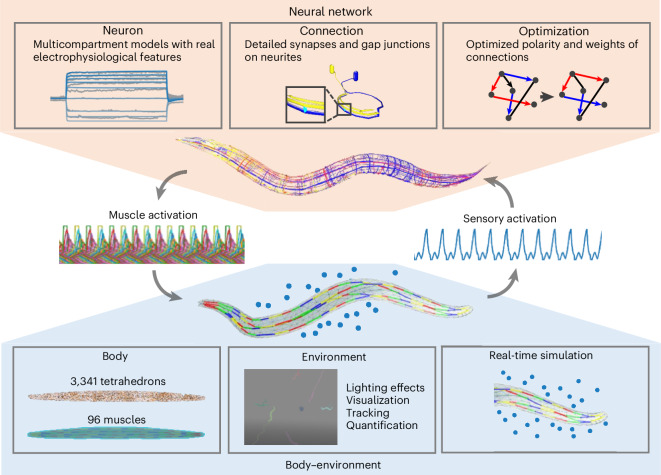
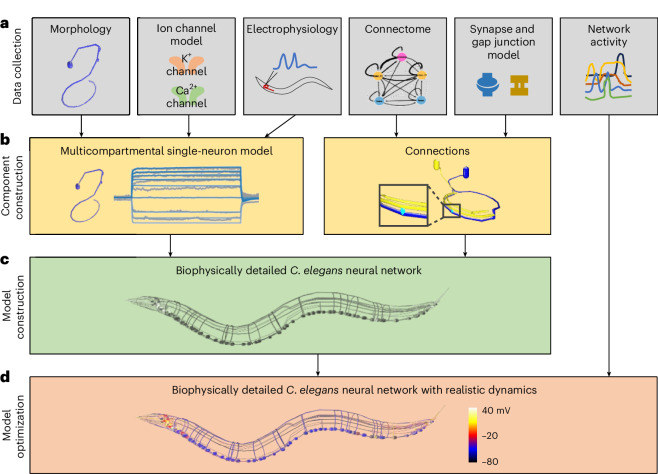
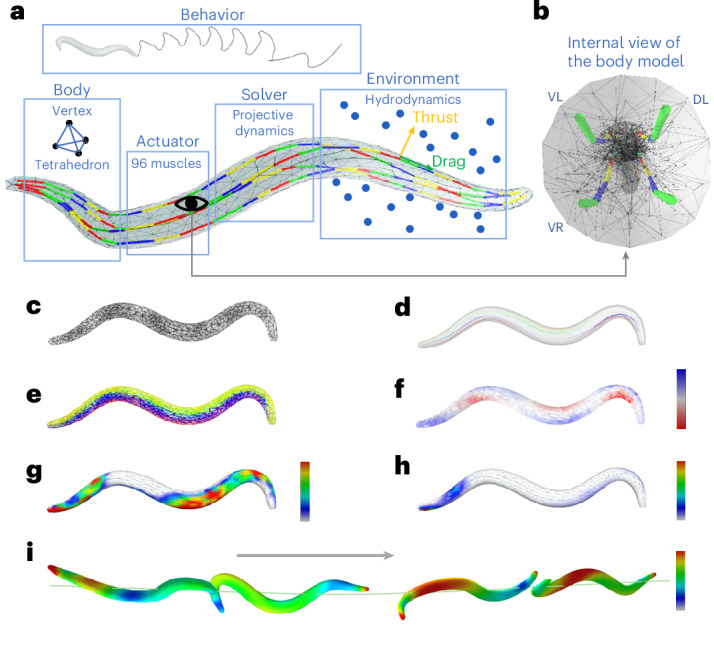
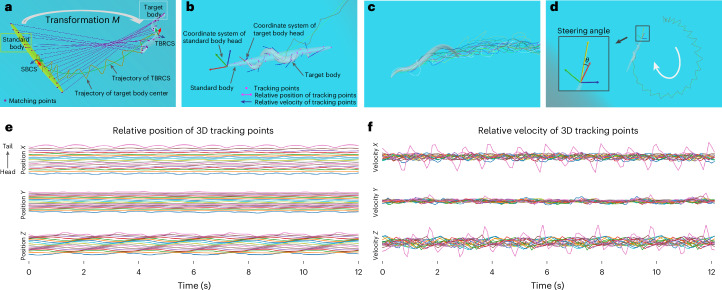
The behavior of an organism is influenced by the complex interplay between its brain, body and environment. Existing data-driven models focus on either the brain or the body–environment. Here we present BAAIWorm, an integrative data-driven model of Caenorhabditis elegans, which consists of two submodels: the brain model and the body–environment model. The brain model was built by multicompartment models with realistic morphology, connectome and neural population dynamics based on experimental data. Simultaneously, the body–environment model used a lifelike body and a three-dimensional physical environment. Through the closed-loop interaction between the two submodels, BAAIWorm reproduced the realistic zigzag movement toward attractors observed in C. elegans. Leveraging this model, we investigated the impact of neural system structure on both neural activities and behaviors. Consequently, BAAIWorm can enhance our understanding of how the brain controls the body to interact with its surrounding environment. BAAIWorm is an integrative data-driven model of C. elegans that simulates interactions between the brain, body and environment. The biophysically detailed neuronal model is capable of replicating the zigzag movement observed in this species.
Overview
The claims and statistics of this paper haven’t been checked yet.
Free: it reads the open-access text and checks the first 5 claims that cite a source we can check. Create a free account to check every claim.
Integrity signals
Registry
Cites
Statistics
Figures
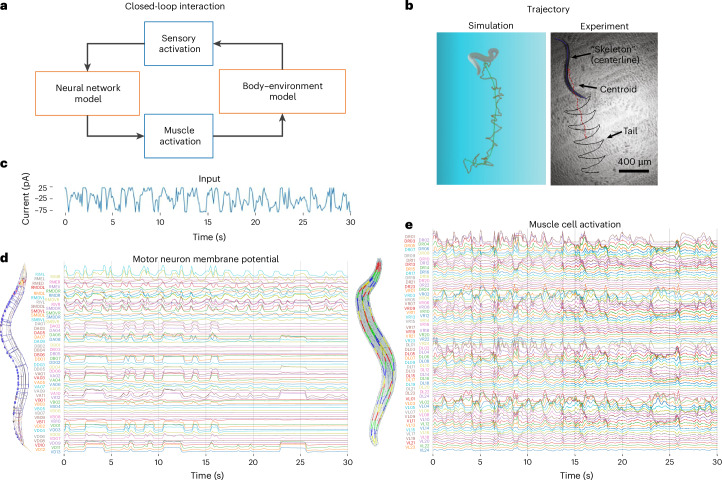
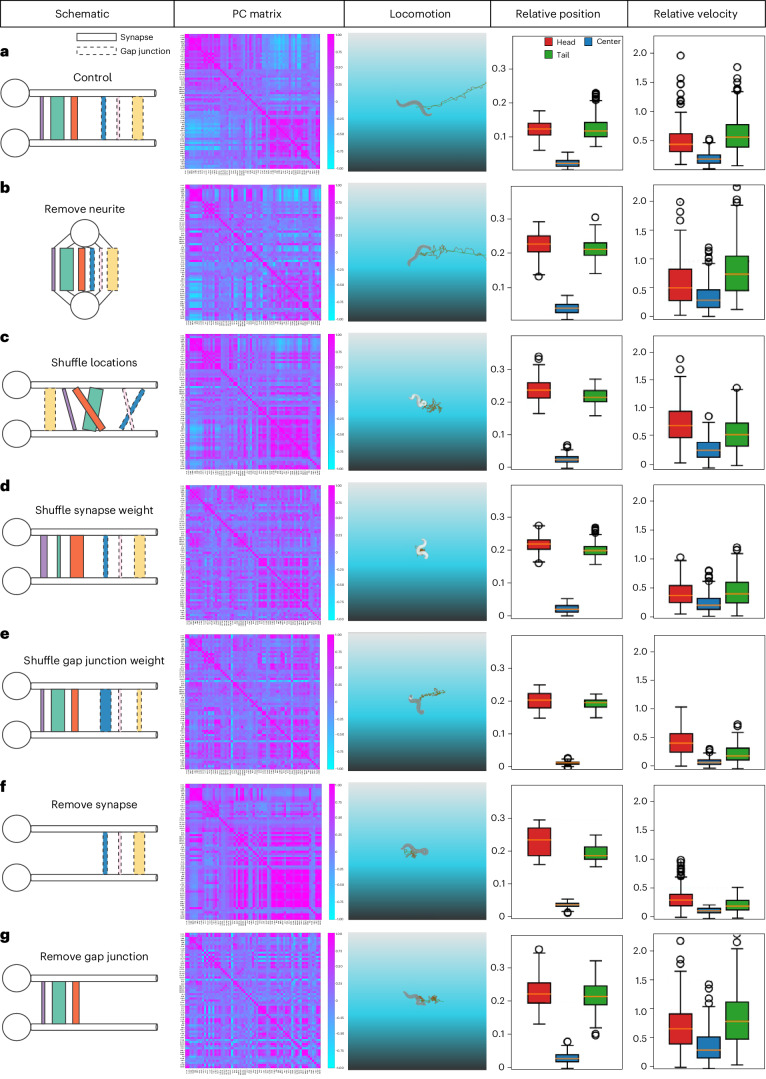
Verification
Claims the paper makes
The claims and statistics of this paper haven’t been checked yet.
Free: it reads the open-access text and checks the first 5 claims that cite a source we can check. Create a free account to check every claim.
Self-check
Percentages, sums and reported differences re-computed from the paper’s own numbers.
The self-check needs the paper’s full text.
Citations
Cites
Hodgkin, A. L., & Huxley, A. F. (1952) · The Journal of Physiology · doi:10.1113/jphysiol.1952.sp004764 · Cited by 23,191 · cited 1×
“Neurons were modeled by morphologically derived multicompartmental models with somatic Hodgkin–Huxley dynamics 58 and passive neurites.”
The Proceedings of the National Academy of Sciences
Richards, J. W. (1915) · Science · doi:10.1126/science.42.1074.161 · Cited by 13,983
The structure of the nervous system of the nematode Caenorhabditis elegans
White, J. G., Southgate, E., Thomson, J. N., & Brenner, S. (1986) · Philosophical Transactions of the Royal Society of London. B, Biological Sciences · doi:10.1098/rstb.1986.0056 · Cited by 5,589
OpenSim: Open-Source Software to Create and Analyze Dynamic Simulations of Movement
Delp, S. L., Anderson, F. C., Arnold, A. S., Loan, P., Habib, A., John, C. T., Guendelman, E., & Thelen, D. G. (2007) · IEEE Transactions on Biomedical Engineering · doi:10.1109/tbme.2007.901024 · Cited by 4,933 · cited 1×
“For example, OpenSim 49 aims to develop models of musculoskeletal structures and create dynamic simulations of movement in closed-loop style in three dimensions, but mainly for humans.”
Philosophical Transactions of the Royal Society B: biological sciences
(2026) · Philosophical Transactions of the Royal Society B Biological Sciences · doi:10.1098/rstb · Cited by 2,876
The NEURON Simulation Environment
Hines, M. L., & Carnevale, N. T. (1997) · Neural Computation · doi:10.1162/neco.1997.9.6.1179 · Cited by 2,658 · cited 1×
“The C. elegans neural network simulation and optimization were conducted with the code written in Python 3.8, and NEURON 8.0.0 was used as the simulation engine 63 .”
InfluentialReconstruction and Simulation of Neocortical Microcircuitry
Markram, H., Muller, E., Ramaswamy, S., Reimann, M. W., Abdellah, M., Sanchez, C. A., Ailamaki, A., Alonso-Nanclares, L., Antille, N., Arsever, S., et al. (2015) · Cell · doi:10.1016/j.cell.2015.09.029 · Cited by 1,557 · cited 1×
“…specific data-driven models that simulate either the brain, such as the mouse primary visual cortex 3 , the mouse striatum 4 and the rat somatosensory cortex 5 , or exclusively the body and environment to reproduce animal behaviors, such as neurome-chanical models for Drosophila 6 and rodents 7 .”
Influence of dendritic structure on firing pattern in model neocortical neurons
Mainen, Z. F., & Sejnowski, T. J. (1996) · Nature · doi:10.1038/382363a0 · Cited by 1,231 · cited 1×
“For connections, we first modeled gap junctions as simple ohmic resistances, and synapses as continuously transmitting synapse, according to published models 9,39–42 .”
Odorant-selective genes and neurons mediate olfaction in C. elegans
Bargmann, C. I., Hartwieg, E., & Horvitz, H. R. (1993) · Cell · doi:10.1016/0092-8674(93)80053-h · Cited by 1,225
Similar network activity from disparate circuit parameters
Prinz, A. A., Bucher, D., & Marder, E. (2004) · Nature Neuroscience · doi:10.1038/nn1352 · Cited by 1,091 · cited 1×
“Graded synapses, including excitatory and inhibitory synapses, were modeled according to published C. elegans models 9,40,41 .”
Whole-animal connectomes of both Caenorhabditis elegans sexes
Cook, S. J., Jarrell, T. A., Brittin, C. A., Wang, Y., Bloniarz, A. E., Yakovlev, M. A., Nguyen, K. C. Q., Tang, L. T.-H., Bayer, E. A., Duerr, J. S., et al. (2019) · Nature · doi:10.1038/s41586-019-1352-7 · Cited by 921 · cited 5×
“The number of connections between two cells was from the cell adjacency matrix 15 (Supplementary Fig.”
InfluentialA circuit for navigation in Caenorhabditis elegans
Gray, J. M., Hill, J. J., & Bargmann, C. I. (2005) · Proceedings of the National Academy of Sciences · doi:10.1073/pnas.0409009101 · Cited by 811 · cited 3×
“Our neural network model of C. elegans contained 136 neurons that participated in sensory and locomotion functions, as indicated by published studies 24,27–31 .”
Dissecting a circuit for olfactory behaviour in Caenorhabditis elegans
Chalasani, S. H., Chronis, N., Tsunozaki, M., Gray, J. M., Ramot, D., Goodman, M. B., & Bargmann, C. I. (2007) · Nature · doi:10.1038/nature06292 · Cited by 639 · cited 1×
“Second, other 71 neurons, most of which were motor neurons in the locomotion circuit of C. elegans 27,28 , were added to the network so that the model could be complete in a sensory–motor functional structure.”
From the connectome to brain function
Bargmann, C. I., & Marder, E. (2013) · Nature Methods · doi:10.1038/nmeth.2451 · Cited by 561 · cited 1×
“This is critical for understanding system-wide functions 57 .”
Global Brain Dynamics Embed the Motor Command Sequence of Caenorhabditis elegans
Kato, S., Kaplan, H. S., Schrödel, T., Skora, S., Lindsay, T. H., Yemini, E., Lockery, S., & Zimmer, M. (2015) · Cell · doi:10.1016/j.cell.2015.09.034 · Cited by 550
Projective dynamics: fusing constraint projections for fast simulation
Bouaziz, S., Martin, S., Liu, T., Kavan, L., & Pauly, M. (2014) · ACM Transactions on Graphics · doi:10.1145/2601097.2601116 · Cited by 435
Connectomes across development reveal principles of brain maturation
Witvliet, D., Mulcahy, B., Mitchell, J. K., Meirovitch, Y., Berger, D. R., Wu, Y., Liu, Y., Koh, W. X., Parvathala, R., Holmyard, D., et al. (2021) · Nature · doi:10.1038/s41586-021-03778-8 · Cited by 393 · cited 1×
“It has completely mapped morphologies of all 302 neurons 14,15 (in adult hermaphrodite), along with the connectome and synapse-level structure 16–18 .”
Large-scale neural recordings call for new insights to link brain and behavior
Urai, A. E., Doiron, B., Leifer, A. M., & Churchland, A. K. (2022) · Nature Neuroscience · doi:10.1038/s41593-021-00980-9 · Cited by 328 · cited 1×
“Therefore, no data-driven model currently meets all requirements of an integrative data-driven model, although such integration is urgently needed to progress our understanding of neural control mechanisms 11 .”
Billeh, Y. N., Cai, B., Gratiy, S. L., Dai, K., Iyer, R., Gouwens, N. W., Abbasi-Asl, R., Jia, X., Siegle, J. H., Olsen, S. R., et al. (2020) · Neuron · doi:10.1016/j.neuron.2020.01.040 · Cited by 305
Catalyzing next-generation Artificial Intelligence through NeuroAI
Zador, A., Escola, S., Richards, B., Ölveczky, B., Bengio, Y., Boahen, K., Botvinick, M., Chklovskii, D., Churchland, A., Clopath, C., et al. (2023) · Nature Communications · doi:10.1038/s41467-023-37180-x · Cited by 300 · cited 1×
“Third, and most crucially, the brain model should not only control the body model interacting with the virtual environment but also receive the feedback from the body and environment model, establishing a closed-loop interaction 12,13 .”
The Neural Circuits and Synaptic Mechanisms Underlying Motor Initiation in C. elegans
Piggott, B. J., Liu, J., Feng, Z., Wescott, S. A., & Xu, X. Z. S. (2011) · Cell · doi:10.1016/j.cell.2011.08.053 · Cited by 299
Proprioceptive Coupling within Motor Neurons Drives C. elegans Forward Locomotion
Wen, Q., Po, M. D., Hulme, E., Chen, S., Liu, X., Kwok, S. W., Gershow, M., Leifer, A. M., Butler, V., Fang-Yen, C., et al. (2012) · Neuron · doi:10.1016/j.neuron.2012.08.039 · Cited by 268 · cited 2×
“These findings resemble observations in biological experiments 48 .”
Pan-neuronal imaging in roaming Caenorhabditis elegans
Venkatachalam, V., Ji, N., Wang, X., Clark, C., Mitchell, J. K., Klein, M., Tabone, C. J., Florman, J., Ji, H., Greenwood, J., et al. (2016) · Proceedings of the National Academy of Sciences · doi:10.1073/pnas.1507109113 · Cited by 249 · cited 1×
“Recordings of single neural activity 19–23 as well as brain-wide neural dynamics 21,22,24 are available.”
Tetrahedral meshing in the wild
Hu, Y., Zhou, Q., Gao, X., Jacobson, A., Zorin, D., & Panozzo, D. (2018) · ACM Transactions on Graphics · doi:10.1145/3197517.3201353 · Cited by 249 · cited 2×
“The triangulation algorithm of tetrahedron mesh can be obtained from TetWild 65 .”
Bidirectional temperature-sensing by a single thermosensory neuron in C. elegans
Ramot, D., MacInnis, B. L., & Goodman, M. B. (2008) · Nature Neuroscience · doi:10.1038/nn.2157 · Cited by 187 · cited 4×
“Based on the few available electrophysiological data, we digitally reconstructed models of five representative neurons: AWC, AIY, AVA, RIM and VD5.”
InfluentialBulletin of the American Physical Society
Saiani, A. (2002) · Research Explorer (The University of Manchester) · Cited by 176
An open-source platform for analyzing and sharing worm-behavior data
Javer, A., Currie, M., Lee, C. W., Hokanson, J., Li, K., Martineau, C. N., Yemini, E., Grundy, L. J., Li, C., Ch'ng, Q.-L., et al. (2018) · Nature Methods · doi:10.1038/s41592-018-0112-1 · Cited by 174
Genetic and Cellular Analysis of Behavior in C. Elegans
Bargmann, C. I. (1993) · Annual Review of Neuroscience · doi:10.1146/annurev.ne.16.030193.000403 · Cited by 167 · cited 1×
“It also exhibits easily quantifiable behaviors, such as crawling, swimming and foraging 25,26 .”
C. elegans AWA Olfactory Neurons Fire Calcium-Mediated All-or-None Action Potentials
Liu, Q., Kidd, P. B., Dobosiewicz, M., & Bargmann, C. I. (2018) · Cell · doi:10.1016/j.cell.2018.08.018 · Cited by 159 · cited 6×
“There were 14 ion channels divided into 4 categories: voltage-gated potassium channels (SHK-1, EGL-36, SHL-1, KVS-1, KQT-3, EGL-2 and IRK1/3), calcium-regulated potassium channels (SLO1, SLO2 and KCNL), voltage-gated calcium channels (EGL19, UNC2 and CCA1) and passive sodium channel (NCA).”
InfluentialWicks, S. R., Roehrig, C. J., & Rankin, C. H. (1996) · The Journal of Neuroscience · doi:10.1523/jneurosci.16-12-04017.1996 · Cited by 156 · cited 1×
“Graded synapses, including excitatory and inhibitory synapses, were modeled according to published C. elegans models 9,40,41 .”
Neural signal propagation atlas of Caenorhabditis elegans
Randi, F., Sharma, A. K., Dvali, S., & Leifer, A. M. (2023) · Nature · doi:10.1038/s41586-023-06683-4 · Cited by 153 · cited 1×
“Recordings of single neural activity 19–23 as well as brain-wide neural dynamics 21,22,24 are available.”
Graded synaptic transmission at the Caenorhabditis elegans neuromuscular junction
Liu, Q., Hollopeter, G., & Jorgensen, E. M. (2009) · Proceedings of the National Academy of Sciences · doi:10.1073/pnas.0903570106 · Cited by 149 · cited 1×
“The neuron models were connected by graded synapses 36,60 and gap junctions 61 in the C. elegans neural network.”
Gait Modulation in C. elegans: An Integrated Neuromechanical Model
Boyle, J. H., Berri, S., & Cohen, N. (2012) · Frontiers in Computational Neuroscience · doi:10.3389/fncom.2012.00010 · Cited by 148 · cited 1×
“There are many two-dimensional worm body models 50,51 that elegantly simulate behaviors and provide insights into proprioception and the propagation of neuronal oscillations during worm locomotion.”
A Circuit for Gradient Climbing in C. elegans Chemotaxis
Larsch, J., Flavell, S. W., Liu, Q., Gordus, A., Albrecht, D. R., & Bargmann, C. I. (2015) · Cell Reports · doi:10.1016/j.celrep.2015.08.032 · Cited by 138
Sarma, G., Lee, C. W., Portegys, T., Ghayoomie, V., Jacobs, T. W., Alicea, B., Cantarelli, M., Currie, M., Gerkin, R. C., Gingell, S., et al. (2018) · Philosophical Transactions of the Royal Society B Biological Sciences · doi:10.1098/rstb.2017.0382 · Cited by 131
Physical reservoir computing with origami and its application to robotic crawling
Bhovad, P., & Li, S. (2021) · Scientific Reports · doi:10.1038/s41598-021-92257-1 · Cited by 129 · cited 1×
“Moreover, we adopted a simple but more functional approach from prior studies 47,54 (reservoir computation, for motor control) and we used matrix analysis (Supplementary Fig.”
Optogenetic manipulation of neural activity inC. elegans: From synapse to circuits and behaviour
Husson, S. J., GOTTSCHALK, A. R., & Leifer, A. M. (2013) · Biology of the Cell · doi:10.1111/boc.201200069 · Cited by 126
Action potentials contribute to neuronal signaling in C. elegans
Mellem, J. E., Brockie, P. J., Madsen, D. M., & Maricq, A. V. (2008) · Nature Neuroscience · doi:10.1038/nn.2131 · Cited by 119 · cited 5×
“8b), AVA (Mellem et al. 37 , fig.”
InfluentialA multi-scale brain map derived from whole-brain volumetric reconstructions
Brittin, C. A., Cook, S. J., Hall, D. H., Emmons, S. W., & Cohen, N. (2021) · Nature · doi:10.1038/s41586-021-03284-x · Cited by 116 · cited 2×
“It has completely mapped morphologies of all 302 neurons 14,15 (in adult hermaphrodite), along with the connectome and synapse-level structure 16–18 .”
A comparative approach to closed-loop computation
Roth, E., Sponberg, S., & Cowan, N. J. (2013) · Current Opinion in Neurobiology · doi:10.1016/j.conb.2013.11.005 · Cited by 115 · cited 1×
“Third, and most crucially, the brain model should not only control the body model interacting with the virtual environment but also receive the feedback from the body and environment model, establishing a closed-loop interaction 12,13 .”
From gene to identified neuron to behaviour in Caenorhabditis elegans
Rankin, C. H. (2002) · Nature Reviews Genetics · doi:10.1038/nrg864 · Cited by 112 · cited 1×
“It also exhibits easily quantifiable behaviors, such as crawling, swimming and foraging 25,26 .”
The microcircuits of striatum in silico
Hjorth, J. J. J., Kozlov, A., Carannante, I., Nylén, J. F., Lindroos, R., Johansson, Y., Tokarska, A., Dorst, M. C., Suryanarayana, S. M., Silberberg, G., et al. (2020) · Proceedings of the National Academy of Sciences · doi:10.1073/pnas.2000671117 · Cited by 112
Material Properties of Caenorhabditis elegans Swimming at Low Reynolds Number
Sznitman, J., Purohit, P. K., Krajacic, P., Lamitina, T., & Arratia, P. E. (2010) · Biophysical Journal · doi:10.1016/j.bpj.2009.11.010 · Cited by 104 · cited 2×
“5a. Notably, we observed that the trajectory of the C. elegans movement in our model was similar to the zigzag trajectory recorded in the experiments 44 (Fig.”
NeuroMechFly, a neuromechanical model of adult Drosophila melanogaster
Lobato-Rios, V., Ramalingasetty, S. T., Özdil, P. G., Arreguit, J., Ijspeert, A. J., & Ramdya, P. (2022) · Nature Methods · doi:10.1038/s41592-022-01466-7 · Cited by 88
c302: a multiscale framework for modelling the nervous system of Caenorhabditis elegans
Gleeson, P., Lung, D., Grosu, R., Hasani, R., & Larson, S. (2018) · Philosophical Transactions of the Royal Society B Biological Sciences · doi:10.1098/rstb.2017.0379 · Cited by 84 · cited 4×
“For connections, we first modeled gap junctions as simple ohmic resistances, and synapses as continuously transmitting synapse, according to published models 9,39–42 .”
InfluentialSoftCon: simulation and control of soft-bodied animals with biomimetic actuators
Min, S., Won, J., Lee, S.-H., Park, J., & Lee, J. (2019) · ACM Transactions on Graphics · doi:10.1145/3355089.3356497 · Cited by 80
Neuronal sub‐compartmentalization: a strategy to optimize neuronal function
Donato, A., Kagias, K., Zhang, Y., & Hilliard, M. A. (2019) · Biological Reviews · doi:10.1111/brv.12487 · Cited by 73 · cited 1×
“For example, some studies have found that different locations along the neurite of a C. elegans neuron may have distinct local neurite computations 17,56 .”
Serrano-Saiz, E., Pereira, L., Gendrel, M., Aghayeva, U., Bhattacharya, A., Howell, K., Garcia, L. R., & Hobert, O. (2017) · Genetics · doi:10.1534/genetics.117.202127 · Cited by 64 · cited 1×
“For example, considering that several neurons in C. elegans cotransmit multiple neurotransmitters 52,53 , we did not strictly constrain the model with Dale’s law during the training process.”
From head to tail: a neuromechanical model of forward locomotion in Caenorhabditis elegans
Izquierdo, E. J., & Beer, R. D. (2018) · Philosophical Transactions of the Royal Society B: Biological Sciences · doi:10.1098/rstb.2017.0374 · Cited by 56 · cited 1×
“There are many two-dimensional worm body models 50,51 that elegantly simulate behaviors and provide insights into proprioception and the propagation of neuronal oscillations during worm locomotion.”
A set of hub neurons and non-local connectivity features support global brain dynamics in C. elegans
Uzel, K., Kato, S., & Zimmer, M. (2022) · Current Biology · doi:10.1016/j.cub.2022.06.039 · Cited by 54 · cited 4×
“Recordings of single neural activity 19–23 as well as brain-wide neural dynamics 21,22,24 are available.”
InfluentialNicoletti, M., Loppini, A., Chiodo, L., Folli, V., Ruocco, G., & Filippi, S. (2019) · PLoS ONE · doi:10.1371/journal.pone.0218738 · Cited by 51 · cited 2×
“We integrated 14 established classes of ion channels (Supplementary Tables 1 and 2) 33 in neuron models and tuned environment.”
Liu, P., Chen, B., & Wang, Z. (2014) · Nature Communications · doi:10.1038/ncomms6155 · Cited by 47 · cited 5×
“This tuning was done to accurately reproduce the electrophysiological recordings obtained from patch-clamp experiments 35–38 at the single-neuron level.”
InfluentialA GPU-based computational framework that bridges neuron simulation and artificial intelligence
Zhang, Y., He, G., Ма, Л., Liu, X., Hjorth, J. J. J., Kozlov, A., He, Y., Zhang, S., Kotaleski, J. H., Tian, Y., et al. (2023) · Nature Communications · doi:10.1038/s41467-023-41553-7 · Cited by 46 · cited 1×
“The algorithm was adapted from our previous work 62 , which combined cable theory and gradient-descent methods.”
Self-citationDeep neuroethology of a virtual rodent
Merel, J., Aldarondo, D., Marshall, J., Tassa, Y., Wayne, G., & Ölveczky, B. (2019) · arXiv · doi:10.48550/arxiv.1911.09451 · Cited by 44
Roll maneuvers are essential for active reorientation of Caenorhabditis elegans in 3D media
Bilbao, A., Patel, A., Rahman, M., Vanapalli, S. A., & Bławzdziewicz, J. (2018) · Proceedings of the National Academy of Sciences · doi:10.1073/pnas.1706754115 · Cited by 40 · cited 2×
“However, although more challenging, we believe that 3D body and physical environment simulations of C. elegans can more precisely replicate natural motion patterns such as twisting and postural changes 45 .”
A neurotransmitter atlas of C. elegans males and hermaphrodites
Wang, C., Vidal, B., Sural, S., Loer, C. M., Aguilar, G. R., Merritt, D. M., Toker, I. A., Vogt, M. C., Cros, C., & Hobert, O. (2024) · eLife · doi:10.7554/elife.95402.3 · Cited by 39
Palyanov, A., Khayrulin, S., & Larson, S. D. (2018) · Philosophical Transactions of the Royal Society B: Biological Sciences · doi:10.1098/rstb.2017.0376 · Cited by 31 · cited 3×
“The surface shape of the body was extracted as a triangle list from Sibernetic membrane data 64 .”
InfluentialMolecular basis of junctional current rectification at an electrical synapse
Shui, Y., Liu, P., Zhan, H., Chen, B., & Wang, Z. (2020) · Science Advances · doi:10.1126/sciadv.abb3076 · Cited by 30 · cited 2×
“The parameter values of these synapses were set according to published models 61 : the conductance of the synapses and gap junctions had the same order of magnitude (1 × 10 −4 μS).”
Data-driven multiscale computational models of cortical and subcortical regions
Ramaswamy, S. (2024) · Current Opinion in Neurobiology · doi:10.1016/j.conb.2024.102842 · Cited by 29 · cited 3×
“We integrated 14 established classes of ion channels (Supplementary Tables 1 and 2) 33 in neuron models and tuned environment.”
3-D Worm Tracker for Freely Moving C. elegans
Kwon, N., Pyo, J., Lee, S., & Je, J. H. (2013) · PLoS ONE · doi:10.1371/journal.pone.0057484 · Cited by 28 · cited 1×
“This resulted in the movement trajectory of the C. elegans body following a standard Z shape, which was extremely similar to the trajectory in the experiment 44,55 (Supplementary Fig.”
Physical reservoir computing in a soft swimming robot
Horii, Y., Inoue, K., Nishikawa, S., Nakajima, K., Niiyama, R., & Kuniyoshi, Y. (2021) · Conference on Artificial Life (ALIFE) · doi:10.1162/isal_a_00426 · Cited by 23 · cited 1×
“Moreover, we adopted a simple but more functional approach from prior studies 47,54 (reservoir computation, for motor control) and we used matrix analysis (Supplementary Fig.”
All-optical closed-loop voltage clamp for precise control of muscles and neurons in live animals
Bergs, A. C. F., Liewald, J. F., Rodriguez-Rozada, S., Liu, Q., Wirt, C., Bessel, A., Zeitzschel, N., Durmaz, H., Nozownik, A., Dill, H., et al. (2023) · Nature Communications · doi:10.1038/s41467-023-37622-6 · Cited by 22 · cited 1×
“Recordings of single neural activity 19–23 as well as brain-wide neural dynamics 21,22,24 are available.”
Ramaswamy, S., Colangelo, C., & Markram, H. (2018) · Frontiers in Neural Circuits · doi:10.3389/fncir.2018.00077 · Cited by 21 · cited 2×
“To unravel the underlying neural control mechanisms, it is crucial to develop an integrative data-driven simulation that is constrained and parameterized by experimental data 1,2 and integrates detailed models of the brain, body and environment.”
Pan-neuronal imaging in roaming Caenorhabditis elegans
Venkatachalam, V., Ji, N., Wang, X., Clark, C., Mitchell, J. K., Klein, M., Tabone, C. J., Florman, J., Ji, H., Greenwood, J., et al. (2016) · eScholarship@UMassChan · Cited by 19
Ruach, R., Ratner, N., Emmons, S. W., & Zaslaver, A. (2023) · Proceedings of the National Academy of Sciences · doi:10.1073/pnas.2201699120 · Cited by 14 · cited 4×
“For example, some studies have found that different locations along the neurite of a C. elegans neuron may have distinct local neurite computations 17,56 .”
InfluentialPalyanov, A. Y., & Khayrulin, S. (2015) · Russian Journal of Genetics Applied Research · doi:10.1134/s2079059715060052 · Cited by 6
Li, H., Fan, 丰. F., Zhai, M., Zhang, J., Jiang, J., Su, Y., Chen, L., Gao, S., Tao, L., & Mao, H. (2021) · Cytometry Part A · doi:10.1002/cyto.a.24483 · Cited by 6
Markerless 3D spatio-temporal reconstruction of microscopic swimmers from video
Saldelder, F., Yuval, O., Ilett, T. P., Hogg, D., Ranner, T., & Cohen, N. (2021) · White Rose Research Online (University of Leeds, The University of Sheffield, University of York) · Cited by 5
Sheng, K., Zhang, S., Zhang, S., He, Y., Beau, M., Qu, P., Liu, X., Zhang, Y., Ma, L., & Du, K. (2022) · bioRxiv (Cold Spring Harbor Laboratory) · doi:10.1101/2022.10.03.510694 · Cited by 2
Self-citationAn Integrative Data-driven Model Simulating C. elegans Brain, Body and Environment Interactions
Mengdi, Z., Ning, W., Xinrui, J., Xiaoyang, M., Gan, H., Kai, D., Lei, M., & Tiejun, H. (2024) · Zenodo (CERN European Organization for Nuclear Research) · doi:10.5281/zenodo.13943856 · Cited by 1
Mengdi, Z., Ning, W., Xinrui, J., Xiaoyang, M., Haixin, M., Gan, H., Kai, D., Lei, M., & Tiejun, H. (2024) · Zenodo (CERN European Organization for Nuclear Research) · doi:10.5281/zenodo.13951772 · Cited by 1
Neural network model to generate head swing in locomotion of Caenorhabditis elegans
Sakata, K., & Shingai, R. (2004) · Network: Computation in Neural Systems · doi:10.1088/0954-898x_15_3_003
Research works printed but not linked: 2
- Sheng, K. et al. Domain adaptive neural inference for neurons, microcircuits and networks. Preprint at bioRxiv https://www. biorxiv.org/content/10.1101/2022.10.03.510694v1 (2022). · doi:10.1101/2022.10.03.510694v1
- Sheng, K. et al. Distilling multi-scale neural mechanisms from diverse unlabeled experimental data using deep domain-adaptive inference framework. Preprint at bioRxiv https://www.biorxiv.org/ content/10.1101/2022.10.03.510694v2 (2023). · doi:10.1101/2022.10.03.510694v2
Cited by
The locomotion of microorganisms in viscoelastic fluids at finite Reynolds numbers
Quan, Y., Zhang, M., Yu, Z., Lin, J., Xia, Y., & Lin, Z. (2025) · Journal of Fluid Mechanics · doi:10.1017/jfm.2025.10658 · Cited by 9
Microorganisms swimming in Giesekus viscoelastic fluids at finite Reynolds numbers
Quan, Y., Yu, Z., Lin, J., Ouyang, Z., Xia, Y., & Lin, Z. (2025) · Physics of Fluids · doi:10.1063/5.0281618 · Cited by 7
Wu, D., Wang, H., Ni, Y., Lu, Y., Wang, Y., Li, H., & Chen, L. (2025) · The Visual Computer · doi:10.1007/s00371-025-04000-w · Cited by 9
“Recent progress in deep learning, large-scale computational modeling, and interdisciplinary technological integration presents promising avenues for building comprehensive models of the brain and gut, such as the digital gut–brain axis [80].”
A data-driven biology-based network model reproduces C. elegans premotor neural dynamics
Morrison, M., & Young, L.-S. (2025) · PLoS Computational Biology · doi:10.1371/journal.pcbi.1013818 · Cited by 5
“A publication that appeared recently reproduces realistic C. elegans forward motion towards an attractor with a biomechanical body-environment model [25].”
InfluentialAI Alignment Versus AI Ethical Treatment: 10 Challenges
Bradley, A., & Saad, B. (2025) · Analytic Philosophy · doi:10.1111/phib.12380 · Cited by 7
Metadata
- Authors
- Zhao, M., Wang, N., Jiang, X., Ma, X., Ma, H., He, G., Du, K., Ma, L., & Huang, T.
- Affiliations
- Beijing Academy of Artificial Intelligence (CN)
- Peking University (CN)
- Venue
- Nature Computational Science
- Published
- 2024-12-16
- Volume
- 4
- Issue
- 12
- Pages
- 978-990
- ISSN
- 2662-8457 (ISSN-L)
- PMC
- PMC11659166
- OpenAlex
- W4405419531
- Cited by
- 29
- References
- 72
- Citations by year
- 2026: 18 · 2025: 11
- FWCI
- 7.03
- Type
- journal article
- Language
- en
- Open access
- hybrid
- doi.org
- Licence
- cc-by-nc-nd
- creativecommons.org/licenses/by-nc-nd/4.0 (tdm)
- creativecommons.org/licenses/by-nc-nd/4.0 (vor)
- Locations
- Nature Computational Science (publishedVersion, cc-by-nc-nd)
- Research Square (acceptedVersion, cc-by)
- PubMed Central (publishedVersion, cc-by-nc-nd)
- PubMed (publishedVersion)
- Topics
- Life Sciences › Neuroscience › Cognitive Neuroscience › Neural dynamics and brain function
- Life Sciences › Neuroscience › Cellular and Molecular Neuroscience › Neurobiology and Insect Physiology Research
- Social Sciences › Education › Undergraduate Neuroscience Education and Research
- Keywords
- Caenorhabditis elegans, brain-body-environment interaction, connectome, multicompartment neuron models, neural population dynamics, attractor behavior, closed-loop simulation, locomotor activity
- MeSH terms
- Animals, Behavior, Animal, Brain, Computer Simulation, Environment, Models, Neurological, Caenorhabditis elegans, Connectome
About these checks
Registry, retraction, Cites and statistics results are computed, not judged, with one exception: a printed reference that no index lists is read once by a model before it counts as a citation error. Claims are extracted by a model and kept only when their quote appears verbatim in the text; each cited source is then checked, with a model’s help, for whether it says what the claim relies on. Those verdicts can be wrong — read the claim’s quote and the cited source before relying on one.
Statistics and arithmetic are recomputed, not judged.
Confidence bands are shown only for fields calibrated on our annotated test set. None is calibrated yet, so no band is shown.
What counts as a claim ›How we measure confidence ›How we check this ›
Are you an author, or do you see a problem with this page? Request a review
Data sources
Bibliographic data: Semantic Scholar, OpenAlex, Crossref.
Contains information from the Semantic Scholar Academic Graph Datasets, made available under the ODC Attribution License (ODC-BY 1.0).
Semantic Scholar’s data is described in: Kinney, R., et al. (2023). The Semantic Scholar Open Data Platform. arXiv:2301.10140.
