

Performance assessment and economic analysis of a human Liver-Chip for predictive toxicology
Open accessThe DOI matches its Crossref record; 59 of the 59 references it cites were found in a registry or an index; 13 of the 44 sources its claims cite were checked for support.
Abstract
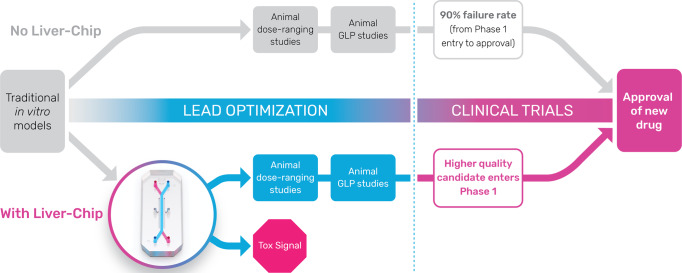
Conventional preclinical models often miss drug toxicities, meaning the harm these drugs pose to humans is only realized in clinical trials or when they make it to market. This has caused the pharmaceutical industry to waste considerable time and resources developing drugs destined to fail. Organ-on-a-Chip technology has the potential improve success in drug development pipelines, as it can recapitulate organ-level pathophysiology and clinical responses; however, systematic and quantitative evaluations of Organ-Chips' predictive value have not yet been reported. 870 Liver-Chips were analyzed to determine their ability to predict drug-induced liver injury caused by small molecules identified as benchmarks by the Innovation and Quality consortium, who has published guidelines defining criteria for qualifying preclinical models. An economic analysis was also performed to measure the value Liver-Chips could offer if they were broadly adopted in supporting toxicity-related decisions as part of preclinical development workflows. Here, we show that the Liver-Chip met the qualification guidelines across a blinded set of 27 known hepatotoxic and non-toxic drugs with a sensitivity of 87% and a specificity of 100%. We also show that this level of performance could generate over $3 billion annually for the pharmaceutical industry through increased small-molecule R&D productivity. The results of this study show how incorporating predictive Organ-Chips into drug development workflows could…
Overview
CoChat Summary
## TL;DR
This study systematically evaluated a human Liver-Chip for drug-induced liver injury (DILI) prediction using 870 chips and a blinded set of 27 drugs. The Liver-Chip met IQ consortium qualification criteria and, when protein binding was accounted for, achieved 87% sensitivity and 100% specificity, with the authors estimating an annual industry value of over $3 billion.
## Key findings
- Across a blinded set of 27 known hepatotoxic and non-toxic drugs, the Liver-Chip achieved 87% sensitivity and 100% specificity after accounting for protein binding.
- In the 15 toxic drugs tested using two donors, the Liver-Chip correctly predicted toxicity in 12 out of 15 drugs, yielding 80% sensitivity; the paper reports this was compared with 42% sensitivity for 3D hepatic spheroids and 67% specificity for spheroids.
- Using the protein-binding-corrected analysis, the Spearman correlation with the Garside DILI severity scale was 0.78, versus 0.43 with the lower-threshold, uncorrected approach.
- The economic model estimated a 2.8% NPV uplift for drug development and an annual industry gain of about $3 billion ($2.1B–$3.4B, 95% CI) if Liver-Chips were broadly adopted for small-molecule DILI prediction; extending the approach to four additional Organ-Chip models could yield over $24 billion annually.
## Methods
- The study used 870 Liver-Chips run in five consecutive cycles over 20 weeks, testing 27 drugs in a blinded design with three human hepatocyte donors; drug preparation, dosing, and analysis were split across teams to preserve blinding.
- Liver-Chip performance was assessed using structural and functional endpoints including albumin, ALT, urea, morphology scoring, live/fixed imaging, and gene expression, with toxicity called from concentration- and time-dependent responses across days 1, 3, and 7.
- An economic model extending prior pipeline models was used to estimate how improved preclinical toxicology prediction would change false negative rate (FNR), net present value (NPV), and annual R&D productivity.
## Limitations
- The authors note that the PDMS chip material may be problematic for some small molecules because of non-specific binding, and they recommend checking binding experimentally with an acellular chip; this is a limitation stated in the Discussion.
- The paper notes that only small molecules were assessed, and that performance against large molecules and biologic therapies still needs investigation; this is stated in the Discussion.
- Evident from the text: the study only tested five of six additional IQ-suggested drugs in the second DILI challenge set because one drug was not obtained and another was considered to need a more complex immune configuration.
Model-written summary. Check it against the paper before relying on it.
Integrity signals
Registry
Cites
Statistics
Figures
Verification
Claims the paper makes
8 Valid · 4 Not valid · 19 Not checked · 86 Own results and interpretations
At least one cited source doesn’t support this claim or points to a different paper, and none confirmed it — see the verdicts below.
In the paper
“This was almost double the sensitivity of 3D hepatic spheroids for the same drug set (42%) based on previously published data31,47,48”
§ Performance assessment and economic analysis of a human Liver-Chip for predictive toxicology > Results > Improved sensitivity for DILI prediction compared to spheroids and animal models
What the sources say
- Disputedcites [31] Proctor WR Utility of spherical human liver microtissues for prediction of clinical drug-induced liver injury Arch. Toxicol. 2017 91 2849 2863 28612260 PMC5515971 sourceExperimental — accuracy not yet measured
In Results (Statistical analysis employing practical fixed thresholds; page unavailable), the paper reports 60.9% sensitivity for its 3D liver spheroids at a 100 μM threshold, not 42%. Its Discussion gives a sensitivity range of 19–61% depending on the threshold. The Results figure of 42 is the number of DILI-positive drugs detected out of 69, not a percentage. (LLM, conf=0.85)
Checked by a reasoning model — may be wrong.
- Not checked — no full text of the sourcecites [47] Hendriks DFG Mechanisms of chronic fialuridine hepatotoxicity as revealed in primary human hepatocyte spheroids Toxicol. Sci. 2019 171 385 395 31505000 source
- Not checked — no full text of the sourcecites [48] Li F Cao L Parikh S Zuo R Three-dimensional spheroids with primary human liver cells and differential roles of Kupffer cells in drug-induced liver injury J. Pharm. Sci. 2020 109 1912 1923 32145211 source
plainn = 2- Asserted: passes — The authors put it forward as true.
- Checkable: passes — It can be checked against evidence.
- Load-bearing: passes — The paper’s conclusions depend on it.
- Based: passes — The paper gives a reason why it holds.
- Disputed
At least one cited source doesn’t support this claim or points to a different paper, and none confirmed it — see the verdicts below.
In the paper
“a preclinical model that is currently widely used in pharma and was only able to correctly identify 8 out of the 19 toxic drugs in the set (Table 5).”
§ Performance assessment and economic analysis of a human Liver-Chip for predictive toxicology > Results > Improved sensitivity for DILI prediction compared to spheroids and animal models
What the sources say
- Disputedcites [31] Proctor WR Utility of spherical human liver microtissues for prediction of clinical drug-induced liver injury Arch. Toxicol. 2017 91 2849 2863 28612260 PMC5515971 sourceExperimental — accuracy not yet measured
The Results (Statistical analysis employing practical fixed thresholds; page unavailable) report that the 3D liver microtissue assay tested 69 DILI-positive drugs, identifying 13 to 42 depending on the threshold. The cited paper does not report identifying 8 of 19 toxic drugs; its reported test set and results are different. (LLM, conf=0.86)
Checked by a reasoning model — may be wrong.
- Not checked — no full text of the sourcecites [47] Hendriks DFG Mechanisms of chronic fialuridine hepatotoxicity as revealed in primary human hepatocyte spheroids Toxicol. Sci. 2019 171 385 395 31505000 source
- Not checked — no full text of the sourcecites [48] Li F Cao L Parikh S Zuo R Three-dimensional spheroids with primary human liver cells and differential roles of Kupffer cells in drug-induced liver injury J. Pharm. Sci. 2020 109 1912 1923 32145211 source
plain- Asserted: passes — The authors put it forward as true.
- Checkable: passes — It can be checked against evidence.
- Load-bearing: passes — The paper’s conclusions depend on it.
- Based: passes — The paper gives a reason why it holds.
- Disputed
The cited sources support only part of this claim — read each source’s verdict below.
In the paper
“Importantly, the toxicities of these 8 drugs have been shown to be poorly predicted by hepatic spheroids31,32.”
§ Performance assessment and economic analysis of a human Liver-Chip for predictive toxicology > Results > Improved sensitivity for DILI prediction compared to spheroids and animal models
What the sources say
- Partly supportedcites [31] Proctor WR Utility of spherical human liver microtissues for prediction of clinical drug-induced liver injury Arch. Toxicol. 2017 91 2849 2863 28612260 PMC5515971 sourceExperimental — accuracy not yet measured
The Results section, ‘Comparison of predictive value in PHH and hLiMT across different DILI categories’ (page unavailable), reports false negatives in hepatic microtissues, so the paper supports the point that spheroids missed some drug toxicities. It does not establish that the eight drugs referred to in the citing sentence were the ones missed. (LLM, conf=0.79)
- Partly supportedcites [32] Vorrink SU Zhou Y Ingelman-Sundberg M Lauschke VM Prediction of drug-induced hepatotoxicity using long-term stable primary hepatic 3D spheroid cultures in chemically defined conditions Toxicol. Sci. 2018 163 655 665 29590495 PMC5974779 sourceExperimental — accuracy not yet measured
The Results (page unavailable) report that the spheroid model detected 48 of 70 drugs with human hepatotoxicity liabilities, so it did miss some toxic drugs. The paper does not identify the citing sentence’s particular eight drugs, however, and reports good overall predictive performance rather than describing those eight as a group. (LLM, conf=0.78)
plain- Asserted: passes — The authors put it forward as true.
- Checkable: passes — It can be checked against evidence.
- Load-bearing: passes — The paper’s conclusions depend on it.
- Based: passes — The paper gives a reason why it holds.
- Partly supported
The cited sources support only part of this claim — read each source’s verdict below.
In the paper
“previously, the same Liver-Chip has been shown to exhibit Phase I and II functional activities that are comparable to freshly isolated human hepatocytes and 3D hepatic spheroids26,30”
§ Performance assessment and economic analysis of a human Liver-Chip for predictive toxicology > Results > Liver-Chip satisfies IQ MPS affiliate guidelines
What the sources say
- Not checked — no full text of the sourcecites [26] Jang K-J Reproducing human and cross-species drug toxicities using a Liver-Chip Sci. Transl. Med. 2019 11 eaax5516 31694927 source
- Partly supportedcites [30] Foster AJ Integrated in vitro models for hepatic safety and metabolism: evaluation of a human Liver-Chip and liver spheroid Arch. Toxicol. 2019 93 1021 1037 30915487 sourceExperimental — accuracy not yet measured
Our copy of Foster et al. (2019) supports the Liver-Chip-vs-3D-spheroid half of the claim: the Discussion (APAP metabolite quantification / Discussion sections) states 'APAP-glucuronide and APAP-sulfate formation is present during the culture period demonstrating phase II metabolism at comparable levels in both systems', and CYP activity profiling (Results, 'CYP activity profiling in Liver-Chips and liver spheroids') says Phase I activity was maintained in both models over the study. The benchmark against human hepatocytes is narrower than the claim states: for the Liver-Chip the Discussion explicitly reports comparability only for CYP2C19, and against 'freshly thawed cryopreserved human hepatocytes' (Brown et al. 2007) rather than freshly isolated cells; the broader hepatocyte comparability statements (including the CYP2E1 36-fold shortfall) are made for the spheroid model, and the paper notes activity levels 'varied between and within experiments' with lower CYP1A2/CYP2D6 at later time points. So a blanket 'Phase I and II activities comparable to freshly isolated human hepatocytes' overstates what this source demonstrates. (LLM, conf=0.72)
plain- Asserted: passes — The authors put it forward as true.
- Checkable: passes — It can be checked against evidence.
- Load-bearing: passes — The paper’s conclusions depend on it.
- Based: passes — The paper gives a reason why it holds.
The cited sources support only part of this claim — read each source’s verdict below.
In the paper
“whereas the 3D hepatic spheroids did (only 67% specificity)31”
§ Performance assessment and economic analysis of a human Liver-Chip for predictive toxicology > Results > Improved sensitivity for DILI prediction compared to spheroids and animal models
What the sources say
- Partly supportedcites [31] Proctor WR Utility of spherical human liver microtissues for prediction of clinical drug-induced liver injury Arch. Toxicol. 2017 91 2849 2863 28612260 PMC5515971 sourceExperimental — accuracy not yet measured
The Results section, “Statistical analysis employing practical fixed thresholds” (page unavailable), reports that the 3D liver microtissue assay falsely classified some DILI-negative drugs as toxic. But its reported specificity was 80.5–97.6% across the tabulated thresholds, not 67%. (LLM, conf=0.91)
plainstates a cause- Asserted: passes — The authors put it forward as true.
- Checkable: passes — It can be checked against evidence.
- Load-bearing: passes — The paper’s conclusions depend on it.
- Based: passes — The paper gives a reason why it holds.
- Partly supported
55 more claims · 1 with their cited sources checked
Create a free account to see all 117 claims and to verify the 6 references still open.
- It may state two separate claims as one. 43
- Probably not a substantial claim. 21
- The quote only partly states this claim. 2
Citations
Cites
ggplot2: Elegant Graphics for Data Analysis
Wickham, H. (2009) · doi:10.1007/978-0-387-98141-3 · Cited by 14,447
Reconstituting organ-level lung functions on a chip
Huh, D., Matthews, B. D., Mammoto, A., Montoya-Zavala, M., Hsin, H. Y., & Ingber, D. E. (2010) · Science · doi:10.1126/science.1188302 · Cited by 4,250
Self-citationCan the pharmaceutical industry reduce attrition rates?
Kola, I., & Landis, J. (2004) · Nature Reviews Drug Discovery · doi:10.1038/nrd1470 · Cited by 4,167
Dose-Response Analysis Using R
Ritz, C., Baty, F., Streibig, J. C., & Gerhard, D. (2015) · PLOS ONE · doi:10.1371/journal.pone.0146021 · Cited by 3,658
How to improve R&D productivity: the pharmaceutical industry's grand challenge
Paul, S. M., Mytelka, D. S., Dunwiddie, C. T., Persinger, C. C., Munos, B. H., Lindborg, S. R., & Schacht, A. L. (2010) · Nature Reviews Drug Discovery · doi:10.1038/nrd3078 · Cited by 3,566
Bhatia, S. N., & Ingber, D. E. (2014) · Nature Biotechnology · doi:10.1038/nbt.2989 · Cited by 3,305
Self-citationDiagnosing the decline in pharmaceutical R&D efficiency
Scannell, J. W., Blanckley, A., Boldon, H., & Warrington, B. (2012) · Nature Reviews Drug Discovery · doi:10.1038/nrd3681 · Cited by 1,981
Self-citationMale sex identified by global COVID-19 meta-analysis as a risk factor for death and ITU admission
Peckham, H., de Gruijter, N. M., Raine, C., Radziszewska, A., Ciurtin, C., Wedderburn, L. R., Rosser, E. C., Webb, K., & Deakin, C. T. (2020) · Nature Communications · doi:10.1038/s41467-020-19741-6 · Cited by 1,503
Lessons learned from the fate of AstraZeneca's drug pipeline: a five-dimensional framework
Cook, D., Brown, D., Alexander, R., March, R., Morgan, P., Satterthwaite, G., & Pangalos, M. N. (2014) · Nature Reviews Drug Discovery · doi:10.1038/nrd4309 · Cited by 1,344
Godoy, P., Hewitt, N. J., Albrecht, U., Andersen, M. E., Ansari, N., Bhattacharya, S., Bode, J. G., Bolleyn, J., Borner, C., Böttger, J., et al. (2013) · Archives of Toxicology · doi:10.1007/s00204-013-1078-5 · Cited by 1,280
Research works printed but not linked: 2
- Redfern WS Impact and frequency of different toxicities throughout the pharmaceutical life cycle Toxicologist 2010 114 1081
- Lloyd, I. Pharma R&D Annual Review 2021, 1–45. (Citeline Informa Pharma Intelligence, 2021).
Cited by
Items 101–200 of 325
Constructing biomimetic microenvironments for liver regeneration
(2025) · doi:10.1186/s12951-025-03729-9 · Cited by 11
Breaking down the barriers to animal-free research
Hope, L., & Bailey, J. (2025) · Alternatives to Laboratory Animals · doi:10.1177/02611929251349465 · Cited by 12
“Additionally, there have been promising in vitro models that could be more reliable and predictive compared to animal studies, including an OoC DILI model 11 and the MatTek EpiDerm ™ model, which is included in an OECD Test Guideline.”
Nature‐Inspired Multidisciplinary Strategies for Tissue and Organ Cryopreservation
Liu, Z., Han, C., Wang, L.-Q., Cao, H., Xu, Z., & Wang, J. (2025) · Advanced Materials · doi:10.1002/adma.202510982 · Cited by 14
The age of animal experiments is waning. Where will science go next?
Kwon, D. (2026) · Nature · doi:10.1038/d41586-026-00563-3 · Cited by 14
Cancer 3D Models for Metallodrug Preclinical Testing
Engrácia, D. M., Pinto, C. I. G., & Mendes, F. (2023) · International Journal of Molecular Sciences · doi:10.3390/ijms241511915 · Cited by 12
“Complex models such as organ-on-a-chip are already us d in drug toxicity as ssments for predictive evaluation [156], nd tumoroids could even be used in the fu ure s platforms to verify which metallodrug will be more adequate for each patient, covering an important aspect of precision medicine.”
BackgroundInfluentialState-of-the-art in high throughput organ-on-chip for biotechnology and pharmaceuticals
Song, S., & Jeong, S. (2024) · Daehan saengsik uihak hoeji/Clinical and experimental reproductive medicine · doi:10.5653/cerm.2024.06954 · Cited by 12
“Biopharmaceutical companies face numerous challenges when developing human drugs, with the assessment of potential toxicity during the clinical stage being particularly daunting [38,39].”
TAK-994 mechanistic investigation into drug-induced liver injury
Shinozawa, T., Miyamoto, K., Baker, K. S., Faber, S. C., Flores, R., Uetrecht, J., von Hehn, C., Yukawa, T., Tohyama, K., Kadali, H., et al. (2025) · Toxicological Sciences · doi:10.1093/toxsci/kfaf003 · Cited by 14
“Advances in in vitro hepatocyte cultures, liver microtissues, and liver-on-a-chip technologies have enhanced our ability to detect direct injury to hepatocytes caused by intrinsic DILI (Proctor et al. 2017; Walker et al. 2020; Ewart et al. 2022).”
A proof-of-concept study poised to remodel the drug development process
Nahle, Z. A. (2022) · Frontiers in Medical Technology · doi:10.3389/fmedt.2022.1053588 · Cited by 12
“This legislation seeks to establish the National Center for Alternatives to Animal Research and Testing within the National Institutes of Health with the sole purpose of “(1) developing, promoting, and funding alternatives to animal research and testing; and (2) developing a plan for reducing the number of animals use…”
BackgroundCherradi, S., Taulet, N., & Duong, H. T. (2023) · In vitro models · doi:10.1007/s44164-023-00057-w · Cited by 11
Confronting the bias towards animal experimentation (animal methods bias)
Krebs, C. E., & Herrmann, K. (2024) · Frontiers in Drug Discovery · doi:10.3389/fddsv.2024.1347798 · Cited by 13
Engineering advanced in vitro models of endothelial dysfunction
Singh, J., Ruhoff, A. M., Ashok, D., Wise, S. G., & Waterhouse, A. (2025) · Trends in biotechnology · doi:10.1016/j.tibtech.2025.03.004 · Cited by 11
Developments and Applications of Liver-on-a-Chip Technology—Current Status and Future Prospects
Mugaanyi, J., Huang, J., Fang, J., Musinguzi, A., Lu, C., & Chen, Z. (2025) · Biomedicines · doi:10.3390/biomedicines13061272 · Cited by 14
Gökçe, F., Kaestli, A. J., Lohasz, C., de Geus, M., Kaltenbach, H., Renggli, K., Bornhauser, B. C., Hierlemann, A. R., & Modena, M. M. (2023) · Advanced Healthcare Materials · doi:10.1002/adhm.202202506 · Cited by 8
Simple design for membrane-free microphysiological systems to model the blood-tissue barriers
Young, B. A. T., Deal, H. E., Rusch, G., Pozdin, V. A., Brown, A. C., & Daniele, M. A.-A. (2023) · Organs-on-a-Chip · doi:10.1016/j.ooc.2023.100032 · Cited by 11
“…testing on a large scale (Young and Beebe, 2010; Hughes et al., 2010; Maschmeyer et al., 2015; Kamm and Bashir, 2014; Fairbanks et al., 2009; Ewart et al., 2022), the automated handling and high number of replicates offered by the BTI Chip’s parallelization of fabrication via microfluidics…”
Alternative Enzyme Inhibition Assay for Safety Evaluation of Food Preservatives
Esimbekova, E. N., Асанова, А. А., & Kratasyuk, V. A. (2023) · Life · doi:10.3390/life13061243 · Cited by 11
3D human tissue models and microphysiological systems for HIV and related comorbidities
Yin, D. E., Palin, A., Lombo, T., Mahon, R. N., Poon, B., Wu, D.-Y., Atala, A., Brooks, K. M., Chen, S., Coyne, C. B., et al. (2023) · Trends in biotechnology · doi:10.1016/j.tibtech.2023.10.008 · Cited by 10
Alshmmari, S. K., Fardous, R. S., Shinwari, Z., Cialla‐May, D., Popp, J., Ramadan, Q., & Zourob, M. M. (2024) · Biomicrofluidics · doi:10.1063/5.0210955 · Cited by 9
Microfluidic Applications in Prostate Cancer Research
Szewczyk, K., Jiang, L., Khawaja, H., Miranti, C. K., & Zohar, Y. (2024) · Micromachines · doi:10.3390/mi15101195 · Cited by 9
Taylor, K., Ram, R., Ewart, L. C., Goldring, C. E., Russomanno, G., Aithal, G. P., Kostrzewski, T. M., Bauch, C., Wilkinson, J. M., Modi, S., et al. (2025) · Frontiers in Drug Discovery · doi:10.3389/fddsv.2025.1536756 · Cited by 12
Self-citationIzadifar, Z., Stejskalová, A., Gulati, A., Gutzeit, O., & Ingber, D. E. (2025) · BioEssays · doi:10.1002/bies.70014 · Cited by 9
Self-citationDalsbecker, P., Suominen, S., Faridi, M. A., Mahdavi, R., Johansson, J., Blomqvist, C. H., Goksör, M., Aalto‐Setälä, K., Viiri, L. E., & Adiels, C. B. (2025) · Lab on a Chip · doi:10.1039/d4lc00509k · Cited by 12
A scalable human liver-on-a-chip platform for predictive safety assessment
Kulkarni, G., Chen, L., Sang, J., Seo, J. H., Grall, R., Wang, Y., Gilbride, P., Yuan, Y., Albaum-Getzen, M., McCormack, J., et al. (2025) · Toxicology · doi:10.1016/j.tox.2025.154378 · Cited by 12
Self-citationTumor-on-chip’s alliance with molecular pathology against metastatic disease
Carlo, E. D. (2026) · Journal of Biomedical Science · doi:10.1186/s12929-025-01209-8 · Cited by 11
“Regulatory qualification for replacing animal studies is progressing (FDA modernization) [36], but broad regulatory acceptance requires standardized protocols and more cross-lab reproducibility data [31].”
Cassotta, M., Díaz, Y. A., Qi, Z., Yang, B., Grosso, G., Quiles, J. L., Battino, M. A., Godos, J., & Giampieri, F. (2025) · Trends in Food Science & Technology · doi:10.1016/j.tifs.2025.104980 · Cited by 14
Bone-on-a-Chip Systems for Hematological Cancers
Kozalak, G., & Koşar, A. (2025) · Biosensors · doi:10.3390/bios15030176 · Cited by 7
“Emulate generated a liver chip designed to economically assess the efficacy of various drugs [210].”
Adopting novel alternative methods (NAMs) for biomedical research—What is the right approach?
Svendsen, C. N. (2025) · Cell stem cell · doi:10.1016/j.stem.2025.08.014 · Cited by 9
Report of the Assay Guidance Workshop on 3-Dimensional Tissue Models for Antiviral Drug Development
Jordan, R., Ford‐Scheimer, S. L., Alarcon, R. M., Atala, A., Borenstein, J. T., Brimacombe, K. R., Cherry, S. R., Clevers, H. C., Davis, M. I., Funnell, S. G. P., et al. (2023) · The Journal of Infectious Diseases · doi:10.1093/infdis/jiad334 · Cited by 9
Self-citationBissoyi, A., Gao, Y., Tomás, R. M. F., Kinney, N. L. H., Whale, T. F., Guo, Q., & Gibson, M. I. (2024) · ACS Applied Materials & Interfaces · doi:10.1021/acsami.4c03931 · Cited by 11
Human-based complex in vitro models: their promise and potential for rare disease therapeutics
Parvatam, S., Pistollato, F., Marshall, L. J., Furtmann, F., Jahagirdar, D., Choudhury, M. C., Mohanty, S., Mittal, H., Meganathan, S., & Mishra, R. (2025) · Frontiers in Cell and Developmental Biology · doi:10.3389/fcell.2025.1526306 · Cited by 9
Zhou, Y., Zhong, Y., & Lauschke, V. M. (2025) · Expert Opinion on Drug Metabolism & Toxicology · doi:10.1080/17425255.2025.2461484 · Cited by 9
“However, a recent study showed that while CYP2C9 and CYP3A4 remained highly expressed, significantly decreased expression was observed in CYP2D6, CYP2C8, CYP2E1, MRP2 already after one week [107].”
Drees, A., Nassiri, V., Tabernilla, A., Serroyen, J., Gustin, E. M., Rodrigues, B. D. S., Moss, D. M., Smedt, A. D., Vinken, M., Goethem, F. V., et al. (2025) · Toxicology · doi:10.1016/j.tox.2025.154119 · Cited by 6
Challenges of in vitro modelling of liver fibrosis
Ros-Tárraga, P., Villanueva-Bádenas, E., Sanchez-Gonzalez, E., Ferrer, G. G., Donato, M. T., & Tolosa, L. (2025) · Frontiers in Cell and Developmental Biology · doi:10.3389/fcell.2025.1567916 · Cited by 13
Larson, J. D., Jadalannagari, S., Chaff, J. T., Velez, J., Sliz, J. D., Ewart, L. C., Webster, D., & Hu, J. (2025) · Scientific Reports · doi:10.1038/s41598-025-12846-2 · Cited by 10
“B, Emulate, Inc.) 34,36,37 .”
Self-citationNegi, C. K., Sakolish, C., Tsai, H.-H. D., Nitsche, K. S., Gang, H., Bajaj, P., Ferguson, S., Stanko, J. P., Hewitt, P. G., Kukla, D. A., et al. (2025) · ACS Pharmacology & Translational Science · doi:10.1021/acsptsci.5c00554 · Cited by 7
Hendriks, H. R. (2025) · Biochimica et Biophysica Acta (BBA) - Reviews on Cancer · doi:10.1016/j.bbcan.2025.189467 · Cited by 11
Nah, H., Michell, A. R., Rogy, K. M., Lally, O. J., & Khetani, S. R. (2025) · Advanced Drug Delivery Reviews · doi:10.1016/j.addr.2025.115737 · Cited by 11
A human liver organoids-on-chip for the assessment of drug-induced liver injury
Chen, X., 鲍方, Liu, J., Wang, Y., Tao, T., Zhang, G., & Qin, J. (2026) · BMC Pharmacology and Toxicology · doi:10.1186/s40360-025-01074-z · Cited by 12
Yin, Q., Yang, Z., Chong, S. W., Li, J., Liu, X., Vigolo, D., Li, J. J., Sheehy, P. A., & Yong, K. (2024) · View · doi:10.1002/viw.20240073 · Cited by 7
Regenerative human liver organoids (HLOs) in a pillar/perfusion plate for hepatotoxicity assaysPreprint
Shrestha, S., Acharya, P., Kang, S. Y., Vanga, M. G., Lekkala, V. K. R., Liu, J., Yang, Y. S., Joshi, P., & Lee, M. (2024) · bioRxiv (Cold Spring Harbor Laboratory) · doi:10.1101/2024.03.25.586638 · Cited by 5
“Recently, one study has demonstrated the capability of hepatocyte-like liver organoids to recapitulate liver regeneration after acetaminophen treatment 36 .”
BackgroundLaFollette, M. R., Baran, S. W., Curley, J. L., Dickinson, A. M., Frazier, T. P., Hobi, N., Huang, M.-I., Hutter, V., Maisonneuve, B. G. C., Marsh, G., et al. (2025) · Alternatives to Laboratory Animals · doi:10.1177/02611929241310566 · Cited by 5
“28 Therefore, it would be bene fi cial to leverage any successes achieved by early adopters of MPS. Word of these successes could be disseminated through, for example, open access publications, publicly available reports, press releases or public databases.”
InfluentialLiu, X., Higuchi, Y., Sakamoto, Y., Yanagida, S., Uehara, S., Suemizu, H., Kanda, Y., & Kawagishi, H. (2025) · Journal of Applied Toxicology · doi:10.1002/jat.4863 · Cited by 5
Hong, C.-E., & Lyu, S. (2025) · Pharmaceutics · doi:10.3390/pharmaceutics17101258 · Cited by 17
A Brief History of Digital Twin Technology
Zhang, Y., Shi, K., & Li, B. (2025) · PET Clinics · doi:10.1016/j.cpet.2025.09.006 · Cited by 8
Hou, Y., Ziakas, G., Hopkins, T., Wang, W., Screen, H. R. C., & Knight, M. M. (2026) · Interdisciplinary medicine · doi:10.1002/inmd.70114 · Cited by 6
Ingelman‐Sundberg, M., & Lauschke, V. M. (2024) · Drug Metabolism and Disposition · doi:10.1124/dmd.123.001302 · Cited by 7
Tieghi, R. S., Høeg, T. B., Makary, M. A., & Kleinstreuer, N. (2025) · NEJM AI · doi:10.1056/aipc2500587 · Cited by 13
Strategies for Redesigning Withdrawn Drugs to Enhance Therapeutic Efficacy and Safety: A Review
Patel, C., Shakeel, A., Mall, R., Alawi, K. M., Ozerov, I. V., Zhavoronkov, A. A., & Castiglione, F. (2025) · Wiley Interdisciplinary Reviews Computational Molecular Science · doi:10.1002/wcms.70004 · Cited by 8
“In a recent study, scientists reported that the human Liver-Chip has the potential to greatly reduce the number of DILI-inducing drugs that reach the clinic [211].”
Regenerative Engineering: Evolution and Its Modern Significance
Shi, Y., Zhang, L., Chen, M., Calle, E. A., & Langer, R. (2025) · Regenerative Engineering and Translational Medicine · doi:10.1007/s40883-025-00498-7 · Cited by 4
“Recent innovations for this technology include the integrating 3D bioprinting and microfabrication to create highly specialized organoid models, such as lung-and liver-on-a-chip systems [78, 79].”
Engineering liver disease models in vitro: emerging trends and innovations
Rao, Q., Wang, L., Tacke, F., Guillot, A., & Ma, N. (2025) · eGastroenterology · doi:10.1136/egastro-2025-100279 · Cited by 10
“119 Cell sources and architectural arrangement are core elements defining chip functionality.”
Engineering liver organoids-on-a-chip
Zhu, J., Dressman, A. S., Gall, K., & Park, S. E. (2026) · Frontiers in Lab on a Chip Technologies · doi:10.3389/frlct.2025.1719128 · Cited by 9
Xia, M., Wu, G., Wu, D., Hu, W., Deng, H., & Wang, S. (2026) · Acta Pharmaceutica Sinica B · doi:10.1016/j.apsb.2026.03.013 · Cited by 8
“Estimated cost: $100 — 500 per chip (excluding capital equipment) 113,130 High throughput (thousands from one biopsy).”
Microphysiological Systems: Transforming Biomedical and Clinical Research
Sahoo, O. S., Tyagi, A., Sharma, A. K., Gill, G. S., Dhar, R., & Karmakar, S. (2026) · Biotechnology and Bioengineering · doi:10.1002/bit.70229 · Cited by 4
“…and multi‐organ platforms provide valuable human‐relevant insights and are gaining regulatory acceptance as new approach methodologies (Edwards et al. 2025; Ewart et al. 2022; Vargas et al. 2021), their effective translation depends on rigorous alignment with stage‐specific data requirements.”
Filipova, D., Boomgaarden, W., Fox, L., Knight, A., Lickiss, B., Maaß, C., Neumann, G., Watkins, J. C., Herrmann, K., Ewart, L., et al. (2026) · NAM journal. · doi:10.1016/j.namjnl.2026.100119 · Cited by 6
“NAMs such as human organoids, organs ‑ on ‑ chips, and advanced computational models are being developed to generate more human ‑ relevant data and are attracting growing interest as more predictive preclinical tools in drug development (Ewart et al., 2022; Mirlohi et al., 2025).”
Self-citationMenshikh, K. A., Gobbo, V. A., Nascimben, M., Hannula, M., Cochis, A., Serra, T., Massera, J., Pandit, A. S., & Rimondini, L. (2025) · Materials Today Bio · doi:10.1016/j.mtbio.2025.101766 · Cited by 8
“Nine of the ten tested drugs fail at the clinical trial stage [1].”
Editorial: Insights in drug metabolism and transport: 2021
Piñeiro-Llanes, J., Stec, D. E., & Cristofoletti, R. (2023) · Frontiers in Pharmacology · doi:10.3389/fphar.2023.1198598 · Cited by 4
“For instance, recent paper reported human-liver-chip with 100% specificity and 87% sensitivity when predicting drug-induced liver injury (Ewart et al., 2022).”
BackgroundEditorial: Innovative approaches in drug discovery and development
Ramadan, Q., Perinelli, D. R., Orian, L., et al. (2023) · Frontiers in Medical Technology · doi:10.3389/fmedt.2023.1206088 · Cited by 4
“(1) and comments on the implication of the work in the context of the growing demand for human relevancy across the preclinical stages of drug development.”
BackgroundMitigating animal methods bias to reduce animal use and improve biomedical translation
Kavanagh, O. V., & Krebs, C. E. (2024) · Science Progress · doi:10.1177/00368504241253693 · Cited by 4
Organoids, organs-on-chips, complex in vitro model: Definitions, applications, validation, ethics
Mottet, G., Grassart, A., Barthélemy, P., Antignac, C., Arrabal, S., BOURDIN, A. A., Descroix, S., Vos, J. D., Doutriaux, A., Fabrega, Q., et al. (2024) · Therapies · doi:10.1016/j.therap.2024.12.002 · Cited by 5
Culiat, C. T., Soni, D. K., Malkes, W., Wienhold, M. D., Zhang, L., Henry, E., Dragan, M., Kar, S., Angeles, D. M., Eaker, S. S., et al. (2024) · Biochemical and Biophysical Research Communications · doi:10.1016/j.bbrc.2024.151198 · Cited by 4
Liver quad culture chip as a model for radiation injury research
Ueda, Y., Omiya, S., Pinney, J. J., Bylicky, M. A., & Aryankalayil, M. J. (2025) · Scientific Reports · doi:10.1038/s41598-025-96140-1 · Cited by 5
“The experimental setup for liver quad cultures has been previously described 26,70 .”
Lee, C. H., & Lee, S. (2025) · Pharmacological Research · doi:10.1016/j.phrs.2025.107952 · Cited by 3
New approach methodologies gain momentum, providing human-relevant alternatives to animal models
Harrison, C. (2025) · Lab Animal · doi:10.1038/s41684-025-01619-z · Cited by 3
In situ formation and culture of cell spheroids in a low-binding 3D-printed biochip
Martins, A., Klieber, S., Graët, C. L., Leclerc, É., Legallais, C., & Jellali, R. (2025) · Lab on a Chip · doi:10.1039/d5lc00503e · Cited by 4
Li, Y., Wang, J., & Liang, L. (2025) · Talanta · doi:10.1016/j.talanta.2025.129012 · Cited by 7
Nitsche, K. S., Carmichael, P. L., Bakker, W., Bouwmeester, H., & Müller, I. I. (2025) · Toxicology · doi:10.1016/j.tox.2025.154364 · Cited by 4
Organ-on-a-Chip and Lab-on-a-Chip Technologies in Cardiac Tissue Engineering
Marazzi, D., Trovalusci, F., Nardo, P. D., & Carotenuto, F. (2025) · Biomimetics · doi:10.3390/biomimetics11010018 · Cited by 4
Perspective of using in vitro models to understand immunotherapy-induced cytokine release syndrome
Perkins, E., Cooper, C., Lund, E., Alb, M., Morgan, H., Fogal, B., Hewitt, P. G., Mazein, A., Ostaszewski, M., & Sewald, K. (2026) · Frontiers in Immunology · doi:10.3389/fimmu.2025.1732193 · Cited by 4
Path dependency and the rescuing of the biomedical research enterprise
Nahle, Z. A. (2026) · Frontiers in Medical Technology · doi:10.3389/fmedt.2025.1683835 · Cited by 3
Modelling Cardiovascular Diseases Using Human Microphysiological Systems
Ribeiro, Q., Lopes, E., Ferreira, I. S., Simões, C. G., Vital, C. M., Inácio, J. M., Belo, J. A., Rybak‐Wolf, A., Marques, A. R. A., & Vieira, O. V. (2026) · BioChip Journal · doi:10.1007/s13206-025-00247-6 · Cited by 5
Investigational New Drug ‐enabling studies in a human vessel‐chip: Are we there yet?
Kumar, A., Maringanti, R., Mathur, T., Abe, J., Le, N., Xiao, Y., Wang, G., Mojiri, A., Cooke, J. P., & Jain, A. (2026) · Bioengineering & Translational Medicine · doi:10.1002/btm2.70129 · Cited by 4
“197,198 This method enabled Emulate to integrate its platform into the biomarker qualification process, which could also serve as a good example for vascular models.”
Eliminating Unnecessary Animal Testing
Høeg, T. B., Kozlowski, S., Saber, H., & Makary, M. A. (2026) · JAMA · doi:10.1001/jama.2026.7074 · Cited by 5
Kida, R., Rajendran, A. R. J., Tsugane, M., Duclos‐Vallée, J., Mahé, M. M., Bensalem, S., Suzuki, H., & Pioufle, B. L. (2024) · Talanta Open · doi:10.1016/j.talo.2024.100289 · Cited by 3
Learning about liver regeneration from liver-on-a-chip
Ortega‐Ribera, M. (2024) · Current Opinion in Biomedical Engineering · doi:10.1016/j.cobme.2024.100533 · Cited by 3
Ethics and Controversies in Animal Subjects Research and Impact on Clinical Decision-Making
Balls, M., & Bailey, J. (2024) · Anesthesiology Clinics · doi:10.1016/j.anclin.2024.03.003 · Cited by 5
Deceuninck, P., Gastaldello, A., Mennecozzi, M., & Pistollato, F. (2024) · Journal of Translational Medicine · doi:10.1186/s12967-024-05557-1 · Cited by 3
“…useful to model complex diseases and rare genetic disorders, and better predictors (than animals or simplistic in vitro models) of human responses to pharmaceuticals, toxins, radiation and infectious pathogens [53, 54], paving the way to more efficient drug development and personalised medicine.”
BackgroundKlima, S., Hurrell, T., Goolam, M., Gouws, C., Engelbrecht, A., Kaur, M., & van den Bout, I. (2025) · Translational Oncology · doi:10.1016/j.tranon.2025.102391 · Cited by 5
“It is estimated that the global pharma industry could generate over $24 billion per year through increased research and development if applying advanced cell culture models in drug development [22].”
Chen, Q., Li, C., Ding, W., & Kong, D. (2025) · Advanced Healthcare Materials · doi:10.1002/adhm.202503273 · Cited by 7
Cytocentric measurement for regenerative medicine
Henn, A. D., Pereira, T., Hunsberger, J. G., Mitra, K., Izadifar, Z., Somara, S., Lindström, L., Farb-Horch, T. F., Boy, J., Muschler, G. F., et al. (2023) · Frontiers in Medical Technology · doi:10.3389/fmedt.2023.1154653 · Cited by 3
“This allows OOC systems to provide more in vivo-like environmental, biological, biomechanical, and biochemical cues to the cells for creating progressively more complex tissue and organ models (23).”
BackgroundWrinkled Thermo-Electric Meander-Shaped Element on a Thin Freestanding PDMS Membrane
Bakhchova, L., Deckert, L., & Steinmann, U. (2023) · Membranes · doi:10.3390/membranes13050508 · Cited by 6
Opportunities for microphysiological systems from the view of Japanese industries
Naraoka, H., Iguchi, T., Harada, K., Usui, T., Suwa, Y., Ando, M., Sakura, T., & Ohkubo, T. (2024) · Drug Metabolism and Pharmacokinetics · doi:10.1016/j.dmpk.2024.101034 · Cited by 2
Parvatam, S., Kaushik, K. S., Mahadik, K., Nayak, G., Dhurde, T., Pistollato, F., Constantino, H., Gautam, B., Mittal, H., & Krebs, C. E. (2025) · NAM journal. · doi:10.1016/j.namjnl.2025.100042 · Cited by 3
Cabrera, M. D., & del Valle, A. C. (2025) · Frontiers in Lab on a Chip Technologies · doi:10.3389/frlct.2025.1669220 · Cited by 3
“OoC platforms require substantially less physical infrastructure, are more scalable and amenable to automation, and do not necessarily demand highly specialized biomedical personnel (Ewart et al., 2022).”
Sanz, F., Matyjasiak, J., Ochoa-Orihuel, J., Pike, C. M., Soininen, I., Bringezu, F., Valverde, O., Vinken, M., Turner, J., & Steger‐Hartmann, T. (2025) · NAM journal. · doi:10.1016/j.namjnl.2025.100065 · Cited by 7
The future of toxicity testing: the emerging role of organ-on-a-chip platforms
Kocadal, K., Battal, D., & Saygı, Ş. (2025) · Toxicological Research · doi:10.1007/s43188-025-00327-7 · Cited by 8
“…also high-lighted the economic advantage of adopting such models, estimating industry-wide savings of over $3 billion annually through earlier detection of toxic liabilities, reinforcing the value of the liver-on-a-chip platform in advancing next-generation, human-relevant safety testing [79].”
InfluentialLam, P. Y., Kim, S., Jung, H., Cherukuri, R., Menon, R., & Han, A. (2025) · Micro and Nano Systems Letters · doi:10.1186/s40486-025-00246-0 · Cited by 3
“On the other hand, MPS devices from industry typically have relatively simple structure and increased usability [32, 33].”
From animal models to new approach methodologies: Opportunities and challenges
Zhu, H., Lin, X., Weng, Q., Cao, J., He, Q., & Yang, B. K. (2026) · The Innovation · doi:10.1016/j.xinn.2026.101260 · Cited by 8
Alwadi, A. Y., Abu-Dawas, S., Alsalameh, S., Alshehri, E., Shabab, M., Chinnappan, R., Yaqinuddin, A., & Mir, T. A. (2026) · Sensors International · doi:10.1016/j.sintl.2026.100379 · Cited by 2
Beyond the cage: The rise and promise of non-animal models in biomedical research
Pavlović, E., Dutta, S., Garssen, J., & Folkerts, G. (2026) · European Journal of Pharmacology · doi:10.1016/j.ejphar.2026.178686 · Cited by 5
Huang, Y.-H., Ono, A., & Sudo, R. (2026) · Regenerative Therapy · doi:10.1016/j.reth.2026.101086 · Cited by 3
“This multicellular arrangement effectively recapitulates the complex cellular composition of the liver [143,144].”
Human protein-based biomaterials in preclinical modelling
Dias, M., Custódio, C. A., & Mano, J. F. (2026) · Nature Reviews Bioengineering · doi:10.1038/s44222-026-00425-7 · Cited by 3
“A study analysing 27 drugs in 870 liver-on-a-chip systems achieved 87% sensitivity and 100% specificity in predicting human hepatotoxicity 4 .”
Non-invasive quantification of viability in liver spheroids using deep learning
Dubinsky, D., Harel, S., Bein, A., Nyska, A., Ya’ari, S., Koc, B., Anas, F., Bentwich, I., & Wolf, L. (2026) · Frontiers in Bioengineering and Biotechnology · doi:10.3389/fbioe.2026.1797474 · Cited by 6
Engineering cancer avatars with microfluidics, biofabrication and biosensors
Martins, A. S., Piñeiro, R., Diéguez, L., Reis, R. L., & Caballero, D. (2026) · Biofabrication · doi:10.1088/1758-5090/ae62aa · Cited by 3
“A notable example of their potential is a recently validated liver-on-a-chip model [9].”
Ma, C., Koh, D., Nishimura, T., Takata, Y., Kameda, Y., Negoro, R., Ishiguro, N., Shibuta, M., Namatame, I., Tetsuka, K., et al. (2026) · Advanced Drug Delivery Reviews · doi:10.1016/j.addr.2026.115887 · Cited by 3
Cabral, T. O., Ebrahimi, A., Bagheri, A., Khorsandi, D., Dokmeci, M. R., Jucaud, V., & Pourkargar, D. B. (2026) · Chemical Engineering Journal · doi:10.1016/j.cej.2026.177046 · Cited by 2
Drug-Induced Liver Injury: Mitochondrial Mechanisms, Biomarkers, and Emerging Therapeutic Strategies
Verma, B. K., Bhalgama, D., Thakur, P., & Banerjee, D. (2026) · Chemical Research in Toxicology · doi:10.1021/acs.chemrestox.6c00030 · Cited by 3
From concept to context-of-use: A framework for Organ-on-Chip development
Araújo‐Gomes, N., Middelkamp, H. H. T., Loessberg-Zahl, J., Raaij, J. V. D. E., van der Meer, A. D., & Middendorp, S. (2026) · NAM journal. · doi:10.1016/j.namjnl.2026.100097 · Cited by 4
A gravity-driven tissue chip to study the efficacy and toxicity of cancer therapeutics
Nejad, P. R., Lamichhane, A., Guragain, P., Luker, G. D., & Tavana, H. (2024) · Lab on a Chip · doi:10.1039/d4lc00404c · Cited by 3
Functional Liver Cell–Based Platforms in Biomedical Research
Hashemian, Z., Taleahmad, S., Shokouhian, B., Najimi, M., & Vosough, M. (2025) · Pharmacology Research & Perspectives · doi:10.1002/prp2.70128 · Cited by 4
Pancreatic islet organoids and organoids on-chip for type 1 diabetes
Mehanović, M., Lopes, M., Coffy, S., Pitaval, A., Freida, D., Gidrol, X., & Tubbs, E. (2025) · La Presse Médicale · doi:10.1016/j.lpm.2025.104302 · Cited by 2
Suali, L., Chia, Y., Rustin, C., Lem, F. F., Ching, X. J., Mansur, M. A. B., Henry, Z. A., Chan, M. K. S., Wong, M. B. F., & Pan, S. Y. (2026) · Biotechnic & Histochemistry · doi:10.1080/10520295.2026.2714776 · Cited by 2
“…primary human hepatocytes have demonstrated translational utility in complementary contexts: Docci et al. (2022) showed the maintenance of metabolically relevant functions for drug metabolism, while Ewart et al. (2022) demonstrated physiologically relevant assessment of drug-induced liver injury.”
Metadata
- Authors
- Ewart, L., Apostolou, A., Briggs, S. A., Carman, C. V., Chaff, J. T., Heng, A. R., Jadalannagari, S., Janardhanan, J., Jang, K.-J., Joshipura, S. R., Kadam, M. M., Kanellias, M., Kujala, V. J., Kulkarni, G., Le, C. Y., Lucchesi, C., Manatakis, D. V., Maniar, K. K., Quinn, M. E., Ravan, J. S., Rizos, A. C., Sauld, J. F. K., Sliz, J. D., Tien-Street, W., Trinidad, D. R., Velez, J., Wendell, M., Irrechukwu, O., Mahalingaiah, P. K., Ingber, D. E., Scannell, J. W., & Levner, D.
- Affiliations
- Emulate (United States) (US)
- AbbVie (United States) (US)
- Boston Children's Hospital (US)
- Corresponding author
- Ewart, Lorna
- ORCID
- Ewart, Lorna
- Apostolou, Athanasia
- Briggs, Skyler A.
- Carman, Christopher V.
- Chaff, Jake T.
- Heng, Anthony R.
- Jadalannagari, Sushma
- Janardhanan, Jeshina
- Jang, Kyung-Jin
- Joshipura, Sannidhi R.
- Kanellias, Marianne
- Kujala, Ville J.
- Kulkarni, Gauri
- Le, Christopher Y.
- Lucchesi, Carolina
- Manatakis, Dimitris V.
- Maniar, Kairav K.
- Ravan, Joseph S.
- Sliz, Josiah D.
- Tien-Street, William
- Wendell, Max
- Irrechukwu, Onyi
- Mahalingaiah, Prathap Kumar
- Ingber, Donald E.
- Scannell, Jack W.
- Venue
- Communications Medicine
- Published
- 2022-12-06
- Volume
- 2
- Issue
- 1
- Pages
- 154-154
- ISSN
- 2730-664X (ISSN-L)
- PMC
- PMC9727064
- OpenAlex
- W4310952187
- Cited by
- 337
- References
- 56
- Citations by year
- 2026: 124 · 2025: 97 · 2024: 69 · 2023: 45 · 2022: 2
- FWCI
- 48.61
- Type
- journal article
- Language
- en
- Update notices
- Open access
- gold
- doi.org
- Licence
- cc-by
- creativecommons.org/licenses/by/4.0 (tdm)
- creativecommons.org/licenses/by/4.0 (vor)
- Locations
- Communications Medicine (publishedVersion, cc-by)
- PubMed Central (publishedVersion, cc-by)
- PubMed (publishedVersion)
- DOAJ (DOAJ: Directory of Open Access Journals) (submittedVersion, cc-by-sa)
- Topics
- Life Sciences › Pharmacology, Toxicology and Pharmaceutics › Pharmacology › Drug-Induced Hepatotoxicity and Protection
- Physical Sciences › Engineering › Biomedical Engineering › 3D Printing in Biomedical Research
- Health Sciences › Veterinary › Small Animals › Animal testing and alternatives
- Keywords
- organ-on-a-chip, drug-induced liver injury, hepatotoxicity prediction, predictive toxicology, preclinical toxicity testing
About these checks
Registry, retraction, Cites and statistics results are computed, not judged, with one exception: a printed reference that no index lists is read once by a model before it counts as a citation error. Claims are extracted by a model and kept only when their quote appears verbatim in the text; each cited source is then checked, with a model’s help, for whether it says what the claim relies on. Those verdicts can be wrong — read the claim’s quote and the cited source before relying on one.
The claim verdicts this report counts are experimental: their accuracy is not yet measured.
A language model drew the claims from the paper on 2026-10-10, under version 3 of the claim definition (model deepseek-v4.1-flash, prompt extract-v3).
A second model labelled each claim on 2026-10-10 (model jev-1.13-20260917, definition revision gold-guideline-v0.2).
Cited sources are checked with a language model’s help (gpt-6-sol and qwen3.8-omni-flash).
Statistics and arithmetic are recomputed, not judged.
Confidence bands are shown only for fields calibrated on our annotated test set. None is calibrated yet, so no band is shown.
What counts as a claim ›How we measure confidence ›How we check this ›
Are you an author, or do you see a problem with this page? Request a review
Data sources
Bibliographic data: Semantic Scholar, OpenAlex, Crossref.
Contains information from the Semantic Scholar Academic Graph Datasets, made available under the ODC Attribution License (ODC-BY 1.0).
Semantic Scholar’s data is described in: Kinney, R., et al. (2023). The Semantic Scholar Open Data Platform. arXiv:2301.10140.
