

Performance assessment and economic analysis of a human Liver-Chip for predictive toxicology
Open accessThe DOI matches its Crossref record; 59 of the 59 references it cites were found in a registry or an index; 13 of the 44 sources its claims cite were checked for support.
Abstract
Conventional preclinical models often miss drug toxicities, meaning the harm these drugs pose to humans is only realized in clinical trials or when they make it to market. This has caused the pharmaceutical industry to waste considerable time and resources developing drugs destined to fail. Organ-on-a-Chip technology has the potential improve success in drug development pipelines, as it can recapitulate organ-level pathophysiology and clinical responses; however, systematic and quantitative evaluations of Organ-Chips' predictive value have not yet been reported. 870 Liver-Chips were analyzed to determine their ability to predict drug-induced liver injury caused by small molecules identified as benchmarks by the Innovation and Quality consortium, who has published guidelines defining criteria for qualifying preclinical models. An economic analysis was also performed to measure the value Liver-Chips could offer if they were broadly adopted in supporting toxicity-related decisions as part of preclinical development workflows. Here, we show that the Liver-Chip met the qualification guidelines across a blinded set of 27 known hepatotoxic and non-toxic drugs with a sensitivity of 87% and a specificity of 100%. We also show that this level of performance could generate over $3 billion annually for the pharmaceutical industry through increased small-molecule R&D productivity. The results of this study show how incorporating predictive Organ-Chips into drug development workflows could…
Overview
CoChat Summary
## TL;DR
This study systematically evaluated a human Liver-Chip for drug-induced liver injury (DILI) prediction using 870 chips and a blinded set of 27 drugs. The Liver-Chip met IQ consortium qualification criteria and, when protein binding was accounted for, achieved 87% sensitivity and 100% specificity, with the authors estimating an annual industry value of over $3 billion.
## Key findings
- Across a blinded set of 27 known hepatotoxic and non-toxic drugs, the Liver-Chip achieved 87% sensitivity and 100% specificity after accounting for protein binding.
- In the 15 toxic drugs tested using two donors, the Liver-Chip correctly predicted toxicity in 12 out of 15 drugs, yielding 80% sensitivity; the paper reports this was compared with 42% sensitivity for 3D hepatic spheroids and 67% specificity for spheroids.
- Using the protein-binding-corrected analysis, the Spearman correlation with the Garside DILI severity scale was 0.78, versus 0.43 with the lower-threshold, uncorrected approach.
- The economic model estimated a 2.8% NPV uplift for drug development and an annual industry gain of about $3 billion ($2.1B–$3.4B, 95% CI) if Liver-Chips were broadly adopted for small-molecule DILI prediction; extending the approach to four additional Organ-Chip models could yield over $24 billion annually.
## Methods
- The study used 870 Liver-Chips run in five consecutive cycles over 20 weeks, testing 27 drugs in a blinded design with three human hepatocyte donors; drug preparation, dosing, and analysis were split across teams to preserve blinding.
- Liver-Chip performance was assessed using structural and functional endpoints including albumin, ALT, urea, morphology scoring, live/fixed imaging, and gene expression, with toxicity called from concentration- and time-dependent responses across days 1, 3, and 7.
- An economic model extending prior pipeline models was used to estimate how improved preclinical toxicology prediction would change false negative rate (FNR), net present value (NPV), and annual R&D productivity.
## Limitations
- The authors note that the PDMS chip material may be problematic for some small molecules because of non-specific binding, and they recommend checking binding experimentally with an acellular chip; this is a limitation stated in the Discussion.
- The paper notes that only small molecules were assessed, and that performance against large molecules and biologic therapies still needs investigation; this is stated in the Discussion.
- Evident from the text: the study only tested five of six additional IQ-suggested drugs in the second DILI challenge set because one drug was not obtained and another was considered to need a more complex immune configuration.
Model-written summary. Check it against the paper before relying on it.
Integrity signals
Registry
Cites
Statistics
Figures
Verification
Claims the paper makes
8 Valid · 4 Not valid · 19 Not checked · 86 Own results and interpretations
At least one cited source doesn’t support this claim or points to a different paper, and none confirmed it — see the verdicts below.
In the paper
“This was almost double the sensitivity of 3D hepatic spheroids for the same drug set (42%) based on previously published data31,47,48”
§ Performance assessment and economic analysis of a human Liver-Chip for predictive toxicology > Results > Improved sensitivity for DILI prediction compared to spheroids and animal models
What the sources say
- Disputedcites [31] Proctor WR Utility of spherical human liver microtissues for prediction of clinical drug-induced liver injury Arch. Toxicol. 2017 91 2849 2863 28612260 PMC5515971 sourceExperimental — accuracy not yet measured
In Results (Statistical analysis employing practical fixed thresholds; page unavailable), the paper reports 60.9% sensitivity for its 3D liver spheroids at a 100 μM threshold, not 42%. Its Discussion gives a sensitivity range of 19–61% depending on the threshold. The Results figure of 42 is the number of DILI-positive drugs detected out of 69, not a percentage. (LLM, conf=0.85)
Checked by a reasoning model — may be wrong.
- Not checked — no full text of the sourcecites [47] Hendriks DFG Mechanisms of chronic fialuridine hepatotoxicity as revealed in primary human hepatocyte spheroids Toxicol. Sci. 2019 171 385 395 31505000 source
- Not checked — no full text of the sourcecites [48] Li F Cao L Parikh S Zuo R Three-dimensional spheroids with primary human liver cells and differential roles of Kupffer cells in drug-induced liver injury J. Pharm. Sci. 2020 109 1912 1923 32145211 source
plainn = 2- Asserted: passes — The authors put it forward as true.
- Checkable: passes — It can be checked against evidence.
- Load-bearing: passes — The paper’s conclusions depend on it.
- Based: passes — The paper gives a reason why it holds.
- Disputed
At least one cited source doesn’t support this claim or points to a different paper, and none confirmed it — see the verdicts below.
In the paper
“a preclinical model that is currently widely used in pharma and was only able to correctly identify 8 out of the 19 toxic drugs in the set (Table 5).”
§ Performance assessment and economic analysis of a human Liver-Chip for predictive toxicology > Results > Improved sensitivity for DILI prediction compared to spheroids and animal models
What the sources say
- Disputedcites [31] Proctor WR Utility of spherical human liver microtissues for prediction of clinical drug-induced liver injury Arch. Toxicol. 2017 91 2849 2863 28612260 PMC5515971 sourceExperimental — accuracy not yet measured
The Results (Statistical analysis employing practical fixed thresholds; page unavailable) report that the 3D liver microtissue assay tested 69 DILI-positive drugs, identifying 13 to 42 depending on the threshold. The cited paper does not report identifying 8 of 19 toxic drugs; its reported test set and results are different. (LLM, conf=0.86)
Checked by a reasoning model — may be wrong.
- Not checked — no full text of the sourcecites [47] Hendriks DFG Mechanisms of chronic fialuridine hepatotoxicity as revealed in primary human hepatocyte spheroids Toxicol. Sci. 2019 171 385 395 31505000 source
- Not checked — no full text of the sourcecites [48] Li F Cao L Parikh S Zuo R Three-dimensional spheroids with primary human liver cells and differential roles of Kupffer cells in drug-induced liver injury J. Pharm. Sci. 2020 109 1912 1923 32145211 source
plain- Asserted: passes — The authors put it forward as true.
- Checkable: passes — It can be checked against evidence.
- Load-bearing: passes — The paper’s conclusions depend on it.
- Based: passes — The paper gives a reason why it holds.
- Disputed
The cited sources support only part of this claim — read each source’s verdict below.
In the paper
“Importantly, the toxicities of these 8 drugs have been shown to be poorly predicted by hepatic spheroids31,32.”
§ Performance assessment and economic analysis of a human Liver-Chip for predictive toxicology > Results > Improved sensitivity for DILI prediction compared to spheroids and animal models
What the sources say
- Partly supportedcites [31] Proctor WR Utility of spherical human liver microtissues for prediction of clinical drug-induced liver injury Arch. Toxicol. 2017 91 2849 2863 28612260 PMC5515971 sourceExperimental — accuracy not yet measured
The Results section, ‘Comparison of predictive value in PHH and hLiMT across different DILI categories’ (page unavailable), reports false negatives in hepatic microtissues, so the paper supports the point that spheroids missed some drug toxicities. It does not establish that the eight drugs referred to in the citing sentence were the ones missed. (LLM, conf=0.79)
- Partly supportedcites [32] Vorrink SU Zhou Y Ingelman-Sundberg M Lauschke VM Prediction of drug-induced hepatotoxicity using long-term stable primary hepatic 3D spheroid cultures in chemically defined conditions Toxicol. Sci. 2018 163 655 665 29590495 PMC5974779 sourceExperimental — accuracy not yet measured
The Results (page unavailable) report that the spheroid model detected 48 of 70 drugs with human hepatotoxicity liabilities, so it did miss some toxic drugs. The paper does not identify the citing sentence’s particular eight drugs, however, and reports good overall predictive performance rather than describing those eight as a group. (LLM, conf=0.78)
plain- Asserted: passes — The authors put it forward as true.
- Checkable: passes — It can be checked against evidence.
- Load-bearing: passes — The paper’s conclusions depend on it.
- Based: passes — The paper gives a reason why it holds.
- Partly supported
The cited sources support only part of this claim — read each source’s verdict below.
In the paper
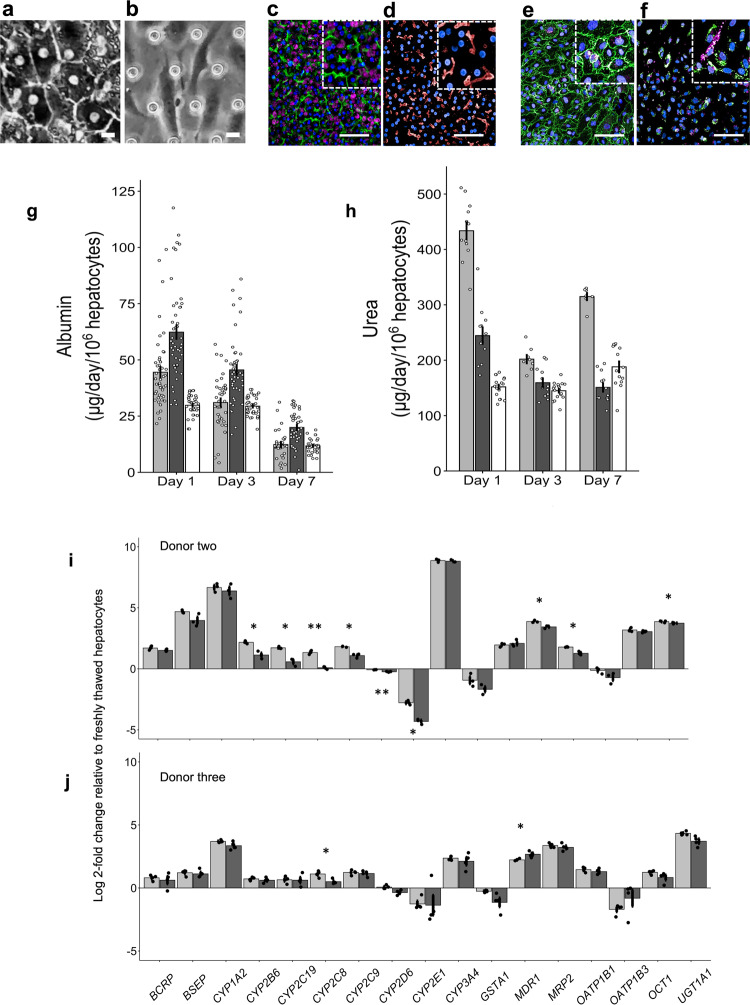
“previously, the same Liver-Chip has been shown to exhibit Phase I and II functional activities that are comparable to freshly isolated human hepatocytes and 3D hepatic spheroids26,30”
§ Performance assessment and economic analysis of a human Liver-Chip for predictive toxicology > Results > Liver-Chip satisfies IQ MPS affiliate guidelines
What the sources say
- Not checked — no full text of the sourcecites [26] Jang K-J Reproducing human and cross-species drug toxicities using a Liver-Chip Sci. Transl. Med. 2019 11 eaax5516 31694927 source
- Partly supportedcites [30] Foster AJ Integrated in vitro models for hepatic safety and metabolism: evaluation of a human Liver-Chip and liver spheroid Arch. Toxicol. 2019 93 1021 1037 30915487 sourceExperimental — accuracy not yet measured
Our copy of Foster et al. (2019) supports the Liver-Chip-vs-3D-spheroid half of the claim: the Discussion (APAP metabolite quantification / Discussion sections) states 'APAP-glucuronide and APAP-sulfate formation is present during the culture period demonstrating phase II metabolism at comparable levels in both systems', and CYP activity profiling (Results, 'CYP activity profiling in Liver-Chips and liver spheroids') says Phase I activity was maintained in both models over the study. The benchmark against human hepatocytes is narrower than the claim states: for the Liver-Chip the Discussion explicitly reports comparability only for CYP2C19, and against 'freshly thawed cryopreserved human hepatocytes' (Brown et al. 2007) rather than freshly isolated cells; the broader hepatocyte comparability statements (including the CYP2E1 36-fold shortfall) are made for the spheroid model, and the paper notes activity levels 'varied between and within experiments' with lower CYP1A2/CYP2D6 at later time points. So a blanket 'Phase I and II activities comparable to freshly isolated human hepatocytes' overstates what this source demonstrates. (LLM, conf=0.72)
plain- Asserted: passes — The authors put it forward as true.
- Checkable: passes — It can be checked against evidence.
- Load-bearing: passes — The paper’s conclusions depend on it.
- Based: passes — The paper gives a reason why it holds.
The cited sources support only part of this claim — read each source’s verdict below.
In the paper
“whereas the 3D hepatic spheroids did (only 67% specificity)31”
§ Performance assessment and economic analysis of a human Liver-Chip for predictive toxicology > Results > Improved sensitivity for DILI prediction compared to spheroids and animal models
What the sources say
- Partly supportedcites [31] Proctor WR Utility of spherical human liver microtissues for prediction of clinical drug-induced liver injury Arch. Toxicol. 2017 91 2849 2863 28612260 PMC5515971 sourceExperimental — accuracy not yet measured
The Results section, “Statistical analysis employing practical fixed thresholds” (page unavailable), reports that the 3D liver microtissue assay falsely classified some DILI-negative drugs as toxic. But its reported specificity was 80.5–97.6% across the tabulated thresholds, not 67%. (LLM, conf=0.91)
plainstates a cause- Asserted: passes — The authors put it forward as true.
- Checkable: passes — It can be checked against evidence.
- Load-bearing: passes — The paper’s conclusions depend on it.
- Based: passes — The paper gives a reason why it holds.
- Partly supported
55 more claims · 1 with their cited sources checked
Create a free account to see all 117 claims and to verify the 6 references still open.
- It may state two separate claims as one. 43
- Probably not a substantial claim. 21
- The quote only partly states this claim. 2
Citations
Cites
ggplot2: Elegant Graphics for Data Analysis
Wickham, H. (2009) · doi:10.1007/978-0-387-98141-3 · Cited by 14,447
Reconstituting organ-level lung functions on a chip
Huh, D., Matthews, B. D., Mammoto, A., Montoya-Zavala, M., Hsin, H. Y., & Ingber, D. E. (2010) · Science · doi:10.1126/science.1188302 · Cited by 4,250
Self-citationCan the pharmaceutical industry reduce attrition rates?
Kola, I., & Landis, J. (2004) · Nature Reviews Drug Discovery · doi:10.1038/nrd1470 · Cited by 4,167
Dose-Response Analysis Using R
Ritz, C., Baty, F., Streibig, J. C., & Gerhard, D. (2015) · PLOS ONE · doi:10.1371/journal.pone.0146021 · Cited by 3,658
How to improve R&D productivity: the pharmaceutical industry's grand challenge
Paul, S. M., Mytelka, D. S., Dunwiddie, C. T., Persinger, C. C., Munos, B. H., Lindborg, S. R., & Schacht, A. L. (2010) · Nature Reviews Drug Discovery · doi:10.1038/nrd3078 · Cited by 3,566
Bhatia, S. N., & Ingber, D. E. (2014) · Nature Biotechnology · doi:10.1038/nbt.2989 · Cited by 3,305
Self-citationDiagnosing the decline in pharmaceutical R&D efficiency
Scannell, J. W., Blanckley, A., Boldon, H., & Warrington, B. (2012) · Nature Reviews Drug Discovery · doi:10.1038/nrd3681 · Cited by 1,981
Self-citationMale sex identified by global COVID-19 meta-analysis as a risk factor for death and ITU admission
Peckham, H., de Gruijter, N. M., Raine, C., Radziszewska, A., Ciurtin, C., Wedderburn, L. R., Rosser, E. C., Webb, K., & Deakin, C. T. (2020) · Nature Communications · doi:10.1038/s41467-020-19741-6 · Cited by 1,503
Lessons learned from the fate of AstraZeneca's drug pipeline: a five-dimensional framework
Cook, D., Brown, D., Alexander, R., March, R., Morgan, P., Satterthwaite, G., & Pangalos, M. N. (2014) · Nature Reviews Drug Discovery · doi:10.1038/nrd4309 · Cited by 1,344
Godoy, P., Hewitt, N. J., Albrecht, U., Andersen, M. E., Ansari, N., Bhattacharya, S., Bode, J. G., Bolleyn, J., Borner, C., Böttger, J., et al. (2013) · Archives of Toxicology · doi:10.1007/s00204-013-1078-5 · Cited by 1,280
Organs-on-chips at the frontiers of drug discovery
Esch, E. W., Bahinski, A., & Huh, D. (2015) · Nature Reviews Drug Discovery · doi:10.1038/nrd4539 · Cited by 1,185
Organs-on-chips: into the next decade
Low, L. A., Mummery, C., Berridge, B. R., Austin, C. P., & Tagle, D. A. (2021) · Nature Reviews Drug Discovery · doi:10.1038/s41573-020-0079-3 · Cited by 1,029
A complex human gut microbiome cultured in an anaerobic intestine-on-a-chip
Jalili-Firoozinezhad, S., Gazzaniga, F. S., Calamari, E. L., Camacho, D. M., Fadel, C. W., Bein, A., Swenor, B., Nestor, B., Cronce, M. J., Tovaglieri, A., et al. (2019) · Nature Biomedical Engineering · doi:10.1038/s41551-019-0397-0 · Cited by 855
Self-citationPhase II and phase III failures: 2013–2015
Harrison, R. K. (2016) · Nature Reviews Drug Discovery · doi:10.1038/nrd.2016.184 · Cited by 636 · cited 1×
“We modeled safety-related failures, efficacy-related failures, and other failures (e.g., commercial and strategy related) with parameters derived from the literature (primarily from Harrison 2016,7,9,24,25).”
MethodO’Brien, P. J., Irwin, W., Diaz, D., Howard-Cofield, E., Krejsa, C. M., Slaughter, M. R., Gao, B., Kaludercic, N., Angeline, A., Bernardi, P., et al. (2006) · Archives of Toxicology · doi:10.1007/s00204-006-0091-3 · Cited by 609
Reproducing human and cross-species drug toxicities using a liver-chip
Jang, K.-J., Otieno, M. A., Ronxhi, J., Lim, H.-K., Ewart, L., Kodella, K. R., Petropolis, D. B., Kulkarni, G., Rubins, J. E., Conegliano, D., et al. (2019) · Science Translational Medicine · doi:10.1126/scitranslmed.aax5516 · Cited by 511
Self-citationCellular Imaging Predictions of Clinical Drug-Induced Liver Injury
Xu, J. J., Henstock, P. V., Dunn, M. C., Smith, A. R., Chabot, J. R., & de Graaf, D. (2008) · Toxicological Sciences · doi:10.1093/toxsci/kfn109 · Cited by 492
Drug discovery in pharmaceutical industry: productivity challenges and trends
Khanna, I. (2012) · Drug Discovery Today · doi:10.1016/j.drudis.2012.05.007 · Cited by 479
Impact of a five-dimensional framework on R&D productivity at AstraZeneca
Morgan, P., Brown, D. G., Lennard, S., Anderton, M. J., Barrett, J. C., Eriksson, U., Fidock, M., Hamrén, B., Johnson, A., March, R. E., et al. (2018) · Nature Reviews Drug Discovery · doi:10.1038/nrd.2017.244 · Cited by 452
Computational Approaches in Preclinical Studies on Drug Discovery and Development
Wu, F., Zhou, Y., Li, L., Shen, X., Chen, G., Wang, X., Liang, X., Tan, M., & Huang, Z. (2020) · Frontiers in Chemistry · doi:10.3389/fchem.2020.00726 · Cited by 446
Rodríguez-Antona, C., Donato, M. T., Boobis, A., Edwards, R. J., Watts, P. S., Castell, J. V., & Gómez-Lechón, M.-J. (2002) · Xenobiotica · doi:10.1080/00498250210128675 · Cited by 420
Heise, T., Hermanski, L., Nosek, L., Feldman, A., Rasmussen, S., & Haahr, H. (2012) · Diabetes, Obesity and Metabolism · doi:10.1111/j.1463-1326.2012.01627.x · Cited by 397
Dawson, S., Stahl, S., Paul, N., Barber, J., & Kenna, J. G. (2012) · Drug Metabolism and Disposition · doi:10.1124/dmd.111.040758 · Cited by 343
Utility of spherical human liver microtissues for prediction of clinical drug-induced liver injury
Proctor, W. R., Foster, A. J., Vogt, J., Summers, C., Middleton, B., Pilling, M. A., Shienson, D., Kijanska, M., Ströbel, S., Kelm, J. M., et al. (2017) · Archives of Toxicology · doi:10.1007/s00204-017-2002-1 · Cited by 328
On-chip recapitulation of clinical bone marrow toxicities and patient-specific pathophysiology
Chou, D. B., Frismantas, V., Milton, Y., David, R., Pop-Damkov, P., Ferguson, D., MacDonald, A., Vargel Bölükbaşı, Ö., Joyce, C. E., Moreira Teixeira, L. S., et al. (2020) · Nature Biomedical Engineering · doi:10.1038/s41551-019-0495-z · Cited by 294
Self-citationWhen Quality Beats Quantity: Decision Theory, Drug Discovery, and the Reproducibility Crisis
Scannell, J. W., & Bosley, J. (2016) · PLOS ONE · doi:10.1371/journal.pone.0147215 · Cited by 279
Self-citationWeaver, R. J., Blomme, E. A., Chadwick, A. E., Copple, I. M., Gerets, H. H. J., Goldring, C. E., Guillouzo, A., Hewitt, P. G., Ingelman-Sundberg, M., Jensen, K. G., et al. (2020) · Nature Reviews Drug Discovery · doi:10.1038/s41573-019-0048-x · Cited by 249
Duodenum Intestine-Chip for preclinical drug assessment in a human relevant model
Kasendra, M., Luc, R., Yin, J., Manatakis, D. V., Kulkarni, G., Lucchesi, C., Sliz, J., Apostolou, A., Sunuwar, L., Obrigewitch, J., et al. (2020) · eLife · doi:10.7554/elife.50135 · Cited by 222
Self-citationVorrink, S. U., Zhou, Y., Ingelman-Sundberg, M., & Lauschke, V. M. (2018) · Toxicological Sciences · doi:10.1093/toxsci/kfy058 · Cited by 187
Baudy, A. R., Otieno, M. A., Hewitt, P., Gan, J., Roth, A., Keller, D., Sura, R., Van Vleet, T. R., & Proctor, W. R. (2020) · Lab on a Chip · doi:10.1039/c9lc00768g · Cited by 150
Drug-induced liver injury: Is it somehow foreseeable?
Tarantino, G., Minno, M. N. D. D., & Capone, D. (2009) · World Journal of Gastroenterology · doi:10.3748/wjg.15.2817 · Cited by 137
Drug-induced autoimmune liver disease: A diagnostic dilemma of an increasingly reported disease
Castiella, A. (2014) · World Journal of Hepatology · doi:10.4254/wjh.v6.i4.160 · Cited by 131
Liver Microphysiological Systems for Predicting and Evaluating Drug Effects
Ribeiro, A. J. S., Yang, X., Patel, V. P., Madabushi, R., & Strauss, D. G. (2019) · Clinical Pharmacology & Therapeutics · doi:10.1002/cpt.1458 · Cited by 127
Shaw, P. J., Ganey, P. E., & Roth, R. A. (2010) · Toxicological Sciences · doi:10.1093/toxsci/kfq168 · Cited by 123
Combined glutathione-S -transferase M1 and T1 genetic polymorphism and tacrine hepatotoxicity
Simon, T. (2000) · Clinical Pharmacology & Therapeutics · doi:10.1067/mcp.2000.104944 · Cited by 122
Foster, A. J., Chouhan, B., Regan, S. L., Rollison, H., Amberntsson, S., Andersson, L. C., Srivastava, A., Darnell, M., Cairns, J., Lazic, S. E., et al. (2019) · Archives of Toxicology · doi:10.1007/s00204-019-02427-4 · Cited by 117
Self-citationFabre, K., Berridge, B., Proctor, W. R., Ralston, S., Will, Y., Baran, S. W., Yoder, G., & Van Vleet, T. R. (2020) · Lab on a Chip · doi:10.1039/c9lc01168d · Cited by 116
Albrecht, W., Kappenberg, F., Brecklinghaus, T., Stoeber, R., Marchan, R., Zhang, M., Ebbert, K., Kirschner, H., Grinberg, M., Leist, M., et al. (2019) · Archives of Toxicology · doi:10.1007/s00204-019-02492-9 · Cited by 111
Waldmann, T., Rempel, E., Balmer, N. V., König, A., Kolde, R., Gaspar, J. A., Henry, M., Hescheler, J., Sachinidis, A., Rahnenführer, J., et al. (2014) · Chemical Research in Toxicology · doi:10.1021/tx400402j · Cited by 106
Rose, K. A., Holman, N. S., Green, A. M., Andersen, M. E., & LeCluyse, E. L. (2016) · Journal of Pharmaceutical Sciences · doi:10.1016/s0022-3549(15)00192-6 · Cited by 99
Human microphysiological systems for drug development
Roth, A., & 2019, M.-W. B. (2021) · Science · doi:10.1126/science.abc3734 · Cited by 94
Garside, H., Marcoe, K. F., Chesnut-Speelman, J., Foster, A. J., Muthas, D., Gerry Kenna, J., Warrior, U., Bowes, J., & Baumgartner, J. (2014) · Toxicology in Vitro · doi:10.1016/j.tiv.2013.10.015 · Cited by 93
In Vitro Metabolism of 2-Acetylbenzothiophene: Relevance to Zileuton Hepatotoxicity
Joshi, E. M., Heasley, B. H., Chordia, M. D., & Macdonald, T. L. (2004) · Chemical Research in Toxicology · doi:10.1021/tx0341409 · Cited by 85
Ferreira, G. S., Veening-Griffioen, D. H., Boon, W., Moors, E. H. M., Wied, C. C. G., Schellekens, H., & van Meer, P. J. K. (2019) · PLoS ONE · doi:10.1371/journal.pone.0218014 · Cited by 85
Zhou, Y., Shen, J. X., & Lauschke, V. M. (2019) · Frontiers in Pharmacology · doi:10.3389/fphar.2019.01093 · Cited by 85
Kerns, S. J., Belgur, C., Petropolis, D., Kanellias, M., Barrile, R., Sam, J., Weinzierl, T., Fauti, T., Freimoser-Grundschober, A., Eckmann, J., et al. (2021) · eLife · doi:10.7554/elife.67106 · Cited by 82
Self-citationLi, F., Cao, L., Parikh, S., & Zuo, R. (2020) · Journal of Pharmaceutical Sciences · doi:10.1016/j.xphs.2020.02.021 · Cited by 72
Ekert, J. E., Deakyne, J., Pribul-Allen, P., Terry, R., Schofield, C., Jeong, C. G., Storey, J., Mohamet, L., Francis, J., Naidoo, A., et al. (2020) · SLAS DISCOVERY · doi:10.1177/2472555220923332 · Cited by 68
Exploratory toxicology as an integrated part of drug discovery. Part II: Screening strategies
Hornberg, J. J., Laursen, M., Brenden, N., Persson, M., Thougaard, A., Toft, D. B., & Mow, T. J. (2013) · Drug Discovery Today · doi:10.1016/j.drudis.2013.12.009 · Cited by 65
Why is it hard to terminate failing projects in pharmaceutical R&D?
Peck, R., Lendrem, D. W., Grant, I., Lendrem, C., & Isaacs, J. D. (2015) · Nature Reviews Drug Discovery · doi:10.1038/nrd4725 · Cited by 61
Latest Industry Information on the Safety Profile of Levofloxacin in the US
Kahn, J. B. (2001) · Chemotherapy · doi:10.1159/000057842 · Cited by 58
Mahony, C., Ashton, R. S., Birk, B., Boobis, A. R., Cull, T., Daston, G. P., Ewart, L. C., Knudsen, T. B., Manou, I., Maurer‐Stroh, S., et al. (2020) · Regulatory Toxicology and Pharmacology · doi:10.1016/j.yrtph.2020.104668 · Cited by 43
Self-citationShaw, P. J., Beggs, K. M., Sparkenbaugh, E. M., Dugan, C. M., Ganey, P. E., & Roth, R. A. (2009) · Toxicological Sciences · doi:10.1093/toxsci/kfp163 · Cited by 41
In Vitro Plasma Protein Binding of Zileuton and its N-Dehydroxylated Metabolite
Machinist, J. M., Kukulka, M. J., & Bopp, B. A. (1995) · Clinical Pharmacokinetics · doi:10.2165/00003088-199500292-00006 · Cited by 30
Mechanisms of Chronic Fialuridine Hepatotoxicity as Revealed in Primary Human Hepatocyte Spheroids
Hendriks, D. F. G., Hurrell, T., Riede, J., van der Horst, M., Tuovinen, S., & Ingelman-Sundberg, M. (2019) · Toxicological Sciences · doi:10.1093/toxsci/kfz195 · Cited by 29
The Future of Uncertainty Factors With In Vitro Studies Using Human Cells
Dourson, M. L., Ewart, L. C., Fitzpatrick, S. C., Barros, S. B. D. M., Mahadevan, B., & Hayes, A. W. (2021) · Toxicological Sciences · doi:10.1093/toxsci/kfab134 · Cited by 27
Self-citationFerreira, G. S., Veening-Griffioen, D. H., Boon, W. P. C., Moors, E. H. M., Gispen-de Wied, C. C., Schellekens, H., & van Meer, P. J. K. (2019) · PLOS ONE · doi:10.1371/journal.pone.0220325 · Cited by 22
What have we learned from animal models of idiosyncratic, drug-induced liver injury?
Roth, R. A., & Ganey, P. E. (2020) · Expert Opinion on Drug Metabolism & Toxicology · doi:10.1080/17425255.2020.1760246 · Cited by 8
LiverTox: Clinical and Research Information on Drug-Induced Liver Injury
(2012) · PubMed · Cited by 7
Research works printed but not linked: 2
- Redfern WS Impact and frequency of different toxicities throughout the pharmaceutical life cycle Toxicologist 2010 114 1081
- Lloyd, I. Pharma R&D Annual Review 2021, 1–45. (Citeline Informa Pharma Intelligence, 2021).
Cited by
Organ-on-a-chip meets artificial intelligence in drug evaluation
Deng, S., Li, C., Cao, J., Cui, Z., Du, J., Fu, Z., Yang, H., & Chen, P. (2023) · Theranostics · doi:10.7150/thno.87266 · Cited by 260
“Meanwhile, the largest OoCs study to date, in which 780 liver OoC devices were used to evaluate the toxicity risk of a blinded group of 27 known hepatotoxic and nontoxic drugs, showed a sensitivity and specificity of 87% and 100% for liver OoCs, respectively [119].”
BackgroundStrategies to reduce the risks of mRNA drug and vaccine toxicity
Bitounis, D., Jacquinet, E., Rogers, M. A., & Amiji, M. M. (2024) · Nature Reviews Drug Discovery · doi:10.1038/s41573-023-00859-3 · Cited by 224
“Its potential for de-risking purposes has also been established in multiple liver-on-chip drug toxicity studies 228,237,238 .”
Towards in vitro models for reducing or replacing the use of animals in drug testing
Stresser, D. M., Kopec, A. K., Hewitt, P., Hardwick, R. N., Van Vleet, T. R., Mahalingaiah, P. K. S., O’Connell, D., Jenkins, G. J., David, R., Graham, J., et al. (2023) · Nature Biomedical Engineering · doi:10.1038/s41551-023-01154-7 · Cited by 94
Self-citationGangwal, A., & Lavecchia, A. (2025) · Drug Discovery Today · doi:10.1016/j.drudis.2025.104360 · Cited by 130
Complex in vitro model: A transformative model in drug development and precision medicine
Wang, L., Hu, D., Xu, J., Hu, J., & Wang, Y. (2024) · Clinical and Translational Science · doi:10.1111/cts.13695 · Cited by 106
“69 The classical chip of TissUse GmbH has a round hole linked by different microfluidic channels (Figure 3b).”
Background
Metadata
- Authors
- Ewart, L., Apostolou, A., Briggs, S. A., Carman, C. V., Chaff, J. T., Heng, A. R., Jadalannagari, S., Janardhanan, J., Jang, K.-J., Joshipura, S. R., Kadam, M. M., Kanellias, M., Kujala, V. J., Kulkarni, G., Le, C. Y., Lucchesi, C., Manatakis, D. V., Maniar, K. K., Quinn, M. E., Ravan, J. S., Rizos, A. C., Sauld, J. F. K., Sliz, J. D., Tien-Street, W., Trinidad, D. R., Velez, J., Wendell, M., Irrechukwu, O., Mahalingaiah, P. K., Ingber, D. E., Scannell, J. W., & Levner, D.
- Affiliations
- Emulate (United States) (US)
- AbbVie (United States) (US)
- Boston Children's Hospital (US)
- Corresponding author
- Ewart, Lorna
- ORCID
- Ewart, Lorna
- Apostolou, Athanasia
- Briggs, Skyler A.
- Carman, Christopher V.
- Chaff, Jake T.
- Heng, Anthony R.
- Jadalannagari, Sushma
- Janardhanan, Jeshina
- Jang, Kyung-Jin
- Joshipura, Sannidhi R.
- Kanellias, Marianne
- Kujala, Ville J.
- Kulkarni, Gauri
- Le, Christopher Y.
- Lucchesi, Carolina
- Manatakis, Dimitris V.
- Maniar, Kairav K.
- Ravan, Joseph S.
- Sliz, Josiah D.
- Tien-Street, William
- Wendell, Max
- Irrechukwu, Onyi
- Mahalingaiah, Prathap Kumar
- Ingber, Donald E.
- Scannell, Jack W.
- Venue
- Communications Medicine
- Published
- 2022-12-06
- Volume
- 2
- Issue
- 1
- Pages
- 154-154
- ISSN
- 2730-664X (ISSN-L)
- PMC
- PMC9727064
- OpenAlex
- W4310952187
- Cited by
- 337
- References
- 56
- Citations by year
- 2026: 124 · 2025: 97 · 2024: 69 · 2023: 45 · 2022: 2
- FWCI
- 48.61
- Type
- journal article
- Language
- en
- Update notices
- Open access
- gold
- doi.org
- Licence
- cc-by
- creativecommons.org/licenses/by/4.0 (tdm)
- creativecommons.org/licenses/by/4.0 (vor)
- Locations
- Communications Medicine (publishedVersion, cc-by)
- PubMed Central (publishedVersion, cc-by)
- PubMed (publishedVersion)
- DOAJ (DOAJ: Directory of Open Access Journals) (submittedVersion, cc-by-sa)
- Topics
- Life Sciences › Pharmacology, Toxicology and Pharmaceutics › Pharmacology › Drug-Induced Hepatotoxicity and Protection
- Physical Sciences › Engineering › Biomedical Engineering › 3D Printing in Biomedical Research
- Health Sciences › Veterinary › Small Animals › Animal testing and alternatives
- Keywords
- organ-on-a-chip, drug-induced liver injury, hepatotoxicity prediction, predictive toxicology, preclinical toxicity testing
About these checks
Registry, retraction, Cites and statistics results are computed, not judged, with one exception: a printed reference that no index lists is read once by a model before it counts as a citation error. Claims are extracted by a model and kept only when their quote appears verbatim in the text; each cited source is then checked, with a model’s help, for whether it says what the claim relies on. Those verdicts can be wrong — read the claim’s quote and the cited source before relying on one.
The claim verdicts this report counts are experimental: their accuracy is not yet measured.
A language model drew the claims from the paper on 2026-10-10, under version 3 of the claim definition (model deepseek-v4.1-flash, prompt extract-v3).
A second model labelled each claim on 2026-10-10 (model jev-1.13-20260917, definition revision gold-guideline-v0.2).
Cited sources are checked with a language model’s help (gpt-6-sol and qwen3.8-omni-flash).
Statistics and arithmetic are recomputed, not judged.
Confidence bands are shown only for fields calibrated on our annotated test set. None is calibrated yet, so no band is shown.
What counts as a claim ›How we measure confidence ›How we check this ›
Are you an author, or do you see a problem with this page? Request a review
Data sources
Bibliographic data: Semantic Scholar, OpenAlex, Crossref.
Contains information from the Semantic Scholar Academic Graph Datasets, made available under the ODC Attribution License (ODC-BY 1.0).
Semantic Scholar’s data is described in: Kinney, R., et al. (2023). The Semantic Scholar Open Data Platform. arXiv:2301.10140.
