

Developing personalized algorithms for sensing mental health symptoms in daily life
Open accessThe DOI matches its Crossref record; 46 of the 46 references it cites were found in a registry or an index.
Abstract
The integration of artificial intelligence (AI) and pervasive computing offers new opportunities to sense mental health symptoms and deliver just-in-time adaptive interventions via mobile devices. This pilot study tested personalized versus generalized machine learning models for detecting individual and family mental health symptoms as a foundational step toward JITAI development, using data collected through the Colliga app on smart devices. Over a 60-day period, data from 35 families resulted in approximately 14 million data points across 52 data streams. Findings showed that personalized models consistently outperformed generalized models. Model performance varied significantly based on individual factors and symptom profiles, underscoring the need for tailored approaches. These preliminary findings suggest that successful implementation of passive sensing technologies for mental health will require accounting for users' unique characteristics. Further research with larger samples is needed to refine the models, address data heterogeneity, and develop scalable systems for personalized mental health interventions.
Overview
The claims and statistics of this paper haven’t been checked yet.
Free: it reads the open-access text and checks the first 5 claims that cite a source we can check. Create a free account to check every claim.
Integrity signals
Registry
Cites
Statistics
Figures

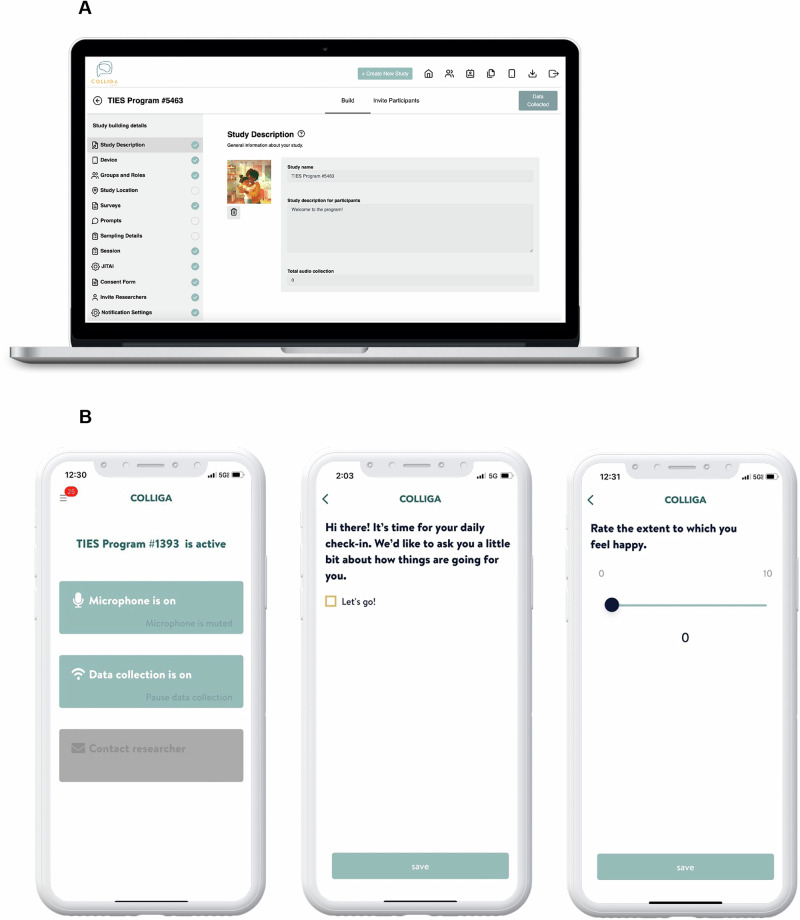
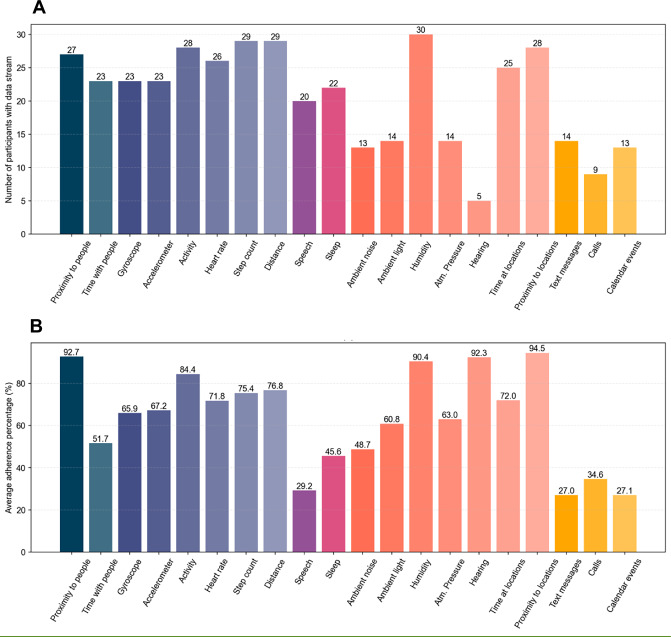
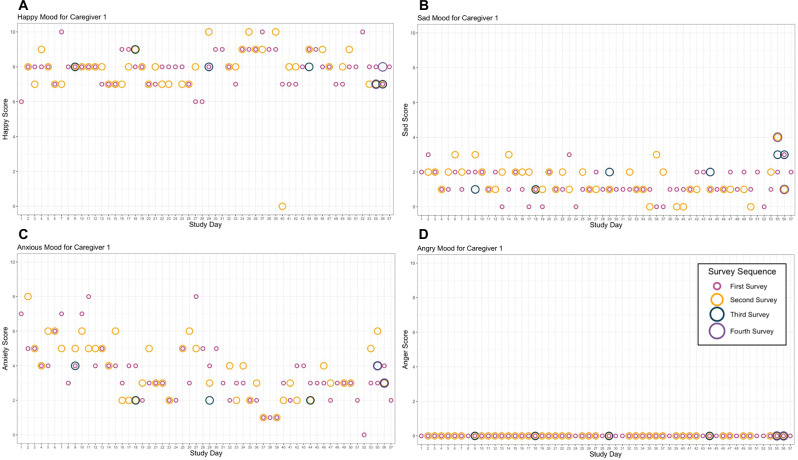
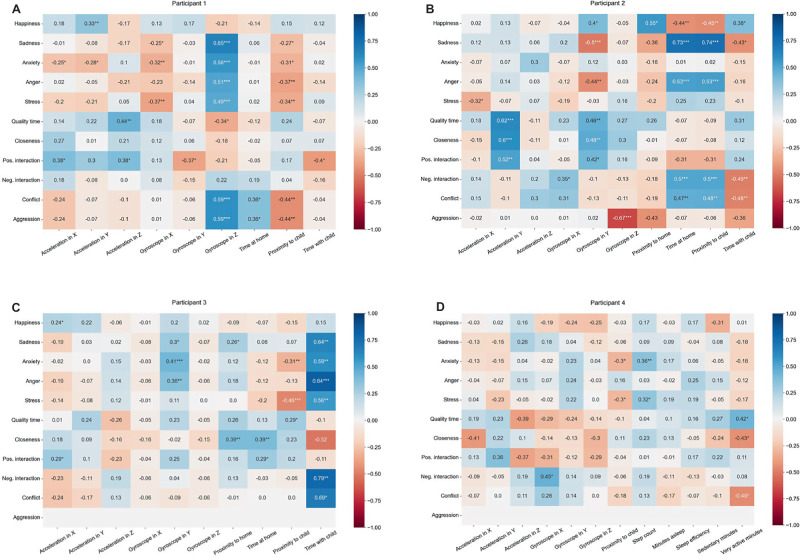
Verification
Claims the paper makes
The claims and statistics of this paper haven’t been checked yet.
Free: it reads the open-access text and checks the first 5 claims that cite a source we can check. Create a free account to check every claim.
Claims other papers make about this one
Each is checked against this paper’s own text: does it say what the citing paper says it does?
The source backs part of the claim, not all of it — or backs it for a different population, condition or comparison.
In the citing paper
“Continuous monitoring introduces significant cybersecurity vulnerabilities and privacy risks (Timmons et al., 2025).”
From Multimodal neuroimaging and AI integration in cognitive disorders: advances, challenges, and future directions for precision medicine (2026) · cites this paper as Timmons et al., 2025
Experimental — accuracy not yet measuredThe source backs part of the claim, not all of it — or backs it for a different population, condition or comparison.
In the citing paper
“Environmental confounders include variability in home layouts, daily routines, and motion artifacts that degrade real-world reliability, further exacerbated by feature set inconsistency across heterogeneous devices and uncontrolled settings (Beattie et al., 2020; Timmons et al., 2025).”
From Multimodal neuroimaging and AI integration in cognitive disorders: advances, challenges, and future directions for precision medicine (2026) · cites this paper as Timmons et al., 2025
Experimental — accuracy not yet measured
Self-check
Percentages, sums and reported differences re-computed from the paper’s own numbers.
The self-check needs the paper’s full text.
Citations
Cites
Nahum-Shani, I., Smith, S. N., Spring, B. J., Collins, L. M., Witkiewitz, K., Tewari, A., & Murphy, S. A. (2018) · Annals of Behavioral Medicine · doi:10.1007/s12160-016-9830-8 · Cited by 2,171 · cited 1×
“Despite extensive discussions in the literature on the utility of JITAIs 19,20 , a limited number of clinical trials have been conducted, leaving key questions about their real-world effectiveness unanswered.”
Scott, A. J., Webb, T. L., Martyn-St James, M., Rowse, G., & Weich, S. (2021) · Sleep Medicine Reviews · doi:10.1016/j.smrv.2021.101556 · Cited by 1,094
The Strengths and Difficulties Questionnaire (SDQ)
Muris, P., Meesters, C., & van den Berg, F. (2003) · European Child & Adolescent Psychiatry · doi:10.1007/s00787-003-0298-2 · Cited by 920
Jansson-Fröjmark, M., & Lindblom, K. (2008) · Journal of Psychosomatic Research · doi:10.1016/j.jpsychores.2007.10.016 · Cited by 646 · cited 1×
“Sleepfeatures,whicharecloselytiedtoemotionalregulationand mentalhealthoutcomes,wereespeciallypredictiveforanxiety,re fl ectingthe known bidirectional relationship between sleep disruption and anxious symptoms 42,43 .”
Nahum-Shani, I., Hekler, E. B., & Spruijt-Metz, D. (2015) · Health Psychology · doi:10.1037/hea0000306 · Cited by 568 · cited 2×
“Suchsystemscouldultimatelysupportthecreation ofautomatedandadaptiveinterventionstailoredtothecomplexrealitiesof familylife 6,7 .”
Ben-Zeev, D., Scherer, E. A., Wang, R., Xie, H., & Campbell, A. T. (2015) · Psychiatric Rehabilitation Journal · doi:10.1037/prj0000130 · Cited by 429 · cited 1×
“For example, various studies have shown that geospatial activity, sleep, speech duration, text message frequency, and similar metrics are linked to fl uctuations in depressive symptoms and stress 25,26 .”
A systematic review of just-in-time adaptive interventions (JITAIs) to promote physical activity
Hardeman, W., Houghton, J., Lane, K., Jones, A., & Naughton, F. (2019) · International Journal of Behavioral Nutrition and Physical Activity · doi:10.1186/s12966-019-0792-7 · Cited by 396 · cited 2×
“Of the JITAI clinical trials conducted to date, most have focused on readily observable and objective physicalhealthbehaviors,suchasweightloss,sleep,andphysicalactivity,or havetargetedsubstanceuse 10,15 .”
Mental health monitoring with multimodal sensing and machine learning: A survey
Garcia-Ceja, E., Riegler, M., Nordgreen, T., Jakobsen, P., Oedegaard, K. J., & Tørresen, J. (2018) · Pervasive and Mobile Computing · doi:10.1016/j.pmcj.2018.09.003 · Cited by 356 · cited 1×
“Additionally, various issues, such as decreased user engagement over time, the intrusiveness of the interventions, participant selection biases, and non-random data missingness, limit the effectiveness of JITAIs 18 .”
Classification of Imbalanced Data by Oversampling in Kernel Space of Support Vector Machines
Mathew, J., Pang, C. K., Luo, M., & Leong, W. H. (2018) · IEEE Transactions on Neural Networks and Learning Systems · doi:10.1109/tnnls.2017.2751612 · Cited by 311
Personalized Models of Psychopathology
Wright, A. G. C., & Woods, W. C. (2020) · Annual Review of Clinical Psychology · doi:10.1146/annurev-clinpsy-102419-125032 · Cited by 264
Timmons, A. C., Duong, J. B., Simo Fiallo, N., Lee, T., Vo, H. P. Q., Ahle, M. W., Comer, J. S., Brewer, L. C., Frazier, S. L., & Chaspari, T. (2023) · Perspectives on Psychological Science · doi:10.1177/17456916221134490 · Cited by 263 · cited 1×
“Given growing evidence that ML models may exhibit bias across racial, ethnic, gender, and socioeconomic lines 48 , future studies should explicitly evaluate fairness across groups and assess whether personalization strategies can mitigate potential disparities.”
Self-citationPersonalized Multitask Learning for Predicting Tomorrow's Mood, Stress, and Health
Taylor, S., Jaques, N., Nosakhare, E., Sano, A., & Picard, R. (2020) · IEEE Transactions on Affective Computing · doi:10.1109/taffc.2017.2784832 · Cited by 251 · cited 1×
“Future directions should explore sub-population modeling strategies 46,47 , where participants are grouped by common behavioral or clinical characteristics, allowing for greater model stability and scalability.”
Applications of Machine Learning in Real-Life Digital Health Interventions: Review of the Literature
Triantafyllidis, A. K., & Tsanas, A. (2019) · Journal of Medical Internet Research · doi:10.2196/12286 · Cited by 243
Conceptualizing Emotion Regulation and Coregulation as Family-Level Phenomena
Paley, B., & Hajal, N. J. (2022) · Clinical Child and Family Psychology Review · doi:10.1007/s10567-022-00378-4 · Cited by 200
Using Smartphones to Monitor Bipolar Disorder Symptoms: A Pilot Study
Beiwinkel, T., Kindermann, S., Maier, A., Kerl, C., Moock, J., Barbian, G., & Rössler, W. (2016) · JMIR Mental Health · doi:10.2196/mental.4560 · Cited by 191 · cited 1×
“For example, various studies have shown that geospatial activity, sleep, speech duration, text message frequency, and similar metrics are linked to fl uctuations in depressive symptoms and stress 25,26 .”
Cummings, E. M., Koss, K. J., & Davies, P. T. (2015) · Journal of Abnormal Child Psychology · doi:10.1007/s10802-014-9926-1 · Cited by 176 · cited 1×
“Keyindicators offamilyfunctioning,suchascon fl ict and aggression, canoften becaptured through external, observable, and quanti fi able metrics — for example, characteristics of speech content 4 .”
Perski, O., Hébert, E. T., Naughton, F., Hekler, E. B., Brown, J., & Businelle, M. S. (2022) · Addiction · doi:10.1111/add.15687 · Cited by 150
Opoku Asare, K., Terhorst, Y., Vega, J., Peltonen, E., Lagerspetz, E., & Ferreira, D. (2021) · JMIR mHealth and uHealth · doi:10.2196/26540 · Cited by 145 · cited 1×
“Thus far, many AI algorithms for mental health that use mobile data have focused on sensing overall symptom levels or classifying people into general diagnostic categories 22 – 24 .”
Privacy and Security in Mobile Health (mHealth) Research
Arora, S. (2014) · Alcohol Research: Current Reviews · doi:10.35946/arcr.v36.1.15 · Cited by 134 · cited 1×
“Such barriers include the need for pervasive computing technologies that can process large data volumes in real-time, data privacy and ethics concerns, and the limited generalizability of AI models developed in specialized contexts 7,16,17 .”
Emotion Classification Based on Biophysical Signals and Machine Learning Techniques
Balan, O. C., Moise, G., Petrescu, L., Moldoveanu, A. D. B., Leordeanu, M., & Moldoveanu, F. (2019) · Symmetry · doi:10.3390/sym12010021 · Cited by 134
Can, Y. S., Chalabianloo, N., Ekiz, D., Fernández‐Álvarez, J., Riva, G., & Ersoy, C. (2020) · IEEE Access · doi:10.1109/access.2020.2975351 · Cited by 120
Ihmig, F. R., Gogeascoechea, A., Neurohr, F., Schäfer, S. K., Lass‐Hennemann, J., & Michael, T. (2020) · PLoS ONE · doi:10.1371/journal.pone.0231517 · Cited by 103
Designing m-Health interventions for precision mental health support
Bidargaddi, N., Schrader, G., Klasnja, P., Licinio, J., & Murphy, S. (2020) · Translational Psychiatry · doi:10.1038/s41398-020-00895-2 · Cited by 92
Just-in-time adaptive ecological momentary assessment (JITA-EMA)
Schneider, S., Junghaenel, D. U., Smyth, J. M., Wen, C. K. F., & Stone, A. A. (2023) · Behavior Research Methods · doi:10.3758/s13428-023-02083-8 · Cited by 79
Forman, E. M., Goldstein, S. P., Zhang, F., Evans, B. C., Manasse, S. M., Butryn, M. L., Juarascio, A. S., Abichandani, P., Martin, G. J., & Foster, G. D. (2019) · Translational Behavioral Medicine · doi:10.1093/tbm/iby016 · Cited by 77
Parent-Child Relationships and Well-Being
Suldo, S. M., & Fefer, S. A. (2013) · Springer eBooks · doi:10.1007/978-94-007-6398-2_8 · Cited by 61
Multiclass emotion prediction using heart rate and virtual reality stimuli
Bulagang, A. F., Mountstephens, J., & Teo, J. (2021) · Journal Of Big Data · doi:10.1186/s40537-020-00401-x · Cited by 59
An Integrated Blueprint for Digital Mental Health Services Amidst COVID-19
Balcombe, L., & De Leo, D. (2020) · JMIR Mental Health · doi:10.2196/21718 · Cited by 58
Nahum-Shani, I. B., Ertefaie, A., Lu, X., Lynch, K. G., McKay, J. R., Oslin, D. W., & Almirall, D. (2017) · Addiction · doi:10.1111/add.13743 · Cited by 56
Gönül, S., Namlı, T., Coşar, A., & Toroslu, İ. H. (2021) · Artificial Intelligence in Medicine · doi:10.1016/j.artmed.2021.102062 · Cited by 56
Matteo, D. D., Fotinos, K., Lokuge, S., Mason, G. E., Sternat, T., Katzman, M. A., & Rose, J. (2021) · Journal of Medical Internet Research · doi:10.2196/28918 · Cited by 54
Toward Robust Anxiety Biomarkers: A Machine Learning Approach in a Large-Scale Sample
Boeke, E. A., Holmes, A. J., & Phelps, E. A. (2020) · Biological Psychiatry: Cognitive Neuroscience and Neuroimaging · doi:10.1016/j.bpsc.2019.05.018 · Cited by 50 · cited 1×
“This fi nding is consistent with other research showing that emotion detection in ambulatory settings is signi fi cantly more challenging than in controlled laboratory environments 44,45 .”
Yang, M.-J., Sutton, S. K., Hernandez, L. M., Jones, S. R., Wetter, D. W., Kumar, S., & Vinci, C. (2023) · Addictive Behaviors · doi:10.1016/j.addbeh.2022.107467 · Cited by 48
Attachment relationships within a family system
Byng-Hall, J., & Stevenson-Hinde, J. (1991) · Infant Mental Health Journal · doi:10.1002/1097-0355(199123)12:3<187::aid-imhj2280120306>3.0.co;2-o · Cited by 44
Pulantara, I. W., Parmanto, B., & Germain, A. (2018) · Journal of Medical Internet Research · doi:10.2196/10124 · Cited by 37
Reinertsen, E., Nemati, S., Vest, A. N., Vaccarino, V., Lampert, R. J., Shah, A. J., & Clifford, G. D. (2017) · Physiological Measurement · doi:10.1088/1361-6579/aa6e9c · Cited by 35
The Use of Sensors to Detect Anxiety for In-the-Moment Intervention: Scoping Review
Dobson, R., Li, L. L., Garner, K., Tane, T., McCool, J. P., & Whittaker, R. (2023) · JMIR Mental Health · doi:10.2196/42611 · Cited by 33
Park, J., Kim, M., El Mistiri, M., Kha, R., Banerjee, S., Gotzian, L., Chevance, G., Rivera, D. E., Klasnja, P., & Hekler, E. (2023) · JMIR Research Protocols · doi:10.2196/52161 · Cited by 29 · cited 1×
“Promising early applications have been used for increasing physical activity 9 – 11 , promoting weight loss 9,12 , improving sleep 13 , and managing substance use 14,15 .”
Tzafilkou, K., Economides, A. A., & Protogeros, N. (2021) · International Journal of Human-Computer Interaction · doi:10.1080/10447318.2021.1979290 · Cited by 27
Goldstein, S. P., Zhang, F., Klasnja, P., Hoover, A., Wing, R. R., & Thomas, J. G. (2021) · JMIR Research Protocols · doi:10.2196/33568 · Cited by 26 · cited 2×
“Promising early applications have been used for increasing physical activity 9 – 11 , promoting weight loss 9,12 , improving sleep 13 , and managing substance use 14,15 .”
ADAM-sense: Anxiety-displaying activities recognition by motion sensors
Khan, N. S., Ghani, M. S., & Anjum, G. (2021) · Pervasive and Mobile Computing · doi:10.1016/j.pmcj.2021.101485 · Cited by 25
Dowling, N. A., Merkouris, S., Youssef, G. J., Lubman, D. I., Bagot, K. L., Hawker, C. O., Portogallo, H. J., Thomas, A. C., & Rodda, S. N. (2022) · JMIR Research Protocols · doi:10.2196/38958 · Cited by 24
Zhu, Z., Aitken, J. A., Dalal, R. S., & Kaplan, S. A. (2023) · Organizational Research Methods · doi:10.1177/10944281231202740 · Cited by 23
Sub-Population Specific Models of Couples’ Conflict
Gupta, K., Gujral, A., Chaspari, T., Timmons, A. C., Han, S. C., Kim, Y., Barrett, S., Sichko, S., & Margolin, G. (2020) · ACM Transactions on Internet Technology · doi:10.1145/3372045 · Cited by 13
Self-citationReal-time SVM-based emotion recognition algorithm
Swinkels, W., Claesen, L., Xiao, F., & Shen, H. (2017) · International Congress on Image and Signal Processing (CISP) · doi:10.1109/cisp-bmei.2017.8301923 · Cited by 7
Kumar, K. A., & Iqbal, J. L. M. (2021) · International Journal of Speech Technology · doi:10.1007/s10772-021-09916-x · Cited by 3
Research works printed but not linked: 2
- Gideon Nyatuga, N., John, N., Mwaniki Ivivi, J. & Kamanu, T. Class prediction of high-dimensional data with class imbalance: breast cancer gene expression data. Int. J. Adv. Sci. Res. Eng. 10, 28–46 (2024).
- Meng, T., Shou, Y., Ai, W., Yin, N. & Li, K. Deep imbalanced learning for multimodal emotion recognition in conversations. IEEE Trans. Artif. Intell. PP, 1–15 (2024).
Cited by
Dang, M., Liu, B., Chen, Y., & Zhang, Z. (2026) · Psychoradiology · doi:10.1093/psyrad/kkag007 · Cited by 10
de Barbaro, K., Madden‐Rusnak, A., & Timmons, A. C. (2026) · Developmental Science · doi:10.1111/desc.70144 · Cited by 8
Self-citationEffective monitoring of online AI decision-making algorithms in just-in-time adaptive interventions
Trella, A. L., Ghosh, S., Bonar, E. E., Coughlin, L. N., Doshi‐Velez, F., Guo, Y., Hung, P.-Y., Nahum-Shani, I. B., Shetty, V., Walton, M., et al. (2026) · npj Digital Medicine · doi:10.1038/s41746-026-02669-4 · Cited by 6
Guan, K., Amara, M., Gürbüz, S., Khan, I. A., Adlung, C., Cortiana, V., Ali, R., Iorio, C., Thalassinou, E., Smit, C. R., et al. (2026) · Journal of Medical Internet Research · doi:10.2196/84422 · Cited by 4
Zang, T., Awada, M., Becerik-Gerber, B., Roll, S. C., Lucas, G., & Narayanan, S. (2026) · Indoor Environments · doi:10.1016/j.indenv.2026.100171 · Cited by 3
Self-citation
Metadata
- Authors
- Timmons, A. C., Tutul, A. A., Avramidis, K., Duong, J. B., Carta, K. E., Walters, S. N., Jumonville, G. A., Carrasco, A. S., Freitag, G. F., Romero, D. N., Ahle, M. W., Comer, J. S., Narayanan, S. S., Khurd, I. P., & Chaspari, T.
- Affiliations
- The University of Texas at Austin (US)
- Texas A&M University (US)
- University of Southern California (US)
- Florida International University (US)
- University of Colorado Boulder (US)
- Corresponding author
- Timmons, Adela C.
- ORCID
- Venue
- npj Mental Health Research
- Published
- 2025-08-06
- Volume
- 4
- Issue
- 1
- Pages
- 34-34
- ISSN
- 2731-4251 (ISSN-L)
- PMC
- PMC12329041
- OpenAlex
- W4413010140
- Cited by
- 7
- References
- 46
- Citations by year
- 2026: 7
- FWCI
- 5.60
- Type
- journal article
- Language
- en
- Open access
- gold
- doi.org
- Licence
- cc-by-nc-nd
- creativecommons.org/licenses/by-nc-nd/4.0 (tdm)
- creativecommons.org/licenses/by-nc-nd/4.0 (vor)
- Locations
- npj Mental Health Research (publishedVersion, cc-by-nc-nd)
- PubMed Central (publishedVersion, cc-by-nc-nd)
- PubMed (publishedVersion)
- DOAJ (DOAJ: Directory of Open Access Journals) (submittedVersion, cc-by-sa)
- PsyArXiv (OSF Preprints) (submittedVersion, cc-by)
- Funders
- U.S. Department of Health & Human Services | NIH | National Institute of Mental Health (R42MH123368)
- National Science Foundation (2046118)
- Topics
- Social Sciences › Psychology › Applied Psychology › Digital Mental Health Interventions
- Social Sciences › Psychology › Experimental and Cognitive Psychology › Mental Health Research Topics
- Physical Sciences › Computer Science › Artificial Intelligence › Emotion and Mood Recognition
- Keywords
- personalized machine learning, passive sensing, ubiquitous computing, just-in-time adaptive interventions, mobile health, family mental health, smart devices
About these checks
Registry, retraction, Cites and statistics results are computed, not judged, with one exception: a printed reference that no index lists is read once by a model before it counts as a citation error. Claims are extracted by a model and kept only when their quote appears verbatim in the text; each cited source is then checked, with a model’s help, for whether it says what the claim relies on. Those verdicts can be wrong — read the claim’s quote and the cited source before relying on one.
Statistics and arithmetic are recomputed, not judged.
Confidence bands are shown only for fields calibrated on our annotated test set. None is calibrated yet, so no band is shown.
What counts as a claim ›How we measure confidence ›How we check this ›
Are you an author, or do you see a problem with this page? Request a review
Data sources
Bibliographic data: Semantic Scholar, OpenAlex, Crossref.
Contains information from the Semantic Scholar Academic Graph Datasets, made available under the ODC Attribution License (ODC-BY 1.0).
Semantic Scholar’s data is described in: Kinney, R., et al. (2023). The Semantic Scholar Open Data Platform. arXiv:2301.10140.
