

Incretin-based therapies for the treatment of obesity-related diseases
Open accessThe DOI matches its Crossref record; 109 of the 113 references it cites were found in a registry or an index, and 4 are not checked yet; 37 of the 117 sources its claims cite were checked for support.
Abstract
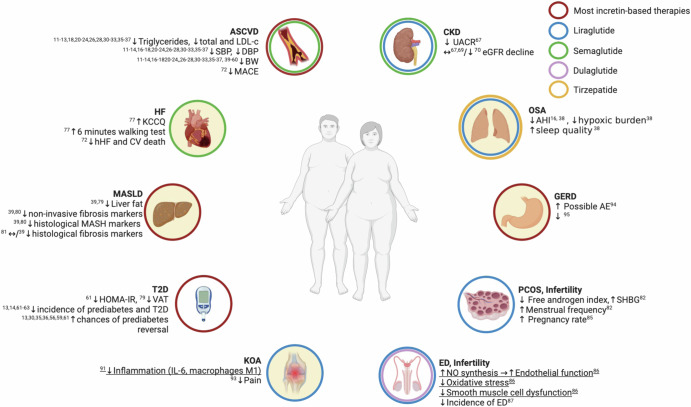
Obesity-related disability-adjusted life years (DALYs) are expected to increase by approximately 40% from 2020 to 2030. DALYs and mortality related to obesity are the consequence of multiple comorbidities such as cardiovascular (i.e., heart failure) and metabolic diseases (i.e. type 2 diabetes [T2D], metabolic dysfunction-associated steatotic liver disease [MASLD]). Lifestyle interventions represent the foundation of obesity treatment, yet an escalation to pharmacological and/or surgical interventions is often needed. Liraglutide, semaglutide and tirzepatide are incretin-based therapies currently approved by FDA for the management of obesity, while triple GIPR/GCGR/GLP-1R agonist retatrutide (LY3437943), the cagrilintide/semaglutide (CagriSema) 2.4 mg combination, high-dose oral semaglutide, and oral orforglipron are in advanced stages of development. Incretin-based therapies have been associated with a body weight (BW) reduction of ≥5% in at least half of patients in most randomized controlled trials (RCT) and real-world studies (RWS). Semaglutide and tirzepatide have also displayed a mean 60-69% 10-years relative risk reduction of T2D development. In line with evidence accrued in patients with T2D, incretin-based therapies produced a favorable effect on traditional cardiovascular risk factors, such as lipids and blood pressure, and even reduced the risk of major cardiovascular events and heart failure-related events in individuals with obesity, as recently demonstrated for the first time in the SELECT trial with semaglutide 2.4 mg once-weekly. Moreover, incretin-based therapies have also been proven beneficial on obesity-related comorbidities, such as knee osteoarthritis (KOA), obstructive sleep apnea (OSA) syndrome, and MASLD. Further research is needed to improve our understanding of their effects on obesity-related comorbidities and the underlying mechanism, whether involving direct effects on target tissues or mediated by improvement in BW, glucose levels and other CV risk factors.
Verified 2026-10-05 · 4 references not checked yet
Overview
CoChat Summary
TL;DR
This narrative review summarizes incretin-based therapies for obesity and obesity-related diseases, reporting substantial weight loss and benefits for type 2 diabetes prevention, cardiovascular risk factors, and several comorbidities. It concludes that liraglutide, semaglutide, and tirzepatide are effective, with newer agents such as retatrutide, CagriSema, oral semaglutide, and orforglipron in advanced development.
Key findings
- Incretin-based therapies were associated with body weight reduction of ≥5% in at least half of patients in most randomized controlled trials and real-world studies; semaglutide and tirzepatide showed a mean 60–69% 10-year relative risk reduction of type 2 diabetes development.
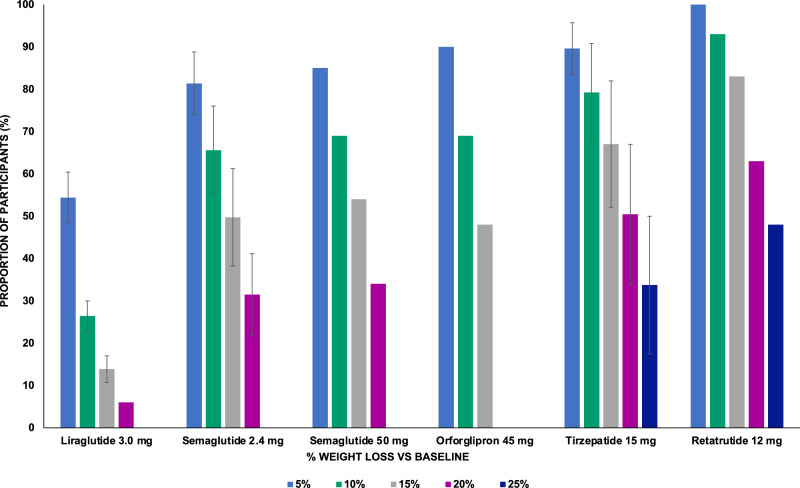
- In RCTs, liraglutide 3.0 mg produced 6.1–8.0% body weight loss vs. 0.2–4.0% with placebo at 56 weeks; semaglutide 2.4 mg produced 14.8–16.0% vs. 2.4–5.7% at 68 weeks; tirzepatide 15 mg produced 20.9% vs. 3.1% at 72 weeks; retatrutide 12 mg produced up to −24.2% at 48 weeks.
- The SELECT trial showed once-weekly semaglutide 2.4 mg reduced major adverse cardiovascular events (HR 0.80, 95% CI 0.72–0.90, p < 0.001), heart failure composite endpoint (HR 0.82, 95% CI 0.71–0.96), and death from any cause (HR 0.81, 95% CI 0.71–0.93).
- For comorbidities, SYNERGY-NASH reported biopsy-proven MASH resolution in 62% with tirzepatide 15 mg vs. 10% with placebo; SURMOUNT OSA showed 17.7–19.6% body weight reduction vs. 1.6–2.3% with placebo; SCALE Sleep Apnea showed apnea-hypopnea index reduction of −6.1 events per hour vs. placebo.
Methods
- Design: narrative review of incretin-based therapies for obesity-related diseases, including liraglutide, semaglutide, tirzepatide, retatrutide, CagriSema, oral semaglutide, orforglipron, and other agents in development.
- Data: published randomized controlled trials (SCALE, STEP, SURMOUNT, SELECT, OASIS 1, SYNERGY-NASH, SURMOUNT OSA, etc.), real-world studies, and meta-analyses; no primary patient data were collected.
- Analysis: descriptive synthesis of efficacy, effectiveness, diabetes prevention, cardiovascular risk factors, cardiovascular complications, other obesity-related comorbidities, and treatment adherence, with summary tables and figures.
Limitations
- Stated: further research is needed to understand effects on obesity-related comorbidities and underlying mechanisms, whether direct on target tissues or mediated by improvements in body weight, glucose levels, and other cardiovascular risk factors.
- Stated: adherence, prediction of response to treatment, and economic barriers to access remain unresolved and may require complex, multifaceted approaches.
- Evident: this is a narrative review without a stated systematic search strategy or formal risk-of-bias assessment; many cited trials are ongoing or not yet disclosed (e.g., STEP 10, FLOW, cardiovascular safety trials for tirzepatide and CagriSema), and real-world studies are noted to have small samples, limited adherence/dose information, and approximately 6-month follow-up.
Model-written summary. Check it against the paper before relying on it.
Integrity signals
Registry
Cites
Statistics
Figures
Verification
Claims the paper makes
20 Valid · 3 Not valid · 64 Not checked · 22 Own results and interpretations
Some cited sources support this claim and some don’t — read each source’s verdict below.
In the paper
“Similarly, patients with type 2 diabetes were also represented in many studies51,53,54,56,57,59,62,63,65,68–71.”
§ Incretin-based therapies for the treatment of obesity-related diseases > Efficacy and effectiveness of incretin-based therapies in body weight reduction > Real-world studies
What the sources say
- Supportedcites [51] Wharton, S. et al. Real-World Clinical Effectiveness of Liraglutide 3.0 mg for Weight Management in Canada. Obesity 27, 917–924 (2019). 31062937 PMC6593982 source
The Results (Table 2, Cohort and baseline characteristics) report that 16 of 311 participants (5.1%) had type 2 diabetes. This confirms that patients with type 2 diabetes were represented in this real-world study; the citation is one of several offered for the broader statement about many studies. (LLM, conf=0.94)
- Not checked yetcites [53] Park, J. H. et al. Effectiveness of liraglutide 3 mg for the treatment of obesity in a real-world setting without intensive lifestyle intervention. Int. J. Obes. 45, 776–786 (2021). 33473176 source
- Supportedcites [54] Liao, Y.-N. et al. Chinese herbal medicine is associated with higher body weight reduction than liraglutide among the obese population: A real-world comparative cohort study. Front. Pharmacol. 13, 978814 (2022). 36160410 PMC9500198 source
The Discussion section states that this real-world study included individuals with type 2 diabetes, particularly in the liraglutide group. That supports citing this paper as one of the studies in which patients with type 2 diabetes were represented. (LLM, conf=0.93)
- Supportedcites [56] Trenson, L. et al. Liraglutide for Weight Management in the Real World: Significant Weight Loss Even if the Maximal Daily Dose Is Not Achieved. Obes. Facts 15, 83–89 (2022). 34808630 PMC8820228 source
The Patient Characteristics and Treatment Adherence section reports that nine of 115 patients (8%) in this real-world study had type 2 diabetes. This confirms that such patients were represented in the cited study; the other studies in the citation list are not assessed here. (LLM, conf=0.94)
- Not checked yetcites [57] Alshehri, A., AlFaris, N., Al Qahtani, A. M., Shams, M. & Yahia, M. Clinical effectiveness of Liraglutide 3.0 mg and impact of weight loss in improving obesity-related comorbid conditions in King Fahad Medical City, Kingdom of Saudi Arabia: A real-world experience. Clin. Obes. 13, e12594 (2023). 37194338 source
- Supportedcites [59] Schultes, B., Timper, K., Cavadini, G., Rüh, J. & Gerber, P. A. Weight loss and treatment patterns in a real-world population of adults receiving liraglutide 3.0 mg for weight management in routine clinical practice in Switzerland (ADDRESS study). Diabetes Obes. Metab. 10.1111/dom.15403 (2023). 38092710 source
The Inclusion criteria (§2.2; page not available) explicitly allowed participants with type 2 diabetes in both cohorts. The baseline-characteristics section (§3.1; page not available) also lists T2D among the study population’s weight-related comorbidities. This confirms that the ADDRESS study is an example of a real-world study in which patients with type 2 diabetes were represented; it does not establish the claim about how many other studies included them. (LLM, conf=0.87)
- Partly supportedcites [62] Park, J. S., Kwon, J., Choi, H. J. & Lee, C. Clinical effectiveness of liraglutide on weight loss in South Koreans: First real-world retrospective data on Saxenda in Asia. Medicine 100, e23780 (2021). 33466127 PMC7808520 sourceExperimental — accuracy not yet measured
The Results (Baseline characteristics; page not provided) report that 10.1% of patients with HbA1c data had diabetes, so patients with diabetes were represented in this real-world study. The paper does not identify those patients as having type 2 diabetes; it also cannot establish the claim about how many other studies included them. (LLM, conf=0.84)
- Supportedcites [63] Calderon, G. et al. Effectiveness of anti-obesity medications approved for long-term use in a multidisciplinary weight management program: a multi-center clinical experience. Int. J. Obes. 46, 555–563 (2022). PMC8881310 34811486 source
The Methods describe a review of patient records from real-world weight-management programs. The Results (Weight-related Comorbidities) report that 32.9% of this study’s patients had type 2 diabetes, confirming that such patients were represented in this cited study. (LLM, conf=0.94)
- Not checked yetcites [65] Alabduljabbar, K., Alsaqaaby, M., Neff, K. J., Crotty, M. & le Roux, C. W. Weight loss response in patients with obesity treated with injectable semaglutide in a real-world setting. Endocrine10.1007/s12020-023-03534-0 (2023). 37735340 source
- Disputedcites [68] Wilmington, R., Ardavani, A., Simenacz, A., Green, C. & Idris, I. Liraglutide 3.0 mg (Saxenda©) for Weight Loss and Remission of Pre-Diabetes. Real-World Clinical Evaluation of Effectiveness among Patients Awaiting Bariatric Surgery. Obes. Surg. 10.1007/s11695-023-06895-7 (2023). PMC10781788 38012508 sourceExperimental — accuracy not yet measured
The Methods describe the studied patients as having prediabetes or awaiting bariatric surgery and say Saxenda treatment followed guidance for patients with non-diabetic hyperglycaemia. The paper does not identify patients with type 2 diabetes in its cohort; its description of the studied population runs contrary to using it as an example of a study representing those patients. (LLM, conf=0.82)
Checked by a reasoning model — may be wrong.
plain- Asserted: passes — The authors put it forward as true.
- Checkable: passes — It can be checked against evidence.
- Load-bearing: unclear — It is unclear whether the paper’s conclusions depend on it.
- Based: passes — The paper gives a reason why it holds.
- Supported
The sources with a verdict support this claim; the rest weren’t checked yet, have no full text we could read, or their verdicts aren’t rated yet.
In the paper
“At 56 weeks, patients on liraglutide 3.0 mg lost on average 6.1–8.0% of BW vs. 0.2–4.0% on placebo15–17”
§ Incretin-based therapies for the treatment of obesity-related diseases > Efficacy and effectiveness of incretin-based therapies in body weight reduction > Randomized controlled trials (RCT)
What the sources say
- Supportedcites [15] Wadden, T. A. et al. Liraglutide 3.0 mg and Intensive Behavioral Therapy (IBT) for Obesity in Primary Care: The SCALE IBT Randomized Controlled Trial. Obesity 28, 529–536 (2020). 32090517 PMC7065111 source
The Results (Body weight) report mean weight loss at week 56 of 7.5% with liraglutide 3.0 mg plus intensive behavioral therapy and 4.0% with placebo plus intensive behavioral therapy. Those values fall within the cited ranges; this trial does not itself establish the full ranges attributed to citations 15–17 collectively. (LLM, conf=0.91)
- Not checked yetcites [16] Wadden, T. A. et al. Weight maintenance and additional weight loss with liraglutide after low-calorie-diet-induced weight loss: the SCALE Maintenance randomized study. Int. J. Obes. 37, 1443–1451 (2013). 23812094 source
- Supportedcites [17] Pi-Sunyer, X. et al. A Randomized, Controlled Trial of 3.0 mg of Liraglutide in Weight Management. N. Engl. J. Med. 373, 11–22 (2015). 26132939 source
The Body Weight section (p. 4) reports mean weight loss at 56 weeks of 8.0% with liraglutide 3.0 mg and 2.6% with placebo. Both values fall within the respective ranges in the sentence, which cites multiple studies. (LLM, conf=0.92)
plainstates a cause- Asserted: passes — The authors put it forward as true.
- Checkable: passes — It can be checked against evidence.
- Load-bearing: passes — The paper’s conclusions depend on it.
- Based: passes — The paper gives a reason why it holds.
- Supported
The cited sources support only part of this claim — read each source’s verdict below.
In the paper
“Results from studies enrolling patients with previous bariatric surgery are in line with those including surgically naïve individuals64,69,72”
§ Incretin-based therapies for the treatment of obesity-related diseases > Efficacy and effectiveness of incretin-based therapies in body weight reduction > Real-world studies
What the sources say
- Not checked yetcites [64] Rye, P., Modi, R., Cawsey, S. & Sharma, A. M. Efficacy of High-Dose Liraglutide as an Adjunct for Weight Loss in Patients with Prior Bariatric Surgery. Obes. Surg. 28, 3553–3558 (2018). 30022424 source
- Supportedcites [69] Jensen, A. B. et al. Efficacy of the Glucagon-Like Peptide-1 Receptor Agonists Liraglutide and Semaglutide for the Treatment of Weight Regain After Bariatric surgery: a Retrospective Observational Study. Obes. Surg. 33, 1017–1025 (2023). 36765019 PMC9918402 source
The Conclusion (page not provided) explicitly says that weight loss with GLP-1 receptor agonists in the post-bariatric study was consistent with findings from SCALE, SUSTAIN, and STEP trials involving patients without bariatric surgery. This supports the cited comparison of results in previously operated and surgically naïve patients. (LLM, conf=0.95)
- Partly supportedcites [72] Muratori, F. et al. Efficacy of liraglutide 3.0 mg treatment on weight loss in patients with weight regain after bariatric surgery. Eat. Weight Disord. 27, 2775–2781 (2022). 35763245 PMC9556416 sourceExperimental — accuracy not yet measured
The Results report weight loss with liraglutide in patients who had undergone bariatric surgery, and the Discussion compares outcomes across types of surgery. Neither section compares those outcomes with studies of surgically naïve individuals, so the claimed similarity is not established by this paper. (LLM, conf=0.83)
plain- Asserted: passes — The authors put it forward as true.
- Checkable: passes — It can be checked against evidence.
- Load-bearing: unclear — It is unclear whether the paper’s conclusions depend on it.
- Based: passes — The paper gives a reason why it holds.
The cited sources support only part of this claim — read each source’s verdict below.
In the paper
“T2D was reported in up to 1% patients on semaglutide vs. 0.9–3% in those on placebo at 68 weeks73”
§ Incretin-based therapies for the treatment of obesity-related diseases > Incretin-based therapy for diabetes prevention in patients with obesity
What the sources say
- Partly supportedcites [73] Perreault, L. et al. Changes in Glucose Metabolism and Glycemic Status With Once-Weekly Subcutaneous Semaglutide 2.4 mg Among Participants With Prediabetes in the STEP Program. Diabetes Care 45, 2396–2405 (2022). 35724304 PMC9862484 sourceExperimental — accuracy not yet measured
The Results section 'Glycemic Status From Week 0 to 68' (and the Abstract RESULTS) report type 2 diabetes at week 68 among participants who had PREDIABETES at week 0: STEP 1 0.5% semaglutide vs. 3.0% placebo; STEP 3 0% vs. 1.0%; STEP 4 0% vs. 0.9%. The placebo range 0.9–3% is therefore supported, but the highest semaglutide figure in our copy is 0.5%, not 'up to 1%', so that bound overstates the source. The claim also drops the population qualifier (adults with overweight/obesity without diabetes at baseline, restricted to those with baseline prediabetes), and our copy presents these as post hoc/exploratory glycemic-status analyses, not reported adverse-event rates for all trial participants. (LLM, conf=0.70)
plain- Asserted: passes — The authors put it forward as true.
- Checkable: passes — It can be checked against evidence.
- Load-bearing: passes — The paper’s conclusions depend on it.
- Based: passes — The paper gives a reason why it holds.
- Partly supported
The cited sources support only part of this claim — read each source’s verdict below.
In the paper
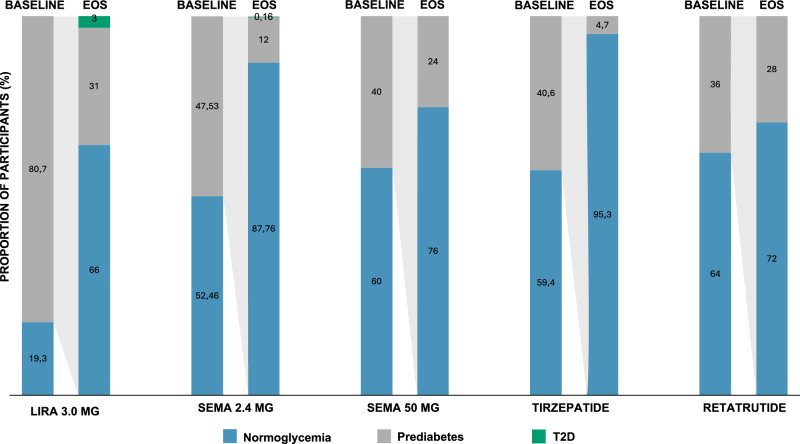
“treatment with liraglutide 3.0 mg reduced the proportion of patients with prediabetes compared to placebo at 56 weeks regardless of baseline glycemic status (7.2 vs. 20.7% and 30.8 vs. 67.3% in patients with normoglycemia and prediabetes)17”
§ Incretin-based therapies for the treatment of obesity-related diseases > Incretin-based therapy for diabetes prevention in patients with obesity
What the sources say
- Partly supportedcites [17] Pi-Sunyer, X. et al. A Randomized, Controlled Trial of 3.0 mg of Liraglutide in Weight Management. N. Engl. J. Med. 373, 11–22 (2015). 26132939 sourceExperimental — accuracy not yet measured
The Glycemic Control section (p. 4) reports significantly lower prediabetes prevalence with liraglutide than placebo at week 56. The Figure 2 caption (p. 8) reports results separately for patients with normoglycemia and prediabetes at screening, supporting the claim across baseline groups. Our copy does not state the four percentages quoted in the citing sentence, and its 56-week result is from the main trial, not the extension. (LLM, conf=0.83)
plainstates a cause- Asserted: passes — The authors put it forward as true.
- Checkable: passes — It can be checked against evidence.
- Load-bearing: passes — The paper’s conclusions depend on it.
- Based: passes — The paper gives a reason why it holds.
- Partly supported
72 more claims · 8 with their cited sources checked
Create a free account to see all 109 claims and to verify the 80 references still open.
- It may state two separate claims as one. 29
- Probably not a substantial claim. 2
- The quote only partly states this claim. 1
Claims other papers make about this one
Each is checked against this paper’s own text: does it say what the citing paper says it does?
In the citing paper
“These trials also highlighted that weight loss with orforglipron is not solely attributable to gastrointestinal side effects, as progressive reductions were observed after initial dose titration, and appetite suppression was corroborated by patient-reported satiety measures.”
From Orforglipron: A Comprehensive Review of an Oral Small-Molecule GLP-1 Receptor Agonist for Obesity and Type 2 Diabetes (2026) · cites this paper as [48]
Self-check
Percentages, sums and reported differences re-computed from the paper’s own numbers.
Each contradiction between two passages listed here was confirmed by an independent check.
Rated minor: it would not touch a result — a value no result rests on, a p-value that stays on the same side of the significance level, or a conflict that is clerical, resolved elsewhere in the paper, or outside its own findings.
In the paper
§ Incretin-based therapies for the treatment of obesity-related diseases > Efficacy and effectiveness of incretin-based therapies in body weight reduction > Real-world studies
“85.7 to 93.0% with semaglutide”
§ Incretin-based therapies for the treatment of obesity-related diseases > Efficacy and effectiveness of incretin-based therapies in body weight reduction > Real-world studies
“| Ruseva (2024) | −10.5 (6.8) | 79.0 | 48.1 | 19.0 |”
Rated minor: it would not touch a result — a value no result rests on, a p-value that stays on the same side of the significance level, or a conflict that is clerical, resolved elsewhere in the paper, or outside its own findings.
In the paper
§ Incretin-based therapies for the treatment of obesity-related diseases > Efficacy and effectiveness of incretin-based therapies in body weight reduction > Real-world studies
“Most studies included a certain proportion of participants with prediabetes (2.5–52.0%).”
§ Incretin-based therapies for the treatment of obesity-related diseases > Efficacy and effectiveness of incretin-based therapies in body weight reduction > Real-world studies
“| Santini (2022) | Switzerland | 54 | 10 | Lira 3.0 mg | 43.6 (11.6) | 64.8 | 40.8 (5.7) | Excluded | 63/0 |”
Rated minor: it would not touch a result — a value no result rests on, a p-value that stays on the same side of the significance level, or a conflict that is clerical, resolved elsewhere in the paper, or outside its own findings.
In the paper
§ Incretin-based therapies for the treatment of obesity-related diseases > Abstract
“triple GIPR/GCGR/GLP-1R agonist retatrutide (LY3437943)”
§ Incretin-based therapies for the treatment of obesity-related diseases > Efficacy and effectiveness of incretin-based therapies in body weight reduction > Randomized controlled trials (RCT)
“triple biased GLP-1/GIP/GCC receptors agonist retatrutide (LY3437943)”
Rated minor: it would not touch a result — a value no result rests on, a p-value that stays on the same side of the significance level, or a conflict that is clerical, resolved elsewhere in the paper, or outside its own findings.
In the paper
§ Incretin-based therapies for the treatment of obesity-related diseases > Efficacy and effectiveness of incretin-based therapies in body weight reduction > Real-world studies
“females (60–95%)”
§ Incretin-based therapies for the treatment of obesity-related diseases > Efficacy and effectiveness of incretin-based therapies in body weight reduction > Real-world studies
“| Park (2021) | South Korea | 169 | 2.4 | Lira 3.0 mg | 41.5 (9.6) | 58 |”
Citations
Cites
Once-Weekly Semaglutide in Adults with Overweight or Obesity
Wilding, J. P. H., Batterham, R. L., Calanna, S., Davies, M., Van Gaal, L. F., Lingvay, I., McGowan, B. M., Rosenstock, J., Tran, M. T. D., Wadden, T. A., et al. (2021) · New England Journal of Medicine · doi:10.1056/nejmoa2032183 · Cited by 5,205 · cited 1×
“InSTEP 1 and STEP 3, patients on semaglutide lost 14.8 – 16.0% BW compared to 2.4 – 5.7% in the placebo group at 68 weeks 26,27 .”
InfluentialTirzepatide Once Weekly for the Treatment of Obesity
Jastreboff, A. M., Aronne, L. J., Ahmad, N. N., Wharton, S., Connery, L., Alves, B., Kiyosue, A., Zhang, S., Liu, B., Bunck, M. C., et al. (2022) · New England Journal of Medicine · doi:10.1056/nejmoa2206038 · Cited by 3,838 · cited 3×
“Across the SURMOUNT trials, the proportion of patients losing >5%, 10%, 15% and 20% of body weight was 79.2 – 97.3%, 60.5 – 92.1%, 39.7 – 84.1%, and 21.5 – 69.5%, respectively 34 – 37 ; notably, 9.0 – 54.5% of patients lost >25% of initial body weight 36 (Fig.”
InfluentialSemaglutide and Cardiovascular Outcomes in Obesity without Diabetes
Lincoff, A. M., Brown-Frandsen, K., Colhoun, H. M., Deanfield, J., Emerson, S. S., Esbjerg, S., Hardt-Lindberg, S., Hovingh, G. K., Kahn, S. E., Kushner, R. F., et al. (2023) · New England Journal of Medicine · doi:10.1056/nejmoa2307563 · Cited by 3,236
A Randomized, Controlled Trial of 3.0 mg of Liraglutide in Weight Management
Pi-Sunyer, X., Astrup, A., Fujioka, K., Greenway, F., Halpern, A., Krempf, M., Lau, D. C. W., le Roux, C. W., Violante Ortiz, R., Jensen, C. B., et al. (2015) · New England Journal of Medicine · doi:10.1056/nejmoa1411892 · Cited by 2,724 · cited 2×
“…SCALE Obesity and Prediabetes trial and its extension, treat-ment with liraglutide 3.0 mg reduced the proportion of patients with prediabetes compared to placebo at 56 weeks regardless of baseline glycemic status (7.2 vs. 20.7% and 30.8 vs. 67.3% in patients with normoglycemia and prediabetes) 17 .”
InfluentialRinella, M. E., Neuschwander-Tetri, B. A., Siddiqui, M. S., Abdelmalek, M. F., Caldwell, S., Barb, D., Kleiner, D. E., & Loomba, R. (2023) · Hepatology · doi:10.1097/hep.0000000000000323 · Cited by 2,667 · cited 10×
“A larger study (SEMA-NASH) enrolling 320 individuals with obesity, biopsy-proven NASH and differentdegreesof fi brosis,withorwithoutdiabetes,demonstratedthatOD subcutaneous semaglutide 0.4 mg signi fi cantly resolved MASH without worsening fi brosis in 59% of patients 93 .”
InfluentialSemaglutide in Patients with Heart Failure with Preserved Ejection Fraction and Obesity
Kosiborod, M. N., Abildstrøm, S. Z., Borlaug, B. A., Butler, J., Rasmussen, S., Davies, M., Hovingh, G. K., Kitzman, D. W., Lindegaard, M. L., Møller, D. V., et al. (2023) · New England Journal of Medicine · doi:10.1056/nejmoa2306963 · Cited by 1,669
Sattar, N., Lee, M. M. Y., Kristensen, S. L., Branch, K. R. H., Del Prato, S., Khurmi, N. S., Lam, C. S. P., Lopes, R. D., McMurray, J. J. V., Pratley, R. E., et al. (2021) · The Lancet Diabetes & Endocrinology · doi:10.1016/s2213-8587(21)00203-5 · Cited by 1,599
Rubino, D., Abrahamsson, N., Davies, M., Hesse, D., Greenway, F. L., Jensen, C., Lingvay, I., Mosenzon, O., Rosenstock, J., Rubio, M. A., et al. (2021) · JAMA · doi:10.1001/jama.2021.3224 · Cited by 1,444
Davies, M., Færch, L., Jeppesen, O. K., Pakseresht, A., Pedersen, S. D., Perreault, L., Rosenstock, J., Shimomura, I., Viljoen, A., Wadden, T. A., et al. (2021) · The Lancet · doi:10.1016/s0140-6736(21)00213-0 · Cited by 1,419 · cited 1×
“A blunted BW reduction wasobservedinpatientswithT2DintheSTEP2trial( − 9.6%vs − 3.4%with semaglutide 2.4 mg and placebo, respectively) 31 and in East-Asian patients with overweight or obesity with/without T2D 32 .”
InfluentialDavies, M. J., Bergenstal, R., Bode, B., Kushner, R. F., Lewin, A., Skjøth, T. V., Andreasen, A. H., Jensen, C. B., DeFronzo, R. A., & for the NN8022-1922 Study Group (2015) · JAMA · doi:10.1001/jama.2015.9676 · Cited by 1,198
Obstructive Sleep Apnea: Implications for Cardiac and Vascular Disease
Shamsuzzaman, A. S. M., Gersh, B. J., & Somers, V. K. (2003) · JAMA · doi:10.1001/jama.290.14.1906 · Cited by 1,188 · cited 1×
“Obstructive sleep apnea (OSA) syndrome is a sleep disorder strongly associated with both the load-bearing and metabolic and in fl ammatory implications of obesity, leading to increased CV risk and reduced quality of life 101 .”
Triple-Hormone-Receptor Agonist Retatrutide for Obesity — A Phase 2 Trial
Jastreboff, A. M., Kaplan, L. M., Frías, J. P., Wu, Q., Du, Y., Gurbuz, S., Coskun, T., Haupt, A., Milicevic, Z., & Hartman, M. L. (2023) · New England Journal of Medicine · doi:10.1056/nejmoa2301972 · Cited by 1,174 · cited 1×
“3kg/m 2 without diabetes (prediabetes in 36% participants) showing BW and WC reduction ranging from − 8.7% to − 24.2% and − 6.5 cm to − 19.6 cm in the 1 mg and 12 mg dose groups, respectively, at 48 weeks 41 .”
InfluentialWilding, J. P. H., Batterham, R. L., Davies, M., Van Gaal, L. F., Kandler, K., Konakli, K., Lingvay, I., McGowan, B. M., Oral, T. K., Rosenstock, J., et al. (2022) · Diabetes, Obesity and Metabolism · doi:10.1111/dom.14725 · Cited by 1,128 · cited 1×
“Interestingly, semaglutide with-drawalintheSTEP1extensionwasassociatedwithSBPandDBPreversiontobaselinelevels;also,lipidsandC-reactiveproteinlevelsincreasedbyweek120, yetmaintainingasigni fi cant difference with respect to patients on placebo 77 .”
Wadden, T. A., Bailey, T. S., Billings, L. K., Davies, M., Frias, J. P., Koroleva, A., Lingvay, I., O’Neil, P. M., Rubino, D. M., Skovgaard, D., et al. (2021) · JAMA · doi:10.1001/jama.2021.1831 · Cited by 1,114
Anti-obesity drug discovery: advances and challenges
Müller, T. D., Blüher, M., Tschöp, M. H., & DiMarchi, R. D. (2022) · Nature Reviews Drug Discovery · doi:10.1038/s41573-021-00337-8 · Cited by 1,021 · cited 1×
“Lifestyle interventions, mostly aiming at diet and physical activity improvement, represent the foundation of obesity treatment, yet an escalation to pharmacological and/or surgical interventions is often needed 5 .”
Tirzepatide for metabolic dysfunction-associated steatohepatitis with liver fibrosis
Loomba, R., Hartman, M. L., Lawitz, E. J., Vuppalanchi, R., Boursier, J., Bugianesi, E., Yoneda, M., Behling, C., Cummings, O. W., Tang, Y., et al. (2024) · New England Journal of Medicine · doi:10.1056/nejmoa2401943 · Cited by 1,005 · cited 3×
“Moreover, the SYNERGY-NASH trial showed that tirze-patide was associated with a dose-dependent greater likelihood of biopsy-proven MASH resolution vs. placebo at 52 weeks (62% of participants on tirzepatide 15 mg vs. 10% of participants on placebo) 39 .”
Rubino, D. M., Greenway, F. L., Khalid, U., O’Neil, P. M., Rosenstock, J., Sørrig, R., Wadden, T. A., Wizert, A., Garvey, W. T., STEP 8 Investigators, et al. (2022) · JAMA · doi:10.1001/jama.2021.23619 · Cited by 995 · cited 1×
“0 mg and semaglutide 2.4 mg at 68 weeks in 338 participants with overweight or obesity and baseline characteristics coherent with previous STEP trials, con fi rming the superiority of semaglutide ( − 15.8% vs − 6.4% with sema-glutide and liraglutide respectively, p 0.001) 30 .”
InfluentialWeight and Metabolic Outcomes 12 Years after Gastric Bypass
Adams, T. D., Davidson, L. E., Litwin, S. E., Kim, J., Kolotkin, R. L., Nanjee, M. N., Gutierrez, J. M., Frogley, S. J., Ibele, A. R., Brinton, E. A., et al. (2017) · New England Journal of Medicine · doi:10.1056/nejmoa1700459 · Cited by 956
Tirzepatide for the Treatment of Obstructive Sleep Apnea and Obesity
Malhotra, A., Grunstein, R. R., Fietze, I., Weaver, T. E., Redline, S., Azarbarzin, A., Sands, S. A., Schwab, R. J., Dunn, J. P., Chakladar, S., et al. (2024) · New England Journal of Medicine · doi:10.1056/nejmoa2404881 · Cited by 871 · cited 2×
“The fi ndings of the SURMOUNT OSA trial supported thishypothesis,showingasigni fi cantimprovementinAHI,hypoxicburden and sleep quality with tirzepatide compared to placebo at 52 weeks 38 .”
InfluentialTwo-year effects of semaglutide in adults with overweight or obesity: the STEP 5 trial
Garvey, W. T., Batterham, R. L., Bhatta, M., Buscemi, S., Christensen, L. N., Frias, J. P., Jódar, E., Kandler, K., Rigas, G., Wadden, T. A., et al. (2022) · Nature Medicine · doi:10.1038/s41591-022-02026-4 · Cited by 868 · cited 2×
“1), with a WC mean reduction ranging from 6.4 to 14.6 cm 24 – 26, Tirzepatide has been recently added to incretin-based AOM.”
InfluentialAronne, L. J., Sattar, N., Horn, D. B., Bays, H. E., Wharton, S., Lin, W.-Y., Ahmad, N. N., Zhang, S., Liao, R., Bunck, M. C., et al. (2024) · JAMA · doi:10.1001/jama.2023.24945 · Cited by 860 · cited 2×
“Across the SURMOUNT trials, the proportion of patients losing >5%, 10%, 15% and 20% of body weight was 79.2 – 97.3%, 60.5 – 92.1%, 39.7 – 84.1%, and 21.5 – 69.5%, respectively 34 – 37 ; notably, 9.0 – 54.5% of patients lost >25% of initial body weight 36 (Fig.”
Influentialle Roux, C. W., Astrup, A., Fujioka, K., Greenway, F., Lau, D. C. W., Van Gaal, L., Ortiz, R. V., Wilding, J. P. H., Skjøth, T. V., Manning, L. S., et al. (2017) · The Lancet · doi:10.1016/s0140-6736(17)30069-7 · Cited by 850 · cited 4×
“In agreement with what has been previously shown for any weight-lowering lifestyle intervention and medication, regardless of their mechanism of action 18 , incretin-based AOM have been associated with amelioration of glucose metabolism and T2D prevention (Fig.”
Influentialon behalf of the NN8022-1923 Investigators, Wadden, T. A., Hollander, P., Klein, S., Niswender, K., Woo, V, Hale, P. M., & Aronne, L. (2013) · International Journal of Obesity · doi:10.1038/ijo.2013.120 · Cited by 842
Garvey, W. T., Frias, J. P., Jastreboff, A. M., le Roux, C. W., Sattar, N., Aizenberg, D., Mao, H., Zhang, S., Ahmad, N. N., Bunck, M. C., et al. (2023) · The Lancet · doi:10.1016/s0140-6736(23)01200-x · Cited by 792 · cited 1×
“Across the SURMOUNT trials, the proportion of patients losing >5%, 10%, 15% and 20% of body weight was 79.2 – 97.3%, 60.5 – 92.1%, 39.7 – 84.1%, and 21.5 – 69.5%, respectively 34 – 37 ; notably, 9.0 – 54.5% of patients lost >25% of initial body weight 36 (Fig.”
Influential(2016) · The Lancet Diabetes & Endocrinology · doi:10.1016/s2213-8587(16)30162-0 · Cited by 738
Once-weekly semaglutide in adolescents with obesity
Weghuber, D., Barrett, T., Barrientos-Pérez, M., Gies, I., Hesse, D., Jeppesen, O. K., Kelly, A. S., Mastrandrea, L. D., Sørrig, R., & Arslanian, S. (2022) · New England Journal of Medicine · doi:10.1056/nejmoa2208601 · Cited by 730
A Randomized, Controlled Trial of Liraglutide for Adolescents with Obesity
Kelly, A. S., Auerbach, P., Barrientos-Perez, M., Gies, I., Hale, P. M., Marcus, C., Mastrandrea, L. D., Prabhu, N., & Arslanian, S. (2020) · New England Journal of Medicine · doi:10.1056/nejmoa1916038 · Cited by 723
on behalf of the SCALE study group, Blackman, A., Foster, G. D., Zammit, G., Rosenberg, R., Aronne, L., Wadden, T., Claudius, B., Jensen, C. B., & Mignot, E. (2016) · International Journal of Obesity · doi:10.1038/ijo.2016.52 · Cited by 583 · cited 2×
“In the SCALE Sleep Apnea RCT, liraglutide 3.0 mg was associated with a signi fi cant reduction of apnea-hypopnea index (AHI) compared to placebo ( − 6.1 events per hour, 95% − 11 to − 1.2 events per hour) at 32 weeks in patients with moderate to severe OSA not on positive airway pressure 20 .”
InfluentialLoomba, R., Abdelmalek, M. F., Armstrong, M. J., Jara, M., Kjær, M. S., Krarup, N., Lawitz, E., Ratziu, V., Sanyal, A. J., Schattenberg, J. M., et al. (2023) · The Lancet Gastroenterology & Hepatology · doi:10.1016/s2468-1253(23)00068-7 · Cited by 533 · cited 2×
“Moreover, OW semaglu-tide 2.4 mg has been recently proven safe and effective in reducing BW, HbA1candlipidsinpatientswithMASH-relatedcompensatedcirrhosis,yet failedtoimprove fi brosis or induce MASH resolution vs. placebo at 48 weeks 94 .”
InfluentialLife expectancy after bariatric surgery in the Swedish obese subjects study
Carlsson, L. M. S., Sjöholm, K., Jacobson, P., Andersson-Assarsson, J. C., Svensson, P.-A., Taube, M., Carlsson, B., & Peltonen, M. (2020) · New England Journal of Medicine · doi:10.1056/nejmoa2002449 · Cited by 509 · cited 1×
“Moreover, the Swedish Obese Study showed that bariatric surgery was associated with decreased CV and cancer mortality by 30% and 23%, respectively 8 .”
Daily Oral GLP-1 Receptor Agonist Orforglipron for Adults with Obesity
Wharton, S., Blevins, T., Connery, L., Rosenstock, J., Raha, S., Liu, R., Ma, X., Mather, K. J., Haupt, A., Robins, D., et al. (2023) · New England Journal of Medicine · doi:10.1056/nejmoa2302392 · Cited by 478
Pharmacotherapy of obesity: an update on the available medications and drugs under investigation
Chakhtoura, M., Haber, R., Ghezzawi, M., Rhayem, C., Tcheroyan, R., & Mantzoros, C. S. (2023) · eClinicalMedicine · doi:10.1016/j.eclinm.2023.101882 · Cited by 462 · cited 4×
“…phen-termine/topiramate, naltrexone/bupropion, and the incretin-based drugs liraglutide and semaglutide, both GLP-1 receptor agonists (GLP-1RA), and tirzepatide, a biased dual GIP/GLP-1 receptor agonist, are currently both FDA and EMA approved for the management of non-syndromic obesity 10 .”
InfluentialWadden, T. A., Chao, A. M., Machineni, S., Kushner, R., Ard, J., Srivastava, G., Halpern, B., Zhang, S., Chen, J., Bunck, M. C., et al. (2023) · Nature Medicine · doi:10.1038/s41591-023-02597-w · Cited by 442
Knop, F. K., Aroda, V. R., do Vale, R. D., Holst-Hansen, T., Laursen, P. N., Rosenstock, J., Rubino, D. M., & Garvey, W. T. (2023) · The Lancet · doi:10.1016/s0140-6736(23)01185-6 · Cited by 431
Writing Group for the CKD Prognosis Consortium, Appel, L. J., Grams, M., Woodward, M., Harris, K., Arima, H., Chalmers, J., Yatsuya, H., Tamakoshi, K., Li, Y., et al. (2023) · JAMA · doi:10.1001/jama.2023.17002 · Cited by 396
Osteoarthritis, obesity and weight loss: evidence, hypotheses and horizons - a scoping review
Bliddal, H., Leeds, A. R., & Christensen, R. (2014) · Obesity Reviews · doi:10.1111/obr.12173 · Cited by 380 · cited 1×
“Gait abnormalities, modi fi cations of biomechanics and systemic in fl am-mation lead to joint degeneration, pain, and loss of function 103 .”
Frias, J. P., Deenadayalan, S., Erichsen, L., Knop, F. K., Lingvay, I., Macura, S., Mathieu, C., Pedersen, S. D., & Davies, M. (2023) · The Lancet · doi:10.1016/s0140-6736(23)01163-7 · Cited by 334
Kadowaki, T., Isendahl, J., Khalid, U., Lee, S. Y., Nishida, T., Ogawa, W., Tobe, K., Yamauchi, T., & Lim, S. (2022) · The Lancet Diabetes & Endocrinology · doi:10.1016/s2213-8587(22)00008-0 · Cited by 330 · cited 1×
“A blunted BW reduction wasobservedinpatientswithT2DintheSTEP2trial( − 9.6%vs − 3.4%with semaglutide 2.4 mg and placebo, respectively) 31 and in East-Asian patients with overweight or obesity with/without T2D 32 .”
InfluentialNahra, R., Wang, T., Gadde, K. M., Oscarsson, J., Stumvoll, M., Jermutus, L., Hirshberg, B., & Ambery, P. (2021) · Diabetes Care · doi:10.2337/dc20-2151 · Cited by 323 · cited 1×
“…(MEDI0382) is the most extensively developed dual GLP-1/ glucagon receptor agonist, showing signi fi cant improvements in glucose control,BW(likelymediatedbyreducedenergyintakeratherthanincreased energyexpenditure),hepaticfat,andalbuminuriainasmallRCTon patientswithT2Dandoverweightorobesity 45,46 .”
Chong, B., Jayabaskaran, J., Kong, G., Chan, Y. H., Chin, Y. H., Goh, R., Kannan, S., Ng, C. H., Loong, S., Kueh, M. T. W., et al. (2023) · eClinicalMedicine · doi:10.1016/j.eclinm.2023.101850 · Cited by 316
Heerspink, H. J. L., Sattar, N., Pavo, I., Haupt, A., Duffin, K. L., Yang, Z., Wiese, R. J., Tuttle, K. R., & Cherney, D. Z. I. (2022) · The Lancet Diabetes & Endocrinology · doi:10.1016/s2213-8587(22)00243-1 · Cited by 306
Semaglutide 2.4 mg for the treatment of obesity: key elements of the STEP trials 1 to 5
Kushner, R. F., Calanna, S., Davies, M., Dicker, D., Garvey, W. T., Goldman, B., Lingvay, I., Thomsen, M., Wadden, T. A., Wharton, S., et al. (2020) · Obesity · doi:10.1002/oby.22794 · Cited by 288 · cited 1×
“3years),mostlyfemales,withobesityoroverweightwith ≥ 1weight-related complication (mean BMI 37.8 – 38.4 kg/m 2 ) and aimed to demon-stratethe superiority of semaglutide 2.4 mg over placebo in BW lowering at 68 or 104 24 weeks as an adjunct to diet and physical activity 23 .”
InfluentialRomero-Gómez, M., Lawitz, E., Shankar, R. R., Chaudhri, E., Liu, J., Lam, R. L. H., Kaufman, K. D., Engel, S. S., Bruzone, S. O., Coronel, M. J., et al. (2023) · Journal of Hepatology · doi:10.1016/j.jhep.2023.05.013 · Cited by 220
Incretins (GLP-1 receptor agonists and dual/triple agonists) and the liver
Newsome, P. N., & Ambery, P. (2023) · Journal of Hepatology · doi:10.1016/j.jhep.2023.07.033 · Cited by 211
Salamun, V., Jensterle, M., Janez, A., & Vrtacnik Bokal, E. (2018) · European Journal of Endocrinology · doi:10.1530/eje-18-0175 · Cited by 204 · cited 1×
“Interestingly, preconception administration of liraglutide 1.2 mg and metformin was associated with increased pregnancy rate per embryo transfer and cumulative pregnancy rateinwomenwithobesityinPCOScomparedtometforminmonotherapy, despitesimilarweightreduction 98 .”
InfluentialWadden, T. A., Tronieri, J. S., Sugimoto, D., Lund, M. T., Auerbach, P., Jensen, C., & Rubino, D. (2020) · Obesity · doi:10.1002/oby.22726 · Cited by 200 · cited 2×
“IntheSCALEObesity and Prediabetestrial, 61% of participants had prediabetes 17 , while the prevalence of baseline pre-diabetes was not stated for the SCALE Maintenance 16,17 and SCALE IBT 15 trials, and participants ’ mean HbA1c was 5.5%.”
InfluentialWharton, S., Calanna, S., Davies, M., Dicker, D., Goldman, B., Lingvay, I., Mosenzon, O., Rubino, D. M., Thomsen, M., Wadden, T. A., et al. (2022) · Diabetes, Obesity and Metabolism · doi:10.1111/dom.14551 · Cited by 200 · cited 2×
“Of note,a mediation analysis of STEP 1 – 3 trials performed by Wharton et al. showed that less than 1% of semaglutide-induced BW reduction was mediated by GI AE 107 .”
Garvey, W. T., Birkenfeld, A. L., Dicker, D., Mingrone, G., Pedersen, S. D., Satylganova, A., Skovgaard, D., Sugimoto, D., Jensen, C., & Mosenzon, O. (2020) · Diabetes Care · doi:10.2337/dc19-1745 · Cited by 186
Jensen, A. B., Renström, F., Aczél, S., Folie, P., Biraima-Steinemann, M., Beuschlein, F., & Bilz, S. (2023) · Obesity Surgery · doi:10.1007/s11695-023-06484-8 · Cited by 161
Meurot, C., Martin, C., Sudre, L., Breton, J., Bougault, C., Rattenbach, R., Bismuth, K., Jacques, C., & Berenbaum, F. (2022) · Scientific Reports · doi:10.1038/s41598-022-05323-7 · Cited by 160 · cited 1×
“In animal models,intra-articularadministrationofliraglutidereducedthesecretionof in fl ammatory cytokines such as IL-6, the expression of in fl ammatory genes in chondrocytes, the amount of proin fl ammatory M1 macrophages, and improved pain-related behaviors 104 .”
Recent Advances in Incretin-Based Pharmacotherapies for the Treatment of Obesity and Diabetes
Tan, Q., Akindehin, S. E., Orsso, C. E., Waldner, R. C., DiMarchi, R. D., Müller, T. D., & Haqq, A. M. (2022) · Frontiers in Endocrinology · doi:10.3389/fendo.2022.838410 · Cited by 146
Alkhezi, O. S., Alahmed, A. A., Alfayez, O. M., Alzuman, O. A., Almutairi, A. R., & Almohammed, O. A. (2023) · Obesity Reviews · doi:10.1111/obr.13543 · Cited by 139
Gudbergsen, H., Overgaard, A., Henriksen, M., Wæhrens, E. E., Bliddal, H., Christensen, R., Nielsen, S. M., Boesen, M., Knop, F. K., Astrup, A., et al. (2021) · The American Journal of Clinical Nutrition · doi:10.1093/ajcn/nqaa328 · Cited by 131 · cited 1×
“In humans, a RCT enrolling 156 patients with a BMI ≥ 27 kg/m 2 failed to demonstrate that one year of lir-aglutide treatment could improve pain in patients with KOA compared to placebo, despite a signi fi cant BW difference of approximately 4 kg at end of study 105 .”
Zhu, H., Zhou, L., Wang, Q., Cai, Q., Yang, F., Jin, H., Chen, Y., Song, Y., & Zhang, C. (2023) · Annals of the Rheumatic Diseases · doi:10.1136/ard-2023-223845 · Cited by 129 · cited 1×
“Thelatterwasmostlymediatedbyweightloss ratherthanglucosecontrol 106 .”
Michos, E. D., Bakris, G. L., Rodbard, H. W., & Tuttle, K. R. (2023) · American Journal of Preventive Cardiology · doi:10.1016/j.ajpc.2023.100502 · Cited by 125 · cited 1×
“In patients with T2D, GLP-1RA were associated with a 21% reduction in composite kidney outcomes mostly driven by amelioration of albuminuria 80 .”
Obesity and Erectile Dysfunction: From Bench to Clinical Implication
Moon, K. H., Park, S., & Kim, Y.-W. (2018) · The World Journal of Men s Health · doi:10.5534/wjmh.180026 · Cited by 119 · cited 2×
“Obesity and metabolic disorders are also commonly linked to reproductive issues such as polycystic ovary syndrome (PCOS) 95 and erectile dysfunction(ED) 96 .”
Ji, L., Jiang, H., Cheng, Z., Qiu, W., Liao, L., Zhang, Y., Li, X., Pang, S., Zhang, L., Chen, L., et al. (2023) · Nature Communications · doi:10.1038/s41467-023-44067-4 · Cited by 118 · cited 1×
“Speci fi cally, the only RCT aiming to investigate the BW lowering ef fi cacy of mazdutide in patients without T2D was limited to Chinese patients and referred to different cut offs for the de fi nition of obesity (BMI ≥ 28 kg/m 2 ) 49 .”
Sattar, N., McMurray, J., Borén, J., Rawshani, A., Omerovic, E., Berg, N., Halminen, J., Skoglund, K., Eliasson, B., Gerstein, H. C., et al. (2023) · Circulation · doi:10.1161/circulationaha.122.063374 · Cited by 116
Horn, D. B., Almandoz, J. P., & Look, M. (2022) · Postgraduate Medicine · doi:10.1080/00325481.2022.2051366 · Cited by 114
Lingvay, I., Brown‐Frandsen, K., Colhoun, H. M., Deanfield, J., Emerson, S. S., Esbjerg, S., Hardt‐Lindberg, S., Hovingh, G. K., Kahn, S. E., Kushner, R. F., et al. (2023) · Obesity · doi:10.1002/oby.23621 · Cited by 113
Ma, H., Lin, Y.-H., Dai, L.-Z., Lin, C.-S., Huang, Y., & Liu, S.-Y. (2023) · BMJ Open · doi:10.1136/bmjopen-2022-061807 · Cited by 104
The Origin and Understanding of the Incretin Concept
Rehfeld, J. F. (2018) · Frontiers in Endocrinology · doi:10.3389/fendo.2018.00387 · Cited by 102
Sandforth, A., von Schwartzenberg, R. J., Arreola, E. V., Hanson, R. L., Sancar, G., Katzenstein, S., Lange, K., Preißl, H., Dreher, S. I., Weigert, C., et al. (2023) · The Lancet Diabetes & Endocrinology · doi:10.1016/s2213-8587(23)00235-8 · Cited by 100 · cited 2×
“Todate,remissionofT2Dhasbeenassociatedbyreductionofliverand pancreas ectopic fat accumulation and restored insulin secretion 76 .”
Heerspink, H. J. L., Apperloo, E., Davies, M., Dicker, D., Kandler, K., Rosenstock, J., Sørrig, R., Lawson, J., Zeuthen, N., & Cherney, D. (2023) · Diabetes Care · doi:10.2337/dc22-1889 · Cited by 98 · cited 4×
“Most of the bene fi cial effect of semaglutide on UACR reduction was mediated by HbA1c, BW and BP reduction 79 .”
InfluentialRye, P., Modi, R., Cawsey, S., & Sharma, A. M. (2018) · Obesity Surgery · doi:10.1007/s11695-018-3393-7 · Cited by 97
le Roux, C. W., Zhang, S., Aronne, L. J., Kushner, R. F., Chao, A. M., Machineni, S., Dunn, J., Chigutsa, F. B., Ahmad, N. N., & Bunck, M. C. (2023) · Obesity · doi:10.1002/oby.23612 · Cited by 91 · cited 3×
“Surgical management is indicated for patients with BMI ≥ 35 kg/m 2 with ≥ 1 obesity-related complication or BMI ≥ 40 kg/m 2 , even though less than 2% of eligible patients actuallyreceivethistreatment 9 .”
Perreault, L., Davies, M., Frias, J. P., Laursen, P. N., Lingvay, I., Machineni, S., Varbo, A., Wilding, J. P. H., Wallenstein, S. O. R., & le Roux, C. W. (2022) · Diabetes Care · doi:10.2337/dc21-1785 · Cited by 87 · cited 4×
“Across STEP 1, STEP 3 and STEP 4, treatment with semaglutide 2.4 mg was associated with a signi fi cant ∼ 30% HOMA-IR reduction 73 .”
InfluentialGorgojo‐Martínez, J. J., Basagoiti‐Carreño, B., Sanz‐Velasco, A., Serrano‐Moreno, C., & Almodóvar‐Ruiz, F. (2019) · International Journal of Clinical Practice · doi:10.1111/ijcp.13399 · Cited by 82
Xing, C., Zhao, H., Zhang, J., & He, B. (2022) · Frontiers in Endocrinology · doi:10.3389/fendo.2022.945609 · Cited by 82 · cited 1×
“Also, in a small study conducted on 60 patients, Xing et al. showed that the combination of liraglutide and metformin improved total testosterone, LH and progesterone more than metformin alone 97 .”
Real‐World Clinical Effectiveness of Liraglutide 3.0 mg for Weight Management in Canada
Wharton, S., Liu, A., Pakseresht, A., Nørtoft, E., Haase, C. L., Mancini, J., Power, G. S., Vanderlelie, S., & Christensen, R. A. G. (2019) · Obesity · doi:10.1002/oby.22462 · Cited by 77 · cited 1×
“The majority of RWS conducted in patients initiating incretin-based AOM were retrospective 51 – 71 and included liraglutide users, Mean body weight reduction with liraglutide titrated up to 3.0 mg ranged from 2.3 to 12.3 kg, while patients on semaglutide up to 2.4 mg experienced ameanbody…”
InfluentialAhmad, N. N., Robinson, S., Kennedy‐Martin, T., Poon, J. L., & Kan, H. (2021) · Obesity Reviews · doi:10.1111/obr.13326 · Cited by 69 · cited 1×
“A recent review of real-world studies (RWS) by Ahmad et al. described an overall poor compliance to AOM, with patients on liraglutide displaying a greater adherence compared to orlistat, phentermine/topiramate, and nal-trexone/bupropion 50 .”
Persistence of newer anti-obesity medications in a real-world setting
Ganguly, R., Tian, Y., Kong, S. X., Hersloev, M., Hobbs, T., Smolarz, B. G., Ramasamy, A., Haase, C. L., & Weng, W. (2018) · Diabetes Research and Clinical Practice · doi:10.1016/j.diabres.2018.07.017 · Cited by 68
Liao, C., Liang, X., Zhang, X., & Li, Y. (2023) · PLOS ONE · doi:10.1371/journal.pone.0289616 · Cited by 63
Opportunities and challenges following approval of resmetirom for MASH liver disease
Lazarus, J. V., Ivancovsky Wajcman, D., Mark, H. E., Younossi, Z. M., Kopka, C. J., Cohen, N., Bansal, M. B., Betel, M., & Brennan, P. N. (2024) · Nature Medicine · doi:10.1038/s41591-024-02958-z · Cited by 60 · cited 1×
“Apart from resmetirom, recently approved by the FDA for use in patients with MASH with moderate to advanced liver fi brosis, there are no other therapeutic options for this disease 92 .”
Wang, X., Wu, N., Sun, C., Jin, D., & Lu, H. (2023) · Diabetology & Metabolic Syndrome · doi:10.1186/s13098-023-01085-y · Cited by 58
Bajaj, H. S., Gerstein, H. C., Rao-Melacini, P., Basile, J., Colhoun, H., Conget, I., Cushman, W. C., Dagenais, G. R., Franek, E., Hanefeld, M., et al. (2021) · The Lancet Diabetes & Endocrinology · doi:10.1016/s2213-8587(21)00115-7 · Cited by 56
Evans, M., de Courcy, J., de Laguiche, E., Faurby, M. D., Haase, C. L., Matthiessen, K. S., Moore, A., & Pearson‐Stuttard, J. (2023) · International Journal of Obesity · doi:10.1038/s41366-023-01325-1 · Cited by 55 · cited 1×
“Unsurpris-ingly, it has been estimated that healthcare expenditure of European countries for overweight, obesity and related comorbidities might require approximately 8% of total national budgets between 2020 and 2050 4 .”
Caruso, I., Di Gioia, L., Di Molfetta, S., Cignarelli, A., Palmer, S. C., Natale, P., Strippoli, G. F. M., Perrini, S., Natalicchio, A., Laviola, L., et al. (2023) · eClinicalMedicine · doi:10.1016/j.eclinm.2023.102181 · Cited by 54 · cited 1×
“RCT conducted in patients with T2D showed that high doses of tirzepatide represent the most ef fi cacious incretin-based anti-diabetes drug in terms of BW reduction 33 , sustaining the development of the SURMOUNT program to explore its ef fi cacy and safety in the management of obesity 9 .”
Self-citationCalderon, G., Gonzalez-Izundegui, D., Shan, K. L., Garcia-Valencia, O. A., Cifuentes, L., Campos, A., Collazo-Clavell, M. L., Shah, M., Hurley, D. L., Abu Lebdeh, H. S., et al. (2022) · International Journal of Obesity · doi:10.1038/s41366-021-01019-6 · Cited by 52
Precision medicine in adult and pediatric obesity: a clinical perspective
Bomberg, E. M., Ryder, J. R., Brundage, R. C., Straka, R. J., Fox, C. K., Gross, A. C., Oberle, M. M., Bramante, C. T., Sibley, S. D., & Kelly, A. S. (2019) · Therapeutic Advances in Endocrinology and Metabolism · doi:10.1177/2042018819863022 · Cited by 52 · cited 1×
“Moreover, response to treatment might be highly heterogeneous; for instance, in the SCALE Obesity and Prediabetes study liraglutide induced ameanweight lossof 8.4 kg witha standard deviationof 7.3 kg 111 .”
InfluentialMuratori, F., Vignati, F., Di Sacco, G., Gavazzi, L., Pellegrino, D., & Del Prete, M. (2022) · Eating and Weight Disorders - Studies on Anorexia, Bulimia and Obesity · doi:10.1007/s40519-022-01403-9 · Cited by 49
Park, J. H., Kim, J. Y., Choi, J. H., Park, H. S., Shin, H.-Y., Lee, J. M., Kim, J.-W., Ko, H.-J., Chon, S., Kim, B. K., et al. (2021) · International Journal of Obesity · doi:10.1038/s41366-021-00739-z · Cited by 48
Hankosky, E. R., Wang, H., Neff, L. M., Kan, H., Wang, F., Ahmad, N. N., Stefanski, A., & Garvey, W. T. (2023) · Diabetes, Obesity and Metabolism · doi:10.1111/dom.15269 · Cited by 44 · cited 1×
“In SURMOUNT 1, prediabetes reversal to normoglycemia occurred more often in patients on tirze-patide vs. placebo at week 72 (95.3% vs. 61.9%, respectively) 34 and a post-hoc analysis of this trial showed a 60 – 69% mean 10-years relative risk reduction of T2D development 75 .”
InfluentialMartin, S., Tyrrell, J., Thomas, E. L., Bown, M. J., Wood, A. R., Beaumont, R. N., Tsoi, L. C., Stuart, P. E., Elder, J. T., Law, P., et al. (2022) · eLife · doi:10.7554/elife.72452 · Cited by 43 · cited 2×
“…though some individuals with excess adiposity might be relatively metabolically healthy compared to others with a similar BMI, they may still be considered at risk for obesity-related primarily non-metabolic complications (e.g., osteoarthritis, gallstones, gastro-oesophageal re fl ux disease) 3 .”
Use of Liraglutide 3.0 mg for Weight Management in a Real-World Setting in Switzerland
Haase, C. L., Serratore Achenbach, M. G., Lucrezi, G., Jeswani, N., Maurer, S., & Egermann, U. (2021) · Obesity Facts · doi:10.1159/000518325 · Cited by 41
Ruseva, A., Michalak, W., Zhao, Z., Fabricatore, A., Hartaigh, B. Ó., & Umashanker, D. (2024) · Obesity Science & Practice · doi:10.1002/osp4.737 · Cited by 40 · cited 2×
“4once-weeklyat6months 71 .”
InfluentialMarked weight loss on liraglutide 3.0 mg: Real‐life experience of a Swiss cohort with obesity
Santini, S., Vionnet, N., Pasquier, J., Gonzalez‐Rodriguez, E., Fraga, M., Pitteloud, N., & Favre, L. (2023) · Obesity · doi:10.1002/oby.23596 · Cited by 39
(2023) · doi:10.26355/eurrev_202310_34169 · Cited by 36
Weight loss and cardiovascular disease risk outcomes of semaglutide: a one-year multicentered study
Ghusn, W., Fansa, S., Anazco, D., Tama, E., Nicolalde, B., Gala, K., De la Rosa, A., Sacoto, D., Cifuentes, L., Campos, A., et al. (2024) · International Journal of Obesity · doi:10.1038/s41366-023-01456-5 · Cited by 35
Trenson, L., Trenson, S., van Nes, F., Moyson, C., Lannoo, M., Deleus, E., Meulemans, A., Matthys, C., Mertens, A., Van der Schueren, B., et al. (2022) · Obesity Facts · doi:10.1159/000520217 · Cited by 34
Mirabegron, a Selective β3-Adrenergic Receptor Agonist, as a Potential Anti-Obesity Drug
Dąbrowska, A. M., & Dudka, J. (2023) · Journal of Clinical Medicine · doi:10.3390/jcm12216897 · Cited by 33 · cited 1×
“Mirabegron,abeta3-adrenoceptoragonist,iscurrentlyunderinvestigation as an alternative strategy to achieve weight loss by inducing browning of subcutaneous white adipose tissue and increasing energy expenditure; however, initial small human studies have been disappointing 12 .”
Nalisa, D. L., Cuboia, N., Dyab, E., Jackson, I. L., Felix, H. J., Shoki, P., Mubiana, M., Oyedeji-Amusa, M., Azevedo, L., & Jiang, H. (2024) · Frontiers in Endocrinology · doi:10.3389/fendo.2024.1309118 · Cited by 31
Role of Glucose-Lowering Medications in Erectile Dysfunction
Cignarelli, A., Genchi, V. A., D’Oria, R., Giordano, F., Caruso, I., Perrini, S., Natalicchio, A., Laviola, L., & Giorgino, F. (2021) · Journal of Clinical Medicine · doi:10.3390/jcm10112501 · Cited by 30 · cited 2×
“For instance, liraglutide improved ED by regulating smooth muscle dysfunction and oxidative stress in a GLP-1 receptor-dependent fashion in a rat model of type 1 diabetes 99 .”
Self-citationLiraglutide and polycystic ovary syndrome: is it only a matter of body weight?
Pugliese, G., de Alteriis, G., Muscogiuri, G., Barrea, L., Verde, L., Zumbolo, F., Colao, A., & Savastano, S. (2023) · Journal of Endocrinological Investigation · doi:10.1007/s40618-023-02084-6 · Cited by 29 · cited 4×
“Several RCTinvestigated the roleofliraglutide,aloneor in combination with metformin, in women with PCOS and overweight or obesity, con fi rming its bene fi cial effect on anthropometric and metabolic features 95 ; however, changes in menstrual cyclicity and hyperandrogenism were rarely assessed.”
InfluentialWeight loss effect of liraglutide in real-life: the experience of a single Italian obesity center
Ferrari, F., Fierabracci, P., Salvetti, G., Jaccheri, R., Vitti, J., Scartabelli, G., Meola, A., Magno, S., Ceccarini, G., & Santini, F. (2020) · Journal of Endocrinological Investigation · doi:10.1007/s40618-020-01334-1 · Cited by 29
De Luca, M., Zese, M., Silverii, G. A., Ragghianti, B., Bandini, G., Forestieri, P., Zappa, M. A., Navarra, G., Foschi, D., Musella, M., et al. (2023) · Obesity Surgery · doi:10.1007/s11695-023-06909-4 · Cited by 28
Iannone, A., Natale, P., Palmer, S. C., Nicolucci, A., Rendina, M., Giorgino, F., Laviola, L., Di Leo, A., & Strippoli, G. F. M. (2023) · Diabetes, Obesity and Metabolism · doi:10.1111/dom.15138 · Cited by 27 · cited 1×
“A network-meta-analysis showed that phentermine/topiramate and semaglutide were the most ef fi cacious therapeutic options in terms of BW reduction 11 .”
Self-citationPark, J. S., Kwon, J., Choi, H. J., & Lee, C. (2021) · Medicine · doi:10.1097/md.0000000000023780 · Cited by 27
Wilkinson, L., Holst‐Hansen, T., Laursen, P. N., Rinnov, A. R., Batterham, R. L., & Garvey, W. T. (2023) · Obesity · doi:10.1002/oby.23842 · Cited by 25
McGowan, B. M., Houshmand‐Oeregaard, A. S., Laursen, P. N., Zeuthen, N., & Baker‐Knight, J. (2023) · Obesity · doi:10.1002/oby.23732 · Cited by 21
Golubić, R., Kennet, J., Parker, V., Robertson, D. C., Luo, D., Hansen, L. B., Jermutus, L., Ambery, P., Ryaboshapkina, M., Surakala, M., et al. (2024) · Diabetes Obesity and Metabolism · doi:10.1111/dom.15579 · Cited by 21 · cited 1×
“…(MEDI0382) is the most extensively developed dual GLP-1/ glucagon receptor agonist, showing signi fi cant improvements in glucose control,BW(likelymediatedbyreducedenergyintakeratherthanincreased energyexpenditure),hepaticfat,andalbuminuriainasmallRCTon patientswithT2Dandoverweightorobesity 45,46 .”
Potential contributors to variation in weight‐loss response to liraglutide
Webster, C. M., Mittal, N., Dhurandhar, E. J., & Dhurandhar, N. V. (2023) · Obesity Reviews · doi:10.1111/obr.13568 · Cited by 19 · cited 11×
“However, the prospective Shanghai Osteoarthritis Cohort study showed that GLP-1RA users with KOA and diabetes exhibited a greater reduction in Western Ontario and McMaster Universities Osteoarthritis Index (WOMAC) total and pain score and a lower occurrence of knee surgerycomparedtocontrols.”
InfluentialAlabduljabbar, K., Alsaqaaby, M., Neff, K. J., Crotty, M., & le Roux, C. W. (2023) · Endocrine · doi:10.1007/s12020-023-03534-0 · Cited by 16
Wilmington, R., Ardavani, A., Simenacz, A., Green, C., & Idris, I. (2024) · Obesity Surgery · doi:10.1007/s11695-023-06895-7 · Cited by 13
Schultes, B., Timper, K., Cavadini, G., Rüh, J., & Gerber, P. A. (2024) · Diabetes, Obesity and Metabolism · doi:10.1111/dom.15403 · Cited by 13
Guy, A., Azab, A. N., Liberty, I. F., Afawi, Z., Alhoashla, A., & Abu Tailakh, M. (2024) · Diabetes, Obesity and Metabolism · doi:10.1111/dom.15436 · Cited by 12 · cited 3×
“However, only 41.8%stayedontreatment at 6 months 109 , in line with the available literature reporting disappointingly low adherence to liraglutide for obesity management and raising concerns about its role in the lifelong challenge of BW control and weight-related complications 110 .”
InfluentialAlshehri, A., AlFaris, N., Al Qahtani, A. M., Shams, M., & Yahia, M. (2023) · Clinical Obesity · doi:10.1111/cob.12594 · Cited by 11
Effect of weight reductions on estimated kidney function: Post-hoc analysis of two randomized trials
von Scholten, B. J., Davies, M. J., Persson, F., Hansen, T. W., Madsbad, S., Endahl, L., Jepsen, C. H., & Rossing, P. (2017) · Journal of Diabetes and its Complications · doi:10.1016/j.jdiacomp.2017.04.003 · Cited by 11 · cited 1×
“However, no signi fi cant difference in eGFR was found in patients treated with liraglutide 3.0 mg and semaglutide 2.4 mg in post-hoc analyses of the SCALE Obesity and Pre-diabetes, SCALE Diabetes and STEP 1 – 3 trials 79,81 .”
InfluentialCommentary: Glucose control: Not just a bystander in GLP-1RA-mediated cardiovascular protection
Caruso, I., Cignarelli, A., Natalicchio, A., Perrini, S., Laviola, L., & Giorgino, F. (2020) · Metabolism · doi:10.1016/j.metabol.2020.154272 · Cited by 11
Self-citationLeventhal-Perek, S., Shani, M., & Schonmann, Y. (2023) · Family Practice · doi:10.1093/fampra/cmac141 · Cited by 11
Liao, Y.-N., Chen, H.-Y., Yang, C.-W., Lee, P.-W., Hsu, C.-Y., Huang, Y.-T., & Yang, T.-H. (2022) · Frontiers in Pharmacology · doi:10.3389/fphar.2022.978814 · Cited by 7
0567 Tirzepatide for the Treatment of OSA: Rationale and Design of the SURMOUNT-OSA Phase 3 Trial
Malhotra, A., Bednařík, J., Curtis, A. M., Dunn, J. P., Weaver, T. E., Grunstein, R. R., Fietze, I., Redline, S. S., & Bunck, M. C. M. (2023) · SLEEP · doi:10.1093/sleep/zsad077.0567 · Cited by 7 · cited 1×
“Asexpected,accordingtoalinear meta-regression model, tirzepatide might decrease AHI in patients with OSA and obesity 102 .”
Sbraccia, P., Aberle, J., Olsen, A. H., Rathor, N., & Major‐Pedersen, A. (2023) · Diabetes, Obesity and Metabolism · doi:10.1111/dom.14945 · Cited by 3
Cited by
Muzurović, E. M., Katsiki, N., Volčanšek, Š., Plescia, F., Rizzo, M., & Mantzoros, C. S. (2026) · Metabolism · doi:10.1016/j.metabol.2026.156494 · Cited by 25
Vincenzo, O. D., Minnetti, M., Baker, J. L., Barazzoni, R., Boyland, E., Busetto, L., Ciudin, A., Dicker, D., Fábryová, L., Helgason, T., et al. (2025) · Obesity Facts · doi:10.1159/000549751 · Cited by 29
“They act by enhancing satiety, delaying gastric emptying and reducing energy intake, with tirze-patide providing additional metabolic effects concerning incremental glucose-lowering effects [127, 128].”
Gut microbiome and obesity care: Bridging dietary, surgical, and pharmacological interventions
Masi, D., Watanabe, M., & Clément, K. (2026) · Cell Reports Medicine · doi:10.1016/j.xcrm.2025.102573 · Cited by 25
“…the advent of GLP-1 receptor agonists (GLP-1RAs) and newer dual or triple incretin agonists such as tirzepatide (GLP-1/GIP) and retatrutide (GLP-1/GIP/glucagon) is dramatically reshaping obesity care, 168 as their clinical effects on body weight now approach those achieved with bariatric surgery.”
Kansakar, U., Jankauskas, S. S., Pande, S., Mone, P., Varzideh, F., & Santulli, G. (2026) · International Journal of Molecular Sciences · doi:10.3390/ijms27031409 · Cited by 22
“This observation confirms central engagement of GLP-1 pathways, enhancing energy expenditure and reducing caloric intake, consistent with preclinical mechanistic studies [23,48].”
Tirzepatide for adults living with obesity
Franco, J. V. A., Guo, Y., Varela, L. B., Aqra, Z., Alhalahla, M., Rodriguez, M. M., Salvador-Oscco, E., Araujo, B. P., Banda, S., Liquitay, C. M. E., et al. (2025) · Cochrane Database of Systematic Reviews · doi:10.1002/14651858.cd016018 · Cited by 24
Metadata
- Authors
- Caruso, I., Cignarelli, A., Sorice, G. P., Perrini, S., & Giorgino, F.
- Affiliations
- University of Bari Aldo Moro (IT)
- Corresponding author
- Giorgino, Francesco
- Venue
- npj Metabolic Health and Disease
- Published
- 2024-11-06
- Volume
- 2
- Issue
- 1
- Pages
- 31-31
- ISSN
- 2948-2828 (ISSN-L)
- PMC
- PMC12118674
- OpenAlex
- W4404110396
- Cited by
- 48
- References
- 113
- Citations by year
- 2026: 33 · 2025: 15
- FWCI
- 3.01
- Type
- journal article
- Language
- en
- Open access
- gold
- doi.org
- Licence
- cc-by-nc-nd
- creativecommons.org/licenses/by-nc-nd/4.0 (tdm)
- creativecommons.org/licenses/by-nc-nd/4.0 (vor)
- Locations
- npj Metabolic Health and Disease (publishedVersion, cc-by-nc-nd)
- Europe PMC (PubMed Central) (publishedVersion, cc-by-nc-nd)
- PubMed Central (publishedVersion, cc-by-nc-nd)
- PubMed (publishedVersion)
- DOAJ (DOAJ: Directory of Open Access Journals) (submittedVersion, cc-by-sa)
- CINECA IRIS Institutional Research Information System (University of Bari Aldo Moro) (submittedVersion, cc-by-nc-nd)
- Funders
- European Commission (DM 155711.10.2022, 11-10-2022)
- Fondazione per la Ricerca Biomedica
- Topics
- Health Sciences › Medicine › Pharmacology (medical) › Pharmacology and Obesity Treatment
- Health Sciences › Medicine › Endocrinology, Diabetes and Metabolism › Diabetes Treatment and Management
- Health Sciences › Medicine › Surgery › Bariatric Surgery and Outcomes
- Keywords
- incretin-based therapy, obesity, semaglutide, tirzepatide, liraglutide, retatrutide, orforglipron, type 2 diabetes prevention, non-alcoholic fatty liver disease, heart failure, cardiovascular risk, knee osteoarthritis, obstructive sleep apnea, weight loss, GLP-1 receptor agonists, GIP receptor agonist, GIP/GLP-1 receptor agonist
About these checks
Registry, retraction, Cites and statistics results are computed, not judged, with one exception: a printed reference that no index lists is read once by a model before it counts as a citation error. Claims are extracted by a model and kept only when their quote appears verbatim in the text; each cited source is then checked, with a model’s help, for whether it says what the claim relies on. Those verdicts can be wrong — read the claim’s quote and the cited source before relying on one.
The claim verdicts this report counts are experimental: their accuracy is not yet measured.
A language model drew the claims from the paper on 2026-10-05, under version 3 of the claim definition (model deepseek-v4.1-flash, prompt extract-v3).
A second model labelled each claim on 2026-10-05 (model jev-1.13-20260917, definition revision gold-guideline-v0.2).
Cited sources are checked with a language model’s help (gpt-6-sol and qwen3.8-omni-flash).
Statistics and arithmetic are recomputed, not judged.
Confidence bands are shown only for fields calibrated on our annotated test set. None is calibrated yet, so no band is shown.
What counts as a claim ›How we measure confidence ›How we check this ›
Are you an author, or do you see a problem with this page? Request a review
Data sources
Bibliographic data: Semantic Scholar, OpenAlex, Crossref.
Contains information from the Semantic Scholar Academic Graph Datasets, made available under the ODC Attribution License (ODC-BY 1.0).
Semantic Scholar’s data is described in: Kinney, R., et al. (2023). The Semantic Scholar Open Data Platform. arXiv:2301.10140.
