

High levels of untreated distress and fatigue in cancer patients
Open accessThe DOI matches its Crossref record; 37 of the 39 references it cites were found in a registry or an index.
Abstract
The purpose of the study was to assess a large representative sample of cancer patients on distress levels, common psychosocial problems, and awareness and use of psychosocial support services. A total of 3095 patients were assessed over a 4-week period with the Brief Symptom Inventory-18 (BSI-18), a common problems checklist, and on awareness and use of psychosocial resources. Full data was available on 2776 patients. On average, patients were 60 years old, Caucasian (78.3%), and middle class. Approximately, half were attending for follow-up care. Types of cancer varied, with the largest groups being breast (23.5%), prostate (16.9%), colorectal (7.5%), and lung (5.8%) cancer patients. Overall, 37.8% of all patients met criteria for general distress in the clinical range. A higher proportion of men met case criteria for somatisation, and more women for depression. There were no gender differences in anxiety or overall distress severity. Minority patients were more likely to be distressed, as were those with lower income, cancers other than prostate, and those currently on active treatment. Lung, pancreatic, head and neck, Hodgkin's disease, and brain cancer patients were the most distressed. Almost half of all patients who met distress criteria had not sought professional psychosocial support nor did they intend to in the future. In conclusion, distress is very common in cancer patients across diagnoses and across the disease trajectory. Many patients who report high levels of distress are not taking advantage of available supportive resources. Barriers to such use, and factors predicting distress and use of psychosocial care, require further exploration.
Overview
The claims and statistics of this paper haven’t been checked yet.
Free: it reads the open-access text and checks the first 5 claims that cite a source we can check. Create a free account to check every claim.
Integrity signals
Registry
Cites
Statistics
Figures
Verification
Claims the paper makes
The claims and statistics of this paper haven’t been checked yet.
Free: it reads the open-access text and checks the first 5 claims that cite a source we can check. Create a free account to check every claim.
Claims other papers make about this one
Each is checked against this paper’s own text: does it say what the citing paper says it does?
The source backs part of the claim, not all of it — or backs it for a different population, condition or comparison.
In the citing paper
“There are significant barriers to accessing traditional therapist-based interventions, including limited availability [3], prohibitive travel distances [4], reluctance to disclose distress [3], and concerns about mental health stigma [3].”
From Uptake and adherence to an online intervention for cancer-related distress: older age is not a barrier to adherence but may be a barrier to uptake (2017) · cites this paper as [4]
Experimental — accuracy not yet measuredThe source backs part of the claim, not all of it — or backs it for a different population, condition or comparison.
In the citing paper
“A cancer diagnosis is associated with high levels of distress, leading to frequent anxiety, depression, fear of recurrence/progression, sleep disturbance, and fatigue in both patients and caregivers [1–8].”
From Being present: A single-arm feasibility study of audio-based mindfulness meditation for colorectal cancer patients and caregivers (2018) · cites this paper as [1]
Experimental — accuracy not yet measuredThe source backs part of the claim, not all of it — or backs it for a different population, condition or comparison.
In the citing paper
“A metastatic cancer diagnosis is associated with high levels of distress in patients and caregivers.”
From Being present: A single-arm feasibility study of audio-based mindfulness meditation for colorectal cancer patients and caregivers (2018) · cites this paper as [1]
Experimental — accuracy not yet measuredThe cited source says what the claim attributes to it.
In the citing paper
“While an estimated 35–45% of cancer patients report psychological distress [1, 12], distress is most common during active treatment [13, 14].”
From Being present: A single-arm feasibility study of audio-based mindfulness meditation for colorectal cancer patients and caregivers (2018) · cites this paper as [1]
In the citing paper
“more than one in three cancer patients and survivors experience significant levels of psychological distress.4”
1 more claim about this paper
Create a free account to see every claim other papers make about this one.
Self-check
Percentages, sums and reported differences re-computed from the paper’s own numbers.
The self-check needs the paper’s full text.
Citations
Cites
The prevalence of psychiatric disorders among cancer patients
Derogatis, L. R. (1983) · JAMA: The Journal of the American Medical Association · doi:10.1001/jama.1983.03330300035030 · Cited by 1,575 · cited 2×
“Previous studies have documented that approximately one-third of all oncology patients will experience significant levels of distress associated with diagnosis and treatment of cancer, which warrants psychosocial treatment (Derogatis et al., 1983; Stefanek et al., 1987; Zabora et al., 1997; Sellick and Crooks, 1999; Z…”
BackgroundDistress Management, Version 3.2019, NCCN Clinical Practice Guidelines in Oncology
Riba, M. B., Donovan, K. A., Andersen, B., Braun, I., Breitbart, W. S., Brewer, B. W., Buchmann, L. O., Clark, M. M., Collins, M., Corbett, C., et al. (2019) · Journal of the National Comprehensive Cancer Network · doi:10.6004/jnccn.2019.0048 · Cited by 871
Meyer, T. J., & Mark, M. M. (1995) · Health Psychology · doi:10.1037/0278-6133.14.2.101 · Cited by 689 · cited 2×
“This is of concern given that many empirically supported treatments for distress in cancer patients are widely available (for reviews, see Fawzy et al., 1995; Meyer and Mark, 1995; Bottomley, 1997; Iacovino and Reesor, 1997; Fawzy, 1999; Carlson and Bultz, 2003a).”
BackgroundCritical Review of Psychosocial Interventions in Cancer Care
Fawzy, F. I. (1995) · Archives of General Psychiatry · doi:10.1001/archpsyc.1995.03950140018003 · Cited by 560 · cited 1×
“This is of concern given that many empirically supported treatments for distress in cancer patients are widely available (for reviews, see Fawzy et al., 1995; Meyer and Mark, 1995; Bottomley, 1997; Iacovino and Reesor, 1997; Fawzy, 1999; Carlson and Bultz, 2003a).”
BackgroundA New Psychosocial Screening Instrument for Use With Cancer Patients
Zabora, J., Brintzenhofeszoc, K., Jacobsen, P., Curbow, B., Piantadosi, S., Hooker, C., Owens, A., & Derogatis, L. (2001) · Psychosomatics · doi:10.1176/appi.psy.42.3.241 · Cited by 440 · cited 7×
“The BSI-18 is the version that the Johns Hopkins group has been recently using in their screening programme, and on which they have published norms from a large sample of patients (Zabora et al., 2001b).”
BackgroundMethodResultInfluentialCarlson, L. E., & Bultz, B. D. (2003) · Journal of Psychosomatic Research · doi:10.1016/s0022-3999(03)00514-2 · Cited by 351 · cited 5×
“Several agencies, both American and International, have developed guidelines for psychosocial care, which include screening guidelines (see Carlson and Bultz (2003b) for an overview of distress screening issues).”
BackgroundMethodInfluentialSelf-citationVelikova, G., Wright, E. P., Smith, A. B., Cull, A., Gould, A., Forman, D., Perren, T., Stead, M., Brown, J., & Selby, P. J. (1999) · Journal of Clinical Oncology · doi:10.1200/jco.1999.17.3.998 · Cited by 339 · cited 2×
“…computer-based technology is convincing, in terms of its reliability, acceptability to patients, and utility in improving clinical care around psychosocial issues (Taenzer et al., 1997; Velikova et al., 1999; Taenzer et al., 2000; McLachlan et al., 2001; Carlson et al., 2001; Bezjak et al., 2001).”
BackgroundAge-related differences in the quality of life of breast carcinoma patients after treatment
Wenzel, L. B., Fairclough, D. L., Brady, M. J., Cella, D., Garrett, K. M., Kluhsman, B. C., Crane, L. A., & Marcus, A. C. (1999) · Cancer · doi:10.1002/(sici)1097-0142(19991101)86:9<1768::aid-cncr19>3.0.co;2-o · Cited by 329 · cited 1×
“Previous reports indicate that younger patients may suffer higher levels of distress (Wenzel et al., 1999; Carlson and Bultz, 2002), theorised to be due to a larger disruption of social and familial roles at earlier developmental stages, such as raising small children and establishing careers.”
BackgroundMcLachlan, S.-A., Allenby, A., Matthews, J., Wirth, A., Kissane, D., Bishop, M., Beresford, J., & Zalcberg, J. (2001) · Journal of Clinical Oncology · doi:10.1200/jco.2001.19.21.4117 · Cited by 295 · cited 2×
“…computer-based technology is convincing, in terms of its reliability, acceptability to patients, and utility in improving clinical care around psychosocial issues (Taenzer et al., 1997; Velikova et al., 1999; Taenzer et al., 2000; McLachlan et al., 2001; Carlson et al., 2001; Bezjak et al., 2001).”
BackgroundBenefits of psychosocial oncology care: improved quality of life and medical cost offset.
Carlson, L. E., & Bultz, B. D. (2003) · Health and Quality of Life Outcomes · doi:10.1186/1477-7525-1-8 · Cited by 269
Self-citation
Research works printed but not linked: 5
- Carlson LE, Bultz BD (2002) Efficacy vs. cost of psychosocial interventions: an evidence-based call for action. Oncol Exchange 1: 34–51
- Derogatis LR (1983) SCL-90-R: Administration, Scoring and Procedures Manual-II, 2nd edn. Baltimore, MD: Clinical Psychometric Research
- Derogatis LR (1993) Brief Symptom Inventory: Administration, scoring, and procedures manual. Minneapolis, MN: National Computer Systems, Inc
- Derogatis LR (2001) Brief Symptom Inventory 18: Administration, Scoring and Procedures Manual. Minneapolis, MN: NCS Pearson Inc
- Taenzer P, Bultz BD, Carlson LE, Speca M, DeGagne T, Olson K, Doll R, Rosberger Z (2000) Impact of computerized quality of life screening on physician behaviour and patient satisfaction in lung cancer outpatients. Psychooncology 9: 203–213 10871716 · doi:10.1002/1099-1611(200005/06)9:3<203::aid-pon453>3.0.co;2-y
Cited by
Items 501–600 of 935
Schuurhuizen, C. S. E. W., Braamse, A. M. J., Konings, I. R. H. M., Verheul, H. M. W., & Dekker, J. (2019) · BMC Cancer · doi:10.1186/s12885-019-5318-9 · Cited by 18
Distress do paciente oncológico: prevalência e fatores associados na opinião de familiares
de Albuquerque, K. F., & Pimenta, C. A. D. M. (2014) · Revista Brasileira de Enfermagem · doi:10.1590/0034-7167.2014670511 · Cited by 22
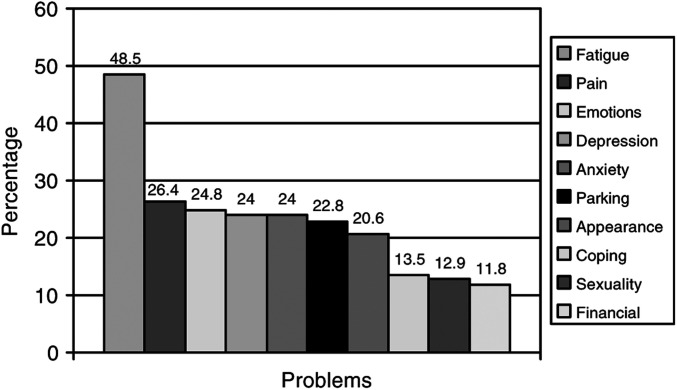
“Carlson(23) observou que 48,5% dos pacientes com distress apresentaram fadiga (p<0,001), seguido de dor (26,4%), depressão (24,0%) e ansiedade (24,0%).”
BackgroundWiens, L., Schäffeler, N., Eigentler, T., Garbe, C., & Forschner, A. (2021) · Cancers · doi:10.3390/cancers13112642 · Cited by 16
Psychosocial and clinical predictors of patient satisfaction with cancer care
Alosaimi, F. D., Alsaleh, F. S., Alsughayer, L., Altamimi, L. A., Alfurayh, I., Abdel-Aziz, N. M., & Alsaleh, K. (2022) · Saudi Pharmaceutical Journal · doi:10.1016/j.jsps.2022.01.020 · Cited by 20
Cultural adaptation of meaning-centered psychotherapy for latino families: a protocol
Blasco, N. T., Costas-Muñíz, R., Zamore, C., Porter, L. S., Claros, M., Bernal, G., Shen, M. J., BREITBART, W. S., & Castro, E. (2022) · BMJ Open · doi:10.1136/bmjopen-2020-045487 · Cited by 15
Bryant, J., Mansfield, E. L., Hall, A. E., Waller, A. E., Boyes, A., Jayakody, A., Dodd, N., & Sanson‐Fisher, R. (2016) · Critical Reviews in Oncology/Hematology · doi:10.1016/j.critrevonc.2016.02.016 · Cited by 15
Tian, X., Jin, Y., Tang, L. L., Pi, Y.-P., Chen, W., & Herrera, M. (2021) · Asia-Pacific Journal of Oncology Nursing · doi:10.4103/apjon.apjon-2114 · Cited by 15
“found that advanced cancer patients with metastasis suffer from more serious psychological distress,([17]) which was also consistent with results found by Morrison et al.”
BackgroundResultFrom Distress Screening to Uptake: An Italian Multicenter Study of Cancer Patients
Meggiolaro, E., Padova, S. D., Ruffilli, F., Bertelli, T., Bragagni, M., Prati, S., Pisotti, L., Massa, I., Foca, F., Tamberi, S., et al. (2021) · Cancers · doi:10.3390/cancers13153761 · Cited by 14
“Refusal has been associated with the sense of stigma related to mental health and psychological services [50], unawareness of available support for distress symptoms, and disinterest in what is traditionally perceived as “talk therapy” [51].”
BackgroundBradbury, A. R., Lee, J., Gaieski, J. B., Li, S., Gareen, I. F., Flaherty, K. T., Herman, B. A., Domchek, S. M., DeMichele, A. M., Maxwell, K. N., et al. (2021) · Cancer · doi:10.1002/cncr.34063 · Cited by 13
Schubart, J., Mitchell, A., Dietrich, L., & Gusani, N. (2015) · Journal of psychosocial oncology · doi:10.1080/07347332.2014.977415 · Cited by 13
Pirl, W. F., Traeger, L. N., Greer, J. A., Bemis, H., Gallagher, E. R., Lennes, I. T., Sequist, L. V. D., Heist, R. S., & Temel, J. S. (2011) · The Oncologist · doi:10.1634/theoncologist.2011-0116 · Cited by 14
Watson, M., & Bultz, B. D. (2010) · Psycho-Oncologie · doi:10.1007/s11839-010-0269-z · Cited by 18
“The rates of more serious psychological problems in cancer patients are well documented, although the figures vary significantly depending on which emotional symptoms are assessed, when assessed and what criteria for clinically significant symptoms are applied [8,10,31].”
BackgroundSelf-citationBultz, B. D., Loscalzo, M. J., & Clark, K. L. (2012) · Wiley eBooks · doi:10.1002/9781119941101.ch7 · Cited by 14
Self-citationvan Nieuwenhuizen, A. J., Buffart, L. M., Smit, J. H., Brakenhoff, R. H., Braakhuis, B. J. M., de Bree, R., Leemans, C. R., & Leeuw, I. M. V. (2014) · Supportive Care in Cancer · doi:10.1007/s00520-014-2359-0 · Cited by 15
“Compared to other types of cancer, including breast, colon, and prostate cancers, HNC patients report high levels of distress [13].”
Loquai, C., Scheurich, V., Syring, N., Schmidtmann, I. M., Müller-Brenne, T., Werner, A., Grabbe, S., & Beutel, M. E. (2014) · Journal of the European Academy of Dermatology and Venereology · doi:10.1111/jdv.12361 · Cited by 14
Bultz, B. D. (2017) · Psycho-Oncology · doi:10.1002/pon.4398 · Cited by 13
Self-citationClinical validation of brief mental health scales for use in South African occupational healthcare
Wijk, C. H. V., Martin, J. H., & Maree, D. J. F. (2021) · SA Journal of Industrial Psychology · doi:10.4102/sajip.v47i0.1895 · Cited by 14
Wolf, S., Zanker, J., Sommer, F., Vlasenko, D., Pinto, D. R. M., Hoffmann, M., Anthuber, M., & Schrempf, M. C. (2022) · Pilot and Feasibility Studies · doi:10.1186/s40814-022-01213-x · Cited by 15
Libert, Y., Merckaert, I., Étienne, A.-M., Farvacques, C., Liénard, A., Messin, S., Meunier, J., Milani, M., Moucheux, A., Reynaert, C., et al. (2006) · ONCOLOGIE · doi:10.1007/s10269-006-0439-6 · Cited by 20
“Ils doivent faire face à des symptômes liés à la maladie ou à des traitements souvent agressifs tels que nausées, vomissements, diarrhées, douleur, fatigue et manque d’énergie pouvant induire une détresse importante [3, 7, 23, 29, 27, 37, 44, 69, 79].”
BackgroundIntervening to Improve Psychological Outcomes after Cancer: What Is Known and Where Next?
Chambers, S. K., Hutchison, S. D., Clutton, S., & Dunn, J. C. (2014) · Australian Psychologist · doi:10.1111/ap.12044 · Cited by 16
“People with cancers of poor prognosis or high symptom burden tend to experience higher levels of distress (Carlson et al., 2004; Eton & Lepore, 2002), and for some groups, such as lung cancer patients and men with advanced prostate cancer, suicide risk is heightened compared with other patient groups (Bill-Axelson et…”
ResultDealing with Cancer-Related Distress
Abrahamson, K. A. (2010) · AJN American Journal of Nursing · doi:10.1097/01.naj.0000370162.07674.f6 · Cited by 13
Melatonin-Induced Oncostasis, Mechanisms and Clinical Relevance
Cardinali, D. P., & Escames, G. (2016) · Journal of Integrative Oncology · doi:10.4172/2329-6771.s1-006 · Cited by 19
“Although there are studies showing that about 40% of tumor patients need professional psycho-oncological support [187] only less than 10% of patients are referred for psychosocial intervention in daily clinical practice [188].”
BackgroundDistress and quality of life in an ethnically diverse sample awaiting breast cancer surgery
Rebholz, W. N., Cash, E. D., Zimmaro, L. A., Bayley-Veloso, R., Phillips, K. M., Siwik, C. J., Chagpar, A. B., Dhabhar, F. S., Spiegel, D., Bell, B. S., et al. (2016) · Journal of Health Psychology · doi:10.1177/1359105316659916 · Cited by 16
“, 2005) and decreased global QOL across diverse cancer types (Carlson et al., 2004).”
BackgroundInfluentialHaun, M. W., Sklenarova, H., Zimmermann‐Schlegel, V., Herzog, W., & Hartmann, M. (2017) · Bundesgesundheitsblatt - Gesundheitsforschung - Gesundheitsschutz · doi:10.1007/s00103-017-2656-0 · Cited by 14
Screening for distress in survivorship
Girgis, A., Smith, A. B., & Durcinoska, I. (2017) · Current Opinion in Supportive and Palliative Care · doi:10.1097/spc.0000000000000328 · Cited by 17
“It is highly prevalent in cancer patients following a cancer diagnosis (35–45%) [2,3] and can persist for years [4].”
BackgroundInfluentialThe core genes involved in the promotion of depression in patients with ovarian cancer
Yi, Y., Liu, Y., Wu, K., Wu, W., & Zhang, W. (2019) · Oncology Letters · doi:10.3892/ol.2019.10934 · Cited by 15
Eva between anxiety and hope: integrating anthroposophic music therapy in supportive oncology care
Ben‐Arye, E., Ben-Arye, Y., & Barak, Y. (2015) · Health Psychology Research · doi:10.4081/hpr.2015.2199 · Cited by 13
Hosokawa, M., Ito, M., Kyota, A., Hirai, K., Yamakawa, M., & Miyashita, M. (2022) · Annals of Palliative Medicine · doi:10.21037/apm-22-655 · Cited by 14
Schulze, J. B., Dörner, M., Günther, M. P., von Känel, R., & Euler, S. (2023) · Heliyon · doi:10.1016/j.heliyon.2023.e18328 · Cited by 12
Psychological Distress in Cancer Patients with Underage Children
Akter, J., Khan, J. G., Khan, M. H., & Hossain, M. Z. (2016) · Journal of Dhaka Medical College · doi:10.3329/jdmc.v24i2.29627 · Cited by 12
Decreasing Psychological Distress in Cancer Inpatients Using FLEX Care®: A Pilot Study
Clark, P. G. (2010) · Social Work in Health Care · doi:10.1080/00981389.2010.499826 · Cited by 13
“The results from two landmark prevalence studies with outpatient samples (Carlson et al., 2004; Zabora, Brintzenhofeszoc, Curbow,Hooker, &Piantadosi, 2001) revealed that clinically significant distress, or symptoms of psychological distress that are severe enough to receive a psychiatric diagnosis,…”
ResultAnnunziata, M. A., Muzzatti, B., Bidoli, E., & Veronesi, A. (2012) · Tumori Journal · doi:10.1177/030089161209800117 · Cited by 15
Moreno, A. I. A. I., Krikorian, A., & Palacio, C. (2015) · Avances en Psicología Latinoamericana · doi:10.12804/apl33.03.2015.10 · Cited by 26
“…autores han tratado el tema del malestar emocional, la ansiedad y la depresión en enfermos con diferentes diagnósticos y estadios de cáncer (Carlson et al., 2004; Delgado-Guay, Parsons, Li, Palmer & Bruera, 2009; Mystakidou et al., 2010; Ornelas-Mejorada, Tufiño & SánchezSosa, 2011; Finck…”
BackgroundManagement of Febrile Neutropenia in a Patient With Acute Leukemia
Bryant, A. L., Walton, A., & Albrecht, T. (2013) · Journal of Emergency Nursing · doi:10.1016/j.jen.2013.07.021 · Cited by 15
Cancer Nutrition Rehabilitation Program: The Role of Social Work
Townsend, D., Accurso–Massana, C., Lechman, C., Duder, S., & Chasen, M. R. (2010) · Current Oncology · doi:10.3747/co.v17i6.575 · Cited by 12
Holch, P., Absolom, K. L., Pini, S. A., Hill, K. M., Liu, A., Sharpe, M., Richardson, A., Hosker, C., & Velikova, G. (2011) · BMJ Supportive & Palliative Care · doi:10.1136/bmjspcare-2011-000076 · Cited by 12
Managing Daily and Long-Term Stress
Carlson, L. E., & Speca, M. (2007) · Springer eBooks · doi:10.1007/978-0-387-34562-8_19 · Cited by 11
Self-citationCancer and psychosocial distress: frequent companions
van Halteren, H. K., Bongaerts, G. P. A., & Wagener, D. J. T. (2004) · The Lancet · doi:10.1016/s0140-6736(04)16997-3 · Cited by 12
Iranian Cancer Patient Perceptions of Prognosis and the Relationship to Hope
Seyedrasooli, A., Rahmani, A., Howard, A. F., Zamanzadeh, V., Mohammadpoorasl, A., Aliashrafi, R., & Pakpour, V. (2014) · Asian Pacific Journal of Cancer Prevention · doi:10.7314/apjcp.2014.15.15.6205 · Cited by 12
“The diagnosis of cancer causes significant emotional distress for patients and their families (Banning et al., 2010; Carlson et al., 2004; Mystakidou et al., 2004) and some studies showed that cancer patients are at risk of suicide (Lee et al.”
BackgroundPalsdottir, T., Nordström, T., Aly, M., Lindberg, J., Clements, M., Egevad, L., Grönberg, H., & Eklund, M. (2019) · PLoS ONE · doi:10.1371/journal.pone.0218280 · Cited by 12
Song, H., Jin, L. I., Lü, Y., Deng, L., & Sun, X. (2013) · Chinese Medical Journal · doi:10.3760/cma.j.issn.0366-6999.20113084 · Cited by 12
Rondanina, G., Siri, G., Marra, D., & DeCensi, A. (2022) · Journal of Cancer Survivorship · doi:10.1007/s11764-022-01291-z · Cited by 12
Mooney, K. H., Beck, S. L., Wilson, C. M., Coombs, L. A., Whisenant, M., Moraitis, A. M., Sloss, E. A., Alekhina, N., Lloyd, J. L. E., Steinbach, M. N., et al. (2024) · JCO Clinical Cancer Informatics · doi:10.1200/cci.23.00243 · Cited by 12
Lau, B. H. P., Chow, A. Y. M., Wong, D. F. K., Chan, J. S. M., Chan, C., Ho, R., So, T., Lam, T.-C., Lee, V. H.-F., Lee, A. W. M., et al. (2018) · Journal of Evidence-Informed Social Work · doi:10.1080/23761407.2018.1435325 · Cited by 13
“Compared to patients with cancers at other sites, patients with lung cancer tend to suffer from higher levels of psychological distress (Carlson et al., 2004; Zabora, BrintzenhofeSzoc, Curbow, Hooker, & Piantadosi, 2001) and risk of suicide (Misono, Weiss, Fann, Redman, & Yueh, 2008).”
ResultIt’s not fine: A photo-elicitation study of rectal cancer survivors’ emotions and coping strategies
Rivard, S. J., Vitous, C. A., Bamdad, M. C., Lussiez, A. D., Anderson, M. S., Varlamos, C. J., Duby, A. A., & Suwanabol, P. A. (2021) · Surgery · doi:10.1016/j.surg.2021.10.067 · Cited by 14
Lung cancer distress: screening thermometer meta-analysis
Zhang, L., Liu, X., Tong, F., Zou, R., Peng, W., Yang, H., Huang, X., Yi, L., Wen, M., Jiang, L., et al. (2022) · BMJ Supportive & Palliative Care · doi:10.1136/bmjspcare-2021-003290 · Cited by 17
“Carlson et al 6 reported difference in distress by cancer type, such as higher rates of distress positivity among those with lung cancer (54.8%).”
BackgroundInfluentialHallet, J. I., Sutradhar, R., Isenberg‐Grzeda, E., Noel, C. W., Mahar, A. L., Vigod, S. N., Bolton, J. M., Deleemans, J. M., Chan, W. C., Coburn, N. G., et al. (2022) · JAMA Oncology · doi:10.1001/jamaoncol.2022.0203 · Cited by 11
Screening for Distress in Young People After Treatment for Sarcoma: A Feasibility Study
Weiner, B., Michelagnoli, M. P., Drake, R., & Christie, D. (2015) · Journal of Pediatric Oncology Nursing · doi:10.1177/1043454214563933 · Cited by 12
“Carlson et al. (2004) screened 3095 patients with varying cancer diagnoses, aged 18 years and above (mean age = 60.”
BackgroundInfluentialAbbott, Y., Shah, N. R., Ward, K. K., McHale, M. T., Alvarez, E. A., Saenz, C. C., & Plaxe, S. C. (2013) · Health & Social Work · doi:10.1093/hsw/hlt006 · Cited by 11
L’Estrange, K., Timulák, L., Kinsella, L., & D’Alton, P. (2016) · Mindfulness · doi:10.1007/s12671-016-0513-0 · Cited by 20
Patel, R. S., Wen, K., & Aggarwal, R. (2018) · Medical Sciences · doi:10.3390/medsci6040093 · Cited by 13
“This is similar with respect to various other studies with a mixed group of cancer types and various cancer stages [32].”
ResultGrapp, M., Rosenberger, F., Hemlein, E., Klein, E. M., Friederich, H., & Maatouk, I. (2020) · Journal of Cancer Education · doi:10.1007/s13187-020-01792-4 · Cited by 12
Kim, A. E., Wang, G.-M., Waite, K. A., Elder, S., Fine, A., Ahluwalia, M. S., Brat, D. J., Mehta, M. P., Page, R., Dunbar, E. M., et al. (2021) · Neuro-Oncology Practice · doi:10.1093/nop/npab042 · Cited by 12
Martinez, K. A., Friese, C. R., Kershaw, T., Given, C. W., Fendrick, M., & Northouse, L. (2015) · Oncology nursing forum · doi:10.1188/15.onf.e310-e318 · Cited by 13
“Depression and emotional distress are also common in this population (Carlson et al., 2004; Zabora, BrintzenhofeSzoc, Curbow, Hooker, & Piantadosi, 2001) and have been independently associated with excessive healthcare service utilization in prior studies (Himelhoch, Weller, Wu, Anderson, & Cooper,…”
ResultNow What? Toward an Integrated Research and Practice Agenda in Distress Screening
Parry, C., Padgett, L. S., & Zebrack, B. (2012) · Journal of Psychosocial Oncology · doi:10.1080/07347332.2012.721486 · Cited by 12
“…estimated to experience high levels of distress during their illness, with upwards of 30% demonstrating clinically significant levels of distress (Carlson et al., 2004; Gao, Bennett, Stark, Murray, & Higginson, 2010; Holland et al., 2010; Zabora, BrintzenhofeSzoc, Curbow, et al., 2001; Zabora,…”
BackgroundWilliams, S., Clarke, S., & Edginton, T. (2023) · Cancer Reports · doi:10.1002/cnr2.1761 · Cited by 10
“everyday functioning, they have the potential to significantly affect mental health and psychological wellbeing too, provoking feelings of anxiety, depression, and distress which can last long after treatment is over.(1,2) Individuals can experience the fear of disease recurrence more than 5 years post-treatment(3) an…”
BackgroundMiaja Ávila, M., & De la Rubia, J. M. (1970) · Psicooncología · doi:10.5209/psic.57088 · Cited by 10
Košir, U., Denis‐Larocque, G., Tsimicalis, A., Freeman, C. R., TURCOTTE, R. E., Cury, F., Alcindor, T., & Goulding, K. A. (2020) · Journal of Surgical Oncology · doi:10.1002/jso.25915 · Cited by 13
Madhusudhana, S., Gates, M., Singh, D., Grover, P., Indaram, M. B., & Cheng, A.-L. (2021) · The Journal of the National Comprehensive Cancer Network · doi:10.6004/jnccn.2021.7018 · Cited by 13
Family functioning and psychosocial symptoms among Latinx patients coping with advanced cancer
Torres‐Blasco, N., Castro, E., Zamore, C., Claros, M., Peña-Vargas, C., Rosario-Ramos, L., Sanabria, G., BREITBART, W. S., & Costas-Muñíz, R. (2022) · Palliative & Supportive Care · doi:10.1017/s1478951522001201 · Cited by 10
Parmet, T., Yusufov, M., Braun, I. M., Pirl, W. F., Matlock, D. D., & Sannes, T. S. (2023) · Translational Behavioral Medicine · doi:10.1093/tbm/ibac121 · Cited by 13
2012 President's Plenary International Psycho‐Oncology Society: future directions in psycho‐oncology
BREITBART, W. S., Bultz, B. D., Dunn, J. C., Grassi, L. G., & Watson, M. (2013) · Psycho-Oncology · doi:10.1002/pon.3332 · Cited by 10
“Approximately 40% of cancer patients, and family members, experience levels of psychological distress that requires specific intervention [20,21].”
BackgroundSelf-citationBultz, B. D., & Carlson, L. E. (2013) · Journal of Psychosomatic Research · doi:10.1016/j.jpsychores.2013.04.002 · Cited by 12
“The significant problem with this approach is that it contravenes recommendations to screen broadly, which are based on prevalence studies demonstrating that patients experience distress in all of the physical, psychosocial and practical domains, with an interplay among domains [2,3].”
BackgroundSelf-citationAguirre‐Camacho, A., Garland, S. N., Martopullo, C., & Pelletier, G. (2013) · Palliative & Supportive Care · doi:10.1017/s1478951513000151 · Cited by 11
“Email: Guy.Pelletier@albertahealthservices.ca 277 vary from 35% to 45% (Carlson et al., 2004; Carlson & Bultz, 2003; Zabora et al., 2001).”
Self-citationIntérêts d’une consultation spécialisée d’aide à la reprise du travail après cancer
Rollin, L., Blasi, G. D., Boucher, L., & Gehanno, J.-F. (2015) · Bulletin du Cancer · doi:10.1016/j.bulcan.2014.06.001 · Cited by 10
Dispositional Mindfulness, Psychological Distress, and Posttraumatic Growth in Cancer Patients
Omid, A., Mohammadi, A. S., Jalaeikhoo, H., & Taghva, A. (2017) · Journal of Loss and Trauma · doi:10.1080/15325024.2017.1384783 · Cited by 12
Art Therapy Sessions for Cancer Patients: A Single-Centre Experience
Gras, M., Daguenet, É., Brosse, C., Beneton, A., & Morisson, S. (2020) · Oncology · doi:10.1159/000504448 · Cited by 10
The Validity of the Distress Thermometer in Greek Colon Cancer Patients
Antoniadis, D., Lavrentiadis, G., Papadopoulos, V. N., lerodiakonoui, I., & Garyfallos, G. (2015) · Acta chirurgica Belgica · doi:10.1080/00015458.2015.11681138 · Cited by 10
“Distress is reported by 20-66% of individuals with cancer (1-5).”
BackgroundSvětláková, L., Sláma, O., Světlák, M., Pochop, L., Šedo, J., Alexandrová, R., Bílek, O., & Vyzula, R. (2019) · Klinicka onkologie · doi:10.14735/amko2019201 · Cited by 18
“) u 30 % pacientů v různé fázi nádorového onemocnění [2] a u 40 % a více pacientů pak uvádějí ob těžující psychické obtíže [3].”
Thalén-Lindström, A., Glimelius, B. L. G., & Johansson, B. (2015) · Cancer Nursing · doi:10.1097/ncc.0000000000000267 · Cited by 12
“Negative thoughts 22 (16) 52 (38) 44 (32) 11 (8) Relationship to others (workmates, neighbors) 38 (28) 49 (36) 43 (32) 6 (4) How my relatives have been treated by healthcare staff 49 (36) 47 (35) 27 (20) 8 (6)”
Howe, L., Husband, A., & Robinson, A. (2024) · Cancer Medicine · doi:10.1002/cam4.7063 · Cited by 17
Lu, L., Zhang, B., Li, W., Li, J., & Li, L. (2024) · Journal of Clinical Nursing · doi:10.1111/jocn.17501 · Cited by 16
Characteristics of malnutrition in malignant cancer patients
Zhang, Q., Song, M., Zhang, X., Liu, T., Liu, C., Wang, Z., Tang, M. Y., Song, C., Zhang, X., Cong, M., et al. (2024) · Precision Nutrition · doi:10.1097/pn9.0000000000000082 · Cited by 12
“[41,42] An extensive analysis encompassing 330 studies revealed a correlation between stress and poorer survival outcomes in cancer patients ( P 0.001), with an increase in cancer mortality observed across 53 studies ( P 0.001).”
InfluentialMackenzie, L., Carey, M. L., Sanson‐Fisher, R., D’Este, C. A., & Yoong, S. L. (2015) · Psycho-Oncology · doi:10.1002/pon.3806 · Cited by 13
“Patients may not want professional psychological support [7] if they view distress to be a normal part of coping with cancer [6] or if they feel they already have adequate support in place [4].”
BackgroundStatham, C., & Davis, C. (2018) · Current Opinion in Supportive and Palliative Care · doi:10.1097/spc.0000000000000396 · Cited by 11
Sharpley, C. F., Christie, D., & Bitsika, V. (2020) · Psycho-Oncology · doi:10.1002/pon.5537 · Cited by 9
González, C. R., Vega, B. R., Zarcero, M. T., Mediavilla, R., Bouzó-Molina, N., Fernández, R. P., Migueláñez, I. P., & Palao, Á. (2021) · Cirugía Española · doi:10.1016/j.ciresp.2021.10.007 · Cited by 9
Zabora, J. R., Buzaglo, J. S., Kennedy, V., Richards, T. A., Schapmire, T. J., Zebrack, B., & Ghobrial, I. M. (2014) · Palliative & Supportive Care · doi:10.1017/s1478951514000649 · Cited by 10
“If emotional distress is undetected and untreated, unhealthy behaviors can occur, satisfaction with life decreases, and inappropriate use of healthcare resources may be the result (Institute of Medicine, 2008; Carlson et al., 2004; DiMatteo, 2004).”
BackgroundSchorr, M., Carlson, L. E., Lau, H., Zhong, L., Bultz, B. D., Waller, A. E., Groff, S. L., & Hao, D. (2017) · Supportive Care in Cancer · doi:10.1007/s00520-017-3733-5 · Cited by 10
Self-citationGhazali, N., Roe, B. H., Lowe, D., Tandon, S., Jones, T. M., Shaw, R., Risk, J. M., & Rogers, S. N. (2017) · Journal of Cranio-Maxillofacial Surgery · doi:10.1016/j.jcms.2017.07.009 · Cited by 10
“4) Median (IQR) 64 (58-73) <55 16% (27) 55-64 36% (62) 65-74 30% (51) 75+ 15% (26) Not known 2% (4) Specialty MFU 53% (90) ENT 46% (79) Not known 0.”
BackgroundShim, I. H., Ha, S. H., & Bae, D. (2019) · Indian Journal of Psychiatry · doi:10.4103/psychiatry.indianjpsychiatry_342_18 · Cited by 9
“[12] Psychological distress in cancer patients increases the risk of relapse following treatment and decreases compliance with antineoplastic therapy.[16] Psychological distress may also be an independent risk factor for increased mortality, although there have been contradictory findings,[16,17] and might shorten sur…”
Liu, J., Hou, W., Gönen, M., Seluzicki, C. M., Li, Q. S., & Mao, J. J. J. (2020) · Annals of Palliative Medicine · doi:10.21037/apm-20-865 · Cited by 9
Health Promotion Among Cancer Patients: Innovative Interventions
López, V., & Klainin‐Yobas, P. (2021) · Springer eBooks · doi:10.1007/978-3-030-63135-2_17 · Cited by 14
Unmet mental health needs in patients with advanced B-cell lymphomas
Marte, C., George, L. S., Rutherford, S. C., Ouyang, D. J., Martin, P., Leonard, J. P., & Trevino, K. M. (2021) · Palliative & Supportive Care · doi:10.1017/s1478951521001164 · Cited by 10
“However, similar rates of mental health treatment for distressed patients have been found in other studies (Carlson et al., 2004; Mosher and DuHamel, 2012), suggesting that under-treatment of distress may be a widespread problem.”
ResultHong, C. W., Singh, V. A., & Singh, A. K. A. (2022) · Journal of orthopaedic surgery · doi:10.1177/10225536221093431 · Cited by 10
“They are generallymore prepared to accept illnesses and adhere to treatment.(11,24,25) In clinical practice; this highlights the importance of identifying psychological problems among younger patients.”
BackgroundYeo, T. P., Cannaday, S., Thompson, R. E., Fogg, R. W., Nevler, A., Lavu, H., & Yeo, C. J. (2022) · Journal of the American College of Surgeons · doi:10.1097/xcs.0000000000000469 · Cited by 9
Grassi, L. G., & Nanni, M. G. (2013) · Psycho-Oncologie · doi:10.1007/s11839-013-0436-4 · Cited by 9
Icelandic Cancer Patients Receiving Chemotherapy or Radiotherapy
Hjörleifsdóttir, E., Hallberg, I. R., Bolmsjö, I., & Gunnarsdóttir, E. D. (2007) · Cancer Nursing · doi:10.1097/01.ncc.0000300161.06016.a9 · Cited by 9
“BSI 18 and WOC-CA have been validated in other countries by experts in the field of cancer and in large studies on cancer patients in outpatient clinics in the United States and Canada.8,12,13,18 Internal reliability for both BSI 18 and WOC-CA in this present study was strengthened by similar Cronbach ! values in all…”
BackgroundResultInfluentialSharpley, C. F., Bitsika, V., & Christie, D. (2009) · Journal of Men s Health · doi:10.1016/j.jomh.2009.08.193 · Cited by 9
Pasacreta, J. V., Kenefick, A. L., & McCorkle, R. C. (2008) · Cancer Nursing · doi:10.1097/01.ncc.0000339251.83571.f9 · Cited by 9
“It is clear that there are high levels of untreated distress among cancer patients.(6) Commonly occurring phenomena in cancer patients include adjustment disorders and major depression.”
BackgroundParedes, T. F., Simões, M. R., & Canavarro, M. C. (2010) · Psychology Health & Medicine · doi:10.1080/13548506.2010.482139 · Cited by 11
Paul, C. L., Hall, A. E., Oldmeadow, C. J., Lynagh, M., Campbell, S., Bradstock, K. F., Williamson, A., Carey, M. L., & Sanson‐Fisher, R. (2017) · Supportive Care in Cancer · doi:10.1007/s00520-017-3751-3 · Cited by 10
Tan, H. C., Chen, S., Ercolano, E. A., Lazenby, M., Davies, M. J., Chen, J., & McCorkle, R. C. (2019) · European Journal of Cancer Care · doi:10.1111/ecc.13046 · Cited by 11
Hissa, J., Connolly, A., Timulák, L., & Hession, N. (2020) · Person-Centered & Experiential Psychotherapies · doi:10.1080/14779757.2020.1717988 · Cited by 14
“emotional distress, with estimates of severe distress warranting psychosocial treatment in one-third of oncology patients (Carlson et al., 2004; Mitchell et al., 2011; Singer, Das-Munshi, & Brähler, 2009).”
BackgroundMusic therapy support groups for cancer patients and caregivers
Dvorak, A. L., Coffman, D. D., Cohen, M. L., Adamek, M. S., Oleson, J., & Gfeller, K. E. (2011) · doi:10.17077/etd.3zbutejc · Cited by 16
“Psychosocial interventions may alter coping behaviors associated with pain, stress, anxiety, and other unpleasant emotional experiences, which contribute to psychological distress, a significant and ongoing problem with many cancer patients (Carlson et al., 2004).”
BackgroundEmir, B. S., Yıldız, S., Kurt, O., Emre, E., & Aydın, S. (2023) · Healthcare · doi:10.3390/healthcare11202794 · Cited by 10
“Similar to our findings, a study comparing different types of cancer found no difference in depression levels [45], whereas another study reported an increased rate of depression in breast cancer patients [46].”
ResultPsycho-oncological burden in patients with brain metastases undergoing neurological surgery
Araceli, T., Fischl, A., Haj, A., Doenitz, C., Stoerr, E.-M., Hillberg, A., Vogelhuber, M., Rosengarth, K., Riemenschneider, M. J., Hau, P., et al. (2024) · Frontiers in Oncology · doi:10.3389/fonc.2024.1463467 · Cited by 13
The value of painting as a therapeutic tool in the treatment of anxiety/depression mental disorders
Alrasheed, E. S., & Al-Rasheed, M. S. (2023) · Journal of Interprofessional Education & Practice · doi:10.1016/j.xjep.2023.100636 · Cited by 13
Kim, H., Ji, W., Lee, J. W., Jo, M., Yun, S.-C., Lee, S. W., Choi, C., Lee, G. D., Lee, H. J., Cho, E., et al. (2023) · Journal of Korean Medical Science · doi:10.3346/jkms.2023.38.e236 · Cited by 11
Sharpley, C. F., Bitsika, V., & Christie, D. (2011) · Journal of Men s Health · doi:10.1016/j.jomh.2010.12.003 · Cited by 10
Metadata
- Authors
- Carlson, L. E., Angen, M., Cullum, J., Goodey, E., Koopmans, J., Lamont, L., MacRae, J. H., Martin, M., Pelletier, G., Robinson, J., Simpson, J. S. A., Speca, M., Tillotson, L., & Bultz, B. D.
- Affiliations
- University of Calgary (CA)
- Corresponding author
- Carlson, L E
- Venue
- British Journal of Cancer
- Published
- 2004-05-25
- Volume
- 90
- Issue
- 12
- Pages
- 2297-2304
- ISSN
- 0007-0920 (ISSN-L)
- 1532-1827
- PMC
- PMC2410292
- OpenAlex
- W2143584015
- Cited by
- 939
- References
- 39
- Citations by year
- 2026: 19 · 2025: 15 · 2024: 29 · 2023: 29 · 2022: 61 · 2021: 59 · 2020: 50 · 2019: 35 · 2018: 62 · 2017: 52 · 2016: 59 · 2015: 58 · 2014: 54 · 2013: 54 · 2012: 67
- FWCI
- 8.66
- Type
- journal article
- Language
- en
- Open access
- hybrid
- doi.org
- Licence
- cc-by-nc-sa
- www.springer.com/tdm (unspecified)
- Locations
- British Journal of Cancer (publishedVersion, cc-by-nc-sa)
- PubMed Central (publishedVersion, cc-by)
- PubMed (publishedVersion)
- Libraries and Cultural Resources (University of Calgary) (submittedVersion, cc-by-nc-sa)
- Funders
- Canadian Institutes of Health Research
- Topics
- Health Sciences › Medicine › Oncology › Cancer survivorship and care
- Health Sciences › Medicine › Public Health, Environmental and Occupational Health › Palliative and Oncologic Care
- Social Sciences › Psychology › Clinical Psychology › Family Support in Illness
- Keywords
- cancer patients, psychological distress, fatigue, psychosocial support, help-seeking, somatization, depression, anxiety, Brief Symptom Inventory-18, psychosocial problems, barriers to care, gender differences, socioeconomic factors, minority patients
- MeSH terms
- Adult, Aged, Counseling, Cross-Sectional Studies, Fatigue, Female, Humans, Income, Male, Mass Screening, Mental Health Services, Middle Aged, Minority Groups, Neoplasms, Social Support, Stress, Psychological
About these checks
Registry, retraction, Cites and statistics results are computed, not judged, with one exception: a printed reference that no index lists is read once by a model before it counts as a citation error. Claims are extracted by a model and kept only when their quote appears verbatim in the text; each cited source is then checked, with a model’s help, for whether it says what the claim relies on. Those verdicts can be wrong — read the claim’s quote and the cited source before relying on one.
Statistics and arithmetic are recomputed, not judged.
Confidence bands are shown only for fields calibrated on our annotated test set. None is calibrated yet, so no band is shown.
What counts as a claim ›How we measure confidence ›How we check this ›
Are you an author, or do you see a problem with this page? Request a review
Data sources
Bibliographic data: Semantic Scholar, OpenAlex, Crossref.
Contains information from the Semantic Scholar Academic Graph Datasets, made available under the ODC Attribution License (ODC-BY 1.0).
Semantic Scholar’s data is described in: Kinney, R., et al. (2023). The Semantic Scholar Open Data Platform. arXiv:2301.10140.
