

MoleculeNet: a benchmark for molecular machine learning
Open accessThe DOI matches its Crossref record; 82 of the 82 references it cites were found in a registry or an index.
Abstract
A large scale benchmark for molecular machine learning consisting of multiple public datasets, metrics, featurizations and learning algorithms.
Overview
The claims and statistics of this paper haven’t been checked yet.
Free: it reads the open-access text and checks the first 5 claims that cite a source we can check. Create a free account to check every claim.
Integrity signals
Registry
Cites
Statistics
Figures







Verification
Claims the paper makes
The claims and statistics of this paper haven’t been checked yet.
Free: it reads the open-access text and checks the first 5 claims that cite a source we can check. Create a free account to check every claim.
Claims other papers make about this one
Each is checked against this paper’s own text: does it say what the citing paper says it does?
The source backs part of the claim, not all of it — or backs it for a different population, condition or comparison.
In the citing paper
“the availability of larger data sets (9) and easy-to-use tools (10,11) has particularly transformed this landscape.”
From Machine Learning for the Discovery, Design, and Engineering of Materials. (2022) · cites this paper as [10]
Experimental — accuracy not yet measuredThe cited source says what the claim attributes to it.
In the citing paper
“Another platform called MoleculeNet is also used to translate two-dimensional molecular structures into novel features/descriptors, which can then be used in predicting toxicity of the given molecule. The MoleculeNet platform is built on data from various public databases and more than 700,000 compounds have already been tested for toxicity or other properties [20].”
From The rise of artificial intelligence in healthcare applications (2020) · cites this paper as [20]
The cited source says what the claim attributes to it.
In the citing paper
“Initiatives like the DREAM Challenges,284 MoleculeNet,110 and Therapeutic Data Commons285 offer benchmark data sets across a wide spectrum of prediction tasks for pharmacology.”
From Advancing Targeted Protein Degradation via Multiomics Profiling and Artificial Intelligence (2023) · cites this paper as [110]
The check wasn’t confident either way, so it gives no verdict — never disputed.
In the citing paper
“However, ChemBERTa was found to perform better than Chemprop on a number of other MoleculeNet benchmark tasks51”
From OnSIDES database: Extracting adverse drug events from drug labels using natural language processing models (2025) · cites this paper as [51]
Experimental — accuracy not yet measured
Self-check
Percentages, sums and reported differences re-computed from the paper’s own numbers.
The self-check needs the paper’s full text.
Citations
Cites
Breiman, L. (2001) · Machine Learning · doi:10.1023/a:1010933404324 · Cited by 133,538
LeCun, Y., Bengio, Y., & Hinton, G. (2015) · Nature · doi:10.1038/nature14539 · Cited by 84,126
Scikit-learn: Machine Learning in Python
Pedregosa, F., Varoquaux, G., Gramfort, A., Michel, V., Thirion, B., Grisel, O., Blondel, M., Müller, A., Nothman, J., Louppe, G., et al. (2012) · arXiv · doi:10.48550/arxiv.1201.0490 · Cited by 71,016
ImageNet: A large-scale hierarchical image database
Deng, J., Dong, W., Socher, R., Li, L.-J., Li, K., & Fei-Fei, L. (2009) · 2009 IEEE Conference on Computer Vision and Pattern Recognition · doi:10.1109/cvpr.2009.5206848 · Cited by 65,333
Cortes, C., & Vapnik, V. (1995) · Machine Learning · doi:10.1007/bf00994018 · Cited by 59,421
Cortes, C., & Vapnik, V. (1995) · Machine-mediated learning · doi:10.1023/a:1022627411411 · Cited by 48,445
ImageNet Large Scale Visual Recognition Challenge
Russakovsky, O., Deng, J., Su, H., Krause, J., Satheesh, S., Ma, S., Huang, Z., Karpathy, A., Khosla, A., Bernstein, M., et al. (2015) · International Journal of Computer Vision · doi:10.1007/s11263-015-0816-y · Cited by 39,380
Greedy function approximation: A gradient boosting machine
Friedman, J. H. (2001) · The Annals of Statistics · doi:10.1214/aos/1013203451 · Cited by 30,731
The Elements of Statistical Learning
Hastie, T., Tibshirani, R., & Friedman, J. (2009) · Springer Series in Statistics · doi:10.1007/978-0-387-84858-7 · Cited by 25,970
Deep learning in neural networks: an overview
Schmidhuber, J. (2015) · Neural Networks · doi:10.1016/j.neunet.2014.09.003 · Cited by 18,570
Research works printed but not linked: 11
- Mitchell, 2014, Wiley Interdiscip. Rev.: Comput. Mol. Sci., 4, 468
- T. Unterthiner , A.Mayr , G.Klambauer , M.Steijaert , J.Wenger , H.Ceulemans and S.Hochreiter , Deep Learning and Representation Learning Workshop (NIPS 2014) , 2014
- Delaney, 2004, J. Chem. Inf. Model., 44, 1000
- J. Deng , W.Dong , R.Socher , L.-J.Li , K.Li and L.Fei-Fei , CVPR09 , 2009
- A. Krizhevsky , I.Sutskever and G. E.Hinton , NIPS Proceedings , 2012
- Pedregosa, 2011, J. Mach. Learn. Res., 12, 2825
- Quantum Machine , http://quantum-machine.org/datasets/ , accessed 2017-09-27
- Medical Dictionary for Regulatory Activities , http://www.meddra.org/ , accessed 2017-09-27
- Artemov, 2016, bioRxiv, Biochem., 095653
- Aggregate Analysis of ClincalTrials.gov (AACT) Database , http://www.ctti-clinicaltrials.org/aact-database , accessed 2017-09-27
- Cortes, 1995, Mach. Learn., 20, 273
Cited by
Items 901–1,000 of 1,019
Deep learning algorithms applied to computational chemistry
Pando, A. G., Ramírez-Alonso, G. M. D. J., Arzate-Quintana, C., & Camarillo‐Cisneros, J. (2023) · Molecular Diversity · doi:10.1007/s11030-023-10771-y · Cited by 30
“In the case of quantum mechanics, physical chemistry, biophysics, and physiology MoleculeNet is a dataset that contains a collection that includes over 700,000 compounds tested on different properties [121].”
3DReact: Geometric Deep Learning for Chemical Reactions
van Gerwen, P., Briling, K. R., Bunne, C., Somnath, V. R., Laplaza, R., Krause, A., & Corminbœuf, C. (2024) · Journal of Chemical Information and Modeling · doi:10.1021/acs.jcim.4c00104 · Cited by 42
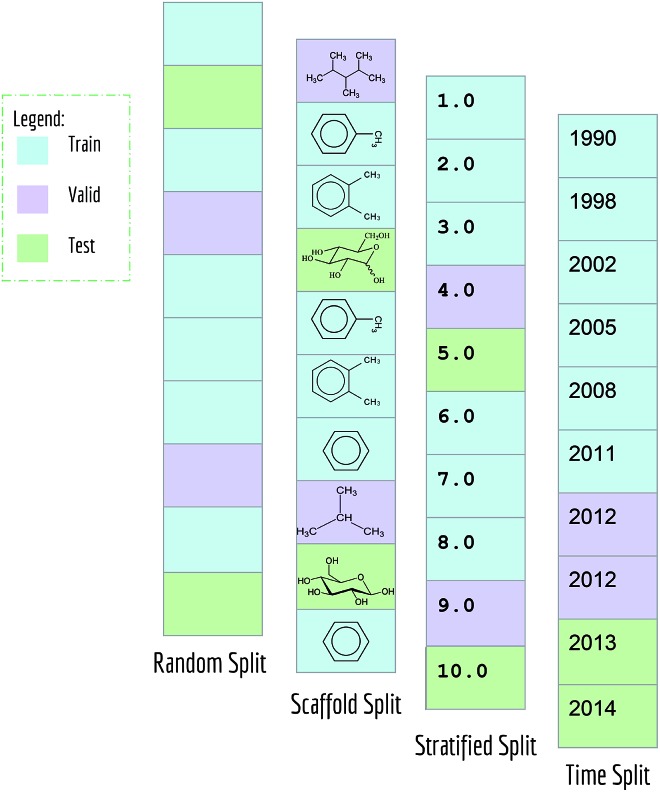
“Scaffold splitting 136,137 clusters molecules based on their 2D backbones (such as Bemis − Murcko scaffolds 127 ) and ensures that the clusters (scaffolds) belonging to the training, validation, and test sets do not overlap.”
Understanding predictions of drug profiles using explainable machine learning models
König, C., & Vellido, A. (2024) · BioData Mining · doi:10.1186/s13040-024-00378-w · Cited by 30
“The availability of publicly accessible experimental data is paramount for the advances in such ML-based QSAR prediction for ADME properties [6–9].”
MethodGraph pooling in graph neural networks: methods and their applications in omics studies
Wang, Y., Hou, W., Sheng, N., Zhao, Z., Liu, J., Huang, L., & Wang, J. (2024) · Artificial Intelligence Review · doi:10.1007/s10462-024-10918-9 · Cited by 36
Uçar, S.-Ş., López-Gazpio, I., & Lopez‐Gazpio, J. (2025) · Education and Information Technologies · doi:10.1007/s10639-024-13295-6 · Cited by 39
ToxicBlend: Virtual screening of toxic compounds with ensemble predictors
Zaslavskiy, M., Jégou, S., Tramel, E. W., & Wainrib, G. (2019) · Computational Toxicology · doi:10.1016/j.comtox.2019.01.001 · Cited by 27
Ward, L. T., Dandu, N. K., Blaiszik, B. J., Narayanan, B., Assary, R. S., Redfern, P. C., Foster, I. T., & Curtiss, L. A. (2021) · The Journal of Physical Chemistry A · doi:10.1021/acs.jpca.1c01960 · Cited by 26
“One such database, FreeSolv, 8 has been used extensively to create ma-2 chine learning (ML) models for hydrogenation energy based on diverse techniques including convolutional neural networks 9,10 and fingerprint-based machine learning.”
MethodCrysXPP: An explainable property predictor for crystalline materials
Das, K., Samanta, B., Goyal, P., Lee, S., Bhattacharjee, S., & Ganguly, N. (2022) · npj Computational Materials · doi:10.1038/s41524-022-00716-8 · Cited by 36
Daş, B., Kutsal, M., & Daş, R. (2022) · Chemometrics and Intelligent Laboratory Systems · doi:10.1016/j.chemolab.2022.104640 · Cited by 24
Zheng, Z., Tan, Y., Wang, H., Yu, S., Liu, T., & Liang, C. (2023) · Briefings in Bioinformatics · doi:10.1093/bib/bbac566 · Cited by 26
Prediction of Solid Propellant Burning Rate Characteristics Using Machine Learning Techniques
Klinger, D., Casey, A., Manship, T. D., Son, S. F., & Strachan, A. H. (2023) · Propellants Explosives Pyrotechnics · doi:10.1002/prep.202200267 · Cited by 24
Improving molecular machine learning through adaptive subsampling with active learning
Wen, Y., Li, Z., Xiang, Y., & Reker, D. (2023) · Digital Discovery · doi:10.1039/d3dd00037k · Cited by 25
Individual and Structural Graph Information Bottlenecks for Out-of-Distribution Generalization
Yang, L. Q., Zheng, J., Wang, H., Liu, Z., Huang, Z., Hong, S., Zhang, W., & Cui, B. (2023) · IEEE Transactions on Knowledge and Data Engineering · doi:10.1109/tkde.2023.3290792 · Cited by 48
“, medical diagnosis [30], [31], criminal judicature [32], financial business [33], and drug discovery [1], etc.”
BackgroundExplaining compound activity predictions with a substructure-aware loss for graph neural networks
Amara, K., Rodríguez-Pérez, R., & Jiménez-Luna, J. (2023) · Journal of Cheminformatics · doi:10.1186/s13321-023-00733-9 · Cited by 29
Graph Neural Networks for the Prediction of Molecular Structure–Property Relationships
Rittig, J. G., Gao, Q., Dahmen, M., Mitsos, A., & Schweidtmann, A. M. (2023) · Royal Society of Chemistry eBooks · doi:10.1039/bk9781837670178-00159 · Cited by 45
Torres, L. H. M., Ribeiro, B., & Arrais, J. P. (2024) · Applied Soft Computing · doi:10.1016/j.asoc.2024.111268 · Cited by 30
Cross‐Modal Graph Contrastive Learning with Cellular Images
Zheng, S., Rao, J., Zhang, J., Zhou, L., Xie, J., Cohen, E., Lu, W., Li, C., & Yang, Y. (2024) · Advanced Science · doi:10.1002/advs.202404845 · Cited by 30
“These datasets are introduced by [1] and”
BackgroundCompact atomic descriptors enable accurate predictions via linear models
Zeni, C., Rossi, K., Glielmo, A., & de Gironcoli, S. (2021) · The Journal of Chemical Physics · doi:10.1063/5.0052961 · Cited by 27
MolCLR: Molecular Contrastive Learning of Representations via Graph Neural NetworksPreprint
Wang, Y., Wang, J., Cao, Z., & Farimani, A. B. (2021) · arXiv (Cornell University) · doi:10.24433/co.8582800.v1 · Cited by 35
Frustratingly Easy Transferability EstimationPreprint
Huang, L.-K., Wei, Y., Rong, Y., Yang, Q., & Huang, J. (2021) · arXiv (Cornell University) · doi:10.48550/arxiv.2106.09362 · Cited by 43
“The first one has 2 million molecules collected from ChemBL [35] and MoleculeNet [36]; the second one contains 11 million molecules sampled from ZINC15 [37] and ChemBL.”
BackgroundGenerative Pre-Training from MoleculesPreprint
Adilov, S. (2021) · ChemRxiv · doi:10.26434/chemrxiv-2021-5fwjd · Cited by 39
Mamada, H., Nomura, Y., & Uesawa, Y. (2022) · ACS Omega · doi:10.1021/acsomega.2c00261 · Cited by 22
Synergy of semiempirical models and machine learning in computational chemistry
Fedik, N. S., Nebgen, B. T., Lubbers, N., Barros, K. M., Kulichenko, M., Li, Y. W., Zubatyuk, R. I., Messerly, R. A., Isayev, O., & Tretiak, S. (2023) · The Journal of Chemical Physics · doi:10.1063/5.0151833 · Cited by 25
Tang, X., Tran, A., Tan, J. T. C., & Gerstein, M. (2024) · Bioinformatics · doi:10.1093/bioinformatics/btae260 · Cited by 43
“Following the procedure and settings outlined in (Liu et al. 2023b), we begin with 200 randomly sampled molecules from ZINC (Sterling and Irwin 2015) along with a brief text editing prompt as inputs.”
Wang, H., Zhong, L., Su, W., Ruan, T., & Jiang, G. (2024) · TrAC Trends in Analytical Chemistry · doi:10.1016/j.trac.2024.117988 · Cited by 27
Cui, B., & Wang, H. (2024) · Resources Conservation and Recycling · doi:10.1016/j.resconrec.2024.107950 · Cited by 26
Advancing predictive toxicology: overcoming hurdles and shaping the future
Masarone, S., Beckwith, K. V., Wilkinson, M. R., Tuli, S., Lane, A., Windsor, S., Lane, J. S., & Hosseini-Gerami, L. (2025) · Digital Discovery · doi:10.1039/d4dd00257a · Cited by 31
Challenging Reaction Prediction Models to Generalize to Novel Chemistry
Bradshaw, J., Zhang, A., Mahjour, B. A., Graff, D., Segler, M., & Coley, C. W. (2025) · ACS Central Science · doi:10.1021/acscentsci.5c00055 · Cited by 45
“Within the domain of ML for chemistry, OOD splits—such as scaffold, time, and others—have facilitated the development of more robust models for molecular regression and classification tasks [94, 71, 42, 34, 82, 74].”
Artificial intelligence in pharmaceutical sciences: A comprehensive review
Kandhare, P., Kurlekar, M., Deshpande, T., & Pawar, A. (2025) · Medicine in Novel Technology and Devices · doi:10.1016/j.medntd.2025.100375 · Cited by 32
Proteo-chemometrics interaction fingerprints of protein–ligand complexes predict binding affinity
Wang, D. D., Xie, H., & Yan, H. (2021) · Bioinformatics · doi:10.1093/bioinformatics/btab132 · Cited by 23
A general optimization protocol for molecular property prediction using a deep learning network
Chen, J., & Tseng, Y. J. (2021) · Briefings in Bioinformatics · doi:10.1093/bib/bbab367 · Cited by 25
Property-Aware Relation Networks for Few-Shot Molecular Property Prediction
Yao, Q., Shen, Z., Wang, Y., & Dou, D. (2024) · IEEE Transactions on Pattern Analysis and Machine Intelligence · doi:10.1109/tpami.2024.3368090 · Cited by 26
“We perform experiments on widely used benchmark few-shot molecular property prediction datasets (Table 1) included in MoleculeNet [43].”
MethodLi, Y., Xu, Y., & Yu, Y. (2021) · Molecules · doi:10.3390/molecules26237257 · Cited by 25
“Lipo Lipophilicity [43] 3817 BioDeg Biodegradability [49] 1698 BP Boiling point [50] 12451 TOX21 In-vitro toxicity [43] 7785 MP Melting point [51] 283 SIDER Side Effect Resource [43] 1412”
BackgroundInfluentialNoreldeen, H. A. A., He, S., Huang, K., Zhu, C.-T., Zhou, Q.-L., Peng, H., Deng, H., & Chen, W. (2022) · Analytical and Bioanalytical Chemistry · doi:10.1007/s00216-022-04372-1 · Cited by 25
“Machine learning (ML) plays an essential role in many fields including biophysics, physiology, physical chemistry, and quantum mechanics [13].”
BackgroundMetabolic activity organizes olfactory representations
Qian, W. W., Wei, J. N., Sánchez-Lengeling, B., Lee, B. K., Luo, Y., Vlot, M., Dechering, K. J., Peng, J., Gerkin, R. C., & Wiltschko, A. B. (2023) · eLife · doi:10.7554/elife.82502 · Cited by 34
HeGCL: Advance Self-Supervised Learning in Heterogeneous Graph-Level Representation
Shi, G., Zhu, Y., Liu, J. K., & Li, X. (2023) · IEEE Transactions on Neural Networks and Learning Systems · doi:10.1109/tnnls.2023.3273255 · Cited by 30
“1) OGB-Molbace: This dataset comes from Molecu-leNet [38].”
LL-GNN: Low Latency Graph Neural Networks on FPGAs for High Energy Physics
Que, Z., Fan, H., Loo, M., Li, H., Blott, M., Maurizio Pierini, B., Tapper, A., & Luk, W. W. (2024) · ACM Transactions on Embedded Computing Systems · doi:10.1145/3640464 · Cited by 29
“1 INTRODUCTION Graph neural networks (GNNs) have shown remarkable successes in wide applications with graphstructured data, such as recommendation systems [14, 47, 48], molecule property prediction [15, 44], and various High Energy Physics (HEP) applications, such as jet tagging [30], charged particle tracking [13, 23…”
BackgroundGómez-Sacristán, P., Simeon, S., Tran‐Nguyen, V., Patil, S. P., & Ballester, P. J. (2024) · Journal of Advanced Research · doi:10.1016/j.jare.2024.01.024 · Cited by 29
“Each of these algorithms exploited the same data instances and featurization schemes (protein–ligand extended connectivity fin-gerprints, PLEC [53]; and 3D grid-based features, GRID [54]).”
ChemBoost: A Chemical Language Based Approach for Protein – Ligand Binding Affinity Prediction
Özçelik, R., Öztürk, H., Özgür, A., & Özkırımlı, E. (2020) · Molecular Informatics · doi:10.1002/minf.202000212 · Cited by 34
Recent advancement in targeted therapy and role of emerging technologies to treat cancer
Barot, S., Patel, H. J., Yadav, A., & Ban, I. (2023) · Medical Oncology · doi:10.1007/s12032-023-02184-6 · Cited by 30
Zhang, R., Wu, C., Yang, Q., Liu, C., Wang, Y., Li, K., Huang, L., & Zhou, F. (2024) · Bioinformatics · doi:10.1093/bioinformatics/btae118 · Cited by 32
“The benchmark datasets were sourced from the MoleculeNet database (Wu et al. 2018), a comprehensive and well-regarded collection of molecular datasets.”
MethodGadaleta, D., Serrano‐Candelas, E., Ortega-Vallbona, R., Colombo, E., de Lomana, M. G., Biava, G., Aparicio-Sánchez, P., Roncaglioni, A., Gozalbes, R., & Benfenati, E. (2024) · Journal of Cheminformatics · doi:10.1186/s13321-024-00931-z · Cited by 30
InsGNN: Interpretable spatio-temporal graph neural networks via information bottleneck
Fang, H., Wang, H., Gao, Y., Zhang, Y., Bu, J., Han, B., & Lin, H. (2025) · Information Fusion · doi:10.1016/j.inffus.2025.102997 · Cited by 24
Multimodal fusion with relational learning for molecular property prediction
Zhou, Z., Li, Y., Hong, P., & Xu, H. (2025) · Communications Chemistry · doi:10.1038/s42004-025-01586-z · Cited by 36
GCIceNet: a graph convolutional network for accurate classification of water phases
Kim, Q., Ko, J.-H., Kim, S., & Jhe, W. (2020) · Physical Chemistry Chemical Physics · doi:10.1039/d0cp03456h · Cited by 24
Yuan, R., Xue, D., Xue, D., Li, J., Ding, X., Sun, J., & Lookman, T. (2020) · ACS Applied Materials & Interfaces · doi:10.1021/acsami.0c12763 · Cited by 24
Prediction of Molecular Properties Using Molecular Topographic Map
Yoshimori, A. (2021) · Molecules · doi:10.3390/molecules26154475 · Cited by 26
“For generating MTMs of amino acids, the GTM model was constructed using 4200 molecules in Lipophilicity dataset as training data obtained from MoleculeNet [50].”
MethodInfluentialPauls, E., Bayod, S., Mateo, L., Alcalde, V., Juan-Blanco, T., Sánchez‐Soto, M., Saido, T. C., Saito, T., Berenguer, A., Attolini, C. S., et al. (2021) · Genome Medicine · doi:10.1186/s13073-021-00983-y · Cited by 24
“In particular, we trained machine-learning classifiers based on the BBBP and BACE datasets available from MoleculeNet [45], and Aβ40, Aβ42, and Aβ40/Aβ42 ratio from a previous compound screening performed in iPSC cells [46] (binarization cut-offs: Aβ 0.8, ratio 0.9).”
InfluentialGao, P., Yang, X., Tang, Y., Zheng, M., Andersen, A., Murugesan, V., Hollas, A., & Wang, W. (2021) · Physical Chemistry Chemical Physics · doi:10.1039/d1cp04475c · Cited by 22
Simplified, interpretable graph convolutional neural networks for small molecule activity prediction
Weber, J. K., Morrone, J. A., Bagchi, S., Pabon, J. D. E., Kang, S.-G., Zhang, L., & Cornell, W. D. (2021) · Journal of Computer-Aided Molecular Design · doi:10.1007/s10822-021-00421-6 · Cited by 32
Kwapień, K., Nittinger, E., He, J., Margreitter, C., Voronov, A., & Tyrchan, C. (2022) · ACS Omega · doi:10.1021/acsomega.2c02738 · Cited by 22
Lim, S., Lee, S., Piao, Y., Choi, M., Bang, D., Gu, J., & Kim, S. (2022) · Computational and Structural Biotechnology Journal · doi:10.1016/j.csbj.2022.07.049 · Cited by 25
Artificial intelligence for antiviral drug discovery in low resourced settings: A perspective
Namba-Nzanguim, C. T., Turón, G., Simoben, C. V., Tietjen, I., Montaner, L. J., Efange, S. M. N., Duran‐Frigola, M., & Ntie‐Kang, F. (2022) · Frontiers in Drug Discovery · doi:10.3389/fddsv.2022.1013285 · Cited by 29
Double-head transformer neural network for molecular property prediction
Song, Y., Chen, J., Wang, W., Chen, G., & Ma, Z. (2023) · Journal of Cheminformatics · doi:10.1186/s13321-023-00700-4 · Cited by 31
“[1] for providing the benchmark datasets(Lipophilicity, PDBbind, PCBA, BACE, Tox21 and SIDER), which help us to train models and compare the performance of different models.”
BackgroundMethodInfluentialHillers‐Bendtsen, A. E., Elholm, J. L., Obel, O. B., Hölzel, H., Moth‐Poulsen, K., & Mikkelsen, K. V. (2023) · Angewandte Chemie International Edition · doi:10.1002/anie.202309543 · Cited by 22
When to Pre-Train Graph Neural Networks? From Data Generation Perspective!
Cao, Y., Xu, J., Yang, C., Wang, J., Zhang, Y., Wang, C., Chen, L., & Yang, Y. (2023) · ACM SIGKDD Conference on Knowledge Discovery and Data Mining (KDD) · doi:10.1145/3580305.3599548 · Cited by 48
“For downstream datasets, we use BACE, BBBP, MUV, HIV and ClinTox provided in [45].”
MethodInfluentialDesigning molecules with autoencoder networks
Ilnicka, A., & Schneider, G. (2023) · Nature Computational Science · doi:10.1038/s43588-023-00548-6 · Cited by 30
“GNNs have become a popular choice in molecular informatics, enabling machine learning-based predictions of molecular properties 21,22 .”
BackgroundAlam, W., Tayara, H., & Chong, K. T. (2024) · Computers in Biology and Medicine · doi:10.1016/j.compbiomed.2024.108007 · Cited by 23
COATI: Multimodal Contrastive Pretraining for Representing and Traversing Chemical Space
Kaufman, B., Williams, E., Underkoffler, C., Pederson, R. D., Mardirossian, N., Watson, I., & Parkhill, J. (2024) · Journal of Chemical Information and Modeling · doi:10.1021/acs.jcim.3c01753 · Cited by 36
A focus on molecular representation learning for the prediction of chemical properties
Harnik, Y., & Milo, A. (2024) · Chemical Science · doi:10.1039/d4sc90043j · Cited by 25
Wu, L., Zhan, Y.-T., Li, Z.-L., Chen, P.-T., Hwang, B., & Jiang, J. (2024) · Journal of Materials Chemistry A · doi:10.1039/d4ta03026e · Cited by 23
A New Fingerprint and Graph Hybrid Neural Network for Predicting Molecular Properties
Zhang, Q., Mao, D., Tu, Y., & Wu, Y. (2024) · Journal of Chemical Information and Modeling · doi:10.1021/acs.jcim.4c00586 · Cited by 27
Harnessing large language models for data-scarce learning of polymer properties
Liu, N., Jafarzadeh, S., Lattimer, B. Y., Ni, S., Lua, J., & Yu, Y. (2025) · Nature Computational Science · doi:10.1038/s43588-025-00768-y · Cited by 27
“…of LLMs, a numerically accurate and computationally efficient model of the challenge, as the vast number of trainable parameters in LLMs (on the order of tens of millions 27 ) necessitates a substantial amount of experimental data to fine-tune the LLM to reach a desired level of accuracy.”
Exploring Causal Learning Through Graph Neural Networks: An In‐Depth Review
Job, S., Tao, X., Cai, T., Xie, H., Li, L., Li, Q., & Yong, J. (2025) · Wiley Interdisciplinary Reviews Data Mining and Knowledge Discovery · doi:10.1002/widm.70024 · Cited by 60
“…Tree-Grids, BA-Shapes [157] [158], [77] Graph-SST2/SST5 [18] [159], [77] Graph-Twitter [18] [159] Earthquake [98] [11] Visual genome [160] [40], [41] MOL-BACE [161] [159] MOL-BBBP [161] [159], [117] MOL-HIV [161] [117], [31] formation and are another sector where causal learning is beneficial.”
Watson, O. P., Cortés‐Ciriano, I., Taylor, A. R., & Watson, J. A. (2019) · Bioinformatics · doi:10.1093/bioinformatics/btz293 · Cited by 28
SMILES-X: autonomous molecular compounds characterization for small datasets without descriptors
Lambard, G., & Gracheva, E. (2020) · Machine Learning Science and Technology · doi:10.1088/2632-2153/ab57f3 · Cited by 39
Gaussian Process Molecule Property Prediction with FlowMOPreprint
Moss, H. B., & Griffiths, R. (2020) · arXiv (Cornell University) · doi:10.48550/arxiv.2010.01118 · Cited by 40
“Both ESOL and FreeSolv are part of the MoleculeNet dataset collection widely used for the benchmarking of molecular property prediction models [Wu et al., 2018], whereas the Photoswitch Dataset is a recent benchmark designed to specifically investigate the properties of light-activated molecules.”
BackgroundUni-Mol: A Universal 3D Molecular Representation Learning FrameworkPreprint
Zhou, G., Gao, Z., Ding, Q., Zheng, H., Xu, H., Wei, Z., Zhang, L., & Ke, G. (2022) · ChemRxiv · doi:10.26434/chemrxiv-2022-jjm0j-v2 · Cited by 74
Shen, A., Yuan, M., Ma, Y., Du, J., & Wang, M. (2024) · Briefings in Bioinformatics · doi:10.1093/bib/bbae256 · Cited by 22
“During the fine-tuning stage, we utilize 14 benchmark datasets from MoleculeNet [52], covering molecular data from various domains, including pharmaceuticals, biology, chemistry and physics.”
Molecular quantum chemical data sets and databases for machine learning potentials
Ullah, A., Chen, Y., & Dral, P. O. (2024) · Machine Learning Science and Technology · doi:10.1088/2632-2153/ad8f13 · Cited by 43
Predicting solvation free energies with an implicit solvent machine learning potential
Röcken, S., Burnet, A. F., & Zavadlav, J. (2024) · The Journal of Chemical Physics · doi:10.1063/5.0235189 · Cited by 28
Can Graph Neural Networks be Adequately Explained? A Survey
Li, X., Wang, J., & Yan, Z. (2025) · ACM Computing Surveys · doi:10.1145/3711122 · Cited by 41
Perspectives on Molecular Mechanisms of Hydrate Formation and Growth at Interfaces: A Mini-Review
Phan, A. (2025) · Energy & Fuels · doi:10.1021/acs.energyfuels.5c00942 · Cited by 21
Xie, J., Liu, W., Hu, W., Ouyang, M., & Huang, T. (2025) · Toxics · doi:10.3390/toxics13110953 · Cited by 23
A hybrid quantum regression model for the prediction of molecular atomization energies
Reddy, P., & Bhattacherjee, A. B. (2020) · Machine Learning Science and Technology · doi:10.1088/2632-2153/abd486 · Cited by 28
Cabrera‐Ramírez, A., Arismendi‐Arrieta, D. J., Valdés, Á., & Prosmiti, R. (2020) · ChemPhysChem · doi:10.1002/cphc.202001035 · Cited by 21
Liu, C., Hogan, A. M., Sturm, H., Khan, M. W., Islam, M. M., Rahman, A. S. M. Z., Davis, R. L., Cardona, S. T., & Hu, P. (2022) · Journal of Cheminformatics · doi:10.1186/s13321-022-00596-6 · Cited by 27
“[13] illustrated that the learnable featurization of molecules outperforms descriptor-based models in general.”
BackgroundMethodPrediction of the photoelectrochemical performance of hematite electrodes using analytical data
Nagai, Y., & Katayama, K. (2022) · The Analyst · doi:10.1039/d2an00227b · Cited by 22
Prediction of Electronic Properties of Radical-Containing Polymers at Coarse-Grained Resolutions
Alessandri, R., & Pablo, J. (2023) · Macromolecules · doi:10.1021/acs.macromol.3c00141 · Cited by 21
Extended study on atomic featurization in graph neural networks for molecular property prediction
Wojtuch, A., Danel, T., Podlewska, S., & Maziarka, Ł. (2023) · Journal of Cheminformatics · doi:10.1186/s13321-023-00751-7 · Cited by 28
“It is crucial that while the existence of dataset benchmarks such as MoleculeNet [21] is fundamental for a fair comparison between different models, it does not solve the issues arising from the lack of stand-ardization of the input representations.”
BackgroundResultInfluentialZhong, S., & Guan, X. (2023) · Environmental Science & Technology Letters · doi:10.1021/acs.estlett.3c00599 · Cited by 23
AEGNN-M:A 3D Graph-Spatial Co-Representation Model for Molecular Property Prediction
Cai, L., He, Y., Fu, X., Zhuo, L., Zou, Q., & Yao, X. (2024) · IEEE Journal of Biomedical and Health Informatics · doi:10.1109/jbhi.2024.3368608 · Cited by 24
Prediction and Interpretability of Melting Points of Ionic Liquids Using Graph Neural Networks
Feng, H., Qin, L., Zhang, B., & Zhou, J. W. (2024) · ACS Omega · doi:10.1021/acsomega.3c09543 · Cited by 23
Artificial intelligence streamlines scientific discovery of drug–target interactions
Yang, Y., & Cheng, F. (2025) · British Journal of Pharmacology · doi:10.1111/bph.17427 · Cited by 26
“Additionally, the integration of multi-omics data represents another trend in enhancing the comprehensibility of input data (Subramanian et al., 2020). scaffold splitting can be too challenging to AI models (Wu et al., 2018).”
Questionable practices in machine learning
Leech, G., Vazquez, J. J., Kupper, N., Yagudin, M., & Aitchison, L. (2024) · arXiv · doi:10.48550/arxiv.2407.12220 · Cited by 21
“Steshin [2024] discusses modern benchmarks such as MoleculeNet’s ESOL and HIV [Wu et al., 2018], and MolData [Keshavarzi Arshadi et al., 2022] where more than 50% of the test molecules have a neighbour molecule in the train set; where neighbour molecules share similar structure under some criterion (Tanimoto similarit…”
BackgroundAdvances in Computational Approaches for Estimating Passive Permeability in Drug Discovery
Bernardi, A., Bennet, W. F. D., He, S., Jones, D., Kirshner, D. A., Bennion, B. J., & Carpenter, T. S. (2023) · Membranes · doi:10.3390/membranes13110851 · Cited by 22
Image-based molecular representation learning for drug development: a survey
Li, Y., Liu, B., Deng, J., Guo, Y., & Du, H. (2024) · Briefings in Bioinformatics · doi:10.1093/bib/bbae294 · Cited by 24
“[65] released MoleculeNet in 2018, which includes a set of datasets and an open-source DeepChem package.”
BackgroundMachine learning applications for thermochemical and kinetic property prediction
Tomme, L., Ureel, Y., Dobbelaere, M. R., Lengyel, I., Vermeire, F. H., Stevens, C. V., & Geem, K. M. V. (2024) · Reviews in Chemical Engineering · doi:10.1515/revce-2024-0027 · Cited by 27
“However, other methods have been designed that update this representation based on the complete graph (Kearnes et al. 2016; Wu et al. 2018).”
An open-source family of large encoder-decoder foundation models for chemistry
Soares, E. A., Brazil, E. V., Shirasuna, V. Y., Zubarev, D. Y., Cerqueira, R., & Schmidt, K. (2025) · Communications Chemistry · doi:10.1038/s42004-025-01585-0 · Cited by 49
“To ensure an unbiased assessment, we maintained consistency with the original benchmark by adopting identical train/validation/test splits for all tasks 25 .”
Piperazine Derivatives: A Privileged Scaffold in Modern Synthesis and Medicinal Chemistry
Ten, A. Y., Koizhaiganova, R. B., Bissenbay, D., Tursynova, B. G., Zhaxibayeva, Z. M., & Yu, V. К. (2026) · ChemistryOpen · doi:10.1002/open.202500366 · Cited by 26
“For instance, the anticancer agent imatinib exploits a piperazine moiety to increase kinase selectivity [10, 11], while the atypical anti-psychotic aripiprazole uses the heterocycle to adjust dopamine and serotonin receptor binding [12].”
Artificial Intelligence in Oncology Drug Discovery and Development
Cassidy, J. W., & Taylor, B. (2020) · IntechOpen eBooks · doi:10.5772/intechopen.88376 · Cited by 24
GPCR_LigandClassify.py; a rigorous machine learning classifier for GPCR targeting compounds
Ahmed, M., Hasani, H. J., Kalyaanamoorthy, S., & Barakat, K. (2021) · Scientific Reports · doi:10.1038/s41598-021-88939-5 · Cited by 23
Yuan, Y., Wang, W., & Pang, W. (2021) · IEEE Congress on Evolutionary Computation (CEC) · doi:10.1109/cec45853.2021.9504717 · Cited by 27
Knight, J. L., Leswing, K., Bos, P. H., & Wang, L. (2021) · ACS symposium series · doi:10.1021/bk-2021-1397.ch008 · Cited by 18
Self-citationWang, J., Lou, C., Liu, G., Li, W., Wu, Z., & Tang, Y. (2022) · Briefings in Bioinformatics · doi:10.1093/bib/bbac351 · Cited by 23
Self-citationForce field-inspired molecular representation learning for property prediction
Ren, G., Yin, Y., Wu, K., & He, Y. (2023) · Journal of Cheminformatics · doi:10.1186/s13321-023-00691-2 · Cited by 23
Li, D., Ru, Y., Chen, Z., Dong, C., Dong, Y., & Liu, J. (2023) · APL Machine Learning · doi:10.1063/5.0131067 · Cited by 22
Stienstra, C. M. K., Ieritano, C., Haack, A., & Hopkins, W. S. (2023) · Analytical Chemistry · doi:10.1021/acs.analchem.3c00921 · Cited by 21
Mongia, M., Baral, R., Adduri, A., Yan, D., Liu, Y., Bian, Y., Kim, P., Behsaz, B., & Mohimani, H. (2023) · Bioinformatics · doi:10.1093/bioinformatics/btad235 · Cited by 20
“In many learning tasks, it is common to see that the prediction accuracy drops for test data that are more distinct from training data (Wu et al. 2018).”
Molecular Descriptors Property Prediction Using Transformer-Based Approach
Tran, T., & Ekenna, C. (2023) · International Journal of Molecular Sciences · doi:10.3390/ijms241511948 · Cited by 26
Metadata
- Authors
- Wu, Z., Ramsundar, B., Feinberg, E. N., Gomes, J., Geniesse, C., Pappu, A. S., Leswing, K., & Pande, V.
- Affiliations
- Stanford University (US)
- Stanford Medicine (US)
- Schrodinger (United States) (US)
- Corresponding author
- Pande, Vijay
- Venue
- Chemical Science
- Publisher
- Royal Society of Chemistry (RSC)
- Published
- 2018
- Volume
- 9
- Issue
- 2
- Pages
- 513-530
- ISSN
- 2041-6520 (ISSN-L)
- 2041-6539
- PMC
- PMC5868307
- OpenAlex
- W2594183968
- Cited by
- 3,107
- References
- 62
- Citations by year
- 2026: 553 · 2025: 561 · 2024: 485 · 2023: 387 · 2022: 328 · 2021: 309 · 2020: 251 · 2019: 144 · 2018: 73
- FWCI
- 98.85
- Type
- journal article
- Language
- en
- Open access
- diamond
- doi.org
- Licence
- Locations
- Chemical Science (publishedVersion, cc-by-nc)
- Europe PMC (PubMed Central) (publishedVersion, cc-by-nc)
- PubMed Central (publishedVersion, cc-by-nc)
- PubMed (publishedVersion)
- arXiv (Cornell University) (submittedVersion)
- The HKU Scholars Hub (University of Hong Kong) (submittedVersion)
- arXiv (Cornell University)
- Funders
- Hertz Foundation
- NIH (R01 GM062868, U19 AI109662)
- Topics
- Life Sciences › Pharmacology, Toxicology and Pharmaceutics › Drug Discovery › Computational Drug Discovery Methods
- Physical Sciences › Materials Science › Materials Chemistry › Machine Learning in Materials Science
- Physical Sciences › Physics and Astronomy › Atomic and Molecular Physics, and Optics › Advanced Chemical Physics Studies
- Keywords
- molecular machine learning, benchmark, MoleculeNet, molecular property prediction, DeepChem, open source software, data scarcity, imbalanced classification, quantum mechanical properties, biophysical properties
About these checks
Registry, retraction, Cites and statistics results are computed, not judged, with one exception: a printed reference that no index lists is read once by a model before it counts as a citation error. Claims are extracted by a model and kept only when their quote appears verbatim in the text; each cited source is then checked, with a model’s help, for whether it says what the claim relies on. Those verdicts can be wrong — read the claim’s quote and the cited source before relying on one.
Statistics and arithmetic are recomputed, not judged.
Confidence bands are shown only for fields calibrated on our annotated test set. None is calibrated yet, so no band is shown.
What counts as a claim ›How we measure confidence ›How we check this ›
Are you an author, or do you see a problem with this page? Request a review
Data sources
Bibliographic data: Semantic Scholar, OpenAlex, Crossref.
Contains information from the Semantic Scholar Academic Graph Datasets, made available under the ODC Attribution License (ODC-BY 1.0).
Semantic Scholar’s data is described in: Kinney, R., et al. (2023). The Semantic Scholar Open Data Platform. arXiv:2301.10140.
