

The DOI matches its Crossref record; 77 of the 77 references it cites were found in a registry or an index.
Systematic exploration of different E3 ubiquitin ligases: an approach towards potent and selective CDK6 degraders
Open accessAbstract
Cyclin-dependent kinase 6 (CDK6) is an important regulator of the cell cycle. Together with CDK4, it phosphorylates and inactivates retinoblastoma (Rb) protein.
Overview
The claims and statistics of this paper haven’t been checked yet.
Run the check — free, no account needed. It reads the open-access text and checks the sources it cites.
Integrity signals
Registry
Cites
Statistics
Figures
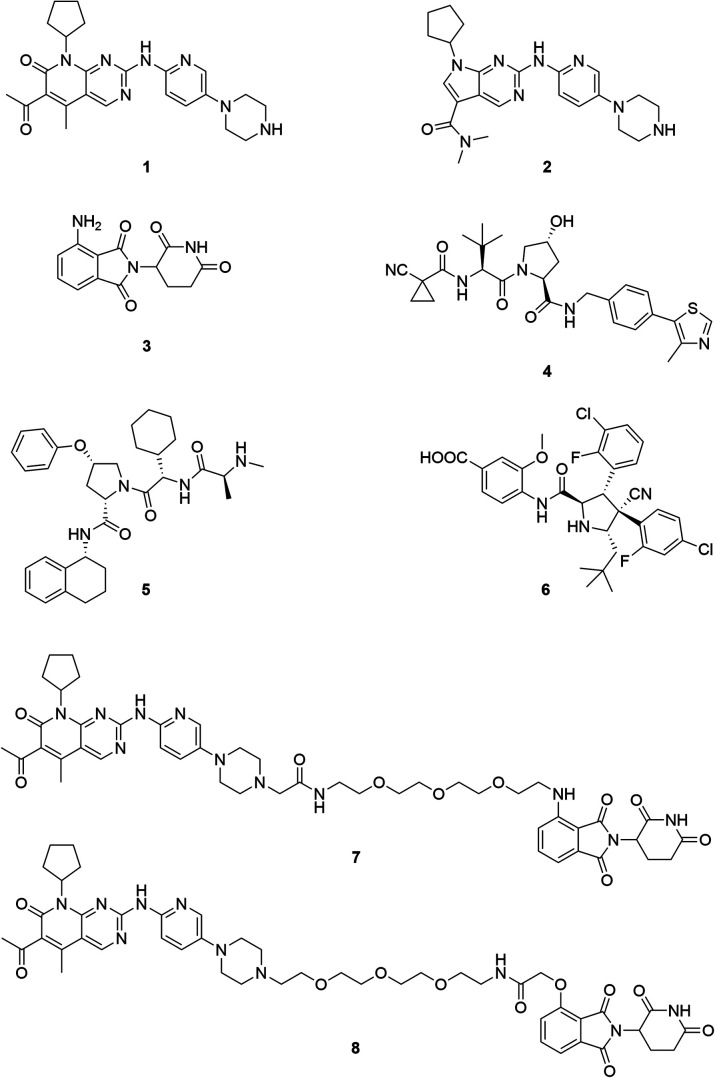
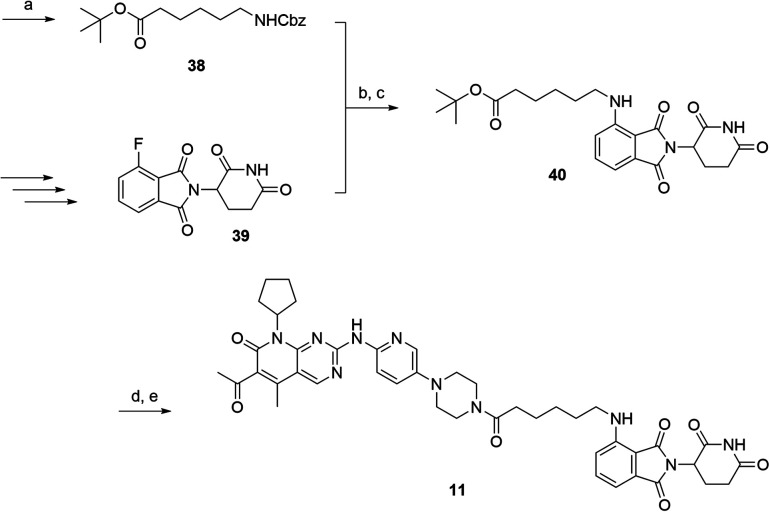
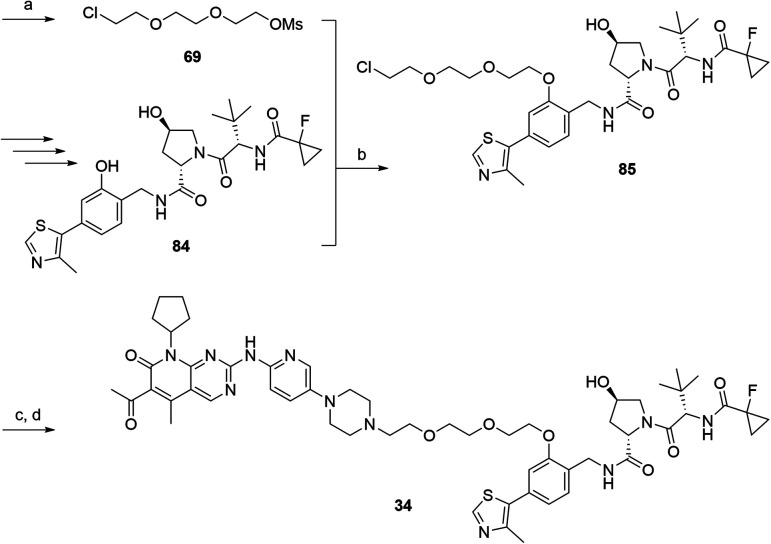
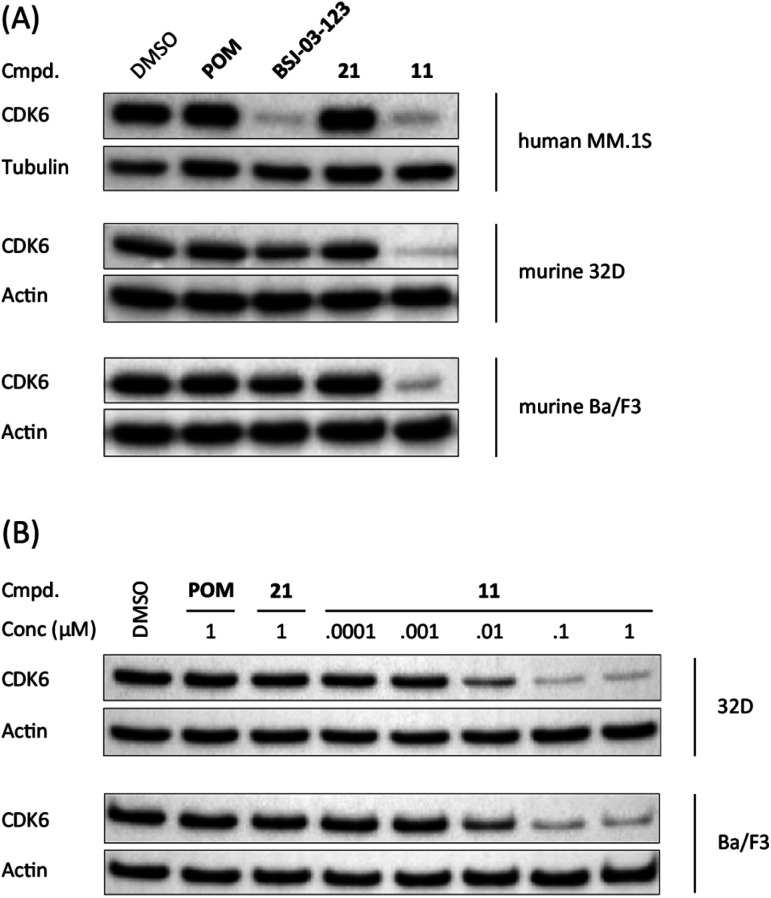
Verification
Claims the paper makes
The claims and statistics of this paper haven’t been checked yet.
Run the check — free, no account needed. It reads the open-access text and checks the sources it cites.
Claims other papers make about this one
Each is checked against this paper’s own text: does it say what the citing paper says it does?
In the citing paper
“Whereas multiple studies have described numerous CRBN-recruiting dual-selective degraders and CDK6-selective degraders 70–73, none report CDK4-selective degraders; the only reported CDK4-selective degraders are built on a slightly different warhead, ribociclib 74.”
From Rationalizing PROTAC-Mediated Ternary Complex Formation Using Rosetta (2021) · cites this paper as [72]
Self-check
Percentages, sums and reported differences re-computed from the paper’s own numbers.
The self-check needs the paper’s full text.
Citations
Cites
Cell cycle, CDKs and cancer: a changing paradigm
Malumbres, M., & Barbacid, M. (2009) · Nature Reviews Cancer · doi:10.1038/nrc2602 · Cited by 3,957
Palbociclib and letrozole in advanced breast cancer
Finn, R. S., Martin, M., Rugo, H. S., Jones, S., Im, S.-A., Gelmon, K., Harbeck, N., Lipatov, O. N., Walshe, J. M., Moulder, S., et al. (2016) · New England Journal of Medicine · doi:10.1056/nejmoa1607303 · Cited by 3,007
Meyers, R. M., Bryan, J. G., McFarland, J. M., Weir, B. A., Sizemore, A. E., Xu, H., Dharia, N. V., Montgomery, P. G., Cowley, G. S., Pantel, S., et al. (2017) · Nature Genetics · doi:10.1038/ng.3984 · Cited by 1,952
Lenalidomide Causes Selective Degradation of IKZF1 and IKZF3 in Multiple Myeloma Cells
Krönke, J., Udeshi, N. D., Narla, A., Grauman, P., Hurst, S. N., McConkey, M., Svinkina, T., Heckl, D., Comer, E., Li, X., et al. (2014) · Science · doi:10.1126/science.1244851 · Cited by 1,879
Self-citationCristofanilli, M., Turner, N. C., Bondarenko, I., Ro, J., Im, S.-A., Masuda, N., Colleoni, M., DeMichele, A., Loi, S., Verma, S., et al. (2016) · The Lancet Oncology · doi:10.1016/s1470-2045(15)00613-0 · Cited by 1,827
Phthalimide conjugation as a strategy for in vivo target protein degradation
Winter, G. E., Buckley, D. L., Paulk, J., Roberts, J. M., Souza, A., Dhe-Paganon, S., & Bradner, J. E. (2015) · Science · doi:10.1126/science.aab1433 · Cited by 1,760
The Myeloma Drug Lenalidomide Promotes the Cereblon-Dependent Destruction of Ikaros Proteins
Lu, G., Middleton, R. E., Sun, H., Naniong, M., Ott, C. J., Mitsiades, C. S., Wong, K.-K., Bradner, J. E., & Kaelin, W. G. (2014) · Science · doi:10.1126/science.1244917 · Cited by 1,583
New functional activities for the p21 family of CDK inhibitors.
LaBaer, J., Garrett, M. D., Stevenson, L. F., Slingerland, J. M., Sandhu, C., Chou, H. S., Fattaey, A., & Harlow, E. (1997) · Genes & Development · doi:10.1101/gad.11.7.847 · Cited by 1,402
Finn, R. S., Dering, J., Conklin, D., Kalous, O., Cohen, D. J., Desai, A. J., Ginther, C., Atefi, M., Chen, I., Fowst, C., et al. (2009) · Breast Cancer Research · doi:10.1186/bcr2419 · Cited by 1,398
Treating cancer with selective CDK4/6 inhibitors
O'Leary, B., Finn, R. S., & Turner, N. C. (2016) · Nature Reviews Clinical Oncology · doi:10.1038/nrclinonc.2016.26 · Cited by 1,137
Research works printed but not linked: 1
- Schumacher, 1965, Br. J. Pharmacol., 25, 324
Cited by
Sorted by citations
Current strategies for the design of PROTAC linkers: a critical review
Troup, R. I., Fallan, C., & Baud, M. G. J. (2020) · Exploration of Targeted Anti-tumor Therapy · doi:10.37349/etat.2020.00018 · Cited by 424
Proteolysis-targeting chimeras (PROTACs) in cancer therapy
Li, X., Pu, W., Zheng, Q., Ai, M., Chen, S., & Peng, Y. (2022) · Molecular Cancer · doi:10.1186/s12943-021-01434-3 · Cited by 389
Self-citationTarget and tissue selectivity of PROTAC degraders
Guenette, R. G., Yang, S. W., Min, J., Pei, B., & Potts, P. R. (2022) · Chemical Society Reviews · doi:10.1039/d2cs00200k · Cited by 324
PROTACs: great opportunities for academia and industry (an update from 2020 to 2021)
He, M., Cao, C., Ni, Z., Liu, Y., Song, P., Hao, S., He, Y., Sun, X., & Rao, Y. (2022) · Signal Transduction and Targeted Therapy · doi:10.1038/s41392-022-00999-9 · Cited by 283
Zeng, S., Huang, W., Zheng, X., Cheng, L., Zhang, Z., Wang, J., & Shen, Z. (2020) · European Journal of Medicinal Chemistry · doi:10.1016/j.ejmech.2020.112981 · Cited by 264
Metadata
- Authors
- Steinebach, C., Ng, Y. L. D., Sosič, I., Lee, C.-S., Chen, S., Lindner, S., Vu, L. P., Bricelj, A., Haschemi, R., Monschke, M., Steinwarz, E., Wagner, K. G., Bendas, G., Luo, J., Gütschow, M., & Krönke, J.
- Affiliations
- University of Bonn (DE)
- Universität Ulm (DE)
- University of Ljubljana (SI)
- National Cancer Institute (US)
- Corresponding author
- Gütschow, Michael
- Krönke, Jan
- ORCID
- Venue
- Chemical Science
- Publisher
- Royal Society of Chemistry (RSC)
- Published
- 2020
- Volume
- 11
- Issue
- 13
- Pages
- 3474-3486
- ISSN
- 2041-6520 (ISSN-L)
- 2041-6539
- PMC
- PMC7552917
- OpenAlex
- W3009753365
- Cited by
- 148
- References
- 77
- Citations by year
- 2026: 20 · 2025: 24 · 2024: 27 · 2023: 20 · 2022: 27 · 2021: 22 · 2020: 8
- FWCI
- 6.56
- Type
- journal article
- Language
- en
- Open access
- diamond
- doi.org
- Licence
- Locations
- Chemical Science (publishedVersion, cc-by)
- Europe PMC (PubMed Central) (publishedVersion, cc-by)
- PubMed Central (publishedVersion, cc-by)
- PubMed (publishedVersion)
- Funders
- Deutsche Forschungsgemeinschaft (FOR2372, Kr-3886/2-1, SFB1074)
- Javna Agencija za Raziskovalno Dejavnost RS (P1-0208)
- Topics
- Life Sciences › Biochemistry, Genetics and Molecular Biology › Molecular Biology › Protein Degradation and Inhibitors
- Life Sciences › Biochemistry, Genetics and Molecular Biology › Molecular Biology › Ubiquitin and proteasome pathways
- Physical Sciences › Chemistry › Organic Chemistry › Chemical Synthesis and Analysis
- Keywords
- PROTACs, CDK4/6, E3 ubiquitin ligase, VHL, cIAP1, targeted protein degradation, tumor cell proliferation, leukemia, multiple myeloma, breast cancer
About these checks
Registry, retraction, Cites and statistics results are computed, not judged, with one exception: a printed reference that no index lists is read once by a model before it counts as a citation error. Claims are extracted by a model and kept only when their quote appears verbatim in the text; each cited source is then checked, with a model’s help, for whether it says what the claim relies on. Those verdicts can be wrong — read the claim’s quote and the cited source before relying on one.
Statistics and arithmetic are recomputed, not judged.
Confidence bands are shown only for fields calibrated on our annotated test set. None is calibrated yet, so no band is shown.
What counts as a claim ›How we measure confidence ›How we check this ›
Are you an author, or do you see a problem with this page? Request a review
